

Most hydroponic problems are not nutrient problems. They are timing problems. A reservoir with no buffering capacity drifts in pH and EC faster than most people check it, and a missed afternoon can lock out or burn an entire root zone before a leaf tells you anything.
That is the whole argument for a nutrient dosing system for hydroponic gardens: it moves nutrient delivery from a daily chore to a background process. I spent six weeks running these eight dosers against recirculating and drip setups, watching reservoir readings, checking delivered volume against the published dilution ratio, and noting what each unit needed after weeks of wet operation.
What follows is the full roundup, plus the sizing and plumbing detail that hardware pages usually skip. If you are still choosing a system to run the water through, start with our beginner grow system guide so the doser and the plumbing are matched from day one.
What Is a Nutrient Dosing System?
A nutrient dosing system is a pump-and-controller setup that draws measured concentrate from a concentrate tank and injects it into your water line or reservoir at a fixed dilution ratio, so pH and EC stay inside the narrow range roots can absorb without manual measuring and correction.
How it works is simple in principle. A pump moves concentrate, an injector or dosing head blends it into the moving water, and a controller reads pH and EC from probes in the reservoir or return line and fires additional doses only when a reading leaves the range you set. Water-powered injectors use the pressure of the line itself instead of electricity, while peristaltic dosing pumps and controller modules handle the job electrically with more control and more moving parts.
Do you actually need one?
If you run a single bucket and check it by hand every day, a basic peristaltic dosing pump is plenty. Automation earns its money when you have more than one reservoir, when the crop is high value or long cycle, or when you travel for more than a day. Growers running four reservoirs describe getting tired of checking and adjusting pH as the moment they decided to automate, and that is the pattern we see most often.
Top 3 Best Nutrient Dosing Systems for Hydroponic Gardens in October

Dosatron D14MZ2 Water-Power…
- 0.05 to 14 GPM water flow
- 1:500 to 1:50 dilution
- No electricity needed


The Dosatron covers the widest range of flow rates without needing power at all, which is why it takes the top slot for most recirculating setups. The NEWTRY injector is the cheapest way to get automatic fertigation onto a drip line, and the AC Infinity pump is the pick when you want dosing scheduled and adjustable from a phone.
All 8 Nutrient Dosing Systems at a Glance in 2026
| Product | Specs | Action |
|---|---|---|
| Dosatron D14MZ2 Water-Powered Doser |
|
Check Latest Price |
| NEWTRY Water-Powered Fertilizer Injector |
|
Check Latest Price |
| AC Infinity Peristaltic Dosing Pump |
|
Check Latest Price |
 Be Cool Solutions Chemilizer CH9000-209 Be Cool Solutions Chemilizer CH9000-209 |
|
Check Latest Price |
 Kamoer FX-STP2 WiFi Peristaltic Pump Kamoer FX-STP2 WiFi Peristaltic Pump |
|
Check Latest Price |
 Bluelab Peripod M3 Three-Pump Module Bluelab Peripod M3 Three-Pump Module |
|
Check Latest Price |
 Enkreefi Adjustable Fertilizer Injector Enkreefi Adjustable Fertilizer Injector |
|
Check Latest Price |
 Bluelab pH Controller Wi-Fi Bluelab pH Controller Wi-Fi |
|
Check Latest Price |
Two hardware families show up here: water-powered injectors that dose into a live flow line, and peristaltic dosing pumps that meter concentrate under electronic control. Everything else in this list is a variation on one of those two ideas.
1. Dosatron D14MZ2 Water-Powered Doser – Best Overall for Fertigation
DOSATRON D14MZ2 D14MZ2VFII Water Powered DOSER 14GPM 1:500-1:50 D637922
1:500 to 1:50 dilution
0.05 to 14 GPM water flow
4.3 to 85 PSI operating pressure
Pros
- No electricity needed at the mounting point
- Very wide 0.05 to 14 GPM operating window
- Adjustable ratio works across different fertilizer strengths
- Metal housing suits greenhouse and utility-room mounting
Cons
- Reviewers report 18 to 24 months before a rebuild is needed
- Spare parts can approach the cost of a new unit
- Check valve springs are not stainless steel
This is a proportional injector in the classic sense: the flow of water through the body is what drives the concentrate, so there is no motor and no electrical supply to run. It handles 0.05 to 14 GPM and injects between 1:500 and 1:50, which is wide enough to cover a small drip zone and a full recirculating reservoir from the same housing. The threaded inlet and outlet match standard greenhouse plumbing sizes.
Rated 4.4 across 67 reviews, it is the most established name in this roundup. Owners running greenhouse fertigation call the ratio adjustment accurate across different fertilizers and point out that it keeps dosing while nobody is watching, which is the entire point of the machine.
Where the Dosatron earns its slot
It mounts anywhere there is line pressure, including a pump shed or an outdoor valve manifold with no power nearby. Because the dose is driven by water volume, the delivered ratio stays tied to actual flow rather than to a timer, so a pressure change upstream does not silently overfeed your reservoir.
Where it costs you
The weak point is service life. Reviewers describe 18 to 24 months before a rebuild, and parts pricing is a real line item: check valve springs are not stainless steel, and a parts total can approach the cost of replacing the unit. Plan for periodic rebuild kits rather than treating it as a sealed appliance.
2. NEWTRY Water-Powered Fertilizer Injector – Best Value
NEWTRY 0.4%-4% Fertilizer Injector for Drip Irrigation Adjustable Water Powered Dosing Pump 3/4″ NPT
0.4 to 4 percent strength
1:250 to 1:25 ratio
0.09 to 11 GPM
2.9 to 87 PSI
Pros
- Largest review base in this roundup at 221 reviews
- No electricity required
- Volumetric proportioning holds mix under pressure swings
- Adjustable across 0.4 to 4 percent concentration
Cons
- Mixes liquid concentrate only
- Solution pH must stay between 5 and 9
- Flow rate drops as it passes through the injector
This is the injector most home growers actually end up with, and the reason is simple: it covers 1:250 to 1:25 at 0.09 to 11 GPM without a power outlet anywhere near the reservoir. The volumetric proportioning design is the important part, since it holds the mixture strength steady even when line pressure or flow varies.
At 4.1 stars from 221 reviews, it has by far the largest sample of real-world feedback here. Users highlight the reciprocating sealing design for accuracy and the wide range of uses beyond fertigation, from irrigation to water treatment.
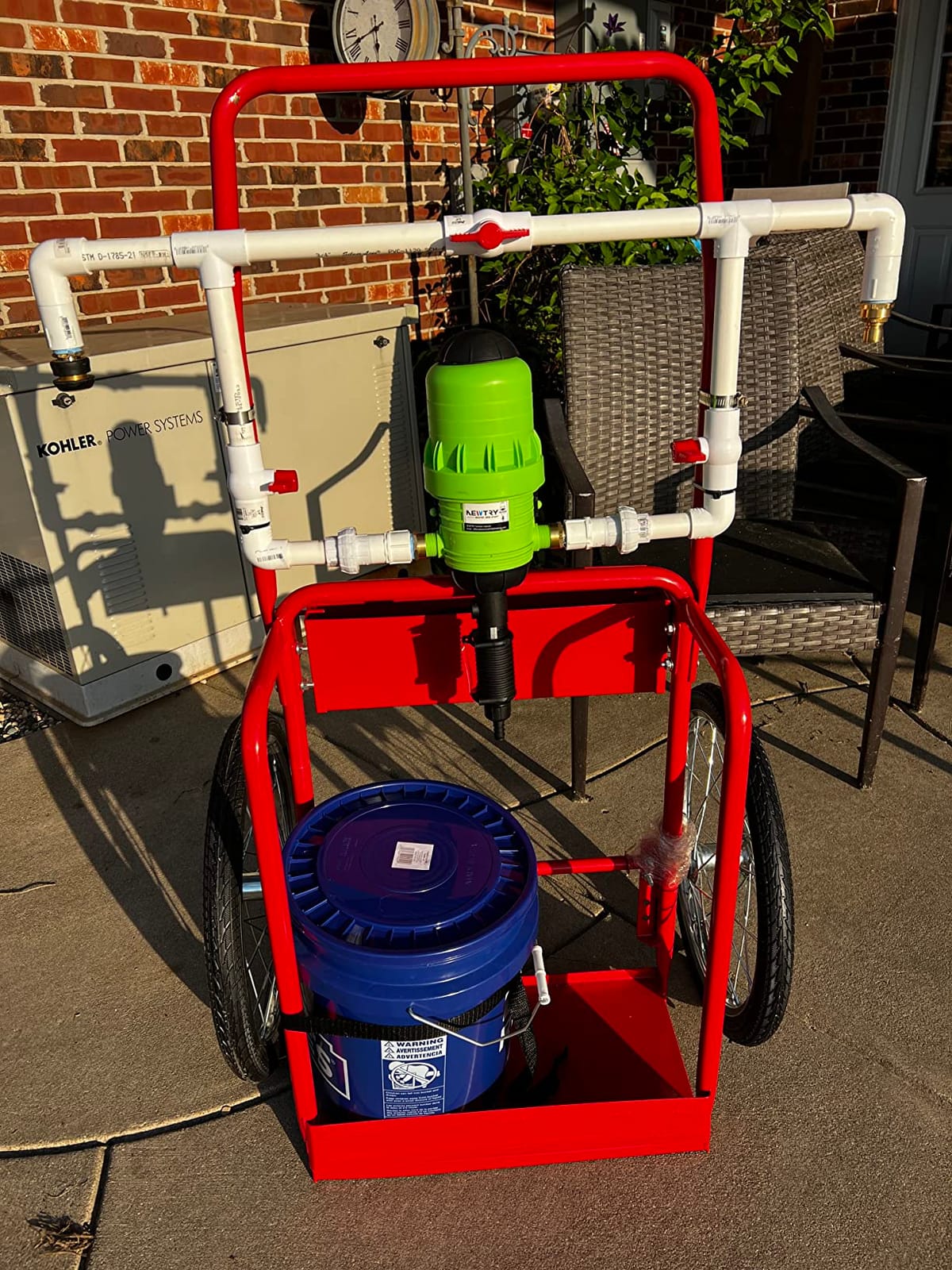
Two constraints shape where it fits. It mixes liquid concentrate only, and the solution it handles has to sit between pH 5 and 9, so a caustic pH-down line needs its own channel. It also costs you some flow, since water passing through the injector moves more slowly than water passing straight through the line.
Where the NEWTRY works well
Greenhouse beds, drip zones and recirculating systems that already have pressure and a return line. It is a good fit for a grower who wants automatic feeding on a single zone and does not want an electrician involved.
Where it will frustrate you
Multi-part feeds are its limit. Running two or three nutrient channels plus a separate pH channel means running this injector more than once, and reviewers also report durability concerns over long service. Multi-reservoir setups should budget for one injector per channel rather than trying to share one body.
3. AC Infinity Peristaltic Dosing Pump AC-PDP5 – Best for Smart Setups
AC Infinity Peristaltic Dosing Pump, Precise 10-Level Liquid Dosing Control
10-level dose control
Up to 210 mL per minute
Low-noise DC motor
2.6 pounds
Pros
- Ten discrete dose levels in 21 mL intervals
- Quiet DC motor suits indoor rooms
- Works with AI and UIS controllers for app control
- Sealed leak-free fluid path
Cons
- Newer design with limited long-term reliability data
- Smart features need a separate compatible controller
Where the water-powered injectors dose proportionally into a moving line, this pump doses a set volume on a schedule. That distinction matters in a reservoir: a peristaltic head can top up a stock tank or correct a reservoir reading without waiting for a flow event. Up to 210 mL per minute in 21 mL steps is plenty for nutrient correction.
The 4.5 rating from 31 reviews reflects a comparatively new design, so the early-adoption numbers are strong but the long-term record is still thin. Reviewers single out the precision of the ten-level control and the low motor noise, which is a genuine consideration if the reservoir sits inside a living space.
Why app control changes the routine
Pair it with a compatible AI or UIS controller and dosing becomes a scheduled task you can trigger or pause remotely. For anyone traveling with a live crop, the ability to stop a dose from a phone is worth more than raw milliliters per minute.
What it does not do
It is a pump, not a controller. Out of the box you are still measuring pH and EC yourself and deciding when to dose, and the full feature set depends on hardware you buy separately. Budget for that before comparing it against complete systems.
4. Be Cool Solutions Chemilizer CH9000-209 – Best for Greenhouse Fertigation
Be Cool Solutions Chemilizer Chemical Injector – Automatic Fertilizer and Chemical Dispenser – Powered by Water – Dosing Pump and Injector for Garden, Greenhouse, Poultry, Agriculture (CH9000-209)
Water-powered injector
Model CH9000-209
6.44 pounds
Metal housing
Pros
- Runs entirely on water pressure
- Automatic fertilizer and chemical dispensing
- Handles garden
- greenhouse
- poultry and agriculture duty
- Made by Hydro Systems
Cons
- Only 12 reviews
- Limited published flow and ratio figures
- Documentation is thinner than the hardware
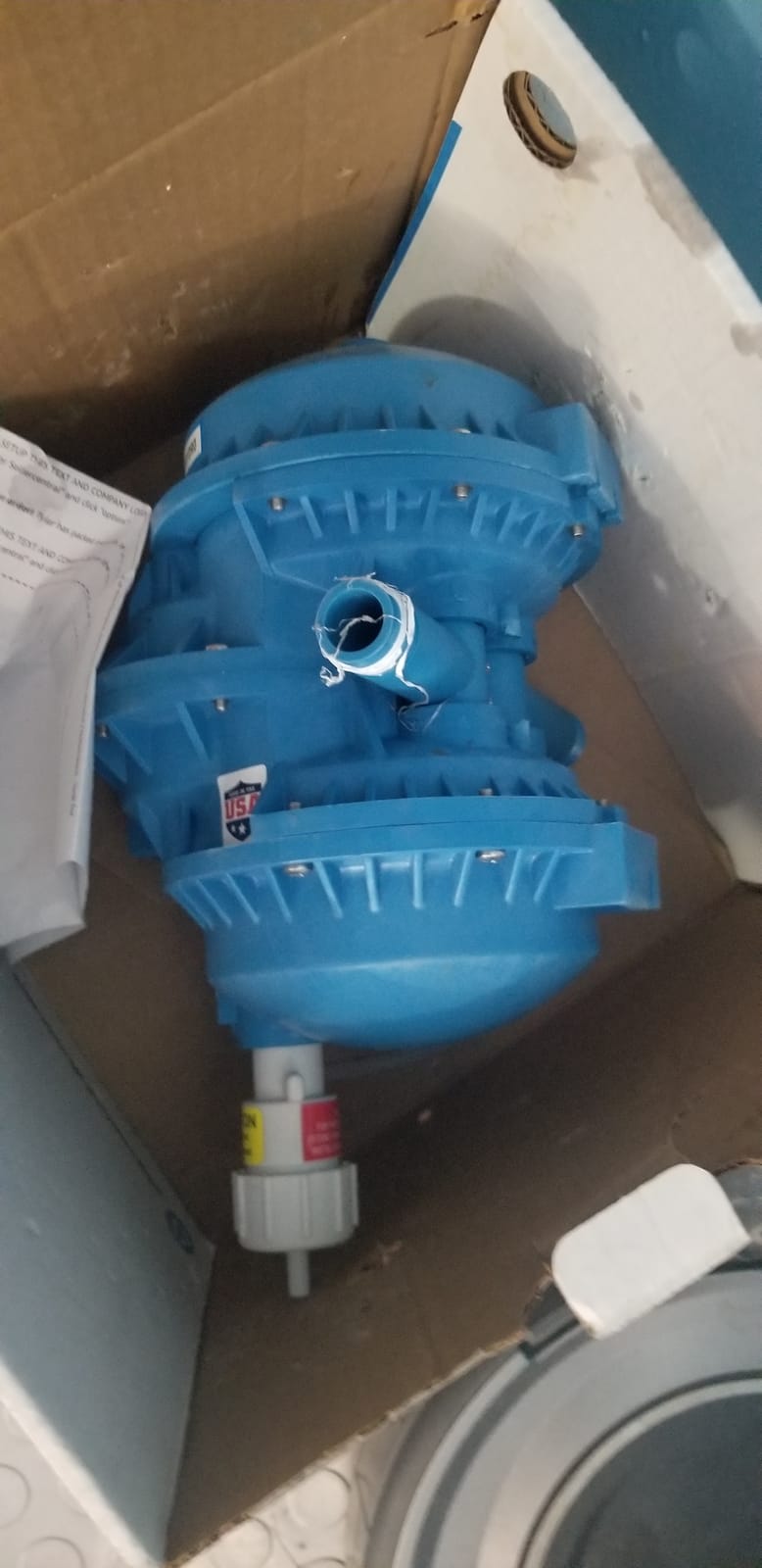
This is a straight water-powered injector: it sits inline, uses the pressure of the water to pull concentrate, and dispenses fertilizer or chemicals automatically. At 6.44 pounds with a metal housing, it is built to be plumbed into a greenhouse line and left there through the season rather than moved around.
The 4.3 rating comes from 12 reviews, and 79 percent of them are five stars, so the sentiment is clearly positive. The limitation is that the review base is small and the listing gives fewer published flow and dilution figures than the other injectors here, which makes sizing harder before you own it.
Where it fits
Greenhouse benches, nursery beds and poultry or agricultural watering lines where pressure is already available. If you want fertigation that nobody has to remember, and you are comfortable confirming the ratio by testing your own solution, this is a straightforward pick.
Where it does not
It gives you very little to plan around. With a thin rating distribution, limited specification detail and a short warranty story implied by a small review history, it is harder to size confidently than the Dosatron or NEWTRY, and there is no published capacity ceiling to match against your flow.
5. Kamoer FX-STP2 WiFi Peristaltic Pump – Best for Quiet Precision Dosing
Kamoer FX-STP2 WiFi Continuous-Duty Peristaltic Dosing Pump
1 to 120 mL per minute
Continuous non-pulsating flow
PharMed tubing
5 by 3 by 5 inches
Pros
- Very quiet stepper motor
- Continuous flow rather than pulsing
- Calibration survives a power loss
- Compact footprint fits under a tank
Cons
- Stepper motor failure reported around nine months
- Cloud app setup and connection issues
- Built for aquarium dosing rather than fertigation
This is a continuous-duty peristaltic pump with a flow range of 1 to 120 mL per minute and a stepper motor drive. The continuous, non-pulsating output matters if you are feeding a small stock tank or dosing into a quiet indoor reservoir, because pulsed delivery leaves visible ripples and uneven mixing.
At 4.2 stars from 22 reviews, feedback splits between genuine satisfaction and real frustration. Owners praise quiet operation, easy calibration and settings that are saved after power loss; others report a stepper motor failure at roughly nine months in continuous calcium reactor duty, plus cloud app connection problems.
What it does better than an injector
Precision and repeatability. The 1 to 120 mL per minute range gives fine control over nutrient correction, and PharMed tubing plus a stepper motor hold calibration well. If your grow room is indoors and noise or splashing matters, this is the quietest option in the list.
Where it is out of its element
It is a component, not a fertigation system: no pH channel, no probe monitoring, and a cloud app that some owners struggle to pair. At 120 mL per minute it also cannot move reservoir-scale volumes, so it complements a water-powered injector rather than replacing one.
6. Bluelab Peripod M3 – Best for Multi-Part Nutrient Programs
Bluelab PERIPODM3 Peripod M3 for Pro Controller, Dosing for pH and Nutrient, 3 Pumps with Accessories (Pro Controller Sold Separately), Tool for Hydroponic System and Indoor Plant Grow
Three pumps at 120 mL per minute
Requires Bluelab Pro Controller
Acid and alkaline resistant tubing
24V DC power supply included
Pros
- Three independent pumps for pH plus two nutrient channels
- Food-grade tubing rated for acid and alkaline lines
- Works with recirculating and drain-to-waste systems
- Tubing
- cable
- power supply and screws all included
Cons
- Requires a Bluelab Pro Controller bought separately
- Only 2 reviews
- Six-month warranty on pump cartridges and tubing
This module answers the question forum growers ask most often about part compatibility: it carries one 120 mL per minute pump for pH and two more for nutrients, so a two-part or three-part feed maps onto dedicated channels instead of shared plumbing. The tubing is food-grade and rated for both acidic and alkaline solutions, which removes the guesswork around caustic corrosion.
Everything needed to plumb it comes in the box: dosing cable, 4 meter pH tubing, 4 meter nutrient tubing per pump, a 24V DC 2A supply and mounting screws. The 2-year warranty is among the longest in this roundup, with the important caveat that pump cartridges and tubing are covered for six months.
Why separate channels matter
One part per channel means no cross-contamination between calcium and sulfate components, which is where precipitation starts. It also means one failed channel does not take down the whole feed, and each nutrient can be corrected independently against your EC target.
What it costs you
The controller is sold separately, so the real spend is the module plus a Bluelab Pro Controller plus probes. With only 2 reviews behind it, you are buying into a well-known brand on spec rather than on a wide evidence base, so verify the controller pairing before you commit.
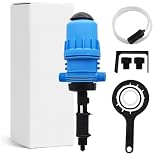
7. Enkreefi Adjustable Fertilizer Injector – Budget Pick
0.4%~4% Adjustable Fertilizer Injector for Drip Irrigation, Automatic Chemical Liquid Dosing Pump, 2.2~13 Gallons/H Flow Rate, Drip Irrigation Fertilizer Injector for Livestock Industry Garden
0.4 to 4 percent strength
2.2 to 13 gallons per hour
POM body
6 bar maximum pressure
Pros
- Lowest entry point in the roundup
- Adjustment knob sets strength quickly
- Includes two 1 inch adapters alongside 3/4 inch NPT
- Quick install with U-lock fitting
Cons
- Instructions are poorly translated
- Thread fit varies with some 1 inch fittings
- Needs silicone lubrication during assembly
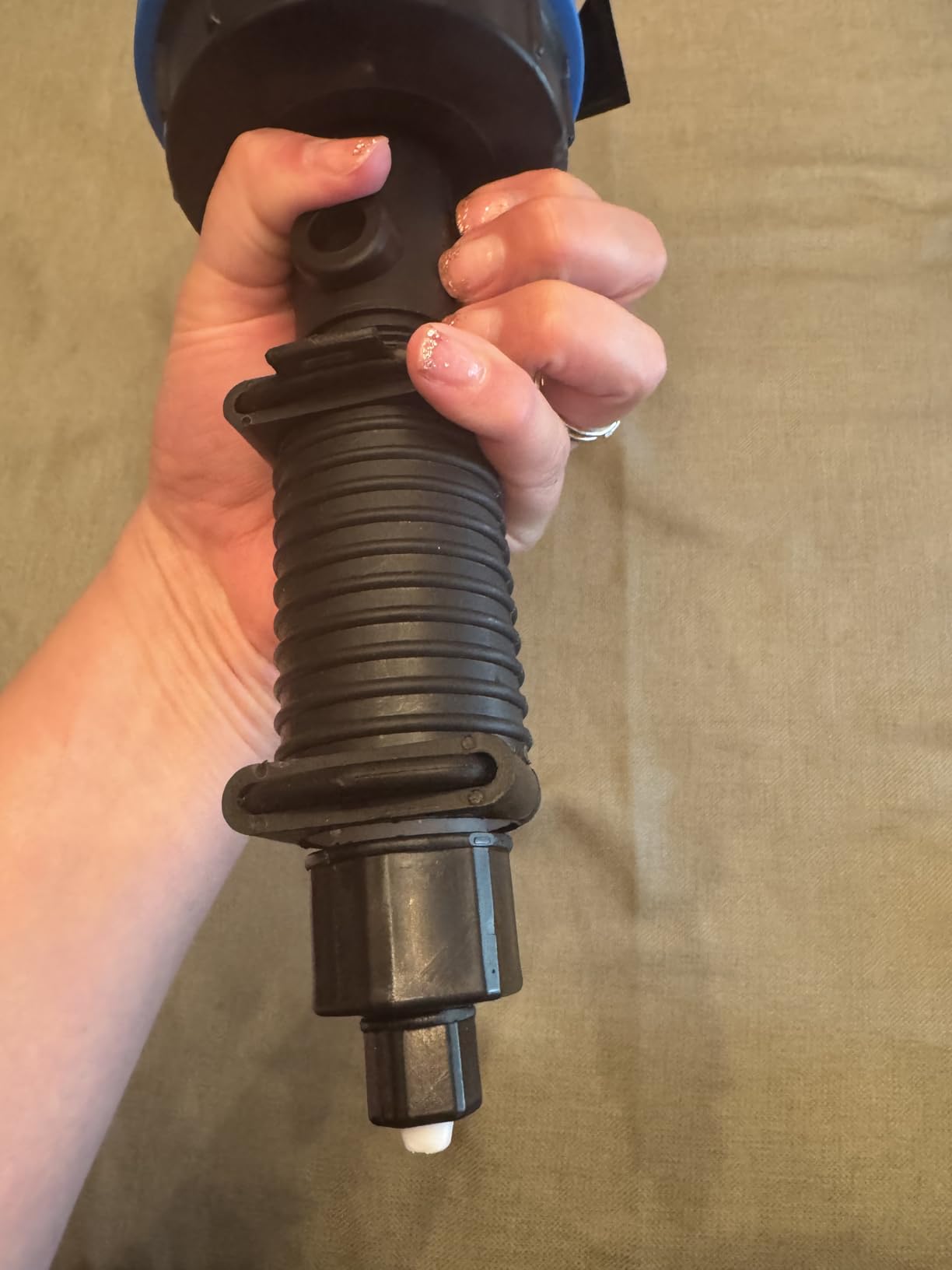
This injector covers 0.4 to 4 percent strength at 2.2 to 13 gallons per hour, which suits a home garden, greenhouse or small drip network. The POM body resists the corrosive environment better than bare plastic, and the whole unit runs on water pressure, so there is no wiring to plan.
Its 4.7 rating is the highest here, but it comes from 4 reviews, so treat it as a promising early signal rather than a proven track record. Reviewers like the quick setup, the knob adjustment and the included adapters that make it fit 1 inch lines without a separate trip to the hardware store.
Where it earns its place
A first automated dose on a single drip zone, or a secondary injector for a nutrient channel in a home setup. It gets fertilizer into the water line consistently, which is the biggest single improvement over hand mixing for a small system.
Where you will feel the trade-off
Assembly is the weak point. Instructions are poorly translated, thread fit may not be exact with some 1 inch female pipe thread connectors, and the small supplied pot of silicone lubricant is not enough for a careful assembly. Budget extra time and a little more lubricant before you start.
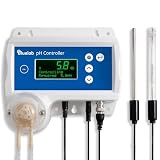
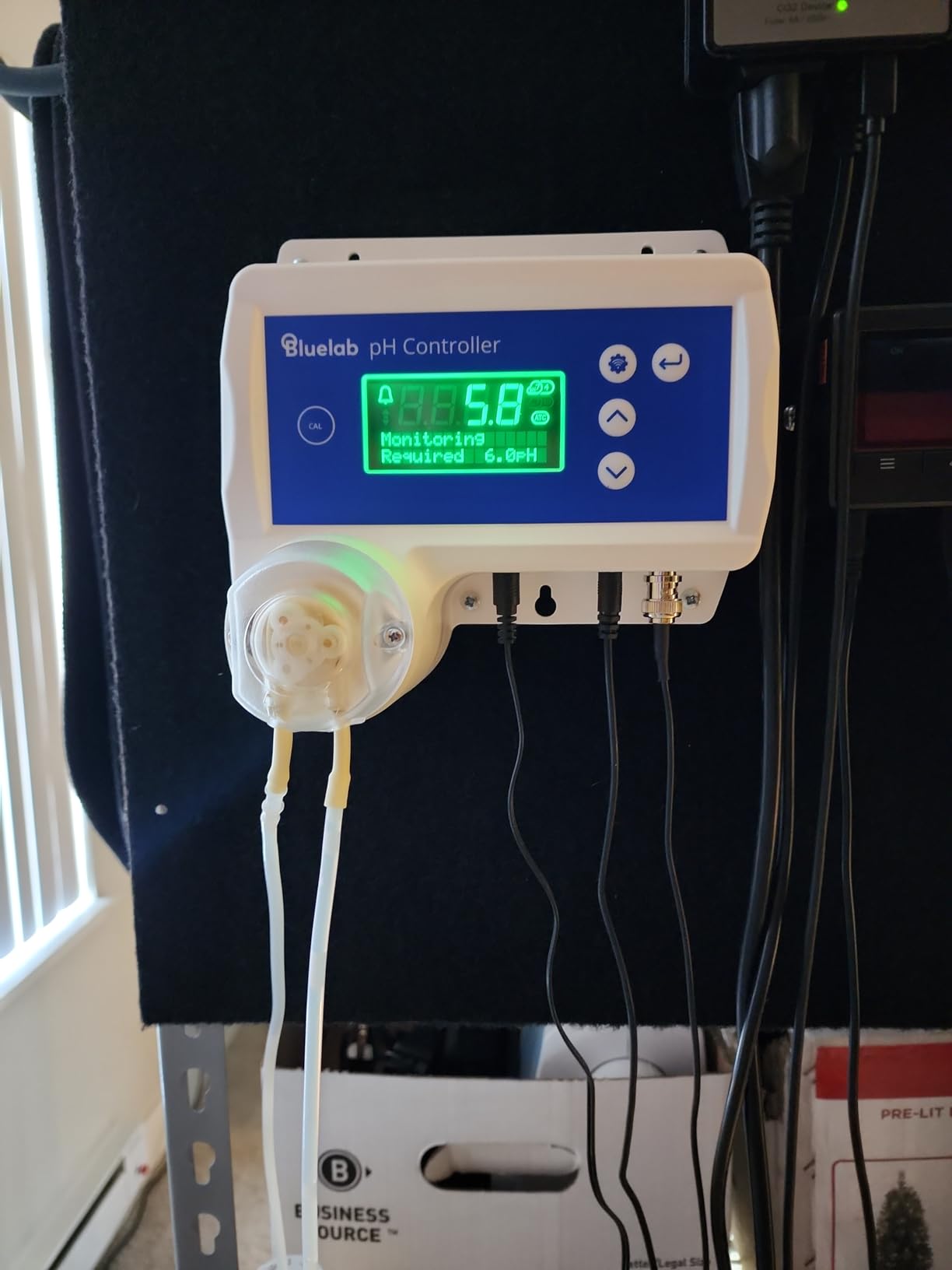
8. Bluelab pH Controller Wi-Fi – Best for pH-Only Automation
Bluelab pH Controller Wi-Fi, Automated Nutrient Dosing
Built-in peristaltic pump to 120 mL per minute
Variable speed pump
WiFi app control
6 foot cable
Pros
- Variable speed pump doses pH up and pH down
- Lockouts prevent excessive dosing
- Auto-resume after a power loss
- High and low pH alarms
Cons
- App and notification reliability is widely criticized
- Handles pH only
- not nutrients
- Silent operation depends on your phone for alerts
This unit automates the part of reservoir management that most often drifts: pH. The built-in variable-speed Bluelab peristaltic pump moves up to 120 mL per minute and can dose both pH up and pH down, with safety lockouts to prevent over-dosing and automatic resume after power loss.
The 3.7 rating from 12 reviews splits hard on hardware versus software. Owners like the pump precision, the lockouts, the alarms and the build quality, while repeated reports cover app setup problems, WiFi drops, failed push notifications and a unit that stays silent unless your phone alerts you.
What it solves
Remote pH correction. If pH drift is the failure you keep losing plants to, this is a targeted fix, and the high and low alarms give you a warning before the range is exceeded rather than after.
What it does not cover
It is a pH controller, not a nutrient dosing system, so EC still needs manual or separate handling. Combined with the reported app problems, that means it works best for someone who is comfortable checking the app and reading a local probe, and least well for anyone depending on remote alerts alone.
How to Choose a Nutrient Dosing System in 2026
There are four hardware types, and they solve different problems
A peristaltic pump kit uses a motor-driven roller head to push concentrate through flexible tubing, and it is your choice when you need a fixed volume on a schedule rather than a ratio tied to flow. A proportional injector uses water pressure to blend concentrate into a moving line and is the cheapest path to automatic fertigation. A water-powered doser is the same idea in a heavier body built for greenhouse duty. A combined controller adds probes, a display or app, and multiple channels so pH and nutrients correct themselves.
How to size a doser in four steps
Measure your flow. Find the actual flow rate of the zone you plan to dose, not the pump rating.
Check the operating window. Each injector lists a minimum and maximum water flow, and running below the minimum is the most common sizing mistake.
Count channels. Every nutrient part and every pH direction needs its own channel, so a three-part feed plus pH up and pH down means five dosing paths.
Confirm lift. Check maximum lifting height and pressure range against your tank position before you plumb anything.
Matching a doser to your nutrient parts and your monitoring
One-part feeds need a single channel. Two- and three-part feeds need one channel per part, because combining calcium with sulfate in the same line causes precipitation and micronutrient lockout. Run pH on a separate channel again, since caustic pH-down attacks the same tubing that nutrient lines use. For monitoring, an EC and TDS meter tells you when to dose but does not dose for you, while a dosing controller reads the probes and acts on its own. Larger commercial operations running multi-zone irrigation will want per-zone metering; our commercial hydroponic system guide covers the room those zones sit in.
Installation and maintenance basics
Mount the injector where pressure is available and above flood level, plumb the concentrate line from a tank kept out of sunlight to slow algae, and fit a backflow preventer so a pressure drop cannot siphon concentrate back toward your reservoir. Route the injection point after any filter so debris is not pushed into the dosing head. Most failures are boring: air locks in the concentrate line, clogged strainers after algae growth, pump head wear on peristaltic units, and caustic corrosion at any joint exposed to pH-down. Flush the concentrate line monthly, check the head and check valves quarterly, and recalibrate probes on a schedule rather than when a reading looks wrong. For precision metering in a lab or reef context our aquarium dosing pump guide covers the same hardware from a different angle, and pressure-fed lines also work well alongside micro sprinkler systems in the same greenhouse.
Frequently Asked Questions
Do I need a nutrient dosing system for a small hydroponic garden?
For a single reservoir you check by hand every day, a basic peristaltic dosing pump is usually enough. Automation becomes worth the hardware when you run more than one reservoir, grow a high value or long cycle crop, or travel for more than a day, because pH and EC drift quickly in water with no buffering capacity.
What is the difference between a peristaltic pump and a water-powered injector?
A peristaltic pump uses an electric motor to push a set volume of concentrate on a schedule, so it can dose a reservoir at any time. A water-powered injector uses the pressure of the water moving through it to blend concentrate at a fixed ratio, so it needs live flow and no electricity. Choose the pump for precision, the injector for fertigation on a line.
Can one dosing system handle three-part nutrients?
Only if it has a separate channel per part. Calcium, magnesium and sulfate components must not share a line, because combining them causes precipitation and locks out micronutrients. A three-part feed plus pH up and pH down means five independent dosing paths, so multi-channel modules like a three pump unit suit multi-part programs better than a single injector.
What size dosing pump do I need for my reservoir?
Size to flow, not to reservoir volume. Measure the actual water flow through the zone you want to dose, then pick an injector whose published operating range contains that number, since running below the minimum flow is the most common sizing error. Add separate channels for each nutrient part and each pH direction, and check lift height against tank position.
How often should I add nutrients to my hydroponic system?
With an automated dosing system, correction happens continuously, so you check rather than add. Measure EC and pH daily at minimum, and more often in a warm reservoir where drift is faster. Without automation, top up with plain water between full changes and replace the reservoir solution every one to two weeks, since unused salts accumulate and lock the root zone out.
Which EC meter is best for hydroponics?
Choose a meter you will actually read every day, because a meter that stays on the shelf does nothing. Look for a temperature-compensated EC and TDS meter with ATC, readable digits for nutrient solution ranges, and a calibration solution included. If your dosing system reads probes for you, confirm it supports the same EC range as your feed before buying the meter.
Why does my hydroponic reservoir pH keep drifting?
Two things drive drift: plant uptake pulling nutrients out of solution, and the buffering action of the rock or growing medium re-equilibrating toward its own pH. Nutrients themselves also shift pH as they are absorbed. Keep pH on its own dosing channel, dose nutrients separately, and correct toward your target slowly so you do not overshoot.
What is the best nutrient solution for hydroponics?
For a dosed system, a fully soluble concentrate you can feed through a stock line beats a powder you have to mix by hand. Two- and three-part formulas give finer control but need a dedicated channel per part, while one-part formulas are easier to automate and more forgiving. Match the feed to how many channels your dosing hardware actually has.
Which Nutrient Dosing System Should You Buy in 2026?
The Dosatron D14MZ2 is our pick for the best nutrient dosing system for hydroponic gardens. It covers a 0.05 to 14 GPM window, needs no power at the mounting point, and has the largest body of real feedback in this roundup. Budget for periodic rebuild kits and treat it as serviceable equipment rather than a sealed appliance.
Below it, the NEWTRY injector is the value pick for a single drip zone, the AC Infinity peristaltic pump is the smart-app pick, and the Bluelab Peripod M3 is the answer for anyone running multi-part nutrients that need dedicated channels. Pick the hardware that matches your channel count first and your automation appetite second, then plumb it properly and it will run quietly in the background for years.


