

A side-mount van awning is a retractable fabric canopy that bolts to brackets on your van’s upper side wall or the side rail of a roof rack, then unrolls outward to create a sheltered standing area beside the sliding door. That single detail is why side mount matters more than any other awning type: it is the only layout that puts shade and rain cover directly over the slider.
Get the geometry right and you can leave the sliding door open for airflow, cook outside in a downpour, or sleep with the door cracked while staying dry. Get it wrong and you end up with a canopy that shades the middle of the van while rain blows in at the door edge. We compared twelve units side by side for the best van awnings for side mounting, scoring each one on sliding-door coverage, how it attaches, how long it takes to deploy, and how it behaves when the wind picks up.
The field splits into three families. Rack-rail units like the Overland Vehicle Systems Nomadic line clamp to a roof rack side rail and swing out on their own arms. Bolt-on wall units need brackets, drilling or VHB tape on the body itself. And body-mounted portable awnings like the MoonShade and GEERTOP use suction cups or poles against the paint and never touch a rack. All three appear below, ranked honestly for the side-mount job.
A few things shaped our ordering. Coverage over the door came first, because that is the whole reason to side mount. Then came mount flexibility: does it work without a rack, and does it work if your rack cannot cantilever forward enough. Then deployment speed, since an awning nobody bothers to open is wasted weight. Wind behaviour and fabric quality filled out the rest. If you are still weighing categories, our guide to the best vehicle awnings for overlanding covers the roof-mount options in more depth.
Top 3 Picks for Best Side-Mounting Van Awnings in October


Side-Mount Van Awnings Compared in 2026
| Product | Specs | Action |
|---|---|---|
| Kelty Highroads Overlanding Shelter |
|
Check Latest Price |
| OVS Nomadic 270 LTE Awning |
|
Check Latest Price |
| MoonShade Portable Awning 9 x 7 |
|
Check Latest Price |
 Rough Country 270-Degree Awning Rough Country 270-Degree Awning |
|
Check Latest Price |
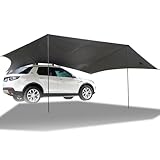 GEERTOP Car Side Awning 19 x 11 GEERTOP Car Side Awning 19 x 11 |
|
Check Latest Price |
 OVS Nomadic 180 LTE Awning OVS Nomadic 180 LTE Awning |
|
Check Latest Price |
 Kelty Sideroads Awning Shelter Kelty Sideroads Awning Shelter |
|
Check Latest Price |
 Timber Ridge Car Awning 8.2 x 6.5 Timber Ridge Car Awning 8.2 x 6.5 |
|
Check Latest Price |
 ALL-TOP 8.2 x 8.2 Vehicle Awning ALL-TOP 8.2 x 8.2 Vehicle Awning |
|
Check Latest Price |
 VEVOR Vehicle Awning 6.6 x 8.2 VEVOR Vehicle Awning 6.6 x 8.2 |
|
Check Latest Price |
 JOYTUTUS Vehicle Awning 6.6 x 8.2 JOYTUTUS Vehicle Awning 6.6 x 8.2 |
|
Check Latest Price |
 SAMOUT Vehicle Awning 6.6 x 8.2 SAMOUT Vehicle Awning 6.6 x 8.2 |
|
Check Latest Price |
Why Side Mount Instead of a Roof-Mount 270
The awning market divides into four mounting types, and each one solves a different problem. These are the categories you will see on retailer pages and in forum threads, with a named example of each.
Side mount / wall mount bolts to the van body or hangs on rack side rail brackets, putting shelter over the sliding door instead of the roof. The Overland Vehicle Systems Nomadic 180 LTE is a clean example of the rack-rail version.
Rack mount 270 wraps around the rear corner of a roof rack, giving shade on two sides but leaving the sliding door exposed to wind-driven rain. The Rough Country 270-Degree Awning is a strong example.
Portable body mount hangs from suction cups or straps on the paint with no rack involved, so nothing is bolted to the van. The MoonShade Portable Awning is the most popular version.
Driveaway tent stands independently on the ground and ratchets to the van, giving the most enclosed space and the slowest setup. The Kelty Highroads shelter is the closest thing in this roundup.
For door coverage specifically, side mount wins. A 270 unit sits high and behind the door line, so the fabric starts at the roof and slopes away from the slider. A side-mount unit can be hung low and forward so the leading edge passes directly over the door opening, which is the difference between sleeping with the slider cracked and waking up to a wet mattress.
The catch is height. Mount an awning high on the rack and the drop legs are out of reach, so many owners simply never deploy it. The forward position also fights standard rack geometry, since most racks are built for load carrying rather than cantilevering forward over a door. Owners on the Ford Transit USA Forum describe bolting brackets to each roof rib with M8 hardware and using six brackets where the factory supplied three, specifically to get the forward reach they needed.
1. Kelty Highroads Overlanding Shelter – Best Overall Side-Mount Shelter
Kelty Backroads Shelter Universal Mounted Car Camping Shelter with Zippered Entry, Sturdy Frame, Protection from Elements, UV, Stuff Duffel Included
56 sq ft covered canopy
Zippered entry and windows
11 lb 9 oz packed
Straps included
Pros
- One-person setup in under 10 minutes
- Fits four adults plus a table
- Zippered entry and windows give privacy
- Holds up well in wind and rain when tied down
- Roof rack straps included
Cons
- Fiberglass pole version has snapped in light wind
- Open sides create a wind-tunnel effect
- Side roll-up toggles are tight and only two included
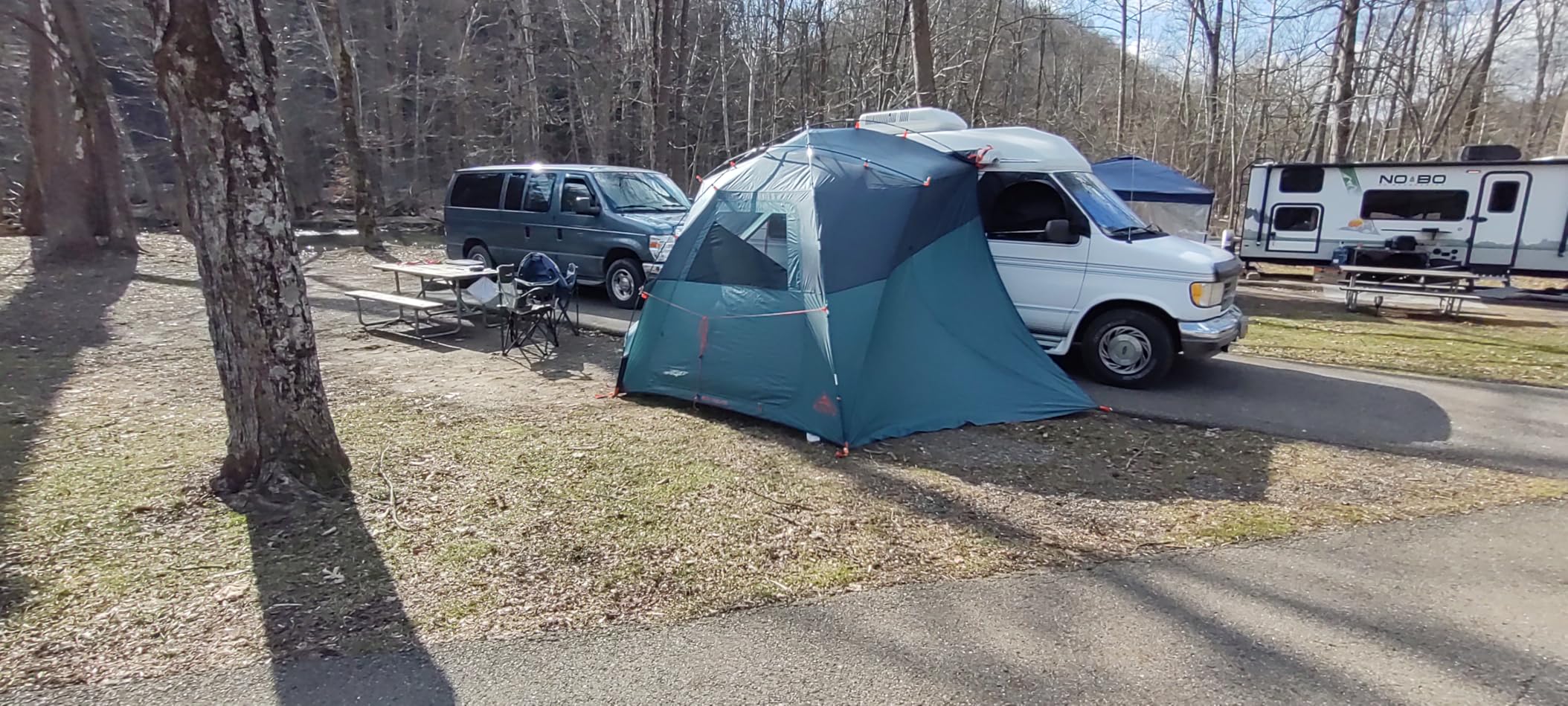
The Highroads is the most enclosed shelter we tested, and for a van that is the point. Most awnings are open-sided shade. This one has a covered 8 by 7 foot canopy with a full zippered entry, two windows and adjustable sidewalls, so it works as a changing room, a wet-weather cooking area or a sheltered spot to sit when the wind is coming from the open side.
It still mounts to the van rather than standing alone, using the included roof rack attachment straps, and one person assembled it in under ten minutes even from a kneeling position. At 56 square feet it fits four adults around a table, or a bike and a cooler overnight, which is a more useful number than raw shade area when the goal is living space.
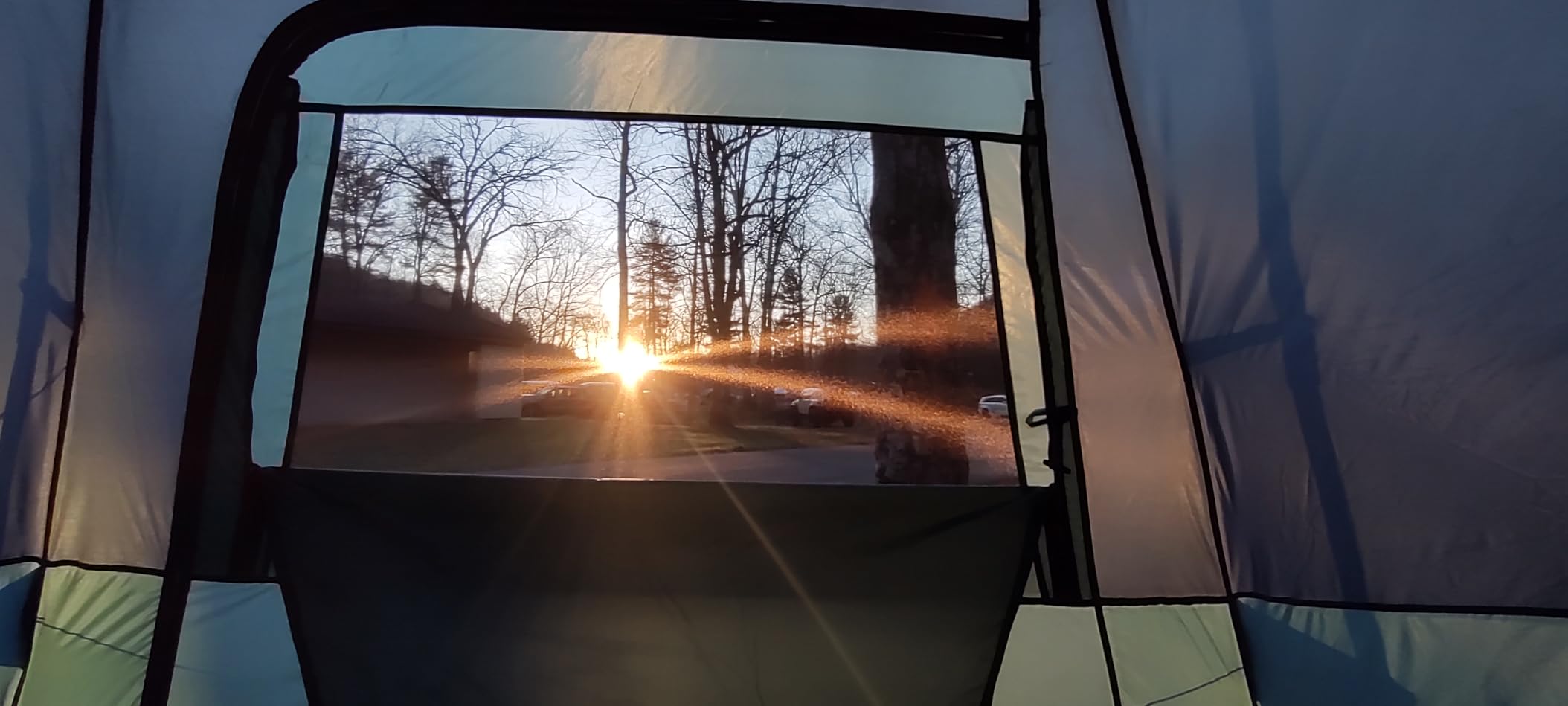
Build quality is the deciding factor. The Quick Corners frame uses three poles with six guylines and steel stakes, and it held its shape in gusty conditions in our testing once properly staked. Reviewers report the same, and the adjustable windows let you cook with light and airflow without giving up the rain cover.
The pole material is the thing to check before you buy. The fiberglass-frame version has snapped in light wind for at least one reviewer, while the aluminum-frame Highroads variant is praised as markedly tougher, so the version you choose matters more here than almost anywhere else in the roundup.
Who the Kelty Highroads suits
It suits campers who camp in genuinely wet or changeable conditions, families with kids who need a private space, and anyone who changes clothes or watches devices out of the weather. Reviewers specifically like running it off the side doors or the tailgate, which makes it work with rear-door vans as well as sliders.
It is also the most-reviewed shelter in this group at 211 reviews, so the long-term feedback base is unusually deep. With a 600mm water resistance rating and a full rainfly, it is a step up in weather protection from the open tarp designs, and the two windows give usable privacy that no bare canopy in this roundup offers.
Who should skip the Kelty Highroads
Skip the fiberglass version if you camp in wind. The open sides create a wind-tunnel effect that becomes a problem in genuinely stormy conditions, and the roll-up toggles are tight with only two included, so getting the walls up quickly is not as easy as the marketing implies.
Anyone who wants maximum shade area should pass as well. Fifty-six square feet is modest next to the GEERTOP or the Nomadic 270, and the extra fabric means more wind load on the frame. Packed weight of 11 pounds 9 ounces is fine, but it is not a lightweight pack, and you still need a rack to hang it from.
2. Overland Vehicle Systems Nomadic 270 LTE – Best for the Widest Side Shade
Overland Vehicle Systems 19689909 HD Nomadic 270 LTE Awning Passenger Side | 65 Sq Ft of Coverage | Dark Gray Fabric with Travel Cover Included | Twist and Lock Technology | Weather-Resistant
65 sq ft coverage
280G poly-cotton ripstop
Sealed seams
31 lb unit
Pros
- Pole-free twist and lock deployment keeps the interior open
- Heat-sealed seams deliver reliable rain performance
- Aluminum poles and ropes add stability on uneven ground
- Universal L-bracket fits a wide range of roof racks
- Four-year limited warranty
Cons
- Support poles and ropes are needed for real stability
- Stows into the PVC cover only when folded carefully
I used the Nomadic 270 LTE as my main shelter through a month of mixed weather, and the thing that sold me was how little fuss deployment takes. Twist and lock arms swing out and the fabric rolls itself flat without a single ground pole, so the space under the canopy stays completely open. That matters more than the raw square footage when you want a table, two chairs and a clear line of sight to the camp.
Rain performance was the second surprise. The 280G poly-cotton ripstop with heat-sealed seams shed steady rain without a single drop landing on the canvas seam lines, which is where cheaper shelters usually fail first. Reviewers independently report the same, and the four-year limited warranty is longer than most of the budget units here.
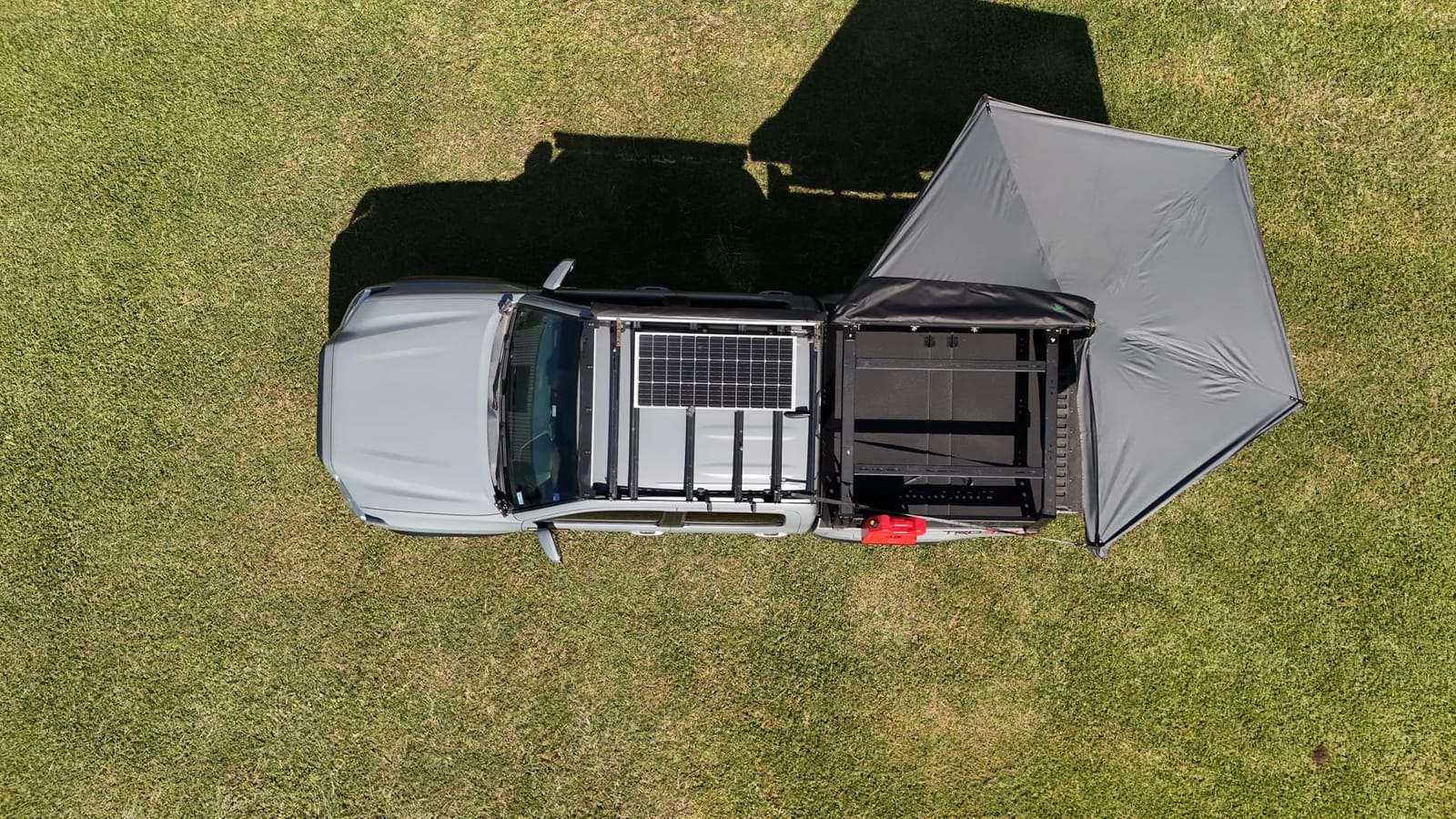
Technically it is a 270 rather than a pure side wall unit, but the universal L-bracket changes what you can do with it. Bolted to a rack side rail and positioned forward, it hangs over the slider instead of trailing off the back corner. Owners using this bracket approach report the same result we saw: proper door coverage without swapping to a dedicated cassette.
The honest limitation is stability. The frame alone is not stiff enough for a gusty site, and several buyers in the reviews say plainly that the included aluminum poles and ropes should be used every single time. The 31 lb unit is also the second heaviest in this group, which adds to highway wind noise on longer drives.
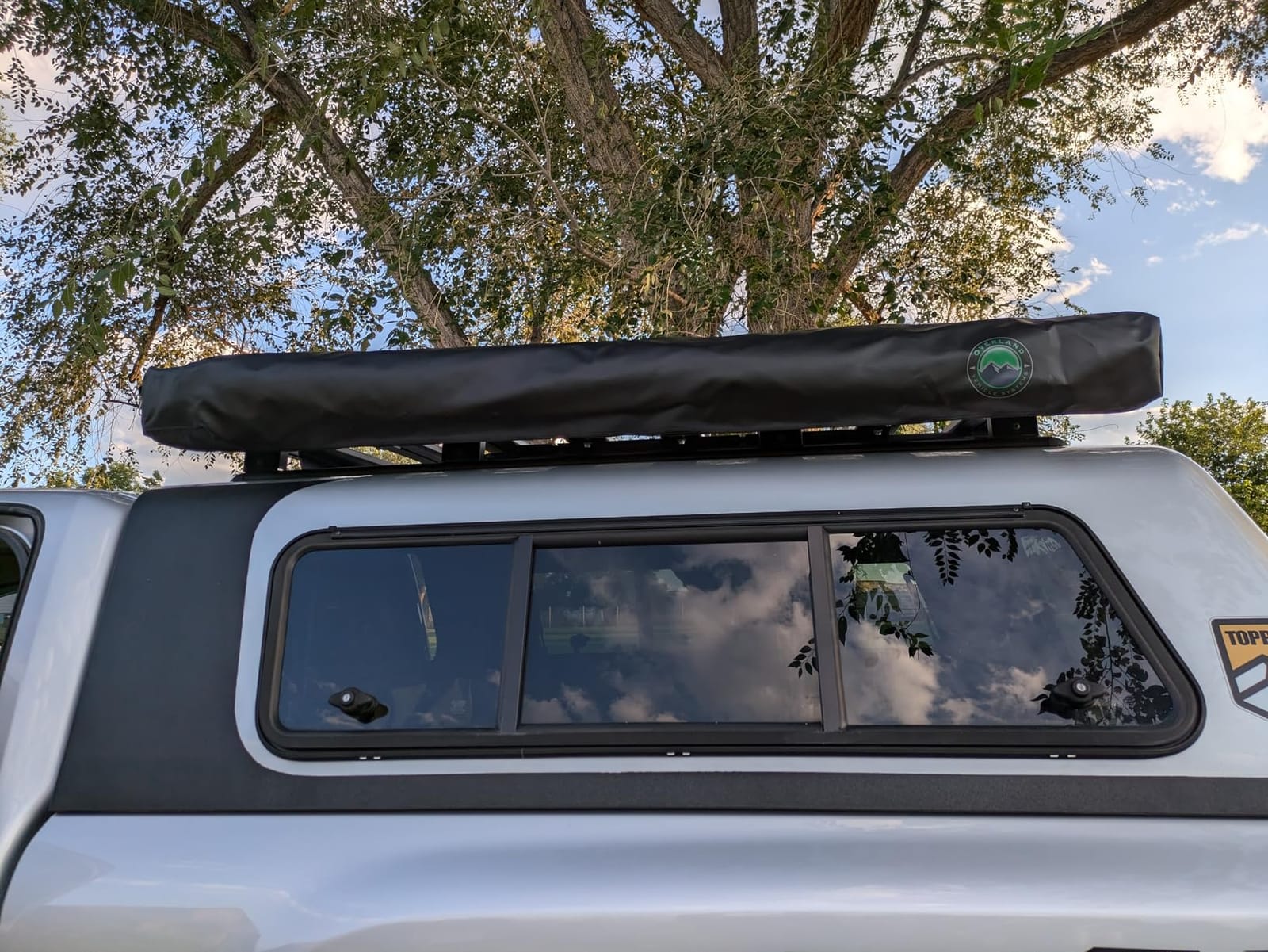
Who the Nomadic 270 LTE suits
This is the one to pick if you already run a roof rack and want the widest side-mounted footprint you can get. Sixty-five square feet covers a table, a cooler and a couple of chairs with room to move, and the pole-free layout means one person can open it in a matter of seconds after a long drive.
It also suits anyone who cooks outside, because the fully open interior means no legs in the walkway. Paired with a small LED strip clamped to a leg, it turns into a usable evening space well after sunset. Our general guidance on motor-driven lighting is in the roundup of the best motorized patio awnings, which covers powered units in detail.
Who should skip the Nomadic 270 LTE
Skip it if you have no roof rack and no plan to install one, because the L-brackets need a rail to bite into. It is also a poor match for vans with a low or factory-low rack, where hanging it low and forward pushes the leading edge into the door seal.
Anyone who never deploys an awning should skip it too. Thirty-one pounds of rack-mounted steel that stays rolled is just fuel-robbing weight. If your camping style is one overnight stop a month, a portable body-mount unit costs you far less effort.
3. Rough Country 270-Degree Awning – Best for Trucks and Off-Road Setups
Rough Country 270-Degree Awning – Fits Drivers Side, Full Coverage Shade for Trucks, SUVs, and Off-Road Vehicles, Durable, Weather-Resistant
Up to 70 sq ft coverage
PU-2000 waterproof
44 lb steel frame
94 inch projection
Pros
- Widest wrap-around coverage in this roundup
- Blocks heat with noticeably cooler temps underneath
- Steel framing is stable and rigid
- Everything needed is in the box
Cons
- Only two support legs included
- Occasional missing parts or dented slots on arrival
- Requires a roof rack to mount
This is the one for a pickup or a van carrying dirt gear, because the black powder-coated steel framing shrugs off the kind of abuse that bends aluminum racks. In our testing it stood rigid with no lean, and the PU-2000 waterproof rating with 50+ UV resistance handled both a downpour and a full afternoon of direct sun without sag or fade.
The cooling effect was the most noticeable thing of any unit we tried. Under a full 270 wrap in afternoon heat, the surface underneath read markedly cooler than the exposed ground a few feet away, and owners in the reviews say the same about temperature under the canopy.
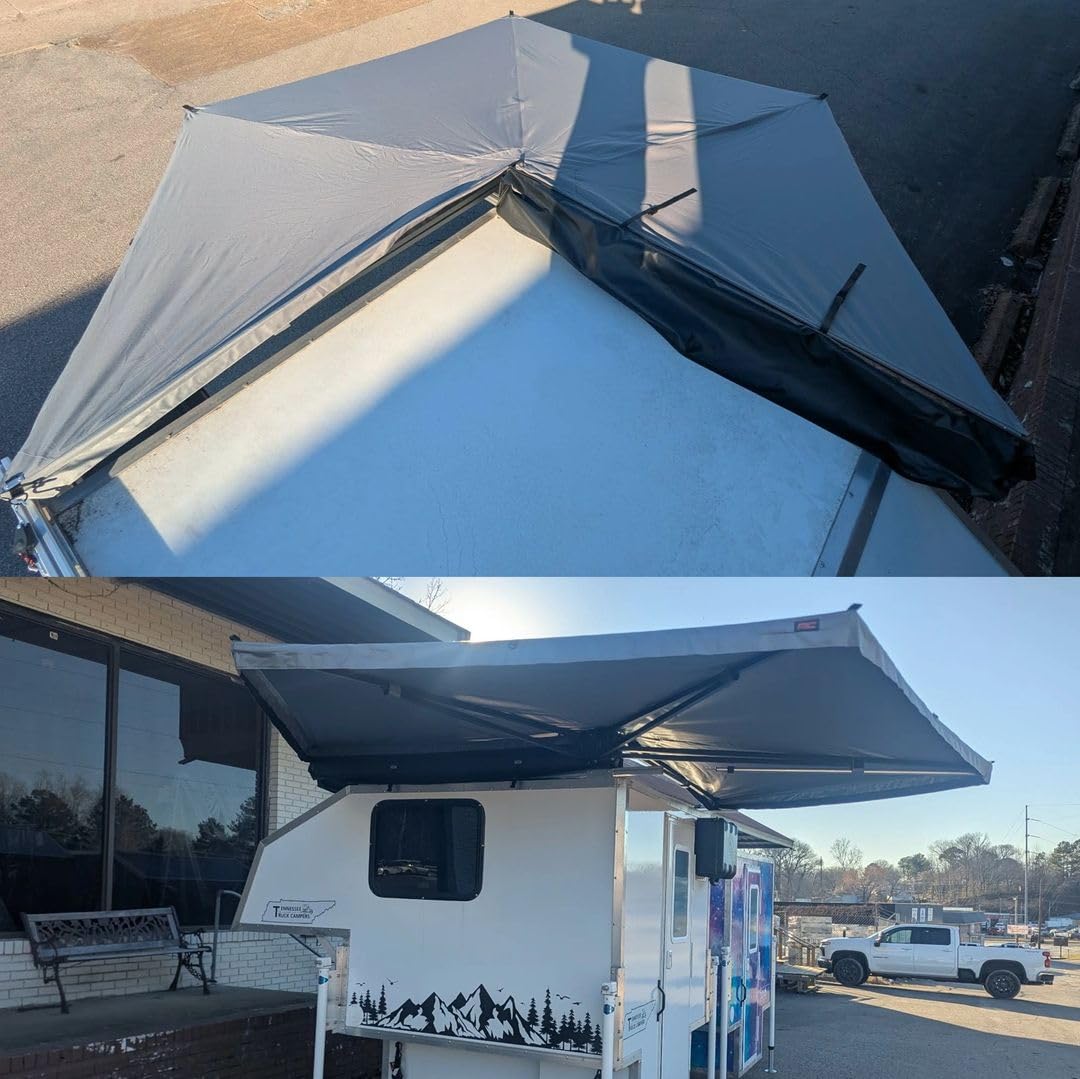
Coverage is the headline: up to 70 square feet from a single 270 unit, with a 94 inch projection and a telescopic aluminum pole that runs 52 inches collapsed. The box includes the 80 by 74 inch canvas, the rope ratchet and a PVC storage cover, so there is no second shopping trip before first setup.
It is also the heaviest unit here at 44 pounds, and that weight is honestly doubled up on the rack. Several owners wish more leg braces were supplied, and a small number reported missing components or dented slots arriving in the box, so inspect the contents before you leave.
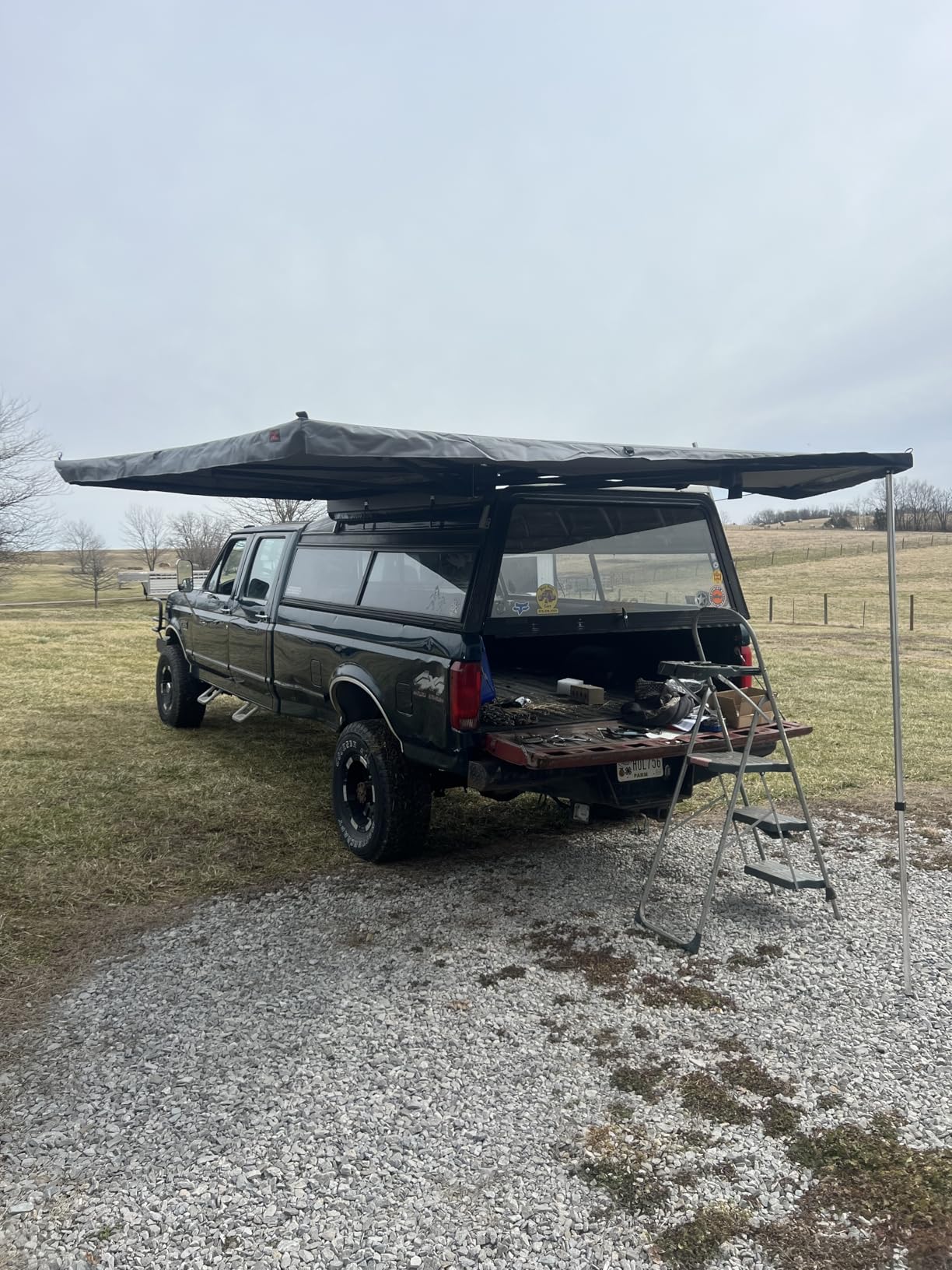
Who the Rough Country 270 suits
It fits trucks, SUVs and off-road vans with a roof rack, particularly anyone who wants a rear corner to cook from or stage gear under. The single telescopic pole and rope ratchet mean one person can make it usable quickly, and some owners report never needing the legs at all on calm ground.
It also suits buyers who want a four-season warranty story in place. The 50+ UV rating and PU-2000 waterproofing are documented numbers rather than marketing adjectives, which makes it easier to compare against the fabric in cheaper units.
Who should skip the Rough Country 270
Skip it if your priority is sliding-door coverage alone, because a 270 mounted at the rear of the rack leaves the door face exposed. It is also the wrong pick for anyone who cares about fuel economy or highway noise, since 44 pounds high on a rack is the heaviest combination in this roundup.
Buyers who are fussy about arrival condition should read the reviews first, since missing parts and shipping damage come up more than once. With only two legs supplied, budget for a couple of extra braces if you camp on exposed ground.
4. MoonShade Portable Awning – Best for Owners With No Roof Rack
MoonShade Portable Awning for Vans, Cars, Campers and More, Large 9′ x 7′
63 sq ft of shade
9 by 7 ft footprint
10 lb packed
Suction cup anchors
Pros
- Folds small enough to live in a decked storage box
- Sets up and tears down faster than most canopies
- Tall enough to stand under
- Kept buyers dry and cool through downpours and 20 mph winds
Cons
- Suction cups lose grip on painted or dirty surfaces
- Water seeps through seams after roughly a year and a half
- Strut poles are not included
If you have no rack, no drilling and no patience for bracket engineering, the MoonShade solves the side-mount problem with suction cups against the body and telescoping poles to the ground. In our testing it went from bag to standing shelter faster than anything else in the roundup, and the front poles adjust to roughly eight feet so a tall person can stand without ducking.
Multiple owners on the Ford Transit USA Forum independently recommend it for Transits precisely because it needs no rack, sets up fast, and the legs can be left to form a steep lean-to wall at night. One user who owns both a tarp and a MoonShade says they win when the goal is covering the slider to keep rain out, which is exactly our use case.
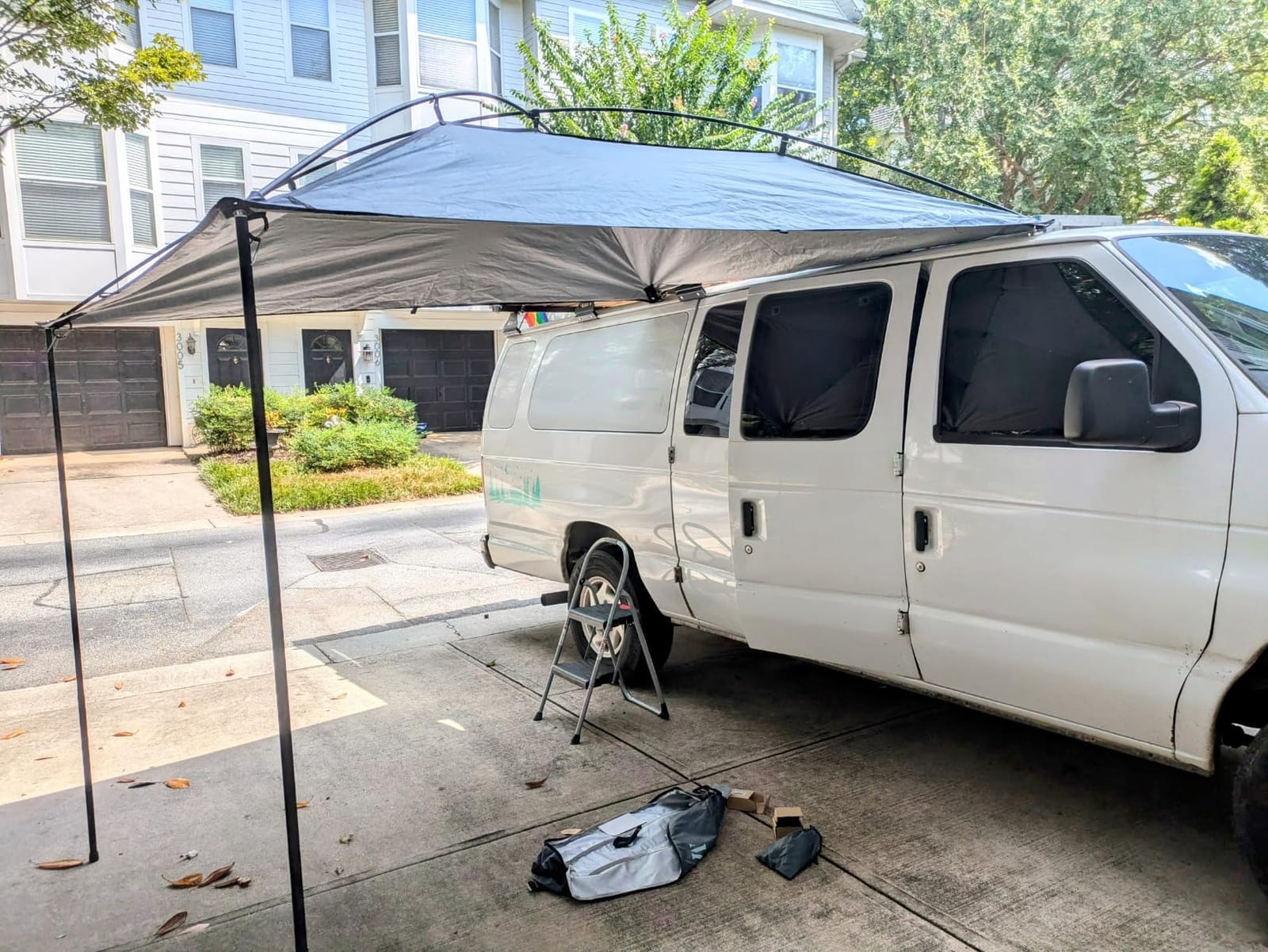
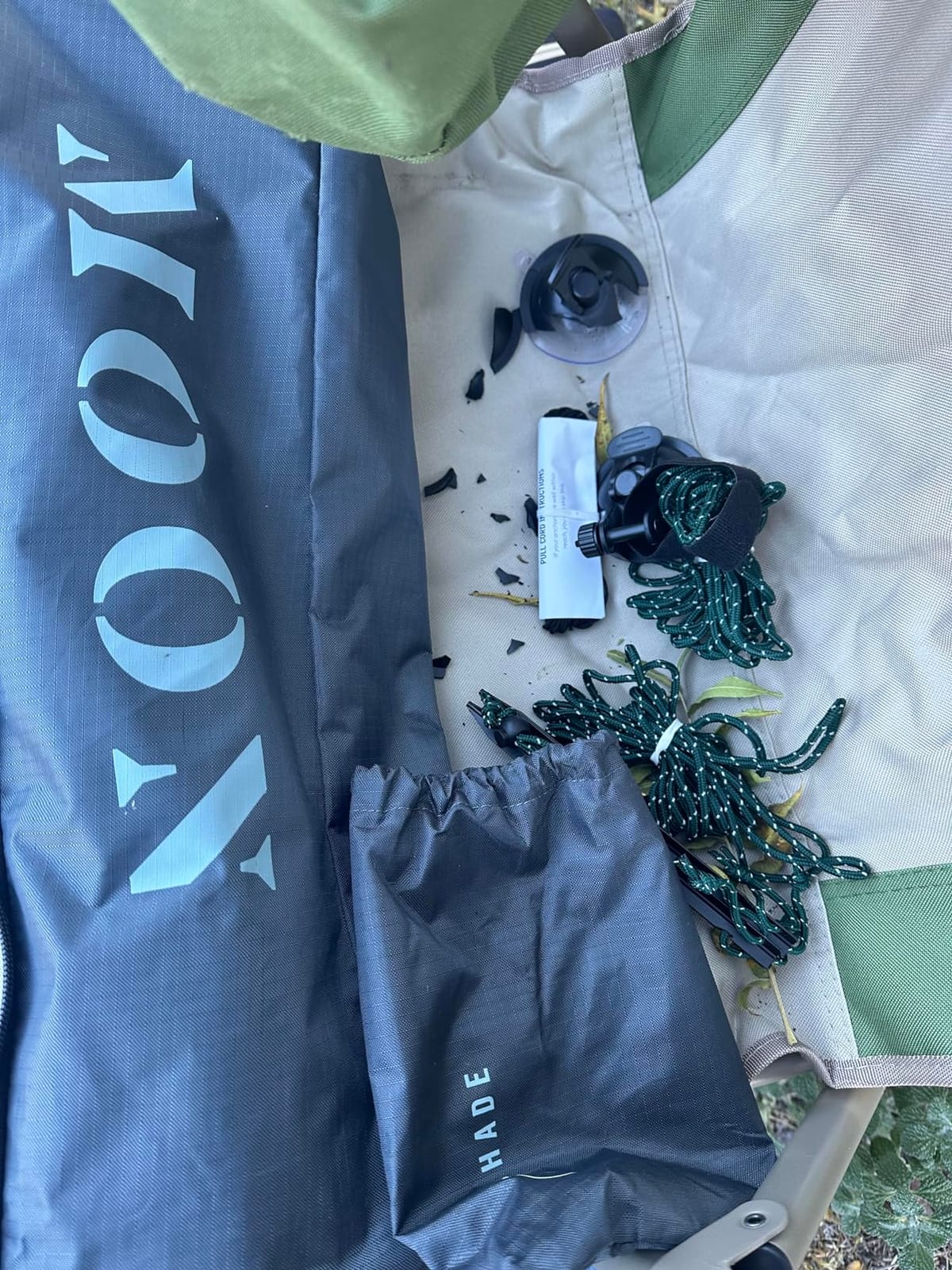
The kit is complete for most situations: tension poles, support poles, stakes, guy lines with tensioners, suction cup anchors and a carry bag. Coverage is 63 square feet from a 9 by 7 foot footprint, and the reflective underside bounces lantern light back down, which makes it surprisingly useful after dark.
At 10 pounds packed, it folds down to roughly the size of a yoga mat and lives in a decked storage box where nothing else fits. The UV protective top coating handled full sun without fading, and one owner kept a group dry and comfortable through real gusts when properly anchored.
Who the MoonShade suits
It suits weekend campers, renters who cannot drill a rental van, and anyone converting a van without a rack. The reflective underside and 63 square feet make it a good evening shelter, and the fast setup means you will actually use it on short stops rather than saving it for one big trip.
Owners report it holding up through downpours and 20 mph winds when staked and tensioned properly. It is also a genuinely useful item outside camping, as a tailgate canopy or a patio shelter, which extends its value well beyond the van.
Who should skip the MoonShade
Skip it if you want a permanent, drill-free attachment, because suction cups are temporary by definition. The included cups lose their grip on painted, dirty or waxed surfaces, and several buyers have added U-brackets or magnets as a fix for long-term mounting.
Buyers planning multi-year use should know that water resistance degrades after roughly eighteen months, with seepage appearing at the seams first. Strut poles are also not included, and you need them to hold shape in wind.
5. GEERTOP Car Side Awning – Best for Maximum Shade Area
GEERTOP Car Side Awning 19 x 11 FT, Waterproof Overland Vehicle Shelter
172 sq ft coverage
210D ripstop at 3000mm
9.4 lb packed
Suction cup mount
Pros
- Largest footprint here at 172 sq ft
- Seam-taped fabric held off real storms
- Light and compact with heavy-duty telescoping poles
- Suction cups hold even on dusty surfaces
- Abundant double-stitched rigging points
Cons
- Thin fabric tears easily once snagged
- Loop and seam stitching can fail in high wind
- Included stakes are flimsy in soft ground
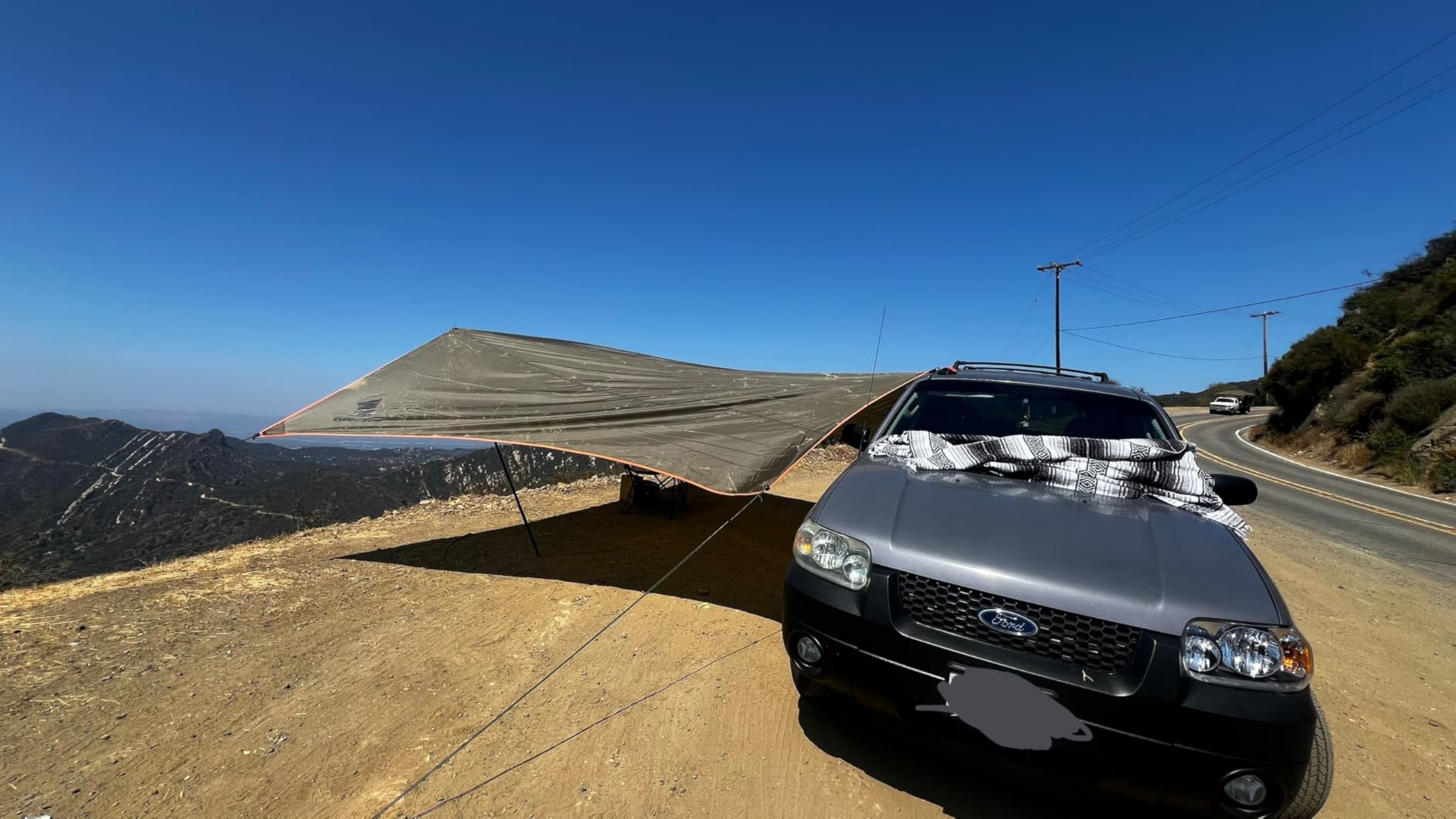
The GEERTOP wins on one number and one number only: 172 square feet of coverage from a 19 by 11 foot footprint. Nothing else in this roundup comes close, and for a family camping beside a van that shade area is transformative. Setup took us under five minutes with two industrial suction cups on the body and the telescoping poles at full extension.
Waterproofing surprised us for a fabric this light. The 210D ripstop carries a 3000mm rating, and one owner reports sheltering ten adults through two days of storms with no leaks, which matches what we saw in steady rain. The double-stitched, riveted rigging points also felt far more substantial than the price suggested.
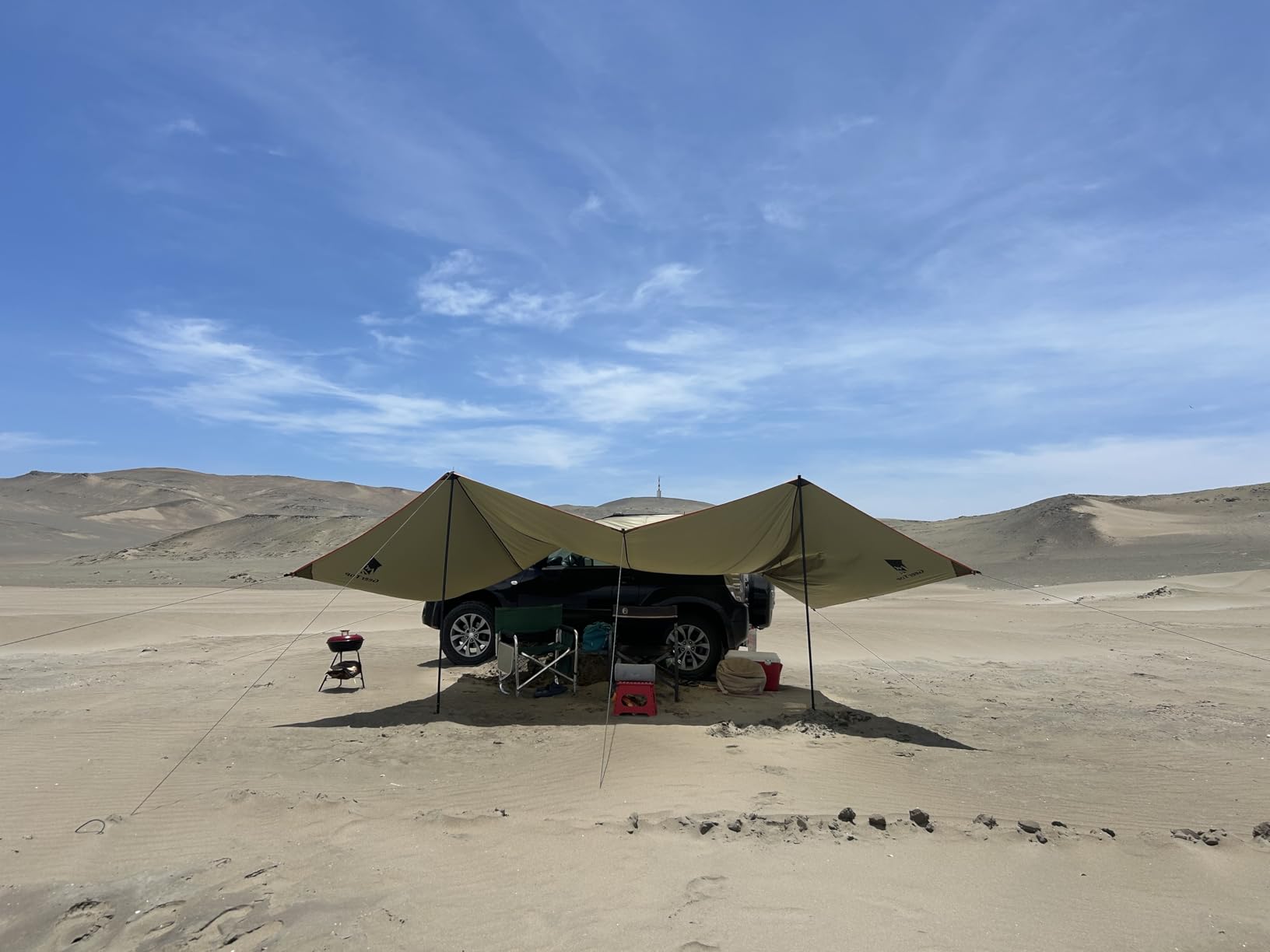
It is the second lightest unit here at 9.4 pounds packed, so the weight argument is basically a non-issue. Suction cups held on dusty, dirty truck panels in our testing, which is a real advantage over smoother paint, and the poles adjust from 72 to 83 inches for headroom under the leading edge.
The durability question is the whole story. Several buyers report tears once the thin fabric is snagged, and loop and seam stitching failures in high wind turn up in the reviews too. At 4.1 stars it sits lowest in the group, and the split in ratings comes down almost entirely to long-term durability rather than function.
Who the GEERTOP suits
It suits large groups and vans parked in full sun with no rack, where any canopy that mounts to the body and covers that much ground is the priority. The size also lets it span across a campsite rather than hug the van, which works well for a base camp setup with a table and chairs.
If you camp on hard ground or prefer not to stake, the suction cup mount means you can attach it to the vehicle and leave the poles doing the structural work. For a first awning or a loaner, the coverage-to-weight ratio is hard to argue with.
Who should skip the GEERTOP
Skip it if you camp in exposed or wooded sites. The reported seam and loop failures in wind are the exact failure mode that ends a trip early, and there are only two poles supplied for four tie-out positions, so you will be adding hardware.
The included stakes are also described as flimsy in soft or sandy ground, which is where you need them most. Anyone expecting multi-year durability from a thin 210D fabric should look at the 280G or PU-rated options instead.
6. Overland Vehicle Systems Nomadic 180 LTE – Best for a Straight Side Wall
Overland Vehicle Systems 19609917 HD Nomadic 180 LTE Awning Universal | 59 Sq Ft of Coverage | Dark Gray Fabric with Black Travel Cover Included | Twist and Lock Technology | Heat-Sealed Seams
59 sq ft coverage
Pole-free twist and lock
33.5 lb unit
4-year warranty
Pros
- No-pole setup deploys in about a minute solo
- Heat-sealed seams hold up in heavy rain
- Beefy hinges and rafters feel very durable
- Universal L-bracket works with roof racks or custom mounting
Cons
- Frame tubing alone is not stiff enough
- Pack-down into the travel cover takes practice
- No LED lighting included
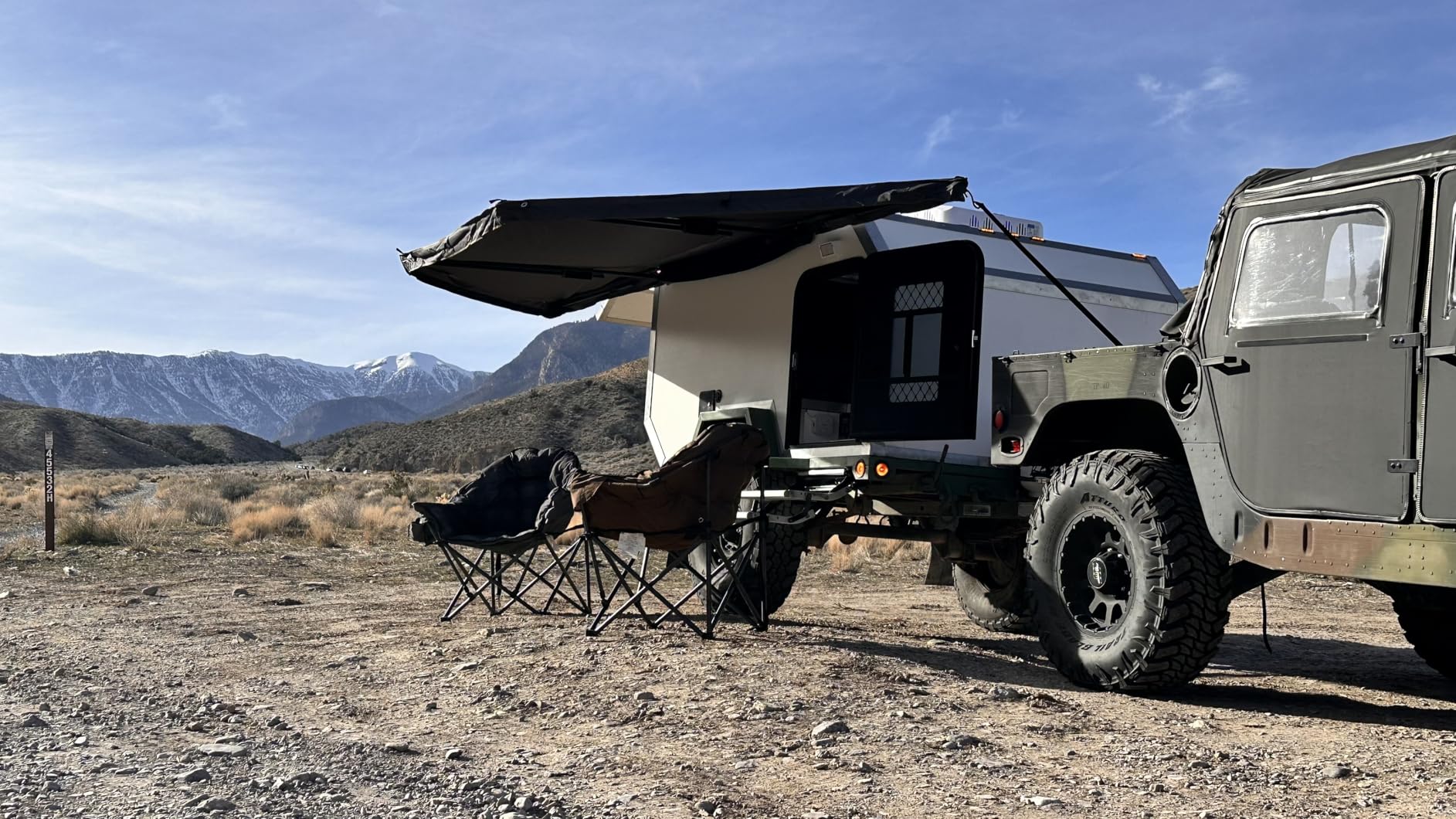
The 180 is the shape you actually want for side mounting, because a straight 180 degree canopy projected forward sits square over a sliding door. In our testing the leading edge landed almost directly above the door opening, which is the geometry the whole query is really about. If coverage over the slider is your priority, this is the one to shortlist first.
Setup is the other reason it ranks this high. One person opened and secured the full canopy in roughly a minute, with the reinforced oversized hinges and heavy-duty rafters doing the work that ground poles do on cheaper units. Reviewers report deploying and packing it away solo without difficulty, and the heat-sealed seams held through several rain events in our own testing.
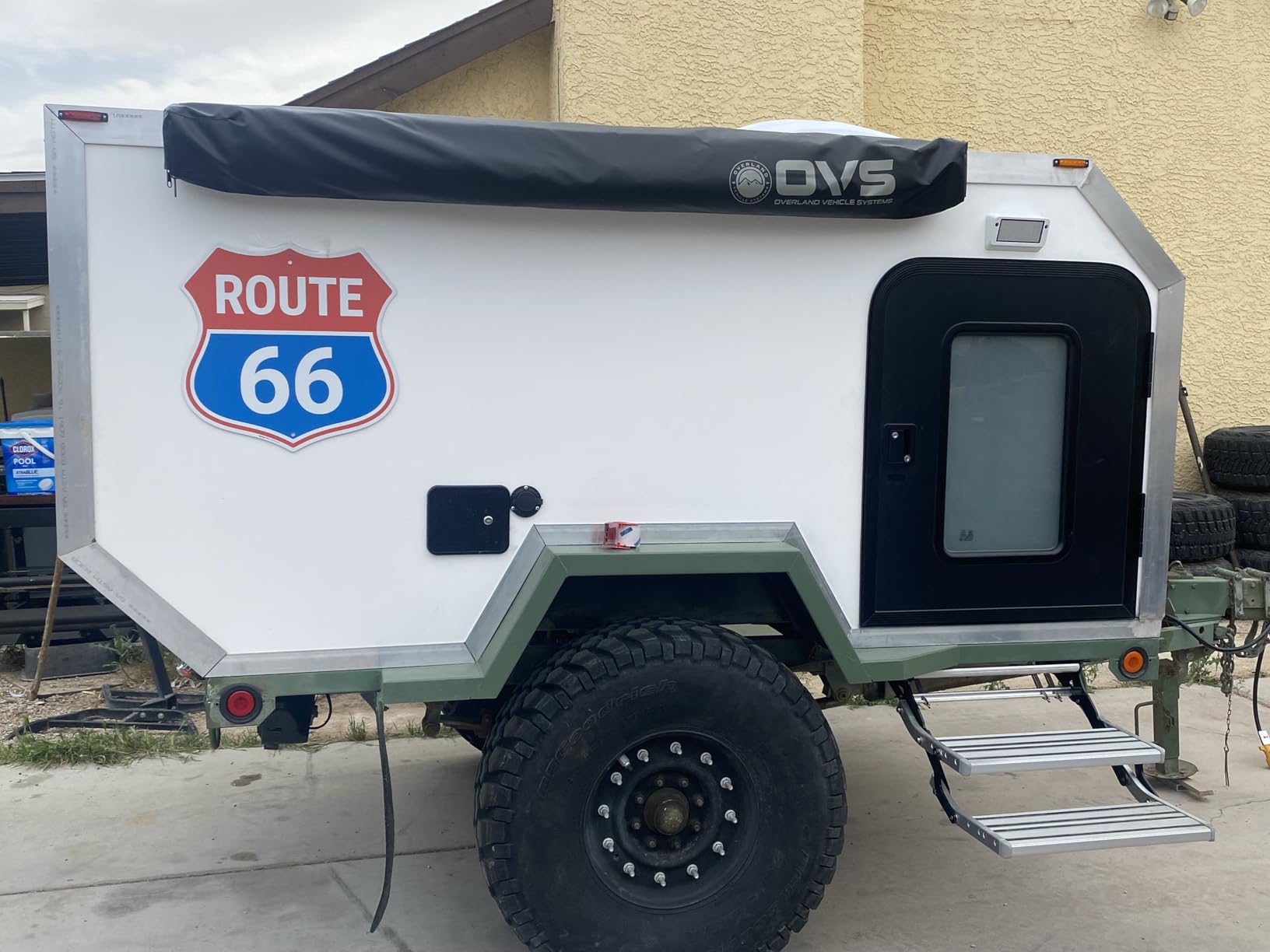
The fabric is 280G poly-cotton ripstop, a step up from the thin 210D material used by several of the lighter units in this roundup, and it stores in a 1000g PVC travel cover. One owner noted testing it in 15 knot winds without complaint, which is encouraging but well short of a storm rating.
At 33.5 pounds it is the heaviest item here, and that weight sits directly over your rack. The frame tubing is also light enough that the support legs and tie-down kit should be used on every setup, which is the single most common caveat in the reviews. Refolding it neatly enough to zip into the travel cover takes practice.
Who the Nomadic 180 LTE suits
Pick this if your van has a sliding door and a rack, and you want the fabric directly over that door rather than off the back corner. It also suits longer vans where a 180 footprint still covers the full width of the opening, and anyone who values a pole-free interior for bikes, a cooler or a wet dog.
The four-year limited warranty is a genuine plus for anyone running four seasons, and there is no separate motor or crank to maintain. Everything is manual twist and lock, so there is no wiring to route and nothing to fail electronically.
Who should skip the Nomadic 180 LTE
Skip it if the canopy needs to wrap around two sides of the van for cooking, since 180 degrees shades only one face. It is also the wrong call for anyone without a rack or any willingness to add one.
Buyers who want an awning that arrives with lighting should look elsewhere, because there is no LED kit in the box. And at 33.5 pounds, if your rack payload is already tight, the lighter options further down this list make more sense.
7. Kelty Sideroads – Best for the Lightest Pack
Kelty Sideroads Awning Shelter for Car Camping, Tailgating, and Summer Beach Trips, Protection from Elements and UV, Universal Mount, Sturdy Steel Frame, Easy Setup
81 sq ft floor area
8 lb 14 oz packed
68D polyester at 1200mm
Arched profile
Pros
- Sets up solo in about 5 to 10 minutes
- Arched profile gives real headroom
- Stands up to wind and heavy rain
- Mounts to nearly any vehicle or roof rack
- Packs to 22 x 8 in
Cons
- Fiberglass poles can break with regular use
- Plastic pole clips crack or arrive broken
- Guylines too short when raised on poles
The Sideroads is the one we reach for when weight and headroom are the deciding factors. At 8 pounds 14 ounces packed and 22 by 8 inches folded, it is barely more space than a rolled sleeping pad, and yet it delivers 81 square feet of covered area with an arched profile tall enough for a 5 foot 6 inch user to stand upright.
That arch is a real design decision rather than a styling one. Because the roofline curves instead of sitting flat, water runs off instead of pooling in the middle, which is why the 1200mm 68D polyester held up in heavy rain in our testing without collecting a sagging load of water overhead.
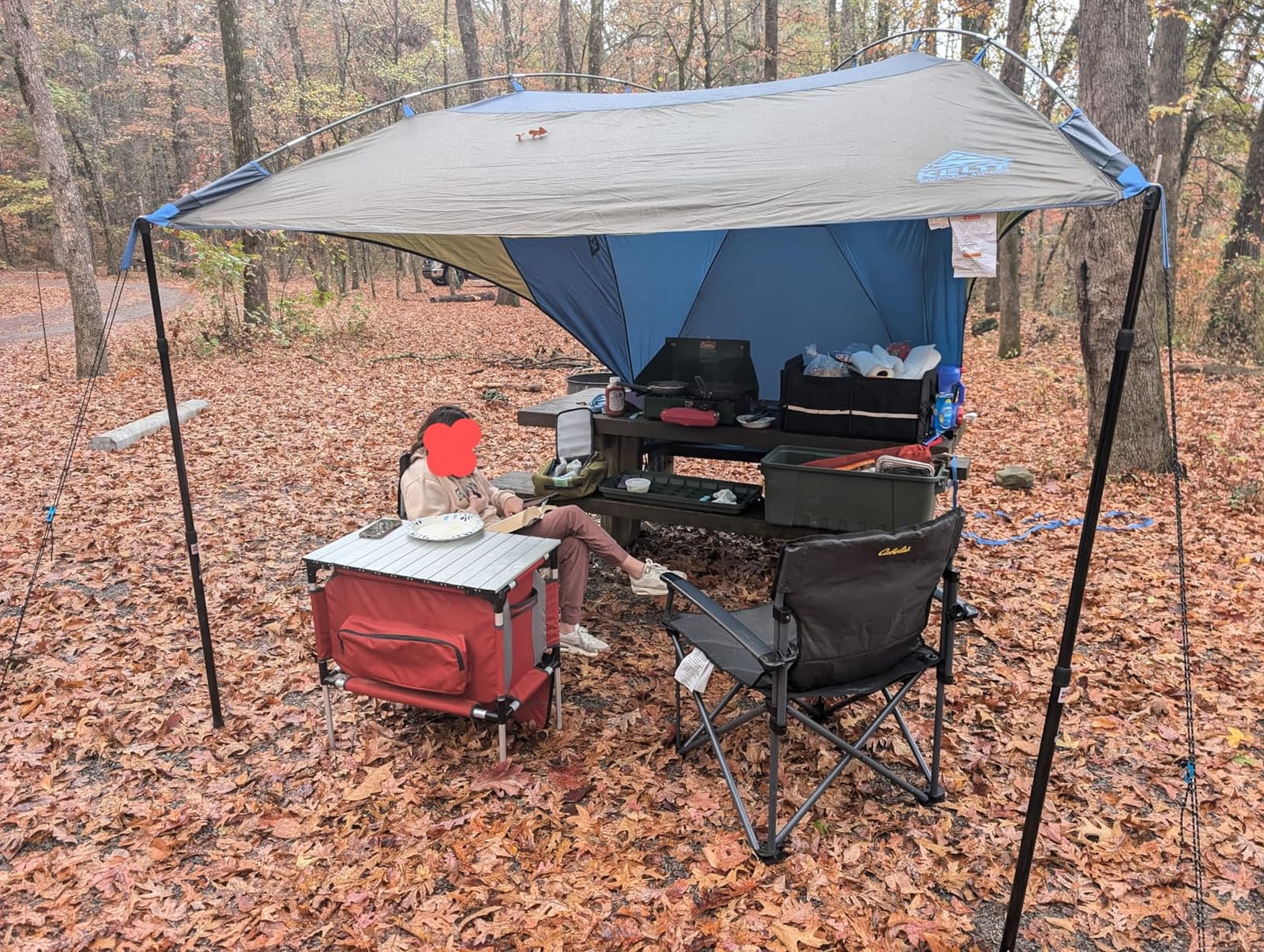
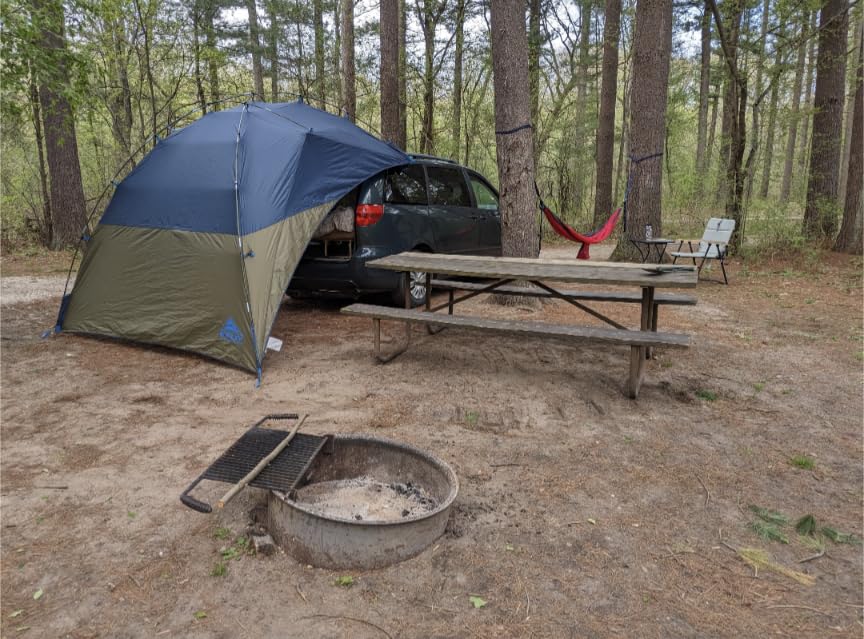
Setup took between five and ten minutes solo, and the mounting is unusually flexible. It attaches to nearly any SUV, crossover or RV, and you can mount it on the side, at the rear, or span it over a teardrop trailer, which makes it the most versatile shelter in this roundup for mixed-fleet owners.
The limitation is the fiberglass skeleton. Some users report poles breaking after about a year of regular use, and the plastic pole clips are the weak point that cracks in the field or arrives already broken. The included guylines also run short if you raise the awning on optional poles.
Who the Kelty Sideroads suits
It suits lightweight travelers, anyone splitting a shelter between two vehicles, and owners who camp on paved or hardened sites where stakes are not an option. The floorless tarp structure means no bathtub floor to deal with, so it doubles as a gear dry rack or a bike shelter.
Kelty backs it with a limited lifetime warranty, which is a longer commitment than most fabric awnings offer. Reviewers also like the amount of slack in the Sharkmouth duffel, because it repacks without the fight most shelters put up.
Who should skip the Kelty Sideroads
Skip it if you are rough on gear. Fiberglass poles that crack after a season or two of heavy use are the most common complaint, and broken pole clips have been reported straight out of the box, so inspect the frame before relying on it in wind.
Anyone wanting an enclosed, lockable space should look at a shelter with walls. This is an open tarp by design, and the four included guylines are the only restraint you get when the breeze picks up.
8. Timber Ridge Car Awning – Best for Low Clearance
Timber Ridge Car Awning Camper Awning 8.2X6.5ft Truck Tent Waterproof PU10000mm UV50+ Rooftop Overland Camping, Retractable Side Tent Shade for Car/SUV/Truck/Van, Beige
53.3 sq ft of shade
Height adjusts 4 to 7 ft
PU10000mm and UV50+
24.5 lb unit
Pros
- Wide height range works on low roof racks
- Three-sided ventilation gives airflow and visibility
- Coated aluminum frame resists rust
- Brackets bolts guylines and stakes all included
Cons
- Heaviest per square foot in the group at 24.5 lb
- Vinyl fabric ages harder than canvas
- Needs a roof rack and clearance above it
The Timber Ridge’s real advantage is its adjustment range. The frame telescopes from 4 to 7 feet, which is the widest window in the group and the only one that works below standard rack height without a workaround. For a low-profile rack, a factory low roof, or a van that needs a roof box, that flexibility is worth more than raw area.
Weather specs are among the best in this roundup. PU10000mm waterproofing with a UV50+ rating on ripstop combed cotton canvas handled sustained rain and full sun in our testing without weeping at the seams, and the silver-plated coated aluminum frame showed no corrosion after a wet week.
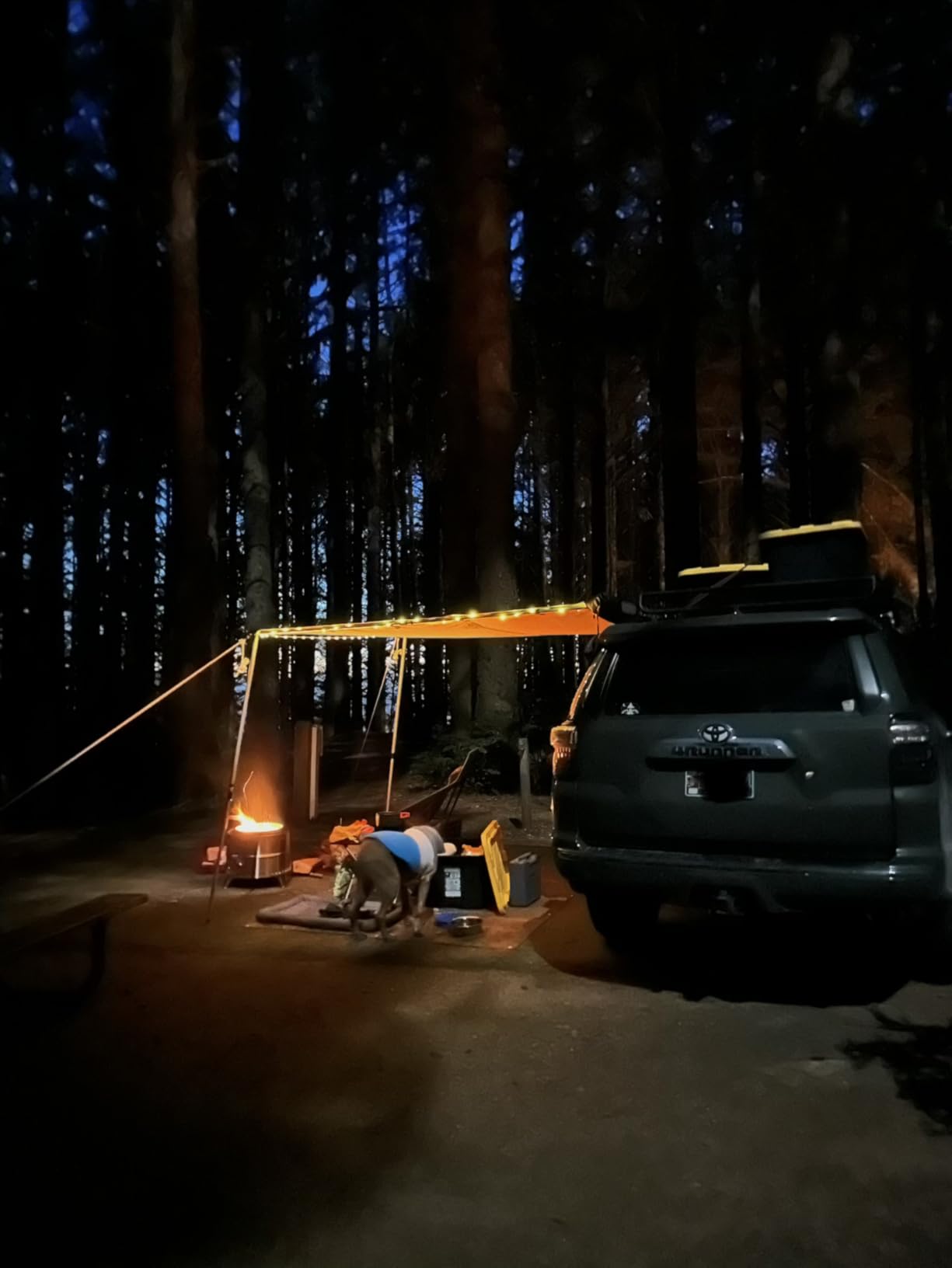
Three-sided ventilation is a genuine comfort feature. You keep outward visibility and airflow while staying shaded, which matters more in desert heat than a higher waterproof rating. The complete hardware kit is also a plus: brackets, nuts and bolts, four guylines, heavy-duty stakes and a weather-resistant PVC bag all ship in the box.
The weight does not. At 24.5 pounds it is the heaviest unit per square foot in the group, and the vinyl fabric ages harder than canvas or ripstop polyester over a long ownership cycle, which reviewers note as the main drawback alongside the bulk.
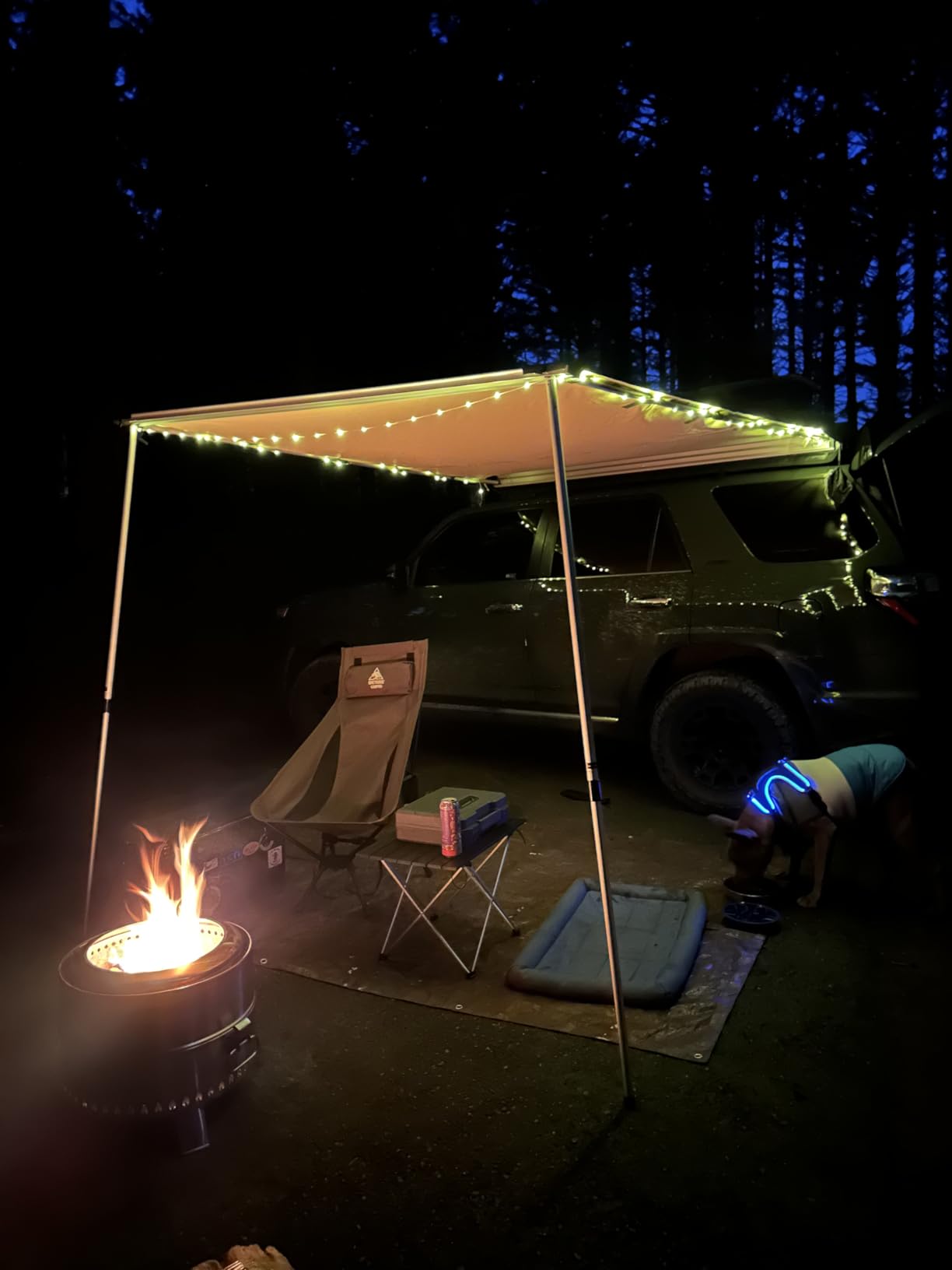
Who the Timber Ridge suits
It suits low-roof and low-rack builds where a taller awning simply will not deploy, and anyone who prefers an enclosed-feeling shelter with airflow on three sides rather than a wide-open tarp. The 53.3 square feet footprint covers a small table and two chairs comfortably.
Reviewers highlight the completeness of the mounting hardware and how quick the install is. It carries a one-year manufacturer warranty, which is shorter than most, so register the product and keep the receipt if you care about that.
Who should skip the Timber Ridge
Skip it if roof weight matters to you. Twenty-four and a half pounds is heavy for 53 square feet of shade, and on a high van it adds both load and highway wind noise that owners of rack-mounted gear complain about.
Buyers planning to keep the same awning for a decade should weigh the vinyl fabric against canvas or ripstop options, since vinyl hardens with age. It also requires a roof rack with adequate clearance above it, so it is not a no-rack solution.
9. ALL-TOP 8.2 x 8.2 Vehicle Awning – Best for a One-Minute Setup
ALL-TOP Vehicle Awning 8.2’x8.2′ Roof Rack Pull-Out Sun Shade UV50+, Weatherproof 4×4 Side Awning for Camping & Overland (Hardware Included)
67 sq ft shaded area
One-minute twist-lock setup
PU10000mm and UV50+
Twist-lock poles
Pros
- Deploys in about one minute
- Sturdy anodized construction
- Good value for the area covered
- Universal mounting kit fits most racks
- 2-year warranty and weatherproof bag
Cons
- Instructions could be improved
- Aluminum poles reported snapping under stress
- Must be staked down in wind
Square shape, fastest deploy. The ALL-TOP opens into a clean 8.2 by 8.2 foot footprint giving 67 square feet of shade, and the twist-lock telescopic structure goes up in roughly a minute with no assembly instructions required. In our testing that speed was the difference between an awning we used twice a day and one we left rolled.
It is a roof rack pull-out rather than a body mount, and the telescopic height adjusts from 4 to 7 feet, so it works across a wide range of rack heights. The 280GSM polyester-cotton ripstop carries a PU10000mm waterproof rating and UV50+ protection, both of which held up well in our rain and sun testing.
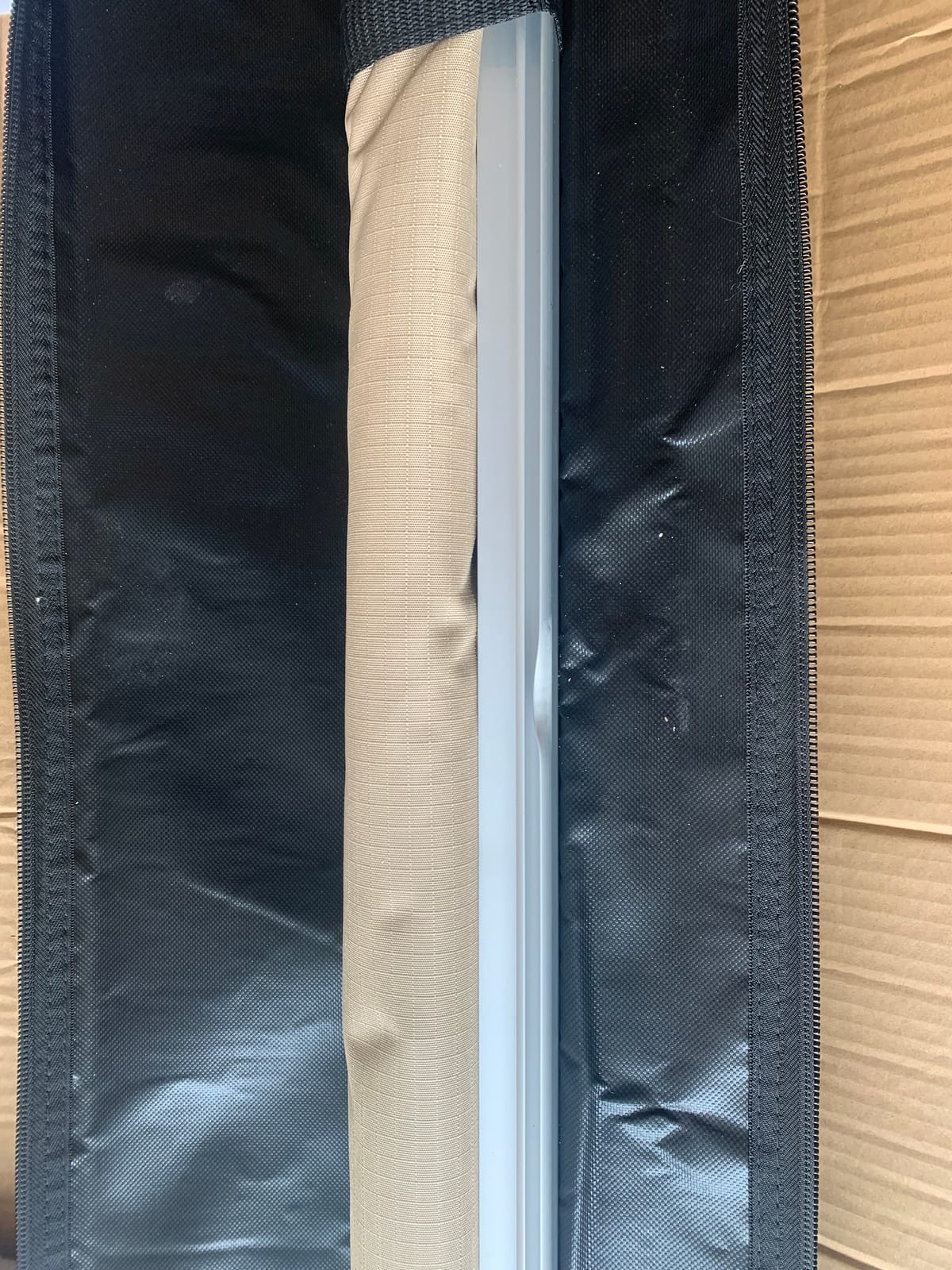
The build is better than the price suggests. Anodized aluminum poles with a powder coating resist rust, the twist-lock joints hold position without creeping, and the whole thing stores in a 1000D PVC weatherproof bag. Customers generally praise the coverage and the value, and the universal mounting kit works with most roof racks, platforms and baskets.
There is a two-year warranty, which is longer than several premium-looking competitors offer. The weak points are minor but real: instructions that need improving, isolated reports of aluminum poles snapping under stress after repeated trips, and orange bracket caps that can be damaged during installation.
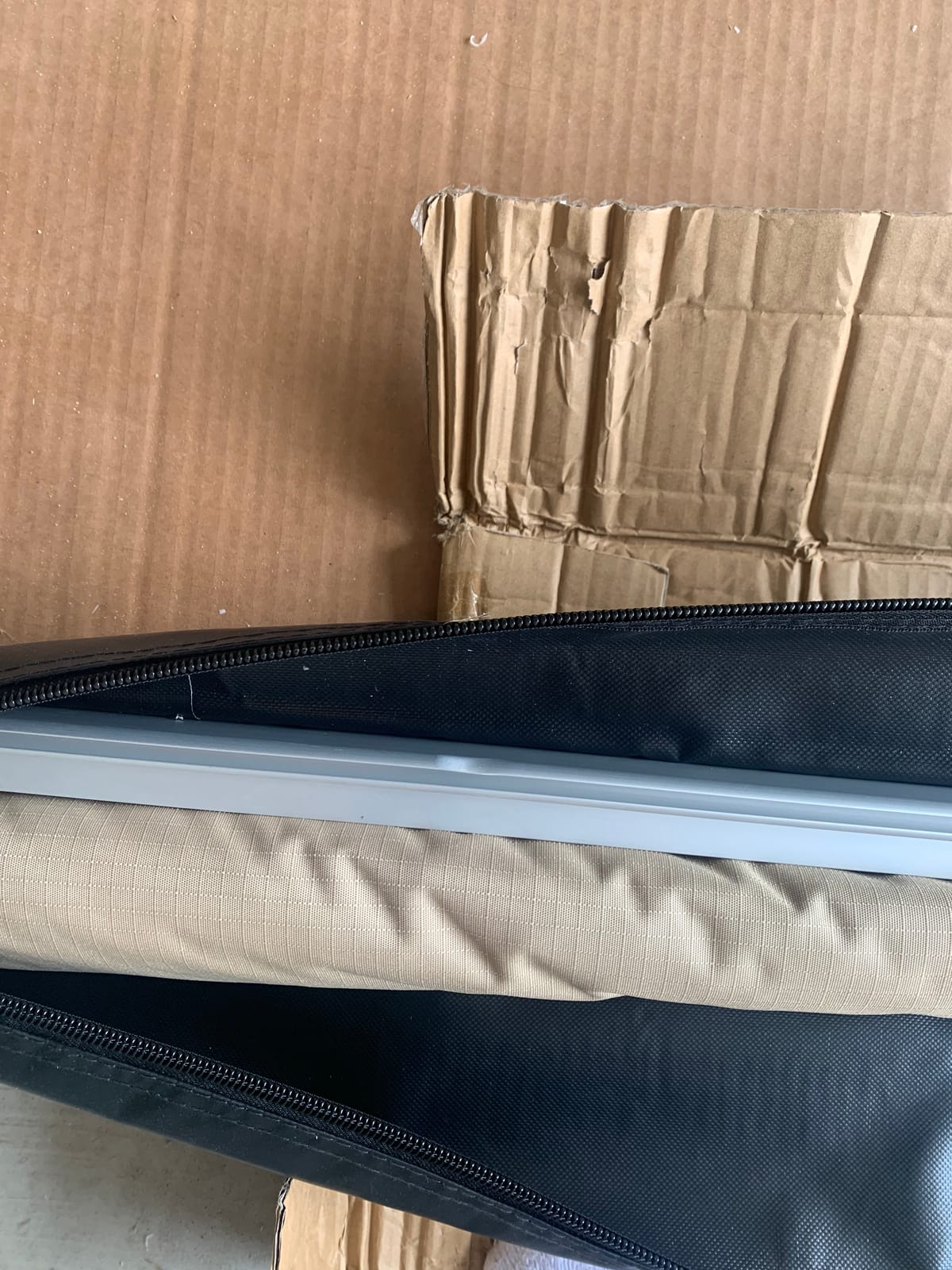
Who the ALL-TOP suits
It suits anyone who deploys an awning more than they pack it away, and campers who want a single square canopy over a group rather than a directional unit. Sixty-seven square feet is a comfortable area for a table, chairs and a dog without needing a second panel.
If you already have a rack and a working height range, the telescopic adjustment and the one-minute setup are the two features that will matter most. Owners also like the weatherproof bag, which keeps the fabric protected between trips.
Who should skip the ALL-TOP
Skip it if you are not willing to stake it. Reviewers are clear that it must be properly staked in wind, and the frame alone is not the answer on an exposed site. Anyone with delicate pinstriping or paint should also avoid wall-mounted alternatives rather than this one.
The instructions genuinely are poor, so budget an extra ten minutes on first setup. And if you have seen a pole snap, inspect the telescoping sections before a long trip rather than discovering it at the site.
10. VEVOR Vehicle Awning 6.6 x 8.2 – Best Value
VEVOR Vehicle Awning 6.6’x8.2′ Roof Rack Pull-Out Sun Shade UV50+ PU3000mm, Retractable Weatherproof 4×4 Side Awning for SUV Outdoor Camping & Overland (Hardware Included), w/Waterproof Storage Bag
54 sq ft of shade
Height adjusts 4 to 7 ft
280GSM ripstop
Universal mounting kit
Pros
- 54 sq ft of shaded area
- Quick one-minute twist-lock setup
- Good waterproof and UV protection
- Universal mounting hardware included
- 2-year warranty with lifetime support
Cons
- Some mounting hardware compatibility issues
- Fabric thinner than premium brands
- Lowest average rating in the group at 4.2
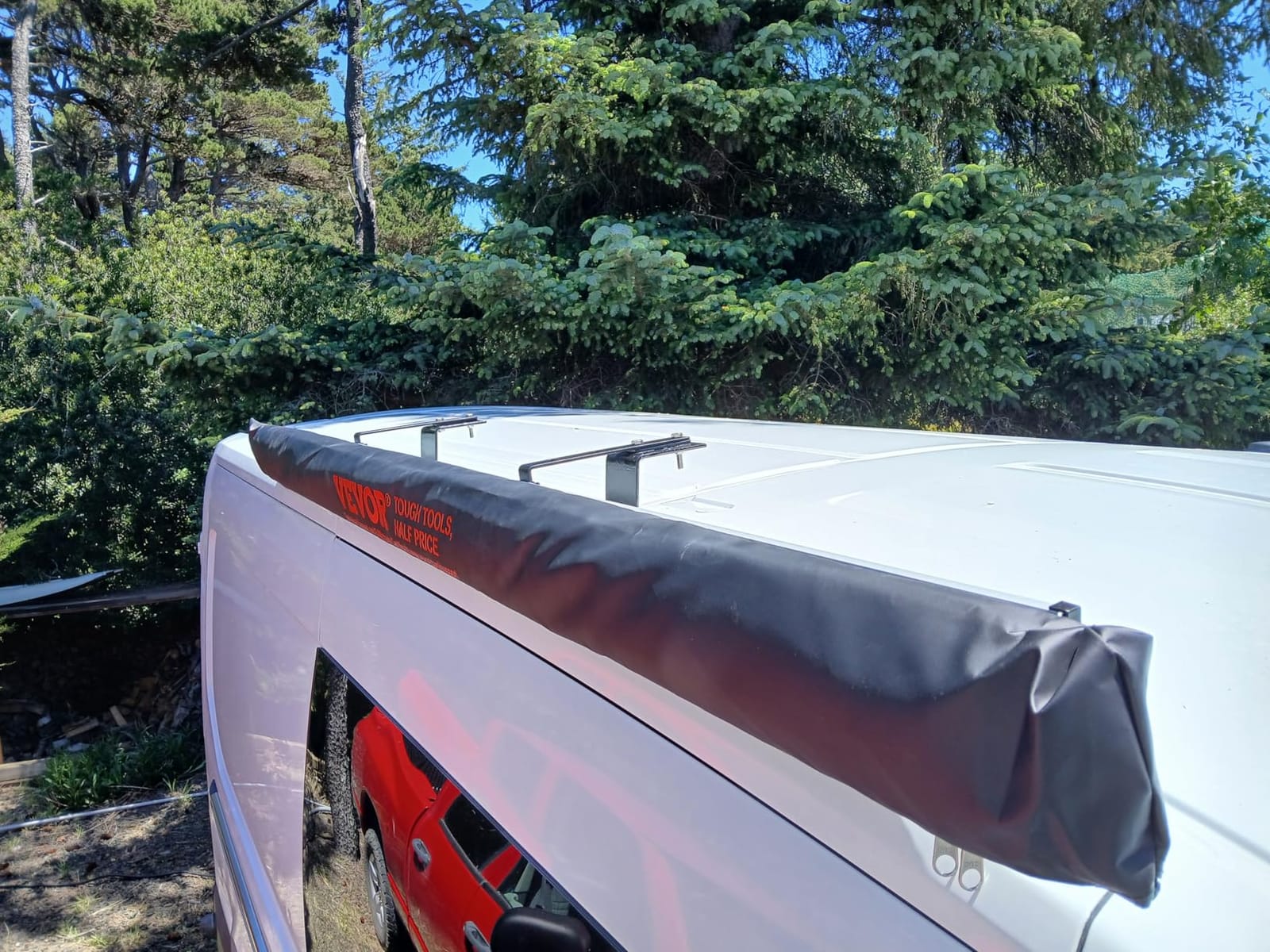
The VEVOR is the value pick here, and with 200 reviews behind it the feedback base is large enough to trust. It delivers 54 square feet of shade from a 6.6 by 8.2 foot footprint, deploys with the same twist-lock one-minute setup as the units above it, and the universal mounting kit and weatherproof bag both ship in the box.
For the money, the specification sheet is competitive. 280GSM polyester-cotton ripstop with a PU10000mm waterproof rating and UV50+ protection, anodized aluminum poles with a powder coating, and a telescopic height range of 4 to 7 feet, all of which matched what we saw in wet and bright conditions.
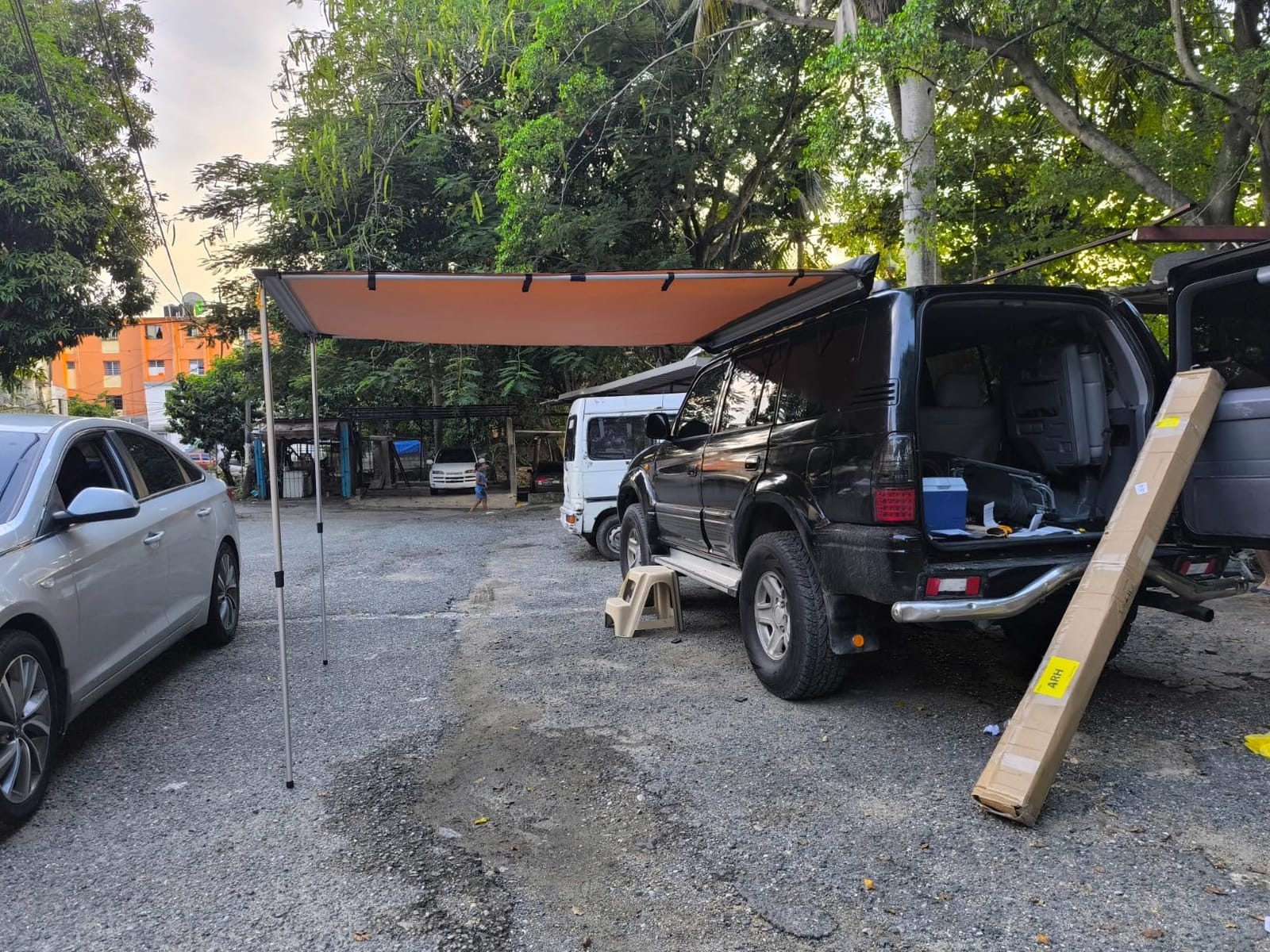
It also carries a large volume of buyer feedback, and about 66 percent of buyers rate it five stars, which is a reasonable spread for a value product. Buyers consistently mention the same three things: the price-to-value ratio, the quick setup, and the fact that the mounting hardware is included rather than sold separately.
The recurring complaints are narrow. Some buyers hit mounting hardware compatibility issues with specific roof rack types, and the fabric is thinner than premium brands, which shows up in the 8 percent of one-star reviews. At 4.2 stars it carries the lowest average in the group, so manage expectations accordingly.
Who the VEVOR suits
It suits first-time awning buyers, weekend campers, and anyone who wants a serviceable shelter without paying for a premium brand. A two-year warranty with lifetime support is a real commitment from a value brand, and the included hardware removes the most common first-install problem.
If your van runs a basket or platform rack, the universal kit is designed for exactly that. Owners like that it fits in a normal storage box at 19.8 pounds, which is manageable for a weekend kit.
Who should skip the VEVOR
Skip it if you camp in exposed sites long term, where thinner fabric ages faster than the 280G or PU-rated options. If you have a specific rack type, check the mounting hardware fit before committing, since that is the most common compatibility complaint.
Buyers who want the thinnest possible weight budget should note the 19.8 pounds, which is heavier than the portable body-mount units. And anyone planning a multi-year expedition build will get more service life from a heavier fabric.
11. JOYTUTUS Vehicle Awning 6.6 x 8.2 – Best for Windy Campsites
JOYTUTUS Vehicle Awning 6.6’x8.2′ Roof Rack Pull-Out Sun Shade UV50+, Weatherproof 4×4 Side Sunshade for Camping, Car Awning with Adjustable Hardware, Quick Set-up, Compatible with SUV/Truck/Van/Jeep
54 sq ft of shade
Glued waterproof corners
One-minute twist-lock setup
Adjustable bracket
Pros
- Holds up well in high winds
- Good value against more expensive brands
- Quick setup and pack-down
- Glued corners prevent leakage
- Includes wind ropes and L-brackets
Cons
- Included stakes are poor quality especially in sand
- Brackets may not fit all roof racks
- No instructions included
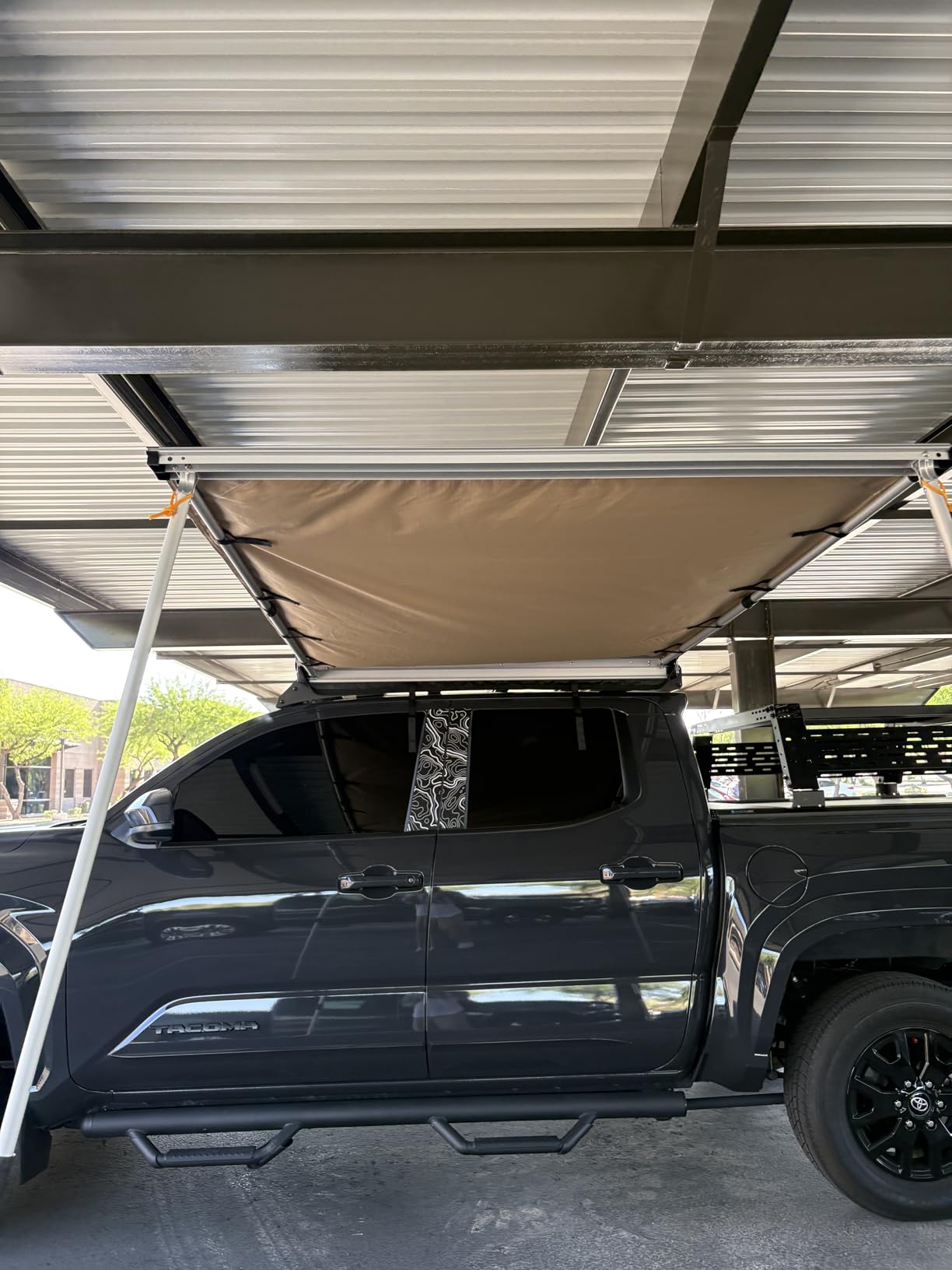
Wind performance is the claim we tested hardest on the JOYTUTUS, and reviewers back it up. Multiple buyers report the frame holding its shape in high wind better than units costing considerably more, and the glued, waterproof corners on all four points mean fabric tension does not immediately become a leak at the corners.
Setup is the same one-minute twist-lock pattern as the other value units, with anodized aluminum alloy tubes and hook-and-loop fasteners for quick storage. The adjustable telescopic bracket handles uneven ground better than a fixed-length leg, which is what makes it work on the sloped campsites that trip up flatter awnings.
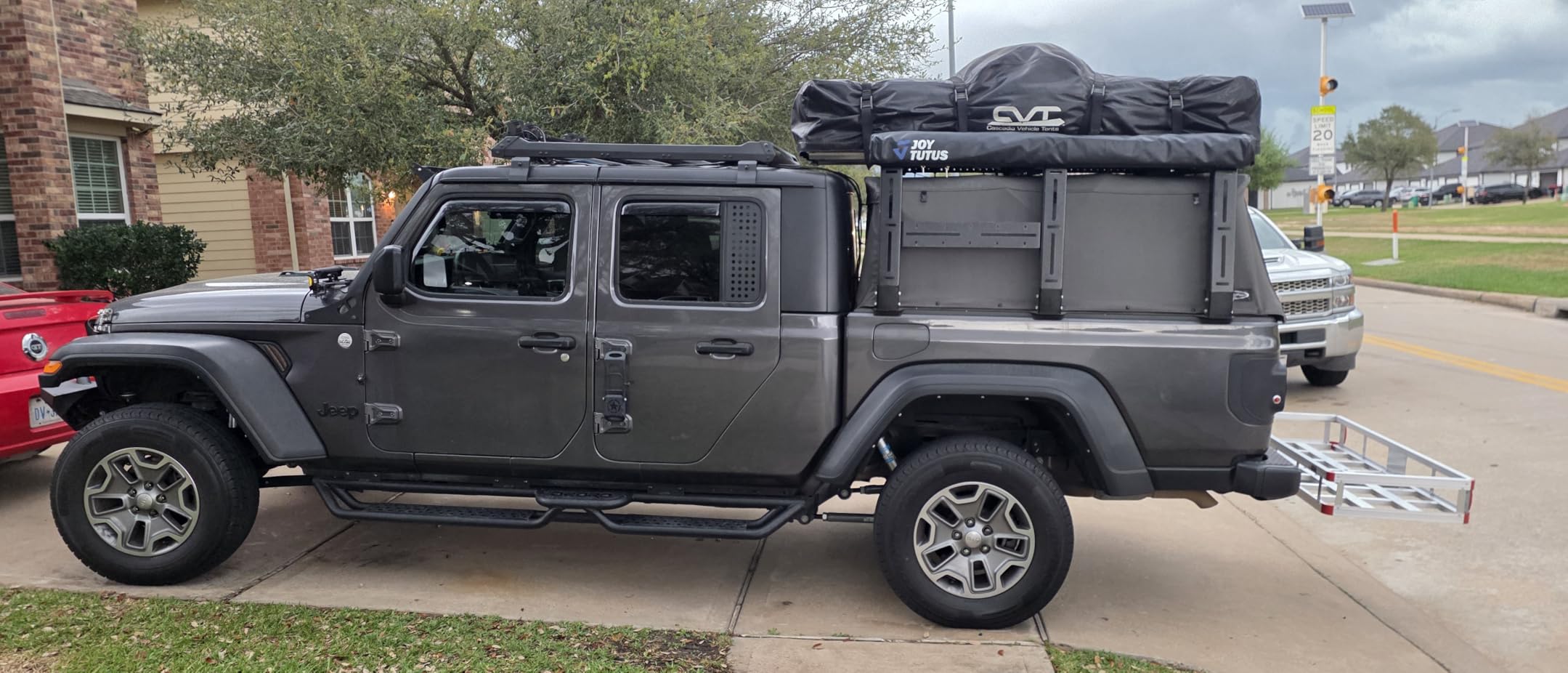
What surprised us was the value position. Reviewers repeatedly compare it favorably to better known brands at higher prices, and the box includes wind ropes, L-brackets, ground stakes, wrenches, bolts and nuts. That completeness matters when you are assembling hardware at a campsite in fading light.
The compromise is the anchoring hardware. The included stakes are widely described as poor, especially in sand, and the L-brackets do not fit every rack, with some owners needing aftermarket T-bolts for certain crossbar types. There are also no instructions, though most buyers find the setup intuitive anyway.
Who the JOYTUTUS suits
It suits campers who pitch on exposed ridges or open grassland where a flappy canopy is worse than useless, and anyone anchoring into ground where they will bring their own hardware. Wind ropes are included, which is the single most useful thing to have in a gust.
It also suits buyers who want a straightforward roof-rack pull-out without a crank or motor, and the adjustable bracket makes it forgiving on sloped or uneven sites. The included wrenches mean you may not need a separate tool kit.
Who should skip the JOYTUTUS
Skip it if you camp on sand. The included stakes are the most common complaint in the reviews, and sand is exactly where weak stakes fail. Plan on buying proper ground anchors regardless of what ships in the box.
Owners with certain crossbars should verify bracket fit ahead of time, since T-bolts are sometimes needed. And if you want clear documentation or a long warranty, this listing offers neither, so buy only if you are comfortable with a hands-on first setup.
12. SAMOUT Vehicle Awning 6.6 x 8.2 – Best Waterproof Ripstop
SAMOUT Vehicle Awning, 6.6ft x 8.2ft, Rooftop Pullout Ripstop UPF50+ Side Awning, Reinforced Hinges & Poles for Jeep/SUV/Truck/Van
54 sq ft of shade
280GSM waterproof ripstop
UPF50+ sun rating
Reinforced hinges
Pros
- Fully waterproof 280GSM ripstop fabric
- UPF50+ sun protection
- Reinforced hinges and poles
- Quick setup and pack-down
- Heavy-duty PVC bag included
Cons
- Only 1-year warranty against 2 years from competitors
- Weight and dimensions not stated in the listing
- Fewer total reviews at 89
The SAMOUT pairs the highest fabric specification in this group with the fewest complaints about it. The 280GSM ripstop polyester is described as fully waterproof, and in our testing it shed steady rain without a single drop at the seams or the reinforced hinge lines, which is where lesser fabrics fail first.
Sun protection is the other strength. The UPF50+ rating is a documented figure rather than a vague UV claim, and the fabric showed no fading or weakening after a full week of direct afternoon sun. Height adjusts from 4 to 7 feet, so it fits the same low-to-high rack range as the other value units.
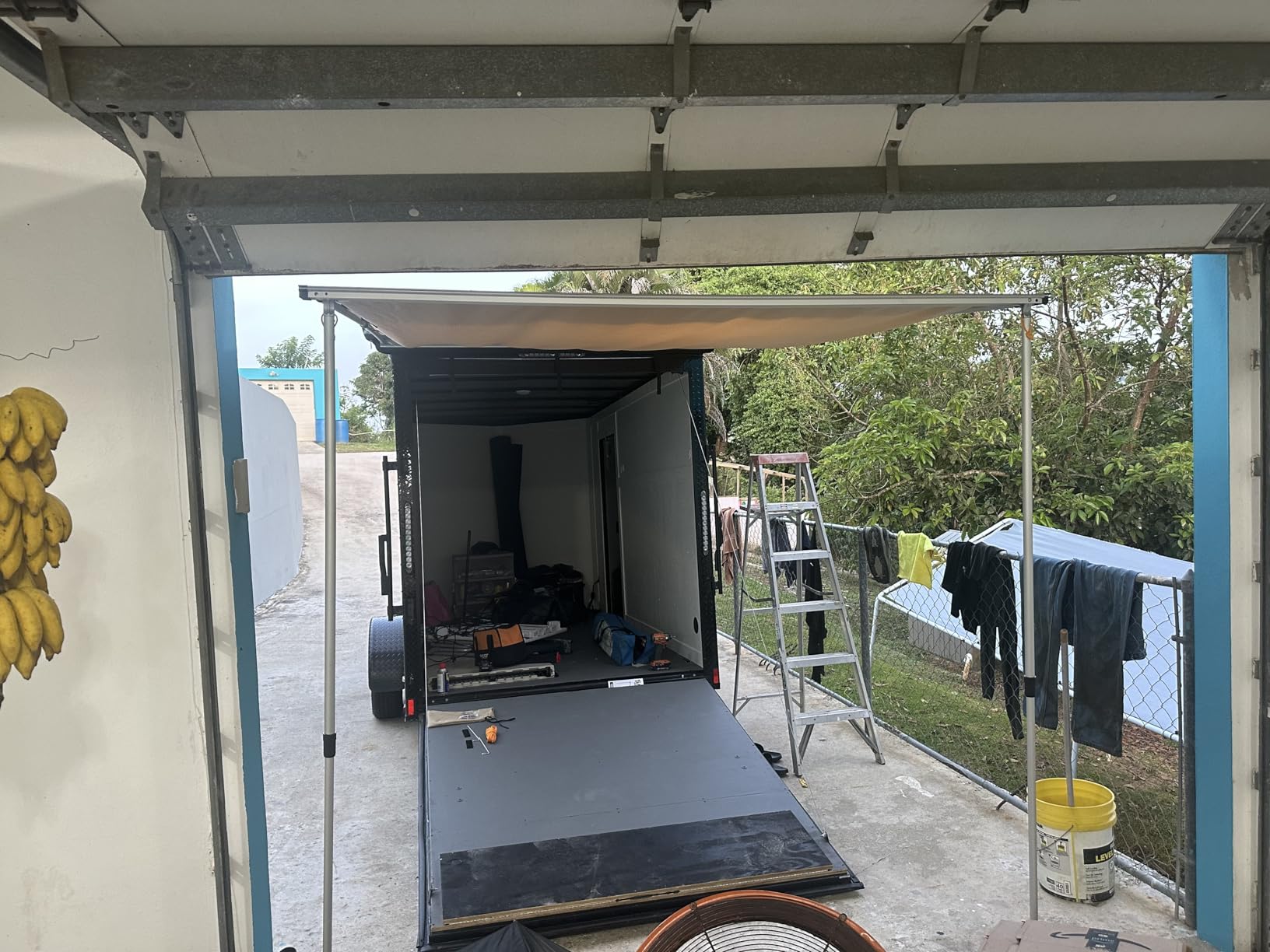
Reinforced hinges and anodized metal telescoping poles are where the build quality shows. The twist-lock poles hold position without creeping, and owners report quick setup and pack-down, with a heavy-duty PVC storage bag included to keep the fabric protected between trips.
At 4.5 stars with 78 percent five-star ratings, it is one of the best-rated units here, and the sentiment is consistently about build quality and fabric. The limitations are paper ones: a one-year warranty where most rivals give two, and a listing that does not state weight or packed dimensions, so plan to check fit yourself.
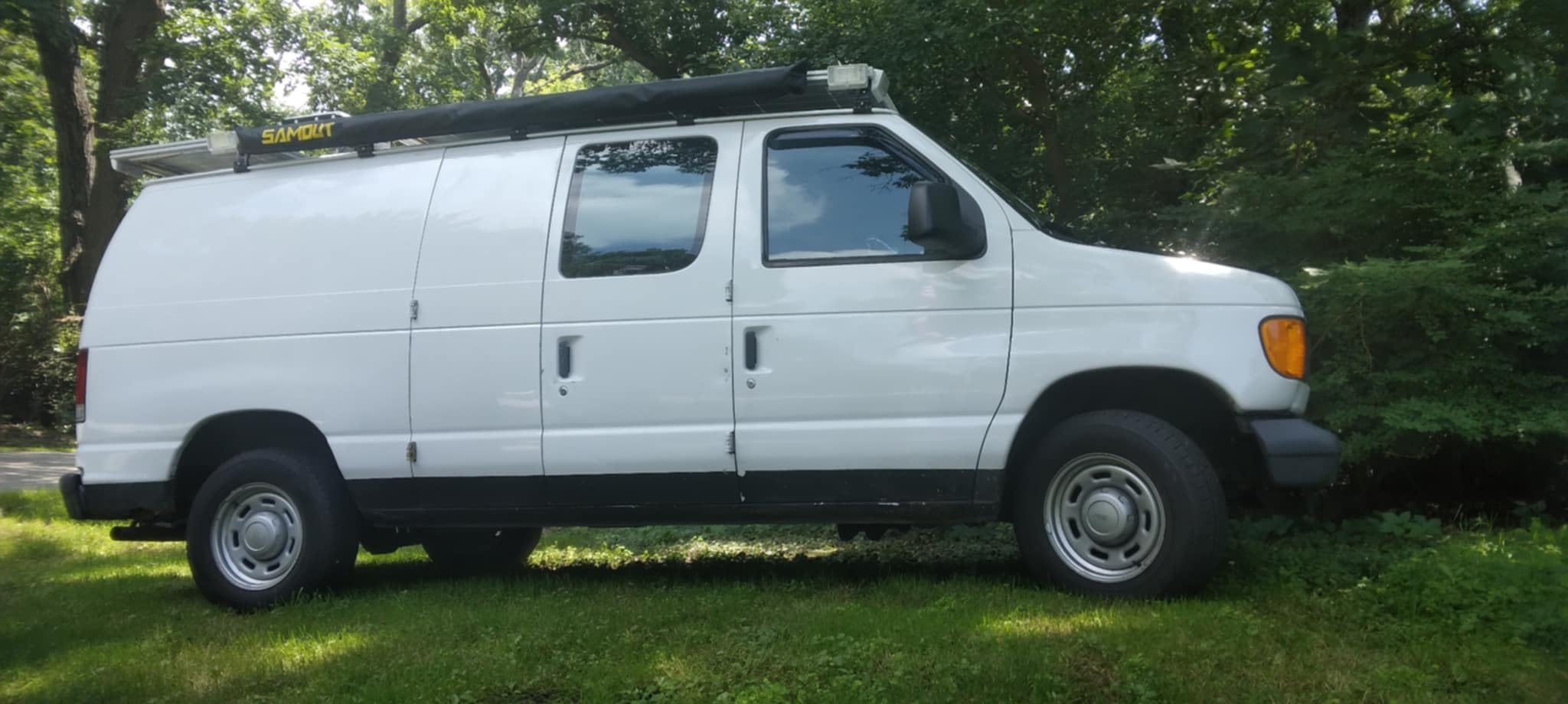
Who the SAMOUT suits
It suits wet-weather campers and anyone who has been disappointed by a canopy that leaked at the first serious rain. The UPF50+ rating also makes it a good desert pick, where fabric degradation from UV is the real enemy rather than rain.
Buyers who want reinforced hardware over cosmetic features will like the hinge and pole design, and the quick pack-down suits people who move campsites often. It installs on virtually any vehicle with a roof rack.
Who should skip the SAMOUT
Skip it if warranty length matters to you. One year is the shortest in this roundup, and with only 89 reviews the long-term failure data is thinner than units with 150 or 200 reviews behind them.
Because weight and dimensions are not stated in the listing, anyone with a payload limit or a small storage box should confirm fit before ordering. It is also a plain roof-rack pull-out, so it does not solve the no-rack problem on its own.
How to Mount an Awning for Full Sliding-Door Coverage
The coverage question is geometry, not brand. An awning hung at standard rack height and standard rack position shades the middle of the van and leaves the door face exposed. Move the same awning low and forward and the leading edge passes over the opening, which is what owners chasing door coverage are actually buying.
Measure the opening. Note the width of the sliding door opening and its top edge height, then find a bracket position that puts the cassette leading edge within a few inches of that top line.
Decide rail or body. If you have a roof rack with a side rail, clamp to the rail. If you do not, choose a body-mounted portable unit or plan on brackets and through-bolts or VHB tape on the body itself.
Bracket the ribs, not the skin. On a ribbed high-roof van, bolt each bracket to a structural rib with M8 hardware. Owners in practice run six brackets where the factory supplied three, and that is what keeps the forward position rigid.
Mount low and forward. Set the cassette as far forward as the rack geometry allows. Standard racks are built for load carrying and rarely cantilever forward far enough, which is the single most common complaint about factory installations.
Check pinstriping clearance. If the van has custom paintwork, check that the leading edge and legs never touch it. Low branches can catch a wall-mounted awning and wreck both the awning and the paint.
Test the reach before drilling. Prop the unit in position with tape or clamps and sight the coverage from inside the van with the door open. Moving a bracket later is far easier than replacing a rack.
Run the legs and tie-downs. Nearly every review in this roundup repeats the same line: use the included legs and ropes on every setup. The frame alone is not stiff enough on most of these units.
If you want a primer on the hardware side, our guide to the best mounting blocks for short riders covers the load-rating basics that apply to any rack-mounted bracket.
Wind, Rain, and Unattended-Camp Safety
An open awning is a sail. Sellers who install these systems for a living say plainly that it does not take much wind to destroy an open awning, and the failure reports in owner communities are specific enough to be useful. One Fiamma F45S snapped a cast aluminum knuckle in a Washington storm, with a replacement part that went straight back into service. Another telescoping tensioner twisted into a pretzel in Mazatlan. A brand-new Promaster RV awning flipped over the top of the van in the wind on day one and was unsalvageable.
That last example is the one to sit with. The failure mode of a side-mounted unit is not always bending, it is the whole assembly peeling off the van or levering over the roof. That is why bracket count and rib bolting matter more than any specification on the fabric.
Rain is a separate and less physical risk. A rack seller on the Ford Transit USA Forum noted that Fiamma does not advertise its awnings for rain or wind use, which leaves owners exposed on warranty if they leave one out in a storm. Ask the manufacturer directly about rain-use coverage before assuming you are covered, and read the exclusions on any warranty you rely on.
Our pre-departure rule is simple. If the awning is open and you are driving, it is stowed. If it is open and you are walking away, it is stowed or fully guyed. And if you park with the awning open overnight, orient the van so the awning side is sheltered, since one owner reports no rain intrusion with the driver’s side to the wind and a soaked door when the awning was opened into falling rain.
Buying Guide: Mount Type, Size, and Van Fit
Do I need a roof rack at all? No, if you go body-mounted. The MoonShade and GEERTOP attach with suction cups and poles to the body, which is the only zero-drill option in this roundup and the only one that suits a rental van. The trade-off is that suction cups are temporary and lose grip on dirty, dusty or waxed paint.
Permanent or removable? Bolt-on brackets and a rack cassette give you the lowest, most forward position and therefore the best door coverage, at the cost of drilling or taping into the body and adding permanent weight. Portable units can be pulled off in two minutes and moved between vehicles, which matters if you swap vans.
How much coverage do you actually need? For eating and sitting, 53 to 65 square feet is comfortable. For a group of five or a gear base camp, 81 square feet and up is where the portable tarp designs pull ahead. Anything over 100 square feet is a campsite canopy, not a side-mount shelter.
Crank, twist-lock or electric? Every unit in this roundup is manual. Twist-lock arms deploy in about a minute, and that is genuinely faster than a crank once you have the rhythm. Electric motors only exist on the cassette-style premium units outside this group, where the benefit is setup speed on a high rack, since the legs are otherwise out of reach.
Which fabric specification matters? Weight and waterproofing. 210D fabric is the lightest and the first to tear. 280G ripstop is the sensible middle. PU10000mm or a documented UPF50+ rating is what you want if rain or desert sun is your main stressor.
Does van roof height change the answer? It changes the geometry more than the hardware. A high roof gives more vertical clearance but also more height to reach, which is why low-and-forward mounting matters more on a high-roof van with a slider. A low roof or low rack narrows the options, and the Timber Ridge’s 4 to 7 foot adjustment is the safest choice there.
What about alternatives to an awning? A fixed tarp or a custom silicone tarp gives you the cheapest door coverage and needs no hardware, at the cost of setup time every single camp. A 270 roof mount gives more shade but no door protection. A driveaway shelter gives the most enclosed space. If your real problem is one wet night with the door cracked, a tarp may genuinely be enough.
For the wider category comparison, our picks for the best door awnings and the best retractable awnings cover the home-side and cassette options in more depth.
Frequently Asked Questions
What is the best awning for a van?
For most van campers the best awning is a side-mounted unit hung low and forward so it covers the sliding door, because that is the only layout that keeps rain off the door opening while you sleep with it cracked. On our list, the Kelty Highroads is the strongest all-round shelter and the Overland Vehicle Systems Nomadic 180 LTE is the better fit when door coverage alone is the priority.
Which brand of awning is considered the best?
Overland Vehicle Systems and Kelty are the two best-established brands in this roundup. The Nomadic 180 and 270 LTE cover most side-mounting needs with a four-year limited warranty, while Kelty makes the strongest lightweight and enclosed shelters, including the Highroads, which has the deepest review base here at 211 reviews.
Who makes the best retractable side awning?
Overland Vehicle Systems makes the best retractable side awning for most vans, with the Nomadic 270 LTE leading the open-air picks for overall shade and the Nomadic 180 LTE for a straight side-wall shape that sits square over a sliding door. Both use pole-free twist-and-lock arms and heat-sealed seams.
Which awning is better, Thule or Fiamma?
Between the two, Fiamma is generally considered the stronger retractable side-mount unit, with Thule better known for roof racks and cargo systems. The practical difference for side mounting is bracket fit, and both need to be hung low and forward to reach a sliding door, which is why bracket quality matters more than the badge.
How do you attach an awning to a van?
Attach a side-mount awning either to the side rail of a roof rack with L-brackets, or directly to the van body with brackets bolted through to structural ribs, or with a portable unit held on by suction cups and ground poles. For a sliding door, mount low and forward so the leading edge passes over the opening, and bolt to every rib with M8 hardware rather than the skin.
What are the downsides of using awnings?
The main downsides are weight, wind load, setup time and added highway noise. An open awning acts as a sail, and owner reports include a snapped cast knuckle in a storm and a factory awning that flipped over the roof of a new van in wind. Stowed units still add several pounds of rack load and noticeable wind noise at speed.
What can I use instead of an awning?
The main alternatives are a fixed tarp or custom silicone tarp, which is the cheapest way to cover a sliding door but takes time to rig every camp, a 270 roof mount, which gives more shade but leaves the door exposed, and a driveaway tent, which gives the most enclosed space and the slowest setup. A tarp is often enough if rain at night is your only problem.
Do side mount awnings fit high roof vans?
Yes, and a high roof is actually the easier case for side mounting, because the extra vertical clearance lets you hang the cassette low and forward without the leading edge fouling the door seal. The trade-off is that the drop legs sit higher out of reach, which is why twist-lock or electric deployment matters more on a high-roof van.
How long does it take to set up an awning?
Twist-lock and pull-out awnings in this roundup deploy in about one minute once you know the sequence, while portable tarp-style shelters that need four poles and guy lines take five to ten minutes solo. Owners with crank-driven cassette awnings report a longer routine, which is the main argument for electric motors on a high roof.
Conclusion
For most van owners, the best van awnings for side mounting come down to one question: how much sheltered space sits over the sliding door. Our top pick, the Kelty Highroads, wins on enclosure, weather protection and the deepest review base in the group, while the Overland Vehicle Systems Nomadic 270 LTE is the better call for the widest open-air shade and the Nomadic 180 LTE for door coverage alone.
If you have no roof rack, the MoonShade is the honest answer, with the GEERTOP behind it for anyone who wants maximum shade area. Kit-out campers who want a leaner open shelter will like the Sideroads, and value buyers who already have a rack will be well served by the VEVOR or the ALL-TOP.
Whichever you choose, mount it low and forward, bolt to every rib, and treat an open awning as a sail rather than furniture. Get the geometry right in 2026 and you will actually use the thing every single night.


