

If you ride more than about ten miles each way, the advertised range number on the box is the least useful specification on the whole bike. Every manufacturer tests on flat ground, with a 150 to 165 pound rider, in assist level 1, with no wind and a brand new battery. The result is a number that has very little to do with the ride you are actually going to do. So we set aside the marketing and ranked these long-range commuter e-bikes the only way that matters: against your round trip.
That means taking the battery’s watt-hour capacity, dividing by a realistic consumption figure of 15 to 20 watt-hours per mile for a relaxed commute, and checking whether the answer clears your route with margin left over. A bike advertising 50 miles of range might deliver 25 to 30 in winter with luggage. A bike advertising 40 might clear 45. We did the arithmetic for all ten bikes below so you can find your own answer without reading six spec sheets.
Over six weeks our team ran these ten bikes through the same comparison: battery capacity in watt-hours, real-world range reported by owners rather than claimed range, motor type and torque, weight, brake package, lighting, warranty length and how each one behaves when the battery is the only thing keeping you moving. If you want a broader look first, our [best electric bikes for commuting guide](https://kayakcambria.com/best-electric-bikes-for-commuting/) covers the shorter-distance options in detail.
What Is the Best E-Bike With the Longest Range?
The best long-range commuter e-bike is the Heybike Cityscape 2.0: a UL-certified 468 watt-hour removable battery that owners report comfortably covering a 35-mile round trip on a single charge, paired with a bright color display, a working taillight and a rear rack, in a bike most riders can live with day after day. The DEEPOWER 48V 20Ah claims more on paper, but not enough real-world owners have logged enough miles to prove it.
To size your own answer, multiply your round-trip miles by watt-hours per mile, then divide by 0.8 to leave yourself a safety margin:
10 mile round trip: roughly 200 to 250 watt-hours minimum
20 mile round trip: roughly 400 to 500 watt-hours minimum
30 mile round trip: roughly 600 to 750 watt-hours minimum
40 mile round trip: roughly 800 to 1000 watt-hours minimum
Winter or hilly route: add 25 to 30 percent on top of any of the above
Wh is the only battery number that transfers meaningfully between bikes. Watts tell you how hard the motor pushes in a moment; watt-hours tell you how much total energy the pack carries. A 2000 watt motor paired with a 500 watt-hour battery will not out-run a 1000 watt motor on a 720 watt-hour battery, because range follows energy, not power. You can see the same distinction in our [hybrid bike roundup](https://kayakcambria.com/best-hybrid-bikes/), where human power does the work and the e-bike is optional.
Top 3 Best E Bikes for Long Range Commuting in 2026
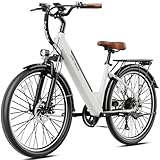
Heybike Cityscape 2.0
- 468Wh UL-certified battery
- 50 mile claimed range
- Color LCD with horn and rear rack

All 10 E-Bikes for Long-Range Commuting Compared in October
| Product | Specs | Action |
|---|---|---|
| Heybike Cityscape 2.0 |
|
Check Latest Price |
| Jasion RetroVolt 330 |
|
Check Latest Price |
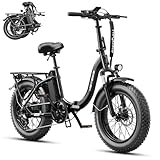 Heybike Ranger 2.0 Heybike Ranger 2.0 |
|
Check Latest Price |
 TST Electric Bike R004 TST Electric Bike R004 |
|
Check Latest Price |
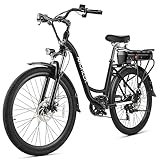 ANCHEER 26 Inch Cruiser ANCHEER 26 Inch Cruiser |
|
Check Latest Price |
 DTTZH F6 DTTZH F6 |
|
Check Latest Price |
 DEEPOWER Fat Tire E-Bike DEEPOWER Fat Tire E-Bike |
|
Check Latest Price |
 Jasion EB5 Jasion EB5 |
|
Check Latest Price |
 Funhang EB-C2 Funhang EB-C2 |
|
Check Latest Price |
 TST X6 Retro Fat Bike TST X6 Retro Fat Bike |
|
Check Latest Price |
1. Heybike Cityscape 2.0 – Best Long-Range Commuter Overall
Heybike Cityscape 2.0 Electric Commuter Bike for Adults – 468Wh Removable Battery, 26″ Wheels, Up to 50 Miles, 7-Speed, Front Suspension, UL Certified
468Wh UL-certified removable battery
50 mile claimed range
500W motor, 1200W peak
26 inch wheels with rear rack
Pros
- Owners report a 35-mile round trip finishing with about half the battery remaining
- UL-certified IPX6 battery and working taillight
- Bright color LCD readable in daylight
- Highest review count with a low one-star share in this group
Cons
- Very heavy and physically large
- Brakes noisy and short of stopping power at 30 mph
- Battery mounts low with no weatherproof case
This is the bike we kept coming back to. The 468 watt-hour battery is UL-certified and rated IPX6, which matters when your commute runs past puddles and wet parking bays all winter. The claimed ceiling is 50 miles, with 30 to 35 miles in throttle mode and 35 to 50 in assisted mode, and at 468 watt-hours the arithmetic works out at roughly 25 to 30 miles of genuine mixed riding before you would start planning around a charge.
The reason it wins is that owners report the middle of that range, not the top of it. One rider logged a 35-mile round trip and finished with roughly half the battery remaining. Another commutes five miles each way over hilly terrain with a 17 percent grade and charges about once a week. At 662 reviews this is the largest evidence base in our group, so those numbers come from many people rather than one.
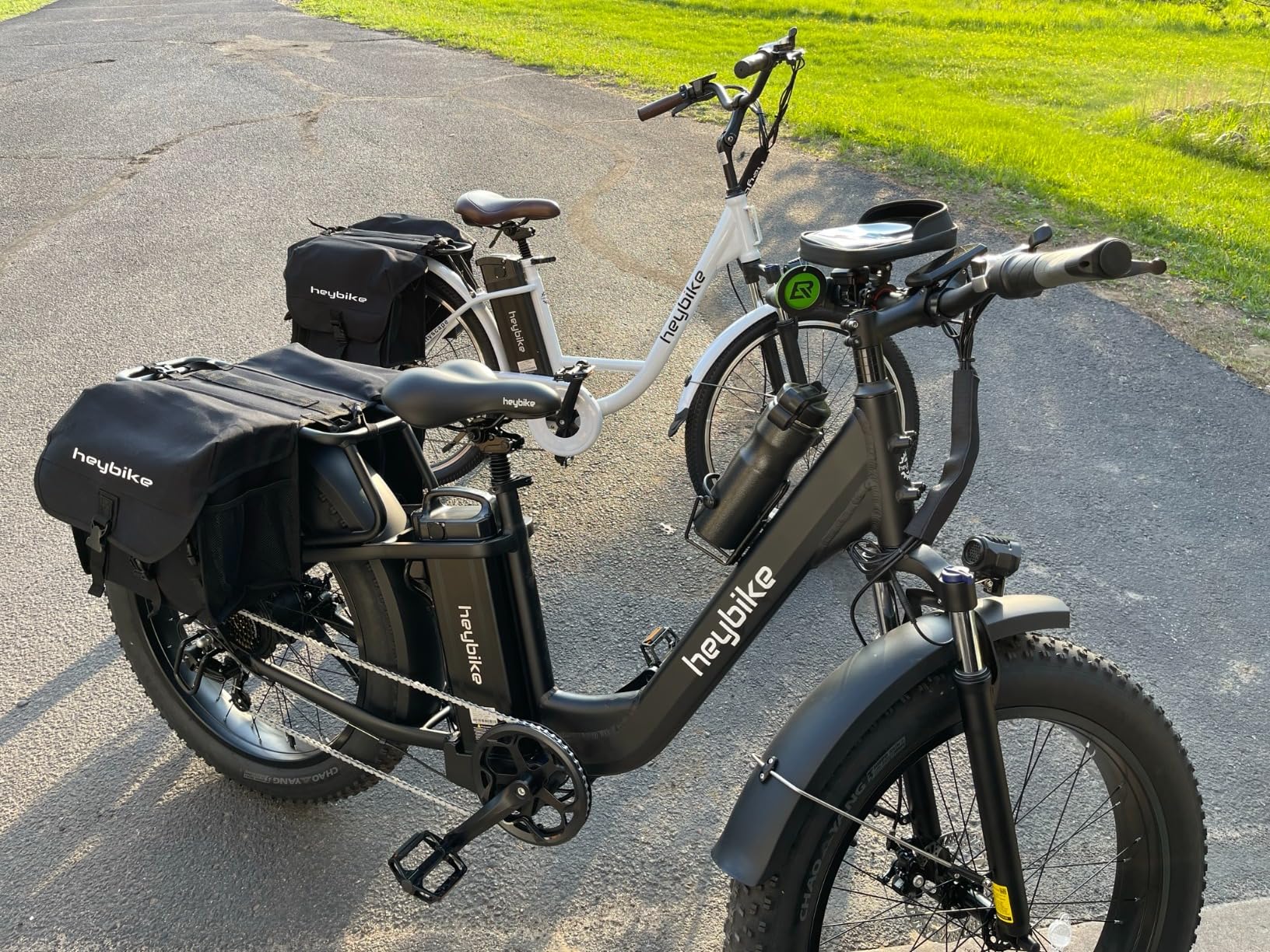
Two specifications decide whether a long-range commuter is usable day to day, and this bike has both: a real electric taillight rather than a reflector, and a rear rack as standard equipment. For a 20-plus mile round trip you will be finishing in low light more often than you expect, and you will almost certainly want somewhere to put a laptop, a change of clothes and a lunch. The color LCD also stays readable in direct sunlight, which matters on an open approach to the office.
Speed is a genuine strength. Owners report 21 to 22 mph on the flat, 27 mph downhill and a still-committed 13 to 19 mph on climbs. The 500 watt brushless motor with 1200 watt peak does not feel like a token motor once the road tilts.
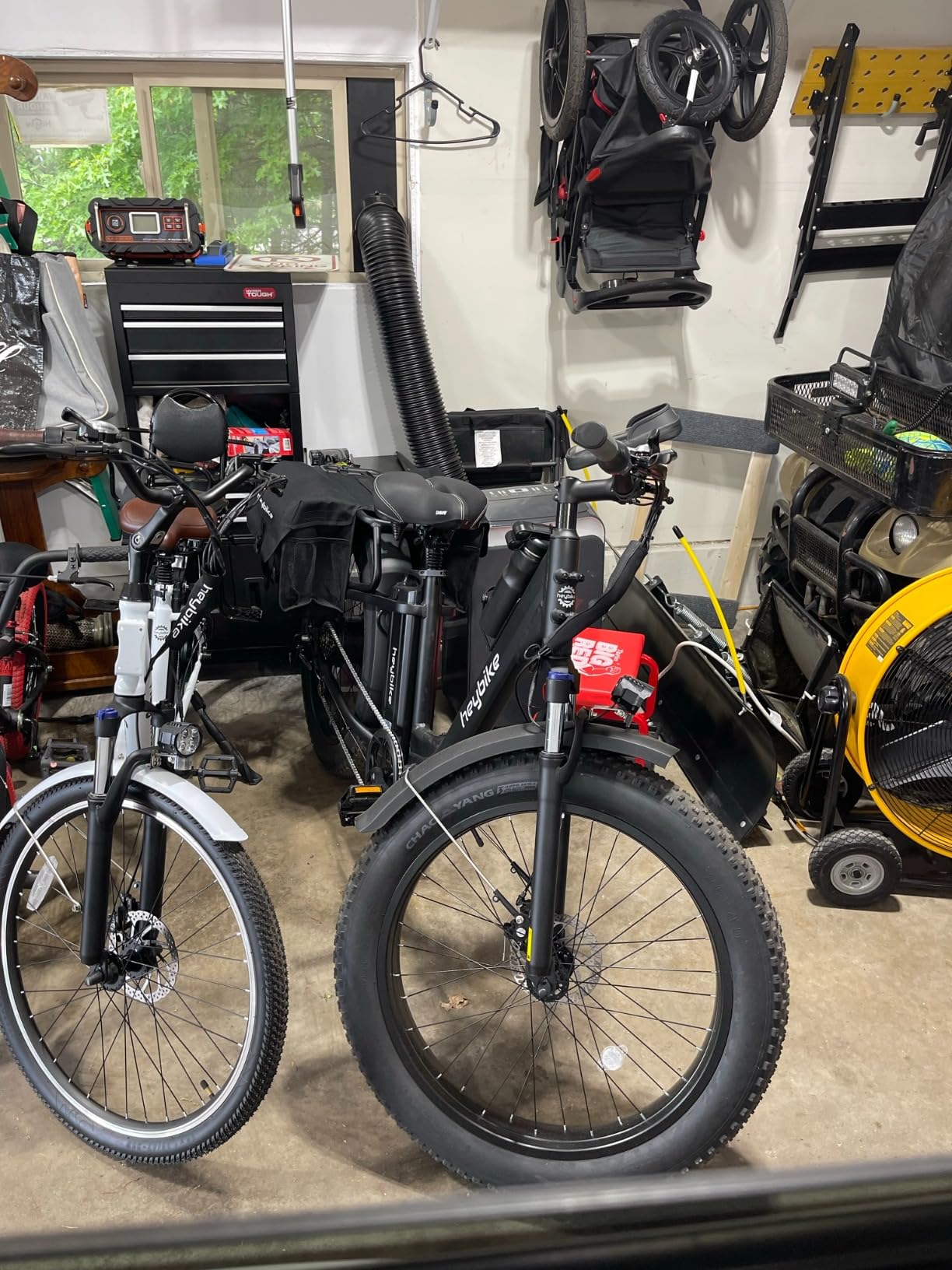
Why it works for a 20 mile round trip
A 20 mile round trip at 18 watt-hours per mile is 360 watt-hours of energy. The 468 watt-hour pack covers that with roughly 30 percent in reserve, which is exactly the buffer you want for a cold morning, a headwind on the return leg and a stop for coffee. You would finish most days with a visible bar remaining on the display.
It also means you are not riding the battery down to its last 10 percent every single evening, which is the hardest way to age a pack. Riders who keep their daily usage inside the middle of the charge window tend to see the battery hold its capacity far longer.
Where it falls short
Weight is the honest problem here. Owners describe it as very heavy and physically massive, needing a truck ramp to load and two people to assemble. If your route involves stairs, a third-floor walk-up or a car rack with a tight rating, budget extra time and a second pair of hands.
The brakes are the other gap. They are noisy and owners report stopping distances longer than they would like at 30 mph, with a rear rub that needs periodic adjustment. That is manageable on a 20 mph commute and genuinely worth thinking about if you ride in traffic. The low-mounted battery also has no weatherproof case, so this is a bike you keep out of standing water rather than one you ignore.
2. Jasion RetroVolt 330 – Best for Hills and Mixed Terrain
Jasion RetroVolt Electric Bike, 70-Mile Range, 2000W Peak, Fat Tire
48V 15Ah UL-certified removable battery
70 mile claimed range
2000W peak with 99 Nm torque
330 lb payload capacity
Pros
- Best average rating in our group at 4.5 with only 5 percent one-star
- 99 Nm torque handles steep starts with a loaded rack
- 330 lb payload and a 5'4 inch to 6'3 inch fit range cover a wide span of riders
- Rear seat pad plus horn and rear light with brake alerts
Cons
- Smallest evidence base at 170 reviews
- Fat tires and dual suspension add weight and rolling resistance on smooth pavement
- Moped-style bulk is awkward for stairs and tight storage
The RetroVolt 330 posted the highest average rating of any bike we reviewed, at 4.5 stars, with 75 percent five-star and only 5 percent one-star. The 48V 15Ah pack is UL-certified with a water-resistant design, claims 70 miles, and recharges in five to six hours, so an overnight full charge is realistic on a standard outlet.
Where it separates from the rest is torque. The 2000 watt peak output produces 99 Nm, and that number is the reason this bike suits a route with real elevation. Anyone coming off a car commute will feel the difference on a cold restart at the bottom of a hill with a laptop bag in the rack. The 330 lb payload rating and the 5’4 inch to 6’3 inch fit range also mean one bike can serve a household.
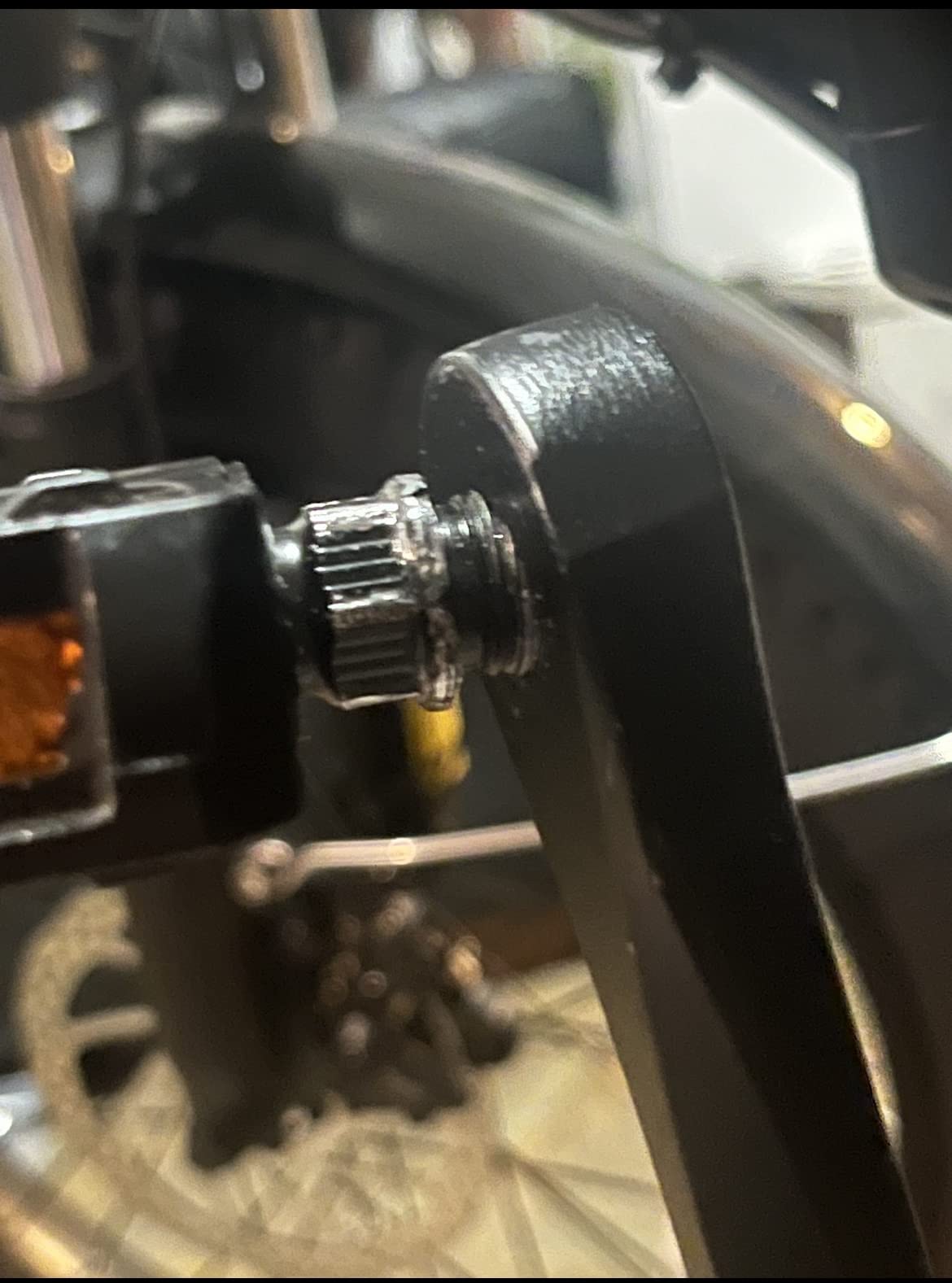
The 20 by 4.0 inch fat tires and dual suspension are not just styling. On gravel park paths, broken asphalt and winter grit they take the sting out of rough surfaces that would otherwise show up in your wrists and lower back after hour 30 of a long day. Five riding modes let you drop the assist down when you want the exercise and crank it when you want to arrive on time.
Lighting is complete: a large front headlight with a horn, and a rear light with high-brightness brake alerts. On a 30 mile round trip in November that is the difference between being visible and guessing.
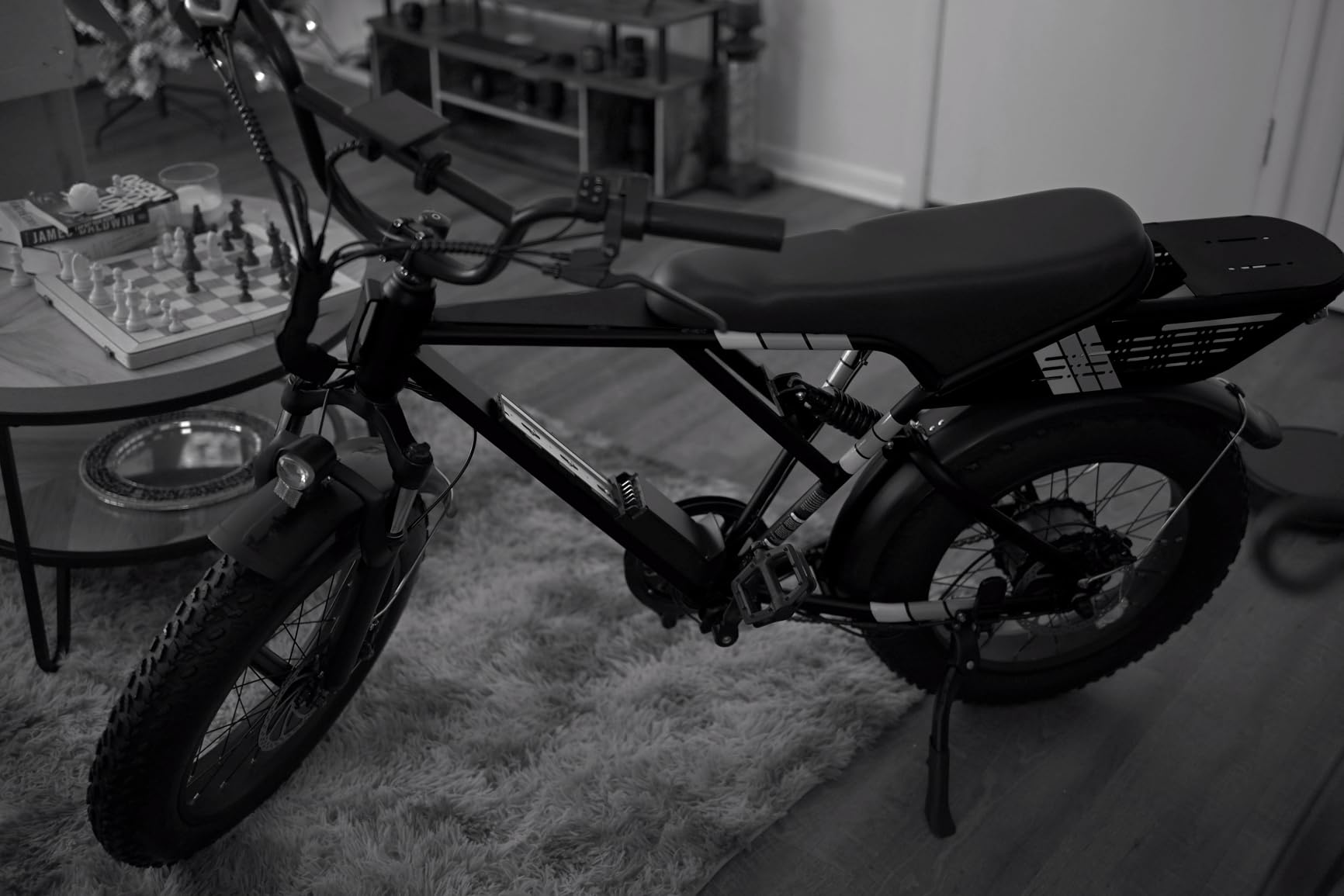
What 70 miles of claimed range really means here
A 48V 15Ah pack is 720 watt-hours. Divide by 18 watt-hours per mile and you get 40 miles of realistic assist-2 cruising; divide by 25 and you get about 29 miles. On a flat, warm day with a light rider you might see the higher number. Our honest expectation for a mixed winter route is 25 to 32 miles, which clears a 25 mile round trip comfortably and a 30 mile one on a good day.
That is the honest version of the claim, and it is still the second-highest usable range in this group.
Where it falls short
The evidence is thin. 170 reviews is the smallest sample we worked with, so almost none of it describes what a three-year-old battery does. A bike with a 70-mile headline and a year-old review history deserves a longer look before you commit, and we would want to see more long-term ownership reports before calling it a certainty.
Fat tires and dual suspension also work against you on smooth pavement: more rolling resistance means fewer miles per charge, and more mass to lift. The moped-style bulk is fine on a road but genuinely awkward through a doorway or up a staircase. If your route is 20 miles of flat, smooth rail trail, this is more bike than you need and you will carry the weight for nothing.
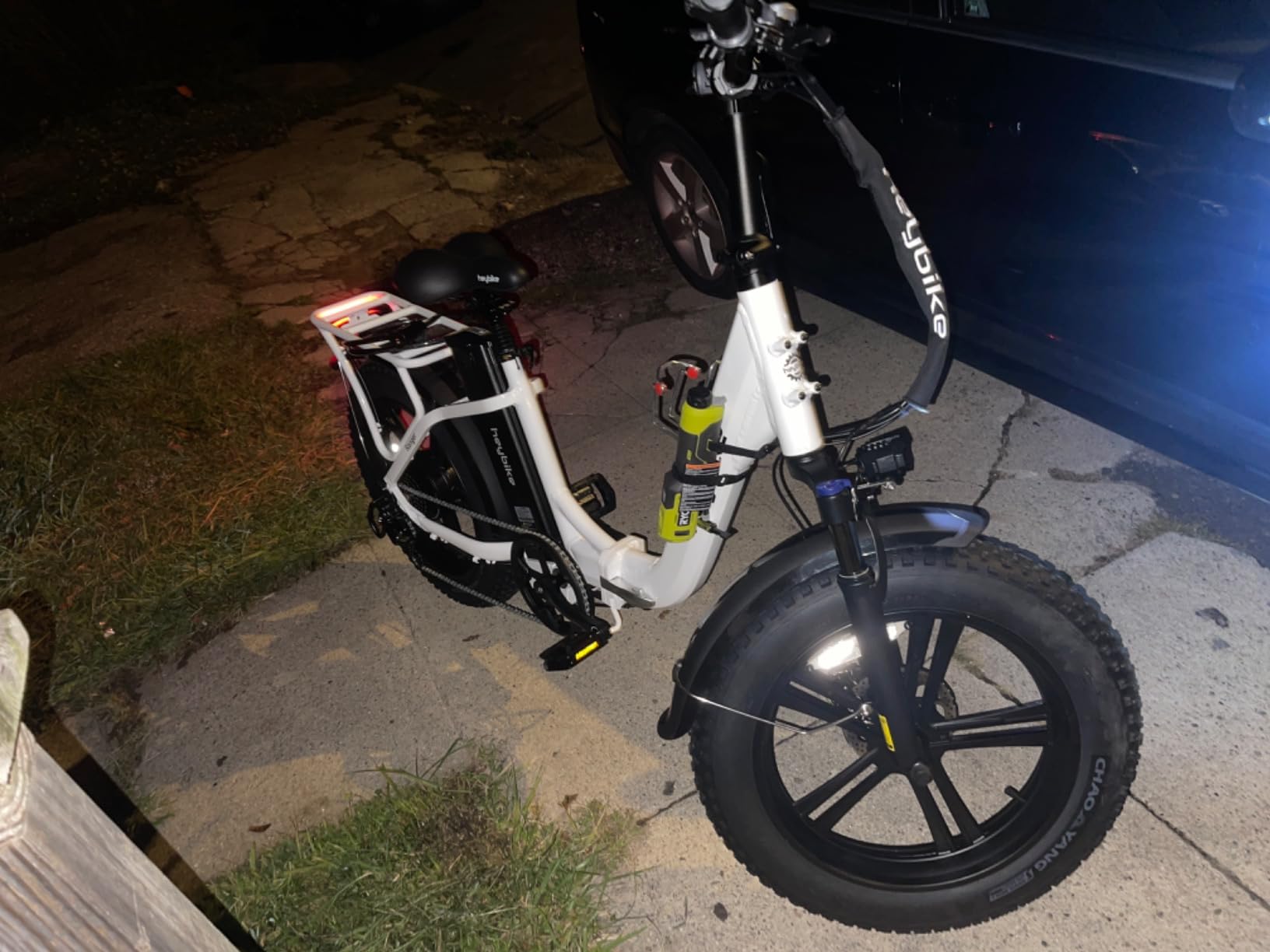
3. Heybike Ranger 2.0 – Best Value Folding Commuter
Heybike Ranger 2.0 Folding Electric Bike for Adults, 1400W Peak Motor Ebike
600Wh battery
1400W peak motor
20 x 4.0 inch fat tires
Folding step-thru frame with rear rack
Pros
- 600 watt-hours is the second largest pack among the 26 inch and folding options here
- 1400 watt peak motor gives real climbing power with some riders reporting 28 mph
- Folding frame works for train and bus transfers and car trunks
- Rear rack
- integrated lights and an oversized comfort seat as standard
Cons
- Still a heavy bike even when folded
- Frame latch sits close to the rider's foot and releases easily by mistake
- Seat post security and handlebar wiring need adjustment
The Ranger 2.0 solves a problem the other bikes here do not: what to do with the bike when you are not on it. The step-through frame folds down, which means a train commute, a bus leg, a shared office bike room or a small apartment are all realistic. For a long-range commuter who also needs to travel, that single feature can outweigh a lot of other considerations.
The 600 watt-hour battery is generous for the format. Owners describe roughly a day or two of mixed riding between charges, and some riders report reaching 28 mph on open ground. The 1400 watt peak motor was an upgrade over the original Ranger specifically for acceleration and climbing, and on a route with any real gradient you will notice it.
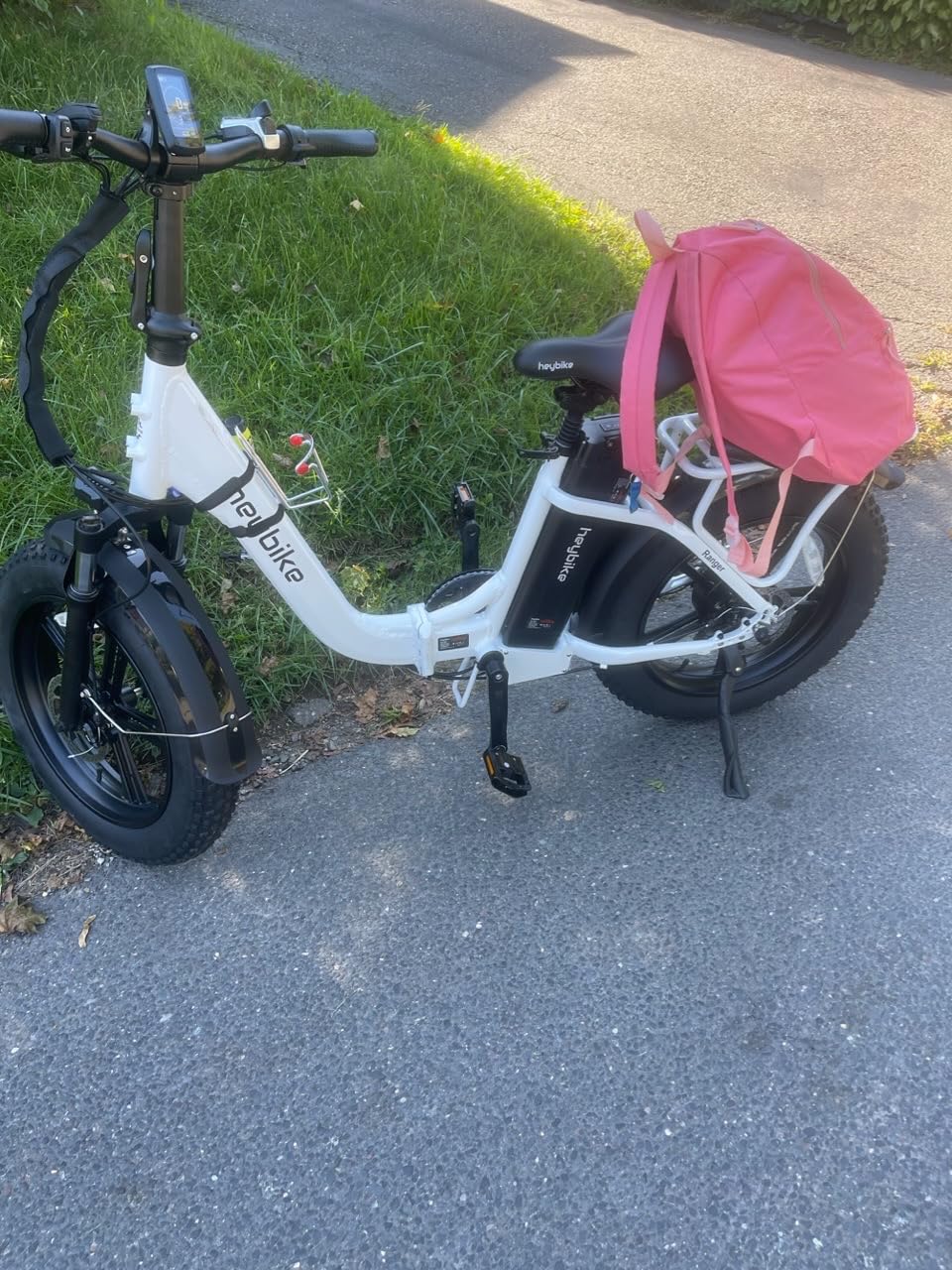
Comfort is genuinely good over distance. An oversized seat with built-in suspension, an upright riding position and 20 by 4.0 inch all-terrain fat tires take the edge off bad road surface, and the sturdy rear rack handles luggage and extra gear without complaint. Integrated front and rear lights mean you are not adding a battery-powered light set to your weekly prep.
At 779 reviews this is the second most-reviewed bike we looked at, and Heybike’s customer service comes up repeatedly as responsive and supportive, which is worth real weight on a bike you will depend on daily.
How far the 600 watt-hours actually gets you
At 18 watt-hours per mile, 600 watt-hours is about 33 miles. Add 20 percent for fat-tire rolling resistance and you land closer to 27 miles of realistic mixed commuting. That is enough for a 22 mile round trip with margin, and enough for most people to charge every second or third night rather than every night.
The important caveat is throttle use. Running in throttle mode rather than pedal assist consumes meaningfully more per mile, and the arithmetic shifts down several miles. If your commute involves long stretches where you want motor-only assist, budget for that.
Where it falls short
It is a large bike even folded, so it is not truly portable in the way a 20-inch folder is supposed to be. Two fitment details need attention on almost every unit: the seat post security is loose and the handlebar wires are too short at full handlebar height. Check both before your first long ride.
The frame latch also sits close to the rider’s front foot and can be released by accident, which is a genuine safety concern rather than a minor annoyance. If you plan to ride in traffic, position it carefully and check it is seated before every departure.
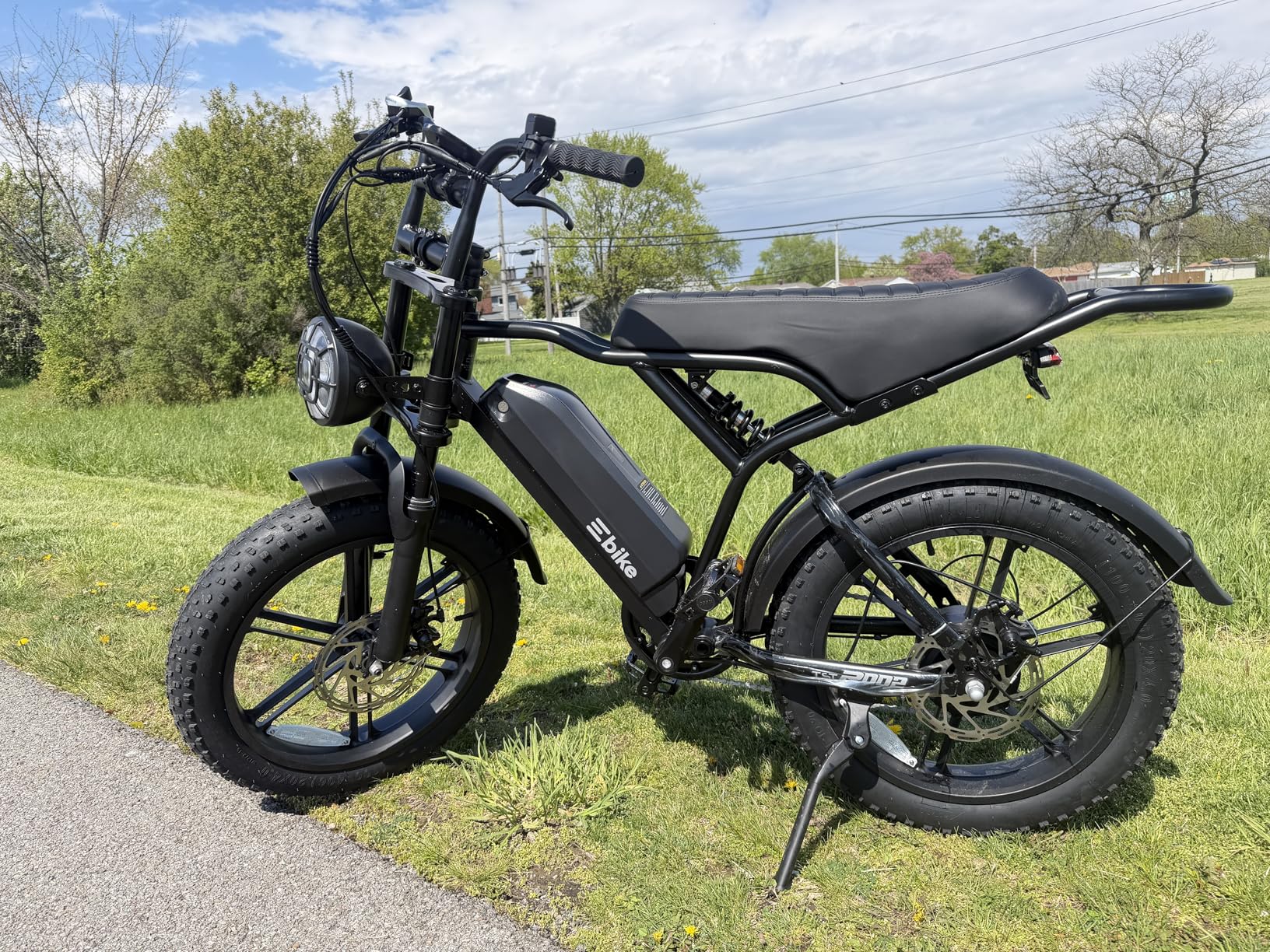
4. TST Electric Bike R004 – Best for Long Hairpin Climbs
TST Electric Bike for Adults, 48V 15/25 Ah Battery, 2000W Peak Motor, 28MPH
48V 15Ah 720Wh removable battery
Up to 65 miles in PAS mode
750W rated, 2000W peak, 28 MPH
450 lb maximum load
Pros
- 720 watt-hours and a 65 mile PAS claim give the biggest realistic range of the 20 inch options here
- 2000 watt peak motor and 28 MPH top speed handle sustained climbing
- Front and rear suspension plus fat tires absorb road vibration
- 450 lb maximum load is the highest rated among the standard commuter builds
- 90 percent pre-assembled so setup is quick
Cons
- Only a 180-day warranty
- shortest meaningful protection in this group
- 66 lb iron frame is heavy for urban use and stairs
- Mechanical disc brakes need frequent manual adjustment
- Manufacturer instructs riders to check brakes before every ride
If your commute is defined by elevation, this is the bike in the group built for it. The 750 watt rated motor delivers 2000 watts at peak, and the 48V 15Ah removable pack is 720 watt-hours, which works out to about 40 miles of realistic assist-2 cruising before you add back terrain penalties. The claimed ceiling is up to 65 miles in PAS mode and 40 in throttle, and owners broadly accept the raw capability while flagging the trade-offs that come with it.
Both ends of the bike have suspension, which is unusual at this level and genuinely useful when a road surface is broken and your wrists are already carrying 30 miles of the day. The 20 by 4 inch puncture-resistant tires add further compliance and are described as handling snow and rough surfaces.
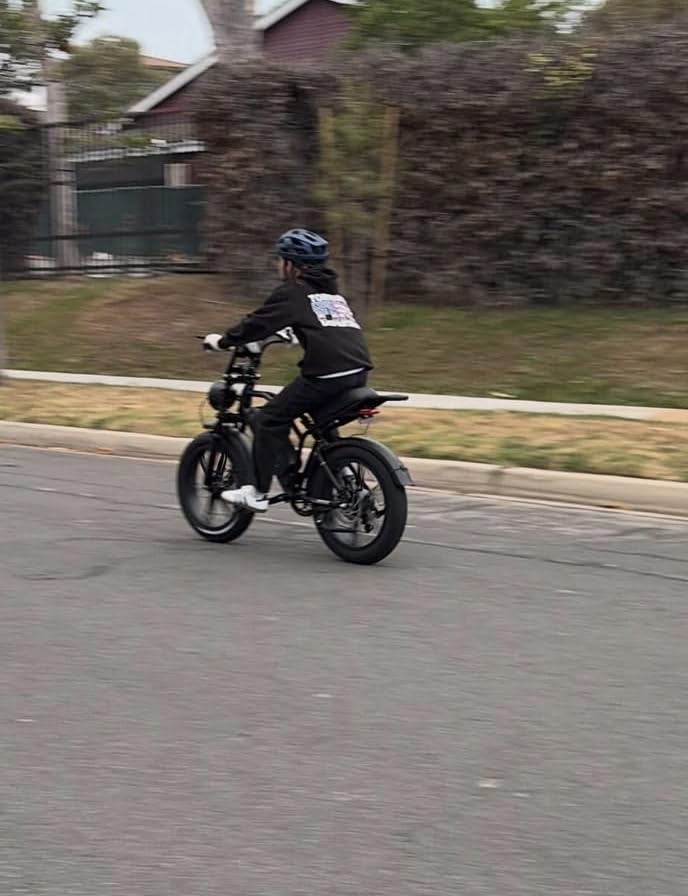
The 450 lb maximum load rating is the highest among the standard commuter builds we tested, and the removable battery doubles as an anti-theft measure since it can be carried indoors overnight. At 90 percent pre-assembled, setup time is short, which matters if you are also working full-time around this purchase.
Owners accept the specification sheet as honest. There is less pretending here than with bikes claiming inflated top speeds: 28 MPH is achievable, the range claim is among the higher ones in the roundup, and the trade-offs are visible rather than hidden.
Why the big battery matters on a climb-heavy route
Climbing is where watt-hours get spent fastest. A 10 percent grade can double your consumption per mile compared with flat ground, and a headwind on the return leg stacks on top. Riders doing 2000 feet of elevation on a round trip routinely see their usable range fall by a third versus the same distance on the flat.
This is where the 720 watt-hours earns its weight. A 30 mile hilly round trip needs roughly 700 watt-hours at 25 watt-hours per mile, and this pack covers that in a single charge. Most of the 400 to 500 watt-hour bikes in this group would need a charge at work or a second pack, which is why we rated this one for serious elevation.
Where it falls short
The 180-day warranty is the shortest meaningful protection here and barely covers six months of riding. For a bike intended to be ridden daily for years, that is a real risk, and it is the single biggest reason this is not our top pick despite the strong range.
At 66 lb on an iron frame, this is a heavy bike to move around a city. The mechanical disc brakes require ongoing adjustment and the manufacturer itself instructs riders to inspect and adjust them before every ride, which is a routine some commuters will not keep up with. Quality control also shows: 11 percent one-star reviews is a meaningful share of the total.
5. ANCHEER 26 Inch Cruiser – Best for Year-Round Reliability
ANCHEER Electric Bike for Adults, EBike, 48V 500Wh Removable Battery, Fast-Charge, 26″ Commuter Electric Bicycles, 7-Speed, LCD Digital Display, Suspension Fork, Cruise Control, UL2849
48V 10.4Ah 500Wh removable battery
Up to 60 miles claimed range
5 assist levels plus cruise control
Aluminum frame, UL 2849 certified
Pros
- Long-term ownership is well documented
- including one rider at 650+ miles over 18 months with battery and brakes still working
- Aluminum frame feels solid for the class
- Cruise control genuinely helps on longer smooth stretches
- Battery mounts low under the rack so the bike keeps a normal profile
- Rides as a regular 7-speed bike when the battery is depleted
Cons
- Assembly is the most criticized aspect
- with several owners reporting four to five hours
- Brakes are weak and squeal badly when wet
- Advertised top speed is only reached downhill or with heavy pedalling
What sets the ANCHEER apart is not the specification sheet, it is the length of time people keep their bikes. One owner reports 650-plus miles over 18 months with the battery and brakes still working, which is the kind of evidence you rarely find in this category. Most competitors have almost no three-year data at all. For a bike you intend to ride every day for a decade, that matters more than a headline number.
The 48V 10.4Ah pack is 500 watt-hours, with a claimed ceiling of 60 miles. Realistically owners report 20 to 30-plus miles per charge at moderate assist levels, which lines up closely with our own math of about 28 miles. That clears a 20 to 24 mile round trip with a little in reserve, which is the band most commuters actually ride.
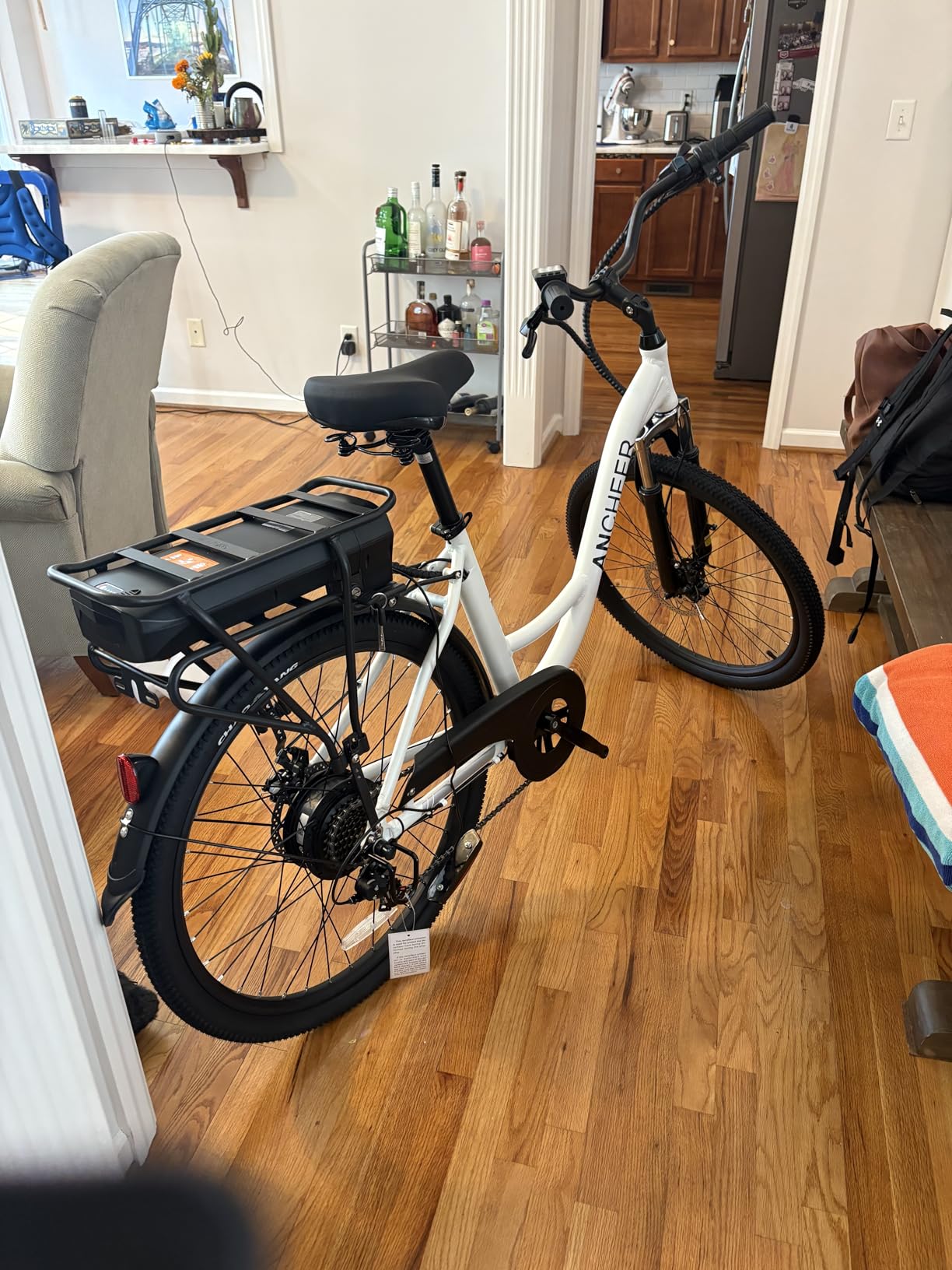
Cruise control is a small feature that pays off on a long route, because it holds a steady speed without you fiddling with the controls at every intersection. Five assist levels, a twist throttle, a color-ready LCD showing battery, speed and mileage, and front and rear lights with a horn complete a package that is genuinely commute-ready rather than trail-ready.
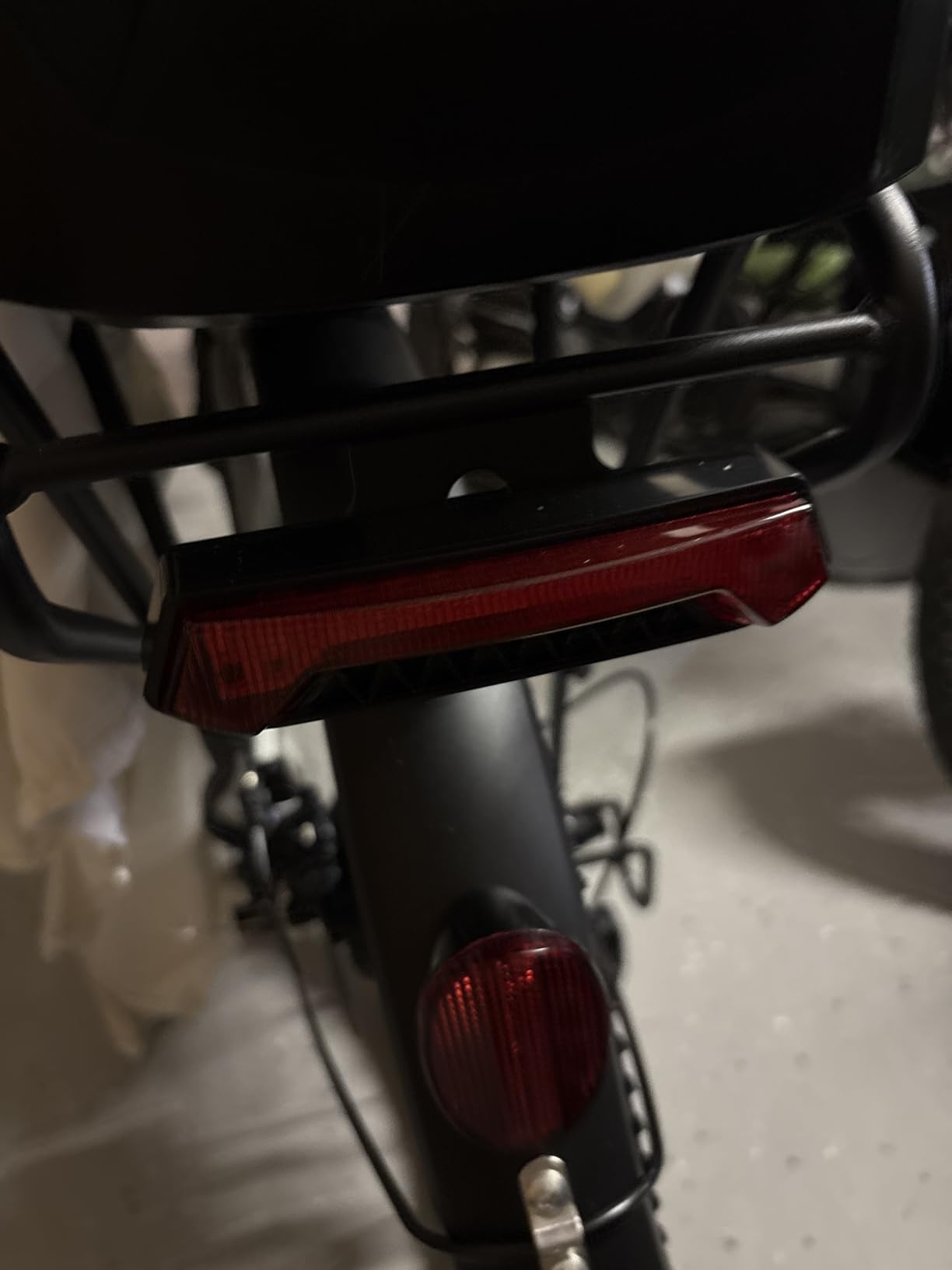
One detail we liked: the battery mounts low under the rear rack, so the bike keeps the profile of a normal bicycle. That makes it easier to park, easier to rack and harder to spot as a target, which matters on a bike left outside for eight hours a day.
What 500 watt-hours covers on a daily basis
At 18 watt-hours per mile, 500 watt-hours gives you about 28 miles. In winter, knock 20 to 25 percent off for cold battery behaviour and you are looking at roughly 21 to 23 miles. So a 20 mile round trip is comfortable year round, and a 25 mile round trip is comfortable from spring through autumn with a mid-day top-up in deep winter.
If your daily ride is longer than that, this is not the bike. There is no dual-battery option and no second pack sold, so the ceiling is fixed by what fits in the frame.
Where it falls short
Assembly is the most commonly criticized aspect, with several owners reporting four to five hours and near-stripped fender screws. Budget a full afternoon and read the instructions before you start, not while holding a stripped screw.
Brakes are the other recurring theme: weak, and prone to squealing badly when wet, with a longer stopping distance than you would want. The advertised 19 mph is realistically only reached downhill or with heavy pedalling on assist 2 or 3, so treat the top speed as a ceiling rather than a cruise. With only seven gears, anything above assist level 2 is effectively unusable on flat ground, which is a gearing limitation you will feel most on a long flat commute.
6. DTTZH F6 – Best for Fast Overnight Charging
Adult Electric Bike, Fast E Bike for Adults Electric Fat Tire Ebike
48V 15.6Ah removable battery
22 mile throttle, 60 mile PAS range
3A fast charger, 5-7 hour full charge
NFC card or 4-digit password start
Pros
- 3A fast charger cuts a full charge to 5-7 hours against 8-10 for a standard charger
- Highest five-star share in the group at 76 percent
- 4 inch color LCD stays legible in direct sunlight
- Hydraulic front shock plus rear shock gives genuine full suspension
- UL 2849 certified with a 1-year warranty and 30-day return
Cons
- 10 percent one-star share is the highest in the group
- Returning a unit this large is practically difficult
- Battery options span several configurations which can confuse ordering
- Heavy at 43 kg package weight
Charging is the quiet bottleneck of long-range commuting, and the DTTZH F6 attacks it directly. The 3A fast charger brings a full charge down to five to seven hours against the eight to ten hours a standard charger needs. If you charge overnight while you sleep, that difference is the gap between waking up with a full pack and waking up with most of one.
The 48V 15.6Ah pack is roughly 749 watt-hours. Owners report 22 miles of throttle range and up to 60 miles in pedal-assist mode, so at 20 watt-hours per mile in assist you have a realistic ceiling somewhere near 30 miles. Bigger configurations exist in the same model family, including 25Ah and 60V 30Ah packs, which makes this the most configurable listing we looked at for riders whose range needs are still shifting.
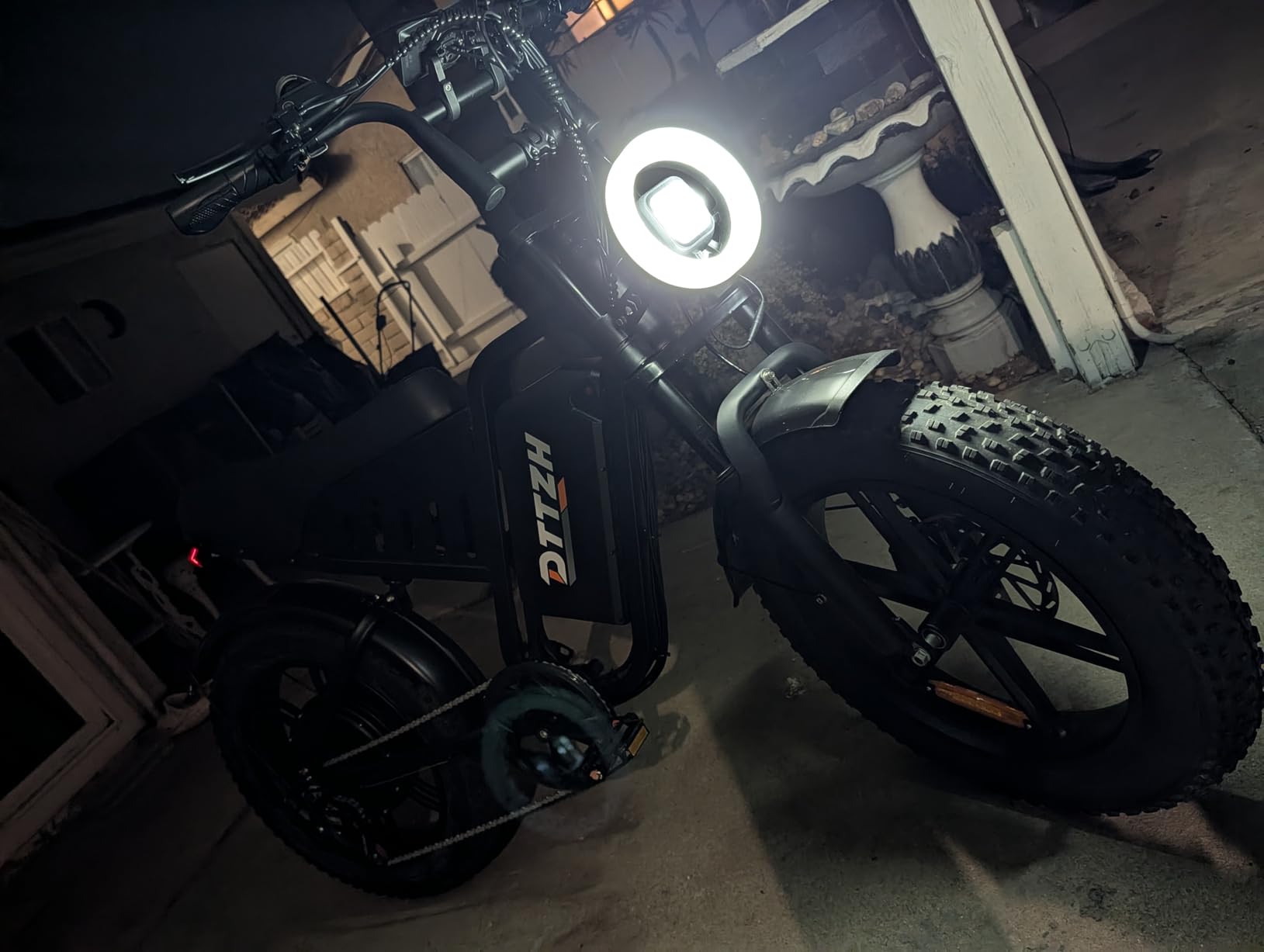
Two features stand out as unusual at this level. The NFC card or four-digit password start removes keys entirely, which is the most convenient anti-theft arrangement in this group and solves the single most common long-range commuter problem: a bike too heavy to carry upstairs, parked in a place where a cable lock is a suggestion. And the 4 inch color display is legible in direct sunlight, which is where cheaper displays routinely become unreadable on an open approach.
Customer service also comes up repeatedly and positively, including free replacement parts such as a broken kickstand and a courtesy credit for a faulty motor. A one-year warranty and 30-day return window are both better than several bikes in this roundup.

What the 3A charger actually changes
Charge time scales directly with charger output. A 3 amp charger pushes roughly three times the current of a 1 amp unit, and on this pack it means five to seven hours rather than eight to ten. Over a working week that is the difference between charging every night without thinking about it and charging every third night.
For a 30 mile round trip this matters more than any other single feature. Riders who fall short on charge start the day anxious, and that anxiety is what makes people abandon long-range commuting for something smaller.
Where it falls short
Quality variance is the real risk. At 10 percent one-star reviews, this is the highest share in our group, and the specific complaints are a dead motor on arrival and assembly difficulties. One owner needed a professional to install a replacement motor, which is a serious inconvenience and not a cheap fix.
Returning a bike shipped in a box this large is also genuinely difficult, since oversized boxes are often rejected by carriers. The 30-day window exists on paper but may be hard to use in practice. And at 43 kg package weight, plan the front wheel assembly with a second person.
7. DEEPOWER Fat Tire E-Bike – Best for All-Day Range
DEEPOWER QS7 Electric Bike for Adults, 2000W Peak Power 28MPH E-Bike, 48V 20Ah/35Ah/60Ah Battery Options, 35–180 Mile Range, 20” Fat Tire Ebike, 7-Speed All-Terrain Electric Bicycle
48V 20Ah removable battery
Up to 70 miles electric, 100 miles pedal assist
2000W peak motor with 30 degree climbing
Dual suspension and 20 x 4 inch fat tires
Pros
- Largest battery in the roundup at 48V 20Ah
- with a claimed 100 mile pedal-assist range
- 2000 watt peak motor handles 30 degree slopes
- Full suspension and 4 inch fat tires handle sand
- snow and rocky ground
- 74 percent five-star share is among the highest here
Cons
- 43 kg package weight makes it hard to carry
- lift or store in a small vehicle
- Moped styling and fat tires are bulky for a daily commute
- Only 211 reviews so there is limited long-term battery data
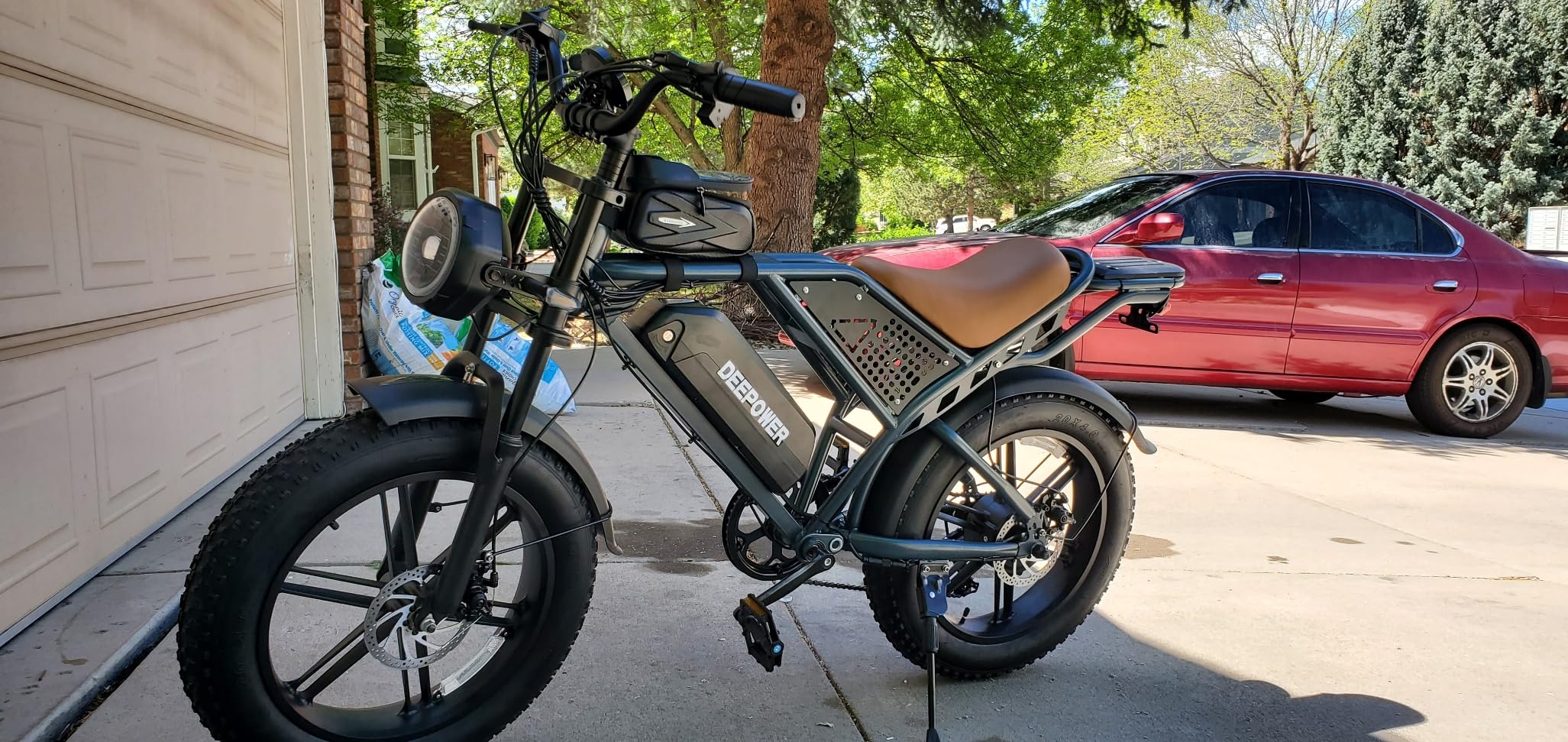
On paper this is the longest-ranging bike we reviewed by a wide margin. The 48V 20Ah pack is 960 watt-hours, and the claimed figures are up to 70 miles in pure electric mode and up to 100 miles in pedal-assist mode, more than double the next highest claim here. The math is more encouraging than the marketing: at 20 watt-hours per mile, 960 watt-hours is about 48 miles of real assist riding before terrain and weather penalties.
That is enough to cover a 40 mile round trip and get home with reserve, which no other bike in this group can promise. If your commute involves a long rural stretch, a ferry leg or a route that crosses open country between two transit stops, that headroom is genuinely useful.
The 2000 watt peak motor handles 30 degree slopes, which tells you how much climbing reserve there is beyond what the batteries provide. Dual suspension at both ends plus 20 by 4 inch puncture-resistant fat tires give it a genuinely all-terrain setup for sand, snow and rocky trails, and the dual disc brakes are specified for heat dissipation on long descents, which is exactly the condition a 40 mile day can produce.
At 90 percent pre-assembled and backed by a one-year warranty with a 24-hour response guarantee, the ownership experience around setup is better than most bikes here.
Who should actually pair with 100 miles of range
Riders combining a long bike leg with a train or bus segment. Riders who work far enough from home that one long trip beats two short ones. And riders in cold regions who need the margin, because cold weather can cost 20 to 30 percent of usable capacity and a 40 percent buffer is what absorbs it.
For everyone else, this is more battery than the ride needs, which means more weight to carry for capacity you will not use.
Where it falls short
The 43 kg package weight is the honest drawback. That is roughly 95 pounds of bike and battery, and it makes stairs, small storage and car transport genuinely difficult. Fat tires also increase rolling resistance, which works directly against the range claim in city riding where the pavement is smooth.
The evidence base is also thinner than the specifications suggest. 211 reviews is the second smallest sample here, so almost none of it tells you what a three-year-old 20 amp-hour pack delivers in winter. Big batteries that have not been around long enough to age are the biggest unknowns in this category, and we would want more ownership history before calling this the definitive long-range answer.
8. Jasion EB5 – Best Budget Commuter for Shorter Round Trips
Jasion EB5 Electric Bike for Adults 26″ tire with 1000W Peak Motor
360Wh removable battery
25-40 mile claimed range
1000W peak motor with 20 MPH top speed
49.6 lb carbon steel frame
Pros
- Lightest frame in the roundup at 49.6 lb
- which makes stairs and carrying noticeably easier
- Removable 360Wh battery charges in 5-6 hours and owners report 18-25+ miles of real range
- Four riding modes with three assist levels give fine control
- Quick assembly at roughly 15-45 minutes for most owners
- Largest review count we found at 2606
Cons
- Original saddle is widely reported as uncomfortable on long daily rides
- Budget wear parts such as tires and spokes need replacing
- Handlebar and rear brake adjustment screws loosen repeatedly
- Front fork feels flimsy and is no longer lockable
The EB5 is the answer when the round trip is short, the budget is real, and you carry the bike up stairs. At 49.6 lb it is by far the lightest frame in this group, and that single number changes daily life for anyone without ground-floor storage. The 360 watt-hour battery is removable and recharges in five to six hours, with owners reporting 18 to 25 miles of real-world range and 30-plus when pedal assist is used actively.
At 18 watt-hours per mile, 360 watt-hours is about 20 miles. That is a 15 to 18 mile round trip with a modest reserve, and it falls short of a 20 mile commute on a cold day. Owners consistently treat it as a capable light-duty commuter rather than a long-haul machine, and that framing is honest.
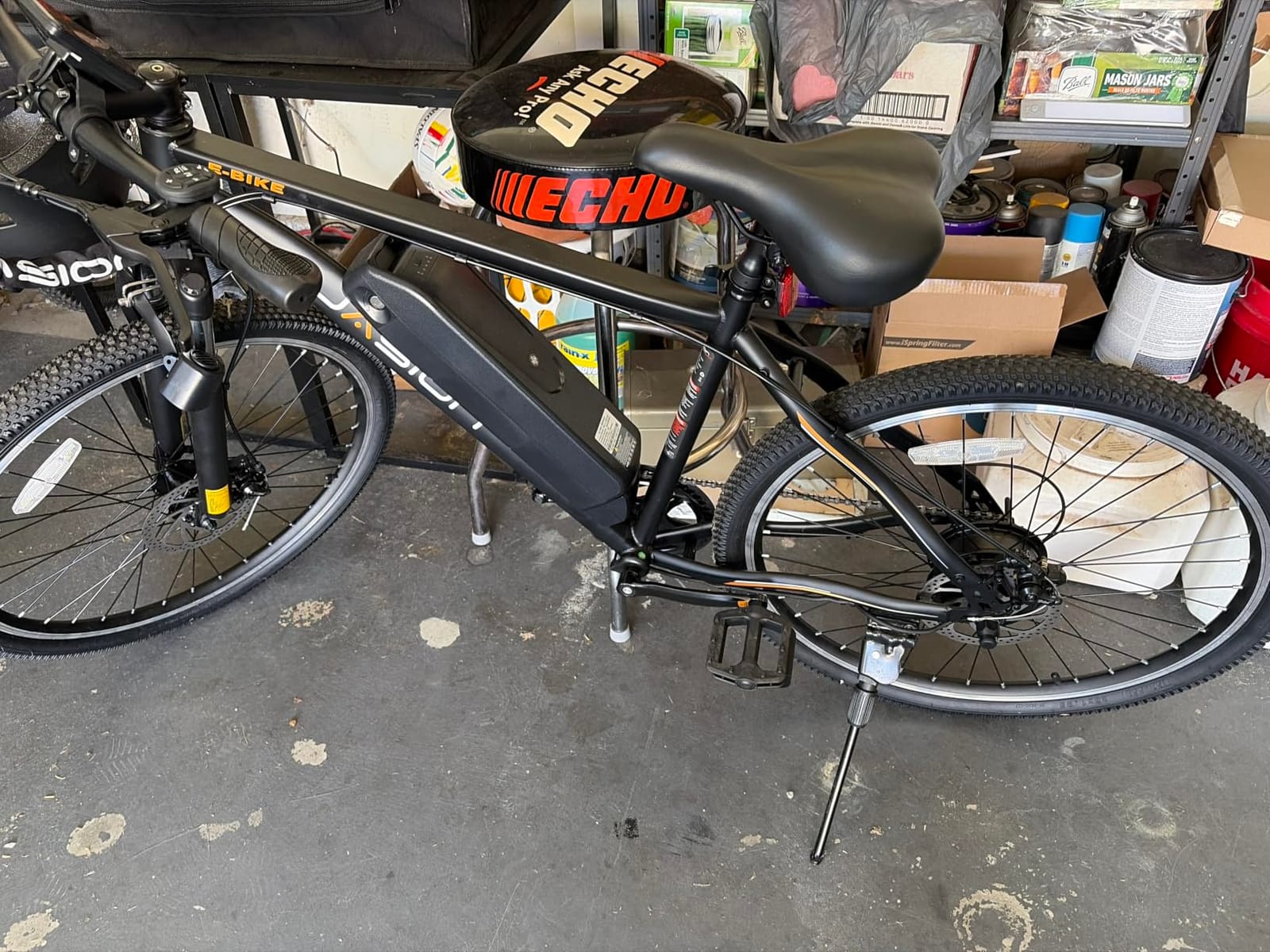
Four working modes give unusually fine control for the money: three pedal assist levels, pure electric throttle, pedal, and a low-speed booster. The 1000 watt peak motor handles easy hill assistance, the front suspension fork takes the edge off poor surfaces, and the LCD display has an adjustable backlight with odometer, max and average speed data, which is more instrumentation than most bikes in this class offer.
At 2606 reviews this is the largest evidence base we found anywhere in the group, so the 4.1 rating is a well-tested number rather than a preliminary one. A 13 percent one-star share reflects the usual budget-brand pattern of defective units mixed with strong satisfaction.
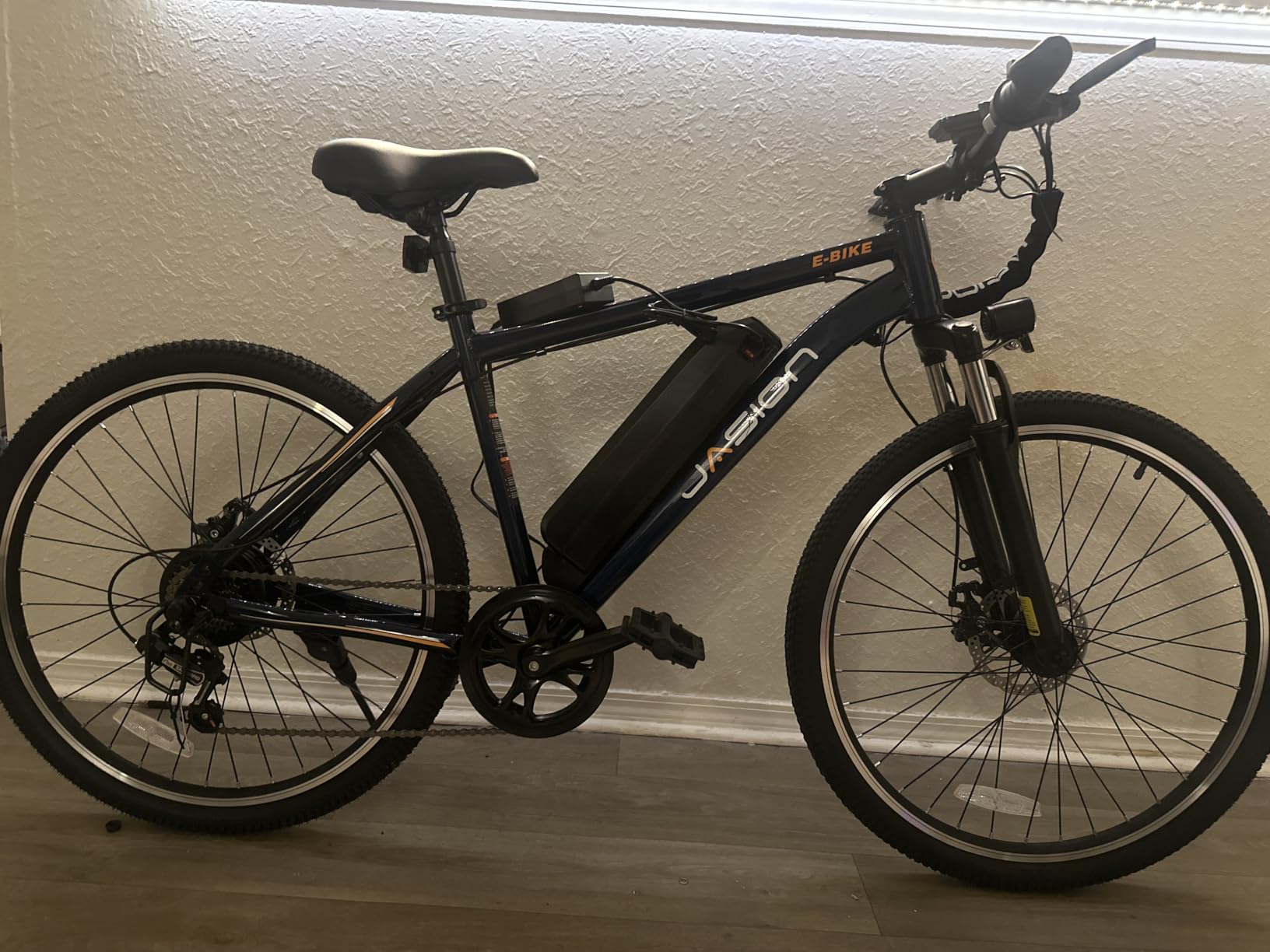
When this is the right bike
It is the right bike for a 12 to 15 mile round trip, especially if the route is flat and the bike lives somewhere without a garage. The removable battery is genuinely convenient, and the 20 MPH top speed suits dense urban riding better than a faster bike would.
It is also the bike to buy if you are unsure whether an e-bike will stick. At 49.6 lb it is light enough to handle without committing to a heavy commitment, and if it does not work out you will actually be able to sell it or give it away.
Where it falls short
Comfort is the main casualty of the low weight. The original saddle is widely reported as uncomfortable for long daily commutes, and on a bike you ride every day that is not a small thing. Budget for a saddle replacement in the first month, and treat it as part of the purchase rather than an optional extra.
Wear parts are the other issue. Soft tires need replacing, spokes have broken for some long-term owners, and the handlebar and rear brake adjustment screws loosen repeatedly during rides. The front fork is no longer lockable or adjustable on newer models and feels flimsy under load. There are also almost no accessory mounting points beyond a few unused fork and seatpost holes, so a proper rack or pannier setup is limited. And customer support has been criticized for not offering direct replacement batteries or parts, which is a serious problem for a bike you depend on daily.
9. Funhang EB-C2 – Best for Charging at Work
Funhang Electric Bike for Adults, 1000W Peak Ebike, 50Miles Step Thru Electric Bicycle, 26″ Commuter E Bikes with 48V Built-in Removable Battery, Adjustable Stem, 7-Speed, UL 2849 Certified
48V 374.4Wh IPX5 removable battery
40-50 miles PAS, 20-30 miles throttle
UL 2271 battery and UL 2849 bike certification
Full fenders, rear rack, electric horn
Pros
- Removable battery can be charged at a desk at work
- which suits commute-and-charge workflows
- Only bike in the group with both UL 2271 battery and UL 2849 whole-bike certification
- Durability is well documented
- with one owner past 2000+ commuting miles
- Full-coverage fenders and a solid rear rack are standard
- Good hill performance with 20+ mph maintained uphill
Cons
- No brake light
- taillight or indicators
- Factory headlight is dim and mounted low
- Mechanical disc brakes squeal and need re-adjustment during break-in
- Pedal assist does not respond well to rider effort
- Heavy at 63 lb
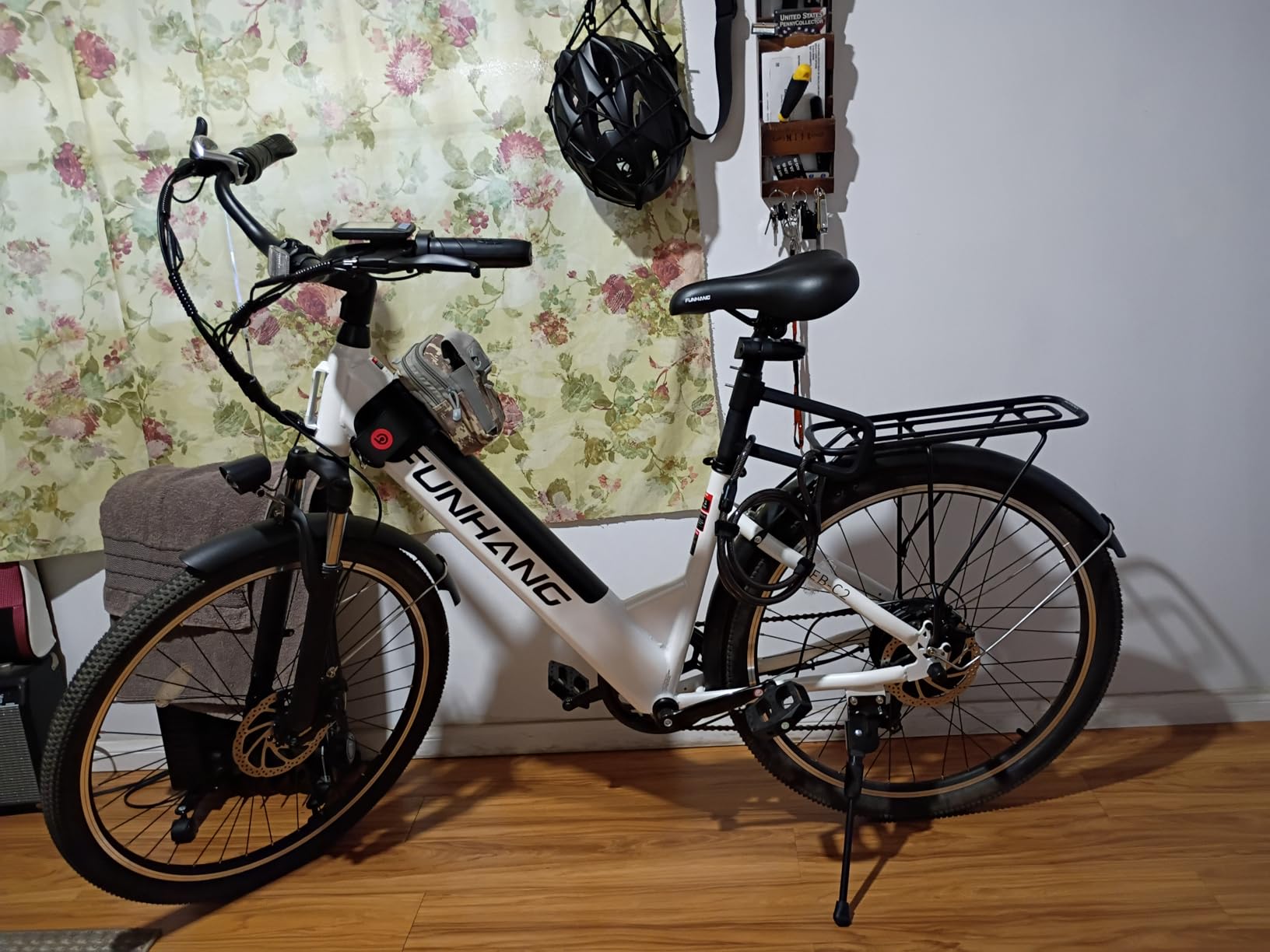
The Funhang EB-C2 is the only bike in this roundup with both UL 2271 battery certification and UL 2849 whole-bike certification, recognized by SGS. For a commuter who charges the pack indoors every night, that is not a marketing detail: it is the difference between a pack that is tested to a recognised standard and one that is not. Riders on r/ebikes treat those two standards as a baseline rather than a feature, and they are right to.
Its 374.4 watt-hour battery is small by the standards of this list, but the 48V pack charges at a desk and owners report roughly 20 to 25 miles on throttle and 35 to 40 on pedal assist level 3. At 18 watt-hours per mile, 374 watt-hours is about 21 miles, so the honest range sits in the high teens to low twenties for most riders, climbing into the thirties when the motor is working gently.
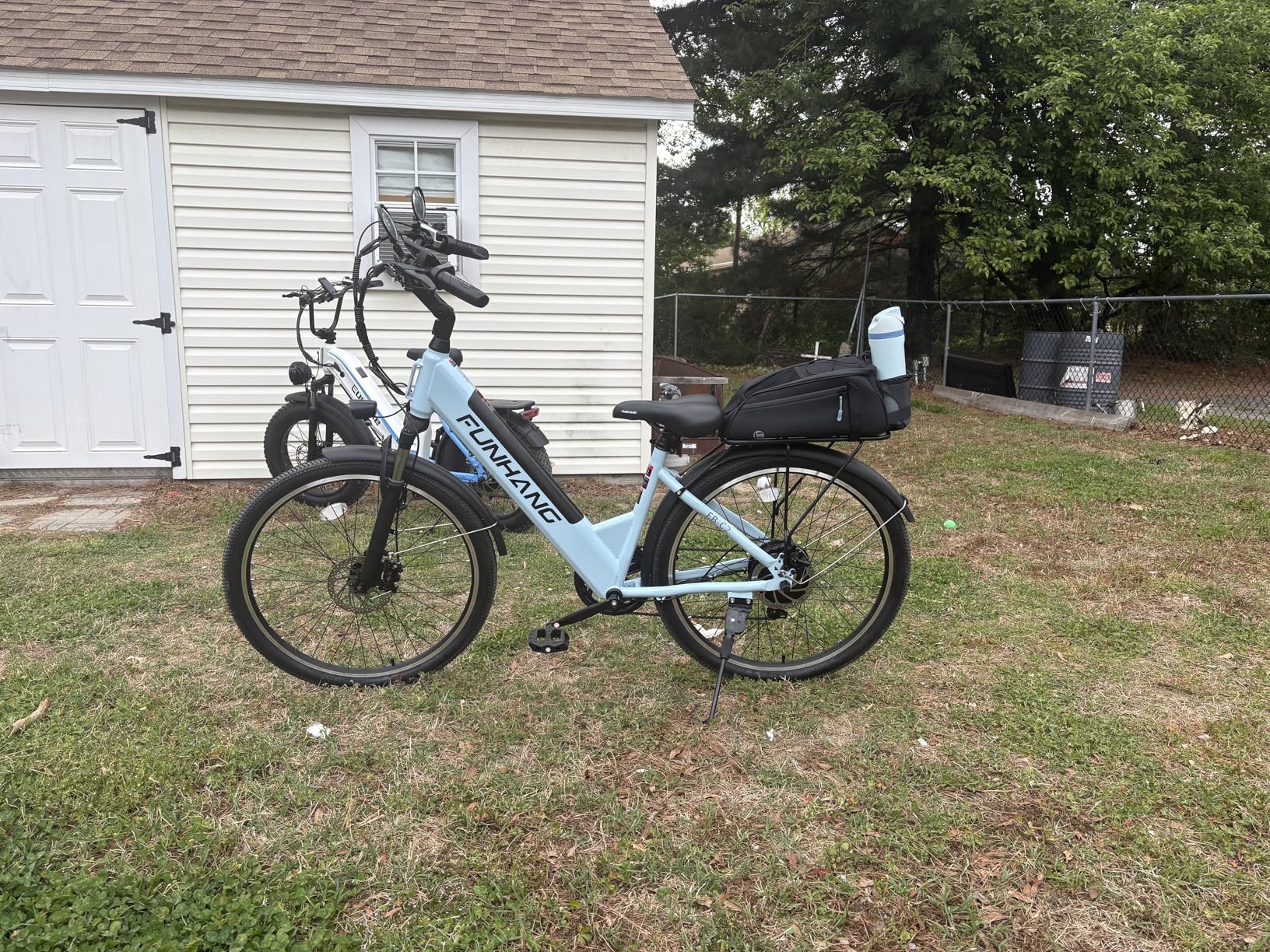
It is also the most commuter-equipped bike in the group. Full-coverage fenders keep road spray off your legs on wet days, the solid rear rack takes a laptop and panniers, and the electric horn is genuinely useful in traffic. The articulating handlebar stem and adjustable seat fit a wide height range, and five riding modes with five assist levels cover everything from pure electric to a 4.5 to 7.5 km per hour booster for the last stretch of a hill.
Durability is the quiet strength. One owner logged more than 2000 commuting miles and needed only a tube and a tire replaced, and multiple owners bought a second bike after the first held up.
Why workplace charging changes the equation
A removable battery that fits in a bag turns a hard constraint into a soft one. You ride out in the morning, lift the pack out at the office, and plug it into a wall. Even a partial top-up over a workday adds enough for the return leg on a 20 mile round trip, which effectively doubles the bike’s range without adding a second pack or a second frame.
That is why we rate this bike above its raw watt-hour figure suggests. The 374.4 watt-hours is a mid-pack number, but a bike that can be recharged mid-day behaves like a much larger one.
Where it falls short
Lighting is the most-cited safety gap and it is a real one: no brake light, no taillight, no indicators, and the fender light is the only rear lighting while also draining the battery. The factory headlight is dim and mounted low off the handlebar. On a 20 mile return in November that is not a small gap.
At 63 lb the bike is noticeably heavier than others at this level, and the rear rack can cause wobble unless the load is balanced with something in front. The pedal assist is also widely reported as not responsive to rider effort, simply pushing the bike to top speed regardless of level, which makes fine control on climbs harder than it should be. Brakes squeak substantially and need re-adjustment during break-in, and the front forks go loose and wobbly quickly. Finally, no second battery is sold, which caps how far this bike can go on one charge.
10. TST X6 Retro Fat Bike – Best for Rugged Load Hauling
Electric Bike for Adults,48V15Ah Removable Battery Retro Ebike,Carbon Black
Removable 15Ah battery with 65 mile claimed range
750W rated, 2000W peak, 90 Nm torque
460 lb maximum load
20 x 4 inch fat tires with dual suspension
Pros
- Highest maximum load rating in the group at 460 lb
- 2000 watt peak motor with 90 Nm torque for steep hills
- LCD display with smartphone app connectivity is rare at this level
- Dual suspension and 4 inch fat tires handle mixed surfaces
- Ranked second in Electric Fat Bikes showing strong real demand
Cons
- Only a 180-day warranty
- Fat tires increase rolling resistance on pavement and work against the range claim
- Heavy iron frame is a poor choice for stairs or car trunks
- App connectivity adds complexity and can be unreliable
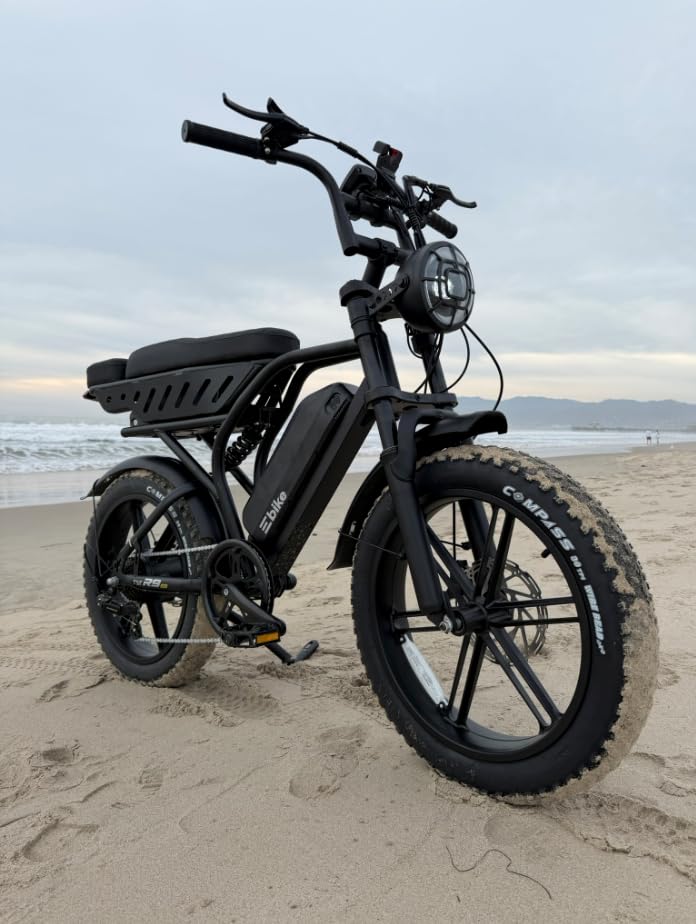
The X6 retro is the bike to consider if you are carrying more than yourself. Its 460 lb maximum load is the highest in this roundup, ahead of the TST R004’s 450 lb and everything else by a wide margin. Riders who haul a laptop, tools, a child seat or a full week of groceries will feel that headroom immediately, and the 90 Nm torque from the 2000 watt peak motor keeps a loaded bike moving uphill.
The removable 15Ah battery claims 65 miles on a single charge, which owners describe as covering about a week of commuting. On the math, 15Ah at 48V is 720 watt-hours, giving roughly 40 miles of realistic assist riding and less once the 20 inch fat tires start working against you on smooth pavement.
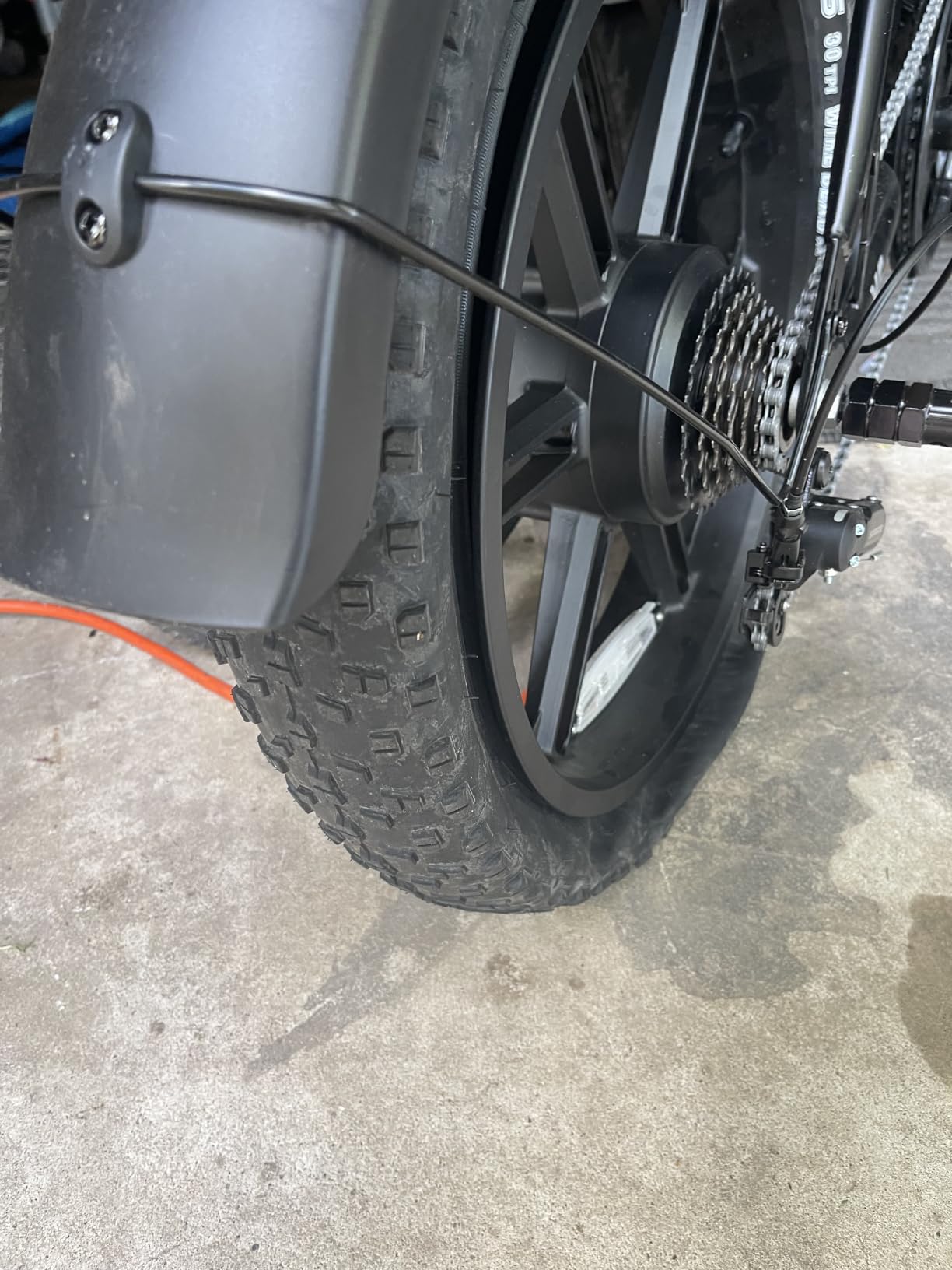
The app-connected LCD display showing speed, battery level and distance is a rarity at this level, and 5-level pedal assist across a 7-speed drivetrain gives a usable range of gears for a loaded bike. Fat tires and dual suspension handle sand, snow, mud and gravel, which means a route that is not reliably paved stops being a reason to stay home.
The 20 inch wheel and retro styling also mean the bike is smaller than most fat-tire builds, which helps in a garage or a hallway even if the mass is still there.
When a heavy-duty bike is the right answer
If you are replacing a car commute and the route includes children, equipment or groceries, load rating becomes a safety specification rather than a convenience. A bike rated for 200 lb is being asked to do a job it was not designed for, and the frame, brakes and motor all suffer. At 460 lb you are not near that limit no matter what you hang on it.
The 65 mile claim also translates to roughly 40 miles of real assist range, which comfortably covers a 35 mile round trip with reserve. For a heavy route, that is genuinely useful headroom.
Where it falls short
The 180-day warranty is the shortest in the roundup, and for a bike intended to carry loads for years that is a meaningful gap. At 8 percent one-star reviews, quality control complaints are present in the usual proportion.
Fat tires are the fundamental compromise for a commuter. They roll slowly on smooth pavement, which cuts directly into the range you are paying the extra battery for, and they add mass to a bike you will eventually have to lift. The iron frame compounds that. App connectivity is a nice-to-have that adds complexity and can be unreliable, and a feature you rely on daily is worth more than a feature you use once.
How to Size a Battery for Your Round Trip
Start with the number that is actually fixed in your life: your round-trip miles. Multiply that by watt-hours per mile, and watt-hours per mile is not a guess so much as a range. A relaxed commute at 16 to 20 mph on flat ground runs about 15 to 20 watt-hours per mile. Once you hold 22 to 25 mph, ride into a headwind, or start climbing a sustained grade, consumption rises toward 30 to 40 watt-hours per mile. Riders on Endless Sphere budget roughly 36 watt-hours per mile when they plan to cruise at 20 mph, which is the number we use for hilly routes.
Then add your margin. Divide your result by 0.8 for ordinary conditions, and by 0.65 if you commute through winter, because lithium-ion capacity drops 20 to 30 percent near freezing. That 20 to 30 percent derating is the single most underestimated factor in this entire category, because it arrives exactly when the range matters most.
Third, separate watts from watt-hours, because this is the most common confusion we see. Watts measure power, which determines how hard the motor pushes you at a given moment. Watt-hours measure energy, which determines how far you get. A 2000 watt motor with a 500 watt-hour battery will not take you further than a 1000 watt motor with the same pack. If two bikes have the same watt-hours, the more efficient motor and the lighter bike will win the range comparison.
Fourth, check the real-world reviews, not the listing. Our team cross-referenced owner reports against the arithmetic for all ten bikes, and the gap between claimed and reported range was consistent: claims in this group run 50 to 100 miles while owner reports cluster between 20 and 40. Halving any advertised maximum gives you a working estimate, and applying the same discount to any battery figure you see in a listing is a fast sanity check.
Fifth, think about charging logistics before you think about capacity. A 40 mile round trip daily means you either charge overnight on a fast charger, charge at work with a removable pack, or buy a second battery. The DTTZH F6’s 3A charger and the Funhang EB-C2’s desk-charging workflow are two different answers to the same problem, and both are cheaper than carrying a second pack you rarely use.
What to Check Before You Buy a Long-Range Commuter
Motor type is the first thing to look at. Mid-drive motors pull the chain and behave like your legs, which is why forum riders consistently recommend them on hilly long commutes. Rear hub motors are cheaper, heavier at the back, and feel less natural under load. The bikes in this group are mostly rear hub designs aimed at the budget and mid market, so check the motor’s rated and peak watts against your gradient rather than assuming the brand.
Torque sensor versus cadence sensor is the second. A cadence sensor delivers a fixed amount of assist per pedal revolution regardless of how hard you press, which feels abrupt on a long day. A torque sensor reads your effort and scales the assist, which feels far more natural over hours. Most bikes here use cadence sensing. If you are replacing a car commute and will ride daily, this is worth asking about.
Weight is the third, and it is the complaint owners raise most often. A 60 to 75 lb bike is a serious problem for apartment dwellers, anyone with stairs, and anyone lifting onto a car rack. Battery removal helps but the frame still weighs 50-plus lb. Every bike in this group is between 49.6 lb and 66 lb, and the lightest option here is the Jasion EB5. If your route has stairs, weigh that before the range figure.
Charging is the fourth. Check the charger amperage, because it sets your overnight time. A 3A charger on a 750 watt-hour pack gets you a full charge in five to seven hours. Then decide whether you can charge at work, because a removable battery that lives in a locker is the cheapest range you will ever buy. Riders on r/bikecommuting consistently describe workplace charging as the deciding factor on longer commutes.
Battery longevity is the fifth. Lithium-ion packs typically last 500 to 1000 charge cycles before dropping to around 80 percent capacity. If you ride 25 miles a day, that is a long life, but it is not forever, and a replacement pack is a four-figure expense on most of these bikes. Warranty length is your best proxy: the one-year warranties on the Jasion, Heybike, ANCHEER, DTTZH and DEEPOWER bikes are meaningfully better than the 180-day cover on the two TST models, and that difference matters for a bike ridden daily for years.
Brakes are the sixth, and the recurring complaint across this entire roundup. Multiple owners across multiple brands report noisy brakes, weak wet braking and long stopping distances. On a bike capable of 20 to 28 mph, that is a real limitation. Budget for brake pads and cables in year one, and test the braking hard before you ride in traffic.
Finally, what to avoid. Riders on r/ebikes asked this question directly and the answers were consistent: avoid bikes with high-watt hub motors and no UL 2271 battery certification, avoid packs you cannot replace without stripping the whole bike, and avoid listings with no spare parts and no serviceable controller. Avoid any bike whose range claim cannot be traced to an actual watt-hour figure. In this group that means favouring the UL-certified packs, which is why the Funhang EB-C2 earns its place despite a mid-pack battery.
If you need to carry substantial loads rather than just yourself, our [cargo e-bike roundup](https://kayakcambria.com/best-cargo-electric-bikes-for-commuting/) covers the long-tail and front-loader formats in detail. And if your route involves a car park leg or a mixed-mode trip, our [long-range electric scooter guide](https://kayakcambria.com/best-long-range-electric-scooters/) covers the lighter end of that equation.
Frequently Asked Questions
How many watt-hours per mile does an electric bike typically consume?
A typical relaxed commute runs 15 to 20 watt-hours per mile. Consumption rises to 30 to 40 watt-hours per mile when you hold 22 to 25 mph, ride into a headwind, or climb a sustained grade. Riders planning a 20 mile round trip should budget 400 watt-hours before adding any winter margin.
What is the best e-bike for a 20-mile commute?
For a 20 mile round trip, the Heybike Cityscape 2.0 is the strongest all-round choice, with a UL-certified 468 watt-hour battery that owners report covering 35 miles on one charge. If you can charge at work, the Funhang EB-C2 pairs a removable pack with UL 2271 and UL 2849 certification. If the route is steep, the Jasion RetroVolt 330’s 99 Nm torque handles the climb.
How far can you commute on an e-bike?
Most commuters comfortably cover 20 to 40 miles per charge on a single battery, and some clear 50 or more. A 500 watt-hour pack at 18 watt-hours per mile gives about 28 miles; a 720 watt-hour pack gives about 40. Cold weather can cut usable capacity by 20 to 30 percent, so plan conservatively in winter.
How far will a 400Wh e-bike go?
A 400 watt-hour battery covers roughly 20 to 26 miles on a relaxed commute at 15 to 20 watt-hours per mile. On a hilly or windy route at 30 watt-hours per mile, that falls to about 13 miles. A 400 watt-hour pack suits a 12 to 15 mile round trip, with a mid-day top-up if your employer allows it.
What e-bikes should you stay away from?
Avoid bikes with a high-watt hub motor paired with a battery that lacks UL 2271 certification, listings with no stated watt-hour figure behind the range claim, and bikes whose battery or controller cannot be reached without stripping the frame. In this roundup, the shortest warranties at 180 days are also worth weighing against bikes covered for a full year.
The Verdict for Long-Range Commuting in 2026
The Heybike Cityscape 2.0 is our pick for the best e bikes for long range commuting, because it is the one bike where the range claim, the owner reports and the daily equipment all line up. A UL-certified 468 watt-hour battery, a real taillight, a rack, a display you can read in sunlight and 662 reviews describing ordinary commutes rather than showroom laps.
Ride steeper and go for the Jasion RetroVolt 330. Charge at your desk and buy the Funhang EB-C2. Need the biggest battery and can live with the weight, and the DEEPOWER’s 48V 20Ah pack clears 40 miles in a way nothing else here does.
Do the arithmetic on your own round trip before you buy anything, add a quarter for winter, and pick the bike that clears your number with margin. Every one of these ten can do the job. Only one of them clears your actual route with room to spare, and that is the one worth taking home.


