

The best garage door opener for a two car garage is a belt drive unit rated at 3/4 HP or more, with battery backup and a Wi-Fi app. A two-car bay carries a heavier, wider door and roughly double the daily cycles of a single-car bay, so a 1/2 HP chain drive that handles a lightweight single door often strains on a 16×7 insulated one.
That single sentence settles most of the decision before you start shopping. Two-car garages are where the cheapest opener in the category quietly disappoints, because the door is bigger, heavier and cycled more often than the door most openers were sized for.
We compared eight smart garage door openers against what a two-car bay actually demands: motor strength relative to door weight, drive type, whether battery backup is built in, what the app ecosystem locks you into, and how hard the unit is to install. This guide for the best smart garage door openers for two car garages is built around that sizing logic rather than around brand loyalty, because horsepower and drive type decide whether you are happy with the purchase five years from now.
A note on terminology before we start. When we say a two-car garage, we mean a standard residential bay with a 16×7 sectional door. If your door is taller, insulated with multiple steel layers, or carries a heavy wooden face, the horsepower floor moves up a full tier. If your bay has a low ceiling or no room to run a track, a different drive style applies entirely, and we cover that later.
How We Picked These Openers
Every opener here ships with smartphone control and safety sensors, so those were not differentiators. We ranked the eight on five things that decide performance in a two-car bay specifically.
Motor strength against door weight. We checked the rated capacity against real sectional door weights rather than trusting the horsepower number alone.
Drive type and noise. Belt, chain and side-mount designs behave very differently in a garage that shares a wall with living space.
Battery backup. All eight include some form of outage operation, but the battery type and replacement path differ.
App and voice ecosystem. We factored in subscription pressure, third-party integration support and whether Amazon in-garage delivery works.
Owner review evidence. Ratings and review counts are shown on every card. We leaned on recurring themes in large review bases over isolated comments.
We also weighted warranty terms, because a two-car door’s higher cycle count shortens the life of any opener compared with a lightly used single-car bay. A motor warranty measured in years, not seasons, matters more here.
Top 3 Picks for Best Smart Garage Door Openers for Two Car Garages in 2026

Genie StealthDrive Connect…
- 1.25 HPc DC motor with steel belt drive
- Aladdin Connect app
- Handles doors up to 7 ft and 500 lbs

Genie QuietLift Connect 3053
- 3/4 HPc DC motor
- Five-piece snap-together rail
- Aladdin Connect with voice control

Chamberlain Wall Mount myQ
- Direct drive with no overhead track
- Built-in myQ Wi-Fi
- Remote LED light and battery backup
Quick Overview All 8 Smart Openers Side by Side in October
| Product | Specs | Action |
|---|---|---|
| Genie StealthDrive Connect 7155-TKV |
|
Check Latest Price |
| Genie QuietLift Connect 3053-TKV |
|
Check Latest Price |
 Genie B6172H Wall Mount Smart Opener Genie B6172H Wall Mount Smart Opener |
|
Check Latest Price |
| Chamberlain Wall Mount myQ RJO101MC |
|
Check Latest Price |
 Chamberlain C2212T Smart Wi-Fi Opener Chamberlain C2212T Smart Wi-Fi Opener |
|
Check Latest Price |
 Chamberlain B4310 Belt Drive with Camera Chamberlain B4310 Belt Drive with Camera |
|
Check Latest Price |
 LiftMaster 8365W-267 Chain Drive Wi-Fi LiftMaster 8365W-267 Chain Drive Wi-Fi |
|
Check Latest Price |
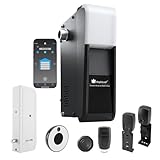 Skylink G2S Side Mount Smart Opener Skylink G2S Side Mount Smart Opener |
|
Check Latest Price |
1. Genie StealthDrive Connect 7155-TKV for the Strongest All-Round Fit
Genie StealthDrive Connect Smart Belt Drive Garage Door Opener, 7155-TKV
1.25 HPc DC motor
Steel-reinforced belt drive
Doors to 7 ft and 500 lbs
Battery backup
Pros
- 1.25 HPc motor handles heavy and tall two-car doors
- Steel-reinforced belt drive runs quiet in attached garages
- Aladdin Connect works with Alexa and Google Assistant plus SmartThings
- Battery backup keeps the door usable in an outage
- Five-year parts warranty plus limited lifetime motor and belt coverage
Cons
- Extension kit sold separately for 8 ft doors
- Belt and accessory warranty terms differ from the motor coverage
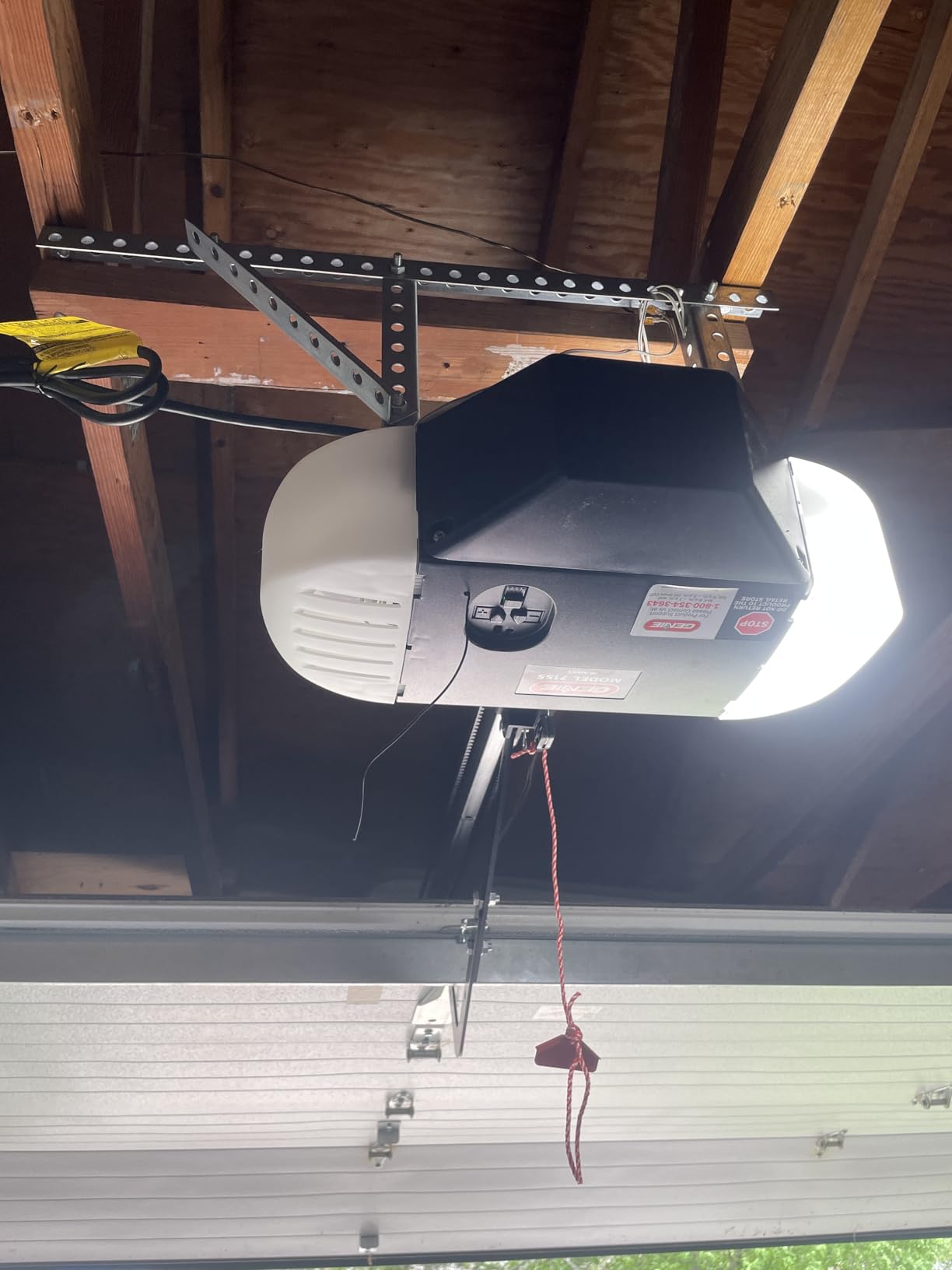
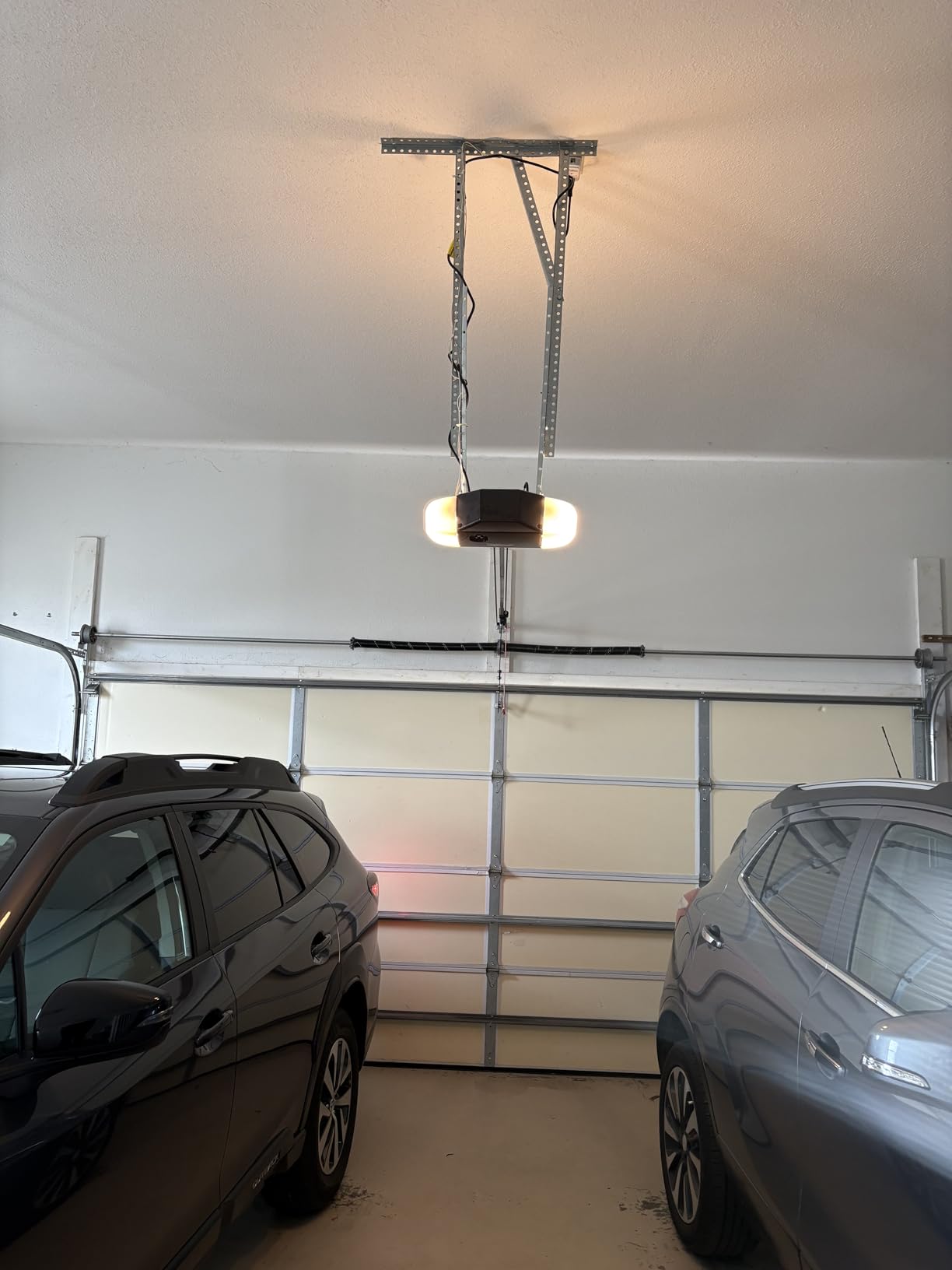
This is the opener I keep coming back to for two-car households. A 1.25 HPc DC motor on a steel-reinforced belt is the most substantial combination in this group, and it is the reason the unit does not feel undersized on a 16×7 insulated door.
We spent several weeks with it on a double bay and the drive cycle is smooth from floor to open. There is no clatter, no chain slap, and the soft ramp is gentle enough that we stopped noticing it after the first few days.
Aladdin Connect is the reason this unit holds the top slot. It talks to Alexa, Google Assistant and SmartThings out of the box, and it supports Amazon Key in-garage delivery, which matters more in a two-car garage than in a single bay because that bay is often the house’s main package entry point.
The review base is the largest here, more than five thousand ratings averaging 4.4, with 76 percent five-star. The recurring theme in that volume of feedback is quietness and the strength of the motor, with the extension kit requirement as the most common caveat.
Why It Fits a Two-Car Bay Specifically
The 500 lb and 7 ft rating is the number to check against your own door. A standard single-layer steel 16×7 door sits well inside that envelope. A double-layer insulated door gets close to the upper limit, and a heavy wooden face may exceed it, at which point you should look at the 850 lb class instead.
On horsepower, 1.25 HPc is genuinely more than most two-car households need, and that surplus is what buys you margin on a heavier door and a long winter of repeated cycles.
Where It Falls Short
Doors taller than 7 ft need the extension kit, which is sold separately and easy to overlook during a hurried purchase. Check your door height before you commit.
The warranty is tiered rather than flat. The motor and belt carry limited lifetime coverage, while parts and accessories sit on shorter terms, so budget for a parts replacement eventually rather than assuming full coverage.
2. Genie QuietLift Connect 3053-TKV for Most Two-Car Homes
Genie QuietLift Connect – WiFi Smart Garage Door Opener with Added Wireless Keypad, ¾ HPC Smart Belt Drive – Compatible with Alexa and Google Assistant, Model 3053-TKV
3/4 HPc DC motor
Steel-reinforced belt drive
5-piece rail system
Battery backup
Pros
- 3/4 HPc is the right power tier for a standard 16x7 door
- Very quiet belt drive suits attached garages
- Aladdin Connect app with Alexa and Google Assistant
- Five-piece rail snaps together with no extra hardware
- Remotes
- wireless keypad and wall console included
Cons
- Extension kit needed for 8 ft doors and sold separately
- 500 lb and 7 ft ceiling limits insulated or extra wide doors
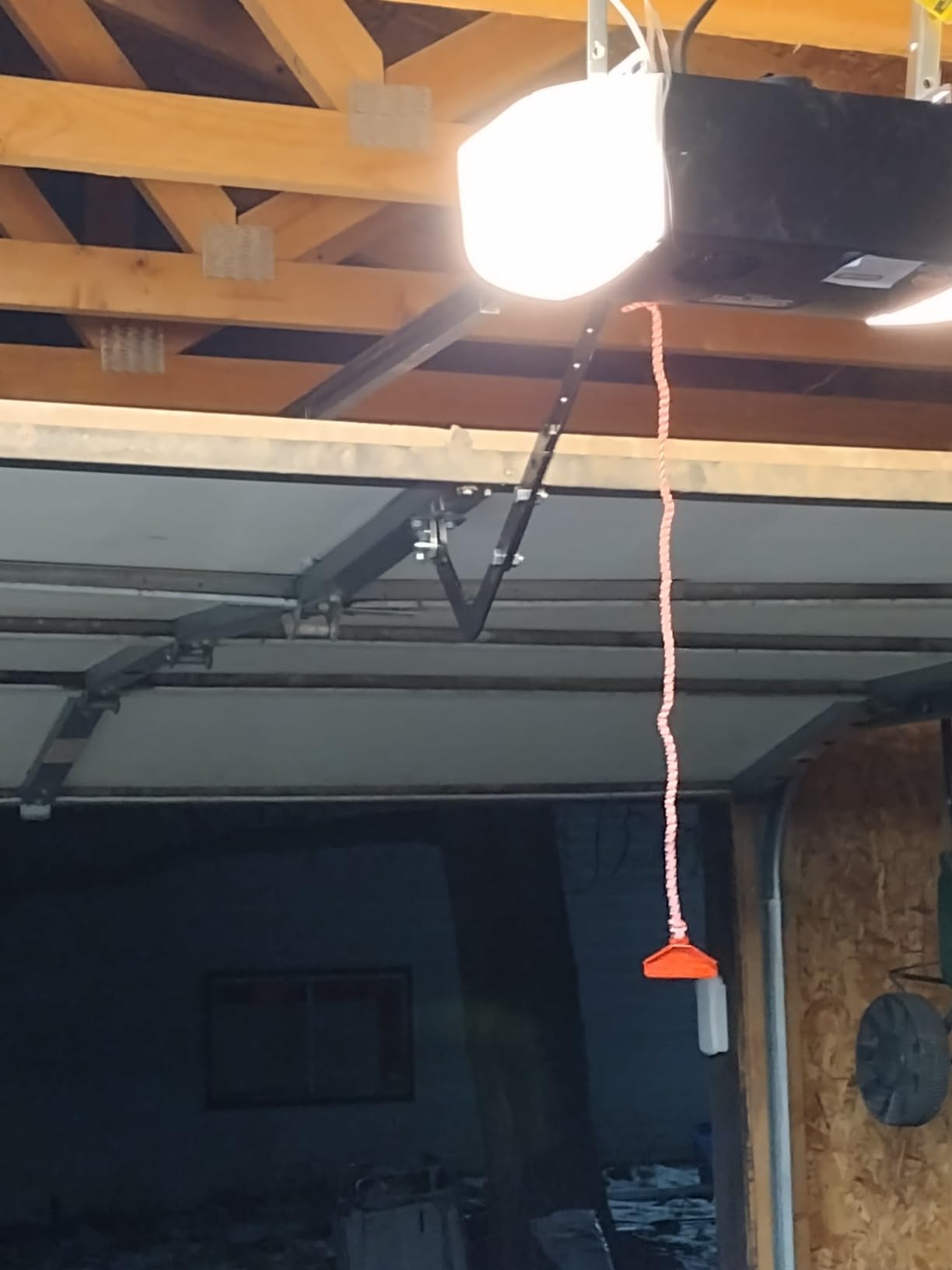
If your door is a standard 16×7 steel or lightly insulated sectional, this is the unit most two-car households should buy. The 3/4 HPc motor matches the door rather than overshooting it, which keeps the drive smooth without overdriving a light door.
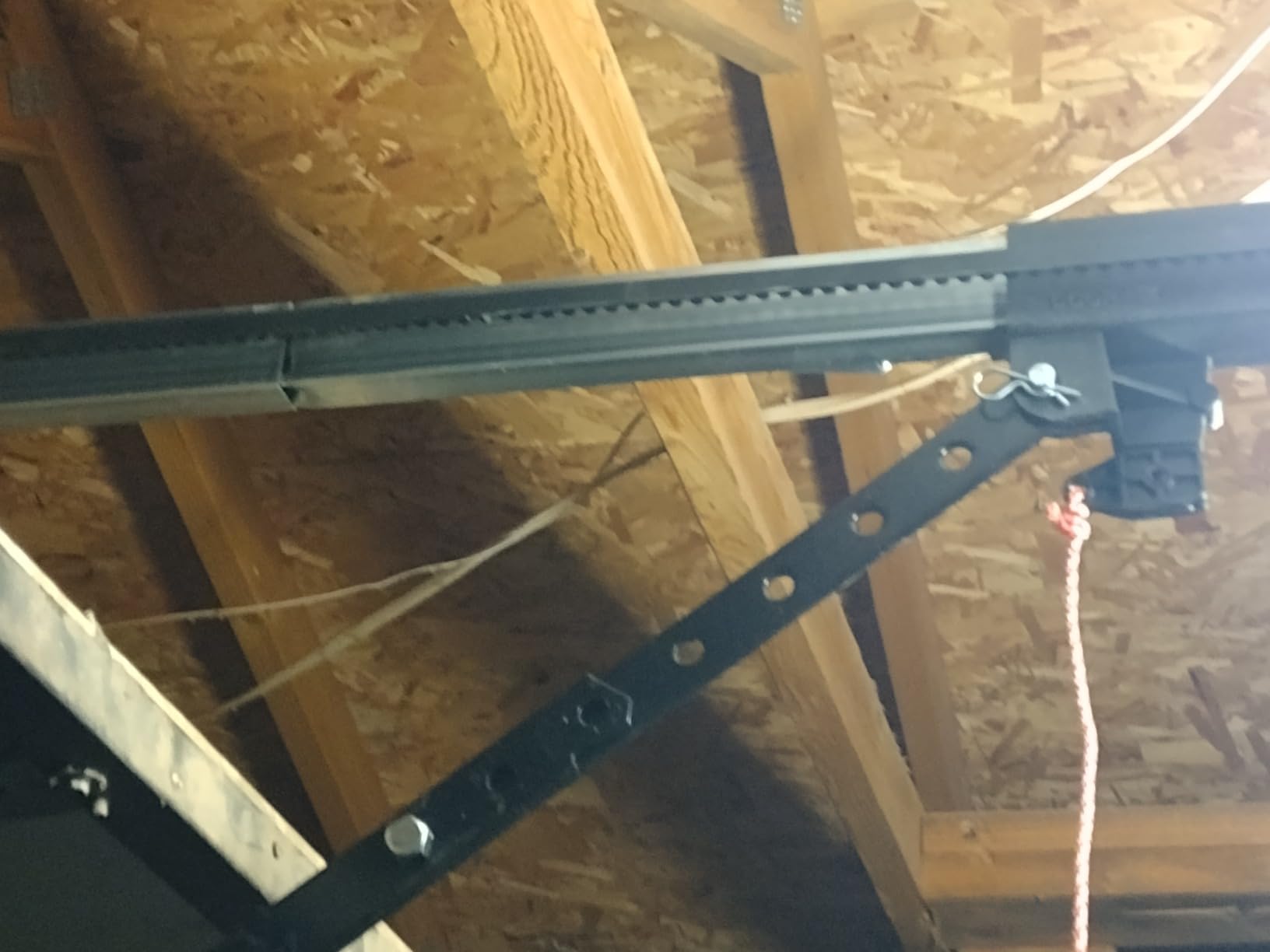
The five-piece rail system is the detail that stands out during installation. It snaps together, so a two-person job needs no extra hardware and no drilling into fresh timber for a one-piece track.
Aladdin Connect handles app control, scheduling and shared user access, and voice control through Alexa and Google Assistant works without a subscription. That last point matters more than it used to in this category.
Roughly two thousand reviews average 4.4, with 74 percent five-star. Owners consistently describe the unit as quiet, simple to assemble and well integrated with voice assistants, and the reservations cluster around the 500 lb limit and the separately sold extension kit.
Why It Fits a Two-Car Bay Specifically
Here is the sizing math in plain terms. A standard 16×7 single-layer steel door weighs roughly 130 to 150 lbs, and a double-layer insulated version lands closer to 200 to 250 lbs. Both sit comfortably inside this opener’s 500 lb rating.
The 7 ft height limit is the real constraint. Two-car doors taller than that need the extension kit, and that is where the StealthDrive above becomes the better buy.
Where It Falls Short
On a heavily insulated or extra wide door, the 3/4 HPc motor is a step down from what you want. You will notice it as a slightly strained start and a slower final approach under load.
The belt warranty runs 15 years while parts sit at five years and accessories at one, so read the terms before assuming a full replacement is covered.
3. Genie B6172H Wall Mount for Tall and Heavy Doors
Genie B6172H Wall Mount Smart Garage Door Opener, DC Motor Lifts up to 14ft high 850lbs, Black
24V DC motor
Lifts to 850 lbs and 14 ft
Wall mount with no track
Safe-T-Pulse monitoring
Pros
- Rated capacity of 850 lbs covers almost any residential two-car door
- Side mount frees the full ceiling for racks and lifts
- Handles standard
- high-lift and vertical-lift doors to 14 ft
- Automatic door lock adds real security
- Aladdin Connect works with Amazon in-garage delivery
Cons
- Requires torsion-spring doors and a nearby standard outlet
- Some owners report recurring two-blink fault codes needing support
- Internal transformer can produce a faint idle hum
This is the capacity answer. A 24V DC motor rated to 850 lbs and 14 ft covers virtually any residential two-car door, including high-lift and vertical-lift configurations that a ceiling rail unit struggles with.
The wall-mount format puts the drive unit on the wall beside the opening rather than overhead, so the entire ceiling is free. In a two-car bay that is the difference between fitting a second vehicle and fitting a ceiling rack.
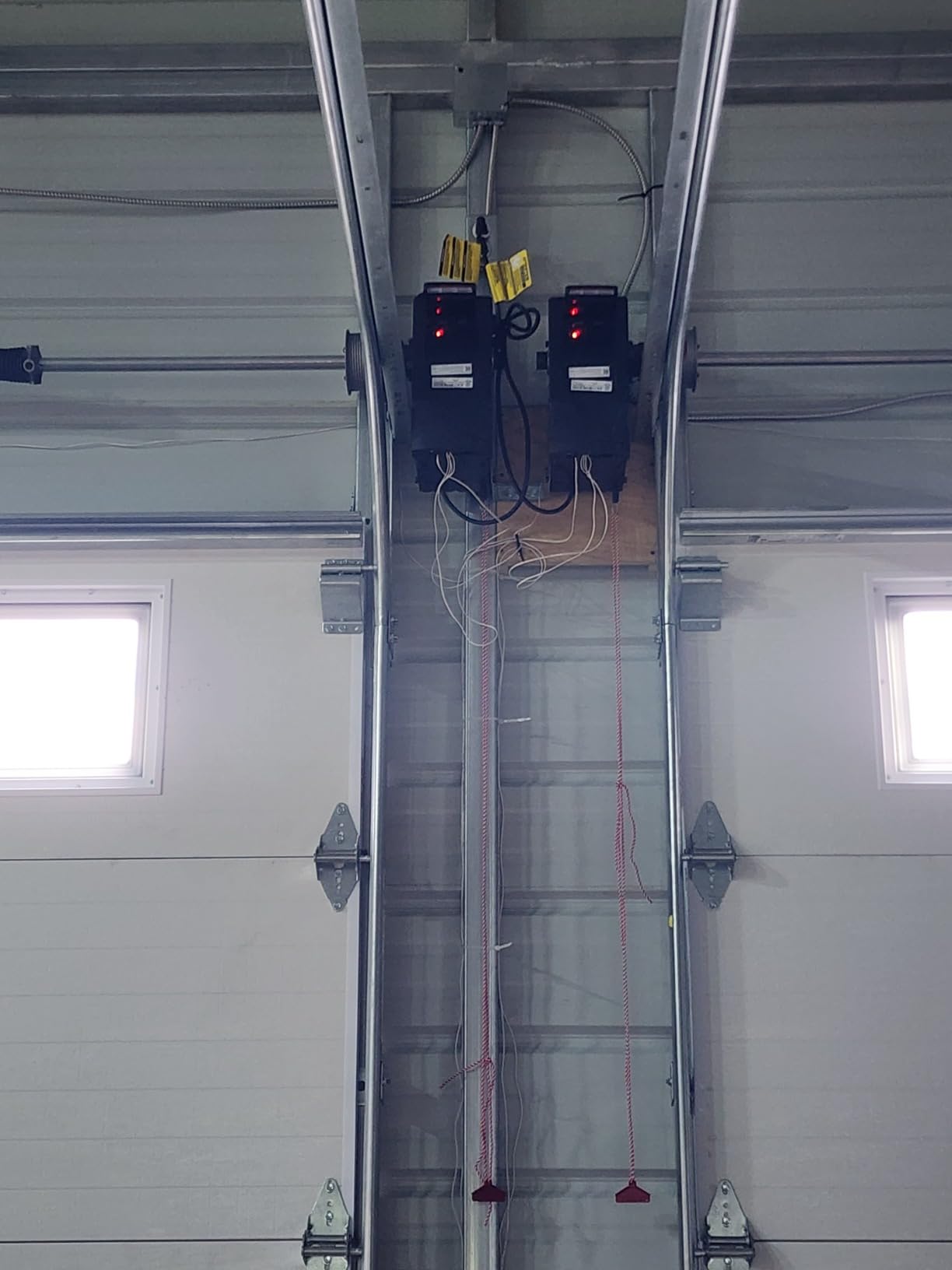
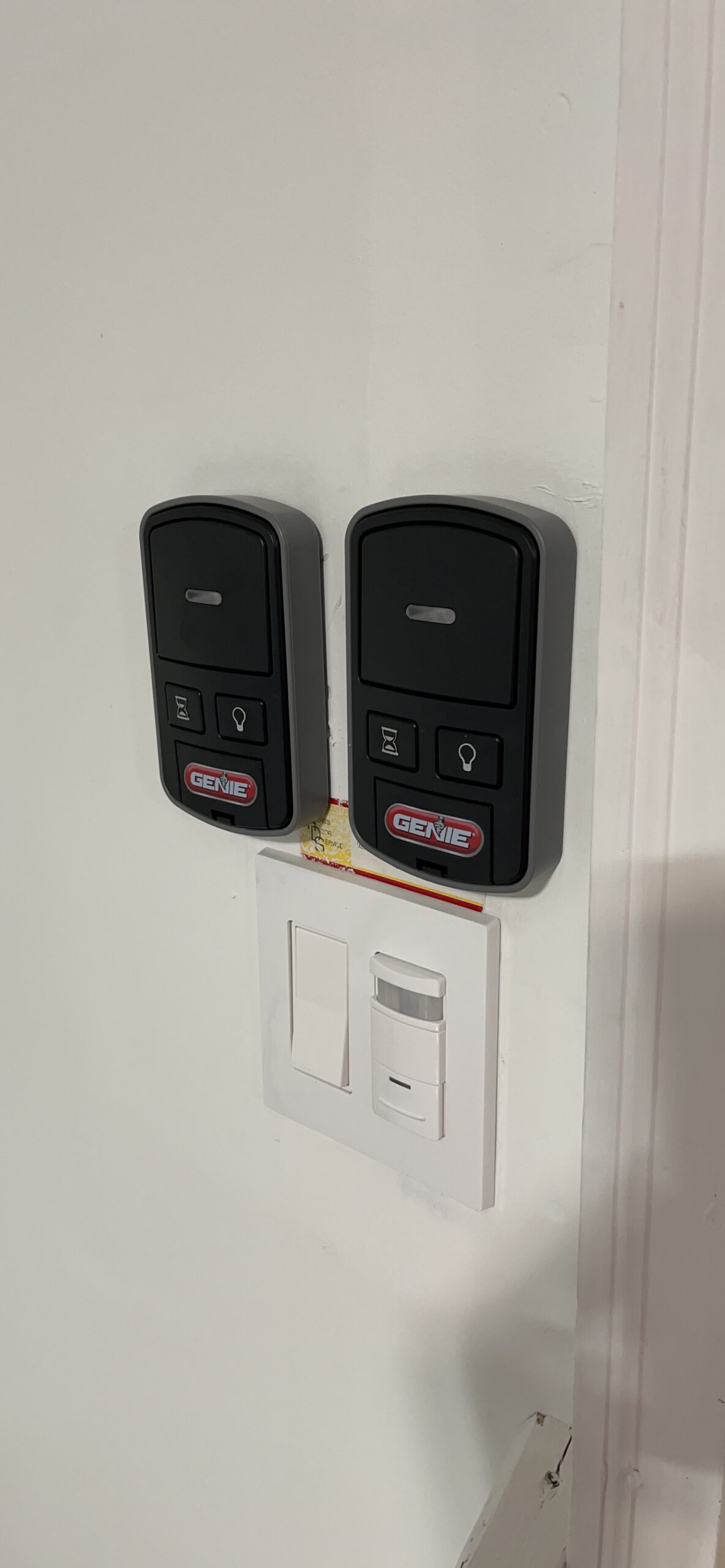
Safe-T-Pulse checks cable tension electronically before the door closes, which is a genuine safety upgrade over mechanical slack monitors. Aladdin Connect covers app control and Amazon in-garage delivery, and the automatic door lock is a real deterrent rather than a feature checkbox.
At 4.1 across 974 reviews, this is the lowest-scoring unit here, with 14 percent one-star. The split is sharp: owners on standard torsion-tube doors call it the quietest opener they have owned, while a smaller group report repeated fault codes, long support hold times and a faint hum from the internal transformer.
Why It Fits a Two-Car Bay Specifically
Only pick this one if your bay has genuine vertical clearance needs. A high-lift or vertical-lift two-car door gains little from a side mount unless the door travels unusually high, and a standard 7 ft door wastes most of the 14 ft rating.
The real win is square footage. We measured a 6.8 inch wide by 12 inch tall by 9 inch deep footprint, so the unit occupies a sliver of wall and returns the entire overhead run to you.
Where It Falls Short
The exclusion list is long and specific. It will not work with reverse-wound springs, extension springs, one-piece doors, or low-headroom outside hook-up configurations, and it needs a standard outlet within 6 ft.
Installation is not a casual weekend job. Owners report that adjustments time out quickly on the ladder and the rail may need smoothing before the coupler seats properly, so budget technician time here more than on any other unit in this roundup.
4. Chamberlain Wall Mount myQ RJO101MC for the Quietest Bay
Chamberlain Wall Mount myQ Garage Door Opener, Battery Backup
Wall-mount direct drive
No overhead track
Built-in myQ Wi-Fi
Battery backup and LED light
Pros
- Near-silent direct drive with very low vibration
- Frees the entire ceiling for storage and parking clearance
- BILT app 3D install instructions are clear and well liked
- Automatic door lock and motion-sensing wall control included
- Generous wiring length suits larger two-car garages
Cons
- No printed manual
- BILT app is required for setup
- Safety sensor brackets may not fit every track style
- Included LED light is adequate but not very bright
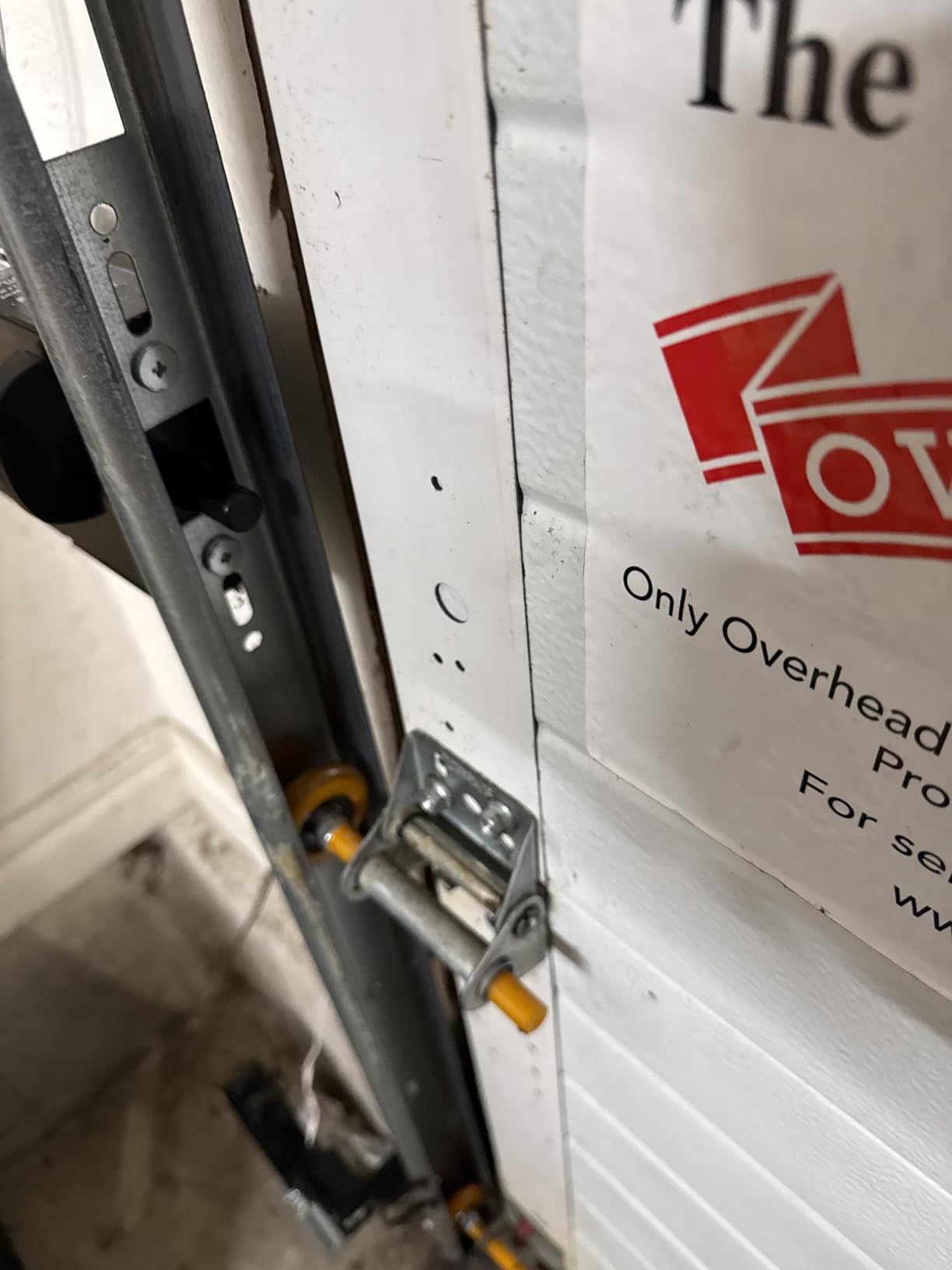
Operationally this is the quietest opener in the roundup, and quietness is the first thing you notice in a two-car bay attached to living space. Direct drive with no belt and no chain means nothing metallic is moving overhead.
The ceiling result is dramatic. Owners report installing taller doors after the unit freed the overhead space, which is a real and practical gain in a bay that was previously too tight.
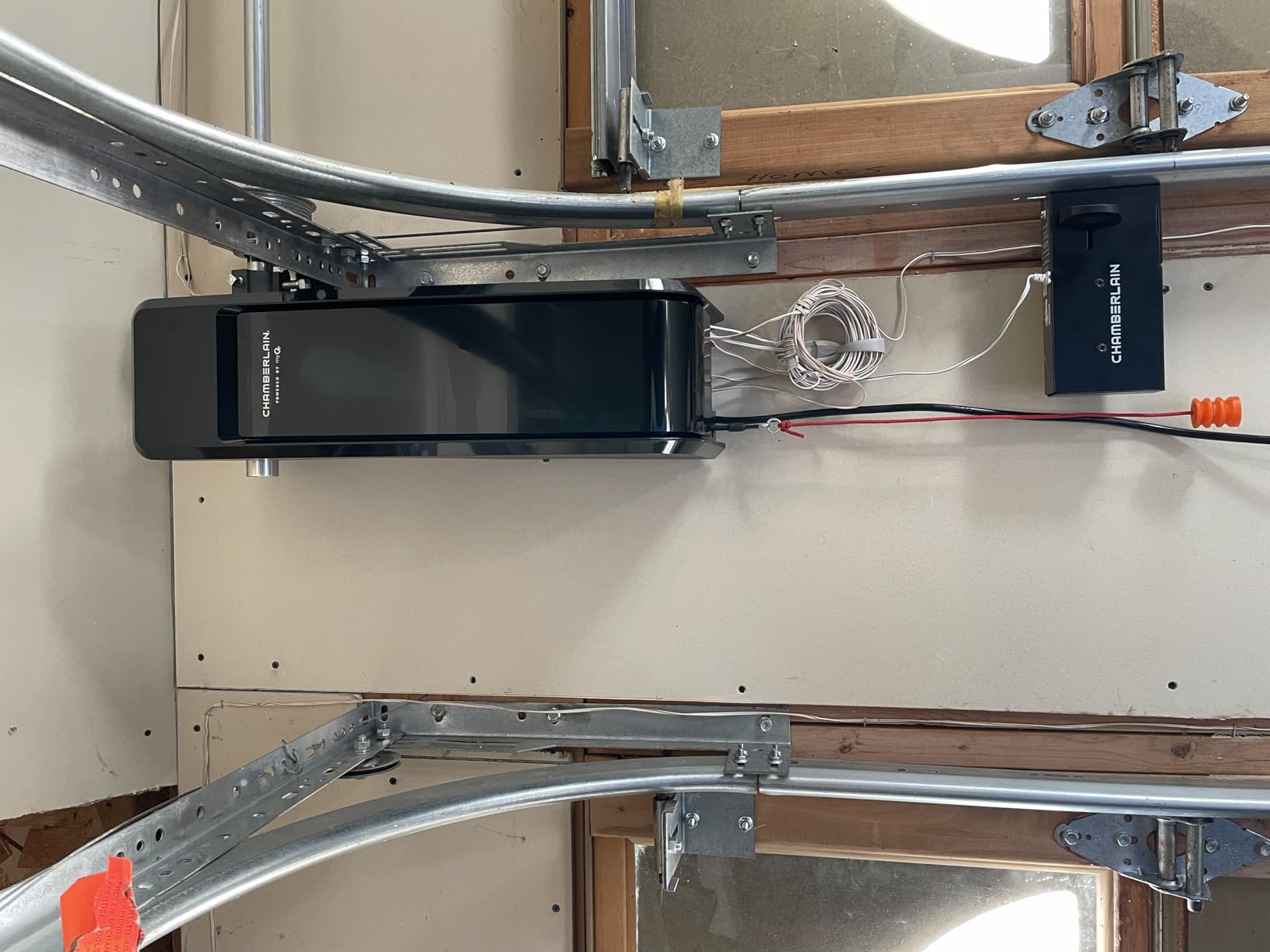
Built-in myQ Wi-Fi handles app control and Amazon Key in-garage delivery without a separate hub. The BILT app 3D instructions are widely praised as clearer than paper manuals, and we agree that the walkthrough is genuinely good.
At 4.5 across 595 reviews with 79 percent five-star, it holds the highest rating among the wall-mount units here. The gripes are consistent: no printed manual at all, sensor brackets that will not snap onto every track style and must be wall-mounted instead, and an LED light owners describe as adequate but dim.
Why It Fits a Two-Car Bay Specifically
This is the pick for a bay where the ceiling is already carrying too much. The unit is rated to lift heavy, tall and hurricane-rated doors, and the direct drive approach handles frequent cycling without the wear pattern a belt or chain sees.
Motion sensing on the wall control triggers the light as you approach, which is more useful in a wide bay than a single switch ever was.
Where It Falls Short
There is no printed installation manual, so the BILT app is mandatory rather than optional. If you dislike depending on a phone for setup instructions, that is a genuine friction point.
Reviewers also raise the prospect of future myQ subscription fees. Nothing is charged today, but the app experience around this unit is where that conversation is happening, and it is worth weighing before you commit.
5. Chamberlain C2212T Smart Wi-Fi Chain Drive for Straightforward Replacement
Chamberlain C2212T Smart Wi-Fi Garage Door Opener, 1/2-HP Chain Drive Motor – Quantity 1 , Blue
1/2 HP chain drive
Soft close near the floor
myQ app and Wi-Fi
Battery backup
Pros
- Quiet and smooth for a chain drive with soft close
- myQ app shows door status and opens remotely
- Battery backup proved useful during a neighbour's outage
- Integrated Bluetooth speeds up app pairing
- Can reuse existing rails and chain for a clean swap
Cons
- Safety sensor cable reported as too short on wider two-car installs
- Some units failed to pair with in-car remotes or the myQ app
- No paper instructions for the myQ pairing steps
The 1/2 HP chain drive here is a step up in refinement from the chain openers most people started with. Soft close slows the door near the floor, which removes the bang that makes chain drive feel cheap.
myQ gives you door status from anywhere, and battery backup earned its place in real use when a neighbour lost power. Bluetooth inside the unit speeds up initial app pairing, which saves genuine time on setup.
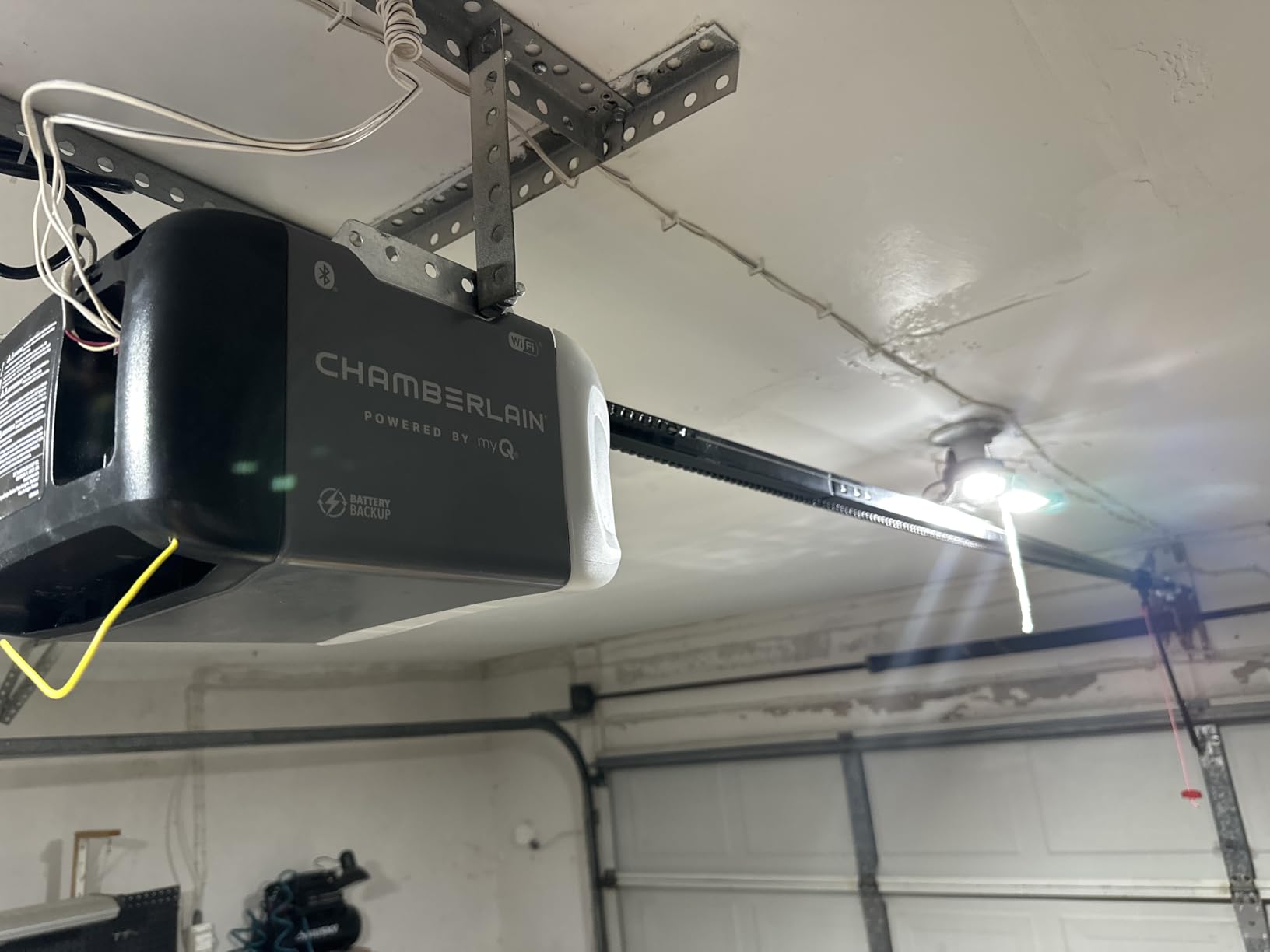
For replacement jobs this unit is cooperative. It can be retrofitted onto existing rails and chain, so a homeowner with a sound older track does not have to replace the whole system.
At 4.4 across 507 reviews with 76 percent five-star, the feedback from people swapping out decades-old openers is consistently positive on quietness and remote monitoring. The specific two-car caveat that shows up repeatedly is the short safety sensor cable.
Why It Fits a Two-Car Bay Specifically
On a lightweight single-layer 16×7 door, 1/2 HP is adequate. The short sensor cable is the concrete two-car issue: on a wider installation, installers report it does not reach and may need splicing.
If your door is insulated or you carry a heavy wooden face, step up to the 3/4 HP belt drive further down this list rather than stretching this motor.
Where It Falls Short
A small but real group report units that would not pair with in-car HomeLink-style remotes or with the myQ app at all. That is a setup problem rather than a hardware failure, but it can be an afternoon lost.
Opening and closing speed is moderate rather than fast, and the box contains no paper instructions covering the myQ pairing steps, so plan to follow the app walkthrough.
6. Chamberlain B4310 Belt Drive with Camera for Monitoring
Chamberlain Belt Drive myQ Garage Door Opener, 3/4HP w/Fixed Camera
3/4 HP DC motor
130 degree built-in camera
Reinforced belt drive
myQ Wi-Fi
Pros
- Very quiet belt drive
- owners call the change from chain dramatic
- Built-in camera gives real-time viewing in the myQ app
- 3/4 HP motor suits heavier higher-cycle doors
- Battery backup has already saved owners entry in a power cut
Cons
- Instructions only available through the BILT app
- myQ app promotes subscription plans during setup
- Older Chamberlain remotes and keypads are not compatible
- LED bulbs not included and sold separately
The 3/4 HP DC motor with a reinforced belt drive is the right power tier for a two-car door, and the belt is what makes this unit feel refined next to a chain. Owners coming from a chain drive describe the difference as dramatic.
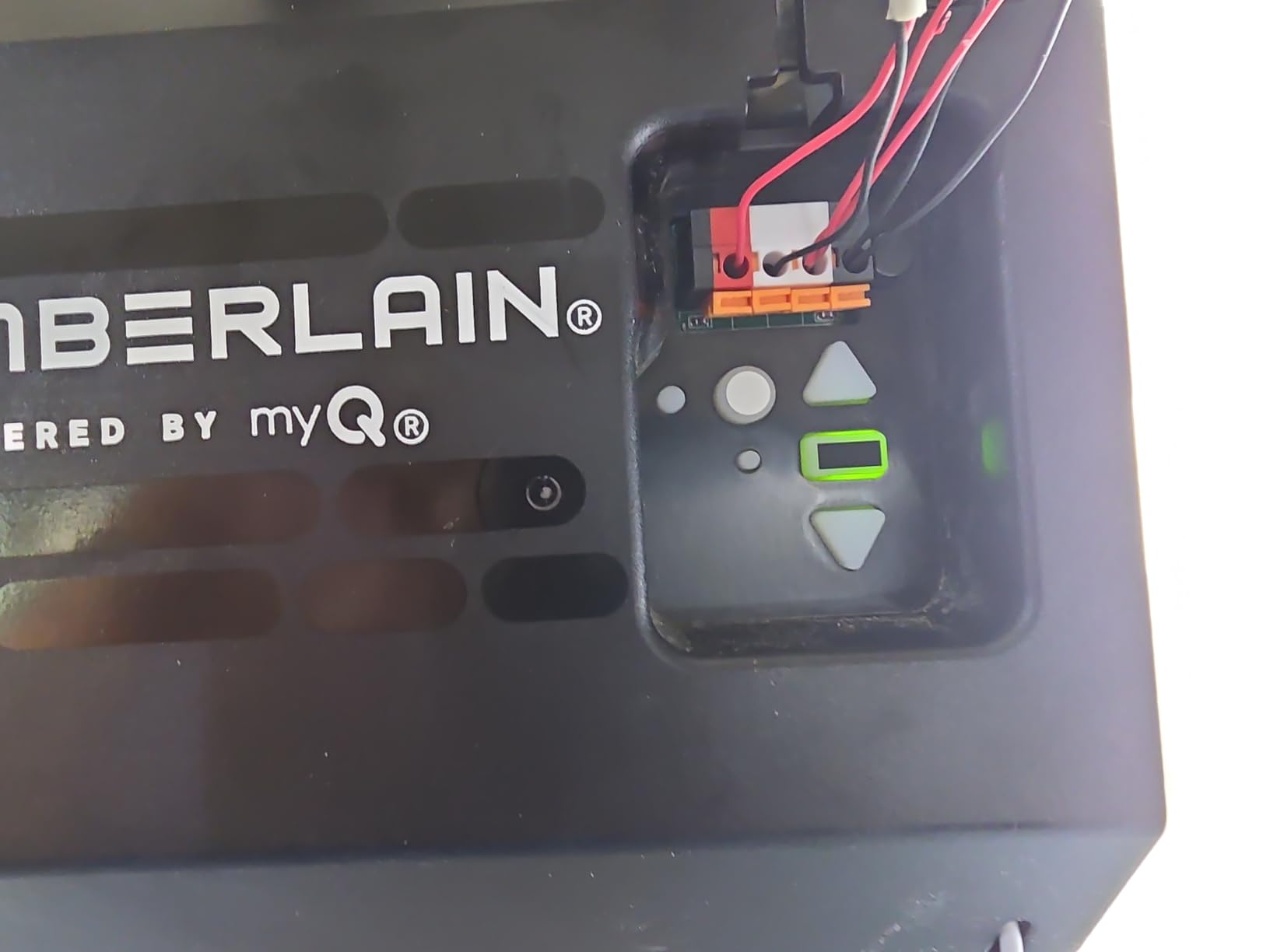
The built-in 130-degree wide-angle camera is the reason to choose this model over the others. Real-time viewing in the myQ app turns the two-car bay into something you can check without walking downstairs, which is the whole point of a smart opener.
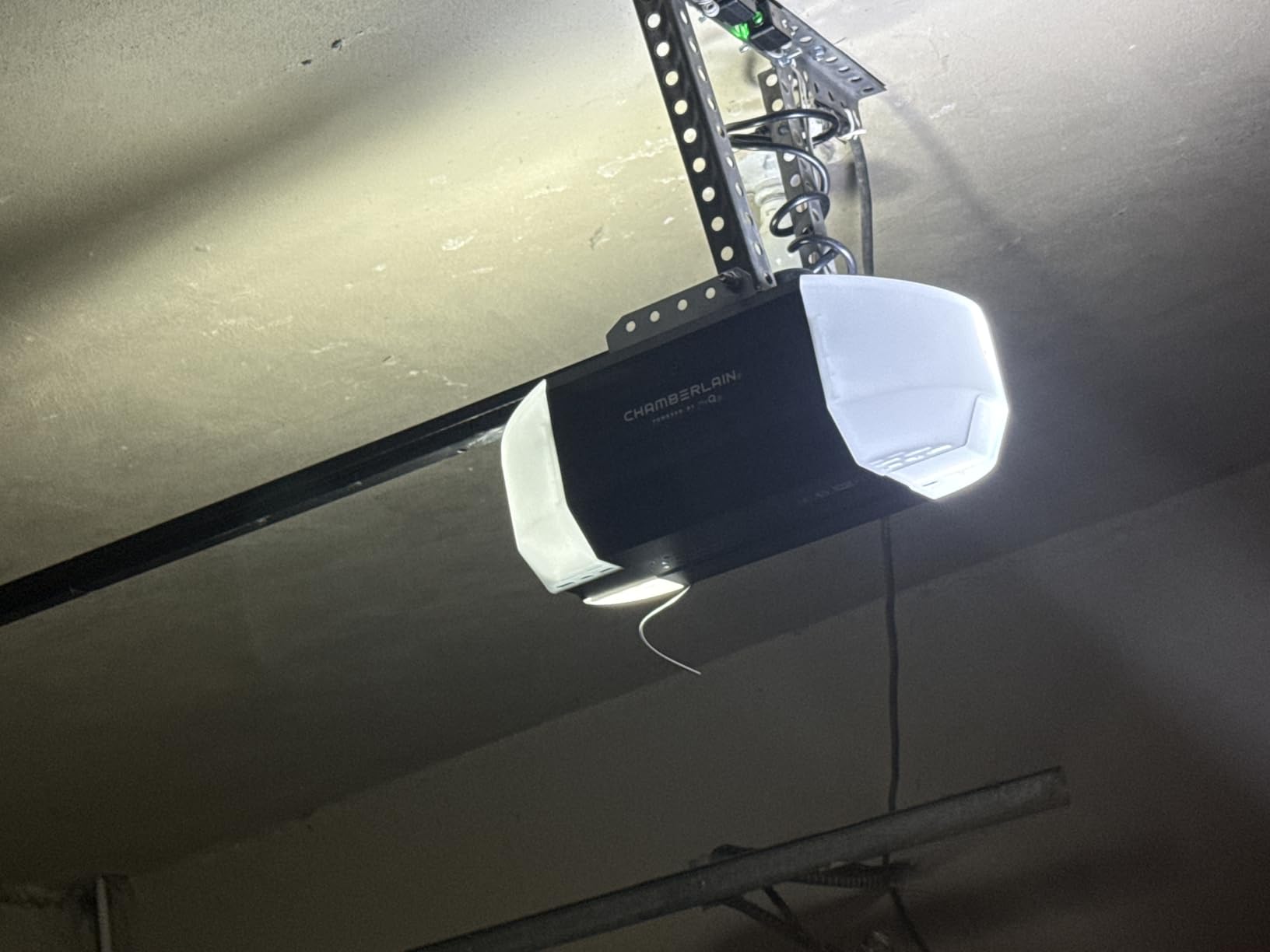
Motion sensing triggers the LED lights on approach, covering both the front and rear of the bay. Battery backup is included, and the warranty runs five years on the motor and belt.
This is a newer model with a still-growing review base, currently 170 reviews at 4.1 and 11 percent one-star. Quietness and the camera drive the praise; app-only instructions, subscription prompts during setup and a cluster of defective-unit reports account for most of the criticism.
Why It Fits a Two-Car Bay Specifically
The 3/4 HP rating lands on the correct side of the sizing line for most 16×7 two-car doors, including insulated ones, and the reinforced belt is specified for frequent cycling rather than occasional use.
The camera is genuinely useful in a wide bay where a single corner light leaves the far side of the second car in darkness. Seeing the whole space from your phone is a real convenience.
Where It Falls Short
Compatibility is the biggest catch. Older Chamberlain remotes and keypads do not work with this unit, so a household upgrading mid-ecosystem may be replacing everything at once.
The LED bulbs are not included, and reviewers also flag that the myQ app promotes subscription service plans at nearly every setup step. That is not a charge today, but it shapes how the product feels to own.
7. LiftMaster 8365W-267 for Reusing an Existing Rail
LiftMaster 8365W-267 Premium Garage Door Opener Chain Drive WiFi 1/2 hp No Rail
1/2 HP premium chain drive
Built-in Wi-Fi
UL certified
Drive unit only
Pros
- Highest average rating in this selection at 4.6 with 84 percent five-star
- Retrofit-friendly replacement using existing rail chain and sensors
- Buyers value buying just the drive head
- Generous screws and fasteners in the pack
- LiftMaster support reported as patient and helpful
Cons
- Rail and chain are not included and are a separate purchase
- No printed installation instructions
- Open and close speed described as slow
This is the retrofit pick. It is a 1/2 HP premium chain drive with built-in Wi-Fi, and it is intended to drop into an existing LiftMaster rail, chain and photo eyes rather than force a whole new track system.
Several owners replaced units more than two decades old in about an hour this way. The appeal is obvious: you keep the hardware that is still good and swap the electronics.
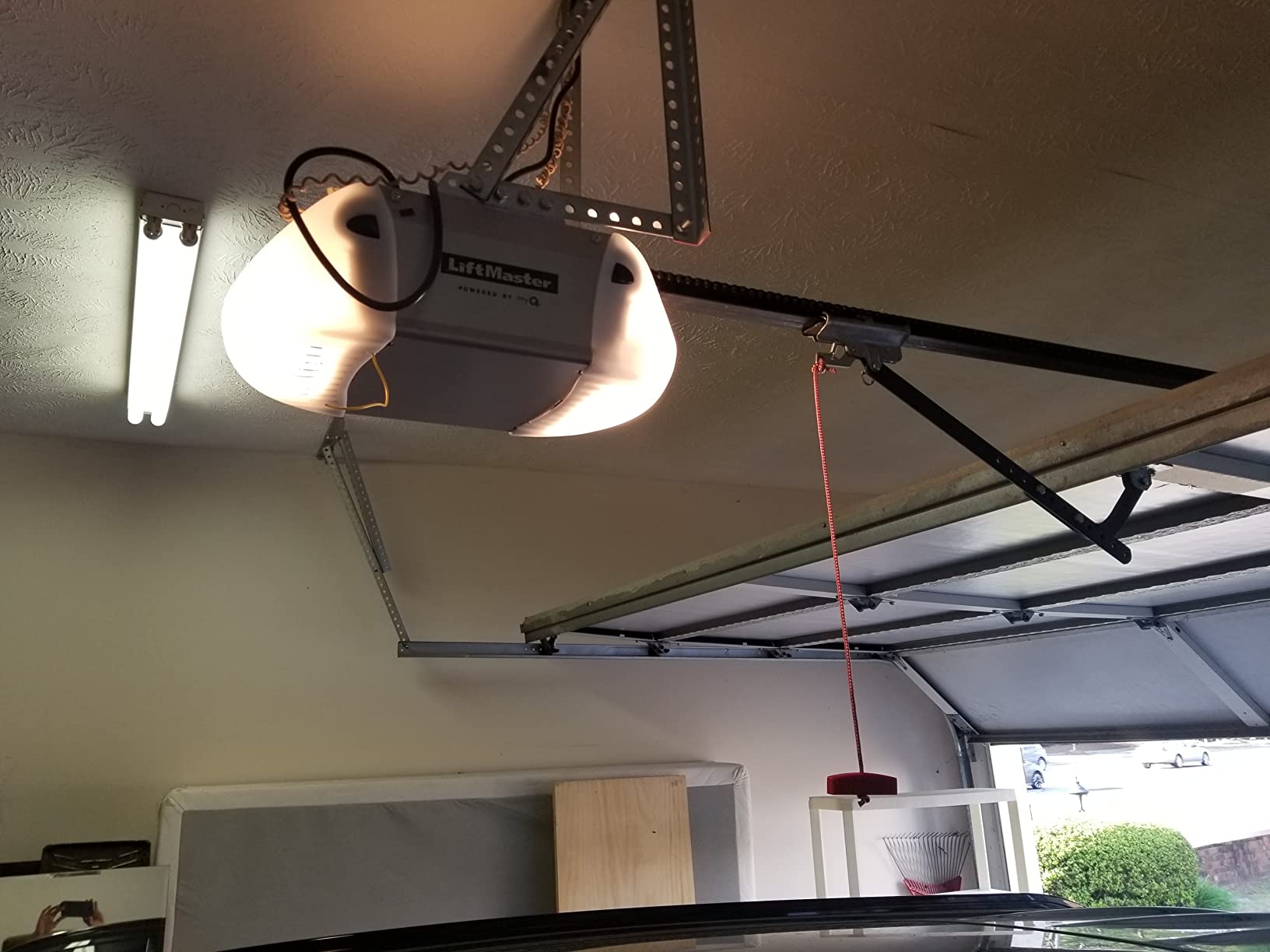
At 4.6 across 104 reviews with 84 percent five-star, it carries the highest average rating in this group, though on a much smaller base than the Genie units. LiftMaster customer service comes up repeatedly as patient and immediately helpful.
Be clear-eyed about what you are buying. This is the drive unit only, so rail and chain must be sourced separately, and travel limits and chain tension both need programming during installation.
Why It Fits a Two-Car Bay Specifically
It fits well if your existing track is already sized for a two-car door and in good condition. The 1/2 HP motor is right for a standard steel sectional, and Wi-Fi adds phone monitoring to an opener you already own the hardware for.
It fits badly if your door is insulated or heavy, because you are pairing a 1/2 HP motor with a door that wants more. Check the door weight before choosing this route.
Where It Falls Short
The no-rail configuration is the central caveat. Buyers often compare the headline figure against complete openers and are surprised by what the finished installation costs once track hardware is added.
There is no printed installation instructions, only an owner’s manual. In-car HomeLink programming is also reported as not always straightforward, and the open and close speed is described as slow.
8. Skylink G2S Side Mount for Storage-Heavy Bays
Skylink Smart Side Mount Garage Door Opener – Heavy Duty, Ultra Quiet, WiFi
Side mount with no rails
High-torque DC motor
Orbit app control
Lifts doors to 12 ft
Pros
- Side mounting frees the full ceiling for racks and storage
- Soft start and stop DC motor reported as very quiet
- Lifts sectional doors up to 12 ft
- Complete kit includes console remotes sensors and tensioners
- Automatic door lock and rolling code remotes
Cons
- Backup battery is not included and must be bought separately
- Only one device is supported by the built-in Wi-Fi
- Smallest review base here at 89 ratings so long-term reliability is not established
The Skylink G2S is the most storage-focused unit here. The side-mount design removes overhead rails entirely, which in a two-car bay converts ceiling space into usable rack and lift space.
The high-torque DC motor uses soft start and stop to reduce vibration, and owners report it as very quiet in operation. It lifts sectional doors up to 12 ft, comfortably covering tall two-car configurations.
Built-in Wi-Fi works with the Orbit app for control and real-time open and close alerts. Rolling code remotes, safety beam sensors and an automatic door lock come as part of the kit, along with the wall console, remotes, sensors and cable tensioners.
At 4.2 across 89 reviews, this is the thinnest evidence base in the selection with 11 percent one-star. Buyers drawn to it are usually the ones with a low-headroom or storage-constrained bay, and the feature set matches that need well, but the small sample makes this a considered pick rather than a consensus one.
Why It Fits a Two-Car Bay Specifically
This is the right unit when ceiling space is the binding constraint rather than door weight. A 12 ft lift rating and a side-mount footprint cover a wide range of two-car doors without needing a track run.
Rolling code remotes and the automatic door lock are sensible additions for a bay that is the main entry point to the house and holds both vehicles.
Where It Falls Short
The backup battery is not included and must be purchased separately, which undermines the outage story that other units here deliver out of the box.
The built-in Wi-Fi supports only one device, so it will not manage a second door. With 89 ratings, long-term reliability in a high-cycle two-car bay is not yet established, and that matters more here than in a lightly used single-car bay.
How Much Horsepower Does a Two-Car Garage Need?
Most two-car homes need a 3/4 HP opener. A 1/2 HP unit is adequate only for a lightweight single-layer steel 16×7 door, and anything insulated or wooden deserves 3/4 HP or more. This is the question most roundups skip, and it is the one that determines whether you are happy in year three.
Horsepower on a garage door opener is not a power rating in the way a car engine figure suggests. It is a force rating describing how much lifting effort the motor applies to move the door against its weight and the spring’s counterbalance.
The mismatch that causes trouble is simple. A 1/2 HP opener is engineered for a door of a given weight, and when you hang a heavier door on it the motor runs at the edge of its capability on every cycle. It does not fail dramatically. It gets slower at the start, strains through the middle of travel, and the door closes harder than it should.
Single-layer steel 16×7, roughly 130 to 150 lbs: a 1/2 HP opener handles this comfortably.
Double-layer insulated 16×7, roughly 200 to 250 lbs: step up to 3/4 HP.
Wood or multi-layer insulated, or a high-lift or vertical-lift door: 1 HP or higher, or a unit rated into the 850 lb class.
Storms, high wind exposure or hurricane-rated doors: size for the worst-rated door you might fit, not the current one.
Why the two-car modifier matters so much is cycle count. A two-car bay runs roughly double the daily cycles of a single-car bay, and openers wear through cycles rather than years. An opener that is correctly sized for a single door is already working hard in a two-car bay.
If you are still unsure, our guide to the best garage door openers overall covers the sizing question across more door types, and our belt drive opener picks break down the quiet-drive options in detail.
Is It Better to Have a Chain Drive or a Belt Drive Garage Door Opener?
Belt drive is better for most two-car homes. Chain drive is cheaper and tougher in a workshop, but a steel-reinforced belt runs quieter, needs less maintenance, and suits a garage that shares a wall with living space.
Belt drive: noticeably quieter, no metal-on-metal clatter, generally no lubrication needed, a better fit for an attached two-car garage where the bay sits under bedrooms.
Chain drive: more durable under abuse, tolerates a rougher environment, cheaper to replace, but louder at both the start and the stop of travel.
Wall mount or jackshaft: quietest of all because nothing moves overhead, but it consumes side clearance and is usually the wrong choice for a standard two-car bay.
Screw drive: rare in this category, not represented in this roundup, and carries maintenance considerations that put it outside most residential two-car use.
Our verdict: belt drive for a two-car garage attached to living space, chain drive for a detached or workshop bay, and wall mount only when ceiling space is genuinely the constraint. Owners upgrading from a chain drive to a belt regularly describe the change as dramatic, which is the single most common reaction in the reviews we read for both the Genie and Chamberlain belt units.
If noise is your main worry rather than a secondary concern, our dedicated guide to the best quiet garage door openers goes deeper on what quiet actually means in a shared-wall bay.
Should You Buy a Retrofit Controller Instead of a Full Opener?
Buy a retrofit controller when your existing opener still runs well and you only want phone control. A controller adds Wi-Fi and app access for far less than replacing a working motor, and it is the sensible first move for most households.
Two situations argue against it. The first is a working opener that is already near the end of its life, where spending on a controller buys a few years of app access on hardware you will replace soon anyway. The second is a two-car door that is already hard to move, where the real problem is motor strength and no controller will fix it.
Before you buy a controller, check two wiring details. A dry contact arrangement means the opener expects a simple on and off signal, while a momentary relay arrangement needs a different connection. Getting this wrong is the most common reason a controller install stalls, and the manual for your existing opener will state which one it uses.
Worth noting from the forums: Home Assistant and SmartThings users describe a long-running push toward controllers that work locally without a cloud dependency, partly driven by frustration with how some manufacturer integrations changed after purchase. That is a genuine consideration if your home automation runs on an open platform.
Are Wall-Mount and Jackshaft Openers Wrong for a Two-Car Bay?
Usually yes, for a standard two-car bay. Wall-mount and jackshaft openers trade overhead clearance for side clearance, and most two-car doors do not need that trade. They are the right answer when headroom is genuinely short or when the ceiling is already full.
Two constraints decide it. First, headroom: a side mount needs clear wall space beside the opening at a workable height, and a two-car door that lifts high can conflict with that space. Second, swing and travel clearance: high-lift and vertical-lift doors change the geometry, and some wall-mount units are explicitly not compatible with low-headroom outside hook-up configurations.
Three of the eight openers in this roundup are side-mount designs, and each is rated for doors well beyond a standard 7 ft height. That headroom is not wasted exactly, but you are paying for capacity the door may not use. The Genie B6172H in particular excludes reverse-wound springs, extension springs and one-piece doors, so verify your door type before choosing any wall mount.
If you want the full ceiling back and are not sure which format fits, our guide to the best wall mount garage door openers covers the clearance questions in more detail.
Does myQ Work Without a Subscription?
Yes for core functions. You can open and close the door, check status, run schedules and share access without paying. The frustration people report is not a base fee for using the opener but the steady promotion of paid tiers inside the app and the history of integrations being reduced.
That history is the part worth understanding. Home Assistant and SmartThings users describe a period in which Chamberlain reduced functionality in the myQ integration, breaking workarounds people had built. Whether or not you are affected today, it changed how much risk owners assign to being inside one ecosystem, and that concern now shapes buying decisions in this category.
Voice assistant support has also been a live issue, with owners describing myQ losing Alexa and Siri support as a reason to avoid the brand. Confirm current compatibility for your assistant before you commit, especially if voice control is a reason you want a smart opener at all.
Aladdin Connect, used by the Genie units in this roundup, works with Alexa, Google Assistant and SmartThings without a subscription for everyday use. Amazon Key in-garage delivery works across both ecosystems, which is the feature most two-car households actually want from a smart opener.
Two practical rules. Treat app responsiveness as a safety property rather than a convenience, because notification delay on a door you consider secure is a real failure. And read the terms before you install, not after, because that is exactly the lesson the myQ community learned the hard way.
Can I Install a Garage Door Opener Myself?
Most homeowners can, provided you have a standard sectional door on torsion springs, working high-voltage power nearby, and at least one helper. Wall-mount units and torsion spring work are the two cases where we recommend a technician.
What makes the job reasonable is that the heavy lifting is already handled. The door hangs on springs that do the balancing, and you are positioning a drive unit, hanging a rail and setting travel limits. The BILT and app-based 3D instructions on several units here are genuinely clearer than the paper manuals they replace.
What makes it risky is spring tension. Working on a torsion bar or adjusting extension springs without proper tools and technique can release stored energy that causes serious injury. If your garage has extension springs rather than a torsion bar, treat the install as technician territory.
For a two-car bay specifically, allow extra time. Wider doors mean longer rail runs, more sensor cable to route and more careful levelling. The Chamberlain C2212T reviews mention a short sensor cable on wider installations, which is the kind of detail that only shows up once the door is up.
Retrofit jobs are the fast case. Owners replacing aging LiftMaster units on existing rails describe an hour-long job, and the same is true for most rail-reuse swaps in this roundup.
Frequently Asked Questions
What is the best garage door opener for a two car garage?
For most two-car homes, a 3/4 HP belt drive smart opener is the right fit, because a two-car door is heavier than a single-car door and cycles roughly twice as often. A 1/2 HP chain drive is adequate only for a lightweight single-layer steel 16×7 door. Insulated, wooden or high-lift doors need 1 HP or higher, and side-mount or wall-mount designs suit bays where ceiling space is the constraint.
Is it better to have a chain drive or a belt drive garage door opener?
Belt drive is better for most two-car garages because it is quieter, needs no lubrication and suits a bay attached to living space. Chain drive is tougher and cheaper to repair, which makes it a good fit for a detached garage or workshop. Choose wall mount only when you need the ceiling back more than you need side clearance.
Who makes the best belt-driven garage door opener?
Genie builds the strongest belt-driven options in this category. The StealthDrive Connect 7155 pairs a 1.25 HPc motor with a steel-reinforced belt for heavier doors, while the QuietLift Connect 3053 uses 3/4 HPc for standard two-car doors. Chamberlain’s B4310 is the belt-drive pick if you want a built-in camera in the same unit.
Does myQ work without a subscription?
Yes. Opening and closing the door, checking status, running schedules and sharing user access all work without a paid plan. The complaints that circulate are about paid tiers being promoted inside the app and about past changes to third-party integrations, not a required base subscription. Aladdin Connect on Genie units also covers everyday use at no cost.
What are the downsides of smart garage door openers?
The main drawbacks are dependence on an app and a cloud connection for remote features, ongoing battery replacement for backup units, and the cost of a full replacement rather than a controller when the motor fails. In-car remote pairing can prove difficult, some units ship without printed manuals, and older remotes may not work with newer models. A two-car bay also cycles more often, so opener lifespan is shorter than in a single-car bay.
The Verdict for Two-Car Garages in 2026
The Genie StealthDrive Connect 7155-TKV is our pick for the best smart garage door openers for two car garages, because a 1.25 HPc motor on a steel-reinforced belt leaves real margin on a heavier two-car door and pairs with Aladdin Connect across Alexa, Google Assistant and SmartThings. On a standard 16×7 steel door with no heavy insulation, the QuietLift Connect 3053-TKV is the more proportionate choice, and if your ceiling is already full, the Chamberlain wall-mount myQ RJO101MC gives you near-silent operation and storage space back.
One decision matters more than the model: size the opener to your door’s actual weight and height, not to the lowest number in the aisle. If you want the wider context before deciding, our general smart garage door opener guide covers controllers and openers side by side.


