

A gimbal earns its place in a wedding bag or it does not earn its place. The best handheld gimbals for wedding videographers are the ones that let you move quickly between a ceremony wide, a first-dance glide and a vertical toast clip without a long rebalance, and that still hold steady at the end of a nine-hour day. That is a narrower brief than the marketing pages suggest, so we built this list around how a gimbal behaves in that specific situation.
Two rules shaped every pick here. First, discount the rated payload by 20 to 30 percent once you add a cage, an external microphone and a wider fast lens, because that is the rig you will actually hang off the plate. Second, treat the published battery figure as idle runtime and plan for roughly half of it during active shooting. A gimbal rated for 14 hours is a 7-hour tool on a wedding day, which changes how many spare cells you pack.
We compared six 3-axis stabilizers that cover the full range a wedding videographer actually works in, from a sub-800 gram mirrorless rig to a 4.5 kg cinema setup. For the wider field of camera stabilizers beyond this shortlist, our general camera gimbal roundup covers the general-purpose picks, and our monitor recommendations for videographers cover the other half of a color-critical live rig.
Top 3 Handheld Gimbals for Wedding Videographers in 2026
The 6 Best Handheld Gimbals for Wedding Videographers in 2026
| Product | Specs | Action |
|---|---|---|
 DJI RS 3 Mini DJI RS 3 Mini |
|
Check Latest Price |
 FeiyuTech SCORP-C FeiyuTech SCORP-C |
|
Check Latest Price |
 DJI RS 3 Pro DJI RS 3 Pro |
|
Check Latest Price |
 DJI RSC 2 Pro Combo DJI RSC 2 Pro Combo |
|
Check Latest Price |
 Zhiyun Weebill S Zhiyun Weebill S |
|
Check Latest Price |
 Zhiyun CINEPEER Weebill 3E Zhiyun CINEPEER Weebill 3E |
|
Check Latest Price |
The table below carries every pick with the spec that decides it: the rated payload, because that number is what has to clear your loaded rig after the 20 to 30 percent derating. The picks are ordered by how well they serve a working wedding videographer, not by price or by release date.
1. DJI RS 3 Mini – The Lightest Body for a Full Day
DJI RS 3 Mini, Camera Gimbal Stabilizer, Canon/Sony/Nikon/Fujifilm
2 kg payload
795 g body
Native vertical
1.4-inch touchscreen
Pros
- 795 g body stays workable across a 10-hour day
- Quick balance with the 3rd-gen RS algorithm
- Native vertical without re-balancing
- Bluetooth shutter control
- 1.4-inch touchscreen for fast setting changes
Cons
- 2 kg payload caps you at lighter mirrorless kits
- Not water resistant for outdoor ceremonies
- DJI Ronin app is no longer distributed through Google Play
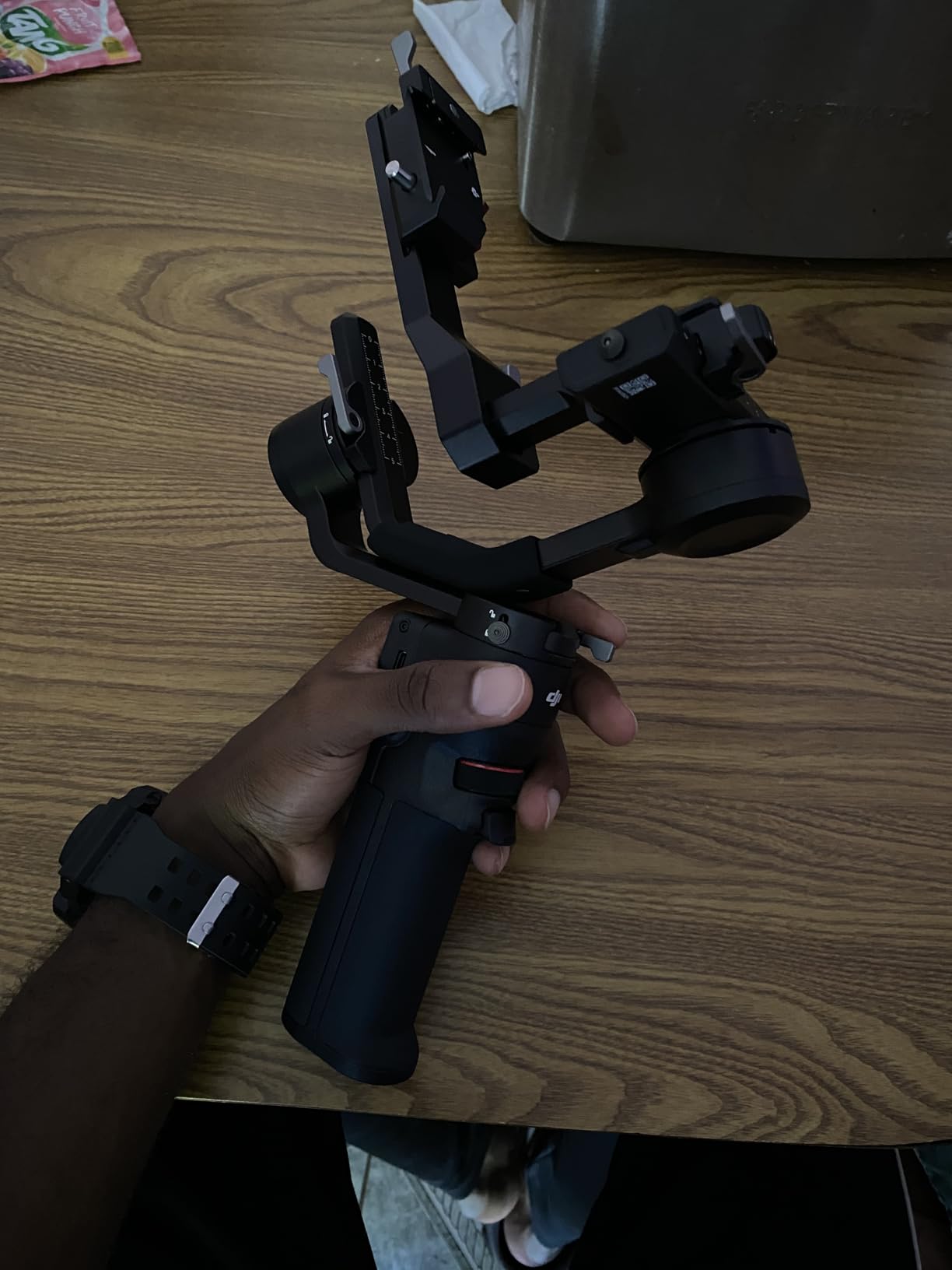
At 795 g, the RS 3 Mini is the only gimbal in this group I can comfortably hold for a full reception without swapping hands, and that matters more than headline torque on a long day. Owners repeatedly point to quick setup and easy balancing as the reasons it stays in the bag rather than on a shelf. The 1.4-inch full-color touchscreen gives you mode and sensitivity changes without going through the app mid-shot.
Our editor’s choice for a solo operator rests on the review volume behind it. At more than 2700 ratings it carries by far the widest feedback base here, and the consensus is unusually consistent: light, quick, balanced. Forum threads in r/weddingvideography repeatedly treat the small DJI Minis as the default recommendation for solo shooters, and the auto-tuning on this generation converges fast enough that a battery swap between setups is not a production stoppage.
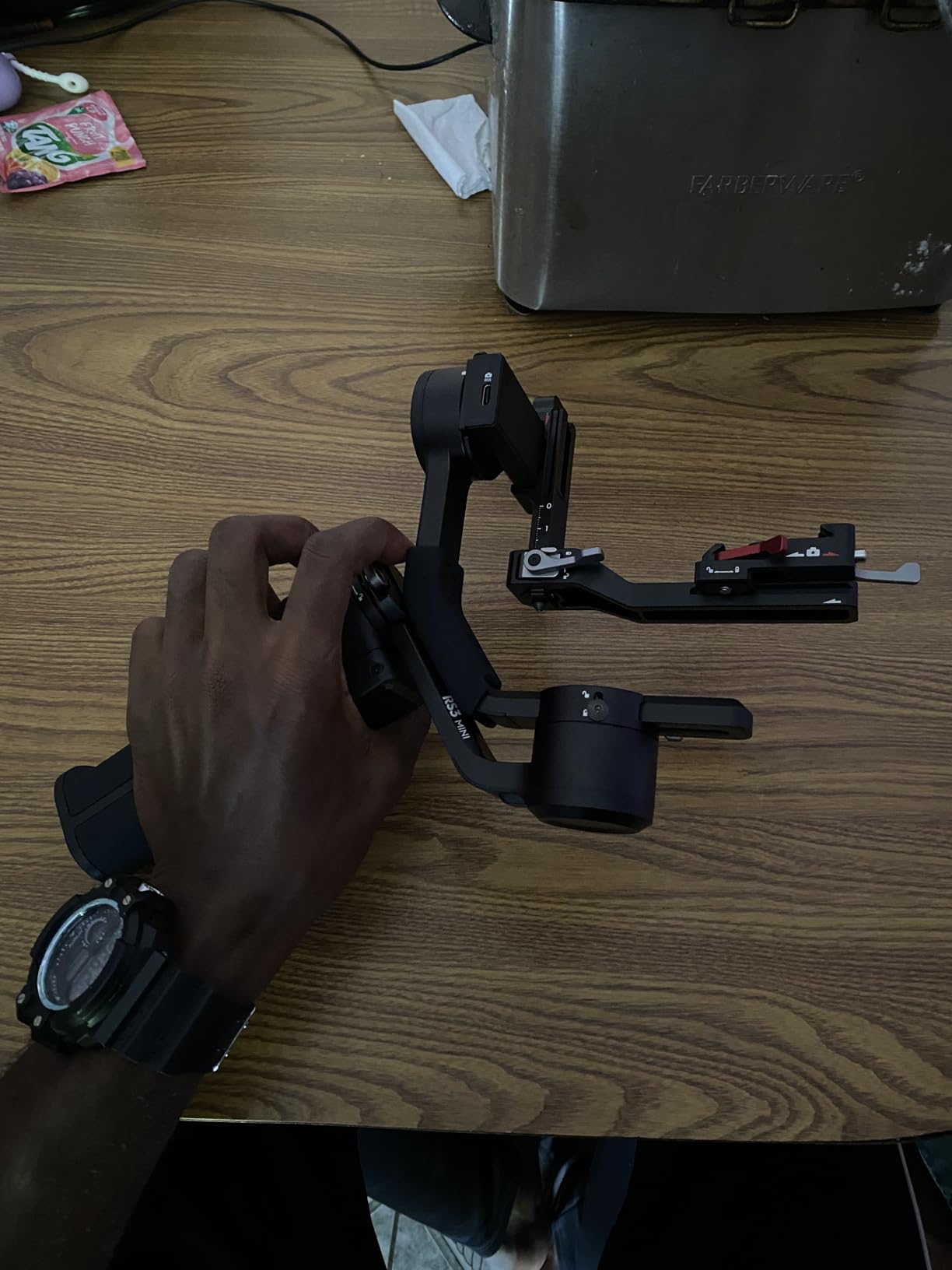
The native vertical shooting mode is the feature most wedding-focused buyers underrate. Sliding the quick-release plate to the vertical position without rebalancing means the ceremony walk-in can be captured wide, then flipped to a 9:16 clip of the same moment for reels while the guests are still seated. Bluetooth shutter control is the other quiet win, since touching the camera body introduces a bump that the motors then spend a full second correcting.
Balance once per lens, not once per venue, is the routine that makes this workable. The PF, PTF and FPV shooting modes cover the processional follow, the ceremony pan and the low first-dance glide, so you are not changing settings between the moments that matter. Reviewers also flag the third-generation RS algorithm as a genuine step up in how it handles long focal lengths and fast panning.
What payload you can realistically hang on it
The 2 kg rating sounds modest until you run the derating. After a 20 to 30 percent haircut you are looking at roughly 1.4 to 1.6 kg of working capacity, which covers a compact full-frame body with a fast prime or a kit zoom and a small mic. Add a full cage, a shotgun mic and a 24-70mm f/2.8 and you will feel the motors working at the edge of their range.
If your standard wedding rig is that loaded combination, the Weebill 3E at number six carries the same lens class with a 3 kg rating at a similar body weight. It is the pick to make if your day is built around a single zoom rather than a prime-and-wide setup.
Where it falls short on a wedding day
The body is not water resistant, and outdoor ceremonies are where weather matters most. The DJI Ronin app dependency is a real friction point too: the app is no longer distributed through Google Play, so you install it from DJI’s own site before the season starts, not the night before.
It is also the smallest screen in the lineup, which is genuinely awkward in bright reception light. If you work venues with heavy backlight and need to read exposure or framing at a glance, the one-inch OLED on the RSC 2 Pro Combo at number four is easier on the eyes.
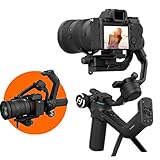
2. FeiyuTech SCORP-C – Payload Where the Built-In Tripod Matters
FeiyuTech SCORP-C Gimbal Stabilizer for Cameras DSLR and Mirrorless Camera
2.5 kg payload
1200 g body
Folding tripod
Arca plate
Pros
- 2.5 kg payload at the value end
- Integrated folding tripod for ceremony setups
- COG memory makes repeat balances fast
- Arca-compatible plate for cages and tripods
- 10-13 hour runtime with 18 W fast charging
Cons
- Three-axis motor lock must be re-engaged on rig changes
- Bulkier than the DJI mini options
- Menu-driven features have a steeper learning curve
The SCORP-C answers a question the other picks mostly dodge: what do you set the gimbal on when the ceremony starts? Its folding aileron bracket doubles as a built-in tripod, so when you put the rig down for a locked-off wide you are not unpacking a separate support. For a solo operator working the reception from a corner, that single feature removes a piece of gear from the bag.
The five-way center-of-gravity adjustment with its memory slider is the second quiet strength. You dial the balance in once for your ceremony rig, and the setting holds when you swap batteries or move back to the gimbal after the tripod shot. Reviewers single out that repeatability as the reason the balance step stopped feeling like a chore.
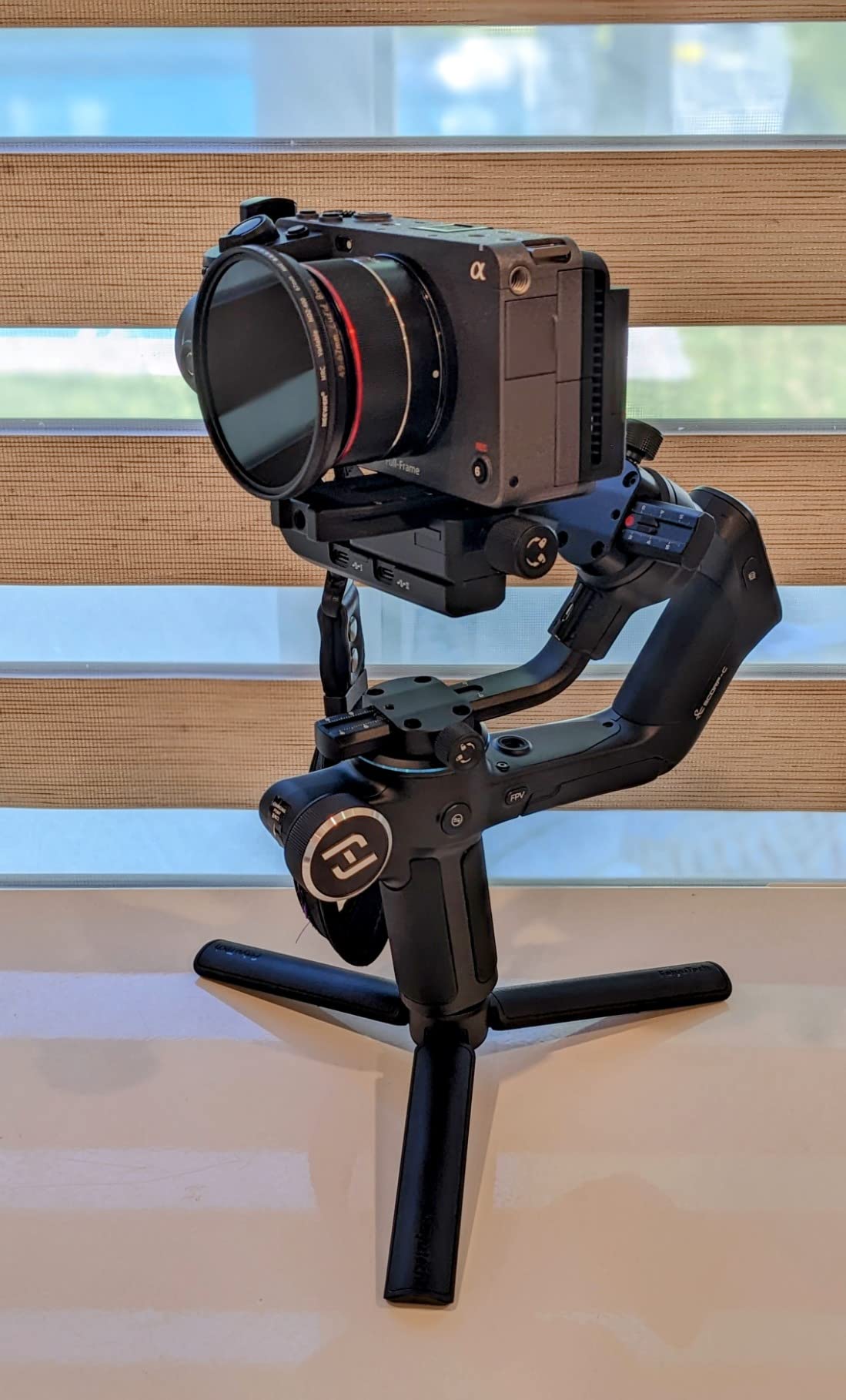
Capacity is the headline: 2.5 kg rated, which after derating still clears a full-frame body with a 24-70mm zoom, a small cage and a compact mic. The integrated hanging handle gives you underslung or upright control without a separate grip, and the Arca-compatible quick-release plate means the same plate moves between the gimbal, your cage and a tripod head without a rebalance.
Battery figures here are the strongest in the group on paper, with a 2500 mAh pack rated for 10 to 13 hours and 18 W fast charging that adds roughly half an hour of runtime per five minutes plugged in. Even halving that for active shooting leaves enough for a full day with a cell in your pocket, which removes the mid-reception charging anxiety that shows up repeatedly in forum threads.
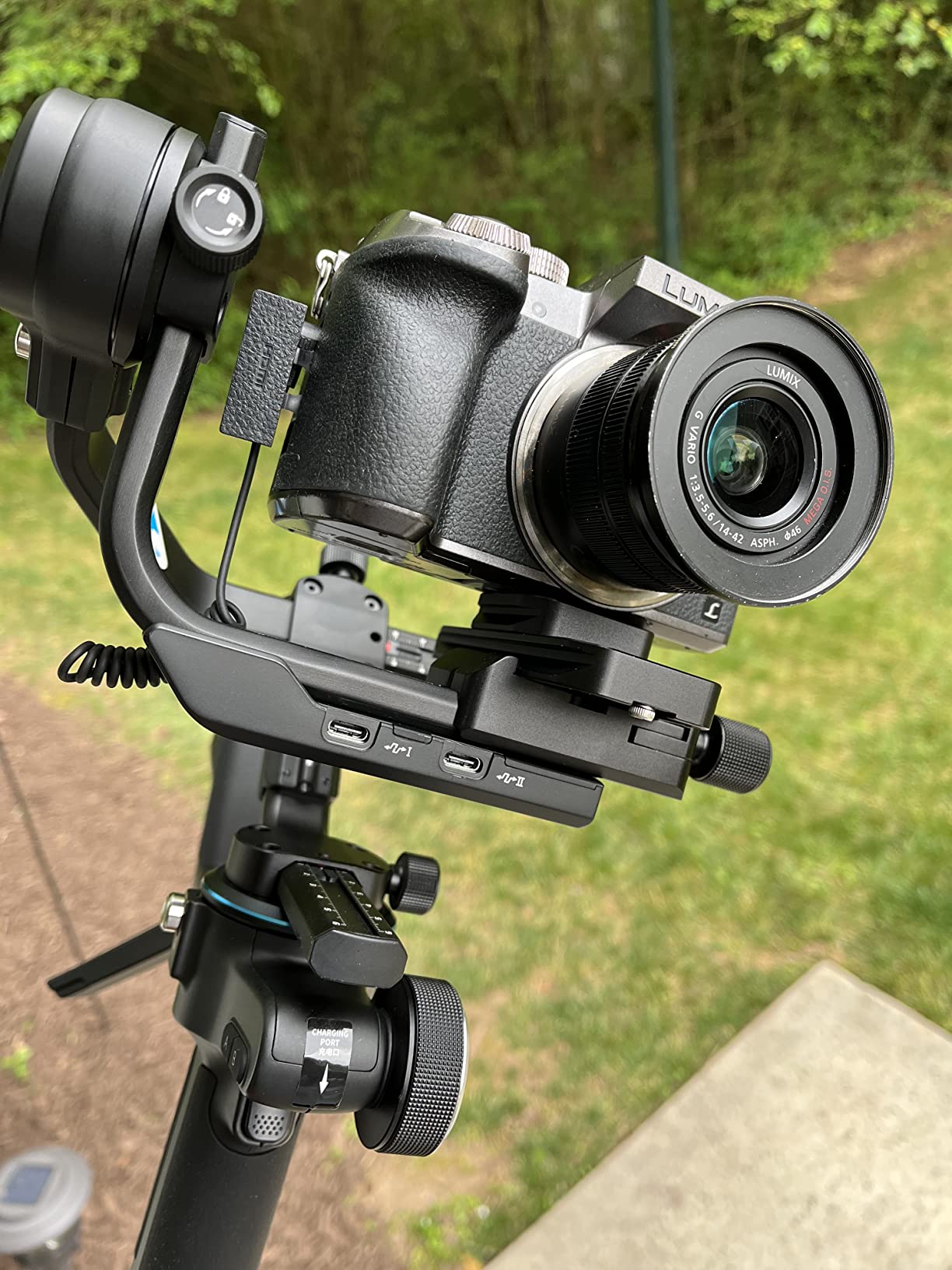
Why the built-in tripod changes the ceremony plan
Wedding ceremony coverage is mostly a locked-off wide plus a tighter angle on the couple. With the folding bracket you can set down the gimbal, level the wide shot, and keep the same plate for the aisle push-in later. That means one balance session instead of two, and no second support to lose in a dim venue.
Professional mode unlocks the AB trajectory memory and flash mode, which are useful for repeatable reception moves. The feature set is deeper than the class usually offers, and the trade-off is access: most of it sits in menus rather than on a physical switch, so budget a practice session before you need those modes live.
What you give up for that capacity
At 1200 g it is the heaviest body in this list, and you can feel the difference against the 795 g RS 3 Mini over a long reception. The three-axis motor lock is genuinely useful for setting the rig down, but it has to be re-engaged every time you change cameras, which adds a step to the processional-to-reception transition.
Its rating spread is wider than the DJI entries here, and the balance process draws more criticism from first-time users. If you have never balanced a 3-axis rig before, the quick-turn auto-tune on the DJI Minis is a gentler place to learn the craft.
3. DJI RS 3 Pro – For Cinema-Sized Rigs and Large Venues
DJI RS 3 Pro, 3-Axis Gimbal for DSLR and Cameras Canon/Sony/Panasonic/Nikon/Fujifilm/BMPCC, Automated Axis Locks, 4.5 kg (10lbs) Payload, LiDAR Focus Camera Stabilizer
4.5 kg payload
1.74 kg body
Automated axis locks
O3 Pro transmission
Pros
- Only pick here rated for 4.5 kg cinema rigs
- One-press automated axis locks
- O3 Pro transmission reaches 6km for large venues
- Extended carbon fiber axis arms simplify leveling
- Focus motor handles rack focus
Cons
- Heaviest unit in the lineup
- Longer setup than the mini gimbals
- Transmission and accessory power need planning for long events
If your wedding rig is a cinema body with an external monitor, a top handle and a matte box, none of the other picks here will carry it. The RS 3 Pro rates 4.5 kg and reviewers specifically call out its ability to handle combinations like an FX6 or a C70 with a 24-70mm f/2.8 mounted. That is the headroom that turns a marginal balance into a calm one.
The automated axis locks are the feature that changes a wedding day rather than a demo. One press of the power button locks all three axes, so you can set the rig down between the ceremony and the cocktail hour without drift, pick it up later and know the horizon is where you left it. Silverstein Studios described exactly this behavior in their event work and called out the saved setup time directly.
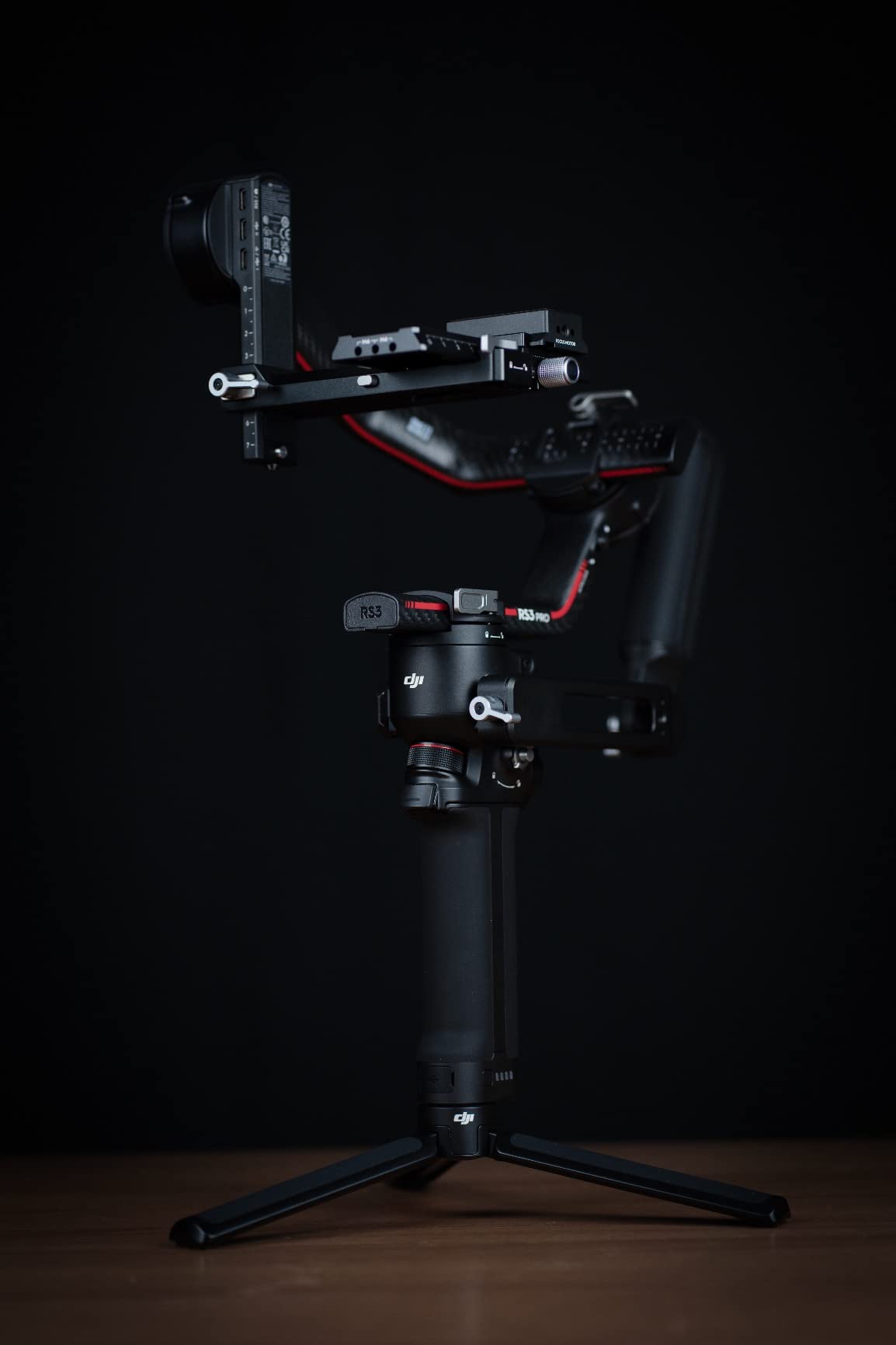
Extended carbon fiber axis arms give extra leveling space for larger bodies, which cuts the number of rebalance cycles a big rig needs. The LiDAR focusing system handles autofocus with manual lenses, and the combo configuration adds the Ronin image transmitter, the included high-speed focus motor and an extended lower quick-release plate. The O3 Pro transmission reaches 6km with very low latency, which is a genuine asset when a second shooter is covering the far side of a large venue.
Our broader coverage of the current DJI lineup, including the RS Mini models, sits in our DJI gimbal roundup if you want to compare generations. Note that this review base is the smallest in the group, so the consistently positive pattern here carries less volume behind it than the lighter models.
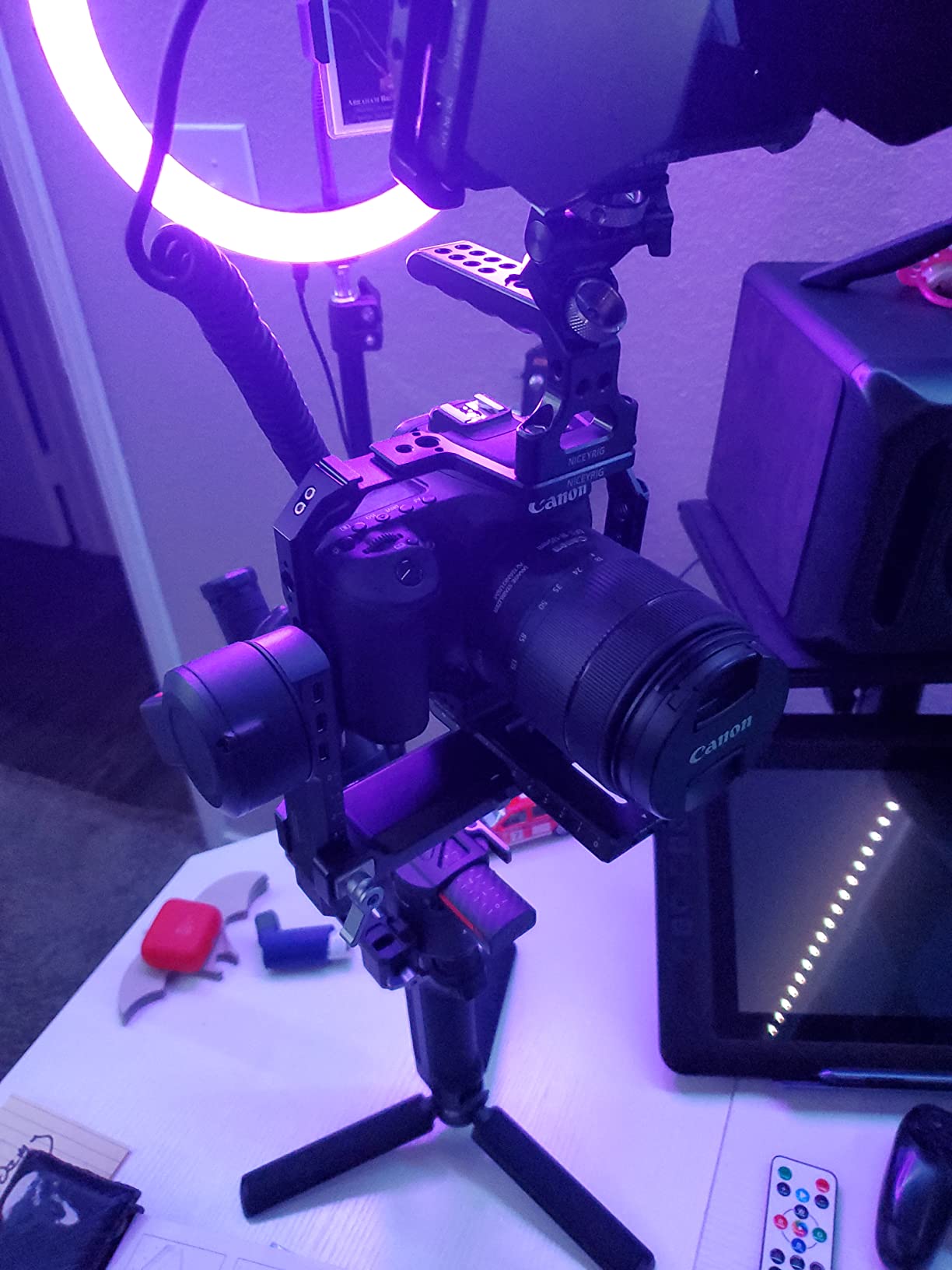
Who the 4.5 kg rating actually serves
Worked example: a cinema body with a 24-70mm f/2.8, a top handle, a 5-inch monitor and a shotgun mic lands well past what a 3 kg gimbal will hold comfortably. After the 20 to 30 percent derating, the 4.5 kg rating leaves working headroom of roughly 3.2 to 3.6 kg, which is where that rig becomes stable instead of straining.
If you are on a compact mirrorless body with one zoom, this is far more machine than you need, and the extra mass becomes an arm-fatigue problem rather than a capability gain. The 1.74 kg body itself is the heaviest here, so it asks the most of your forearm across a long reception.
What you take on to get that capacity
Setup time runs longer than the mini gimbals for simple walk-and-talk shots, because there is more to balance on a loaded cinema plate. For a solo operator running a dual-system coverage plan, that setup cost is real and it competes directly with your ceremony turnaround window.
Reliable long-range transmission and a focus motor both assume accessories that need their own power planning across a 10-hour day. If you are one person with one battery budget, the simpler picks cover more ground per watt.
4. DJI RSC 2 Pro Combo – The Complete Event Kit
DJI RSC 2 Pro Combo – 3-Axis Gimbal Stabilizer for DSLR and Mirrorless Camera, Nikon Sony Panasonic Canon Fujifilm, Ronin SC, 3kg Payload, Image Transmission, Focus Motor – Black
3 kg payload
Folds to A5 size
1-inch OLED
14-hour battery
Pros
- Folds smaller than an A5 sheet for one-bag packing
- Titan algorithm with SuperSmooth for telephoto work
- Combo includes focus motor and image transmitter
- One-inch OLED readable in bright venues
- 14-hour battery covers a full day
Cons
- Combo package is bulky and heavy
- Older platform than the current RS mini line
- Listed 2K DCI video resolution is dated
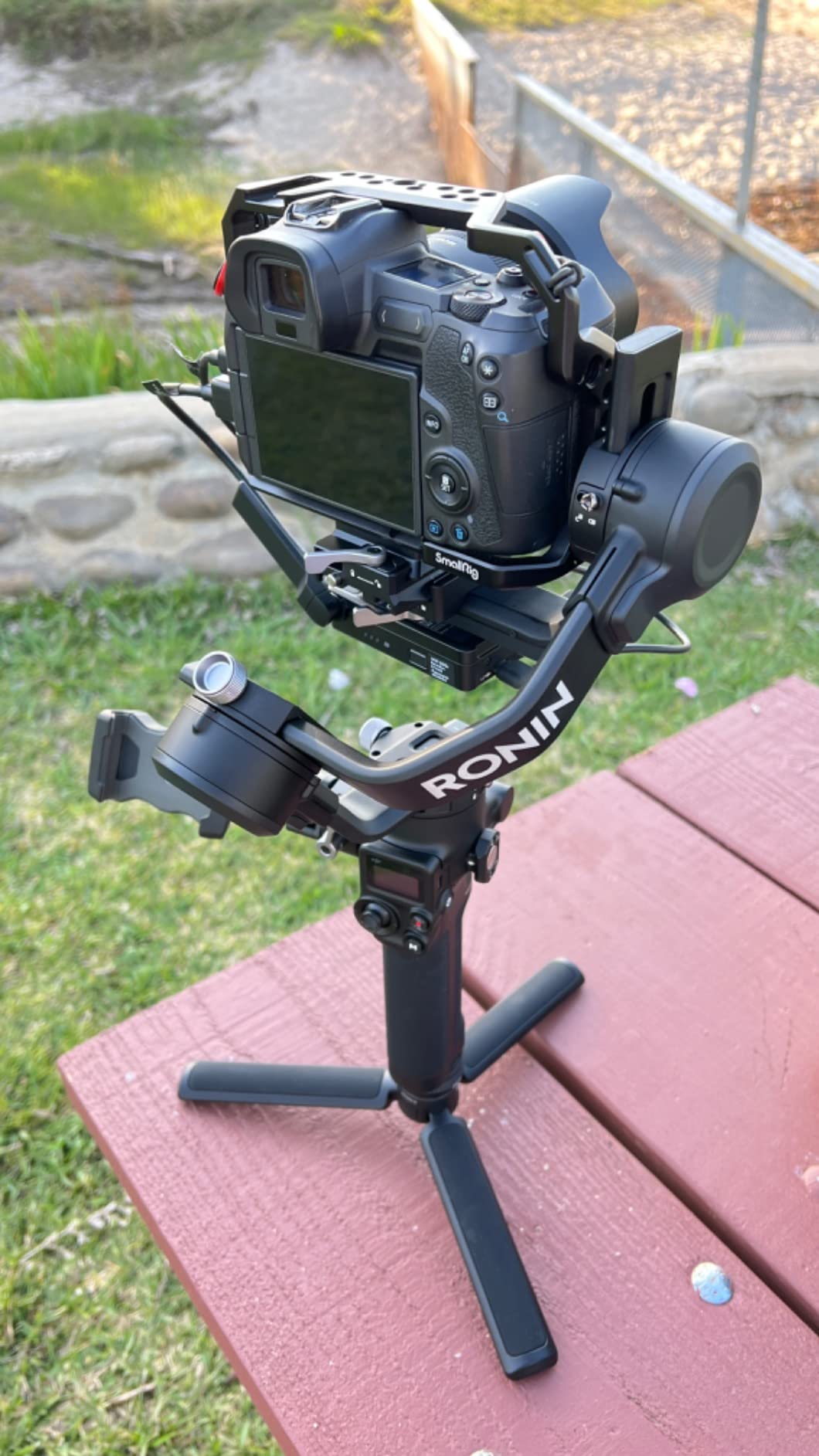
The RSC 2 Pro Combo is the pick for a videographer who does not want to assemble a kit from four boxes. The combo includes the Ronin image transmitter, a focus motor, the focus rod mount kit, a focus gear strip, an extended grip and tripod, and a carrying case. Out of the box you can pull focus and monitor a second camera without buying a single accessory, which is exactly the shopping list a new wedding videographer does not have time for.
It folds to a size smaller than a sheet of A5 paper, so it fits a normal camera bag rather than a dedicated case. That sounds minor until you are packing a car at 6am for a destination wedding. The dual-layer Manfrotto plus Arca quick-release plate is the plate interoperability detail that matters most in a venue, where you may need to hand the camera to a tripod in seconds.
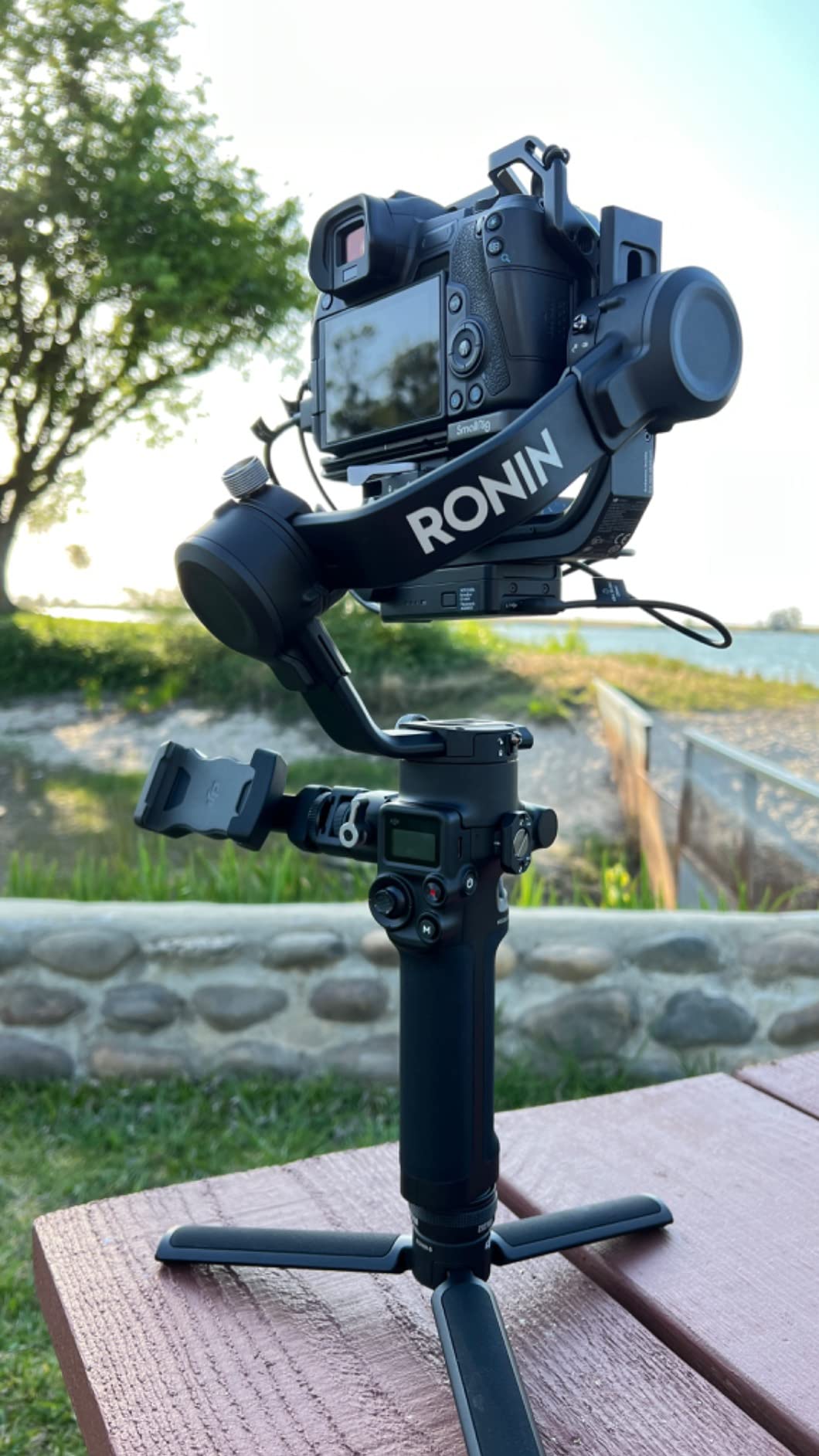
The Titan stabilization algorithm with SuperSmooth is tuned for micro-movements and long zooms, which is precisely the 70-200mm work you do during the processional and the couple portraits. A rated 3 kg payload after derating leaves roughly 2.2 to 2.4 kg of usable capacity, comfortably clearing a full-frame body with a telephoto zoom. The 14-hour published runtime is an idle figure, so plan on a working day of about seven hours, which still clears a standard wedding without a field charge.
The one-inch built-in OLED screen is the largest in this lineup, and that is not a spec-sheet nicety. Reading framing and exposure in a bright reception or on a sunlit terrace is much easier on a one-inch panel than on the 1.4-inch touchscreen the Mini uses, and portrait mode engages with a single tap for vertical delivery.
What the combo saves you in the prep week
A focus motor alone removes a step from every reception shot, and a focus gear strip on a telephoto lens means rack focus is repeatable rather than a manual guess. The image transmitter handles a second operator’s camera or a monitor in the DJI director app. Owners reviewing this bundle consistently cite the completeness, not the specs, as the reason to buy it.
For a solo videographer, that is the difference between a working kit on day one and a parts list you discover is missing three weeks later. Our Zhiyun gimbal guide covers the alternative route if you would rather assemble your own.
Where an older platform shows
This is an older design generation, and the listed 2K DCI 1080p video resolution specification is dated next to current models. If your delivery pipeline is 4K-heavy, check what your camera actually outputs through this platform before you commit.
The combo package is large and heavy relative to the bare gimbal, which cuts against the folding advantage that makes it attractive in the first place. Solo operators who fly will feel the bulk; car-based regional work will not.
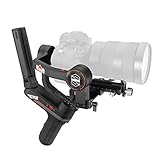
5. Zhiyun Weebill S – Best Sling Ergonomics for Low Angles
Zhiyun Weebill S [Official] 3-Axis Gimbal Stabilizer for Mirrorless and DSLR Cameras
2.5 kg payload
926 g body
14-hour battery
Sling mode
Pros
- Sling handle makes low-angle sequences less tiring
- Motors handle DSLR bodies and not just small kits
- Widest review base after the RS 3 Mini
- Clean operation once configured with useful vortex mode
- 14-hour battery plus optional three-receiver transmission
Cons
- Modes run through undocumented button combinations
- Small LCD and an awkward button layout
- Some units drift or drop into axis lock after balancing
- Control cable is sold separately
The Weebill S is the one in this group whose defining feature is an ergonomic decision rather than a spec. The sling-mode handle lets you shoot from underneath, which is how you get a low first-dance glide and a floor-level reveal at the cake table without dropping to your knees and losing the horizon. At 926 g it stays in the comfortable range for a full reception, and the 2.5 kg rating handles a DSLR body with a standard kit zoom.
It is also the most-reviewed pick here after the RS 3 Mini, with more than 1600 ratings averaging 4.4 stars. That volume matters for a long-running design: the feedback pattern is stable, which is what you want when you are committing a whole wedding season to one platform.
![Zhiyun Weebill S [Official] 3-Axis Gimbal Stabilizer for Mirrorless and DSLR Cameras customer photo 1](https://kayakcambria.com/wp-content/uploads/2026/05/B07Y47P31Y_customer_1.jpg)
Mode selection is where this design shows its age and its character. PF pan-follow, full follow, POV, vortex and lock modes are reached through button combinations rather than a labeled screen, so the first week of work is a memorization exercise. Once the combinations are in your fingers, operation is clean and quick, and the vortex mode gives you a controlled roll that works well for a slow orbit around the couple during the processional.
Camera control needs a compatible USB control cable, which is sold separately, so shutter and focus control is not out of the box. The optional TransMount image transmission module adds 1080p at up to 100 m with as many as three receivers, which is a reasonable second-screen option for a venue where you cannot monitor from the camera position.
![Zhiyun Weebill S [Official] 3-Axis Gimbal Stabilizer for Mirrorless and DSLR Cameras customer photo 2](https://kayakcambria.com/wp-content/uploads/2026/05/B07Y47P31Y_customer_2.jpg)
Why sling mode earns its place at a reception
Low-angle coverage is the part of a wedding film clients replay most, and holding a gimbal at knee height for a sustained move is exactly where arm fatigue shows up on a long night. The sling handle transfers the load and keeps the move smooth past the point where a top-mounted grip starts shaking. A separate sling grip is not required here, which is where the newer Weebill 3E asks for an extra purchase.
Balance calibration can be handled by tripod-mounted auto motor calibration, so the setup process is straightforward once you have the rig level. Do that calibration in daylight before the season starts rather than in a dim reception room.
The reliability question worth asking
Some units report a drifting horizon or an unexpected drop into axis lock after a correct balance, and that reliability anxiety is the most common complaint in the reviews. Forum discussion around this category is candid about failure rates across brands, and the general advice is to keep a second stabilization plan for the ceremony regardless of what you own.
No padded carry case is included, either. The small LCD and the undocumented mode combinations are the two friction points you accept in exchange for sling ergonomics and a 14-hour battery at 926 g.
6. Zhiyun CINEPEER Weebill 3E – Native Vertical in a 990 g Body
ZHIYUN CINEPEER Weebill 3E, 3-Axis Lightweight Gimbal Stabilizer for DSLR & Mirrorless Camera Canon/Sony/Panasonic/Nikon, 3KG Payload, Native Vertical Shooting, Bluetooth Shutter Control
3 kg payload
990 g body
Native vertical
16-hour battery
Pros
- 3 kg payload in a sub-1 kg body
- Native vertical without re-balancing
- 16-hour battery covers a full wedding day
- A4-sized folded profile fits ordinary bags
- Bluetooth shutter control re-pairs automatically
Cons
- Only the Panasonic control cable ships in the box
- Sling grip and wrist rest are sold separately
- One-year warranty
At 990 g with a 3 kg rating, the Weebill 3E has the strongest weight-to-capacity ratio in this lineup, and that combination is what a full wedding day actually rewards. The wide-axis arm is specified to carry a 24-70mm f/2.8, a 24-105mm f/4G and a 16-55mm f/2.8, which covers the standard wedding zoom pairings. After derating, you still clear roughly 2.1 to 2.4 kg of working capacity on a sub-kilogram body.
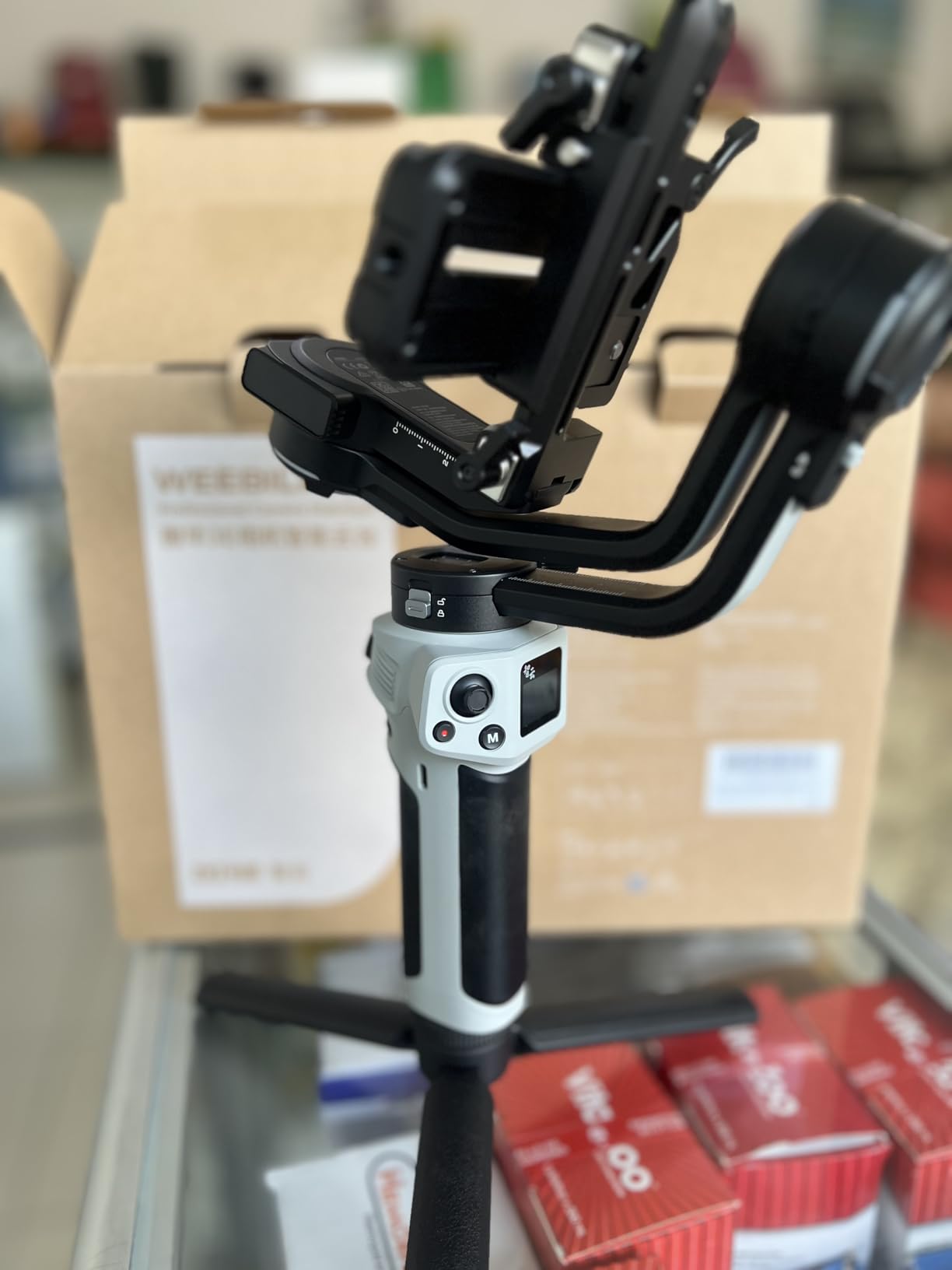
Native vertical shooting works by moving the quick-release plate to the vertical arm, so you rotate into portrait without rebalancing. On a day where half your delivery is vertical, that is not a convenience feature, it is the difference between capturing a moment and losing it while you rebalance for the tenth time.
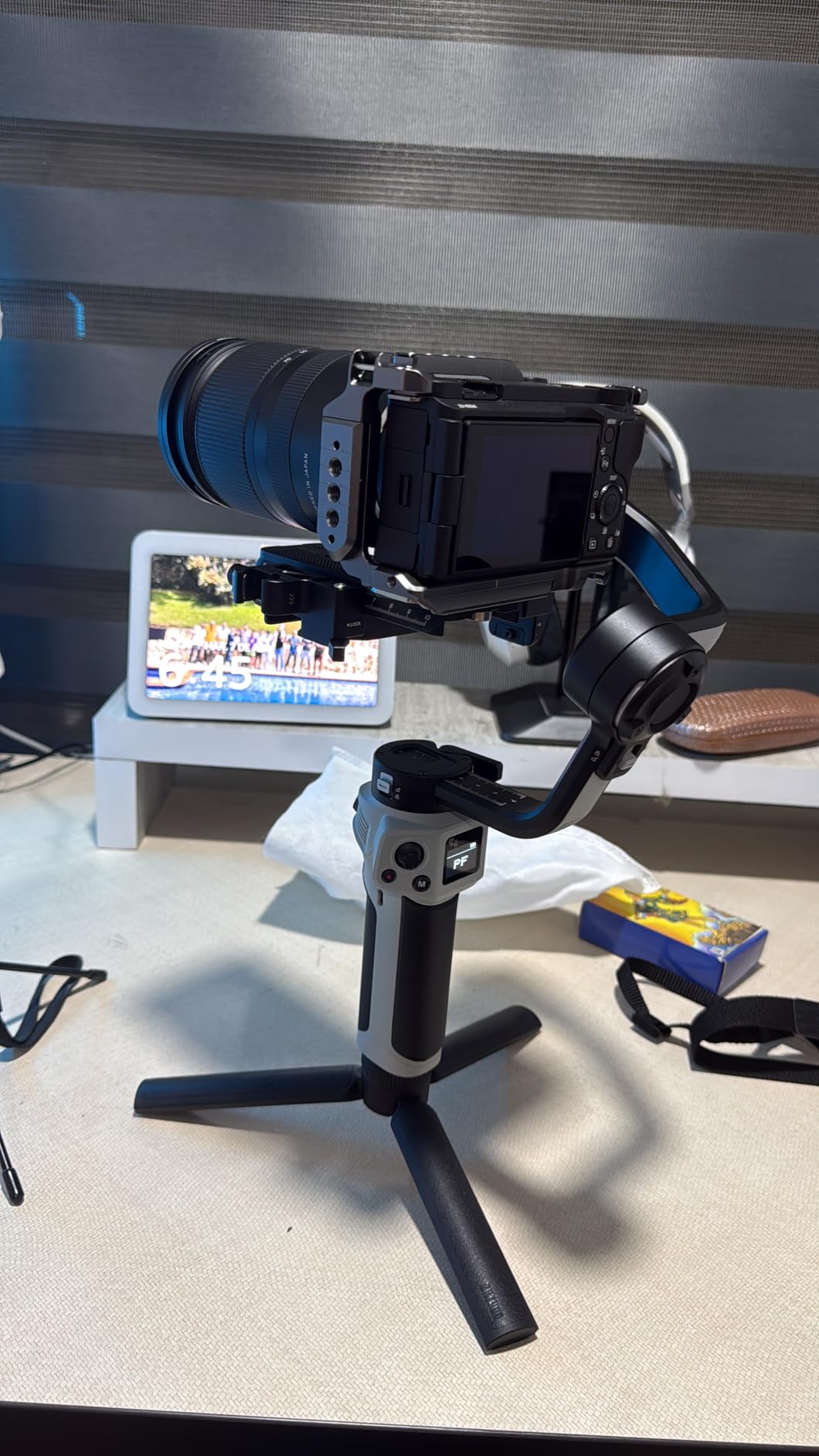
The 16-hour maximum battery is the longest published figure here, and even at the halved active-shooting rate that is comfortable for a 10-hour day. Charging is 14 W PD and a full charge takes 2 hours 46 minutes, so topping up between the ceremony and the reception works from a standard power bank. Bluetooth shutter control re-pairs automatically after the first connection, which removes the cable hunt at the start of a ceremony.
The folded body is A4-sized and ships with a tripod, quick-release plate, USB cable and a 12-month warranty, so the base kit is complete for someone starting out. Landscape and portrait shooting modes are both available, and the package is small enough to be a dedicated bag item rather than a squeeze.
Best fit for a hybrid horizontal and vertical deliverable
Couples increasingly expect both a long highlight film and a set of short vertical clips, often from the same moments. A native vertical plate means the ceremony walk-in exists in both formats, taken in one pass with one balance. Gimbals that rely on an L-bracket or a physical re-mount handle this worse, and the rebalance is exactly what eats your setup window between segments.
The 3 kg rating also makes this the lighter option for anyone whose standard rig is a zoom rather than a prime, which is the typical solo wedding kit. It overlaps the RS 3 Mini’s use case but with more capacity for the same class of body weight.
What is not in the box
Only the Panasonic control cable is included. Canon, Sony and other brand cables are a separate purchase, so budget for that before the season rather than on the morning of a shoot. Bluetooth shutter control reduces the need to touch the body, but full wired control still needs the right lead.
Sling Mode is a headline feature on this gimbal, yet the telescopic sling grip and wrist rest are both sold separately. If low-angle coverage is central to your style, the Weebill S at number five includes sling ergonomics in the body. The one-year warranty is also the shortest in the group.
How We Picked These Six Gimbals
We narrowed a wide field of 3-axis stabilizers to six by working backwards from a wedding day rather than from a spec sheet. Any gimbal that could not credibly carry a full-frame mirrorless body through a ceremony, a cocktail hour and a reception survived. Phone-only gimbals, one-axis supports and lightweight sticks were excluded despite appearing on plenty of general roundups, because none of them would ever be mounted to a wedding camera.
Each pick was then assessed against four criteria. The first is real-world payload after derating by 20 to 30 percent for a cage, an external mic and a wider lens, because that is the honest number. The second is battery across an active 8 to 10 hour shooting day, with published idle runtime treated as roughly double the usable figure. The third is solo-operator speed: how long the balance takes, whether the axes lock with one press, and how quickly the rig moves between a gimbal shot and a locked-off tripod shot.
The fourth criterion is delivery flexibility, covering native vertical shooting, quick-release plate interoperability and how much extra accessory planning each unit demands. We also read the negative reviews, because the failure-mode complaints in this category are more informative than the praise. A gimbal that drifts after a correct balance or needs a firmware fix before every shoot is a different purchase from one that just works, and the review counts told us where the confidence was thin.
One limit of this method is worth stating plainly. We did not measure runtime ourselves on a live wedding, so the battery figures above are the manufacturers’ published numbers read through the halving rule rather than measured hours. Forum discussion on this question is split, and the honest position is that your own test rental is the only way to settle it for your rig.
Buying Guide: How to Choose a Gimbal for Wedding Work
Match the gimbal to your heaviest rig, not your average rig
Buyers size a gimbal by the camera they use most often, then discover mid-season that their longest ceremony rig does not fit. Size it by the heaviest combination you will actually mount: the body, the widest and fastest zoom you will reach for, a cage, and a top-mounted microphone. Add those together, then add another 20 to 30 percent for the derating, and match the total against the rated payload.
A full-frame body with a 24-70mm f/2.8, a small cage and a compact mic is the most common wedding rig in this class. That combination points at the 2.5 to 3 kg tier, which covers the SCORP-C, the Weebill S, the RSC 2 Pro and the Weebill 3E. Step up to the 4.5 kg RS 3 Pro only when a cinema body or an external monitor enters the picture, and step down to the 2 kg RS 3 Mini when your kit is a prime plus a small body.
Battery life across a 10-hour wedding day
Published runtime is measured with the rig idle, not tracking a couple across a dance floor. Halving the number gives you a working figure, so a 14-hour rating is a 7-hour tool. Plan spare cells around your heaviest shooting segment rather than the whole day, and keep a USB-C PD power bank in the bag for a top-up during the cocktail hour when the reception has not started drawing power yet.
Both the Weebill S and the RSC 2 Pro rate 14 hours, and the Weebill 3E rates 16, so all three clear a standard day with a spare in reserve. The SCORP-C adds roughly half an hour of runtime per five minutes on a charger, which is a useful recovery tool between segments. Gimbals in the sub-kilogram class typically need the most attention here, because their packs are smallest.
Solo-operator speed: auto-tune, axis locks and plate swaps
Solo work is a series of ten-minute windows between setups, and the speed of a gimbal matters more than its feature list. Automated axis locks, where one press of the power button locks all three axes, let you set the rig down for a locked-off ceremony wide and pick it up later without a drift correction. The RS 3 Pro does this natively, and the SCORP-C offers a manual three-axis lock that achieves the same effect with one more step.
Quick-release plate standard is the second speed factor. Arca-Swiss compatibility means the same plate moves from gimbal to cage to tripod head without touching the balance screws, which is what makes the ceremony-to-tripod transition fast. The RSC 2 Pro carries a dual-layer Manfrotto and Arca plate, and the SCORP-C uses an Arca-compatible plate. Where a gimbal ships with a proprietary plate, budget extra seconds on every swap.
Native vertical versus an L-bracket workaround
If any part of your delivery is vertical, treat native vertical shooting as a requirement rather than a nicety. The RS 3 Mini and the Weebill 3E both rotate into portrait by moving the plate to the vertical arm, with no rebalance. The RSC 2 Pro switches to portrait with a single tap. Gimbals that need an L-bracket or a re-mounted plate force a rebalance at the exact moment you are trying to capture a moment.
Native vertical also keeps the motors correctly loaded, which is why stabilized vertical footage tends to look cleaner than post-cropped horizontal. For a couple who wants the same walk-in in both formats, this is the feature that makes the day work.
App ecosystem, firmware support and plate standards
Every gimbal here needs setup software. DJI’s Ronin app handles activation, balancing and firmware for the three DJI picks, and it is no longer distributed through Google Play, so install it from DJI’s official site well before your season starts. Zhiyun’s app covers the Weebill S and Weebill 3E, though the Weebill 3E ships with only a Panasonic control cable, with other brand leads sold separately. The FeiyuTech SCORP-C puts most features behind on-device menus rather than an app.
On plate standards, Arca-Swiss is the interoperability standard worth caring about because it matches most cages and tripod plates you already own. Manfrotto 501PL appears on the RSC 2 Pro as a second layer. A gimbal locked to one brand’s plate ecosystem is more annoying than the spec sheet suggests, because the moment you need a tripod shot is rarely convenient.
When Not to Use a Gimbal at a Wedding
The most common question in wedding videography forums is whether a gimbal is needed at all, and the honest answer is yes for some moments and no for most of them. Many working pros shoot weddings entirely handheld and see a gimbal as optional, because the movement of a handheld camera with a stabilized lens reads as more human. Reviewers also point out that a lot of gimbal footage looks like gimbal footage, which is not automatically a compliment.
Set the gimbal down for the ceremony. You need clean locked-off audio, a stable wide for the vows, and your attention on the wireless scratch track. A gimbal held through a 25-minute ceremony adds operator fatigue and a mechanical hum risk to the one segment where the audio matters most and the framing is least creative. The SCORP-C’s folding bracket and the extended grip in the RSC 2 Pro combo both exist for exactly this handover.
Also step away from the gimbal for static speeches, the formal group photos, and any moment where you want the operator movement to read as documentary rather than produced. The forum consensus is that a gimbal helps massively for reception party coverage, walking shots, and reveal moves, and that it is a liability in the ceremony itself. A gimbal that lives on a shelf because you never brought it out is a gimbal you do not own, so choose one you will actually carry.
One more honest note: some videographers buy a gimbal and conclude that stabilized movement is not for their style. That is a useful outcome, not a wasted purchase, but it is also why renting before buying is sensible if your film is primarily handheld documentary.
Frequently Asked Questions
What is the best gimbal for wedding videography?
The DJI RS 3 Mini is the best all-round choice for most wedding videographers, because 795 g stays comfortable across a full reception and its native vertical mode avoids a rebalance between horizontal and vertical delivery. If your rig is a cinema body with an external monitor, step up to the DJI RS 3 Pro, which rates 4.5 kg. For a loaded full-frame body with a 24-70mm zoom, the Zhiyun Weebill 3E carries 3 kg at 990 g.
Do I need a gimbal for wedding videography?
Not for most of the day. Most pros shoot ceremonies handheld or locked off, and a gimbal earns its place during the processional walk, the first dance, reception push-ins and reveal shots. Set it down for the vows and static speeches, where audio quality and a stable wide matter more than movement. Many working videographers never use one, so test before you commit.
How much payload do I need for wedding videography?
Add your body, your heaviest wedding lens, a cage and a top microphone, then add another 20 to 30 percent for the derating. A full-frame body with a 24-70mm f/2.8, small cage and compact mic lands near 2.5 to 3 kg, so a 3 kg rated gimbal is the practical floor. Reserve 4.5 kg for cinema bodies, external monitors and larger audio rigs.
How long does a gimbal battery last on a wedding day?
Treat the published figure as idle runtime and halve it for active shooting, so a 14-hour rating is realistically a 7-hour tool. A 16-hour model gives about 8 hours of shooting, which covers a standard 10-hour wedding with a spare cell and a USB-C PD power bank top-up during the cocktail hour. Packing two batteries is the cheapest insurance in this category.
Is DJI or Zhiyun better for wedding videography?
DJI is the stronger all-round choice for a solo operator, with faster auto-tuning, one-press automated axis locks on the RS 3 Pro, and native vertical across the Mini line. Zhiyun competes well on value and ergonomics, with sling-mode handling built into the Weebill S and a 3 kg payload at 990 g on the Weebill 3E. Choose on ergonomics and payload, not on brand, since both have solid app support.
Which gimbal is the best choice right now?
Match the gimbal to your heaviest loaded rig rather than the newest release. A 2 kg class model covers a small body with a fast prime, a 2.5 to 3 kg class model covers the standard full-frame wedding kit with a 24-70mm zoom, and a 4.5 kg class model is for cinema bodies. Buy the smallest body that clears your heaviest rig, since fatigue, not torque, ends a shooting day.
Our Verdict on Handheld Gimbals for Wedding Work in 2026
The DJI RS 3 Mini is our editor’s choice for 2026 because a 795 g body with native vertical and a wide review base is the combination that survives a full wedding day. Solo operators on a standard full-frame kit should look at the Zhiyun Weebill 3E for more payload at a similar weight, and cinema-focused shooters should step up to the DJI RS 3 Pro for the 4.5 kg rating and one-press axis locks.
Whatever you choose, size it to your heaviest rig, halve the published battery figure, and plan to set the gimbal down for the ceremony. A stabilizer earns its place in the reception, not the vows, and buying the smallest gimbal that clears your real load is what keeps it out of the case at the end of the night.


