

A burst supply line can keep running until somebody reaches the main valve. That is why the best smart water shutoff valves pair detection with a physical action: they close the water supply when a leak sensor or abnormal flow pattern triggers a rule.
I ranked eight currently analyzed kits and valves by the information that changes a home decision: whether they fit into the pipe or turn an existing handle, how they respond when internet or household power is unavailable, included sensors, pipe fit, and integration options. A smart water monitor that only sends an alert can be useful, but it is not the same thing as automatic water shutoff.
There is no one pick for every plumbing layout. A no-plumbing valve operator is compelling when the existing ball valve is accessible; an inline system makes more sense when a plumber is already working on the main water line. Readers also planning filtration can compare under-sink water filters with leak detection for another layer of localized protection.
Forum discussions repeatedly point to the same concerns: false alarms, hub dependence, aging manual valves, and what happens during an outage. I treat those as decision points rather than small-print details, because peace of mind only counts if the system can close the valve when it needs to.
Top 3 Picks for Best Smart Water Shutoff Valves (September 2026)
The YoLink DIY starter kit is my editor’s choice for a retrofit with three included sensors and no plumbing work. The iSpring LS43WL is the best value for homeowners who want an inline whole-home unit with wired and wireless sensing, while the YoLink FlowSmart is the strongest all-in-one option for people who want metering and shutoff in one device.

Best Smart Water Shutoff Valves in 2026
The comparison below includes every product reviewed here. It is a fast way to sort a retrofit operator from a direct-install valve, then move to the full reviews for the constraints that a feature list cannot settle.
| Product | Specs | Action |
|---|---|---|
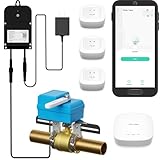 YoLink DIY Leak Shut-Off Starter Kit YoLink DIY Leak Shut-Off Starter Kit |
|
Check Latest Price |
 YoLink NSF 3/4 inch Leak Protection Kit YoLink NSF 3/4 inch Leak Protection Kit |
|
Check Latest Price |
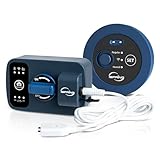 iSpring LS43WL Smart Leak Shut-Off iSpring LS43WL Smart Leak Shut-Off |
|
Check Latest Price |
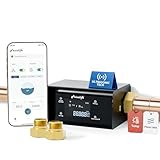 Frizzlife LP365 Smart Monitor Frizzlife LP365 Smart Monitor |
|
Check Latest Price |
| YoLink FlowSmart All-in-One |
|
Check Latest Price |
 YoLink X3 1 inch Motorized Valve YoLink X3 1 inch Motorized Valve |
|
Check Latest Price |
 CUSTOS Firebot DIY Kit CUSTOS Firebot DIY Kit |
|
Check Latest Price |
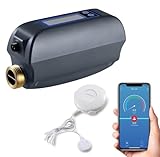 Haozee WiFi Smart Water Valve Haozee WiFi Smart Water Valve |
|
Check Latest Price |
1. The YoLink DIY starter kit is the best no-plumbing choice
YoLink DIY Automatic Water Leak Detection & Shut-Off Starter Kit, EVO Valve Operator, Wireless Valve Controller, (3) Leak Sensors, Hub
3 sensors
EVO valve operator
D2D offline rules
LoRa range
Pros
- No plumbing required
- Three sensors included
- D2D works through network disruption
- Home Assistant support
- Up to 5-year sensor batteries
Cons
- Controller battery backup is rated up to 2 years
- SMS allowance is limited
The YoLink kit uses an EVO operator to turn an existing ball-valve handle instead of requiring a new valve in the pipe. That distinction makes it the practical first look for a homeowner with an accessible main shutoff and no desire to cut plumbing.
Its package is unusually complete: three water sensors, a valve controller, the operator, and a hub. The recorded 4.8 rating comes from 479 reviews, and the product data lists SMS, app, email, and iOS critical-alert notification options.
The standout safety detail is Control-D2D behavior. A paired leak sensor and valve controller can communicate directly during a network disruption or power loss affecting usual network equipment, so the automatic response does not rely solely on a cloud command.
The installation is easiest when the ball valve is visible and sound
I would inspect the manual handle before choosing this route. A stiff, corroded, or partly hidden valve can make a retrofit operator a poor match; that is the moment to have a plumber replace the valve and consider an inline product.
Mounting does not require plumbing work, but placement still matters. Put the leak sensors where water first appears: below sinks, near the water heater, by a washing machine, or in a basement utility area.
The offline and smart-home options suit a distributed property
YoLink specifies LoRa communication up to one-quarter mile and compatibility with Alexa, Google Assistant, IFTTT, and Home Assistant. That range can be more useful than ordinary Wi-Fi for a detached garage, a basement, or a long house.
The limitation is battery planning. Sensors are listed at up to five years and the Valve Controller 2 at up to two years, so I would add replacement dates to a home-maintenance calendar and test a shutoff rule before leaving town.
2. The YoLink NSF kit is the best battery-first 3/4 inch inline system
NSF Certified YoLink Leak Protection Kit, 3/4″ Battery-Powered Shutoff Valve w/ Controller + 3 Leak Sensors + Hub, D2D Offline Auto Shutoff, LoRa Long-Range, App/Email/SMS Alerts, 10+ Year Battery
3/4 inch valve
3 sensors
NSF certified
10-year battery design
Pros
- NSF potable-water certification
- D2D without internet
- Three sensors included
- Expandable to 80 devices
- No subscription fees
Cons
- This kit is 3/4 inch
- Uses six AA batteries
This YoLink kit replaces the casual retrofit approach with a 3/4 inch battery-powered shutoff valve. It is a better fit where the main line is already 3/4 inch and a permanent valve installation is acceptable.
The product data states NSF certification for potable water, three included sensors, a hub, and direct device-to-device pairing. Its 4.8 rating is based on 93 reviews, a smaller review base than the starter kit but a very strong recorded average.
What I like in the design is its stated ability to close from a sensor trigger without internet or AC power. The valve’s low-power design is listed with a 10-plus-year lithium battery life, while the included sensors and controller use six AA batteries.
The pipe-size check should happen before this kit reaches the cart
The exact kit is for a 3/4 inch valve. Measure the pipe and identify the connection type at the intended main-line location rather than guessing from a faucet or a fixture supply line.
An inline change belongs on a planned plumbing job if access is tight or the main valve is old. The product supports 0.5 inch and 1 inch variants, but that does not change the 3/4 inch configuration included here.
The long-range ecosystem is useful when sensors will expand
YoLink lists expansion to more than 80 devices and LoRa wireless with an open-air range up to one-quarter mile. That makes this a sensible platform if one or two sensors will likely become a whole-home set later.
No subscription fee is listed for this kit. I would still make a paper note of hub location, battery replacement dates, and the valve’s manual override procedure, since a connected system is only as good as the household can operate it manually.
3. The iSpring LS43WL is the best straightforward inline leak response
iSpring LS43WL Smart Leak Detector – Auto Water Shut-Off
Inline main valve
Wired and wireless sensors
20-second shutoff
Up to 8 sensors
Pros
- Stops flow within 20 seconds
- Dual sensing modes
- Supports eight wireless sensors
- Two common connection sizes
- DIY-oriented design
Cons
- Needs its power adapter
- Smaller review base
The iSpring LS43WL is a direct automatic water shutoff system rather than a flow-learning monitor. It shuts water at the main inlet after a sensor detects water, with the manufacturer specifying a response within 20 seconds.
The core package has one wired and one wireless sensor. Regular and Humid modes are intended to reduce false alarms in damp areas, which is an important practical feature for basements, laundry rooms, and utility spaces.
It carries a 4.6 rating from 64 reviews. That review pool is modest, but the configuration is clear: an electric ball valve, physical sensors, and support for as many as eight wireless detectors.
The sensor-led detection works best for known wet-risk zones
This is not described as an ultrasonic micro-leak analyzer. I would choose it when the primary goal is a decisive response to water reaching a sensor under a likely failure point.
Place the wired sensor near the most critical appliance or at a low point where water will collect. The wireless option lets you cover another zone without routing cable, and later detectors can extend coverage around the house.
The connection sizes make a plumbing survey necessary
The listed connections are 1 inch MNPT and 3/4 inch FNPT. Verify both the pipe diameter and the threads with a plumber or a careful measurement before selecting fittings.
The automatic-shutoff function needs the power adapter. That does not disqualify it, but it means I would treat a nearby protected outlet and a power-outage plan as part of installation rather than an afterthought.
4. The Frizzlife LP365 is the best for micro-leak monitoring and reports
Frizzlife LP365 Smart Water Monitor and Automatic Shutoff Valve – 0.01GPM Ultrasonic Micro Leak Detection, APP Wi-Fi Remote Control, Real-Time Flow/Temp Alarm, 24/7 Water Usage Reports, 3/4″ and 1″
0.01 GPM ultrasonic sensing
Wi-Fi app
Flow and temperature alerts
3/4 and 1 inch
Pros
- Fine 0.01 GPM detection
- Usage reporting
- Flow and temperature alarms
- Alexa and SmartThings support
- Fits two pipe sizes
Cons
- Needs constant power
- Professional installation is recommended
The Frizzlife LP365 is the pick for readers who want a smart water monitor as well as a shutoff valve. It uses ultrasonic sensing and lists micro-leak detection to 0.01 GPM, plus real-time flow and temperature alarms.
This is the kind of device I would consider for unexplained water use, intermittent drips, or a household that wants daily and monthly usage reports. It has a 4.5 rating from 304 reviews, the largest review count in this group after the first YoLink kit.
The product lists Wi-Fi app control and integrations with Alexa, Google Assistant, and SmartThings. It also has NSF/ANSI 61 and 372 certification and is built for 3/4 inch and 1 inch pipe connections.
The flow data is useful when a leak is not yet visible
A sensor on the floor sees water after it arrives. Ultrasonic flow monitoring looks for a pattern in the line, which may flag a small continuous draw before a homeowner notices the resulting damage.
That capability calls for sensible alert thresholds. Normal irrigation, appliance cycles, or long showers should be accounted for in the app settings so that the alert plan follows the way the household actually uses water.
The powered inline placement deserves professional attention
The LP365 is corded electric and the manufacturer recommends professional installation. It is not merely an add-on to an existing handle, so plan for accessible pipe, a suitable outlet, and an installer who can orient the body correctly.
The company also notes that outdoor cold-weather use can call for extra accessories. For a main line in an unheated location, discuss freeze exposure before selecting any electronically monitored valve.
5. The YoLink FlowSmart is the best all-in-one battery meter and valve
NSF Certified YoLink FlowSmart All-in-One Smart Water Meter & Auto Shutoff for ¾″ Pipes, LoRa Long-Range, Real-Time Leak Detection, 10-Year Battery, 80+ Device Ecosystem, Hub Included – YS5018
Integrated water meter
Auto shutoff
D2D offline rules
10-year battery design
Pros
- Meter and valve in one
- Multiple pipe-size options
- Offline D2D rules
- LoRa coverage
- Home Assistant support
Cons
- Hub is required
- Bundle contains one meter and valve
The FlowSmart combines an ultrasonic water meter and motorized shutoff valve in one NSF-certified body. It is the cleanest answer for someone who wants continuous water data without adding a separate monitor beside the valve.
This bundle includes the YoLink Hub and the 3/4 inch unit. YoLink lists other sizes from 1/2 inch through 2 inches, which is useful for homes that need a different plumbing match, but selection must follow the chosen size.
The product has a 4.5 rating from 137 reviews. Its stated 10-plus-year battery design and D2D rules are especially appealing for people who do not want a permanently powered device at the main line.
The integrated design reduces the number of components at the main
A separate meter and shutoff can work well, but an all-in-one unit gives an installer one component to position and one system to maintain. I would favor it where a tidy, permanent installation matters.
The hub is still part of the system for Ethernet or 2.4 GHz Wi-Fi connectivity. The product’s direct device-to-device rules are designed to keep local automated responses available if the internet is unavailable.
The ecosystem supports advanced home automation plans
YoLink lists Alexa, IFTTT, and Home Assistant support. Home Assistant users should confirm the intended automations with the hub in place, then start with a basic sensor-to-valve rule before creating more complicated scenes.
Long-range LoRa is specified for whole-home and building coverage. That is a practical advantage if the main line and a far sensor are separated by masonry, a basement, or an outbuilding.
6. The YoLink X3 is the best valve-only choice for a 1 inch line
NSF Certified YoLink X3 Smart 1″ Motorized Stainless Steel Ball Valve, LoRa Long-Range, 10-Year Battery, D2D Offline with Leak Sensors, Alexa/IFTTT/Home Assistant, Hub Required – YS5012
1 inch stainless ball valve
D2D offline shutoff
LoRa
10-year battery design
Pros
- NSF certified stainless steel
- Long-range LoRa
- Offline sensor rules
- Home Assistant ready
- No everyday wiring
Cons
- Hub required for app features
- Valve only without sensors
The YoLink X3 is not a starter package. It is a 1 inch motorized stainless steel ball valve for a buyer who already owns YoLink sensors and a hub, or who intends to build a system one part at a time.
That modular approach is its advantage and its limitation. The product is NSF certified for potable water and has a 4.5 rating from 131 reviews, but it does not include the leak detectors needed to trigger an automatic response.
When paired with YoLink sensors, the stated D2D function can close the valve without internet and through a typical Wi-Fi equipment outage. Its battery design is listed at 10 years, avoiding everyday hardwiring.
The 1 inch threaded connection makes compatibility the first question
This model has 1 inch NPT inlet and outlet connections. Confirm that your main line needs a 1 inch threaded ball valve and that there is enough straight, accessible pipe for installation and future service.
Stainless steel is a sensible material choice for a valve on potable water, but the material alone does not make the job DIY. Shut off water upstream, drain the line, and bring in a plumber if the existing hardware is unfamiliar.
The modular design rewards existing YoLink households
The valve supports app control, schedules, alerts, Alexa, IFTTT, and Home Assistant through the YoLink Hub. For a household that already uses the brand’s long-range sensors, it avoids duplicating components.
A new buyer should count every necessary part: hub, appropriate leak sensors, and installation fittings. I would also verify a manual shutoff can remain reachable after the smart valve is fitted.
7. The CUSTOS Firebot kit is the best outdoor-ready retrofit operator
CUSTOS/Firebot DIY Automatic Water Shut Off Valve Control, LoRa Water Leak Detection Device Kit with 3 WiFi Water Leak Sensor, WiFi Water Shutoff Valve with Battery Backup
DIY handle operator
3 sensors
LoRa hub
20-plus-hour backup
Pros
- No-tool retrofit
- Three sensors included
- LoRa handles difficult areas
- 20-plus-hour backup
- Outdoor-oriented components
Cons
- Small 12-review sample
- Needs an accessible ball valve
The CUSTOS Firebot kit is another approach that turns an existing ball-valve handle rather than replacing the pipe valve. It includes three Wi-Fi water sensors and a LoRa UBILINK hub, and it is listed for ball-valve plumbing from 1/2 inch to 1-1/4 inch.
I would look at this one for an accessible valve in a shed, exterior enclosure, or a location where Wi-Fi is poor. The components are described as UV-resistant and thermally protected for harsher outdoor conditions.
The recorded rating is 4.4 from 12 reviews. That is not enough feedback for me to rank it above the more established options, but its stated 20-plus-hour backup and no-tool installation make its use case distinct.
The clamp-on setup depends on a compatible manual ball valve
The central installation promise is no tools for suitable ball-valve plumbing. Before ordering, photograph the handle, measure the valve area, and check that the operator will not block a wall, meter, insulation, or other pipe.
This is not a universal solution for every type of shutoff. A gate valve, a seized handle, or a cramped installation pushes the decision toward plumbing replacement rather than a motorized handle operator.
The LoRa link and backup focus on difficult locations
CUSTOS says its LoRa network reaches through concrete and metal better than Wi-Fi-only arrangements. That is relevant when the leak sensors and valve are separated by distance or building materials.
The specified battery backup can keep the system running for more than 20 hours during a power failure. I would still test the valve with a controlled sensor trigger and check the backup status at routine intervals, especially before extended travel.
8. The Haozee valve is the simplest Wi-Fi ultrasonic option
Haozee WiFi Smart Water Valve and Auto Shut-Off
3/4 inch valve
Ultrasonic flow sensing
Tuya app
Backup battery
Pros
- No gateway listed
- Ultrasonic flow monitoring
- Usage statistics
- Tuya automation
- Backup battery
Cons
- 3.9 rating with mixed feedback
- Needs AC power
The Haozee WiFi Smart Water Valve is a 3/4 inch inline choice with ultrasonic flow detection, a supplied water sensor, customizable high- and low-flow alerts, and app control. It connects to 2.4 GHz Wi-Fi without a gateway.
Its water meter functions provide daily, monthly, and recent-use statistics. For homeowners who already use the Tuya app, that can make basic alert and automation setup more approachable.
I rank it last because the 3.9 rating from 40 reviews shows more mixed feedback than the other models here, including a recorded 14% one-star share. The feature set is relevant, but I would prioritize a careful test period and a dependable manual backup plan.
The Tuya app can connect leak alerts to a simple shutoff scene
The product supports automated scenes with compatible leak detectors through Tuya. Set up one straightforward scene first: sensor detects water, valve closes, phone receives an alert.
After that, verify how high-flow and low-flow thresholds behave with normal household use. Flow-based alerts can be helpful for burst pipe prevention, but the settings must avoid treating ordinary water use as an emergency.
The power arrangement requires a practical outage plan
The unit uses a 5V/2A AC adapter and includes a 2600mAh NiMH backup battery. That is a useful failsafe, but it is different from the long battery-first designs used by several YoLink products.
It fits DN20, or 3/4 inch, pipe. Since installation is inline, make pipe size, connection access, and a protected power outlet part of the decision before committing to this option.
Smart water shutoff valves work by detecting a problem and closing the main supply
A smart water shutoff valve either listens for a nearby sensor getting wet or monitors the water moving through the main line. When its rule identifies a leak, a motor closes a ball valve or turns the handle of an existing valve, stopping the source rather than merely announcing it.
Sensor-led systems are direct: water touches a detector and the valve closes. Flow-monitoring systems use a flow sensor, ultrasonic measurement, pressure monitoring, temperature data, or a combination of these signals to flag abnormal use, which may catch some leaks before water reaches a floor sensor.
The practical difference is not a contest between technologies. A whole-home flow monitor can identify unusual water use, while discrete leak sensors remain useful at appliances and in low spots where a fitting may fail suddenly.
Inline valves are permanent plumbing parts while retrofit operators turn an existing handle
An inline valve is installed into the pipe and becomes part of the main water line. It usually calls for plumbing work, exact pipe-size and thread verification, and a location with clearance for the valve body, but it provides a purpose-built shutoff at the source.
A retrofit or motorized handle operator attaches to a compatible existing ball valve. I prefer this route when the valve is accessible, turns freely by hand, and a homeowner wants automatic protection without cutting pipe.
Neither type is automatically more reliable in every house. The better choice is the one that has a healthy valve, dependable triggering sensors or monitoring, power resilience appropriate to the property, and a manual operating method everyone in the home can use.
The buying decision should start with six checks at the main water line
The pipe size and valve condition determine what can physically fit
Measure the pipe at the planned location and identify whether its connections are threaded, soldered, or another type. Product names can mention several sizes, but only the exact configured unit and the existing plumbing decide fit.
Then operate the current manual shutoff. Forum users often point out that an old worn valve may need replacement before a smart operator can be trusted, which is an opportunity to install a permanent inline valve correctly.
The detection method should match the leak you most want to stop
For appliance hoses, water heaters, laundry areas, and under-sink failures, remote water sensors provide a simple and visible trigger. For a house with unexplained consumption or concern about small continuous leaks, ultrasonic flow monitoring and water usage tracking are worth considering.
Do not expect a sensor in one room to protect every room. Build coverage around the places where water can collect, and test the alert and automatic shutoff behavior with a controlled spill rather than waiting for a real problem.
The outage behavior should be written down before installation
Ask what happens if the internet drops, the hub loses contact, or utility power fails. YoLink products in this guide state D2D local rules; CUSTOS and Haozee list battery backup; iSpring and Frizzlife depend on their power arrangements for their automatic function.
I would not rely on assumptions here. Trigger a test with internet disabled where the product supports it, confirm the valve closes, and learn how to reopen it manually before the system becomes part of a travel plan.
The integration choice should be boring rather than ambitious
Alexa, Google Assistant, SmartThings, IFTTT, Tuya, and Home Assistant can be useful for alerts and status checks. They should supplement the local shutoff rule, not replace it.
Home Assistant users are specifically interested in YoLink compatibility because the listed products support it through the broader ecosystem. Start with a reliable alert and sensor-to-valve action, then add dashboards or secondary automations after that basic protection has worked repeatedly.
The maintenance routine keeps the safety claim credible
Check sensor batteries, controller batteries, backup batteries, app notifications, and valve movement at a regular interval. A system designed for long battery life still needs periodic inspection, especially after renovations, plumbing repairs, or router changes.
Keep the manual shutoff accessible and label it. The most useful long-term habit is a documented test: activate a sensor, watch the valve close, verify the app alert, reopen water safely, and record the date.
The insurance question requires a carrier-specific answer
Insurance discounts are frequently mentioned in homeowner discussions, including references to major carriers, but eligibility, qualifying equipment, documentation, and discount size vary by insurer and policy. Contact your insurer before purchase and ask whether it recognizes an automatic shutoff, a monitored leak detector, or both.
Do not buy solely on the expectation of a discount. The core benefit is water damage prevention while nobody is home, and a system that also meets an insurer’s requirements is a welcome extra.
Whole-home shutoff protects against plumbing leaks, while a drainage solution addresses water entering from outside or below. Pair this research with our guide to sump pumps for basement water protection if your basement faces both risks, or consider water pressure booster pumps separately if low pressure is the issue.
FAQs
How does a smart water shutoff valve work?
A smart water shutoff valve monitors water through floor sensors, flow sensing, pressure or temperature data, then uses a motor to close the main water supply when its rule detects a leak or abnormal condition. Some models use local sensor-to-valve communication so automatic shutoff can still work during an internet outage.
What is the best smart water shutoff valve?
The best choice depends on the home. The YoLink DIY starter kit is the leading retrofit pick because it includes three sensors and requires no plumbing, while the iSpring LS43WL is a direct inline option and the Frizzlife LP365 is better suited to homeowners who want ultrasonic flow monitoring and usage reports.
Are smart water shutoff valves worth the cost?
They can be worthwhile when a leak could run unnoticed, such as during travel, in an older home, or near high-risk appliances. Their value comes from stopping water at the source; choose a system with detection and outage behavior that you have tested rather than relying on alerts alone.
Do insurance companies give discounts for smart water shutoff valves?
Some insurers may offer a discount or recognize leak-protection equipment, but rules differ by carrier, policy, device type, and proof of installation. Ask your insurer whether it requires an automatic main-line shutoff, professional installation, monitoring, or a specific approved product before relying on a discount.
What is the difference between inline and motorized smart water valves?
An inline smart valve is installed directly in the plumbing and physically becomes part of the main water line. A motorized retrofit operator clamps to a compatible existing ball-valve handle and turns it; it avoids pipe cutting but depends on the existing valve being accessible and in good working condition.
How much does professional installation cost for smart water shutoff valves?
Installation cost varies with pipe material, pipe size, access to the main line, the condition of the existing valve, electrical needs, and local labor rates. Get a written quote after an installer sees the installation point, and ask whether fittings, valve replacement, testing, and manual-access planning are included.
Conclusion
For the best smart water shutoff valves in 2026, I would start with the YoLink DIY kit when no-plumbing installation and offline sensor action matter most. Choose iSpring for a clear sensor-led inline system, Frizzlife for detailed flow monitoring, or FlowSmart for a battery-powered integrated meter and valve.
Measure the line, inspect the existing manual valve, decide how you want the system to behave during an outage, and run a real shutdown test after installation. Those steps matter more than an impressive app screen when water is already moving.


