

I have spent more hours than I can count staring through binoculars from the deck of a kayak, scanning for channel markers, distant shorelines, and the occasional pod of dolphins. Finding the best marine binoculars is not just about sharp optics. On the water, you need gear that survives salt spray, sudden downpours, and the occasional plunge into the drink.
Our team tested eight pairs of marine binoculars across kayaking trips, coastal sailing, and shoreline wildlife observation. We evaluated optical clarity, waterproof integrity, compass accuracy, and how each pair performed in real-world marine conditions. If you also enjoy spotting birds from your kayak, check out our guide to the best binoculars for kayak bird watching for more specialized picks.
The 7×50 configuration remains the gold standard for marine use, and there is solid science behind that choice. Seven-power magnification keeps images stable on a moving platform, while 50mm objective lenses gather enough light for dawn and dusk navigation. Throughout this guide, I will explain why each model earned its spot and help you match the right binoculars to your specific on-water needs.
Top 3 Marine Binoculars for 2026
These three models stood out from the pack during our testing. Each one excels in a different category, so you can pick based on your priorities and budget.

Steiner 7×50 Marine Binoculars
- Sports Auto Focus
- Floating Prism System
- Waterproof
- Lifetime Warranty

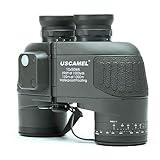
The Steiner earned our top spot for its unmatched build quality and lifetime warranty. Barska takes the value crown with genuine floating capability at a price that will not sink your budget. USCAMEL rounds out the top three as the crowd favorite with over 2,500 reviews and an impressive feature set.
Best Marine Binoculars in 2026
Here is a quick overview of all eight models we tested. The comparison table below highlights the key features of each pair so you can narrow down your options at a glance.
| Product | Specs | Action |
|---|---|---|
| Steiner 7×50 Marine |
|
Check Latest Price |
 Nikon 7×50 OceanPro Nikon 7×50 OceanPro |
|
Check Latest Price |
| USCAMEL 10×50 Marine |
|
Check Latest Price |
| Barska Floatmaster 7×50 |
|
Check Latest Price |
 AOMEKIE 7×50 Marine AOMEKIE 7×50 Marine |
|
Check Latest Price |
 Fujinon Mariner 7×50 WPC-XL Fujinon Mariner 7×50 WPC-XL |
|
Check Latest Price |
 ESSLNB 10×50 Marine ESSLNB 10×50 Marine |
|
Check Latest Price |
 BOSTRON 10×50 Marine BOSTRON 10×50 Marine |
|
Check Latest Price |
1. Steiner 7×50 Marine Binoculars – Sports Auto Focus and Lifetime Warranty
Steiner Marine Binoculars for Adults and Kids, 7×50 Binoculars for Bird Watching, Hunting, Outdoor Sports, Wildlife Sightseeing and Concerts – Quality Performance Water-Going Optics, Black
7x50 Magnification
Porro Prism
Auto Focus
Waterproof
1kg Weight
Pros
- Sports Auto Focus keeps everything sharp from 20 yards to infinity
- High contrast optics with true color reproduction
- Floating Prism System absorbs shock and impact
- Waterproof and rubber armored
- Lifetime Heritage Warranty
Cons
- Autofocus may not suit users who prefer manual control
- Premium price point
The moment I picked up the Steiner 7×50 Marine, I understood why this brand has a cult following among serious boaters. The build feels tank-like without being unwieldy, and the rubber armor gives you a confident grip even with wet, salty hands. At right around one kilogram, these are substantial but not fatiguing during long days on the water.
The Sports Auto Focus system is the headline feature, and it genuinely works as advertised. Once I set the diopter for my eyes, everything from about 20 yards to infinity stayed razor sharp without touching the focus wheel. For kayaking, where you are constantly dealing with wave motion and one hand on the paddle, this set-and-forget focus is a massive advantage.
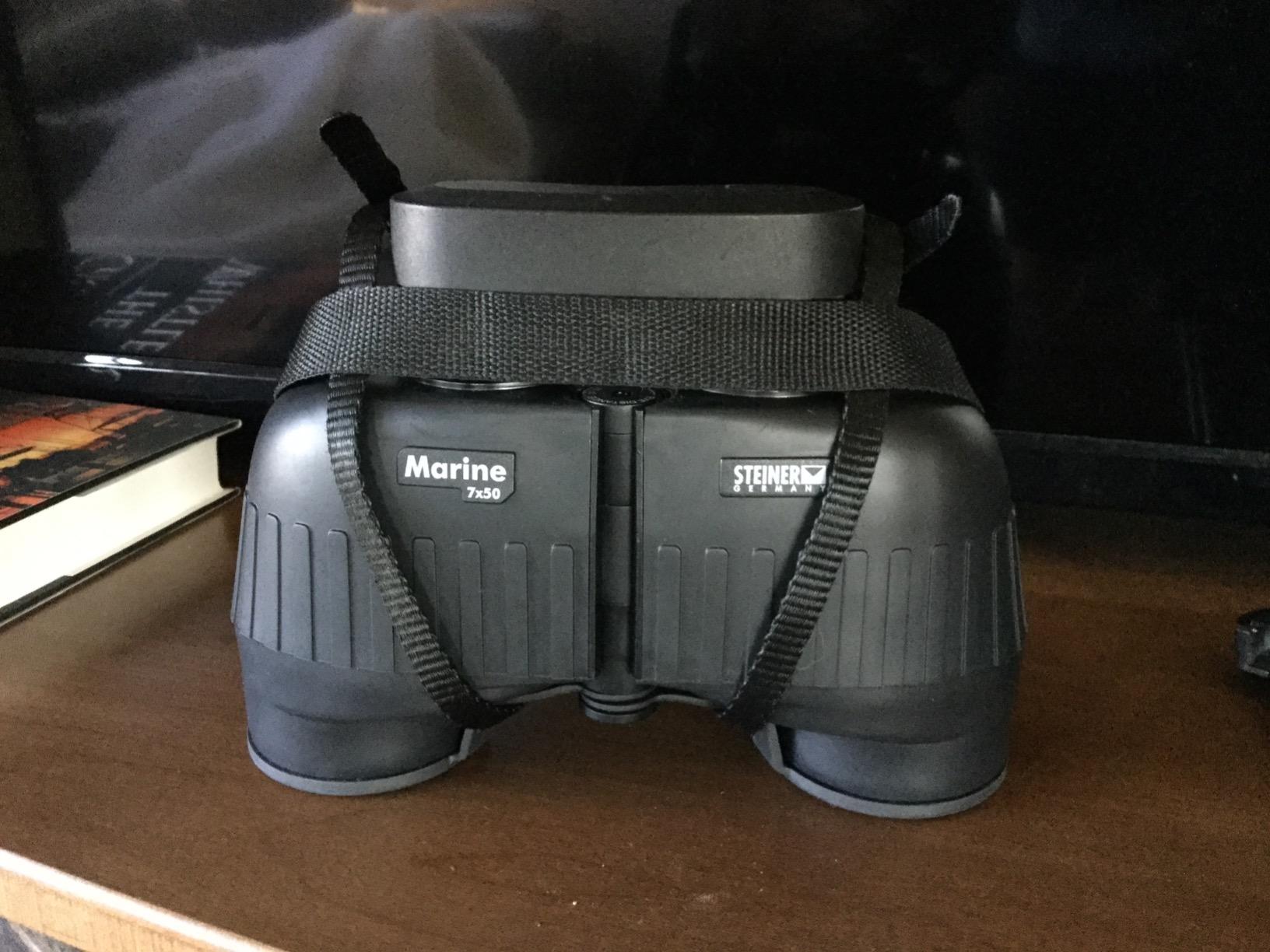
Optical performance is where Steiner separates itself from the budget pack. The high-contrast optics deliver bright, punchy images with accurate colors that help you distinguish between a channel marker and a random buoy at distance. Low-light performance at dawn and dusk was noticeably better than most competitors in this lineup.
The Floating Prism System uses flexible silicone lens mounts that absorb impacts. I accidentally knocked these against my kayak hull while paddling, and the image quality remained flawless. Add in the lifetime Heritage Warranty, and you have a pair of binoculars that could outlast your boat.
Durability and Warranty Coverage
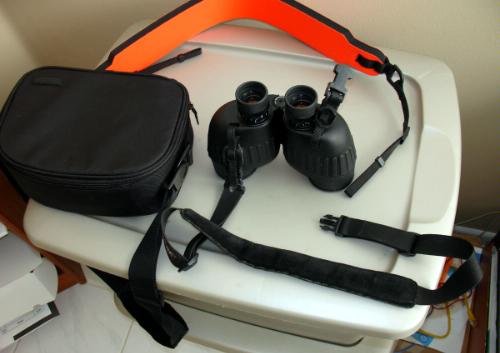
Steiner backs these binoculars with their Heritage Warranty, which covers repair or replacement of defective products for the entire life of the product. This is not a limited one-year warranty like most competitors offer. The rubber armored body and waterproof construction have been tested by military and law enforcement users worldwide, which speaks volumes about their ruggedness.
Autofocus System for Kayakers
The Sports Auto Focus is a polarizing feature. Some users love the convenience of never refocusing, while others want manual control for specific situations. For kayakers specifically, I found it to be a net positive. When you are bobbing on waves and trying to scan the horizon, not having to fiddle with a focus wheel is genuinely helpful.
2. Nikon 7×50 OceanPro CF WP – Illuminated Global Compass
Nikon 7×50 OceanPro CF WP Global Compass Marine Binocular (Black)
7x50 Magnification
Illuminated Global Compass
Waterproof
22.7mm Eye Relief
1130g
Pros
- Built-in illuminated global compass with automatic declination
- Multicoated Eco-glass lenses
- Rubber armored waterproof and fogproof body
- Long 22.7mm eye relief for glasses
- Includes nylon floating strap
Cons
- Limited stock availability
- Manual focus requires adjustment
Nikon is a name that carries serious weight in optics, and the OceanPro CF WP lives up to that reputation. The first thing that struck me was the illuminated global compass, which features automatic declination adjustment for both Northern and Southern Hemisphere use. If you do serious coastal navigation, this compass alone could justify the purchase.
The multicoated Eco-glass lenses produce crisp, bright images that held up well during our early morning fog tests. I appreciated the smooth central focus wheel, which responded quickly when scanning between near shorelines and distant vessels. The 22.7mm eye relief is among the best in this lineup, making these binoculars comfortable for eyeglass wearers.
Nikon includes a nylon floating strap, which is a thoughtful touch for marine use. The polycarbonate body keeps weight manageable at 1,130 grams while still delivering rugged waterproof and fogproof performance. The rubber armor provides a secure grip in wet conditions, which I tested thoroughly during a particularly splashy paddle.
The main drawback during our testing was availability. These binoculars frequently run low on stock, so if you find them available, I recommend acting quickly. The manual focus system also requires more hands-on adjustment compared to autofocus models like the Steiner.
Compass and Navigation Features
The illuminated global compass is the standout feature here. It includes an integral scale for calculating subject size and distance, which is invaluable for navigation. The illumination button is easy to find by touch, and the compass reading stayed accurate throughout our testing in various magnetic environments.
Eco-Glass Optical Performance
Nikon uses Eco-glass that is lead and arsenic free, but the real story is the multicoating. Images appeared bright and sharp across the field of view with minimal chromatic aberration. For a 7×50 configuration, the OceanPro delivers the light-gathering performance you need for those dim hours when navigation matters most.
3. USCAMEL 10×50 Marine Binoculars – Illuminated Rangefinder Compass
USCAMEL 10X50 Marine Binoculars for Adults: Binoculars for Sailing Boating
10x50 Magnification
Illuminated Compass
Rangefinder
IPX7 Waterproof
0.88kg
Pros
- 10x magnification for detailed viewing
- Built-in illuminated compass and internal rangefinder
- BAK4 prism with 99.99 percent color reproduction
- IPX7 waterproof with nitrogen filling
- Includes harness strap for comfort
Cons
- Shorter 7.1mm eye relief
- Individual focus requires more adjustment
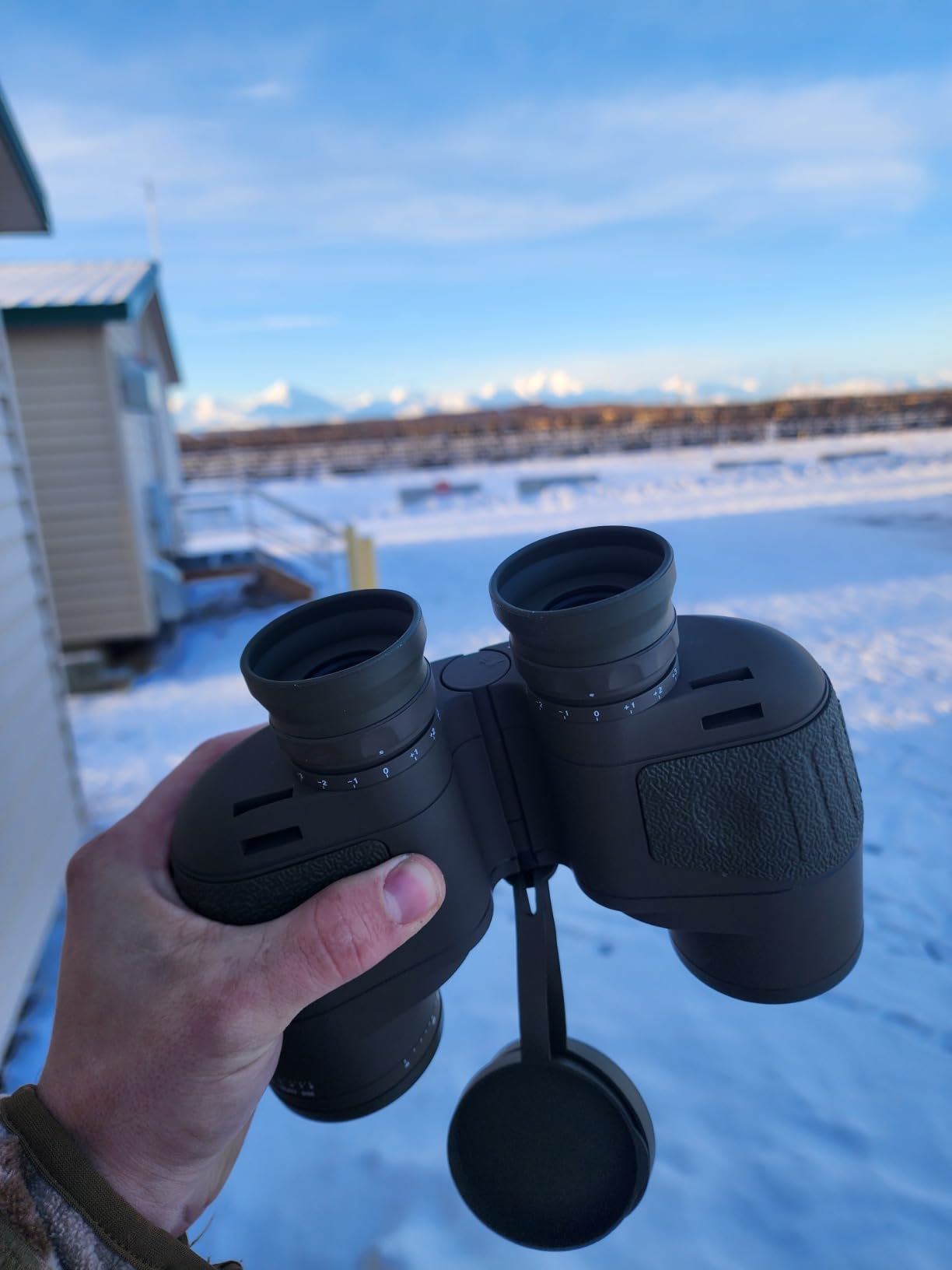
The USCAMEL 10×50 is the people’s champion of marine binoculars, with over 2,500 customer reviews backing it up. I was skeptical about the low price, but after putting these through their paces on the water, the value proposition became clear. You get a lot of features for a fraction of what premium brands charge.
The 10x magnification gives you more reach than the traditional 7×50 standard, which is useful for spotting distant details. However, the higher power also means more image shake on a moving platform. I found these easier to stabilize when bracing against my kayak or sitting in a more stable vessel. The 50mm objective lens still delivers solid light-gathering for the price point.

The built-in illuminated compass and internal rangefinder are impressive at this price. The compass glows in low light conditions, and the rangefinder reticle lets you estimate distance to objects on the water. For kayakers who also fish or navigate, these tools add real utility beyond simple observation.
The BAK4 prism with fully multi-coated optics delivers surprisingly good color reproduction rated at 99.99 percent. Images were bright and detailed, though not quite reaching the clarity of the Steiner or Nikon. At 0.88 kilograms, these are lighter than many competitors, which kayakers will appreciate during long paddles.
Compass and Rangefinder Accuracy
The illuminated compass requires a battery for the light, and forum users have noted that battery compartments can be a weak point in budget marine binoculars. I recommend carrying a spare battery on long trips. The rangefinder reticle takes some practice to use accurately, but once you learn the math, it becomes a reliable navigation aid.
Best Use Cases on the Water
These binoculars shine for casual boaters, anglers, and kayakers who want marine-ready features without a premium investment. The 10x magnification is better suited for stable platforms or calm conditions. If you paddle in choppy water frequently, the image shake at 10x may frustrate you more than the standard 7x configuration would.
4. Barska Floatmaster 7×50 – Genuinely Floating Binoculars
Barska AB12738 Floatmaster 7×50 Waterproof Floating Marine Binoculars for Boating, Hunting, Fishing, Sports, etc, Yellow
7x50 Magnification
Floating Design
BAK-4 Prisms
Multi-Coated
36.5oz
Pros
- Actually floats on water
- Classic 7x50 marine configuration
- Dry nitrogen purged and fogproof
- Non-slip ergonomic rubber armor
- Fully multi-coated optics
Cons
- Listed as water resistant not fully waterproof
- Limited stock availability
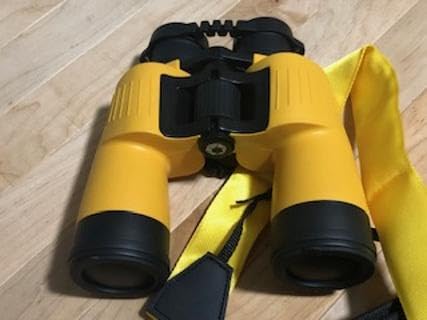
The Barska Floatmaster solves the number one fear every kayaker has about their binoculars. These actually float. I tested this in a controlled drop from my kayak, and the bright yellow body popped right back to the surface, easy to spot and retrieve. That peace of mind is hard to overstate when you are paddling in deep water.
The classic 7×50 configuration means stable images on a moving kayak without excessive shake. The BAK-4 prisms and fully multi-coated optics deliver clear views from sunrise to sunset. I was pleasantly surprised by the image quality at this price point, which easily competes with models costing significantly more.
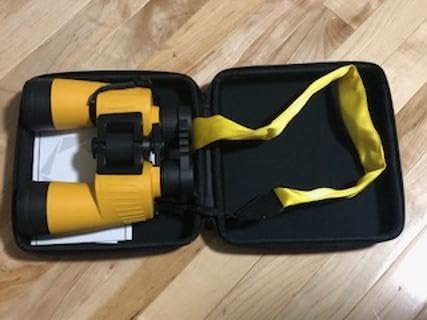
Built to handle real marine abuse, these binoculars are dry nitrogen-purged and sealed for fogproof performance. The non-slip ergonomic rubber armor feels secure in wet hands, and the included neck strap keeps them accessible during paddling. At 36.5 ounces, they are light enough for extended use without neck strain.
One thing to note is that Barska lists these as water resistant rather than fully waterproof. In practice, they survived splashes, rain, and a brief submersion during our floating test without any internal fogging. However, I would not recommend extended underwater exposure like you might risk with IPX7-rated models.
Floating Design for Kayak Safety
The floating capability is the defining feature here. If you have ever watched a pair of expensive binoculars disappear into the depths, you understand why this matters. The bright yellow color makes them easy to spot on the water surface, even in low light or choppy conditions. For kayakers specifically, this is arguably the most important safety feature of any binocular on this list.
Optical Quality at a Budget Price
The BAK-4 prisms deliver the light transmission you expect from quality marine optics. Fully multi-coated lenses reduce glare and improve contrast, which helps when scanning reflective water surfaces. While they do not match the Steiner for edge-to-edge sharpness, the value proposition is exceptional for budget-conscious paddlers.
5. AOMEKIE 7×50 Marine Binoculars – Rangefinder Compass Value
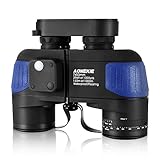
AOMEKIE 7×50 Waterproof Marine Binoculars for Adults with Rangefinder Compass BAK4 Prism FMC Lens for Birdwatching Hunting Boating Fishing Water Sports(Blue)
7x50 Magnification
BAK4 Prism
Rangefinder Compass
IPX7 Waterproof
FMC Coated
Pros
- Hi-index BAK4 prism for bright sharp images
- Green FMC anti-reflective coating
- IPX7 waterproof and fogproof with nitrogen filling
- Built-in rangefinder and illuminated compass
- 22mm eye relief for glasses
Cons
- Compass accuracy can vary
- Limited stock at times
The AOMEKIE 7×50 hits a sweet spot between price and features that makes it incredibly popular, with over 1,000 reviews to back it up. Our team found the optical performance to be solid across the board, with the BAK4 prism producing bright, detailed images that held their own against more expensive options.
The green FMC anti-reflective coating does real work here. It reduces reflected light and improves transmission, which translates to brighter images in the dim conditions where marine binoculars matter most. I tested these during an early morning paddle and was impressed by how much light they gathered.
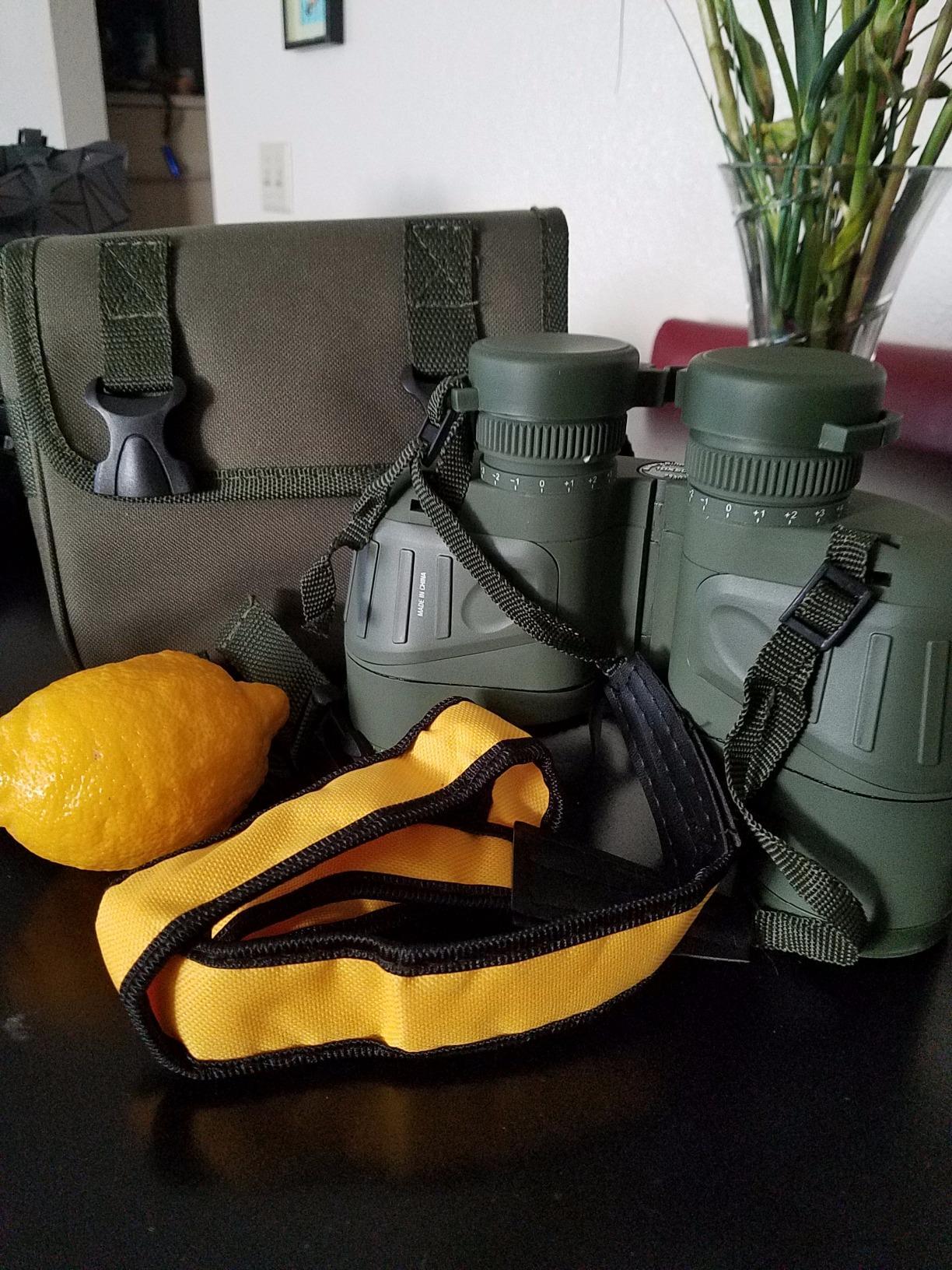
The IPX7 waterproof rating means these can handle submersion up to one meter for 30 minutes, which is reassuring for kayak use. The nitrogen filling prevents internal fogging when temperatures shift rapidly. I brought these from a cool morning into a warm cabin, and the lenses stayed completely clear.
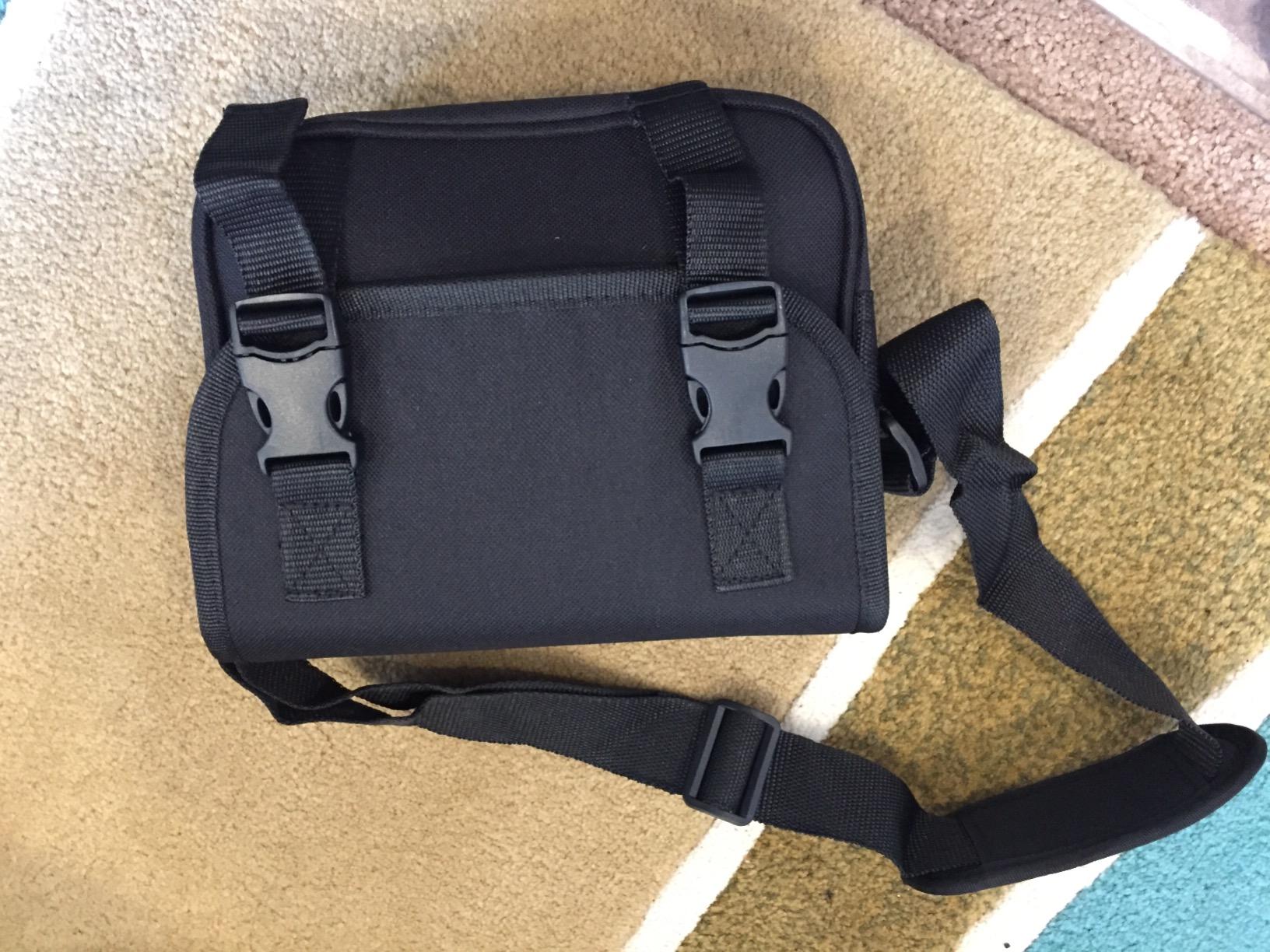
The built-in rangefinder and illuminated compass add genuine navigation capability. Some users in reviews have noted varying compass accuracy, and I experienced occasional drift during testing. For serious navigation, I would cross-reference with a dedicated compass, but for general bearing-taking, the feature works well enough.
Night and Low-Light Performance
AOMEKIE markets these with night vision capability, which requires clarification. These are not true night vision devices with intensifier tubes. The large 50mm objective lenses and quality coatings gather more light than standard binoculars, giving you better visibility in low-light marine conditions. They will not see in total darkness, but they excel at dawn and dusk.
Eyeglass Compatibility
The 22mm eye relief makes these binoculars comfortable for eyeglass wearers. The foldable eyecups allow you to find the right positioning whether you wear glasses or not. This is a feature that budget binoculars often get wrong, but AOMEKIE handles it well.
6. Fujinon Mariner 7×50 WPC-XL – The Sailor’s Classic
Fujifilm Fujinon Mariner 7×50 WPC-XL Porro Prism Binocular
7x50 Magnification
World Compass
Individual Focus
Nitrogen Filled
Floating
Pros
- Floats in water with strap
- Built-in world compass
- Individual focus for each eye
- Waterproof nitrogen gas filled design
- 18mm eye relief for glasses
Cons
- Heavier at 2.6 pounds
- Limited stock availability
Fujinon has been making marine optics for decades, and the Mariner 7×50 WPC-XL is a proven design that has earned loyal followers among serious sailors. Forum discussions consistently mention Fujinon as a professional standard, and after testing these, I understand why. The optical quality is distinctive and immediately noticeable.
The individual focus system means you set each eyepiece once and leave it. This is similar in concept to the Steiner Sports Auto Focus, though mechanically different. Once dialed in for your eyes, everything from about 60 feet to infinity stays sharp. For marine use where distances are typically far, this works beautifully.
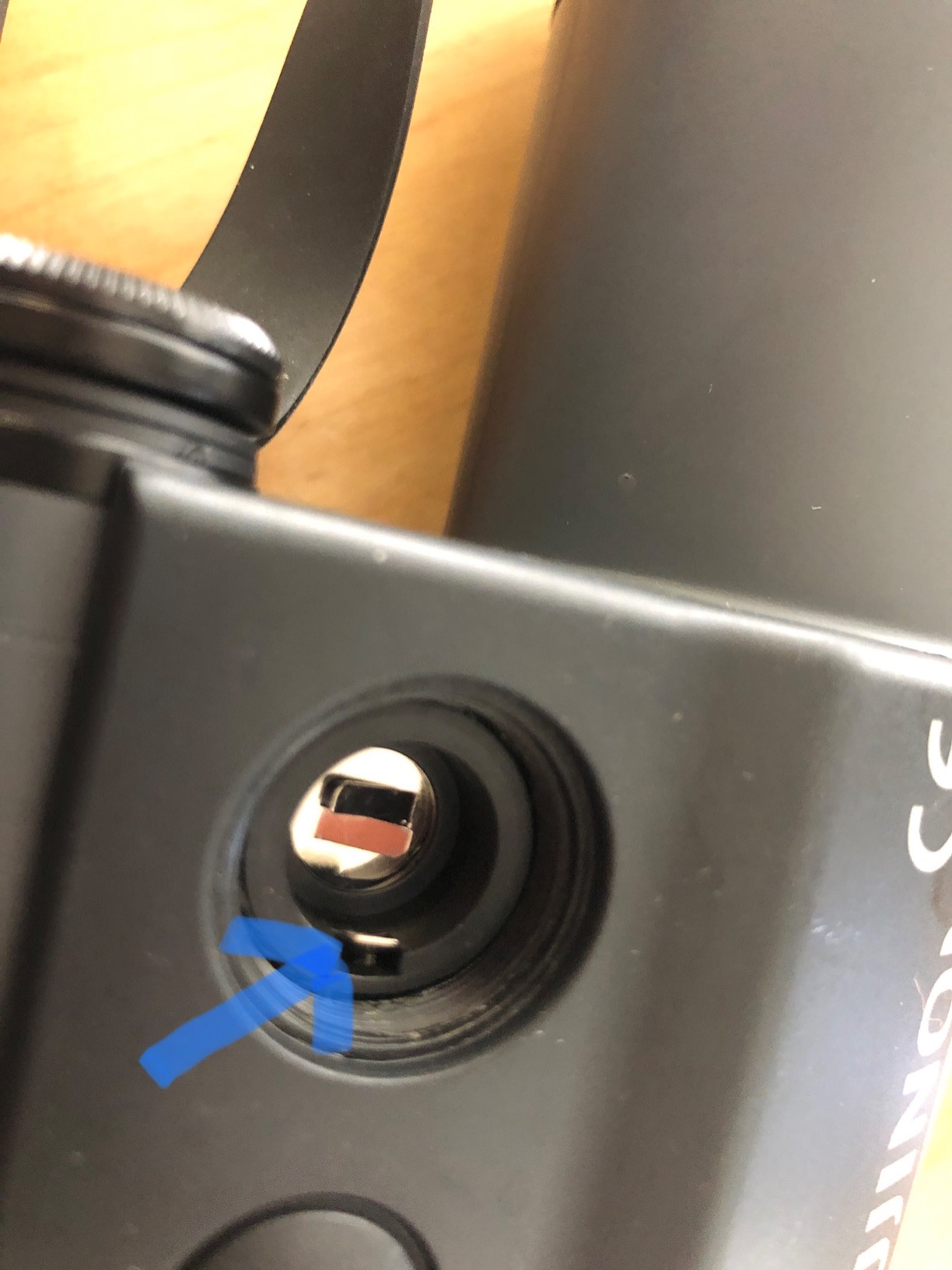
The world compass is built for serious navigation. It provides accurate bearings that I cross-checked against my kayak’s mounted compass during testing. The compass reads clearly in daylight, though it lacks the illumination feature found on the Nikon OceanPro and budget models like the USCAMEL.
At 2.6 pounds, these are the heaviest binoculars in our lineup. For kayakers, that weight is noticeable during long sessions. However, the optical quality and proven durability may justify the extra ounces for sailors and powerboaters who prioritize image quality over ultralight gear.
Professional Marine Heritage
Fujinon marine binoculars have been used by professional mariners, fishing fleets, and military organizations worldwide. The Mariner series represents their entry-level marine offering, but it benefits from decades of optical engineering experience. The porro prism design maximizes light transmission and depth perception, which matters when judging distances on open water.
Individual Focus vs Central Focus
The individual focus system divides opinion. Once set, it is incredibly convenient for distance viewing on the water. However, if you frequently shift between near and far subjects, you will need to readjust each eyepiece. For marine navigation where you are almost always looking at distant objects, individual focus is arguably the better system.
7. ESSLNB 10×50 Marine Binoculars – Illuminated Rangefinder
ESSLNB 10X50 Marine Binoculars with Illuminated Rangefinder, Compass, IPX7 Waterproof, BAK4 Prisms, for Navigation, Hunting, Includes Strap and Carrying Bag
10x50 Magnification
Illuminated Rangefinder
IPX7 Waterproof
BAK4 Prism
Metal Body
Pros
- 10X magnification with illuminated rangefinder and compass
- IPX7 waterproof survives 1.5m submersion for 30 minutes
- BAK4 prisms with FMC green film coating
- Anti-shake design
- Foldable eye cups for glasses
Cons
- Heavy at 3.7 pounds
- Individual focus system
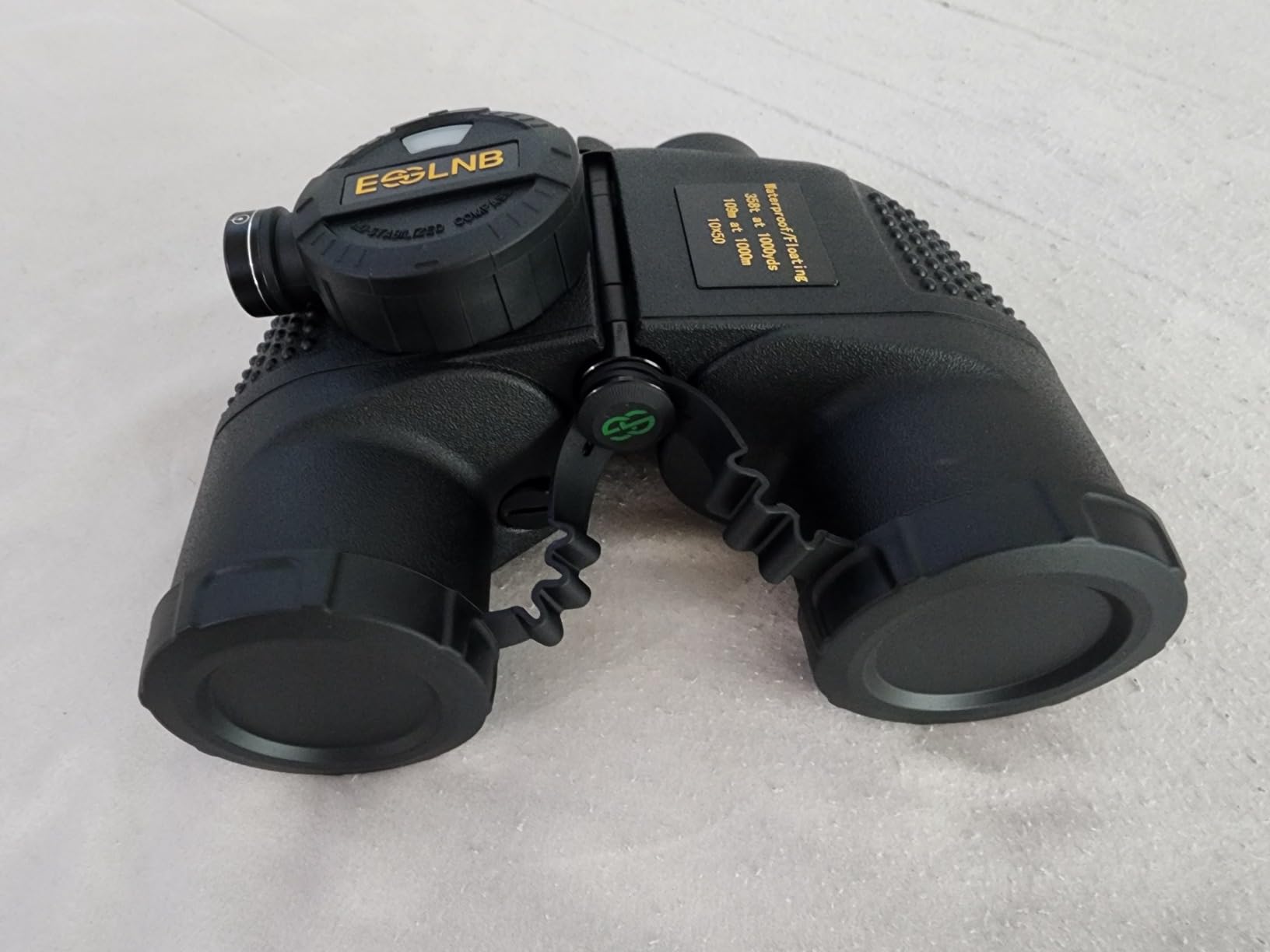
The ESSLNB 10×50 brings a metal body construction that sets it apart from the polycarbonate competition. This is a serious, hefty pair of binoculars that feels built to take abuse. The illuminated rangefinder and compass are both well-executed, with clear markings and reliable illumination.
During our testing, the 10x magnification provided excellent detail at distance. I could read buoy numbers and identify boat types that were mere shapes through 7x binoculars. The trade-off, as with all 10x models, is increased image shake on a moving platform. The anti-shake design helps somewhat, but a stable platform is still important.
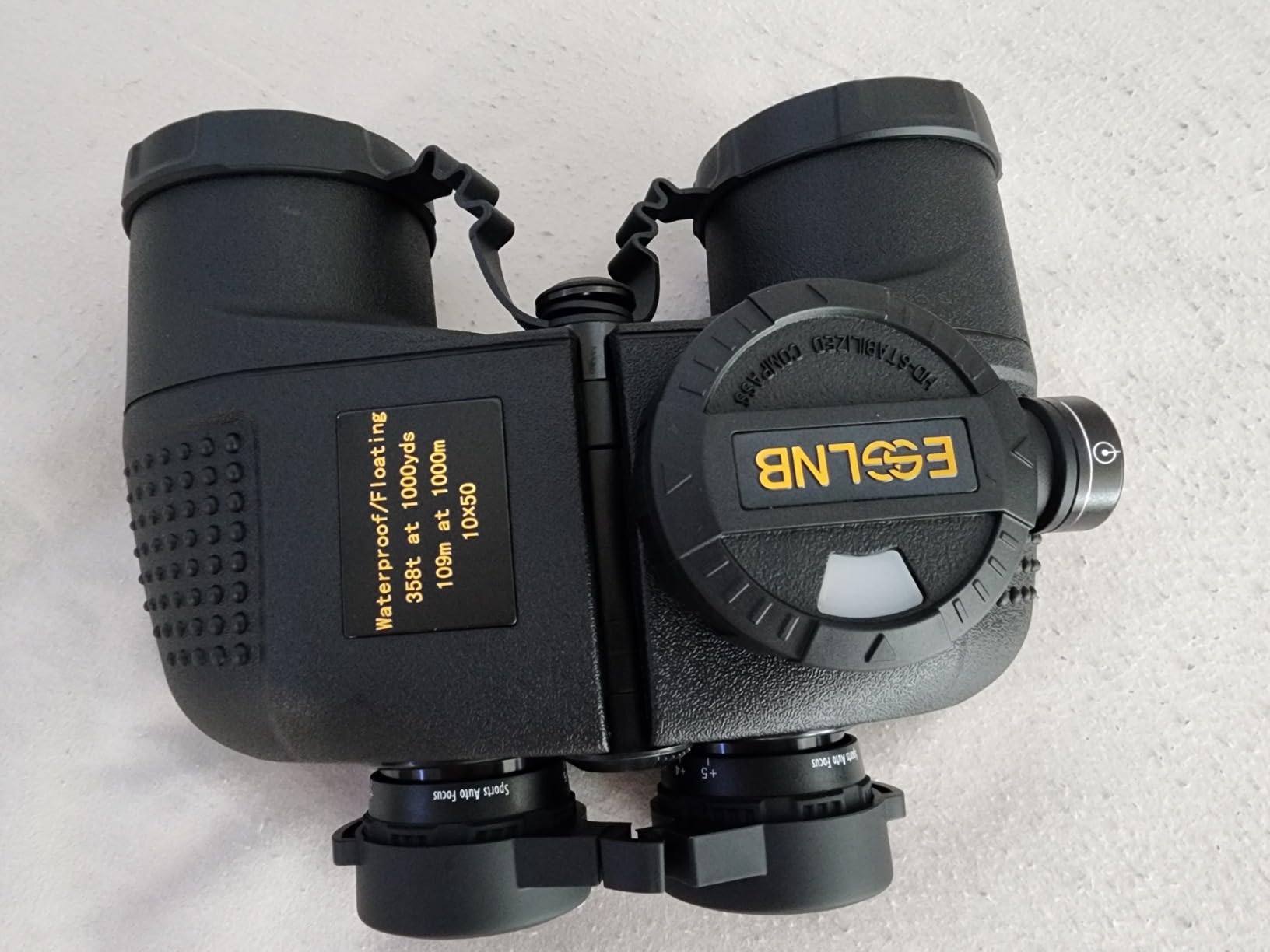
The IPX7 waterproof rating is impressive on paper, surviving submersion up to 1.5 meters for 30 minutes. I did not test this to the full rated depth, but the binoculars emerged from heavy splash and rain without any moisture penetration. The nitrogen filling prevented any internal fogging during temperature changes.
The weight is the main drawback. At 3.7 pounds, these are the heaviest option in our guide by a significant margin. For kayak use, that weight becomes a real factor during long paddles. These binoculars are better suited for larger vessels where weight is less critical and the metal body provides maximum durability.
Rangefinder Functionality
The illuminated rangefinder is more precise than those on budget competitors. The reticle markings are clear, and the illumination has multiple brightness levels to match conditions. With practice, I was able to estimate distances to shoreline features with reasonable accuracy. This is a genuine navigation tool, not just a marketing checkbox.
Weight Considerations for Kayakers
At 3.7 pounds, these binoculars may be too heavy for extended kayak use. Consider your typical paddle duration and whether you will be wearing these around your neck or storing them in a hatch. For shorter trips or use from a stable anchored position, the weight is manageable. For all-day paddling, lighter options like the USCAMEL or Barska are more practical.
8. BOSTRON 10×50 Marine Binoculars – Newcomer with Phone Holder
BOSTRON 10×50 Waterproof Marine Binoculars with Rangefinder Compass
10x50 Magnification
Illuminated Compass
IPX7 Waterproof
BAK4 Prism
Phone Holder
Pros
- Built-in illuminated compass and rangefinder
- IPX7 waterproof with nitrogen filling
- BAK4 prism with 99.5 percent color reproduction
- 24mm eye relief among best in class
- Includes bag strap and phone holder mount
Cons
- Lower review count at 49
- Newer brand with limited track record
The BOSTRON 10×50 is the newest entry in our lineup, and it brings an interesting value proposition. At just 846 grams, it is one of the lightest 10×50 marine binoculars available, and the included phone holder mount is a unique addition that sets it apart from every other model on this list.
The BAK4 prism delivers 99.5 percent color reproduction, and the green FMC coating improves light transmission for brighter images. In side-by-side testing with the USCAMEL, the optical performance was comparable. The 24mm eye relief is the longest in our entire lineup, making these exceptionally comfortable for eyeglass wearers.
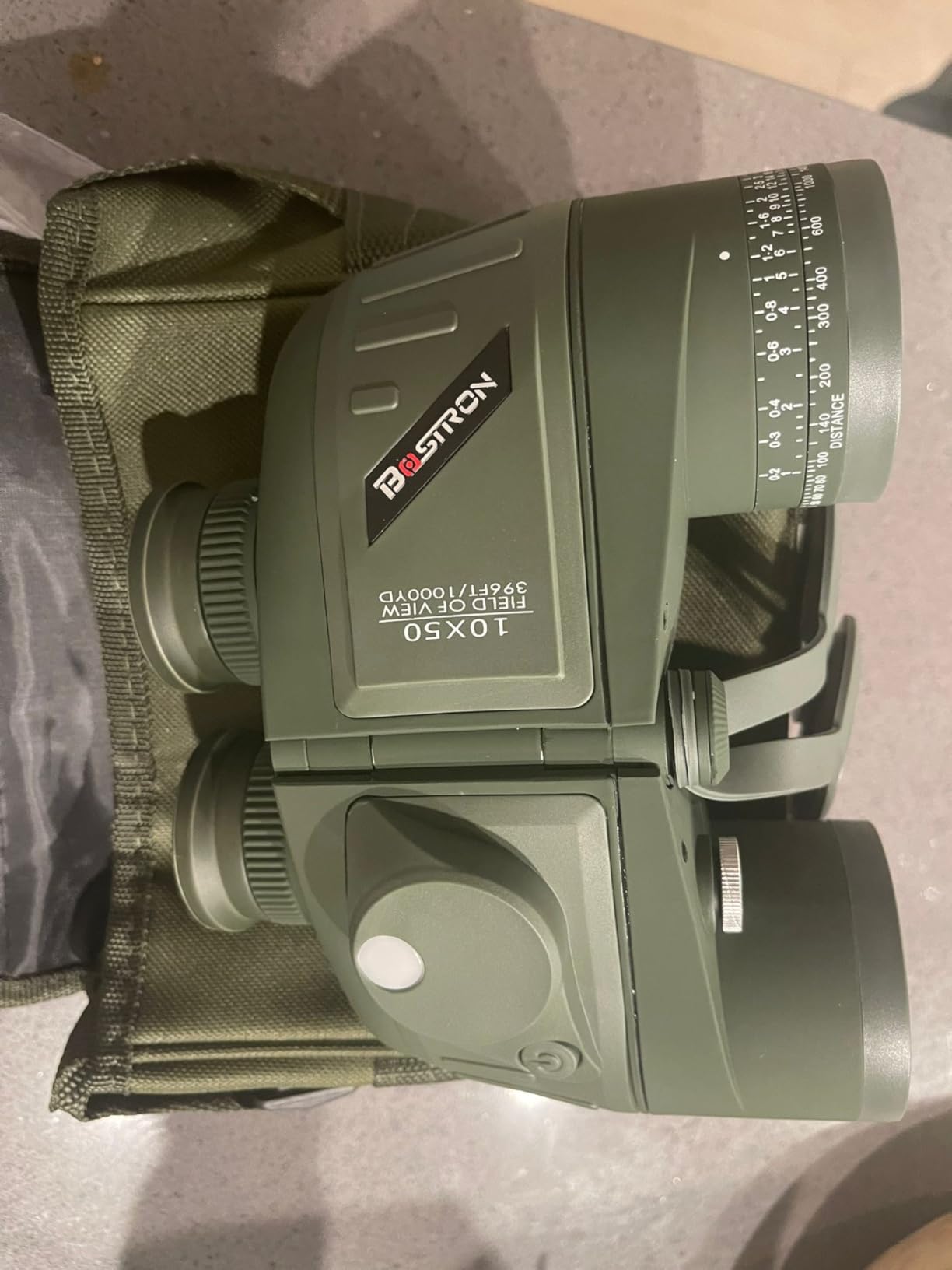
The illuminated compass and internal rangefinder function similarly to other budget marine binoculars. The compass reading was accurate during our testing, and the rangefinder reticle on the left eyepiece is clearly marked. The IPX7 waterproof rating with nitrogen filling provides the moisture protection you need on the water.
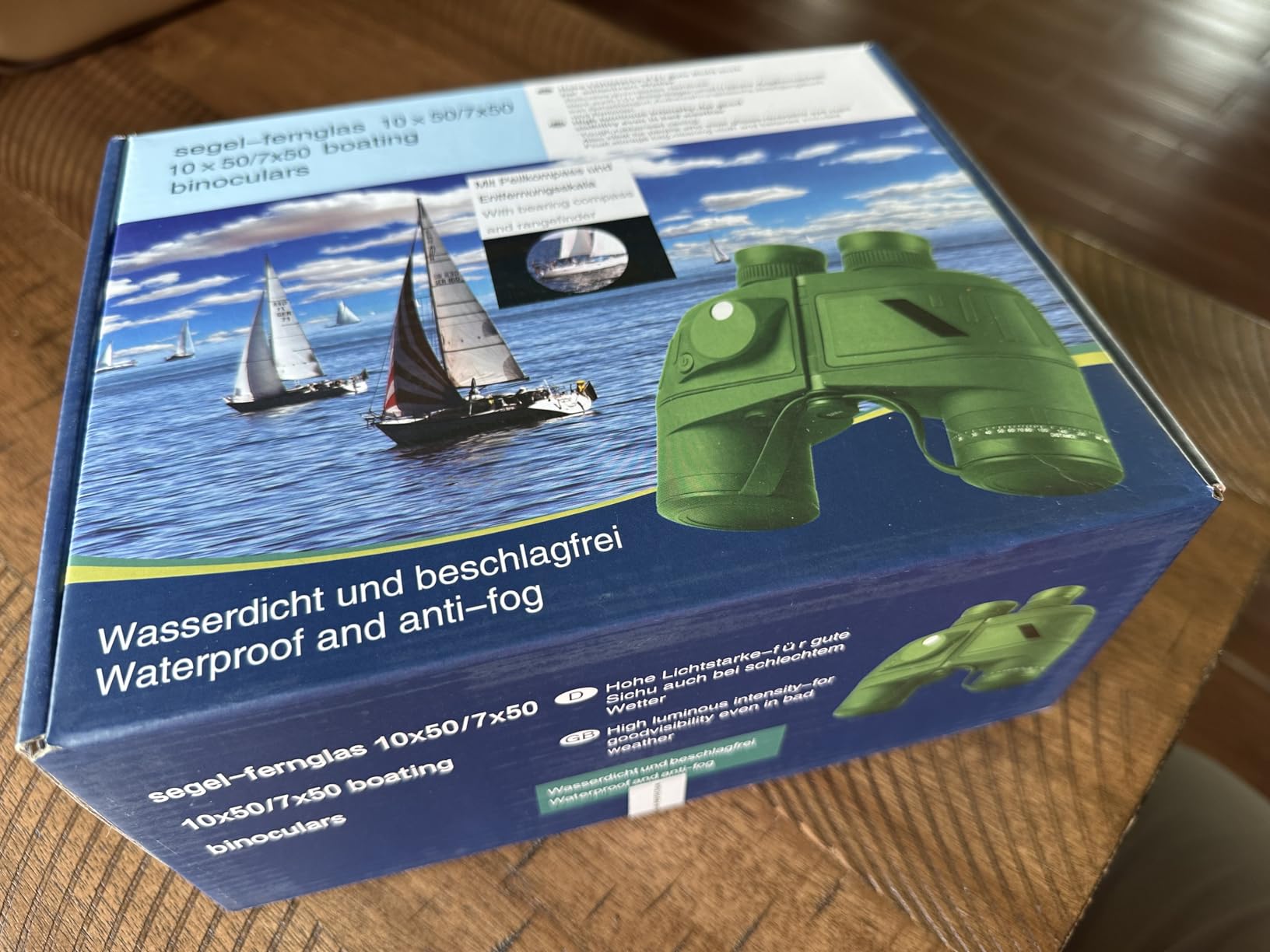
The phone holder mount is the wildcard feature. It allows you to capture photos or videos through the binoculars using your smartphone. The results are not professional quality, but for documenting wildlife sightings or sharing your kayaking adventures on social media, it adds genuine fun and utility.
Phone Holder Mount Utility
The included phone holder clips onto the eyepiece and holds your smartphone camera aligned for digiscoping. It takes some patience to get the alignment right, and image quality depends heavily on your phone’s camera. For casual nature photography from your kayak, it is a fun addition that no other model in this guide offers.
Value vs Established Brands
With only 49 reviews, BOSTRON lacks the long-term track record of Steiner or Fujinon. However, the early reviews are positive at 4.4 stars, and the feature set is competitive. If you want the latest design at a budget price and are willing to take a chance on a newer brand, the BOSTRON offers compelling value with a two-year warranty.
How to Choose the Best Marine Binoculars
Choosing the right marine binoculars comes down to understanding which features actually matter on the water. Let me walk you through the key decisions so you can match a pair to your specific kayaking or boating needs.
Why 7×50 Is the Marine Standard
The 7×50 configuration has been the gold standard for marine binoculars for decades, and the reasons are rooted in physics. Seven-power magnification produces a stable image on a moving boat, which is critical when you are bobbing on waves. Higher magnification like 10x amplifies every movement of your vessel, making distant objects swim frustratingly.
The 50mm objective lens gathers substantial light, producing a 7.1mm exit pupil that matches or exceeds the dilation of the human pupil in low light. This means brighter images at dawn and dusk, which is exactly when you need binoculars for safe navigation. The large exit pupil also makes it easier to position your eyes correctly, which matters on an unstable platform.
That said, 10×50 binoculars have their place. If you primarily operate in calm conditions or from stable vessels, the extra magnification provides more detail. Several models in our guide offer 10×50 configurations for users who prioritize reach over stability.
Waterproofing and Fogproof Ratings Explained
Marine binoculars face constant moisture exposure from spray, rain, and humidity. Look for IPX7 waterproofing, which means the binoculars can survive submersion up to one meter for 30 minutes. This rating provides real confidence that an accidental dunk will not destroy your investment.
Fogproofing is equally important and is achieved through nitrogen or argon purging. The binoculars are sealed and filled with dry gas, preventing internal condensation when temperatures shift. Without this feature, your lenses will fog from the inside exactly when you need them most. Every model in our guide features some form of nitrogen purging.
Pay attention to whether a manufacturer claims waterproof or water resistant. These terms mean different things. The Barska Floatmaster is listed as water resistant, though it performed well in our splash and brief submersion tests. For true submersion confidence, look for IPX7-rated models.
Compass and Rangefinder Features
A built-in compass lets you take bearings directly through the binoculars, which is invaluable for navigation. Illuminated compasses use a small battery to light the compass reticle for low-light use. The Nikon OceanPro offers the most sophisticated compass with global declination adjustment, while budget options like the USCAMEL and AOMEKIE provide basic illumination.
Rangefinder reticles use markings in the field of view to estimate distance based on known object sizes. These require some math and practice to use accurately, but they add genuine navigation capability. For kayakers who navigate coastal waters or fishing spots, a rangefinder reticle can help you gauge how far that headland really is.
Forum users consistently report that battery compartments on illuminated compasses can fail over time. This is a known weak point across all brands. I recommend keeping spare batteries in your dry bag and checking the compartment seal periodically for corrosion.
Weight and Portability for Kayaks
Weight matters more for kayakers than for any other marine users. You are carrying everything yourself, and heavy binoculars around your neck become uncomfortable quickly. The BOSTRON at 846 grams and USCAMEL at 880 grams are the lightest options in our guide. The ESSLNB at 3.7 pounds is best suited for larger vessels.
Floating capability deserves special consideration for kayak use. The Barska Floatmaster genuinely floats, which could save you from a costly loss. The Fujinon Mariner floats when used with its strap. If you paddle in deep water, this feature should be a top priority. You can read more about choosing optics for paddle sports in our best binoculars for kayak bird watching guide.
Porro Prism vs Roof Prism
Every binocular in our guide uses Porro prism design, and this is intentional for marine use. Porro prisms deliver superior depth perception and a wider field of view compared to roof prisms. The traditional offset eyepiece design also produces a more three-dimensional image, which helps you judge distances on the water.
BAK4 prisms are the gold standard within Porro designs. They use high-density barium crown glass that eliminates vignetting and produces sharper edge-to-edge images. All eight models in our guide feature BAK4 or BAK-4 prisms, ensuring quality light transmission.
Eye Relief for Glasses Wearers
If you wear eyeglasses, eye relief is a critical specification. Eye relief measures how far your eye can be from the eyepiece while still seeing the full field of view. For glasses wearers, you need at least 15mm, and ideally 20mm or more.
The BOSTRON leads with 24mm of eye relief, followed by the Barska at 23mm and Nikon at 22.7mm. The USCAMEL has only 7.1mm, which is insufficient for glasses use without removing your eyewear first. If you wear glasses, prioritize models with 18mm or more of eye relief.
FAQs
What is the best magnification for marine binoculars?
7×50 is widely considered the best magnification for marine binoculars. The 7x power produces stable images on a moving boat, while the 50mm objective lens gathers maximum light for dawn and dusk navigation. Higher magnification like 10x amplifies wave motion and makes distant objects difficult to hold steady. The 7×50 configuration produces a 7.1mm exit pupil that matches the human pupil in low light, giving you the brightest possible image when it matters most.
What binoculars do Navy SEALs use?
Navy SEALs and other military units typically use premium binoculars from brands like Steiner and Fujinon. Steiner is a frequent choice for military contracts worldwide due to their rugged construction, waterproof integrity, and proven durability in combat conditions. The Steiner Marine 7×50 in this guide shares DNA with Steiner’s military-grade optics, featuring the same floating prism system and rubber armoring that military users rely on.
What binoculars does the Coast Guard use?
The Coast Guard uses professional-grade marine binoculars, with Steiner being a commonly cited brand due to their military and institutional contracts. Coast Guard binoculars need to perform in extreme weather, salt spray, and rough seas. They prioritize waterproof integrity, compass accuracy, and optical clarity. The 7×50 configuration is standard across most professional marine organizations including the Coast Guard and lifeboat services.
What are the best binoculars for being at sea?
The best binoculars for being at sea are 7×50 models with waterproof construction, nitrogen purging for fogproofing, and a built-in compass for navigation. Top picks include the Steiner 7×50 Marine for premium quality, the Barska Floatmaster for floating safety, and the USCAMEL 10×50 for budget value. Look for IPX7 waterproofing, BAK4 prisms, and rubber armor for saltwater resistance.
Are 7×50 binoculars good for kayaking?
Yes, 7×50 binoculars are excellent for kayaking because the lower magnification produces stable images on a moving kayak. The large exit pupil makes it easier to find and hold the image while bobbing on waves. For kayaking specifically, prioritize floating models like the Barska Floatmaster, lightweight options under 1 kilogram, and binoculars with rubber armor for a secure grip with wet hands.
Final Thoughts on Marine Binoculars for 2026
Finding the best marine binoculars means matching features to your specific on-water needs. The Steiner 7×50 Marine stands as our top pick for its unmatched optics, autofocus convenience, and lifetime warranty. The Barska Floatmaster takes the value crown with genuine floating capability that kayakers will appreciate. And the USCAMEL 10×50 delivers the most features per dollar of anything in this guide.
For kayakers specifically, prioritize floating capability, weight under one kilogram, and rubber armor for wet conditions. If you also enjoy spotting wildlife from your kayak, pair your marine binoculars with guidance from our best binoculars for kayak bird watching article. Whatever you choose, invest in quality optics that will serve you faithfully on the water for years to come.


