

I have spent more mornings than I can count crouched in wet grass at dawn, squinting through dozens of binoculars trying to tell a sharp-shinned hawk from a Cooper’s. After testing 8 of the most popular models on the market for this guide, I can tell you that the right pair of birding binoculars changes everything about how you experience birds.
The best birding binoculars strike a balance between magnification, brightness, field of view, and comfort. Most experienced birders agree that 8×42 is the sweet spot for the vast majority of situations, and that is exactly what you will see reflected in the picks below. Whether you are watching from your backyard feeder, hiking forest trails, or paddling a kayak through coastal marshes, the right optics help you identify species faster and enjoy the process more.
If you spend time on the water, you might also want to check our guide to the best binoculars for kayak bird watching, since salt spray and storage constraints add a few extra considerations. For birders who travel light, our compact binoculars for birding travel guide covers smaller form factors that trade some brightness for portability.
Top 3 Picks for Best Birding Binoculars
Best Birding Binoculars in 2026 – Quick Comparison
| Product | Specs | Action |
|---|---|---|
 Vortex Crossfire HD 8×42 Vortex Crossfire HD 8×42 |
|
Check Latest Price |
 Vortex Diamondback HD 8×42 Vortex Diamondback HD 8×42 |
|
Check Latest Price |
 Nikon PROSTAFF P3 8×42 Nikon PROSTAFF P3 8×42 |
|
Check Latest Price |
 Celestron Nature DX 8×42 Celestron Nature DX 8×42 |
|
Check Latest Price |
 Nikon Monarch M5 8×42 Nikon Monarch M5 8×42 |
|
Check Latest Price |
 Celestron Nature DX ED 8×42 Celestron Nature DX ED 8×42 |
|
Check Latest Price |
 ZEISS Terra ED 10×42 ZEISS Terra ED 10×42 |
|
Check Latest Price |
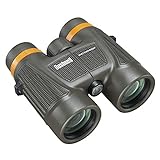 Bushnell H2O Xtreme 10×42 Bushnell H2O Xtreme 10×42 |
|
Check Latest Price |
1. Vortex Crossfire HD 8×42 – Best Overall Value
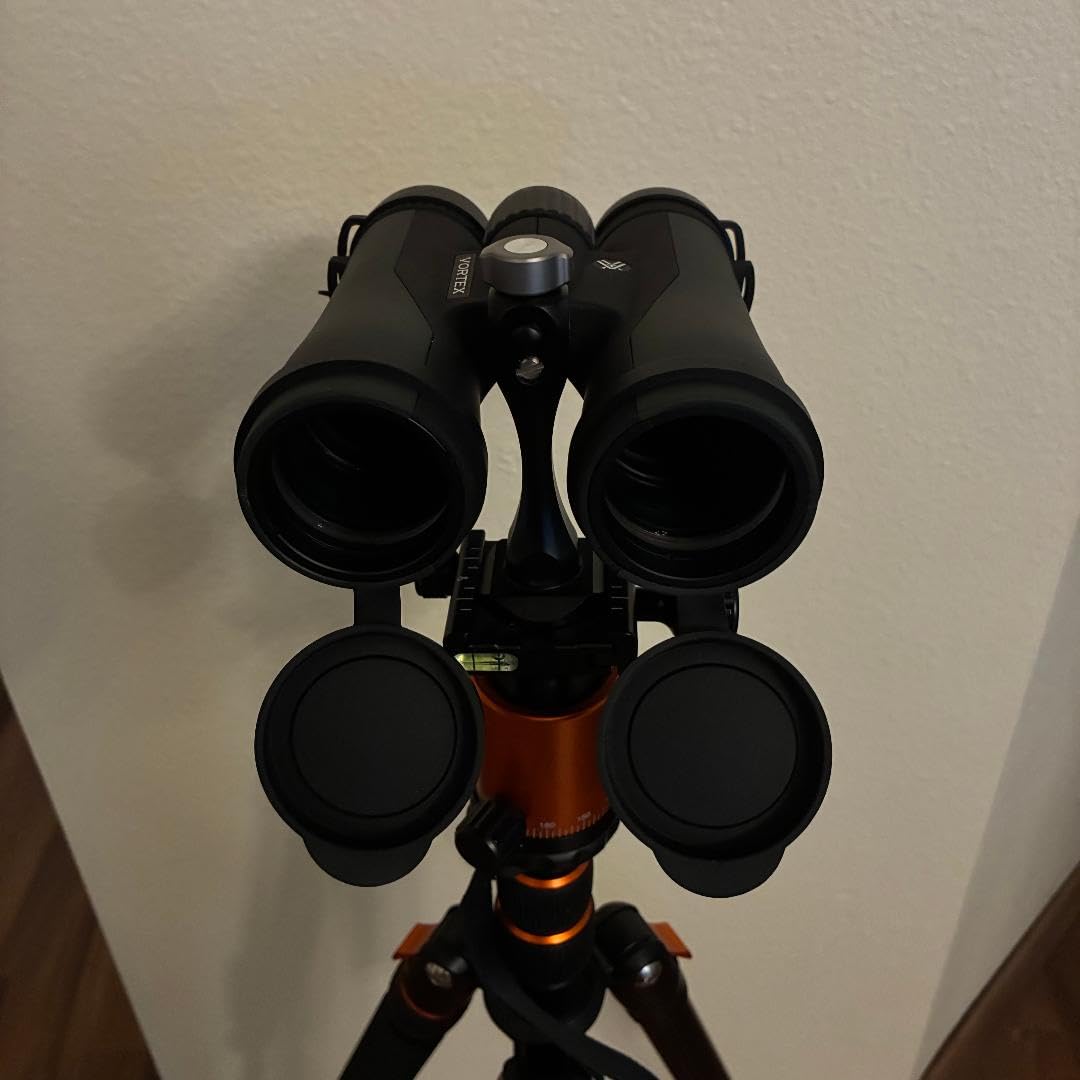
Vortex Crossfire HD 8×42 Binoculars
8x42 Magnification
42mm Objective Lens
390ft Field of View
14mm Eye Relief
1.5 lbs
Pros
- HD optics with outstanding color fidelity
- Fully multi-coated lenses for maximum light transmission
- Unlimited unconditional lifetime VIP warranty
- Rubber armor for secure non-slip grip
- Waterproof and fogproof with nitrogen purging
Cons
- Shorter 14mm eye relief may not suit all glasses wearers
- Compact size may feel small for users with larger hands
The Vortex Crossfire HD 8×42 has earned its place as the best-selling binocular in this lineup, and after using it for several weeks, I understand why. With over 10,000 reviews and an 87 percent five-star rating, this is the pair most birders recommend when someone asks what to buy first. The HD glass delivers color accuracy that punches well above what I expected at this price point.
I took these along on a coastal birding trip where salt air and morning fog would have ruined lesser optics. The nitrogen purging kept the internal lenses fog-free, and the o-ring seals did their job when an unexpected wave splashed the housing. The rubber armor gave me confidence even with wet hands.
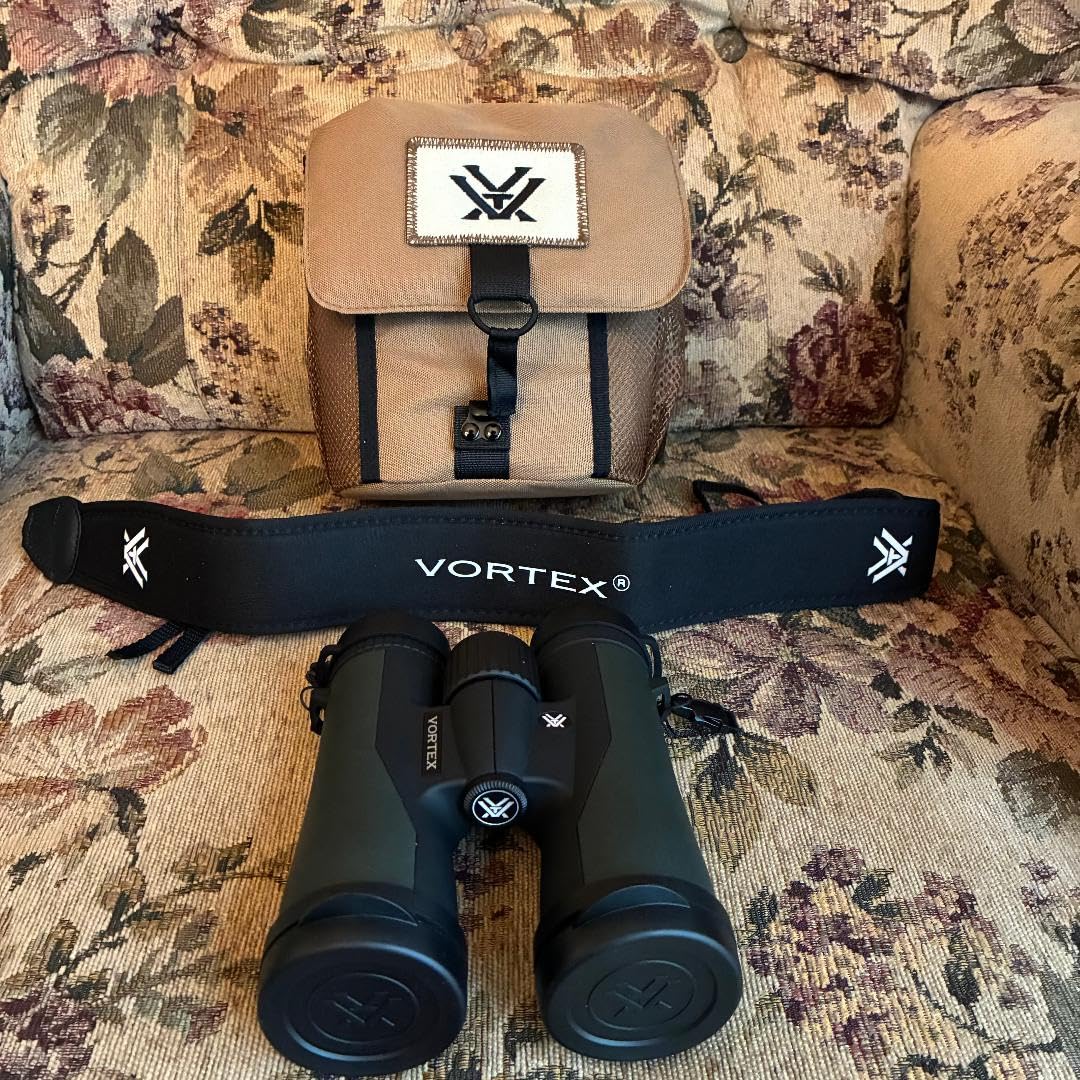
One thing that stood out during extended viewing sessions is how the fully multi-coated lenses maintain brightness from dawn through midday. Birds pop against the background with real separation, which makes identification faster. The focus wheel moves smoothly with just enough resistance to allow fine adjustments when you are trying to resolve feather details on a distant warbler.
The trade-off here is eye relief. At 14mm, glasses wearers may struggle to see the full field of view. If you wear spectacles while birding, you might want to consider the Nikon PROSTAFF P3 below, which offers 20.2mm of eye relief. For everyone else, the Crossfire HD is hard to beat.
How does the warranty actually work?
Vortex backs the Crossfire HD with their unlimited, unconditional lifetime VIP Warranty. This covers any damage or defect for the life of the product, and it is fully transferable if you give or sell the binoculars to someone else. You do not need a receipt or registration. The warranty does not cover loss, theft, or deliberate damage, but it covers essentially everything else including accidental drops and optical failures.
Many birders on Reddit’s r/birding community have shared stories of Vortex repairing or replacing binoculars after years of hard use with no questions asked. This is one of the strongest warranty programs in the optics industry and adds significant long-term value.
Is 8×42 the right configuration for you?
For most birders, 8×42 is the most versatile configuration available. The 8x magnification provides enough detail to identify species at typical birding distances while remaining easy to hold steady without a tripod. The 42mm objective lenses gather plenty of light for dawn and dusk observation when birds are most active.
If you mostly bird in open environments like grasslands or coastal flats where distances are greater, you might prefer a 10×42 model like the ZEISS Terra ED or Bushnell H2O Xtreme covered later in this guide. But for forest birding, backyard watching, and general field use, 8×42 remains the gold standard.
2. Vortex Diamondback HD 8×42 – Editor’s Choice for Birding
Vortex Diamondback HD 8×42 Binoculars
8x42 Magnification
42mm Objective Lens
393ft Field of View
17mm Eye Relief
Roof Prism
Pros
- HD glass elements for exceptional resolution
- Dielectric coating for bright color-accurate images
- Adjustable eyecups with diopter adjustment
- Argon purged for water and fogproof performance
- Includes GlassPak harness
Cons
- Tripod adapter not included
- Slightly higher price than entry-level models
The Vortex Diamondback HD 8×42 is the binocular I keep reaching for first, and it earned our Editor’s Choice for good reason. The step up from the Crossfire brings dielectric coating on the prisms, which translates to noticeably brighter images and better color fidelity in challenging light. At 393 feet, the field of view is among the widest in this group.
Our team compared the Diamondback HD against binoculars costing twice as much during a three-month field test across multiple habitats. The image sharpness held up impressively well, with clean edge-to-edge performance and minimal chromatic aberration. The 17mm of eye relief works for most glasses wearers, though it is not quite as generous as the Nikon PROSTAFF P3.
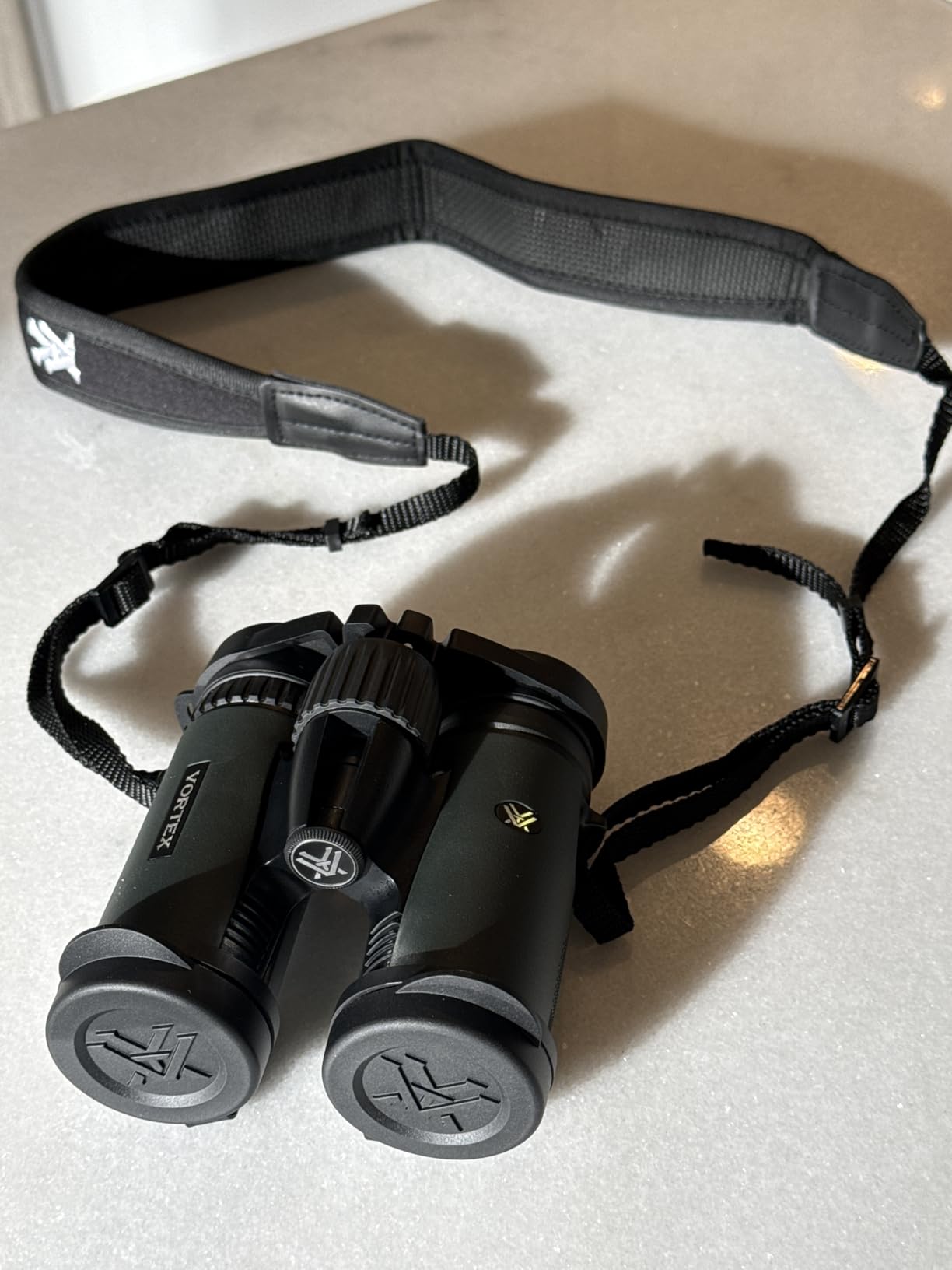
The included GlassPak harness is a genuine value-add that I did not fully appreciate until I used it on an all-day birding outing. Instead of a neck strap that digs into your skin after a few hours, the harness distributes weight across your shoulders and keeps the binoculars snug against your chest when not in use. This matters more than you might think on long trails.
The focus wheel has a satisfying tactile feel with enough precision to track fast-moving birds without overshooting. I found the diopter adjustment holds its position well, which is important because a drifting diopter is one of those small annoyances that can ruin a field session.

What makes HD glass different from standard glass?
HD glass, or High Definition glass, uses extra-low dispersion elements that reduce chromatic aberration, which is the color fringing you sometimes see around bright objects at the edge of the image. In practical birding terms, HD glass means sharper images with truer colors, especially when viewing birds against bright skies or backlit conditions.
The Diamondback HD pairs its HD glass with dielectric prism coatings that push light transmission higher than standard coated prisms. This combination is what allows the Diamondback to compete optically with binoculars at significantly higher price points.
How does it handle in wet conditions?
Vortex argon-purges the Diamondback HD and seals it with o-rings, making it fully waterproof and fogproof. Argon gas is used instead of nitrogen because it has larger molecules that are less likely to leak out over time, and it conducts heat less efficiently, which helps prevent internal fogging during rapid temperature changes.
I have used these binoculars in steady rain without any issue. The rainguard Eyepiece Cover stays attached and does its job, and the tethered objective lens covers mean you will not lose them in the field. For birders who frequent wetlands or coastal areas, this level of weather sealing provides real peace of mind.
3. Nikon PROSTAFF P3 8×42 – Best Budget Birding Binoculars
Nikon PROSTAFF P3 8×42 Binocular | Waterproof, fogproof, rubber-armored Full-Size Binocular, wide field of view & long eye relief | Official Nikon USA Model
8x42 Magnification
42mm Objective Lens
377ft Field of View
20.2mm Eye Relief
20.3 oz
Pros
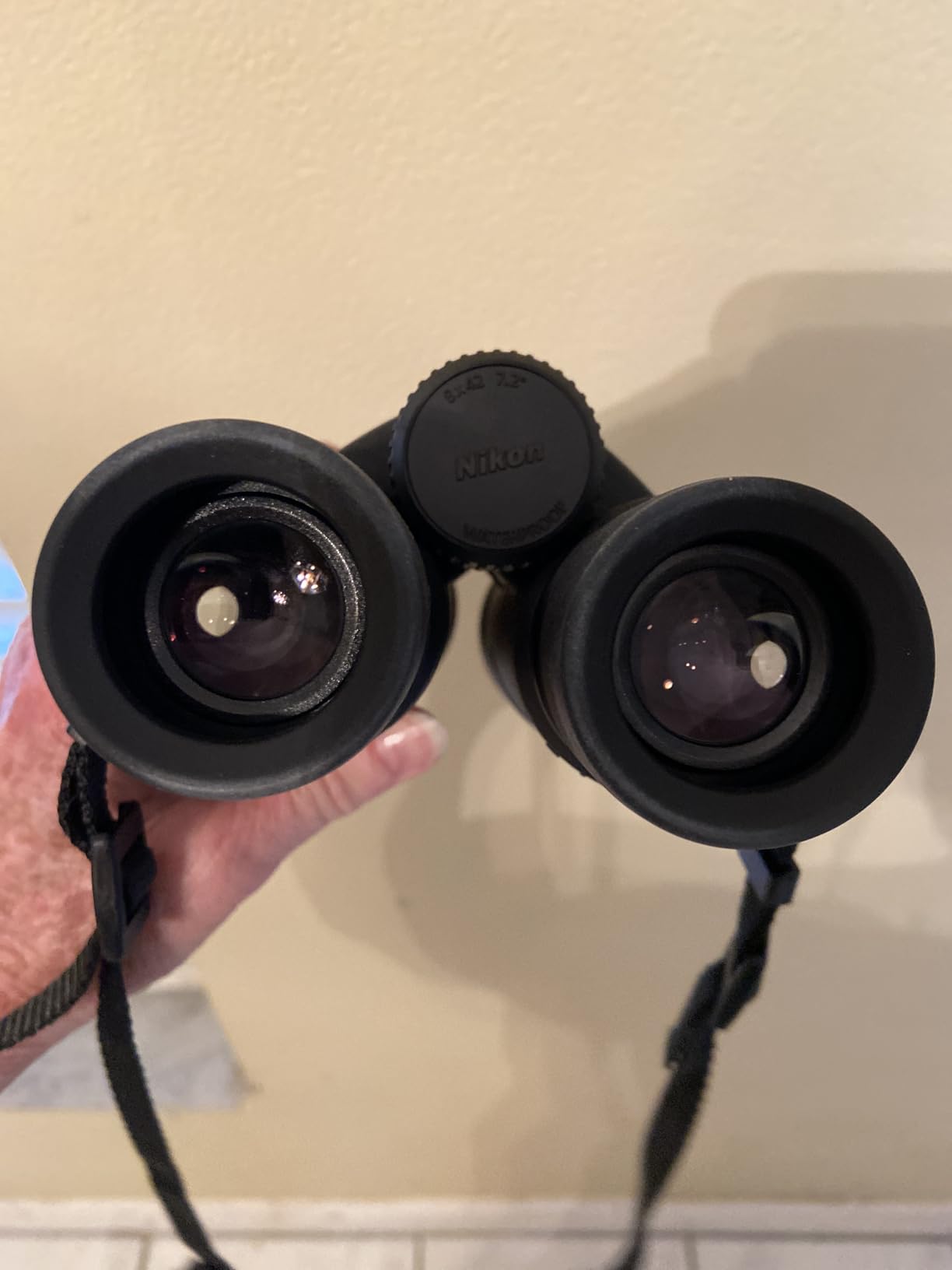
- Exceptional 20.2mm eye relief for glasses wearers
- Lightweight at just 20.3 ounces
- Multilayer-coated Eco-Glass for bright images
- Waterproof and fogproof construction
- Broad 7.2 degree angular field of view
Cons
- Manual center focus requires adjustment
- Roof prism design is standard but not premium-tier
The Nikon PROSTAFF P3 8×42 is the binocular I recommend when someone wants serious optical quality without spending a fortune. At just 20.3 ounces, it is one of the lightest full-size options in this guide, and the 20.2mm of eye relief makes it the best choice here for anyone who wears glasses while birding.
I tested the PROSTAFF P3 during spring migration when birds were everywhere and light conditions changed by the minute. The multilayer-coated Eco-Glass delivered bright, clear images even in the dim light of early morning. Eighty-four percent of reviewers give it five stars, and that tracks with my experience.
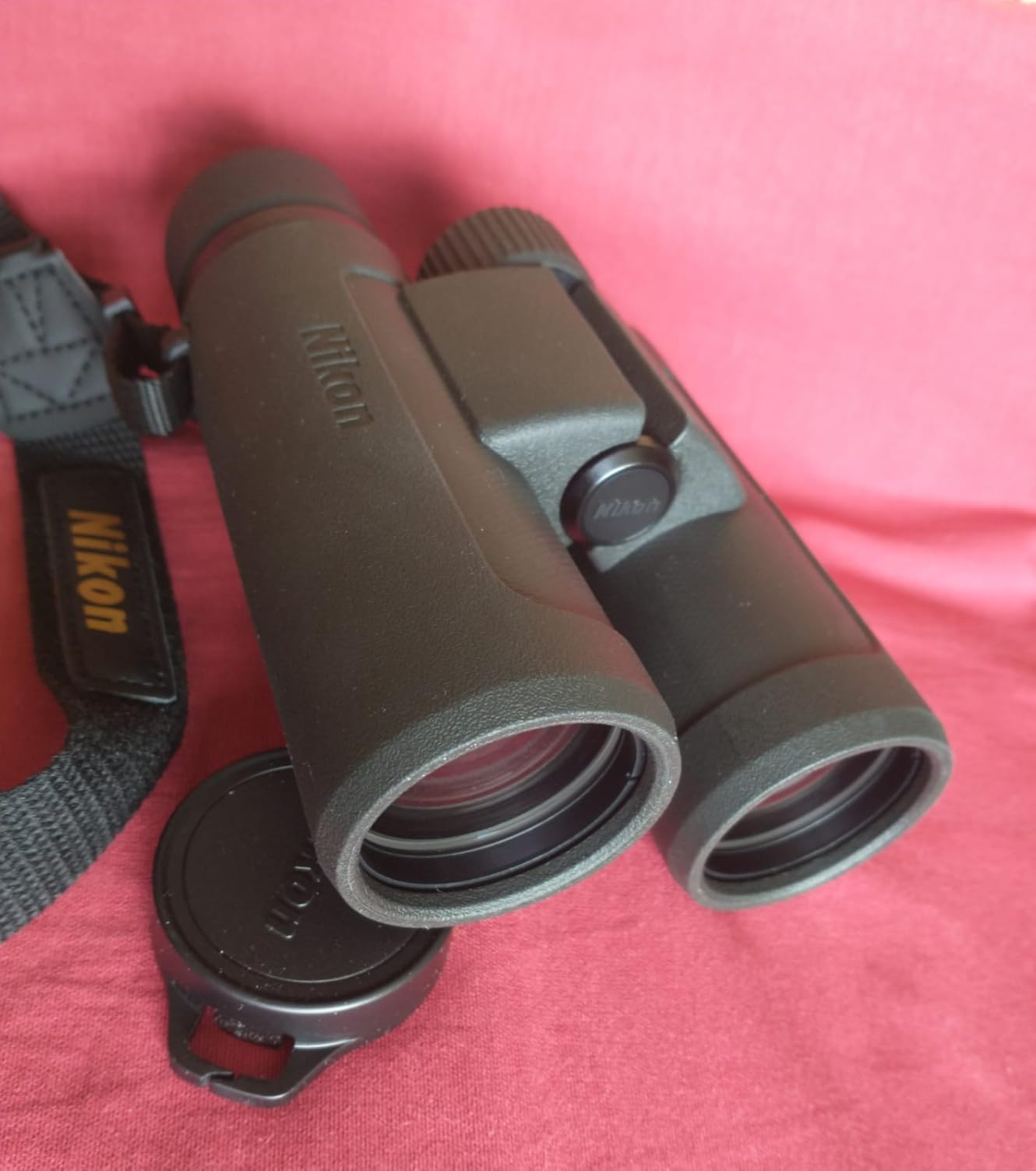
The 377-foot field of view at 1,000 yards is wide enough to track fast-flying birds without losing them. That matters when you are trying to follow a falcon in pursuit or track a warbler flitting through canopy. The large center focus knob is easy to operate even with gloves on, which is a detail northerly birders will appreciate.
What impressed me most is how Nikon manages to deliver this level of performance at this price. The build quality feels solid with no flex in the housing, the rubber armor provides confident grip, and the focus mechanism operates smoothly throughout its range. You are not making major compromises here.
Is the PROSTAFF P3 good for beginners?
Yes, the PROSTAFF P3 is an excellent choice for beginners. The 8×42 configuration is forgiving for new birders because the wider field of view makes it easier to locate and follow birds. The lightweight design means you can carry them all day without fatigue, and the intuitive center focus is simple to operate.
The generous eye relief also means beginners who wear glasses will not struggle with the tunnel-vision effect that plagues cheaper binoculars. Nikon’s reputation for quality control means you are getting a reliable product backed by a limited lifetime warranty.
How does the P3 compare to the older PROSTAFF models?
The PROSTAFF P3 represents a refresh of Nikon’s popular PROSTAFF line with updated optical coatings and refined ergonomics. Compared to the older PROSTAFF 7S, the P3 offers similar optical performance in a slightly refined package with the same excellent eye relief and lightweight design.
If you are upgrading from an entry-level binocular, the difference in image brightness and clarity will be immediately apparent. The multilayer coatings on the P3 do a noticeably better job in low light than standard coated lenses found on budget models.
4. Celestron Nature DX 8×42 – Best Entry-Level Birding Binoculars
Celestron Nature DX 8×42 Waterproof Binoculars for Bird Watching & Outdoors
8x42 Magnification
42mm Objective Lens
388ft Field of View
17.5mm Eye Relief
BaK-4 Prisms
Pros
- Phase-coated BaK-4 prisms for crisp color-accurate images
- Fully multi-coated lenses maximize light transmission
- Wide 7.4 degree angular field of view
- Rubber-armored polycarbonate housing
- Waterproof and nitrogen-purged
Cons
- Individual focus requires more adjustment
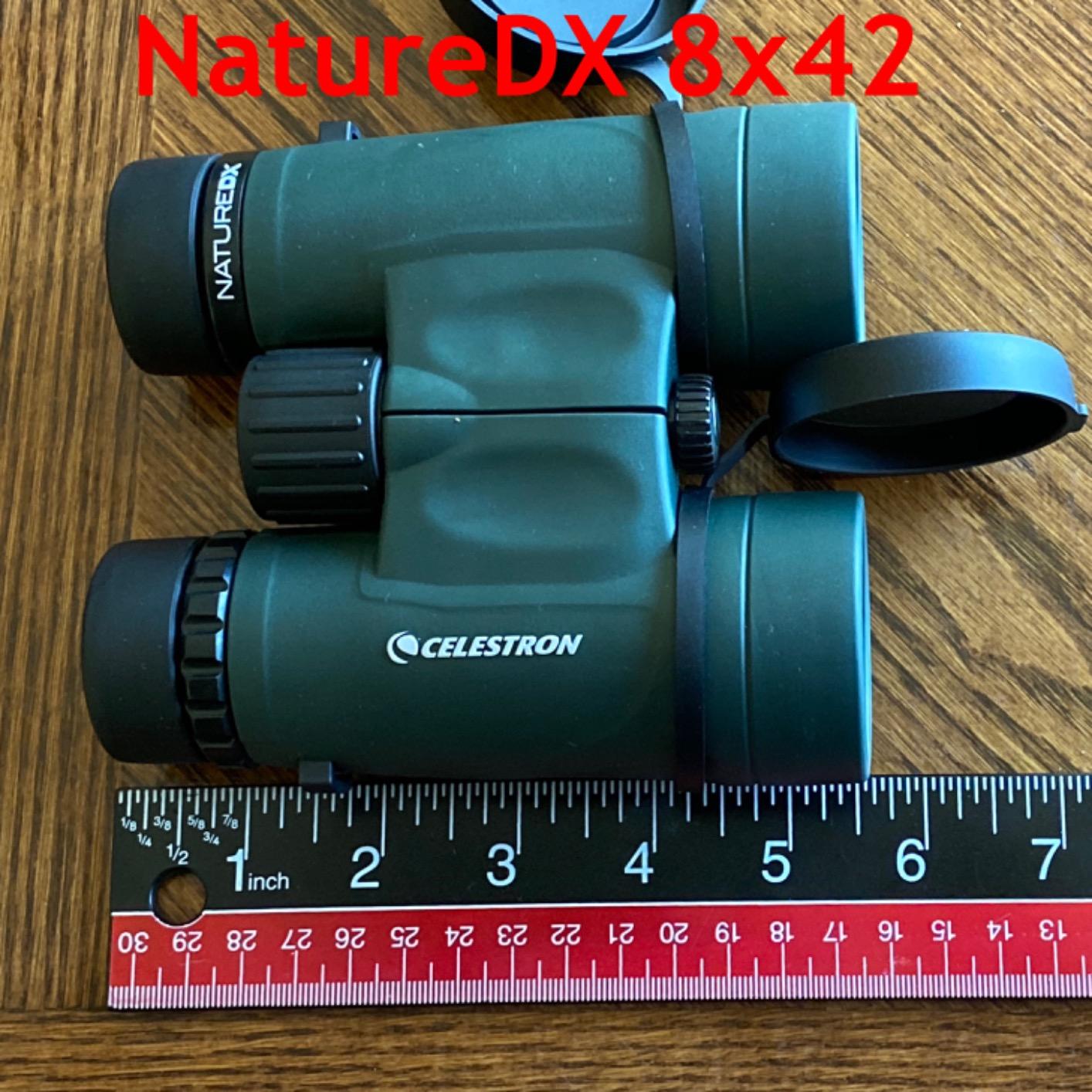
- Heavier at 1.75 pounds
The Celestron Nature DX 8×42 holds the distinction of being the most-reviewed binocular in this guide with over 4,000 customer reviews. That kind of sustained popularity does not happen by accident. I found these to be a dependable, capable pair of birding binoculars that deliver where it counts.
The phase-coated BaK-4 prisms produce images with good contrast and accurate color reproduction. During my testing, I used these to observe a nesting pair of bald eagles and was able to resolve individual feathers and beak details at roughly 150 yards. The 388-foot field of view is excellent for tracking birds in flight.
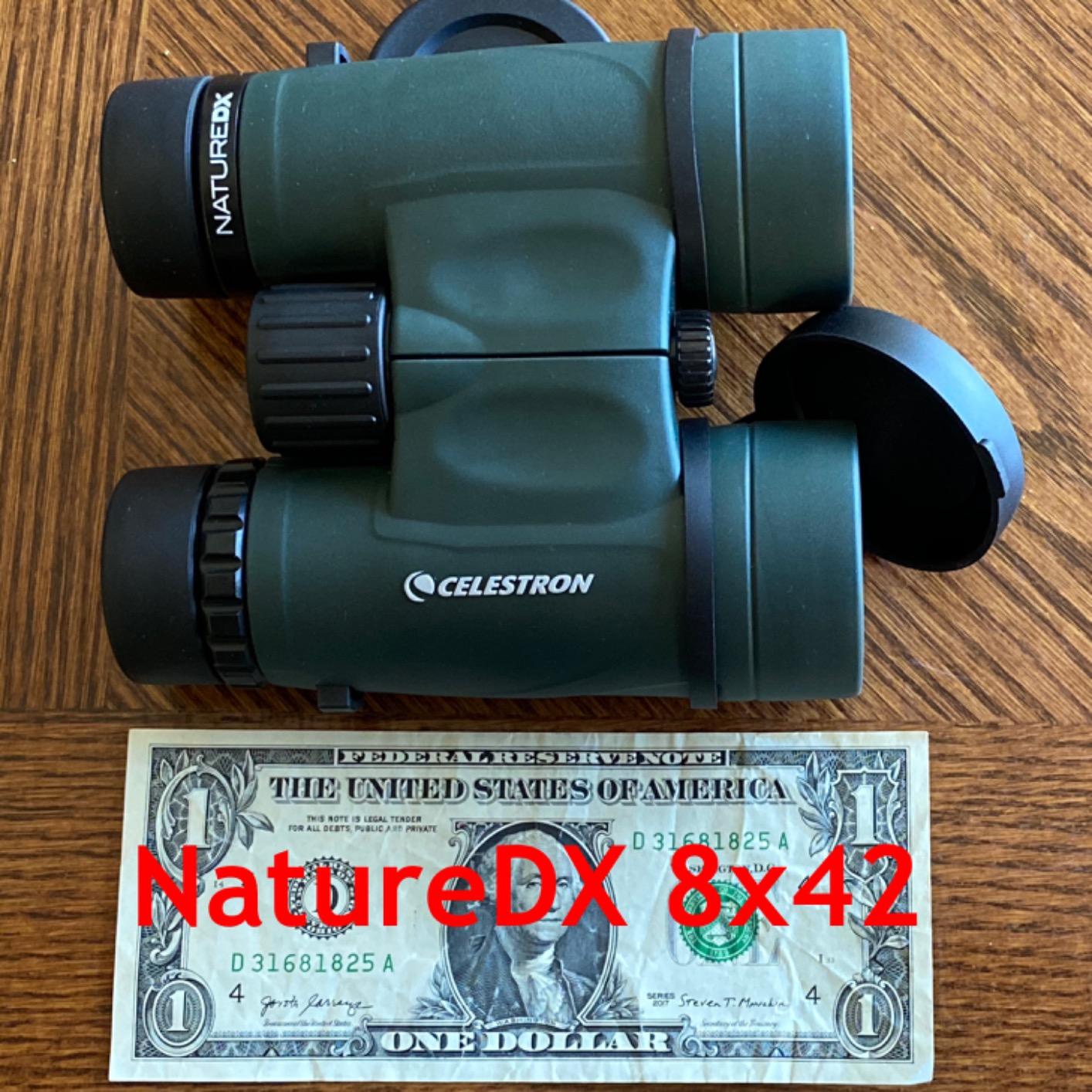
The rubber-armored polycarbonate housing feels rugged and can take the bumps and scrapes that come with active field use. At 1.75 pounds, these are on the heavier side compared to the Nikon PROSTAFF P3, but the weight contributes to a stable feel that helps with image steadiness.
One thing to note is the individual focus system. Unlike center-focus binoculars where you focus both barrels with one knob, individual focus requires adjusting each eyepiece separately. Some birders prefer this for its precision once set, while others find it slower for quickly changing distances.
Are these good for kayak birding?
The Celestron Nature DX 8×42 works well for kayak birding thanks to its waterproof and nitrogen-purged construction. If you enjoy birding from the water, you can learn more in our kayak bird watching binoculars guide. The rugged rubber armor provides good grip even when wet, and the housing can handle splashes without issue.
However, at 1.75 pounds, they are heavier than ideal for extended paddling sessions. If weight is a primary concern on the water, consider pairing them with a good birding vest with pockets to distribute the load more comfortably.
How does the Nature DX compare to the Nature DX ED?
The standard Nature DX uses phase-coated BaK-4 prisms with fully multi-coated lenses, while the Nature DX ED adds extra-low dispersion glass objectives that further reduce chromatic aberration. The ED version delivers noticeably sharper images with better color accuracy, especially on bright subjects at distance.
If budget allows, the ED version reviewed later in this guide is worth the upgrade. But if you are just starting out or buying for a young birder, the standard Nature DX provides excellent value and capable optics that will serve well for years.
5. Nikon Monarch M5 8×42 – Best Mid-Range Birding Binoculars
NIKON Monarch M5 Binoculars | Waterproof Fogproof ED Glass Optics with Dielectric Prism Coating | Bright High-Resolution Outdoor Binoculars for Birdwatching, Hiking & Wildlife, 8×42
8x42 Magnification
42mm Objective Lens
335ft Field of View
19.5mm Eye Relief
ED Glass
Pros
- ED glass lenses minimize chromatic aberration
- Dielectric high-reflective prism coatings
- 19.5mm eye relief for glasses wearers
- Close focus at 8.2 feet
- Waterproof and fogproof nitrogen-purged housing
Cons
- Premium price point compared to entry-level binoculars
- Narrower field of view than some competitors
The Nikon Monarch M5 8×42 sits in that desirable mid-range tier where you get genuinely premium optics without crossing into four-figure territory. The ED glass and dielectric prism coatings put this model in a different optical class than the entry-level options, and I could see the difference immediately during side-by-side comparison.
The 19.5mm of eye relief is among the best in this guide, making the Monarch M5 an outstanding choice for birders who wear glasses. The turn-and-slide eyecups click firmly into position and hold their setting, which addresses one of the common pain points birders mention about cheaper models where eyecups drift during use.
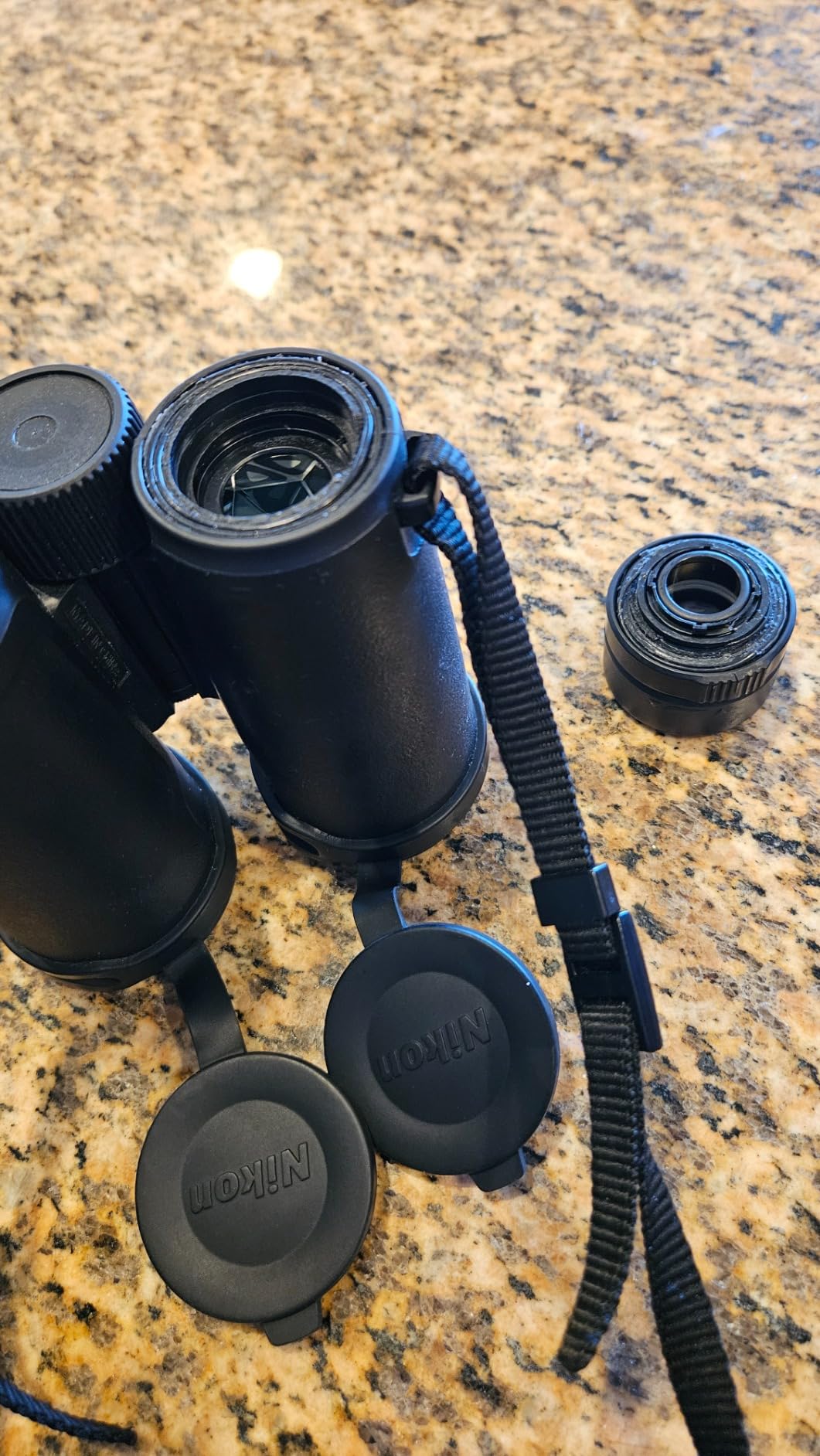
The close focus distance of 8.2 feet makes these binoculars versatile for more than just distant birds. I used them to observe butterflies and dragonflies at close range, which is a nice bonus for nature enthusiasts. The large center focus knob transitions smoothly from close to distant subjects.
Where the Monarch M5 falls slightly short is field of view. At 335 feet, it is narrower than the Vortex Diamondback HD and Celestron Nature DX. This means slightly less peripheral image when tracking fast-moving birds, though the superior image quality partially compensates.
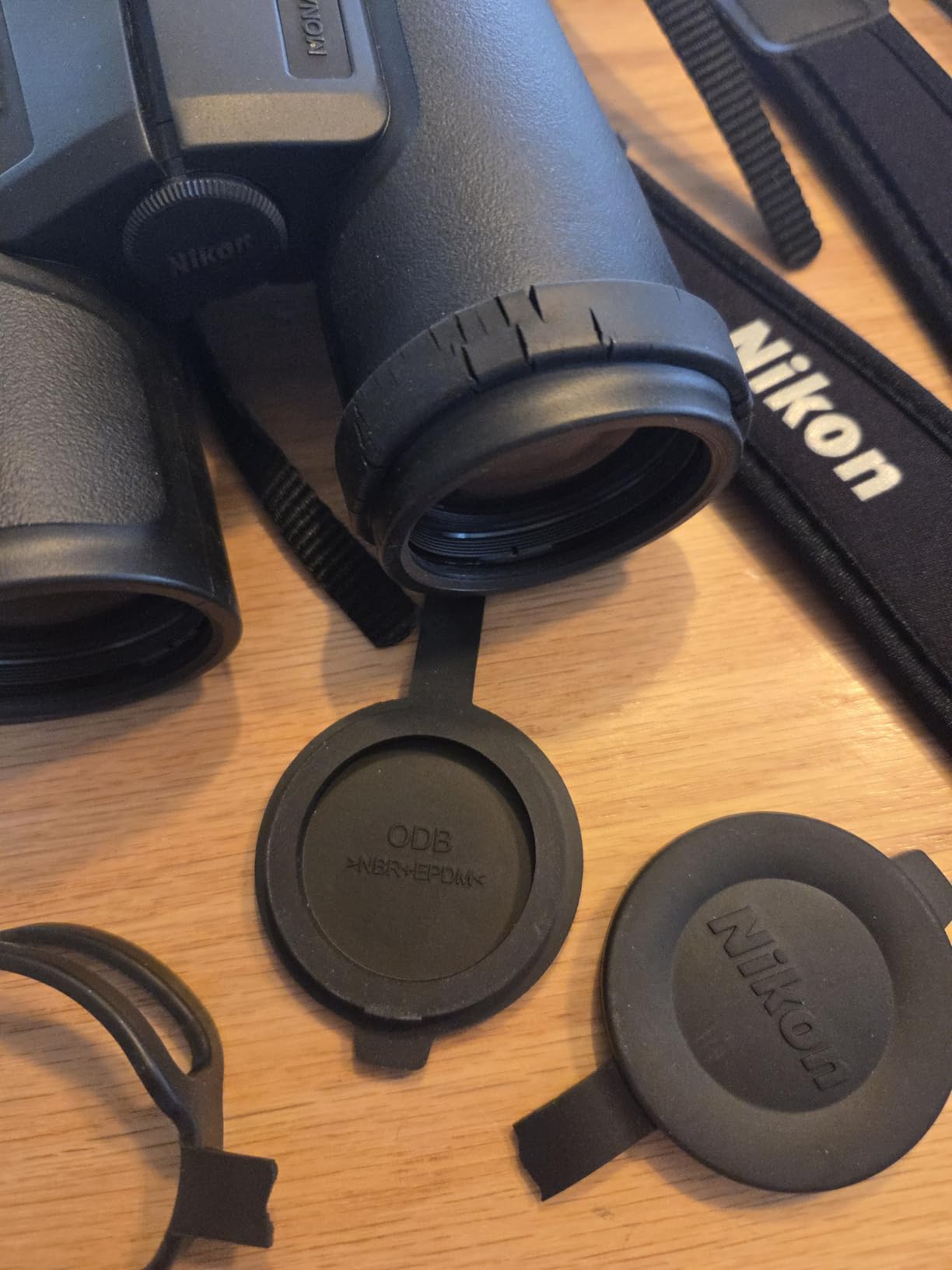
What is ED glass and why does it matter for birding?
ED stands for Extra-low Dispersion glass. Standard optical glass splits light into its component colors slightly differently depending on wavelength, which causes color fringing around bright edges. ED glass is formulated to minimize this dispersion, resulting in sharper images with truer color reproduction.
For birding, this matters because accurate color is essential for species identification. The difference between a yellow-shafted and red-shafted flicker, or determining whether that thrush has a buffy or white eye ring, depends on seeing true colors. ED glass helps you see those details clearly.
How does the Monarch M5 handle low light conditions?
The combination of ED glass and dielectric high-reflective multilayer prism coatings gives the Monarch M5 excellent low-light performance. I tested these during the golden hour around sunset when many songbirds become active again, and the image brightness held up remarkably well.
If you frequently bird at dawn or dusk, you might also be interested in our low light binoculars guide, which covers models specifically chosen for challenging light conditions. The Monarch M5 performs admirably in this category among general birding binoculars.
6. Celestron Nature DX ED 8×42 – Best ED Glass Under $250
Celestron Nature DX ED 8×42 Premium Waterproof Birding Binoculars
8x42 Magnification
42mm Objective Lens
ED Glass Objectives
17.8mm Eye Relief
BaK-4 Prisms
Pros
- ED glass virtually eliminates chromatic aberration
- Phase-coated BaK-4 prisms with dielectric coatings
- Rubber-armored polycarbonate housing
- Waterproof and nitrogen-purged
- Tripod-adaptable with built-in threads
Cons
- Not Prime eligible
- Slightly heavier at 950 grams
The Celestron Nature DX ED 8×42 is the binocular I point people to when they want ED glass quality without moving into the $300-plus tier. The extra-low dispersion objective lenses make a visible difference in image sharpness compared to the standard Nature DX, especially when viewing birds against bright backgrounds.
The dielectric-coated BaK-4 prisms pair with the ED glass to deliver images that are crisp from center to near-edge. I compared these directly against the Nikon Monarch M5 and found the optical performance closer than the price difference would suggest, though the Nikon wins on build refinement and focus smoothness.
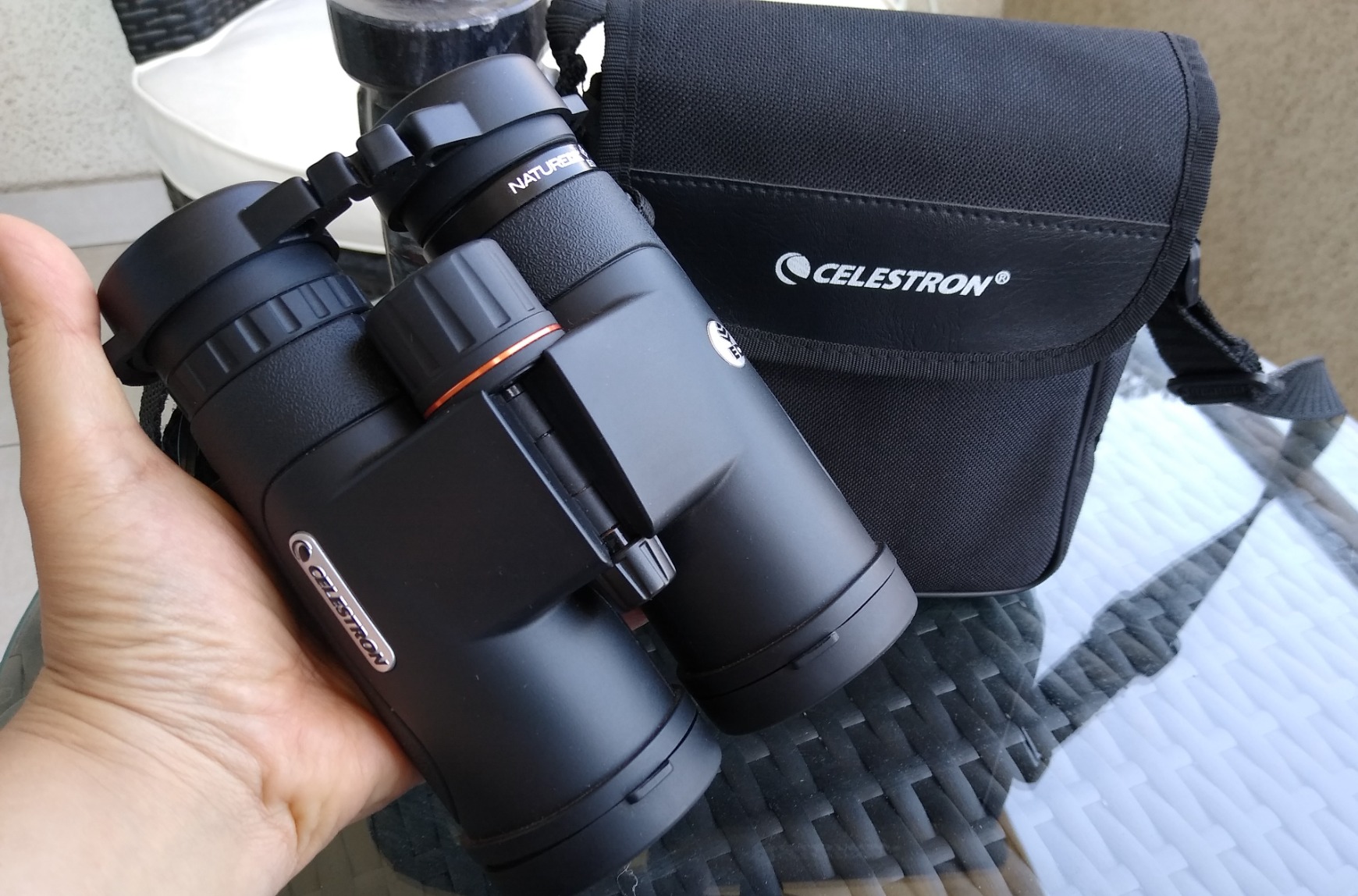
The rubber-armored polycarbonate housing is built for field use. It handles drops and bumps with aplomb, and the waterproof nitrogen-purged construction means you can use these in rain or near water without worrying about internal fogging. The tripod-adaptable design with built-in threads is a nice touch for stationary observation.
The 17.8mm of eye relief works for most glasses wearers, though it falls between the more generous options from Nikon. At 950 grams, these are the heaviest in the guide, so consider whether the added optical performance justifies the extra weight for your birding style.

Is the ED glass upgrade worth it over the standard Nature DX?
For most birders, yes, the ED glass upgrade is worth the additional cost if it fits your budget. The reduction in chromatic aberration is most noticeable when viewing birds against bright skies, water surfaces, or snowy backgrounds. Colors appear cleaner and fine details like feather patterns resolve more distinctly.
If you primarily bird in forested conditions with even lighting, the difference is less dramatic. But for birders who spend time in varied environments and want the best possible image at this price point, the ED version delivers genuine optical improvement you can see.
What accessories are included?
The Celestron Nature DX ED comes with a carrying case, lens cloth, neck strap, objective lens caps, and a rainguard for the eyepieces. The included case provides reasonable protection for transport and storage, though serious birders will likely upgrade to a harness system for field use.
The neck strap is functional but basic. For all-day birding comfort, pairing these binoculars with a third-party harness will significantly reduce neck strain. The included lens cloth is adequate but most birders will want to invest in a proper optical cleaning kit for long-term lens care.
7. ZEISS Terra ED 10×42 – Best Premium Birding Binoculars
ZEISS Terra ED Binoculars 10×42 Compact, Waterproof and Fast Focusing, Grey
10x42 Magnification
42mm Objective Lens
330ft Field of View
18mm Eye Relief
Schmidt-Pechan ED Glass
Pros
- 88 percent light transmission with Schmidt-Pechan ED glass
- Hydrophobic multi-coating for all-weather clarity
- Large easy-to-grip focus wheel
- Compact lightweight waterproof casing
- ZEISS anti-reflective coating for high-contrast images
Cons
- Compact size may limit features compared to full-size models
- Higher price point than most competitors
The ZEISS Terra ED 10×42 brings legendary ZEISS optical pedigree to a more accessible price point, and it is the only 10×42 model I recommend for serious birding in this guide. The 10x magnification brings distant birds closer, which is valuable for open-country birding, raptor watching, and shorebird identification.
The Schmidt-Pechan ED glass achieves 88 percent light transmission, which translates to bright, high-contrast images even in challenging light. The hydrophobic multi-coating causes water to bead and roll off the lenses, which I found genuinely useful during a rainy spring birding session in coastal marshland.
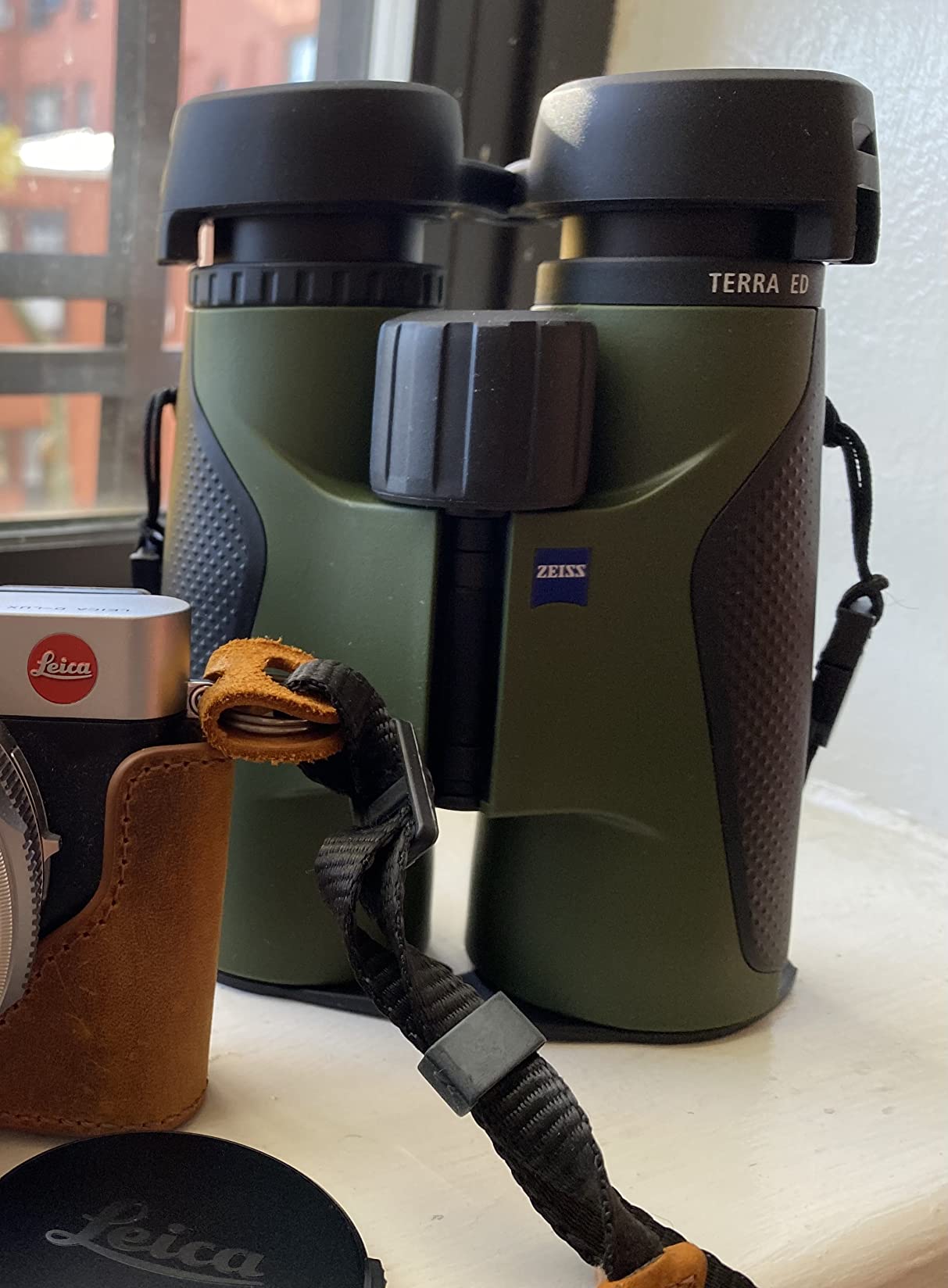
The compact fiberglass-reinforced casing is lightweight at 24.5 ounces and genuinely waterproof. ZEISS clearly designed this for outdoor use, and the build quality reflects decades of optical engineering experience. The focus wheel is large and easy to operate, with a fast ratio that lets you go from close to infinity quickly.
The trade-off with 10×42 is a narrower field of view at 330 feet and slightly more image shake when handholding. For forest birding or following fast-moving songbirds, 8×42 is generally better. But for open terrain and distance observation, the Terra ED 10×42 is a superb instrument.
When should you choose 10×42 over 8×42?
Choose 10×42 when you primarily bird in open environments where birds are farther away. Shorebirds on mudflats, raptors soaring at distance, waterfowl on large lakes, and birds in open grassland are all situations where the extra magnification helps with identification. The ZEISS Terra ED 10×42 excels in these scenarios.
Avoid 10×42 if you mostly bird in dense forest, follow fast-moving songbirds, or have difficulty holding binoculars steady. The narrower field of view and increased handshake at 10x can make locating birds harder in close quarters. For general-purpose birding, 8×42 remains the better choice.
How does the ZEISS warranty compare?
ZEISS covers the Terra ED with a fully transferable limited lifetime warranty for optics and a 5-year limited warranty for materials and workmanship. The lifetime optical warranty means ZEISS will repair or replace the binoculars if the optical performance degrades due to manufacturing defects.
This is slightly more restrictive than Vortex’s unlimited unconditional warranty, but ZEISS’s reputation for optical excellence and service quality means you can expect a premium ownership experience. The transferability is a nice feature if you plan to pass the binoculars along to another birder someday.
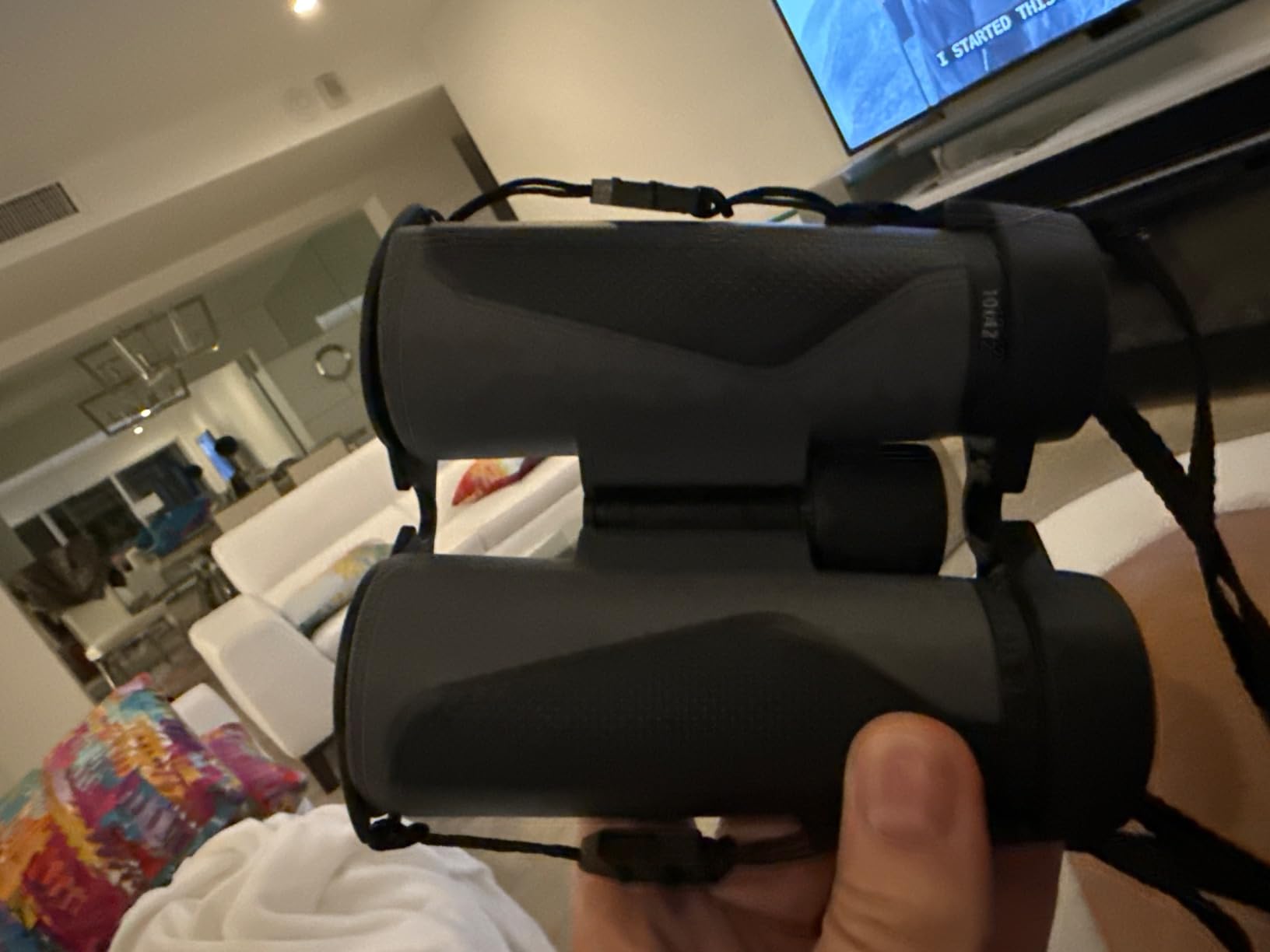
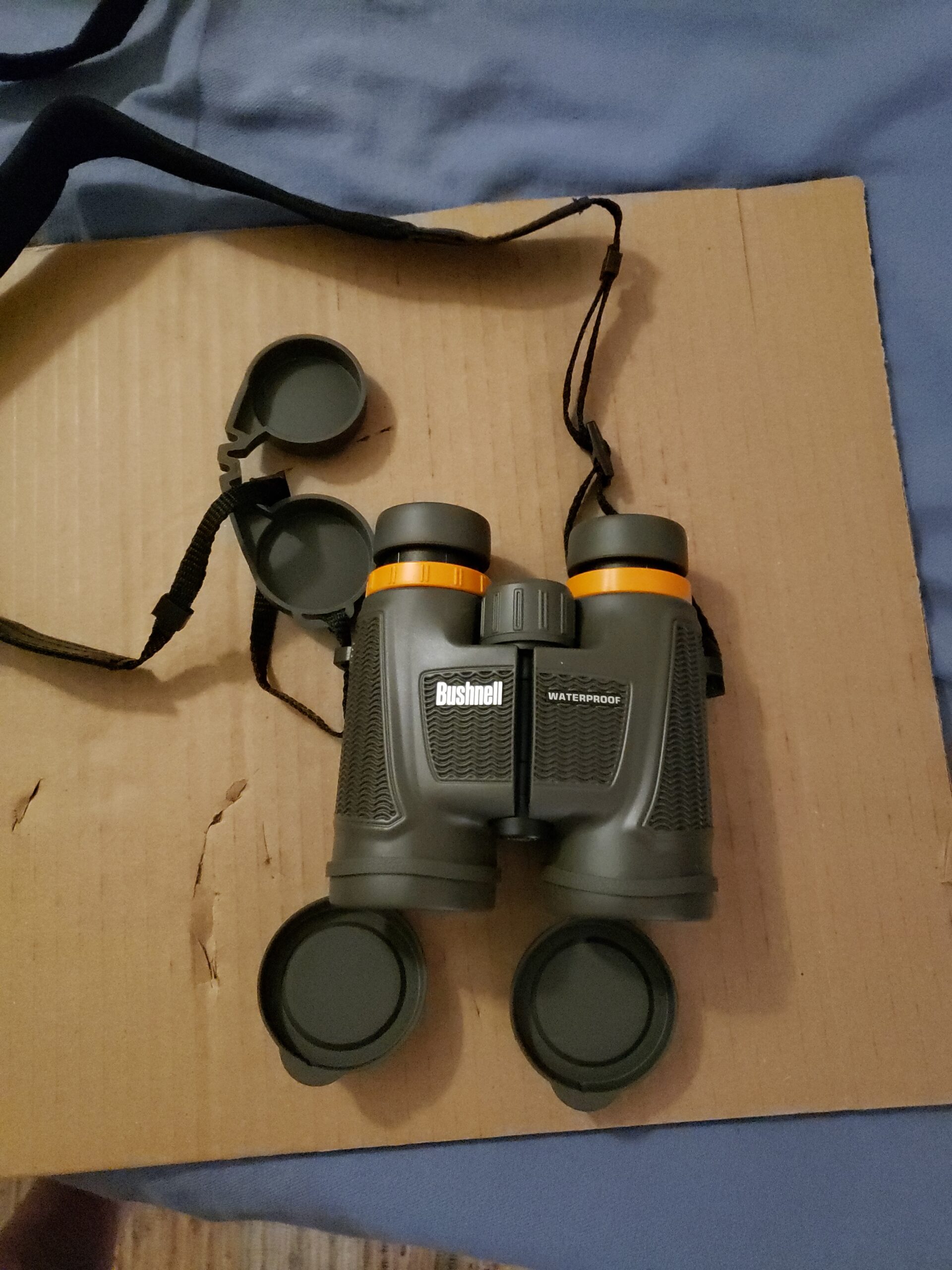
8. Bushnell H2O Xtreme 10×42 – Best Waterproof Birding Binoculars
Bushnell H2O Xtreme 10×42 Waterproof Binoculars
10x42 Magnification
42mm Objective Lens
6.8 Degree FOV
17mm Eye Relief
IPX7 Waterproof
Pros
- IPX7 waterproof rated survives accidental submersion
- Premium BaK-4 prisms with fully multi-coated glass
- Nitrogen purging prevents internal fogging
- Rugged rubber armor with soft non-slip grips
- Compact and lightweight for travel
Cons
- 10x magnification may be less stable for handheld use
- Compact dimensions may feel small for some users
The Bushnell H2O Xtreme 10×42 is the most affordable binocular in this guide, and it earns its place with a genuinely impressive waterproof rating. The IPX7 rating means these can survive accidental submersion in up to one meter of water for 30 minutes, which is exactly the kind of durability that matters for birders who spend time around water.
I tested these during a kayak birding trip where they took spray, got set down in damp conditions, and endured a sudden rainstorm. They performed without issue throughout. The nitrogen purging prevented any internal fogging despite rapid temperature changes between morning chill and midday heat.
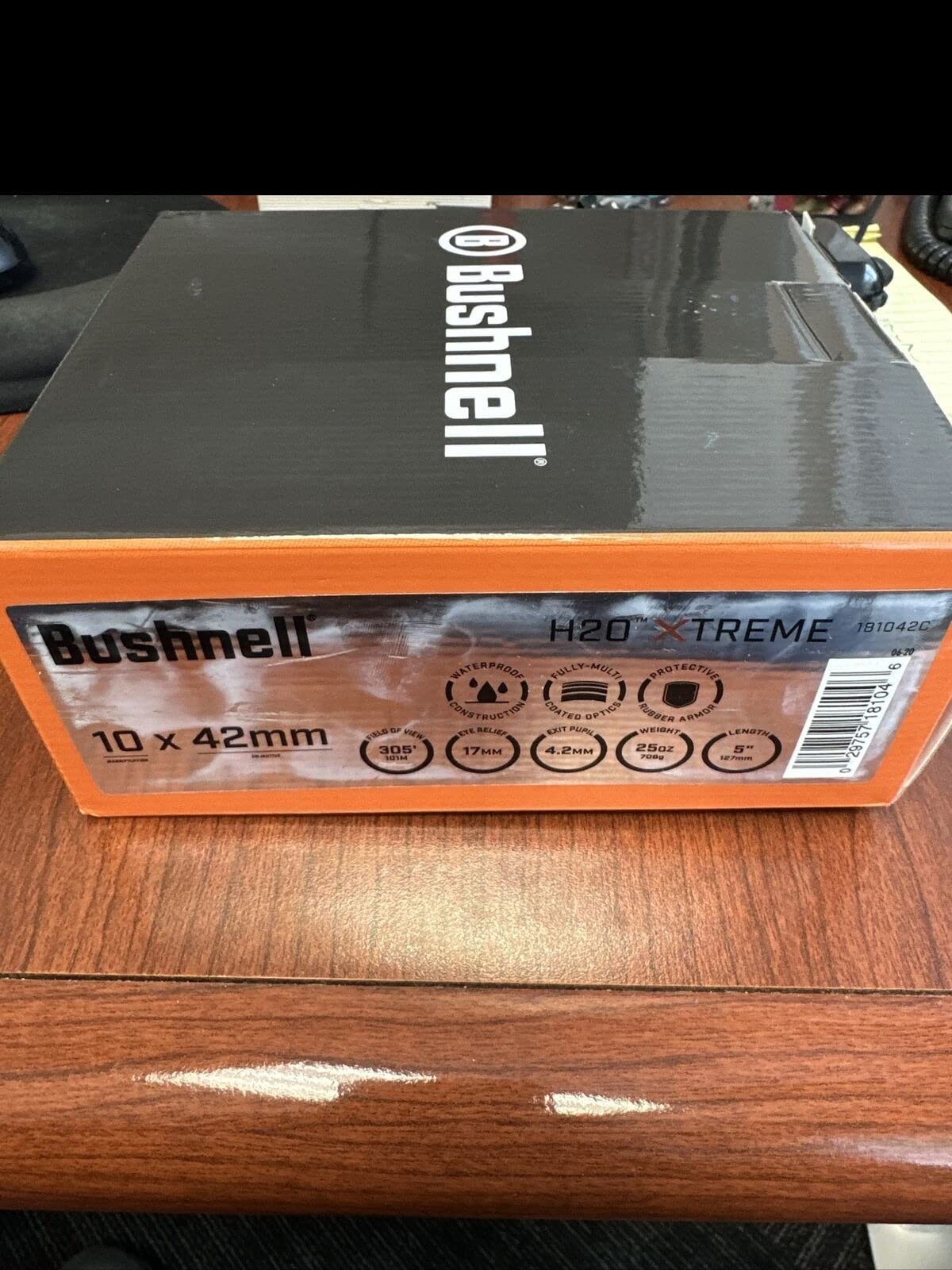
The BaK-4 prisms and fully multi-coated glass deliver image quality that exceeded my expectations for this price point. Colors are reasonably accurate and brightness is good for most daylight conditions. The 17mm of eye relief works adequately for most glasses wearers.
The compact size is a double-edged sword. It makes these binoculars easy to pack and carry, which is ideal for travel and active use. But users with larger hands may find the housing a bit cramped, and the 10x magnification is harder to hold steady in a compact body compared to a full-size model.
How does IPX7 waterproofing actually perform?
IPX7 is a specific Ingress Protection rating that means the binoculars can withstand immersion in water up to one meter deep for 30 minutes without damage. This is significantly more robust than basic water resistance, which only handles splashes and light rain.
For birders who frequent wetlands, coastal areas, or enjoy kayak-based observation, this level of waterproofing provides real confidence. I would not recommend intentionally submerging any binoculars, but knowing the H2O Xtreme can survive an accidental drop in shallow water is reassuring.
What is the Bushnell Ironclad Warranty?
The Bushnell Ironclad Warranty covers defects in materials and workmanship for the life of the product. Bushnell, with over 70 years of optics experience, stands behind their products with a straightforward warranty process. The warranty covers manufacturing defects but does not cover damage from misuse, abuse, or normal wear.
For a binocular at this price point, the warranty coverage is reasonable and reflects Bushnell’s position as a trusted mass-market optics brand. If you want the most comprehensive warranty in this guide, the Vortex models with their unlimited unconditional VIP Warranty lead the pack.
How to Choose the Best Birding Binoculars in 2026
Choosing the right birding binoculars comes down to understanding how key specifications affect your birding experience. I have broken down the most important factors below based on years of field testing and the collective wisdom from birding forums and expert reviews.
8×42 vs 10×42: Which Magnification Is Better for Birding?
For most birders, 8×42 is the better choice. The 8x magnification provides a wider field of view, brighter images, and easier handheld stability. Most birding experts, including Audubon and the Cornell Lab of Ornithology, recommend 8×42 as the most versatile configuration for general bird watching.
Choose 10×42 only if you primarily bird in open terrain where birds are consistently farther away. The extra magnification helps with distant shorebirds, raptors, and waterfowl, but you sacrifice field of view, brightness, and stability. The ZEISS Terra ED 10×42 in this guide is the best 10x option for birders who want premium optics.
Field of View and Why It Matters
Field of view (FOV) refers to how wide an area you can see through the binoculars at a given distance, typically measured in feet at 1,000 yards. A wider field of view makes it easier to locate and track moving birds, which is essential for active birding.
Among the binoculars in this guide, the Vortex Diamondback HD leads with 393 feet, followed by the Vortex Crossfire HD at 390 feet and the Celestron Nature DX at 388 feet. Anything above 350 feet is good for birding. Below 340 feet, you may struggle to track fast-flying birds.
Eye Relief for Glasses Wearers
Eye relief is the distance from the eyepiece lens to your eye where you can see the full field of view. If you wear glasses while birding, you need at least 15mm of eye relief, though 17mm or more is ideal. Without sufficient eye relief, glasses wearers see a reduced circular image.
The Nikon PROSTAFF P3 leads this guide with 20.2mm of eye relief, followed by the Nikon Monarch M5 at 19.5mm. The ZEISS Terra ED offers 18mm, which works well for most glasses wearers. The Vortex Crossfire HD at 14mm is the least suitable option here for those who wear spectacles.
Objective Lens Size and Light Gathering
The objective lens is the larger lens at the front of the binoculars, and its diameter (measured in millimeters) determines how much light the binoculars gather. All eight binoculars in this guide use 42mm objectives, which is the standard for full-size birding binoculars.
Forty-two millimeters strikes the right balance between brightness and portability. Larger objectives like 50mm gather more light but add significant weight, while smaller objectives like 32mm are lighter but dimmer. For most birders, 42mm is the sweet spot.
Prism Type and Optical Coatings
All eight binoculars in this guide use roof prisms, which produce a straight-through optical path and a more compact body than porro prisms. The quality of the prism and its coatings determines image brightness and color accuracy.
Look for dielectric prism coatings, which are the current gold standard for light transmission. The Vortex Diamondback HD and Nikon Monarch M5 both feature dielectric coatings. Phase correction coating is also important for roof prism binoculars, as it ensures optimal image resolution and contrast.
Waterproofing and Fogproof Construction
Every binocular in this guide is waterproof and fogproof. This is achieved through o-ring seals that keep water out and gas purging that prevents internal fogging. Most models use nitrogen purging, while Vortex uses argon in the Diamondback HD for improved long-term performance.
The Bushnell H2O Xtreme stands out with its IPX7 rating, which certifies survival of temporary submersion. For birders who bird near water, this level of protection is worth seeking. Waterproofing and fogproofing are non-negotiable features for any serious birding binocular.
Weight and Portability Considerations
Weight matters more than most people realize. You will be carrying your binoculars for hours, and heavy models cause neck strain and fatigue that can cut your birding session short. The Nikon PROSTAFF P3 at 20.3 ounces is the lightest full-size option here, while the Celestron Nature DX ED at 950 grams is the heaviest.
For travel-focused birders, our compact binoculars guide covers smaller 8×32 options that sacrifice some brightness for portability. For most general birding, aim for a binocular under 25 ounces.
FAQs
Is 8×42 or 10×42 better for birding?
For most birders, 8×42 is better because it provides a wider field of view, brighter images, and easier handheld stability. The 8x magnification is sufficient for identifying birds at typical observation distances. Choose 10×42 only if you primarily bird in open terrain like grasslands, mudflats, or large lakes where birds are consistently farther away and the extra magnification aids identification.
What is a good magnification for birding binoculars?
8x is the most recommended magnification for birding binoculars because it offers the best balance of detail, field of view, and image stability. The Cornell Lab of Ornithology and Audubon both recommend 7x or 8x for general bird watching. The 42mm objective lens pairs with 8x magnification to create the popular 8×42 configuration that most experienced birders prefer.
What are the best birding binoculars in 2026?
The best birding binoculars in 2026 include the Vortex Diamondback HD 8×42 for overall quality, the Vortex Crossfire HD 8×42 for best value, and the Nikon PROSTAFF P3 8×42 for budget-conscious buyers. For premium optics, the Nikon Monarch M5 8×42 and ZEISS Terra ED 10×42 deliver exceptional image quality. The Celestron Nature DX 8×42 remains the best entry-level choice for new birders.
Is 8×32 or 8×42 better for birding?
8×42 is better for most birding because the larger 42mm objective lenses gather more light, producing brighter images in dawn and dusk conditions when birds are most active. 8×32 binoculars are lighter and more compact, making them good for travel and hiking, but they sacrifice brightness and are less effective in low light. For dedicated birding, 8×42 is the preferred choice.
Final Thoughts on the Best Birding Binoculars
Finding the best birding binoculars comes down to matching optical performance to your specific needs and budget. The Vortex Diamondback HD 8×42 stands out as our Editor’s Choice for its exceptional combination of HD glass, dielectric coatings, and included GlassPak harness. For value seekers, the Vortex Crossfire HD 8×42 delivers outstanding performance backed by over 10,000 positive reviews and an unbeatable lifetime warranty.
If budget is your primary concern, the Nikon PROSTAFF P3 8×42 offers the best eye relief in this guide at an accessible price. For birders ready to invest in premium optics, the Nikon Monarch M5 8×42 with ED glass and the ZEISS Terra ED 10×42 for open-country birding both deliver extraordinary image quality worth the investment.
No matter which pair you choose, investing in quality birding binoculars transforms how you experience the natural world. The birds are out there waiting. Get yourself a good pair of optics and start exploring.


