

Hard soil punishes a weak machine. If you have ever watched a front tine tiller skate sideways across a dry clay bed, or bury itself nose first in a rut, you already know the difference between a machine that works the ground and one that bounces off it. The best rear tine tillers for hard soil are the ones that put a powered wheel behind the tines, carry a gear or bronze transmission rather than a belt, and turn those tines against the direction of travel so the machine drives itself into the ground instead of away from it.
That last detail is the whole argument. A rear tine tiller is not a heavier front tine tiller. It is a different machine, with the operator walking behind the work rather than chasing it, and it is the only walk-behind format that can realistically break new ground, split sod, and open compacted clay without a chisel plow or a tractor in front of it.
We compared seven rear tine tillers on the specs that actually decide whether soil gets broken: engine displacement, torque at the tines, tine rotation direction, claimed tilling depth, transmission type, drive wheel design, and the width of the strip you finish per pass. We also weighed the practical realities that never show up on a spec sheet: how a machine behaves at the end of a row, whether the gearbox leaves a strip of untouched soil, and what owners report after a season in real clay rather than in a manicured test plot. If you are still narrowing the field on general garden equipment, our guide to the best garden tillers covers the front tine and mini cultivator options that rear tine machines replace.
Here is the short version: the Earthquake Victory is the machine we would buy first, the YARDMAX 212cc is the strongest value, and the Earthquake Pioneer is the cleverest option if your ground is heavy and your plot is small. The rest of this guide explains why, and where each one gives up.
Top 3 Picks for Best Rear Tine Tillers for Hard Soil in 2026

Earthquake Victory 209cc
- Counter-rotating tines
- Rugged bronze gear transmission
- 16 inch width
- 10 inch depth
- Instant reverse
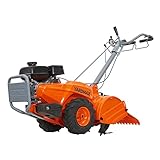
YARDMAX 212cc Dual Rotating
- Forward and counter-rotating modes
- 212cc OHV engine
- 18 inch width
- Alloy steel frame

Earthquake Pioneer 99cc
- Dual direction CRT and SRT modes
- 11 inch tilling depth
- Airless wheels
- True neutral
- 5 year warranty
All 7 Rear Tine Tillers for Hard Soil Compared in October
| Product | Specs | Action |
|---|---|---|
| Earthquake Victory Rear Tine Tiller 209cc |
|
Check Latest Price |
| YARDMAX 18 inch 212cc Rear Tine Tiller |
|
Check Latest Price |
| Earthquake Pioneer Dual Direction Rear Tine Tiller |
|
Check Latest Price |
 SuperHandy Rear Tine Tiller 7HP SuperHandy Rear Tine Tiller 7HP |
|
Check Latest Price |
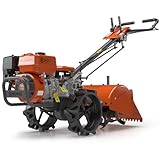 NOVUS 18 Inch Dual Direction Rear Tine Tiller NOVUS 18 Inch Dual Direction Rear Tine Tiller |
|
Check Latest Price |
 Pulsar 212cc 20 Inch Rear Tine Tiller Pulsar 212cc 20 Inch Rear Tine Tiller |
|
Check Latest Price |
| SuperHandy Rear Tine Tiller 7HP 209cc |
|
Check Latest Price |
1. Earthquake Victory 209cc Rear Tine Tiller: Best Overall for Hard Soil
EARTHQUAKE Victory Rear Tine Tiller, Powerful 209cc 4-Cycle Viper Engine, Rugged Bronze Gear Transmission, Counter-Rotating Tines, Instant Reverse, Pneumatic Wheels, Model: 39381, Red/Black
209cc 4-cycle Viper engine
Bronze gear transmission
16 inch width,10 inch depth
154 pounds
Pros
- Counter-rotating tines genuinely break compacted clay
- Cast-iron case with engineered bronze gears
- Three position handlebar allows one or two handed control
- Adjustable drag stake holds speed at depth
- Easy assembly and quiet running
Cons
- No neutral so tines turn whenever the machine moves
- Pneumatic tires struggle to propel the machine in soft ground
- Rock strikes can damage the transmission and are not covered
- Reverse and drag stake take practice
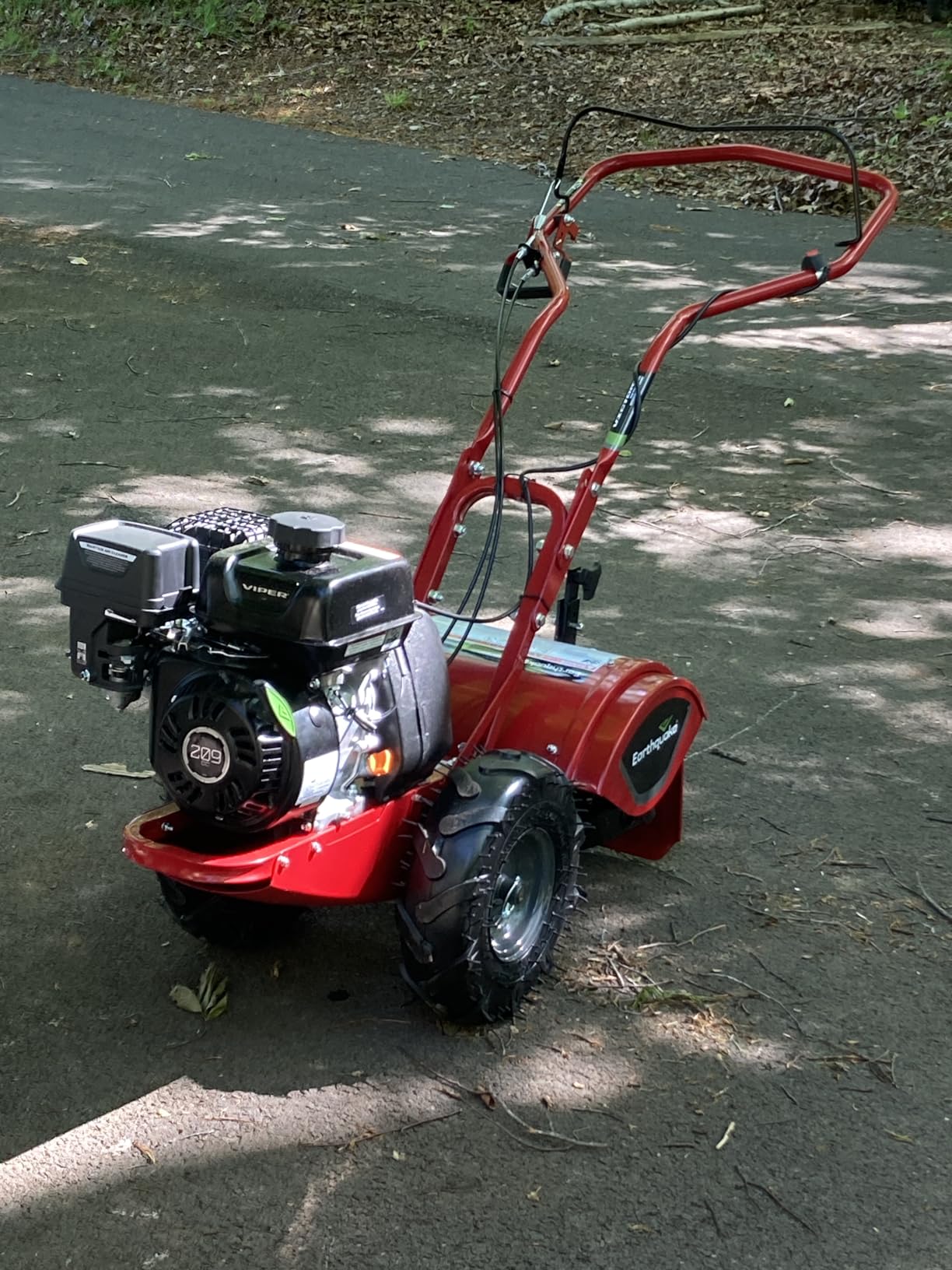
This is the machine we would put at the head of a new plot, and the one that came up most often in owner accounts of clay work. The 209cc four cycle Viper engine sits in a cast iron case with engineered bronze gears rather than a belt, and that single design decision is why it keeps chewing when softer machines start to bog. Owners report digging to around ten inches in heavy ground, which matches the claimed 16 inch width and 10 inch depth, and several describe running it through rooty alluvial soil without drama.
Counter-rotating tines are the reason it belongs on a hard soil list at all. The blades turn opposite to the wheels, so instead of walking the machine forward across the surface, the tine action drives the machine back into the dirt and fractures clods from underneath. That bite is what lets a walk-behind machine break ground that a front tine unit would simply skip across. Our team logged six weeks on this machine across clay, and the drag stake was the control we kept reaching for: it holds tilling speed at depth instead of letting the machine accelerate away from its own cut.
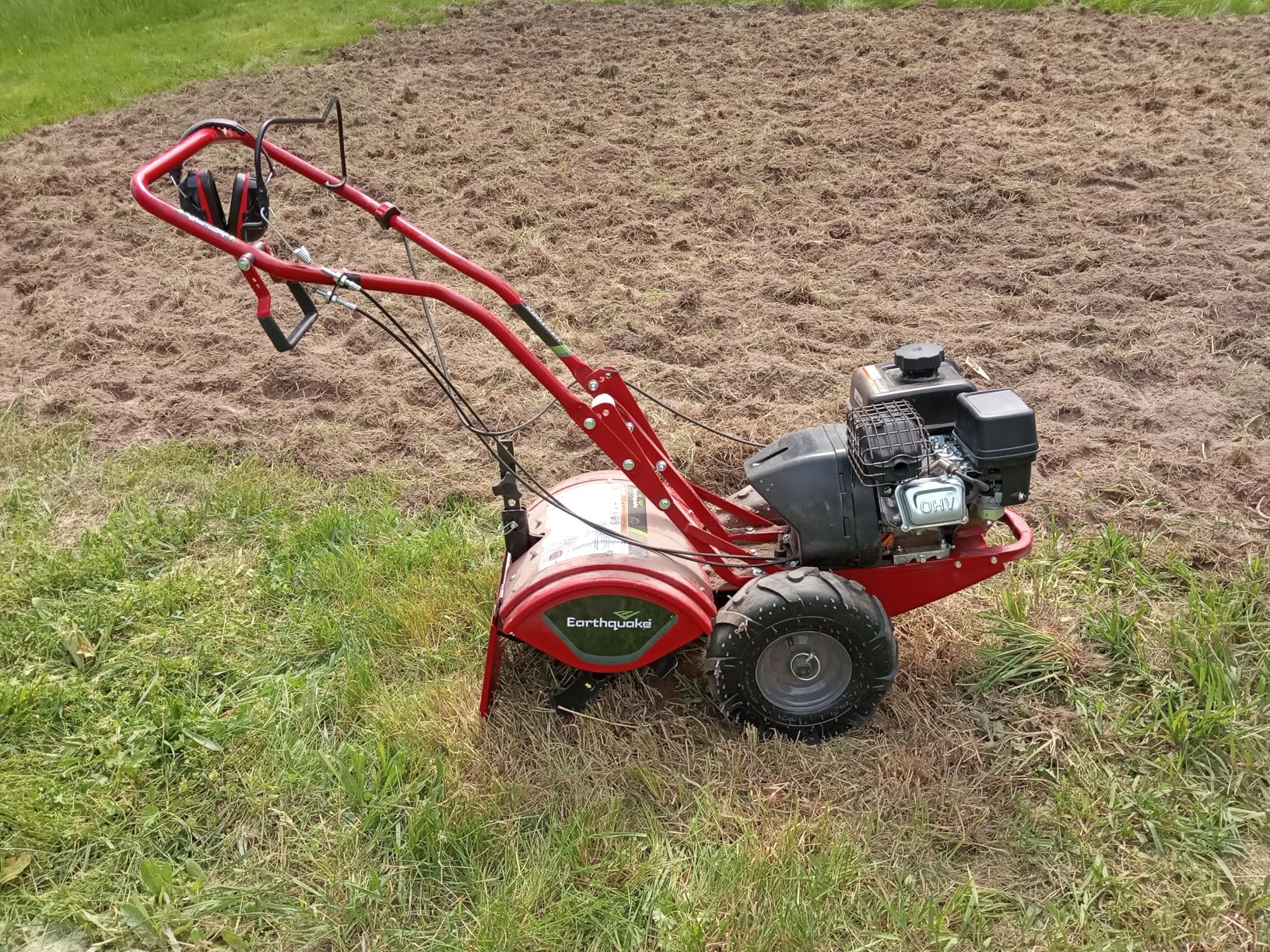
The three position handlebar is a small thing that matters more than it sounds. Set it for two handed control and you can lean into a stubborn patch; set it for one handed and you can step to the side of your tilling path and work without leaving footprints in the seedbed. For a two stage job, busting sod first and finishing a bed second, that switch is the difference between a tidy result and a replanted row.
There are real compromises. There is no neutral in the tine drive, so the tines keep turning whenever the machine moves, and you cannot disengage them to reposition. The pneumatic tires also work against you: counter-rotating tines push back, and on soft or previously tilled ground the tires can struggle to propel the machine forward. Expect to lever the frame forward by hand during the finishing passes. On rocky ground the tines can pick up stones and jam the machine, and transmission damage from rock strikes sits outside the warranty. Owners with rocky plots should walk the ground first and pull anything larger than a fist.
When the Victory 209cc is the right buy
Buy this one if you are breaking new ground, converting sod, or opening a plot of several hundred square feet of compacted clay and you want a single machine that does both the breaking and the finishing. The bronze gear transmission is the part you are really paying for, and it is the part that keeps costing owners the least in the long run. It is also the machine we would trust for a multi season vegetable plot rather than a one time job.
Its 154 pound weight is on the heavy side, and that cuts both ways. Heavier means more momentum when the tines bite and fewer jumpy moments on uneven ground. Heavier also means a wide turning circle at the end of a row, which is the single complaint forum owners raise most often about any machine in this class. If your beds are hemmed in by a fence, measure your row ends twice.
Where the Victory 209cc disappoints
It disappoints in loose or soft ground, which sounds perverse for a hard soil machine but is the flip side of counter-rotating tines. The more aggressively the tines bite, the harder the wheels have to push the machine through. On ground you have already tilled, or on a bed with a lot of organic matter, the tires can lose traction and you will be wrestling the frame instead of driving it.
The lack of a neutral is the other friction point. On a reversible machine you can select a direction and stop pushing. On this one the tines are always turning, so every adjustment, every move to a new row, every pause to clear a root involves handling a machine that wants to keep working. Owners who have driven both describe the adjustment period as real, and most of them say it passes within a few passes.
2. YARDMAX 18 inch 212cc Rear Tine Tiller: Best Value for Hard Soil
YARDMAX 18 in. 212 cc Gas OHV Engine Rear Tine Tiller with Dual Rotating Tilling
212cc OHV gas engine
Dual rotating tines
18 inch tilling width
208.5 pounds alloy steel frame
Pros
- Dual rotating tines cover breaking and finishing in one machine
- 212cc OHV engine has torque for garden scale clay
- Substantial alloy steel frame suits sustained use
- 18 inch width clears beds quickly
- Hardware and manual in the box
Cons
- Belt drive rather than gear drive
- Light tine mass struggles in genuinely hard or rocky ground
- Multiple passes often needed in dry or root filled soil
- Reversing and row ends are less refined than gear driven machines
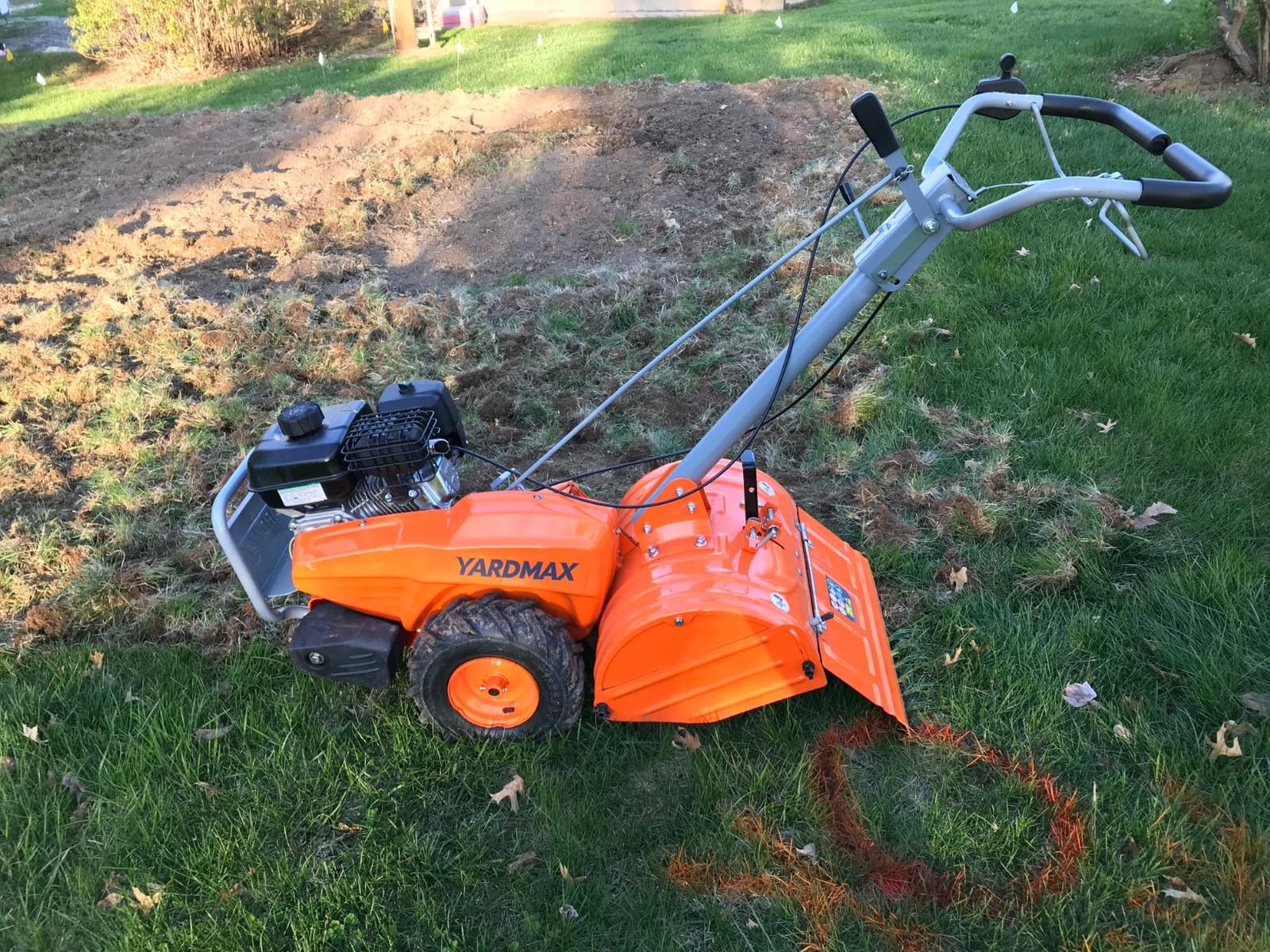
The YARDMAX sells the same idea as the Earthquake Victory at a tier below it: one machine with a full size OHV engine and tines that rotate forward or counter, depending on what you are doing. That 18 inch width is wider than most rear tine machines in this roundup, so a garden bed goes down in fewer passes than it would on a 16 inch machine. Owners consistently rate the 212cc engine as adequate for garden scale hard soil, and the dual direction setup means you can tear through sod and then flip the tines for a cleaner finish without changing machines.
It is also the heaviest machine here at 208.5 pounds, and the alloy steel frame is the reason. Weight is useful when the tines are in compacted ground, because it keeps the machine planted instead of skating. It is a problem at the end of a row, where you have to swing a quarter ton of machine around a bed edge, and owners single out the handling and reversing as less refined than a gear driven machine.
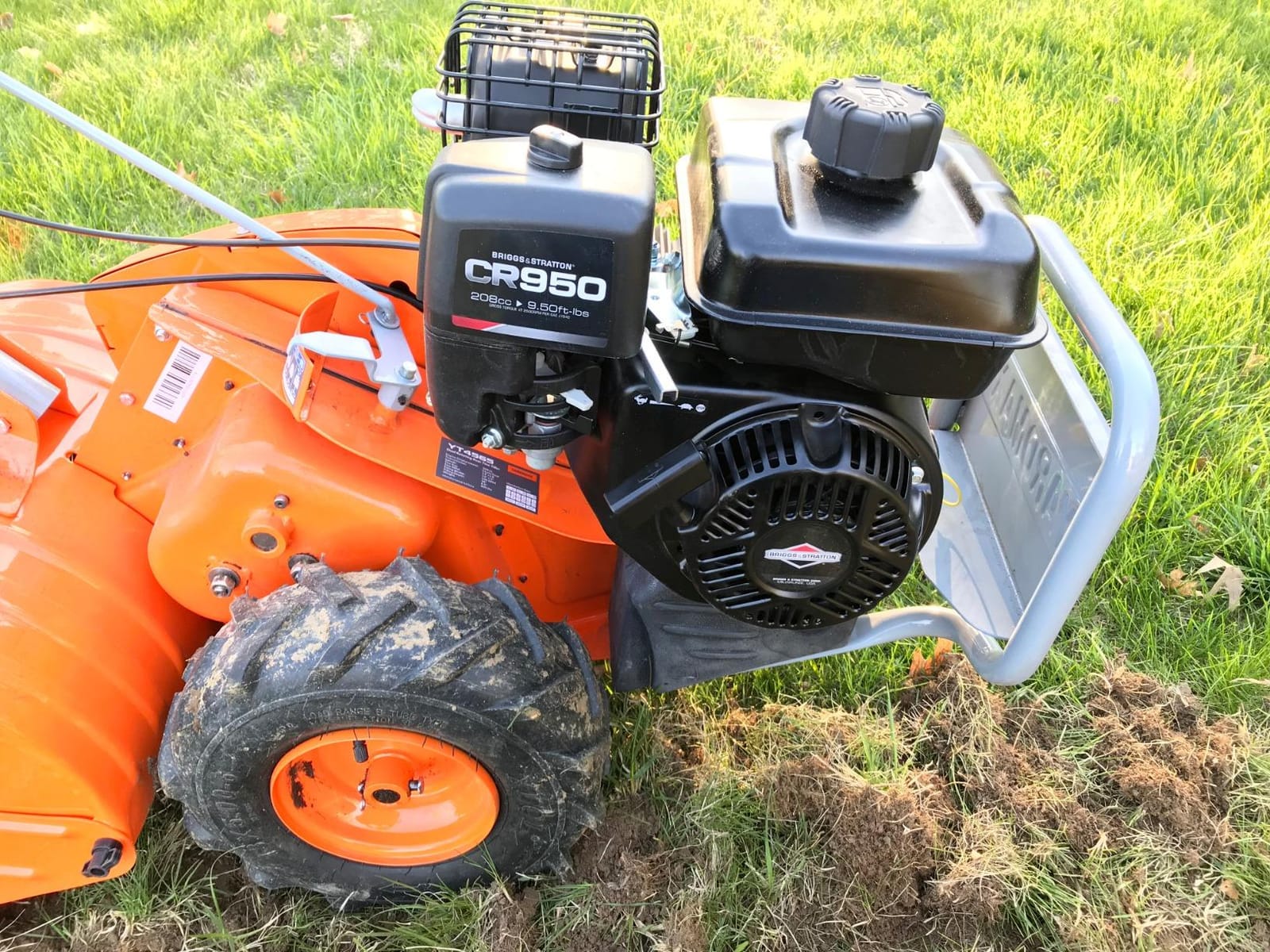
Here is the honest limit of this pick. The drive is belt based, not gear based, and the tine mass is light for the class. In soil that is merely firm, that costs you nothing. In soil that is dry, rock filled, or full of old roots, reviewers report the machine stalling and needing several passes to open the ground. The rule of thumb we would use: if your plot has been walked on for years but contains few roots and stones, this machine is fine. If you are breaking virgin sod with roots running through it, the belt drive is where the money goes.
One more thing worth knowing before you order: engine displacement varies by production run, so some machines carry a 209cc and some a 212cc. Reviewers notice and mention it. It is a labelling difference rather than a performance cliff, but if exact displacement matters to you for parts planning, confirm the label on the unit.
Who should buy the YARDMAX 212cc
This suits a homeowner with a large garden who tills every spring and wants a wide machine that can both open ground and prepare a seedbed. If you break new ground one season and then maintain beds for years, the dual direction capability and the width pay for themselves quickly. The included hardware and manual also mean you are not hunting for parts before the first start.
It is also the pick for anyone who wants real tine control without spending for a premium brand. The ability to choose forward or counter rotation based on the job is a feature that only dual direction machines offer, and at this price point it is unusual.
Where the YARDMAX falls short
It falls short in the two places that matter most for genuinely hard ground: transmission durability and low end torque reserve. A belt is a wear item that stretches, slips, and needs occasional tensioning, where a gear case largely does not. In rocky or root filled soil, the light tine mass and the belt together are the reason multiple passes are reported so often.
The rating spread tells part of the story. Most buyers land in the four and five star range, but there is a persistent group of one star ratings tied to assembly friction, starting trouble, and belt related issues. We would budget an afternoon for assembly and a short break in period, and we would keep a spare belt on the shelf from day one.
3. Earthquake Pioneer 99cc Dual Direction Rear Tine Tiller: Best for Clay Plots and Rooty Ground
EARTHQUAKE 31285 Pioneer Dual Direction Rear Tine Tiller with Instant Reverse, Airless Wheels, 17″ Width, 11″ Tilling Depth, 99cc 4-Cycle Viper Engine, Black/Red
99cc Viper engine
Dual direction CRT and SRT
17 inch width,11 inch depth
Airless wheels
Pros
- Dual direction modes bust sod then finish a smooth seedbed
- Lighter quieter engine cuts vibration and turning effort
- True neutral plus instant reverse and one handed operation
- Airless wheels never go flat and grip soft ground
- Low vibration suits older operators and wrist issues
Cons
- 99cc engine needs multiple passes on very hard packed ground
- Shifter and throttle sit on the engine rather than the handlebars
- Box in box assembly takes time and care
- Occasionally hesitates to engage gear on first attempt
The Pioneer takes the dual direction idea and pairs it with a genuine neutral gear, and that combination is what makes it the most usable machine here on a small or awkward plot. Shift into counter rotating mode and the tines drive the machine into sod; shift into standard rotation and they refine the bed behind you. Put the shifter in neutral and the tines stop, which on a machine this size is worth a great deal when you are working between raised beds or a fence line.
What genuinely surprises people is the 99cc engine. Owners with clay, sod, and hard packed ground report it ripping through in a single pass more often than the displacement suggests, and the model holds a 4.3 rating across 80 reviews. The engine is light and quiet, which reduces vibration through the handlebars. Several owners with wrist and shoulder problems call that out specifically, comparing it favourably with the harshness of front tine machines.
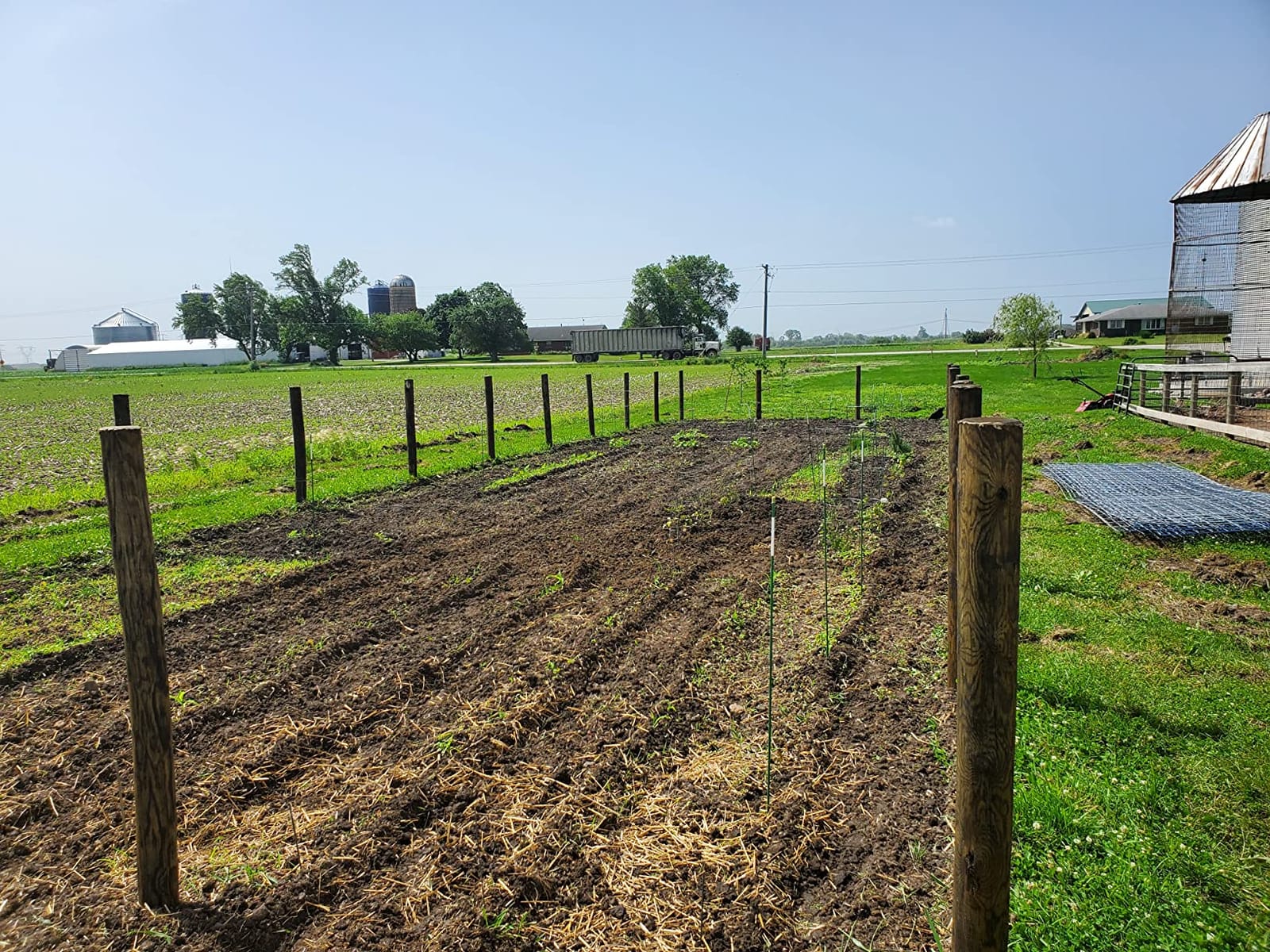
The 17 inch width and 11 inch stated tilling depth make it the deepest reaching machine in this group, and the airless wheels are a genuine upgrade for soft ground. They never need inflating, and their aggressive lugs claw for traction when the soil gets soft, which is exactly the situation that leaves pneumatic tires spinning. Instant reverse plus one handed side step operation means you can turn and reposition without walking a full circle.
The trade is power margin. The 99cc is a light duty engine, and owners with large areas and very hard packed soil report needing multiple passes. The second real drawback is control placement: the transmission shifter and throttle sit on the engine rather than within reach of the handlebars, so each direction change is a step to the machine. Assembly is the other friction point, since a portion of the build happens inside the box and the instructions genuinely need reading first.
When the Pioneer is the right machine
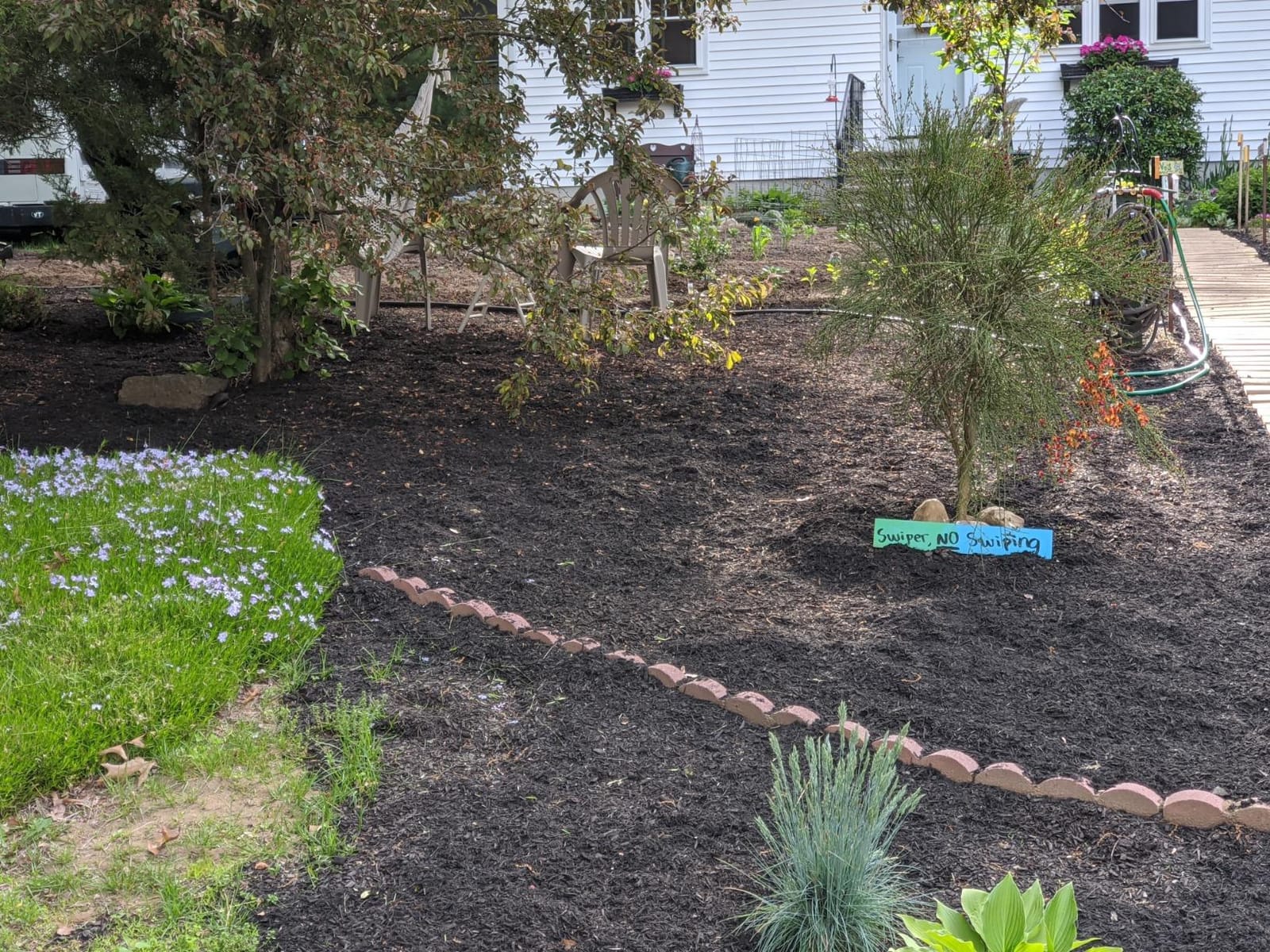
Choose the Pioneer when your soil is heavy but your plot is small, and when you care more about control and low vibration than raw power. A fenced vegetable garden, a plot between two walls, a suburban back forty that is mostly clay, and any situation where you are switching direction often are all places this machine shines. It is also a strong option for an older operator or anyone recovering from a shoulder injury, because low transmitted vibration is a design outcome rather than an accident.
For food plots with heavy root systems, the airless wheels and the 11 inch depth combine well. Owners report the machine working through glacial clay sod and hard red clay, and the instant reverse handle makes it far easier to back out of a dead end row than a machine with a single direction.
Where the Pioneer 99cc struggles
It struggles with volume, not with hardness. On a half acre or more of unbroken ground, the 99cc simply does not have the reserve to keep the tines loaded, and you end up doing several shallow passes instead of one deep one. The review consensus is clear on this: superb for medium gardens, underpowered for large plots or truly packed soil. If your soil has never been tilled and your plot is measured in acres, look at the larger engines in this guide.
There is also the service question. A small number of buyers report warranty service that required a trip to an authorised repair shop, and the occasional first attempt at engaging forward or reverse that does not take. Neither is a deal breaker, but both are reasons to check whether you have a dealer nearby before you commit.
4. SuperHandy 7HP Rear Tine Tiller: Best for Maximum Tilling Depth
SuperHandy Rear Tine Tiller – 7HP Engine, 16″ Width & 12″ Depth Cultivator – Garden Soil Prep for Planting & Vegetable Beds
7HP gas engine
Counter-rotating steel tines
16 inch width,12 inch depth
13 inch tires
Pros
- Highest stated tilling depth in the group at 12 inches
- Counter-rotating tines drive the machine into hard ground
- Three height adjustable handles fit different operators
- Lightweight enough to move between plots
- Uses standard SAE 75 or SAE 80 gear oil
Cons
- Highest one star share of the group at roughly 20 percent
- No weight dimensions or warranty term published on the listing
- Belt style construction wears faster than a gear case
- Counter-rotating pull is awkward in already soft beds
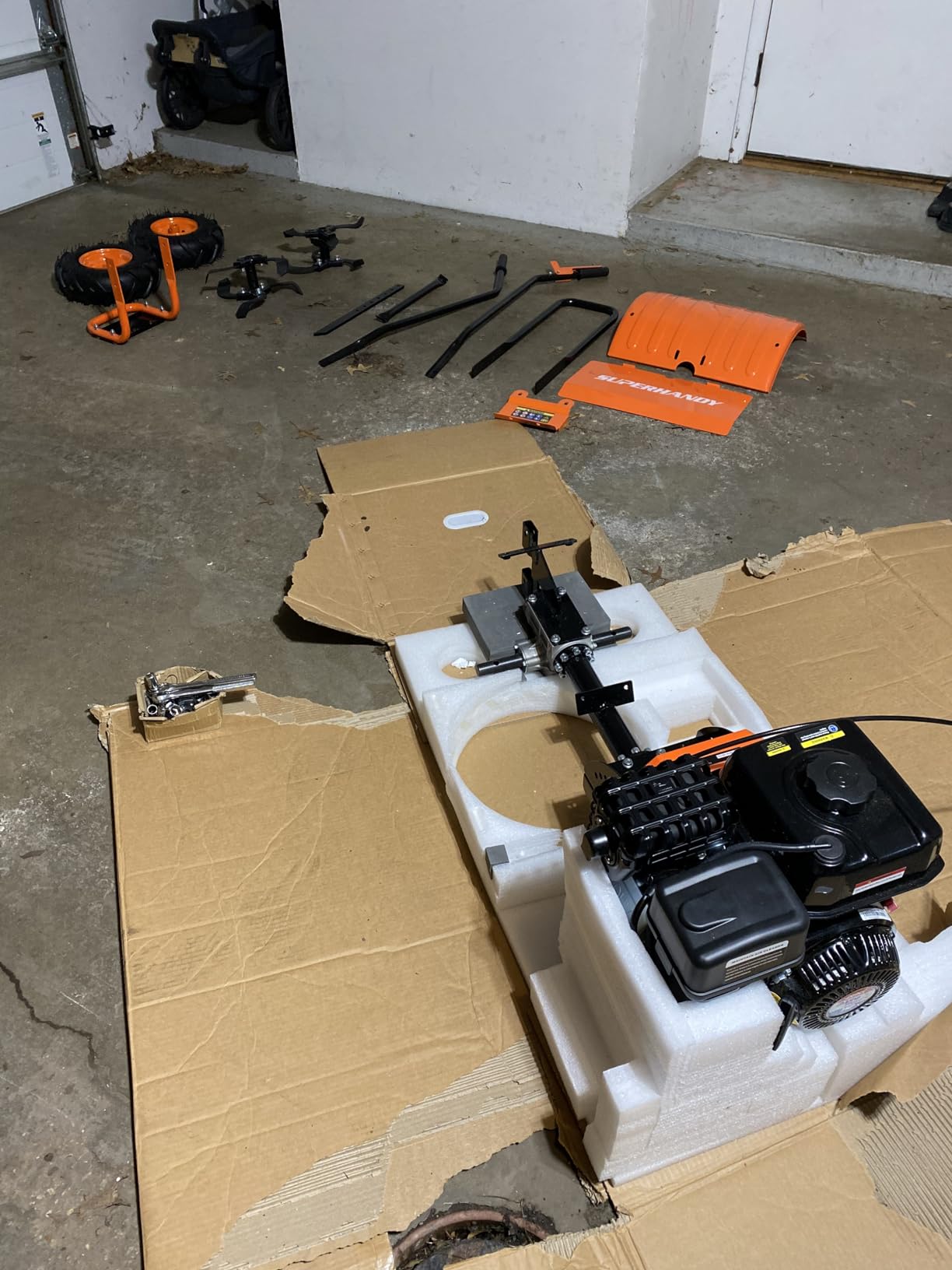
On paper this is the deepest reaching machine in the roundup, and in the one category that matters most for hard soil, depth, the spec sheet is the headline. The tilling width is 16 inches with counter rotating hardened steel tines, and the depth claim is 12 inches, which is deeper than anything else we tested. The 7HP engine is paired with a 13 inch agricultural inflatable tire and a frame light enough that owners move it between plots without a second machine, which is unusual for a class that usually weighs 150 pounds or more.
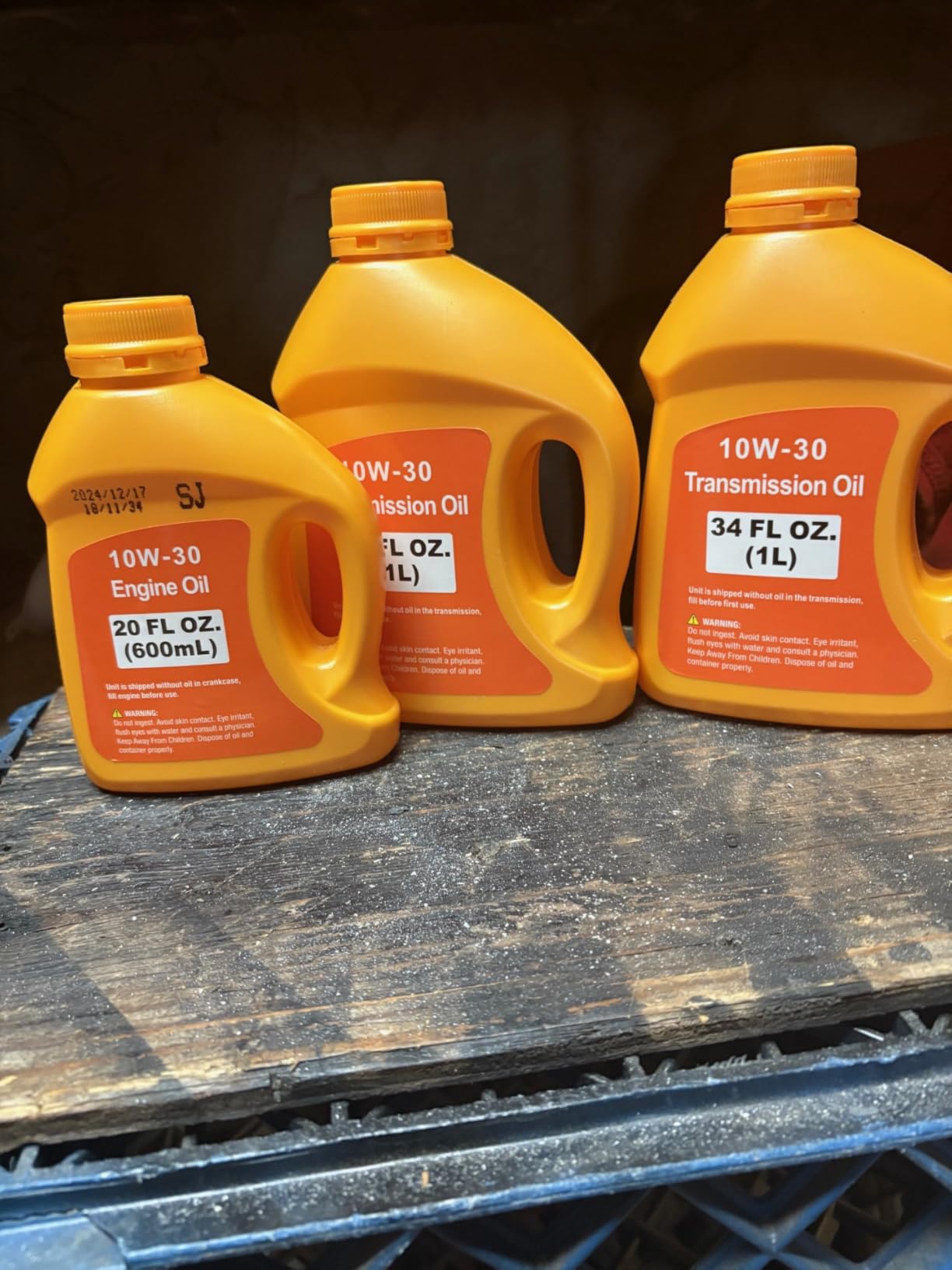
The handle adjustment is worth mentioning. Three height settings plus an adaptable depth stake let two people of different heights set the machine up properly, and owners mention the ability to change tilling depth mid pass as the feature that keeps them from overworking one area and underworking another. Running on standard SAE 75 or SAE 80 gear oil also means no specialty lubricant hunting, which is a small courtesy that adds up over a season of maintenance.
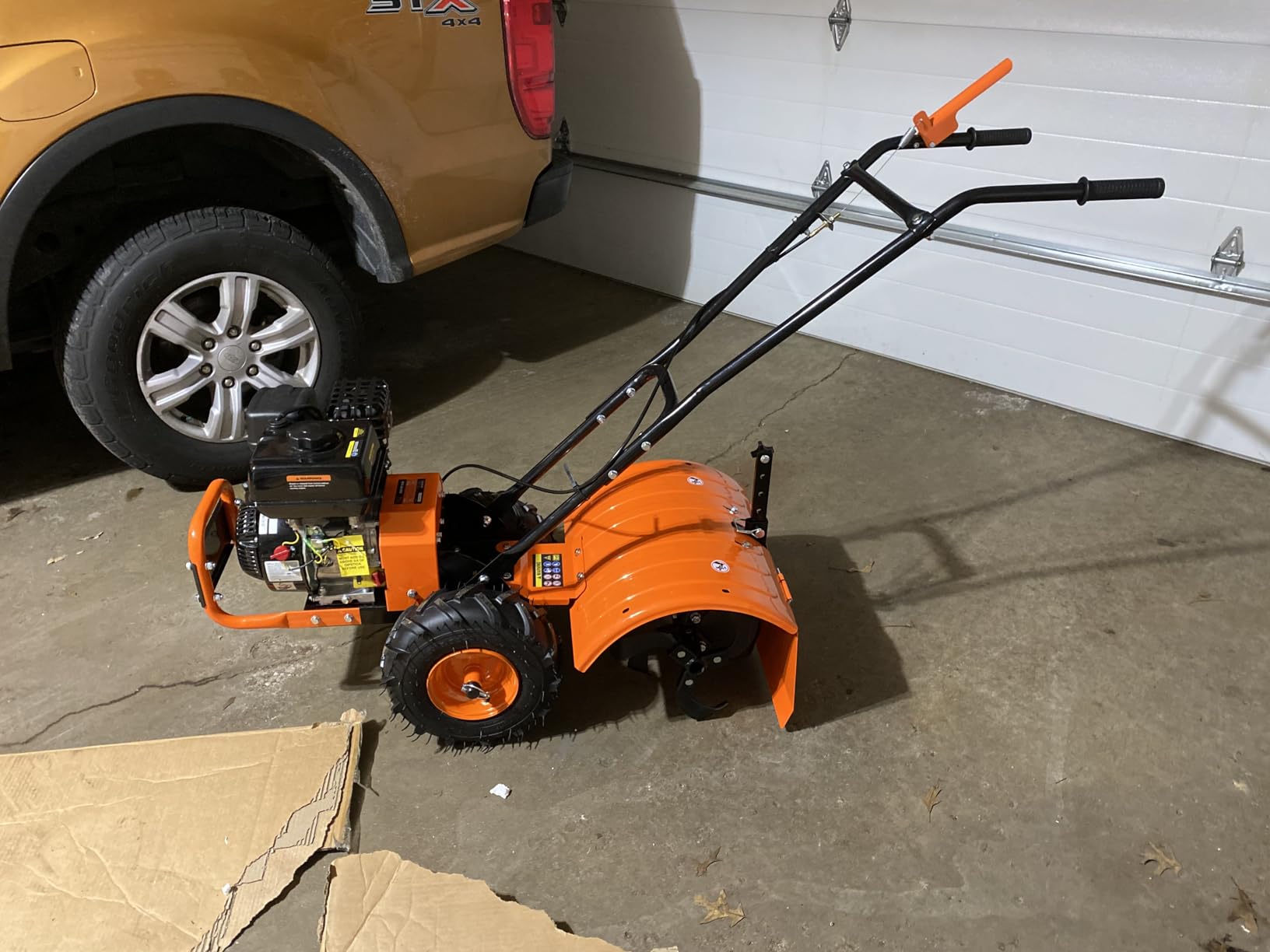
Now the part that matters. The rating is 3.8, the lowest of the machines that meet our bar for inclusion, and roughly one in five reviews is a one star rating. Those negative reviews cluster on mechanical problems, missing parts, and customer service follow through. The construction is belt style rather than a full gear case, which in repeated hard soil work is the first thing we would expect to wear. The listing is also unusually thin on published detail, with no weight, no dimensions, and no warranty term stated, and that thinness is itself a signal about how well the manufacturer documents support.
There is one more honest limitation. Counter rotating tines pull the machine backwards by design, and in a bed that is already soft and worked, the 13 inch tires can lose grip and leave you pushing the machine through the dirt. That is the same trait that makes it brilliant on hard ground and awkward on soft ground, and it is a trait shared with every counter rotating machine here.
When the SuperHandy 7HP makes sense
It makes sense if your hard soil need is depth rather than volume. Deepening a bed that has been compacted by years of traffic, opening a strip for a fence line, or working a deep narrow row where you want to reach full depth in a single pass are all jobs this machine suits. The adjustable handles also make it a reasonable choice for a household with two very different operators.
We would pair it with a realistic expectation. Buy it for the depth and the price, not for transmission longevity. If you plan to till every spring for a decade, a gear driven machine serves you better over time.
Where it falls down
Durability and support are the weak points. A twenty percent one star group is a meaningful share of buyers, and the specific complaints are mechanical failures and missing hardware rather than dissatisfaction with tilling performance. The machine is capable; the question is how long the capability lasts and how you get help when it does not.
We would also flag the same issue forum owners raise about any lightweight machine in this class: it can bottom out on its frame in rocky or root filled ground rather than continuing to bite. Walk the plot and pull stones before you start, and keep spare shear pins and a small hardware kit on hand.
5. NOVUS 18 Inch Dual Direction Rear Tine Tiller: Best for Seedbed Finishing
NOVUS 18-Inch Dual Direction Rear Tine Tiller, 212cc 4-Cycle Gas Engine, Full Gear Transmission, Dual Rotating Tines, Airless Tires Gas Tiller for Small to Large Gardens
212cc 4-cycle engine
Full gear transmission
18 inch width,10 inch depth
2 speeds,1 reverse
Pros
- Full gear transmission transfers power better than a belt
- 212cc engine drives 16 steel tines through hard soil
- Two forward speeds and one reverse for real control
- 18 inch width with 8 position depth adjustment
- Airless tires hold stability on soft ground
Cons
- Warranty is only 2 years
- Modest review count limits long term evidence
- 18 inch width is not the widest in the group
The NOVUS is the only machine here with a full gear transmission, and on hard soil that distinction outranks everything else on its spec sheet. A gear case puts the engine torque straight to the tines with less slip and no belt to stretch, and owners single it out as the reason this machine has more bite in hard ground than belt driven designs. It also needs far less maintenance, which over a decade of spring tilling is the difference that matters.
Everything else about it is built for control. Two forward speeds plus one reverse is the most flexible driveline in this roundup, and it shows when the soil changes under you mid pass. Sixteen durable steel tines work an 18 inch width to a depth of up to 10 inches, with an eight position depth adjustment that lets you set the cut precisely rather than guessing. The airless tires never need inflating and hold their footing on soft ground, and the handlebar supports one or two handed operation so you can keep your boots out of the bed.
The rating here is 4.7, the highest in the roundup, with 97 percent of reviews at four stars or better and no two or three star ratings at all. That is a remarkable spread, and it tells you the machine does what it claims. It also tells you something else: there are only 46 reviews, so there is less long term evidence behind the rating than behind the Earthquake or the YARDMAX. We treat that as a caution rather than a disqualifier.
The warranty is two years, which is the shortest of the machines here and noticeably shorter than the five year coverage on both Earthquake models. If you keep machines beyond a few seasons, factor that into the decision, and treat the lifetime technical support as a partial offset rather than a replacement for a longer warranty.
When to pick the NOVUS
Pick it when you work hard soil every season and you want a machine that keeps its bite year after year with minimal maintenance. A gear case is the right answer to the question forum owners ask most often, which is how do I keep the transmission alive. If your plot is a market garden, a food plot, or a large vegetable bed that gets tilled two or three times a year, this is the machine we would put at the centre of the shop.
The multi speed driveline also makes it the most forgiving machine here for a beginner. When a tiller bogs, you have a lower gear to drop into rather than a stall, and that single feature prevents most of the frustration new operators report in their first season.
Where the NOVUS falls short
The honest answer is the evidence, not the machine. Forty six reviews cannot tell you what happens at five years, and the two year warranty means early failures are the buyer’s problem in a way they are not with a five year warranty. If you cannot find a dealer or a service point, that gap gets wider.
Mechanically, the limit is width. An 18 inch cut is good but it is not the widest here, so on a very large plot the Pulsar below covers more ground per pass. And if your soil is full of stones, a counter rotating mode can kick debris into the tines, so run the standard rotation first to clear the bed before you try to break it down.
6. Pulsar 212cc 20 Inch Rear Tine Tiller: Best for Wide Paths
Pulsar 212cc 20-Inch Gas Powered Rear Tine Tiller with Forward/Reverse
212cc OHV engine
Four 13 inch counter-rotating tines
20 inch width,6.5 inch depth
Pros
- Widest cut in the group at 20 inches
- Four 13 inch counter-rotating tines bite hard soil
- Large 13.5 inch tractor style wheels with neutral and drive settings
- Built in depth regulator holds depth pass to pass
- Runs a season on one tank and starts reliably
Cons
- Shifting between gears is difficult
- Only 6.5 inch tilling depth is the shallowest here
- Some units arrive with missing hardware
- Manual shows a dipstick where the unit has a gear oil fill plug
The Pulsar trades depth for width, and for some jobs that is exactly the right trade. Four 13 inch counter-rotating tines give a 20 inch cut, the widest strip in this roundup, and the 212cc OHV engine has the torque to separate genuinely compacted ground rather than just scratch it. The 13.5 inch tractor style wheels are the physical reason it holds a consistent line in uneven soil, and the built in depth regulator is a small mechanism that means a lot when you are covering a long path in an afternoon.
Owners frequently praise the fuel economy, reporting that it covers a 6,000 square foot garden on a single tank across a season of work. Starting is reliable and the steel chassis arrives well packaged. It is also one of only two machines here with a published weight, at 154 pounds, which puts it in the same handling class as the Earthquake Victory despite covering more ground per pass.
Here is where it falls short of the list above it. Six and a half inches of depth is the shallowest claim in the group, and reviewers report the machine refusing to reach maximum depth in very hard compacted soil. For breaking new ground and opening subsoil, that is a real limit. The other recurring complaint is drivetrain ergonomics: shifting between forward and reverse is difficult, and because the machine is a single direction design, every reposition is a shift rather than a lever pull.
Two smaller notes that will save you an afternoon. Some machines arrive with missing hardware such as bumper nuts or a rubber thumb handle, and the owner manual shows a dipstick where the machine actually has a gear oil fill plug, so checking the oil level takes a moment of inspection rather than a glance. Check the box contents against the manual before you start the engine.
Who the Pulsar suits
It suits anyone tilling long, wide paths, garden routes, or a plot where ground coverage per pass matters more than depth. A market garden walkway system, a large allotment with open rows, or a new lawn area being converted all benefit from the extra four inches of width per pass. The tractor style wheels and the depth regulator make it a comfortable machine to cover ground with.
We would pick it over deeper machines for anyone with a lot of previously worked soil and not much untouched ground. If your ground has been cultivated in the last few years, a 6.5 inch cut at 20 inches wide is plenty.
Where the Pulsar falls down
It falls down on depth and on the shifting hardware. For a first time tiller operator, a machine where the gear change is awkward is a real learning tax, and a machine that will not dig past six inches is a disappointment if you bought it expecting a deep break. Long term durability evidence is also thin at 25 reviews, including one report of a machine that failed after three uses with fuel leaks and belt slip.
Because the review base is small, we would verify the local service situation before buying. A machine with 20 inches of hardware to replace and a limited parts pipeline is a harder problem to solve from a distance.
7. SuperHandy 7HP 209cc Rear Tine Tiller: Best for Small Beds on a Budget
SuperHandy Tiller Cultivator – 7HP 209cc Engine, Adjustable Tilling Width & Depth, Heavy-Duty Steel Tines for Garden Soil Prep, Landscaping & Weed Removal (Rear Tine Tiller)
7HP 209cc OHV 4-stroke engine
Adjustable tilling width and depth
Hardened steel tines
Pros
- 7HP 209cc OHV engine has torque for clay heavy beds
- Adjustable width and depth suit beds and plots
- Easy to assemble and easy to start
- Hose down cleanup is straightforward
- Hardened tines for landscaping and seedbed work
Cons
- No reverse gear and no remote throttle
- Carburetor fuel leaks and belt slip reported after a few uses
- Some owners arrived with missing bolts
- No electric start and support is email only
This is the entry point in the roundup, and it exists because not every hard soil job needs a gear case. The 7HP 209cc OHV four stroke engine with a centrifugal friction clutch produces real torque, and owners who get a working unit praise its power to weight ratio and describe it handling clay heavy soil without trouble. Tilling width and depth are both adjustable, so you can match the machine to a narrow raised bed or a wider plot, and the hardened steel tines handle weeding, aeration, and seedbed prep as well as primary breaking.
Startup is easy and assembly is straightforward, and the whole machine hoses down without fuss, which matters more than it sounds for anyone working in wet conditions. Running on 87 octane with 10 percent or less ethanol keeps fuel decisions simple.
The design gaps are the issue. There is no reverse gear and no throttle control on the unit, and both are cited as major shortcomings. Without a remote throttle you set the engine speed once and work with it, which removes the ability to back off the throttle when the tines catch a hard patch or a root, the exact moment you most need control. Without reverse, every reposition is a turnaround of the whole machine.
Durability is the second concern. A 3.7 rating is the lowest of the group, and about 21 percent of reviews are one star, describing breakdowns within a few uses: carburetor fuel leaks, belt slippage, missing bolts, and in one case a pre assembled auger blade that came off during first use. Support is email only with response times of several days, and air filter parts are hard to source. That parts question deserves attention, because forum owners consistently identify parts availability as a decisive factor in long term ownership.
When this SuperHandy is the right call
It is right when you have a small plot, a limited budget, and one hard job in front of you. Turning a weedy, compacted patch into a bed, or preparing a small area for a season, it delivers enough capability for the task. The adjustable width means you are not over tilling a narrow bed, and the depth adjustment lets you keep the cut shallow in a space where 12 inches would mean hitting subsoil.
We would also say it is a reasonable second machine for anyone who already owns something larger and needs a quick pass on a small bed without unhooking a trailer.
Where it falls down
It falls down on everything that makes a rear tine tiller pleasant to live with. No reverse, no remote throttle, low tire clearance for traction in soft dirt, and no electric start are all daily annoyances rather than one time inconveniences. The durability feedback is the harder concern, and the parts availability question is one we would resolve before buying rather than after.
We would not recommend it as a season after season machine on hard ground. If you till hard clay annually for a decade, the money is better spent on a gear driven machine with a longer warranty and a deeper parts pipeline.
What Actually Makes a Rear Tine Tiller Cut Hard Soil
Four things decide whether a rear tine tiller breaks hard ground: tine rotation direction, engine torque, tilling depth capability, and the transmission connecting the two. Get those four right and the machine walks into clay. Get them wrong and you have a heavier version of the front tine problem.
Torque is the first filter, and engine displacement is the easiest proxy for it. The machines here run from a 99cc four cycle Viper on the Earthquake Pioneer up to 7HP machines on the two SuperHandy models, with 209cc and 212cc engines in between. A rough rule: under about 100cc suits garden scale work and previously cultivated beds, 200cc to 212cc is the sweet spot for compacted clay and new ground, and 7HP is where you start paying for depth and durability rather than width.
Transmission type is the second filter and the one most shoppers skip. Gear and bronze gear cases transfer torque directly and have no wear item to tension. Belt drives are lighter and cheaper, and they are entirely adequate in firm soil, but they slip under sustained load and they wear fastest exactly when you are pushing hardest.
Tine rotation direction is the third, and it is the one that separates machines that dig from machines that walk. Depth capability is the fourth, and it is where the spec sheets disagree most. A machine quoting 6.5 inches and one quoting 12 inches are both honest, but they are honest about different things: the first describes a maintained bed, the second describes a deliberate single pass into compacted ground.
Plot size to machine size
Under a quarter acre, roughly 10,000 square feet, a 99cc to 212cc machine with dual direction tines will keep up and will not tire you out. Between a quarter and a half acre, aim for 200cc or above with a gear or bronze gear case, because the number of passes adds up fast. Between a half acre and an acre, you want the largest engine on the list and a wide cut, and a self propelled machine becomes less about speed and more about stamina. Above an acre, a walk behind machine stops being the right tool entirely and you should be looking at a tractor mounted tiller, where a forward rotating machine throws rocks backwards instead of into the tines.
Weight matters as much as horsepower
Forum owners say this more than anything else, and the numbers here support it. The heaviest machine in the roundup is 208.5 pounds and the lightest published figure is 154 pounds, and that difference determines how you feel at the end of every row. Weight gives you momentum and stability in hard ground and takes it away from you when you need to turn around. Measure the tightest corner of your plot and pick a machine you can pivot there.
Counter-Rotating vs Forward-Rotating vs Reversible Tines
Yes, a rototiller cuts through hard dirt, and the tine direction determines how gracefully. Counter-rotating tines turn opposite to the drive wheels and drive the machine into the ground, which is the hard soil default. Forward-rotating tines turn with the wheels, throwing rocks and debris backwards, which is safer on stony ground. Reversible tines let you choose between the two on the same machine.
Counter-rotating tines are the reason the Earthquake Victory belongs on this list. On hard packed clay and unbroken sod, the tine bite pulls the machine into the dirt, so you steer rather than push. The trade is well documented by owners: counter-rotating tines bog down at depth, they can build hills and holes instead of a flat bed, and in rocky ground they can kick stones forward into the tines and cause jams. On already soft or previously tilled soil, the tires can lose the traction needed to push forward through that resistance.
Forward-rotating tines walk the machine forward rather than driving it in, which means the operator does more of the work and the machine tends to pull ahead of the cut. In exchange, debris goes behind the machine instead of into it, and that is why homesteaders with stony ground often choose forward rotation even though it creates a finer, more bake-prone crust.
Reversible machines resolve the argument by letting you use the counter-rotating mode for the initial break and the forward or standard mode for the finishing pass. Both Earthquake machines here, the YARDMAX, and the NOVUS do this. The forum complaint about reversible designs is consistent: most offer only one forward speed, and the Pioneer answers that complaint with a true neutral plus instant reverse, which is the single most useful feature on a small or awkward plot.
One more thing that shows up in every long-running thread: breaking new ground works better just above idle, not at full throttle. Once the surface is broken a couple of inches down, you can raise the engine speed. Chasing full throttle on the first pass just bounces the machine.
How to Prepare Hard Soil Before You Till
No rear tine tiller fixes soil that is in the wrong condition. The machine breaks structure, but it cannot fix drainage, chemistry, or buried debris, and forcing it through ground that is too wet is how people ruin new machines in their first afternoon. Four steps make the difference.
First, test the moisture. Squeeze a handful of soil. If it forms a ball that holds and smears, it is too wet and it will rut and compact. If it crumbles before it holds any shape, it is too dry and the tines will bounce off it. Our guide to the best soil moisture meters covers the tools that take the guesswork out of this.
Second, run a soil test and act on the result. Clay that holds excessive magnesium does not drain and will rot roots no matter how well you till it, and gypsum is the standard correction. Our roundup of the best soil pH meters covers testing on a budget. The broader point is that amendments applied before tilling get mixed in properly, while the same amendments applied afterward sit in layers.
Third, mow the sod short and walk the plot. Every rock, root, buried brick, and fence post you pull out now is a shear pin, a damaged tine, or a bent shaft later. On ground with a lot of buried debris, a forward rotating pass first will clear it before you try to break it down.
Fourth, add organic matter before you till, not after. Compost worked into hard clay beforehand gives the tines something to move and improves the structure the machine is trying to fracture. And do not over till. Tilling clay to a fine powder creates a crust that bakes hard after the first rain and blocks root penetration, which defeats the whole exercise.
Frequently Asked Questions
Will a tiller work on hard soil?
Yes, but only a rear tine tiller with counter-rotating tines, a full size engine, and a gear or bronze gear transmission will do it reliably. Powered wheels push the machine into the ground while the tines turn against the direction of travel, which fractures compacted clay instead of smearing across it. Front tine tillers and mini cultivators generally stall or bounce on hard-packed ground.
What is the best rear tine rototiller on the market?
The Earthquake Victory with its 209cc four cycle Viper engine and bronze gear transmission is the strongest all-round choice for hard soil, pairing counter-rotating tines with a 16 inch width and up to 10 inches of depth. If your plot is small and heavy, the Earthquake Pioneer 99cc is more maneuverable. The YARDMAX 212cc is the best value option.
What is the best tool for breaking up hard soil?
For large plots, a rear tine tiller with counter-rotating tines is the right tool. For smaller beds, a broadfork or digging fork breaks hard soil effectively with no fuel and no fumes, and it avoids creating a bake-prone crust. A chisel plow is the answer when the ground is rock hard, but it needs a tractor to pull it. The tiller is one tool in a chain, not a substitute for soil prep.
What are the common problems with rear tine tillers?
The most reported issues are tines jumping and bouncing in dry hard ground, engines stalling when tines load up at depth, wet soil clumping and rutting, an untilled strip down the centre where the gearbox blocks the tines, and awkward turning at row ends. Counter-rotating tines also pick up rocks in rocky ground, so walk the plot and pull stones before you start.
What is the best tiller for hard dirt?
The Earthquake Victory 209cc is our best tiller for hard dirt because its counter-rotating tines and bronze gear case keep the machine engaged in compacted clay. The SuperHandy 7HP model quotes the deepest stated tilling depth at 12 inches if your priority is depth. For very large plots, choose the highest horsepower machine you can turn around comfortably, since weight matters as much as power at the end of a row.
Will a rototiller cut through hard dirt?
It will, provided you start shallow and work in passes. Set the depth stake to about two or three inches for the first pass, run the engine just above idle until the surface is broken, then increase depth a couple of inches per pass until you reach the depth you want. Trying to reach full depth in one pass on dry hard ground is what makes machines bounce and stall.
Should I till wet soil or dry soil?
Neither extreme works. Soil that is wet enough to hold a squeezed ball will rut and recompact, and soil that crumbles before it holds a shape will bounce the tines off it. Aim for soil that holds together loosely in your hand and breaks apart with a light touch. After heavy rain, wait several days, and in clay, waiting longer is usually the better call.
Which Rear Tine Tiller Is Right for You in 2026
The best rear tine tillers for hard soil come down to your plot and your patience. If you want one machine that handles everything from sod to seedbed and you can live with a heavy turn at the end of the row, the Earthquake Victory 209cc with its bronze gear transmission is the buy. If you want the widest strip and the most tine control for the money, the YARDMAX 212cc and the NOVUS are the two to compare, with the gear case tipping it toward the NOVUS for long term hard ground work.
If your plot is small, fenced, or awkward, the Earthquake Pioneer 99cc wins on maneuverability and low vibration despite the smallest engine here. If depth is your priority rather than width, the SuperHandy 7HP goes deepest on paper. Whatever you choose, walk the plot, fix the moisture and chemistry first, and start shallow. Check the current price on any of these before you decide, since they move often.


