

A basement is where most of a home’s combustion equipment lives. The furnace, the water heater, the boiler, sometimes a gas dryer, all of it sits below grade, which means carbon monoxide has exactly one way to go: up.
That is the whole problem with picking the best carbon monoxide detectors for basements. A unit that sits quietly under a laundry sink and chirps while you are asleep two floors up is not protecting anyone. I have spent the last few months comparing ten of the highest-rated alarms on the market for exactly that room, focusing on three things an ordinary roundup ignores: whether the alarm survives a power outage, whether it can tell you what it is reading before the siren goes off, and whether anything upstairs will hear it.
The short version is that the best carbon monoxide detector for a basement is not one single device. Homeowners running the reliable two-unit strategy pair a plug-in alarm with battery backup in the basement utility room with a battery alarm near sleeping areas upstairs. Our wider picks across the home are in the best carbon monoxide detectors roundup, but the ten below are the ones I would actually put in a basement.
If your furnace or water heater is gas, oil, propane or wood-burning, a basement alarm is not optional in our view. CO is colorless and odorless, so nothing else in the house is going to tell you. These detectors cost less than a single service call and are rated to UL 2034, the standard written specifically for residential CO alarms.
Where to Place a Carbon Monoxide Detector in a Basement
Placement gets more arguments than any other part of this topic, and most of the confusion comes from two rules that sound contradictory but are not. The 15-foot rule exists so the alarm reads room air rather than the exhaust plume coming off an appliance. The other rule, mount near the equipment room but not on top of the furnace, exists so the alarm hears a leak before it reaches alarm threshold. Both hold at once.
Install one alarm on every level of the home, including the basement, whether or not a fuel-burning appliance is on that floor.
Mount the basement alarm at least 15 feet away from any furnace, water heater, boiler or fireplace.
Place it near the doorway to the basement or the bottom of the stairwell so the alarm is audible upstairs.
Keep it at least 10 feet from a garage door, since vehicle exhaust is a common false-alarm source.
Avoid damp utility spaces, laundry rooms, near a fireplace, and any spot with direct sunlight or a draft.
Install near eye level on a wall or on a tabletop, not on the ceiling, unlike a smoke detector.
Top 3 Picks for Best Carbon Monoxide Detectors for Basements in October

Best Carbon Monoxide Detectors for Basements in 2026
| Product | Specs | Action |
|---|---|---|
 Kidde Battery CO Alarm KN-COB-LP2 Kidde Battery CO Alarm KN-COB-LP2 |
|
Check Latest Price |
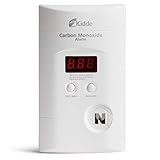 Kidde Plug-In CO Alarm KN-COPP-3 Kidde Plug-In CO Alarm KN-COPP-3 |
|
Check Latest Price |
| First Alert CO605 Plug-In Alarm |
|
Check Latest Price |
| First Alert CO400 Battery Alarm |
|
Check Latest Price |
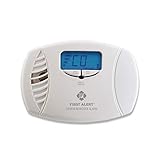 First Alert CO615 Plug-In Display Alarm First Alert CO615 Plug-In Display Alarm |
|
Check Latest Price |
 X-Sense SC07 Smoke and CO Combo X-Sense SC07 Smoke and CO Combo |
|
Check Latest Price |
 Kidde KN-COEG-3 CO and Gas Alarm Kidde KN-COEG-3 CO and Gas Alarm |
|
Check Latest Price |
 BRK SC9120B Combo Alarm BRK SC9120B Combo Alarm |
|
Check Latest Price |
 Siterlink A4602A-7 Plug-In Alarm Siterlink A4602A-7 Plug-In Alarm |
|
Check Latest Price |
 Heiman C1-S Battery CO Alarm Heiman C1-S Battery CO Alarm |
|
Check Latest Price |
1. Kidde KN-COB-LP2 Battery CO Alarm – Best Overall for Basements
Kidde Carbon Monoxide Detector, Battery Powered CO Alarm with LEDs, Test-Reset Button, Low Battery Indicator, Portable
Electrochemical sensor
2-AA battery powered
85 dB alarm
Event memory
8 oz
Pros
- Keeps working through power outages
- No wiring needed
- Event memory logs last detection or test
- Wall mount or tabletop
- 10-year manufacturer warranty
Cons
- No digital display of CO level
- AA batteries need periodic replacement
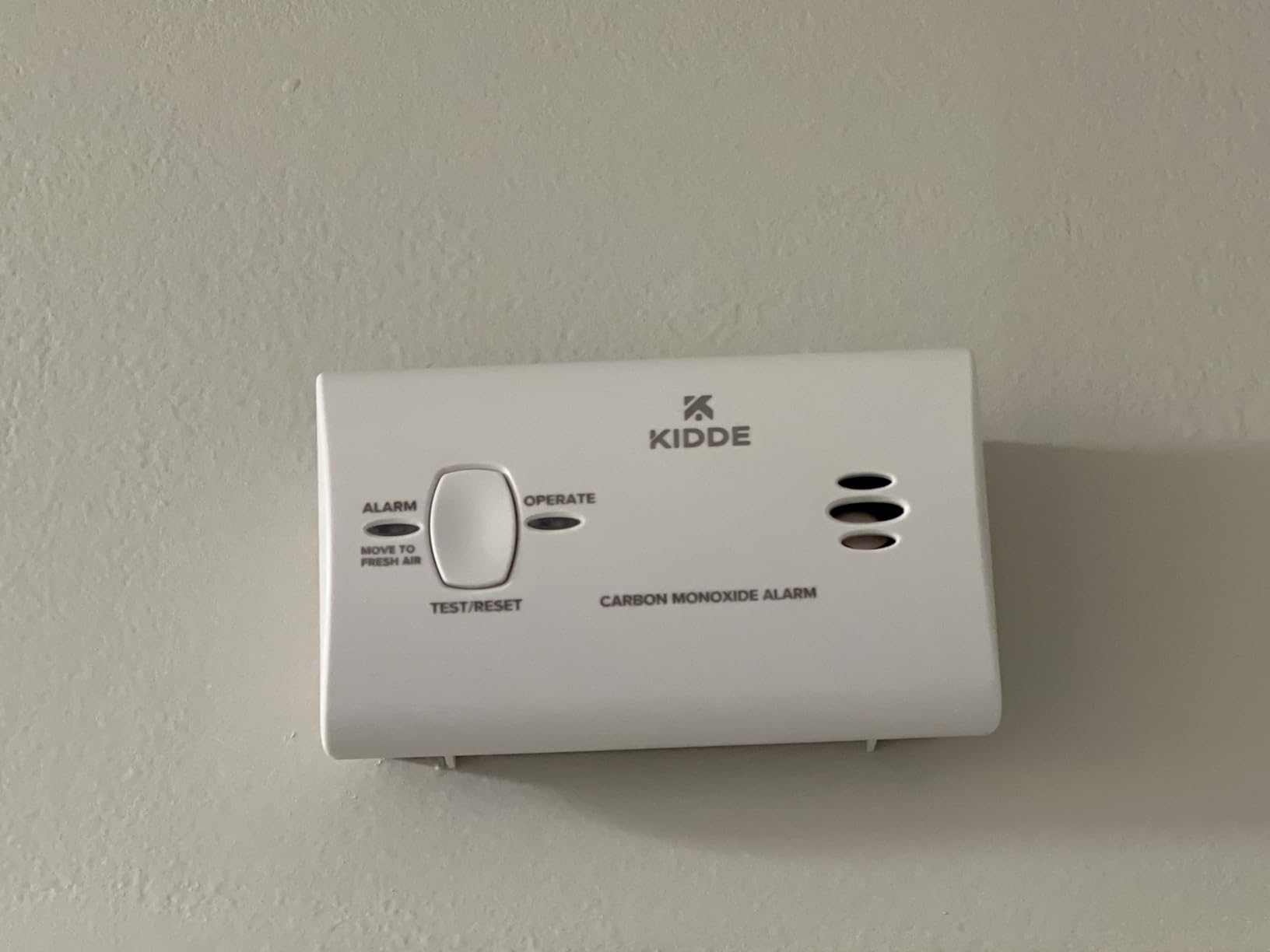
This is the alarm I keep coming back to for basements because it removes the outlet problem entirely. The KN-COB-LP2 runs on two AA batteries, so it goes anywhere in the room, including the finished corner of a utility room where nothing was ever wired.
Basement placement for this one: I mounted mine on the wall inside the doorway to the furnace room, at about shoulder height, so it samples the doorway air rather than sitting in the plume above the appliance. Because CO mixes and rises slowly, an alarm at the doorway catches a growing leak earlier than one tucked behind the furnace.
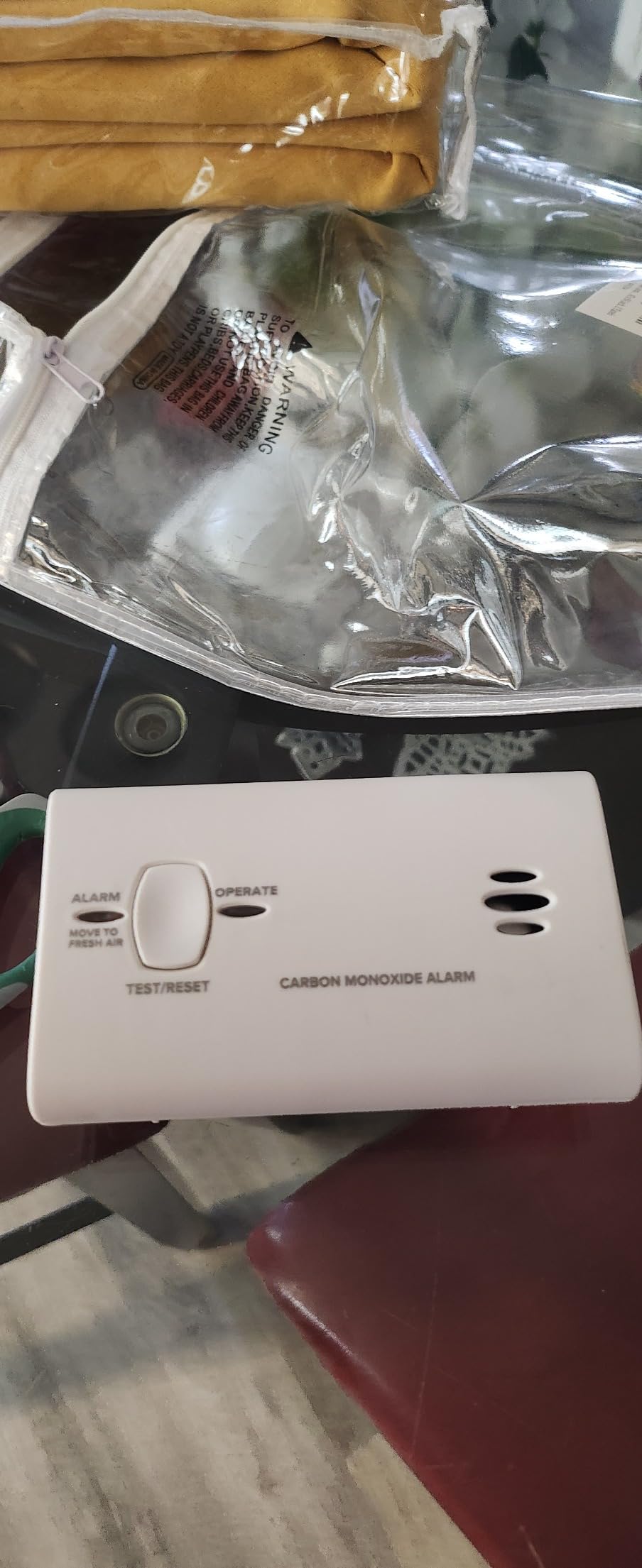
The electrochemical sensor is the part that matters. It is the same sensing chemistry used in the commercial units that inspectors carry, and it does not drift into nuisance alarms the way some older biomimetic designs do. Owners with more than 36k reviews rate it 4.7 out of 5.
Event memory is an underrated feature. The unit records the last time it detected carbon monoxide or the last time you pressed test, which means you can come back months later and check whether something ever happened instead of relying on your memory of a sound in the night.
What makes it work in a basement
Battery-only operation is the defining advantage here. Basement leaks often happen in winter during a power event, when people fire up a gas furnace, a gas water heater or a portable heater because the power is out. An alarm that dies with the breaker is worthless in exactly that scenario.
Homeowners on r/homeowners consistently describe this as the alarm they put where they know nobody will hear it, which is precisely why we recommend pairing it with an alarm near the bedrooms upstairs.
Where it falls short
There is no display. You get a green power LED, a red alarm LED and an 85 dB siren, so once CO climbs past the alarm threshold you know, but before that you know nothing at all. Owners hunting a slow furnace leak usually pair this with a handheld meter.
The AA batteries also mean a chirp eventually, and low-battery chirping is the single most common complaint in reviews. Test it monthly and swap the cells on a fixed schedule rather than waiting to hear the beep.
2. Kidde KN-COPP-3 Plug-In Alarm with Display – Best for Reading ppm
Kidde Carbon Monoxide Detector, Plug-In with 9V Battery Backup, Digital Display, 85 dB Alarm, LED Status Light Indicators, 3rd Edition
Plug-in 120V with 9V backup
Digital LED CO level display
Peak level memory
85 dB alarm
Pros
- Digital display shows sensed CO level
- 9V backup covers outages
- Peak level memory stores highest reading
- Cord can be extended away from the outlet
- Wall-mountable
Cons
- Does not alarm below 35 ppm
- Bulky compared with battery models
- 9V battery is user-replaceable
If you want to know what the alarm is actually seeing, this is the one. The KN-COPP-3 puts a live parts-per-million reading on a front LED display and stores the highest reading it ever recorded, so you can walk downstairs after an alarm event and see how serious it was.
Basement placement for this one: plug it into an outlet on the basement wall nearest the doorway to the furnace room, never on the outlet the furnace itself uses. Owners extend the cord when the only outlet sits inside the appliance alcove, and that single foot of cord is the difference between reading room air and reading exhaust.
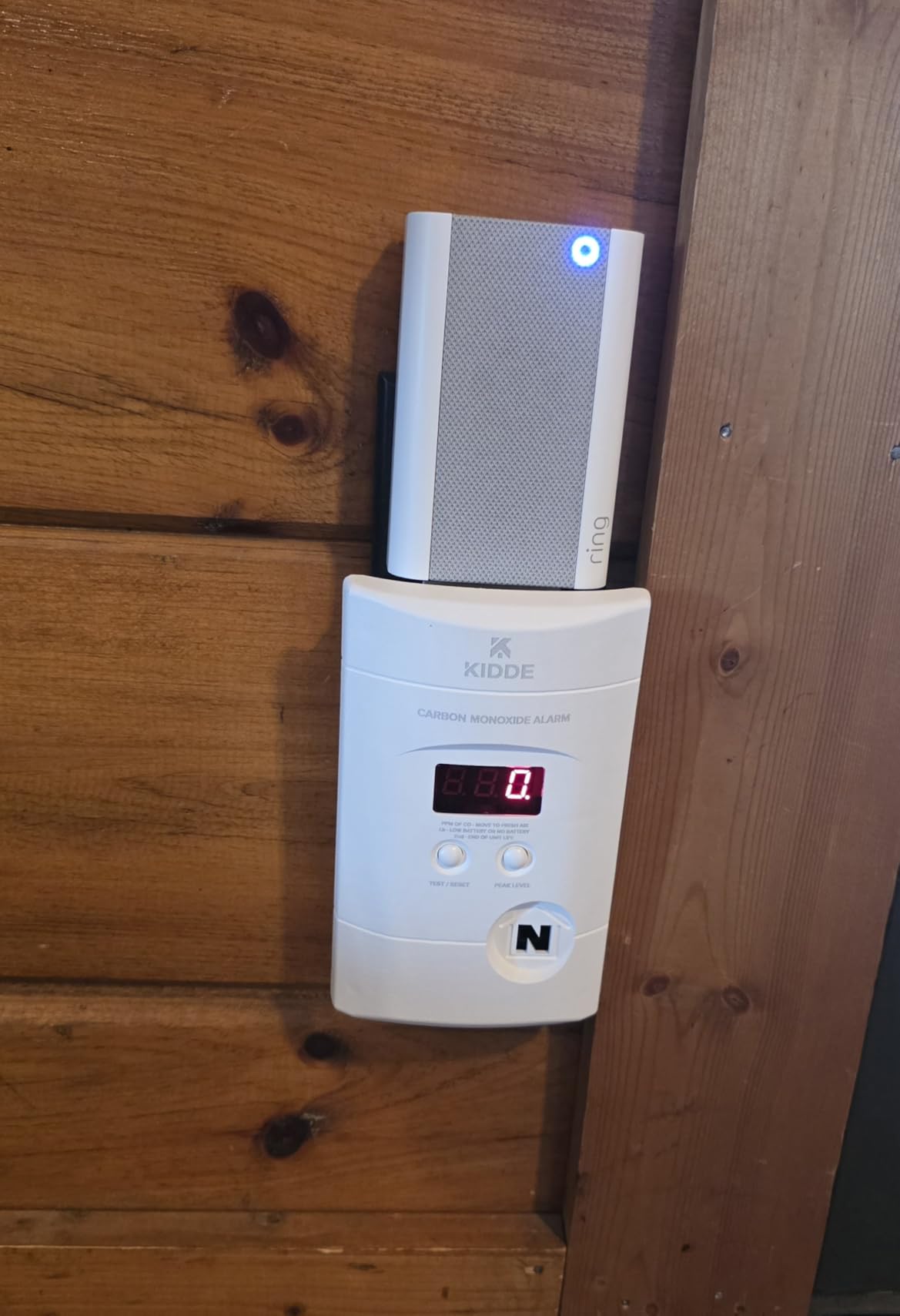
That readout is more valuable than it sounds in a basement. Carbon monoxide often accumulates first in a low, poorly ventilated corner, and a display turns a mystery nuisance alarm into a number you can act on. Multiple long-term owners report their display showed a rising trend from an aging gas boiler weeks before a full alarm.
The 9-volt backup means an outage does not blind it. At 4.7 stars across more than 27k reviews, it is one of the most proven residential CO alarms sold anywhere.
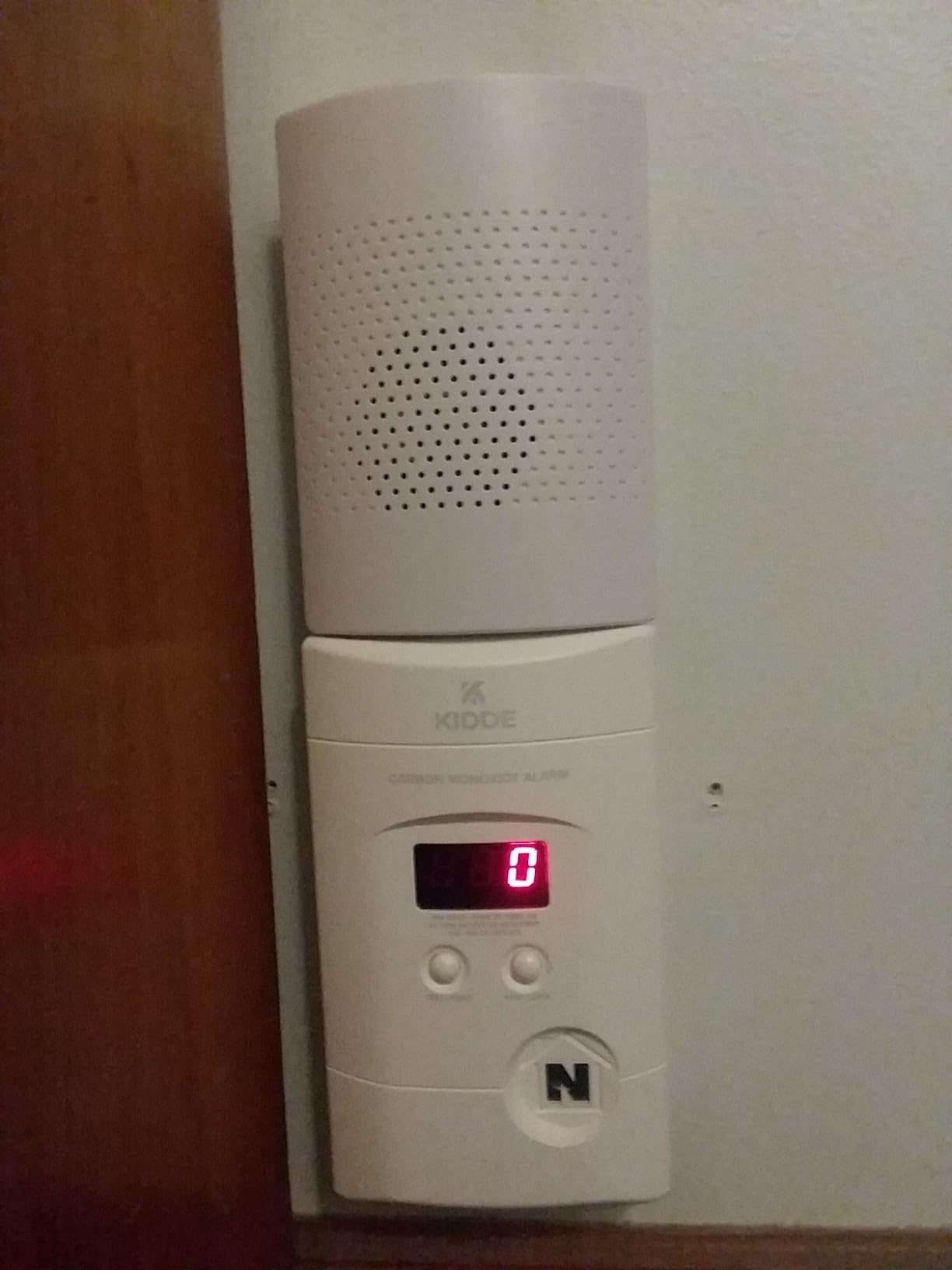
Why the display changes the diagnosis
Most display alarms stop counting around 30 ppm, and this one does not alarm below 35 ppm. That is not a defect; it is how UL 2034 thresholds are written to avoid waking a house at 3 am for a trace reading.
What it means practically is that the display can show you a creeping number between 30 and 70 ppm that would otherwise be invisible. That is your window to call a technician before anyone gets a headache.
Where it falls short
It is the bulkiest unit on our list at just over 6 inches tall and 3.75 inches wide, which matters in tight utility rooms. It also needs a 120V outlet, so it cannot cover a basement room that has none.
The 9V battery is user-replaceable, so you are back to a periodic swap despite everything else being maintenance-free. Budget for that before you install it.
3. First Alert CO605 Plug-In Alarm – Best Value for the Furnace Room
FIRST ALERT CO605 Plug-in Carbon Monoxide Detector with Battery Backup, White
Plug-in 120V with battery backup
Electrochemical sensor
85 dB alarm
End-of-life chirp
Pros
- Electrochemical sensor reads room-wide
- Compact 4.2 oz body
- Battery backup for outages
- Single test and silence button
- End-of-life chirp signals replacement
Cons
- No digital CO display
- Placement limited to where an outlet exists
The CO605 is the small, unglamorous workhorse. It is compact enough to disappear against a basement wall, it plugs into any standard outlet, and the electrochemical sensor is designed to read accurately anywhere in the room rather than only right next to the intake.
Basement placement for this one: the outlet on the wall across the room from the furnace, roughly 15 feet away, at an open walkway height. That keeps it out of the draft that a combustion appliance can pull, which is the main reason nuisance alarms happen in furnace rooms.
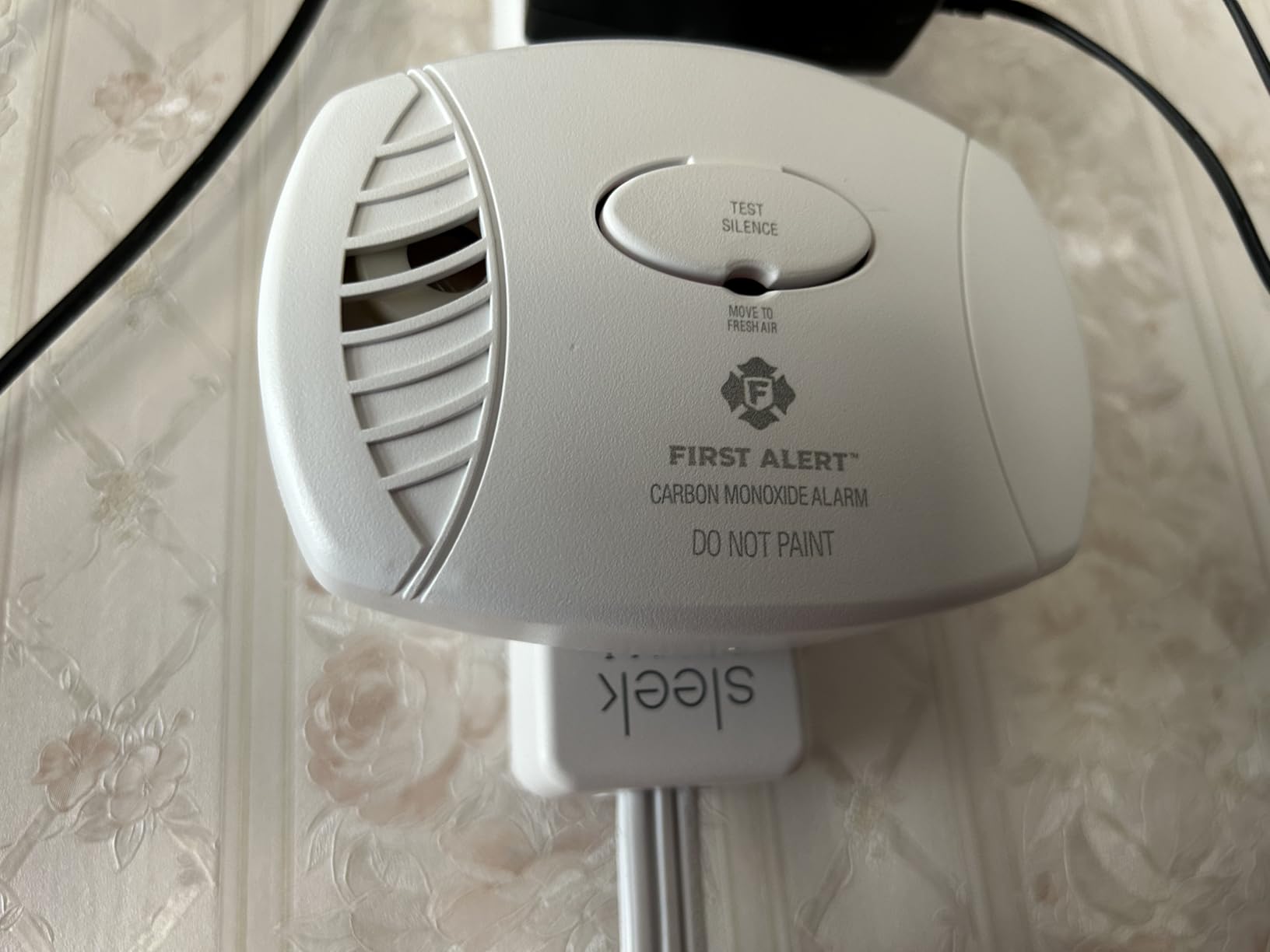
The single test and silence button is genuinely useful in a dusty utility room. It mutes the low-battery signal for up to eight hours, so you can clear an overnight chirp without disabling the unit and then get to the battery replacement in daylight.
First Alert also built in an end-of-life chirp. Several brands just go quiet, and you inherit an expired sensor with no warning at all. With more than 23k reviews at 4.6 stars, that reliability record is why this one has held its category ranking for years.
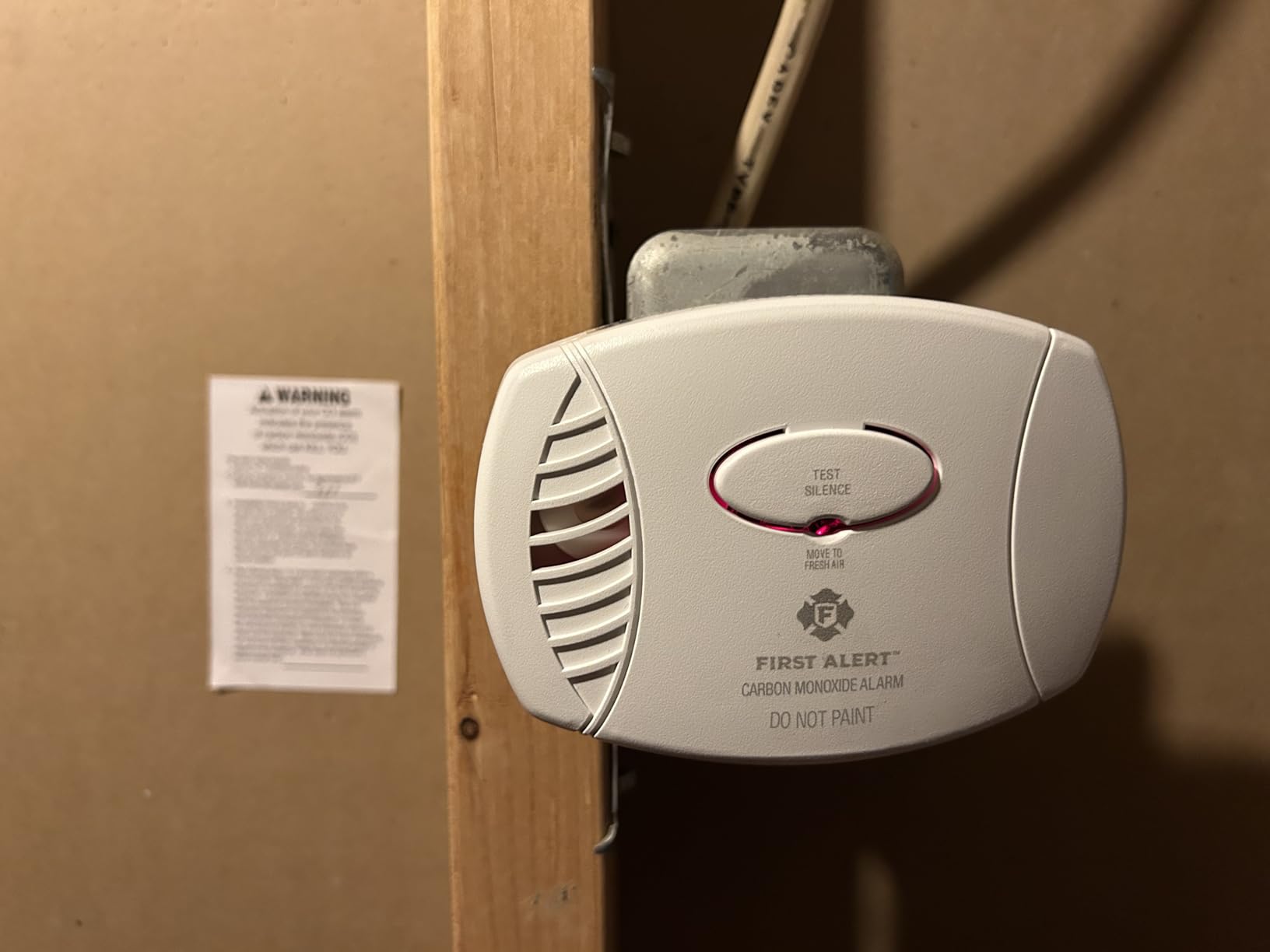
Why First Alert comes up so often in basement advice
Owners frequently report fewer nuisance alarms from First Alert units than from Kidde models, which matters a lot in a space with a dehumidifier, a laundry cycle and a furnace all running. The electrochemical sensor is the reason; it resists the humidity swings that trip older sensing chemistries.
It is also the alarm we recommend if you are replacing an aging unit in a rental and want something that just works without tuning. There is no app, no hub and nothing to configure.
Where it falls short
No display. If you want to know the concentration without an alarm sounding, this is not the unit. And the outlet requirement is absolute: a finished basement room with no wall outlet rules it out.
For those rooms, look at a battery unit instead. The same detection chemistry in a battery case gives you placement freedom at the cost of a display and periodic battery changes.
4. First Alert CO400 Battery Alarm – Best for Utility Closets
First Alert Battery Carbon Monoxide Alarm
9V battery powered
Electrochemical sensor
85 dB alarm
End-of-life chirp
Pros
- No outlet needed anywhere in the room
- 9V battery included and replaceable
- Wall mount bracket included
- Light enough for travel and RVs
- Loud hard-to-miss test beep
Cons
- No digital CO readout
- 9V battery needs periodic replacement
- Cannot verify detection without a CO source
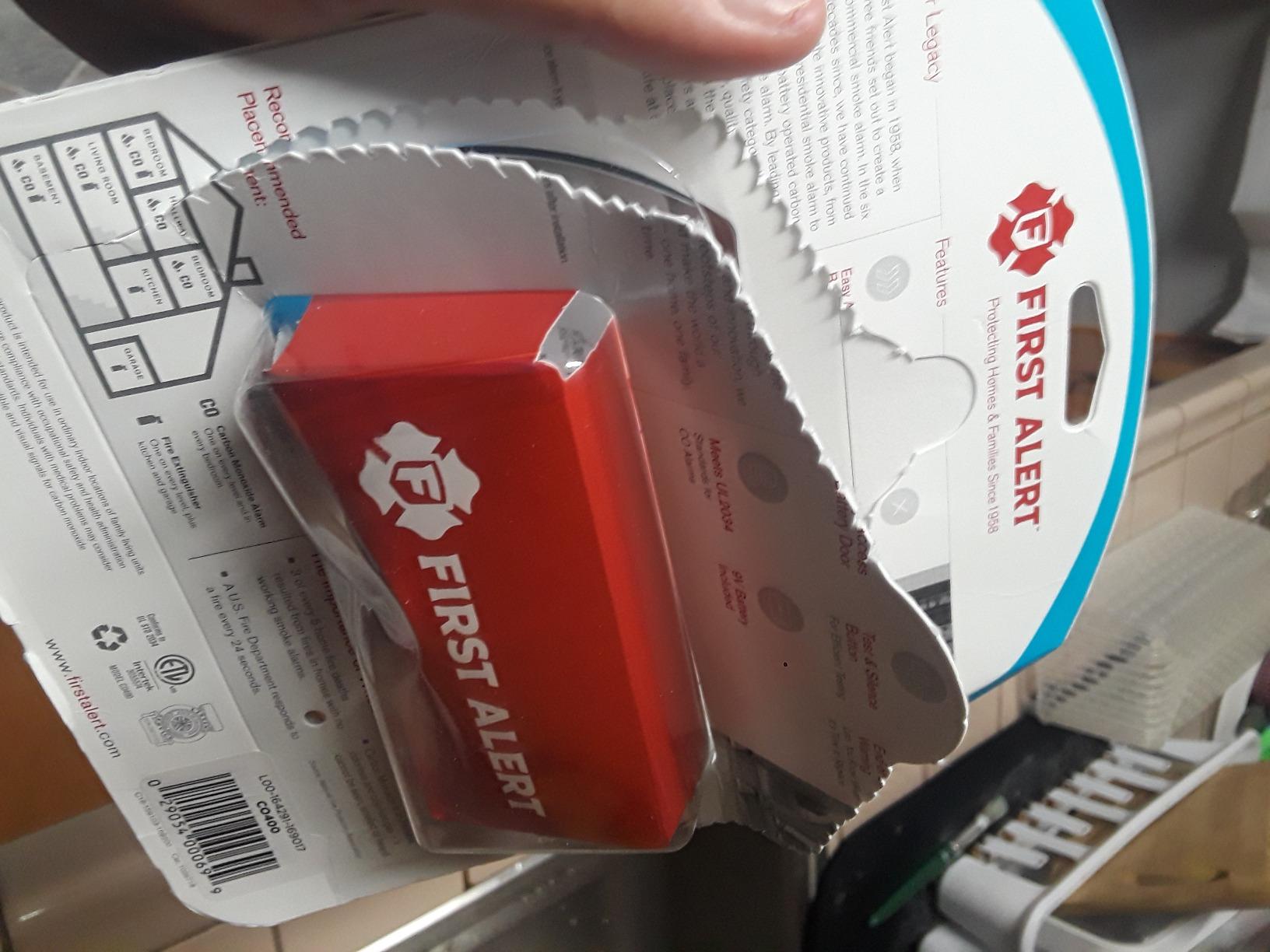
Sometimes the best location for a basement CO alarm is a spot with no electrical outlet at all. Water heaters in older homes often sit in a finished closet that was wired before anyone thought to add a receptacle, and this is the alarm that solves that.
Basement placement for this one: on a wall or shelf inside the water heater closet, on an outside wall where the air is least likely to be stale and undisturbed. Keep it clear of any vent or flue opening, because air drawn straight from an exhaust port is exactly what produces false alarms.
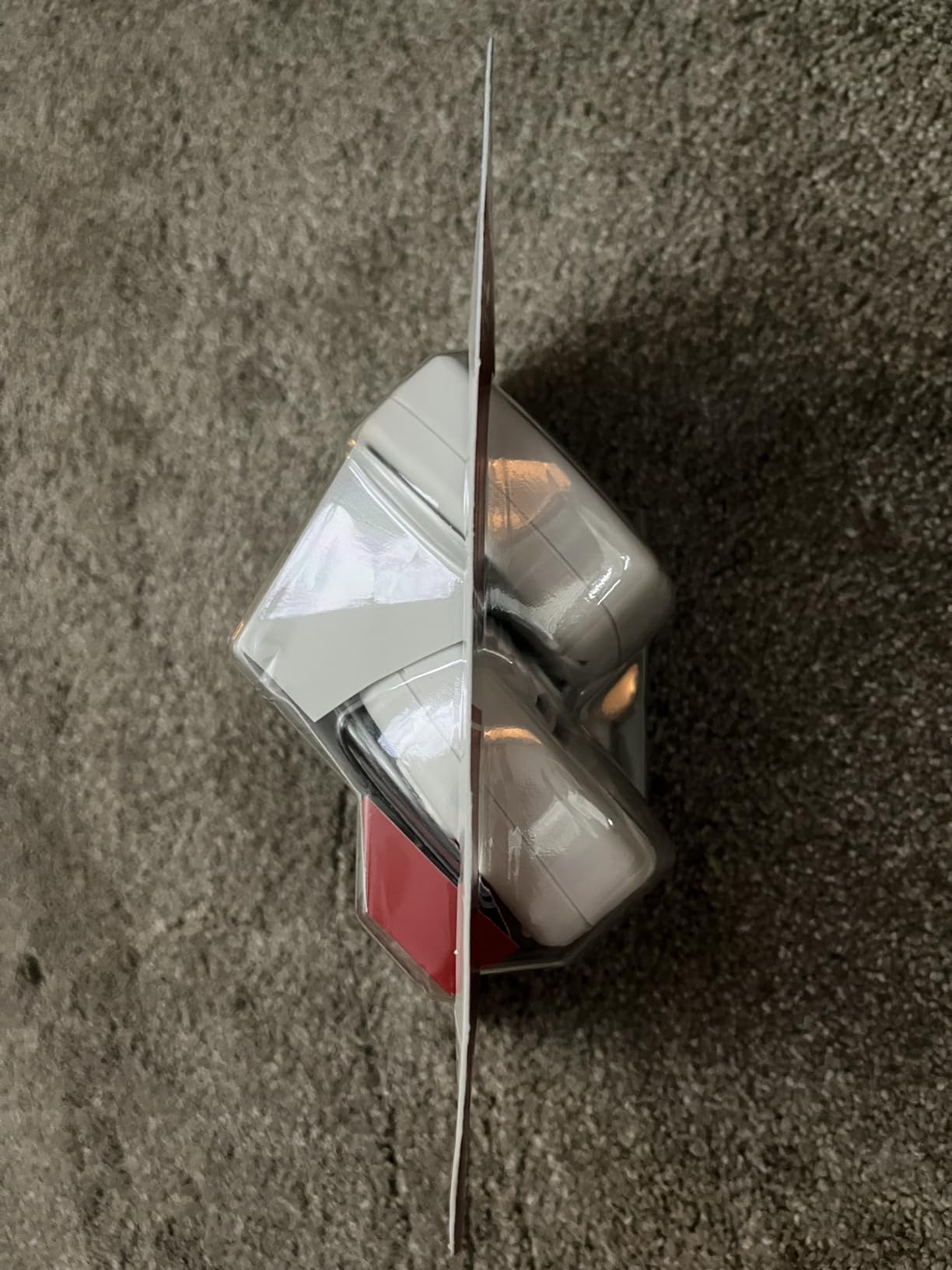
Reviewers across more than 21k ratings call the alarm loud and the installation close to instant. The included bracket and 9V battery mean it is monitoring within a few minutes of opening the box.
That combination of no-outlet placement and low cost also makes it the natural second and third alarm. Homeowners routinely run one near bedrooms, one in the basement and one packed in a travel bag, which is how you cover a whole home without hardwiring anything.
Where this battery unit earns its place
It is the right answer for a detached workshop, a basement with no usable outlets, and any rental where you cannot touch the wiring. The electrochemical sensor is the same class of sensing used in the plug-in models, so you are not trading away detection quality.
It is also the easiest unit to test honestly. Press the button, listen for the beep, and you know the siren path and the battery are both working before a real event depends on them.
Where it falls short
No display and no event log, so you get no reading and no history. There is also no way to confirm the sensor responds to actual carbon monoxide without exposing it to a CO source, which most households will never do.
The 5-year warranty is shorter than several competitors here. Plan on a replacement cycle rather than assuming a decade of service, and mark the purchase date on the unit itself.
5. First Alert CO615 Plug-In Alarm – Best for Peak Level Memory
First Alert Plug in Carbon Monoxide Alarm with Digital Display
Plug-in 120V with 2-AA backup
Digital display
Peak level memory
85 dB alarm
Pros
- Display shows live CO level
- Peak memory recalls the highest reading
- Battery backup during outages
- Plug-and-play with no wiring
- End-of-life chirp
Cons
- Requires a wall outlet for main power
- AA backup batteries still need occasional replacement
The CO615 does something the CO605 does not: it remembers. The peak level feature stores the highest carbon monoxide concentration the unit ever measured, which is the single most useful diagnostic feature in a basement.
Basement placement for this one: the outlet closest to the bottom of the basement stairs that is at least 15 feet from the furnace. That position gives you both an early reading and an alarm that carries up the stairwell toward the bedrooms.
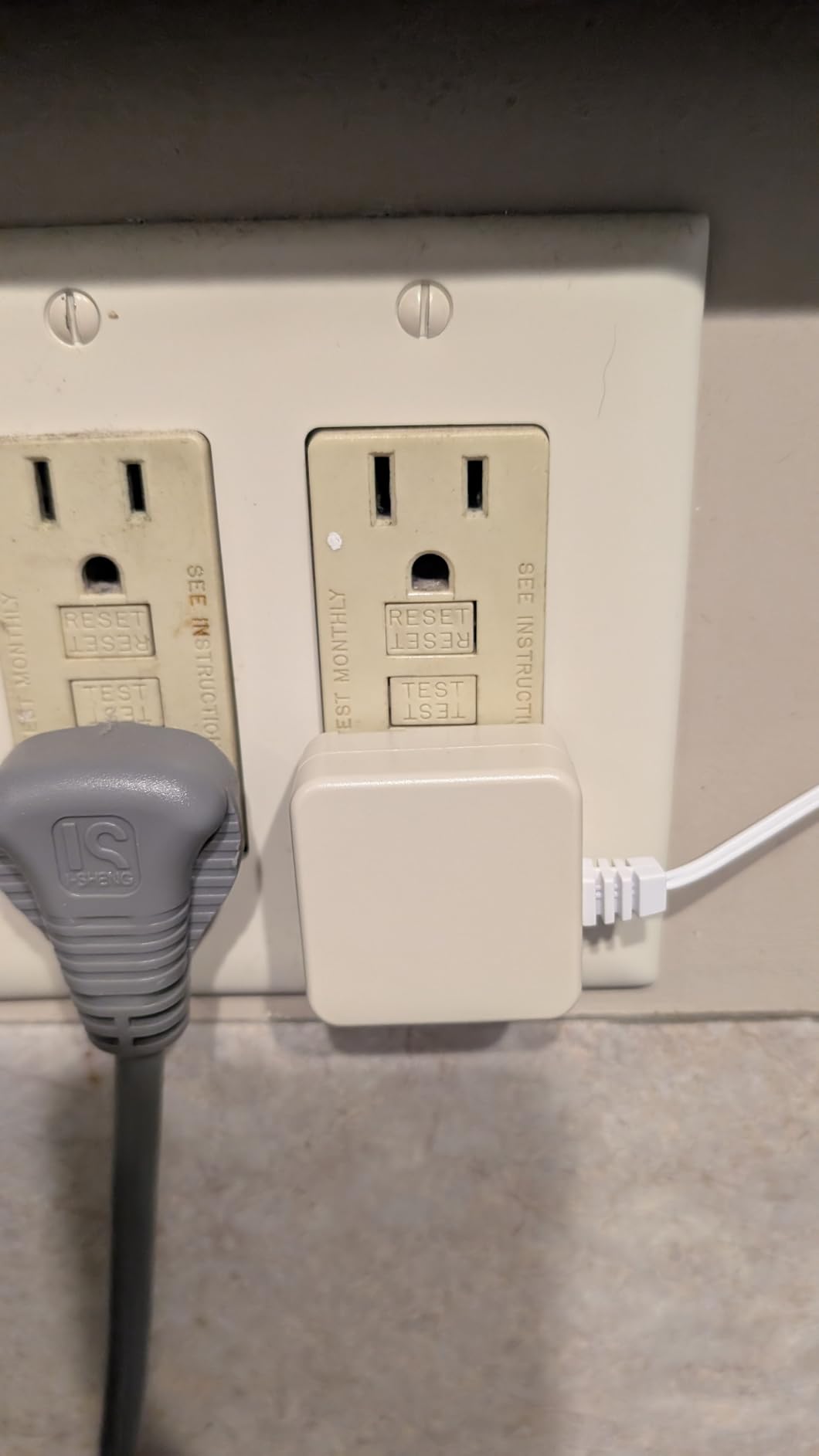
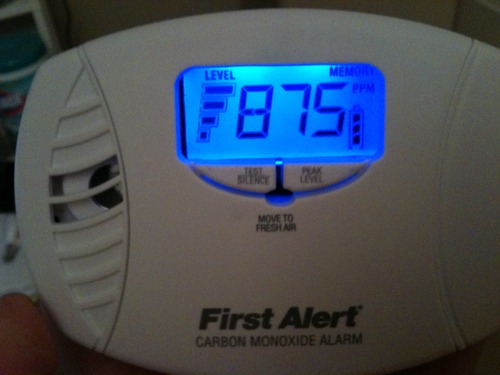
Peak memory turns a one-night alarm into a usable history. If the alarm sounded at 2 am and stopped, the display still shows you the concentration that triggered it, and you can tell an appliance fault from a passing event rather than guessing.
Owners rate it 4.6 out of 5 across more than 8,800 reviews, with the display named repeatedly as the reason they moved up from an LED-only plug-in model. The 7-year warranty also beats most of the battery models here.
How we use the peak reading
The routine is simple: check the display every month along with the test button. If the peak reading ever moves above zero, something introduced CO into that room and you can investigate before anyone is exposed.
That is a meaningful upgrade over a siren-only alarm in a space nobody occupies regularly. It converts a device that only tells you something went wrong into one that tells you how wrong it was.
Where it falls short
Same outlet limitation as any plug-in model. It cannot cover a closet or a finished room with no receptacle, which is exactly where a battery unit wins.
The 2-AA backup is smaller and less common than a 9V, so keep a spare pair on hand rather than assuming you can find replacements during an outage. The cord is also shorter than the Kidde model, so plan the outlet location carefully.
6. X-Sense SC07 Combo Alarm – Best Two-in-One Sealed Battery Unit
X-Sense Smoke Detector Carbon Monoxide Detector Combo, SC07, 1-Pack
Photoelectric smoke plus electrochemical CO
10-year sealed lithium battery
UL 217 and UL 2034
85 dB
Pros
- Ten-year sealed battery with no maintenance
- Smoke and CO in one unit
- Photoelectric sensor resists cooking fumes
- UL 217 and UL 2034 certified
- Wall or ceiling mounting
Cons
- Standalone only with no wireless interconnection
- Larger and heavier than a CO-only alarm
The SC07 is the answer when a basement finished space needs both smoke and CO coverage in a single hole in the wall. It carries a photoelectric smoke sensor and an electrochemical CO sensor under one sealed 10-year lithium battery.
Basement placement for this one: on the ceiling or an upper wall near the finished living area rather than down in the raw utility corner. Combo alarms are rated to be mounted like smoke detectors, so unlike a CO-only unit this one can go overhead.
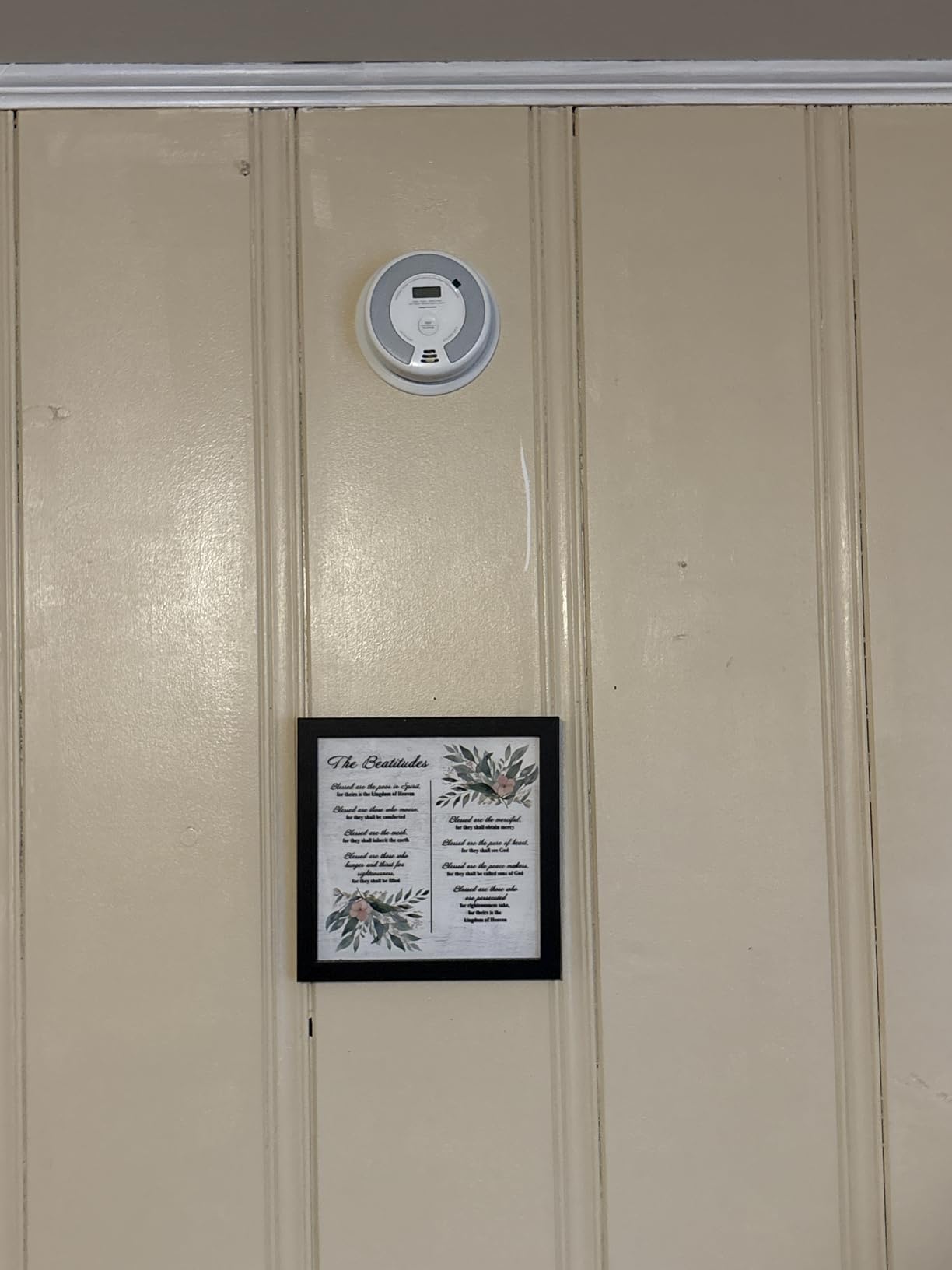
No battery changes for a decade means no 3 am low-battery chirp, and in our experience that single benefit removes more household irritation than any other feature on this list. It also removes the need for an outlet, which matters in a basement bedroom or egress area.
It meets both UL 217 for smoke alarms and UL 2034 for CO alarms, with clear certification markings. Ratings sit at 4.5 stars across more than 4,200 reviews.
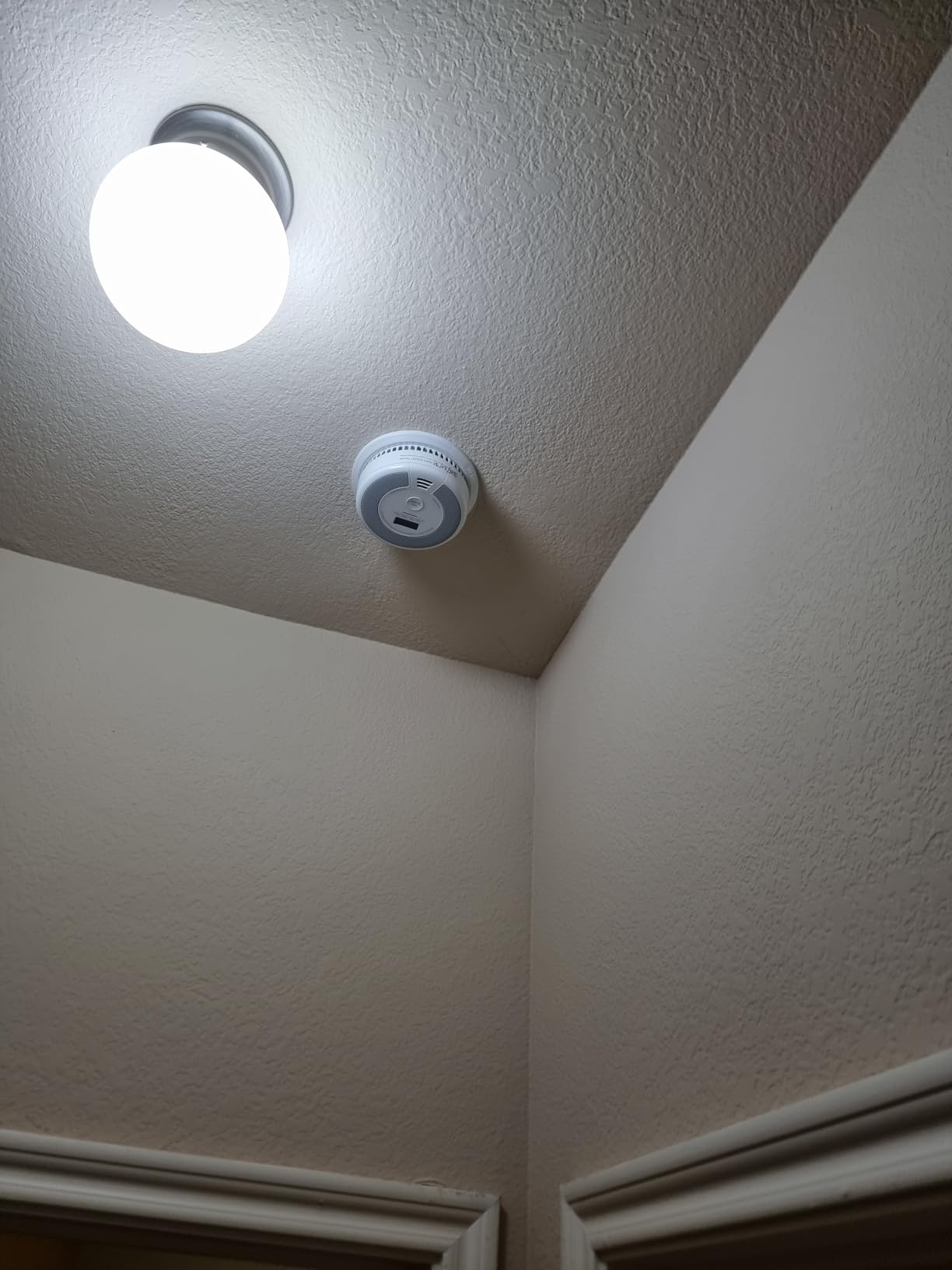
Where the two-in-one design wins
If you are bringing a basement up to code as living space, this covers two requirements with one device and one battery replacement schedule. That matters when the plumbing is still open and every extra hole gets patched later.
The photoelectric sensor is a real improvement in a space with a laundry area, because it responds to slow-smoldering fires and shrugs off the aerosol and steam that trip ionization units.
Where it falls short
This specific model is standalone. X-Sense makes a separate wireless version for interconnection, and this one will not talk to it or to any smart hub, so it will not push a phone notification or repeat an alarm elsewhere in the house.
It is also 16 ounces and 5.7 inches across, noticeably bulkier than a dedicated CO alarm. For pure CO detection in a utility room, a slim plug-in model is the better tool.
7. Kidde KN-COEG-3 CO and Fuel Gas Alarm – Best for Gas Utility Rooms
Kidde Carbon Monoxide + Explosive Gas, Natural Gas & Propane Alarm, Plug-in with 9V Battery Backup, Digital Display, 85 dB Alarm, LED Status Indicators, 3rd Edition
CO plus explosive gas sensing
Plug-in 120V with 9V backup
Digital display shows GAS
85 dB
Pros
- Alerts on both CO and fuel gas
- Display identifies which hazard was found
- 9V backup keeps it live during outages
- Peak level memory logs events
- Well suited to basements and utility rooms
Cons
- Only detects combustible natural gas or propane
- Plug-in design needs an outlet
- Bulkier than CO-only alarms
If your water heater or furnace runs on natural gas or propane, this unit covers two hazards at once. The KN-COEG-3 senses carbon monoxide and explosive fuel gas, and the display tells you which one it found by showing GAS instead of a number.
Basement placement for this one: on the wall near the gas appliance but not directly above it, at least 15 feet away where the layout allows, and never next to a gas vent or regulator. You want room air, not the supply line itself.
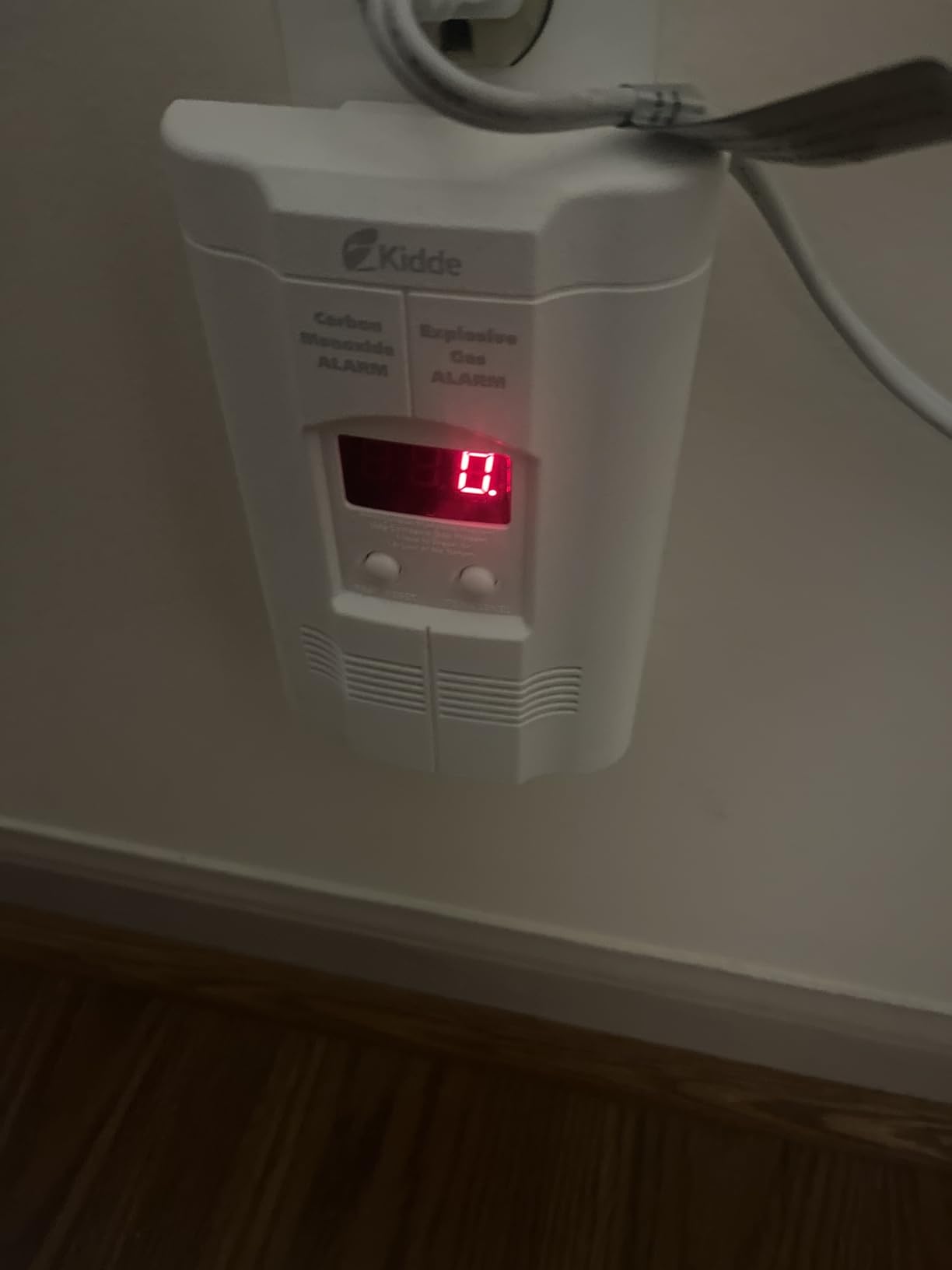
That distinction matters because a leaking fuel gas supply line is a different emergency from a slow CO leak. One means evacuate and call the gas utility from a safe distance, the other means ventilate and call a technician.
Peak level memory and a 9-volt backup round out a package that works through outages. It holds 4.5 stars across roughly 738 reviews, with a slightly higher share of one-star feedback than the CO-only models.
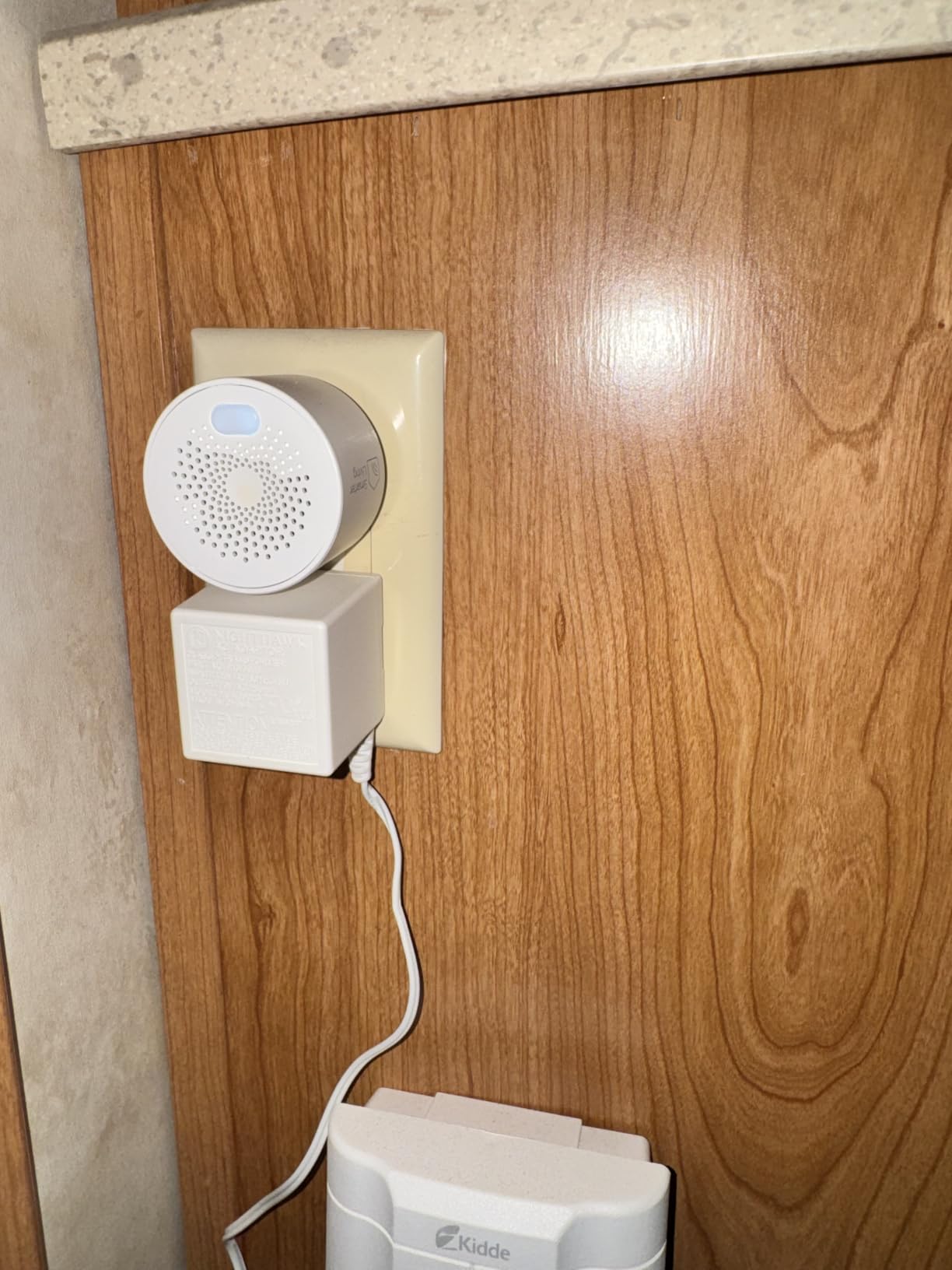
When a fuel gas alarm is worth the extra step
Owners who bought it for the gas sensing tend to keep it for the display. When the siren sounds, knowing whether you are dealing with CO or with raw fuel gas changes the first five minutes of your response entirely.
It is also a reasonable second unit rather than a primary one. Many homeowners run this beside a display-equipped CO alarm so one covers gas detection and the other covers slow leak diagnosis.
Where it falls short
It only detects combustible natural gas and propane. It will not flag carbon monoxide from a wood stove or a kerosene heater, and it will not sense methane from a sewer or other non-combustible sources.
Its 1-star share is roughly triple that of the pure CO models, so expect more owner complaints about fit and finish. It also needs an outlet, so it cannot cover an unpowered closet.
8. BRK SC9120B Combo Alarm – Best for Wired Homes
BRK SC9120B Smoke and Carbon Monoxide Alarm
Ionization smoke plus CO sensor
Interconnectable with BRK and First Alert
9V battery included
7-year warranty
Pros
- Interconnects so every alarm sounds together
- Exact replacement for older BRK units
- Separate latching indicators for smoke and CO
- Battery-only operation survives outages
- Universal mounting bracket
Cons
- Alkaline 9V battery needs periodic changes
- Ionization sensor is more nuisance-sensitive
- Battery may run out sooner than the warranty period
The SC9120B is the pick for anyone with BRK or First Alert hardwired alarms already in the house. It is interconnectable, so when it sounds, every matching alarm in the network sounds with it.
That single fact answers the gap that worries us most about basement alarms. A basement alarm that nobody upstairs can hear is a warning card on the wall, and one unit that repeats through the network turns it into a whole-home warning.
Basement placement for this one: replace the existing unit at the old bracket location, or mount it in the hallway outside the mechanical room so the signal reaches the sleeping level through existing wiring.
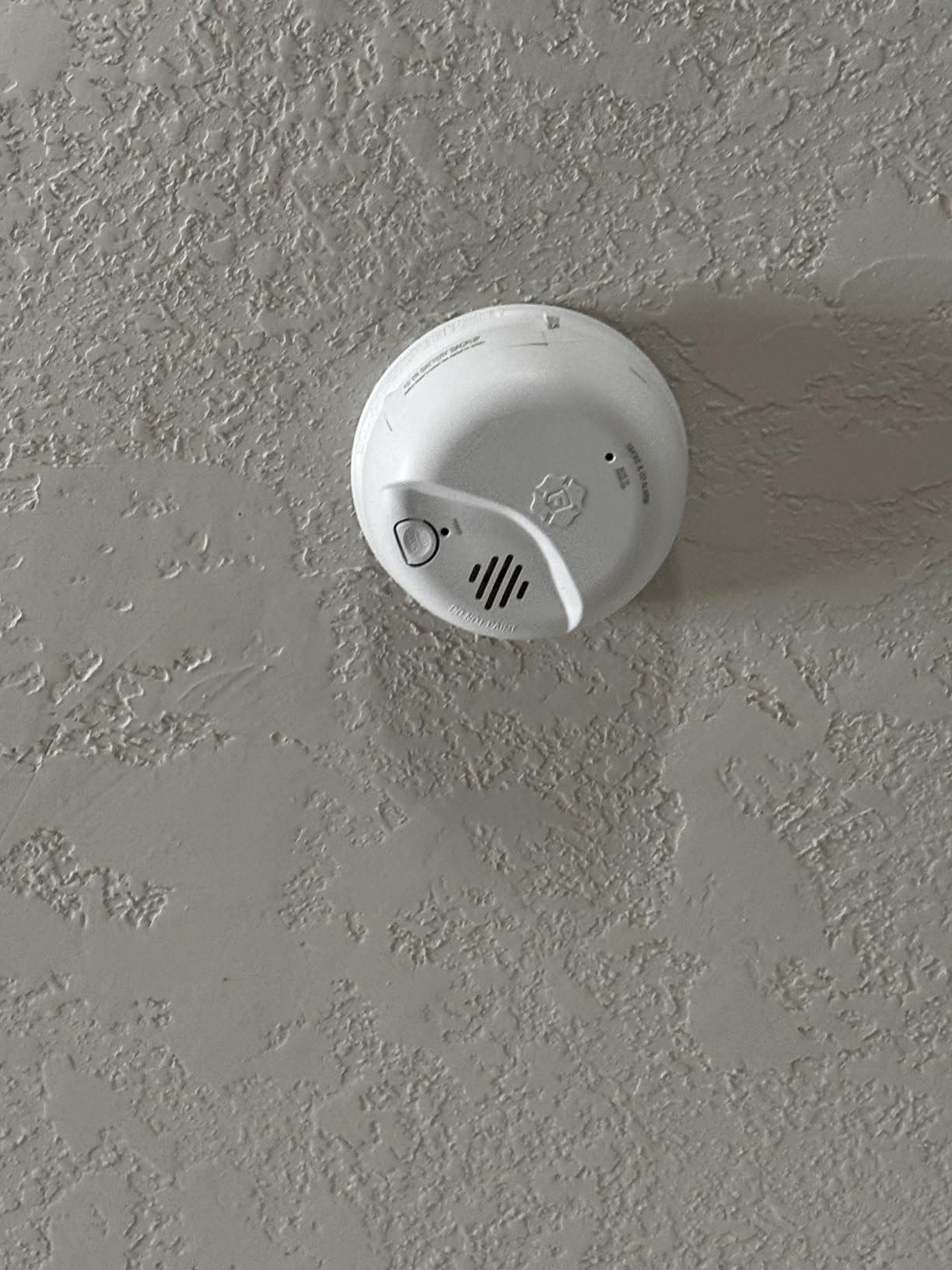
Reviewers overwhelmingly describe it as an exact swap for aging units, keeping existing wiring and interlink compatibility. Separate latching indicators show whether smoke or CO triggered it, which speeds up the diagnosis after the fact.
A 9V battery is included and keeps the alarm alive during an outage even though the unit is wired. It holds 4.6 stars across about 500 reviews, which is a thinner history than the Kidde and First Alert flagships.
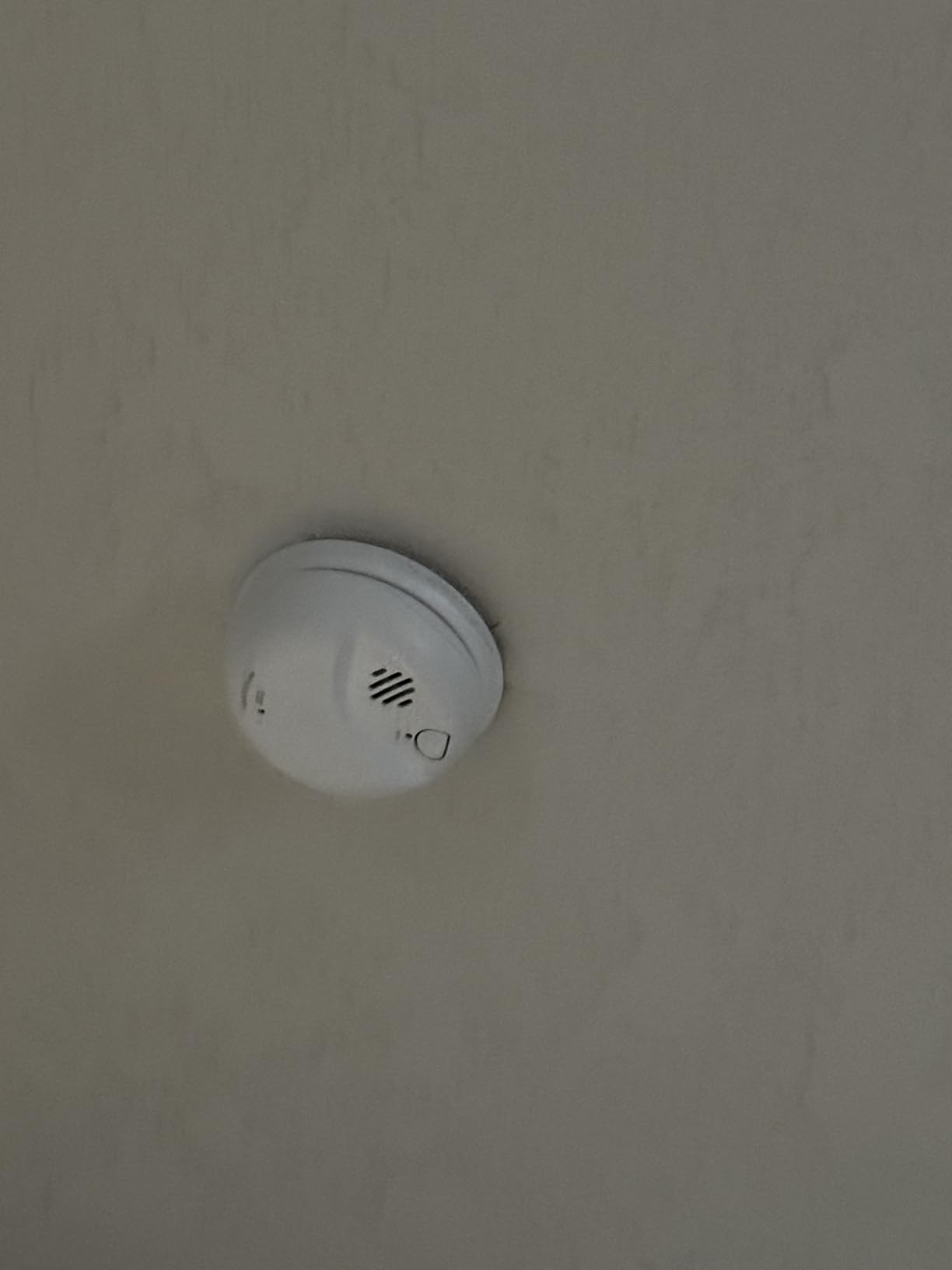
How to handle interconnection properly
Interconnected alarms are the only reliable fix for a basement nobody hears. Press the test button on one unit and the whole network should sound; if it does not, the interconnect wiring or the pairing is wrong.
Renters usually cannot create this network, which is why so many rental households end up relying on a phone alert from a smart plug-in unit instead. Owners of wired homes get a stronger answer for the same wall.
Where it falls short
It is a combo unit with an ionization smoke sensor, which is more sensitive to nuisance alarms from dust and aerosol than a photoelectric sensor. In a dusty mechanical room we would still place a dedicated CO alarm closer to the appliances.
The replaceable alkaline 9V battery is the weak point. Some owners report it running out sooner than the 7-year warranty suggests, so test monthly and swap on a calendar rather than waiting for the chirp.
9. Siterlink A4602A-7 Plug-In Alarm – Best 10-Year Backup Battery
Siterlink Carbon Monoxide Detectors Plug in,10 Year Replaceable Battery
AC plug-in with 10-year battery backup
Electrochemical sensor
Foldable travel plug
Soft status LED
Pros
- Ten-year battery backup needs no cell swaps
- Electrochemical sensor tuned against false alarms
- Foldable plug packs for travel or hotels
- Quiet breathing-style status light
- Fast plug-and-play setup
Cons
- No digital display of CO level
- Placement requires an available outlet
The Siterlink A4602A-7 is unusual for one reason: it is a plug-in unit with a ten-year battery backup. Most plug-in alarms ship with a 9V or two AAs that you will replace during your life, and this one does not.
For a basement, that combination is close to ideal. You get continuous AC power in normal conditions and decade-long backup when the power drops, which is the same scenario that drives people to fire up gas appliances during an outage.
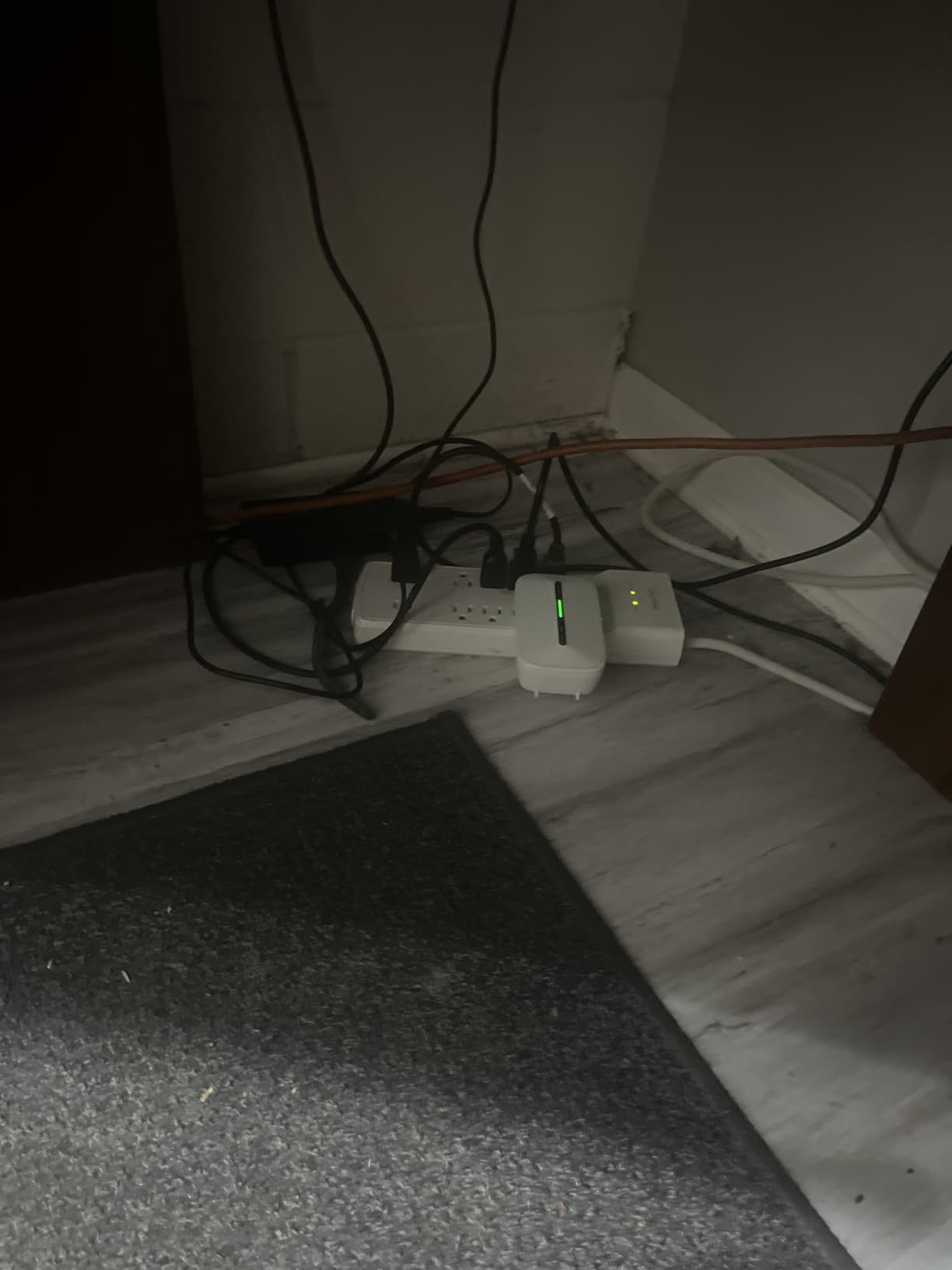
Basement placement for this one: any outlet in the mechanical room that is not shared with the furnace, and not directly above an appliance. The foldable plug also means you can carry it between the basement and a hotel room when you travel.
Reviewers focus on the unusual battery spec and the quiet green status light, which pulses slowly enough not to disturb a bedroom. It holds 4.6 stars across roughly 320 reviews.
Why the ten-year battery changes the maintenance plan
Most of the advice about CO alarms is test monthly, change batteries yearly. A sealed ten-year backup removes the second half of that routine, so there is nothing left to forget and no chirp at 4 am to train you to ignore.
Keep the test routine anyway. The end-of-life date on a sealed battery unit is fixed, and checking the alarm monthly is what tells you the sensor is still alive.
Where it falls short
No display, so it gives you a siren and a status light and nothing more. You cannot see a rising CO trend, which is the reason we put a display model in most basements.
Its review history is thin at around 320 ratings. The engineering is straightforward and the sensor type is right, but there is less long-term owner data behind it than the Kidde and First Alert models, which is worth weighing if you are replacing a trusted unit.
10. Heiman C1-S Battery CO Alarm – Best for Renters and Tight Spaces
Heiman Carbon Monoxide Detectors, 10-Year Product Life CO Detector, C1-S
FIGARO electrochemical sensor
10-year sealed battery
UL 2034 5th Edition
85 dB audio-visual
Pros
- Very small 70 mm housing fits discreetly
- Ten-year sealed battery with no hardwiring
- UL 2034 5th Edition and CSFM approved
- Easy DIY install with screws or adhesive
- Works where there is no outlet
Cons
- No digital display of CO level
- Thin review history with some sensitivity questions
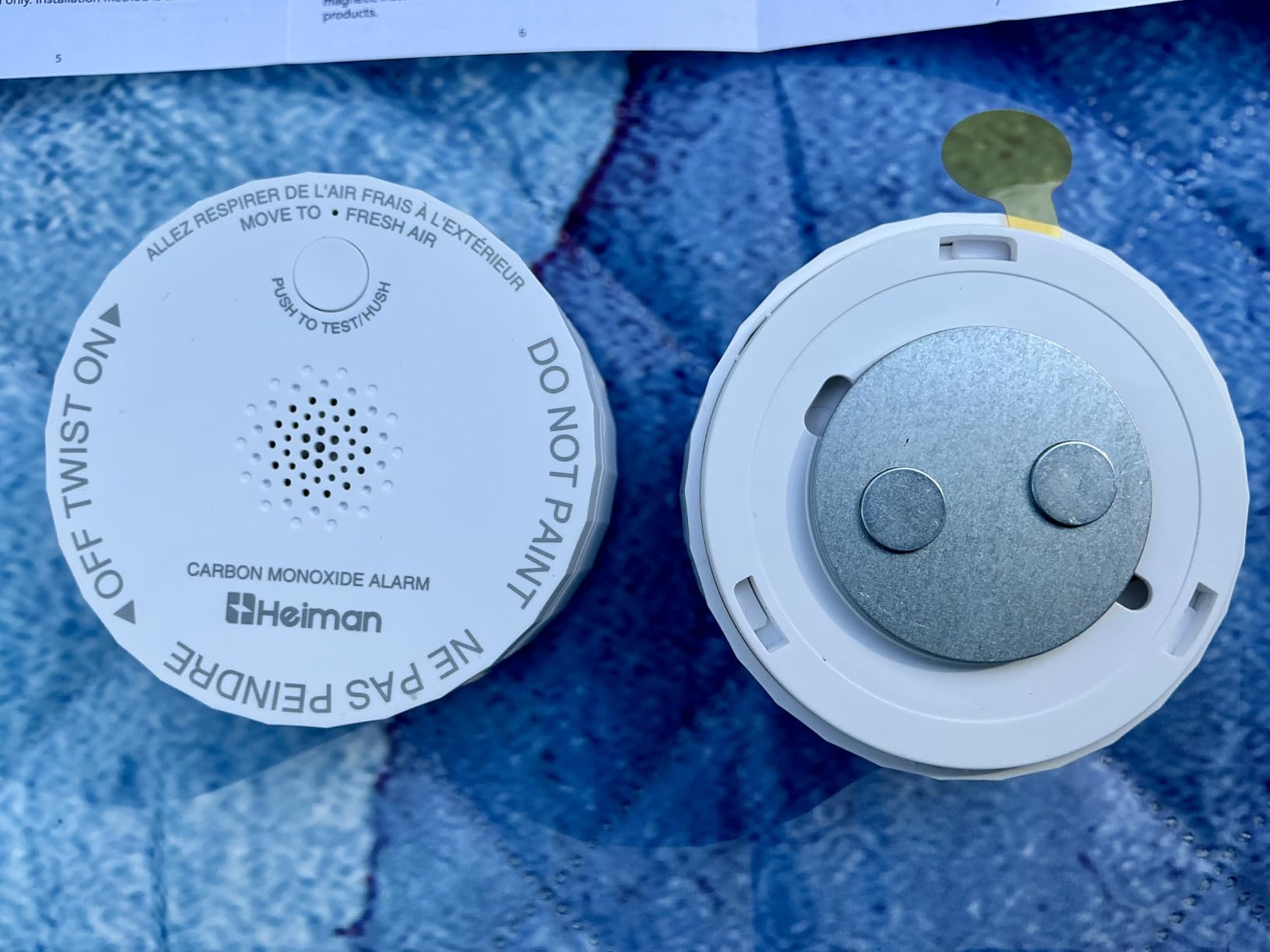
The C1-S is the smallest alarm on this list at 70 mm across, and it is the one we point renters toward. It mounts on a wall, a ceiling or a desktop with screws or adhesive, and the sealed lithium battery means nothing to wire and nothing to maintain.
Basement placement for this one: high on a wall near the stairwell entrance, at about the height of a smoke detector. Because it is so small, people tend to set it on a shelf, and a shelf in a cold basement corner is often the deadest air in the room.
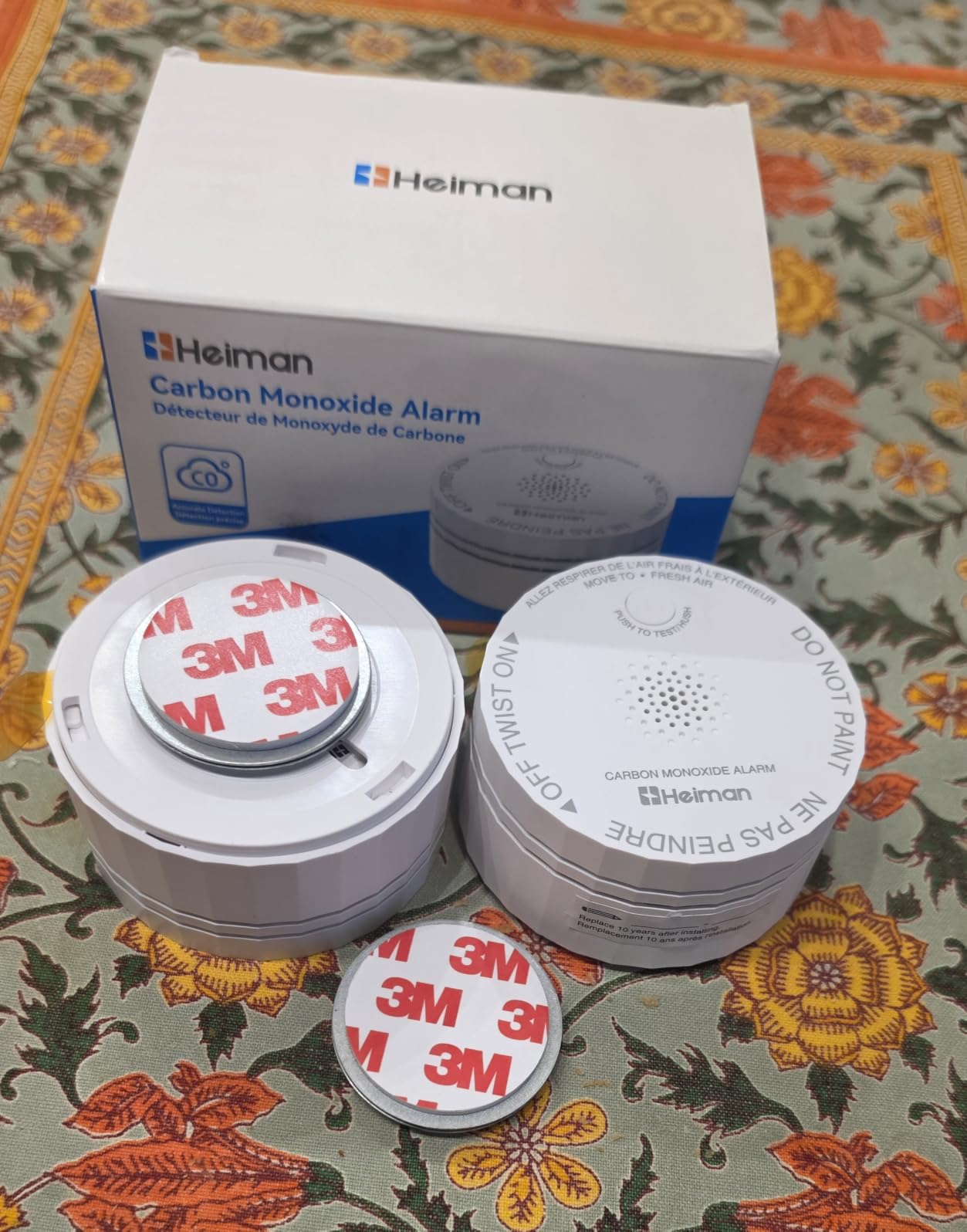
The Japan-made FIGARO electrochemical sensor is the specification that earns trust here, and the UL 2034 5th Edition listing with CSFM approval is the certification bar that matters for rentals and code compliance.
Owners like the 85 dB audio-visual alarm for how much sound it produces from a housing this size. At 4.4 stars across about 110 ratings, it has the smallest review base of our ten, and a handful of buyers question the test button behavior.
Where a sealed battery unit earns its place
Ten years of service with no battery change is genuinely useful in a spot you do not visit often. A unit in a basement bulkhead or a closed utility closet is exactly the alarm nobody remembers to check.
Because there is no outlet requirement, it also solves the finished basement problem. If a room was built without a receptacle and you cannot add one, this is the shortest path to coverage.
Where it falls short
No display, and no peak memory, so you cannot diagnose a slow leak from the unit alone. On a heating season basement we would still want a display model near the appliances.
The 4.4 rating with a 7 percent one-star share reflects a thinner track record. A small number of owners report difficulty testing it or question sensitivity in their particular setup, so verify the alarm with the test button the day it arrives.
How to Choose a Basement CO Detector
The single biggest mistake in a basement is choosing by price alone. A sealed 10-year battery unit costs more up front than a 9V model but removes ten years of battery changes and the low-battery chirps that train people to ignore alarms. A plug-in model with battery backup is the more common choice because it never has a dead battery, but it locks you to wherever an outlet exists.
Sensor type is the next filter, and it is simpler than the marketing suggests. Look for an electrochemical sensor specifically. Biomimetic and metal oxide semiconductor designs were common on older units and are the ones most often associated with nuisance alarms and drift in humid utility rooms, so we would not start there in 2026.
Then consider the display, because this is where basements differ from bedrooms. Most residential alarms only display or alarm above roughly 30 ppm, and a digital display that reads zero is not proof that the basement is clean. It means the concentration is below what the unit is built to show. If you want to catch a slow furnace leak before anyone feels symptoms, a display with peak level memory is worth the premium.
For readings below that floor, the tool you want is not a consumer alarm at all. A handheld low-level CO meter that reports single-digit ppm lets you check each combustion appliance annually and find a marginal furnace before it becomes an emergency. Treat the meter as a diagnostic companion, not a replacement for an alarm, because diagnostic meters do not sound an 85 dB siren at 3 am.
Interconnection deserves more thought than most guides give it. BRK and First Alert hardwired alarms can be wired to sound together, which is the most reliable way to make a basement alarm audible from a bedroom two floors up. If you cannot rewire, a smart plug-in unit that sends phone notifications covers the away-from-home case, though nobody upstairs hears the siren while everyone is asleep.
Certification is the baseline, not a feature. UL 2034 is the standard written for residential carbon monoxide alarms, and UL 217 covers smoke alarms. Combo units like the X-Sense SC07 and the BRK SC9120B carry both. Check the listing mark on the unit itself rather than trusting a product photo.
One maintenance habit removes more CO risk than most owners expect. A clogged or dirty furnace filter restricts airflow and can push combustion gases back into the room instead of up the flue, so keeping the filter fresh belongs in the same routine as pressing the test button. Our picks for the best carbon filters are worth a look if yours is more than a year old.
Lifespan and maintenance are the last considerations. Replace any detector older than five to ten years regardless of how it looks, and write the purchase date on the unit with a marker. Test monthly with the button, replace user-replaceable batteries on a calendar, and clear dust off the vents once a season. Our general guidance on smoke and CO combo coverage is covered in the best smoke detectors roundup.
If the alarm does sound, the response is the same in every case: get everyone and pets outside immediately, count heads, call 911 or the fire department from outside, and do not re-enter until the fire department says the home is clear. Open doors and windows on the way out if you can do it without delay. Never try to find the source yourself.
Nuisance alarms in basements are usually traceable. Dust on the sensor, humidity above 80 percent, aerosol cleaners, a dehumidifier running next to the unit, or a car idling in an attached garage below can all trigger one. Moving the alarm away from the garage door and away from any vent opening solves most of it.
Frequently Asked Questions
Where should I place a carbon monoxide detector in a basement?
Install one on every level including the basement, at least 15 feet from any furnace, water heater, boiler or fireplace, and never directly above or beside an appliance. The best spot is near the doorway to the mechanical room or at the bottom of the basement stairs, where the alarm is audible upstairs. Mount it on a wall or tabletop at eye level rather than on the ceiling, and keep it clear of vents, garage doors, dampness and direct sunlight.
How far away should a carbon monoxide detector be from a furnace?
At least 15 feet from any fuel-burning appliance. That distance keeps the alarm reading the air in the room instead of the exhaust plume coming directly off the appliance, which is the main cause of false alarms in furnace rooms. If your basement layout prevents that distance, place the alarm in an adjoining area near the doorway rather than squeezing it beside the equipment. CO mixes into room air and rises slowly, so an alarm near the doorway usually catches a growing leak earlier.
Can a water heater set off a carbon monoxide detector?
Yes, if the water heater burns gas, oil or propane and its venting is cracked, blocked or improperly sized. A water heater is one of the most common sources of residential carbon monoxide, which is why a detector belongs near any combustion appliance room. A properly venting electric water heater produces no carbon monoxide at all. If your basement alarm sounds near the water heater repeatedly, have the flue and the combustion chamber inspected rather than silencing the unit.
Which is better, Kidde or First Alert?
Both are reliable, safety-certified manufacturers and both meet UL 2034. Kidde models appear more often with digital displays and peak level memory, which matters if you want to read a slow leak before the alarm sounds. First Alert models are frequently praised for fewer nuisance alarms in humid utility rooms and often include an end-of-life chirp. Owners on forums often report Kidde reliability with more low-battery chirping, and First Alert reliability with fewer false alarms but no display on the entry-level models.
How long do carbon monoxide detectors last?
Replace any CO detector seven years after the manufacture date, and no later than ten years, even if it still tests fine. The electrochemical sensing element ages, and many units have no way to report that the sensor has degraded. Check the manufacture or expiration date printed on the unit when you install it, and write the purchase date on the case so you are not guessing later. Replace any detector inherited from a previous owner if you cannot establish its age.
Why does my basement CO detector keep going off with no CO present?
The usual causes are dust on the sensor, humidity above 80 percent, aerosol cleaners nearby, a running dehumidifier, or exhaust air from an attached garage below the room. Move the alarm away from vents, garage doors and appliances, clean the vents with a soft brush, and keep sprays and solvents out of the room. If an alarm sounds repeatedly with the causes above removed, treat it as real and have the furnace, water heater and their venting inspected before resetting it.
Final Verdict
The Kidde KN-COB-LP2 is our pick for the best carbon monoxide detectors for basements because it removes the two failure modes that actually matter down there: no outlet dependency and no dead battery during a power event. If you want to diagnose a slow leak before it becomes an emergency, add the Kidde KN-COPP-3 or the First Alert CO615 on the far side of the room.
Whichever unit you choose, the best carbon monoxide detectors for basements still only work if someone hears them. Run one alarm in the basement mechanical room and one near your upstairs bedrooms, keep them within seven years, press test on both every month, and have a technician check your flue and venting annually.


