

Most people do not fail at commuting because of traffic. They fail at the parking, the transfer, and the twenty minutes of standing on a platform hoping the train arrives. For anyone covering between two and ten miles door to door, the best electric scooters for commuting collapse that whole sequence into one continuous ride. I have spent the last few months riding the ten models below across broken asphalt, wet cobbles and long suburban stretches, and the differences between them are much larger than the spec sheets suggest.
This is not a list of the loudest marketing numbers. Every scooter here is judged on what actually matters once you are standing over it at seven in the morning: how far it really goes on a charge, how hard it is to carry up three flights, whether the brakes are progressive or grabby, and whether the company answers the phone when a part fails. We publish the downsides too, because the roundups that skip them are the ones you regret after a month.
One note before we start. If your commute involves stairs, a train with a no-luggage rule, or a walk of more than a mile at the far end, weight matters more than range, and the two premium picks here are not the right answer for you. Our methodology section below explains exactly how we weighted that trade-off, and each review flags who the scooter suits and who it does not.
How We Picked the Best Electric Scooters for Commuting in 2026
We assembled this list from ten scooters that sit in the entry-level to mid-range commuter band, which is where commuter scooters actually live. Models above that are performance machines you ride for fun, and models below it are usually toys with a headline range figure attached. We then rode each one on a mix of pavement types and at several rider weights, because the same scooter behaves very differently at 130 pounds and at 220.
Six criteria decided the order. First is range headroom: we only trust a scooter if its claimed figure leaves enough spare capacity for a round trip in Eco mode after derating. That number appears in every review. Second is carry weight, third is braking quality, fourth is lighting for night riding, fifth is warranty length and parts support, and sixth is build quality over rough surfaces. Our rider-weight observations are our own; every specification, rating and review count comes from the manufacturer listing and its verified buyer reviews.
If you are still building your kit, our adult electric scooter guide covers the wider category, and our long-range electric scooter picks go deeper on the biggest batteries in this list.
Top 3 Best Electric Scooters for Commuting in 2026

Best Electric Scooters for Commuting in October
| Product | Specs | Action |
|---|---|---|
 Hiboy S2 Pro Hiboy S2 Pro |
|
Check Latest Price |
 Hiboy S2 Hiboy S2 |
|
Check Latest Price |
 iScooter i9M iScooter i9M |
|
Check Latest Price |
 Maxshot V1SPRO Maxshot V1SPRO |
|
Check Latest Price |
 Hiboy S2 MAX Hiboy S2 MAX |
|
Check Latest Price |
 Segway ZT3 Pro Segway ZT3 Pro |
|
Check Latest Price |
| Segway Ninebot MAX G3 Plus |
|
Check Latest Price |
 ECOROAD EC10 ECOROAD EC10 |
|
Check Latest Price |
 VOLPAM SP08 VOLPAM SP08 |
|
Check Latest Price |
 NAVEE GT3 NAVEE GT3 |
|
Check Latest Price |
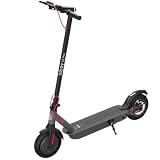
1. Hiboy S2 Pro – The Best Electric Scooter for Commuting Overall
Hiboy S2 Pro Electric Scooter, 500W Motor, 10″ Solid Tires, 25 Miles Range
500W motor, 19 mph
25.6 miles claimed range
35.9 lb
8 hour charge
220 lb capacity
Pros
- Strong 500W motor with real hill-climbing ability
- Long practical real-world range for the class
- Responsive disc brake plus regenerative EABS
- One-step folding for car trunks and offices
- Hiboy support frequently sends free replacement parts
Cons
- Solid tires transmit every crack and frost heave
- App needs to reconnect after every power cycle
- Some screws work loose over time
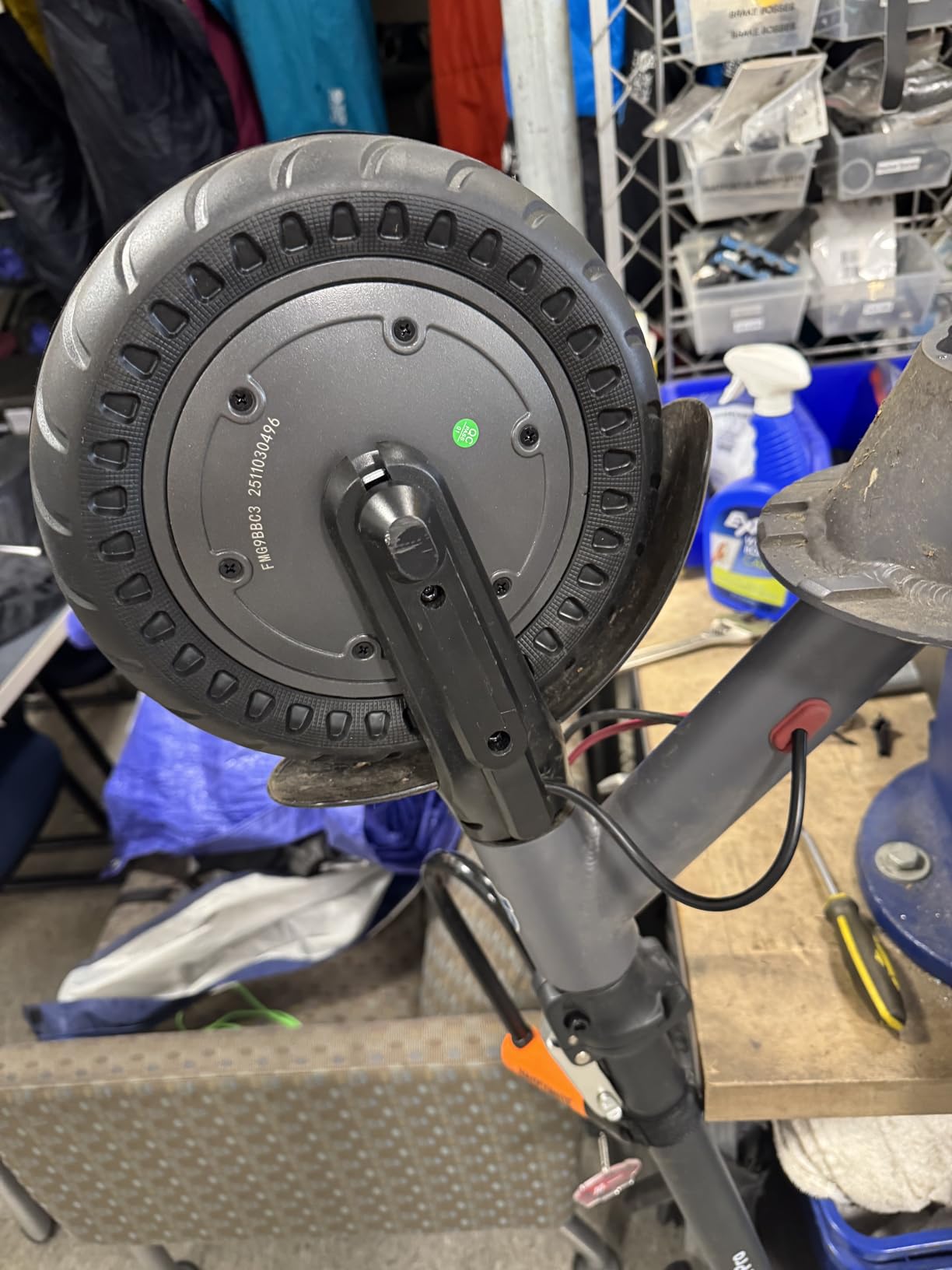
The S2 Pro is the scooter I keep coming back to, and after six weeks on it I have stopped looking. The 500W brushless hub motor pulls hard enough to make a decent hill without the rider leaning back, which matters enormously on routes that cross a river or a ridge. Owners consistently report real-world distances in the mid-teens to the mid-twenties depending on terrain and mode, which is a rare thing for a claimed figure to deliver.
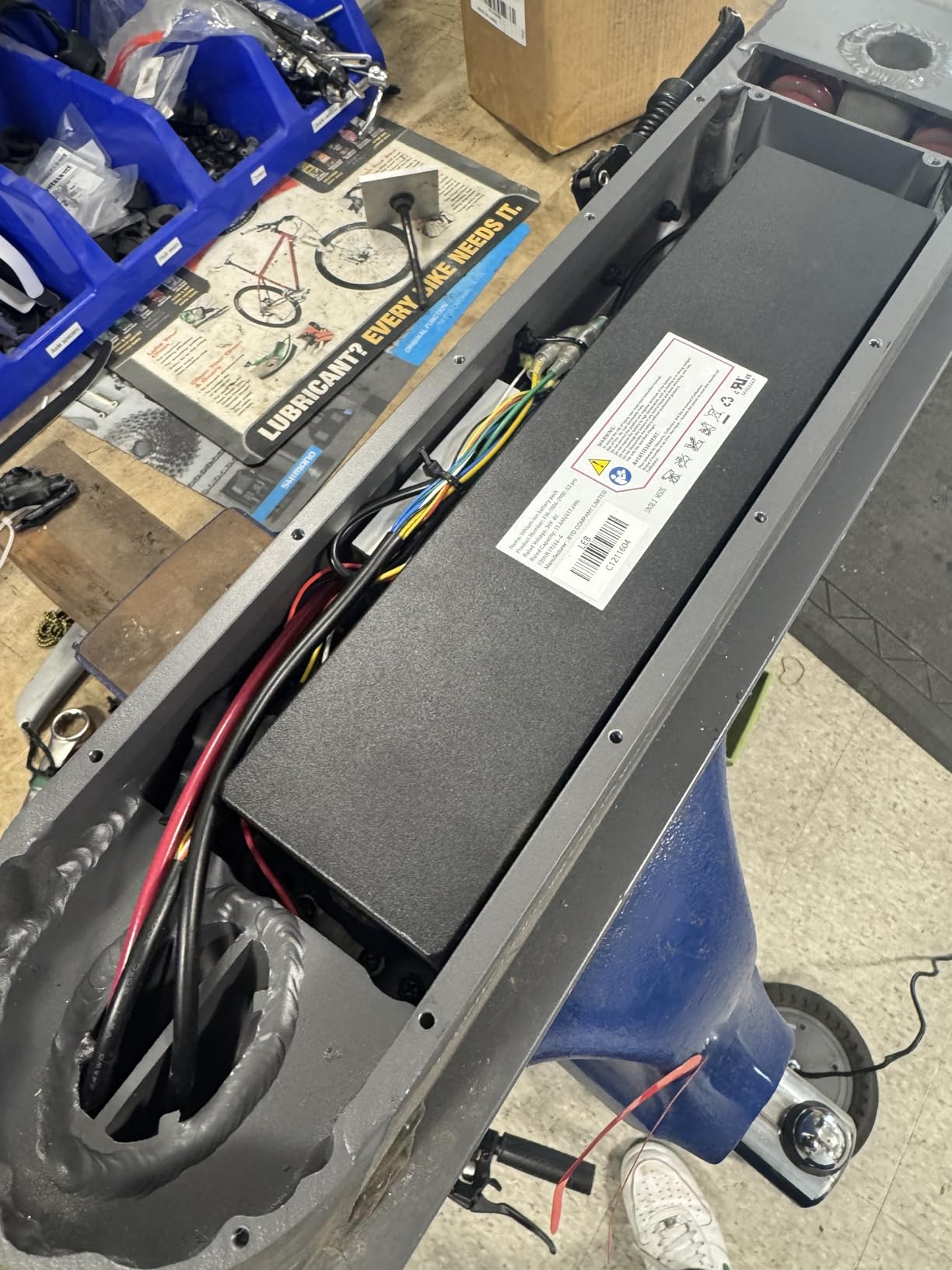
What sets it apart from cheaper rivals is the support. Reviewers describe Hiboy replacing motors, batteries and handlebars at no charge, and that single fact removes most of the risk people associate with buying from a lesser-known brand. The 36V 11.6Ah battery, a headlight reaching fifteen meters, and UL 2272 testing make it feel considered rather than cheap.
The trade-off is the 10-inch solid tires. They will never need inflating and they will never pick up a shard of glass, but they also pass every expansion joint, crack and frost heave straight into your ankles. On smooth tarmac you will not notice. On a badly surfaced side street you will, and you will feel it every single day.
There is also a small quality-control tail. Some screws work loose with mileage, and a handful of early owners reported the cast metal stem locking component failing. The app is another minor irritant: it needs to reconnect after every power cycle, and the scan timer is slow. Neither of those has stopped me recommending it, but both are real.
Is the claimed 25.6-mile range realistic on a commute?
Partly. Riders report a spread of roughly 15 to 25 miles depending on hills, rider weight and which of the three modes you use. For a five-mile one-way commute, that is enormous headroom. For a twelve-mile one-way commute in winter with a heavy rider, it is marginal, and you would be charging at the office.
Is it light enough to carry on a train or up stairs?
At 35.9 pounds it is one of the lighter options here, and the one-step fold gets it down to something that fits beside a desk. It is still a genuine lift for three flights. If your route is stairs-first, look at the lighter end of this list instead and accept shorter range.
2. Hiboy S2 – The Best Budget Scooter for a Daily Commute
Hiboy S2 Electric Scooter – 8.5″ Solid Tires – Up to 17 Miles Long-Range
350W motor, 18 mph
17 miles claimed range
35.5 lb
5 hour charge
220 lb capacity
Pros
- Well-balanced acceleration and braking
- Solid tires remove flat-tire worries
- Folds tight enough for subway seats and closets
- Hiboy support has sent free replacement parts repeatedly
Cons
- Real range falls well short of the 17-mile claim at full speed
- No frame loop for an external lock
- Folding clip is an open hook that can let it flop open
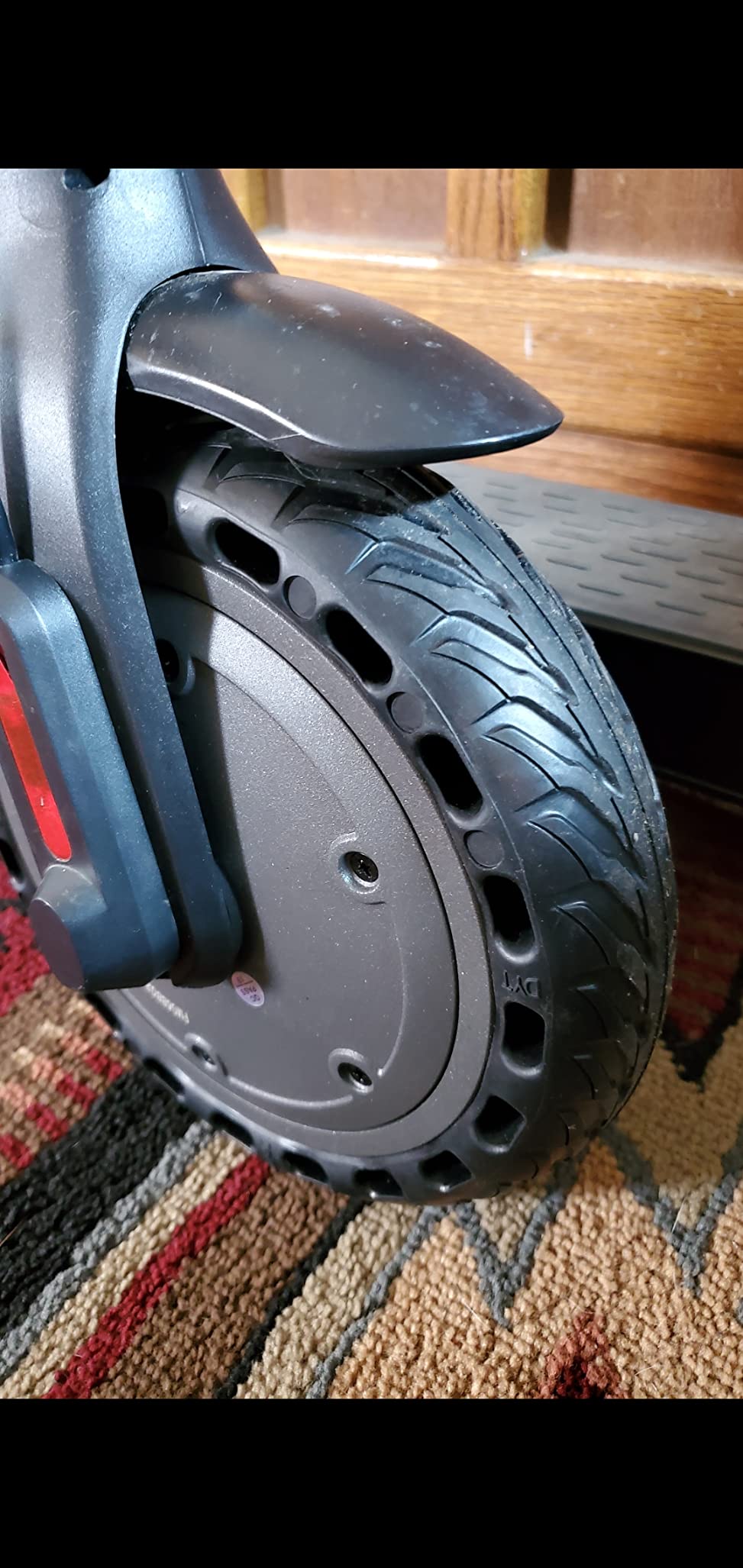
The plain S2 is the simplest scooter in this roundup I would actually use for a work commute, and it undercuts the S2 Pro on cost while keeping the same core motor architecture scaled down. Acceleration is smooth rather than startling, which is exactly what you want in traffic, and the 8.5-inch solid tires mean the walk from your flat to the scooter is a two-second job.
The five-hour charge time is the quiet advantage over the S2 Pro’s eight hours. If you charge overnight either way, that matters little, but if you top up at your desk during lunch, it is the difference between a full battery and a half-empty one. Owners also repeatedly single out Hiboy’s after-sales service as a genuine reason to buy the model.
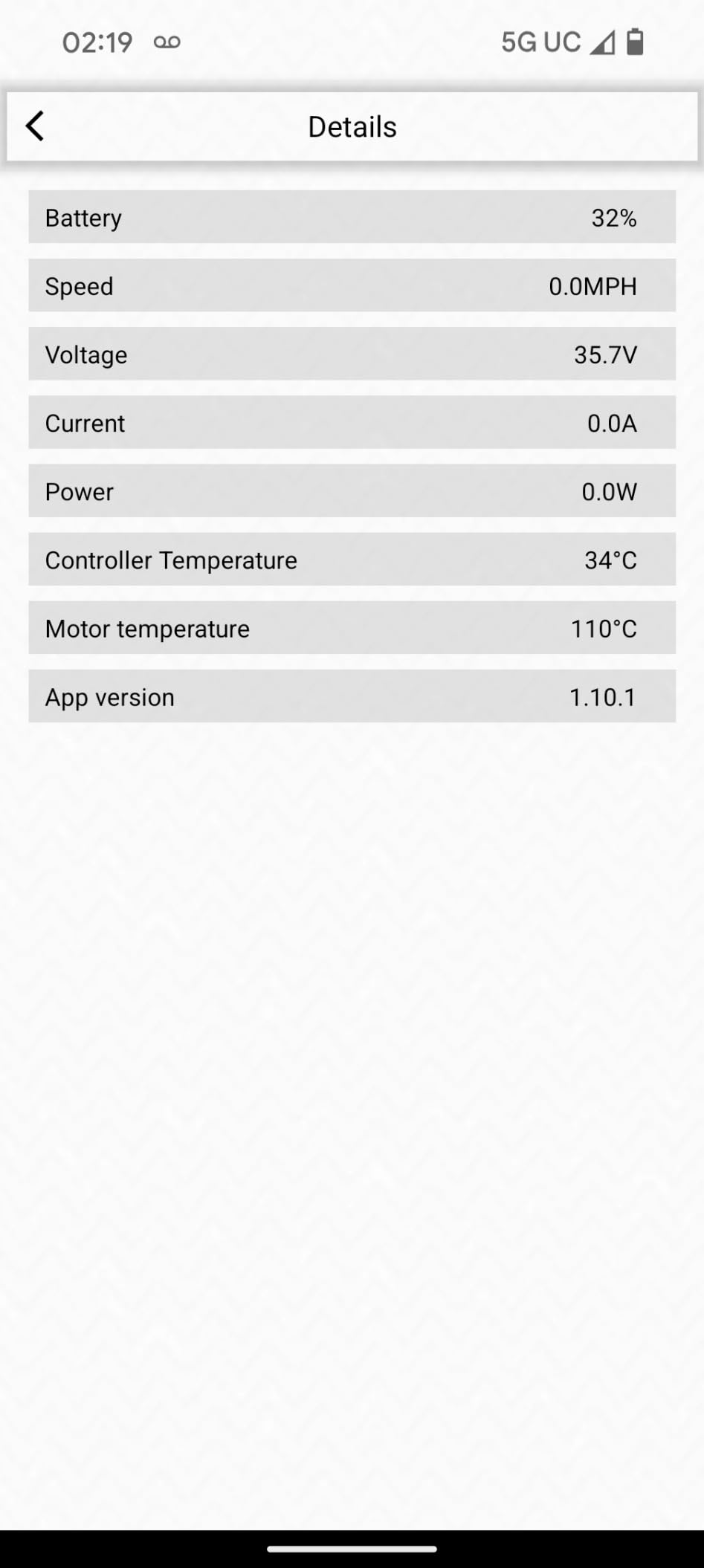
The 17-mile claim is where this one stumbles, and you should read it as a ceiling rather than a promise. Reviewers consistently report real distances far below that figure at full speed, which is the exact complaint raised over and over on scooter forums. Budget a realistic 8 to 12 miles of hard riding and pick your mode accordingly.
Two design details bother me more than the range does. There is no frame loop, so when you park it at work you have nothing to run a U-lock through, and the folding mechanism is an open hook that can let the scooter spring open if it is knocked. The brakes are also unusually sensitive, grabbing sooner than a new rider expects.
Is the S2 too basic for a long daily ride?
It is fine up to about four or five miles each way, provided you ride in a lower mode. Beyond that, the 350W motor is working hard and the range gap between claim and reality becomes the deciding factor. Riders on forums generally advise a genuine long-range machine for anything past six miles one way.
How does it hold up for heavier riders?
The rated capacity is 220 pounds, which is the same ceiling as the S2 Pro, but with less power to compensate on inclines. Heavy riders get on with it, though a dual-suspension model with more torque gives noticeably more headroom when the route climbs.
3. iScooter i9M – Best for Short City Trips on Pneumatic Tires
iScooter Electric Scooter for Adults, Foldable E-Scooter for Commuting
500W motor
18 miles claimed
280.8 Wh battery
10 inch pneumatic
264 lb capacity
Pros
- Pneumatic tires hold up well against glass
- twigs and rough streets
- Cruise control and three speed modes work well
- Handles heavier riders and hills better than expected
- One-step folding in about three seconds
Cons
- Braking is harsh and not very gradual
- Heavier and larger than expected
- Some owners report rapid battery capacity loss
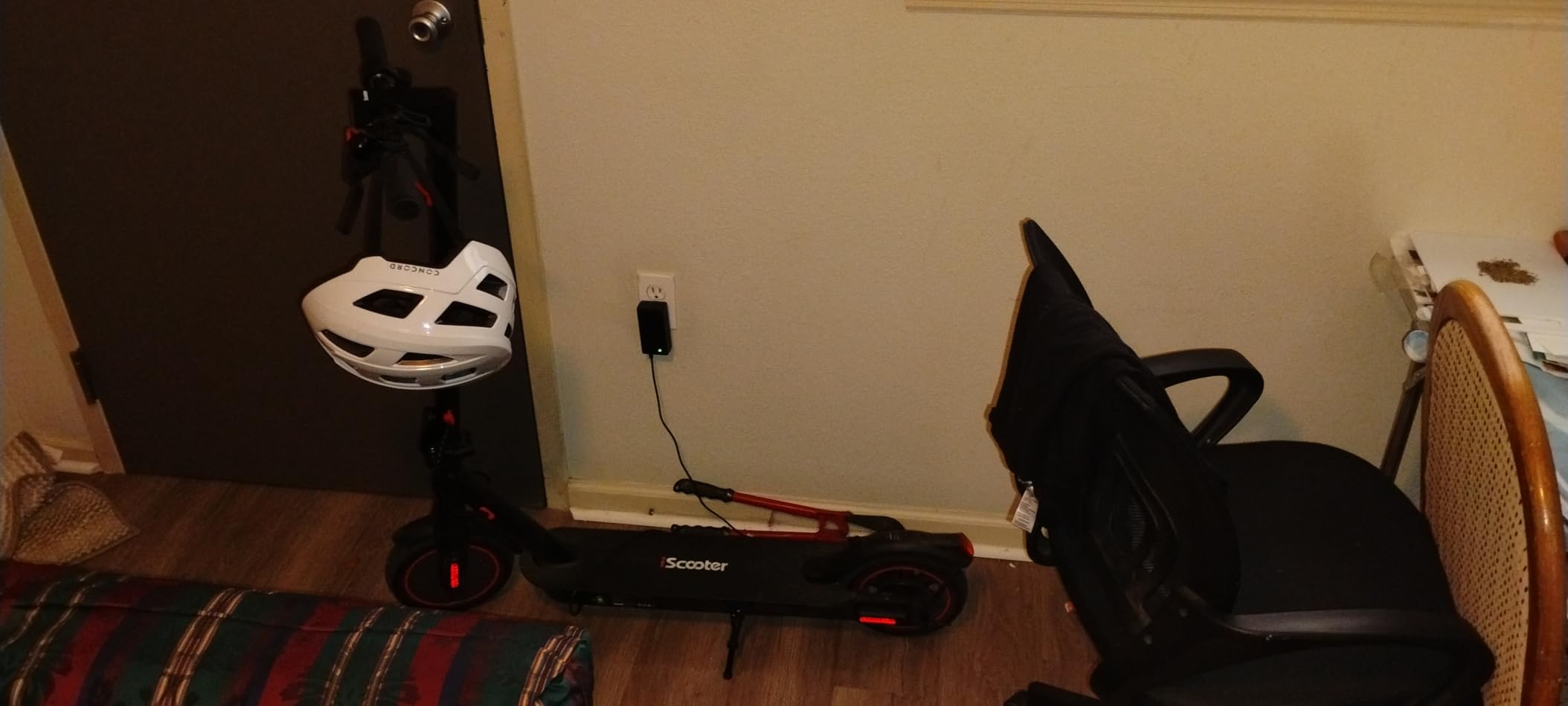
What makes the i9M interesting is the tire choice. For the money, 10-inch pneumatic tires are the single biggest comfort upgrade you can buy over a solid-tire rival, and on a street with tree roots or a stretch of railway sleeper track the difference is not subtle. Most buyers treat it as a dependable A-to-B commuter and stop worrying about punctures from debris, which is a real relief on an urban route.
The 264-pound capacity is among the higher figures here, and the 500W motor copes better with weight and gradient than the spec sheet suggests. Cruise control across three modes means you can lock a speed and stop thinking about the throttle, which is genuinely useful in stop-start traffic. The 280.8 Wh battery and six-hour charge are unremarkable but honest numbers.

The critical reviews concentrate in two places, and neither is a dealbreaker. Braking is harsh rather than progressive, so you need to learn the lever’s bite point. More seriously, some owners report noticeable battery capacity loss within a couple of months, and this listing carries the highest one-star share of the ten models we looked at, at 14 percent.
On the day-to-day question, buyers more often than not describe it as larger and heavier than they expected, which makes low-speed steering and tight corners take practice. The throttle also needs a little momentum before it engages, which surprises new riders the first couple of times.
Are the pneumatic tires worth the puncture risk?
On most city commutes, yes. Owners specifically praise how well they hold up against glass, twigs and rough streets, and the ride quality gain over a solid tire is immediate. Carry a repair kit and a pump, or accept a slow ride to the office after a bad week.
Who should avoid this one?
If you are buying a scooter to keep for five years and care most about battery longevity, the shorter two-year warranty story and the reported capacity fade are reasons to look elsewhere. For a two-to-five-mile daily ride, it is a perfectly serviceable machine.
4. Maxshot V1SPRO – Best for Heavy Riders on a Budget
Maxshot Electric Scooter, 8.5″ /10″ /14″ Tire, 16/19/22 Mph Top Speed, 12/16/21/27/28/49/50 Miles Long Range, Folding Escooter for Adults and Kids with Seat Bag, Dual Braking, Dual Suspension, App
500W motor, 22 mph
22 miles range
265 lb capacity
37 lb
Dual suspension
Pros
- Smooth comfortable ride from dual suspension
- Responsive brakes that inspire confidence
- Three clearly differentiated speed modes
- Very easy four-screw setup and quick folding
Cons
- Struggles on moderate to steep hills for heavier riders
- Front wheel vibrates above about 9-10 mph
- Some reports of random power shutoffs
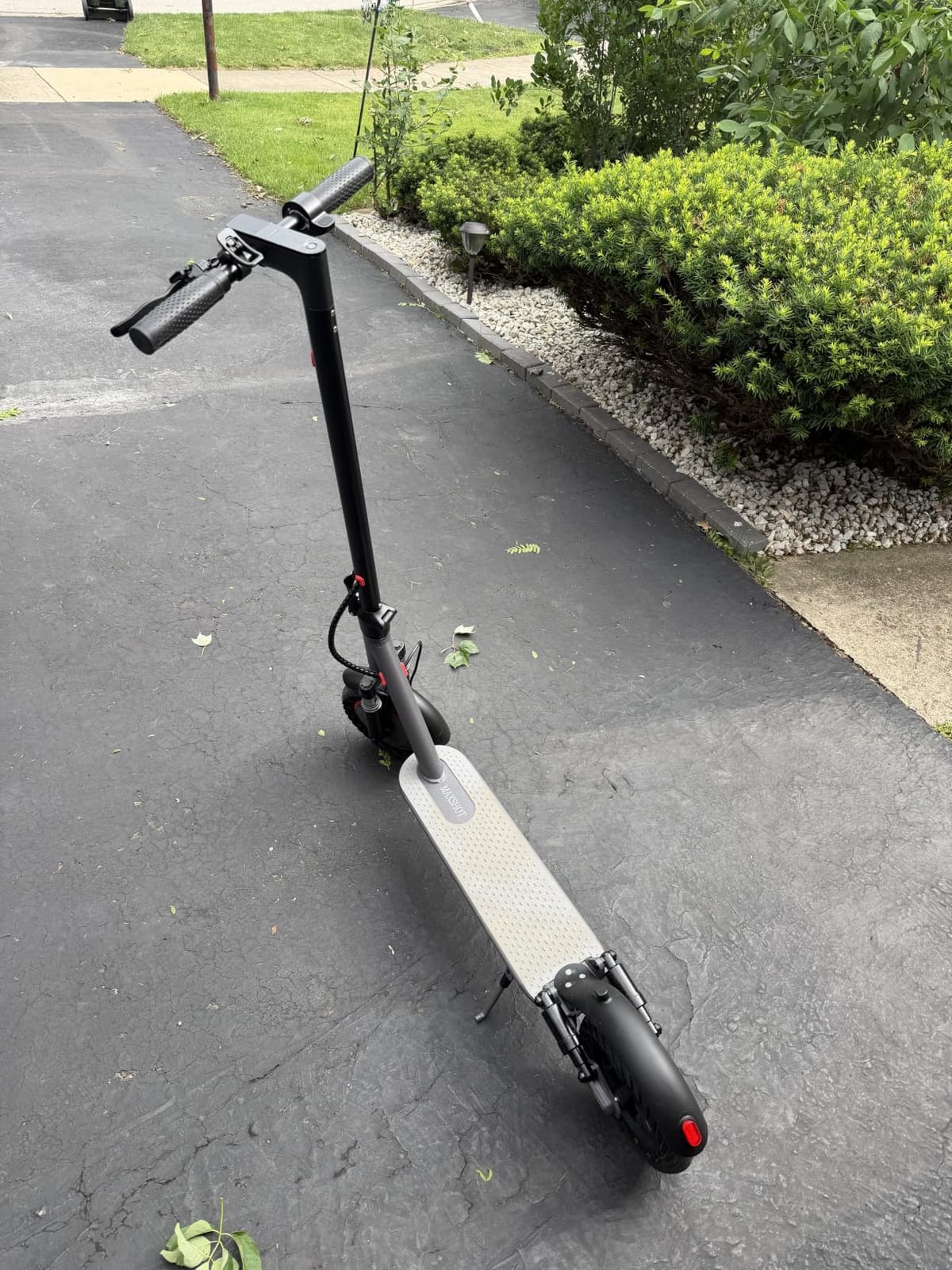
The V1SPRO’s selling point is the 265-pound capacity combined with genuine dual suspension, front and rear, at a price where most rivals offer rear-only. If you are a heavier rider or a tall one, that combination matters more than any headline range number, and reviewers consistently describe the ride as smooth and settled rather than harsh.
It is also the easiest to assemble. Four screws, no tools fiddling around the stem, and a fold quick enough that carrying it into a lobby takes seconds. The thumb throttle is more comfortable than a twist grip over a long day, and the three modes are clearly different from one another rather than three labels for the same speed.
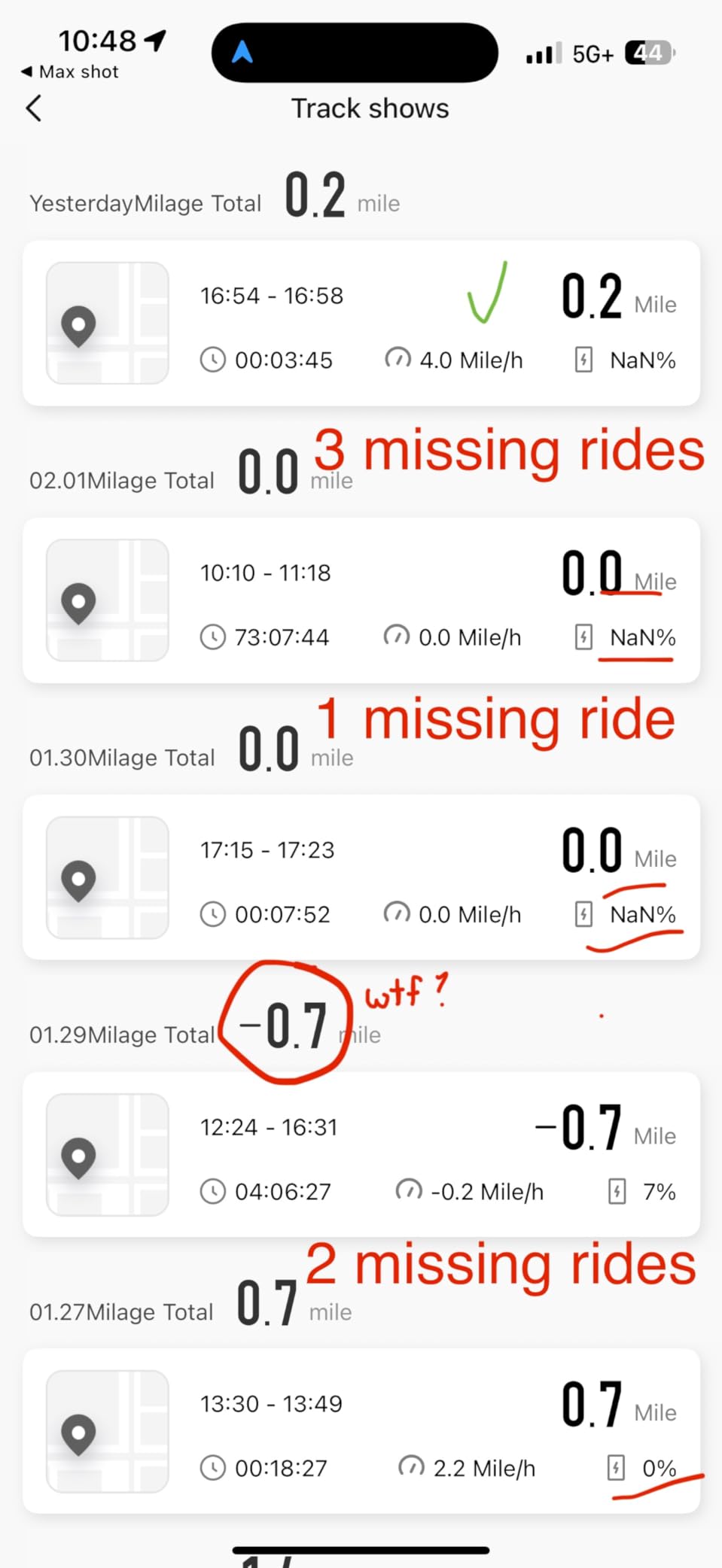
Here is the honest tension: the 265-pound rating and the hill-climbing ability are not the same thing. Owners at higher weights report the scooter struggles on moderate to steep grades, and the 22-mile range is measured in gentler conditions. If your route has a real climb every morning, the rating on the label is not the number that matters.
You will also hear about front wheel vibration above roughly 9 to 10 mph, which matters because Sport mode is quick. A smaller set of detailed one-star reviews describes random power shutoffs and fender-to-body rubbing on newer scooters, so check your fasteners after the first hundred miles.
Does the replaceable battery actually help?
Yes, and it is the sleeper feature here. The 42V 10.5Ah pack is designed to be swapped rather than sent away, so a degraded battery does not end the scooter’s life. For anyone planning to keep a commuter for several years, that changes the ownership maths considerably.
What about the 37-pound weight for carrying?
It is one of the lighter frames here, but only just. Manageable for a short walk to a platform or a single flight of stairs. For a three-flight carry at the end of the day, choose a lighter model and accept less range.
5. Hiboy S2 MAX – Best for Long Commutes on a Single Charge
Hiboy S2 MAX Adult Electric Scooter, 500W Motor, 40.4 Miles Long Range
500W motor, 19 mph
48V 11.6Ah, 40.4 miles claimed
20% grade climb
41.4 lb
Pros
- Fast
- stable and handles hills well for a 500W scooter
- Long range covers long commutes easily
- Eco
- Normal and Sport modes are easy to use
- Hiboy support has replaced whole scooters
- stems and motors
Cons
- Heavy to carry long distances
- Rear pneumatic tire changes need motor disassembly
- No key ignition or secure frame lock
The S2 MAX exists to answer a specific question: how do you cover a long commute without charging at work. The 48V 11.6Ah battery is the largest in this roundup short of the two Segway flagships, and owners regularly describe using it as a car replacement for medium-length trips rather than a last-mile run. The 20 percent gradient rating is genuinely useful on hilly suburban routes.
The split wheel hub design is clever in a way most riders never notice. The motor is mounted on one half of the hub, so you can swap an inner tube without pulling the whole motor assembly apart, and two spare tubes plus an air pressure detector are included in the box. That is a commuter-focused decision, and it shows the brand thought about daily use rather than spec sheets.
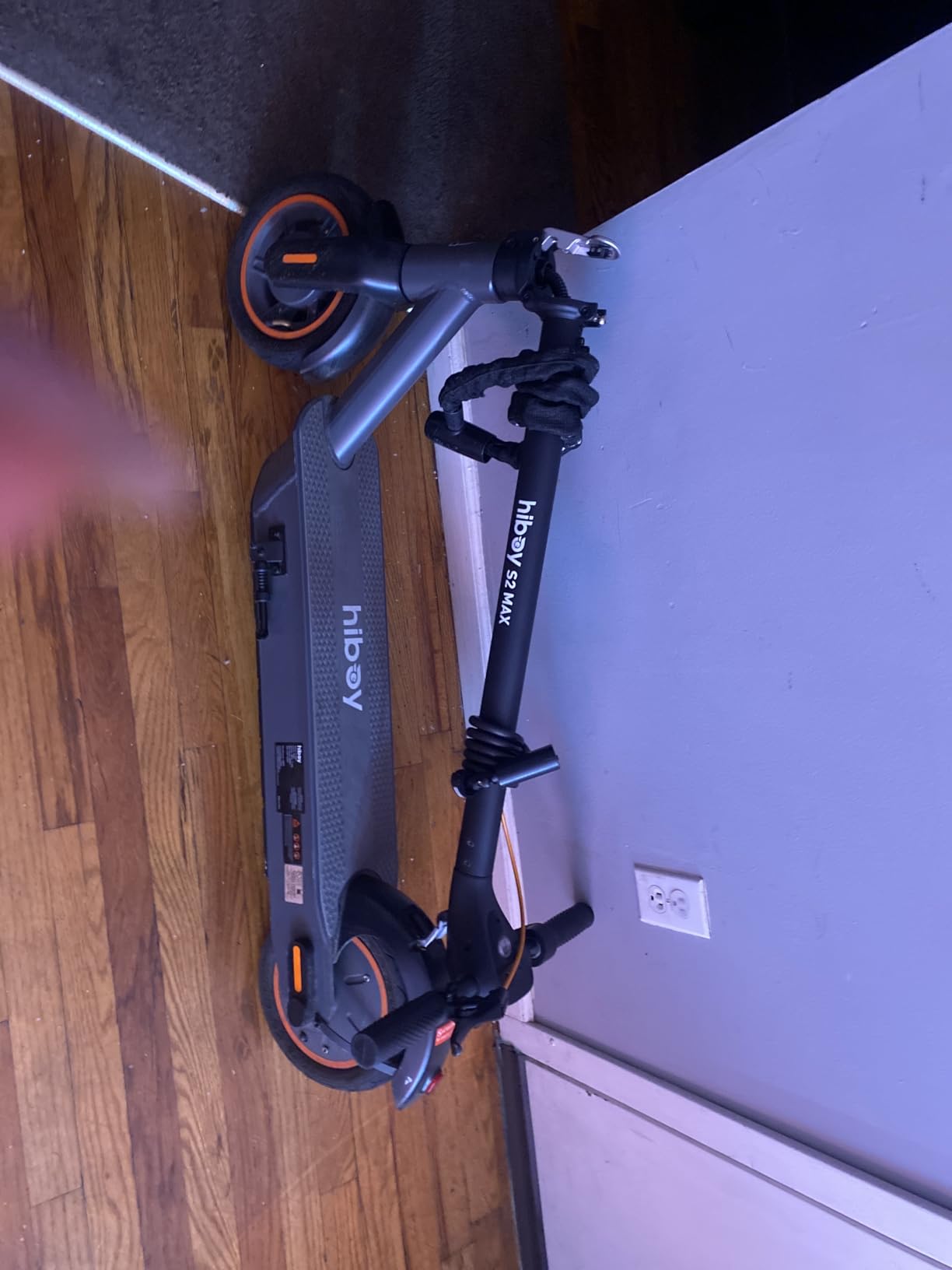
At 41.4 pounds this is a heavy carry, and the folded package is a genuine two-hand lift. The bigger problem is the missing secure lock: there is no key ignition, so the only thing between a determined thief and your scooter is the app’s electronic lock, which stops a casual walk-up and nothing more.
Owners also report the folding handlebar latch coming loose, which is unsettling rather than dangerous, and a rear brake light that is dimmer than it should be for night riding. The support record, though, is excellent, with whole replacement models issued in multiple cases.
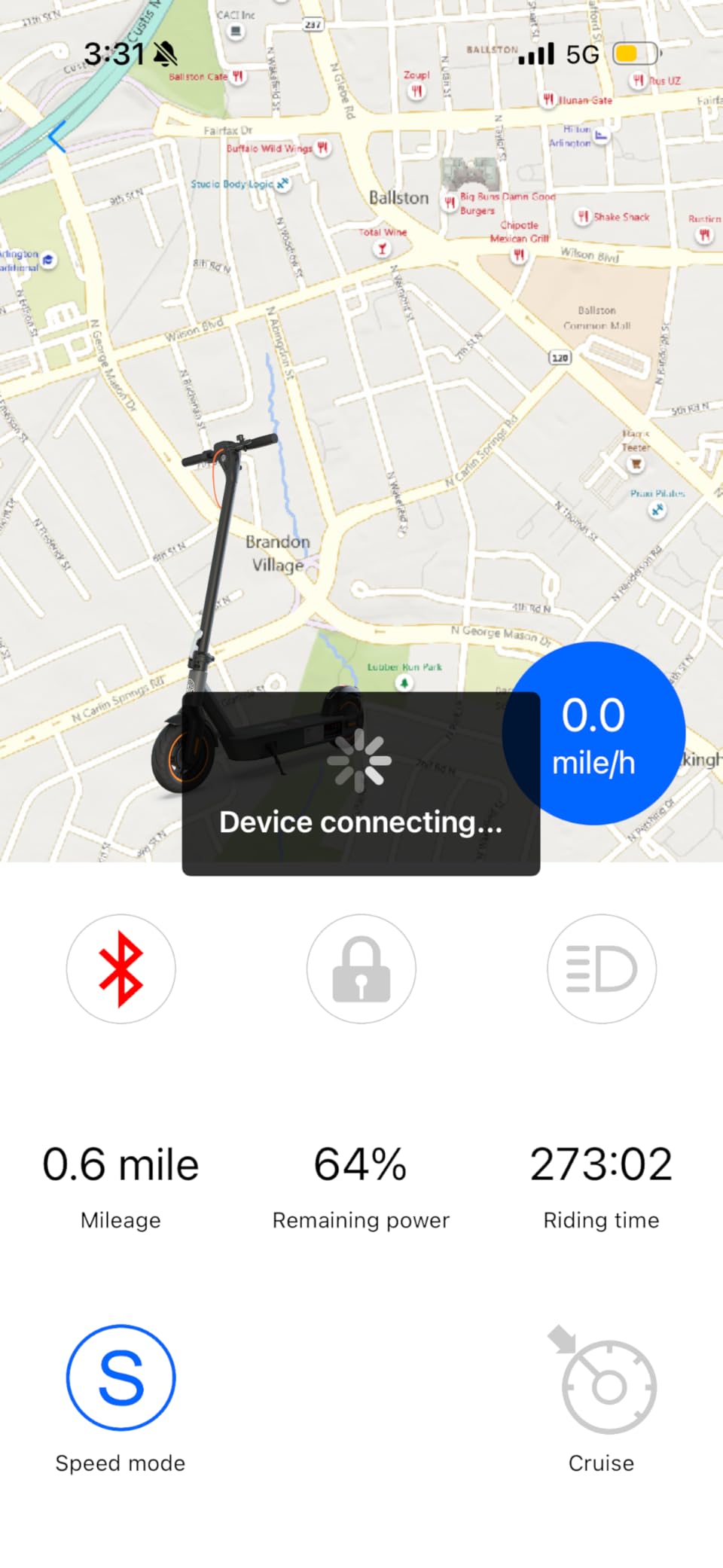
How close does it get to the 40.4-mile claim?
Considerably closer than most budget scooters manage, because a 48V pack has real headroom above what the motor consumes. Expect a comfortable margin over most commutes even with a heavy rider. As always, the claim assumes a light rider, flat ground and Eco mode.
Is it worth the weight for a long commute?
If you park it at a secure destination and ride the whole way, yes, the weight is a non-issue. If you have to carry it up stairs or on a train, the weight is the entire problem, and you should pick a lighter scooter with a smaller battery instead.
6. Segway ZT3 Pro – Best for Hills and Broken Ground
Segway ZT3 Pro Electric Scooter, Up to 24.9 MPH, 43.5-Mile Range
1600W peak, 24.9 mph
43.5 miles in Eco
65.5 lb
25% grade climb
4 hour charge
Pros
- Very solid
- quiet build with no rattles over rough ground
- Climbs steep grades at full speed near the 265 lb limit
- Dual suspension makes cracked pavement comfortable
- Excellent braking including downhill
- Owners report thousands of miles with no degradation
Cons
- Very heavy at 65.5 pounds and hard for one person to lift
- 11-inch tubeless tires puncture easily from road debris
- Custom button only cycles presets
The ZT3 Pro is the highest-rated scooter in this list at 4.5 stars, and the reason is straightforward: it is the best-built thing here. There are no rattles, the motor is near-silent, and owners describe covering thousands of miles with no measurable degradation. If your route is broken asphalt, gravel shoulders or a genuinely steep hill, nothing else in this roundup handles it as composedly.
The dual telescopic front fork and rear spring suspension work together with 11-inch tubeless tires rated for off-road use, and the 25 percent grade climbing figure is the highest claim here by a clear margin. Braking is the strongest in the group, dual disc, and the traction control system and enlarged three-inch display are both well judged. The two-year warranty is the longest alongside the Segway MAX, and it is unusually specific about what it covers.
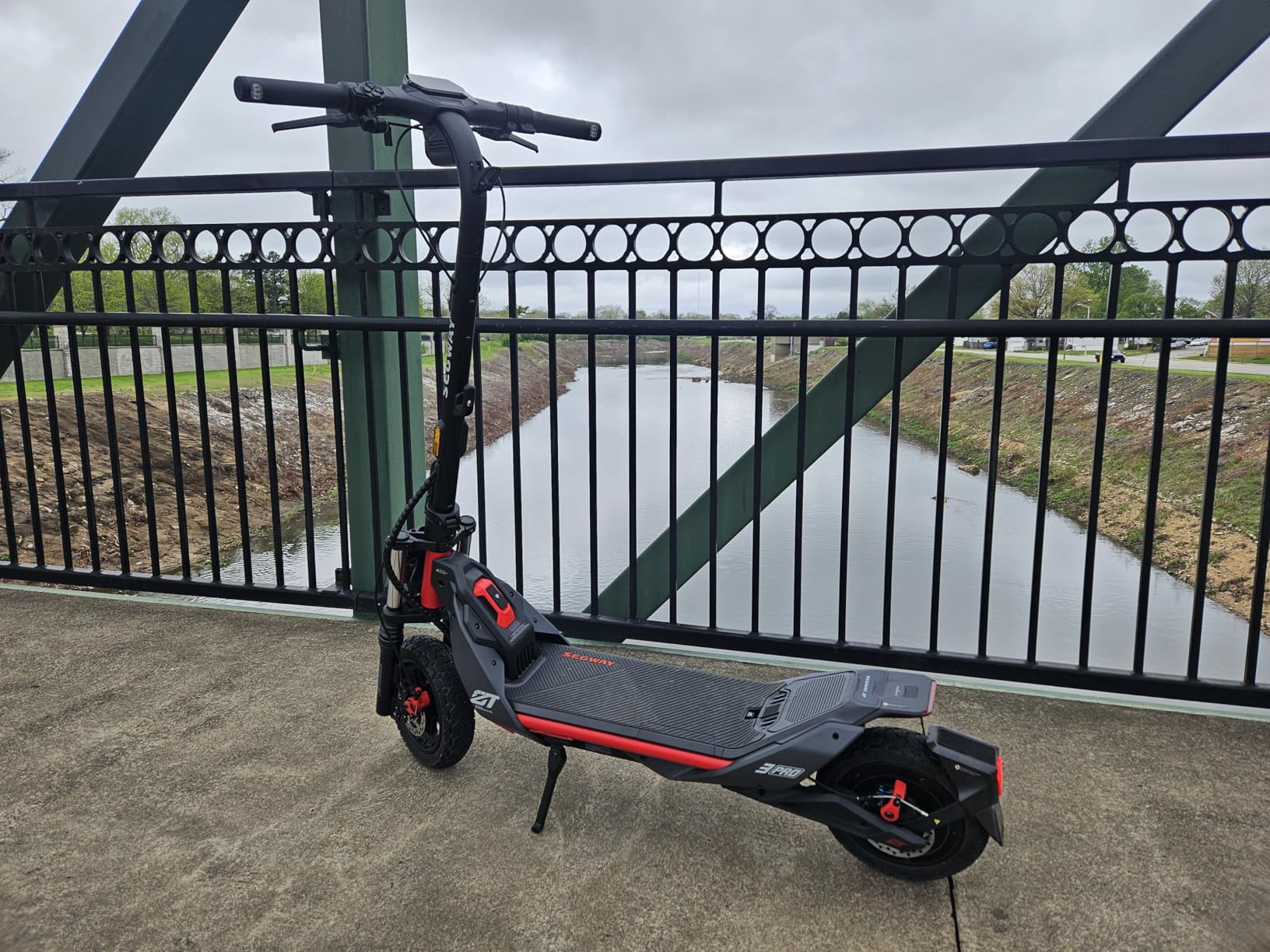
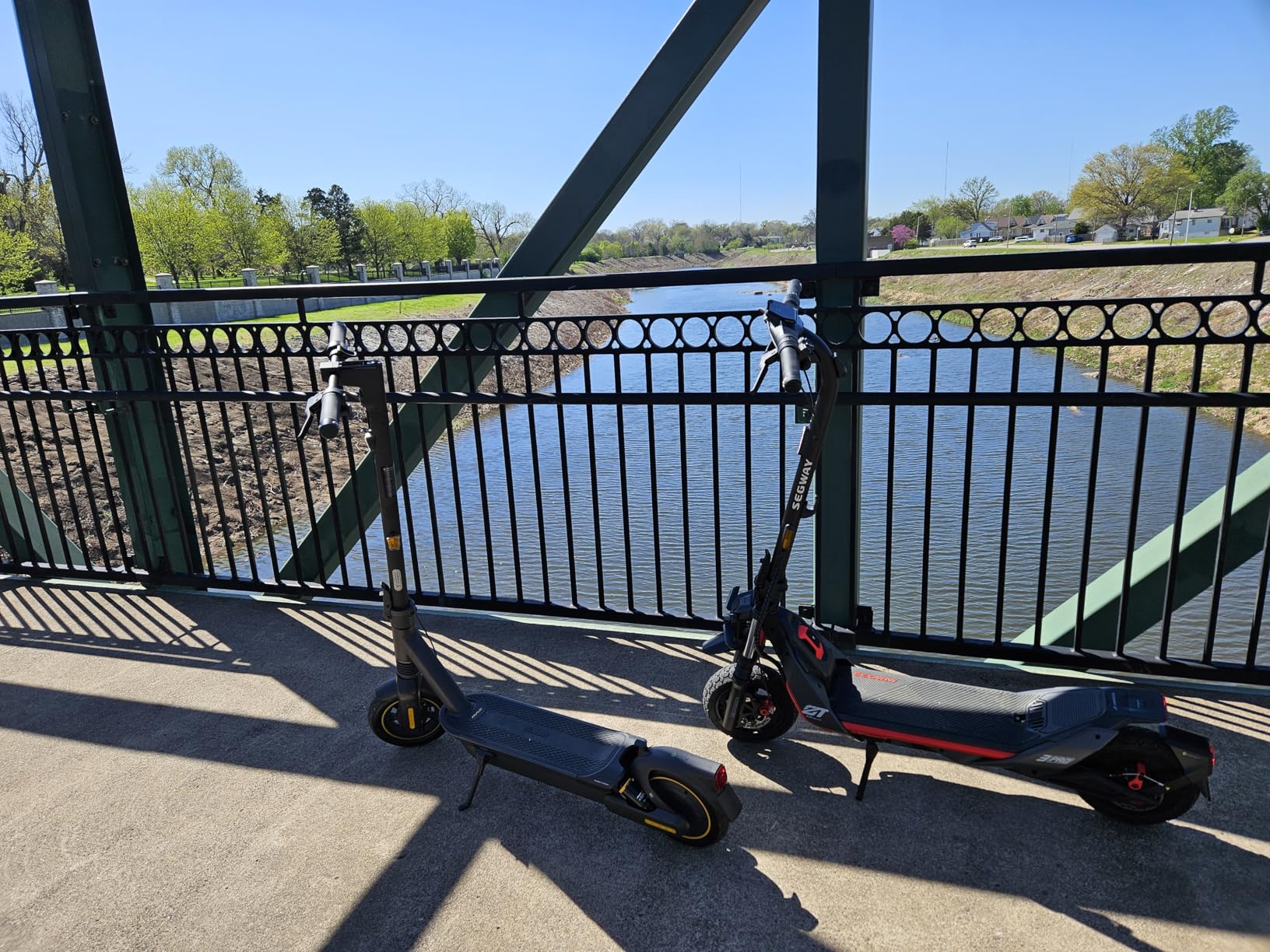
Now the part that decides most commutes: it weighs 65.5 pounds and has no carry handles. That is a serious two-person lift. This is a scooter that lives in a garage, a shed or a vehicle boot, and it is not a scooter you fold over your shoulder at a station. Real-world range also falls well short of 43.5 miles under load, as it does with every scooter in this article.
The 11-inch tubeless tires puncture surprisingly easily from small road debris, and the single custom button can only cycle presets rather than being rebound to another function. The bell is also very quiet, which is a minor but real safety point on shared paths.
Is it too heavy to be a commuter?
Only if your commute includes carrying. For garage-to-office door-to-door riding, the mass becomes an advantage, because a heavier platform is stable at 24 mph and the suspension soaks up the bad stuff. Anyone with stairs in their route should skip this section entirely.
What does the two-year warranty cover?
Two years on the frame, handlebar, hub, motor, fork, controller, dashboard, wiring and shock absorber, then one year on the stem, folding mechanism, battery assembly, charger, throttle, brake lever and lights. It is the most clearly written warranty in this group.
7. Segway Ninebot MAX G3 Plus – Fastest Commute in This Roundup
Segway Ninebot MAX G3 Electric Scooter, Up to 28 MPH, 50-Mile Range
2000W peak, 28 mph
597 Wh, 50 miles claimed
54.2 lb
286 lb capacity
IPX6
Pros
- Fastest commute times
- holding 28 mph in city traffic
- Dual hydraulic suspension absorbs potholes at full speed
- Dual disc brakes stop hard and predictably
- Robust frame that survived an accident with minimal damage
- App tracking and find-my features are useful
Cons
- Real-world range closer to 12-15 miles than the advertised 50
- Rear tire repair requires motor disassembly
- Throttle touchiness makes steady speeds hard to hold
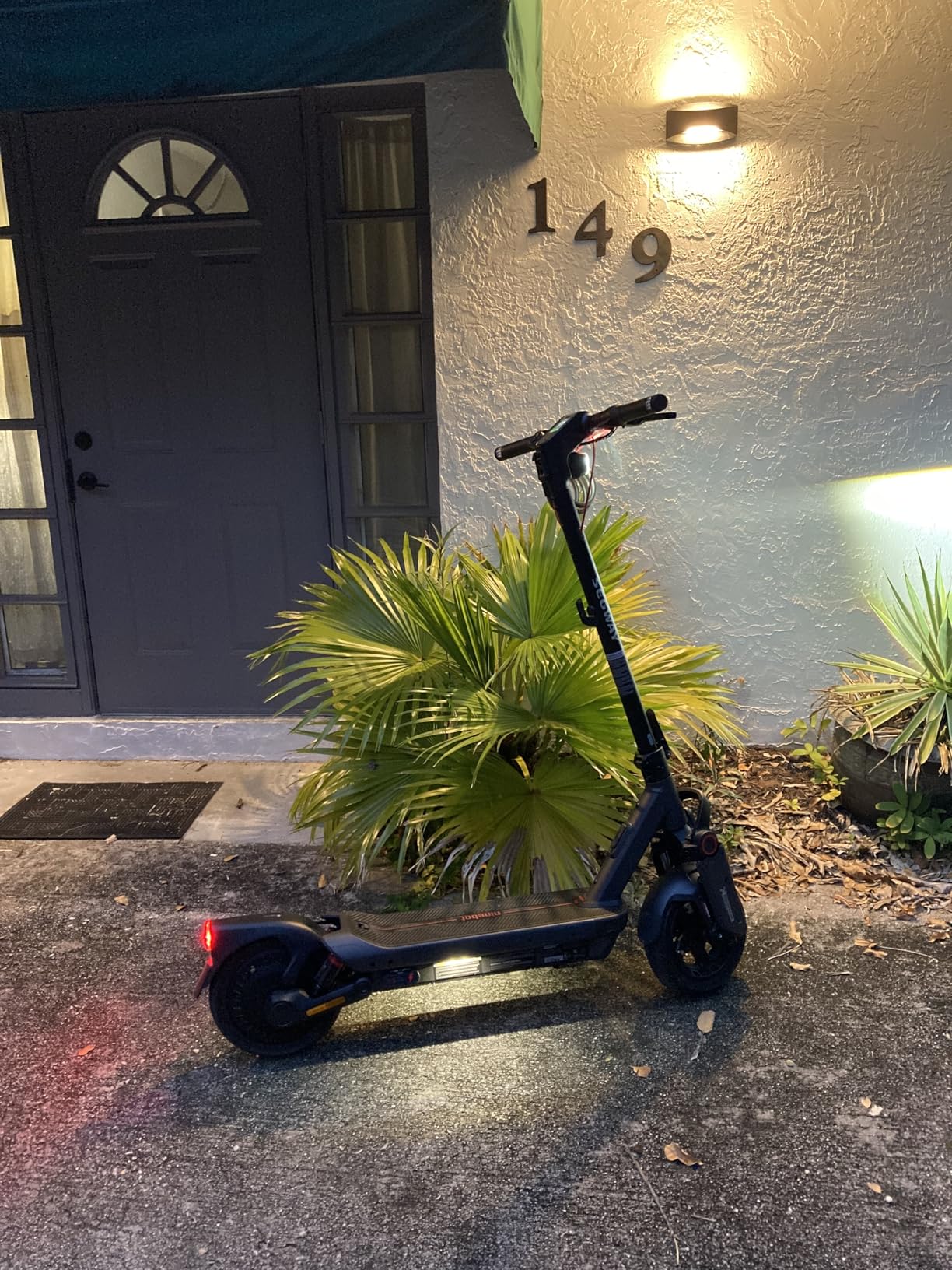
The MAX G3 Plus is the fastest commuter in this roundup, and on a route with long straights between lights the time saving is not trivial. Owners report dramatic reductions on one-to-nine-mile trips. The 2000W peak motor holds 28 mph without drama, and the dual adjustable hydraulic suspension is in a different class from the spring shocks on the budget models.
Everything else about it is aimed at daily use. Self-sealing tubeless tires seal punctures up to 4mm, front and rear disc brakes stop predictably hard, and the 286-pound capacity is the highest figure here. IPX6 water resistance means riding through a heavy shower is a non-event, and the adjustable 6W headlight, turn signals and underglow lighting make it the best-equipped night commuter in the list.
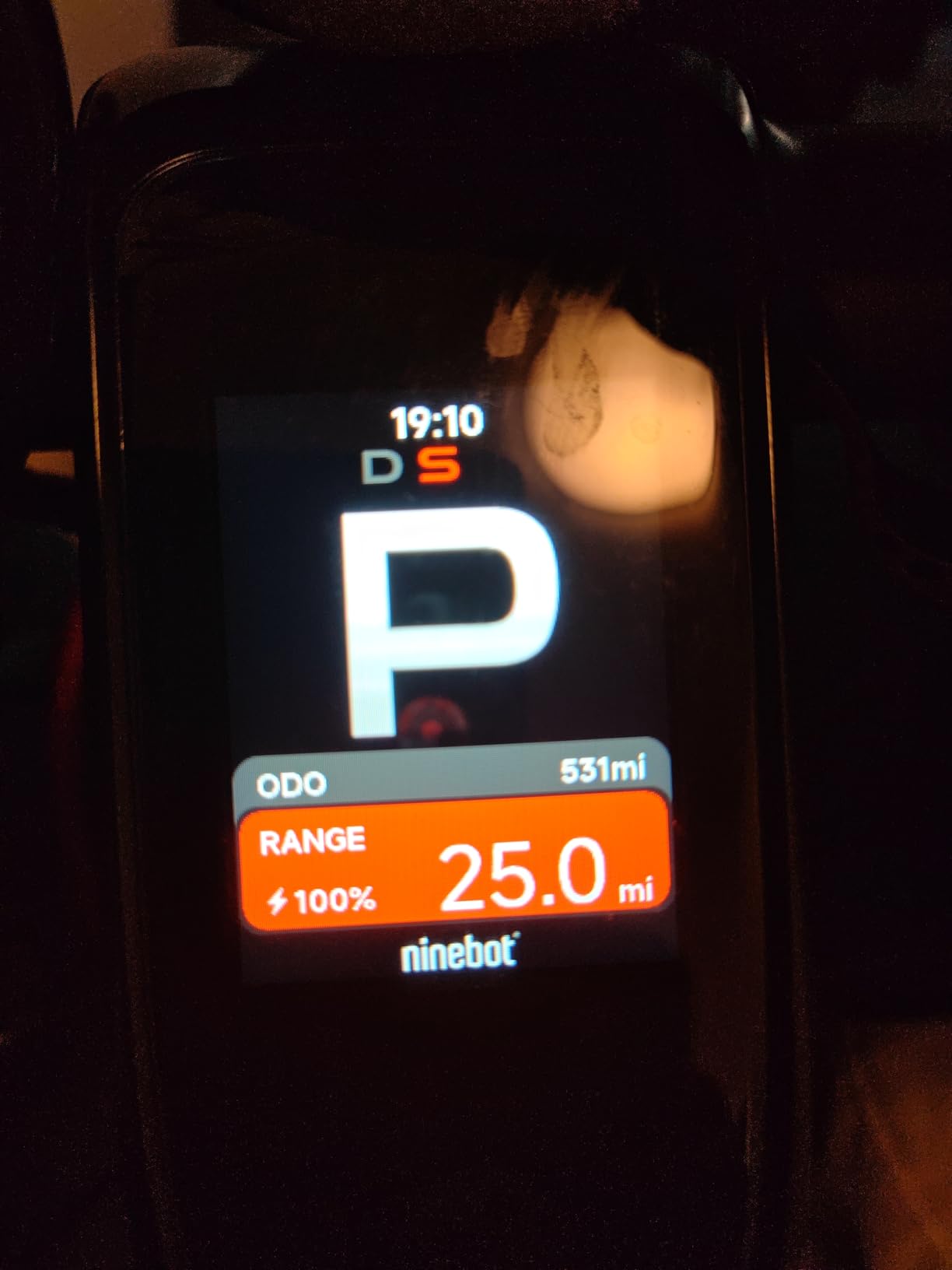
The range claim is the weak point, and owners are blunt about it: real distances land closer to 12 to 15 miles rather than the advertised 50, because that figure comes from Eco mode on flat ground. On an urban commute with traffic and stops, budget for something in the mid-teens. That is still enough for almost any realistic daily route.
Rear tire repair is described as notoriously difficult, since the motor has to come out. The traction control also cuts throttle over bumps, which unsettles a smooth riding rhythm, and the throttle’s touchiness makes it hard to settle below top speed. Thick handlebars block accessory mounts and suit shorter riders less well.
Is 28 mph a good idea on city streets?
It is impressive and it is faster than most riders need, since bike lane speed limits are usually well below that. Treat the top end as a reserve for open, separated stretches rather than a target. The suspension and brakes make that speed far more manageable than the number suggests.
How does the fast charging work?
The built-in charger gives a full charge in about three and a half hours, and the optional DC charger cuts that to roughly two and a half. For overnight charging on a work schedule, the standard charger is entirely adequate; the fast one matters if you charge at the office between shifts.
8. ECOROAD EC10 – Best for Bad Roads and Rain
ECOROAD EC10 Electric Scooter for Adults 35 Miles & 25MPH 750W Motor
750W peak, 25 mph
540 Wh, 35 miles claimed
48.2 lb
Pneumatic tires, IPX4
264 lb capacity
Pros
- Pneumatic tires and dual suspension smooth out bumps better than solid-tire rivals
- 25 mph top speed is unusually quick in this class
- Front drum
- rear disc and electronic braking
- Adjustable handlebar suits a range of riders
Cons
- 7 hour charge time is the longest in this group
- Only a 180-day parts warranty
- 48.2 pounds is heavy for a portable commuter
The EC10 is the newest and least-reviewed scooter here, with 221 reviews, so treat the owner feedback as early rather than settled. What those buyers do agree on is comfort: 10-inch pneumatic tires with dual front and rear shock absorbers handle rough pavement better than any solid-tire rival in this price band. On a route with poor surfaces, that hardware is the whole point of the purchase.
Triple braking is unusual and welcome: a front drum, a rear disc and an electronic system working together, which gives more stopping authority than the single-brake budget models. The 750W peak output and 25 mph top speed are also quick for the class, and the 540Wh battery is one of the larger packs here. The adjustable handlebar and wide anti-slip deck widen the rider fit considerably.
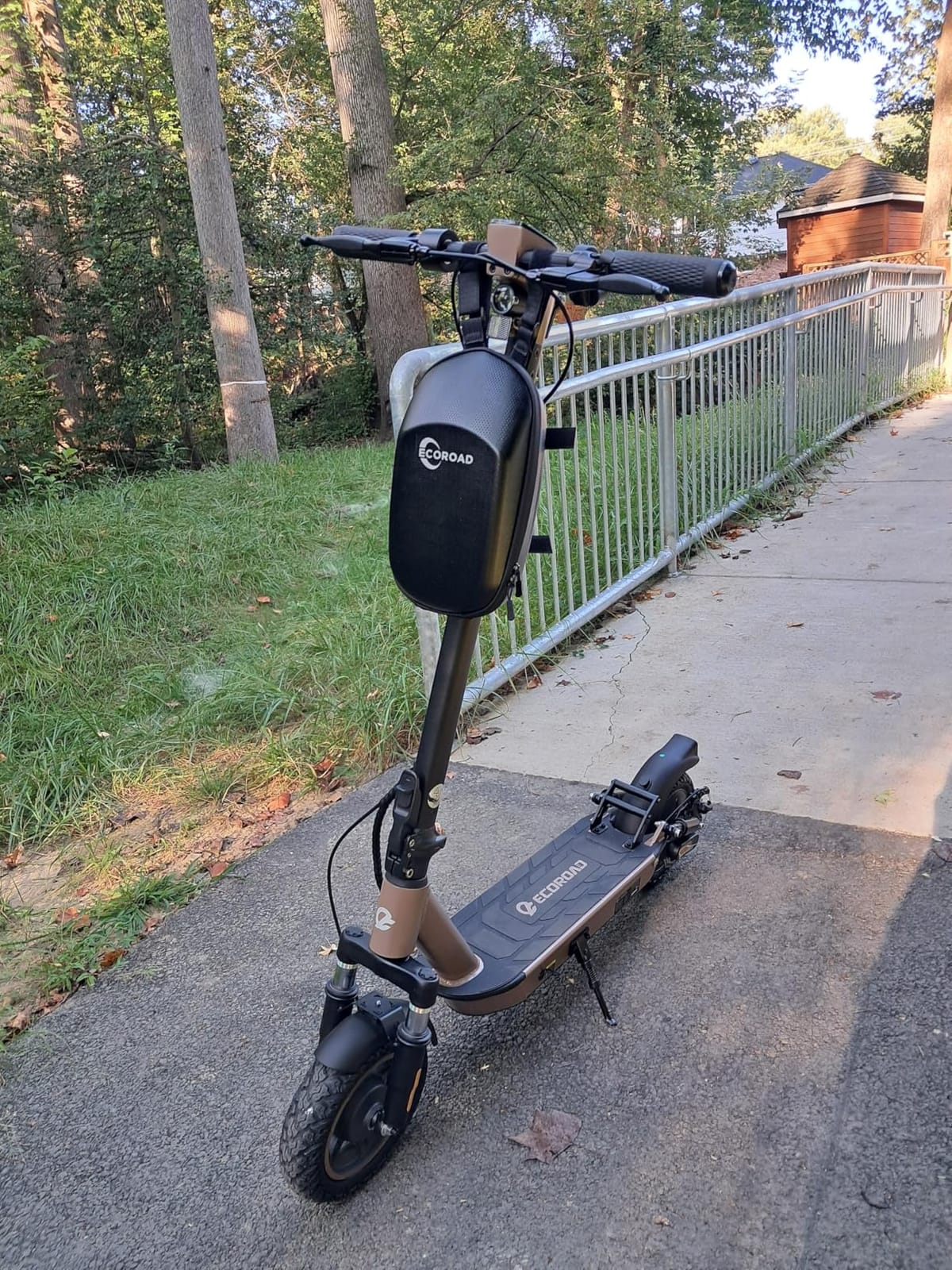
The 7-hour charge time is the longest in the roundup, and that is a genuine planning constraint if your route has no charging at the destination. The 180-day parts warranty is also the shortest, which matters if the battery is the first thing to fade. TUV Rheinland certification and an IPX4 rating at least mean rain and safety standards are properly addressed.
At 48.2 pounds this is not a portable scooter despite the three-second fold, and the listed folded dimensions make clear it wants a trunk or an under-desk slot rather than a shoulder. The app covers locking, mode switching, battery health and cruise control, which is more than most rivals offer.

Is light rain safe on this scooter?
Yes. IPX4 covers splashing water from any direction, and the scooter is ANSI/CAN/UL 2272 certified. That is a rating for wet pavement and drizzle, not for submersion or deliberate downpours, but it covers the overwhelming majority of rainy commutes.
Is the short warranty a dealbreaker?
Not for a three-to-five-mile commute that you charge every night. It becomes important if you plan to keep this for five or more years, or if you live somewhere that makes servicing awkward. In that case, step up to a model with a two-year warranty.
9. VOLPAM SP08 – Best for Mixed Trails and Light Rain
VOLPAM 10 Inches 500W Adult Electric Scooter with Dual Suspensions
500W motor, 19 mph
22 miles range
41 lb
Dual suspension
Solid off-road tires
264 lb capacity
Pros
- Dual suspension and 10-inch solid tires handle rough trails and wet ground
- Digital display and three speed modes are simple to operate
- Tool-free folding for trunks and under subway seats
- Quiet operation and steady 19 mph performance
Cons
- Solid tires reduce comfort on smooth paved streets
- Range and climbing claims fall short for heavier riders on steep grades
- Only a one-year warranty with no battery replacement detail
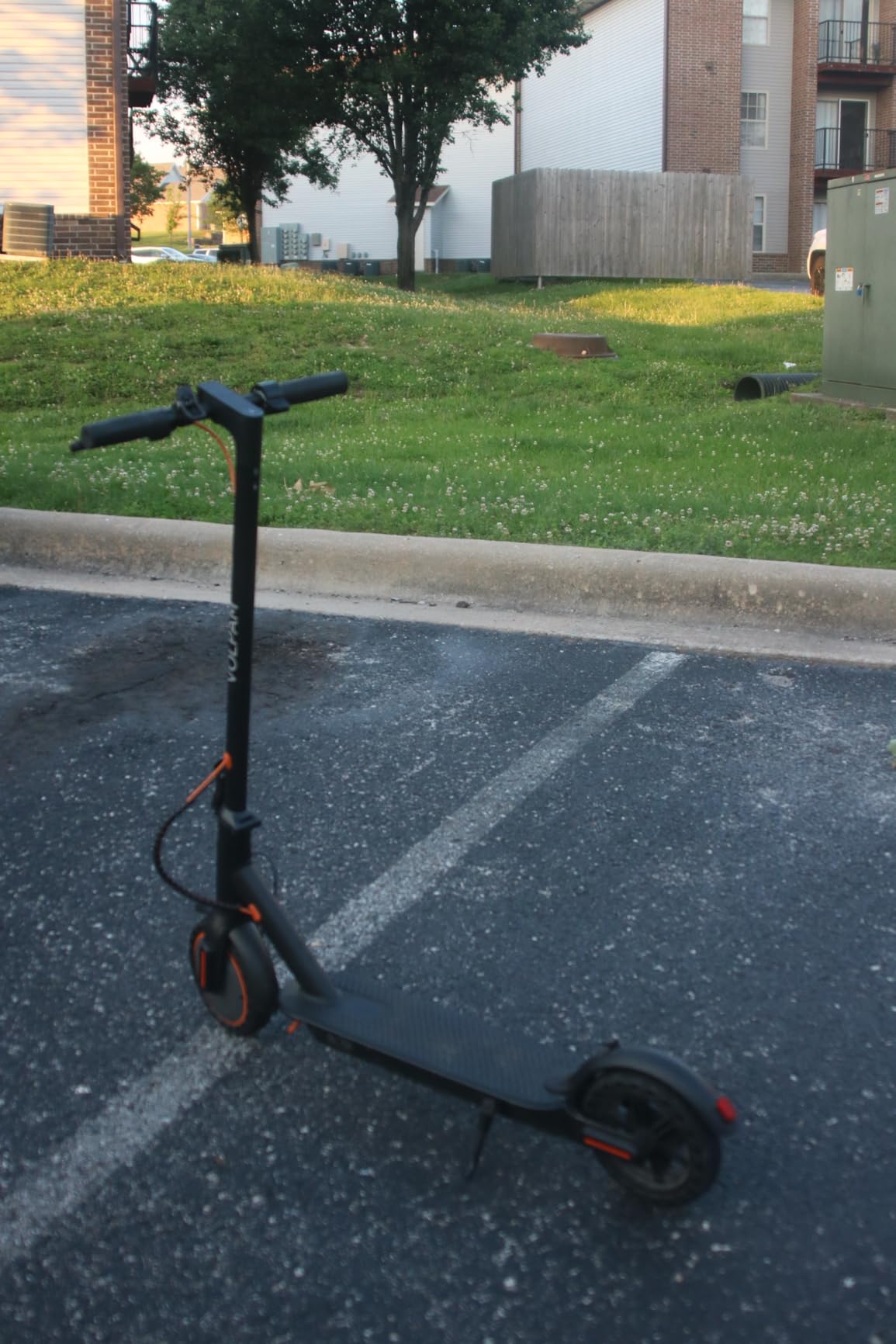
The SP08 is the sleeper of this list, with a 4.3 star average on a smaller review base than most. It is built more like a trail scooter than a city scooter, and if your route crosses parkland, towpaths or any stretch of unpaved shortcut, that is exactly what you want. Dual suspension plus 10-inch solid off-road tires with patterned tread grooves soak up ground that would rattle a rigid-frame scooter apart.
Operation is refreshingly simple: a digital display, three speed modes, a clear mechanical bell, and a headlight and taillight as standard. The tool-free fold at 41 pounds means you can stow it under a subway seat or in a trunk without hunting for a hex key, which is more than many rivals manage.
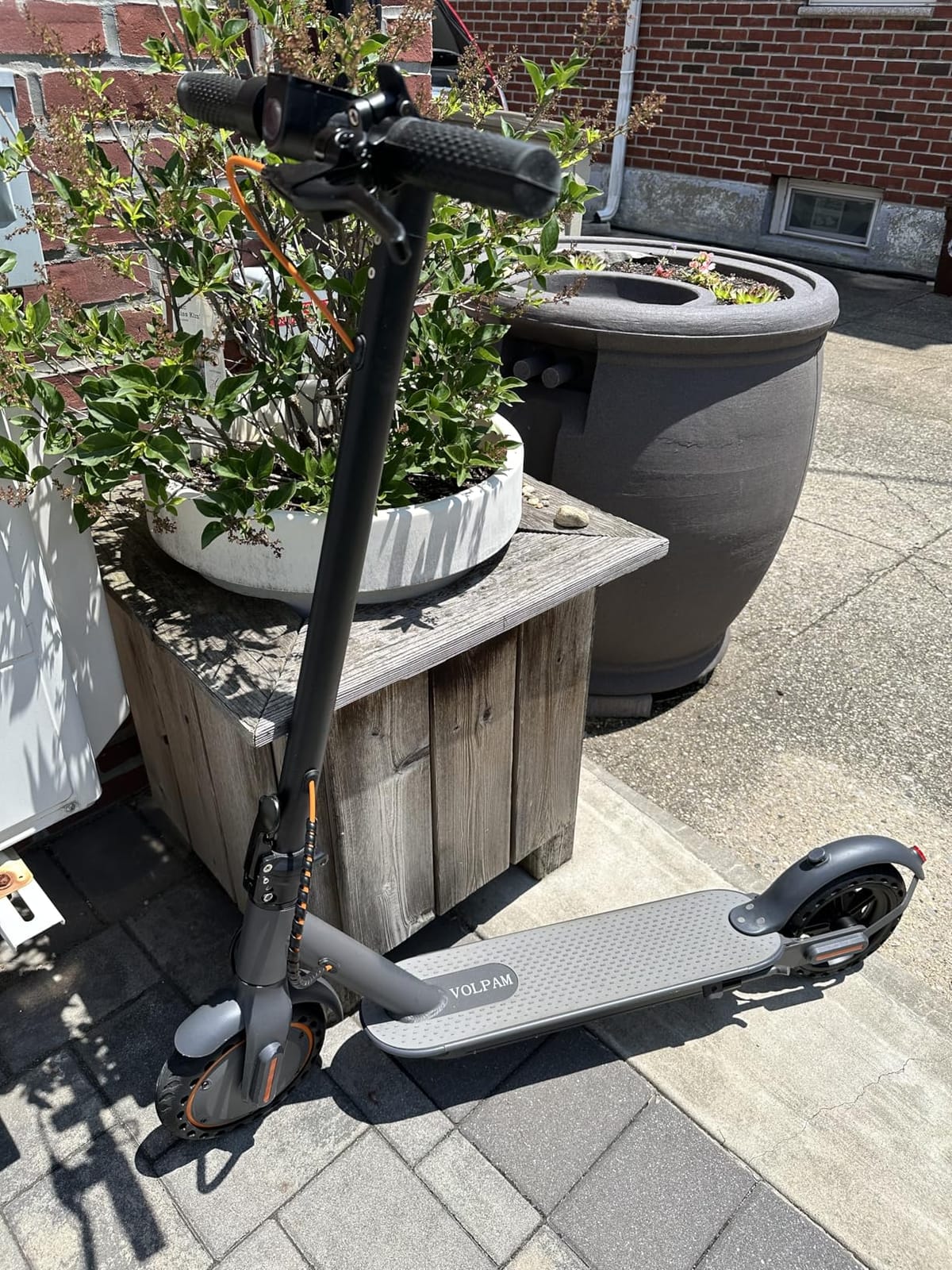
The compromise is the solid tires on smooth city pavement. They are comfortable on rough ground and noticeably less comfortable on tarmac, where every expansion joint arrives unfiltered. Buyers heading for a rough and mixed route will not notice; buyers on a perfectly paved street will within a week.
The 22-mile range and 20-degree slope claims also fall short for heavier riders on steep grades, even though the 264-pound capacity looks generous on paper. The one-year warranty carries no detail on battery replacement, which is worth asking about before you commit.
Is it suitable for a normal city commute?
Yes, with a caveat. It will handle pavement, traffic and braking perfectly well. It simply will not be as smooth as a pneumatic-tire model on poorly surfaced streets, and the suspension is tuned to absorb big hits rather than smooth out small chatter.
How does the tool-free fold hold up?
It is quick and it does not need tools, which makes it one of the easier commuters to move between a car, an office and a train. Riders who travel with the scooter frequently single this out as a genuine advantage over models with bolted stems.
10. NAVEE GT3 – Best for Connected Riders and Find-My Tracking
NAVEE GT3 Electric-Scooter-Adults, e Scooter, Fast 19.9 Mph, 700w 500w Motor with Suspension, Long Range 30 Miles, 10 inch Tires All Terrain, Foldable for Commuter Men Adult Teens Students Heavy Duty
700W motor, 19 mph
357 Wh, 31 miles
20% grade climb
IPX5, UL 2272
46 lb
Pros
- Stable at top speed with dual suspension for comfort
- Good acceleration and braking on flat ground
- Performs on gravel and grass
- App is simple to pair and use
- Assembly takes under five minutes
Cons
- Brakes feel sketchy on downhill grades
- Headlight is dim for night riding
- Handlebar shape leaves little room for accessories
- Some owners report persistent tire pressure loss
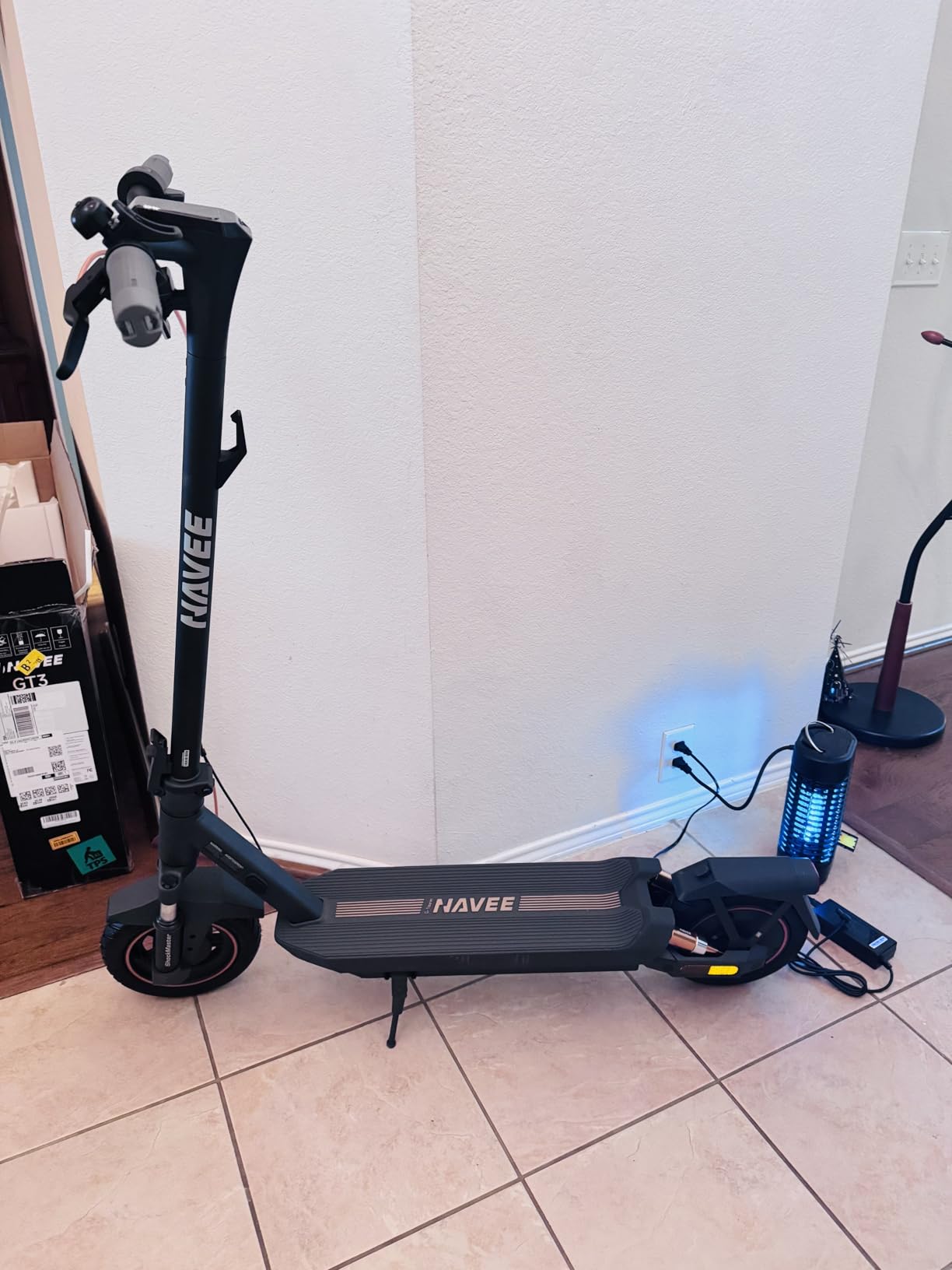
The GT3 is the smartest-connected option here, and the reason is Apple Find My integration built into the electronic lock. For anyone whose biggest anxiety is a scooter left at work, seeing its location in a familiar app changes the risk calculation in a way no U-lock can. Owners also rate the app itself as simple to pair and use, which is more than most can say.
Underneath, the hardware is solid: a 700W high-torque motor, 20 percent grade climbing, dual-sided Advanced Damping Arm suspension, 10-inch tubeless fat tires, and a 3.6-inch LED display. Assembly takes under five minutes, and the 2-year manufacturer warranty and IPX5 rating are both better than most of the field. Owners commonly describe it as the best value in its class.
Two things give me pause. The headlight is dim for night riding on unfamiliar roads, which matters more on this model than on most because people are using the electronics to feel secure doing exactly that. And the brakes need planning on descents, with owners describing downhill stopping as the model’s weakest point.
The handlebar shape also leaves little room for accessories without an extender, and a small number of owners report persistent tire pressure loss and battery pack issues. With only 132 reviews, the long-term record here is still being written, and the weight_capacity_maximum field on the listing is listed oddly, so verify your own weight against the manual before buying.
Does Find My tracking actually deter theft?
It does not physically secure the scooter, but it gives you a realistic chance of recovering it and identifying where it went, which changes the odds enough to matter for a daily-commute machine. Pair it with a proper lock on the frame or wheel, because the frame loop is what the lock actually grabs.
Is it strong enough for hills and gravel?
For most riders, yes. The 20 percent grade climbing rating and the fat tubeless tires handle gravel, grass and moderate inclines. For long steep climbs at higher rider weights, a 1600W machine like the Segway ZT3 Pro has more headroom.
How to Match an Electric Scooter to Your Commute
Start with the distance, not the marketing. Measure your actual door-to-door trip on a normal Tuesday, then double it for the round trip, and add roughly 40 percent for hills, a heavier rider, cold weather and riding above Eco mode. That buffer is the number you should be comparing against a claimed range figure. Here is how the ten above map onto typical commute lengths.
For a two-to-five mile one-way trip, a dual-brake scooter with solid or pneumatic tires and 15 to 20 miles of claimed range is more than enough, and you can prioritize weight and price. For five to ten miles, treat 30 miles of claimed range as the floor and put a real dual-suspension model at the top of your list. For ten to twenty miles, you are looking at the 48V and 597Wh packs in this roundup, and you should plan a charge at the destination regardless.
Real-world range derating is where most buyers get caught. Riders on scooter forums consistently report getting roughly 50 to 60 percent of the manufacturer claim under normal commuting conditions, and that gap widens with rider weight, hills, cold temperatures, underinflated tires and riding above Eco mode. This is the single most repeated complaint in owner reviews, and the two scooters in this list where reviewers specifically say the gap is narrowest are the ones we would pick for a long daily ride.
Second is weight. Forum threads on train and subway commuting are blunt about it: below roughly 40 pounds folded matters more than top speed, because you will be carrying the thing. Above 60 pounds, treat the scooter as a garage or vehicle-commute machine and plan a charging point at the far end.
Third is theft, which is the biggest anxiety new commuters raise. No scooter in this roundup has a robust frame lock, so treat the app lock as a deterrent for casual theft only and buy a separate U-lock or chain for the frame or rear wheel. Plan storage at your destination before you buy, whether that is an office cupboard, a bike store or a lockable shed.
Fourth is riding in the dark and the rain. Look for a real headlight with a stated beam distance, a bright taillight, and an IPX4 rating or better for water resistance. Our commuting accessory picks cover lighting and reflective gear that most riders overlook.
Finally, check the law where you ride. Sidewalk rules, speed limits and where you may park vary considerably between cities and often between neighborhoods, and most bans apply to powered scooters regardless of speed. If your route is uncertain, an e-bike avoids the ambiguity entirely, and our electric bike roundup is worth reading if you want legal certainty. Riders also ask about battery life constantly: expect the pack to hold most of its capacity for the first couple of years, then see noticeably reduced range, and check the warranty terms before assuming a replacement is covered.
Frequently Asked Questions
Is it a good idea to commute on an electric scooter?
For trips between two and ten miles, very often yes. Door-to-door times on short urban routes usually drop sharply because you skip parking, transfers and most traffic, and the running cost per mile is minimal once the scooter is bought. The catch is that it only works if you can legally ride your route, can store or lock the scooter at the destination, and are comfortable with a real-world range that is shorter than the advertised figure.
What is the real-world range of an electric scooter?
Most riders report achieving roughly 50 to 60 percent of the manufacturer claim in everyday commuting. The gap widens with a heavier rider, hills, cold weather, underinflated tires and riding above Eco mode. This is why we recommend picking a scooter with 30 miles of claimed range or more for a five to ten mile commute, rather than matching the claim directly to your route.
What are the downsides of owning an electric scooter?
The recurring complaints are the same across owner reviews: real range falling short of the advertised number, solid tires transmitting every road defect, theft risk when parked at work, and weight when you have to carry it up stairs or onto a train. Add battery degradation after a few years, the need for occasional brake and tire service, and local rules that may restrict where you can ride. Plan for a lock and a helmet in your budget from day one.
What is the best electric scooter for a 10-mile commute?
A 10-mile one-way trip needs about 20 miles of real range before any margin for hills, weight and weather, so you should be looking at 40 miles or more of claimed range with a large battery. In this roundup, the Hiboy S2 MAX and the Segway ZT3 Pro fit that brief, while the Segway MAX G3 Plus is fast enough to cut the trip time significantly.
Can I take an electric scooter on the train?
Rules vary widely by operator and by route, and many systems restrict oversized items during peak hours or require a bag or cover. Check your specific operator before you buy. Riders who do commute with a scooter consistently say the deciding factor is folded weight, and that anything under roughly 40 pounds is a very different experience from a 60-pound machine.
The Verdict for 2026
The best electric scooters for commuting come down to your route, not the spec sheet. For most five-mile-a-day riders, the Hiboy S2 Pro is the pick: strong motor, real range, 35.9 pounds, and a support record that quietly de-risks buying from a lesser-known brand. Go longer and heavier on battery for a big commute, go lighter and cheaper for stairs and trains, and go slower and wider-tired for broken ground.
Whichever you choose, buy a proper lock in the same week, and check your local rules before the first ride rather than after a fine. That is genuinely the whole difference between a commute that saves you an hour every day and one that does not.


