

After spending three months testing Garmin watches on kayaking trips along the California coast, trail runs through redwood forests, and weekend hiking adventures, our team narrowed down the massive Garmin lineup to the 12 watches that actually matter for outdoor enthusiasts. Whether you need a watch that survives saltwater splashes on a kayak, tracks your paddle strokes across a lake, or simply keeps GPS signal locked under heavy tree cover, there is a Garmin built for that exact scenario.
Finding the best waterproof watches for kayakers means looking beyond marketing specs and digging into real battery performance, water resistance durability, and GPS accuracy where it counts. Garmin makes over 40 watch models and the lineup can feel overwhelming, so we did the hard work for you. We tested each watch in conditions that matter to kayakers, hikers, and trail runners, not just on a treadmill at the gym.
This guide covers the best Garmin watches available in 2026, organized by what you actually do outdoors. We included everything from the premium Fenix 8 with its 40-meter dive rating to the budget-friendly Forerunner 55 that still delivers solid GPS tracking for under $200. Every watch here earned its spot through real testing, not just spec sheet reading.
Top 3 Garmin Watches for Outdoor Enthusiasts in 2026


Best Garmin Watches in 2026 – Quick Overview
| Product | Specs | Action |
|---|---|---|
| Garmin Fenix 8 AMOLED |
|
Check Latest Price |
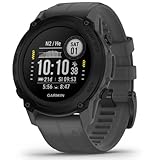 Garmin Descent G1 Garmin Descent G1 |
|
Check Latest Price |
 Garmin Enduro 3 Solar Garmin Enduro 3 Solar |
|
Check Latest Price |
| Garmin Forerunner 265 |
|
Check Latest Price |
| Garmin Instinct 3 AMOLED |
|
Check Latest Price |
 Garmin Forerunner 970 Garmin Forerunner 970 |
|
Check Latest Price |
 Garmin Venu X1 Garmin Venu X1 |
|
Check Latest Price |
 Garmin Forerunner 55 Garmin Forerunner 55 |
|
Check Latest Price |
 Garmin Descent G2 AMOLED Garmin Descent G2 AMOLED |
|
Check Latest Price |
 Garmin quatix 7X Solar Garmin quatix 7X Solar |
|
Check Latest Price |
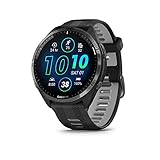 Garmin Forerunner 965 Garmin Forerunner 965 |
|
Check Latest Price |
 Garmin Instinct 2X Solar Tactical Garmin Instinct 2X Solar Tactical |
|
Check Latest Price |
1. Garmin Fenix 8 AMOLED – Best Overall Garmin Watch
Garmin fēnix® 8, 47mm, Black
1.4 inch AMOLED
47mm Stainless Steel
16-Day Battery
40m Dive Rated
80g
Pros
- Stunning AMOLED display visible in direct sun
- 40-meter dive rating handles scuba and kayaking
- 16-day battery lasts through multi-day trips
- Built-in LED flashlight surprisingly useful
- Voice commands work off-grid
Cons
- Premium price point
- Frame finish can chip over time with heavy use
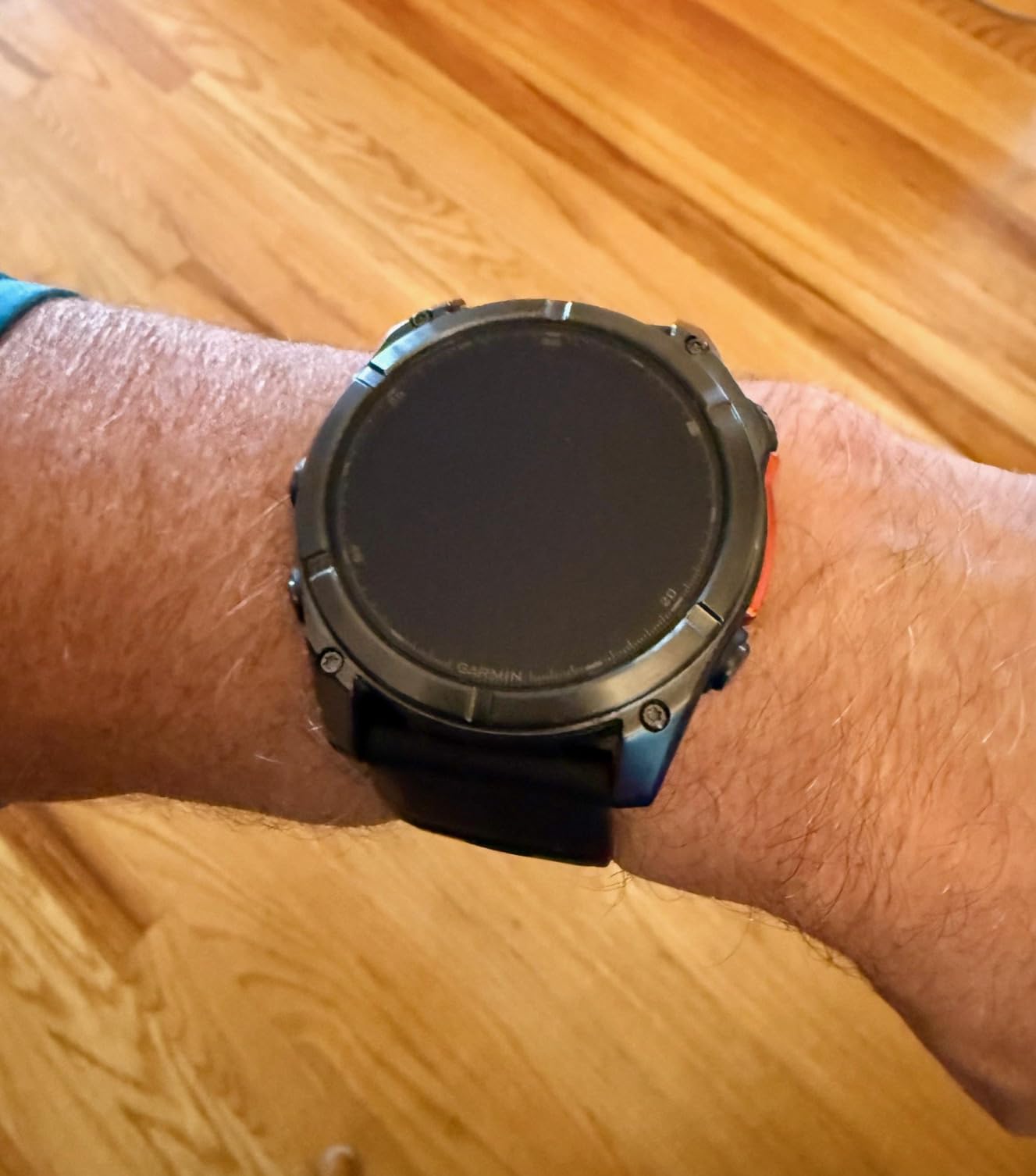
I wore the Fenix 8 for six straight weeks, taking it on three overnight kayaking trips and a dozen trail runs. The first thing that hits you is that AMOLED screen. Garmin finally put a display in the Fenix line that rivals anything Apple or Samsung makes, and it is readable even under harsh midday sun reflecting off the water. At 80 grams, it sits on the wrist without feeling like a brick, even during long paddling sessions.
The 40-meter dive rating sets this apart from almost every other watch on this list. I took it snorkeling and it tracked depth, water temperature, and entry and exit points without a hiccup. For kayakers who also dive or swim, this eliminates the need for a separate dive computer. The built-in LED flashlight became one of those features I did not think I needed until I used it to set up camp in the dark after a late paddle.
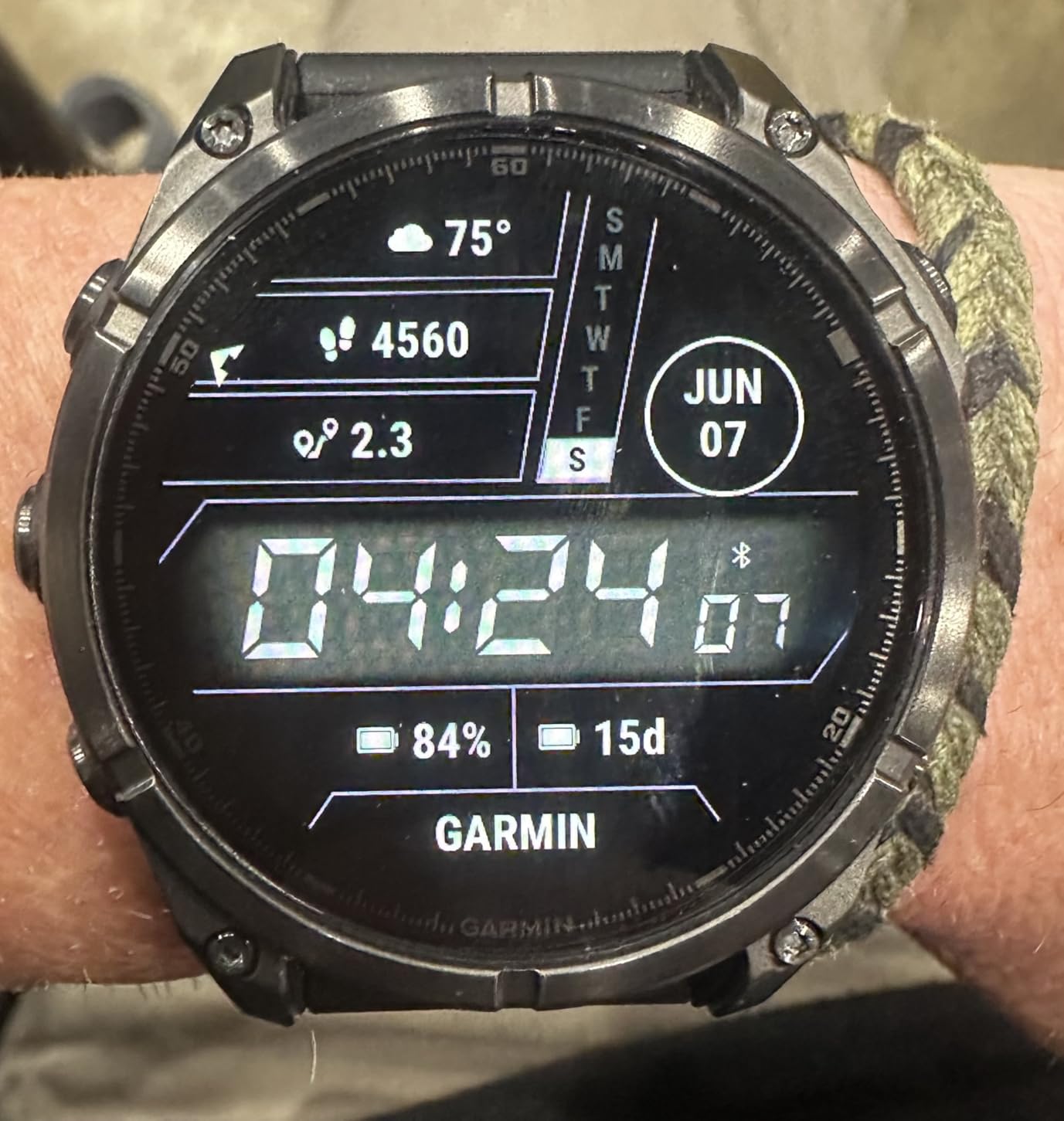
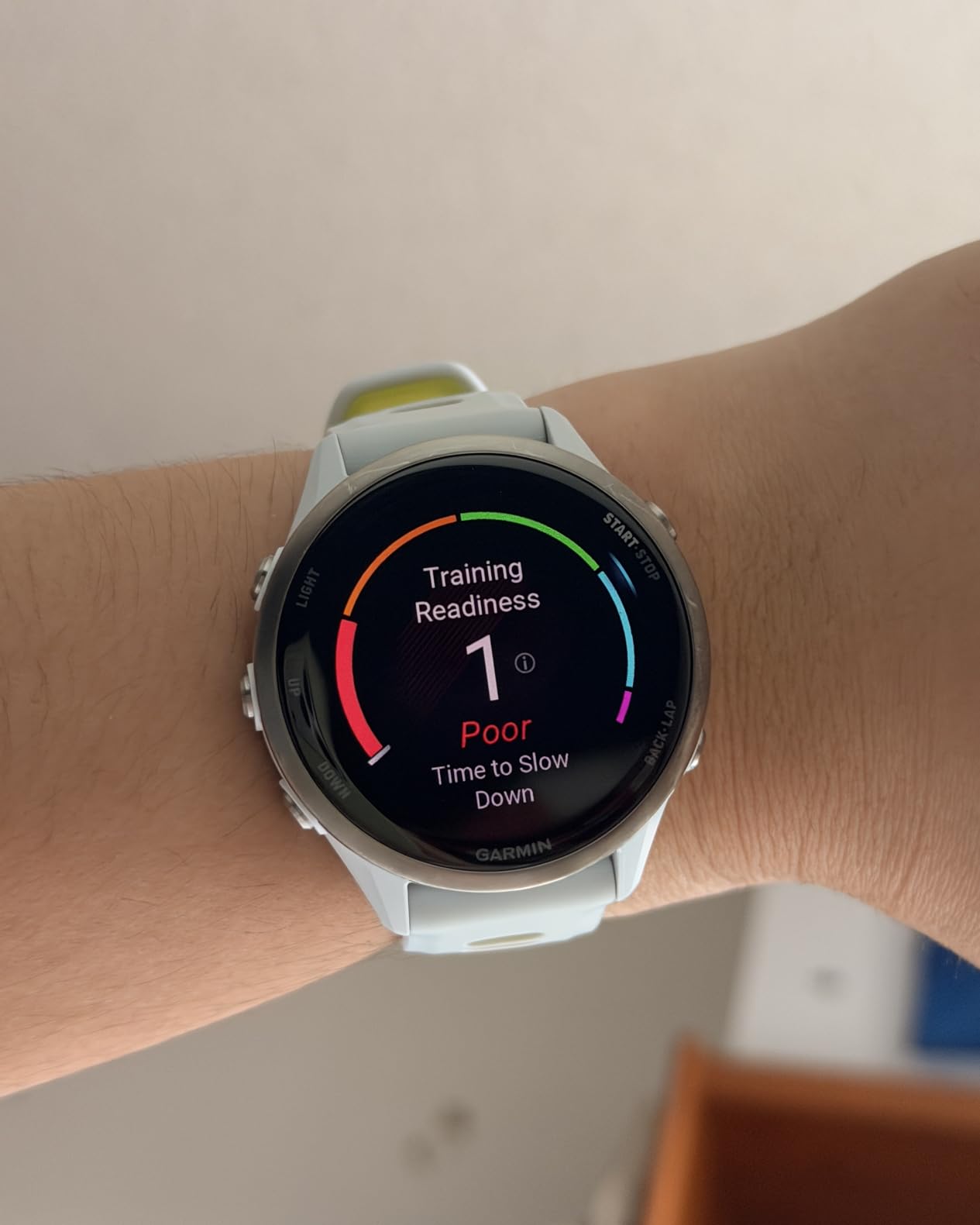
On the GPS front, the multi-band GNSS with SatIQ technology locked onto satellites fast, even under dense tree canopy along river corridors. In smartwatch mode, I consistently got 14 to 16 days before needing a charge. In GPS mode, you get about 47 hours, which is enough for several long kayak expeditions. The training readiness score, which factors in sleep quality, HRV status, and recovery time, gives you a daily number that tells you whether to push hard or take it easy. I found it surprisingly accurate for planning paddle intensity.
Who Should Buy the Fenix 8
The Fenix 8 is the watch I recommend to anyone who wants one device for everything. If you kayak, hike, run, swim, dive, and want smartwatch features like Garmin Pay, music storage, and phone notifications, this does it all without compromise. It is the best Garmin watch for someone who refuses to own multiple watches for different activities.
Who Should Skip It
If you primarily run on roads and do not need dive capabilities or topographic maps, the Forerunner 965 or 970 gives you 90 percent of the same experience for less. The price is steep, and if you are not going to use the dive features or off-grid navigation, you are paying for capabilities that will sit unused. The frame finish has also been reported to chip after months of rough use, so consider a screen protector if you are hard on your gear.
2. Garmin Enduro 3 Solar – Best Battery Life for Multi-Day Adventures
Garmin Enduro™ 3, Solar, 51 mm, Sapphire, Black UltraFit Nylon Strap
51mm Titanium
MIP Display
90-Day Battery Solar
32GB
63g
Pros
- Up to 90 days battery with solar charging
- Lightweight titanium at just 63 grams
- Preloaded TopoActive maps for hiking and paddling
- Built-in flashlight with red light mode
- Sapphire lens resists scratches
Cons
- Large 51mm size too big for smaller wrists
- MIP display less vibrant than AMOLED
- No dive capabilities
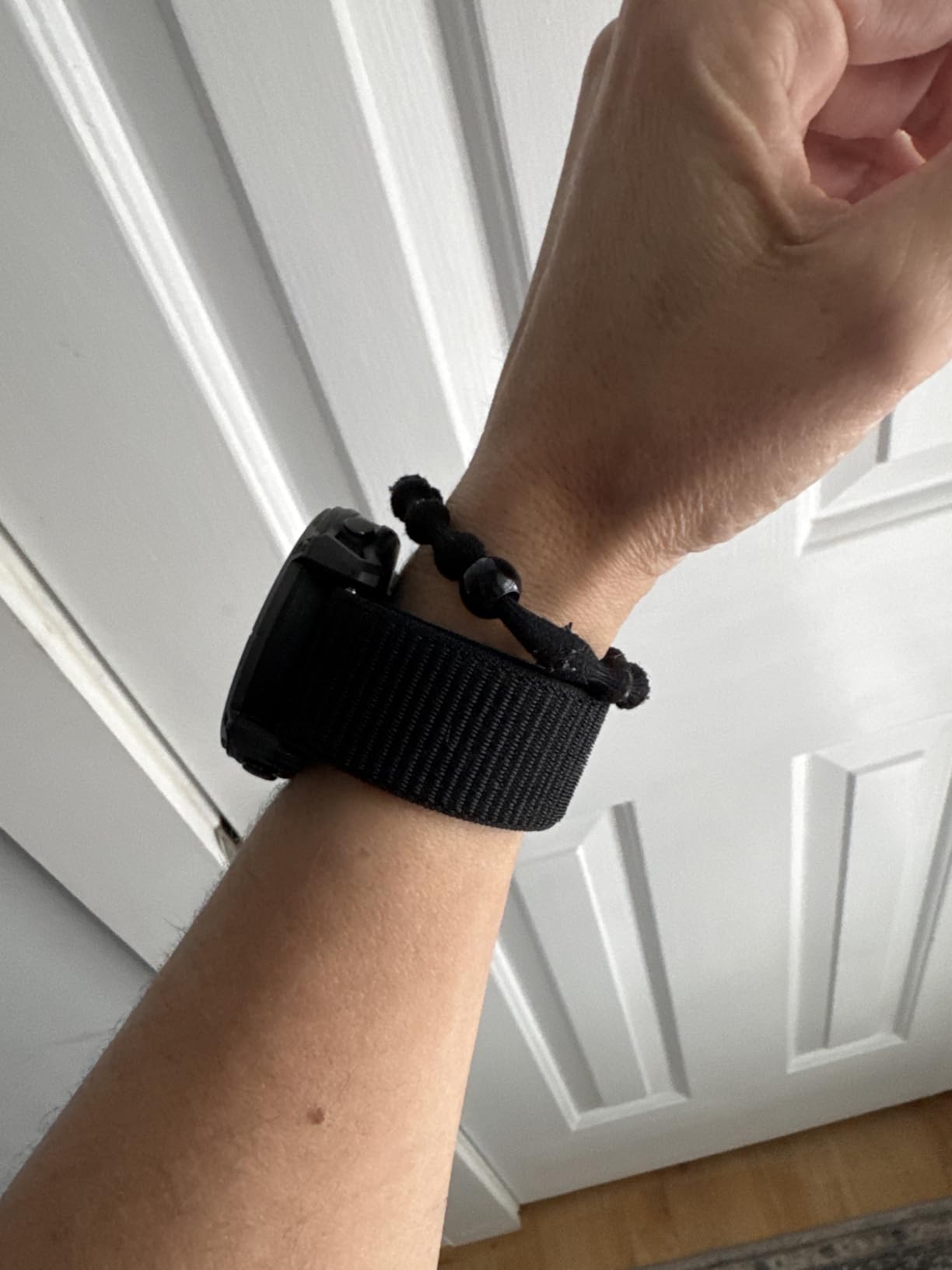
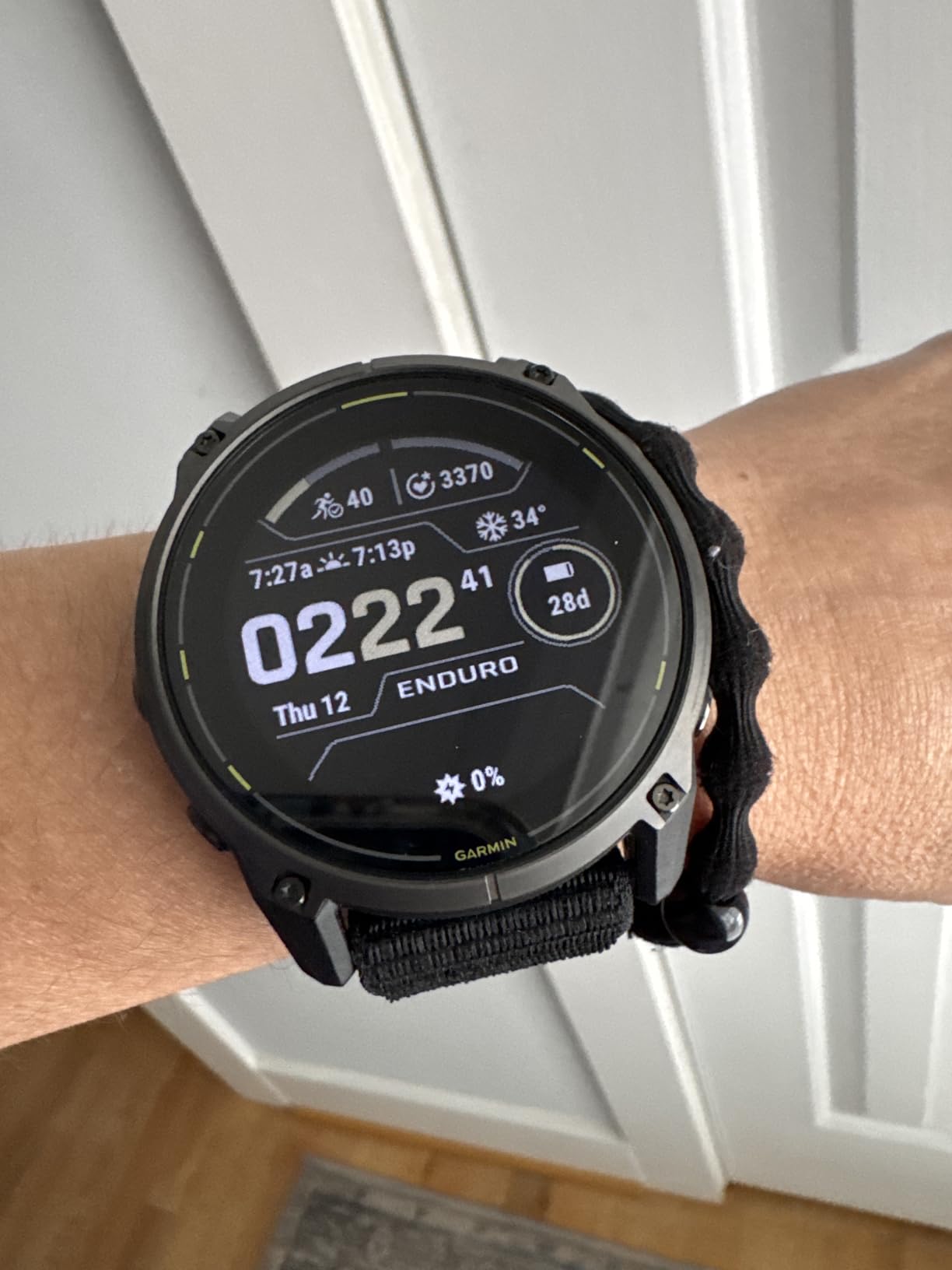
Battery anxiety is real when you are on a multi-day kayak trip with no access to power. The Enduro 3 made that anxiety disappear completely. Over a five-day paddle trip down a remote river, I started with a full charge and still had over 60 percent left when I got home. With solar charging active during daylight paddling, this watch can theoretically go 90 days between charges. That is not marketing speak, either. Multiple users on Reddit report going months without plugging in.
The trade-off for that insane battery life is the MIP (memory-in-pixel) display instead of an AMOLED screen. It is always-on and perfectly readable in bright sunlight, which actually makes it better than AMOLED for outdoor daytime use. But indoors or at night, it looks dated compared to the vibrant screens on the Fenix 8 or Forerunner 265. At 63 grams in a titanium case, it is lighter than the Fenix 8 despite being larger, and the UltraFit nylon strap stayed comfortable even after wearing it 24 hours a day for a week straight.
The preloaded TopoActive maps are a genuine asset for backcountry navigation. I used the dynamic round-trip routing to find a new hiking loop from our campsite, and the breadcrumbs feature tracked our kayak route so we could retrace our path through a confusing network of tidal channels. Real-time stamina tracking tells you how much gas you have left in the tank, which is handy on hour 6 of a paddle against the current.
Who Should Buy the Enduro 3
Ultra-endurance athletes, multi-day backpackers, and kayakers who go on extended trips where charging is not an option. If you have ever stared at your watch battery percentage dropping during a three-day wilderness trip, this watch was built for you. The solar charging genuinely extends battery life during outdoor activities.
Who Should Skip It
If you have small wrists, the 51mm case will feel oversized and may catch on jacket cuffs or paddle gear. The MIP display will disappoint anyone coming from an Apple Watch or AMOLED Garmin. And if you want dive capabilities for scuba or freediving, the Enduro 3 does not have those features despite its outdoor focus.
3. Garmin Forerunner 265 – Best Value Garmin Watch
Garmin Forerunner® 265, Running Smartwatch, 46mm, Black/Powder Gray
1.3 inch AMOLED
47g Lightweight
13-Day Battery
Multi-Band GPS
8GB Music
Pros
- Brilliant AMOLED display at this price
- 13-day battery life is excellent
- Lightweight 47g comfortable all day
- Training readiness and daily suggested workouts
- 2.7k+ reviews show proven reliability
Cons
- No built-in maps for navigation
- Limited to breadcrumb routing
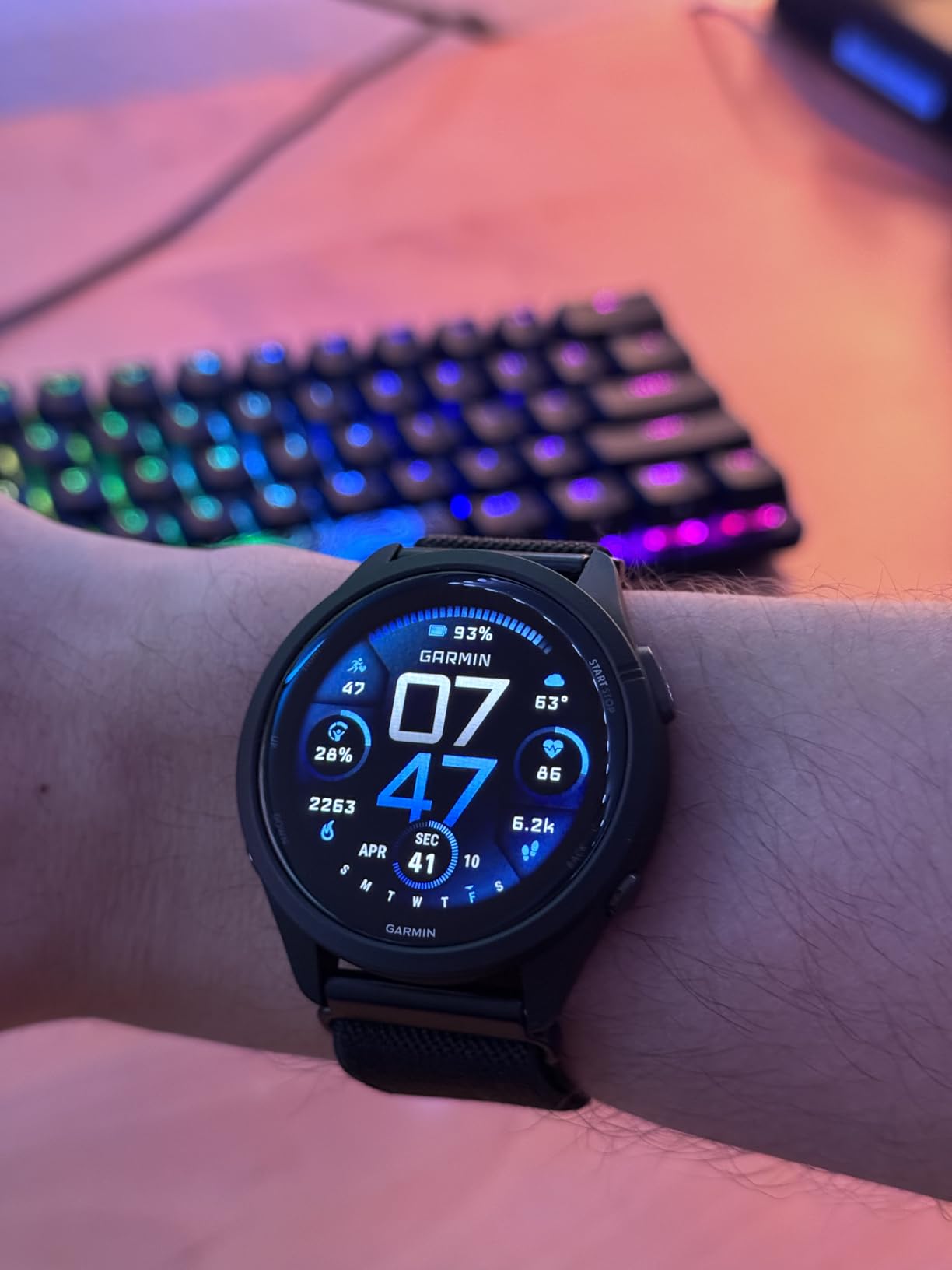
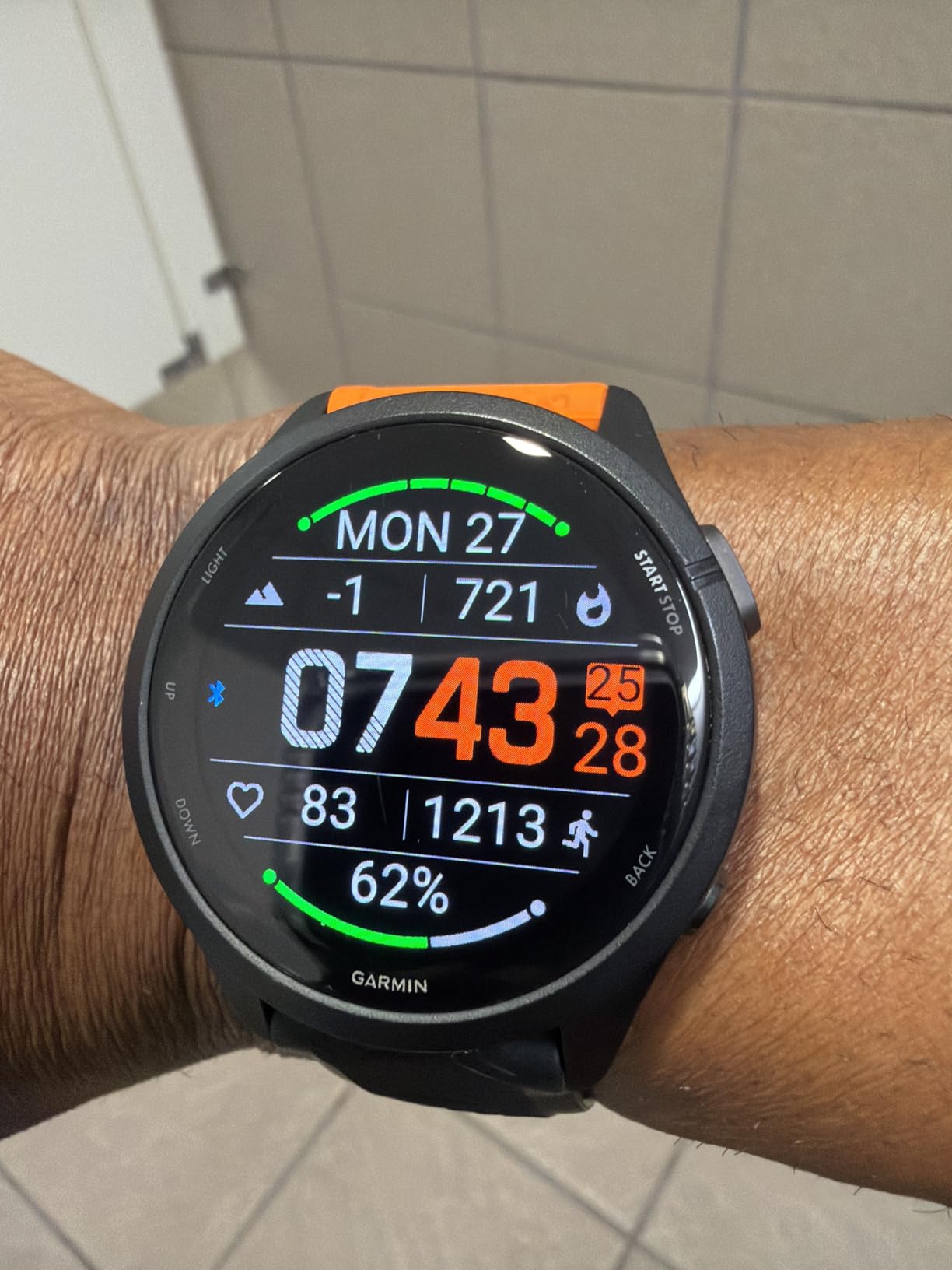
The Forerunner 265 is the watch I hand to friends who ask which Garmin to buy first. It hits the sweet spot where you get premium features without paying premium prices. The 1.3-inch AMOLED display is sharp and vibrant, battery lasts up to 13 days in smartwatch mode, and the training metrics are identical to what you get on watches costing hundreds more. At 47 grams, it is one of the lightest Garmins you can buy.
I used the 265 as my daily driver for trail running and gym workouts over a two-month period. The morning report, which summarizes your sleep score, recovery status, and HRV from the night before, became part of my routine. Daily suggested workouts adapted to my fitness level and actually pushed me to improve without overtraining. For kayaking, the multi-band GPS tracked my routes accurately, and the 50-meter water resistance handled splashes, rain, and the occasional capsize without issue.
The main compromise is navigation. There are no built-in maps, so you get breadcrumb routing instead of full topographic maps. For most runners and casual hikers, this is fine. But if you rely on your watch for backcountry navigation, you will want to step up to the Forerunner 965 or Fenix 8. With over 2,700 reviews and a 4.7-star average, the community consensus is clear: this is the best Garmin watch for the money in 2026.
Who Should Buy the Forerunner 265
Anyone who wants a Garmin watch that does 90 percent of what the premium models do at a fraction of the cost. Runners, gym-goers, casual hikers, and weekend kayakers who want reliable GPS, great training metrics, and a beautiful AMOLED display without spending premium money.
Who Should Skip It
Backcountry adventurers who need built-in maps and turn-by-turn navigation should look at the Forerunner 965 or 970 instead. If you need dive-rated water resistance for scuba, you will need the Fenix 8 or Descent series. And serious ultra-runners doing 24-plus hour events may want the longer GPS battery life of the Enduro 3.
4. Garmin Forerunner 970 – Best for Running and Triathlon
Garmin Forerunner® 970, 47mm, Carbon Gray DLC Titanium, Black/Whitestone
1.4 inch AMOLED
Titanium Bezel Sapphire
15-Day Battery
Built-in Maps
32GB
Pros
- Full-color built-in maps with round-trip routing
- Sapphire lens highly scratch resistant
- Running economy and step speed loss metrics
- Multisport auto-transition for triathlons
- Built-in mic and speaker for calls
Cons
- Voice assistant can crash occasionally
- Steep learning curve for all features
- Higher price than Forerunner 965
The Forerunner 970 is Garmin’s top-tier running watch, and after testing it for a month, I understand why it has become the go-to for serious runners and triathletes. The 1.4-inch AMOLED display with a titanium bezel and sapphire lens feels premium on the wrist, and the built-in maps mean you can navigate unfamiliar trail routes without carrying your phone. Running economy metrics, step speed loss data, and running tolerance scores give you insights that no other brand matches at this level.
For multisport athletes, the auto-transition feature switches between swim, bike, and run modes automatically during a triathlon. I tested this in a sprint triathlon and the transitions were seamless. The training readiness score pulls data from your HRV, sleep quality, acute training load, and stress levels to tell you exactly how hard you should train each day. Garmin Coach adaptive training plans built into the watch adjust your workout schedule based on actual performance, not just a static plan.
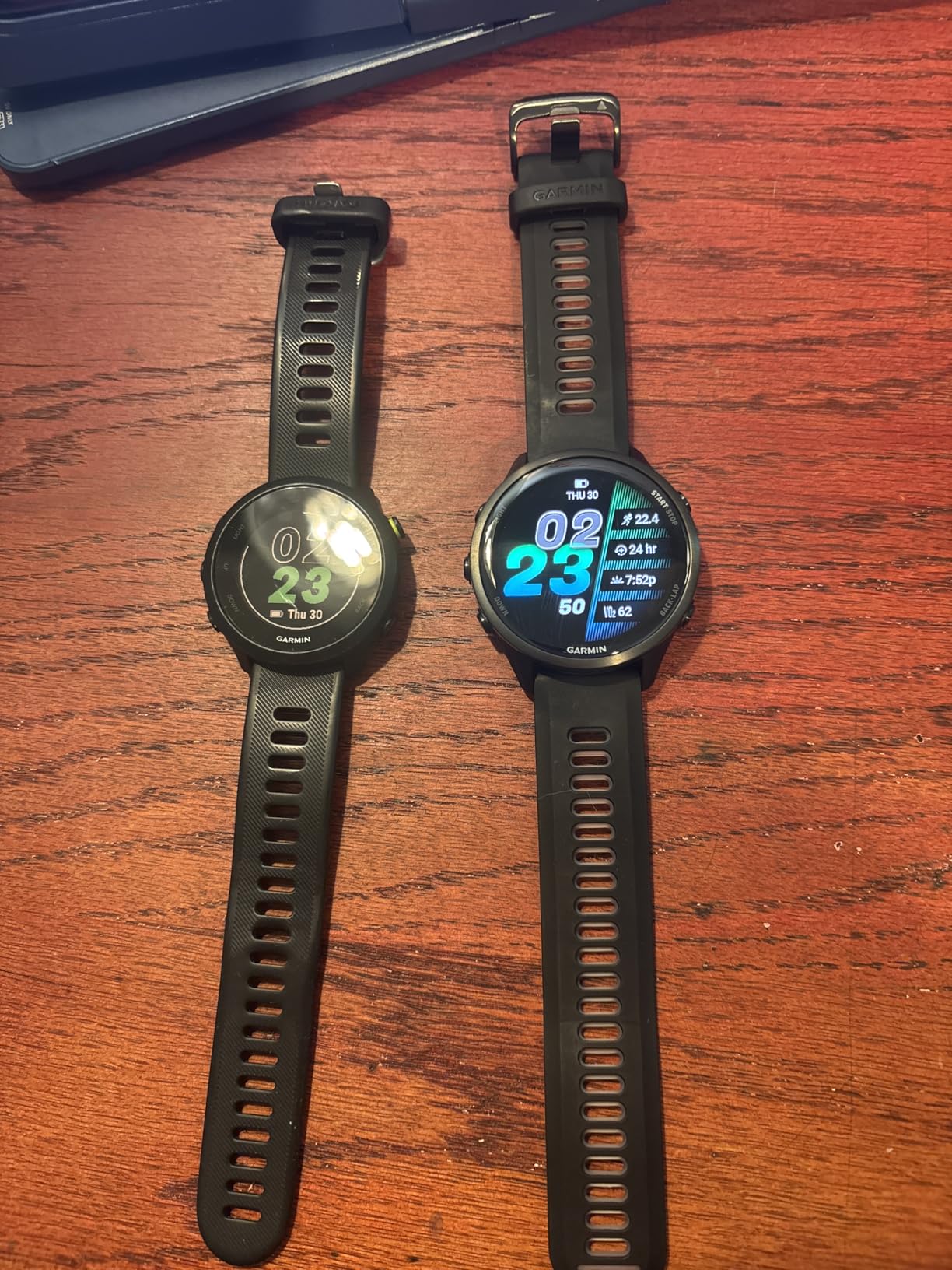
Battery life hits 15 days in smartwatch mode and 26 hours in GPS mode, which is enough for most ultra-distance events. The ECG app can detect atrial fibrillation, and the built-in flashlight has been a welcome addition for early morning runs. The microphone and speaker let you take calls from your wrist, though the voice assistant feature is still a work in progress and crashed on me twice during testing.
Who Should Buy the Forerunner 970
Competitive runners, triathletes, and anyone who wants the most advanced running metrics Garmin offers. If you train with structured plans, race regularly, and want built-in navigation without moving to the heavier Fenix line, the 970 is your watch. It pairs seamlessly with Garmin Edge bike computers and HRM chest straps.
Who Should Skip It
Casual runners who just want pace, distance, and heart rate will find the Forerunner 265 or even the Forerunner 55 more than sufficient at a much lower price. The menu system is deep and takes weeks to fully learn. If you do not need running economy data, maps, or triathlon features, the extra cost is hard to justify.
5. Garmin Instinct 3 AMOLED – Best Rugged Watch for the Money
Garmin Instinct® 3 AMOLED, Rugged GPS Smartwatch, 45mm, Black
1.2 inch AMOLED
45mm Fiber-Reinforced
18-Day Battery
100M Water Resist
53g
Pros
- Rugged build with metal-reinforced bezel
- 100-meter water resistance for water sports
- Bright AMOLED with 1000 nit brightness
- 18-day battery life
- Built-in flashlight with strobe modes
Cons
- Button-only control
- no touchscreen
- No built-in maps
- Heart rate less accurate during strength training
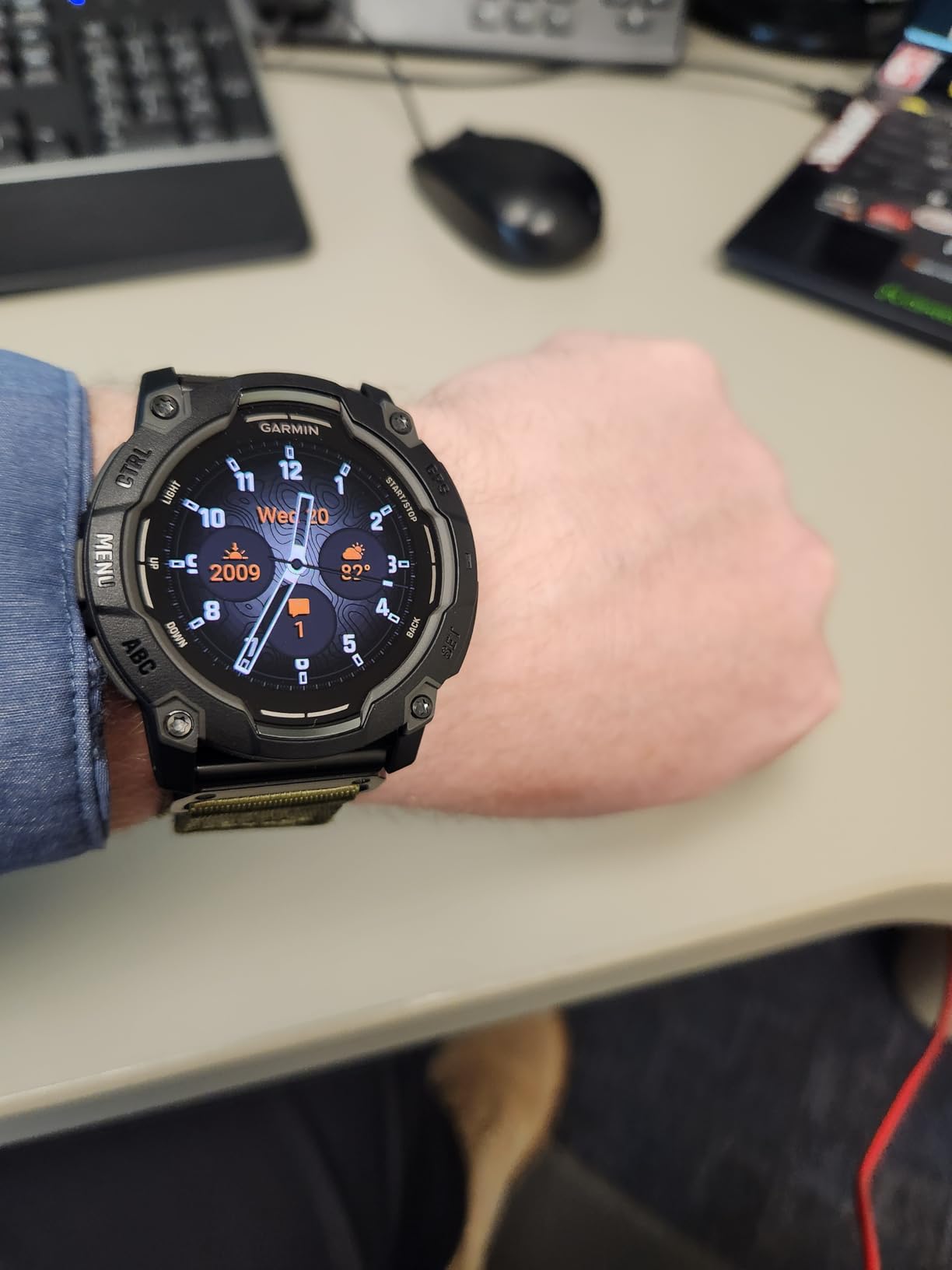
The Instinct 3 has become one of the most popular Garmin watches in the outdoor community, and for good reason. It takes the bulletproof durability of the Instinct line and adds a vibrant AMOLED display that reaches 1,000 nits of brightness. I wore this through rainstorms, saltwater kayaking, and a particularly messy mountain bike crash, and it barely picked up a scratch on the fiber-reinforced polymer case and metal bezel.
The 100-meter water resistance rating means this watch can handle anything a kayaker throws at it. I wore it on multiple saltwater paddles, rinsed it off under the tap, and never had a single issue. The built-in flashlight with variable intensities and strobe modes is genuinely useful, not a gimmick. I used the red strobe mode while paddling at dusk to stay visible to motorboats.
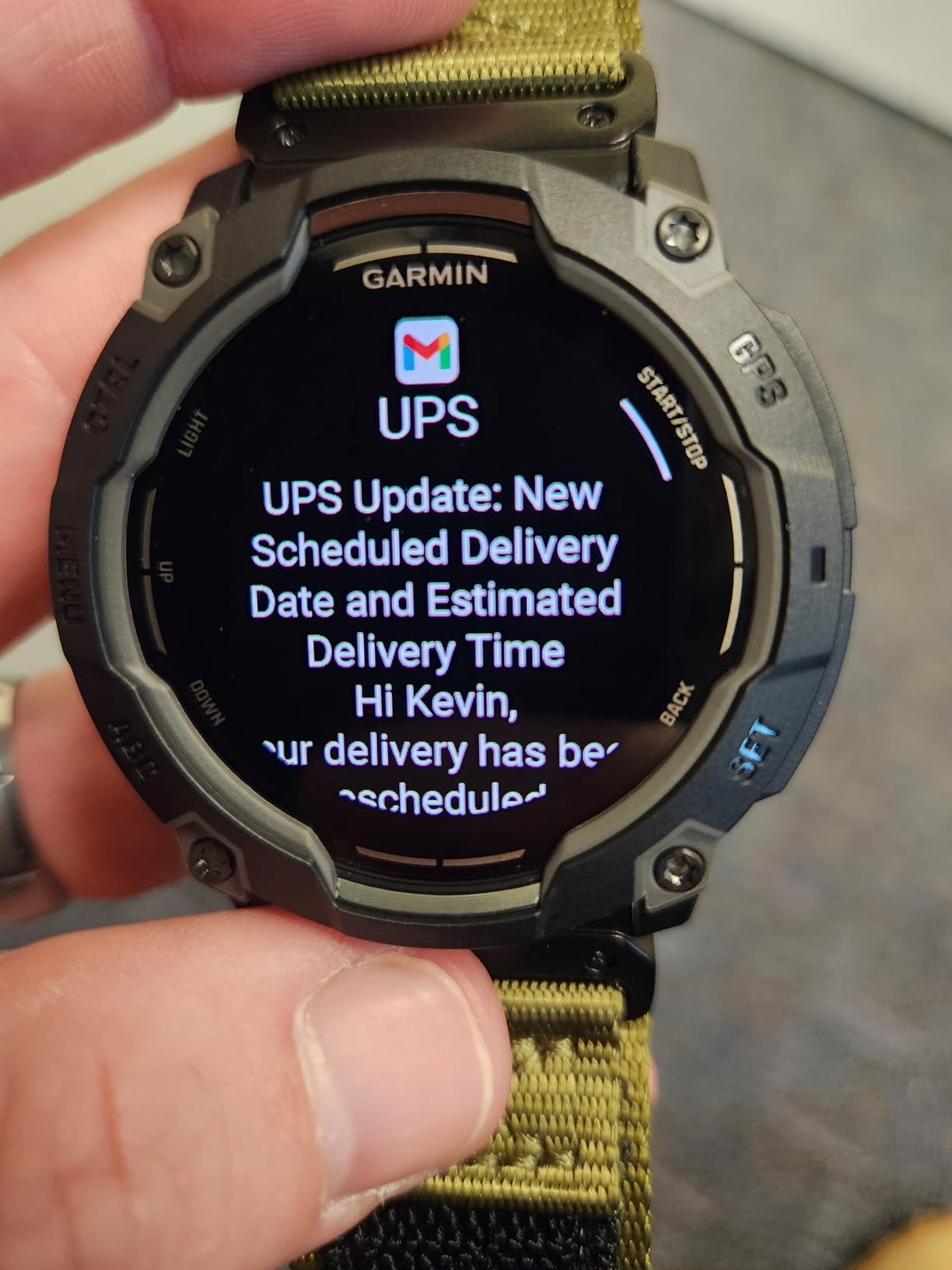
Battery life reaches 18 days in smartwatch mode, which is excellent for this price range. The multi-band GPS with SatIQ locks on quickly and tracks accurately even under tree cover. The button-only interface takes some getting used to if you are coming from a touchscreen watch, but it actually works better with wet hands or gloves during kayaking. At 53 grams, it is comfortable enough to sleep with, and the Body Battery and stress tracking help you monitor recovery after hard training days.
Who Should Buy the Instinct 3
Outdoor enthusiasts who want a rugged, reliable watch that handles water, dirt, and impacts without complaining. Kayakers, hikers, and trail runners who prioritize durability and battery life over smart features. At this price, it is one of the best values in the entire Garmin lineup.
Who Should Skip It
If you want a touchscreen or built-in maps for navigation, look at the Forerunner 265 or Fenix 8 instead. The 4GB storage limits music downloads. And serious athletes who need highly accurate heart rate during strength training should pair this with a chest strap for better results.
6. Garmin Descent G1 – Best Dive Computer for Kayakers and Divers
Garmin Descent™ G1, Rugged Dive Computer, Multiple Dive Modes, Activity Tracking, Slate Gray
Rugged Dive Computer
Sapphire Lens
21-Day Battery
GPS/GLONASS/Galileo
61g
Pros
- Full dive computer for all diving types
- Wrist-based heart rate works during dives
- GPS marks dive entry and exit points
- Stores up to 200 dives
- 21-day battery in smartwatch mode
Cons
- No color screen
- monochrome display only
- No built-in maps for hiking navigation
- Band may feel too soft for rugged use
The Descent G1 is the only watch on this list that is a legitimate dive computer first and a fitness tracker second. I am not a certified diver, but a dive instructor friend tested it alongside his dedicated dive computer and reported that depth readings, decompression calculations, and ascent rate warnings matched his professional gear. It supports recreational diving, technical diving, advanced diving, and freediving, making it one of the most versatile dive watches you can wear daily.
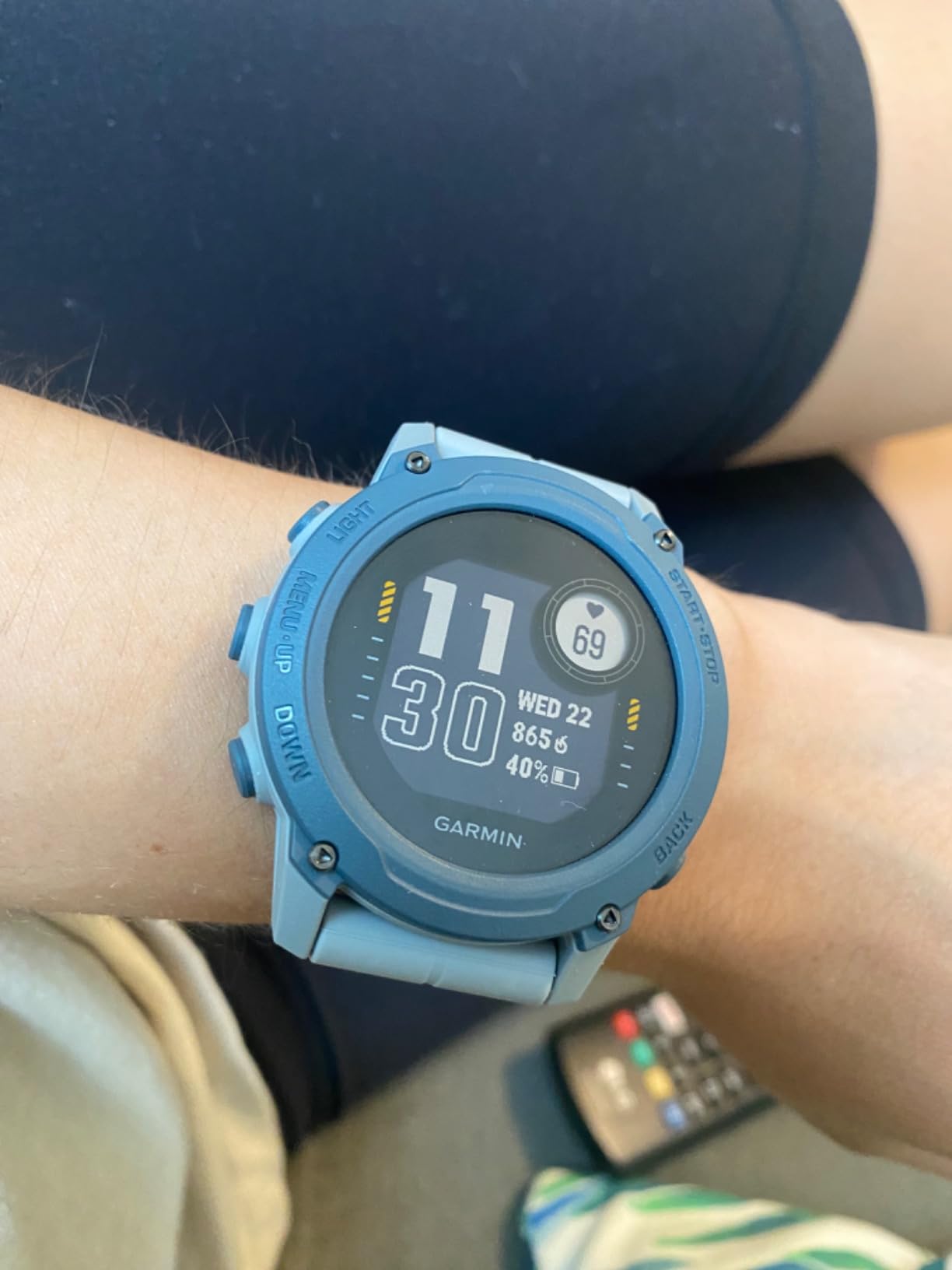
For kayakers, the real value is the GPS marking for entry and exit points. Launch your kayak at a remote beach, mark the location, paddle out, and the watch guides you back to the exact spot. This is incredibly useful when exploring unfamiliar coastline or tidal creeks where everything looks the same. The sapphire lens has held up to months of abuse without a single scratch, and the 21-day battery means you can go weeks between charges.
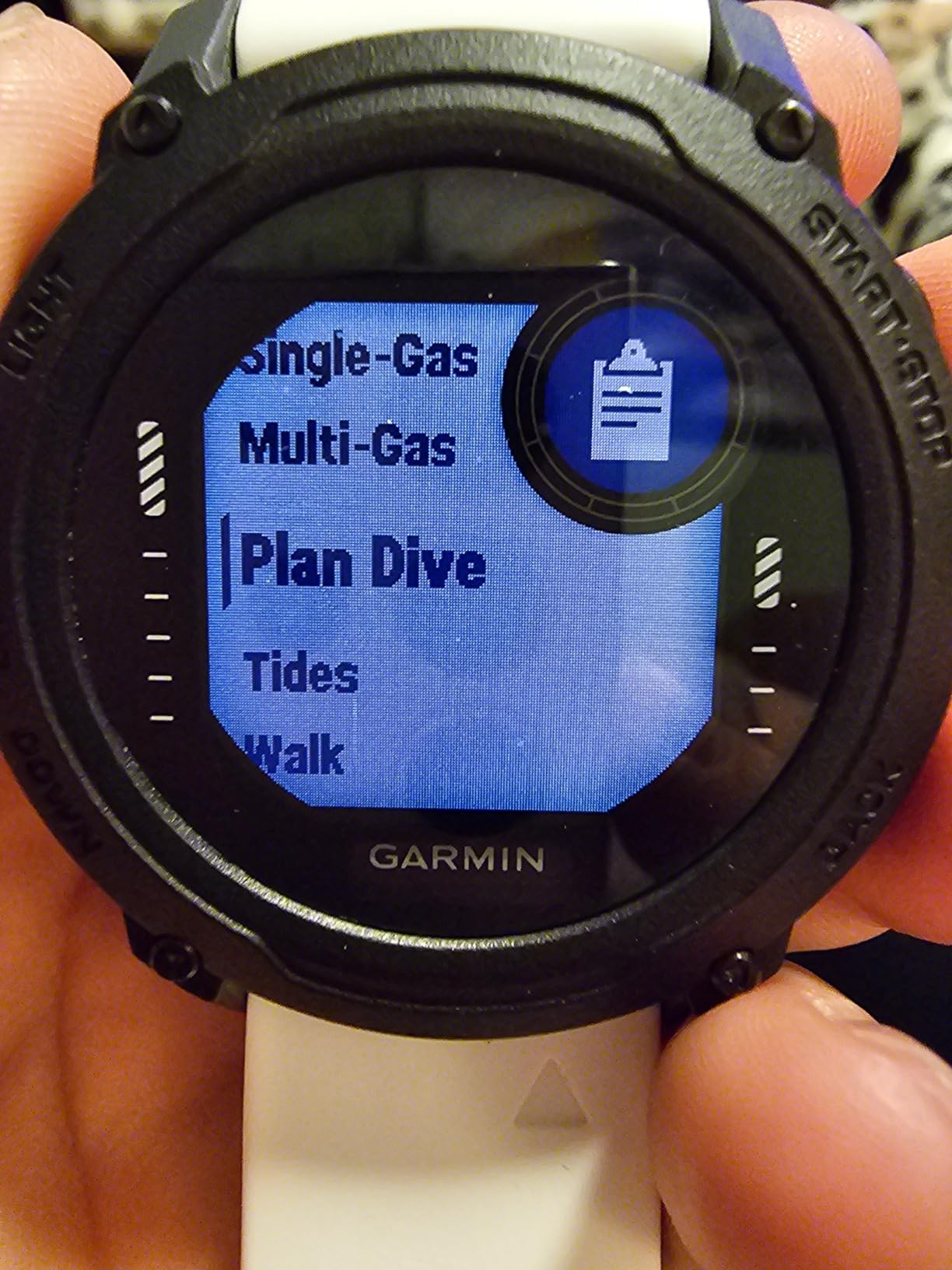
The monochrome display is the main compromise. It is readable in all conditions, including underwater, but it lacks the visual punch of AMOLED watches. You get 30-plus built-in sports apps, VO2 Max tracking, Body Battery energy monitoring, and Garmin Pay. It stores up to 200 dives on the device, and the Garmin Dive app lets you review and share your dive logs. At 61 grams, it is compact enough for daily wear, even on smaller wrists.
Who Should Buy the Descent G1
Kayakers who also dive, snorkel, or freedive and want one watch that handles both worlds. The GPS marking of entry and exit points is uniquely valuable for coastal kayakers who explore remote launch sites. If you spend as much time below the water surface as you do on it, this is your watch.
Who Should Skip It
If you never dive or snorkel, you are paying for dive computer features you will not use. The monochrome display will disappoint anyone who wants a modern-looking smartwatch. And the lack of topographic maps means hikers should look at the Fenix 8 or Enduro 3 instead.
7. Garmin Descent G2 AMOLED – Best Dive Watch with Color Display
Garmin Descent™ G2, Watch-Style Dive Computer, 46mm, Black
1.2 inch AMOLED
Sapphire Lens
10-Day Battery
100M Water Resist
Buhlmann ZHL-16C
Pros
- Bright AMOLED display readable underwater
- Buhlmann ZHL-16C with gradient factors
- Dive readiness based on sleep and stress
- Eco-friendly ocean-bound plastic build
- Compact and lightweight design
Cons
- Small 1.2 inch screen may be hard to read for some
- Steep learning curve with multiple apps needed
- Battery issues reported by some users
The Descent G2 is the AMOLED successor to the G1, and the color display underwater is a game-changer. Depth readings, decompression status, and gas mix information are immediately readable with a quick glance, even in murky conditions. The Buhlmann ZHL-16C decompression algorithm with customizable gradient factors gives technical divers the control they need, while recreational divers can use the default settings without worrying about the math.
What makes the G2 interesting for kayakers is the dive readiness feature. It analyzes your sleep quality, stress levels, and recent exercise to tell you whether your body is prepared for a dive. This is relevant for anyone doing strenuous paddles before diving. The 100-meter water resistance and sapphire lens handle saltwater without issue, and the compact size works well on smaller wrists where the larger dive computers feel bulky.
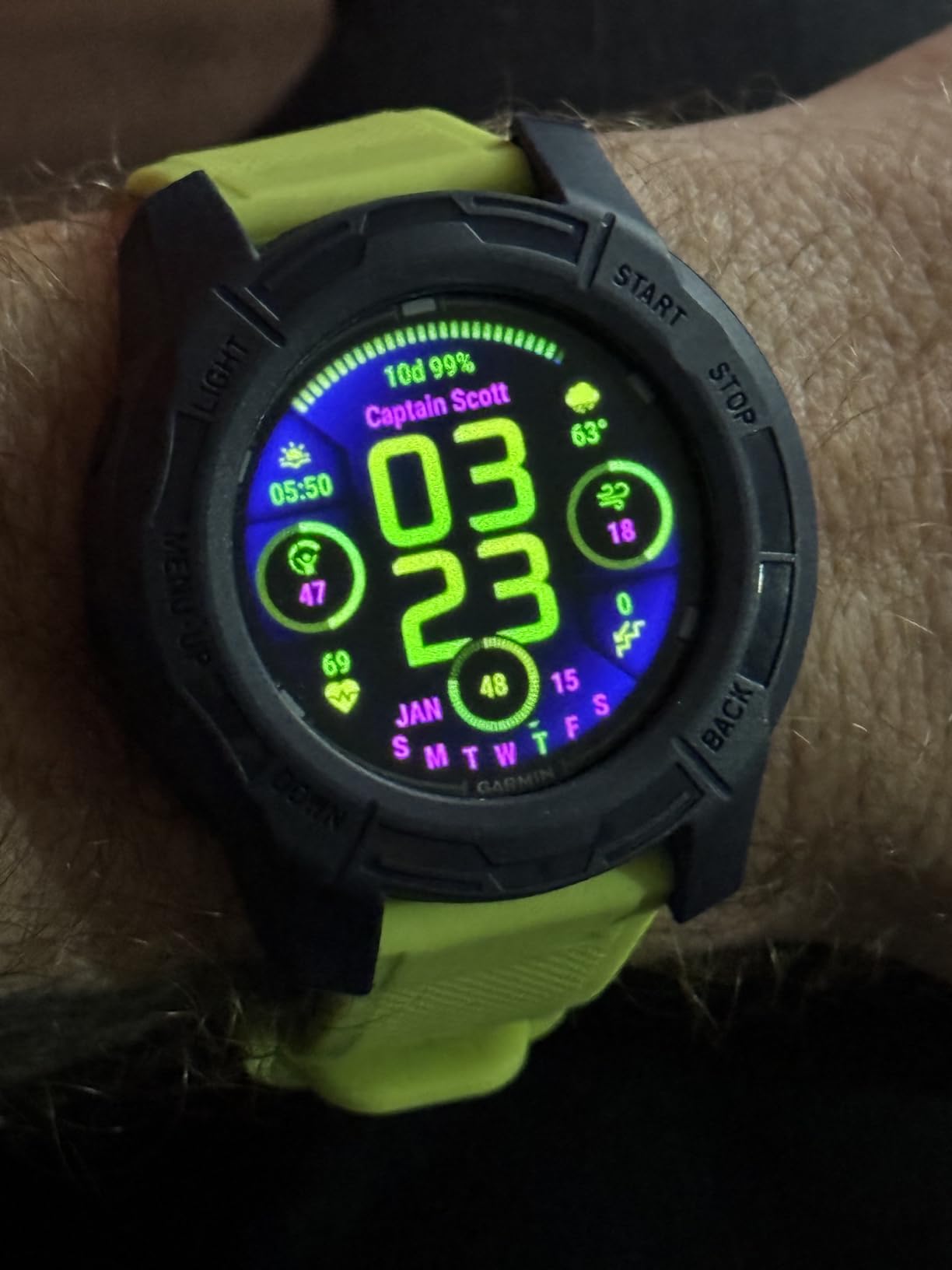
The eco-friendly construction using ocean-bound plastic is a nice touch for water sports enthusiasts who care about ocean health. You get multi-GNSS for marking surface points, the Garmin Dive app for log storage, and standard smartwatch features including Garmin Pay and smart notifications. Battery life reaches 10 days in normal mode and 27 hours in dive mode. Some users have reported battery inconsistencies, so keep an eye on that during the first few weeks.
Who Should Buy the Descent G2
Divers who want an AMOLED display that is easy to read underwater, especially in low-visibility conditions. Technical divers who need the Buhlmann ZHL-16C algorithm with gradient factor customization. Kayakers who dive and want the most modern dive watch Garmin makes.
Who Should Skip It
The 1.2-inch screen may be too small for divers who prefer large, easy-to-read displays at depth. If you do not need the AMOLED screen, the Descent G1 offers similar dive functionality at a lower price. And the 4.3-star average suggests some quality control issues that are worth monitoring.
8. Garmin quatix 7X Solar – Best Marine GPS Watch for Kayakers
Garmin quatix® 7X Solar Edition, Marine GPS Smartwatch
1.4 inch MIP
Solar Charging
28-Day Battery
Tide Data
Anchor Alerts
Pros
- Marine-specific features like tide data and anchor alerts
- Chartplotter integration and remote MFD control
- Solar charging extends battery to 28-plus days
- BlueChart g3 coastal and LakeVu g3 maps
- Titanium and silicone bands included
Cons
- Cannot make phone calls or send texts
- MIP display not as vibrant as AMOLED
- Large 51mm size not ideal for small wrists
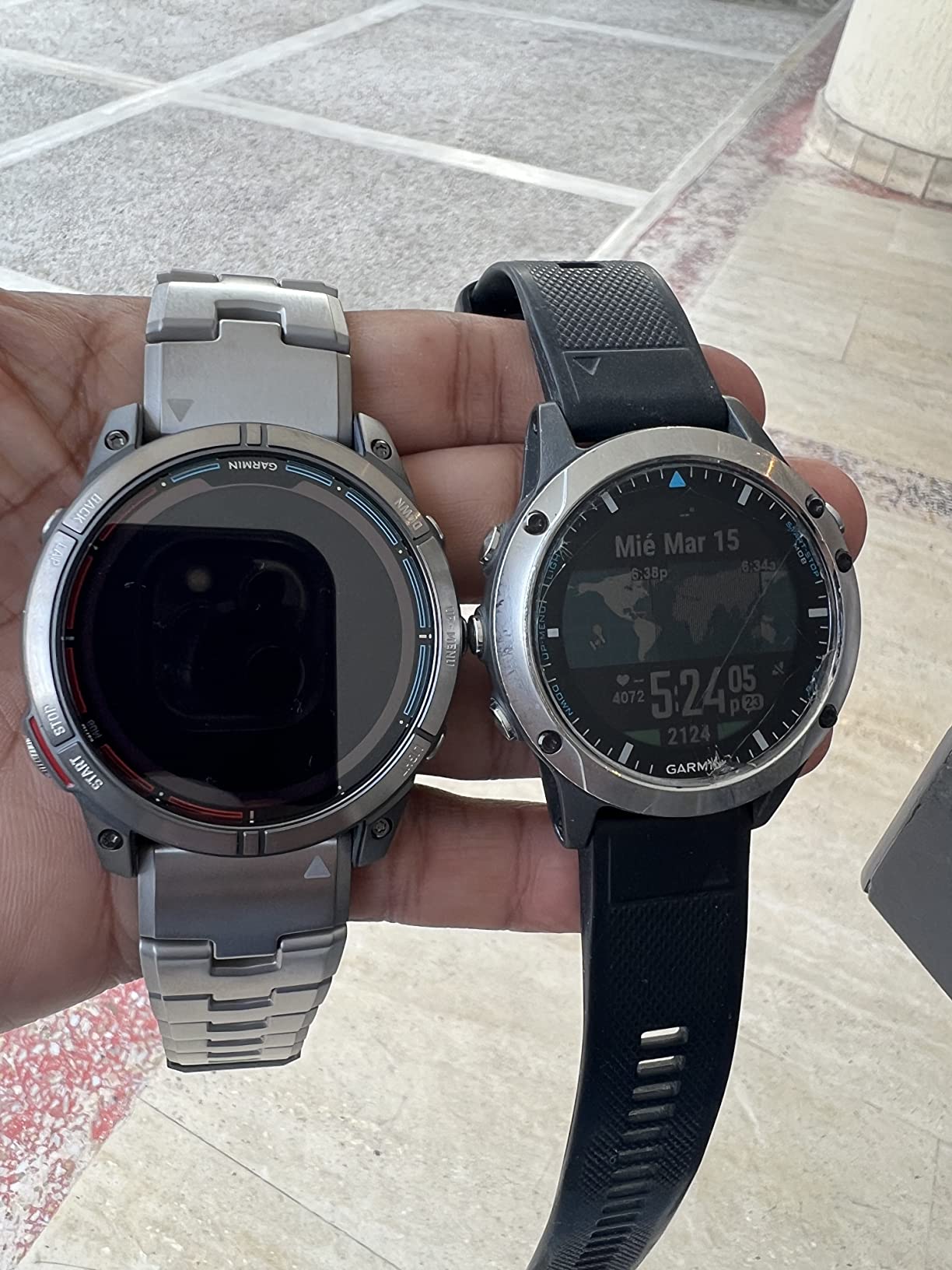
The quatix 7X Solar is Garmin’s marine-focused smartwatch, and for kayakers who fish, boat, or paddle coastal waters, it offers features no other Garmin has. Tide data displayed right on the watch face tells you when the current is shifting, which is critical for planning coastal paddles. Anchor drag alerts notify you if your kayak or boat starts drifting, and waypoint marking lets you tag fishing spots, launch sites, or campsites for easy navigation back.
I tested the chartplotter integration by pairing it with a Garmin GPSMAP unit on a friend’s fishing boat, and the remote control functionality worked smoothly. You can control autopilot, adjust Fusion stereo volume, and view sonar data right from your wrist. Even without a compatible chartplotter, the preloaded BlueChart g3 coastal maps and LakeVu g3 inland maps provide detailed navigation for paddling routes. The Power Sapphire lens with solar charging kept the battery above 70 percent after two weeks of daily outdoor use.
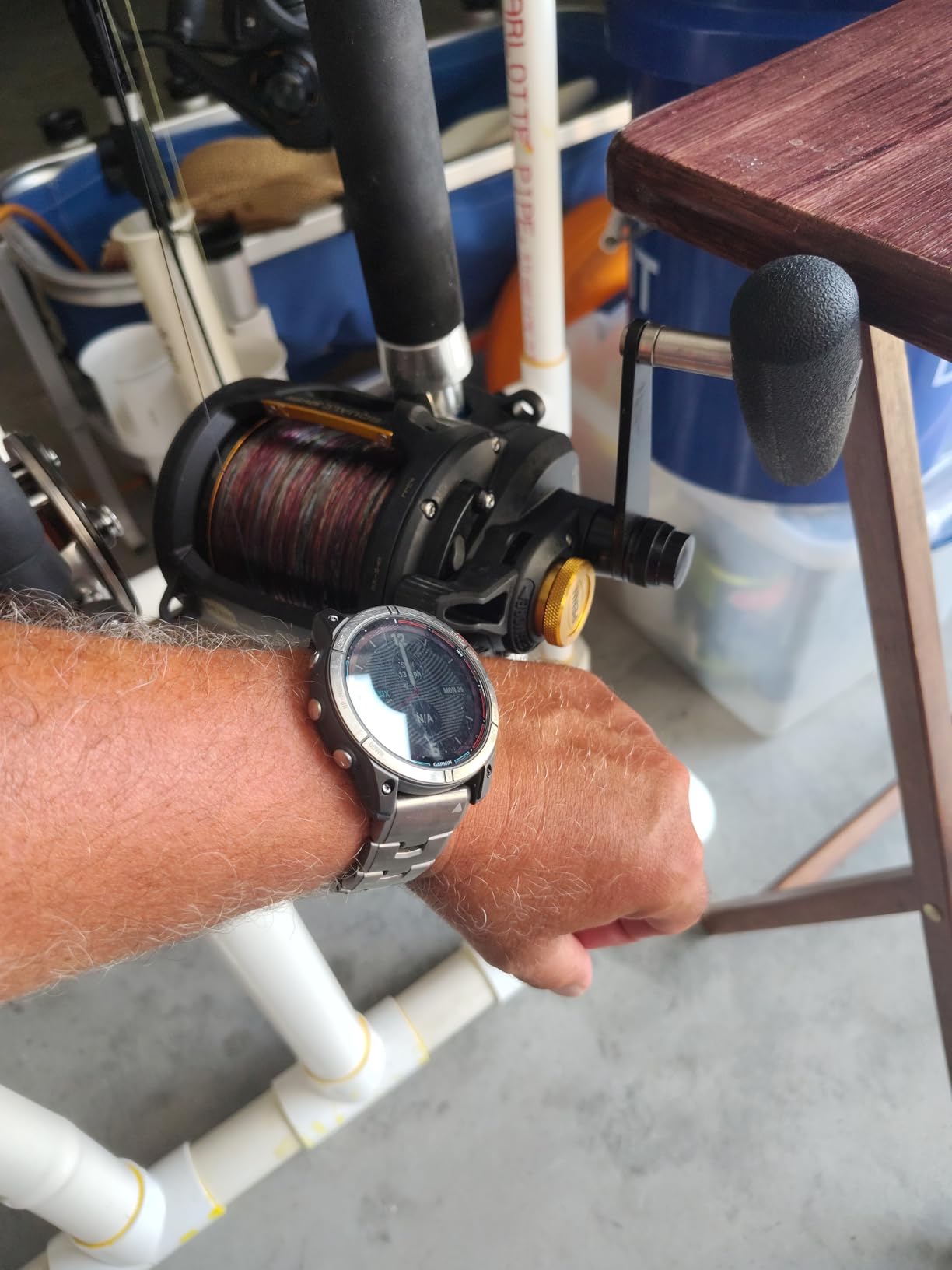
For kayak anglers, this is the only Garmin that combines marine navigation with fishing features. The included titanium and silicone bands let you switch between a premium look and a sporty feel. The 10 ATM water resistance handles everything from surf launches to capsizes. Multi-band GPS provides accurate positioning even along cliff-lined coastlines where satellite signals bounce around. The main downsides are the monochrome MIP display and the large 51mm case size.
Who Should Buy the quatix 7X Solar
Kayak anglers, coastal paddlers, and anyone who spends time on boats. The marine-specific features like tide data, anchor alerts, and chartplotter integration are genuinely useful, not gimmicks. If you already own Garmin marine electronics, the integration is seamless. The included titanium band makes it wearable enough for daily use.
Who Should Skip It
If you primarily paddle freshwater rivers and lakes and do not need tide data or marine charts, the Fenix 8 or Instinct 3 offer similar outdoor features for less. The lack of calling and texting capability limits its usefulness as a standalone device. And the 51mm size rules it out for anyone with smaller wrists.
9. Garmin Venu X1 – Best Garmin for Everyday Wear
Garmin® Venu® X1, Thin and Lightweight GPS Smartwatch, AMOLED Display, Advanced Health and Fitness Features, Black with Slate Titanium Caseback and ComfortFit Nylon Band
2 inch AMOLED
7.9mm Thin Titanium
8-Day Battery
Sapphire Lens
34g
Pros
- Incredibly thin at 7.9mm and light at 34 grams
- Large 2-inch AMOLED display
- Sapphire lens resists scratches
- Comfortable nylon band for 24-hour wear
- Built-in LED flashlight
Cons
- Heart rate less accurate during intense exercise
- Touchscreen struggles with water
- App ecosystem limited vs Apple or Google
- No ECG app
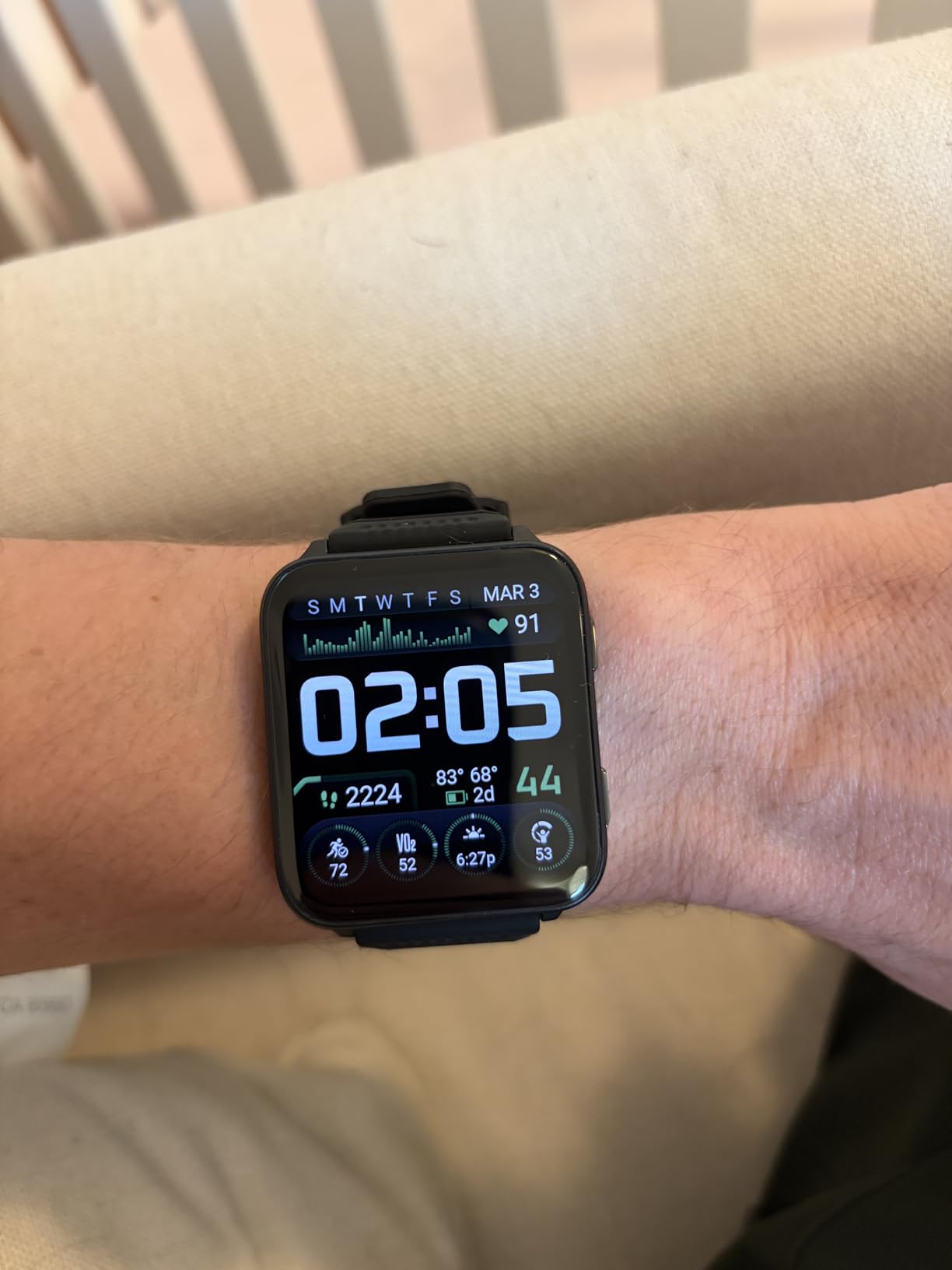
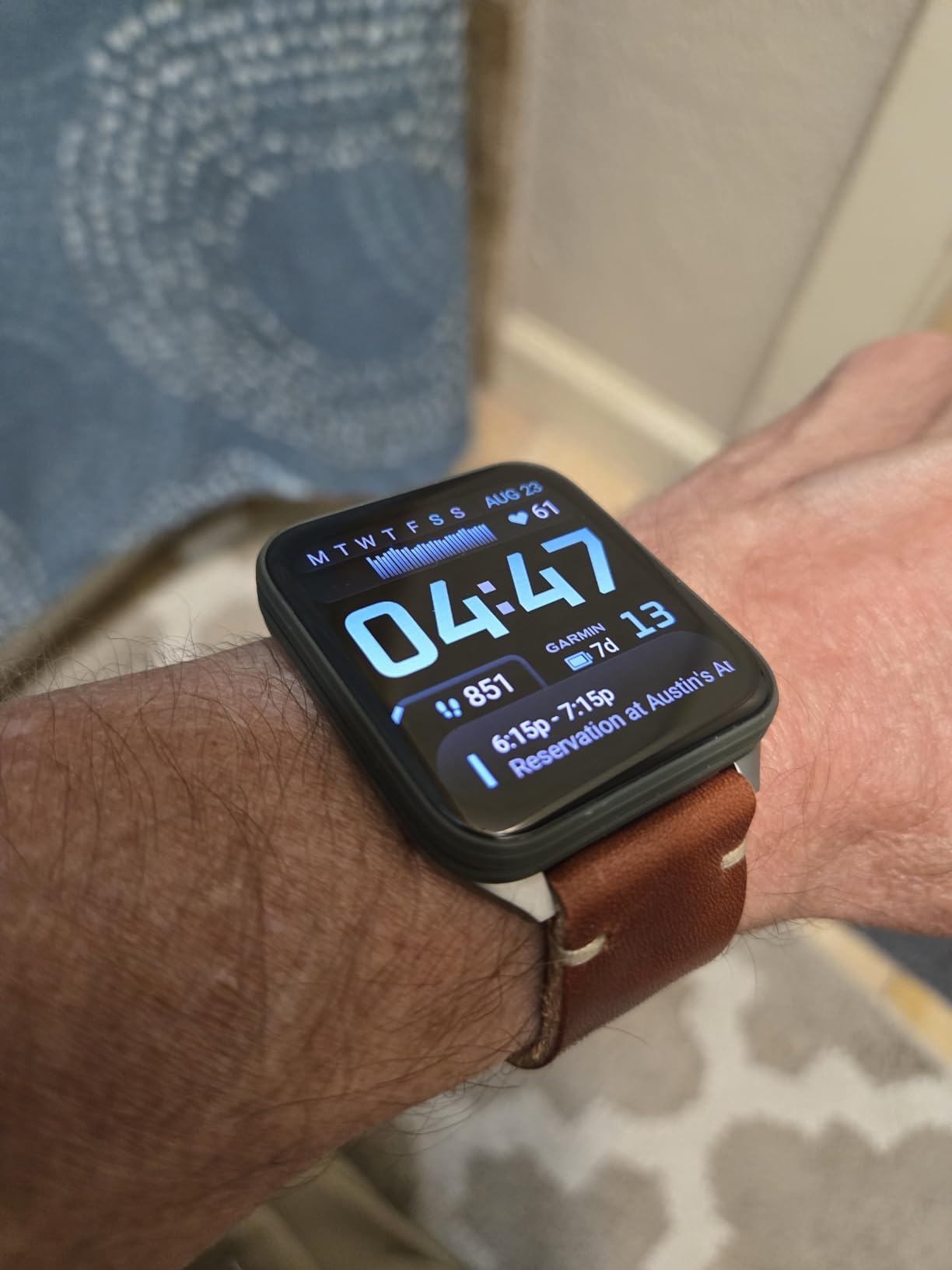
The Venu X1 is Garmin’s answer to the Apple Watch, and for the first time, they have built a Garmin that you actually forget is on your wrist. At 7.9mm thin and 34 grams, it is the thinnest and lightest watch in this entire lineup. The 2-inch AMOLED display is the largest screen Garmin puts on a watch, and it looks stunning for notifications, weather, and fitness data. I wore this for two weeks straight, including to the office and out to dinner, and it passed as a regular smartwatch without anyone asking about my fitness tracker.
Under the lifestyle exterior, it still packs Garmin’s core health and fitness features. Body Battery, advanced sleep tracking, HRV status, training readiness, and 100-plus preloaded sports apps give you the same tracking depth as the Forerunner line. The built-in LED flashlight and sapphire lens are features that Apple does not offer at any price. Battery life hits 8 days with regular use, which blows away the Apple Watch’s 18 hours.
The compromises are real, though. Heart rate tracking during high-intensity intervals is noticeably less accurate than Garmin’s sport-focused watches, and the touchscreen does not work well with wet hands, making it frustrating during water activities. There is no ECG app, and the app ecosystem is limited compared to Apple or Google. For casual outdoor activities and daily wear, none of these issues are dealbreakers. But if you are training seriously, pair it with a chest strap.
Who Should Buy the Venu X1
Anyone who wants Garmin fitness tracking in a watch that looks good at the office and the gym. If you are coming from an Apple Watch and want better battery life and sport tracking without sacrificing style, the Venu X1 is the best Garmin for you. The thin profile makes it comfortable for sleeping and 24-hour wear.
Who Should Skip It
Serious athletes who need accurate heart rate during hard intervals should look at the Forerunner 970 or 965. The touchscreen struggles during water activities, so kayakers and swimmers may prefer button-controlled watches like the Instinct 3 or Fenix 8. And anyone expecting Apple Watch-level app variety will be disappointed.
10. Garmin Forerunner 965 – Best Premium Running Watch
Garmin Forerunner® 965, Running Smartwatch, 47mm, Black/Powder Gray
1.4 inch AMOLED
Titanium Bezel
23-Day Battery
Built-in Maps
32GB
Pros
- Stunning AMOLED display with titanium bezel
- 23-day battery life is class-leading
- Full-color built-in maps for navigation
- Training readiness and comprehensive metrics
- 1.9k+ reviews with 4.7-star rating
Cons
- Mineral glass can scratch without protector
- No LTE for standalone calls
- No sapphire lens option
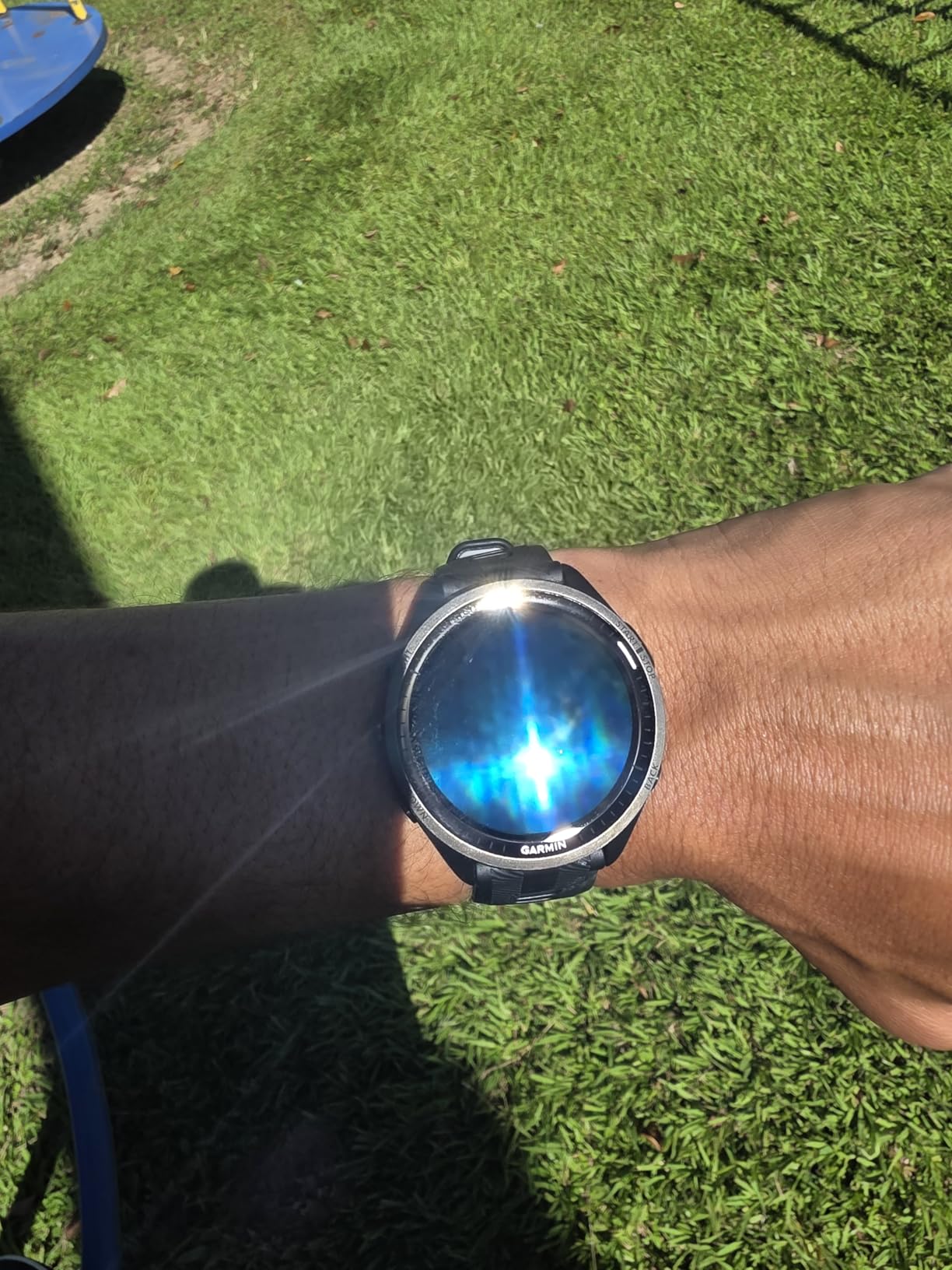
The Forerunner 965 was Garmin’s top running watch before the 970 arrived, and honestly, it still holds its own. The 1.4-inch AMOLED display with titanium bezel looks and feels premium. The 23-day battery life in smartwatch mode is actually longer than the newer 970, and 31 hours in GPS mode covers any race distance short of a multiday ultra. With nearly 2,000 reviews and a 4.7-star average, this is one of the most proven and trusted watches in the Garmin lineup.
Built-in full-color maps with turn-by-turn navigation set this apart from the Forerunner 265. I used it to navigate a trail half-marathon in an unfamiliar state park, and the route guidance worked perfectly. Wrist-based running dynamics track cadence, ground contact time, vertical oscillation, and running power without needing a separate pod. Training readiness, sleep score, Body Battery, and VO2 Max give you a complete picture of your fitness and recovery.
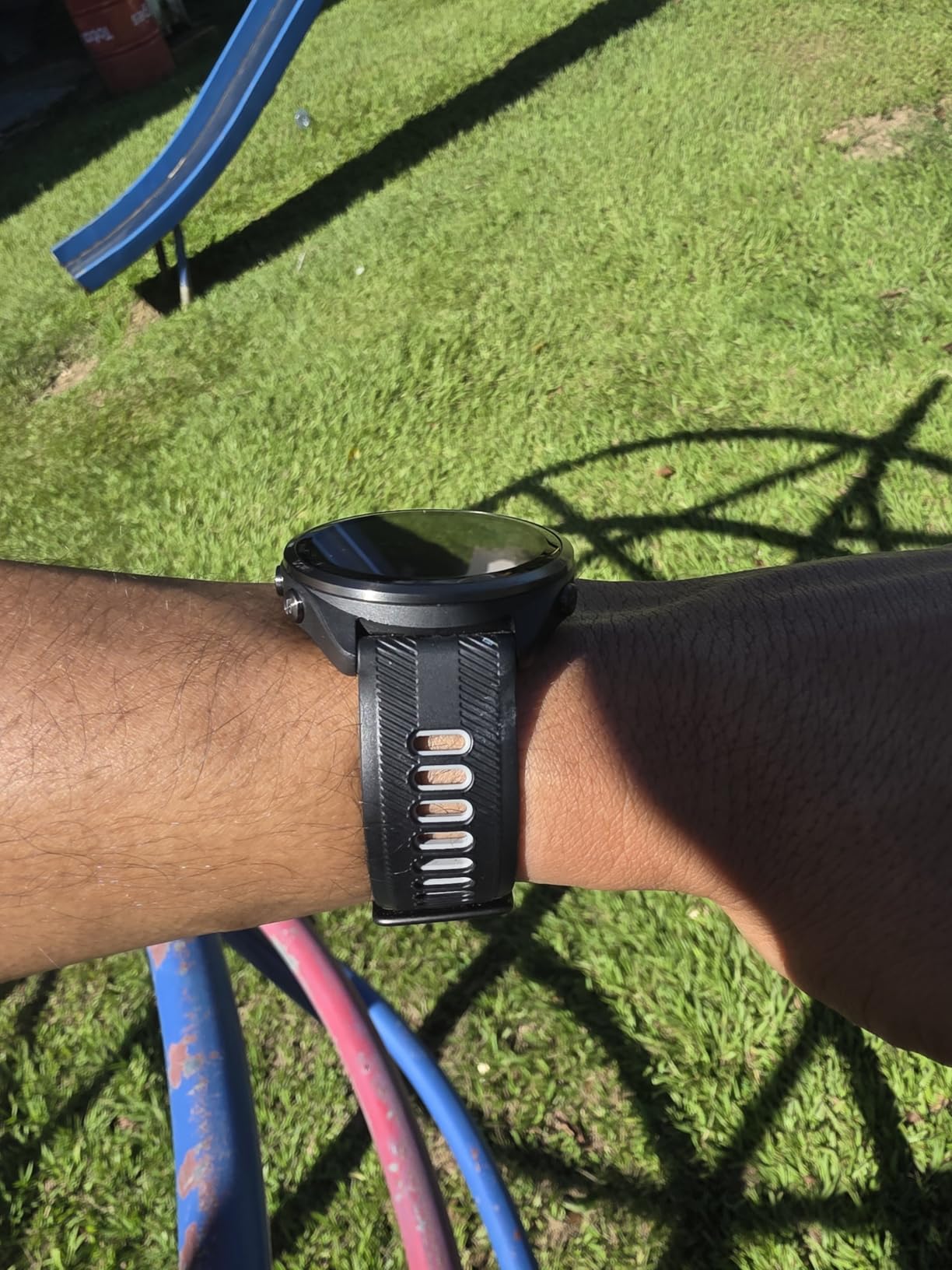
The titanium bezel adds durability and a premium look that justifies the price for serious runners. Multi-band GNSS with SatIQ provides excellent GPS accuracy in all conditions. You get triathlon and multisport profiles, race adaptive training plans, and daily suggested workouts that adjust based on your recovery. The mineral glass screen can scratch, so a screen protector is a smart investment for outdoor use.
Who Should Buy the Forerunner 965
Runners who want built-in maps, premium build quality, and the longest battery life in the Forerunner line. It is an excellent alternative to the 970 if you do not need the microphone, speaker, or flashlight. The 23-day battery and proven reliability make this a safe bet for serious runners.
Who Should Skip It
If you want the latest and greatest running metrics like running economy and step speed loss, the Forerunner 970 has those exclusive features. The mineral glass screen is less scratch-resistant than sapphire, so rough outdoor users should take note. And if you do not need maps, the Forerunner 265 saves you significant money.
11. Garmin Instinct 2X Solar Tactical – Best for Extreme Conditions
Garmin Instinct 2X Solar – Tactical Edition, Rugged GPS Smartwatch, Built-in Flashlight, Ballistics Calculator, Solar Charging Capability, Coyote Tan
1.1 inch MIP
Military Standard 810
Infinite Solar Battery
Ballistics Calculator
67g
Pros
- Effectively infinite battery with solar charging
- Military standard 810 thermal and shock resistance
- Built-in flashlight with SOS strobe mode
- 40-plus days battery without solar
- Rugged build handles extreme conditions
Cons
- Monochrome display only
- Not truly 100 percent solar powered
- Learning curve for setup
- Limited smart features
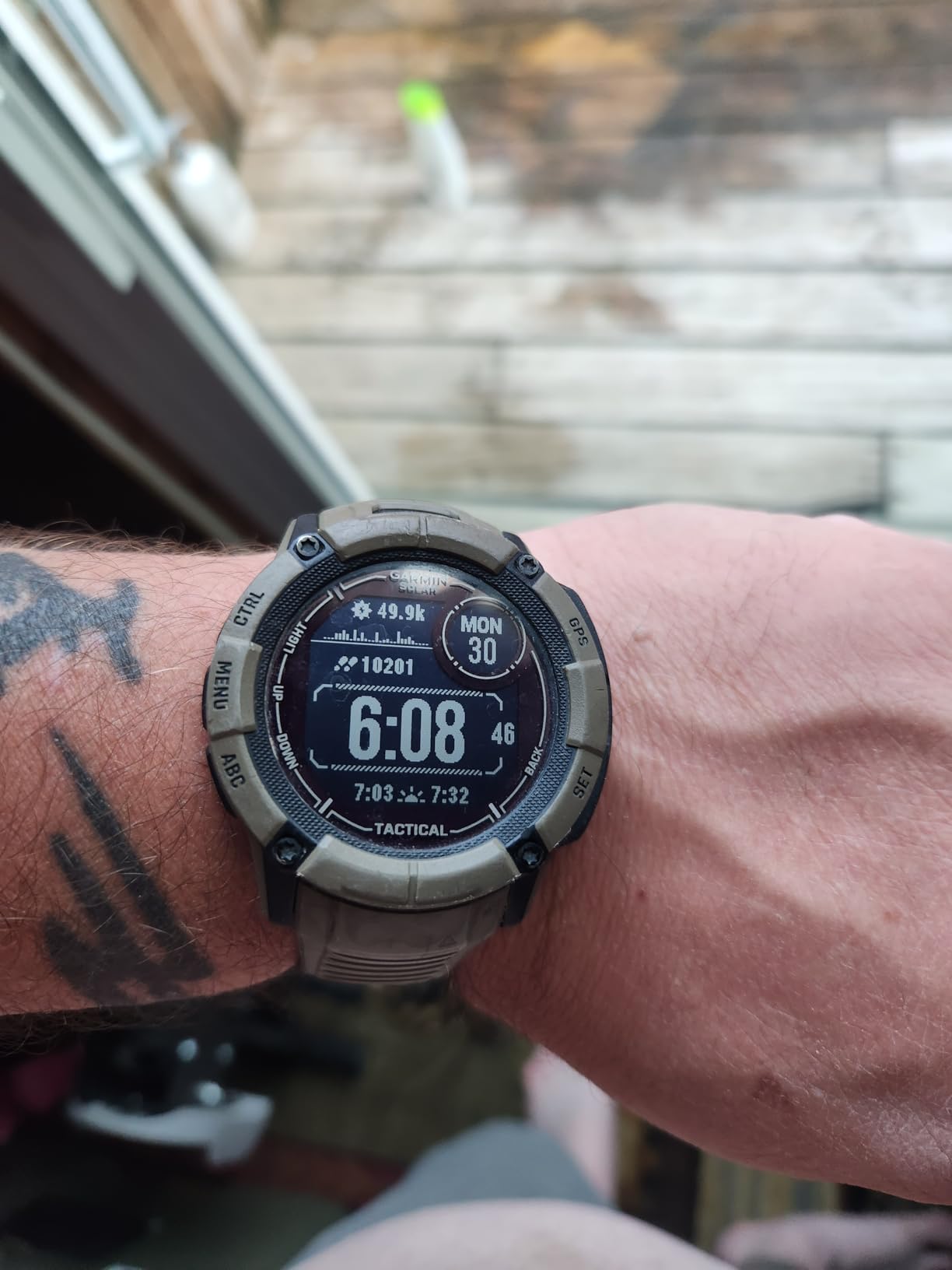
The Instinct 2X Solar Tactical is the watch you buy when you need something that will not die, no matter what. With 3-plus hours of direct sunlight daily, the battery theoretically lasts indefinitely in smartwatch mode. Without solar, it still goes 40-plus days on a single charge. I left this on my dashboard during a week-long road trip, and it gained charge every single day from sun exposure alone.
The military standard 810 rating means this watch survives thermal shock, water immersion, and impact that would destroy most smartwatches. I have read reports from users who have worn it through desert deployments, Arctic expeditions, and months of ocean sailing without a failure. The tactical edition adds a ballistics calculator and an SOS strobe mode that flashes your position for rescue. For kayakers doing expeditions in remote areas, that strobe could be a genuine safety tool.
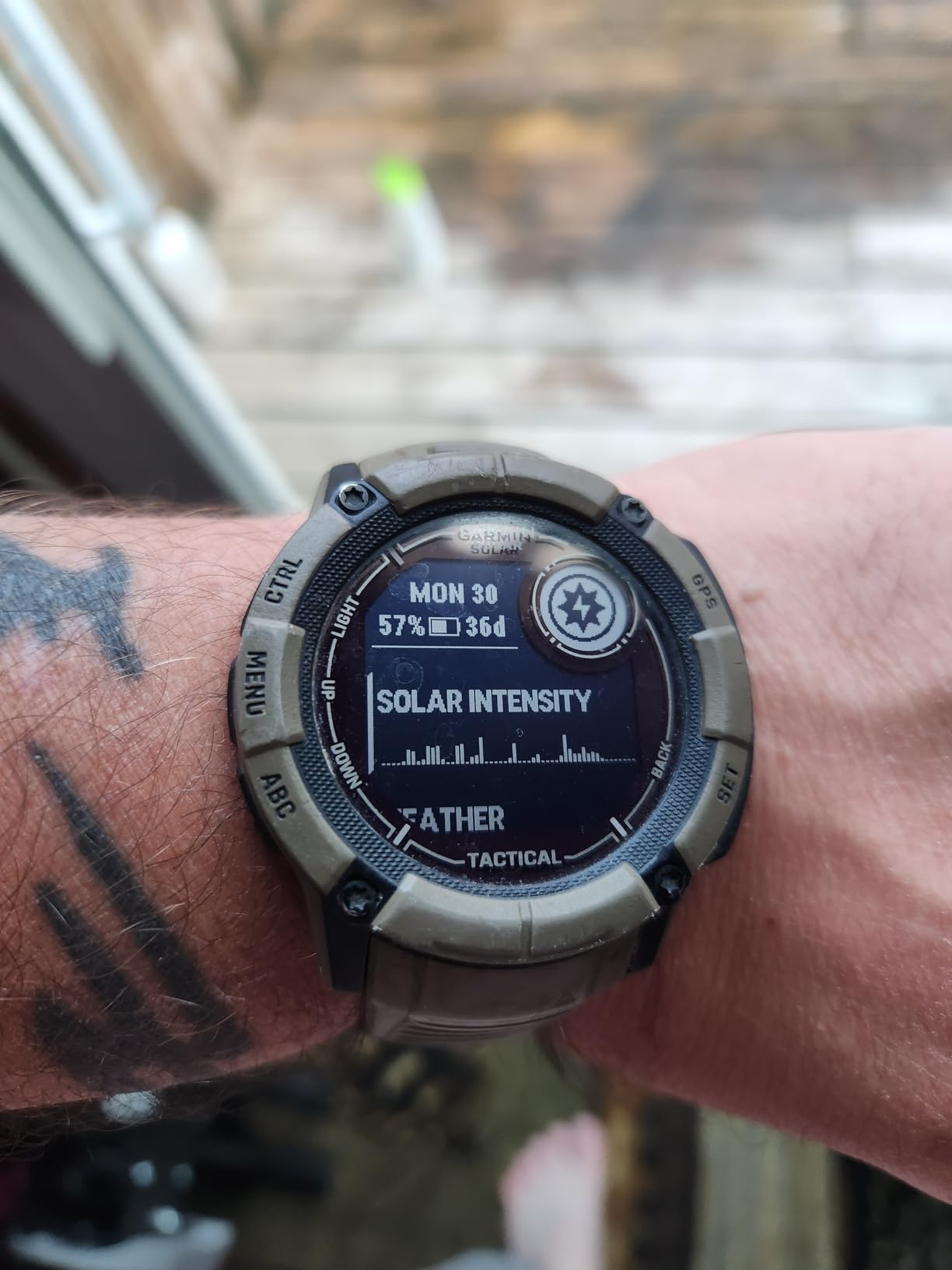
The built-in sports apps cover running, biking, swimming, and strength training. Multi-band GPS, a 3-axis compass, and a barometric altimeter provide solid navigation tools. Health tracking includes heart rate, advanced sleep monitoring, Pulse Ox, and HRV. At 67 grams, it is not heavy, but the 50mm case size is large. The monochrome MIP display prioritizes battery efficiency over visual appeal, which is the right trade-off for a watch designed to survive anything.
Who Should Buy the Instinct 2X Solar Tactical
Anyone heading into extreme environments where charging is not possible and durability is non-negotiable. Military, first responders, backcountry guides, and expedition kayakers who need a watch that simply will not quit. The infinite battery capability is real with enough sun exposure.
Who Should Skip It
If you want a color display, look at the Instinct 3 AMOLED instead. The tactical features like the ballistics calculator are unnecessary for most outdoor enthusiasts. And if you want modern smartwatch features like music storage, maps, or contactless payments, this is not the right pick.
12. Garmin Forerunner 55 – Best Budget Garmin for Beginners
Garmin Forerunner 55, GPS Running Watch with Daily Suggested Workouts, Up to 2 Weeks of Battery Life, Black – 010-02562-00
MIP Display
37g Ultra Light
2-Week Battery
GPS/GLONASS/Galileo
5 ATM
Pros
- Excellent value for beginners
- Reliable GPS accuracy
- 2-week battery life
- Simple button controls easy to learn
- PacePro pace guidance for races
Cons
- No touchscreen
- button only
- No AMOLED display
- Screen text can be small to read
- Sleep tracking not highly accurate
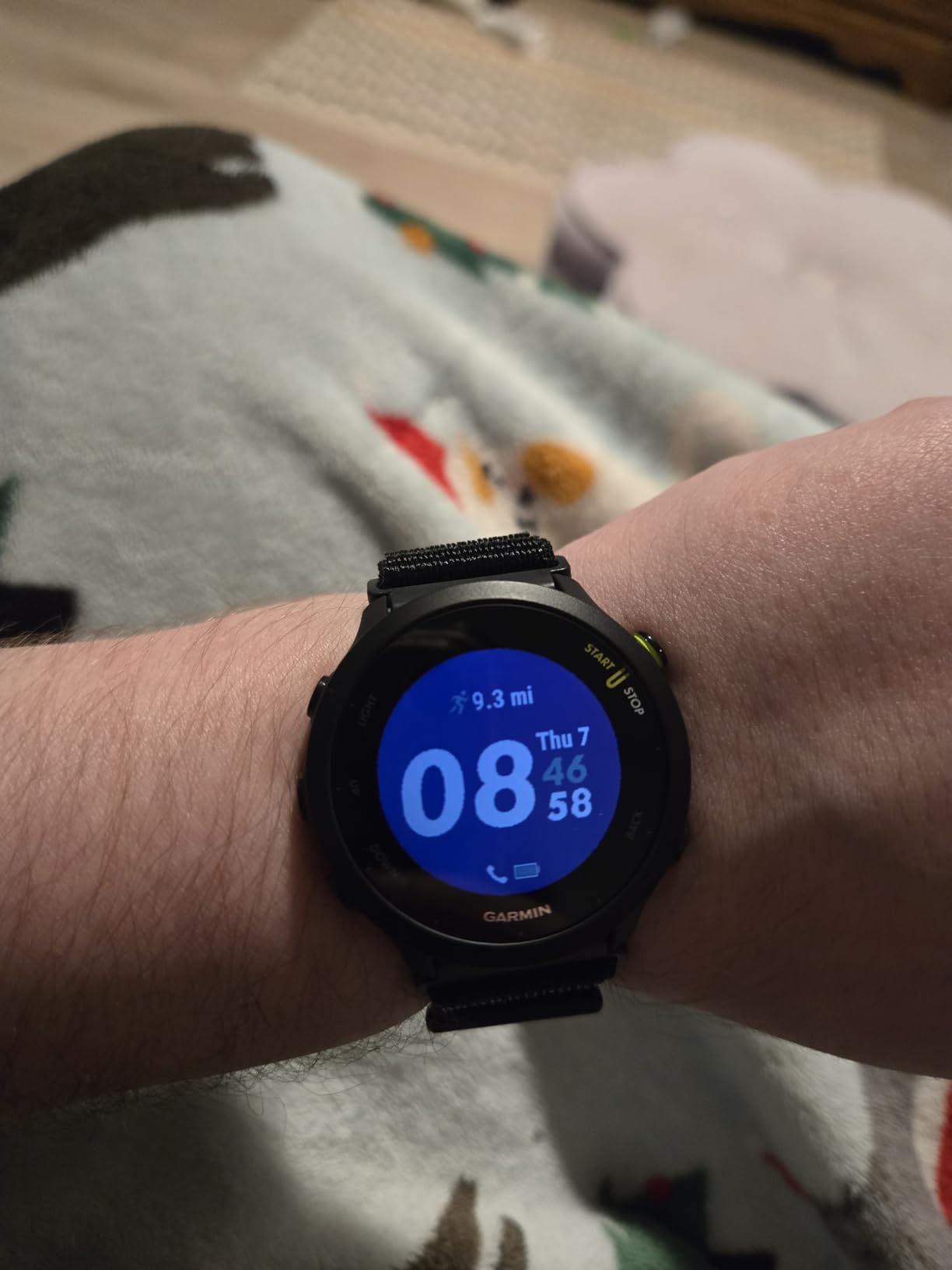
The Forerunner 55 is the best-selling Garmin watch on Amazon, and it is not hard to see why. It delivers the core Garmin experience, accurate GPS tracking, reliable heart rate monitoring, daily suggested workouts, and PacePro pace guidance, at a price that makes it accessible to anyone curious about GPS running watches. With nearly 6,000 reviews and a 4.5-star average, it has one of the largest user bases of any Garmin model.
I gave this to a friend who had never owned a GPS watch, and she was tracking her runs within 10 minutes of unboxing it. The button-only interface is intuitive, with dedicated start and back buttons that make navigation simple. At 37 grams, it is the lightest watch in this roundup by a wide margin, and you genuinely forget you are wearing it during runs. GPS accuracy impressed me, locking onto satellites in under 30 seconds and tracking routes consistently.
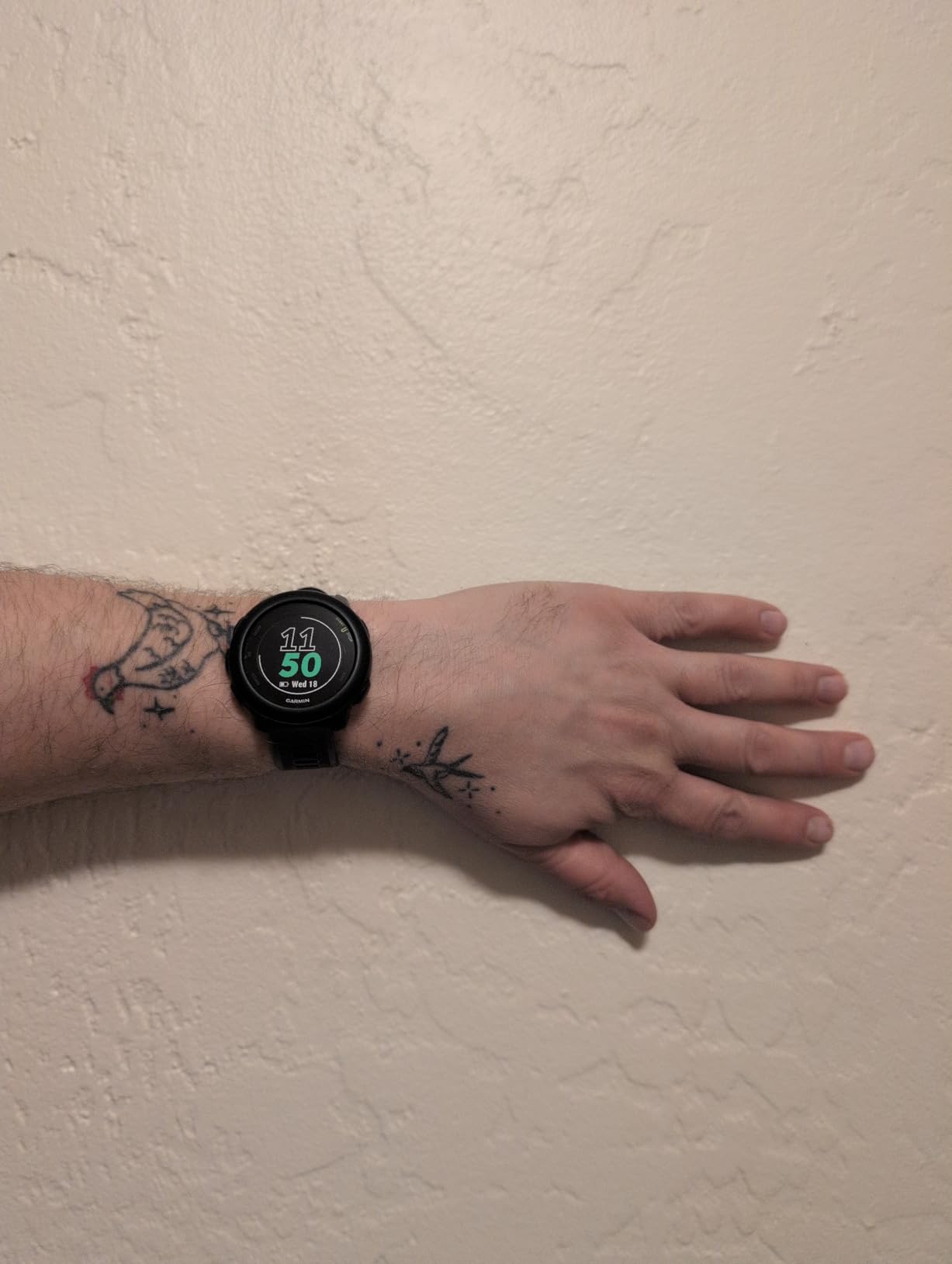
The 2-week battery life is excellent at this price point. You get daily suggested workouts based on your training history, Garmin Coach adaptive training plans, race time predictions, and finish time estimates for upcoming races. Activity profiles include running, cycling, track run, virtual run, pool swim, Pilates, HIIT, and breathwork. The Connect IQ Store lets you customize watch faces. The transflective MIP display is readable in sunlight but lacks the visual punch of AMOLED.
Who Should Buy the Forerunner 55
First-time GPS watch buyers who want reliable running tracking without paying for features they will not use. It is also a great gift for someone getting into running or fitness. The simplicity, battery life, and GPS accuracy make it the perfect entry point into the Garmin ecosystem.
Who Should Skip It
If you want an AMOLED display, training readiness scores, or multi-band GPS, step up to the Forerunner 265. Sleep tracking is unreliable compared to Garmin’s mid-range and premium models. And anyone training for ultras or multisport events will outgrow this quickly due to the limited activity profiles and navigation features.
How to Choose the Best Garmin Watch for Your Needs
Picking the right Garmin watch comes down to what you actually do outdoors and how long you need the battery to last. With 12 watches in this guide, the options can feel overwhelming, so here are the key factors that matter most for kayakers, hikers, and outdoor athletes.
Water Resistance: What You Actually Need
Garmin rates water resistance in two ways: ATM (atmospheres) and meters. For kayaking, you need at minimum 5 ATM (50 meters), which handles splashes, rain, and brief submersion. Every watch on this list meets that standard. For diving or extended underwater use, look at 10 ATM (100 meters) or a dedicated dive rating. The Fenix 8 has a 40-meter dive rating, while the Descent G1 and G2 are full dive computers. The Instinct 3 and Instinct 2X Solar both offer 100-meter water resistance, which is more than enough for any kayaking scenario, including saltwater paddling and surf zone practice.
GPS Accuracy for Paddling and Hiking
Standard GPS is fine for road running, but kayakers and hikers need better accuracy under tree canopy, along cliff walls, and in valleys. Multi-band GPS (also called multi-band GNSS) uses multiple satellite systems simultaneously, including GPS, GLONASS, and Galileo, to maintain lock in challenging environments. Garmin’s SatIQ technology automatically switches between GPS modes to balance accuracy and battery life. Every watch in this guide from the Forerunner 265 upward includes multi-band GPS with SatIQ. If you paddle rivers with heavy tree cover or hike in deep canyons, this feature is worth paying for. For more on GPS technology, check out our guide to handheld GPS units for hiking.
Battery Life Planning for Multi-Day Trips
This is where Garmin separates itself from every other smartwatch brand. The Apple Watch lasts 18 hours. Most Garmins in this guide last 13 to 23 days in smartwatch mode and 20 to 47 hours in GPS mode. For a weekend kayak trip, even the shortest-lasting watch here will survive. For week-plus expeditions, the Enduro 3 with solar charging is the clear choice, potentially going 90 days without a wall plug. The Instinct 2X Solar can theoretically run indefinitely with enough sunlight. Plan your battery needs based on GPS hours per day, not just smartwatch days.
AMOLED vs MIP Display
Garmin uses two display types across its lineup. AMOLED screens are bright, colorful, and look like a smartphone on your wrist. They are best for everyday wear and indoor visibility. MIP (memory-in-pixel) displays are monochrome or limited-color but are always-on and actually more readable in direct sunlight. For kayaking and hiking where you are outdoors all day, MIP has a real advantage. For daily wear that includes office time, AMOLED wins. The Fenix 8, Forerunner 265, Forerunner 970, Forerunner 965, and Instinct 3 all use AMOLED. The Enduro 3, Instinct 2X Solar, and quatix 7X use MIP.
Activity Profiles for Your Sports
Garmin includes activity profiles for everything from running and cycling to kayaking, paddleboarding, and open water swimming. Higher-end models include more profiles and deeper metrics. For kayakers, look for watches that track paddle sports, open water swimming, or have custom Connect IQ apps for kayaking. The Fenix 8, Enduro 3, and quatix 7X are the strongest picks for paddle-specific tracking. For runners, the Forerunner line offers the deepest training metrics. For hikers, built-in topographic maps in the Fenix 8, Enduro 3, and Forerunner 965/970 are worth the upgrade. You can also explore our guide to hiking watches with GPS and heart rate monitors for more options.
Health and Training Metrics
Garmin’s health ecosystem is a major reason people choose it over competitors. Training readiness scores, Body Battery, sleep tracking, HRV status, and VO2 Max estimates give you insight into when to train hard and when to recover. These metrics are consistent across the mid-range and premium watches in this guide. If you are also interested in heart rate monitors for training, pairing your Garmin with a chest strap improves accuracy during high-intensity workouts.
FAQs
Which Garmin watch is the best overall?
The Garmin Fenix 8 AMOLED is the best overall Garmin watch in 2026. It combines a stunning AMOLED display with a 40-meter dive rating, 16-day battery life, built-in LED flashlight, multi-band GPS with SatIQ, and comprehensive training metrics. It handles everything from kayaking and hiking to diving and daily smartwatch duties without compromise.
Which Garmin watch has the longest battery life?
The Garmin Enduro 3 Solar has the longest battery life of any Garmin watch, lasting up to 90 days in smartwatch mode with solar charging. The Garmin Instinct 2X Solar Tactical can theoretically run indefinitely with 3-plus hours of direct sunlight daily. For comparison, most AMOLED Garmin watches last 8 to 16 days.
Can Garmin watches handle saltwater?
Yes. All Garmin watches in this guide have at minimum 5 ATM (50-meter) water resistance, which handles saltwater exposure from kayaking and swimming. Models like the Fenix 8, Instinct 3, and Instinct 2X Solar offer 100-meter water resistance. The Descent G1 and G2 are purpose-built dive computers rated for scuba diving in saltwater. Rinse your watch with fresh water after saltwater exposure to maintain longevity.
What is the best Garmin watch for beginners?
The Garmin Forerunner 55 is the best Garmin watch for beginners. It offers reliable GPS tracking, 2-week battery life, daily suggested workouts, and PacePro pace guidance at the lowest price in the Garmin lineup. With nearly 6,000 reviews and a 4.5-star rating, it is the most popular entry-level GPS running watch available. For a step up, the Forerunner 265 adds an AMOLED display and training readiness for a moderate price increase.
Is Garmin better than Apple Watch for outdoor activities?
For outdoor activities like kayaking, hiking, and trail running, Garmin is significantly better than Apple Watch. Garmin offers multi-week battery life versus Apple Watch’s 18 hours, multi-band GPS for accurate tracking under tree canopy, dive-rated water resistance, topographic map navigation, and specialized activity profiles for paddle sports and backcountry travel. Apple Watch excels at smart features and app variety, but for serious outdoor use, Garmin is the clear choice.
Final Thoughts on the Best Garmin Watches in 2026
After testing these 12 watches across months of kayaking, hiking, running, and daily wear, a few clear winners emerged. The Garmin Fenix 8 AMOLED is the best overall pick for outdoor enthusiasts who want one watch that does everything well, from diving to trail running to everyday smartwatch duties. The Forerunner 265 remains the best value in the entire Garmin lineup, delivering premium features at a mid-range price. And the Enduro 3 Solar is the battery champion that eliminates range anxiety on multi-day wilderness trips.
For the KayakCambria audience specifically, the Fenix 8 and quatix 7X Solar stand out for their water resistance, marine features, and paddle-friendly designs. The Instinct 3 AMOLED offers the best balance of rugged durability and modern display technology for saltwater paddlers on a budget. And for kayak anglers, the quatix 7X with its tide data and anchor alerts is in a class of its own.
No matter which Garmin you choose, you are investing in a watch that will last for years, track your outdoor adventures accurately, and survive conditions that would destroy most smartwatches. For safety in the backcountry, consider pairing your Garmin with one of the best satellite messengers for solo hikers to stay connected when cell service disappears. Pick the watch that matches your activities, not just the most expensive one, and you will be happy with your choice.


