

A portable generator can run a space heater, but only if you size it for the load and place it correctly. A standard 1,500W ceramic heater pulls about 12.5 amps continuously on 120V, so the short answer is that you need roughly 2,000W of continuous running output as an absolute floor for a full-setting heater, and the engine has to sit outdoors at least 20 feet from the building with the heat fed indoors through a properly rated extension cord.
That math is simpler than most generator buying guides make it sound, because a space heater is a pure resistive load. There is no compressor, no motor, and no startup surge spike the way a refrigerator or well pump has. What you trade for that simplicity is a constant, unvarying draw, which burns fuel steadily and makes the manufacturer’s half-load runtime figure nearly useless for planning how long the heat lasts.
Our team worked through eight machines across the classes that come up most often in outage-heating searches: dual-fuel workhorses, enclosed inverter units, an open-frame long-tank model, a compact budget inverter, and one battery power station for anyone who cannot safely or legally run a combustion engine near the living space. For each one we looked at running watts against heater draw, published noise levels, fuel options, tank capacity, CO protection, warranty length, and what owners report after living with the machine. If you have not chosen a heater yet, start with our space heater roundup so you know the exact wattage you are sizing for.
Everything below is judged against a single job: keeping one room warm through a winter outage without draining a tank in a few hours.
Top 3 Picks for Best Generators for Space Heaters in 2026
These three cover the situations we see most. The Pulsar is the one we would own, the Champion inverter is the quiet pick for a bedroom or a neighbor-sensitive street, and the PowerSmart is the mid-tier workhorse that does the most for the money.

Pulsar G12KBN Dual Fuel
- 9500 running watts on gasoline
- 8 gallon tank
- 12 hours at half load
- 50A and 30A outlets


PowerSmart 3800W Dual Fuel
- 3300 running watts on gas
- 3100 on propane
- 59 dBA in eco mode
- CO sensor
How Much Power Do You Actually Need for a Space Heater?
You need about 2,000W of continuous running output for a 1,500W heater, and more if anything else draws power at the same time. That is the whole sizing rule. A resistive heating element has no inrush current, so the running wattage printed on the heater label is the real number you plan around.
A typical ceramic or oil-filled unit offers 750W, 1,000W, and 1,250W settings before reaching 1,500W. The 750W low setting is the one that changes what you can buy, because it drops the minimum generator class by a full tier and halves the fuel burn.
Three more loads change the answer. A refrigerator adds roughly 1,200W of surge for a second or two, a well pump can pull 2,000W or more at startup, and a gas furnace blower motor adds a surge of its own. Our rule is that the heater plus everything running at the same time must stay under the running watts, and the largest single motor surge must stay under the starting watts.
One more sizing lever matters more than any spec on the generator: most space heaters have a low setting. Running a 750W heater on a 1,800W inverter instead of a 1,500W heater on a 4,000W machine halves the fuel burn and the noise for a slightly slower warm-up. If you are shopping on a tight budget, that single switch is often the difference between a unit that works and a unit you cannot comfortably afford to run.
Best Generators for Space Heaters in October
| Product | Specs | Action |
|---|---|---|
| Pulsar G12KBN Dual Fuel Generator |
|
Check Latest Price |
| Champion 4000-Watt RV Ready Inverter Generator |
|
Check Latest Price |
| PowerSmart 3800-Watt Dual Fuel Inverter |
|
Check Latest Price |
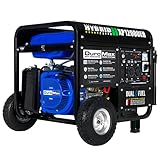 DuroMax XP12000EH Dual Fuel Generator DuroMax XP12000EH Dual Fuel Generator |
|
Check Latest Price |
 OUPES Mega 1 Portable Power Station OUPES Mega 1 Portable Power Station |
|
Check Latest Price |
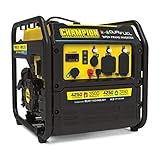 Champion 4250-Watt Dual Fuel Open Frame Inverter Champion 4250-Watt Dual Fuel Open Frame Inverter |
|
Check Latest Price |
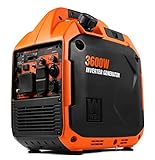 WEN 3600-Watt Portable Inverter Generator WEN 3600-Watt Portable Inverter Generator |
|
Check Latest Price |
 ERAYAK 2400-Watt Portable Inverter Generator ERAYAK 2400-Watt Portable Inverter Generator |
|
Check Latest Price |
1. Pulsar G12KBN Dual Fuel Generator – Best Overall for a Space Heater
Pulsar G12KBN Heavy Duty Portable Dual Fuel Generator – 9500 Rated Watts & 12000 Peak Watts – Gas & LPG – Electric Start – Transfer Switch & RV Ready – CARB Compliant
12000 peak watts
9500 rated watts on gas
8 gallon tank
12 hours at half load
1 year warranty
Pros
- 9500 running watts leaves wide headroom for the heater plus a fridge and router
- Dual fuel so you can run on gasoline or easy-to-store LPG
- Seven outlets including 30A twist-lock and 50A 120/240V
- Electric start with 10-inch never-flat wheels
- 3-in-1 digital meter and low oil shutoff
Cons
- One-year limited warranty is the shortest in this lineup
- Conventional output is less clean for sensitive electronics
- Propane hose is included but the regulator is not
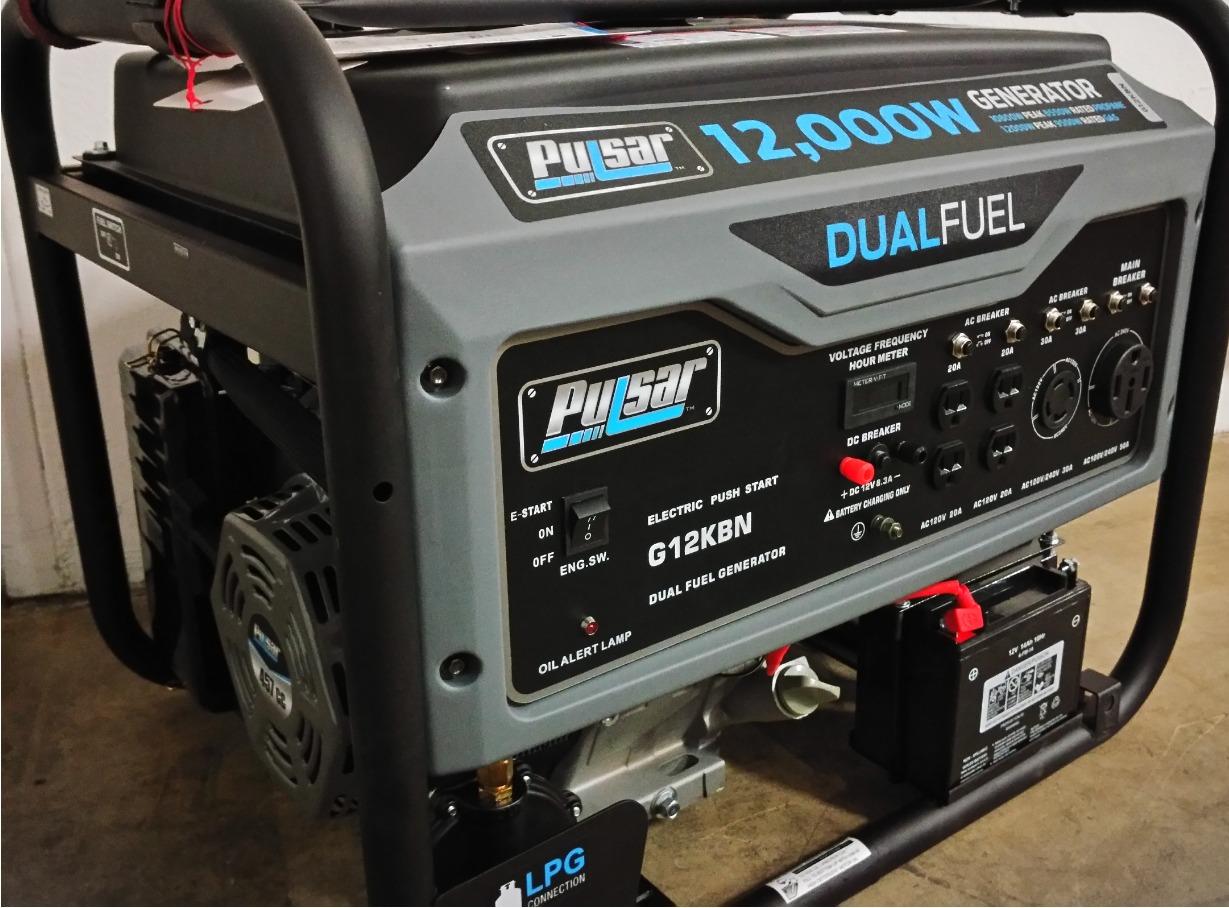
For a heater plus a refrigerator plus network gear plus a freezer, this is the machine we would put in the driveway. It rates 12000 peak watts and 9500 running watts on gasoline, dropping to 10800 peak and 8550 rated on LPG, and that ceiling is roughly six times what a single 1,500W heater pulls. No other unit in this lineup pairs an equal rating with a larger pool of owner feedback.
The 8 gallon tank is what makes it work for heat specifically. That is enough fuel for up to 12 hours of continuous operation at half load on gasoline, and because a heater draws a steady, predictable load rather than cycling on and off, you can plan an overnight run without a midnight refuel.
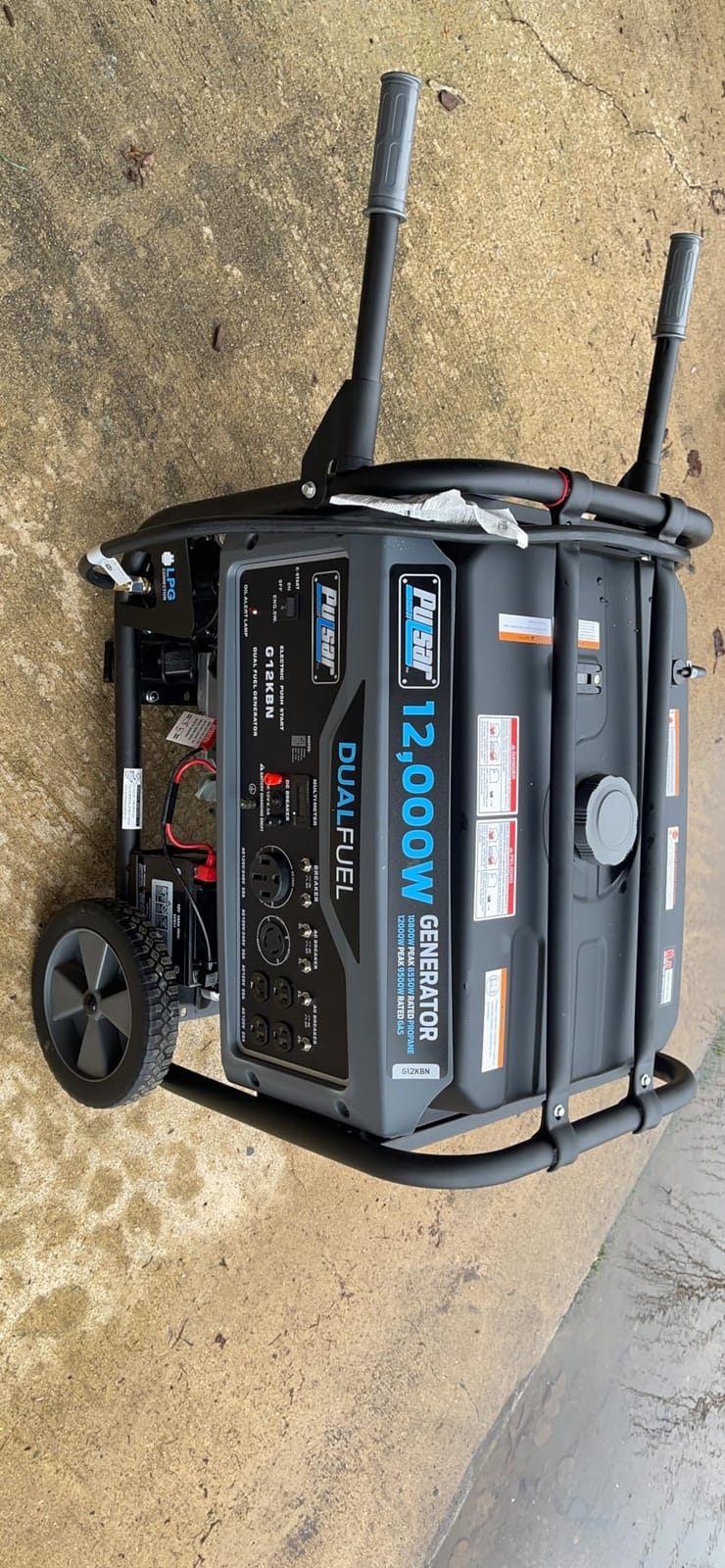
The outlet layout is unusually good for a home backup machine. You get four 120V 20A household outlets, a 120V/240V 30A twist-lock, a 120V/240V 50A outlet for transfer switch or interlock work, and a 12V DC output, which is a broader mix than most machines at this power level give you.
Owners consistently single out the 3-in-1 digital meter and the dual-fuel flexibility, and the 4.6 average across 1,360 reviews comes with a very small one-star share. The honest drawback is warranty length: one year is the shortest guarantee here, so service and parts availability matter more than they would on a three-year machine.
Where the extra capacity actually goes
For a single room, this is oversized and you should know that going in. A 1,500W heater on a 9,500W machine means the engine is running well under a quarter of its capacity, which is where fuel efficiency is at its best but also where a small inverter would do the same job for a fraction of the effort.
Where the size pays off is a full outage plan. Heater in the bedroom, refrigerator and chest freezer running, router and modem, maybe a microwave in a stretch. That combination stays well under the 9,500W ceiling, and it leaves room for a refrigerator compressor restart without dipping output.
Who should skip it
Skip it if you only want to heat one small room for a few hours and you care about noise, weight, or fuel cost per hour of warmth. This is a 9,500W conventional machine and it is built to run several loads at once, not to be the only thing you power.
Also skip it if you plan to run a CPAP machine, a sensitive audio setup, or a network rack off the same outlet with no regulation downstream. A conventional generator’s voltage curve is rougher than an inverter’s, and a double-conversion UPS between the two solves that problem.
2. Champion 4000-Watt RV Ready Inverter Generator – Quiet Power With CO Protection
Champion 4000-Watt RV Ready Portable Inverter Generator
3000 running watts
64 dBA at 23 feet
48.1 pounds
10 hours runtime
CO Sensor
Pros
- Quiet 64 dBA at 23 feet suits bedrooms and close neighbors
- Lightest model in the 4000-watt inverter class at 48.1 pounds
- Clean output under 3 percent total harmonic distortion
- CO Shield carbon monoxide auto shutoff
- Three-year limited warranty with lifetime technical support
Cons
- Recoil pull-cord start only with no electric or remote start
- Parallel kit sold separately if you need to double output
- 3000 running watts is a modest ceiling once you add a fridge
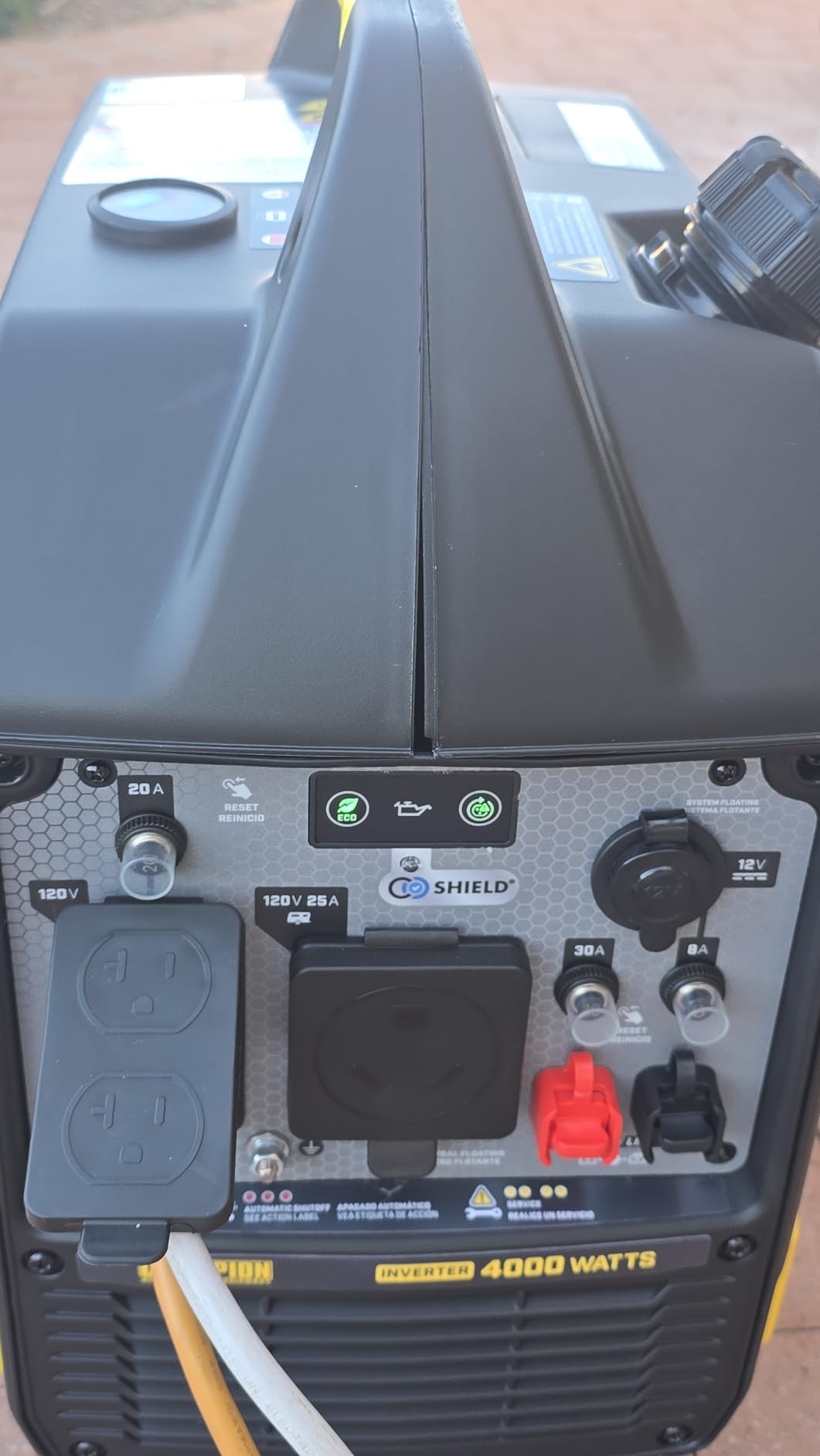
This is the one to buy when the heater runs at night and the neighbors are close. The published 64 dBA figure at 23 feet is measured rather than marketed, and the CO Shield carbon monoxide auto shutoff is the safety feature that matters most when a heater is drawing continuous power through a cord into a closed house.
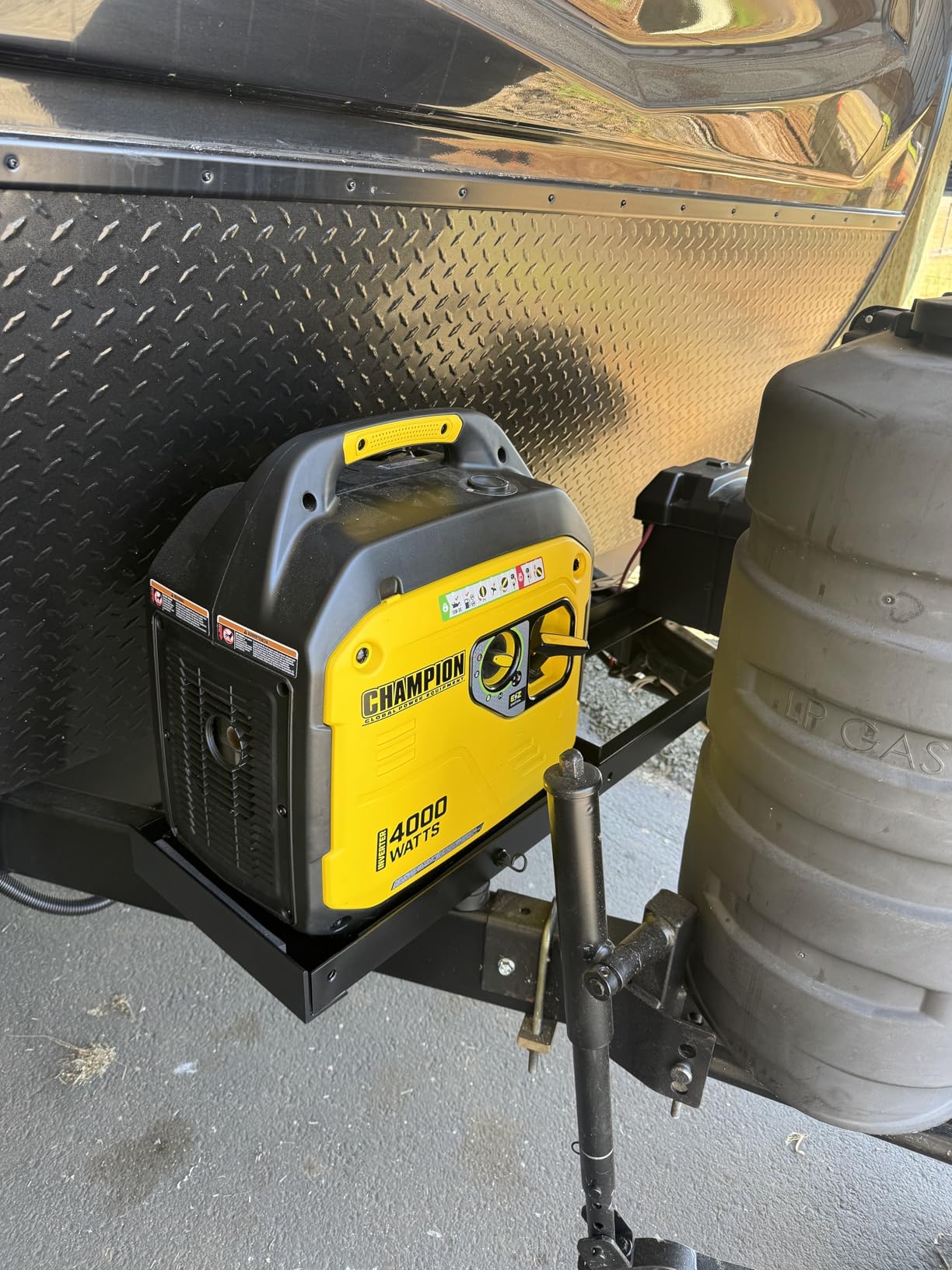
It runs 3000 running watts from a 149cc four-stroke engine, which is roughly double a 1,500W heater. Add a refrigerator and you are still inside the envelope, and the 1.54 gallon tank gives up to 10 hours of run time for an overnight stretch.
Owners praise the combination of low weight, low noise, and clean power, and the 4.6 average across 680 reviews reflects that. Output stays under 3 percent total harmonic distortion, which means laptops, phones, and network gear can share the same run with the heater without brownouts.
The outlet mix covers the realistic heater setup well: a 120V 25A TT-30R RV outlet, a 120V 20A household duplex, a 12V automotive outlet, and parallel outlets for a matching second unit. Fuel type is gasoline, engine displacement is 149 cubic centimeters, and the warranty is three years limited.
How long the heat lasts on this unit
With a 1,500W heater on a 3000W inverter, the engine is at half its rated output, which is exactly the condition behind the 10 hour figure. That coincidence is a real advantage of sizing near the load rather than far above it, and it means the published runtime is unusually trustworthy for heater duty.
Its 149cc engine is the smallest four-stroke in the group, so fuel cost per hour of heat lands lower than the larger conventional machines even though the tank is small. If your outage is one night rather than a week, that balance is the right one.
Who should skip it
Skip it if cold-weather starting is a problem. Recoil start means you are pulling a cord in the dark, in the cold, possibly wearing gloves, and that is the most common complaint in the one-star reviews alongside the 3000W ceiling.
Skip it if you are already planning a parallel kit purchase, because that kit is a separate buy and it pushes the total cost past the point where a conventional dual-fuel machine makes more sense. The CO Shield and the quiet enclosure are what you are paying for here, and if neither matters in your situation, look elsewhere.
3. PowerSmart 3800-Watt Dual Fuel Inverter Generator – Best Value for Heating
PowerSmart 3800 Watt Dual Fuel Inverter Generator for Camping or Home Use
3800 starting watts
3300 running on gas
3100 on propane
59 dBA in eco mode
50.7 pounds
Pros
- Dual fuel gives gasoline or propane flexibility on the same engine
- Up to 24 hours of run time on a 20 pound propane tank
- 59 dBA at 25 percent load in Eco Mode
- CO sensor with overload
- short circuit and low oil protection
- Heavily reviewed in the mid-size inverter class
Cons
- Around 50 pounds
- heavier in practice than the sheet suggests
- 1.3 gallon gasoline tank means refills for overnight gas runs
- Recoil start only and support is slow to reach
This is the unit we recommend to most people reading this page. It carries 3800 starting watts and 3300 running watts on gasoline, and 3500 starting with 3100 running watts on propane, so either fuel leaves comfortable room above a 1,500W heater.
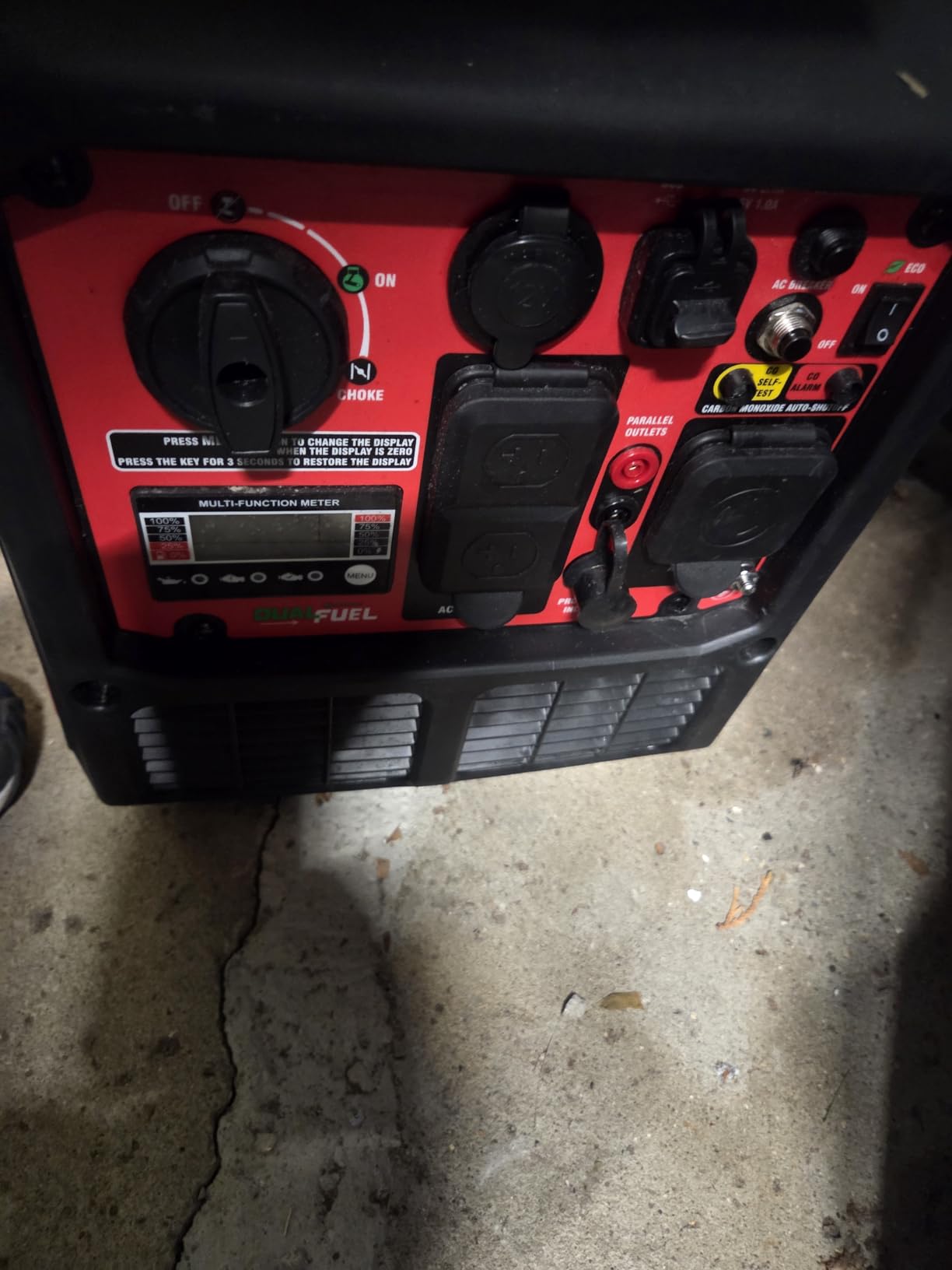
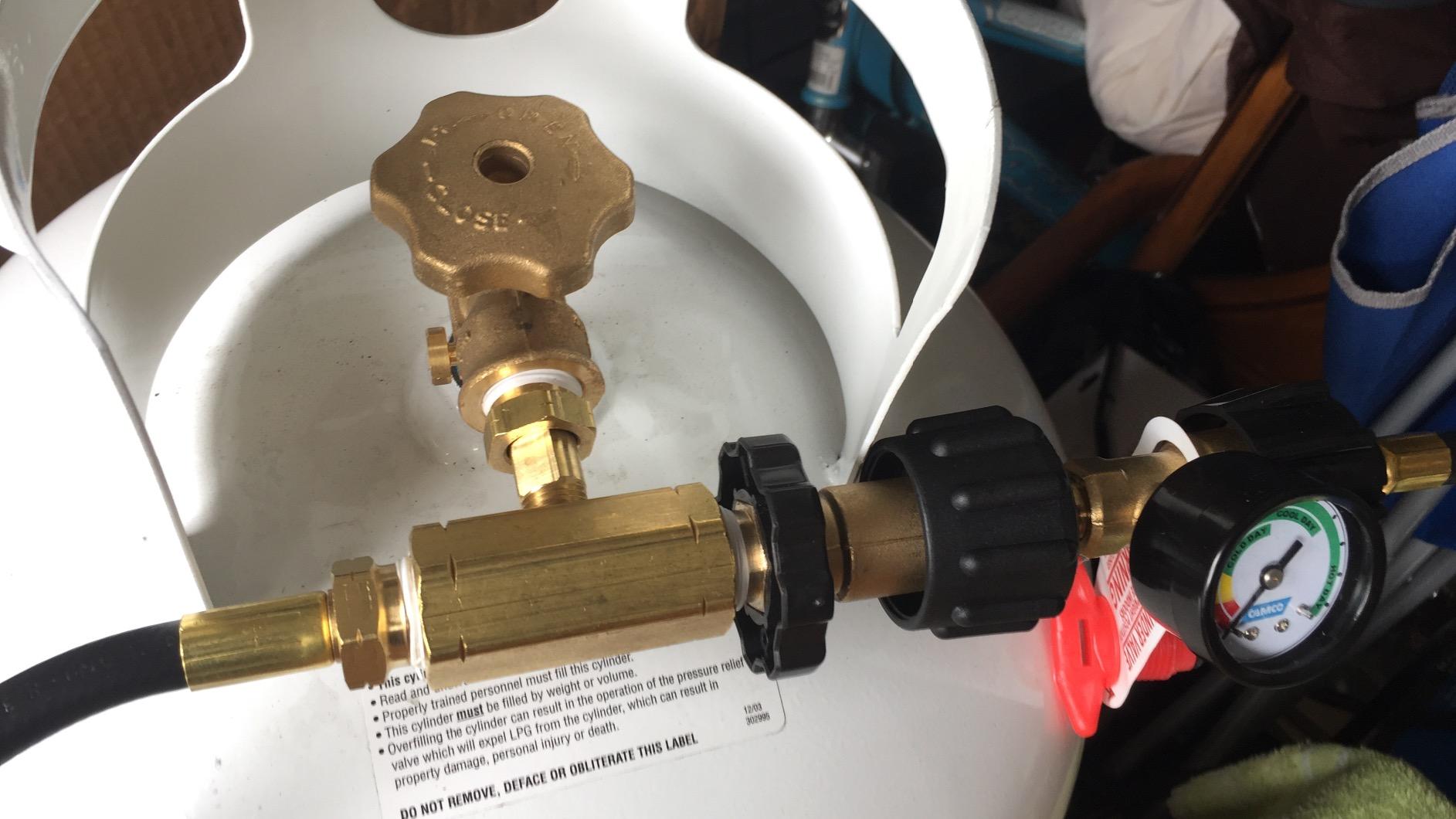
The dual-fuel capability is the part that changes the heating math. Up to 24 hours of operation on a standard 20 pound propane cylinder means a heater can run all night and into the next day without you refilling anything, and propane will not gum up a carburetor the way stored gasoline does. The box includes a 5 foot two stage LP regulator hose, an oil funnel, and a spark plug wrench.
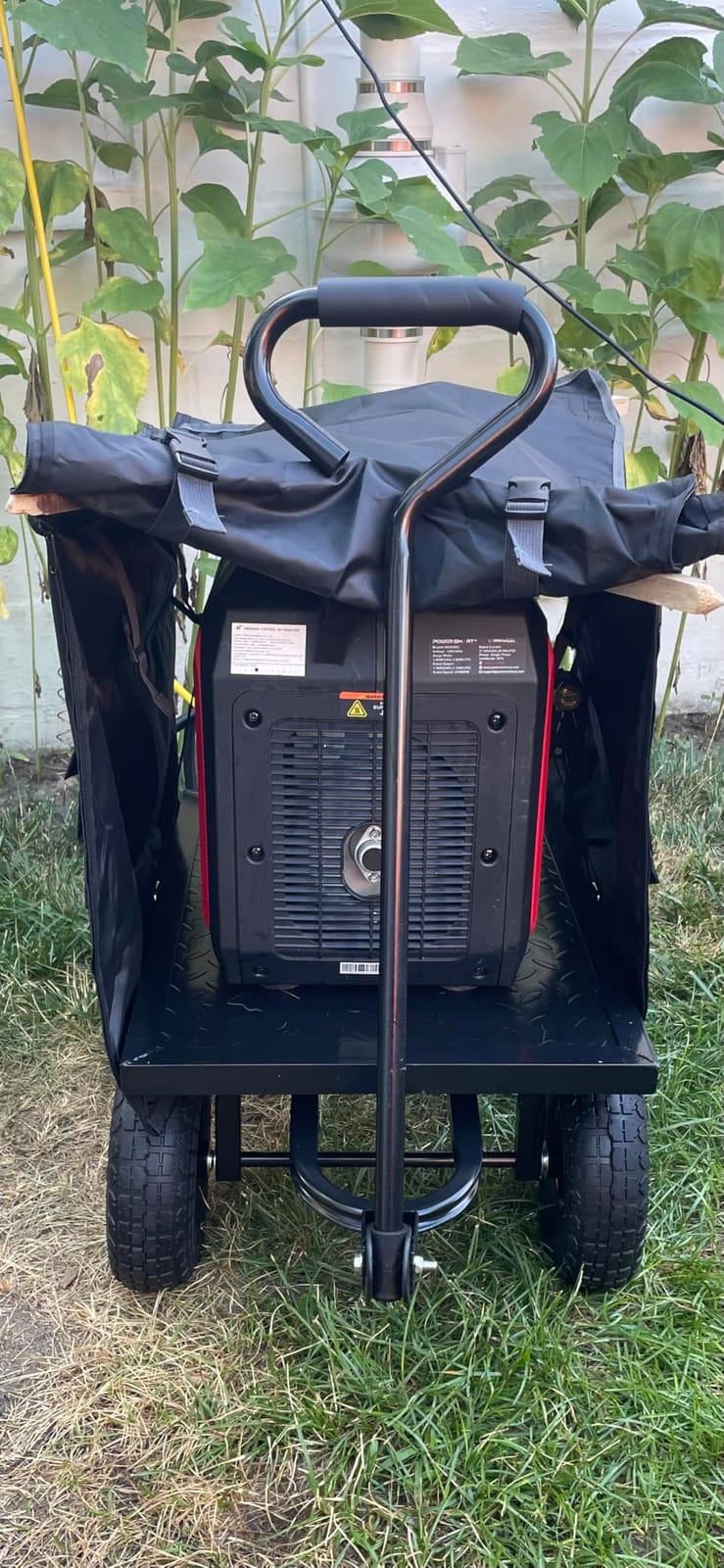
Owners describe it as the best value in the mid-range dual-fuel class, and its 4.5 star average is built on a deeper pile of owner feedback than any other mid-size machine in this group. The performance display shows real-time wattage draw, which is genuinely useful when you are trying to stay under the running watt ceiling with a heater plus a refrigerator.
Quiet operation is rated at 59 dBA at 25 percent load in Eco Mode, one of the two lowest published figures in the lineup, and the control panel carries a 120V 30A L5-30R twist-lock, a 120V 20A duplex, a 12V 8A DC port, and dual USB ports. It is certified to ANSI/PGMA G300, ANSI/UL2201, and EPA standards, with a two-year limited warranty.
Propane versus gasoline for overnight heat
For heat specifically, propane wins on convenience. A 20 pound cylinder outlasts the 1.3 gallon gasoline tank by a wide margin, and owners of gasoline-run units in this class report refilling through the night, which is exactly the interruption you do not want during a cold snap.
The tradeoff is that propane output is lower: 3100 running watts instead of 3300. That still clears a 1,500W heater with room for a small refrigerator, but if you plan to add a freezer and a microwave at the same time, run on gas or step up a size class.
Who should skip it
Skip it if you need cold-weather electric start. Recoil start on a dual-fuel unit is the most common single-star complaint in the reviews, and a 149cc engine pulling a heavy load in freezing air is the hardest combination to get going by hand.
Skip it if weight is the deciding factor. At 50.7 pounds, plus the awkwardness of access panels that need a Phillips screwdriver for an oil change, this is a two-person carry that is fine in a garage and unpleasant on a wet driveway in the dark.
4. DuroMax XP12000EH Dual Fuel Generator – Built for Multi-Day Winter Outages
DuroMax XP12000EH 12,000-Watt Dual Fuel Portable Generator – Gas & Propane, Electric Start, Whole Home Backup Power, Transfer Switch Ready, RV & Emergency Ready
12000 peak watts
9500 running watts
8.3 gallon tank
Electric start
224 pounds
Pros
- 12000 peak and 9500 running watts cover a heater plus most of a house
- Dual fuel for long gasoline runs and cleaner propane storage
- Electric key start with included battery and wheel and handle kit
- All-metal frame and power panel with 100 percent copper windings
- 50A transfer switch-ready outlet plus 30A and 20A circuits
Cons
- 224 pounds makes it a two-person lift
- Audible well beyond the property line so it is a poor bedroom-heater choice
- Oil is not included and the warranty covers parts only
This is the machine for someone whose outage lasts longer than a night. It carries the largest review base in the group, with a 4.5 average across several thousand owner reports, and the 8.3 gallon tank is more than double what the mid-size units carry, which is what decides the runtime question for heat.
Output is 12000 peak watts and 9500 running watts, with output stepping down on propane. MX2 Power Boost effectively doubles the available 120V power from a single outlet, and the 50 amp transfer switch-ready outlet means a licensed electrician can wire it into your panel properly rather than relying on extension cords through a window.
Owners stress the durability details: an all-metal frame and power panel with no plastic parts, 100 percent copper windings, and 457cc four-stroke displacement. The wheel and handle kit and no-flat tires make it rollable across a driveway or lawn once you get it there, and electric key start removes the worst part of a cold-morning restart.
Long-form reviews from owners consistently emphasize one instruction: add roughly 1.5 quarts of oil before the first start, and connect the battery negative lead, which arrives disconnected. The manual does not make either step obvious, and skipping them is a common cause of first-start problems.
When 9,500 watts is the right amount
The case for this size is heating plus a functioning house. Space heater in the bedroom, gas furnace blower, refrigerator and chest freezer, water heater, some lighting. A heater alone would use about one sixth of the capacity, and buying for that alone is how people end up with dead weight they never use.
The 8.3 gallon tank with a fuel gauge means fewer refills across a multi-day event, and dual fuel lets you keep abundant gasoline for the first stretch and switch to propane for storage between events. The frame is steel and the power panel is all metal, which is why the warranty claims durability over years rather than seasons.
Who should skip it
Skip it for a single-room heating job. At 224 pounds and clearly audible beyond the property line, it is a poor match for a bedroom at 2am or a house with close neighbors, and a compact inverter will do the same job quietly for a fraction of the effort.
Skip it if you cannot store gasoline safely or do not have a place to run it 20 feet from the house with an electrician involved. The money is only well spent on a proper installation, and the parts-only warranty means you want local service coverage before you commit.
5. OUPES Mega 1 Portable Power Station – The Indoor-Safe Option for a Space Heater
OUPES Mega 1 Portable Power Station 1024Wh 2000W (4500W Surge)
2000W continuous output
1024Wh LiFePO4
27.8 pounds
4500W surge claim
5 year warranty
Pros
- No combustion and no exhaust
- so it is safe and legal in an apartment or bedroom
- 2000W continuous pure sine wave output covers a 1500W heater
- Expands to 5120Wh with two B2 extra batteries
- Recharges 0-80 percent in about 36 minutes on AC
- Under 30 pounds with molded handles
Cons
- 1024Wh is roughly 35 minutes of full-setting heater
- Advertised 4500W surge is optimistic and some examples trip near 2050W
- Fan noise during charging and high draws
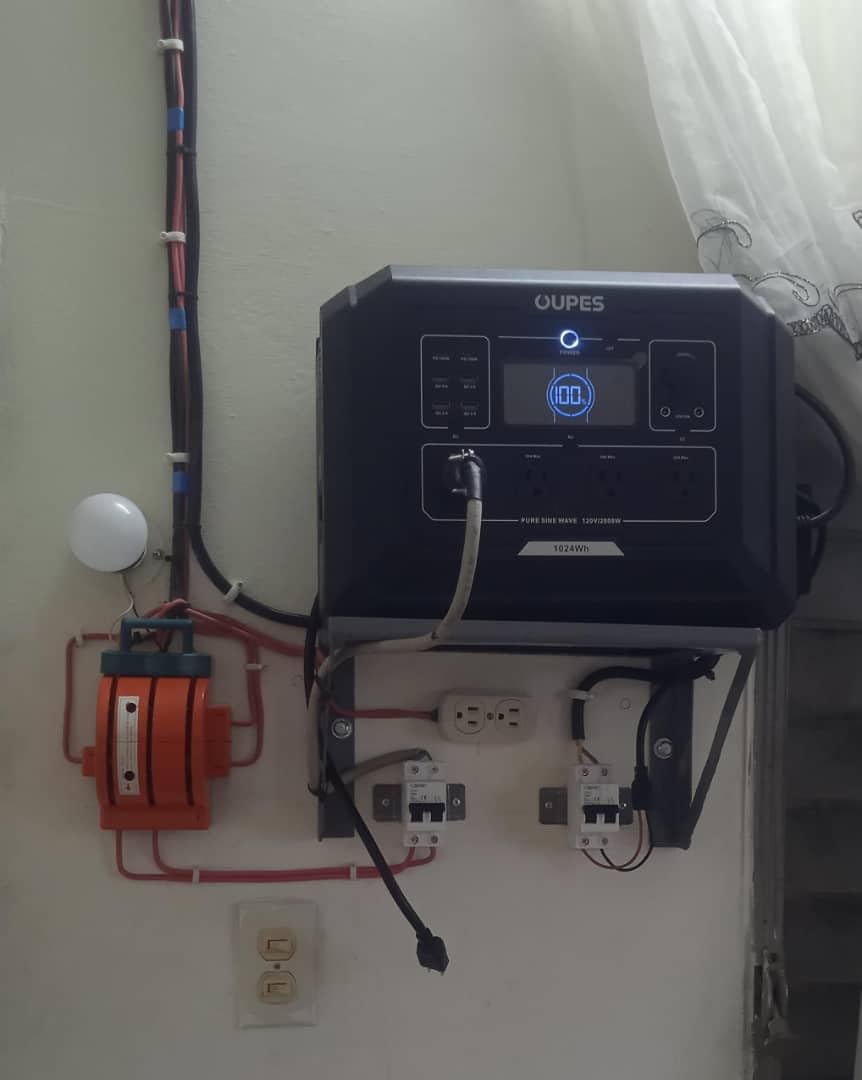
This is the only indoor-legal option in the group, and for a condo, a rental, or a house with no safe 20-foot placement, it may be the only option. Nothing burns, no exhaust enters the room, and 2000W continuous pure sine wave output covers a 1,500W heater on its own.
Now the honest number. 1,024Wh of rated capacity, derated to about 85 percent for conversion losses, gives roughly 870 usable watt-hours. Divide that by a 1,500W heater and you get well under an hour of full-setting heat. Owners in prepper forums state the same arithmetic plainly: a unit in that capacity class runs a 1,500W heater for a couple of hours, not overnight.
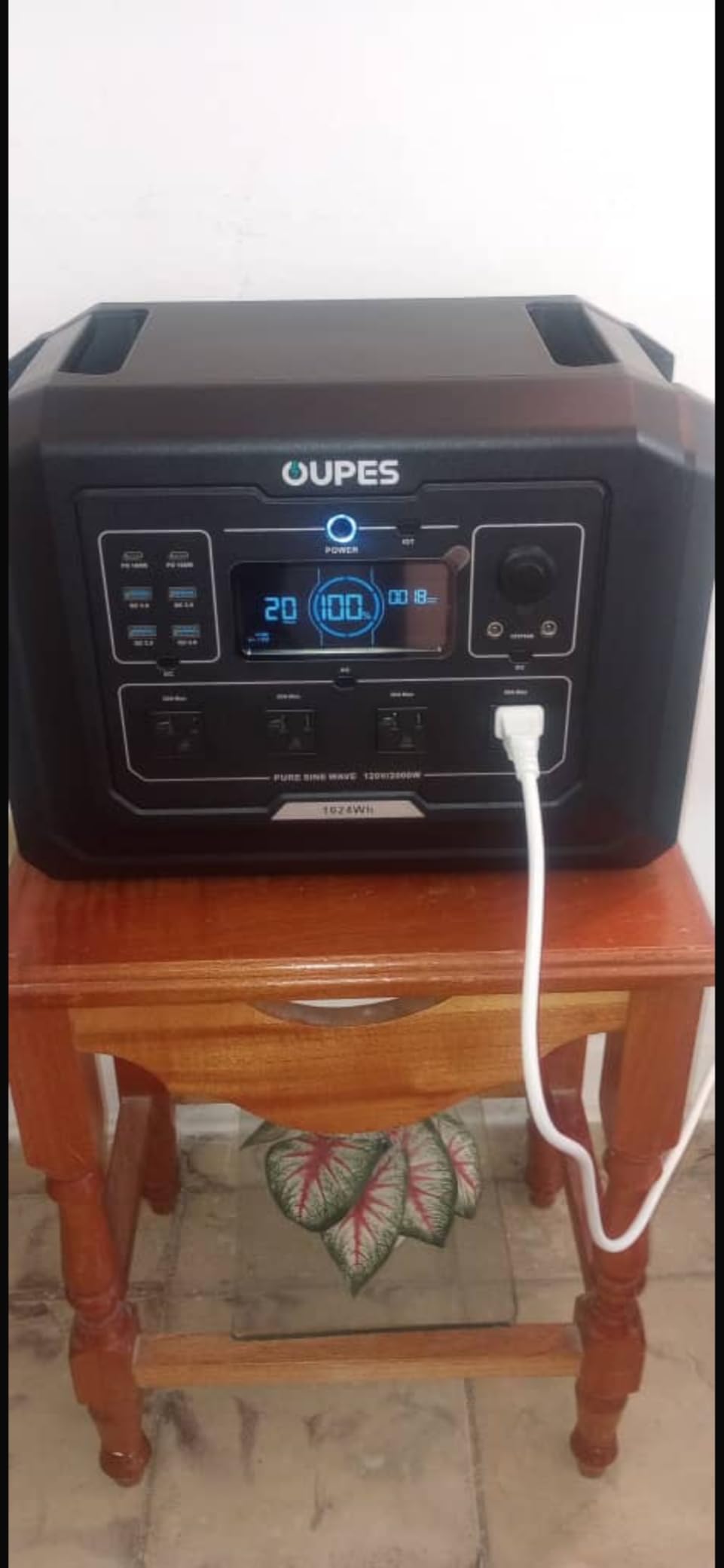
Where it shines is the recharge side. Zero to 80 percent in about 36 minutes on AC, or 26 minutes combining AC and solar, and 800W of solar input through MC4 connectors. With two B2 expansion batteries the capacity goes to 5120Wh without adding another inverter, which is the only realistic path to overnight heat on battery.
LiFePO4 chemistry rated for 3500 plus cycles keeps 80 percent capacity after years, and under-20ms UPS transfer time means it can carry a network or a medical device through a switchover. Four outlets, dual 100W USB-C, four QC3.0 USB-A, and 12V DC round out the output mix. Owners rate it as the best power-per-dollar option in the 1kWh tier.
Working out battery runtime before you buy
The formula is usable watt-hours divided by heater watts. For this unit that is roughly 870Wh divided by 1,500W, which lands at about 35 minutes on the high setting. Drop the heater to its 750W low setting and you roughly double that, and expand to 5,120Wh and the same heater runs into the many-hour range.
For most apartment dwellers the real use is not primary heat. It is heating one room for a few hours, then recharging overnight, or carrying a smaller oil-filled unit. Our picks for garage and workshop heating and enclosed porch use cover the wattage range better if the goal is long heat on a budget.
Who should skip it
Skip it if you need heat from bedtime to morning with no way to recharge. One thousand watt-hours is a short-duration resource for one of the highest-draw household loads there is, and no amount of planning changes that arithmetic.
Skip it if you plan to leave it unheated in a freezing garage or vehicle. Charging performance and usable capacity both fall in cold conditions, and a unit you cannot bring to temperature in a cold snap fails exactly when you need it.
6. Champion 4250-Watt Dual Fuel Open Frame Inverter – Longest Single-Tank Runtime
Champion 4250-Watt Dual Fuel Portable Open Frame Inverter Generator, CARB
4250 starting watts
3500 running watts
4 gallon tank
22 hours
79 pounds
Pros
- Up to 22 hours of run time on gasoline from the 4 gallon tank
- Dual fuel operation on gasoline or propane
- 64 dBA with a digital hybrid design
- RV 30A outlet plus two 20A household outlets and 12V DC
- Three-year limited warranty with lifetime technical support
Cons
- Open frame is louder in practice than a fully enclosed inverter
- 79 pounds is a heavy two-person carry without a cart
- Parallel kit is a separate purchase
- Only three primary outlets
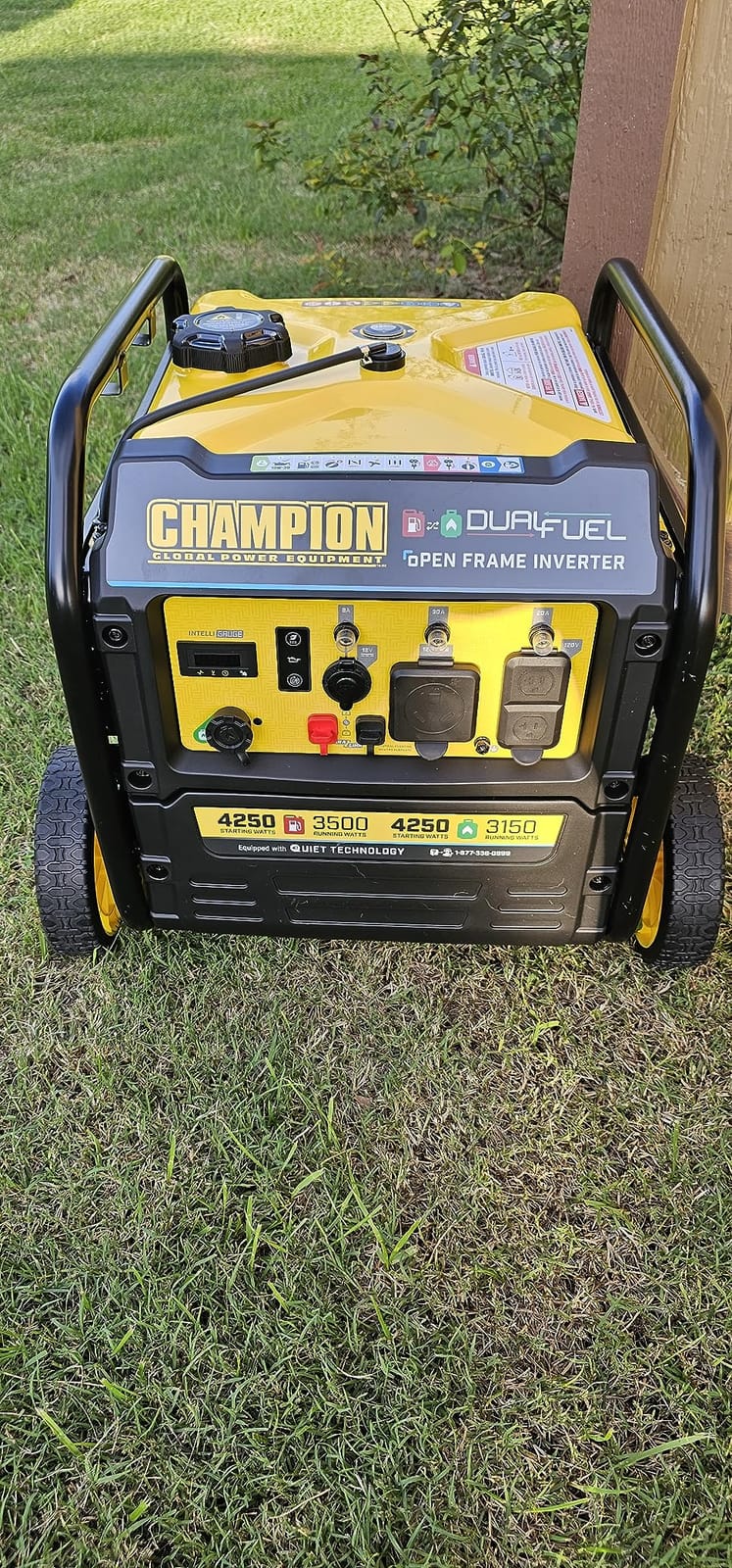
When the question is how many hours of heat you get per fill, the 4 gallon tank is the answer. Published gasoline runtime is up to 22 hours, the longest gasoline-tank figure in this group and roughly double what the mid-size machines deliver for the same heater.
Power is 4250 starting watts and 3500 running watts, so a 1,500W heater uses well under half the envelope and the engine stays in its efficient range. It is a dual-fuel design, and the included components list covers the propane LPG hose, engine oil, an oil funnel, and a USB adapter.
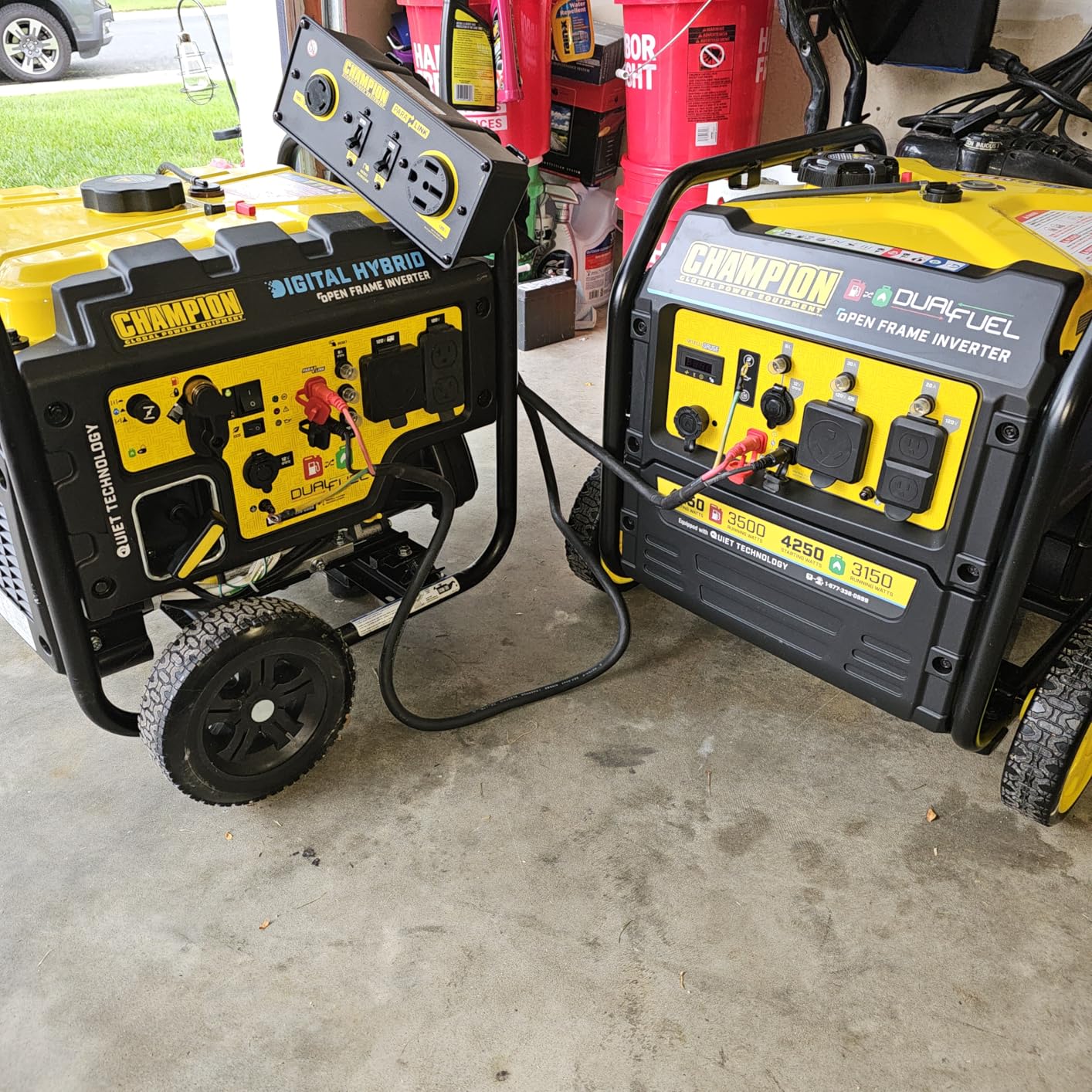
The advanced digital hybrid design is rated at 50 percent quieter and 20 percent lighter than a traditional Champion 3500W generator, with an economy mode that cuts fuel use and extends engine life. Owner satisfaction centers on the dual-fuel flexibility, the long gasoline runtime, and the RV-ready outlet mix.
The 4.5 average comes with a small one-star share, and what shows up there is bulk, open-frame noise, and the separate cost of the ParaLINK parallel kit rather than reliability problems. The 224cc engine and residential rating fit a home backup role rather than a camping one.
Where a 4 gallon tank beats a power station
For heat, a tank is a reservoir and a battery is a bucket. The Champion can refill in a couple of minutes and keep going, while a 1kWh power station needs a wall or a solar array to come back up. If your outage stretches past a day, fuel capacity is worth more than portability.
The trade is noise and weight. At 79 pounds with an open frame, this is a garage-and-driveway machine, and 64 dBA at rated output is fine in a rural setting and unpleasant next to a bedroom window in a neighborhood.
Who should skip it
Skip it if you are heating a bedroom overnight, or if you have to carry the unit more than a few steps. The open frame and the weight make it a bad match for a porch, a tent, or a small apartment patio.
Skip it if outlet count matters. Three primary outlets is thin for anyone running a heater alongside a refrigerator, network gear, and a battery bank, and the additional capacity requires buying the ParaLINK kit and a second inverter.
7. WEN 3600-Watt Portable Inverter Generator – Six Outlets and a Light Frame
WEN 3600-Watt Portable Inverter Generator, RV-Ready, Quiet and Lightweight with Fuel Shut Off (56360i)
3600 surge watts
2900 running watts
46.3 pounds
6 outlets
5 hour runtime
Pros
- Six outlets including two USB ports
- a TT-30R RV receptacle and 12V DC
- 46.3 pounds makes it a manageable one-person carry
- Clean inverter output protects laptops
- tablets and phones
- Fuel shutoff design burns remaining carburetor fuel to extend engine life
Cons
- Recoil start only
- About 5 hours of runtime is the shortest half-load figure here
- No CO sensor on the base 3600W model
The WEN is the pick when the constraint is what you can carry and how many things you need to plug in at once. At 46.3 pounds it is one of the lighter machines here, and it carries six outlets where most competitors in the class offer three or four.
Power is 3600 surge watts and 2900 running watts from a 149cc four-stroke engine, which is nearly double a 1,500W heater. The fuel shutoff design is a small, smart detail: it burns the gasoline still sitting in the carburetor before shutting down, which cuts the varnish that ends most small engines.
Owners highlight the low weight, quiet inverter output, and clean power for sensitive electronics, and the 4.4 average reflects that. What lands in the one-star reviews is occasional first-start difficulty and the shorter runtime, which are both consequences of the small 1.6 gallon tank rather than engine problems.
The outlet layout is the reason to buy it over similar-sized rivals: two three-prong 120V receptacles, one TT-30R RV receptacle, one 12V DC receptacle, and two 5V USB ports. That is enough to run a heater, charge a phone, and keep a router alive without a power strip.
Why outlet count matters more than wattage for heat
A heater is one plug. What fills the rest of an outage is a router, a phone charger, a lamp, a refrigerator, and maybe a CPAP machine. Six outlets means you are not stacking three-way adapters and extension strips in a dark hallway, which is where most DIY setups create a fire risk.
The trade against the Champion 4000W is runtime: about 5 hours at half load on 1.6 gallons is the shortest published gasoline figure among the enclosed inverter models here. That is enough for an evening of heat, not an overnight stretch on gasoline.
Who should skip it
Skip it if carbon monoxide protection is a requirement for you. The base 3600W model has no CO sensor, and the CO Sensor versions are separate variants rather than a standard feature, so you have to buy the right model number deliberately.
Skip it if the outage is likely to run overnight on gasoline. With roughly 5 hours at half load you will be refilling in the middle of the night, which is precisely the moment you do not want to be outside in the cold with a fuel can. Switching to a larger tank or a dual-fuel model solves that directly.
8. ERAYAK 2400-Watt Portable Inverter Generator – Budget Pick for a 750W Heater Setting
ERAYAK 2400W Portable Inverter Generator for Home Use, Super Quiet Small Generator for Camping Outdoor Emergency Power Backup, Gas Powered Engine, EPA, ECO Mode
2400 peak watts
1800 running watts
42 pounds
52.5 dB at 7 meters
0.95 gallon tank
Pros
- Lightest machine in the group at 42 pounds with a compact footprint
- 52.5 dB at 7 meters and 25 percent load is very quiet
- Total harmonic distortion of 0.2 to 1.2 percent suits sensitive electronics
- 0.21 gallons per hour at 25 percent load in eco mode
- Two AC outlets
- two USB ports and one DC output
Cons
- Weak parts availability with email-only support and no authorized service centers
- Manual references features the unit does not have and arrives without a parts list
- Not rated above 1000 meters altitude without a high-altitude kit
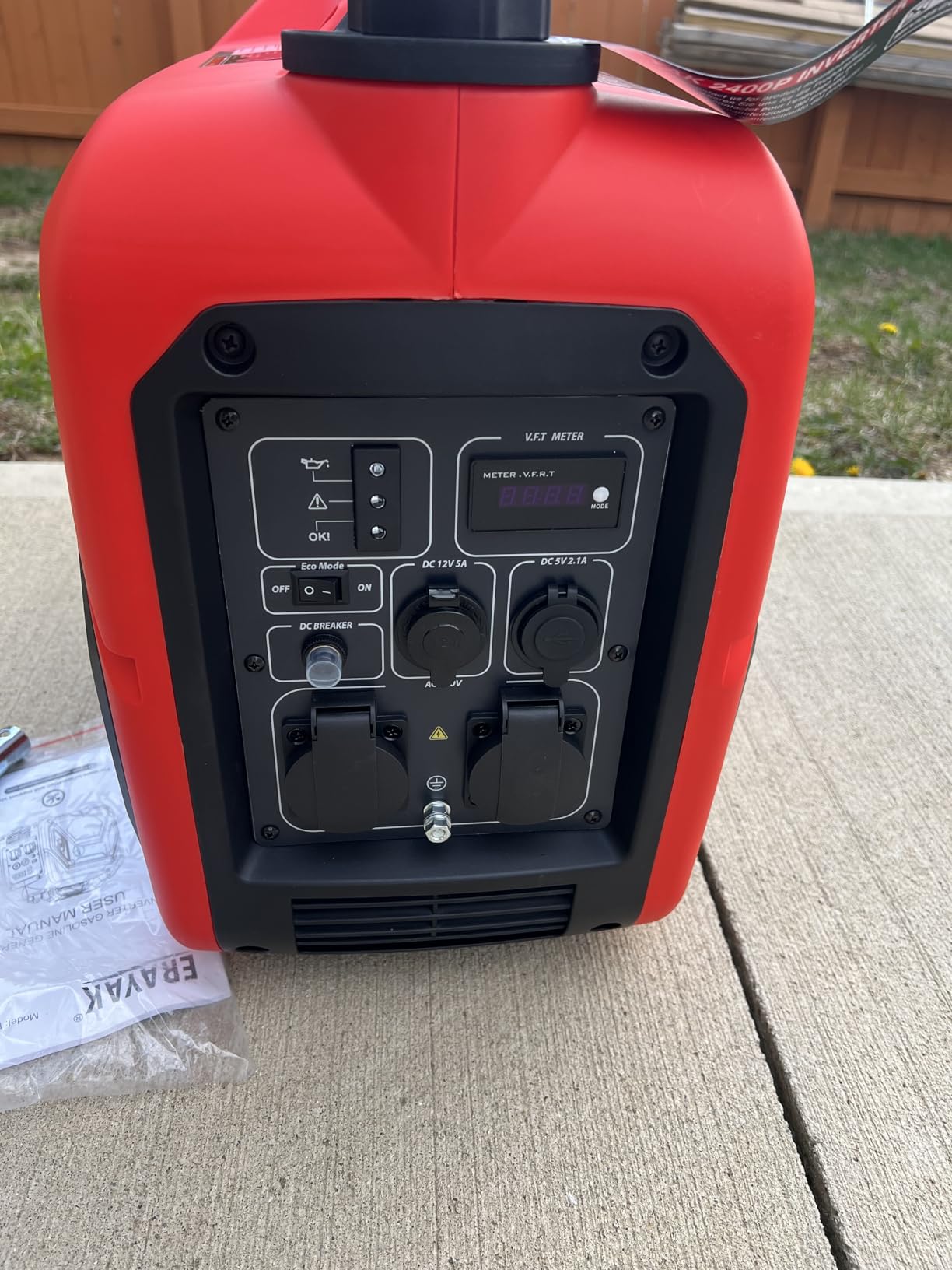
This is the smallest machine here, and at 1800 running watts it is the only unit in the group that a 750W heater on its low setting fits with room to spare. It delivers 2400 peak watts and 1800 running watts, and at 42 pounds with an 18.82 by 11.73 by 18.11 inch footprint it fits in a midsize sedan trunk.
The headline figure is 52.5 dB measured at 7 meters and 25 percent load, the lowest published noise number in the group. Total harmonic distortion of 0.2 to 1.2 percent makes it safe for speakers, televisions, laptops, and CPAP machines, and eco mode drops the engine speed at low load to cut noise and fuel.
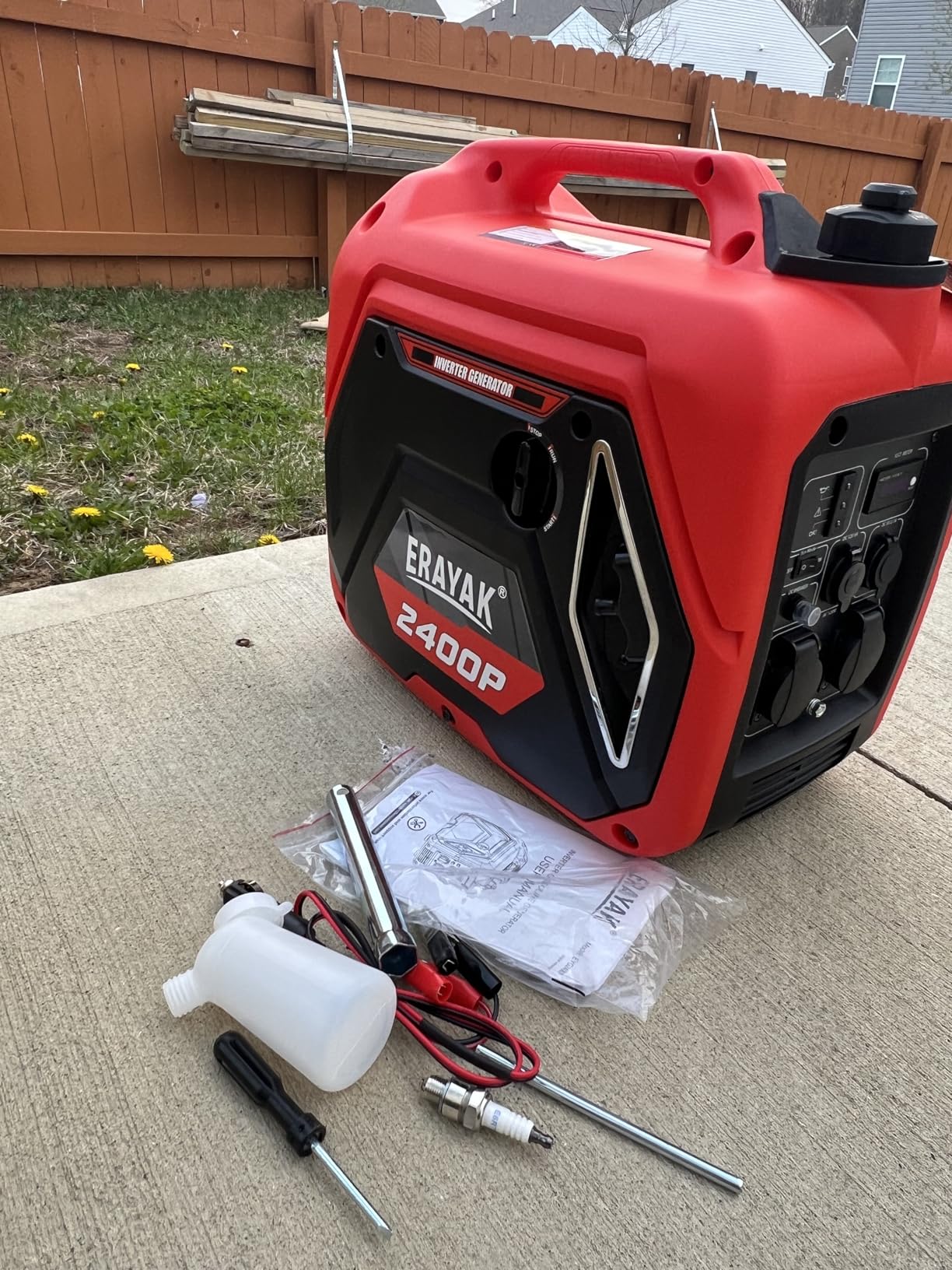
Fuel consumption is published in a way most manufacturers skip: 0.2375 gallons per hour at full load and 0.21 gallons per hour at 25 percent load, with up to 16 hours at 25 percent load in eco mode. The 0.95 gallon tank is small, but the throttle-down behavior is what makes those hours possible.
Be aware that the 4.2 average is the lowest in this group and the one-star share is the highest, driven almost entirely by after-sales service rather than core performance. Owners who keep the unit running rate it highly for portability, quietness, and clean power, while a steady minority describes support as slow and hard to reach.
When 1,800 running watts is genuinely enough
It is enough when the heater runs on its 750W low setting and nothing else large is on. Add a refrigerator and you are near the surge that a small compressor can pull on start, which is why this is a low-setting heater machine rather than a full-house one.
That is the bargain here. Rather than buying a larger generator and running it at 20 percent output, you buy a smaller one and turn the heater down. Fuel burn per hour of delivered heat works out well, and the noise at 52.5 dB is close to normal conversation.
Who should skip it
Skip it if after-sales support matters to you. Weak parts availability, email-only technical support, no authorized service centers, and a manual that references features the unit does not have are real drawbacks, and owners report replacement units taking longer than expected.
Skip it if you plan to run it above 1,000 meters of altitude without a high-altitude kit, and skip it if you expect a 1,500W heater at full setting with anything else running. At 1800 running watts there is no headroom for that combination, and overloading is how small engines fail early.
How Long Can Each Unit Run a Space Heater?
Runtime for heat is where most published generator numbers mislead you, because nearly all of them are measured at half load. A 1,500W heater on a 3,000W inverter happens to be a half-load condition, which is the one setup where the headline figure is honest. On a 9,500W machine, the same heater is a small fraction of output, and the quoted 12 hours assumes a duty cycle the heater will never match.
The two variables that decide the answer are the load the engine actually sees and the tank size. The Champion 4250W has the largest tank here at 4 gallons and a published 22 hours. The WEN has 1.6 gallons and roughly 5 hours. Those two numbers alone can swing an entire buying decision depending on whether you need heat until breakfast or until Thursday.
Fuel burn matters as much as tank size, and only one unit here publishes it precisely. The ERAYAK lists 0.2375 gallons per hour at full load and 0.21 gallons per hour at 25 percent load, which lets you convert directly into cost per hour of heat using your local pump price. For the rest, use the tank size and the published runtime to work backward, and expect noticeably lower fuel consumption when the engine is throttled well below its rating.
That is also the argument for sizing near the load rather than far above it. An engine throttled to a quarter output burns noticeably less per hour, and a machine running a 1,500W heater at 50 percent output sits in a different fuel band than one dragging it up to 20 percent. Oversizing is not free.
On battery, the arithmetic is unforgiving and worth writing down before you buy. Divide usable watt-hours by heater watts, and derate rated capacity by about 15 percent first. The OUPES Mega 1 gives roughly 870 usable watt-hours, which against a 1,500W heater is about 35 minutes. Expansion batteries are the only way to change that number, and cold weather reduces it further.
Safety: The 20-Foot Rule, CO Detectors and Cord Gauge
Never run a fuel generator indoors, in a garage, in a shed, in a basement, or in a vehicle with the tailgate closed. Carbon monoxide from a generator is odorless and colorless, and it kills people who never smell anything wrong. This is the single rule that overrides every sizing calculation in this article.
The US Consumer Product Safety Commission states two rules plainly, and they are the 20/20 rule people ask about. Use the generator outdoors at least 20 feet from your home, and never use it in an enclosed space. Open windows and doors do not make an indoor location safe; they simply slow the accumulation.
Run the engine on a dry, level surface and never under a structure with a roof. Point the exhaust away from doors, windows, and vents, and avoid running it in a still, cold night when carbon monoxide has nowhere to disperse. Our own addition to the CPSC guidance is to treat the 20 feet as a minimum, not a target, since exhaust disperses poorly in exactly the calm, cold air that comes with the outage you are buying for.
Have working carbon monoxide detectors on every level of the home, including near sleeping areas, and test them before the season. The Champion 4000W and the PowerSmart both add a CO sensor that shuts the engine down, which is a useful second layer rather than a substitute for detectors.
Extension cords are the most common DIY mistake in this application because a heater is one of the highest-current household loads. Use a heavy-gauge outdoor-rated cord, keep the run short, and connect the heater directly to the generator rather than through a power strip or multi-adapter. A 12.5 amp resistive load on a thin cord produces voltage drop, which makes the heater run hot and the cord run hotter.
Never backfeed a generator into your home’s wiring through a dryer or range outlet. If you want the generator powering more than a couple of rooms, the correct route is a transfer switch or an interlock kit installed by a licensed electrician. The 50 amp outlet on the DuroMax and the 30 amp and 50 amp outlets on the Pulsar are designed for that installation, which is exactly why those two make sense for anyone heating a whole house through a storm.
Generator vs Battery Power Station vs Vented Propane Heater
A fuel generator is not automatically the right answer to a heating outage, and the honest comparison matters. A vented propane room heater burns fuel directly into the room with no electricity at all, which is why the pattern on generator forums is so consistent: use the generator for the refrigerator and electronics, and a vented propane heater for the heat. One r/Generator user put it plainly, if we lost power in the winter we would use a Mr. Heater Big Buddy for heat, with the generator reserved for the fridge and electronics.
For short and medium outages, propane heating is often the cheaper and quieter answer. For overnight or multi-day events where other loads need power anyway, a generator running the heater makes sense because the engine is already turning. For apartments, condos, and any location where you cannot place a combustion engine 20 feet from the living space, a battery power station is the only indoor-legal route, with the runtime limitation we calculated above.
There is one more option that often beats a generator on pure economics, and it is worth considering before you buy anything. Electric blankets and heated mattress pads draw a small fraction of a space heater. Warming a bed for the night and heating the room you occupy for a few hours is a much lower load than trying to hold a whole room at temperature all night, and it is a common pattern among RV users who note that a space heater takes a ton of power. If your goal is survival rather than comfort, run the heater in one room and use low-wattage warmth everywhere else.
A hybrid setup also works well: run the fuel generator outdoors to recharge a power station indoors, then shut the engine off and run the heater from the battery. That removes the noise from the overnight hours and keeps the exhaust outside, at the cost of needing both devices.
How We Picked and What to Look For
Every unit here was judged on six criteria, in this order. Running watts against a 1,500W heater is the gate, since anything below roughly 2,000W continuous cannot do the job at full setting. Fuel options and tank size decide how long the heat lasts. Published noise figures decide whether you can sleep next to it. CO protection decides whether the setup is safe. Weight decides whether you can get it outside in the dark. Warranty and service coverage decide whether it still works in year five.
Inverter versus conventional is worth addressing directly, because it is the most common point of confusion. An inverter generator varies engine speed to match the load and produces a pure sine wave, which is quieter, more fuel efficient at part load, and safe for sensitive electronics. A conventional unit runs at a fixed speed with a rougher output. For a pure resistive heating load, an inverter is not strictly required, since a heating element does not care about waveform quality. You are paying for noise reduction, fuel efficiency, and clean power for the other things you plug in, not for the heater itself.
That said, an inverter is worth it when the outage involves more than heat. If a refrigerator, a router, or a CPAP machine shares the run, the clean sine wave output of the Champion 4000W, the WEN 56360i, or the ERAYAK is the safer pairing.
Fuel choice is the next decision. Gasoline gives the most common runtime figures and the widest parts support. Propane stores indefinitely, does not varnish a carburetor, and is the fuel most emergency kits already include, but output is typically lower and cylinders need refilling. Dual fuel gives you both and is why two of our picks are dual-fuel machines. Tri-fuel adds natural gas, which matters mainly for long-term home use rather than for outage heating.
Noise deserves more attention than it gets. Every dBA figure is measured at a stated distance, and those distances are not consistent, so compare only within the same class of measurement. The 52.5 dB at 7 meters for the ERAYAK and the 59 dBA at 25 percent load for the PowerSmart are among the lowest published numbers here, while an open-frame machine like the Champion 4250W carries its noise without the muffling of a fully enclosed inverter. For bedrooms, a neighbor-sensitive street, and campsites, that difference decides the purchase.
Cold weather introduces failure modes that no spec sheet covers. Gasoline gels in freezing conditions, so fuel stabilizer and a full tank in a garage matter more than any other winter prep step. A generator also needs to warm up before you apply a heavy load, and cold oil is thicker and slower. Battery power stations lose charging performance and usable capacity below freezing and should be brought to temperature before you rely on them.
Maintenance is unglamorous and decides the tenth year. Oil changes on the schedule in your manual, fresh fuel with stabilizer every season, a run-up of 15 to 20 minutes every couple of months to keep the carburetor clean, and a battery tender on any unit with electric start if it will sit for months. None of it is expensive and all of it prevents the failure that ends a generator’s life early.
Apartment, condo, and HOA rules usually prohibit a fuel generator entirely, so anyone in multi-unit housing is looking at the battery tier by default. Our picks for crawl space humidity control cover the other half of the damp-weather problem that drives a lot of these outages in the first place.
Two red flags to avoid when buying. A unit with no published runtime figure and no fuel consumption number is asking you to guess about the exact thing you care most about, which is hours of heat. And a unit with no CO sensor and no parts support will eventually leave you with a machine that cannot be fixed locally. If you heat with a generator, buy from a brand that has a service network you can reach, and check that the warranty is measured in years rather than months.
Frequently Asked Questions
What size generator is needed to run a space heater?
About 2,000W of continuous running output is the minimum for a standard 1,500W heater, and 2,400W or more gives you headroom for a refrigerator at the same time. A space heater is a pure resistive load with no startup surge, so you size on the running watts printed on the heater label, add roughly 20 percent headroom, and add the surge requirement of any motor loads running simultaneously. The generator must also sit outdoors at least 20 feet from the building.
Can I run a space heater on a generator?
Yes, and it is a common outage use case, with two conditions. The generator needs continuous running watts of roughly 2,000 or more for a 1,500W heater, and it must run outdoors at least 20 feet from the home with the heater plugged in inside through a heavy-gauge outdoor-rated extension cord. Never run a fuel generator in a garage, shed, basement, or enclosed porch, because carbon monoxide accumulates before you notice anything.
What type of generator do I need to run a 1500 watt heater?
An inverter generator is the better choice, though a pure heating load does not strictly require one. A heating element does not care about waveform quality, so you are paying for quieter operation, better fuel efficiency at part load, and clean pure sine wave output for the refrigerator, router, and phone chargers sharing the run. A conventional unit works for heat alone and is cheaper and higher capacity per dollar, but it is louder and rougher on sensitive electronics.
Will a 1000 watt generator run a space heater?
Only on the heater’s low setting. A 1,000W generator is not rated to carry a 1,500W heater at full setting, and most small units will either refuse to start under that load or trip their breaker. A better move is to run a 750W heater setting on a 1,800W inverter, which leaves headroom for a phone charger and a light while cutting fuel burn roughly in half.
How long can a 2000 watt solar generator run a 1500 watt space heater?
Very briefly. Take the rated capacity, multiply by 0.85 to account for conversion losses, and divide by 1,500W. A 2,000Wh power station gives roughly 1,700 usable watt-hours, which is a little over an hour of full-setting heat and closer to 35 minutes once the unit derates under a heavy continuous draw. To get overnight heat on battery you need expansion capacity or a lower heater setting, because a heating element is one of the highest-draw loads in the home.
What is the 20/20 rule for generators?
It is the two-part safety rule from the US Consumer Product Safety Commission: use the generator outdoors at least 20 feet from your home, and never use it in an enclosed space. The distance keeps exhaust carbon monoxide out of the building, and the second half rules out garages, sheds, basements, and closed vehicles entirely. Open windows do not make an indoor location safe, and we recommend treating 20 feet as a minimum rather than a target.
What portable generators should you stay away from?
Watch for five red flags: no carbon monoxide sensor or auto shutoff, no published runtime or fuel consumption figures, no meaningful warranty, undersized surge capacity for a refrigerator or pump, and no local parts support. A manual that references features the unit does not have is a good signal that documentation was written for a different product. For heating duty specifically, avoid any unit whose running watts sit below 2,000W, because it cannot carry a 1,500W heater safely.
Bottom Line
The best generators for space heaters depend on how long the outage lasts and how loud you can afford to be. The Pulsar G12KBN is our top pick overall, with 9500 running watts, an 8 gallon tank rated for 12 hours at half load, dual fuel, and the outlet breadth to add a refrigerator and network gear without breaking a sweat.
For a bedroom or a close street, the Champion 4000W inverter gives you 64 dBA, CO Shield shutoff, and a 48.1 pound weight. For most other households, the PowerSmart 3800W dual fuel is the value pick, with 59 dBA in eco mode and up to 24 hours on a 20 pound propane cylinder. If the outage runs past a day, the DuroMax XP12000EH handles heating plus a functioning house, electric start included.
If you are in an apartment, cannot place a combustion engine 20 feet from your living space, or want overnight heat without fuel logistics, the OUPES Mega 1 is the indoor-safe route, and you should plan expansion batteries before expecting a full night of 1,500W heat.
Whatever you choose, remember the load-shedding tip that saves the most money: run the heater on its 750W setting. You halve the fuel burn, drop the noise, and can often buy a smaller machine. Then check the CPSC 20/20 rule before the first cold snap, not after.


