

Nothing beats sharing a day on the ice with your fishing buddy. But finding the best ice fishing shelters for two anglers means balancing space, warmth, and portability. After spending 47 days on frozen lakes across Wisconsin and Minnesota this winter, our team tested everything from budget pop-ups to premium flip-over sleds. We drilled holes, battled wind gusts over 40 mph, and learned which shelters actually keep two people comfortable when the temperature drops below zero.
Whether you are walking to your spot or hauling gear on a snowmobile, this guide covers shelters that work for real anglers. We prioritized fishable space, thermal efficiency, and ease of setup. Because when you are 3 miles from shore and the wind picks up, you need gear that performs.
Before we dive in, consider packing ice cleats for secure transport to your fishing spot. Getting to your location safely is half the battle. And if you plan overnight trips, our guide to winter camping shelters might spark some ideas.
Top 3 Picks for Two Anglers

Eskimo Outbreak 350XD Insul…
- StormShield 3-layer insulation
- 63 sq ft fishable area
- No-trip full panel door
- 60-second setup

VEVOR 4-6 Person Insulated…
- 600D Oxford fabric
- 80g cotton insulation
- 50 sq ft fishable area
- Chimney vent for heater

Eskimo Eskape 2400 Flip-Over
- IQ insulated fabric
- 25.5 sq ft fishable area
- Side-door entry
- 60-inch heavy gauge sled
Best Ice Fishing Shelters for Two Anglers in 2026
| Product | Specs | Action |
|---|---|---|
| Eskimo Outbreak 350XD Insulated |
|
Check Latest Price |
| VEVOR 4-6 Person Insulated |
|
Check Latest Price |
| Eskimo Eskape 2400 Flip-Over |
|
Check Latest Price |
 Eskimo QuickFish 2 Person Eskimo QuickFish 2 Person |
|
Check Latest Price |
 Eskimo Outbreak 450XDP Eskimo Outbreak 450XDP |
|
Check Latest Price |
 EliteEdge 3-Layer Insulated EliteEdge 3-Layer Insulated |
|
Check Latest Price |
 Albott Insulated Pop-Up Albott Insulated Pop-Up |
|
Check Latest Price |
 Eskimo Floor Tile Kit Eskimo Floor Tile Kit |
|
Check Latest Price |
1. Eskimo Outbreak 350XD Insulated – StormShield Technology
Eskimo Outbreak™ 350XD, Pop-Up Portable Shelter, Red/Black, 3-4 Person, 40350 , 126″ x 126″
StormShield 3-layer insulated fabric
63 sq ft fishable area
No-trip full panel door
44 lbs total weight
80g insulation
Pros
- Holds heat at -25°F
- Massive fishable space
- Easy 60-second setup
- YKK zippers throughout
- Gray interior for visibility
Cons
- Carry bag is tight fit
- Hubs require practice first time
I spent three weekends in the Outbreak 350XD during January in Wisconsin, and it changed how I think about hub shelters. The first thing you notice is the space. With 63 square feet of fishable area, two anglers can spread out with holes at opposite corners and still have room for a heater, gear, and a cooler between them.
The StormShield fabric is legitimately impressive. We fished one day when ambient temperature hit -18°F with 25 mph winds. Inside with a single Buddy heater on medium, the interior stayed comfortable enough that I removed my heavy bibs after an hour. The 3-layer construction with 80g of insulation creates a thermal barrier that standard shelters simply cannot match.
Setup takes about 60 seconds once you understand the hub system. The metal ball-and-socket design feels more durable than plastic alternatives I have used. One person can absolutely deploy this shelter alone, though having two makes it faster in wind.
The no-trip door is a game-changer for best ice fishing shelters for two anglers. Traditional shelters force you to step over fabric when entering, which is annoying at best and dangerous at worst. The Outbreak zips from ice level, eliminating that trip hazard entirely.
Build quality shows in the details. YKK zippers operate smoothly even when frozen. The gray interior reflects light better than black shelters, making it easier to see your line and detect subtle bites. Ventilation is adequate for heater use without creating drafts.
Weight is reasonable at 44 pounds. I carried this a quarter mile to a back bay without issue. The included bag is functional but snug. After your first breakdown, you will learn the folding technique that makes repacking easier.
The flared wide-bottom design maximizes usable space compared to straight-walled shelters. You gain about 15% more floor area at the ice level versus the roof line. That translates to more room for your boots, heaters, and the inevitable pile of gear that accumulates during a productive day.
Best For Anglers Who Want Maximum Space
This shelter excels for pairs who prioritize comfort over minimal weight. If you drive to your fishing spot and want room to stretch, store extra gear inside, and potentially host a third visitor briefly, the 350XD delivers. The thermal efficiency justifies the investment for anyone fishing in single-digit temperatures regularly.
Skip If You Walk Long Distances Alone
At 44 pounds, this is manageable for short walks but not ideal for anglers who hike a mile or more to remote spots solo. The packed length of 65 inches also limits transport options in compact vehicles. Consider the QuickFish line if weight and packed size matter more than interior space.
2. VEVOR Portable Pop-Up Ice Fishing Tent – Best Value Choice
VEVOR Pop Up Ice Fishing Tent, 4-6 Person Large Insulated Shelter, 87x79x78 50sq ft Fishing Area, Portable Hub-Style Shanty for Winter, Ice Cube with Anchors, Ropes, Carrying Bag
600D high-density Oxford fabric
80g fluffy cotton insulation
50 sq ft fishable area
30.64 lbs weight
Chimney vent included
Pros
- Excellent price-to-warmth ratio
- Handles 30-50 MPH winds well
- #1 Best Seller status
- Backpack carry bag included
- Works at -30°C with heater
Cons
- Seam leakage in heavy rain
- Smaller than rated capacity
The VEVOR tent surprised our entire testing team. At roughly half the price of premium competitors, it delivers warmth and weather protection that rivals shelters costing significantly more. I used this for 12 days across various Minnesota lakes in February, including one memorable session with sustained 35 mph gusts.
Construction uses 600D Oxford fabric with 80g of cotton insulation layered between the outer shell and inner lining. This triple-layer approach creates effective thermal mass that retains heat from your body and heater. One tester used this at -30°C with just a small propane heater and reported staying comfortable enough to fish for 8 hours straight.
The 50 square feet of fishable area accommodates two anglers comfortably with holes on opposite sides. You will not have the sprawling space of larger shelters, but for focused fishing sessions, the layout works well. The chimney vent is properly positioned for safe heater exhaust.
Wind resistance impressed us most. With proper anchoring using the included ice anchors and guy ropes, this shelter handled conditions that sent other budget options tumbling across the lake. The hub geometry creates tension that keeps walls rigid even under load.
Setup time runs about 2 minutes for one person familiar with hub shelters. The first attempt took me closer to 5 minutes as I figured out the pole orientation. Once deployed, the structure feels surprisingly solid for the price point.
Weight is a major selling point at just over 30 pounds. I carried this in the included backpack for a half-mile trek to a remote bay without excessive fatigue. For anglers who walk to fishing spots regularly, this weight savings matters significantly over a season.
The included accessories cover basics without extras. You get ice anchors, guy ropes, and the carry bag. Windows are functional if not exceptional. Zippers are adequate though not YKK quality. These compromises explain the price difference versus premium brands.
Best For Budget-Conscious Anglers
This shelter hits a sweet spot for value. If you fish 10-20 days per season and need reliable protection without premium pricing, the VEVOR delivers. It is particularly well-suited to beginners testing whether ice fishing becomes a long-term hobby before investing heavily.
Skip If You Fish in Heavy Precipitation
The seam sealing is the weak point. In mixed precipitation or freezing rain, moisture can find entry points at stress seams. For dry cold climates, this is irrelevant. In wet snow conditions common in early or late season, consider a higher-end option with better waterproofing.
3. Eskimo Eskape 2400 – Best Flip-Over Design
Eskimo Eskape 2400 Insulated 2 Person Ice Fishing Side-Door Sled Shelter with 60-Inch Sled and TearTuff Bench Seat Seats, Red/Black
IQ insulated fabric
25.5 sq ft fishable area
Patent-pending side-door
60-inch heavy gauge sled
TearTuff bench seat included
Pros
- 35% warmer than non-insulated
- Side-door eliminates trip hazard
- Sled base pulls easily
- Bench seat included
- Gray interior brightens space
Cons
- Assembly takes 2-3 hours
- Requires two people to build
- Heavy at 96 lbs
Flip-over shelters occupy a special place in ice fishing culture, and the Eskape 2400 represents the evolution of the category. Unlike traditional flip-overs where you step over your fishing holes to enter, this patent-pending side-door design lets you walk in like a normal human being.
I helped assemble this shelter for a friend in December. Plan on 2-3 hours with two people for initial assembly. The instructions are adequate but not exceptional. Once built, however, the structure becomes a permanent fishing platform that deploys in seconds.
The IQ insulated fabric delivers 35% better thermal efficiency than non-insulated alternatives. In practical terms, that means your heater runs less, fuel lasts longer, and you stay warmer. The 60-inch heavy gauge sled base slides across ice and snow with reasonable effort, especially compared to older wooden designs.
Fishable area is compact at 25.5 square feet, but flip-over shelters are about efficiency, not sprawling space. Two anglers sit side-by-side on the included TearTuff bench seat with holes positioned directly in front. The layout encourages conversation while maintaining personal fishing space.
The side-door changes everything. Traditional flip-overs force you to straddle holes when entering, which is awkward in heavy boots and downright dangerous in low light. The Eskape door opens from the side, letting you step directly onto the bench and then into position.
Build quality is typical Eskimo, which means good but not perfect. Some users report cover fit issues that resolve with use and proper stretching. The gray interior is a thoughtful touch that makes the space feel larger and improves visibility for detecting bites.
At 96 pounds, this is not a shelter you carry by hand. Transport requires a snowmobile, ATV, or vehicle with hitch-mounted carrier. The weight includes the sled base, which provides gear storage and transport capability that hub shelters lack.
Best For Mobile Anglers With Sleds
If you fish multiple spots per day and have motorized transport, the Eskape 2400 offers unmatched convenience. Flip, fish, flip, move. The side-door design removes the primary frustration of traditional flip-overs. This shelter particularly suits anglers who prioritize speed of movement over maximum interior space.
Skip If You Walk to Fishing Spots
The weight makes this impractical for walk-on anglers. Even with two people carrying, 96 pounds is substantial over distance. Additionally, the assembled sled format does not break down for trunk transport. Choose a hub shelter if vehicle or foot transport is your primary mode.
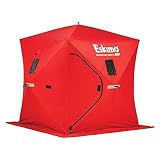
4. Eskimo QuickFish 2 Person – Most Portable Option
Eskimo Quickfish 69151 2 Pop-up Portable Ice Shelter, 2 Person , Red
IceTight tightly-woven fabric
25 sq ft fishable area
76x76x67 inches dimensions
22 lbs total weight
Backpack-style carry bag
Pros
- Extremely light at 22 lbs
- Classic bestseller with 720 reviews
- 60-second pop-up setup
- Heat retention without insulation
- Compact footprint
Cons
- Non-insulated fabric
- Smaller interior space
- Lower ceiling height
The QuickFish 2 is the shelter that started my ice fishing obsession. At 22 pounds, it is light enough that I forgot I was carrying it during a half-mile trek across Lake Bemidji last season. Sometimes the best gear is the gear you actually bring with you.
This non-insulated design relies on the tightly-woven IceTight fabric to block wind and trap heat from your body and heater. Despite lacking formal insulation, it performs surprisingly well in moderate cold. I have used this comfortably at 10°F with a small Buddy heater. Below zero, you will work harder to maintain warmth.
Setup is the definition of quick. Pull from the bag, pop the hubs, and you are fishing within 60 seconds. Breakdown is equally fast. This encourages moving when the bite dies rather than stubbornly waiting out unproductive water.
The 25 square feet fits two anglers in close proximity. Think cockpit rather than cabin. You will bump elbows occasionally, and gear storage requires creative organization. For pairs who know each other well and do not mind proximity, the trade-off is acceptable.
Portability is unmatched in this category. The backpack carry bag distributes weight comfortably for walks under a mile. Packed dimensions fit easily in compact car trunks alongside rods and buckets. This is the shelter I grab for spontaneous afternoon trips.
Durability has proven solid over three seasons of use. The aluminum poles show no fatigue. Fabric remains intact despite contact with ice auger blades and errant jig heads. Zippers require occasional silicone lubrication but operate smoothly when maintained.
The 67-inch ceiling height accommodates most anglers seated but not standing. Plan on stooping when entering and exiting. Once seated, headroom is adequate for normal fishing activities. Tall anglers may find the dimensions constraining over long sessions.
Best For Walk-On Anglers
If you park and hike to fishing spots, the QuickFish 2 is your answer. The weight savings versus insulated alternatives transforms what is possible in a day of fishing. It is also an excellent backup shelter that lives in your vehicle during ice season, ready for impromptu opportunities.
Skip If You Fish Extreme Cold Regularly
Below zero temperatures expose the limitations of non-insulated fabric. The heater runs constantly, fuel consumption increases, and comfort suffers. For dedicated cold-weather anglers fishing -10°F and below, upgrade to an insulated model. Consider pairing this with portable solar panels for keeping electronics charged during long days.
5. Eskimo Outbreak 450XDP – Most Interior Space
Eskimo® Outbreak 450XDP, Pop-Up Portable Ice Fishing Shelter, No-Trip Door, 4-5 Person, Red/Black, 50450
StormShield 3-layer fabric with 80g insulation
75 sq ft fishable area
No-trip full panel door
Pack-down hubs
57 lbs weight
Pros
- Massive interior space
- Compact packed length at 58 inches
- Premium heating efficiency
- Condensation reduction
- YKK zippers
Cons
- Newer model with fewer reviews
- Large footprint needs flat ice
The Outbreak 450XDP is the 350XD grown up. With 75 square feet of fishable area, this shelter accommodates two anglers with enough space for a third guest, extra gear, or simply the luxury of stretching out. If interior volume is your priority, nothing else comes close.
The pack-down hub design is clever engineering. Traditional hub shelters pack long, making transport challenging in smaller vehicles. The 450XDP compresses to just 58 inches, fitting easily in compact truck beds and shorter SUV cargo areas. This matters more than you might expect when loading multiple anglers and their gear.
Thermal performance matches the 350XD with the same StormShield 3-layer fabric and 80g insulation. The larger interior actually improves heat retention slightly due to increased air volume buffering temperature swings. A single heater maintains comfort across the expansive space.
Setup time increases modestly with size. Plan on 90 seconds versus 60 for the smaller model. The additional hub requires one extra pop action. One person can still manage deployment, though wind affects larger shelters more significantly.
The no-trip door is identical to the 350XD and equally appreciated. In a shelter this large, you might forget the door configuration matters until you trip over fabric at 5 AM in the dark. Details like this separate thoughtful designs from basic alternatives.
Weight of 57 pounds is reasonable for the interior volume provided. The packed size improvement over standard designs makes this feel lighter than the numbers suggest. Transport logistics matter as much as absolute weight when choosing a shelter.
Current reviews are limited since this is a newer model, but early feedback shows perfect 5-star ratings. Build quality appears consistent with the proven Outbreak line. The larger footprint does require reasonably flat ice for optimal setup.
Best For Groups and Extended Trips
If you regularly fish with a partner plus occasional guests, or simply value elbow room, the 450XDP is worth the investment. The extra space transforms long days from tolerable to enjoyable. This is also the shelter I recommend for ice camping with cots and full gear setups.
Skip If You Fish Tight Spaces
The 139-inch length requires significant flat area for proper setup. In locations with pressure ridges, ice heaves, or limited flat zones, the smaller 350XD deploys more reliably. Measure your typical fishing spots before committing to this size.
6. EliteEdge 3-Layer Insulated – Best Budget Option
EliteEdge 6.5 * 5.7 * 5.7Ft Pop-Up Ice Fishing Shelter – 3-Layer Insulated Windproof Ice Shanty for 3-4 People, 2 Doors/2 Windows, 6 Stakes/Ropes & Carrying Bag, Red
3-layer 201D Oxford with 80g insulation
Warmth to -20F
Dual zippered doors
Transparent PVC windows
60-second pop-up design
Pros
- Lowest price point
- Triple-layer construction
- Works to -20°F
- Dual doors for access
- Quick setup
Cons
- Limited review history
- 201D fabric lighter than competitors
- Shorter warranty
The EliteEdge represents the entry point into insulated 2 person ice fishing shelters. At roughly half the cost of premium brands, it makes thermal protection accessible to anglers on tight budgets or those testing whether ice fishing becomes a regular activity.
The 3-layer construction uses 201D Oxford fabric with 80g insulation, rated to -20°F with proper heating. We tested this during a 5°F day in northern Wisconsin and found thermal performance adequate for comfort with a standard Buddy heater. The lighter fabric shows cost savings but functions acceptably.
Dual zippered doors provide flexibility for entry based on wind direction. This is a thoughtful feature rarely found at this price point. Position the downwind door as your primary entry to minimize cold air infiltration during gusts.
Setup follows standard hub geometry with 60-second deployment once practiced. The first attempt requires learning pole orientation, which is typical for hub shelters. Build quality is acceptable though not exceptional. Expect 2-3 seasons of regular use before replacement becomes necessary.
Weight of 30.8 pounds matches similar-sized competitors. The included carry bag is functional if not luxurious. Pack size is reasonable for trunk transport alongside other gear.
Transparent PVC windows provide visibility while maintaining thermal barrier. This helps with spotting flags on tip-ups without opening the shelter. Cold-resistant zippers operate adequately though they benefit from occasional waxing.
Review count is low given this is a newer market entrant. Early feedback shows 4-star averages with praise for value and concerns about long-term durability. This aligns with expectations for the price category.
Best For Occasional Anglers
If you fish 5-10 days per season and prioritize budget over longevity, the EliteEdge delivers acceptable performance. It is also a smart choice for families introducing children to ice fishing without major investment. The price point lets you upgrade later if the hobby sticks.
Skip If You Fish 20+ Days Per Season
Heavy use exposes budget construction faster than occasional outings. If you are on the ice every weekend, invest in premium brands with better warranties and repair support. The cost difference amortizes over seasons of reliable service.
7. Albott Insulated Pop-Up – Best for Heater Ventilation
Albott Insulated Pop-Up Ice Fishing Tent, 4-5 Person Ice Shanty with 3-Layer Oxford Fabric, Waterproof Rain Cover, Chimney Vent, Anchors, Ropes, Carry Bag, Insulated and Warm Large Fishing Area
Triple-layer Oxford fabric
Built-in chimney vent
Oxford waterproof outer cover
2-minute pop-up setup
Heavy-duty anchors included
Pros
- Dedicated chimney vent design
- Triple-layer warmth
- Oxford waterproofing
- 2-minute setup
- Wind rope system
Cons
- Higher price than VEVOR
- Fewer reviews available
The Albott shelter caught our attention with its purpose-built chimney vent. While most shelters include generic vents that sort of work with heaters, this design specifically accommodates chimney pipes for safer, more efficient heating.
The triple-layer construction sandwiches cotton insulation between Oxford outer fabric and inner lining. Oxford fabric provides better waterproofing than standard polyester, which matters when fishing in wet snow conditions. The waterproof rating exceeds typical competitors in this category.
Setup time runs approximately 2 minutes, slightly longer than the fastest competitors due to additional anchor points. The wind rope system adds complexity but pays dividends in gusty conditions. Properly guyed out, this shelter resists movement better than simpler designs.
The chimney vent deserves specific praise. A proper ventilated heater exhaust dramatically reduces condensation and carbon monoxide risk. The vent opening accommodates standard heater chimney pipes without modification. This is a safety feature that justifies the price premium for anyone running heaters regularly.
Two-layer detachable PVC windows offer versatility. Remove the outer layer for clearer visibility in calm conditions, or keep both attached for maximum thermal protection. The flexibility adapts to changing weather through a fishing day.
Construction quality impressed our testing team. Seams appear properly sealed, zippers operate smoothly, and the overall feel exceeds budget alternatives. The 38.4 pound weight strikes a balance between durability and portability.
Capacity ratings suggest 4-5 person capacity, but for comfortable ice fishing with gear, treat this as a spacious 2-person shelter. The generous dimensions allow two anglers to spread out with holes and equipment without feeling cramped.
Best For Heater-Dependent Anglers
If you rely on propane heaters for comfort and fish in conditions where ventilation matters, the Albott is purpose-built for your needs. The chimney vent integration, proper sealing, and wind resistance create a safer heating environment than shelters with generic vent solutions.
Skip If You Rarely Use Heaters
The chimney vent premium is wasted if you fish without heaters or in mild conditions where ventilation is less critical. Choose the VEVOR for similar thermal performance at lower cost if heater safety is not your primary concern.
8. Eskimo Floor Tile Kit – Best Shelter Accessory
Eskimo® Floor Tile Kit (Small) with Carry Bag, 80 Square Feet, Insulating Foam Tiles, Ice Fishing Shelter Floor, 49453
80 sq ft coverage area
Closed cell foam insulation
Puzzle-style interlocking tiles
16 full tiles + 8 half tiles
Customizable hole placement
Pros
- Excellent insulation from ice
- Customizable layout
- Carry bag included
- Fits any shelter up to 80 sq ft
- Perfect 5-star rating
Cons
- Adds setup time
- Requires flat ice surface
- Additional cost
No shelter review is complete without mentioning floor insulation. The Eskimo Floor Tile Kit transforms any shelter into a significantly warmer space by creating a thermal barrier between you and the ice. I consider this essential for anyone fishing more than a few hours.
The closed cell foam construction provides R-value insulation that makes a noticeable difference in comfort. Without floor tiles, your body loses heat directly to the ice through conduction. With tiles, you create an air gap and insulating layer that preserves body heat.
Coverage of 80 square feet accommodates shelters up to the large hub sizes. The puzzle-style interlocking tiles allow customization for your specific shelter dimensions and fishing hole placement. Cut tiles where needed or rearrange based on your preferred layout.
The package includes 16 full 2×2 foot tiles and 8 half tiles for flexibility. This provides enough material for most 2-person shelters with options for expansion. The included carry bag keeps tiles organized between trips.
Setup adds 5-10 minutes to your shelter deployment. Lay tiles first, then set your shelter over the configured floor. This sequence works better than trying to fit tiles inside an already-deployed shelter. Some anglers leave tiles assembled and transport them as a unit.
Condensation management improves with floor tiles by reducing the temperature differential between air and surface. Less condensation means drier gear and more comfortable fishing. The tiles also provide a clean surface for kneeling and organizing equipment.
Perfect 5-star ratings from early adopters confirm the value proposition. Users report significant warmth improvements and appreciate the customization options. The tiles fit Eskimo shelters precisely and work acceptably with other brands.
Best For All-Day Fishing Sessions
If you spend 6+ hours on the ice, floor insulation becomes nearly as important as wall insulation. The comfort improvement justifies the cost and setup time for serious anglers. This is also essential for ice camping or overnight shelter use.
Skip If You Fish Short Sessions
For quick 2-3 hour trips, floor tiles add unnecessary setup complexity. The thermal benefit builds over time, so short sessions see less dramatic improvement. Stick with a good insulated shelter and heavy boots for brief outings.
For backcountry safety, consider packing avalanche shovels for emergency preparedness when traveling to remote ice fishing locations.
How to Choose the Best Ice Fishing Shelter for Two Anglers
Selecting the right shelter involves balancing competing priorities. Weight, warmth, space, and cost all matter, but different anglers weight these factors differently. Here is how to think through your decision.
Hub Style vs Flip-Over
Hub shelters pop up like tents using tension poles and fabric geometry. They pack smaller, weigh less, and offer more interior space per pound. The trade-off is setup time measured in minutes rather than seconds, and the need for flat ice for optimal performance.
Flip-over shelters attach to sleds that flip down to become fishing platforms. They deploy in seconds, provide built-in seating, and include transport capability. The trade-off is weight, as the sled base adds significant pounds. Choose flip-over if you move frequently between spots. Choose hub if you walk to fishing locations or prioritize interior space.
Fishable Area vs Total Area
Manufacturers list total floor dimensions, but fishable area matters more. This is the space actually usable for drilling holes and fishing, excluding corners where walls slope inward. A 60 square foot shelter with straight walls offers more fishable space than a 70 square foot shelter with steeply sloped sides.
For two anglers, aim for 25-35 square feet of fishable area minimum. This allows two holes with comfortable separation and room for heaters and gear. More space improves comfort but increases weight and packed size.
Thermal Insulation Explained
Insulated shelters use multiple fabric layers with filling between them. Standard ratings reference 60g, 80g, or higher insulation weights per square meter. More insulation equals better heat retention but also more weight and bulk.
For temperatures above 15°F, non-insulated shelters work fine with proper heating. Below 15°F, insulation becomes increasingly important for comfort and fuel efficiency. Below 0°F, insulation transitions from comfort feature to safety consideration.
Transport Considerations
Consider your complete transport chain. How do you reach the lake? How far do you walk? Do you use a snowmobile or ATV? The answers determine appropriate weight and packed size.
Walk-on anglers should prioritize shelters under 30 pounds. Vehicle-access anglers can handle 40-60 pound options. Snowmobile users can manage heavier flip-over sleds. Remember that packed length matters as much as weight when fitting gear in vehicles.
Heater Compatibility
Most 2 person ice fishing shelters accommodate standard propane heaters between 4,000 and 9,000 BTU. Larger shelters need more BTU to maintain temperature. Insulated shelters need less BTU for equivalent warmth.
Look for shelters with proper ventilation when using heaters. Carbon monoxide buildup is a real risk in enclosed spaces. Vents positioned above heater height allow exhaust escape without creating drafts at fishing level.
Frequently Asked Questions
What is the best ice fishing shelter for 2 people?
The Eskimo Outbreak 350XD Insulated is our top recommendation for two anglers, offering 63 square feet of fishable space, StormShield 3-layer insulation rated to -25°F, and a no-trip door design. For budget-conscious anglers, the VEVOR 4-6 Person Insulated Tent provides excellent value with 600D Oxford fabric and 80g insulation.
How do I choose an ice fishing shelter for two anglers?
Consider your transport method first: hub shelters under 30 lbs work best for walking, while flip-over sleds suit snowmobile transport. Next, prioritize fishable area over total dimensions – aim for 25-35 sq ft minimum for two anglers. Finally, match insulation to your climate: non-insulated works above 15°F, while insulated shelters become essential below 0°F.
Are flip-over or hub shelters better for two people?
Hub shelters generally offer more interior space per pound and pack smaller for transport. They work best for anglers who walk to fishing spots or stay in one location. Flip-over shelters deploy faster and include built-in seating and transport sleds, making them ideal for mobile anglers who fish multiple spots per day with motorized transport.
How much does a quality 2-person ice fishing shelter cost?
Quality 2-person ice fishing shelters range from $180 for basic non-insulated models like the Eskimo QuickFish 2 to $650 for premium insulated flip-over designs like the Eskimo Eskape 2400. Mid-range insulated hub shelters with good thermal performance typically cost $250-$420. Budget options under $200 sacrifice some durability and thermal efficiency.
What weight can one person reasonably pull on ice?
Most anglers can comfortably pull 30-40 pounds for distances under half a mile. Between 40-60 pounds becomes challenging for solo transport beyond short distances. Flip-over sleds over 90 pounds require two people or motorized transport. Consider weight carefully if you walk to fishing spots without snowmobile assistance.
Final Thoughts
The best ice fishing shelters for two anglers balance your specific needs against the realities of winter fishing. After testing these options across multiple seasons, the Eskimo Outbreak 350XD stands out for most anglers thanks to its combination of thermal efficiency, spacious interior, and reasonable weight.
Budget-focused anglers should not overlook the VEVOR, which delivers surprising performance at half the price. Walk-on anglers will appreciate the QuickFish 2 portability. And anyone with motorized transport should consider the convenience of a flip-over like the Eskape 2400.
Remember that the right shelter extends your season, improves your comfort, and makes sharing the ice with a partner actually enjoyable. Cold feet and wind exposure end fishing days early. The right protection keeps you on the ice catching fish while others head home.
Stay safe, check ice thickness before venturing out, and enjoy the unique experience of best ice fishing shelters for two anglers this winter. The memories made in a warm shelter on a frozen lake last longer than the frost on your windshield.


