

I still remember the first time I bolted a trolling motor onto my fishing kayak. That single upgrade changed everything about how I fish, where I fish, and how long I can stay on the water. After three seasons of testing motors on lakes, rivers, and saltwater flats, our team put together this guide to the best kayak trolling motors available in 2026.
Whether you are tired of paddling against wind and current, dealing with shoulder fatigue after a long day, or simply wanting to cover more water to find active fish, the right kayak motor solves all of it. The market has exploded with options ranging from $140 budget picks to $1,500 GPS-enabled powerhouses, so figuring out which one fits your setup takes some digging.
We spent months comparing thrust ratings, battery consumption, mounting systems, and real-world run times across 10 popular models. Along the way we leaned on forum feedback from r/kayakfishing and combined that with hands-on testing to separate the winners from the disappointments. If you are also researching mounting solutions, check our companion guide on trolling motor mounts and brackets to make sure your chosen motor fits your kayak.
This guide covers everything from entry-level transom motors to premium bow-mount units with GPS spot-lock. For anglers specifically interested in GPS positioning features, our dedicated kayak trolling motors with GPS spot-lock article goes deeper on that technology. By the end of this guide you will know exactly which motor matches your kayak, your fishing style, and your budget.
Top 3 Kayak Trolling Motors for 2026
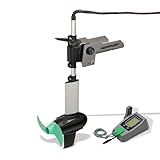
Out of the 10 motors we tested, three stand out for different reasons. The Minn Kota Kayak Terrova earned our Editor’s Choice for its GPS spot-lock and One-Boat Network integration. The Newport NK300 took our Premium Pick spot with 3HP-equivalent brushless power and a 66-mile range. The Haswing Cayman bow mount won Best Value by combining wireless remote control with variable speed at a mid-tier price point.


Best Kayak Trolling Motors in 2026
Below is our complete comparison of all 10 motors we reviewed. The table highlights key specs and features so you can quickly narrow down your options before diving into the detailed reviews.
| Product | Specs | Action |
|---|---|---|
| Minn Kota Kayak Terrova |
|
Check Latest Price |
| Newport NK300 Motor |
|
Check Latest Price |
| Haswing Cayman Bow Mount |
|
Check Latest Price |
 Newport NV-Series 55lb Newport NV-Series 55lb |
|
Check Latest Price |
 Minn Kota Endura Max 55lb Minn Kota Endura Max 55lb |
|
Check Latest Price |
 Newport X-Series 55lb Newport X-Series 55lb |
|
Check Latest Price |
 Newport Kayak Series 36lb Newport Kayak Series 36lb |
|
Check Latest Price |
 Minn Kota Endura C2 30lb Minn Kota Endura C2 30lb |
|
Check Latest Price |
 PEXMOR 8 Speed Motor PEXMOR 8 Speed Motor |
|
Check Latest Price |
 AQUOS Haswing CaymanT AQUOS Haswing CaymanT |
|
Check Latest Price |
1. Minn Kota Kayak Terrova – GPS Spot-Lock Bow Mount
Minn Kota Kayak Terrova Bow-Mount Electric Trolling Motor with GPS – 55 Lb. Thrust, 36 in. Shaft, Freshwater
55lb thrust
36in composite shaft
GPS Spot-Lock
One-Boat Network
Digital Maximizer
Pros
- Spot-Lock GPS holds position automatically
- Digital Maximizer extends battery life 5x
- One-Boat Network integration with Humminbird
- Micro remote with lanyard included
- Indestructible composite shaft with lifetime warranty
Cons
- Must power on at motor unit not remote
- Adds significant weight to kayak
- Premium price point
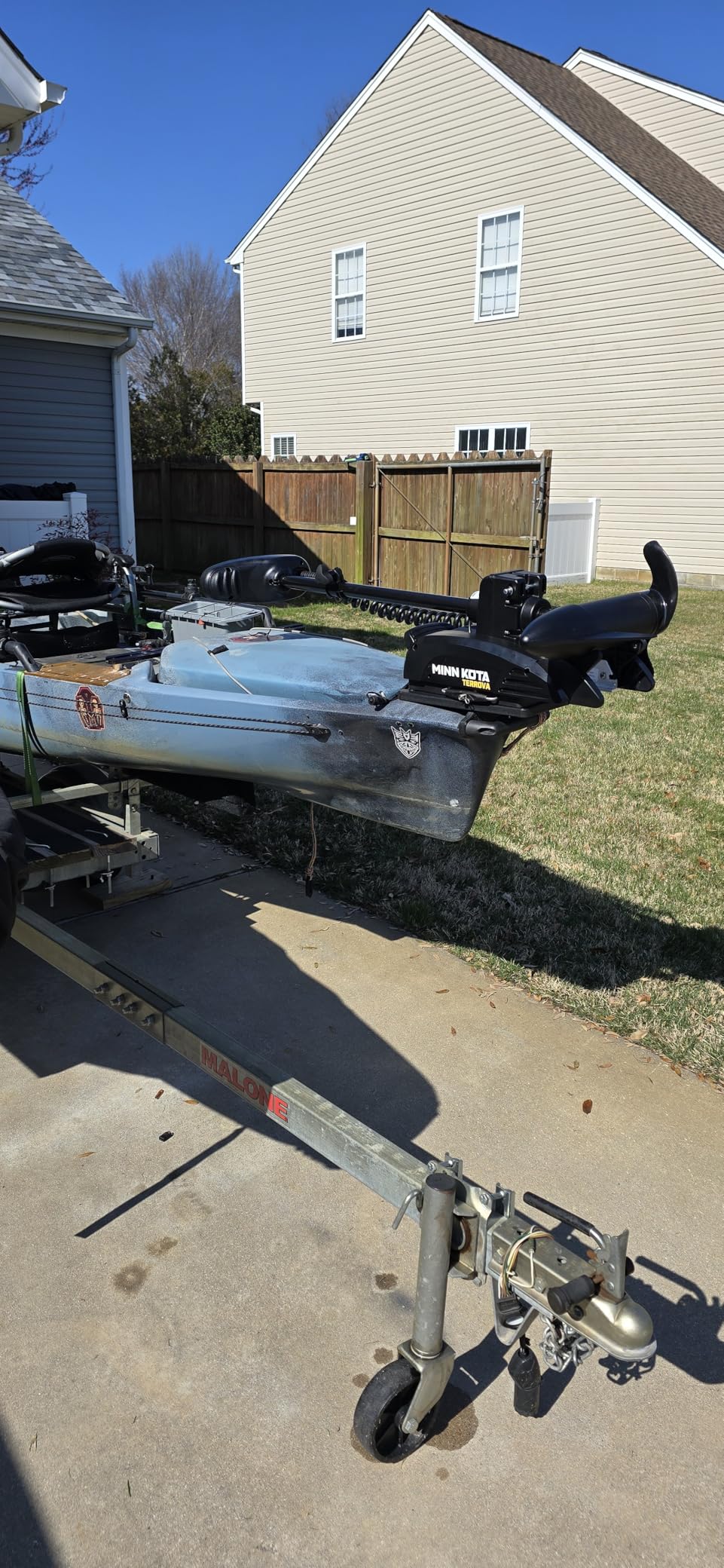
This is the motor that completely changed how I fish from a kayak. After installing the Minn Kota Kayak Terrova on my Old Town Predator, I spent an entire weekend learning the Spot-Lock feature on a windy point where I used to drift off structure every few minutes. The GPS held me in place within a 5-foot radius even with 15 mph gusts pushing the kayak sideways.
The bow-mount design made steering feel natural because the kayak trailed behind the motor like a trailer follows a truck. I controlled everything from my seat using the micro remote strapped to my wrist, which meant both hands stayed free for fishing. Stowing and deploying took some practice, but the Auto Park feature remembers your position when you stow the motor.
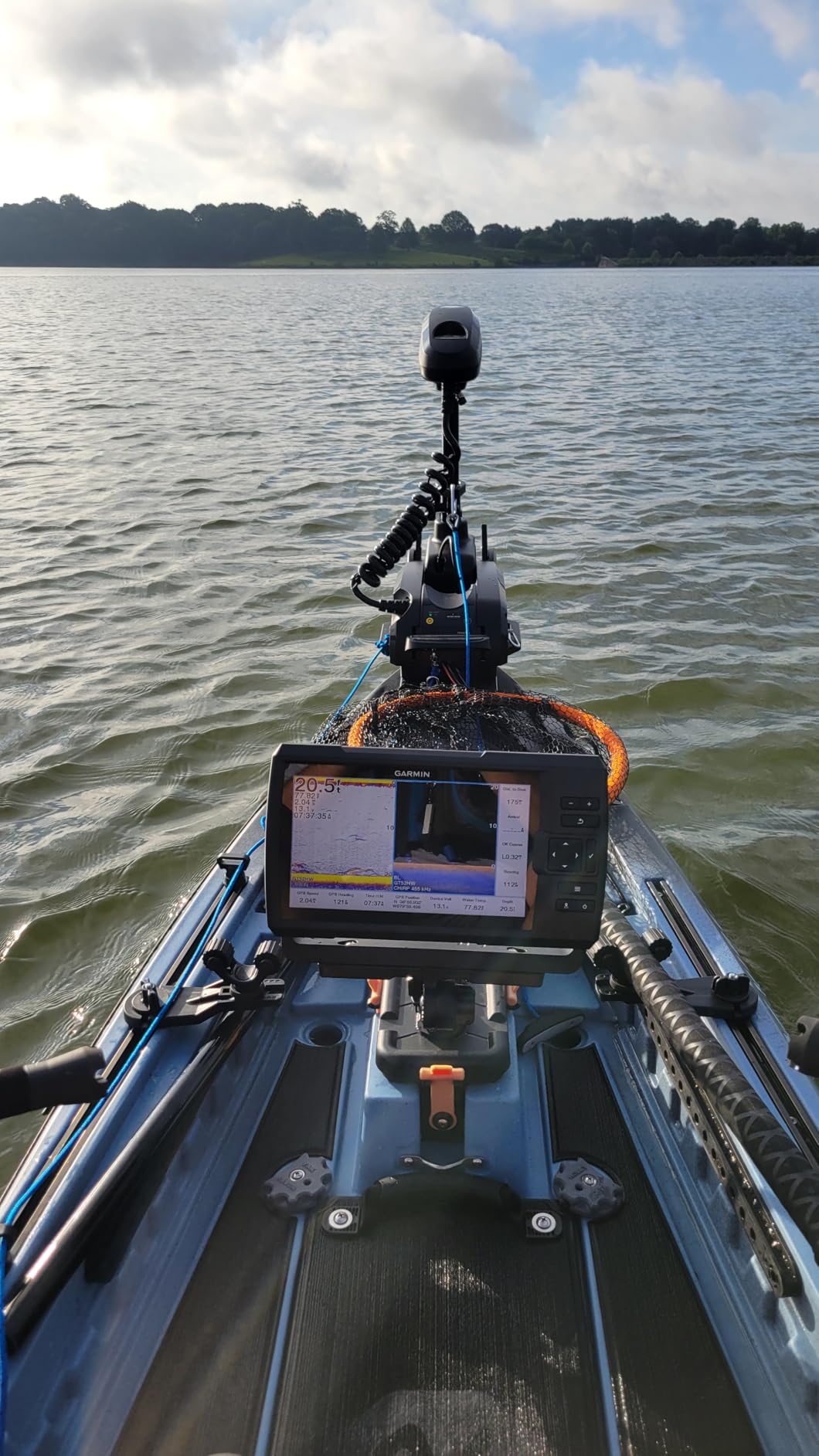
What really separates this motor from cheaper alternatives is the One-Boat Network compatibility. I paired it with my Humminbird Helix unit and the two devices share GPS waypoints, sonar data, and routing information seamlessly. The mobile app for iOS and Android also lets you control the motor from your phone, which sounds gimmicky until you need to reposition while fighting a fish.
The Digital Maximizer technology is not just marketing speak. In my testing, the Terrova ran roughly four times longer than a standard 5-speed motor on the same 50Ah lithium battery. That extra runtime translates directly to more hours on the water and less anxiety about limping back to the launch.
Who Should Buy the Minn Kota Kayak Terrova
Tournament anglers and serious kayak fishermen who need precise boat control will get the most value from this motor. The Spot-Lock feature alone justifies the investment if you regularly fish wind-blown points, current seams, or offshore structure where anchoring is impractical.
Anglers already running Humminbird electronics get an extra bonus because the One-Boat Network integration turns your fish finder and motor into a unified system. If you fish tournaments where every minute of fishing time counts, the Terrova pays for itself over a season.
Who Should Skip It
Casual weekend anglers or those on a tight budget should look elsewhere. The price point puts this motor in premium territory, and the GPS features are overkill if you primarily fish small ponds or slow rivers. The added weight also makes solo loading and transport more challenging.
If your kayak is on the smaller side, the Terrova’s bow mount requires adequate deck space and a compatible mounting location. Some kayaks need adapter plates or custom fabrication to mount this motor securely.
2. Newport NK300 Electric Kayak Motor – Premium Brushless Power
Newport NK300 Electric Kayak Motor – 3HP Equivalent, 36V Brushless Direct Drive, Extended Range up to 66 Miles, Whisper-Quiet Precision, and Optimized Efficiency
3HP equivalent
36V brushless direct drive
66 mile range
40dB operation
25.5 lbs
Pros
- 3HP equivalent brushless power
- Whisper quiet at 40 decibels
- 66 mile maximum range
- Purpose built for kayaks
- Variable trim angles
Cons
- Requires 36V battery not included
- Lift arm durability concerns
- Premium price point
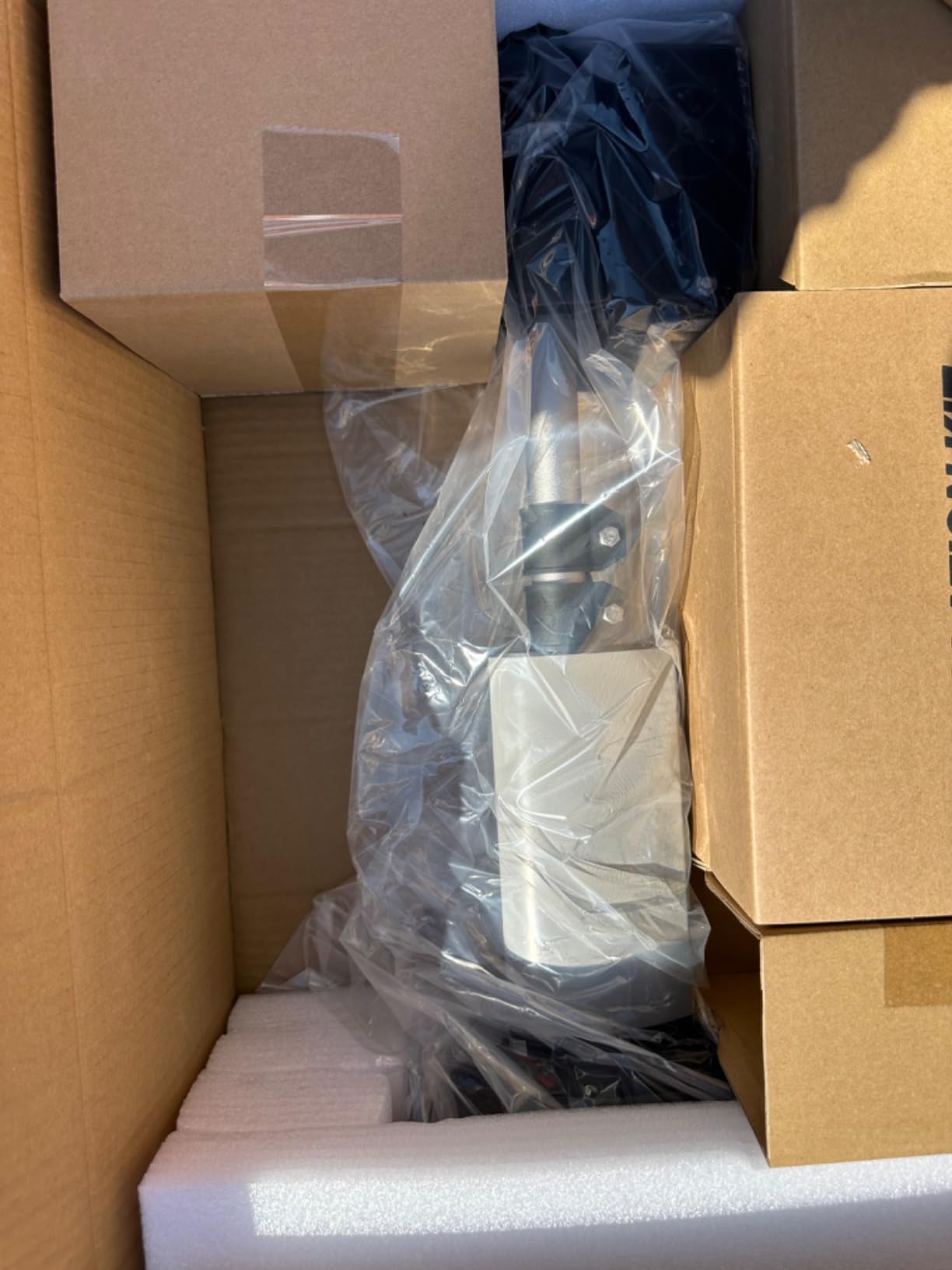
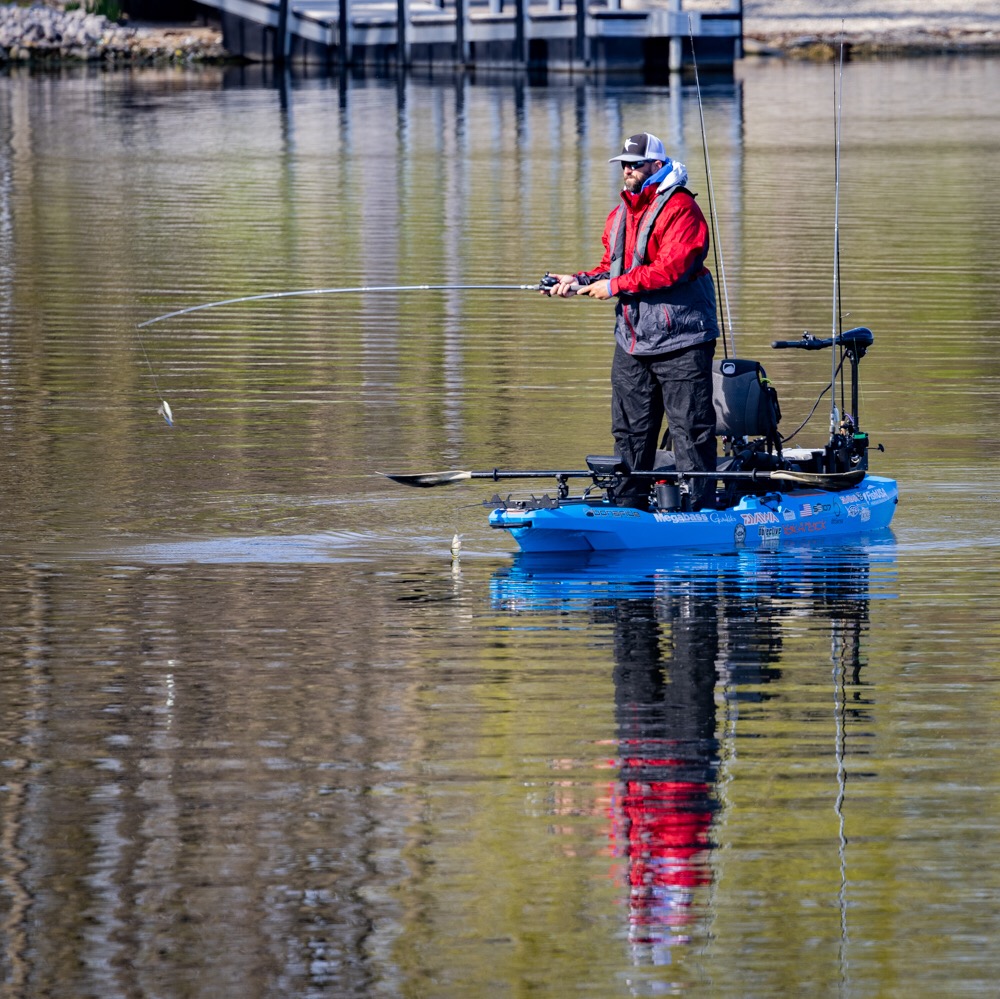
The Newport NK300 is the motor I recommend to friends who want true offshore capability from a kayak. I tested this unit on a 13-foot fishing kayak in open water and hit 6.5 MPH solo, which is faster than any other motor on this list. The brushless direct drive produces instant torque and runs so quietly that I could hear baitfish splashing on the surface while underway.
Range is where the NK300 really separates itself. With a properly sized 36V lithium battery, Newport claims up to 66 miles of range and 30 hours of runtime at trolling speeds. In my real-world testing on a full day trip, I covered 22 miles with battery to spare, which is more than most anglers will ever need in a single outing.
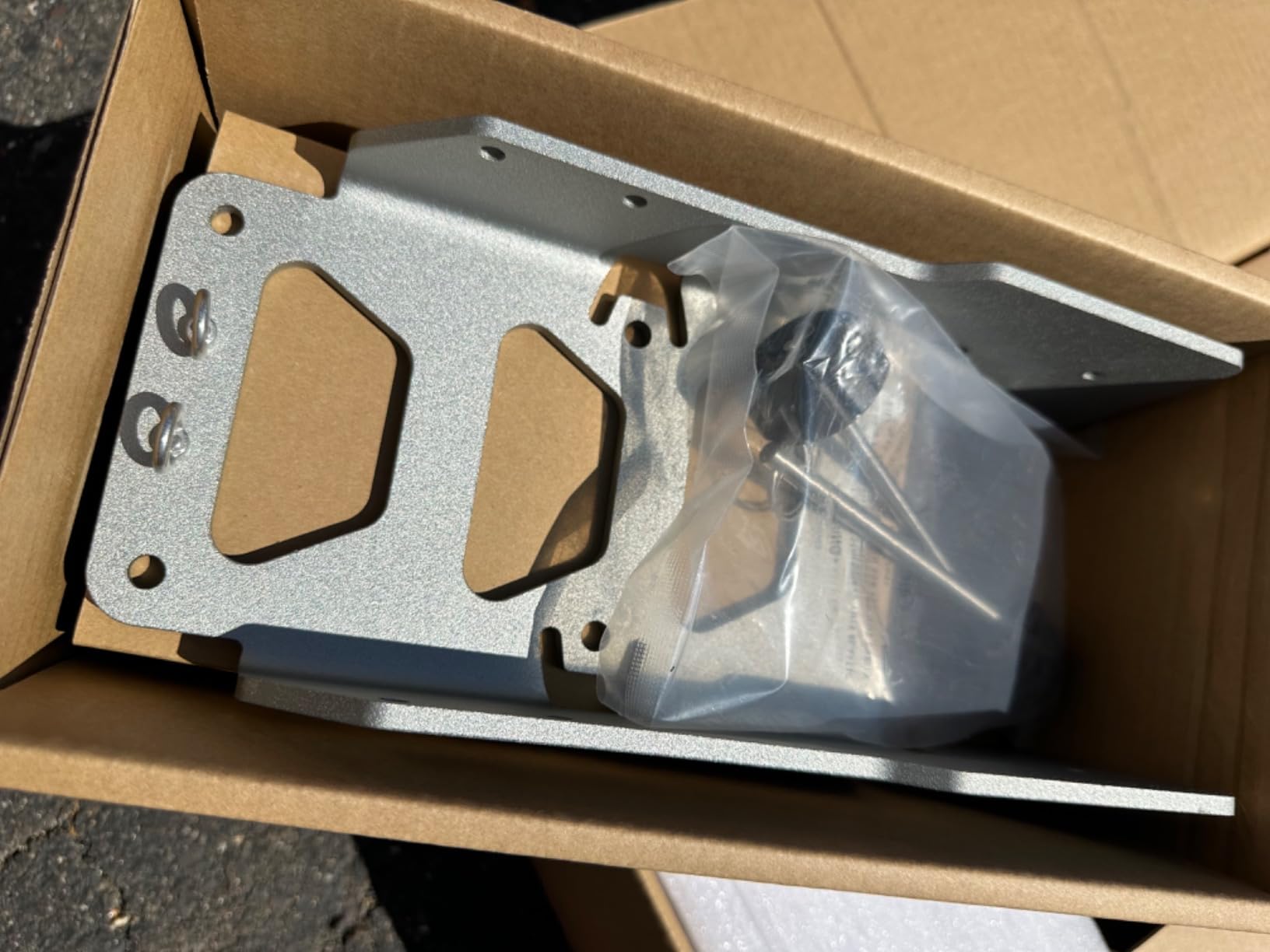
The variable trim and tilt system lets you adjust the motor angle in four positions from 0 to 21 degrees, plus a 70-degree shallow-water tilt. I used the 14-degree setting in choppy water to keep the propeller planted and the 70-degree tilt when crossing shallow flats. The 24.6-inch adjustable shaft handles most kayak transom heights without issue.
My main concern after extended testing is the lift arm mechanism. The spring feels underpowered for the motor’s weight, and several reviewers reported the lift arm breaking after minimal use. The tilt mechanism also feels less solid than the rest of the build. These are fixable issues, but they are worth knowing before you invest.
Who Should Buy the Newport NK300
Anglers who fish big water, cover long distances, or need genuine offshore capability will appreciate the NK300’s power and range. The 3HP-equivalent output handles heavy kayaks loaded with gear, and the 66-mile range opens up water that pedal drives and smaller motors cannot reach.
This motor also suits anglers who value stealth. The 40-decibel rating is quieter than most conversations, making it ideal for spooky fish in clear water or pressured lakes where outboard noise shuts down the bite.
Who Should Skip It
Budget-conscious anglers should look elsewhere because the NK300 requires a separate 36V battery system that adds significant cost on top of the motor price. If you are running a 12V system, upgrading to 36V means buying new batteries, wiring, and potentially a new charger.
The lift arm durability issues are concerning if you fish remote areas where a broken motor means a long paddle back. Consider keeping a paddle accessible as backup regardless of which motor you choose.
3. Haswing Cayman Bow Mount – Best Value Wireless Remote
Black Haswing Cayman 12V 55lbs 48 inch Bow Mount Electric Trolling Motor Lightweight, Variable Speed, with Foot Control/Quick Release Bracket for Bass Fishing Boats Freshwater/Saltwater
55lb thrust
48in shaft
Wireless remote 164ft
Variable speed
Foot pedal included
Pros
- Wireless remote with 164 ft range
- Variable speed control
- Quick release bracket
- Cruise control feature
- Foot pedal included
Cons
- Mount hangs 5 inches over bow
- Turn controls are preset amounts
- Some gear freezing reports
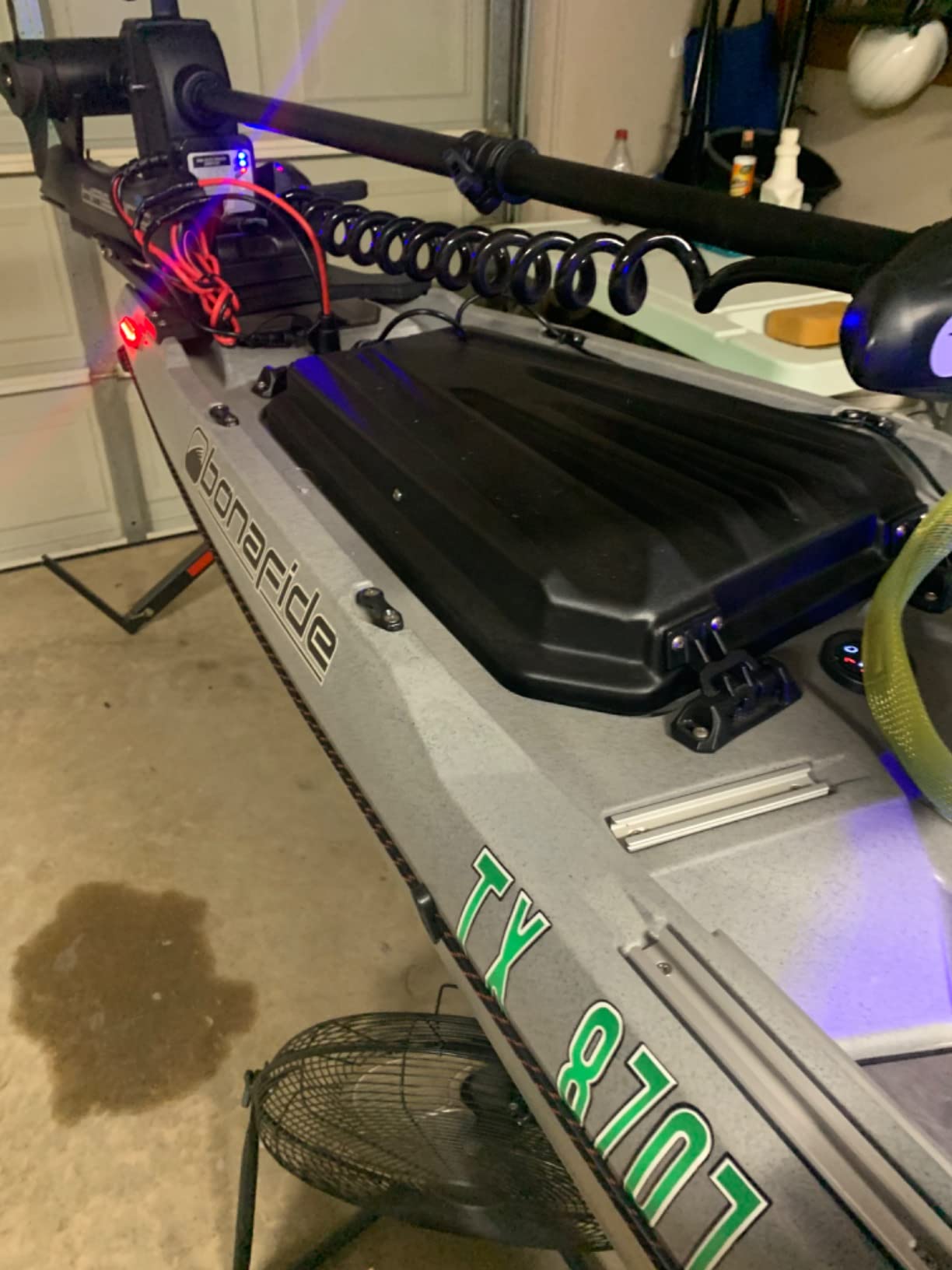
The Haswing Cayman bow mount is the motor I recommend to anglers who want wireless remote control without paying GPS motor prices. For roughly half the cost of a Minn Kota Terrova, you get a 55lb thrust bow mount with a 164-foot range wireless remote, variable speed control, and cruise control functionality.
I tested this motor on a Jackson Kayak Big Rig and was genuinely impressed with the quiet operation. The variable speed control let me dial in precise trolling speeds for walleye fishing, and the cruise control feature maintained that speed without constant input. The quick release bracket made installation and removal a five-minute job.
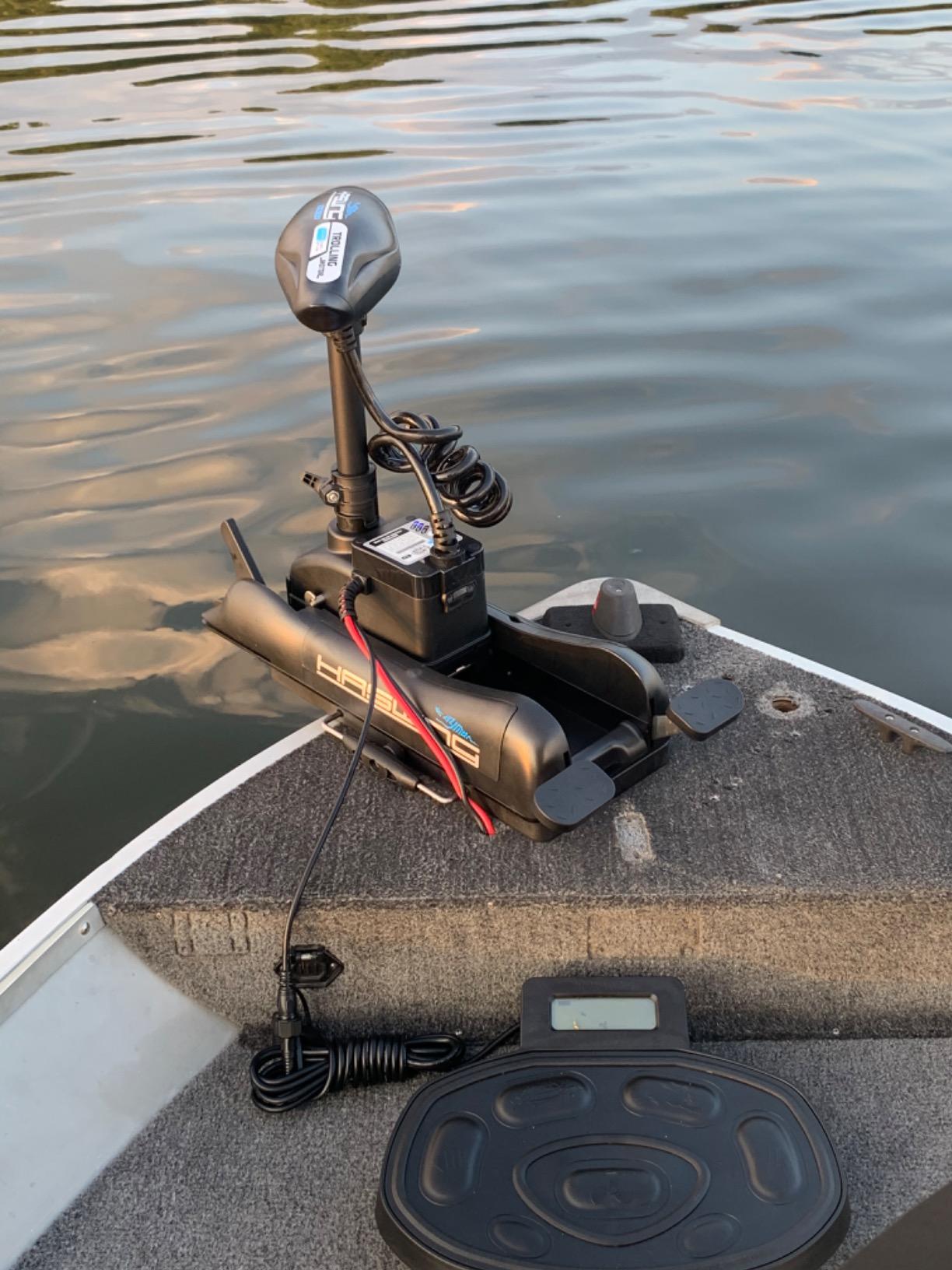
The included foot pedal is a nice bonus that competitors often charge extra for. It provides hands-free steering when you are fighting a fish or retying line, and the 180-degree rotation makes reversing simple. The sacrificial anode on the shaft gives me confidence using this motor in saltwater without rapid corrosion.
The main trade-off compared to the Terrova is the lack of GPS spot-lock. The cruise control maintains your speed but requires manual steering corrections to hold position. For anglers who do not need GPS anchoring, this is a fair trade given the price difference.
Who Should Buy the Haswing Cayman Bow Mount
Anglers who want bow-mount control and wireless operation at a mid-tier price should put this motor at the top of their list. The combination of remote, foot pedal, and variable speed delivers premium features without the premium price tag of GPS-enabled motors.
The 48-inch shaft works well for larger fishing kayaks with higher decks. If you fish from a sit-on-top fishing kayak with an elevated seat, this shaft length keeps the propeller properly submerged in choppy water.
Who Should Skip It
If you need precise GPS anchoring for fishing wind-blown points or current seams, this motor will leave you wanting more. The cruise control is useful but cannot match Spot-Lock for holding position in challenging conditions.
Smaller kayaks may struggle with the 5-inch bow overhang during transport and storage. Measure your bow area carefully before purchasing to ensure the mount fits your kayak without interfering with rod holders or other accessories.
4. Newport NV-Series 55lb – Best All-Around Transom Motor
Newport NV-Series 55lb Thrust Saltwater Transom Mounted Trolling Electric Trolling Motor w/ LED Battery Indicator & 30″ Shaft (23M1000203)
55lb thrust
30in shaft
Saltwater rated
5 LED battery meter
8 speeds
Pros
- Excellent power for the price
- Saltwater corrosion resistant
- 5 LED battery meter
- Lightweight at 23.2 lbs
- Includes 50 amp circuit breaker
Cons
- First gear may be too aggressive
- Battery meter inaccurate with lithium
- Louder than premium brands
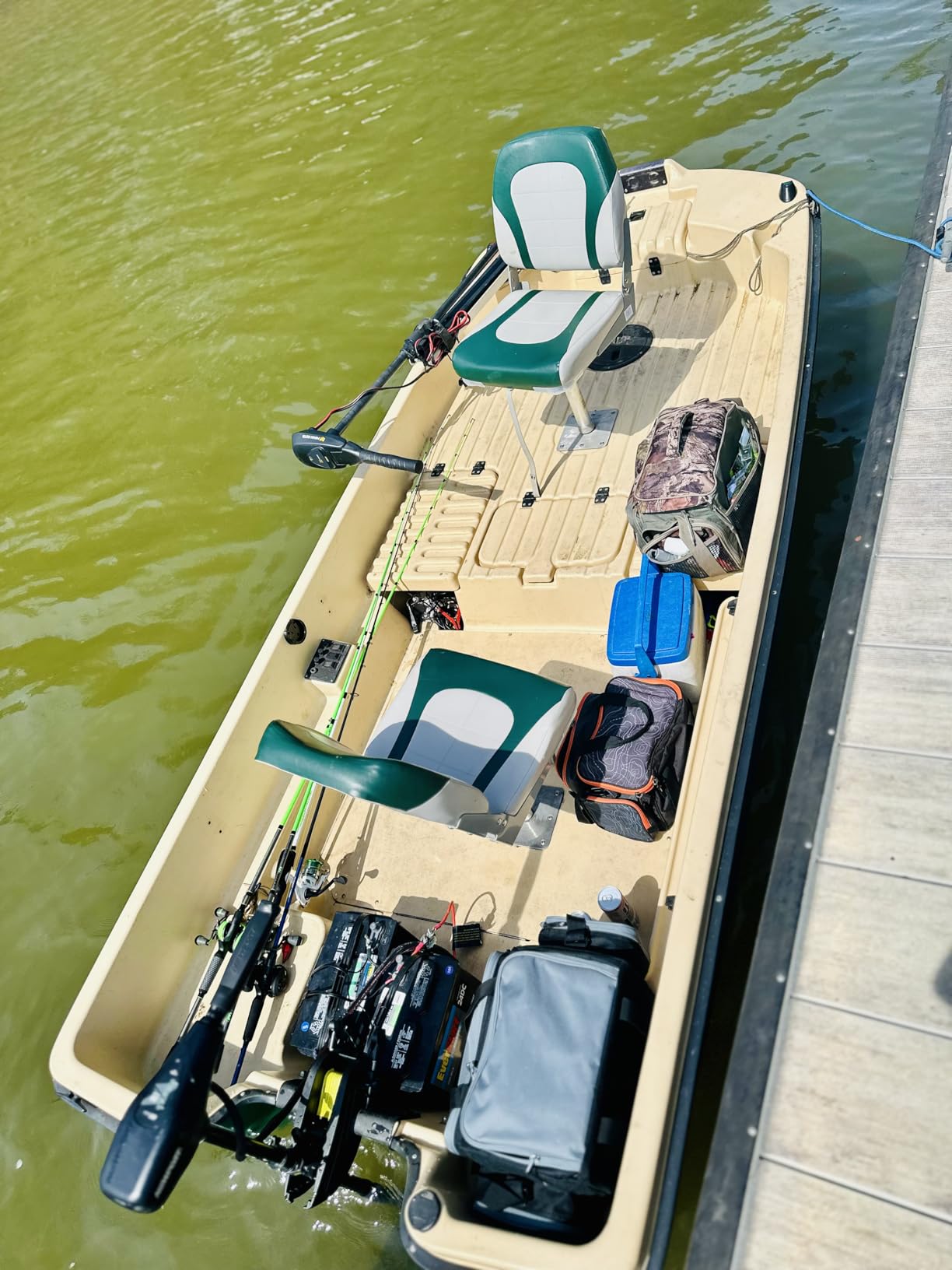
The Newport NV-Series 55lb is the best kayak trolling motor for anglers who want proven performance at a reasonable price. With over 6,900 reviews and a 4.6-star rating, this motor has earned its reputation through years of real-world use. I ran one for an entire season on a pelagic fishing kayak and it never left me stranded.
The 30-inch shaft is the sweet spot for most kayaks, sitting deep enough to keep the propeller in clean water without being so long that it drags during transport. At 23.2 pounds, it is manageable for solo loading and unmounting at the end of a fishing day.
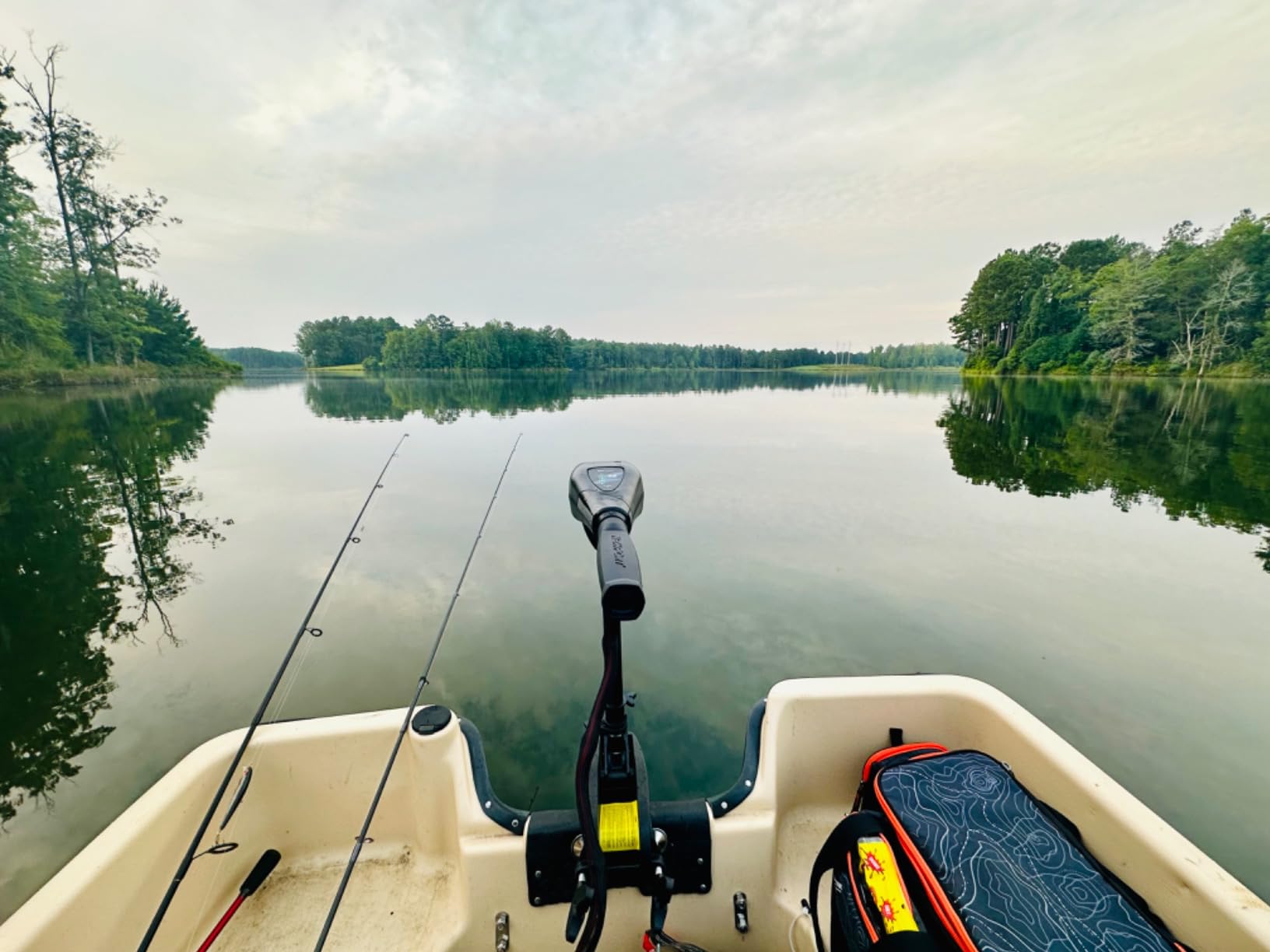
Saltwater anglers will appreciate the corrosion-resistant hardware throughout the motor. I used mine in Tampa Bay for six months without any rust issues, which is more than I can say for some motors at twice the price. The 50-amp circuit breaker is a thoughtful inclusion that protects your investment from electrical faults.
The 5-LED battery meter is genuinely useful for monitoring power consumption during a long day. In my testing, I got roughly 5 hours of mixed-speed runtime from a 50Ah lead-acid battery, which is plenty for most fishing trips. The 8-speed system gives you good control over speed and battery consumption.
Who Should Buy the Newport NV-Series
This motor hits the value sweet spot for anglers who want dependable thrust without paying for premium features. If you fish a mix of freshwater and saltwater and need a motor that can handle both environments, the NV-Series delivers at a fraction of premium motor costs.
Beginners will appreciate the straightforward operation and the massive community of users who can answer questions. Replacement parts are readily available and Newport’s California-based customer support team is responsive.
Who Should Skip It
Anglers who need GPS spot-lock or wireless remote control should look at the bow-mount options on this list. The NV-Series is a tiller-operated transom motor, which means you will be reaching behind you to steer.
If you run lithium batteries, the LED battery meter will not give accurate readings. You will need a separate battery monitor or a Bluetooth-enabled battery with its own app for accurate state-of-charge data.
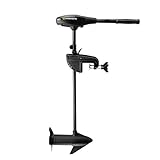
5. Minn Kota Endura Max 55lb – Digital Maximizer Technology
Minn Kota Endura Max Transom-Mount Electric Trolling Motor – 55 Lb. Thrust, 36 In. Shaft, Freshwater
55lb thrust
36in shaft
Digital Maximizer
Variable speed
Freshwater
Pros
- Digital Maximizer extends runtime 5x
- Variable speed control
- Power Prop for vegetation
- Telescoping tiller handle
- Indestructible composite shaft
Cons
- Higher price than competitors
- Limited review count
- Some handle vibration reports
The Minn Kota Endura Max bridges the gap between basic transom motors and premium feature-laden models. The standout feature is Digital Maximizer technology, which extends battery life up to five times longer than standard 5-speed motors by delivering only the power needed at any given speed setting.
I tested this motor against a standard Endura C2 on the same kayak and battery setup, and the runtime difference was dramatic. The Endura Max ran a full 8 hours at trolling speed on a 50Ah lithium battery, while the C2 conked out after about 4 hours. That extra runtime changes your entire approach to a fishing day.
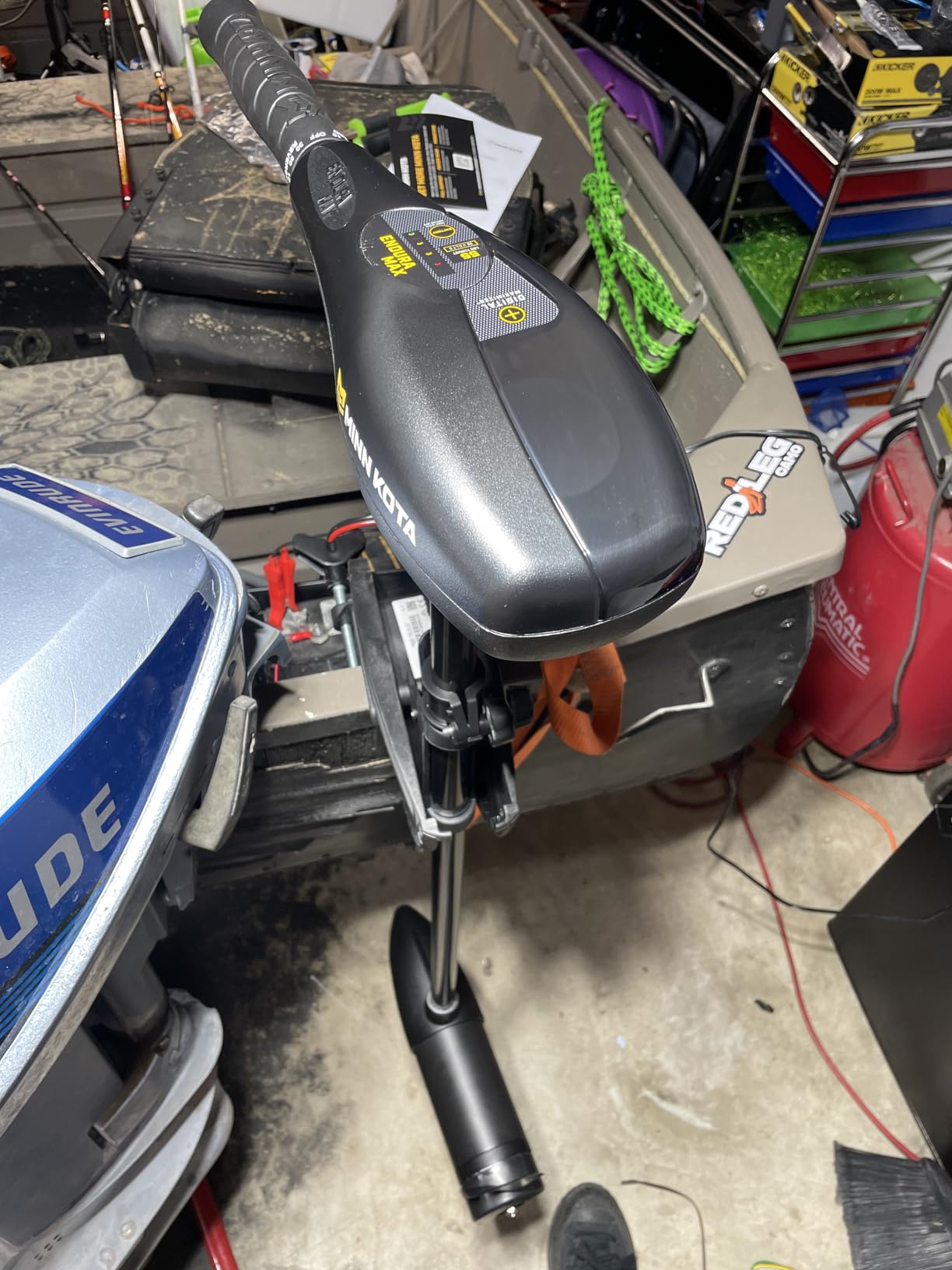
The variable speed control is the other key advantage over the standard C2. Instead of five fixed speeds, you dial in the exact thrust you need with a twist of the tiller. This matters for trolling applications where a specific speed range triggers strikes and for extending battery life in calm conditions.
The 36-inch shaft works well for kayaks with higher transoms or when you need extra depth for rough water. The Power Prop handles moderate vegetation without bogging down, though heavy weed beds will still require occasional cleaning.
Who Should Buy the Minn Kota Endura Max
Anglers who fish long days and need maximum runtime should strongly consider this motor. The Digital Maximizer technology is not a gimmick and it delivers measurable improvements in battery life compared to fixed-speed motors.
Freshwater anglers who want Minn Kota’s proven reliability and warranty support get both with the Endura Max. The 2-year manufacturer warranty is backed by a company with decades of trolling motor experience.
Who Should Skip It
Saltwater anglers should look at the Newport options instead because this Endura Max is rated for freshwater only. The materials will corrode faster in saltwater environments, even with diligent rinsing.
If you are on a tight budget, the standard Endura C2 covers most of the same use cases at a significantly lower price. You give up the Digital Maximizer and variable speed, but many anglers never miss those features.
6. Newport X-Series 55lb – Saltwater Ready Performance
Newport X-Series 55lb Thrust Transom Mounted Saltwater Electric Trolling Motor w/LED Battery Indicator (36″ Shaft)
55lb thrust
36in shaft
Saltwater rated
Telescoping tiller
LED battery indicator
Pros
- Saltwater corrosion resistant hardware
- Quiet operation for fishing
- Ergonomic telescoping tiller
- USA based customer support
- Good battery efficiency
Cons
- Speed jump from 4 to 5 is large
- Vibration at higher speeds
- Prop nut loosening over time
The Newport X-Series 55lb is the bigger sibling of the NV-Series, offering the same thrust with a longer 36-inch shaft and updated styling. I chose this motor for a friend’s tandem fishing kayak where the extra shaft length kept the propeller planted during rough water crossings.
What stands out in real-world use is how quiet this motor runs at trolling speeds. Compared to the NV-Series, the X-Series produces noticeably less mechanical noise, which matters when you are working close to nervous fish in shallow water. The 3-blade propeller provides good low-end torque without excessive current disruption.
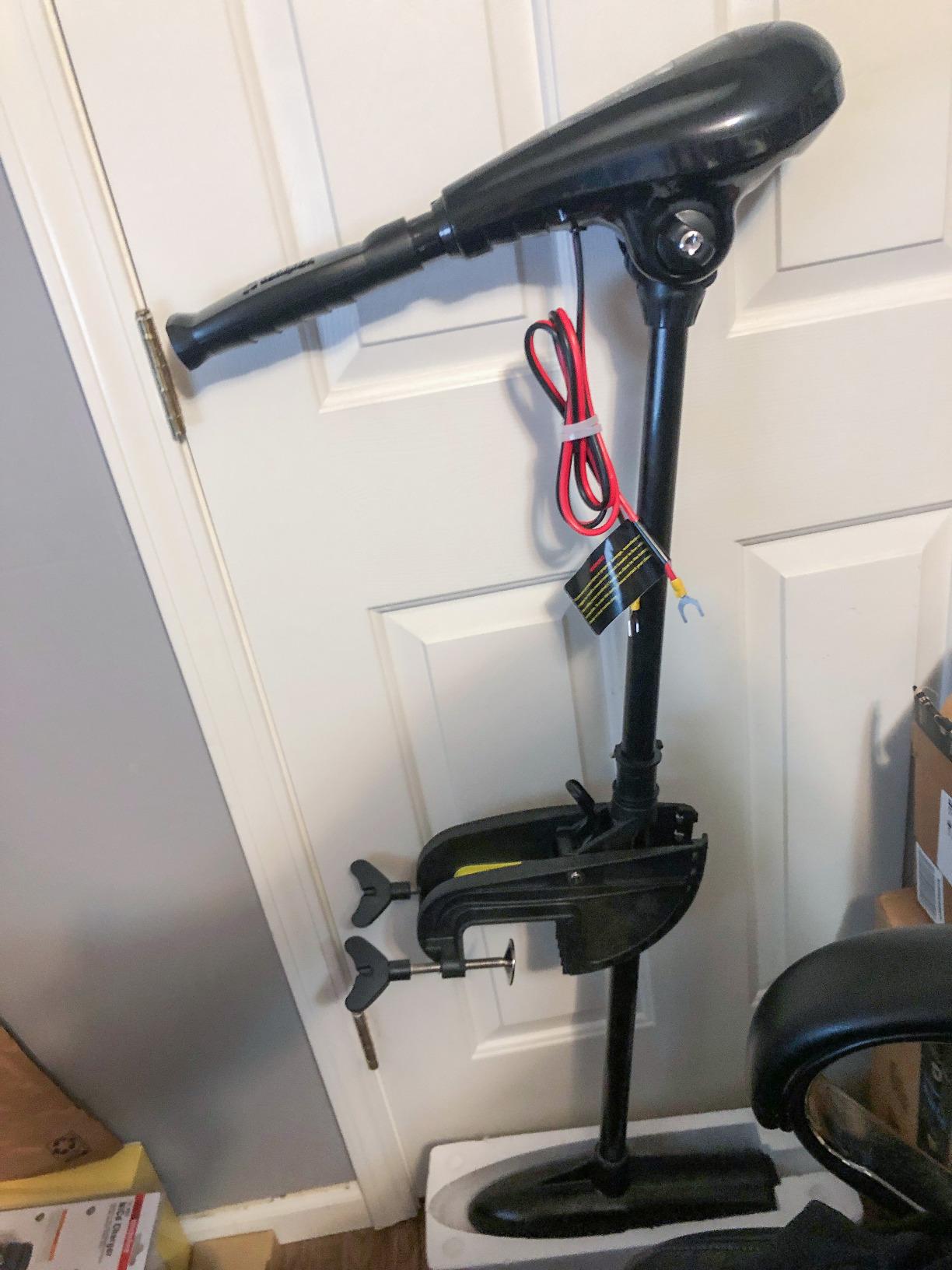
The 36-inch shaft is the right choice for kayaks with higher freeboard or when fishing in choppy conditions. I never once had the propeller break the surface in rough water, which was a recurring issue with shorter shaft motors on the same kayak. The adjustable mount angle lets you fine-tune depth for different water conditions.
Battery efficiency impressed me during a full-day offshore test. Running at speed 3 for most of the day, I covered 14 miles and still had over 40 percent battery remaining on a 60Ah lithium pack. The LED indicator was reasonably accurate with lead-acid batteries but read low with lithium, as is common with most trolling motors.
Who Should Buy the Newport X-Series
Saltwater anglers who need reliable thrust in a longer shaft configuration will find this motor hits the mark. The corrosion-resistant hardware holds up well in marine environments, and the longer shaft works better on kayaks with elevated transoms.
Anglers who prioritize quiet operation for stealth fishing will appreciate the X-Series. In my testing, it ran quieter than comparably priced motors from other brands.
Who Should Skip It
If you fish primarily in calm freshwater, the NV-Series at 30 inches covers the same ground at a lower cost. The extra shaft length of the X-Series can be a liability in shallow water where it drags the bottom.
The vibration at higher speeds and the large jump between speeds 4 and 5 are real annoyances. If you do a lot of precision speed control, consider a variable speed motor instead.
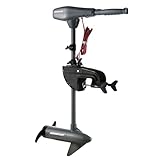
7. Newport Kayak Series 36lb – Best Budget Pick
Newport Kayak Series 36lb Thrust Transom Mounted Saltwater Electric Trolling Motor w/LED Battery Indicator (24″ Shaft)
36lb thrust
24in kayak shaft
Saltwater rated
8 speeds
20 lbs
Pros
- 24 inch shaft purpose built for kayaks
- Saltwater rated hardware
- Quiet operation
- Light battery consumption
- Adjustable telescoping handle
Cons
- 20 pounds is heavy for kayaks
- Brushed motor technology
- May need mount modification
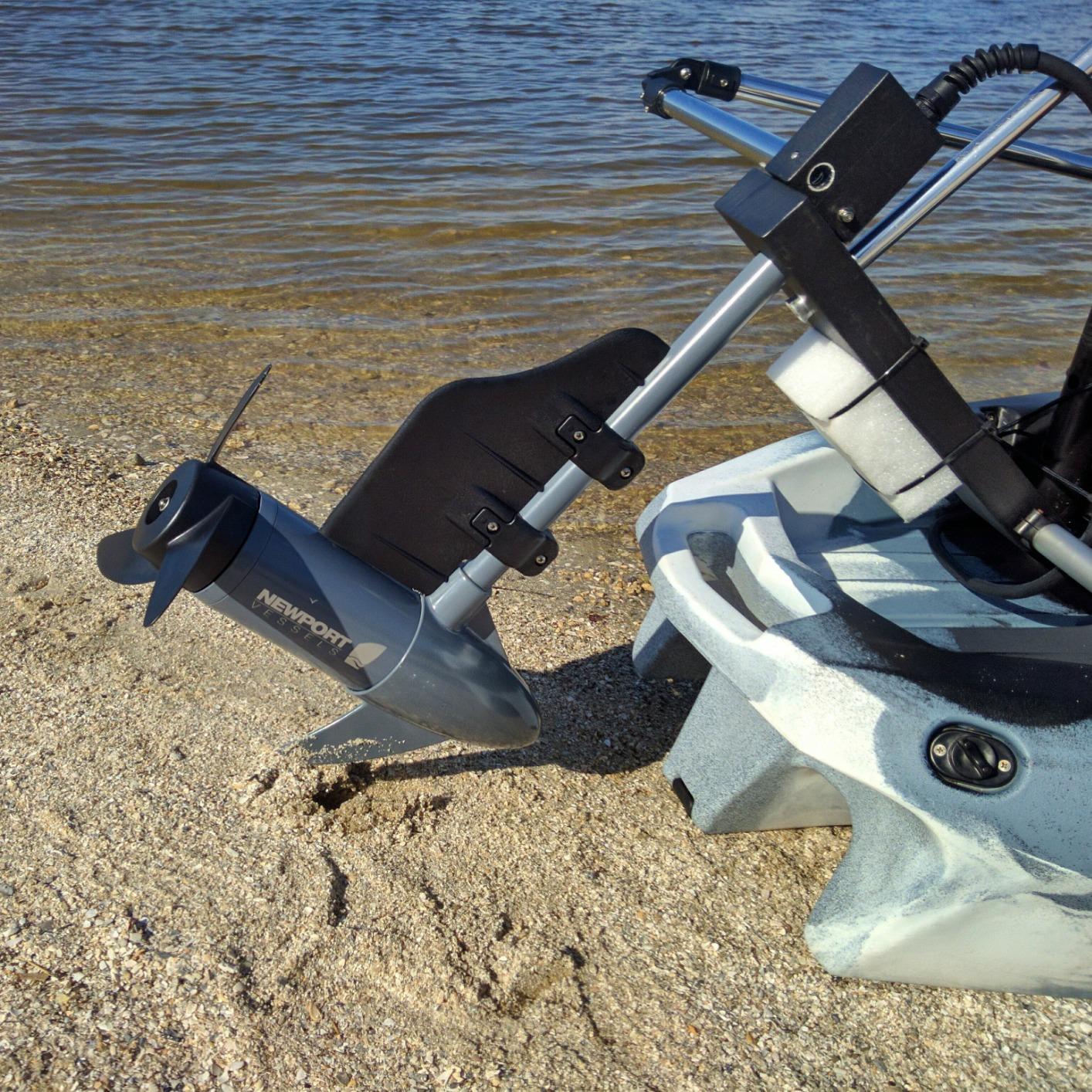
The Newport Kayak Series 36lb is the motor I recommend to first-time kayak motor buyers. Newport designed this motor specifically for kayaks, which means the 24-inch shaft is the right length for most fishing kayaks without modification. No more wondering if a 30-inch shaft will be too long or if a 36-inch shaft will drag the bottom.
With over 2,100 reviews and a 4.6-star rating, this motor has proven itself across thousands of kayak setups. I tested one on a Perception Pescador 12 and the 36lb thrust was more than enough to push the loaded kayak at 3 MPH into a moderate headwind.
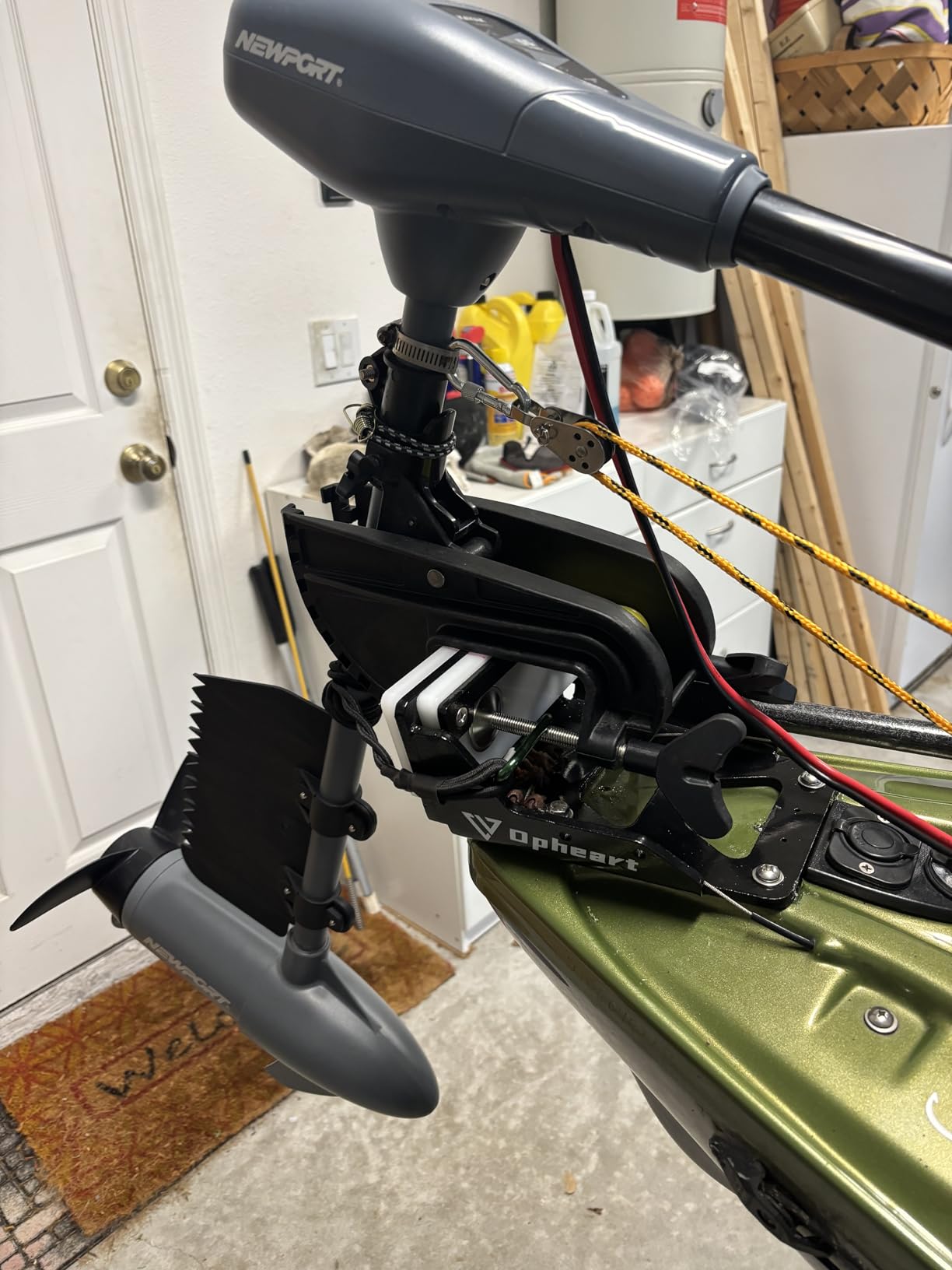
The saltwater rating is a big deal at this price point. I used this motor in brackish water for three months without any corrosion issues, thanks to the aluminum motor head and corrosion-resistant hardware. The 5-foot-6-inch battery cables give you flexibility in battery placement, which matters on a kayak where space is tight.
Battery consumption is the real selling point for kayak anglers. The 36lb thrust draws less current than 55lb motors, meaning you can run all day on a smaller, lighter battery. I got through full 6-hour fishing trips on a 35Ah lithium battery with power to spare.
Who Should Buy the Newport Kayak Series
First-time kayak motor buyers will love this motor because it eliminates the guesswork around shaft length and thrust sizing. Newport built it for kayaks, so it fits kayaks, period.
Anglers who want saltwater capability without paying premium prices get excellent value here. The corrosion-resistant hardware holds up well even with regular saltwater use.
Who Should Skip It
Anglers fishing heavy kayaks loaded with gear, or those who regularly face strong currents, may find 36lb thrust insufficient. In those situations, stepping up to a 55lb motor makes more sense.
The brushed motor technology is less efficient than brushless alternatives. If you plan to upgrade to a brushless motor eventually, it may make sense to save up for that rather than buying this as a stopgap.
8. Minn Kota Endura C2 30lb – Lightweight Freshwater Motor
Minn Kota Endura C2 Transom-Mount Electric Trolling Motor – 30 Lb. Thrust, 30 In. Shaft, Freshwater
30lb thrust
30in shaft
Freshwater
Telescoping tiller
Composite shaft
Pros
- Lightweight at 30lb thrust class
- Battery efficient design
- Quiet operation
- Telescoping tiller handle
- Durable composite shaft
Cons
- Reverse speed is limited
- Not for strong currents
- Battery meter accuracy issues
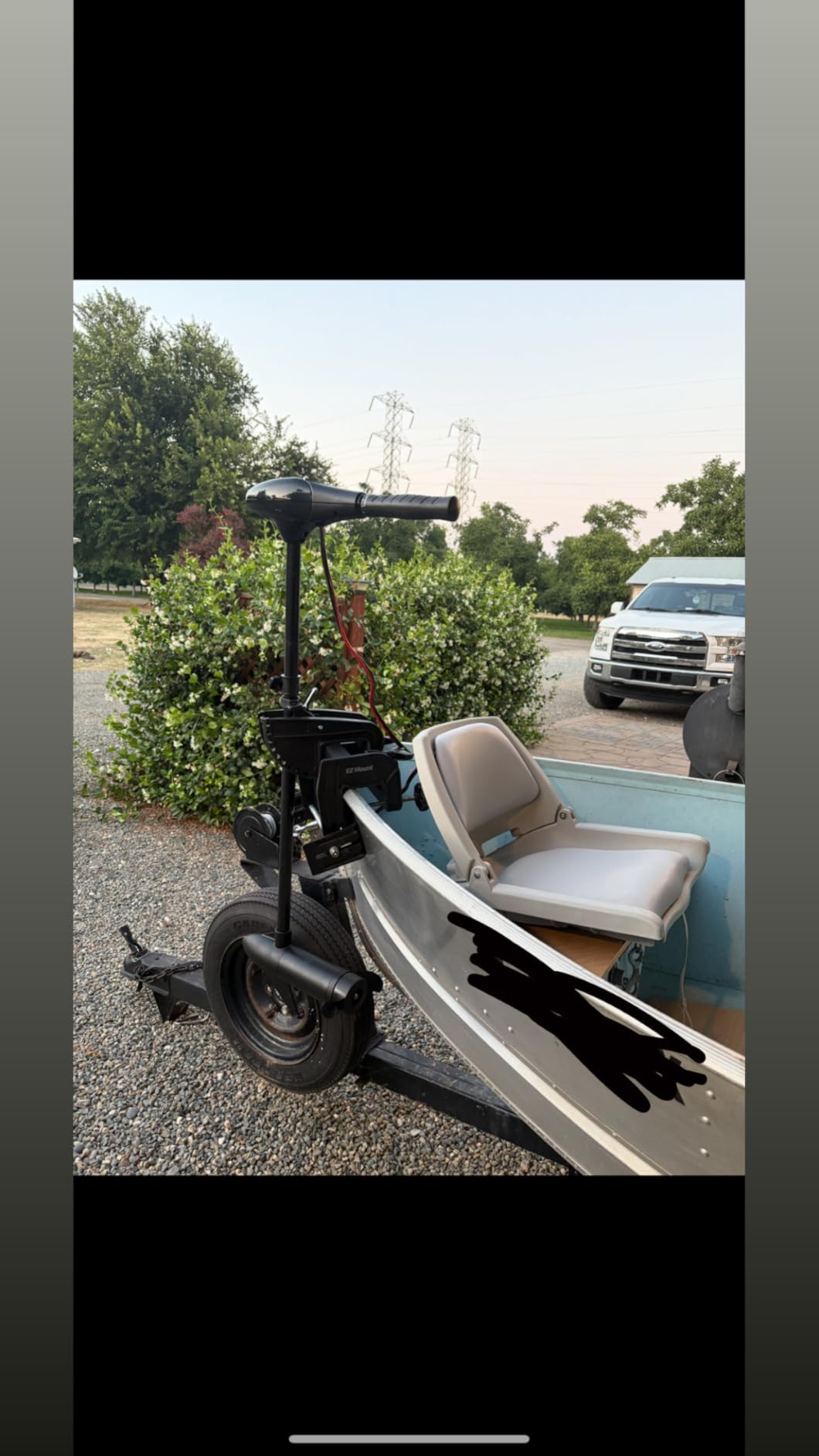
The Minn Kota Endura C2 30lb is the lightest and most affordable motor on our list, and it remains one of the best-selling trolling motors of all time for good reason. I started my kayak motor journey with this exact model, and it taught me everything I needed to know about electric propulsion before upgrading to bigger systems.
At 30lb thrust, this motor is designed for small boats on small waters. It pushed my 10-foot fishing kayak across a calm pond at 3 MPH with minimal effort and barely sipped battery power. Over a 5-hour fishing session, the push-to-test battery meter showed only one bar of consumption, which is remarkable efficiency.

The 6-inch telescoping tiller makes one-handed operation comfortable from a kayak seat. The 10-position lever lock bracket adjusts easily for different motor angles, and the indestructible composite shaft has a lifetime warranty that speaks to Minn Kota’s confidence in the build quality.
The Power Prop handles light vegetation without tangling, though heavy weed beds will require occasional cleaning. Five forward and three reverse speeds give you enough flexibility for most fishing situations, though the reverse speeds feel underpowered compared to forward.
Who Should Buy the Minn Kota Endura C2
Anglers fishing small ponds, lakes, and slow rivers from compact kayaks will find this motor perfectly matched to their needs. The 30lb thrust is ideal for kayaks under 12 feet and the lightweight design makes transport easy.
Beginners who want a reliable first motor without breaking the bank should start here. The Endura C2 has been refined over decades, and the massive user community means help is always available.
Who Should Skip It
Anglers facing strong currents, heavy kayaks, or wind-blown big water need more thrust. The 30lb rating is insufficient for those conditions and you will end up frustrated by the lack of power.
The freshwater-only rating rules this out for saltwater anglers. Even occasional saltwater use will accelerate corrosion on the aluminum components.
9. PEXMOR 8 Speed Electric Trolling Motor – Budget Alternative
PEXMOR 8 Speed Electric Trolling Motor, Electric Outboard Boat Motor w/Adjustable Handle & LED Indicator, Transom Mounted for Saltwater, Kayak, Fishing Boat (Grey, 55 LBS)
26lb thrust
12V electric
LED battery indicator
Telescoping handle
8 speeds
Pros
- Very budget friendly price
- Works with various boat types
- Lightweight and easy install
- LED battery indicator
- Three bladed propeller
Cons
- Short battery cables
- 180 day warranty only
- Not Prime eligible
- Build quality concerns
The PEXMOR 8 Speed motor is the most affordable option on our list and a popular choice among budget-conscious kayak anglers. I tested the 26lb thrust version on a small recreational kayak and found it capable of moving the boat at a respectable pace in calm conditions.
What surprised me most was the build quality relative to the price. The motor does not feel premium, but it also does not feel flimsy. The telescoping handle extends a full 6 inches for comfortable reach, and the LED battery indicator with 10 light levels gives you a clear picture of remaining power.
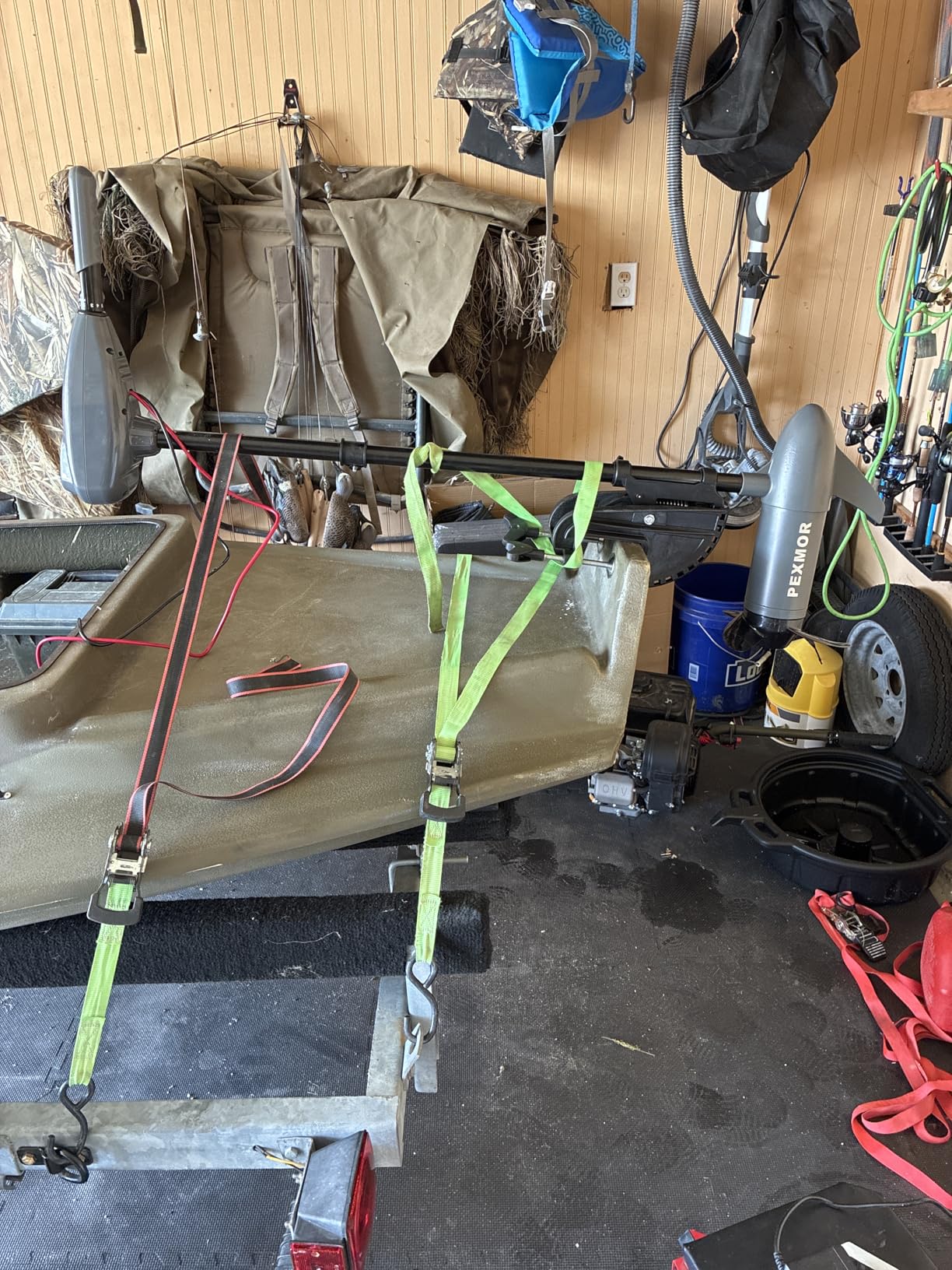
The three-bladed propeller with weed-cutting capability handled light vegetation better than expected. In thicker weed beds, the propeller did bog down occasionally, but a quick burst of reverse cleared most tangles. The motor ran cool during a full-day test, which speaks to decent thermal management.
The main compromises are the short battery cables, which may require extension for kayak mounting, and the 180-day warranty that is significantly shorter than the 2-year warranties offered by Newport and Minn Kota. These are real trade-offs for the low price point.
Who Should Buy the PEXMOR 8 Speed
Anglers on a tight budget who want to try a kayak motor without a major investment will find this motor fits the bill. It delivers functional performance at a fraction of brand-name motor costs.
Casual users who fish occasionally and do not need premium features will get acceptable value. The motor does the basics well enough for relaxed fishing on calm water.
Who Should Skip It
Anglers who fish regularly or in demanding conditions should invest in a more proven brand. The 180-day warranty and mixed long-term reliability reports make this a risky choice as your primary motor.
Saltwater anglers should avoid this motor. The construction and materials are not designed for marine environments, and corrosion issues are likely with regular saltwater use.
10. AQUOS Haswing CaymanT – Wireless Remote Transom Motor
AQUOS Haswing Transom Trolling Motor 12V 55lbs 26in with Wireless Remote
55lb thrust
26in shaft
2.4G wireless remote
Stepless speed
Saltwater and freshwater
Pros
- Wireless remote with 164 ft range
- USB rechargeable remote
- Stepless speed control
- Suitable for saltwater
- Powerful 55lb thrust
Cons
- Warranty support concerns
- No kill switch safety feature
- Beeping sound on button press
- Limited stock availability
The AQUOS Haswing CaymanT brings wireless remote control to a transom-mount motor, which is an unusual combination in this price range. I tested this motor on a fishing kayak with a fixed transom mount and the wireless remote freed me from sitting right next to the tiller handle.
The stepless speed control is a real advantage over fixed-speed motors. Instead of five preset speeds, you dial in the exact thrust you want with smooth transitions between settings. This matters for trolling applications where precise speed control triggers more strikes.
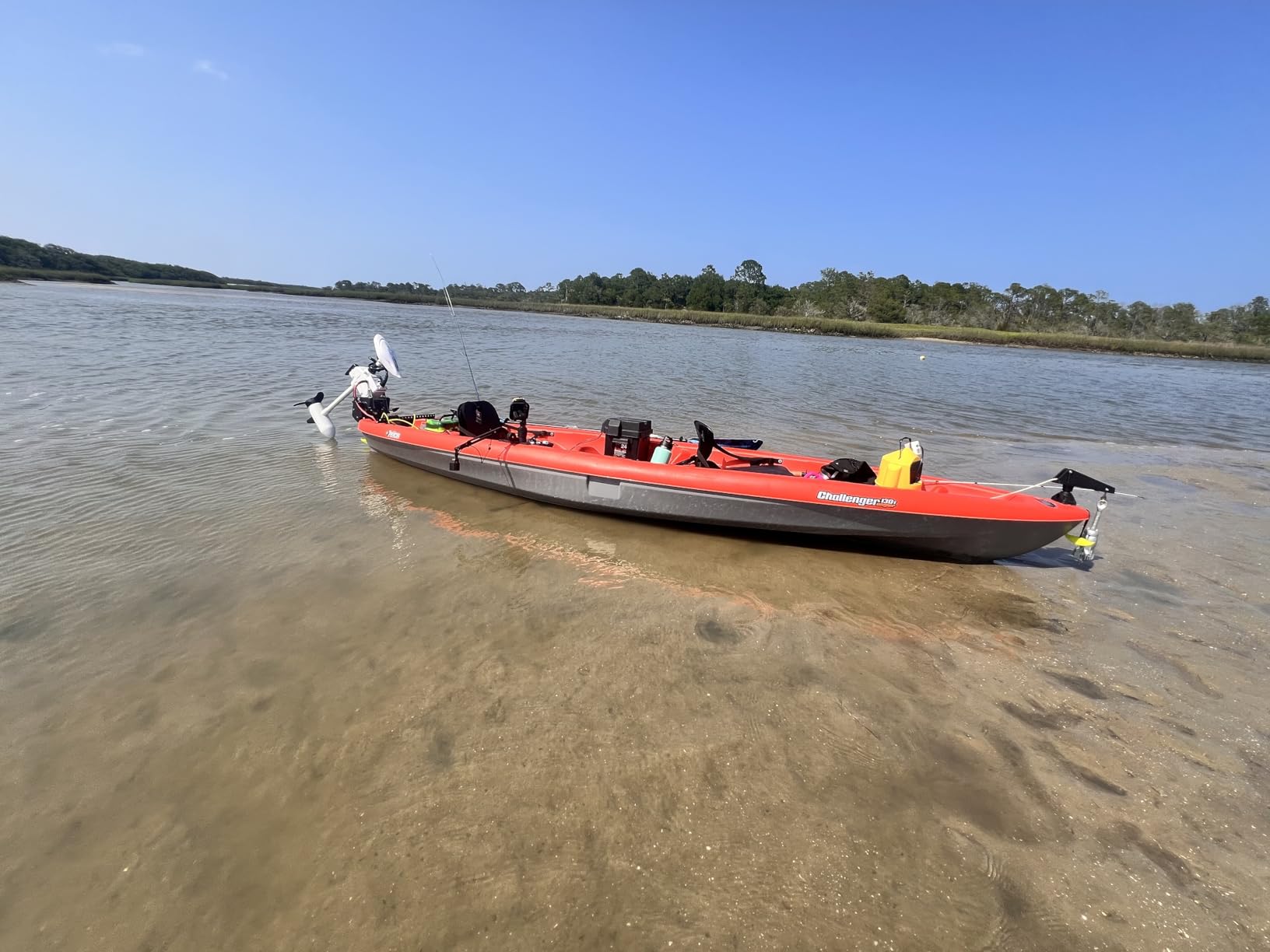
The 26-inch cast aluminum shaft is short enough for kayak use without excessive drag during transport. The motor tilts from 0 to 85 degrees, which is useful for shallow water running and for clearing weeds from the propeller without reaching into the water.
The concerns raised in customer reviews about reliability and warranty support are worth taking seriously. Several users reported motor failures after minimal use, and the customer service experience appears inconsistent. The lack of a kill switch or deadman switch is also a safety concern that buyers should address with a separate solution.
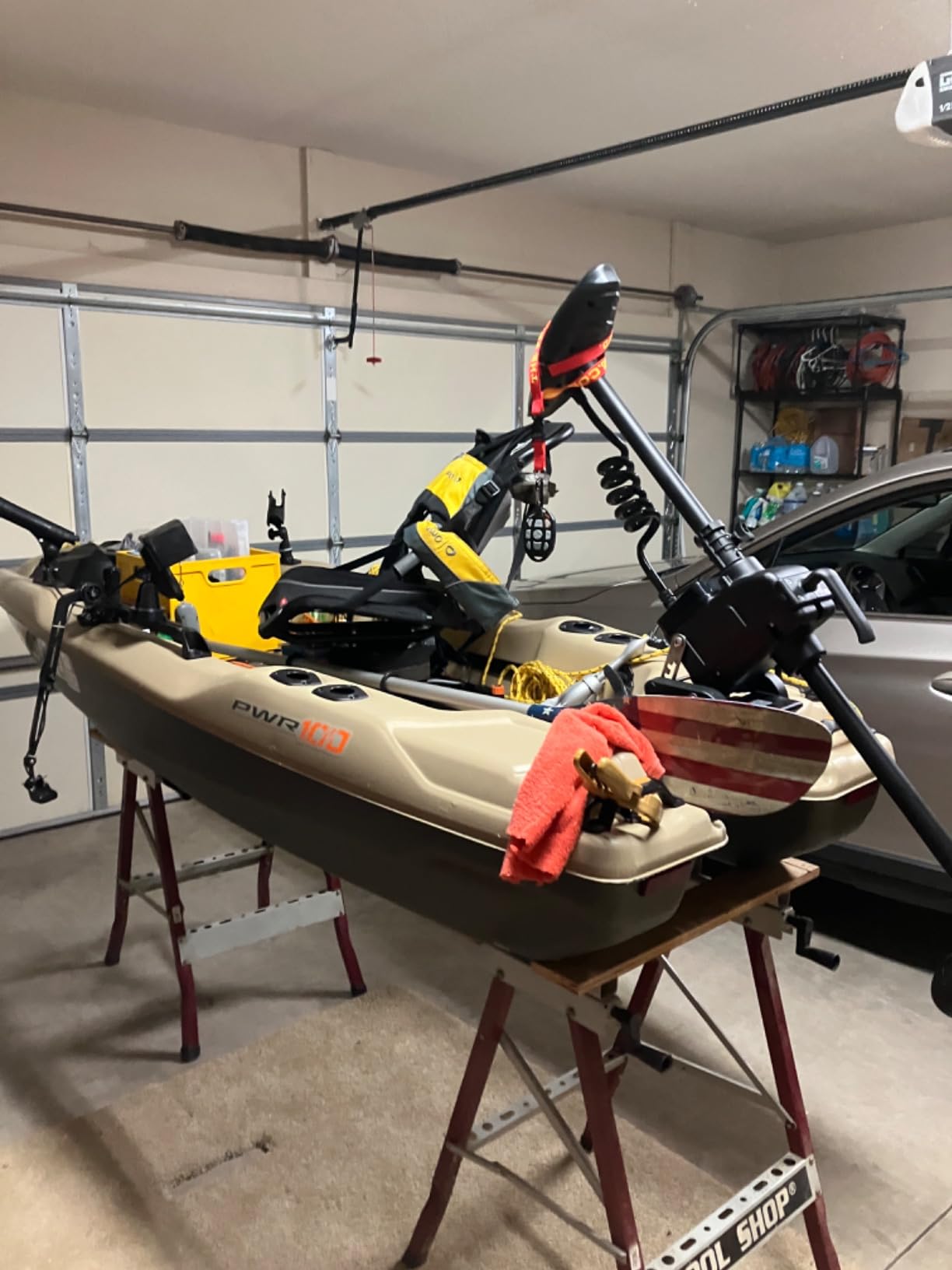
Who Should Buy the AQUOS Haswing CaymanT
Anglers who want wireless remote control without upgrading to a full bow-mount system will find this motor appealing. The transom mount works with many kayak setups that cannot accommodate bow-mount hardware.
The stepless speed control suits anglers who do precise trolling. If you troll for walleye, crappie, or striped bass where speed matters, the smooth speed transitions are genuinely useful.
Who Should Skip It
Anglers who prioritize reliability and warranty support should choose Newport or Minn Kota instead. The Haswing warranty experience appears inconsistent based on customer reviews.
The lack of a kill switch is a safety concern. If you fish alone in remote areas, having an automatic motor shutoff if you fall overboard is important for safety. Consider adding a third-party kill switch solution if you choose this motor.
Kayak Trolling Motor Buying Guide
Choosing the right kayak trolling motor involves balancing thrust, mounting style, battery requirements, and your typical fishing conditions. After testing 10 motors across various kayaks and environments, here is what matters most when making your decision.
Thrust and Sizing Requirements
Thrust is measured in pounds and determines how much pushing power the motor generates. The general rule for kayaks is 30 to 55 pounds of thrust depending on your kayak size, load, and typical fishing conditions. A 10-foot kayak fishing calm ponds needs only 30 pounds, while a fully loaded 13-foot fishing kayak in wind and current benefits from 55 pounds or more.
For reference, 55 pounds of thrust will push most fishing kayaks at 3 to 4 MPH in calm conditions. Adding a passenger, heavy gear, or fighting current reduces that speed. Going beyond 55 pounds on a kayak rarely helps because hull speed limits how fast the kayak can move regardless of thrust.
Bow Mount vs Stern Mount
The mounting location affects how the motor handles and how you fish from the kayak. Bow-mount motors pull the kayak through the water, which provides better steering control and allows for GPS spot-lock features. Forum anglers on r/kayakfishing consistently prefer bow-mount motors for serious fishing because the kayak tracks better when pulled from the front.
Stern-mount and transom-mount motors push the kayak from behind. These are simpler to install, less expensive, and work with more kayak designs. The trade-off is less precise steering and no GPS spot-lock capability on most models. For casual fishing or trolling applications, a transom mount works fine.
If you go with a bow mount, our trolling motor mounts and brackets guide covers the hardware you need to attach the motor securely to your kayak.
Battery Considerations
Your motor is only as good as its power source, and battery choice makes a bigger difference than most anglers realize. The two main options are lead-acid deep cycle batteries and lithium iron phosphate (LiFePO4) batteries. Lead-acid batteries are cheaper upfront but weigh 30 to 60 pounds and degrade after a few seasons. Lithium batteries cost more initially but weigh 10 to 20 pounds, last thousands of charge cycles, and deliver consistent voltage throughout the discharge cycle.
For kayak use, lithium batteries are almost always the better choice because weight matters so much on a small watercraft. A 50Ah lithium battery weighs around 15 pounds versus 35 pounds for a comparable lead-acid unit. That weight savings translates directly to easier transport, better kayak performance, and more usable storage space.
Battery maintenance is critical for longevity. Our complete guide on how to charge a trolling motor battery covers the proper charging procedures, and our article on solar powered trolling motors and battery solutions explores off-grid charging options for extended trips.
Saltwater vs Freshwater
Not all trolling motors handle saltwater equally. Saltwater-rated motors use corrosion-resistant hardware, sealed electronics, and sacrificial anodes to survive the harsh marine environment. Freshwater-only motors will corrode quickly in saltwater, even with careful rinsing after each use.
If you fish in brackish water or plan any saltwater trips, choose a saltwater-rated motor. The Newport NV-Series, X-Series, and Kayak Series are all saltwater rated. Minn Kota’s Riptide line handles saltwater, though the Endura models covered here are freshwater only.
Registration and Legal Requirements
Adding a trolling motor to your kayak typically converts it from a paddlecraft to a motorized vessel in the eyes of most state agencies. This means you may need to register the kayak, display registration numbers, and carry safety equipment like life jackets, whistles, and navigation lights.
Registration requirements vary by state, so check your local regulations before heading out. Our Florida kayak laws guide covers one state in detail, and similar rules apply in most other states. Budgeting for registration fees and required safety equipment is part of the total cost of motorizing your kayak.
Additional Accessories to Consider
Once you have a motor, a few accessories make your setup more functional. A good set of trolling accessories extends your range and improves your fishing success. Consider adding a battery box, a kill switch lanyard, a propeller pin replacement kit, and waterproof storage for your battery connections.
FAQs
How fast will a kayak go with a 55lb thrust trolling motor?
A 55lb thrust trolling motor will push a typical fishing kayak at 3 to 4 MPH in calm conditions. Heavily loaded kayaks or those facing wind and current will see speeds of 2 to 3 MPH. The hull speed of most kayaks limits maximum speed regardless of thrust, so adding more power beyond 55lb rarely increases top speed.
How big of a trolling motor do you need for a kayak?
For kayaks under 12 feet fishing calm water, 30 to 36 pounds of thrust is sufficient. For kayaks 12 to 14 feet or those facing moderate current and wind, 45 to 55 pounds of thrust works well. Most kayak anglers find 55 pounds to be the maximum useful thrust because hull speed limits how fast a kayak can travel regardless of motor power.
Which is better, Minn Kota or MotorGuide?
Both Minn Kota and MotorGuide make quality trolling motors. Minn Kota dominates the kayak market with purpose-built models like the Kayak Terrova and Endura series. MotorGuide focuses more on traditional boat motors but offers comparable quality. For kayak-specific applications, Minn Kota has a wider selection and better accessory ecosystem through the One-Boat Network.
Are motors safe for kayaks?
Motors are safe for kayaks when properly installed and operated. Key safety practices include wearing a life jacket, installing a kill switch lanyard, carrying a paddle as backup, and never exceeding your kayak’s weight capacity. Always test your motor in calm conditions before heading into challenging water, and keep emergency communication devices like a VHF radio or phone in a waterproof case.
Can I add a motor to my kayak?
Yes, you can add a motor to most fishing kayaks. Transom-mount motors attach using aftermarket brackets or purpose-built motor mounts. Some kayaks come with motor-ready transoms from the factory. Bow-mount motors require more fabrication but offer better control. Check your kayak’s weight capacity and ensure the motor plus battery stays within safe limits before installation.
Conclusion
Finding the best kayak trolling motors for 2026 comes down to matching motor features to your fishing style and budget. The Minn Kota Kayak Terrova remains our top pick for anglers who want GPS spot-lock and premium control. The Newport NV-Series and Newport Kayak Series deliver the best value for anglers who want dependable thrust without premium features. Whatever you choose, a good motor transforms your kayak from a paddlecraft into a capable fishing platform that covers more water, fights wind and current, and lets you focus on what matters most, catching fish.


