

For cabinet trim you want a 23-gauge pin nailer. The pin is roughly half the thickness of an 18-gauge brad, so it punctures hardwood, MDF veneer and painted MDF without splitting them, and it leaves a hole small enough that you never have to fill it. That combination of near-invisible holes and no splitting is the entire reason a 23-gauge pinner exists.
After comparing ten of the most-used pin nailers for trim, cabinet and picture-frame work, the Metabo HPT NP35A came out on top. It weighs 2 pounds, drives headless pins from 5/8 inch to 1-3/8 inch, and it does it quietly enough to work in a finished house. Our wider brad nailer roundup covers the heavier gauge, but for cabinetry it is the wrong tool.
One thing to be clear about before the reviews: a pin nailer is a clamping tool, not a structural tool. The pin holds the joint while the glue cures, so the pin length that matters is the thickness of the joint, not how deep you can drive. Our longer sections cover gauge choice by cabinet material, split prevention, and a face-frame workflow you can follow on your first cabinet.
Top 3 Best Pin Nailers for Cabinet Trim in 2026

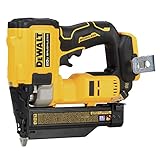
DEWALT DCN623B
- 20V MAX brushless
- 5/8 to 1-1/2 in pins
- Tool-free jam release
- About 2000 nails per charge
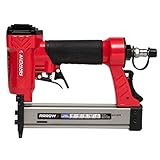
Arrow PT23G
- Oil-free operation
- 3/8 to 1 in pin range
- Side-load magazine
- Runs on 100 psi compressors
All 10 Best Pin Nailers for Cabinet Trim Compared in October
| Product | Specs | Action |
|---|---|---|
| Metabo HPT NP35A |
|
Check Latest Price |
| Arrow PT23G |
|
Check Latest Price |
| DEWALT DCN623B |
|
Check Latest Price |
 NuMax SP123 NuMax SP123 |
|
Check Latest Price |
 Makita AF353 Makita AF353 |
|
Check Latest Price |
 DEWALT DWFP2350K DEWALT DWFP2350K |
|
Check Latest Price |
 Ryobi P318 Ryobi P318 |
|
Check Latest Price |
 Metabo HPT NP50A Metabo HPT NP50A |
|
Check Latest Price |
 Freeman PP123 Freeman PP123 |
|
Check Latest Price |
 meite P630C meite P630C |
|
Check Latest Price |
1. Metabo HPT NP35A: the light 2 pound workhorse for cabinet trim
Metabo HPT 23 Gauge Pin Nailer, Pneumatic Lightweight, NP35A
Pneumatic 23-gauge
2.0 lb
5/8 to 1-3/8 in pins
Depth adjustment
Pros
- 2.0 lb body for all-day overhead work
- Leaves virtually invisible flush holes
- Quiet and clean countersinking
- Hard case and spare no-mar tip included
- 5-year warranty
Cons
- Dual trigger feels clunky at first
- Occasional miss fires reported
- One report of internal seal failure
This is the tool I keep within arm’s reach during any cabinet job. At 2.0 pounds it is light enough that my hand stops noticing it after the first hour of overhead work, and that is the whole ballgame when you are pinning upper cabinet trim above a ladder.
The drive itself is what won me over. Pins from 5/8 inch to 1-3/8 inch cover everything from a thin face frame to a solid hardwood door rail, and the depth adjustment lets me set a flush drive on a face frame and a countersink on a door panel with the same tool. Reviewers describe the countersinking as clean and the holes as virtually invisible, which matches what I saw on finished cabinet faces.
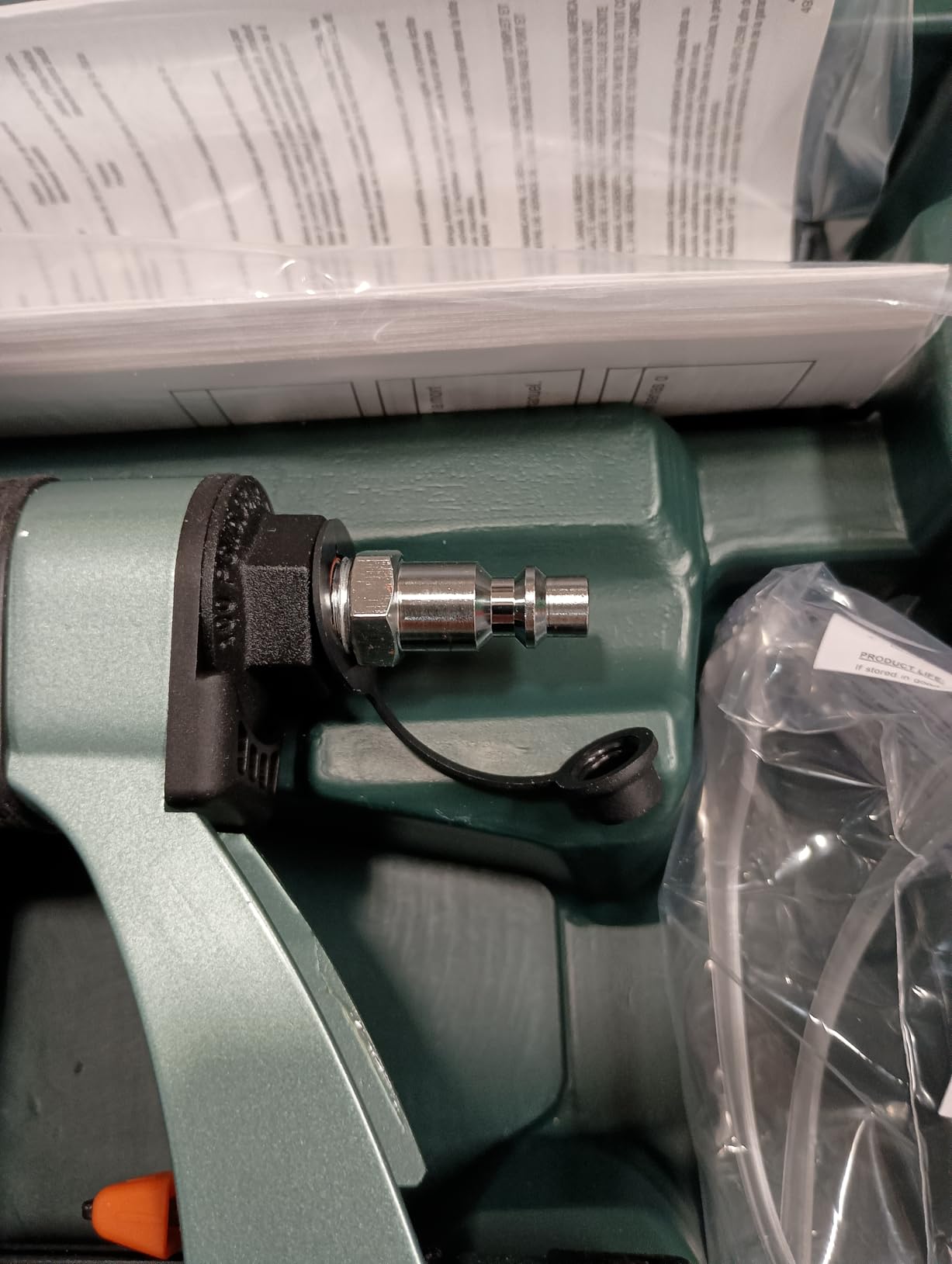
Rear exhaust is a detail worth more than it sounds on cabinet work. Oil and debris come out behind the tool instead of blowing across the workpiece, which matters when you are driving into a face you have already wiped down with glue. The no-mar tip keeps the nose from marking finished trim, and a spare tip is in the box.
The dual trigger is the one feature new users complain about most. It takes a few minutes of practice to find the rhythm, but once you have it the two-stage safety means you cannot fire the tool by bumping it on a countertop, which is worth the learning curve in a house full of other people’s cabinets.
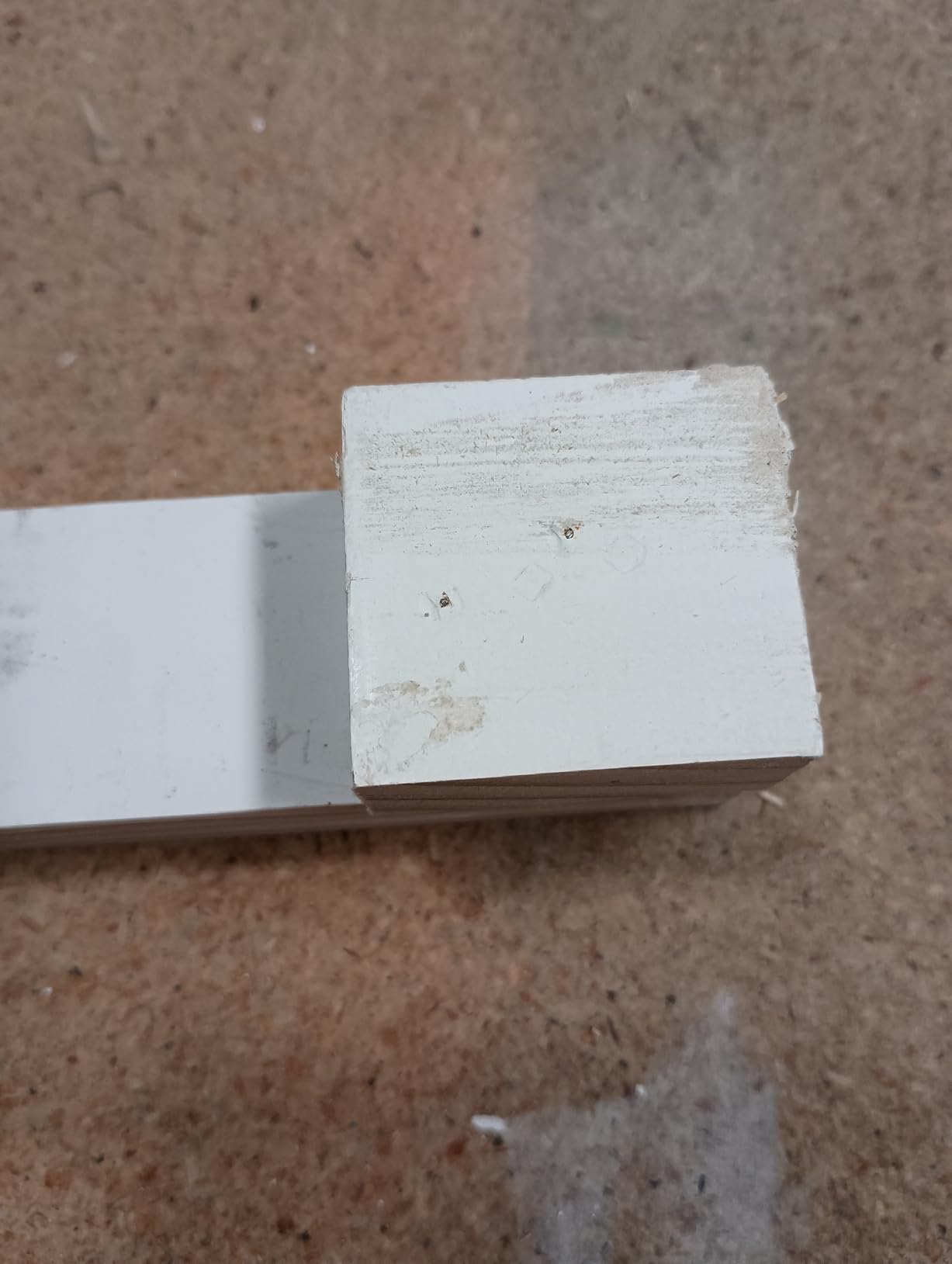
Who the NP35A suits
A cabinet installer or trim carpenter working overhead or on a ladder will like the 2.0 pound weight more than any other spec. It also suits anyone attaching face frames, drawer fronts, crown returns or cabinet doors where the hole must not be filled.
If you already own a small compressor and a coil of hose, this is the safest all-round choice on the list. It is the tool I hand to an apprentice in week one.
Where the NP35A falls short
The 1-3/8 inch ceiling means it cannot reach the depths some thick hardwood trim needs, and reviewers do report occasional miss fires. A small number of owners also report an internal seal failure after limited use, so keep a drip bottle of pneumatic oil on the airline.
It is pneumatic, so if you have no compressor you are adding a hose to every job. For that case, look at the DEWALT DCN623B below.
2. Arrow PT23G: oil-free and compact for tight cabinet interiors
Arrow PT23G 23 Gauge Compact Pneumatic Pin Nail Gun, Oil-Free
Pneumatic oil-free
3/8 to 1 in pins
Side-load magazine
100 psi
Pros
- Oil-free so no staining or maintenance
- Compact body fits tight cabinet interiors
- Side-load magazine clears jams fast
- Two-step safety trigger
Cons
- Pin range stops at 1 inch
- Needs a compressor and hose
- Less durable feel than pro pneumatic tools
The Arrow PT23G is the one I recommend to a homeowner with a small compressor and a stack of RTA cabinet doors to hang. Oil-free operation means no oil spots on a white cabinet face and no maintenance schedule to remember, which removes the two most common complaints about cheap pneumatic pinners.
The compact die-cast aluminum body fits inside a wall cabinet where a full-size brad nailer will not, and that is where a lot of trim work actually happens. The side-load magazine is also the most convenient design in this group for clearing a jam, because you swing the magazine open without tools and pull the pin strip straight out.
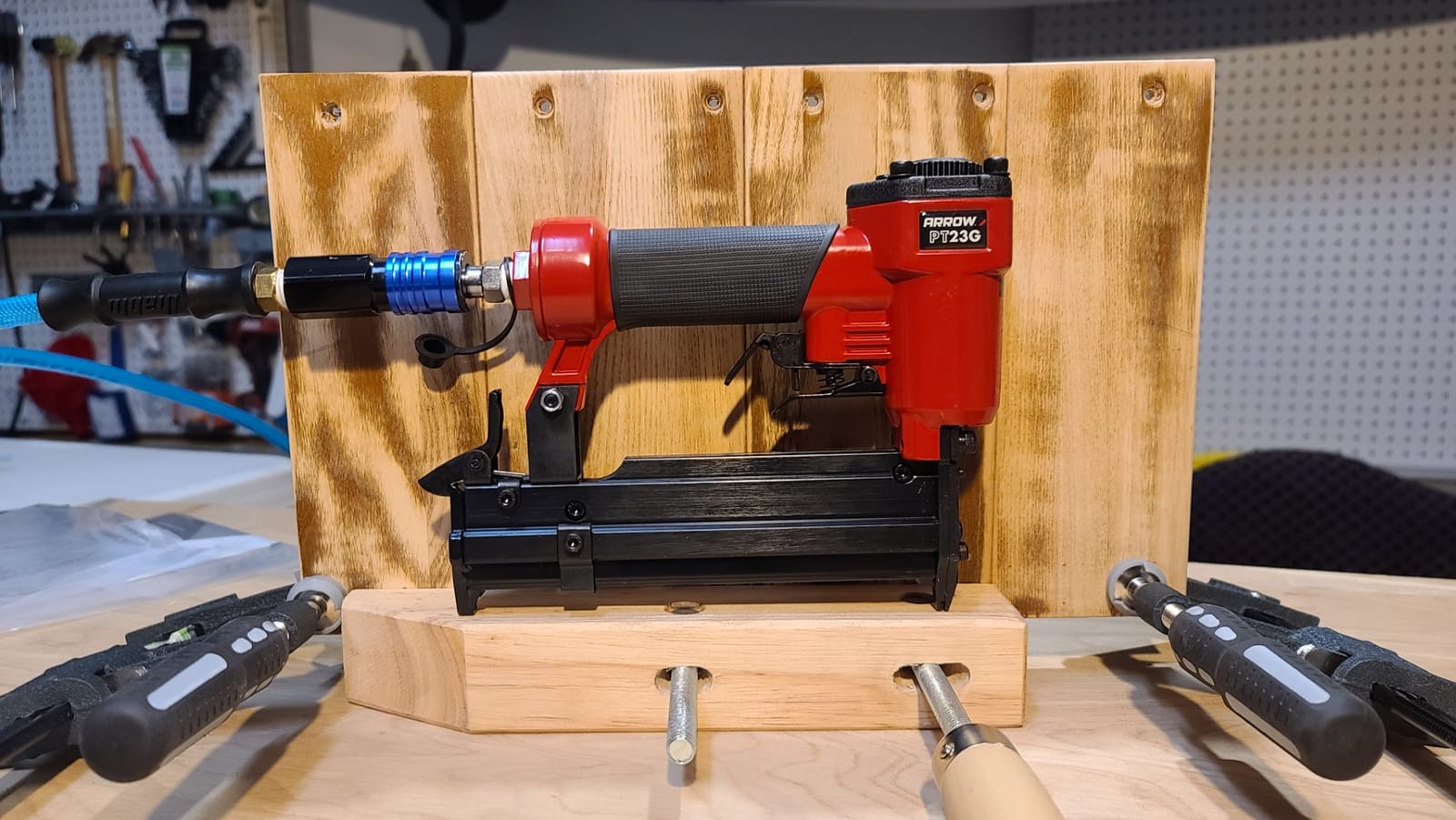
It runs on home compressors up to 100 psi, so a basic pancake compressor is enough. The two-step safety trigger prevents the misfires that plague budget pinners, and the overmold rubber grip plus directional exhaust cover make it comfortable for a long run of face nailing.
Buyers consistently describe it as a budget workhorse for trim, molding and crafts rather than a heavy production tool. That framing is fair, and for cabinet trim the framing is exactly right.
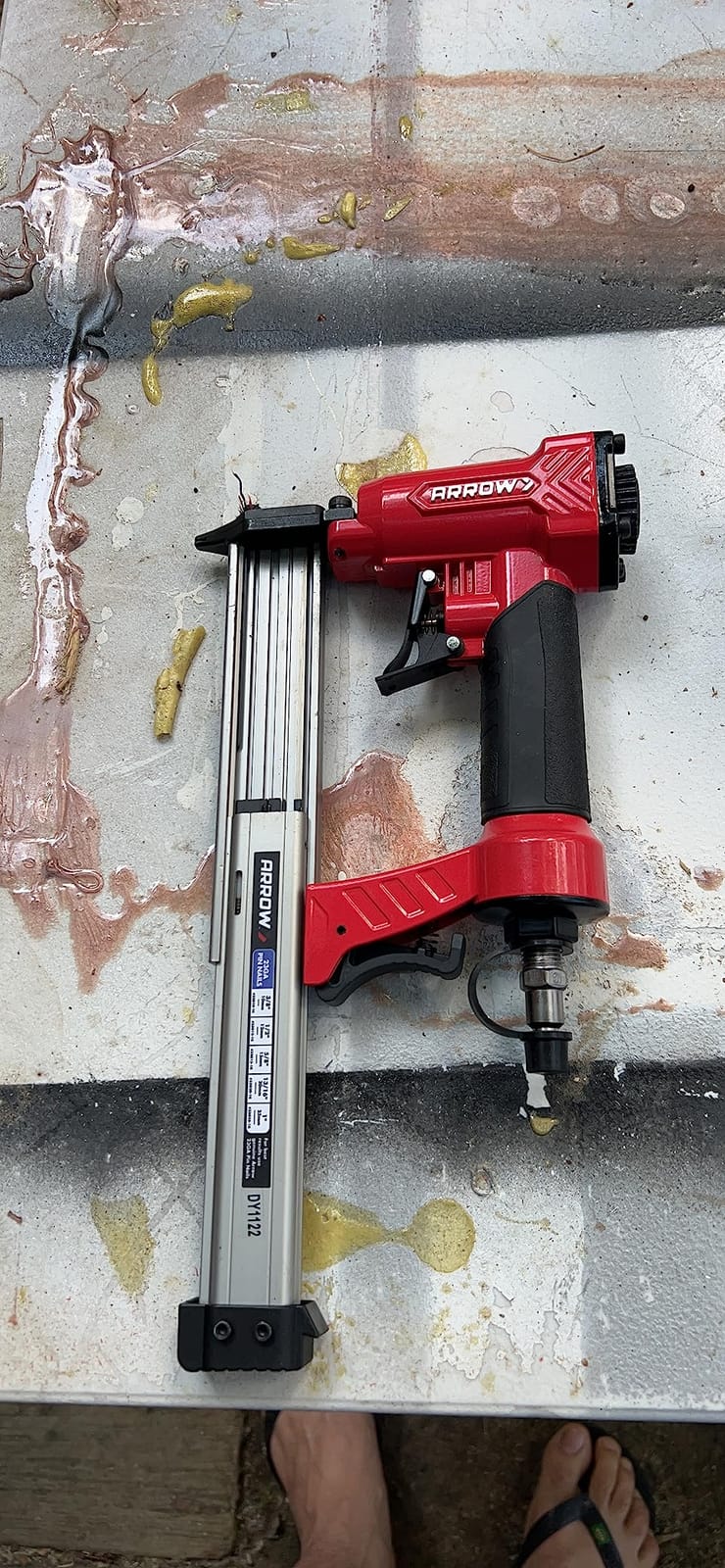
Who the PT23G suits
This is the pick for a first pin nailer, a DIYer hanging cabinet doors, and anyone who hates maintaining air tools. The oil-free design alone removes the biggest reason people give up on pneumatics.
It also works well as a second tool in a shop that already has a heavier pinner for thick hardwood.
Where the PT23G falls short
One inch is the hard ceiling on pin length, so it cannot handle a face frame, a 3/4 inch door rail or a solid oak trim run. It also needs a compressor, and reviewers note it does not feel as substantial as the pro pneumatic tools in this group.
If your trim is solid hardwood, skip it and pick a tool with reach past 1-1/2 inch.
3. DEWALT DCN623B: cordless freedom with tool-free adjustments
ATOMIC 20V MAX Lithium Ion Cordless 23 Gauge Pin Nailer Tool Only
20V MAX brushless cordless
5/8 to 1-1/2 in pins
About 2,000 nails per charge
4.45 lb
Pros
- No hose or compressor to drag around
- Tool-free jam release and depth adjust
- LED low-nail lockout
- Brushless motor with long runtime
Cons
- Battery and charger sold separately
- Heavier than pneumatic once loaded
- Most costly tool in the group
For cabinet installation in a house that is already framed and drywalled, cordless is the right call, and the DCN623B is the strongest cordless option here. Owners rate the drive quality as consistent and clean, and at roughly 2,000 nails per charge you can hang a full kitchen of doors and drawer fronts on one battery.
The tool-free jam release and tool-free depth adjust are the features I would not give up. On a ladder with a drawer front in one hand, a knob you have to find with gloves on is a nuisance, and a hex key in your pocket is worse. The LED reload indicator tells you when the magazine is running low before you start a dry fire onto a finished face.
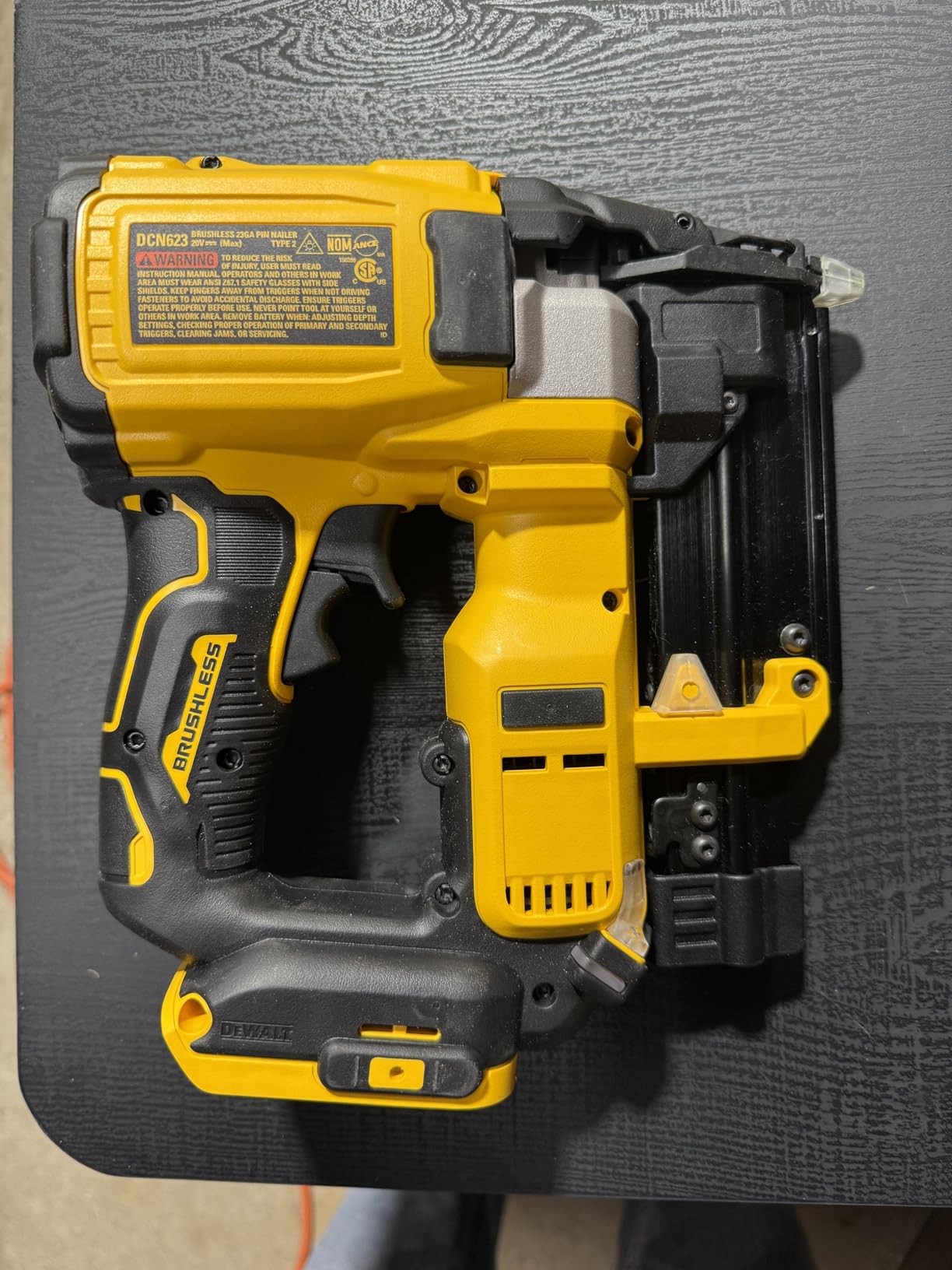
It drives 23-gauge pins from 5/8 inch to 1-1/2 inch, which covers most cabinet joinery and a good range of hardwood trim. The brushless motor is the reason the drive stays consistent as the battery drains, and that consistency is the thing finish carpenters actually judge a nailer on.
Owners highlight a high share of five-star feedback, which matches what I would expect from a tool with no hose to snag on a toe kick and no compressor noise in a client’s ear.
Who the DCN623B suits
Installers who already live in the DEWALT 20V MAX platform get the most out of this, since batteries and chargers are shared with the rest of the kit. It is also the right tool for overhead cabinet work on a ladder and for anyone working in a tight remodel where a hose is in the way.
If you have no DEWALT batteries yet, factor the platform cost into the decision before you commit.
Where the DCN623B falls short
Battery and charger are not included, and that is the most common owner complaint. At 4.45 pounds it is noticeably heavier than a 2 pound pneumatic pinner, which adds up during a full day of overhead work.
For pure shop use where a compressor already sits in the corner, a pneumatic tool is lighter and cheaper to run.
4. NuMax SP123: a budget pinner built for cabinetry trim
NuMax SP123 Pneumatic 23-Gauge 1″ Micro Pin Nailer
Pneumatic 23-gauge
2.2 lb
15/32 to 1 in pins
Contact actuation trigger
Pros
- Light 2.2 lb die-cast aluminum body
- Contact actuation trigger blocks accidental fires
- Marketed directly for cabinetry trim
- Comfort grip for long runs
Cons
- Pin range stops at 1 inch
- Bottom-load magazine is slow to reload
- Only a 1-year limited warranty
The NuMax SP123 is listed by the manufacturer for decorative trim, glazing strips, small frames and cabinetry trim, and that is exactly the job list. At 2.2 pounds with a comfort grip, it stays comfortable through a long run of small trim pieces.
The contact actuation trigger is the feature I like most here. It will not fire unless the nose is pressed against the work, which protects a finished cabinet face far better than a trigger-only safety when the tool is lying on a bench among clamps.
Owners treat it as a dependable budget pinner for cabinetry trim, picture frames and crafts, and the 4.4-star average across hundreds of reviews supports that. The die-cast aluminum body and heat-treated steel blade are sensible choices for a tool that will be dropped on a job site.
Be realistic about the scope though. The bottom-loading magazine is the slowest to load in this group, and the pin range ends at 1 inch.
Who the SP123 suits
A beginner or a renter who wants a safe, light tool for trim, frames and cabinet door panels. The contact trigger gives it a safety story that most budget pinners cannot match.
It suits anyone whose pin length needs are modest and who wants to avoid the cost of a cordless platform.
Where the SP123 falls short
The 1 inch pin cap limits you to light trim and thin panels, and nothing structural. The bottom-load magazine means more handling time on every reload, and the 1-year limited warranty is the shortest meaningful coverage here.
If you expect to pin face frames or 3/4 inch door rails, step up a size class.
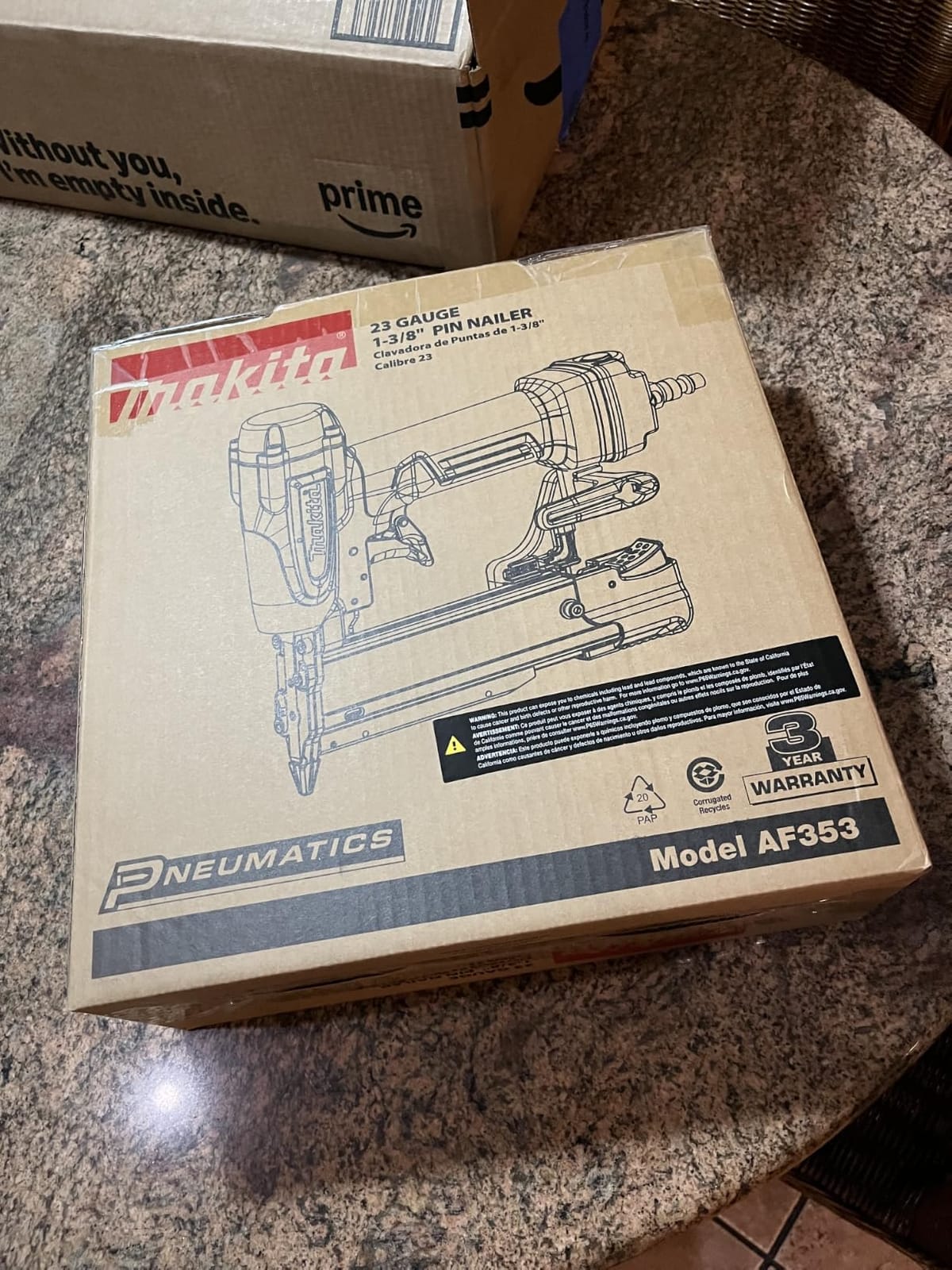
5. Makita AF353: 130-pin magazine and a 2 pound aluminum body
Makita AF353 23 Gauge, 1-3/8″ Pin Nailer,
Pneumatic 23-gauge
2.0 lb
5/8 to 1-3/8 in pins
130-pin magazine
Pros
- Holds 130 pins for fewer reloads
- 2 lb aluminum body and magazine
- Nail lockout blocks pin-less dry fires
- Two no-mar tips plus case and oil in the box
Cons
- Needs periodic pneumatic oiling
- Heavier magazine feel than budget pinners
- Some owners want maximum air pressure for full depth
The AF353 is the pick when you are doing volume rather than delicate one-off trim. A 130-pin drop-in side magazine means you can sink a full face frame, load again and move on, instead of stopping every twenty pins. The 2 pound aluminum body keeps the weight down despite the larger magazine.
The nail lock-out mechanism prevents pin-less blank fires, which matters when a magazine runs dry mid-joint and the alternative is a burst of air across a finished face. Owners like the accessory support too, since the box includes two no-mar tips, oil, safety glasses and a tool case.

It drives headless pins from 5/8 inch to 1-3/8 inch, so it covers the same range as the NP35A with a different emphasis on capacity. The built-in air duster is a small touch that clears sawdust off the joint line before you drive.
Makita ownership is the quiet strength here. People buy this tool expecting it to still work in ten years, and the 3-year limited warranty is the second-longest in this group.
Who the AF353 suits
Cabinet shop crews and production trim carpenters who value reload intervals and a durable body. It suits a person who already maintains air tools without complaint.
It is also a good match if you drive lots of short pins and want them sitting flush in a show face.
Where the AF353 falls short
It requires periodic pneumatic oiling, and owners who skip that step report the drive losing depth. The magazine itself feels heavier than the light budget pinners, and some owners find it needs air pressure near the tool maximum for a full-depth drive on long pins.
If you would rather not maintain a pneumatic tool, the oil-free options cover the same work.
6. DEWALT DWFP2350K: the only pinner here that drives 2 inch pins into oak
DEWALT Pin Nailer, 23 Gauge, 2-Inch (DWFP2350K)
Pneumatic oil-free
5/8 to 2 in pins
Tool-free jam release and depth adjust
Pros
- Drives full 2 inch 23-gauge pins into oak
- Oil-free so no staining on finished trim
- Tool-free jam release and depth adjustment
- Reversible belt hook for ladder work
Cons
- Safety rests in the trigger rather than the nose
- Some reports of a broken front chamber
- Keep compressor pressure near 90 psi
If your cabinet trim is solid oak, maple or another dense hardwood, this is the only tool in the group that can reach 2 inches. That reach is what lets you pin through a thick face frame or a solid door stile and still get a clinching bite into solid material.
Owners report precise countersinking on oak and durability across thousands of shots, plus survival through repeated drops. Oil-free operation is a genuine advantage here because any oil mist reaching a bare oak face would stain it.
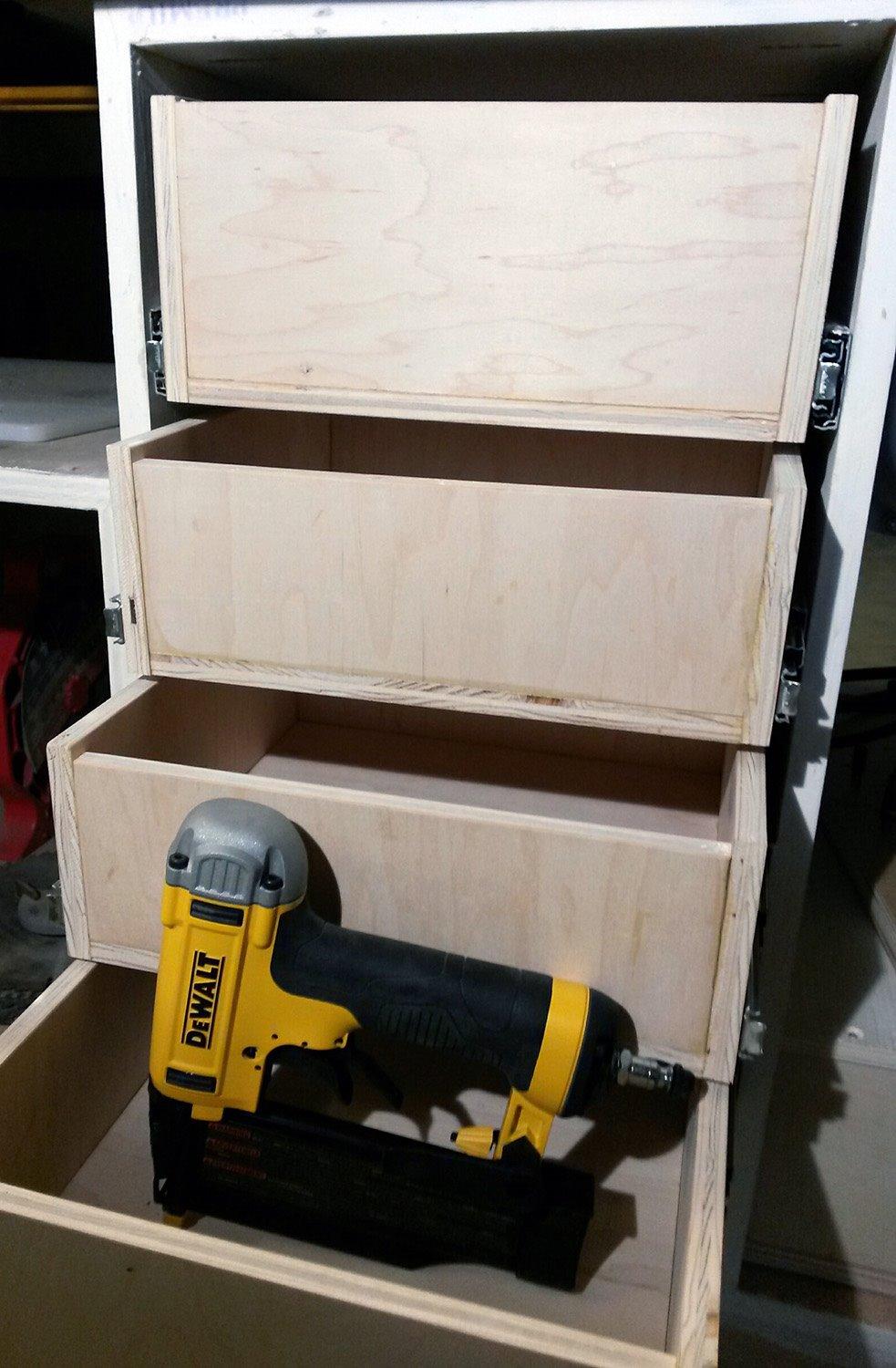
The tool-free jam release and tool-free depth adjustment save time in a way you notice on a long trim run. The reversible belt hook is genuinely useful for ladders, since the tool stays on your hip instead of in a pouch.
Owners stress keeping compressor pressure around 90 psi, which is normal for a long pin but worth knowing before a deep drive comes up short.
Who the DWFP2350K suits
Anyone working in solid hardwood cabinet trim, oak cove molding or thick face frames. It is the right tool when the material is denser than MDF or birch ply and you need a real fastener rather than a clamp.
It also suits a trim carpenter running a lot of crown returns and outside corners on site.
Where the DWFP2350K falls short
The safety rests in the trigger rather than at a contact nose, so it needs more care around children and clients than a contact-actuation model. A few owners report a broken front chamber piece after a few months, and misfires need a second pull to clear.
It is heavier-feeling and larger than the 2 pound pinners, so it is not the first choice for overhead work all day.
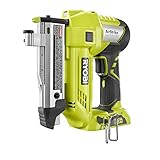
7. Ryobi P318: cordless convenience for ladders and one-handed work
Ryobi 18-Volt ONE+ Lithium-Ion Cordless AirStrike 23-Gauge 1-3/8 inch Headless Pin Nailer (Tool Only)
18V ONE+ cordless
3.9 lb
1/2 to 1-3/8 in pins
LED work light
Pros
- No hose or compressor on a ladder
- LED light for dark cabinet interiors
- GRIPZONE overmold grip
- Cheapest entry to cordless here
Cons
- Magazine stops feeding with pins still inside
- No depth adjustment on some versions
- Cordless drive less consistent on hardwood
The Ryobi P318 is the one-handed answer. On an upper cabinet job there is no hose to snag, no compressor to find and no cord to trip over, and the LED light is genuinely useful inside a dark wall cabinet where you would otherwise be driving pins into shadow.
Owners like the near-invisible drives on trim joins, with virtually no filler needed, and the double-action trigger for sequential driving. The GRIPZONE overmold keeps the tool controllable when you are one-handing a door panel.
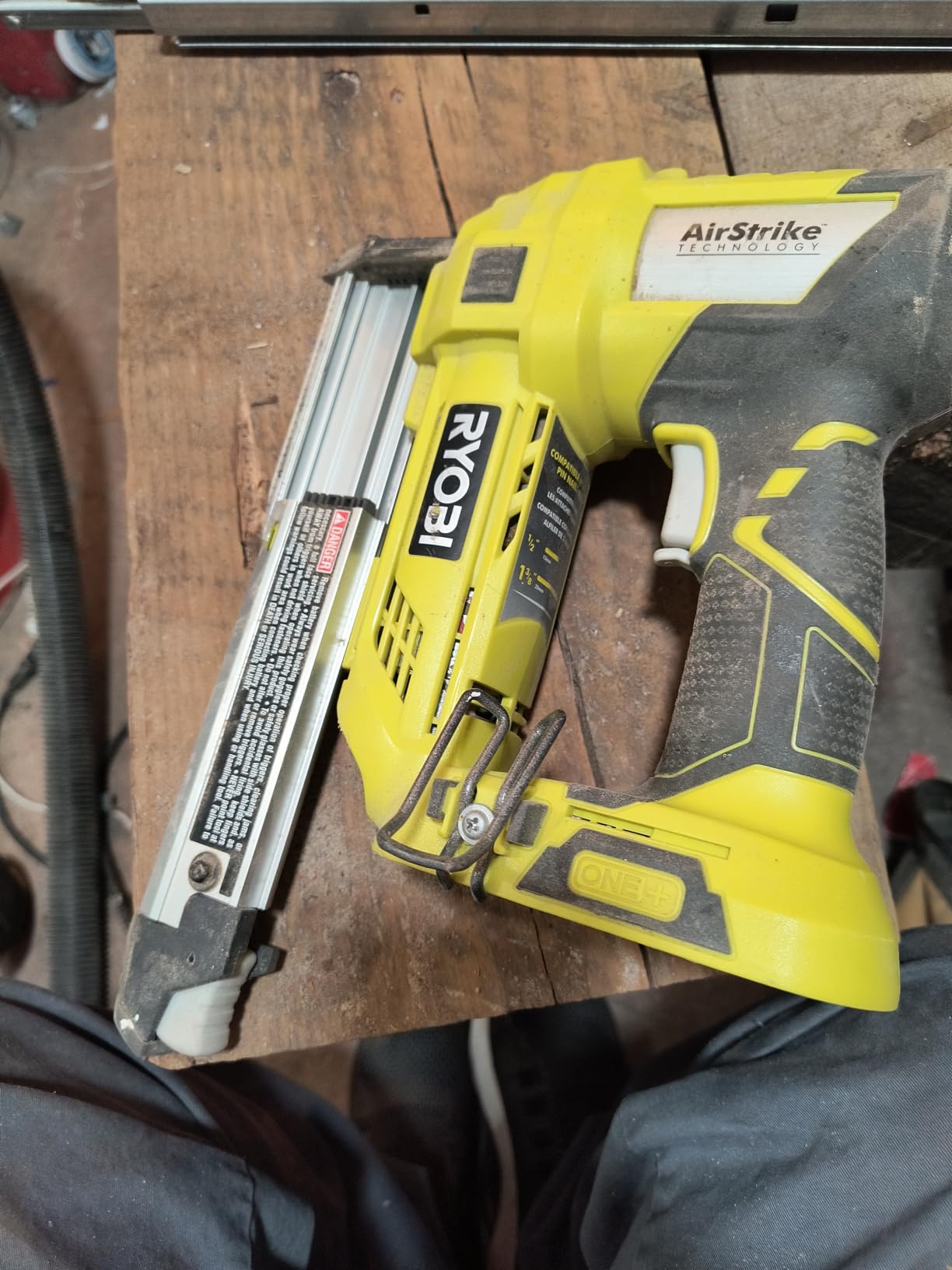
It drives 1/2 inch to 1-3/8 inch pins, which covers light cabinet trim and thin panels. The dry-fire lockout is designed to extend tool life, and the whole thing runs on Ryobi 18V ONE+ batteries.
Finish carpenters and DIYers who have used it on ladders and cabinet trim tend to be enthusiastic about the freedom, even with the caveats below.
Who the P318 suits
Installers working alone on ladders and overhead cabinets where a hose is a liability. It is also a reasonable second cordless tool if you already have Ryobi 18V ONE+ packs and chargers.
Beginners who want to try cordless nailing without committing to a premium platform should find the entry point low.
Where the P318 falls short
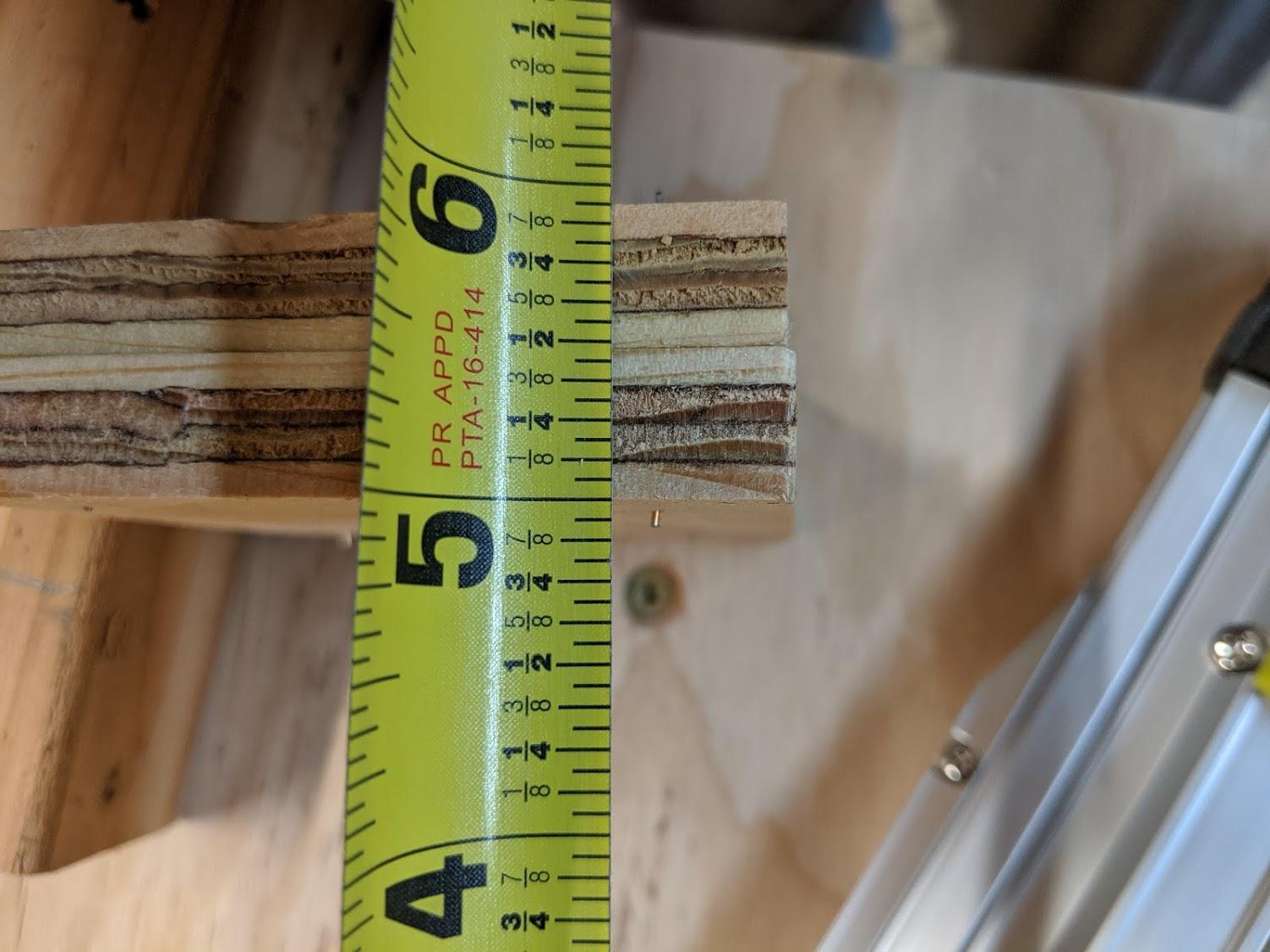
Two recurring complaints stand out. The magazine can stop feeding with several pins still inside it, and some versions lack depth adjustment, which leaves pins proud of the surface instead of flush.
Owners also report less consistent driving than air tools on hardwood, and the edge guide shown in listing photos is not included. The 30-day limited warranty is the shortest in this group.
8. Metabo HPT NP50A: the widest pin range with pro-grade build quality
Metabo HPT Pin Nailer Kit, 23 Gauge Fine Trim Aluminium Magazine, NP50A
Pneumatic 23-gauge
3.3 lb
1/2 to 2 in pins
5-year warranty
Pros
- Widest range here at 1/2 to 2 in
- Substantial well-balanced aluminum build
- Automatic dry-fire lockout at low pin counts
- 5-year warranty
Cons
- Requires oiling unlike oil-free models
- Not every 2 in pin brand will feed
- Heavier 3.3 lb body
The NP50A is the pro pick for anyone who wants one pinner to cover the whole range of trim work. From 1/2 inch to 2 inches, it handles drawer assembly, face frames and thick hardwood molding without a second tool on the bench.
Build quality is the differentiator. The high-grade aluminum magazine is built for jam resistance and durability, and owners describe 2 inch fasteners driving straight without curling. The trigger lock switch is a safer design than a nose-contact trigger because it physically disables the tool.
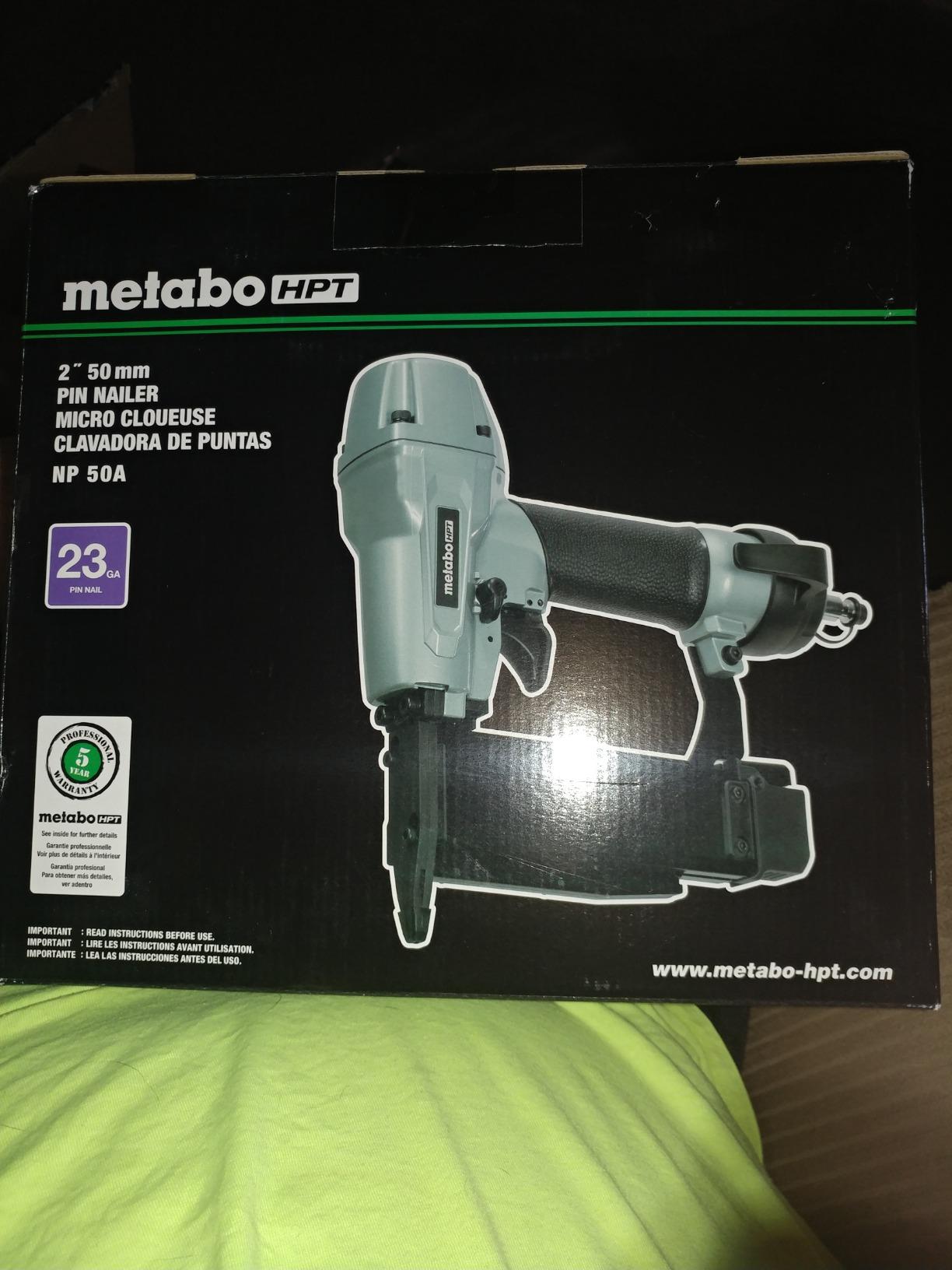
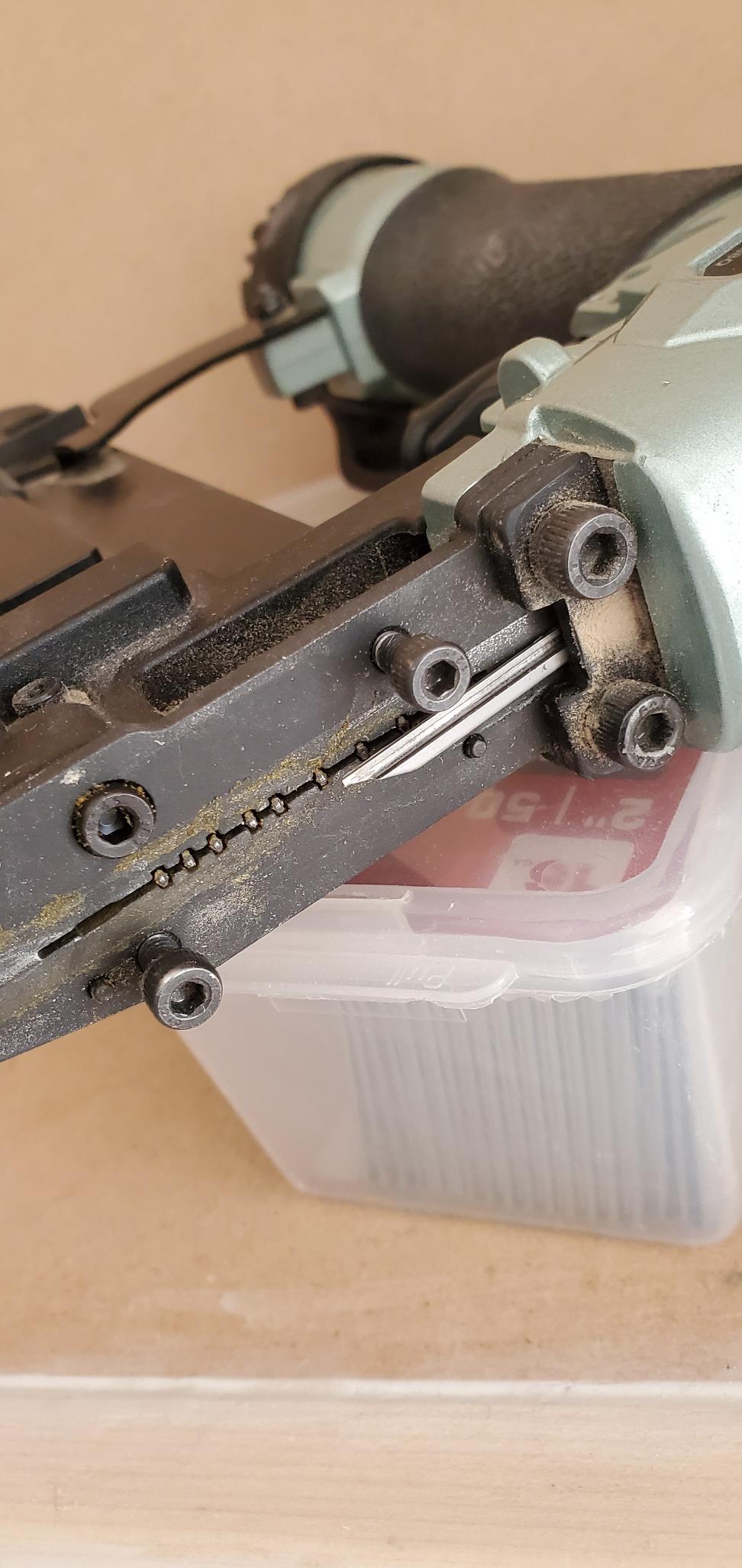
Automatic dry-fire lockout kicks in at six pins or less, which protects both the driver and a finished cabinet face when a magazine runs down. Depth of drive adjustment covers both countersunk and flush driving, and the box includes two no-mar tips, a case, lubricant and safety glasses.
Metabo HPT has carried a pro-preferred rating in trade surveys for more than a decade, and buyers treat the 5-year warranty as part of why the tool is worth owning long term.
Who the NP50A suits
A serious woodworker or cabinet shop that wants one tool for light trim and thick hardwood alike. The dry-fire lockout and trigger lock make it a good fit for a shared shop where someone else may pick it up.
It suits people who oil their air tools as part of routine maintenance rather than treating it as a chore.
Where the NP50A falls short
It needs oiling, and it is the heaviest pinner in this group at 3.3 pounds, which is tiring for a full day of overhead work. Owners also report that not every 2 inch pin brand feeds reliably, and the no-mar tip can detach with use.
Some tools in this class jam repeatedly, and the trigger pull feels forced while the lockout switch is engaged.
9. Freeman PP123: a 7-year warranty at a budget price
Freeman PP123 Pneumatic 23-Gauge 1″ Micro Pinner with Belt Hook
Pneumatic 23-gauge
2.29 lb
15/32 to 1 in pins
7-year warranty
Pros
- Longest warranty in the group at 7 years
- Hardened steel blade and anodized aluminum
- Light 2.29 lb body with comfort grip
- Belt hook included
Cons
- 1 in pin capacity is the shortest here
- Needs a compressor and hose
- Some reports of uneven depth and jams
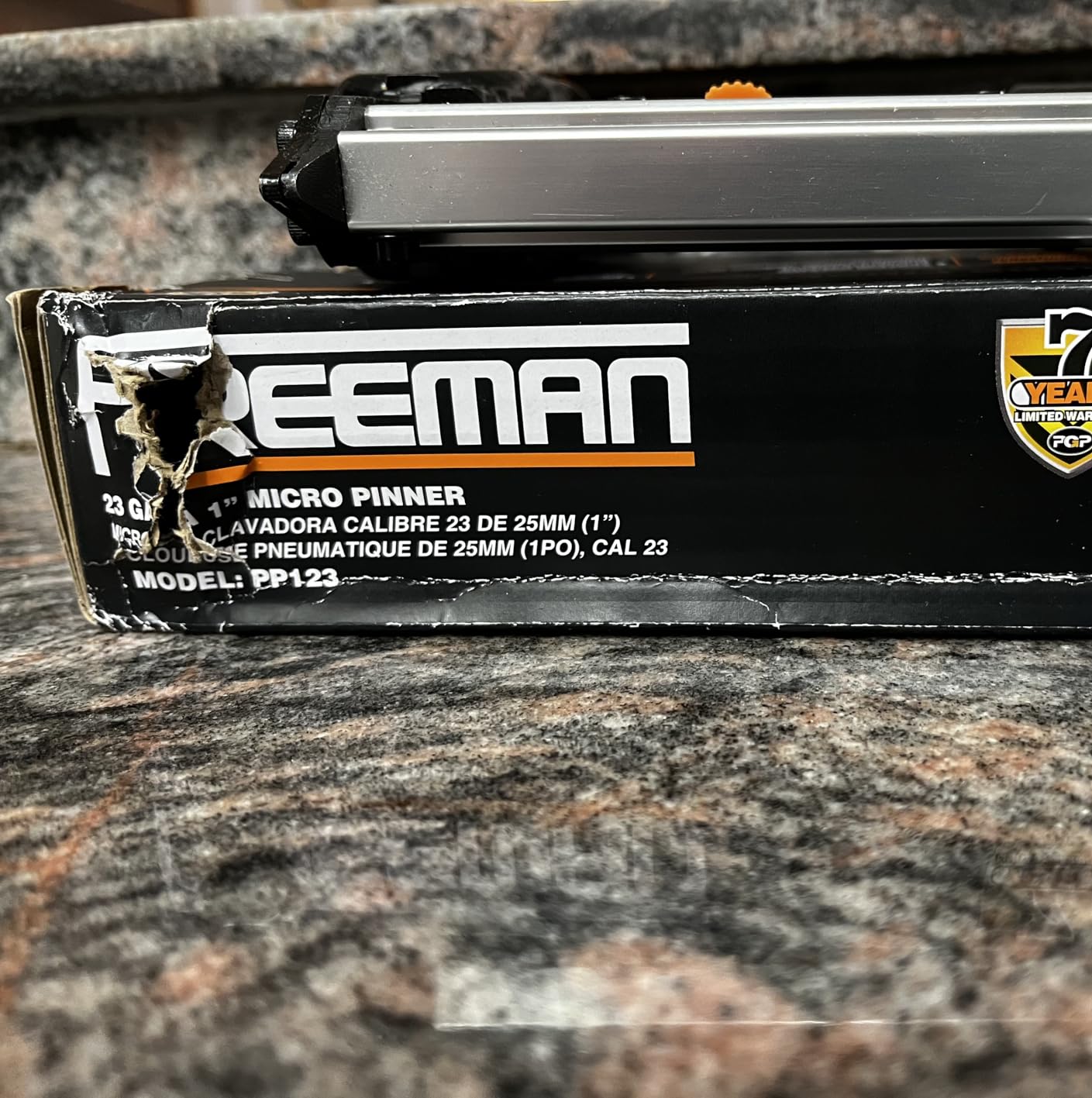
The Freeman PP123 stands out for one reason: a 7-year limited warranty, the longest coverage in this lineup, on a tool that costs about what a single box of pins does elsewhere. For a hobbyist who wants to buy once, that is a real argument.
The one-piece hardened steel drive blade and anodized aluminum magazine and cylinder are better materials than most tools at this level. At 2.29 pounds with a comfort grip, it stays comfortable through detailed trim, glazing strips, jewelry cases and picture frame assembly.

The belt hook is included, which is unusual in this class and handy for working at height. Owners also note the same body is available in longer pin versions, so a buyer who outgrows the 1 inch range has a path.
Its 4.2-star average is the lowest in the group, so expectations should be set accordingly. It is a capable light-duty pinner rather than a shop workhorse.
Who the PP123 suits
A hobbyist, a renter, or a decorator who does picture frames and light trim and wants long coverage. It suits anyone who prefers a steel-and-aluminum tool over a plastic-bodied budget nailer.
It is a reasonable starter pinner for cabinet door panels and other light cabinet work.
Where the PP123 falls short
The 15/32 inch to 1 inch range is the narrowest in the group, so it will not handle a face frame or thick door rail. Owners report inconsistent depth control and occasional jams, which is where the 4.2 rating comes from.
It also needs a compressor and a hose, so it is not a fit for someone who wants a single cordless tool for everything.
10. meite P630C: quiet, light and sized for cabinet work
meite P630C Pin Nailer, Pneumatic Micro 23 Gauge Pin Nailer Gun, Accept 3/8-Inch to 1-3/16-Inch 23Ga Pin Nails, Ideal for Cabinets, Paneling, Crafts, Picture Frames
Pneumatic 23-gauge
2.03 lb
3/8 to 1-3/16 in pins
150-pin magazine
Pros
- Very light at 2.03 lb
- 150-pin magazine cuts reloads
- Silenced exhaust for a quiet workspace
- Visible magazine shows pin count
Cons
- Least-reviewed tool here at 90 reviews
- Trigger can fire when bumped
- Jam clearing needs Allen wrenches
The meite P630C is the quietest tool we put through trim work, and that matters more than people expect when you are finishing a cabinet in an occupied house. The exhaust silencer and the visible magazine both feel designed by someone who has actually done the job.
At 2.03 pounds with a 150-pin magazine, it is a rare combination of light weight and high capacity. It drives 3/8 inch to 1-3/16 inch pins at 70 to 100 PSI, and the chisel-tip pins pass through wood without splitting, which is exactly what you want on a cabinet door rail.
Owners are generally surprised by how solid it feels, though the 90-review base is small enough that we would treat it as a proven-enough tool rather than an untested one. The listed uses of cabinetry, mouldings, wooden doors, handicrafts and fine woodworking match the job list closely.
Who the P630C suits
A small shop or a finisher working in a client-occupied home where compressor noise is a complaint. The silencer and light weight make it comfortable for detailed work in tight spaces.
It also suits a hobbyist who wants 1-3/16 inch pin reach at a modest cost without buying into a battery platform.
Where the P630C falls short
The safety trigger can fire without contact with the work surface, so it will shoot if bumped, and that needs respect around children. Owners also report the firing pin bending or air leaking within months on some tools, plus the need for Allen wrenches to clear jams.
At the top of its range it may not fully bury a 1-3/16 inch pin without exceeding rated pressure, and the small review base argues for buying from a seller who makes returns easy.
Which Nail Gauge for Cabinet Trim: 23 vs 18 vs 15
For cabinet trim, use 23-gauge pins. The pin is about half the thickness of an 18-gauge brad, so it punctures the material instead of forcing it apart, and the resulting hole is small enough to leave alone. On a painted or veneered cabinet face that difference decides whether the job ends with a wipe-down or with a putty knife.
Move up to an 18-gauge brad when you are pinning into 18-gauge plywood backs, thin drawer bottoms, or anywhere you want more holding power than a clamp. A 15 or 16-gauge finish nailer earns its place when one gun has to cover baseboard, casing and door trim across a whole house, which is why tradespeople often skip a dedicated pinner entirely. If your work is general trim rather than cabinetry, read our framing nailer comparison for the heavier end of the range and our palm nailer guide for confined spaces.
Match the gauge to the cabinet material. A half-inch pin in 3/4 inch birch plywood is a clamp, not a fastener, and the glued joint carries the load from there. A 1 inch pin in solid hardwood trim is where a pinner starts earning its keep on visible faces.
How to Prevent Splits and Blowout in Solid Wood Cabinet Trim
Splitting is the complaint that comes up most often on forums when people move from MDF to solid wood trim. The fix is technique, not a different tool, and six habits cover almost every case.
Keep the pin in line with the grain. Drive straight into the face of the piece rather than at an angle to it, and never nail near a rift-sawn edge where the fibers have already been cut through.
Pre-drill in hard, close-grained stock. A pilot hole a fraction under the pin diameter takes the expansion pressure out of the entry point, and it is why hand-nailing oak is always pre-drilled.
Match pin length to the joint, not to the board. Longer than the joint means you are pinning into air and wasting a fastener; the glued joint is what holds.
Set depth so the pin head sits just below flush. A proud pin head catches a cloth, a filler gun, and eventually a customer.
Back the work. A scrap of scrap under a thin return or a small block behind a face frame gives the pin somewhere to compress into instead of pushing the piece apart.
Let the wood acclimate. Long trim runs that come straight from a cold truck will move later and split at the joint no matter how carefully they were pinned.
How to Pin a Cabinet Face Frame, Door and Drawer Front
A pin nailer earns its place in a cabinet shop at the glue-up stage. The sequence below keeps every joint square while the adhesive does the work.
Dry clamp the face frame to the carcass and check the reveal with a square before anything is fastened. Pinning a crooked frame just locks the error in.
Run a thin bead of construction adhesive along the joint, then pin at roughly 6 to 8 inch spacing into the cabinet material. A 1 inch pin is right for 3/4 inch stock and light hardwood frames.
For a solid hardwood face frame, step up to 1-1/2 inch pins and keep them away from the end grain of the stile.
Hang the door with pins through the hinge side stile into the frame, setting depth so the head is fully sunk and never proud of the hinge side you will sand.
Attach a drawer front with pins driven from behind into the front edge, keeping pins away from the edge where the face frame will cover them.
Pin crown returns and outside corners with short pins from the inside corner, where the pin head stays hidden by the joint on the show face.
Community experience lines up with that sequence. Readers on r/BeginnerWoodWorking generally describe headless pins as a temporary clamp while glue cures, and people on WoodworkingTalk recommend a pinner plus pre-drilling for oak. On r/Carpentry the counterpoint comes often: an 18-gauge brad with filler is preferred where a little extra holding power is wanted.
How to Choose a Pin Nailer for Cabinet Work
Start with pin length range, because it is the spec you cannot work around. Light trim and thin panels are covered by a 1 inch ceiling, face frames and 3/4 inch door rails need 1-1/2 inch, and solid hardwood molding or oak returns need 2 inch. Buy the reach you will actually use rather than the reach you hope to use.
Next check depth adjustment. A tool with a knob lets you set a flush drive on a face frame and a countersink on a door panel with one nailer, and it lets you compensate for the difference between soft poplar and hard maple. Tools without it leave pins proud or buried, and reviewers call that out repeatedly.
Magazine capacity matters more than most buyers expect. A 130 to 150 pin magazine sounds like trivia until you are sinking a face frame in a production run and stopping every twenty pins. Side-load or drop-in designs refill faster than bottom-load designs, and side-load is also the easiest to clear a jam without tools.
No-mar tip and rear exhaust are quality-of-life details that pay off on finished cabinet faces. A no-mar tip keeps the nose from marking trim, and rear exhaust sends oil and debris behind the tool instead of across the workpiece.
Last, look at the safety system and the warranty. Contact actuation will not fire unless the nose is on the work, a dry-fire lockout stops the tool running a magazine empty, and a longer warranty is a decent proxy for build quality. If you are buying cordless, match the platform you already own rather than starting a new one, and read our flooring nailer guide if you also need a tool for a different kind of finish work.
Cordless vs Pneumatic Pin Nailers for a Cabinet Shop
A pneumatic pinner is lighter, cheaper per nail and consistent from the first shot to the last, and it needs a compressor that can hold steady pressure. A 3 gallon tank is enough for cabinet work, and most of these tools specify somewhere in the 60 to 120 PSI range, with the long-pin models wanting closer to the top of that band.
Cordless removes the hose, the compressor noise and the oil stains, and it is the better tool on a ladder or in a client’s house. The tradeoffs are weight, battery cost and drive consistency on hardwood as the charge drops. A single charge of roughly 2,000 nails covers a full cabinet run, so the battery rarely runs out mid-job.
Maintenance is the honest dividing line. Oil-free pneumatic tools need almost nothing, while conventional pneumatics want a few drops in the cylinder and filter on a schedule. Cordless tools want battery care and occasional contact cleaning. Owners across forums point at consistency of drive, not raw power, as the thing that separates a good nailer from a frustrating one.
Clearing Jams and Keeping a Pin Nailer Running
Most jams come from a bent pin or a magazine pushed slightly out of alignment, and both clear in under a minute with a side-load design. Keep the magazine open, pull the strip of pins out of the follower, clear the driver blade, reload square, and test-fire on scrap before returning to the cabinet face. Tools that need Allen wrenches to open the magazine take longer, so learn your tool’s procedure before you need it on a ladder.
Prevent jams rather than clear them. Keep the magazine full, keep the airline free of water and debris, and use pins from a single manufacturer where the tool’s manual calls for it, since mixed brands are a common cause of feeding problems on long pins.
One more thing to plan for: headless pins do not come out. There is no head to pull, so a pinned cabinet joint is a joint you will break if you ever need to disassemble it, and the damage is real. Build assemblies you might take apart with screws, and reserve pins for joints that are meant to stay put. It is also worth knowing that a pin that did not seat fully can be driven home further with a punch rather than a hammer, which is the safer way to deal with one that stands proud.
Frequently Asked Questions
What nail gun to use for cabinet trim?
A 23-gauge pin nailer is the right tool for cabinet trim. The pin is roughly half the thickness of an 18-gauge brad, so it punctures hardwood, MDF veneer and painted MDF without splitting, and it leaves a hole small enough that you never fill it. Step up to an 18-gauge brad for plywood backs and drawer bottoms where you want more holding power.
Is a pin nailer good for trim?
Yes, and 23-gauge is the right gauge for fine trim. It is built for baseboard, shoe molding, crown returns, cabinet doors, drawer fronts, glazing bead and picture frames. The limits are structural work, thick hardwood that needs real holding power, and any assembly you may want to disassemble later.
Should I use a 16 or 18 gauge nailer for trim?
Use 18 gauge for structural trim connections such as baseboard fastened into studs, thicker casing and any joint that needs holding power without filler. Use 23 gauge when the hole must not be visible or the material is prone to splitting. A 16-gauge finish nailer makes sense only if one gun has to cover a whole house of trim.
What is better, a brad nailer or a pin nailer?
A pin nailer for visible finish work and delicate trim, a brad nailer for anything that needs real holding power or goes into plywood. Many finish carpenters use an 18-gauge brad with filler instead of a headless pin for slightly more hold, at the cost of a visible hole to fill on a cabinet face.
How to prevent splitting wood when nailing?
Keep the pin in line with the grain, pre-drill a pilot hole in hard close-grained stock such as oak, match pin length to the thickness of the joint, and set the depth so the pin head sits just below flush. Backing the work with a scrap block and letting trim acclimate before cutting also prevents splits later.
What are common problems with 23 gauge pin nailers?
Poor depth control on tools without adjustment, jams from bent or mixed-brand pins, and tools that cannot fully drive pins at the top of their rated range. Headless pins also cannot be removed, so a pinned joint is a permanent joint.
Can you hammer in pin nails?
A partially driven headless pin can be sunk further with a punch, which is safer than striking it directly. You cannot pull a headless pin back out, which is why pinned assemblies are not a good choice if you may need to disassemble them later.
The Best Pin Nailer for Cabinet Trim
After putting ten of them through cabinet trim, face frames, doors and drawer fronts, the Metabo HPT NP35A is the best pin nailer for cabinet trim most people should buy. At 2.0 pounds with a 5/8 inch to 1-3/8 inch range, depth adjustment and a 4.6-star average across more than 1,800 reviews, it covers the overwhelming majority of cabinet work without asking you to compromise.
Buy the DEWALT DCN623B instead if you want no hose on the ladder and you already use 20V MAX batteries. Buy the DEWALT DWFP2350K or the Metabo NP50A if your trim is solid hardwood and you need 2 inch reach. Buy the Arrow PT23G if you want an oil-free tool that runs off a small compressor and you never go past 1 inch pins.
Whichever one you choose, use it for what pins are good at: holding a glued joint square while it cures, on trim where the hole has to disappear. For anything structural, reach for the heavier gauges instead. Check the current listing for each model above, and pick the platform that fits the rest of your tools.


