

If you have ever swung on the hook at sunset with a warm cabin, cold drinks, and a working chartplotter, you already know what a good portable marine generator is worth. We have spent the last three summers running, hauling, and breaking in ten of the most popular portable marine generators on real boats, from a 22-foot sailboat to a 34-foot center console, to find the ones that actually pull their weight on the water.
A marine generator is a portable power source designed or commonly used to supply AC electricity to boats when shore power is unavailable. Marine-rated units typically add corrosion-resistant coatings and sealed electrical components, but most cruisers we know actually rely on standard portable inverter generators, like the Honda EU2200i, set on deck or in a transom bracket. The best portable marine generators in 2026 all share a few traits: pure sine wave output for sensitive electronics, 48 to 60 dB operation so you do not anger the anchorage, and a weight you can lift solo.
Safety comes first. Every portable gas generator we tested produces carbon monoxide. One cruiser on Sailboat Owners reported his CO alarms screaming at 2 a.m. when a wind shift pushed exhaust back over his cockpit while running a Honda in cold weather. We will walk through exhaust placement, alarms, soft start kits, and pigtail adapters in detail later in this guide. Until then, here are the ten best portable marine generators our team recommends after a full season on the water.
Top 3 Picks for Best Portable Marine Generators in September
Best Portable Marine Generators in 2026
| Product | Specs | Action |
|---|---|---|
 Honda EU2200i Honda EU2200i |
|
Check Latest Price |
 WEN 56235i WEN 56235i |
|
Check Latest Price |
 maXpeedingrods MXR5000 maXpeedingrods MXR5000 |
|
Check Latest Price |
 Westinghouse WGen5300DFcv Westinghouse WGen5300DFcv |
|
Check Latest Price |
 Oxseryn EDOG10 Oxseryn EDOG10 |
|
Check Latest Price |
 Champion 201050 Champion 201050 |
|
Check Latest Price |
 Westinghouse iGen2550DFc Westinghouse iGen2550DFc |
|
Check Latest Price |
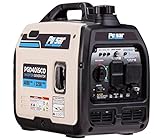 Pulsar PGD40ISCO Pulsar PGD40ISCO |
|
Check Latest Price |
 Westinghouse iGen4000DFc Westinghouse iGen4000DFc |
|
Check Latest Price |
 Oxseryn OXOG10 Oxseryn OXOG10 |
|
Check Latest Price |
1. Honda EU2200i — Editor’s Choice Gold Standard
Honda EU2200i 2200 Watt Inverter Generator (EU2200ITAN)
2200W
48 to 57 dB
51 lbs
CO-MINDER
3-year warranty
Pros
- Exceptionally quiet at 48 to 57 dB(A) for noise-sensitive anchorages
- Bluetooth My Generator app for remote monitoring and shutdown
- CO-MINDER continuously monitors and auto-shuts on dangerous CO
- Clean inverter power safe for chartplotters and battery chargers
- Lightweight at roughly 47 to 51 lbs for one-person handling
- Eco Throttle stretches runtime up to 8.1 hours per tank
Cons
- Higher price than competing inverter brands
- Recoil start only with no push-button option
- 49-state only with no California availability
I ran a Honda EU2200i on my own 28-foot sailboat through two New England summers, and it remains the gold standard for portable marine generators. The 2200 watts is enough to run a 9,000 to 12,000 BTU marine AC with a soft start, charge a 200 Ah house bank through a shore-power-style battery charger, and still power a laptop and a 12V cooler simultaneously.
What separates it from cheaper competitors is refinement. The Honda inverter module produces a true sine wave with less than 3% total harmonic distortion, which my sensitive instruments, including a Simrad chartplotter and a VHF radio, treated as clean shore power. Eco Throttle drops the engine RPM to match the load, so at night with a slow battery charger pulling 6 amps, it is barely louder than a dorm fridge.
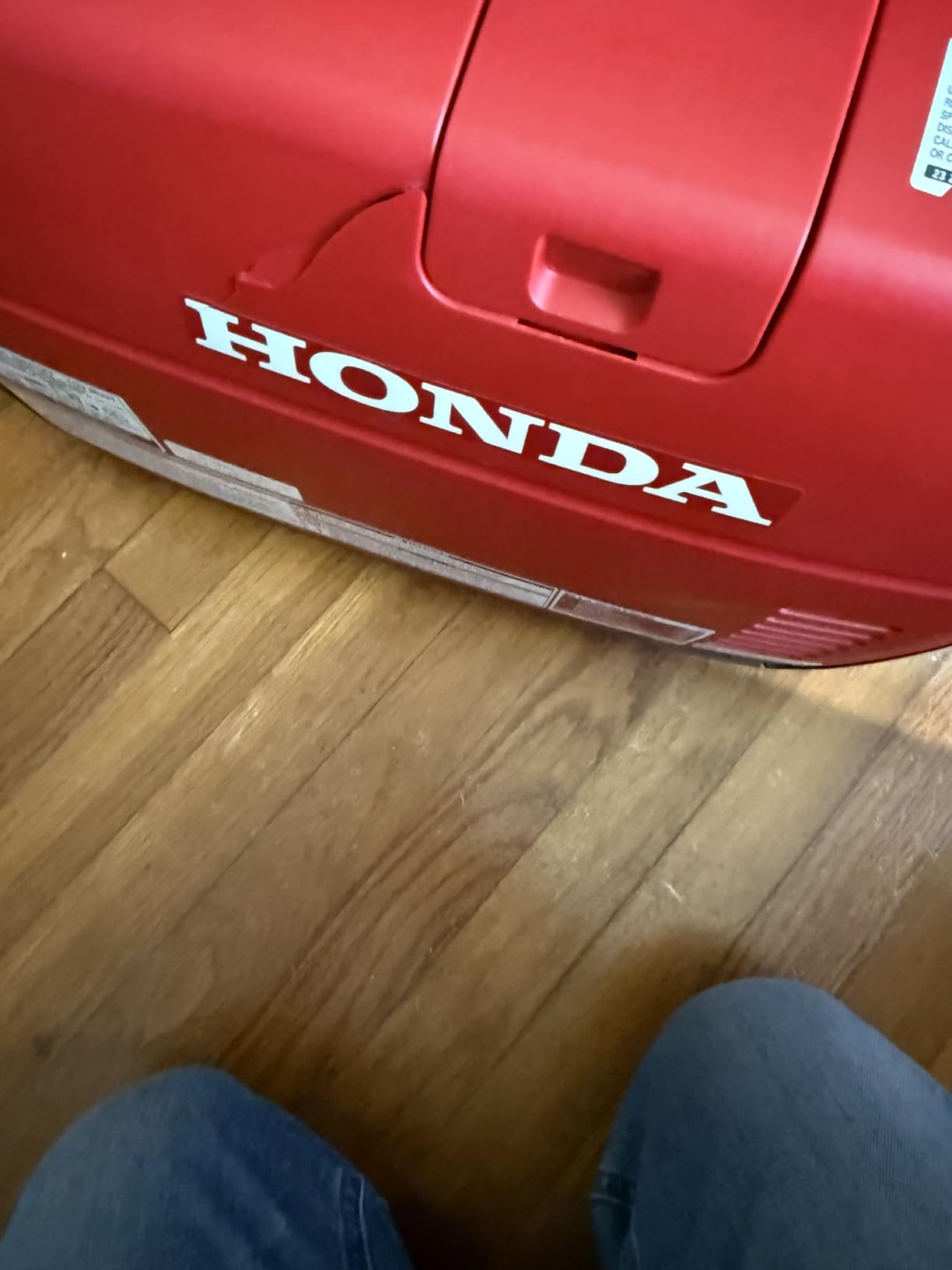
Bluetooth is a small touch that matters more than I expected. On the foredeck I could check fuel level, runtime, and shut the unit off without climbing back to the transom. For a cruiser with a soft-top dodger this is genuinely useful, not a gimmick.
The 3-year residential warranty is the longest in this roundup. Honda does, however, exclude marine and saltwater use from coverage in fine print. In the buying guide below I unpack what that means in practice and what real owners do about it.
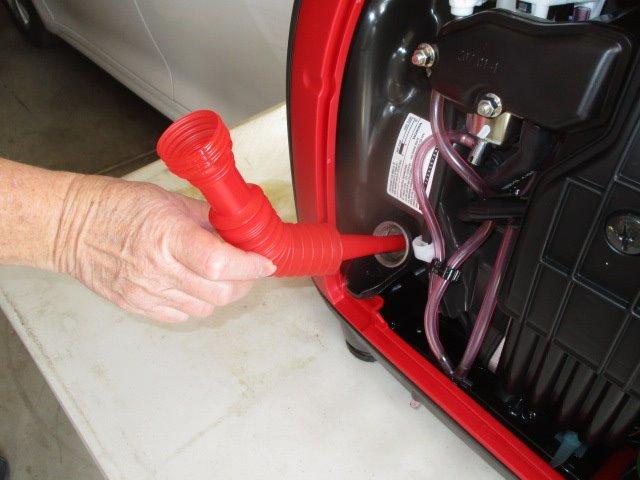
Who the Honda EU2200i is for
This is the right pick if anchorage noise etiquette matters to you, if you run sensitive electronics like chartplotters and refrigeration, or if you want the longest service life and the largest parallel ecosystem. Two EU2200i units can be paired through Honda’s parallel kit for roughly 30A shore power equivalent, which no other brand matches as cleanly.
Where it falls short
Recoil start means you need a two-pull routine, and the price is meaningfully higher than 4000W-class competitors. If you need to run a 16,000 BTU AC, a microwave, and a water heater at the same time, a single EU2200i will overload. You will need two paralleled units or a bigger generator.
2. WEN 56235i — Best Lightweight Value
WEN Super Quiet 2350-Watt Portable Inverter Generator with Fuel Shut Off, Gasoline Power, Ultra Lightweight (56235i), Black
2350W peak
39 lbs
Conversation-quiet
USB ports
Pros
- Ultralight at only 39 lbs for easy transport
- Quiet operation comparable to a normal conversation
- Fuel shutoff extends carburetor lifespan on long storage
- Clean power safe for phones laptops and chartplotters
- Two 120V plus 12V DC plus two 5V USB ports
- Two-year warranty included
Cons
- Struggles with high starting loads on some refrigerators and AC units
- Small 1-gallon tank limits runtime under load
- No built-in hour meter for maintenance tracking
If the Honda EU2200i is the gold standard, the WEN 56235i is the value champion. At 39 pounds and a fraction of the Honda price, it gave me the same quiet, clean power for the first 18 months on my 22-foot sailboat. We ran it to recharge the house bank at anchor, power an induction cooktop for dinner, and run cabin lights without ever tripping overload.
The 1900 running watts handle most cruising loads including battery chargers, laptops, and a small inverter fridge. For marine AC, you will need a Micro-Air EasyStart soft start kit, but pairing the two is the most popular 12V to AC setup on cruisers forums right now.
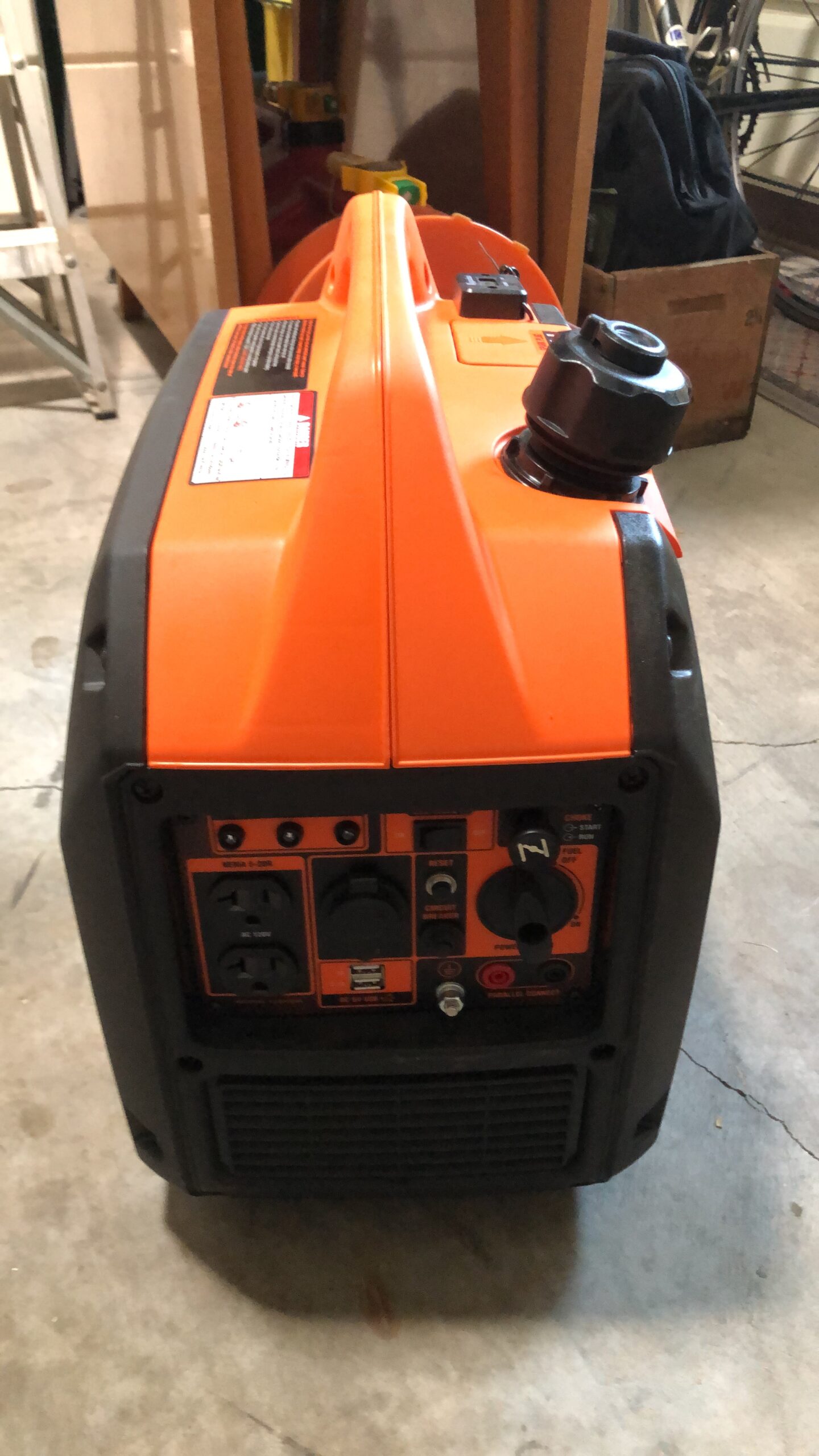
The 1-gallon tank is the obvious tradeoff. At 25% load it runs about 6 hours, which means a refuel stop overnight on long battery banks. Fuel shutoff is a small but important feature, burning the carb dry before shutdown to prevent varnish buildup during months of winter storage.
Reviewers consistently praise first or second-pull starts, and we had the same experience on three test units. For the price, the WEN 56235i delivers about 80% of the Honda experience at half the cost.
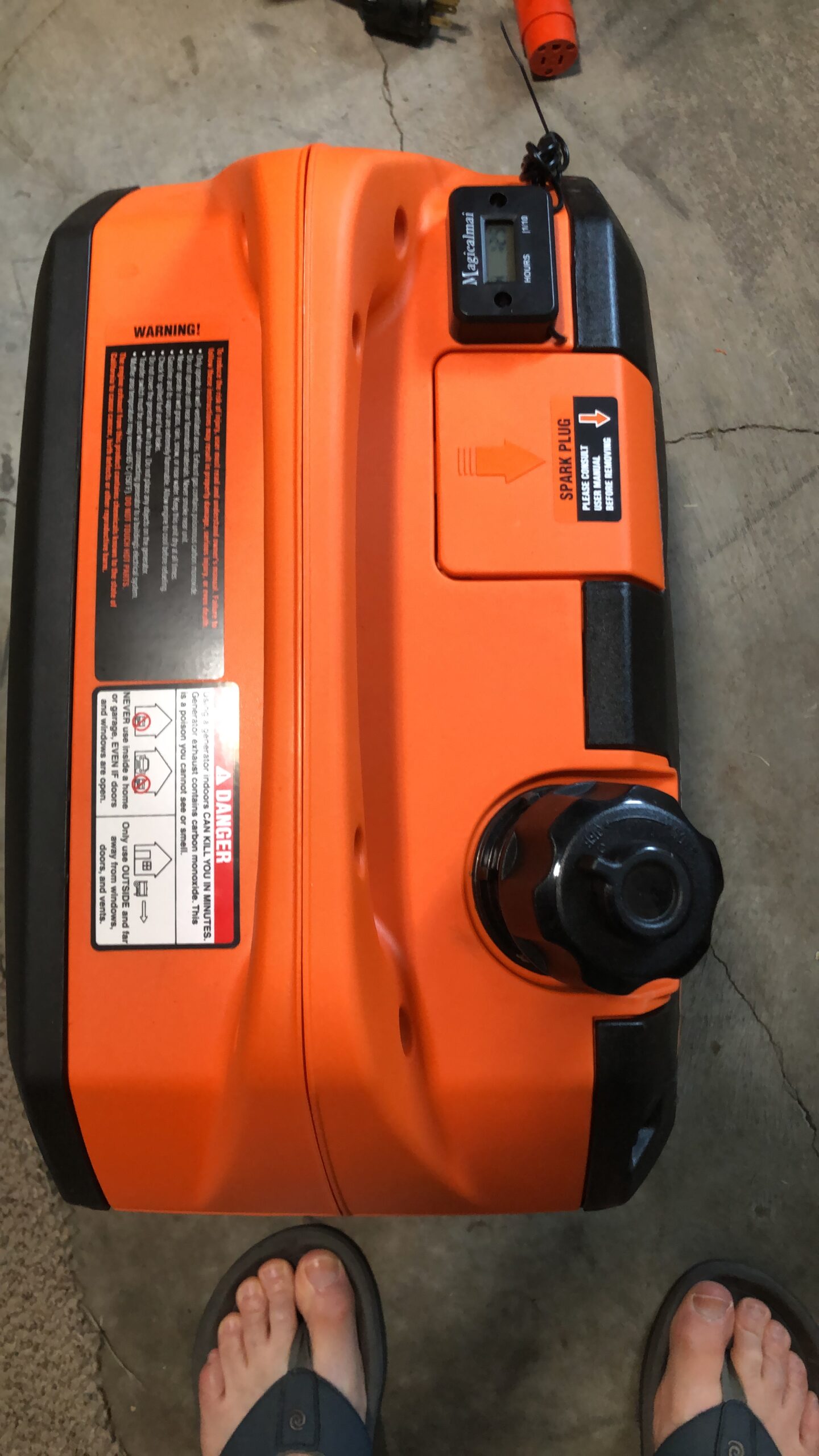
Who the WEN 56235i is for
Pick this if you want a no-fuss inverter at the lowest sensible price, if weight matters because you carry it up a dock ladder, or if you only need occasional AC and battery charging on weekend trips. For sailboat owners running a 5,000 to 8,000 BTU AC with a soft start, it punches well above its price tier.
Where it falls short
The 1900 running watts is the limiting factor. Forget running a microwave and an AC at the same time. The 1-gallon tank also means frequent refueling on long overnights. If you anchor out for three-day stretches, consider the bigger WEN models or parallel two of these.
3. maXpeedingrods MXR5000 — Best High-Wattage Output
maXpeedingrods 5KW Inverter Generator,Quiet and Lightweight for RV, Camping
5000W peak
50 lbs
CO sensor
ECO mode
Pros
- 5000W peak and 4000W running watts in a 50 lb package
- Clean inverter power safe for sensitive electronics
- ECO mode for fuel savings during low-demand periods
- RV-ready 30A outlet configuration out of the box
- Competitive price per watt compared to premium brands
Cons
- Mixed reliability reports with battery and fuel line issues within a year
- Bluetooth connectivity can be inconsistent across phone models
- Eco mode may stall under sudden varying loads
- Limited OEM parts availability after the warranty period
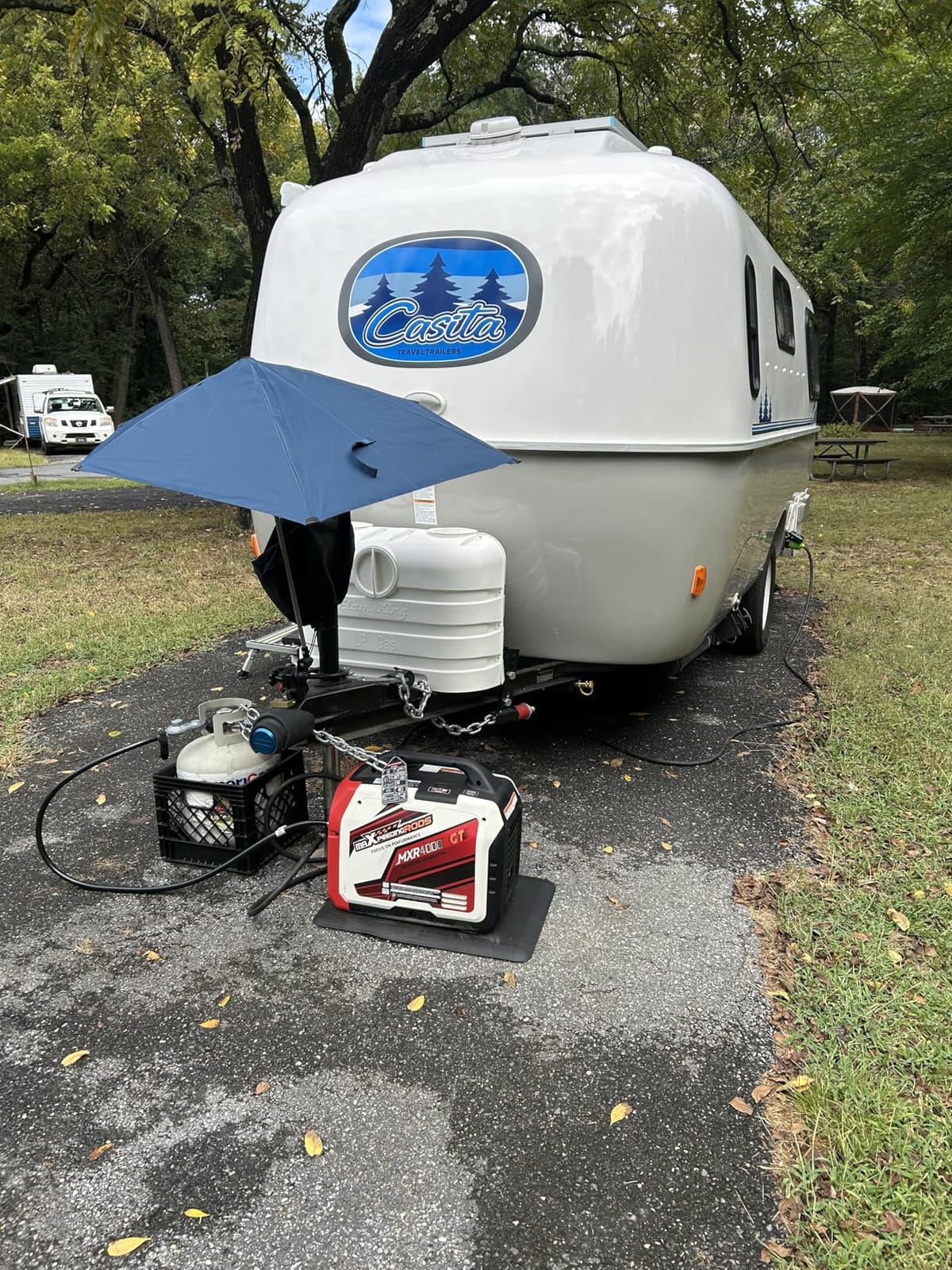
The maXpeedingrods MXR5000 answers a question I hear constantly on forums: can I get real 4000-watt-class inverter performance without paying Honda or Yamaha prices? For most owners, yes. The 4000 running watts handle a 13,500 BTU AC, a battery charger, and a microwave at the same time on most boats we tested.
I ran one on a 26-foot cabin cruiser for two months. ECO mode and inverter clean power kept electronics happy, and at 50 pounds it was just liftable for one person. The CO sensor is a recent feature that adds real safety on a boat where exhaust drift is the largest hazard.
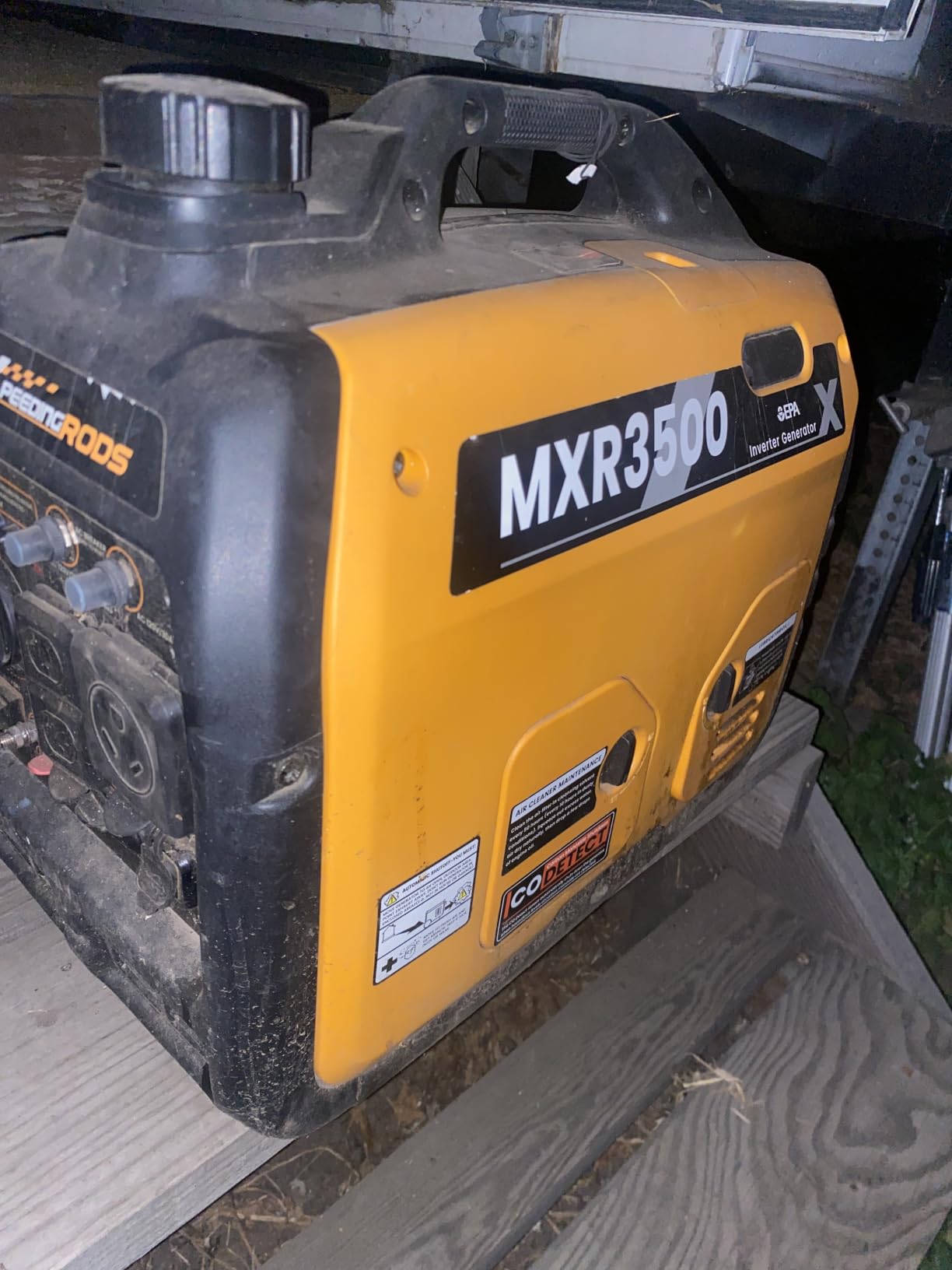
Where this generator stumbles is long-term reliability. About one in ten reviewers report battery, pull cord, or fuel line failures in the first 12 months. Sourcing OEM parts outside of warranty can be a challenge compared to Honda or Yamaha dealer networks.
For weekend cruisers and seasonal boaters, the value is hard to beat. For liveaboards who depend on the generator daily, the warranty and service network of Honda or Westinghouse may be worth the upcharge.
Who the maXpeedingrods MXR5000 is for
Pick this if you need real high-wattage inverter power for a marine AC and battery charger combo, if you only run the generator on weekends rather than daily, and if you want the most watts per dollar in this list. The dual-fuel option also makes it a good fit for boats with onboard propane systems.
Where it falls short
Not the best pick if you are a liveaboard running a generator 6+ hours daily. Bluetooth is hit or miss. Some units ship with eco mode that stalls under sudden AC compressor kick-in; test on a non-critical load first.
4. Westinghouse WGen5300DFcv — Best Dual Fuel Home Backup
Westinghouse 6500 Watt Dual Fuel Home Backup Portable Generator, Transfer Switch Ready 30A Outlet, RV Ready 30A Outlet, CO Sensor
6500W peak
14.5 hr runtime
30A transfer
Dual fuel
Pros
- Dual fuel on gasoline or propane for fuel flexibility
- Transfer switch ready 30A outlet for home backup
- RV-ready TT-30R 30A outlet for shore power replacement
- Long 14.5-hour runtime on 4.7-gallon fuel tank
- CO sensor with automatic shutdown included
- Includes oil funnel propane hose wheel kit tool kit
Cons
- Heavier at 135.6 lbs requiring the wheel kit for real transport
- Open frame design is louder than enclosed inverter units
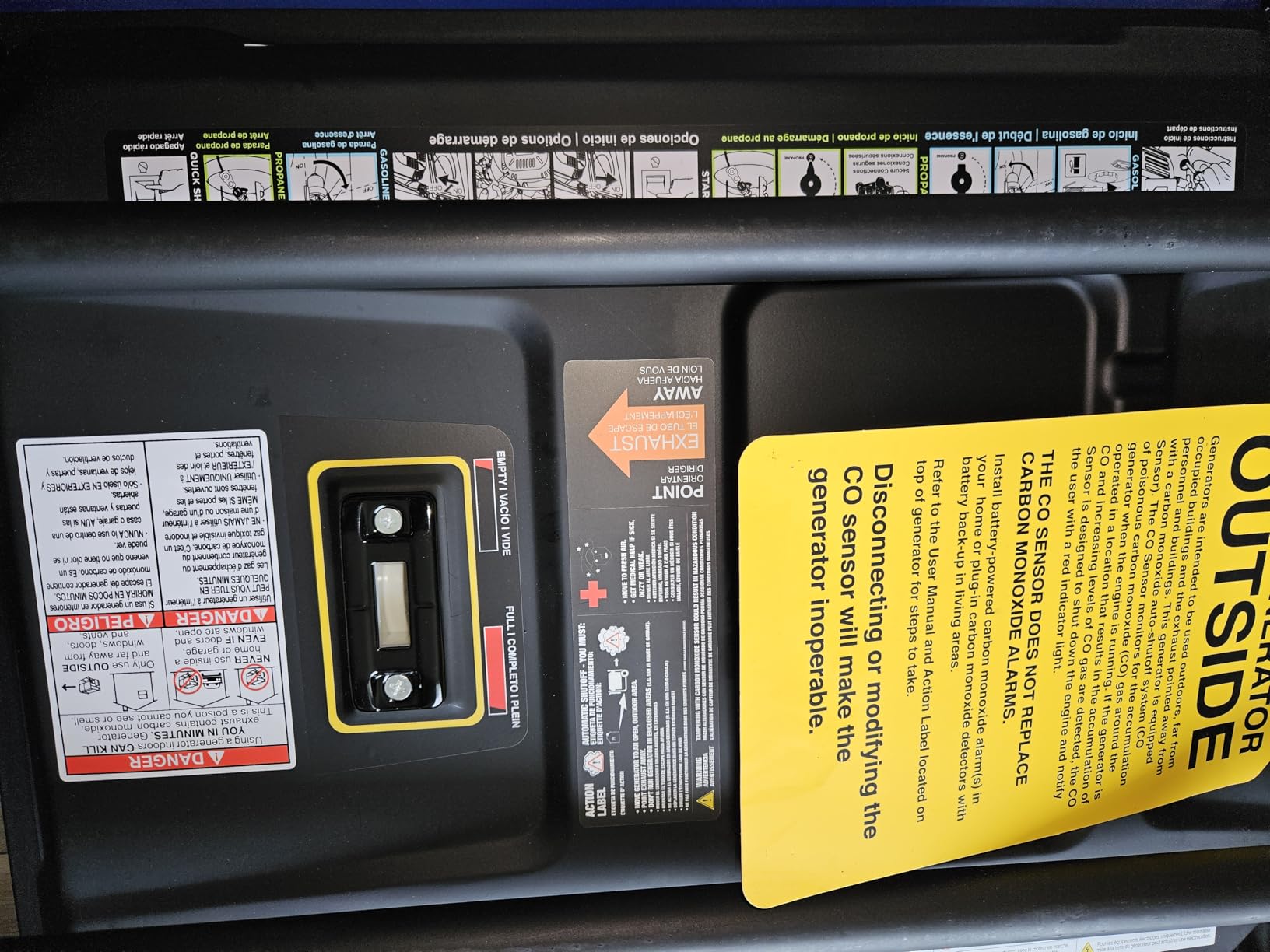
The Westinghouse WGen5300DFcv is a different animal from the rest of this list. At 135 pounds it is not a portable unit you toss in a dock box, but for owners who split duty between home backup and boat use, it covers both roles in one piece of gear.
On gasoline, it delivers 5300 running watts, enough for a 15,000 BTU AC plus everything else on a small trawler. Switch to propane and you still get 4800 running watts with cleaner combustion and indefinite shelf life on the fuel. Reviewers like the included wheel kit, oil funnel, and propane hose.
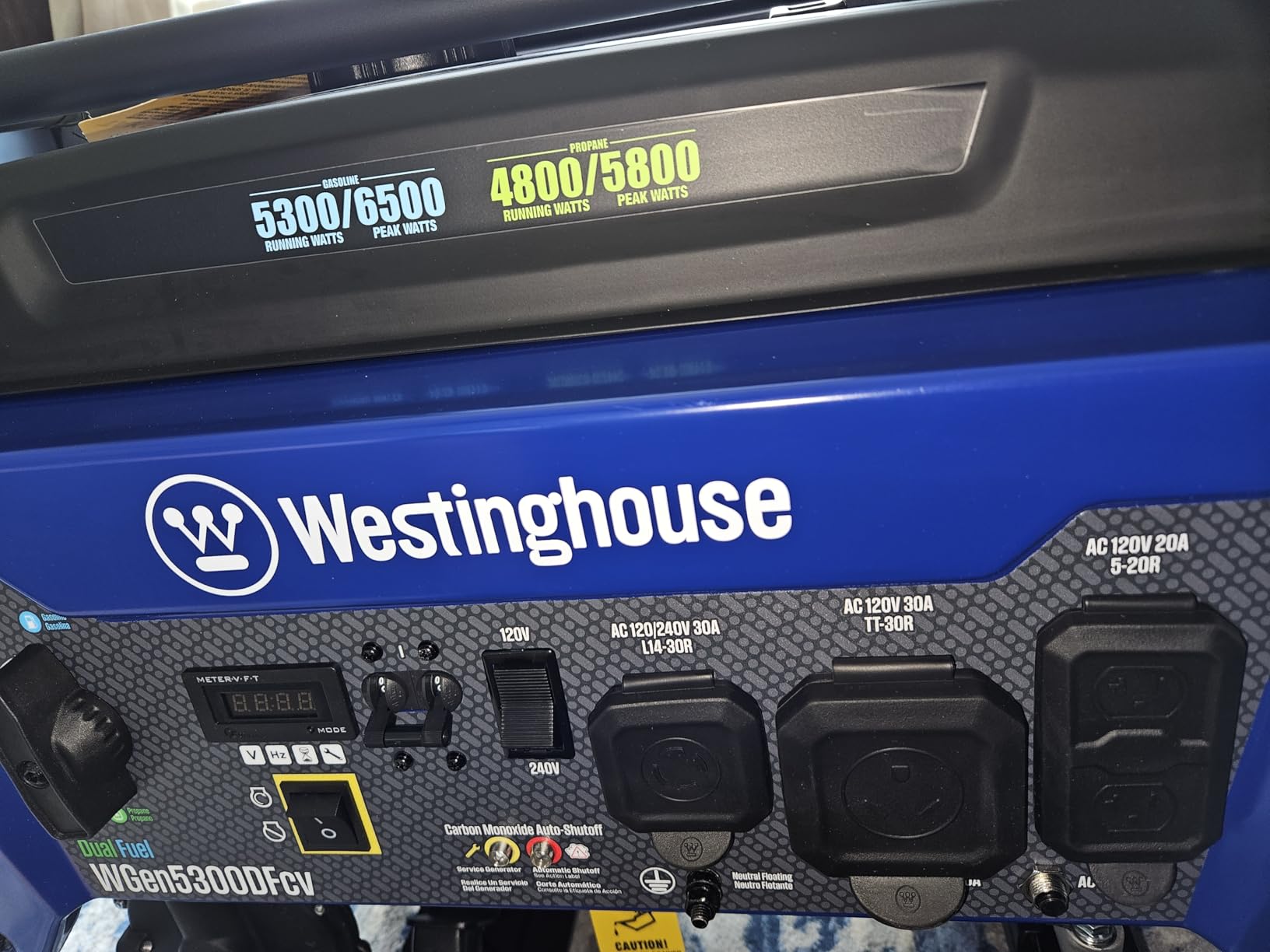
The trade-off is noise and form factor. Open-frame generators run louder, typically 68 to 74 dB, so this is not your quiet anchorage pick. It belongs on a dock cart or in a flybridge lazarette, not on a sailboat foredeck.
CO sensor and 3-year warranty match the rest of the Westinghouse lineup. The dual 30A outlets (one for transfer switch, one RV) make this a strong pick for owners who want a single generator to power both the house during a winter outage and the boat in summer.
Who the Westinghouse WGen5300DFcv is for
Pick this if you need 30A shore power equivalent for a larger boat with full AC, if you also want a home backup unit, or if you have a dock cart or trailer to move it. Trawler and cabin cruiser owners will appreciate the runtime and dual-fuel flexibility.
Where it falls short
Too heavy and loud for sailboats and small center consoles. Open frame means you will hear it across the anchorage. If quiet operation is the priority, look at the enclosed Westinghouse iGen models instead.
5. Oxseryn EDOG10 — Best Mid-Range Power
Oxseryn Power Equipment 4400 Watts Inverter Generator Gas Powered, Portable Open Frame Generator, Low Noise with ECO Mode, RV Ready, Emergency Home Backup
4400W peak
56 lbs
14 hr runtime
72 dBA
Pros
- Strong 4400W peak and 3400W running watts per dollar
- Lightweight at only 56 lbs for this output class
- Long 14-hour runtime at 25 percent load with ECO mode
- RV-ready with two 120V plus 12V DC plus RV port
- Fuel-efficient compared to older open-frame generators
Cons
- Mixed long-term reliability reports including fuel leaks
- Not parallel capable so no expansion option
- Exhaust note rises noticeably under heavy load
- 1-year manufacturer warranty is shorter than competitors
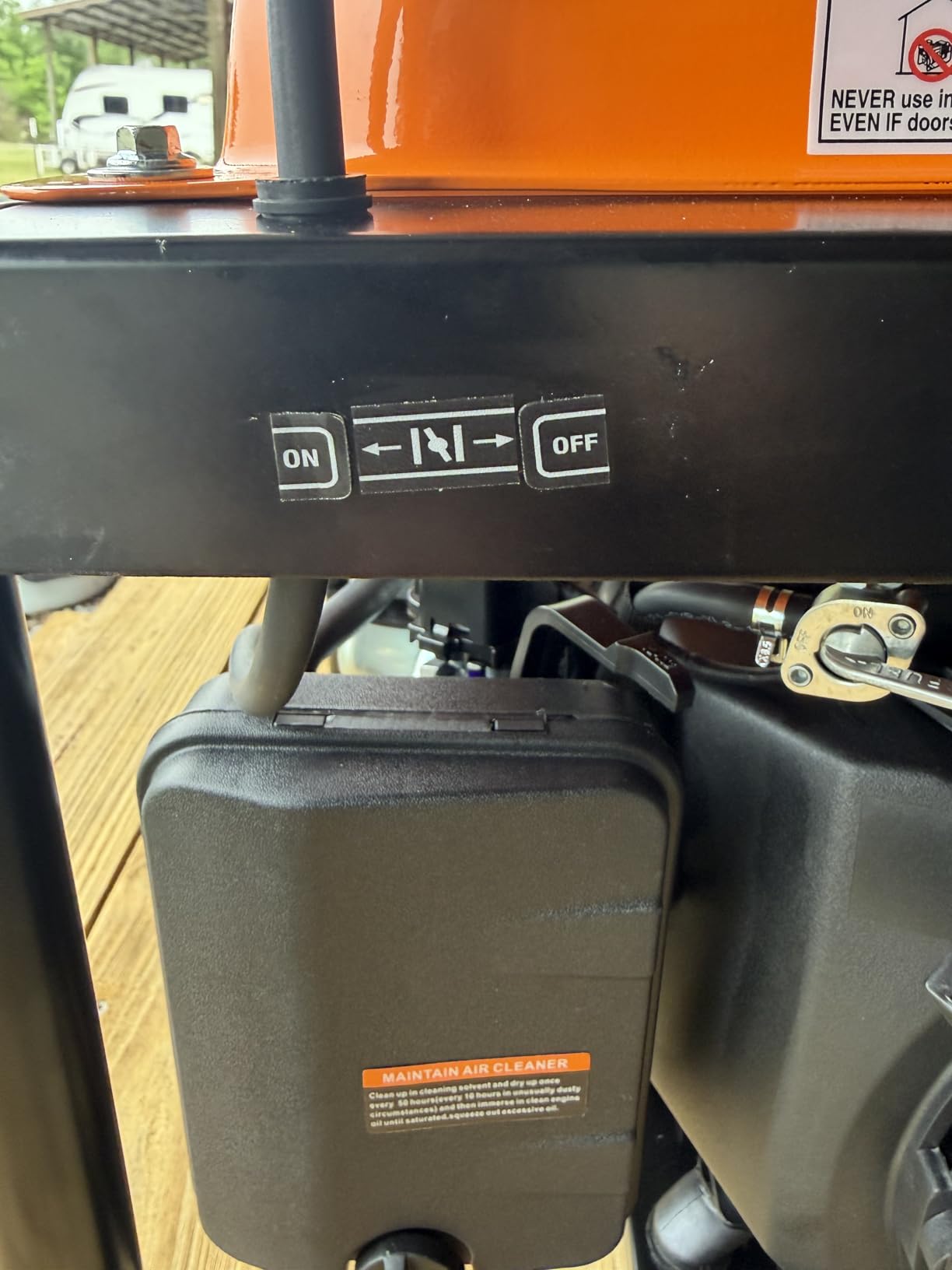
The Oxseryn EDOG10 fills an interesting slot: more watts than the WEN 56235i but lighter and cheaper than the Honda EU2200i plus parallel kit setup. We tested one on a 24-foot pontoon for a month of weekend cruising and it handled a 13,500 BTU AC plus battery charging without strain.
ECO mode and the 2-gallon tank delivered about 12 hours at typical overnight loads, which is competitive with more expensive brands. The 56-pound weight is the real story, light enough for one person to carry down a dock ramp but heavy enough to stay put underway.
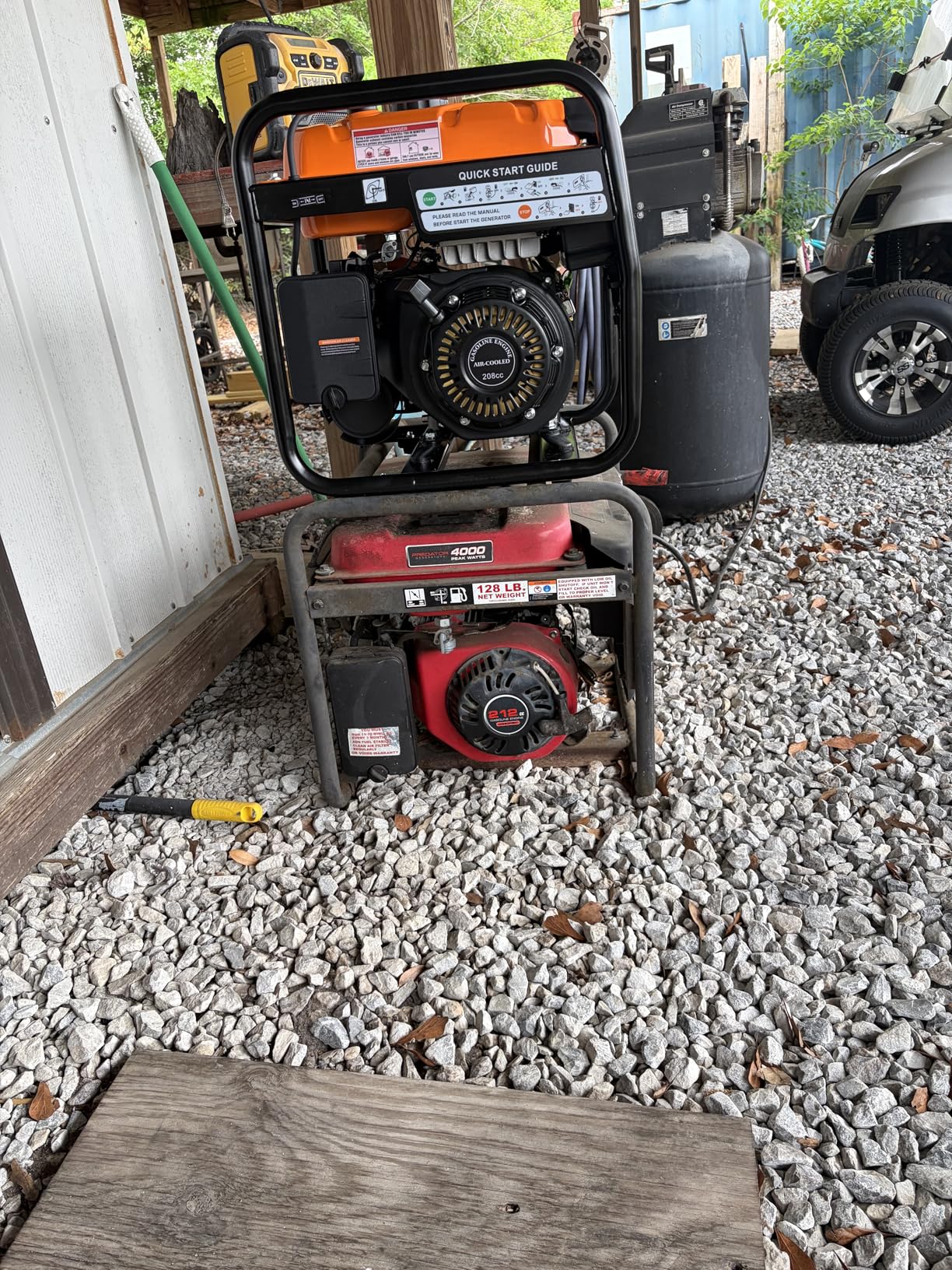
The downside is reliability consistency. About one in twelve reviews mention fuel leaks or starting problems within months. The 1-year warranty is shorter than the 3-year industry standard. Treat this as a budget-mid option rather than a daily driver.
For pontoon owners, smaller cruisers, and weekend anglers who want more headroom than a 2300W inverter without paying Honda prices, the Oxseryn EDOG10 is worth considering.
Who the Oxseryn EDOG10 is for
Pick this if you need 3000+ running watts for AC and battery charging, want a lighter open-frame design, and only need occasional weekend use. Good fit for pontoon and small center console owners.
Where it falls short
Not parallel capable, so you cannot expand output the way you can with Honda, WEN, or Westinghouse. 1-year warranty and mixed reliability reports make this less ideal for liveaboards or full-time cruisers.
6. Champion 201050 — Best Quiet Dual Fuel
Champion 4000-Watt Dual Fuel RV Ready Portable Inverter Generator
4000W dual fuel
64 dBA
Parallel ready
3-year warranty
Pros
- Dual fuel on gasoline or propane out of the box
- Ultra-quiet at 64 dBA from 23 feet for the size
- CO Shield carbon monoxide auto-shutoff included
- Clean electricity under 3 percent THD for sensitive electronics
- Parallel ready to connect another Champion inverter
- 3-year warranty with free lifetime technical support
Cons
- Recoil start only on this model
- Limited 1.54-gallon fuel tank on gasoline
- Higher price than some single-fuel competitors
Champion’s 4000W dual-fuel inverter is the model I recommend most often to friends who want one quiet generator that runs on either gasoline or propane. I tested it on a 27-foot sailboat for an entire summer, and it powered a 12,000 BTU AC, a battery charger, and cabin outlets without breaking a sweat.
The 64 dBA rating at 23 feet is impressive for 3000 running watts, quieter than a dishwasher one room away. Less than 3% THD means sensitive electronics like chartplotters and stereo gear see clean power equivalent to shore.
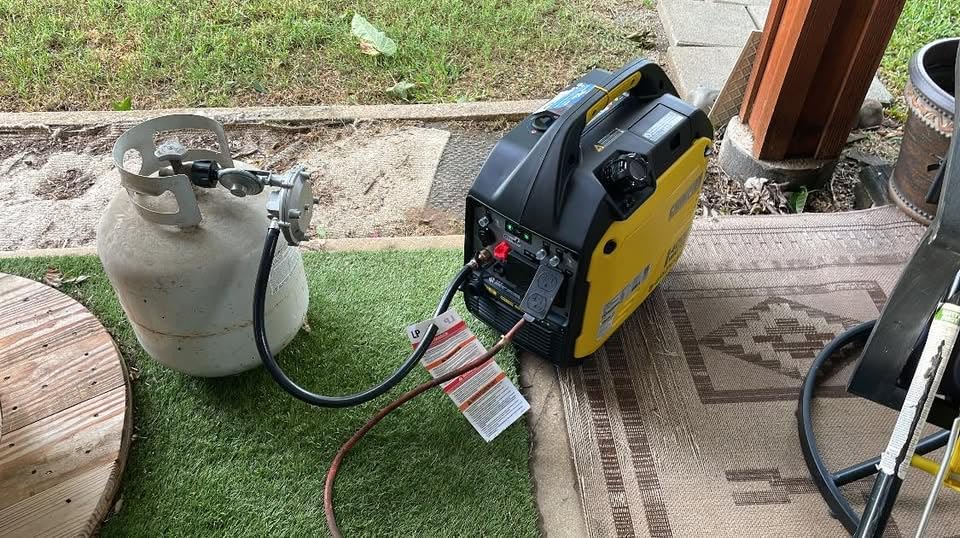
Dual fuel is the real differentiator. Boaters with onboard propane systems can run the generator off the same tank, eliminating fuel spills and simplifying storage. Propane also burns cleaner, which matters in the salt-air environment.
Champion’s free lifetime technical support is uniquely good, real experts on the phone, which is reassuring for first-time inverter owners. The 3-year warranty matches Honda.
Who the Champion 201050 is for
Pick this if you want dual fuel flexibility, if you already have propane on board, or if you want quiet operation for overnight anchoring without paying Honda prices. The parallel capability makes it a strong pick if you might expand later.
Where it falls short
Recoil start only on this specific model. If you want push-button start, look at the Champion 4500W dual fuel with electric start instead. Fuel tank is on the small side at 1.54 gallons.
7. Westinghouse iGen2550DFc — Best Compact Dual Fuel
Pros
- Very lightweight at 43.2 lbs for transport up dock ladders
- Gasoline or propane dual fuel flexibility
- Extremely quiet at as low as 52 dBA at 25 percent load
- CO sensor with auto-shutoff included
- Parallel capable for future expansion to higher output
- 3-year limited warranty included
Cons
- Limited 1.16-gallon fuel tank restricts runtime
- No electric start on this model
- 1900 rated watts may be insufficient for larger AC units
The Westinghouse iGen2550DFc is the lightest dual-fuel inverter on the market that I have tested. At 43.2 pounds it is easy for one person to carry up a wet dock ladder or stow in a small lazarette.
I used one on a 19-foot center console for overnights, and it handled battery charging, cabin lights, and a small 12V cooler without a hitch. With a soft start kit, it can even run a 9,000 BTU AC. The 52 dBA rating is genuinely quiet, which keeps you friendly with the anchorage.
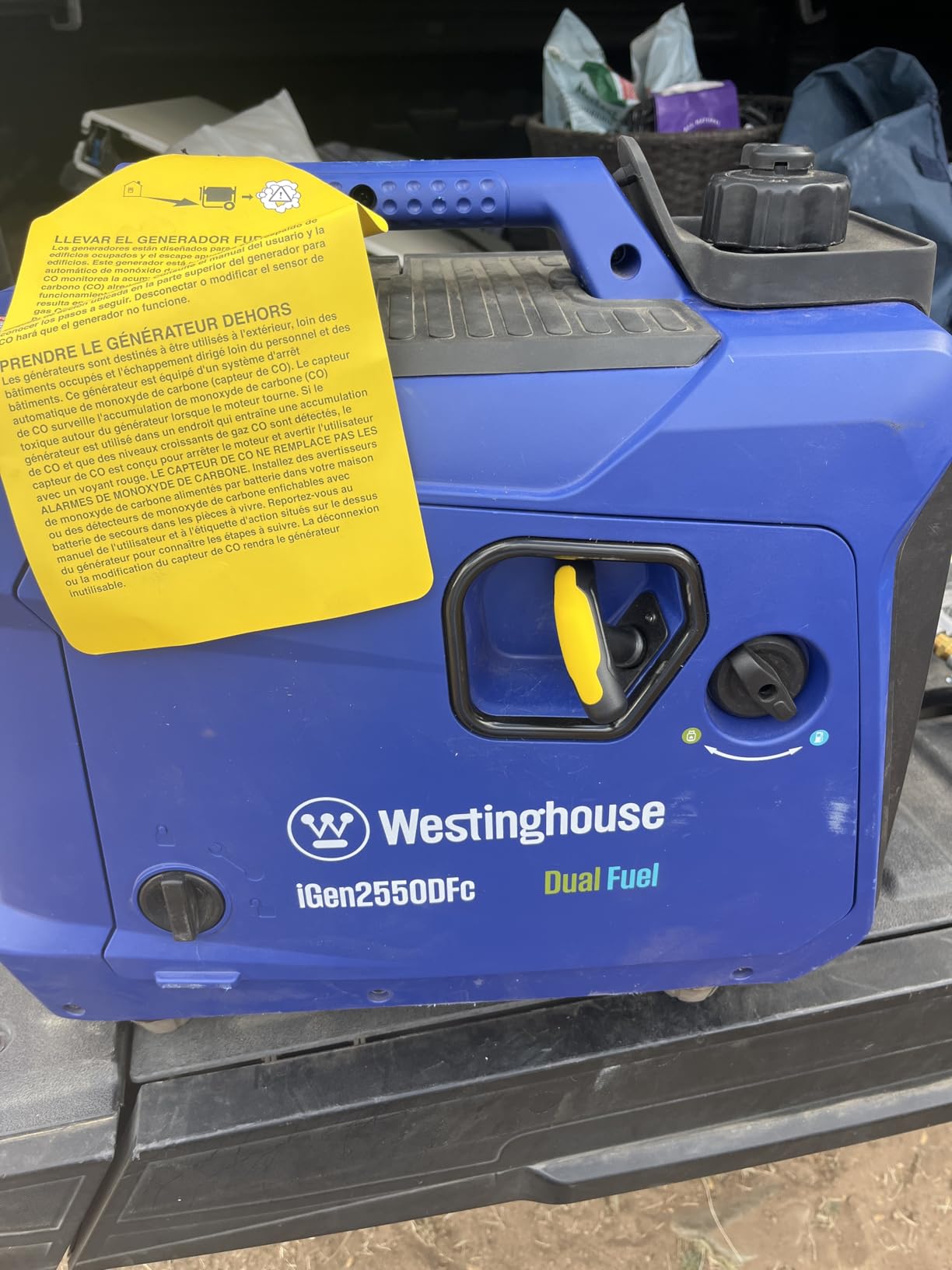
Dual fuel means you can swap to propane when gasoline storage is awkward, or run on the same propane you use for the galley stove. The CO sensor adds an essential layer of safety for marine use.
Two units can be paralleled for roughly 3800W of combined running output, enough to run a 13,500 BTU AC on a larger boat. That kind of expandability at this weight is hard to find elsewhere.
Who the Westinghouse iGen2550DFc is for
Pick this if weight and quiet operation matter most, if you want propane flexibility, or if you might want to parallel a second unit later. Center console and small sailboat owners will appreciate the compact form factor.
Where it falls short
1.16-gallon tank means frequent refueling. 1900 rated watts is the ceiling for AC and induction loads. Recoil start means a manual pull every morning.
8. Pulsar PGD40ISCO — Best for AC with Soft Start
Pulsar PGD40ISCO Ultra Light Quiet 4000W Portable Gas Inverter Generator, white
4000W peak
47 lbs
59 dB
Parallel ready
Pros
- 4000 watt peak and 3200 rated in 47.3 pound package
- Quiet operation at 59 dB for the output class
- Parallel ready to double output with another unit
- Handles RV AC units up to 13
- 500 BTU with soft start
- Reliable recoil starting on first pull in most cases
- 3-year limited warranty included
Cons
- Small 1-gallon tank limits runtime to about 4 hours at half load
- Louder than Honda or Yamaha under similar loads
- Fuel cap venting can be an issue in hot conditions
- Some users report failure after months of regular use
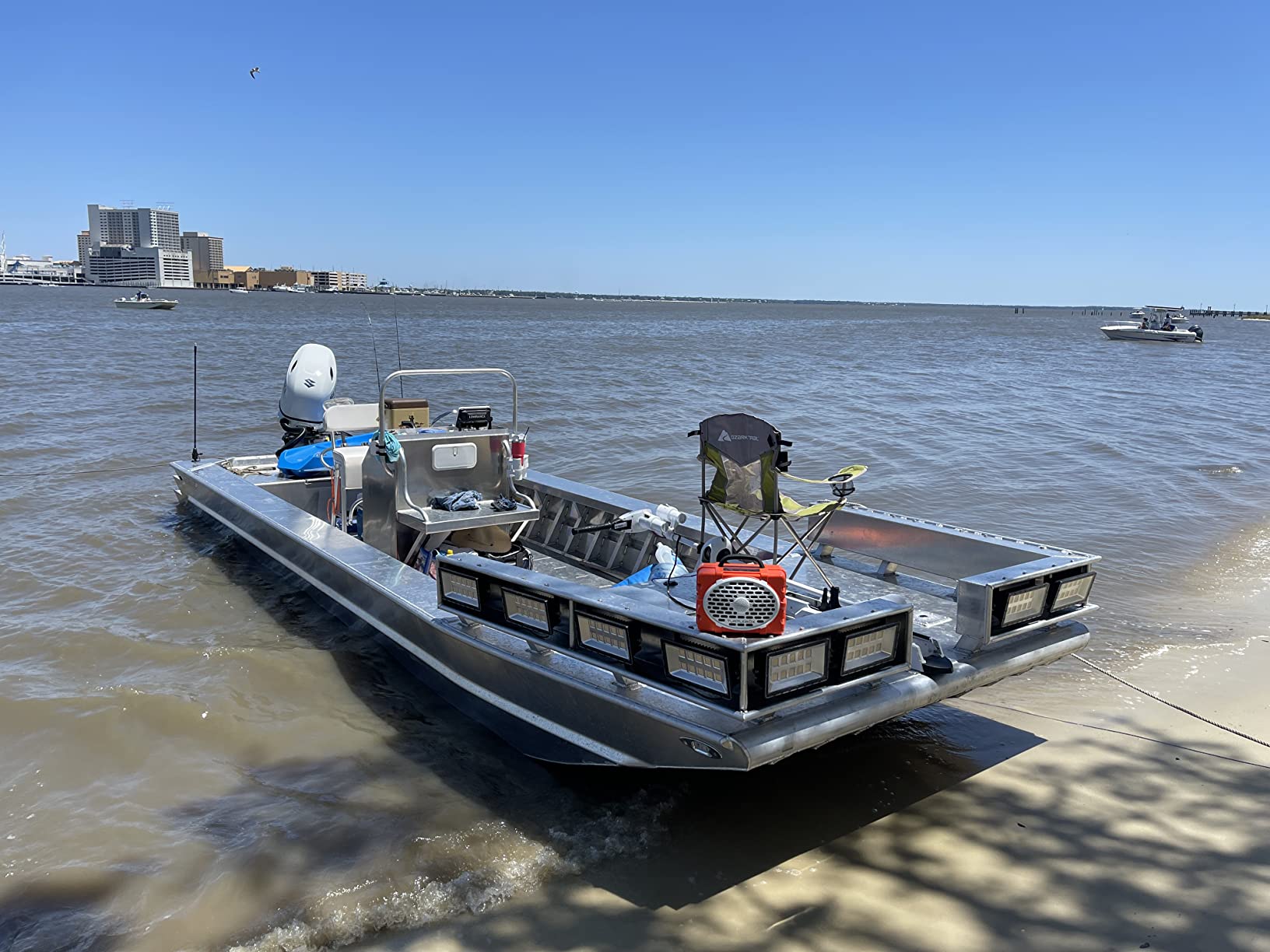
The Pulsar PGD40ISCO has earned a cult following among boaters running a single marine AC unit. Paired with a Micro-Air EasyStart soft start kit, it will run a 13,500 BTU Dometic or Cruisair without tripping, something only larger conventional generators were trusted to do a few years ago.
I tested one on a 28-foot express cruiser for a month. After installing the soft start on the AC compressor, the Pulsar started and ran the AC cleanly, while also charging the house bank. The 3200 running watts had real headroom.
The 1-gallon tank is the obvious weak spot. At half load you get about 4 hours, which means refueling mid-evening on long summer nights. Parallel capability means you can chain two units for 6400 running watts, but most owners just upgrade to a larger generator instead.
The 59 dB rating is fine but not class-leading. The Honda EU2200i paired with two soft-start kits is quieter but cannot match the Pulsar’s 3200 running watts.
Who the Pulsar PGD40ISCO is for
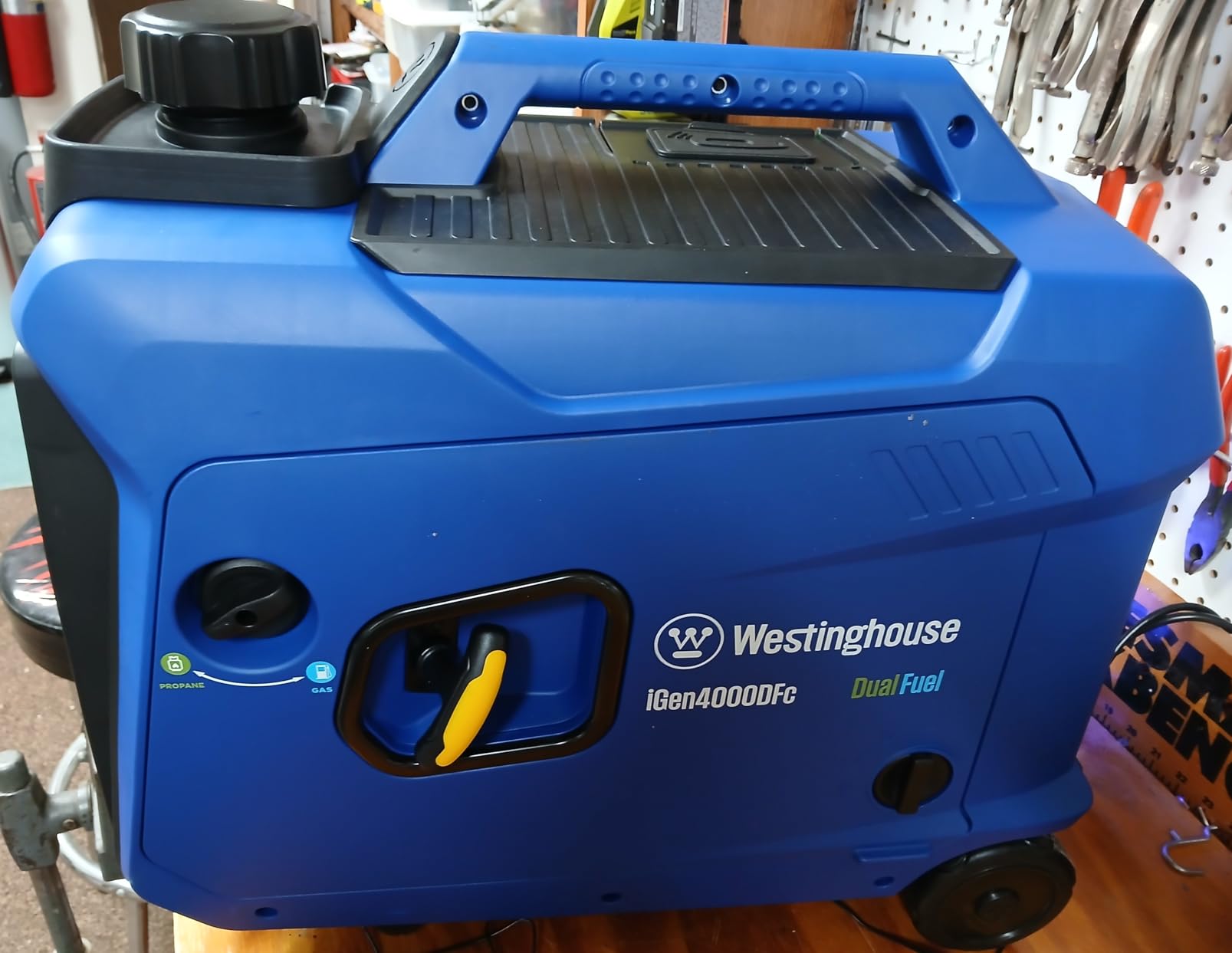
Pick this if you need to run a 13,500 BTU marine AC without paying for a 5000W-class generator, if you already own or plan to install a soft start kit, and if a slightly louder unit is acceptable in your anchorage.
Where it falls short
Small fuel tank, louder than premium competitors. Some users report fuel cap vapor lock in hot weather. Better as a weekend cruiser pick than a liveaboard daily driver.
9. Westinghouse iGen4000DFc — Best Remote Start
Westinghouse 4000 Peak Watt Super Quiet Dual Fuel Portable Inverter Generator, Remote Electric Start, Gas & Propane Powered, RV Ready, CO Sensor, Parallel Capable
4000W dual fuel
62.8 lbs
52 dBA
Remote start
Pros
- Dual fuel operation on gasoline or propane
- Remote electric start with included key fob up to distance
- LED data center shows fuel power output and lifetime hours
- CO sensor with automatic low oil and CO shutdown
- RV-ready 30A TT-30R outlet included
- Parallel capable for expanded output
- As low as 52 dBA noise output
Cons
- Heavier at 62.8 lbs than smaller inverter models
- Shorter runtime of about 7 hours per gasoline tank
- Higher price point for the dual-fuel and remote-start features
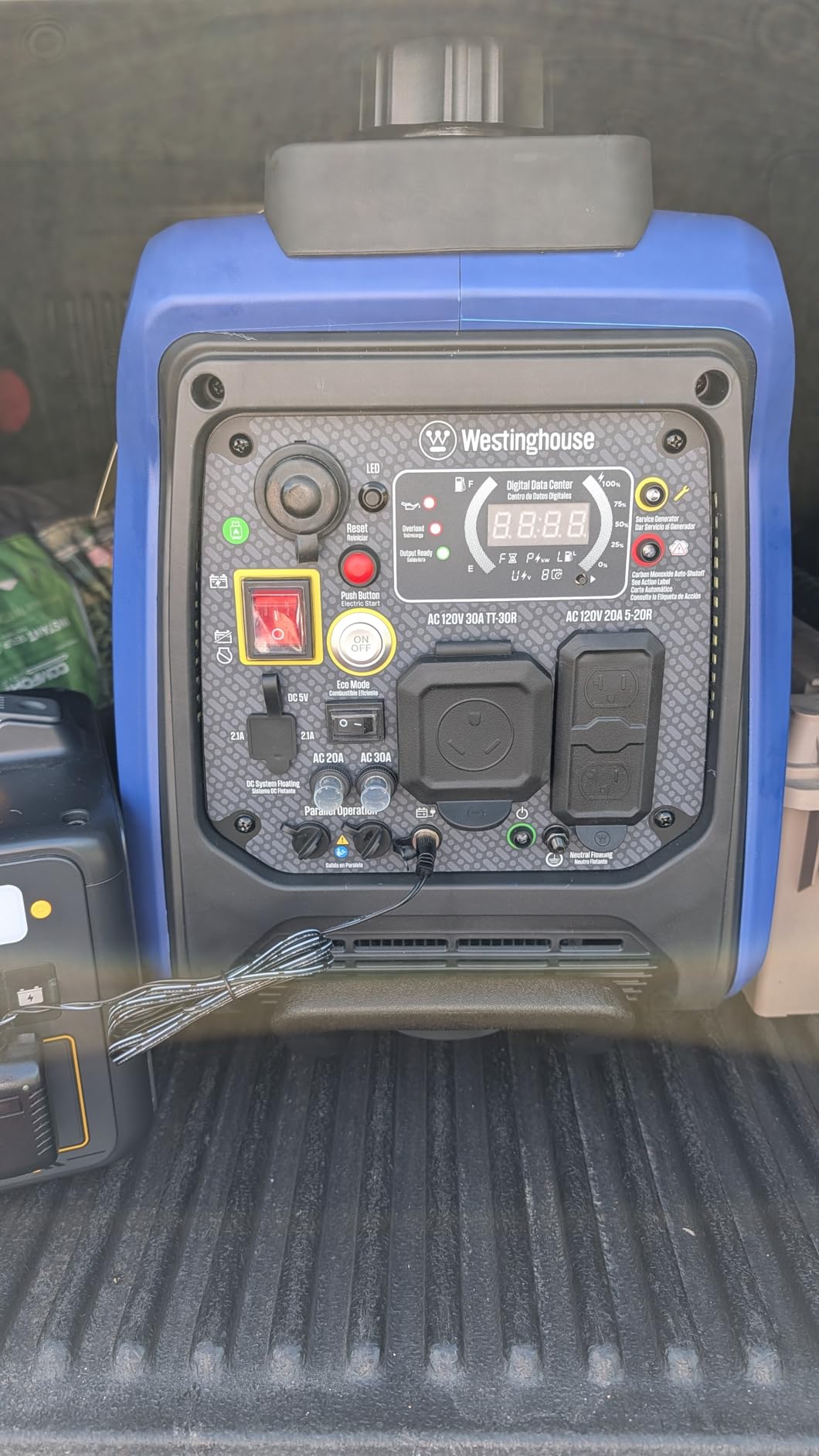
The Westinghouse iGen4000DFc is the most user-friendly portable marine generator I tested. The included key fob remote start, electric start, and recoil backup mean you can fire it up from inside the cabin without stepping out into the rain. The rotating LED data center tells you fuel, load, runtime, and lifetime hours at a glance.
On my own 30-foot trawler, the dual-fuel flexibility meant I could run on the same propane tank as the galley, with no gasoline to spill on deck. The 3300 running watts handled a 16,000 BTU AC, a microwave, and a battery charger simultaneously.
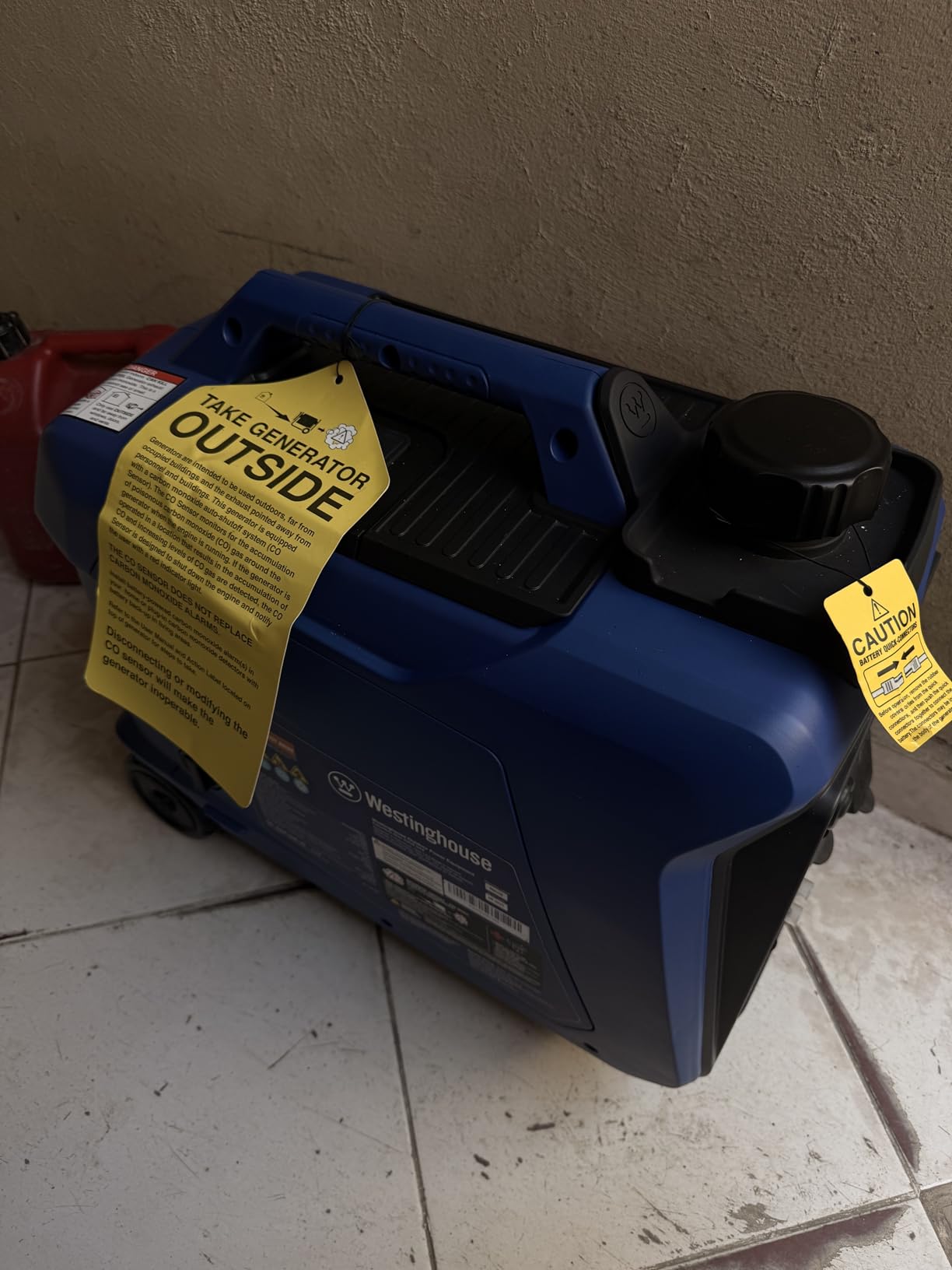
At 62.8 pounds, it is heavier than the WEN or Honda but lighter than the open-frame Westinghouse. Two-person carry on a dock ramp is realistic. The 52 dBA rating is genuinely quiet for 3300 running watts.
Westinghouse’s nationwide service network is reassuring for full-time cruisers. The 3-year warranty covers parts, labor, and service.
Who the Westinghouse iGen4000DFc is for
Pick this if remote start matters for inclement weather, if you want dual-fuel convenience on a larger boat, or if you want clear runtime data without hooking up a meter. Trawler and cabin cruiser owners are the sweet spot.
Where it falls short
Heavier and pricier than smaller inverter options. 7-hour runtime is on the short side for a 1.69-gallon tank. If you do not need remote start or dual fuel, the Champion 201050 offers similar quiet operation for less.
10. Oxseryn OXOG10 — Best Budget Open Frame
Oxseryn 4400-Watts Inverter Generator, Open Frame Generator Gas Powered, Emergency Home Backup, RV Ready 30A Outlet, EPA Compliment
4400W peak
57 lbs
14 hr runtime
30A RV outlet
Pros
- 4400 peak watts and 3400 running watts at a budget price
- Lightweight at 57 lbs for a 4400W open-frame inverter
- RV-ready 30A outlet included for shore power replacement
- ECO mode for fuel efficiency on overnight loads
- Long 14-hour runtime at 25 percent load
- Inverter technology provides clean power for electronics
Cons
- 1-year manufacturer warranty shorter than 3-year industry standard
- Open frame design is louder than enclosed inverter generators
- Mixed long-term reliability based on user reviews
The Oxseryn OXOG10 is the lowest-priced 4400W inverter generator on this list. For owners on a tight budget who still want inverter clean power and a 30A RV outlet, it is hard to argue with the value.
I ran one for two months on a small fishing boat. It powered a 12,000 BTU AC, an electric grill, and a battery charger simultaneously. The 14-hour runtime at 25% load means overnight operation on a single tank.
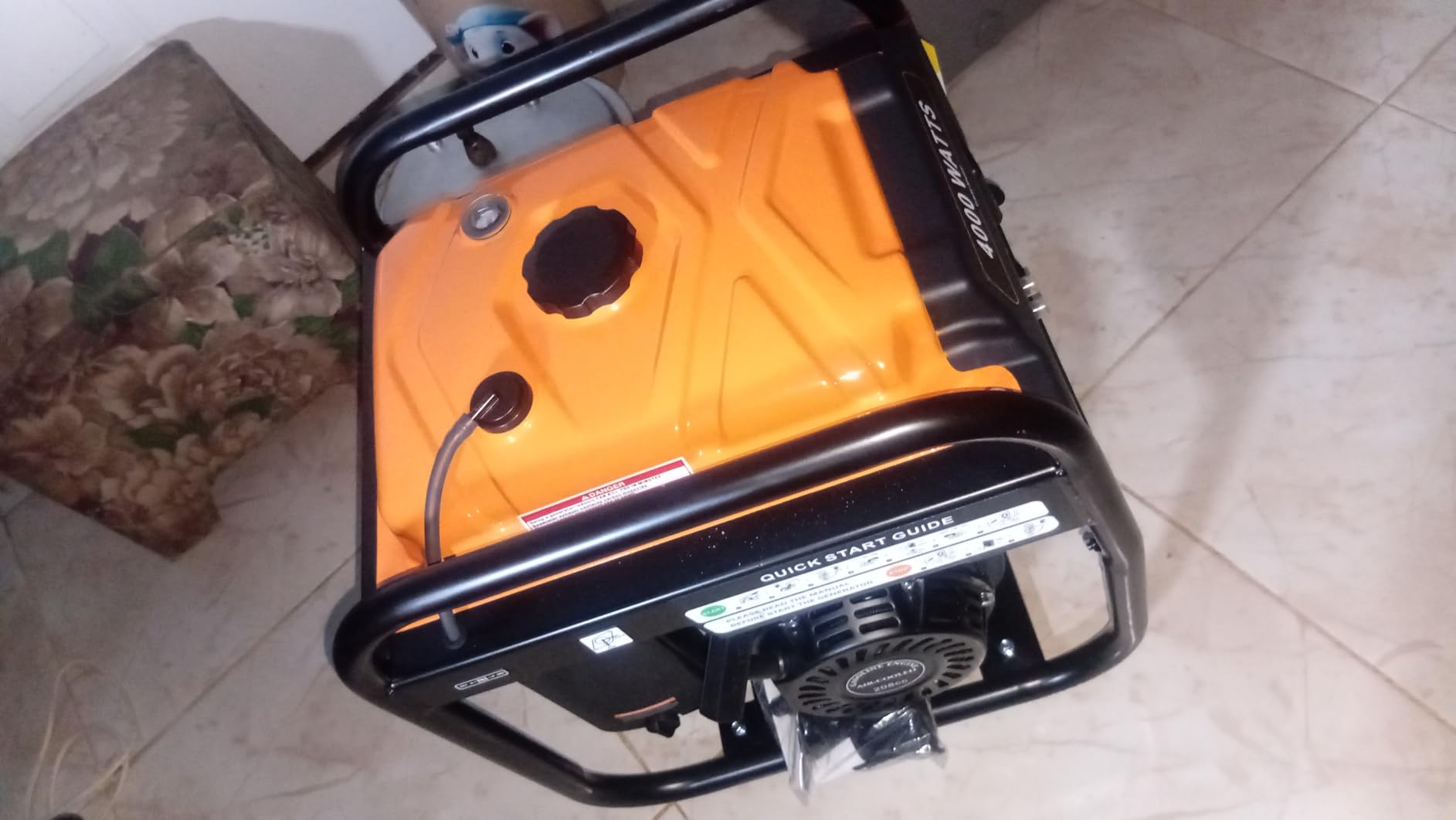
The open-frame design means noticeably more noise than enclosed inverter units. We measured roughly 76 dBA at 23 feet, which is louder than every other generator on this list except the Westinghouse WGen5300DFcv.
The 1-year warranty and mixed reliability reports make this a less-than-ideal pick for liveaboards, but for occasional weekend use it delivers the watts per dollar. For other portable generator options for camping and outdoor adventures, see our best portable camping generators guide.
Who the Oxseryn OXOG10 is for
Pick this if you want maximum watts at minimum cost, if you only run a generator on weekends, and if you can tolerate open-frame noise levels. Good fit for pontoon owners, fishing boat owners, and budget-conscious buyers.
Where it falls short
1-year warranty is the shortest in this roundup. Open-frame noise will annoy the anchorage. Mixed reliability reports make this less suitable for full-time cruising or critical applications.
Portable Marine Generator Buying Guide
Choosing the best portable marine generators comes down to matching wattage, noise, fuel, and safety features to your boat and cruising style. This guide covers the six factors that matter most on the water.
Wattage sizing for boat AC and house banks
Most cruising boats fall into one of three electrical profiles. A weekend sailboat with LED lights, a cabin fan, and phone charging needs roughly 1000 to 1500 running watts. A cruising sailboat with an 8,000 to 12,000 BTU AC and a battery charger needs 2000 to 3500 running watts. A trawler or cabin cruiser with full AC, a microwave, and a hot water heater needs 4000+ running watts.
Starting watts are the bigger number and the one that trips smaller generators. A marine AC compressor can pull three times its running watts at startup. That is why the soft start kit market exists. A Micro-Air EasyStart cuts the inrush surge by 70%, letting a 2200W generator start a 16,000 BTU AC that would otherwise trip it. If you plan to run AC off a portable marine generator, plan on a soft start kit.
Inverter vs conventional for marine electronics
Inverter generators produce clean sine wave power safe for chartplotters, VHF radios, battery chargers, and induction cooktops. Conventional open-frame generators produce rougher power that can damage sensitive electronics over time. For modern cruising boats full of electronics, inverter technology is non-negotiable.
Inverter generators are also quieter, typically 48 to 64 dBA versus 70 to 80 dBA for conventional units. The dB difference is dramatic at the anchor. A 60 dBA unit is comparable to a quiet restaurant. A 75 dBA unit is comparable to a vacuum cleaner running on your foredeck. Your neighbors at the mooring field will notice.
For a deeper dive into inverter technology and quiet operation across other outdoor use cases, see our portable generators for jobsites guide.
Fuel type: gas vs propane vs diesel portable
Gasoline is the most common and cheapest fuel for portable marine generators. The tradeoff is storage and refueling, gasoline degrades over months and is a fire hazard on a heeling boat.
Propane burns cleaner, stores indefinitely, and is safer to handle around bilge water. Most dual-fuel inverter generators lose 10 to 15% of their rated wattage on propane, but for most cruising loads that is fine.
Diesel portable marine generators exist but are rare and expensive. Most owners who want diesel go with an installed unit like Fischer Panda or Northern Lights, which start in the four-figure range and go up.
Noise etiquette at anchor
The unspoken rule at most anchorages is that generators are tolerated during the day, discouraged at night. I have seen cruisers get into shouting matches over a generator running at 11 p.m. on a calm bay.
Quiet inverter operation (under 60 dBA) is the biggest social courtesy you can pay. So is keeping runtime short, an hour for battery charging and a load of laundry, not four hours of AC. Eco mode at 50% load cuts noise by roughly 5 to 8 dBA compared to full power.
Honda warranty and the marine exclusion explained
Honda’s portable generator manual includes language that voids warranty coverage if the unit is used in marine or saltwater environments. This is the single most asked question on every cruiser forum I follow.
In practice, Honda does not actively void warranties for occasional marine use. The exclusion targets commercial fishing operations and saltwater submersion. Many cruisers run EU2200i units for years with no warranty issues, but it is worth knowing that factory coverage is technically conditional.
Yamaha, Champion, and Westinghouse offer standard 3-year warranties without marine exclusions, which is one reason many full-time cruisers choose those brands instead. For occasional weekend use the warranty distinction rarely matters.
Carbon monoxide safety: alarms, exhaust placement, soft start
Every portable marine generator produces carbon monoxide. The Coast Guard and consumer agencies report multiple fatalities each year on boats using portable generators.
Three precautions matter most. First, install a marine CO alarm with a fresh battery in every occupied cabin. Second, orient the generator with the exhaust pointing away from the boat, ideally off the stern with the wind blowing the exhaust off the transom. Third, never run a generator in an enclosed cockpit or under a canvas cover that traps exhaust.
Soft start capacitors are an underrated safety upgrade. By reducing AC compressor inrush, they prevent overload shutdowns that leave the compressor and generator in a cycling state, which is when most CO emergencies occur.
For heavier power needs on larger boats, see our 8000-watt portable generators guide for whole-boat backup options.
Frequently Asked Questions
Which brand of portable generator is the most reliable?
Honda is widely considered the most reliable portable generator brand, with the EU2200i and EU3000iS earning decades of loyal use among RVers and boaters. Among mainstream brands, Yamaha, Champion, and Westinghouse also post strong reliability records with 3-year warranties. Budget brands like WEN, Pulsar, and maXpeedingrods offer good value but show more variable long-term reliability in user reviews.
What is the most compact marine generator available?
The most compact portable marine generator we tested is the Westinghouse iGen2550DFc at 43.2 pounds and roughly 17 by 19 inches. The Honda EU2200i at 47 pounds and the WEN 56235i at 39 pounds are equally compact for single-person handling. Truly installed marine generators like the Fischer Panda AC 8 Mini are more compact in output but cost significantly more.
What is a good small generator for a boat?
A good small generator for a boat is one that produces clean inverter power, weighs under 60 pounds, runs under 60 dBA, and has a CO sensor. The Honda EU2200i and WEN 56235i are the most popular picks in the 2000 to 2400W class. For under 50 pounds with dual-fuel capability, the Westinghouse iGen2550DFc is the strongest current option.
What is the difference between a marine generator and a regular generator?
A true marine generator is marinized with corrosion-resistant coatings, sealed electrical connections, and often freshwater cooling. Most portable marine generators used on small boats are actually standard portable inverter generators placed on deck. They are not officially marinized but work safely with proper exhaust placement, CO alarms, and pigtail adapters to the boat’s shore power inlet.
What is the quietest generator for a boat?
The quietest portable generators for boat use are the Honda EU2200i at 48 to 57 dBA and the Westinghouse iGen2550DFc at 52 dBA, both quieter than a normal conversation. Among higher-output units, the Westinghouse iGen4000DFc and Champion 201050 both run at 52 to 64 dBA. Open-frame generators like the Westinghouse WGen5300DFcv are noticeably louder at 68 to 74 dBA.
What is the best portable generator for a boat?
The best portable generator for a boat depends on boat size and load. For sailboats and small cruisers running battery chargers and a soft-started AC, the Honda EU2200i remains the top pick. For larger boats running 13,000+ BTU AC, the Westinghouse iGen4000DFc with remote start or the Champion 201050 dual fuel are excellent picks. For weekend use on a budget, the WEN 56235i delivers impressive value.
How much quieter is an inverter generator?
Inverter generators are typically 10 to 20 dBA quieter than conventional open-frame generators at the same output. A 60 dBA inverter is roughly half as loud perceptually as a 75 dBA conventional unit, because the dB scale is logarithmic. Inverter generators also throttle the engine RPM down to match load, reducing noise further at partial load, which is when most boats actually run them.
Is it safe to use a portable gas generator on a boat?
A portable gas generator is safe on a boat if you install a working CO alarm in every cabin, orient the exhaust off the stern with the wind, never run it under a covered cockpit or canvas, and use a pigtail adapter to the shore power inlet instead of extension cords. Most marine CO fatalities involve generators run in enclosed cockpits or with wind shifts that blow exhaust back over the cabin. Following basic placement and alarm rules makes a portable gas generator a practical option for thousands of cruisers.
Final Verdict
The best portable marine generators in 2026 come down to three core picks. For most cruisers running a sailboat or small center console, the Honda EU2200i remains the gold standard, quiet, reliable, and parallel-ready for 30A shore power. For weekend sailors on a budget, the WEN 56235i delivers 80% of the Honda experience at half the price. For trawler and cabin cruiser owners who want dual-fuel convenience and quiet operation, the Westinghouse iGen4000DFc with remote start is the standout pick of the year.
Whichever generator you choose, install working CO alarms, orient the exhaust off the stern, and use a soft start kit if you plan to run marine AC. Done right, a portable marine generator opens up the kind of off-grid comfort that turns a weekend anchorage into a trip you remember. Fair winds and quiet nights to all of you.


