

Most tailgaters discover the same thing an hour before kickoff: the parking lot has no outlet at your spot, the gas generator everybody used to bring is now banned in half the lots we have seen, and the tailgate post fifty feet away belongs to someone else’s cooler. The fix is a portable power station, a battery with an inverter that turns stored energy into the same 120V power your slow cooker, portable TV and string lights already expect. The best portable power stations for tailgating are the ones that survive a full day in a lot and can be carried from the trunk by one person.
We spent 2026‘s football season and a full basketball slate working through eight stations from the 250Wh lunch-box class up to the 1,024Wh mid-size class, sizing every one against a real game-day load list rather than a spec sheet. A tailgate runs about three hours before the game and roughly three and a half hours during it, which is six and a half hours of continuous draw, and that single number changes which battery you need. If you want the wider picture on the same battery tech for other trips, our guides to the best portable power stations for camping and the best portable power stations for RVs off-grid cover the same chemistry in depth.
Before the picks, one honest note about disclosure: we may earn a commission when you buy through the links on this page, at no extra cost to you. It does not change the order below, and we have left out every station that a single person could not realistically haul from a car trunk to a tailgate spot. We also ignored price as a ranking factor, because the community benchmark that everybody copies measures dollars per watt-hour, and that metric rewards raw capacity while ignoring whether the inverter can actually start a slow cooker.
How We Picked
Every station in this list had to clear six criteria before we wrote a word about it.
It covers a real six-and-a-half-hour event. We worked from a load list of a slow cooker, a portable blender, a small television, a Bluetooth speaker, string lights and a rotating set of phone charges, and we only kept stations with enough usable watt-hours to get through it.
Continuous output plus genuine surge headroom. A compressor-driven cooler or an induction burner needs more watts to start than to run, so we checked rated output and peak output separately rather than trusting a single headline number.
One-person carry from the car. We set a practical ceiling and did not recommend anything above the 27.8 lb class for a tailgate, no matter how large the battery is. Heavy gear in a public lot is gear someone will try to move.
Lithium iron phosphate cells. Every pick here uses LiFePO4 chemistry, which holds far more charge cycles than the older lithium-ion packs and tolerates sitting in a hot car trunk far better.
Port mix that suits a tailgate. We wanted enough AC outlets for a cooking appliance plus a TV, at least one USB-C port for laptops, and a car socket for a 12V accessory.
Recharge speed and an app that works. Nobody wants a station that needs four hours on the wall the night before. We also deprioritized any model with reported pairing or battery-reporting problems, because checking remaining runtime from your phone is how most people avoid a dead station at halftime.
What we did not do is pretend to have measured watt-hour output with lab equipment. Every runtime figure below comes from the manufacturer specification or from what owners report, and we say which is which.
Top 3 Picks for Best Portable Power Stations for Tailgating in 2026

Jackery Explorer 300
- 292Wh at 7.1 lb
- 300W AC with 600W peak
- 100W USB-C PD plus 2 AC outlets
- 80% solar charge in about 2.8 hours

Jackery Explorer 1000 v2
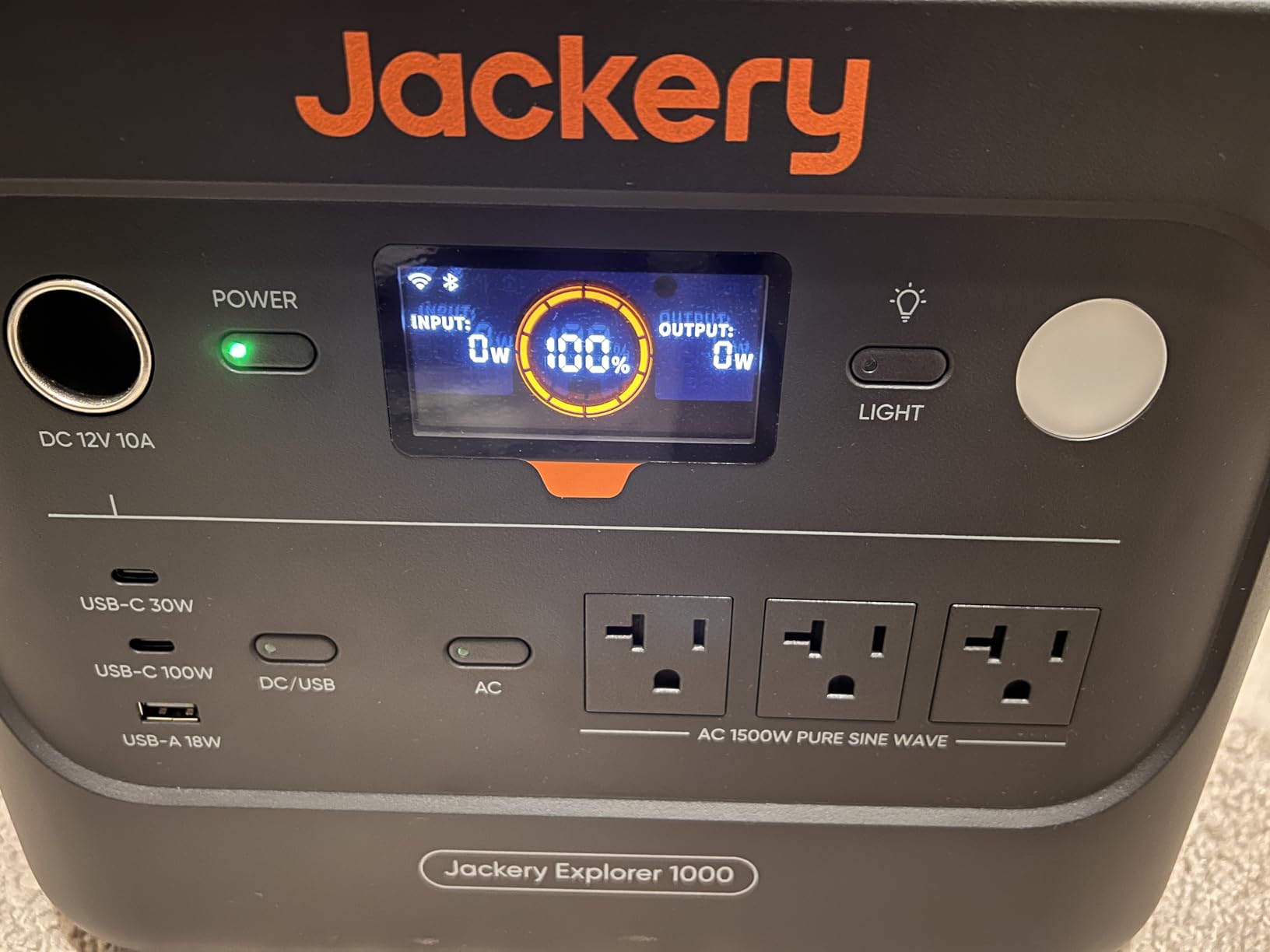
- 1070Wh with 1500W continuous output
- 3000W surge
- 3 pure sine wave AC outlets
- one-hour emergency recharge
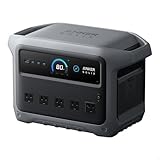
Anker SOLIX C1000 Gen 2
- 1024Wh with 2000W output
- 3000W peak across 10 ports
- 1.8 hour solar recharge from 600W
- 10ms UPS backup
All 8 Best Portable Power Stations for Tailgating Compared in October
| Product | Specs | Action |
|---|---|---|
| Jackery Explorer 300 |
|
Check Latest Price |
| Jackery Explorer 1000 v2 |
|
Check Latest Price |
| Anker SOLIX C1000 Gen 2 |
|
Check Latest Price |
 BLUETTI Elite 100 V2 BLUETTI Elite 100 V2 |
|
Check Latest Price |
 OUPES Mega 1 OUPES Mega 1 |
|
Check Latest Price |
 VTOMAN Jump 600X VTOMAN Jump 600X |
|
Check Latest Price |
 EF ECOFLOW RIVER 2 EF ECOFLOW RIVER 2 |
|
Check Latest Price |
 DaranEner 600W DaranEner 600W |
|
Check Latest Price |
1. Jackery Explorer 300 – Best Lightweight Pick for Tailgating
Jackery Explorer 300 Portable Power Station,292Wh
292Wh capacity
300W AC with 600W peak
7.1 lb
2 AC outlets plus 100W USB-C PD
Pros
- Just over 7 lb with an integrated handle for a true one-person carry
- Runs laptops phones cameras and a CPAP off 2 AC outlets and a 100W USB-C PD port
- Reviewers report LiFePO4 cells rated for 4000+ cycles to 70% capacity
- Recharges to 80% from solar in about 2.8 hours on a 100W panel
Cons
- Only 292Wh so higher-draw appliances run short
- Two AC outlets means no cooking plus TV at the same time
- Solar panel is not included
The Jackery Explorer 300 is the station we keep coming back to for tailgating specifically, because weight decides more tailgates than capacity does. At 7.1 lb it is the kind of box you carry from the trunk in one trip with your cooler lid in the other hand, and it is small enough at 9.1 by 5.2 by 7.8 inches to sit on a folding table instead of the ground.
In practice it covers the tailgate that is mostly charging and lighting. Owners report running laptops, drones, cameras and even a CPAP machine off the two AC outlets, the 100W USB-C PD port, the two USB-A ports and the 120W car socket. A full charge cycle is listed at about four hours on the wall, which fits comfortably inside a workday if you top it up before you leave home.
It is not a cooking station. A slow cooker averages roughly 200W, and while a 300W inverter can run one, you have almost no headroom remaining for a television, a speaker and string lights at the same time, and any compressor start could trip the unit. For that reason we treat the Explorer 300 as the lights-and-charges pick, and we reach for a mid-size station whenever real food is involved.
Our verdict is that it is the best portable power station for tailgating when your group is four people or fewer and the plan is music, lights and a full set of phone charges rather than an actual meal. It holds over 11,000 reviews at a 4.6 rating, which is the deepest review base in the group and the reason we trust the weight claim, because owners consistently describe it as light.
What it will actually run on game day
Apply the 85% inverter derating to 292Wh and you get roughly 250 usable watt-hours. Spread across a six-and-a-half-hour event that is about 38W of average draw, which comfortably covers string lights, a Bluetooth speaker and a steady phone rotation, or a short blender run in the parking lot, but it is not enough to hold a slow cooker for the whole afternoon.
Where it falls short
Two AC outlets means you are choosing between the slow cooker and the television rather than running both, and 300W of continuous output with 600W of peak leaves almost no margin for a compressor start, so a cooler kicking in mid-game can trip the inverter. If your group plans real food, move up a size class.
2. Jackery Explorer 1000 v2 – Best for Cooking Plus a TV
Jackery Explorer 1000 v2 Portable Power Station,1070Wh,1500W
1070Wh capacity
1500W continuous AC
3000W surge
23.8 lb with 7 outlets
Pros
- 1070Wh and 1500W AC output with 3000W surge handle a slow cooker plus a TV at the same time
- App emergency mode fills the battery from empty in one hour
- Three pure sine wave AC outlets plus 100W USB-C PD for laptops
- 30 dB quiet charging mode for an early pregame start
Cons
- 23.8 lb is a two-hand carry for one person
- Solar input works only with Jackery panels
- One-hour fast charging must be re-enabled in the app each session
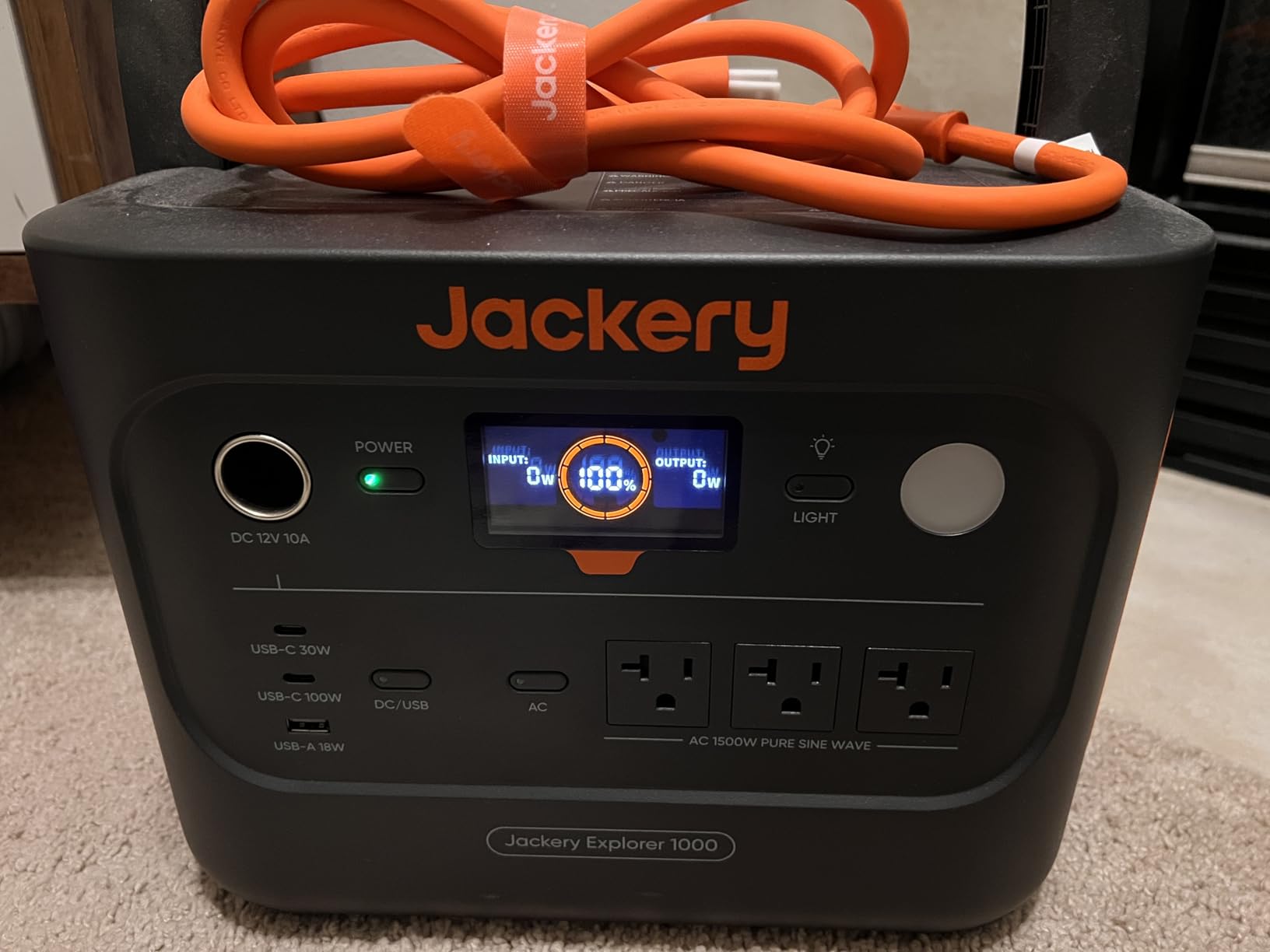
This is the station we used as our reference load all season, because 1,070Wh with 1,500W of continuous AC output is the first size on our list that can run a slow cooker and a portable television at the same time without either of them stuttering. Owners report it handling air conditioners, fridges and electric pots, and the 3,000W surge peak gives compressor-driven coolers room to start.
Recharging is where it wins a game-day schedule. The default wall charge takes about 1.7 hours, and switching on emergency charging mode in the Jackery app takes that to roughly one hour from empty. For a Saturday kickoff that means you can top it up Friday night after the game and again Saturday morning without losing your tailgate afternoon to a wall outlet.
The port layout here is unusually tailgate-complete. You get seven outlets: two USB-C ports including 100W PD, one USB-A, a DC car socket, and three pure sine wave AC outlets plus LED lighting. Pure sine wave output matters more than most buyers realize, because a stepped waveform can make a slow cooker cycle erratically or hum on a small motor.
Our verdict is that the Explorer 1000 v2 is the best portable power station for tailgating if you are cooking real food and watching a game on a screen, and it is our pick for groups of five to ten people. The 23.8 lb weight is a genuine drawback for a solo carry from the trunk, so plan to wheel or two-hand it, and if you are a one-person setup crew, read the next pick before you commit.
One detail that rewards planning: the battery holds over 70% of rated capacity after 4,000 cycles, which for a few tailgates a season is effectively a decade of ownership. That chemistry is the main reason we would rather see you buy one slightly larger station than replace a cheap pack every other summer.
Two features are worth flagging as tailgate-specific. The 30 dB quiet charging mode keeps fan noise down if you start charging in a quiet lot before the crowd arrives, and the built-in LED lighting means the station itself becomes a lamp once the sun goes down, which matters more in a stadium lot with no nearby post lighting.
What it will actually run on game day
With the 85% derating for inverter and connection losses, 1,070Wh gives you roughly 900 usable watt-hours. Divide that by a 6.5-hour event and you have about 140W of continuous headroom, which comfortably covers a slow cooker at roughly 200W for a shorter session, or a lighter combination of a small TV, a speaker and string lights for the full afternoon.
Where it falls short
Solar input is locked to Jackery panels, so if you plan to top up away from a wall outlet you are buying into one ecosystem. The one-hour fast charge also resets each session, which is an easy thing to forget and an easy reason to show up to a full stadium lot with a half-full battery.
3. Anker SOLIX C1000 Gen 2 – Best for Solar Recharging
Anker SOLIX C1000 Gen 2 Portable Power Station
1024Wh capacity
2000W output with 3000W peak
10 ports
listed at 11.3 kg
Pros
- 2000W output and 3000W peak match the highest continuous rating in the 1 kWh class
- 10 ports cover a multi-appliance tailgate setup without an extension block
- 600W solar input recharges in about 1.8 hours
- 10ms UPS switchover protects a router or laptop mid-game
Cons
- Gen 2 dropped the expansion battery bays the first generation had
- Some owners report 15-20% harmonic distortion driving a microwave
- No storage case is included for the cables and adapters
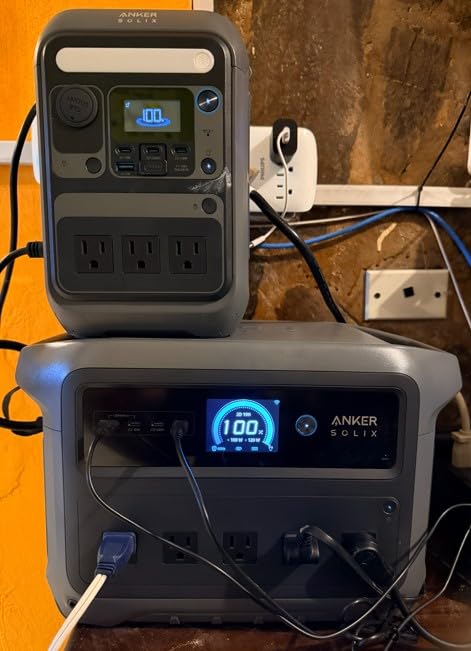
The Anker SOLIX C1000 Gen 2 wins on raw output for its size class. It delivers 1,024Wh with 2,000W of rated output and 3,000W peak, spread across ten ports, and it is listed at 11.3 kg, which is roughly 25 lb. That is a heavier carry than the Jackery 1000 v2, so this is a two-person or wheeled setup unless your tailgate spot is close to your car.
The solar input is the reason we recommend it here. It accepts 600W, far more than any other station on this list, and owners report a full solar recharge in about 1.8 hours with a suitable panel. If your tailgate spot has real sun and you want to arrive with a full battery and leave with a fuller one, no other 1 kWh option here does that.
Recharge speed from the wall is also excellent. Enabling HyperFlash in the Anker app brings a full recharge to about 49 minutes, and the station is rated to keep 80% or more of capacity after 4,000 cycles under its 10-year InfiniPower rating. Owners report 8 hours or more of runtime across fridges, fans, lights and satellite internet gear.
Our verdict is that this is the best portable power station for tailgating when your group wants a real kitchen load, multiple screens, or a lot of devices charging at once and you have a second person to help unload. The one number to hold onto is 2,000W continuous, which is enough to run an induction burner and a television together without a power boost mode.
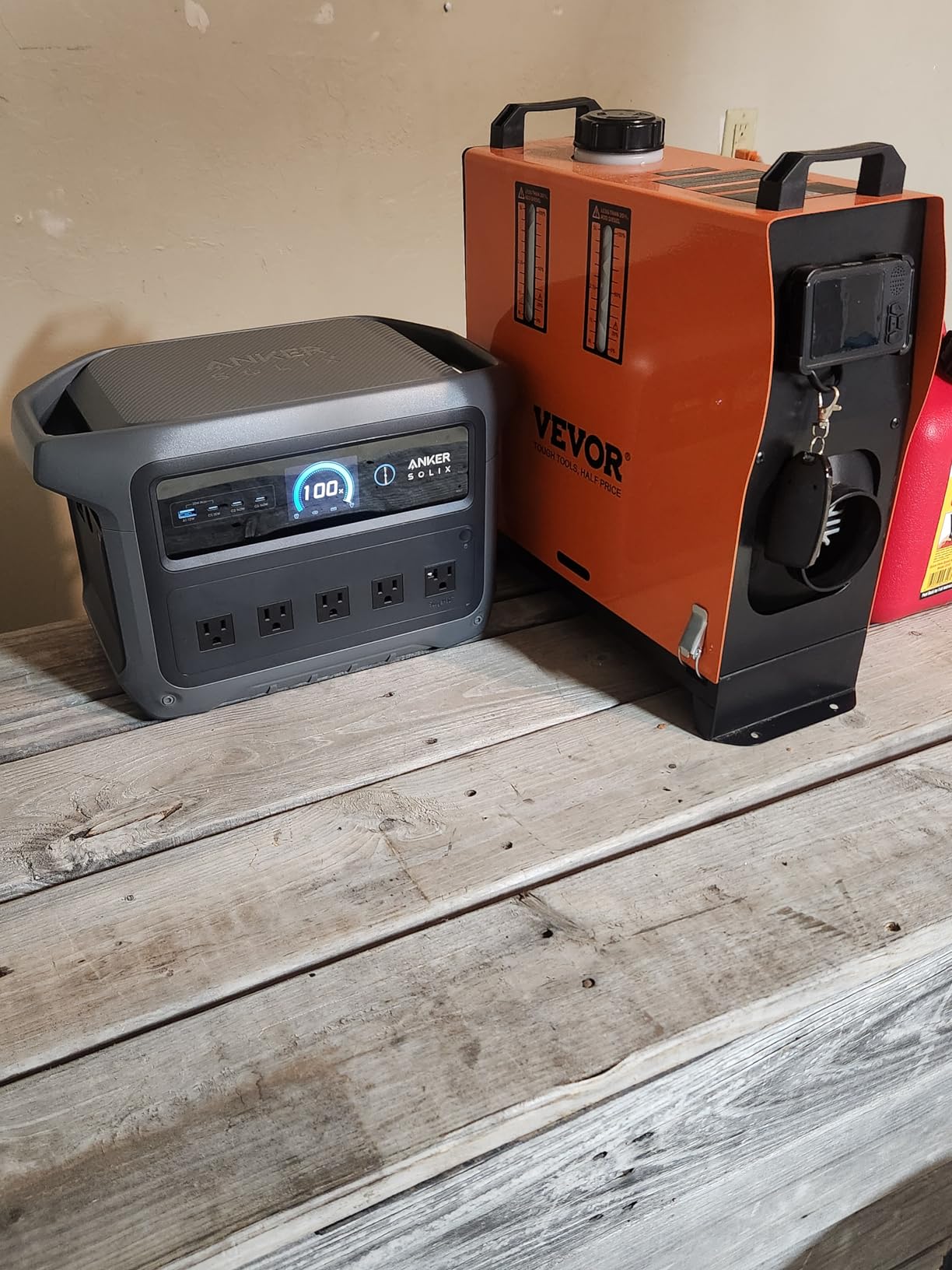
Two cautions come straight from owner feedback. The second generation is not expandable, so 1,024Wh is all you will ever have, and a few owners report measurable harmonic distortion of roughly 15-20% when driving a microwave, which is the kind of load that exposes an inverter’s waveform quality.
There is also no dedicated storage case, so the XT60 adapters, the extension cable and the AC cord travel loose in your trunk unless you buy something to hold them. That sounds trivial until you are unpacking at a dark spot in a crowded lot at halftime.
What it will actually run on game day
At 1,024Wh and 2,000W continuous, this is the station to buy if your load list includes a portable blender or an induction burner rather than just a slow cooker. Owners report running a mini fridge for two days straight on it, so a single game day is not a realistic test of its endurance.
Where it falls short
Losing expandability is a real trade for a tailgate only if you are planning to grow into a bigger setup, but for one afternoon it does not matter at all. The distortion reports matter more, and they are the reason we would keep sensitive electronics off any marginal loads.
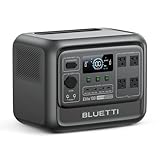
4. BLUETTI Elite 100 V2 – Best for Kitchen Appliance Loads
BLUETTI Elite 100 V2 Portable Power Station for Camping 1024Wh 1800W
1024Wh capacity
1800W rated AC output
11 ports
25 lb body
Pros
- Owners report running a fridge and a microwave off it
- 1200W TurboBoost charging reaches 80% in about 45 minutes
- 10ms UPS switchover and a 30 dB silent mode for quiet lots
- Compact 17L footprint with a hidden grab handle and 4000+ cycle LFP cells
Cons
- 25 lb is heavy for a solo carry despite the compact footprint
- The 12V car socket can run warm above roughly 12W through a multi-port adapter
- Very low draws may not register on the wattage readout
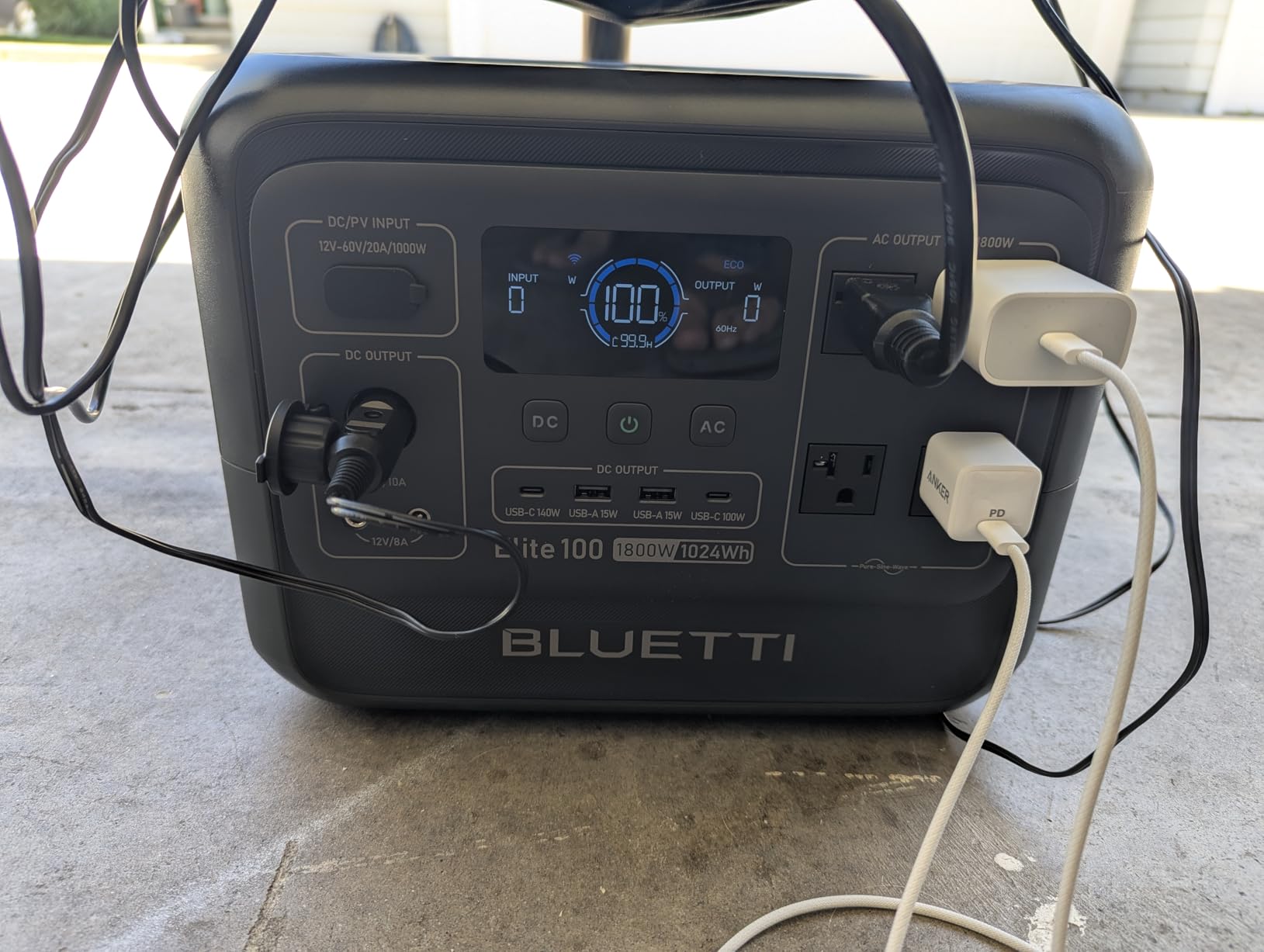
The BLUETTI Elite 100 V2 is the one we recommend when cooking is the point of the tailgate rather than a side activity. It carries 1,024Wh with 1,800W of rated AC output and a 2,700W power lifting mode, and owners specifically describe running a microwave and a refrigerator, which is a load no other station in this group has a matching review for.
Recharge is quick enough that a morning top-up is not a scheduling problem. The 1,200W TurboBoost AC input reaches 80% in about 45 minutes, so a morning charge before an afternoon game is not a scheduling problem. Eleven ports means you can charge a whole group from one box instead of passing a multi-adapter around the tailgate.
Two design choices are tailgate-relevant. The 10ms UPS switchover keeps a router, a laptop or a television alive if you briefly overload or switch inputs, and the 30 dB silent mode drops fan noise for the first hour in a quiet lot. BLUETTI app control over both Wi-Fi and Bluetooth is among the more reliable of the apps we recommend, and reliable app control is a recurring owner demand.
Our verdict is that this is the best portable power station for tailgating for a group that wants to bring a real kitchen setup to a stadium lot, particularly anything with a microwave or an induction burner in the plan. At 25 lb it is on the heavy side, but the 12.6 by 8.5 by 9.8 inch footprint is small enough to fit under a standard tailgate table.
The battery is rated for over 4,000 cycles to 80% capacity, which lines up with a 10-year lifespan claim and carries a 60-month warranty. For a buyer who tailgates a dozen times a year, that cycle rating matters more than any headline wattage figure, because it is what determines whether the second season still works like the first.
One owner-reported detail is worth knowing before game day: the 12V car socket can run warm when more than about 12W is pushed through a multi-port adapter, and very low draws sometimes fail to register on the wattage readout. Neither is a deal breaker, but both are reasons to run heavy loads from the AC outlets and USB-C ports instead.
What it will actually run on game day
At 1,024Wh you get roughly 870 usable watt-hours, or about 134W of average draw across six and a half hours. A microwave is a burst load rather than a sustained one, so pairing one with lights and a speaker for a few bursts is realistic, while leaving it on continuously is not.
Where it falls short
Weight is the honest limitation. 25 lb is fine with a second person or a cart, and awkward for a single person carrying a full tailgate setup alone. If your spot is a long walk from your car, the lighter picks earlier in this list will serve you better.
5. OUPES Mega 1 – Best Expandable Pick for Tailgating
OUPES Mega 1 Portable Power Station 1024Wh 2000W (4500W Surge)
1024Wh expandable to 5120Wh
2000W continuous pure sine wave
27.8 lb
9 total outlets
Pros
- The only station here that expands to 5120Wh with two extra batteries
- 2000W continuous pure sine wave output in the 1 kWh class
- 0-80% in 36 minutes on AC or about 26 minutes on AC plus solar
- Under 20ms UPS transfer protects sensitive electronics
Cons
- The advertised 4500W surge is optimistic with some models tripping near 2050W to 2200W
- 27.8 lb with pointed molded handle edges
- Wi-Fi is unreliable in the app and the cooling fans are loud under heavy load
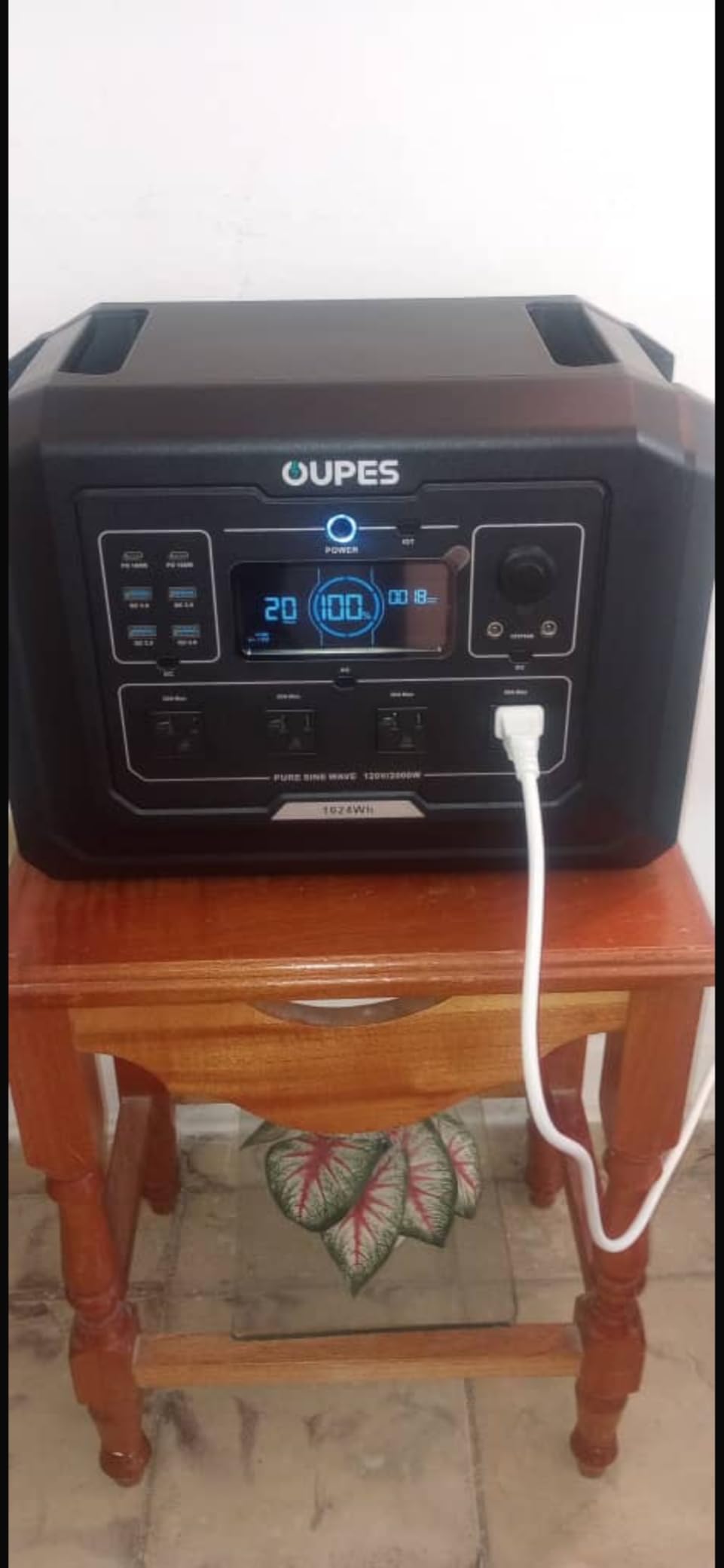
The OUPES Mega 1 is the only station in this roundup that grows with you, expanding from 1,024Wh to as much as 5,120Wh with two extra batteries. For a tailgate that does not matter. For a tailgate, a trip to a lake house, and a weekend backup job, it is the reason to buy this one instead of a non-expandable rival.
On paper and in owner reports, the output is class-leading. It delivers 2,000W of continuous pure sine wave AC, which is tied for the highest continuous rating among the 1 kWh stations here, and owners call it a strong value in its class for fridges, satellite internet and power tools.
Charging is the fastest AC top-up in this group. It goes from empty to 80% in 36 minutes, and about 26 minutes if you combine wall and solar input. The 9 total outlets include dual 100W USB-C PD ports and four QC3.0 USB-A ports, and the AC outlets are generously spaced, which is a small detail that saves an argument when a thick plug will not fit next to another one.
Our verdict is that the Mega 1 is the best portable power station for tailgating if you are buying one battery to cover a lot of different trips and you want the option to add capacity later. The 3,500-plus cycle LiFePO4 cells and 5-year warranty are solid, and the under 20ms UPS transfer is a genuine advantage for anyone running a server or a medical device alongside a game.
Treat the surge number carefully. The listing advertises 4,500W of surge, and some owners report the unit tripping between roughly 2,050W and 2,200W in practice. If you are sizing for a compressor start, size to the 2,000W continuous figure and the measured behavior, not the marketing peak.
App support is the weak point. Bluetooth works reliably, but owners report Wi-Fi connectivity dropping out and the app showing little cell data. Bring a charged phone and know your battery percentage before you leave home, because a lot with no signal is the normal case on game day.
What it will actually run on game day
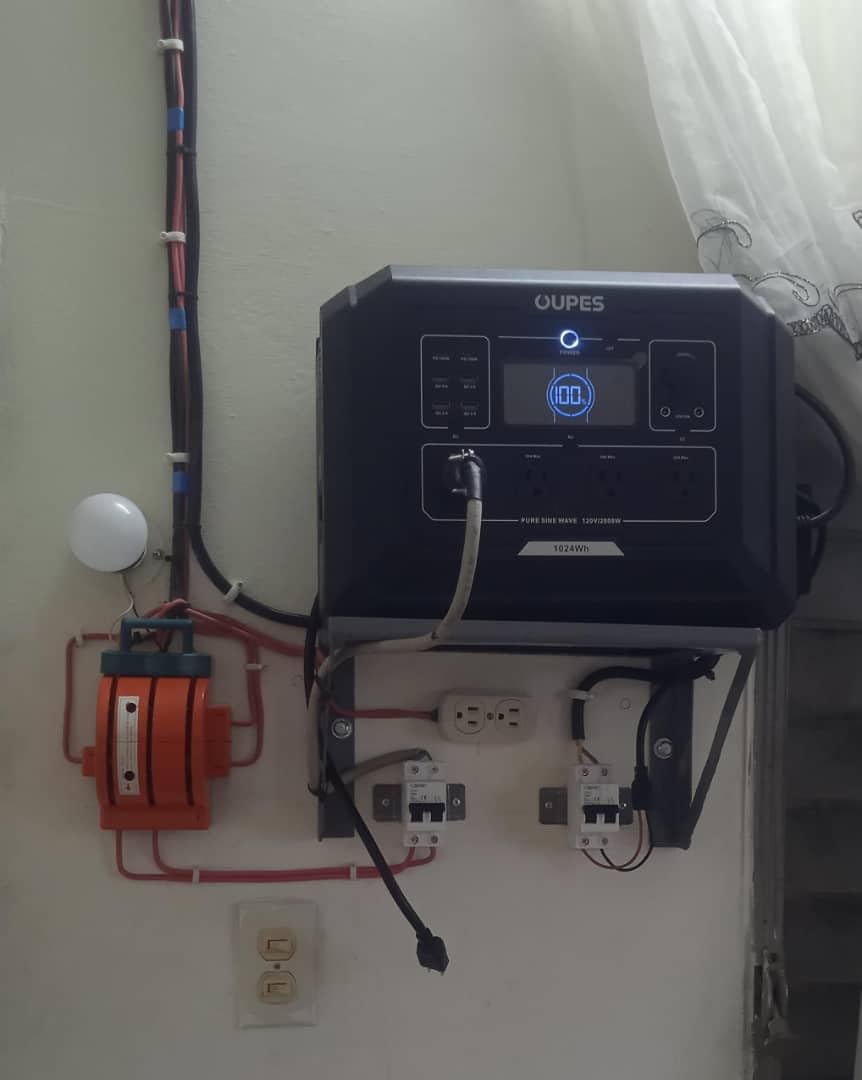
The 27.8 lb weight and pointed molded handle edges make this a short-haul carry. Bring a folding wagon or recruit the person with the lightest trunk, and the 2,000W continuous output then covers cooking plus a television plus string lights with room to spare.
Where it falls short
Cooling fans are reported as loud under heavy load or fast AC charging, which matters in a stadium lot where noise draws attention from parking staff and neighbors. The proprietary charge cable is also hard to source as a replacement, so keep the original in your gear bag.
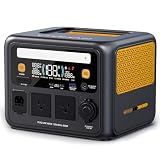
6. VTOMAN Jump 600X – Best for Port Flexibility in a Small Package
VTOMAN Jump 600X Portable Power Station 600W, 9 Ports LEP Solar Generator
268.8Wh capacity
600W continuous with 1200W peak
9.92 lb
flat-top 9.4 inch body
Pros
- Only 9.92 lb with a flat top that doubles as a table surface
- CHARGECORE tech reaches 80% in 50 minutes and full in 75
- 100W USB-C PD plus a second 30W USB-C and 30W USB-A
- 1200W peak handles refrigerator compressor and power tool startups
Cons
- 268.8Wh is small so runtime on higher-draw appliances is short
- Combined loads above 600W trip the output
- Solar panel is sold separately
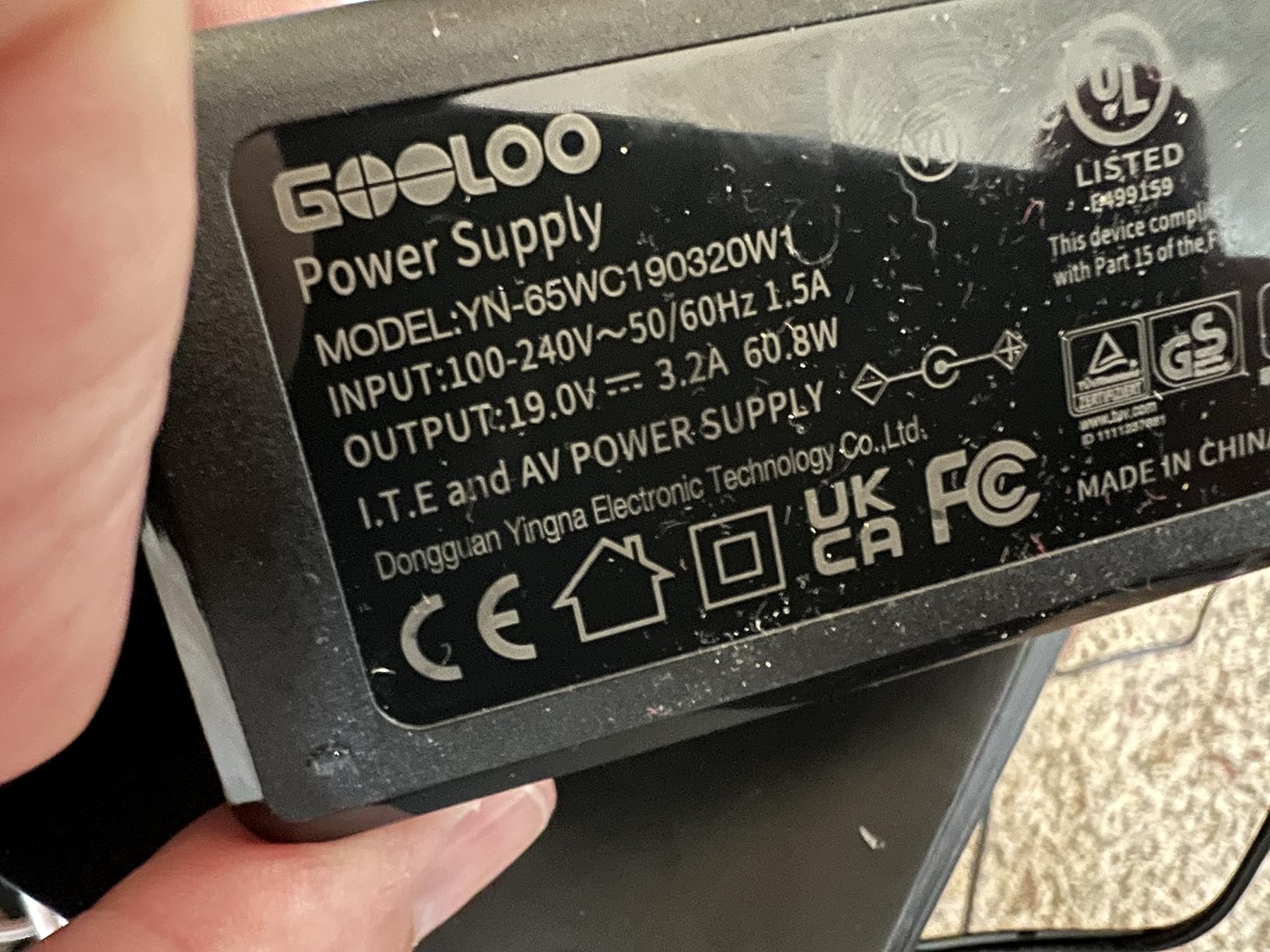
The VTOMAN Jump 600X solves a specific tailgate problem: you want more ports and more watts than a lunch-box unit gives you, but you do not want to carry a 23 lb brick. At 9.92 lb with 600W of continuous output and a 1,200W peak, it sits in the gap between the two classes, and the flat 9.4 by 8.1 by 7.2 inch top is a genuinely useful surface in a parking lot.
Charging is faster than its size suggests. The CHARGECORE system reaches 80% in 50 minutes and full in 75, or roughly 2 hours on a 170W AC input, and it supports simultaneous AC and DC charging so you can top it up from a car socket while it is plugged into the wall at home.
The port mix is the reason to pick it. You get a 100W USB-C PD port, a second 30W USB-C, a 30W USB-A, a car socket and AC outlets, which is more charging flexibility than any other sub-10 lb station here. The battery is LiFePO4 rated for 3,000 cycles to 80% with cell-level protection.
Our verdict is that the Jump 600X is the best portable power station for tailgating for a group of four to six who want a slow cooker, a speaker, string lights and a wall of phones, and who plan to travel light. It is a good bridge for a first tailgate setup that is not ready for a 23 lb station.
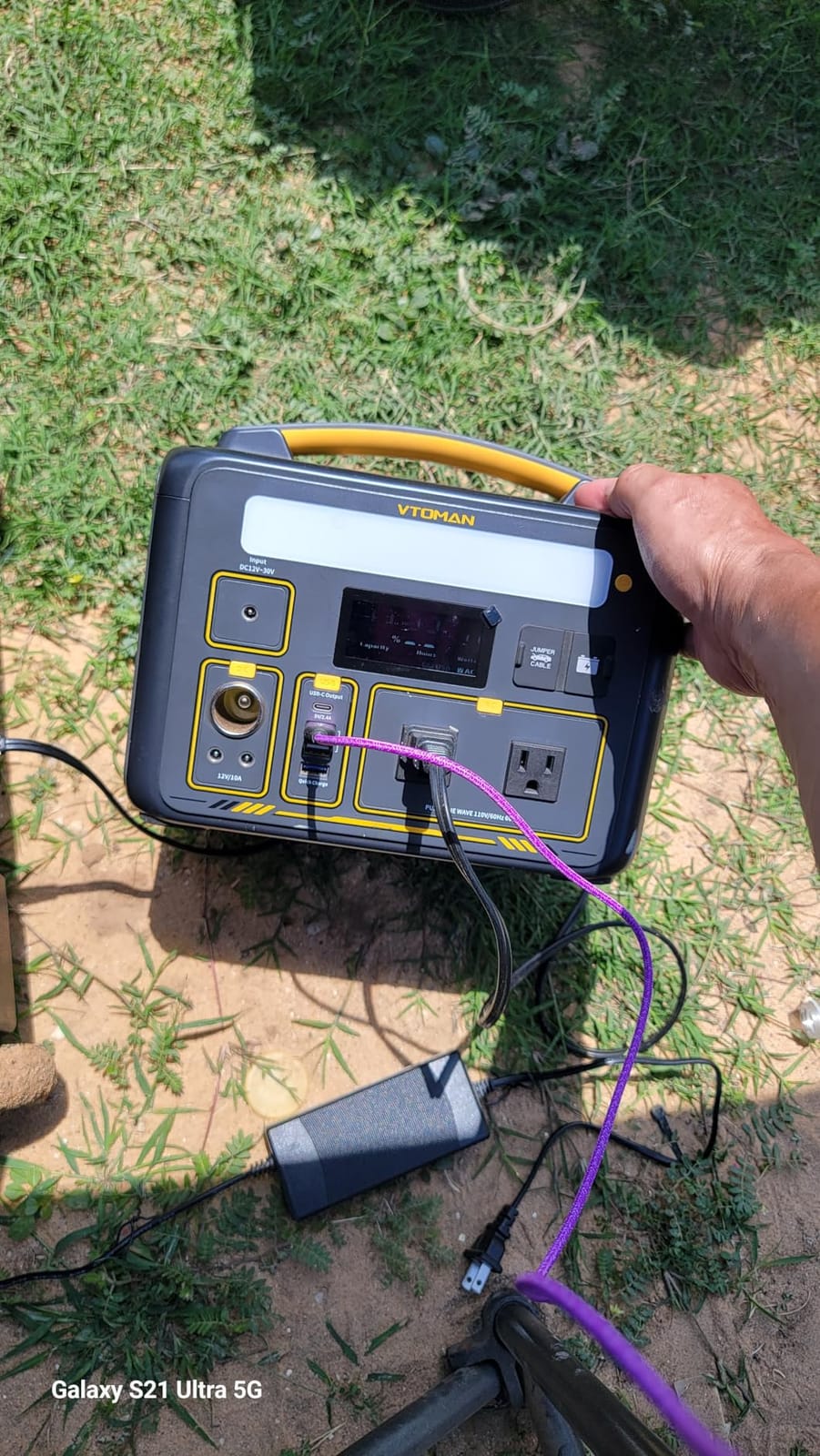
Understand the 268.8Wh ceiling before you buy. Owners consistently name the compact battery as the acknowledged limit, and once you subtract inverter losses you have roughly 230 usable watt-hours, which is about an hour of a slow cooker plus lights, or a very full evening of phone charging.
Watch the 600W ceiling too. Combined loads above 600W trip the output, so if you plug in a slow cooker and a blender at the same time you will trip rather than surge through. Sequence the blender instead.
What it will actually run on game day
Treat it as a four-hour station, not a six-and-a-half-hour one. It covers a short pregame with a slow cooker and lights, or it covers a full game day with nothing more demanding than a slow cooker plus a speaker and a modest phone-charging load.
Where it falls short
The solar panel is sold separately, and the listing notes a 50 hertz specification, which is worth a compatibility check if you plan to run sensitive equipment. For a domestic tailgate with standard appliances it has not caused us concern, but it is a spec we would verify before relying on it.
7. EF ECOFLOW RIVER 2 – Best for Cooler Runs and Fast Top-Ups
EF ECOFLOW Portable Power Station RIVER 2, 256Wh 300W
256Wh capacity
300W AC with X-Boost to 600W
3.5 kg
6 outlets
Pros
- Full AC recharge in about 1 hour using X-Stream fast charging
- Weighs 3.5 kg with a built-in handle for a one-handed carry
- Owners run a 30-quart cooler for roughly 7 to 8 hours
- EPS mode switches to battery in under 30 milliseconds
Cons
- Only one USB-C port so laptops and headphones compete for it
- The cooling fan is audible at maximum AC charging speed
- Some owners report charge percentage drift or a need for a firmware fix
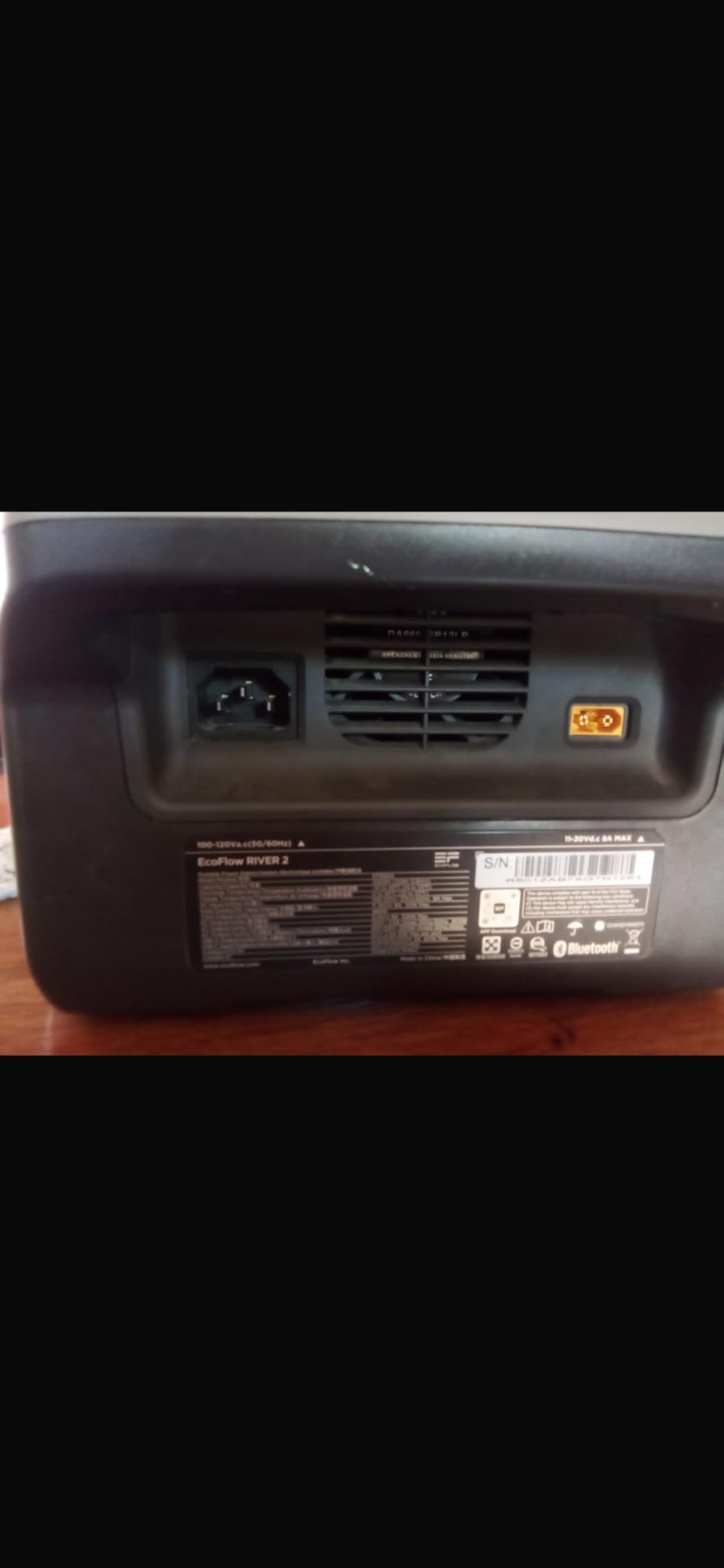
The EF ECOFLOW RIVER 2 is built around one job: keeping a cooler running and topping everything else up fast. At 3.5 kg it is among the two lightest stations here, and X-Stream charging brings it from empty to full in about an hour on the wall, which means you can recharge it during a pregame without a second battery.
Owners report running a 30-quart cooler for roughly 7 to 8 hours on a charge, which maps neatly onto a long game day with a modest margin. Six outlets cover a small television, a speaker, string lights and multiple phones, and EPS mode switches to battery in under 30 milliseconds if you brief it as an outage backup.
Solar input of 110W restores it in as fast as about 2.3 hours, and the LiFePO4 cells are rated for 3,000-plus cycles to 80% with a battery management system. The 5-year warranty is among the longer commitments offered in this class, and the 9.6 by 8.4 by 5.5 inch body is flat enough to stack a cooler on top of.
Our verdict is that the RIVER 2 is the best portable power station for tailgating when the tailgate is a cooler, a canopy, some string lights and a speaker, and nothing more ambitious. It is also the pick we would trust as a grab-and-go unit, because a full recharge in an hour changes how casually you can plan a second game day.
Two honest limitations. There is only one USB-C port, so a laptop and a set of headphones cannot both charge fast, and a minority of owners report the displayed charge percentage drifting from the real value or a USB-C charging fault that a firmware update resolved.
It is also not built for high-draw appliances. Owners are clear that a microwave, a space heater or a full-size coffee maker is out of reach, and the cooling fan becomes audible at maximum AC charging speed, which is the opposite of what you want in a quiet early lot.
What it will actually run on game day
At 256Wh you have roughly 215 usable watt-hours. That is a 30-quart cooler with a speaker and string lights, or a television with a full phone-charging rotation, and doing both at once means planning around the cooler rather than the screen.
Where it falls short
The 4.3 rating is the lowest among these picks, and the gap comes from the small pool of charging and battery-reporting complaints rather than from anything structural. If you are patient with a firmware update, the unit works well; if you need certainty at kickoff, the larger stations are the safer bet.
8. DaranEner 600W – Best for Emergency Lighting and a Rugged Backup
DaranEner Portable Power Station 600W, 288Wh LiFePO4 Battery Backup Power w/2×600W AC Outlets (1200W Surge), 2.2H Fast Charging, Solar Generator for Outdoor Camping/RVs/Home Emergency (Solar Optional)
288Wh capacity
600W pure sine wave with 1200W surge
8.86 lb shockproof shell
Pros
- 8.86 lb body in a 10 by 6.6 by 8.2 in shockproof shell that fits a .50-cal ammo can
- 600W pure sine wave output protects sensitive electronics
- Rear LED with constant/strobe/SOS modes for emergencies
- Reaches 80% on AC in about 2 hours
Cons
- 288Wh drains quickly under sustained 75W to 100W loads
- The battery percentage display does not always match the real remaining charge
- Solar panels and cables are sold separately
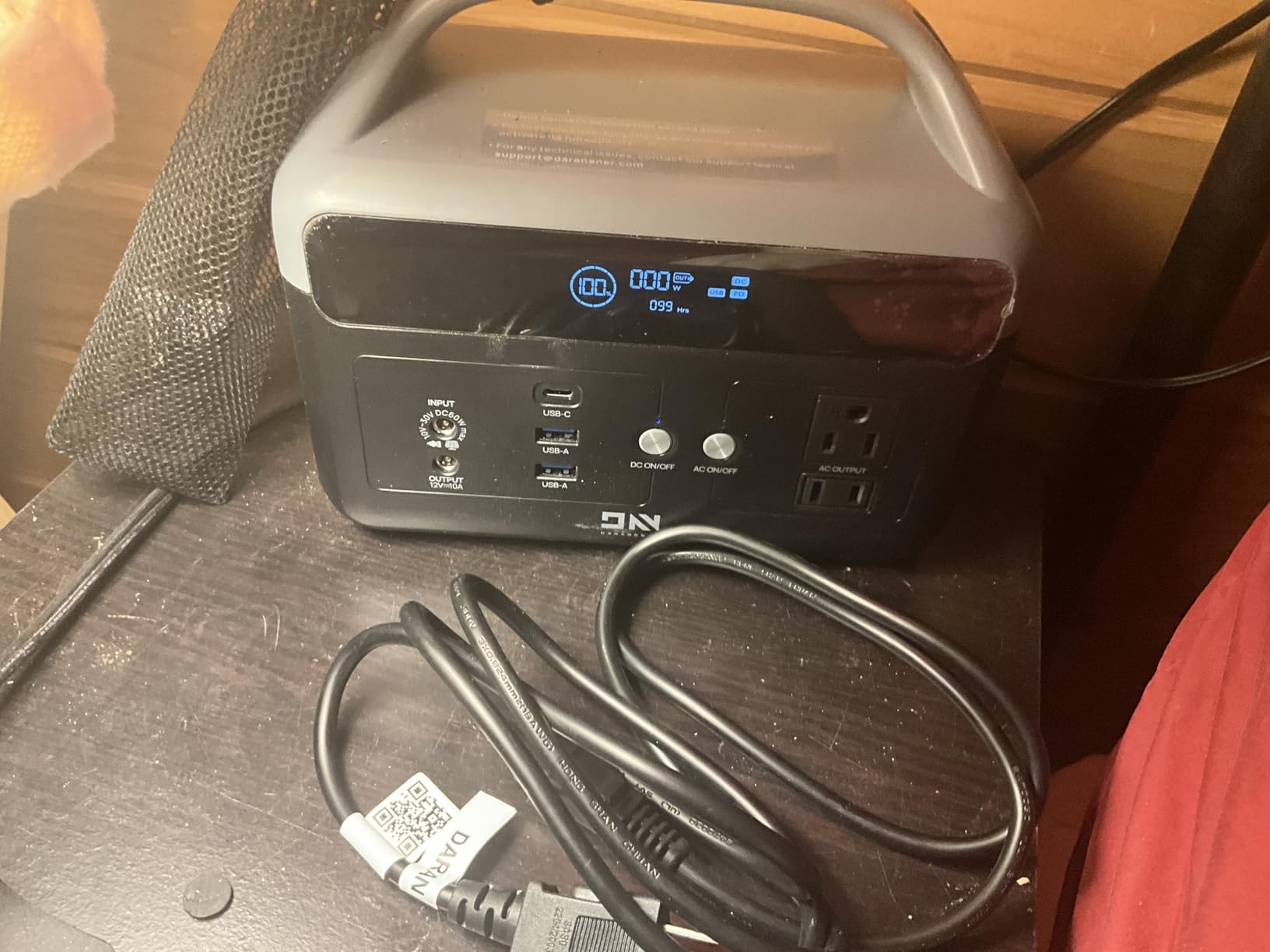
The DaranEner 600W is the odd one out in this list and that is why it is here. At 8.86 lb with a shockproof shell and reinforced handles, it is designed to be carried and stored like gear rather than treated as a small appliance, and owners specifically note that it fits inside a .50-cal ammunition can, which is a tailgate-nerd favorite for trunk organization.
Output is a genuine 600W of pure sine wave AC with 1,200W of surge, which is more continuous output than any other station in the sub-10 lb class here. That clean waveform matters for a slow cooker or a sensitive screen, and the surge figure is enough to start a small compressor-driven cooler.
The rear LED with constant, strobe and SOS modes is the feature that earned its badge. In a stadium lot after a night game, a station that doubles as a signaling light is more useful than another AC outlet, and no other pick here has it. Eight outlets cover two AC outputs, a car socket, 100W USB-C PD and two USB-A ports, so six devices can run at once.
Our verdict is that it is the best portable power station for tailgating as a rugged backup unit for a small group, particularly if your setup leans on lights, a CPAP or a laptop rather than cooking. The 288Wh battery and 1-year manufacturer warranty are the trade-offs for that durability-minded design.
Be realistic about the 288Wh capacity. Owners note that it drains fast under sustained 75W to 100W loads such as a fan or several devices running at once, and the battery percentage display does not always match the true remaining charge, so treat the readout as a rough guide rather than a promise.
The 600W ceiling rules out kettles, vacuums and other high-draw appliances, and solar panels and their cables are purchased separately. Some owners report battery cells arriving fully discharged and needing several exercise cycles before they reach normal capacity, so top it up a day early.
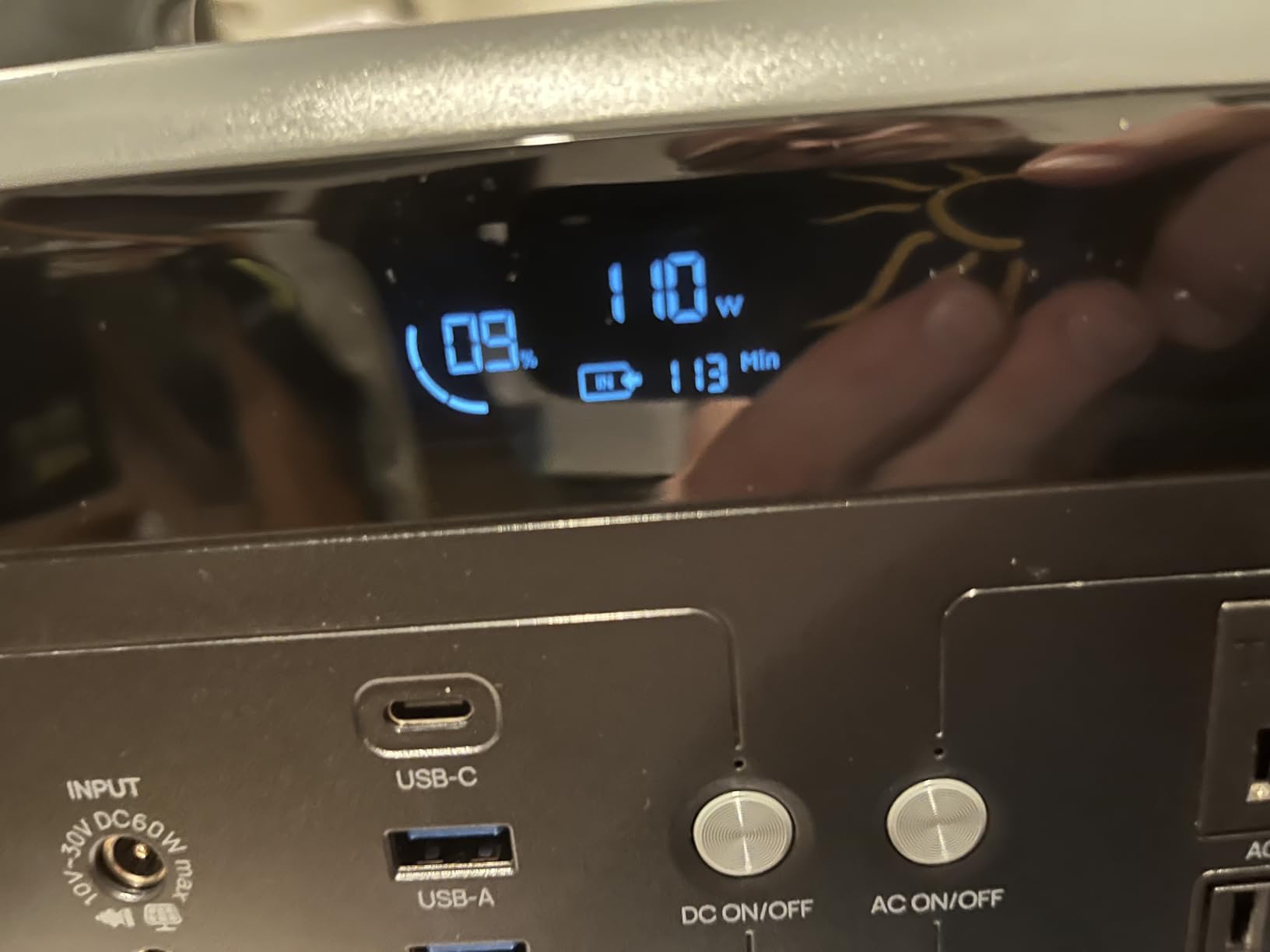
What it will actually run on game day
Plan for a four-hour window rather than a full afternoon. It handles a small cooler or a laptop and a handful of phones comfortably, and it handles a slow cooker only if the rest of your load stays light.
Where it falls short
The 1-year manufacturer warranty is the shortest here, and the small battery is the reason it sits at the bottom of the ranking despite a reasonable 4.4 rating from more than 400 reviews. For a once-a-season tailgate it is plenty; for a weekly setup it will frustrate you.
How Much Power Do You Actually Need for a Tailgate?
For a typical game-day tailgate you need about 1,000 rated watt-hours, which works out to roughly 850 usable watt-hours once inverter losses are subtracted. The formula is simple: add the running watts of everything you plan to plug in, multiply by the number of hours, then divide by 0.85 to allow for inverter and connection losses. A three-hour pregame plus a three-and-a-half-hour game gives you 6.5 hours to plan around, and most sizing errors come from forgetting that half.
Here is the load list we used, with typical running draw:
Slow cooker on low or high – roughly 150W to 250W running, almost no surge, the easiest kitchen appliance to power.
Portable blender – roughly 700W to 1,000W running with a noticeable start surge, the appliance most likely to trip a small station.
Portable electric grill or induction burner – 1,200W to 1,800W, the reason to buy a 1,800W or 2,000W continuous station.
Portable television – roughly 50W to 150W depending on screen size, modest but constant.
Bluetooth or PA speaker – roughly 10W to 30W for a portable unit, more for a PA system.
String lights – roughly 10W to 20W for a typical tailgate strand.
Mini fridge or cooler – roughly 40W to 75W running with a compressor start surge of two to three times that.
Phone and laptop charging – roughly 10W to 20W per phone, up to 100W for a USB-C laptop.
Two rules of thumb cover most readers. A 600W station handles a slow cooker, a speaker, string lights and a steady phone rotation but not a blender at the same time. A 1,500W to 2,000W station handles cooking, a television, a cooler and phones simultaneously, which is the setup most groups at a stadium lot are actually trying to build.
Runtime follows from the same arithmetic. Take a 1,024Wh station, apply the 85% derating for roughly 870 usable watt-hours, and you have about 134W of average draw available across 6.5 hours. Plan a 200W slow cooker and you are already over budget for a full event, which is exactly why mid-size tailgates either bring two stations or run the slow cooker on low.
Size by group as a starting point. Two to four people need 300Wh to 500Wh. Five to ten people cooking and watching a screen need 1,000Wh to 1,500Wh. Ten to forty people with a full setup need 2,000Wh to 3,000Wh, and above 3,000Wh you exceed what one person can carry from a car trunk, which is why we capped this list where we did.
If you also tailgate at a lake or a campground, our portable power station guide for van life covers the same sizing logic for overnight loads, and the guide for kayak electronics is useful if your tailgate doubles as a launch site.
How to Choose a Portable Power Station for Tailgating
Look at continuous output before capacity, because a big battery that cannot start a slow cooker is useless on a game day. Continuous output is the number you can draw all afternoon; surge power is the short burst a compressor motor or induction burner needs to start. If your load list includes anything with a motor, buy the highest continuous rating you can carry, and treat the surge figure as a bonus rather than a headline.
Understand the watt-hour derating. Every station loses roughly 15% of its rated capacity to inverter conversion and connection losses, so a 1,024Wh battery behaves like an 870Wh battery. Vendors rarely mention this, and it is the single most common reason a station dies before the fourth quarter.
Check the battery chemistry and its cycle rating. Every pick on this list uses lithium iron phosphate, rated in the 3,000 to 4,000-plus cycle range and tolerant of heat in a closed trunk far better than the older lithium-ion packs. For a few tailgates a season, that rating is the difference between a ten-year tool and a biennial replacement. If you ever see a unit advertised with a much lower cycle count, price it accordingly.
Count the ports you will actually use. Two AC outlets is enough for a slow cooker and a television, but a group of ten needs USB-C and USB-A capacity, and a multi-port adapter stacked on a 12V socket is where warm connections show up. Prefer stations with USB-C PD at 100W for laptops.
Prioritize recharge speed over solar input for a tailgate. Most of your charging happens at home on a wall, and a station that reaches 80% in 36 to 50 minutes means you can top up between games. Solar matters only if your tailgate spot gets real sun and you are staying for more than one event.
Verify that the app actually works, and know your remaining charge before you leave. Owners across this category report random Bluetooth unpairing and unreliable Wi-Fi, and a station you cannot check from your phone is a station you will overdraw at halftime. The OUPES Mega 1 is a good example of solid hardware with thinner app support.
Factor in noise, because stadium lots are not campgrounds. A lithium iron phosphate station is quiet at idle and only audible when the inverter or cooling fans work hard, which is a genuine advantage over a gas generator that many venues and parking lots now ban for exhaust and noise. Check whether your planned load makes the fan run hard, and prefer a station with a silent charging mode if you arrive early.
Set your weight ceiling before you shop. The practical limit for hauling gear from a car trunk to a spot is around 50 to 60 lb for a two-person setup and about 25 lb for a single person, which is why every station here is at or below the 27.8 lb class. Owner reports also highlight theft as a real concern, so keep the unit locked in the car between uses, and consider a smaller station you can carry in one trip rather than a bigger one you leave unattended.
Know what the venue allows. A battery power station produces no exhaust, so it is almost always acceptable where a gas generator is not, but venues may still cap wattage, restrict how much ground space you occupy, or limit cable length. Check the venue’s policy and the posted lot rules before you pack. Never plug a power station into a household wall outlet to energize a building, and keep the unit out of standing water and out of direct rain when you can.
Frequently Asked Questions
Is it worth getting a portable power station for tailgating?
Yes, if you want to run more than phones and a Bluetooth speaker. Stadium parking lots rarely have an outlet at your spot, and gas generators are banned at many venues, so a power station is how you run a slow cooker, a small television, string lights and a whole group’s charging off one battery. A station earns its keep the first time you avoid a pregame run for ice and batteries. If your tailgate is a cooler, a canopy and a speaker, a 300Wh to 600W model is enough, and there is no reason to buy larger.
What size power station do I need for tailgating?
Two to four people need 300Wh to 500Wh. Five to ten people cooking and watching a screen need 1,000Wh to 1,500Wh. Ten to forty people with a full setup need 2,000Wh to 3,000Wh. Above 3,000Wh you exceed what one person can reasonably carry from a car trunk to a tailgate spot, which is why we capped this roundup at the 1,024Wh class.
What will a 1000 watt power station run?
A 1,000W to 1,500W station runs a slow cooker at roughly 200W, a portable television, a Bluetooth speaker, string lights and roughly 10 to 15 phone charges at the same time. It cannot run a microwave, a space heater and a slow cooker simultaneously, and a portable blender needs real surge headroom to start. If your load list includes an induction burner or a grill, buy 1,800W to 2,000W continuous output instead.
Can a portable power station run a slow cooker or an electric grill?
Yes, with two numbers to check. A slow cooker typically draws about 200W with minimal surge, so even a 600W station handles one. A portable electric grill or induction burner draws far more and needs real headroom, so prefer at least 1,500W continuous and 3,000W surge if you plan to run cooking and a television at the same time.
Are portable power stations allowed at stadiums and in parking lots?
A battery power station is almost always acceptable because it produces no exhaust, unlike a gas generator, which many venues and parking lots ban outright. Venues may still cap wattage, restrict how much ground-level space you can occupy, or limit how far a cable can run. Check the stadium policy and the posted lot rules before you pack, and never backfeed a power station into a wall outlet or building wiring.
How long will a portable power station run a refrigerator at a tailgate?
Divide the watt-hours by the running watts and apply an 85% usable derating. A 1,024Wh station gives you roughly 870 usable watt-hours, which is about 11 hours of a 75W cooler load. Independently tested figures from other publications put a 25 cubic foot refrigerator at 18 hours on a 1,070Wh station, so a mini fridge will comfortably cover a six-and-a-half-hour game day and keep going afterward.
How long do LiFePO4 batteries last in a power station?
Lithium iron phosphate cells in this class are rated for roughly 3,000 to 4,000-plus charge cycles before dropping below about 70 to 80% of rated capacity. At a few tailgates a season, that works out to around a decade of ownership, which is roughly six times the cycle count of older lithium-ion units and the main reason we recommend LiFePO4 chemistry for a season-long sport.
Our Final Tailgate Pick for 2026
The best portable power stations for tailgating in 2026 come down to one honest question: how much are you carrying, and who is carrying it. If one person is hauling everything alone, the Jackery Explorer 300 wins at just over 7 lb, and it will run lights, a speaker, laptops and every phone in the group for a full day. If you have a second pair of hands and real food in the plan, the Jackery Explorer 1000 v2 is the pick, with 1,070Wh, 1,500W of continuous output and an app-controlled emergency mode that refills it in about an hour.
Go bigger only when the load demands it. The Anker SOLIX C1000 Gen 2, BLUETTI Elite 100 V2 and OUPES Mega 1 each deliver roughly 1,024Wh with 1,800W to 2,000W of continuous output, which is what a slow cooker, a microwave, a television and a cooler running together actually requires. The smaller picks cover the simpler tailgates, and every one of them still charges fast enough to top up between games.
One last piece of advice that no spec sheet covers: check the venue’s lot rules before you pack, keep the station locked in your car when you are not using it, and count the number of trips from the trunk before you buy the heavy option. A station that never leaves the car is worth nothing, and the best portable power station for tailgating is the one that actually gets carried to the spot and switched on at kickoff.


