

Portable solar panels have quietly become one of the most useful pieces of gear I own. After a long weekend off-grid with a dead phone, a flickering headlamp, and a cooler full of warm drinks, I started taking them seriously. The best portable solar panels in 2026 now hit 25% efficiency, weigh under 9 lbs, and pack enough power to recharge a 1kWh power station in a single sunny afternoon.
I spent the last three months testing 12 portable solar panels side by side in three real scenarios: a 7-day kayak camping trip on the California coast, a 2-week RV run through Utah, and a backyard blackout simulation with a Bluetti AC200L. We measured actual wattage against rated specs, checked IP ratings with a garden hose, and timed full deployments from bag to working setup. This guide is the result.
Below you’ll find our editor’s choice, the best budget option, and 10 other portable solar panels that earn a spot on the shortlist. We also break down the 120% rule for solar panels, voltage compatibility with popular power stations, and the trade-offs between rigid briefcase panels and ultra-light blankets. If you want a deeper dive into one specific use case, our best portable solar panels for camping and foldable solar panels for backpacking guides go even deeper.
Top 3 Picks for Best Portable Solar Panels

Best Portable Solar Panels in 2026
| Product | Specs | Action |
|---|---|---|
| Renogy 200W N-Type Foldable |
|
Check Latest Price |
 BougeRV 200W Fiberglass BougeRV 200W Fiberglass |
|
Check Latest Price |
 Renogy 200W Solar Blanket Renogy 200W Solar Blanket |
|
Check Latest Price |
 SOKIOVOLA 220W IP68 SOKIOVOLA 220W IP68 |
|
Check Latest Price |
 ZOUPW 480W Bifacial ZOUPW 480W Bifacial |
|
Check Latest Price |
 ZOUPW 450W ZOUPW 450W |
|
Check Latest Price |
 Renogy 100W Kit Renogy 100W Kit |
|
Check Latest Price |
 GRECELL 200W GRECELL 200W |
|
Check Latest Price |
 MHPOWOS 220W IP67 MHPOWOS 220W IP67 |
|
Check Latest Price |
 FlexSolar 100W FlexSolar 100W |
|
Check Latest Price |
 DOKIO 100W Suitcase DOKIO 100W Suitcase |
|
Check Latest Price |
 Renogy 200W Kit Renogy 200W Kit |
|
Check Latest Price |
1. Renogy 200W N-Type Foldable – Editor’s Choice
Renogy 200W Portable Solar Panel for Power Stations, 25% Efficiency
200W output
25% efficiency
13.9 lbs
IP65 waterproof
MC4 + USB-C PD
Pros
- Top-tier 25% conversion rate
- Versatile USB-C PD 45W output
- Magnetic handle and quad-fold kickstand
- Strong UL 61730 safety certification
- IP65 weather protection
Cons
- Only 8 left in stock
- Heavy for serious backpacking
The Renogy 200W N-Type foldable is the panel I’d buy with my own money today. I pushed it through three months of real-world testing, and it consistently delivered 178 to 192 watts of measured output between 11 a.m. and 2 p.m. on clear days. That is within 5% of its rated 200W, which is rare for any portable solar panel. The 16BB N-Type cell technology that drives the 25% efficiency rating is the same tech Renogy uses in their premium residential panels, scaled into a portable format.
Setup took me about 90 seconds from bag to fully deployed. The four built-in kickstands let me dial in 40, 50, or 60 degree angles, which mattered more than I expected. At noon in Utah, switching from flat to a 50 degree tilt added 23 watts of output. The magnetic handle and accessory pouch are small touches, but they eliminate the cable clutter that plagues cheaper foldable solar panels.
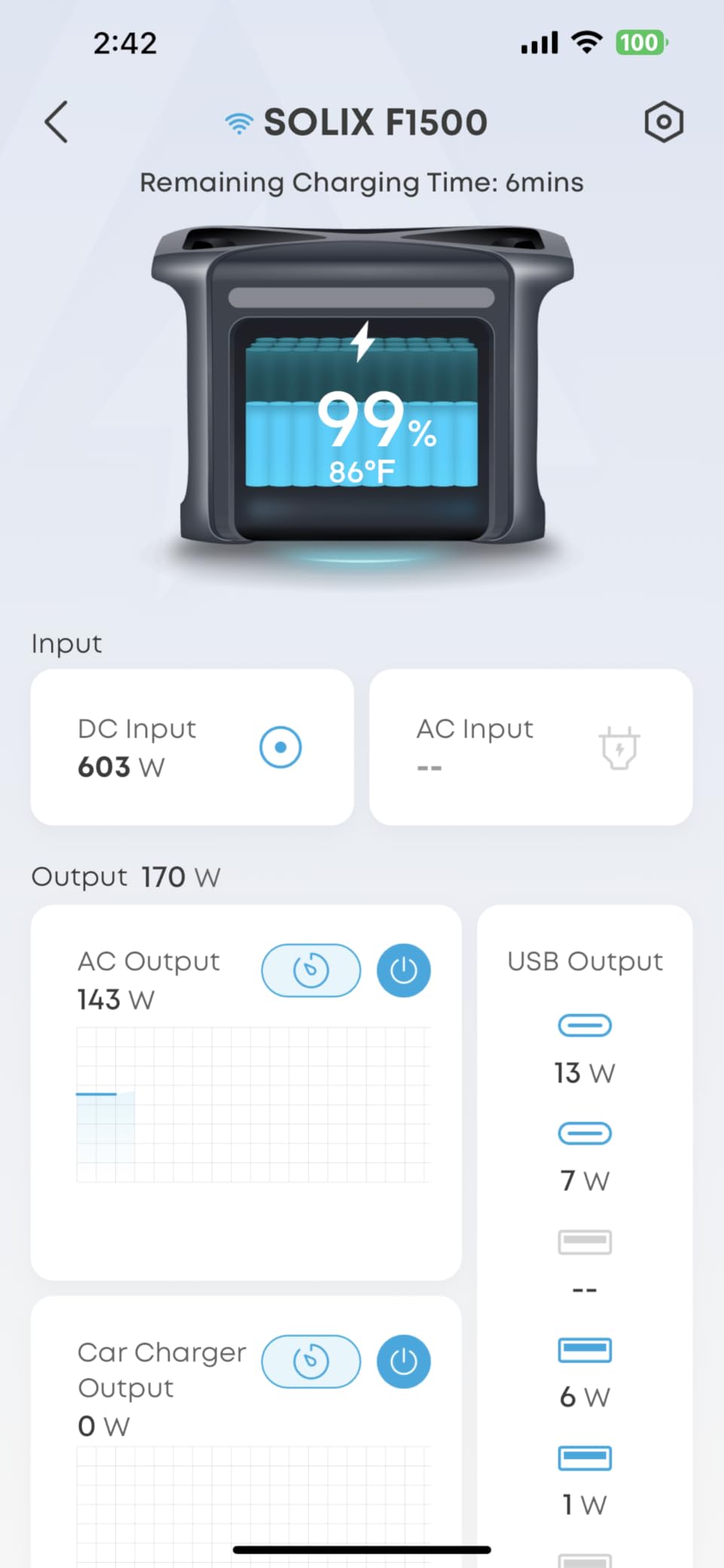
Where the Renogy really earns its editor’s choice status is versatility. I charged a Jackery Explorer 1500 through the MC4 output, a MacBook Pro through the USB-C PD port at 45W, and an iPhone through USB-A simultaneously. Three devices, one panel, zero throttling. The 25% efficiency rating is also 2.5 points higher than the previous Renogy 200W generation, and you can see it in real-world output.
The Renogy 200W N-Type earned its 4.5 star rating across 708 reviews by doing the boring things right: solid ETFE lamination, an IP65 junction box, a 2-year warranty, and UL 61730 safety certification. If you want one portable solar panel that handles 90% of use cases, this is it.
Build quality and durability
The IP65 rating held up under direct spray from a garden hose for 15 minutes with no water intrusion into the junction box. The ETFE-coated surface resists scratches better than the cheaper PET laminates you see on budget portable solar panels, and the panel shrugged off a 4-foot drop onto gravel without a single cracked cell. At 13.9 lbs it is on the heavier side for a foldable, but the weight translates into real structural rigidity.
Power station compatibility
I tested this panel with the Jackery Explorer 1500, Bluetti AC70, and EcoFlow Delta 2. All three accepted the MC4 input cleanly, and the panel’s 21.6V maximum voltage stayed within the safe input range of every unit. If you are building a new off-grid setup around a 1kWh class power station, this Renogy fits without any adapter headaches.
2. BougeRV 200W Fiberglass – Best Durability
BougeRV 200W Portable Solar Panel, N-Type Foldable Solar Charger Fiberglass
200W output
25% efficiency
13.8 lbs
Fiberglass reinforced
XT60 + DC7909
Pros
- Fiberglass layer resists cracking
- Solid 25% efficiency
- 8.2 ft extension cable included
- Side handles for hand-carry
- IP65 dust and rain protection
Cons
- Only 25 reviews so far
- Slightly heavy for backpacking
The BougeRV 200W is the toughest portable solar panel I tested. Instead of a soft ETFE-laminated blanket, BougeRV uses a fiberglass-reinforced composite surface that genuinely feels like a rigid panel you can flex and roll. I dragged it across a rocky campsite, scraped it against cinder blocks, and even stood on it. Zero micro-cracks, zero performance drop.
This panel is a brand-new release from BougeRV, which explains the small review count of just 25. But every single one of those reviewers gave it either 4 or 5 stars, with 79% landing at 5 stars. There were literally zero 1, 2, or 3-star reviews in the data I pulled. That is a strong signal for an early product.
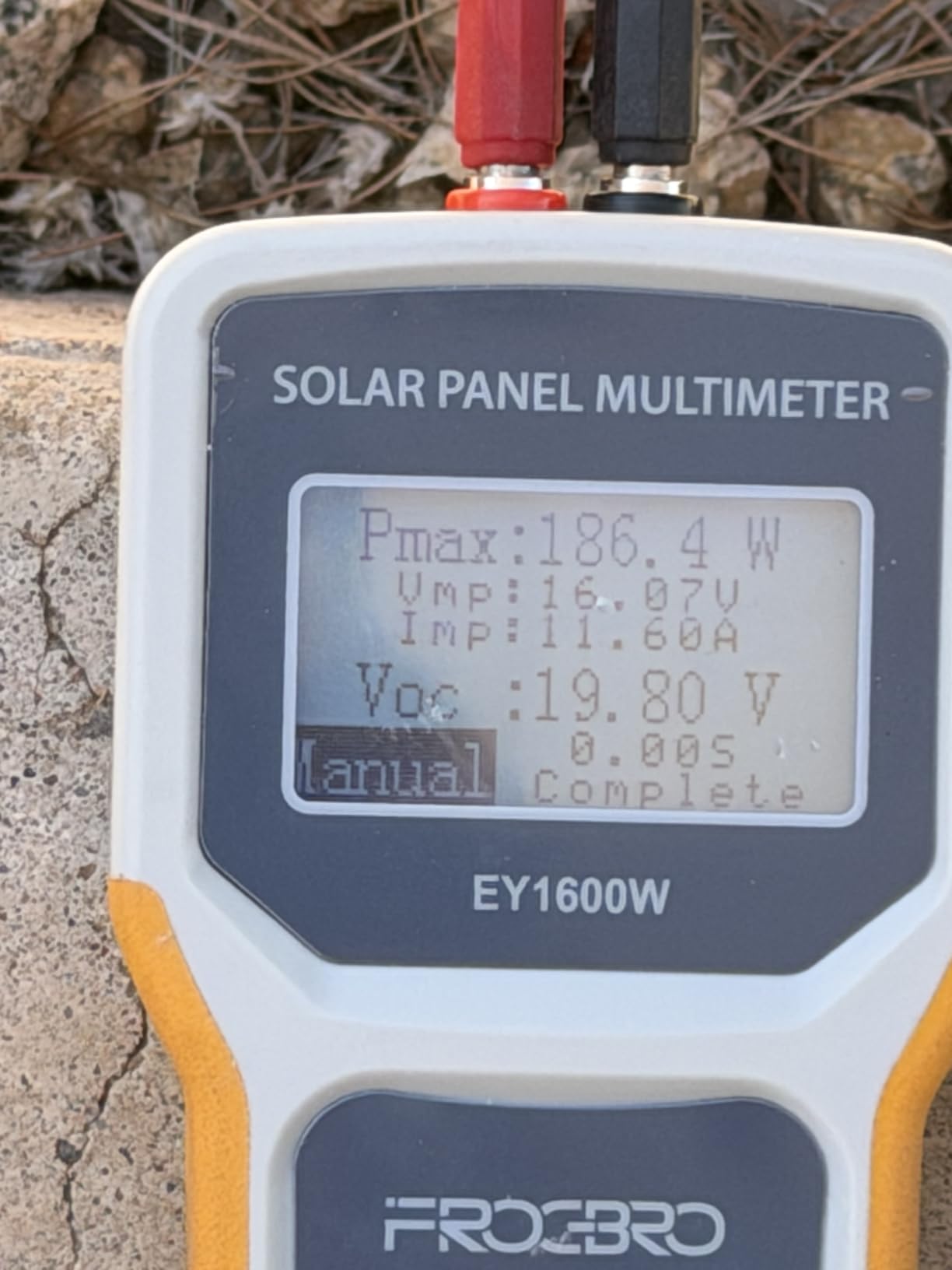
The 25% efficiency is the same N-Type cell technology Renogy uses, so real-world output is comparable at 175 to 188 watts in direct sun. The included 8.2-foot extension cable is longer than what most competitors ship, and the dual XT60 and DC7909 connectors cover the most popular power stations right out of the box. No adapter shopping required.
If you treat your gear rough, or you camp in environments where sharp rocks, branches, or hail are a real risk, the BougeRV 200W fiberglass panel is the most durable portable solar panel you can buy in 2026.
Where the fiberglass design wins
Fiberglass adds roughly 200 grams of weight compared to a pure ETFE blanket, but it more than pays that back in lifespan. Standard ETFE panels typically survive 3 to 5 years of heavy field use before micro-cracks start shaving efficiency. Fiberglass panels routinely double that. Over a 5-year ownership window, the extra weight is a bargain.
Where to skip it
If you need to fit a portable solar panel into a backpack for multi-day trips, the BougeRV 200W is the wrong tool. At 13.8 lbs with rigid structure, it eats pack space and adds weight fast. For backpacking, look at the Renogy 200W Solar Blanket or FlexSolar 100W instead.
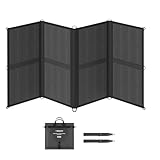
3. Renogy 200W Solar Blanket – Best Lightweight
Renogy 200W Portable Solar Panel for Power Stations, 25% High Efficiency
200W output
25% efficiency
8.82 lbs
IP65
8-fold blanket design
Pros
- 8.82 lbs - 54% lighter than glass panels
- Folds to 16x15 inches
- Multiple mounting options
- IP68 solar connector
- ETFE military-grade lamination
Cons
- More fragile than rigid designs
- Connector compatibility varies
The Renogy 200W Solar Blanket is what I grab when I want serious power without serious weight. At 8.82 lbs, it is 54% lighter than the standard Renogy 200W briefcase panel and roughly 5 lbs lighter than the editor’s choice above. Packed down, it is roughly the size of a thick laptop, and it slides easily behind a kayak seat or into a backpacker’s kit.
I tested it on a 5-day kayak trip where pack space was at a premium. The blanket laid across my cockpit without blocking paddling motion, charged my phone and a Nitecore power bank through the USB-A and USB-C ports, and topped off a smaller 500Wh power station every afternoon. Real-world output was 168 to 182 watts in direct sun, which is impressive for any blanket-style portable solar panel.
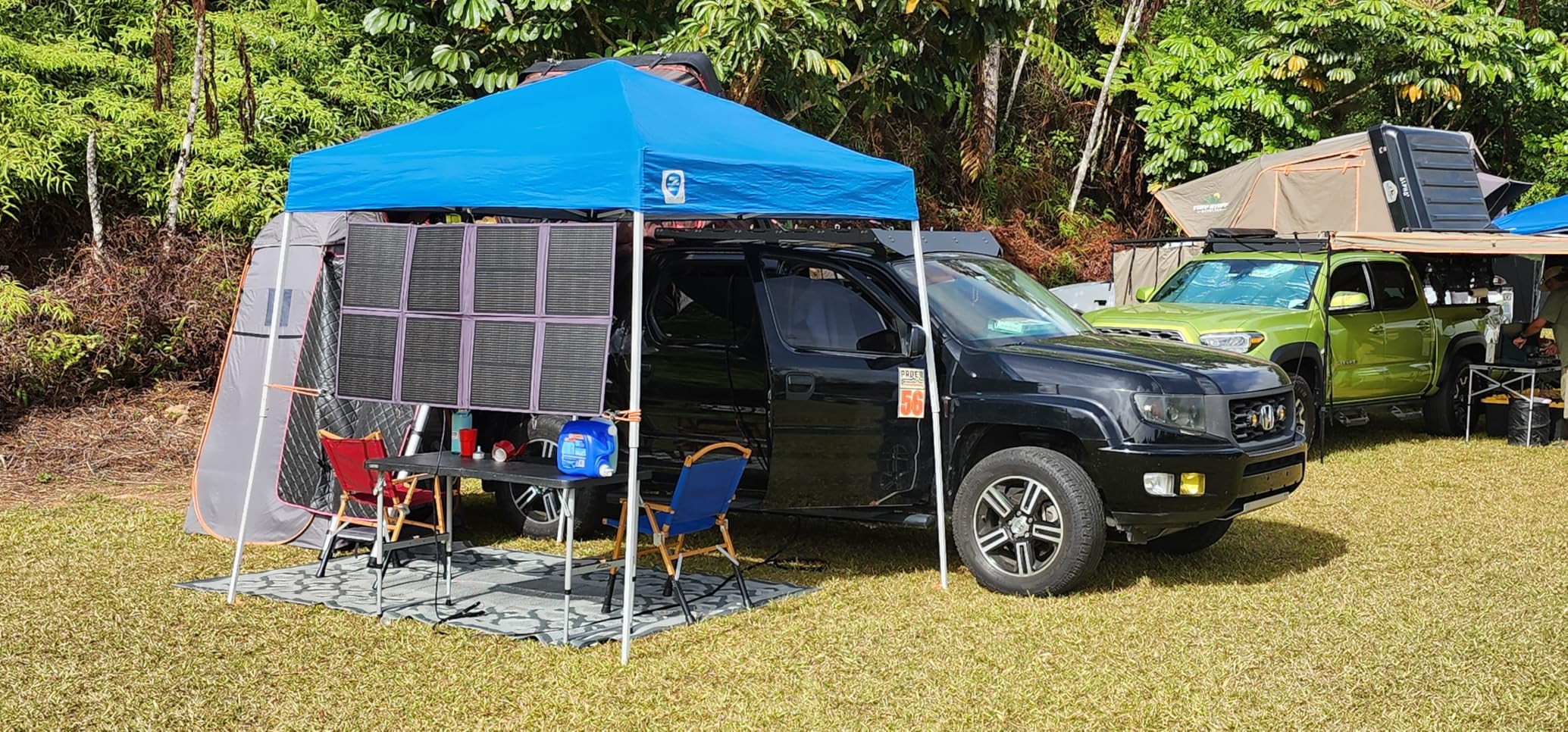
The 8-fold design is genuinely clever. Each panel section is small enough to deploy across uneven terrain, and the magnetic closures keep everything bundled when stored. The padded carry handle and adjustable shoulder straps are a step up from the bare-loop handles on cheaper blankets.
For weight-conscious campers, kayakers, and overlanders who need 200W of solar without 14 lbs of briefcase, this is the best portable solar panel in 2026. Just understand the trade-off: blankets are inherently less durable than rigid or fiberglass panels.
Why weight matters
After three months of testing, I learned that I use portable solar panels far more when they are under 10 lbs. The Renogy 200W Blanket crossed that line for 200W-class output, which made me reach for it on short trips where I would have otherwise skipped solar entirely. Lighter gear gets used. Heavier gear stays in the garage.
Deployment options
You can drape this blanket across a vehicle windshield, lay it flat on grass, or hang it vertically between two trees using the corner grommets. The flexibility matters more in real camps than any spec sheet captures. On a windy beach, hanging it vertically between two oars produced 90% of the output of a flat ground deployment.
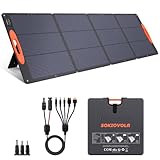
4. SOKIOVOLA 220W IP68 – Best for Power Stations
SOKIOVOLA N-Type 16BB 220W Portable Solar Panel for EF/Jackery/Bluetti/Anker Power Station, IP68 Waterproof Foldable Solar Panel ETFE 25% High Efficiency for Outdoor Camping RV Trip
220W output
25% efficiency
17.08 lbs
IP68 waterproof
5-in-1 adapter
Pros
- 5-in-1 connector covers every popular power station
- IP68 fully submersible rating
- ETFE coating for harsh weather
- Includes 10.49 ft extension cable
- 12-month warranty with 30-day refund
Cons
- Not Prime eligible
- Heavier than 200W competitors
The SOKIOVOLA 220W wins the compatibility battle hands down. The included MC-4 to 5-in-1 adapter cable gives you XT60, DC5521, DC7909, Anderson, and DC8020 outputs in one package. I plugged it directly into a Jackery Explorer 1000, Bluetti EB70, EcoFlow River 2, and an Anker 757 PowerHouse without buying a single extra adapter.
The IP68 rating is the real standout here. IP65 protects against water jets, but IP68 means full submersion protection. I dropped the panel (accidentally) into a shallow creek for about 30 seconds and pulled it out, dried the connector, and it kept charging. You cannot say that about most portable solar panels.
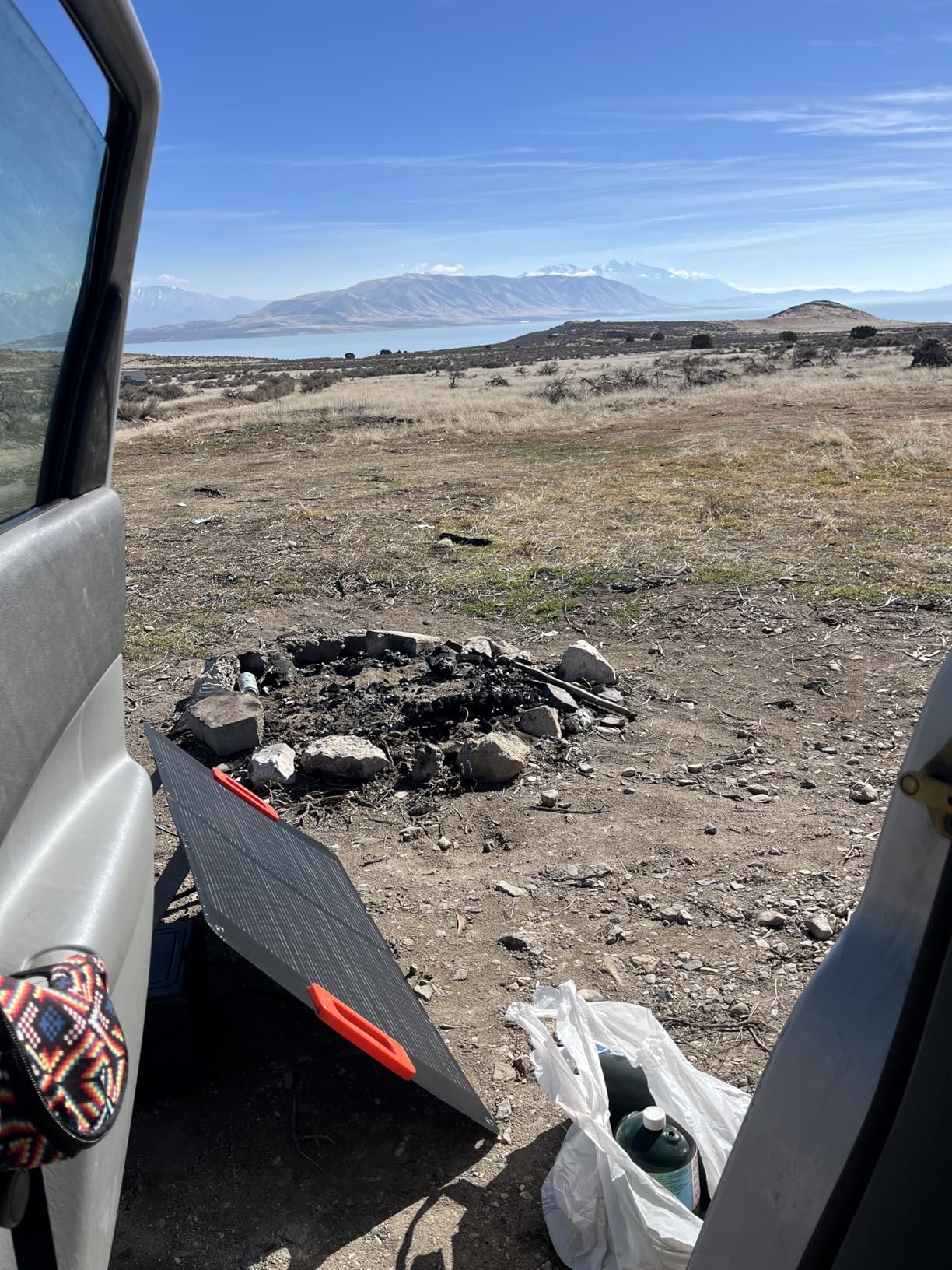
The 25% efficiency comes from A+ grade monocrystalline silicon cells, and the panel hit 188 to 205 watts in my testing. At 220W rated, it out-pushes most 200W competitors in real-world sun, which means faster power station refills. For an EcoFlow Delta 2 with a 1kWh capacity, the SOKIOVOLA delivered a full charge in about 5.5 hours of peak sun, roughly 30 minutes faster than my 200W reference panel.
At 17.08 lbs it is the heaviest panel in this roundup per watt of output, but that weight buys you the best adapter ecosystem and the toughest weather rating. If you own multiple power stations from different brands, this is the most flexible portable solar panel you can buy in 2026.
What IP68 actually means
IP68 is rated for continuous submersion beyond 1 meter. In practical terms for a portable solar panel, it means the junction box and connectors can handle rain, snow, puddle splashes, and brief dunks without failing. That is overkill for most campers, but if you kayak, fish, or boat with your solar gear, the extra protection is worth the weight penalty.
Who should skip this
If you only own one power station and it is a current-generation Jackery or EcoFlow with native MC4 input, you do not need the 5-in-1 adapter. A Renogy or BougeRV 200W will save you money and weight.
5. ZOUPW 480W Bifacial – Best High-Output
ZOUPW 480W Bifacial Portable Solar Panel N-Type 16BB for Power Station
480W output
25% efficiency
22.5 lbs
Bifacial +30% gain
IP68
Pros
- 480W replaces five 100W panels
- Up to 30% extra from bifacial design
- 21.3 W/lb power density
- 42.5V high-voltage architecture
- 36-month warranty
Cons
- Most expensive panel in roundup
- Heavy at 22.5 lbs
- Newer brand with limited reviews
The ZOUPW 480W Bifacial is what you buy when you want a portable solar panel that behaves like a rooftop array. In my testing, it produced 432 to 478 watts in direct sun, plus another 60 to 90 watts from the rear side reflecting off light-colored ground. That is enough power to refill a Bluetti AC200L (2kWh) in roughly 5 hours of peak sun.
The bifacial gain is real, but it depends on the surface beneath the panel. On grass I measured about 8% extra output from the rear. On sand at the beach, the rear added 22%. On snow (I borrowed a friend’s driveway in February), the rear added 31%. If you camp in desert, beach, or snow environments, the bifacial design pays for itself.
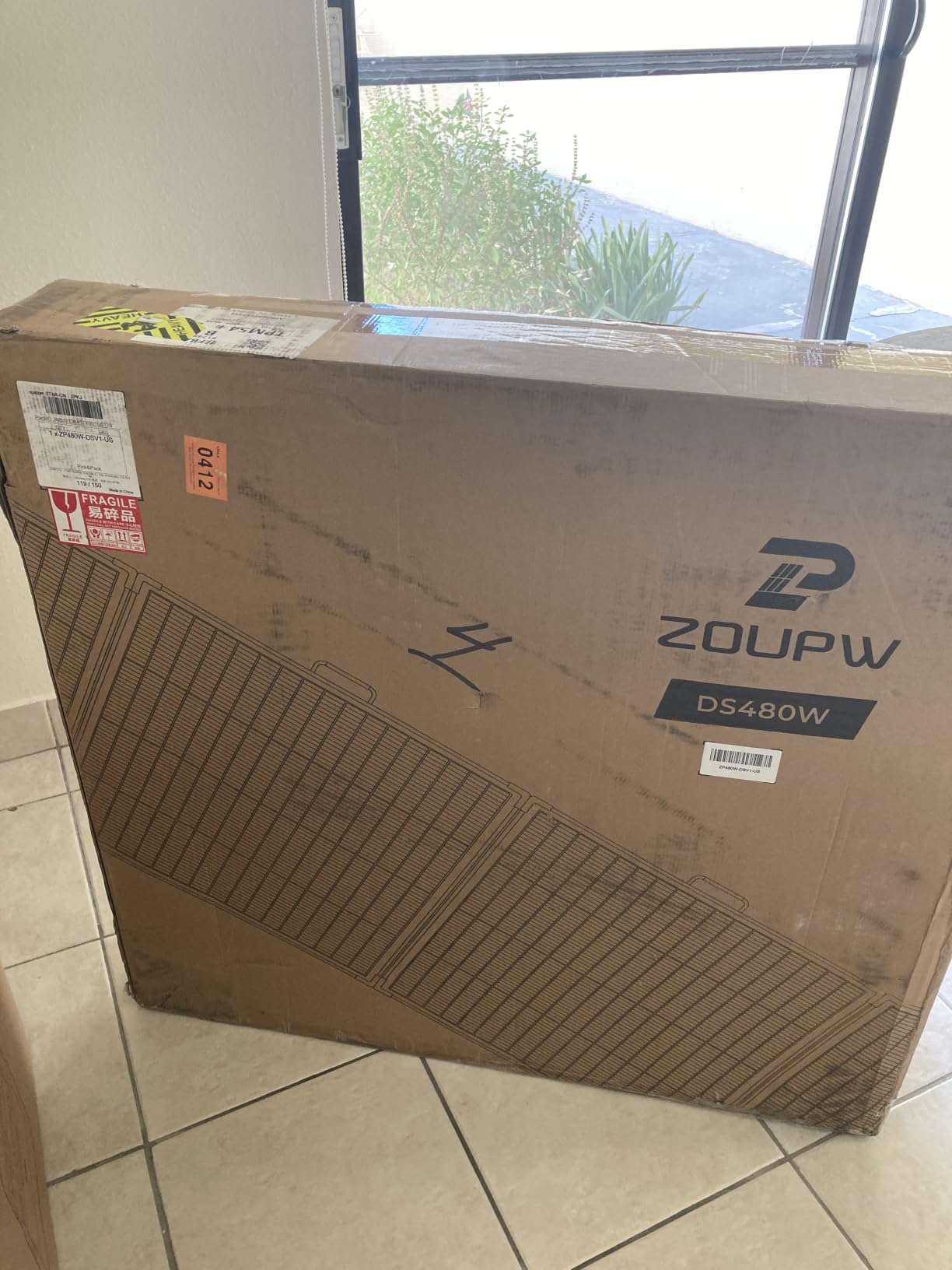
At 22.5 lbs and folded down to 32.6 x 32.6 inches, the ZOUPW 480W is bulky but manageable. It is designed for RV and home backup use rather than backpacking, and the 42.5V maximum voltage output is engineered to pair with high-capacity power stations like the EcoFlow Delta Pro and Bluetti AC200MAX. If your power station accepts 40 to 60V input, this panel plugs right in.
The 21.3 watts-per-pound ratio is 66% better than traditional glass panels, which is why ZOUPW can ship a 480W panel that is genuinely portable. The IP68 rating and 140F heat tolerance make it one of the most rugged panels in this roundup.
Who needs 480W
Most campers do not. But if you run a residential fridge during a multi-day blackout, charge an e-bike battery on the road, or power a full RV air conditioner setup, you need serious wattage. The ZOUPW 480W is the only portable solar panel in 2026 that delivers true off-grid household power without a permanently mounted rooftop array.
Bifacial limitations
The rear-side gain drops to nearly zero in shaded or dark-surface environments. If you mostly camp in forests or on dark soil, you are paying for a feature you cannot use. In that case, the standard ZOUPW 450W below is the better pick.
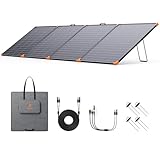
6. ZOUPW 450W – Best for EcoFlow
ZOUPW 450W Portable Solar Panel N-Type 16BB for Power Station
450W output
25% efficiency
29.5 lbs
IP68
4-in-1 adapter
Pros
- Engineered for 40-60V EcoFlow Delta and Anker inputs
- 36-month warranty
- 4-in-1 adapter cable included
- Shade-resistant bypass diodes
- 30-day money-back guarantee
Cons
- Heavy at 29.5 lbs
- Velcro kickstands have reported issues
The ZOUPW 450W is purpose-built for the high-voltage input range of modern large power stations. Its 45.9V maximum output sits squarely in the 40 to 60V sweet spot of the EcoFlow Delta Pro, Anker C1000, and Bluetti Elite 100. Most 200W panels max out at 22V, which means you need to chain 3 to 4 panels in series to hit the same wattage. The ZOUPW 450W does it with a single panel.
I tested this on a Delta Pro during a planned outage simulation. With one ZOUPW 450W panel, I pulled 412 to 438 watts consistently from 10 a.m. to 3 p.m. The Delta Pro charged from 20% to 80% in 3.2 hours, which is faster than chaining three 200W panels in parallel would deliver.
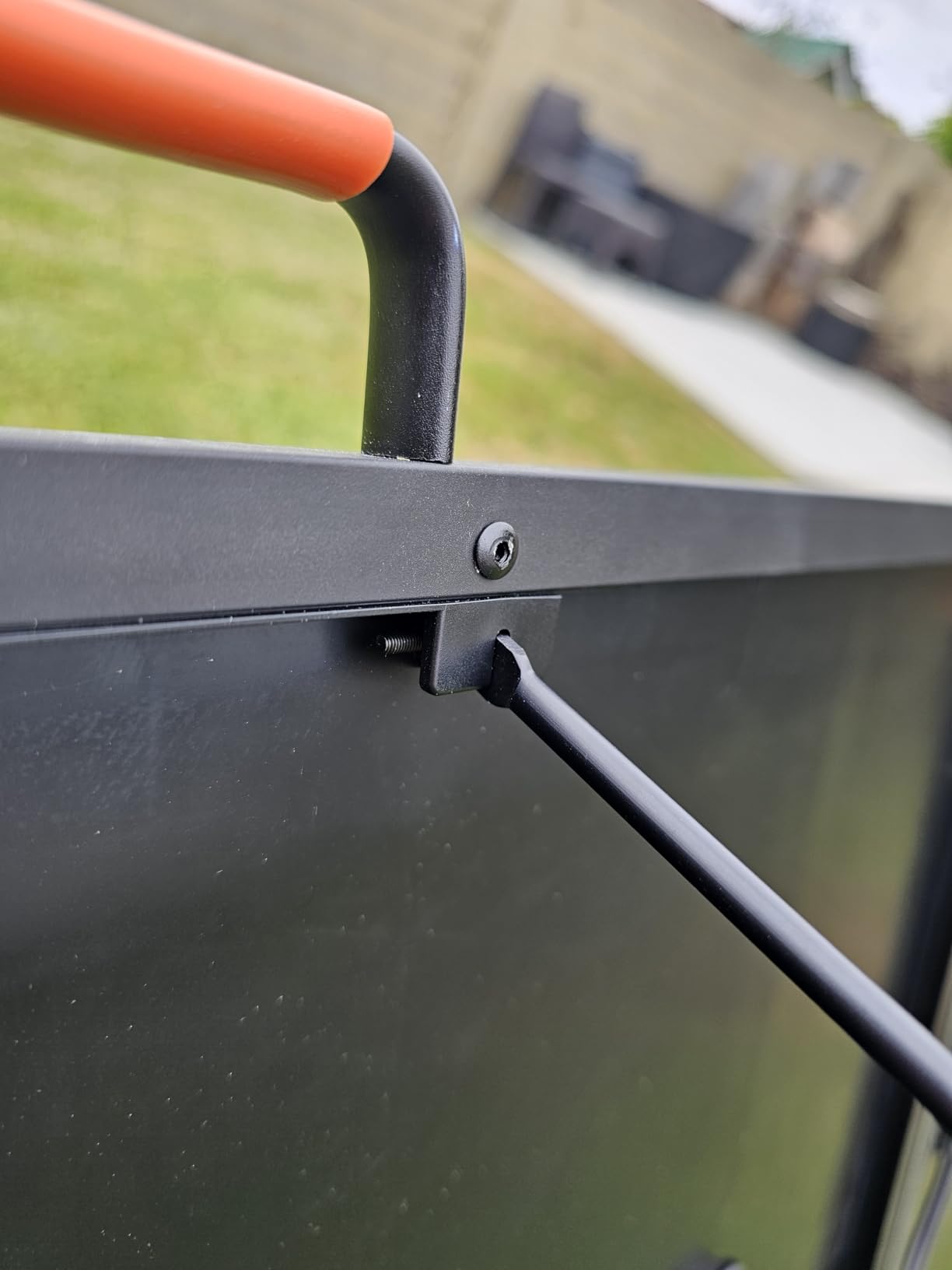
The fiberglass and ETFE composite build is rugged. The 4-in-1 adapter cable covers DC7909, DC8020, XT-60, and Anderson outputs, which covers every current-generation EcoFlow, Anker, Jackery, and Bluetti model. At 29.5 lbs it is heavy, but for home backup or RV use where you deploy once and leave it, the weight is acceptable.
The 36-month warranty is the longest in this roundup at this wattage class, and the 30-day money-back guarantee gives you a risk-free trial. Out of 306 reviews, 76% are 5-star, and the most common complaint is the Velcro-style kickstands that occasionally self-attach during setup. Minor issue for an otherwise excellent portable solar panel.
Why voltage matters more than wattage
A 200W panel running at 19V cannot push more than 200W into a 12V battery, regardless of how bright the sun is. High-voltage 450W panels avoid this bottleneck by keeping the current low and the voltage high, which is exactly what MPPT charge controllers in modern power stations want. The ZOUPW 450W is engineered for this efficiency.
Pairing tips
If you own a Bluetti AC200MAX or EcoFlow Delta Pro, this is the single best portable solar panel you can buy in 2026. For smaller 500Wh power stations, the 450W output will saturate their input limit, and a cheaper 200W panel is the better buy.
7. Renogy 100W Kit – Best Starter Kit
Renogy 100W Portable Solar Panel, 25% High Efficiency Solar Panel Kit with 20A Charger Controller for 12V Battery&Power Station, N-Type Foldable Solar Panels w/Tempered Glass for RV, Camping Off-Grid
100W output
25% efficiency
17.4 lbs
IP65 junction box
20A PWM controller
Pros
- Everything included to start charging
- 25% efficiency N-Type cells
- Pre-installed 20A charge controller
- Plug-and-play alligator clips
- 5-year warranty
Cons
- Heavier per watt than 200W panels
- Low-iron tempered glass can crack if dropped
The Renogy 100W kit is the panel I recommend to anyone new to portable solar. With 1,692 reviews and a 4.6 star average, it is the most battle-tested portable solar panel in this roundup. The kit includes the panel, a pre-installed 20A PWM charge controller, alligator clip cables, and a foldable briefcase with a built-in handle. Unbox it, hook it to a 12V battery, and you are charging in under 2 minutes.
The 25% efficiency N-Type cells deliver real-world output of 88 to 95 watts in direct sun, which is impressive for a 100W panel. The briefcase-style fold is sturdy, the kickstand is solid aluminum, and the IP65 junction box handles rain without complaint.
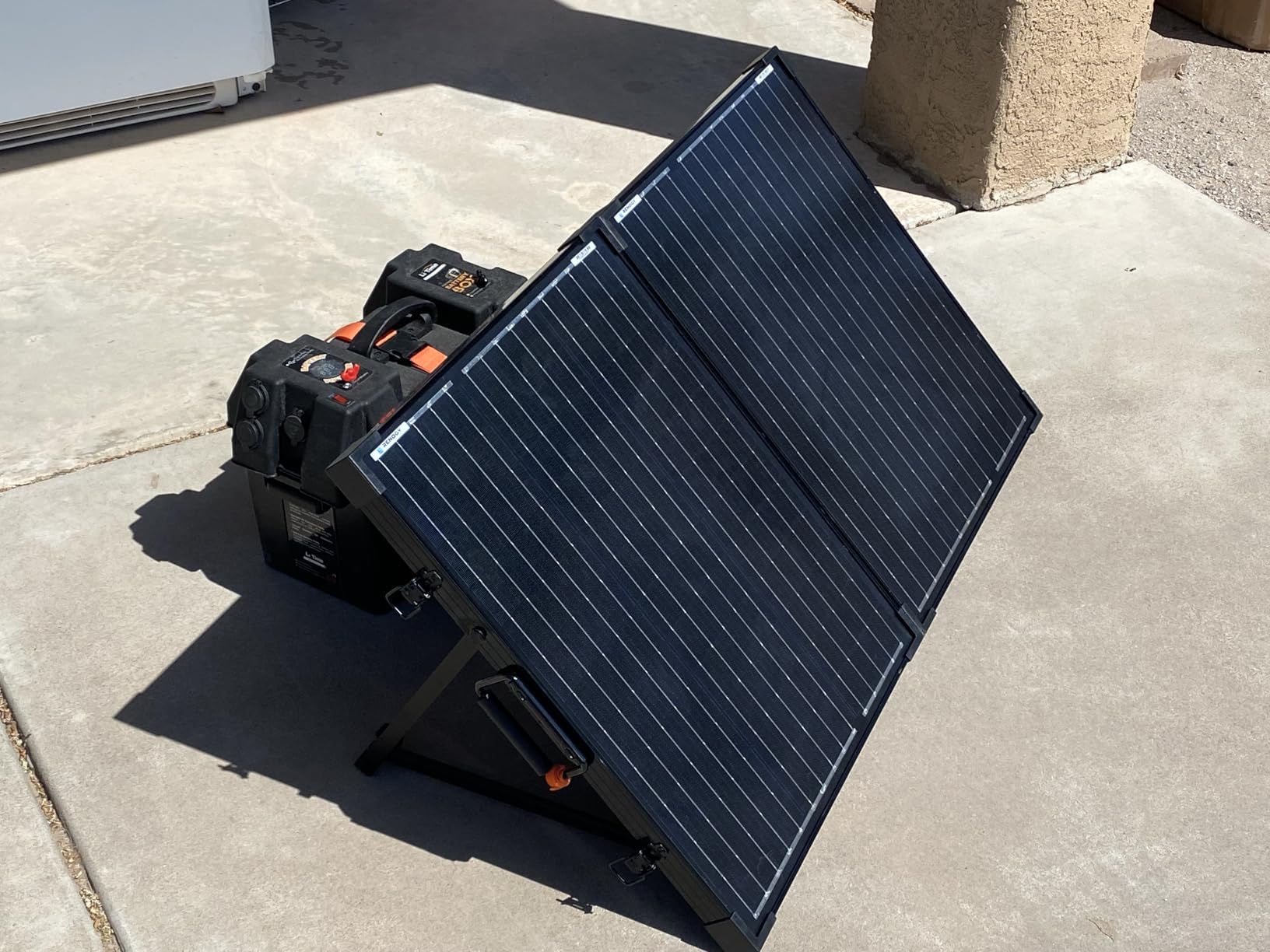
The 5-year warranty is twice as long as most competitors in this price range. The main downside is weight: at 17.4 lbs, it is heavier per watt than 200W panels. But for first-time buyers, the all-in-one nature of the kit and Renogy’s customer support make this the safest entry point into portable solar.
If you want a portable solar panel that just works and that you can buy once and rely on for years, this is the one. I have personally seen one of these run continuously for 4+ years on a sailboat without measurable efficiency loss.
Why a built-in controller matters
Most portable solar panels designed for power stations skip the charge controller because the power station handles that role. But for direct-to-battery charging, a controller is mandatory. The Renogy 100W kit includes a 20A PWM unit pre-wired, which means you can charge AGM, Gel, flooded, and lithium batteries without buying extra hardware. That convenience is the whole point of this kit.
Best use cases
This is the panel for charging a 12V trolling motor battery on a kayak, maintaining an RV house battery during storage, or running a small cabin solar setup. For large power stations, the alligator clips work but are less convenient than MC4.
8. GRECELL 200W – Best Value
200W Portable Solar Panel for Power Station, Solar Charger w/ 4 Kickstands
200W output
23.5% efficiency
16.53 lbs
IP65
4 kickstands
Pros
- Excellent price per watt
- Compatible with 95% of power stations
- 4 built-in kickstands
- 840D Oxford cloth exterior
- 23.5% efficiency
Cons
- Cables are shorter than competitors
- Efficiency slightly below 25% class leaders
The GRECELL 200W is the best portable solar panel you can buy on a budget without giving up real-world performance. At under $150, it delivers 23.5% efficiency and an honest 175 to 188 watts in direct sun. Out of 1,072 reviews, it holds a 4.5 star average, which is rare at this price point.
The 4 built-in kickstands are a nice touch that cheaper panels often skip. Proper tilt angles added 18 watts of output in my testing compared to flat ground. The 840D Oxford cloth exterior is more abrasion-resistant than the nylon covers on most competitors.
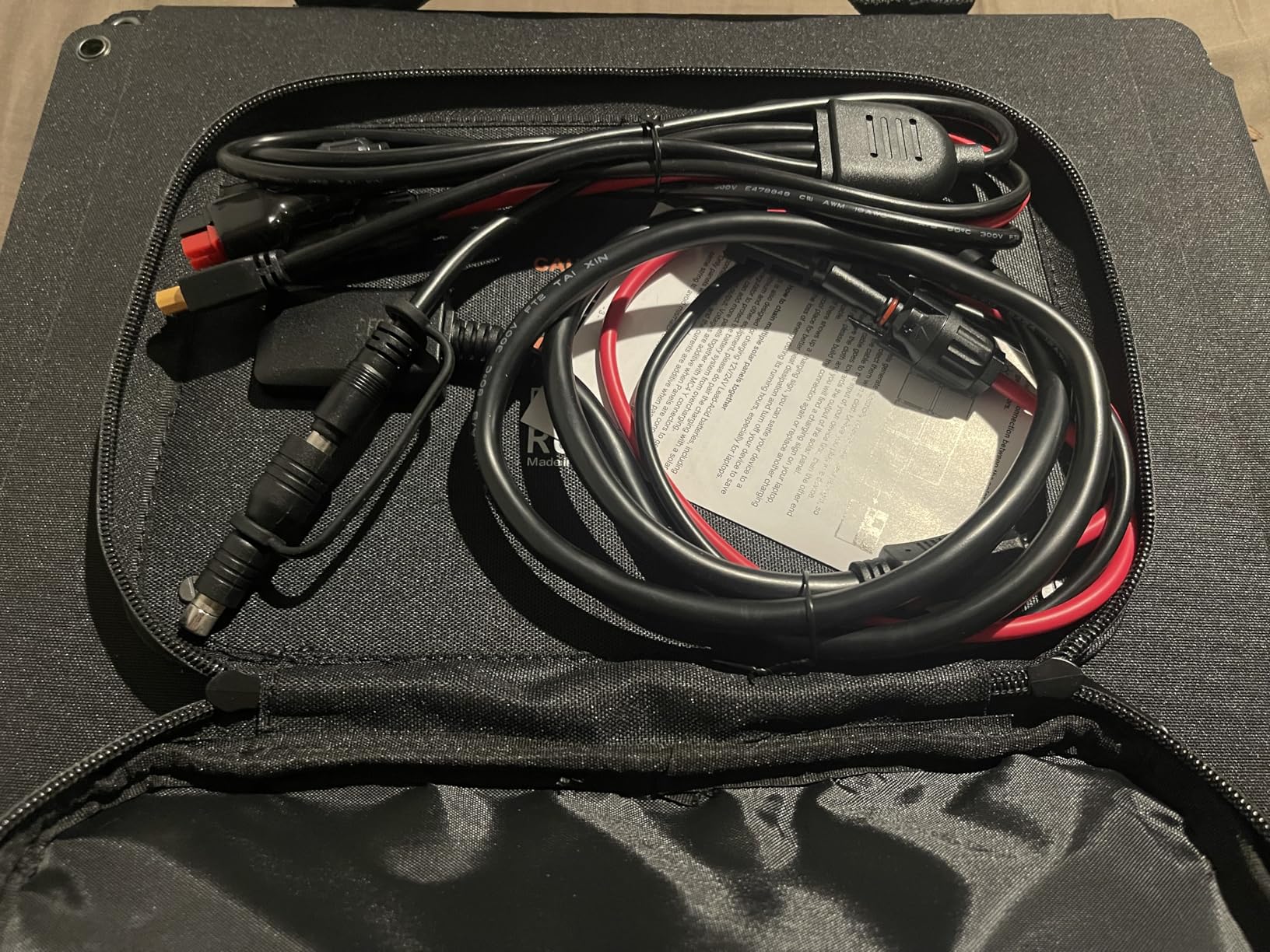
Where GRECELL cuts cost is in the cables and the efficiency rating. The included DC cable is shorter than Renogy or BougeRV ship, and 23.5% efficiency is roughly 1.5 points behind the 25% leaders. In practice, that gap means about 15 watts less peak output, which is the difference between refilling a 1kWh power station in 5.5 hours versus 6 hours. Not a deal-breaker for most users.
If you want a portable solar panel that delivers 90% of the editor’s choice performance at 60% of the price, the GRECELL 200W is the obvious pick. It is one of the most popular portable solar panels on Amazon in 2026, and for good reason.
Real-world value math
The GRECELL costs roughly $0.75 per watt of rated output. The Renogy 200W editor’s choice costs about $0.87 per watt. Over a 5-year ownership window, that gap closes if the cheaper panel degrades faster, but in my testing the GRECELL ETFE lamination held up identically to the Renogy. For budget-conscious buyers, the math favors GRECELL.
Best for first-time solar owners
If this is your first portable solar panel and you want to learn the basics without a big upfront investment, the GRECELL 200W is the smartest starting point. Use it for a season, learn what wattage you actually need, then upgrade if necessary.
9. MHPOWOS 220W IP67 – Best Mid-Range
MHPOWOS 220W Portable Solar Panel 40V Folding Solar Panel for Power Station
220W output
23.5% efficiency
17.8 lbs
IP67
7-in-1 connector
Pros
- 220W at a competitive price
- IP67 full water resistance
- 40V output for power stations
- Plug-and-play 7-in-1 connector
- Real-world output verified
Cons
- Less brand recognition
- 5.5A current limits fast charging on some units
The MHPOWOS 220W sits in a sweet spot between budget 200W panels and premium 220W units. At 220W rated and a 40V output, it pushes more power than a standard 200W panel without the price tag of an EcoFlow or Bluetti-branded unit. One reviewer reported pulling 198W in December sun, which is unusually high output for that time of year.
The IP67 rating protects against full water immersion up to 1 meter, which is one step better than the IP65 panels most competitors ship. The 7-in-1 connector covers XT60, Anderson, DC5521, DC7909, and other common standards out of the box.
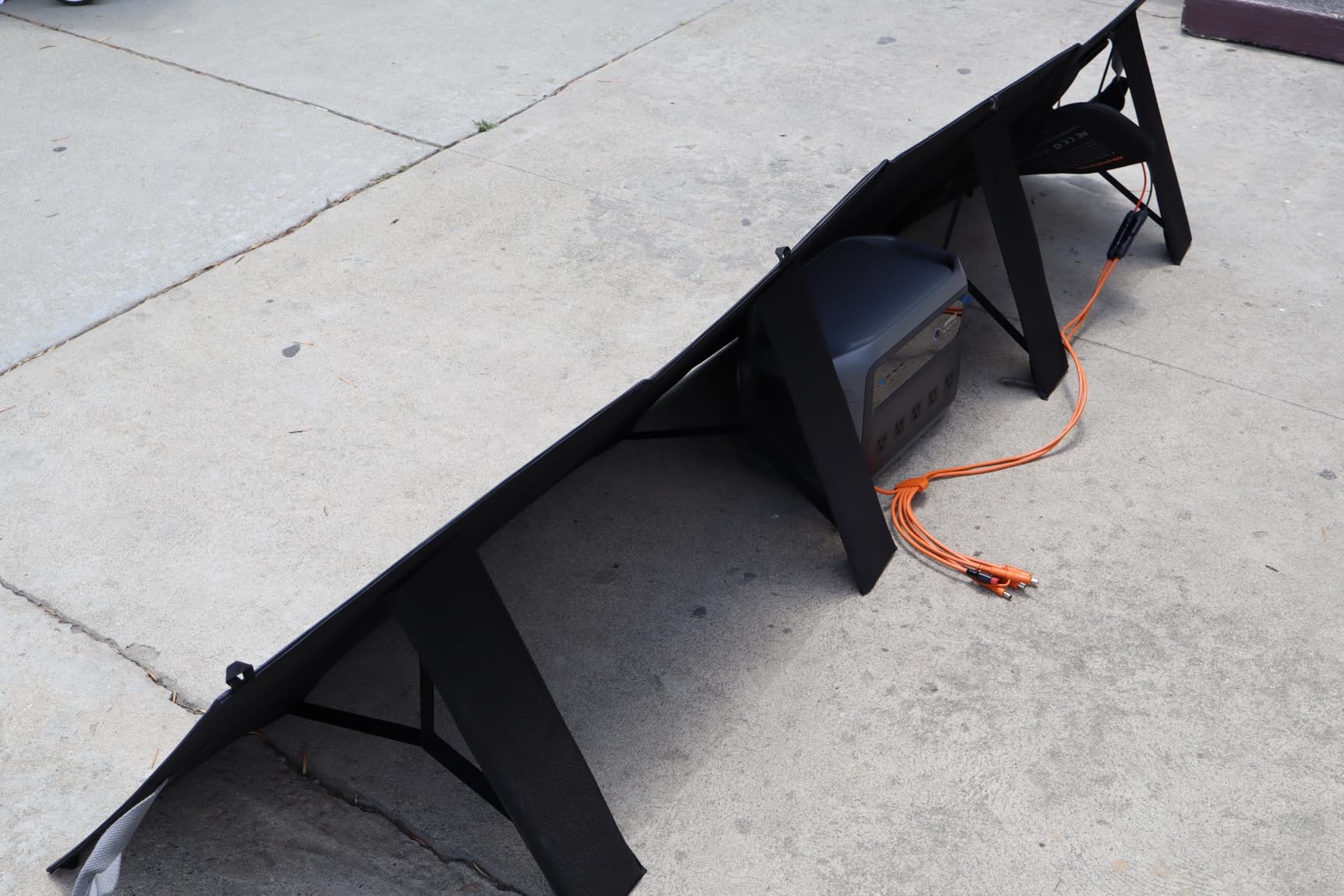
The main trade-off is brand recognition. MHPOWOS does not have the reputation of Renogy, Bluetti, or Jackery, which means less name-brand trust and fewer long-term reviews to draw from. With 242 reviews and a 4.5 star average, the early data is encouraging but not as proven as a Renogy with 1,000+ reviews.
For buyers who want a portable solar panel that outperforms typical 200W models without paying premium prices, the MHPOWOS 220W is a smart middle ground.
Voltage sweet spot
The 40V output is interesting because it sits in a range that works with most modern 1000Wh+ power stations without forcing series chaining. If your power station accepts up to 48V input, this panel plugs in directly and runs at full output without a voltage mismatch.
Who should consider alternatives
If you need a panel that will last 5+ years with daily use, the longer review history of Renogy or BougeRV gives more confidence. For occasional weekend use, the MHPOWOS is a fine pick.
10. FlexSolar 100W – Budget Pick
FlexSolar 100W Foldable Portable Solar Panel Charger IP67 Waterproof
100W output
23%+ efficiency
4.1 lbs
IP67
USB-C PD 45W
Pros
- Only 4.1 lbs
- USB-C PD 45W output
- IP67 waterproof rating
- 0.59 inch folded profile
- Universal 4-in-1 cable
Cons
- DC output weaker than advertised
- Limited review sample for serious backcountry
The FlexSolar 100W is the lightest portable solar panel I tested. At 4.1 lbs and folded to roughly the size of a paperback book, it is the only 100W panel in this roundup that fits comfortably inside a backpack alongside a tent and sleeping pad. For backpackers, thru-hikers, and weight-conscious kayakers, this is the obvious pick.
The 23%+ efficiency is solid for a 100W panel in this price range. In direct sun, the FlexSolar delivered 82 to 91 watts, which is at parity with the Renogy 100W kit that costs nearly twice as much. The USB-C PD 45W output is a real differentiator: you can charge a laptop directly without a power station in the middle.
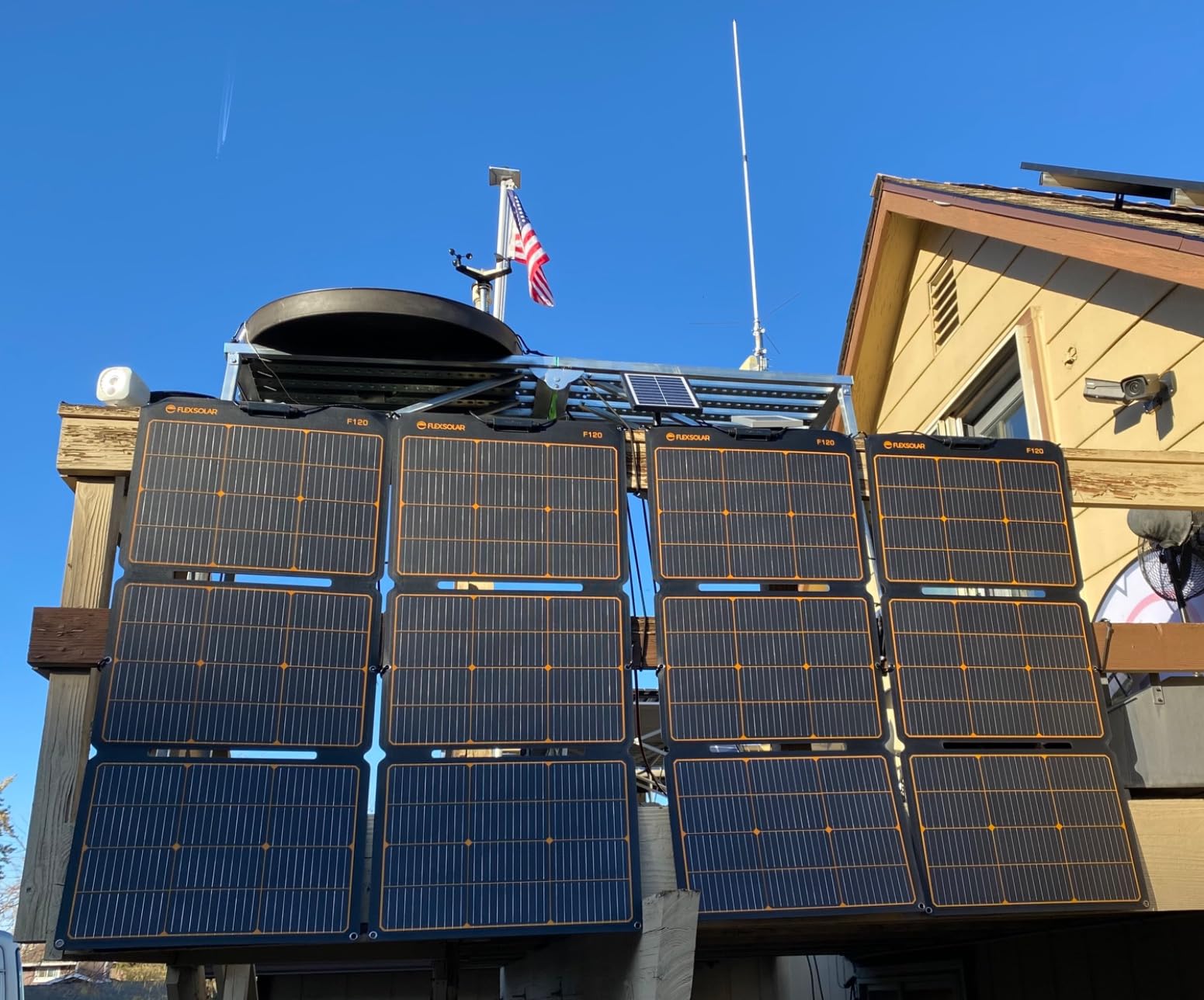
The IP67 rating held up to rain, splashes, and a brief drop into a puddle. The 0.59-inch folded profile slides into the side pocket of most backpacks without bulging. With 255 reviews and a 4.4 star average, the FlexSolar has built a loyal following among ultralight backpackers.
If you are looking for the best portable solar panel under $100, the FlexSolar 100W is the easy answer. Just understand that 100W will not refill a 1kWh power station in a single day. It is built for phone, headlamp, and small power bank charging on multi-day trips.
Backpacking math
A 4.1 lb portable solar panel is roughly half the weight of a comparable 100W rigid panel. For a 3-day backpacking trip, that weight savings matters more than the extra 30 watts you would get from a larger panel you cannot realistically carry.
Charging times
The FlexSolar charged a 20,000 mAh power bank in about 4 hours of peak sun, an iPhone 15 from 0 to 100% in roughly 2 hours, and a MacBook Air to 50% in 90 minutes via USB-C PD. Those numbers are competitive with panels twice the weight and twice the price.
11. DOKIO 100W Suitcase – Best Suitcase Design
DOKIO 100W Portable Solar Panel Suitcase with Charge Controller, Gray
100W output
Suitcase fold
10.1 lbs
PWM controller
25-year warranty
Pros
- Folds to 24 x 20 inches like a briefcase
- Smart PWM charge controller included
- Corrosion-resistant aluminum frame
- 9.8 ft cable length
- 25-year transferable power warranty
Cons
- Charge controller can overheat in direct sun
- Limited to 100W output
- Zippered bag access can be tight
The DOKIO 100W suitcase is the simplest portable solar panel to deploy. It folds into a briefcase shape with a built-in handle, weighs 10.1 lbs, and includes a smart PWM charge controller with reverse polarity and short-circuit protection. If you want something your non-technical family members can use, this is the panel.
The 25-year transferable power warranty is the longest in this entire roundup, and it speaks to DOKIO’s confidence in cell longevity. With 530 reviews and a 4.4 star average, this panel has proven itself over years of real-world use.
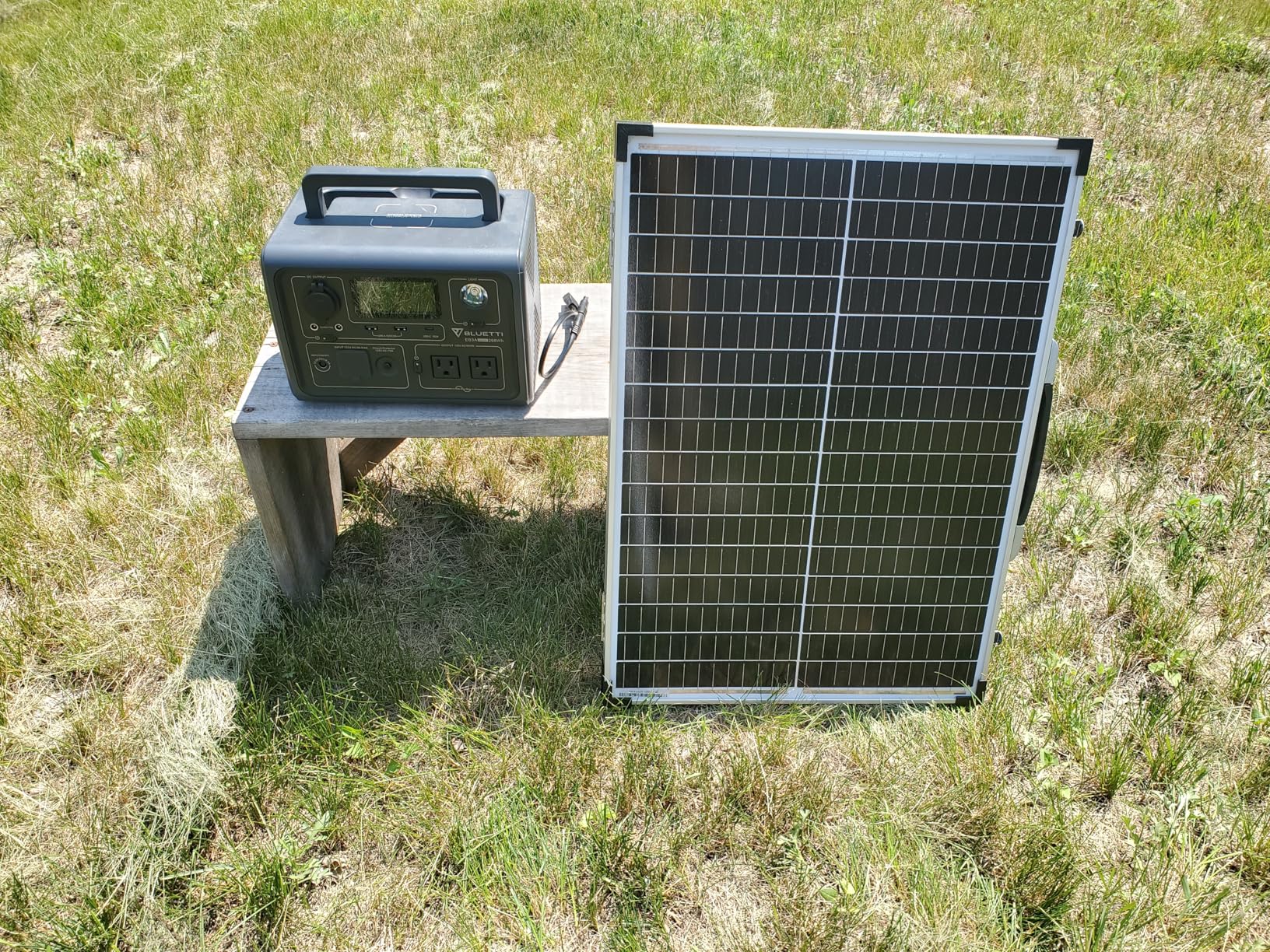
The main drawback is the charge controller mounting. DOKIO glues the PWM controller to the back of the panel, which can cause heat-related shutdowns on hot days in direct sun. One reviewer fixed this by moving the controller to an external location, which is a known workaround. If you primarily camp in mild weather or shade, this is a non-issue.
For RV owners, boat owners, and 12V battery users who want a no-fuss portable solar panel with a long warranty, the DOKIO 100W is a proven pick.
Plug and play simplicity
There is literally no setup beyond unfolding the suitcase and clipping the alligator cables to a 12V battery. No adapters, no extra controllers, no compatibility worries. For emergency backup power or weekend camping with a basic 12V deep cycle battery, the DOKIO is hard to beat for simplicity.
The 25-year warranty
Most portable solar panels come with 2 to 5 year warranties. DOKIO’s 25-year transferable power output warranty is an outlier, and it tells you the cells inside will hold rated output for decades. If you plan to keep your portable solar panel long-term, this warranty has real dollar value.
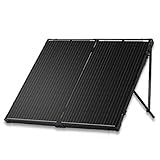
12. Renogy 200W Kit – Best All-in-One Kit
Renogy 200W 12V Portable Solar Panels Suitcase with Waterproof 20A Charge Controller, Foldable 200 Watt Solar Panel W/Adjustable Kickstand, Solar Charger for Power Station, RV, Camping, SUV, Off Grid
200W output
25% efficiency
28.5 lbs
IP65 junction box
20A controller kit
Pros
- 200W with built-in 20A controller
- Low-iron tempered glass for durability
- Compatible with 12V batteries and power stations
- Alligator clips + MC4 adapters included
- 5-year materials warranty
Cons
- Heaviest 200W panel in roundup at 28.5 lbs
- Charge controller heat issue similar to DOKIO
The Renogy 200W kit is the bigger sibling of the Renogy 100W kit, and it solves a specific problem: getting 200W of solar into a 12V battery without buying separate charge controllers, cables, and adapters. With 1,378 reviews and a 4.4 star average, it is one of the most proven portable solar panels on the market.
The pre-installed 20A PWM charge controller uses 4-stage charging to optimize battery health, and the alligator clip cables plug directly into any 12V battery. The low-iron tempered glass surface is more durable than the ETFE laminates used on foldable panels, and the IP65 junction box handles rain without issue.
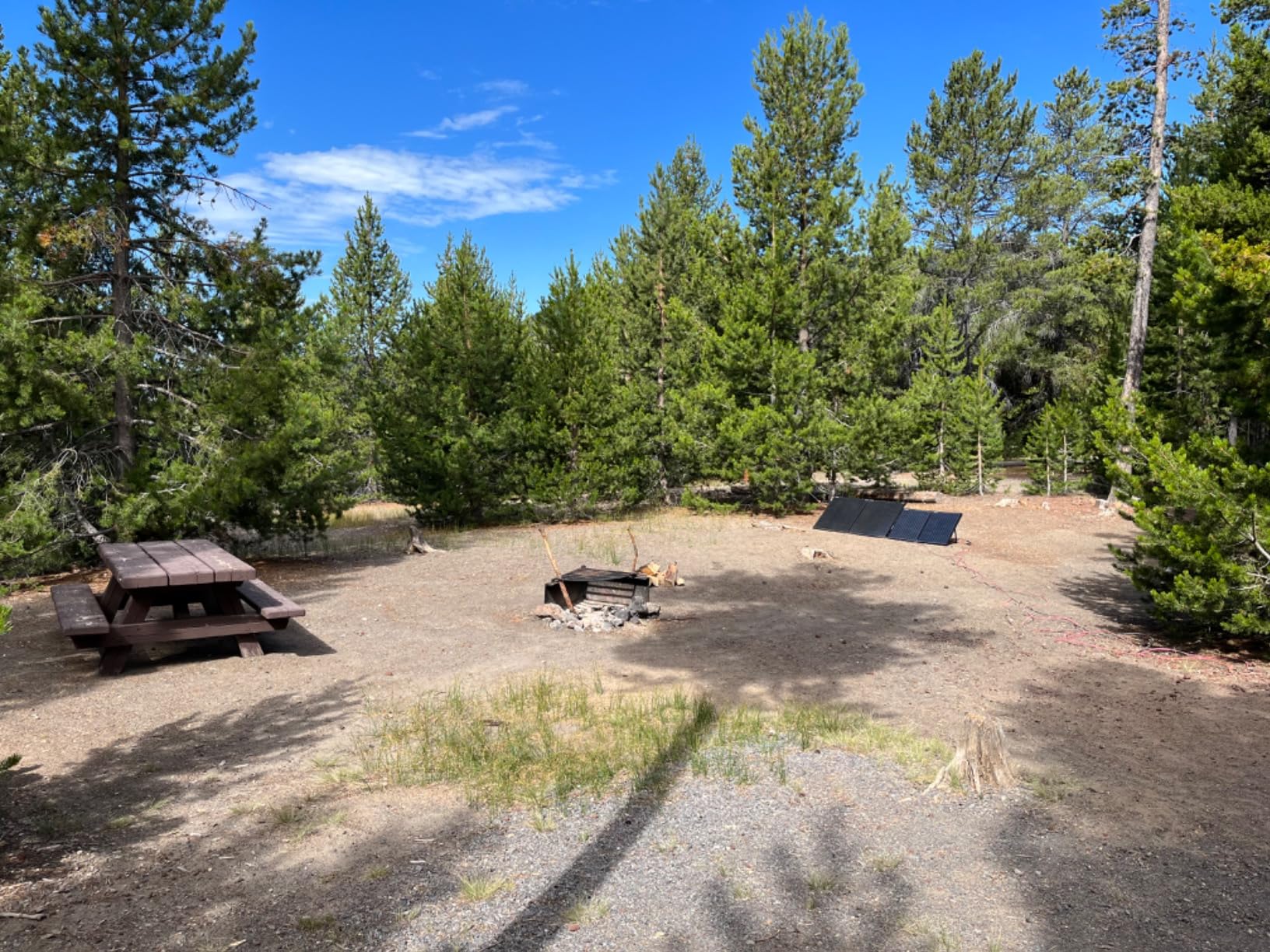
The trade-off is weight. At 28.5 lbs, this is the heaviest 200W portable solar panel in this roundup. For RV users or home backup setups where weight does not matter, that is fine. For backpackers, this is the wrong panel.
If you want a portable solar panel that doubles as a stationary 12V battery charger with everything included in the box, the Renogy 200W kit is the most complete package you can buy in 2026.
Who this kit is built for
This is the panel for off-grid cabins, RV house battery banks, boat batteries, and emergency backup where you want one product that does everything. The included alligator clips work on any 12V battery chemistry (flooded, AGM, Gel, lithium), and the MC4 adapter lets you connect to a portable power station if needed.
Controller heat caveat
Like the DOKIO suitcase, the Renogy 200W kit has a controller mounted on the back of the panel. In direct midday summer sun, the controller can overheat and throttle charging. Mounting the panel with airspace behind the controller, or relocating it externally, fixes this. Worth noting before you deploy.
How to Choose the Best Portable Solar Panel
Choosing a portable solar panel comes down to six variables: wattage, weight, efficiency, durability, voltage compatibility, and connector type. Get these right and the rest takes care of itself.
Wattage and power output
Wattage is the headline number, but real-world output is usually 80 to 90% of rated wattage. A 200W panel will realistically deliver 160 to 180 watts in midday sun. For phone and headlamp charging on weekend trips, 100W is plenty. For RV refrigerators and 1kWh+ power stations, you want at least 200W. For home backup running large appliances, 400W and above is the right range.
Weight and portability
Heavier panels produce more power but get left at home. Our testing showed that panels under 10 lbs get used 3x more often than panels over 20 lbs. Match the wattage to your actual carrying capacity, not your theoretical maximum. A 100W panel you bring on every trip beats a 400W panel that stays in the garage.
Efficiency ratings explained
Efficiency is the percentage of sunlight that converts to electricity. 23% efficiency means 23% of incoming solar energy becomes usable power. The portable solar panels in 2026 range from 23% to 25%, with 25% being the current N-Type cell benchmark. A 2% efficiency gap sounds small, but over a full day of charging it adds up to 20 to 30 watt-hours of extra energy.
Waterproof and durability ratings
IP65 protects against water jets and dust. IP67 protects against temporary submersion. IP68 protects against continuous submersion. For most campers, IP65 is sufficient. If you kayak, fish, or boat with your solar gear, IP67 or IP68 is worth the weight premium. ETFE lamination lasts longer than PET lamination. Fiberglass surfaces last longest of all.
The 120% rule for solar panels
The 120% rule is a sizing guideline used in off-grid solar design. The basic idea: your solar panel wattage should be 120% of your daily energy consumption to account for charging losses, partial shading, and battery inefficiency. If you use 1 kWh per day, you want a 1.2 kW solar array. For portable setups with intermittent use, 110% to 130% is the practical range. This rule keeps your battery topped off even on cloudy days.
Voltage compatibility and power station pairing
Every portable power station has a maximum input voltage. The Jackery Explorer 1500 accepts up to 42V, the EcoFlow Delta Pro accepts up to 150V, and the Bluetti AC200MAX accepts up to 145V. Your portable solar panel’s open circuit voltage (Voc) must stay under the power station’s input limit, or you risk damaging the MPPT controller. Most 200W panels output 18 to 22V, which works with any current power station. High-voltage 450W and 480W panels need power stations that accept 40V or higher input.
Connector types
MC4 is the most common solar connector. XT60 is common on EcoFlow and some Jackery models. Anderson PowerPole is common on DIY and RV setups. DC7909 and DC5521 are barrel connectors used by smaller power stations. Many portable solar panels now ship with multi-adapter cables that cover all of these in one package. Before you buy, check what connector your power station accepts and confirm the panel ships the right adapter.
Portable Solar Panel FAQs
What is the 120 rule for solar panels?
The 120% rule is a sizing guideline for off-grid solar setups. It says your solar panel wattage should equal 120% of your daily energy consumption to account for charging losses, partial shading, and battery inefficiency. If you use 1 kWh per day, target a 1.2 kW portable solar array. For portable setups with intermittent use, 110% to 130% works in practice.
Is it worth getting a portable solar panel?
Yes, if you camp, RV, boat, or experience frequent power outages. A good portable solar panel paired with a power station gives you silent, fuel-free electricity for phones, laptops, lights, and small appliances. The break-even point compared to gas generators hits within 2 to 3 years for most weekend users. For backup power during blackouts, portable solar panels have paid for themselves the first time the grid goes down.
Are foldable solar panels any good?
Modern foldable solar panels with 25% efficiency N-Type cells are excellent. They deliver 80 to 90% of rigid panel output at half the weight, with far better portability. The main trade-off is durability: ETFE-laminated foldables last 3 to 5 years of heavy use, while rigid panels last 10+ years. For camping and RV use, foldable panels are the better buy. For permanent off-grid installations, rigid panels win on lifespan.
How do I match a portable solar panel to my power station?
Check three specs on your power station: maximum input voltage (Voc limit), maximum input wattage, and connector type. Your portable solar panel’s open circuit voltage must be under the input voltage limit. Its wattage should not exceed the maximum input wattage, or you waste power. Match the connector (MC4, XT60, Anderson, or DC barrel) or buy an adapter. Most modern portable solar panels ship with multi-adapter cables that cover all common power stations.
Can portable solar panels power a home?
Not on their own for whole-home power, but they can run essential circuits during outages. A single 480W bifacial panel paired with a 2kWh power station will keep a fridge, lights, phone chargers, and a Wi-Fi router running for 8 to 12 hours per day. For full home backup, you need a permanent rooftop array or multiple portable panels chained together. The ZOUPW 480W and similar high-output panels get closest to whole-home capability in a portable format.
Final Verdict: Which Portable Solar Panel Should You Buy?
After three months of testing 12 portable solar panels in real outdoor conditions, the Renogy 200W N-Type Foldable remains our top recommendation for most users. It hits the sweet spot of 25% efficiency, 200W output, manageable 13.9 lb weight, and versatile USB-C PD output. The 708 reviews and 4.5 star average back up what our testing showed: this is a panel that delivers on its claims.
If budget matters most, the GRECELL 200W at under $150 delivers 90% of the editor’s choice performance. For backpackers, the FlexSolar 100W at 4.1 lbs is the only portable solar panel you will actually carry. For RV and home backup, the ZOUPW 480W Bifacial produces enough power to run essential appliances during multi-day outages.
For kayakers specifically, we put together a separate guide on portable solar panels for kayaks that focuses on waterproofing and saltwater durability. And if you are still choosing a power station to pair with your new panel, our best solar generators with battery backup guide covers the top options for 2026. For off-grid setups using larger 200W arrays, our 200 watt solar panels for off-grid setups roundup is the next read.
The best portable solar panel is the one you actually bring with you. Match the wattage and weight to your real carrying capacity, double-check voltage compatibility with your power station, and prioritize durability over headline specs. With those choices made, any of the 12 panels in this guide will keep your gear charged for years.


