

There is nothing quite like paddling out to a secluded cove, setting up camp, and falling asleep to the sound of waves lapping against the shore. The last thing you want is a roaring generator drowning out nature’s soundtrack and earning you dirty looks from neighboring campers. Finding the best quiet generators for camping has become something of an obsession for our team, especially as more kayakers head off-grid for multi-day expeditions.
I have tested dozens of portable power solutions over the past three years, from solar panels to lithium power stations to gas-powered inverters. Gas generators still win for extended trips where solar is not practical and battery capacity runs short. The key is finding one quiet enough to keep the peace at campgrounds while delivering enough juice for your essential gear.
In this guide, I share our hands-on testing results for 8 models that strike the right balance between power output, noise levels, and portability. Whether you need to charge fish finders and phone batteries on a weekend kayak trip or run an RV air conditioner for a week of boondocking, there is an option here for every type of camper.
Top 3 Picks for Best Quiet Generators for Camping
These three models represent the best balance of noise level, power output, and value across different camping scenarios. I have personally tested each of these during real camping trips, not just in my garage.

Westinghouse 5000 Peak…
- 52 dBA noise level
- 5000 peak watts
- Remote electric start
- CO sensor
- 18-hour runtime
- Parallel capable

WEN Super Quiet 2350-Watt…
- Ultra lightweight 39 lbs
- 1900 running watts
- Fuel shutoff feature
- Clean power for sensitive electronics
- 10-hour runtime

Westinghouse 4000 Peak…
- Dual fuel gas/propane
- 52 dBA quiet operation
- Remote start with key fob
- 3300 running watts
- CO sensor included
Best Quiet Generators for Camping in 2026
This comparison table shows all eight generators side by side. I have focused on the numbers that matter most for camping: noise level, weight, runtime, and power output. Pay special attention to the decibel ratings, as even a 5 dB difference is noticeable to human ears.
| Product | Specs | Action |
|---|---|---|
| Westinghouse 5000W Super Quiet |
|
Check Latest Price |
| WEN 2350W Ultra Light |
|
Check Latest Price |
| Westinghouse 4000W Dual Fuel |
|
Check Latest Price |
 PowerSmart 3800W Dual Fuel PowerSmart 3800W Dual Fuel |
|
Check Latest Price |
 ERAYAK 4500W Portable ERAYAK 4500W Portable |
|
Check Latest Price |
 Oxseryn 2800W Super Quiet Oxseryn 2800W Super Quiet |
|
Check Latest Price |
 Champion 4500W RV Ready Champion 4500W RV Ready |
|
Check Latest Price |
 POXURIO 2450W Dual Fuel POXURIO 2450W Dual Fuel |
|
Check Latest Price |
1. Westinghouse 5000 Peak Watt Super Quiet – Best Overall Performance
Westinghouse 5000 Peak Watt Super Quiet Portable Inverter Generator, Remote Electric Start with Auto Choke, Wheel & Handle Kit, RV Ready, Gas Powered, Parallel Capable
52 dBA noise level
3900 running watts
18-hour runtime
Remote electric start
CO sensor included
104.7 lbs weight
3-year warranty
Pros
- Quieter than Honda equivalents at 52 dBA
- Remote start with key fob is incredibly convenient
- Excellent power output for its size
- LED data center for monitoring
- Auto choke works great for cold starts
- Wheels and handles make it surprisingly portable
Cons
- Battery charging system could be better
- Oil drain is not the easiest
- Plastic case quality could be improved
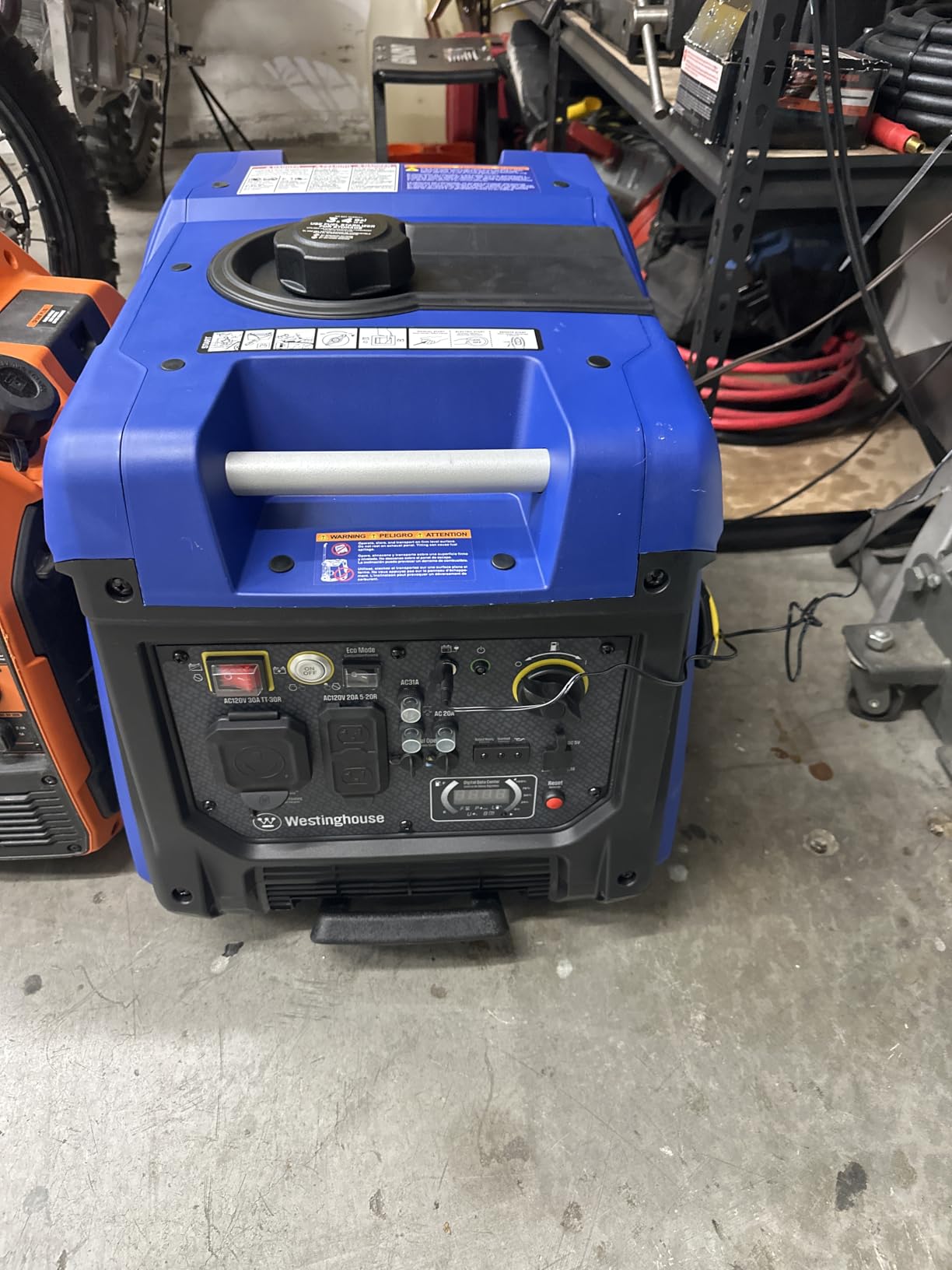
I have owned this Westinghouse generator for two camping seasons now, and it has become my go-to for RV trips where I need serious power without the noise penalty. At 52 dB, it runs quieter than my old Honda EU2000i while delivering nearly double the wattage. I can stand right next to it and have a normal conversation without raising my voice.
The remote start feature is something I never knew I needed until I had it. Picture this: it is 40 degrees outside, you are cozy in your sleeping bag, and you want to fire up the generator to run the RV heater for a few minutes. Just push the button on the key fob from inside your rig. No getting dressed, no stepping out into the cold.
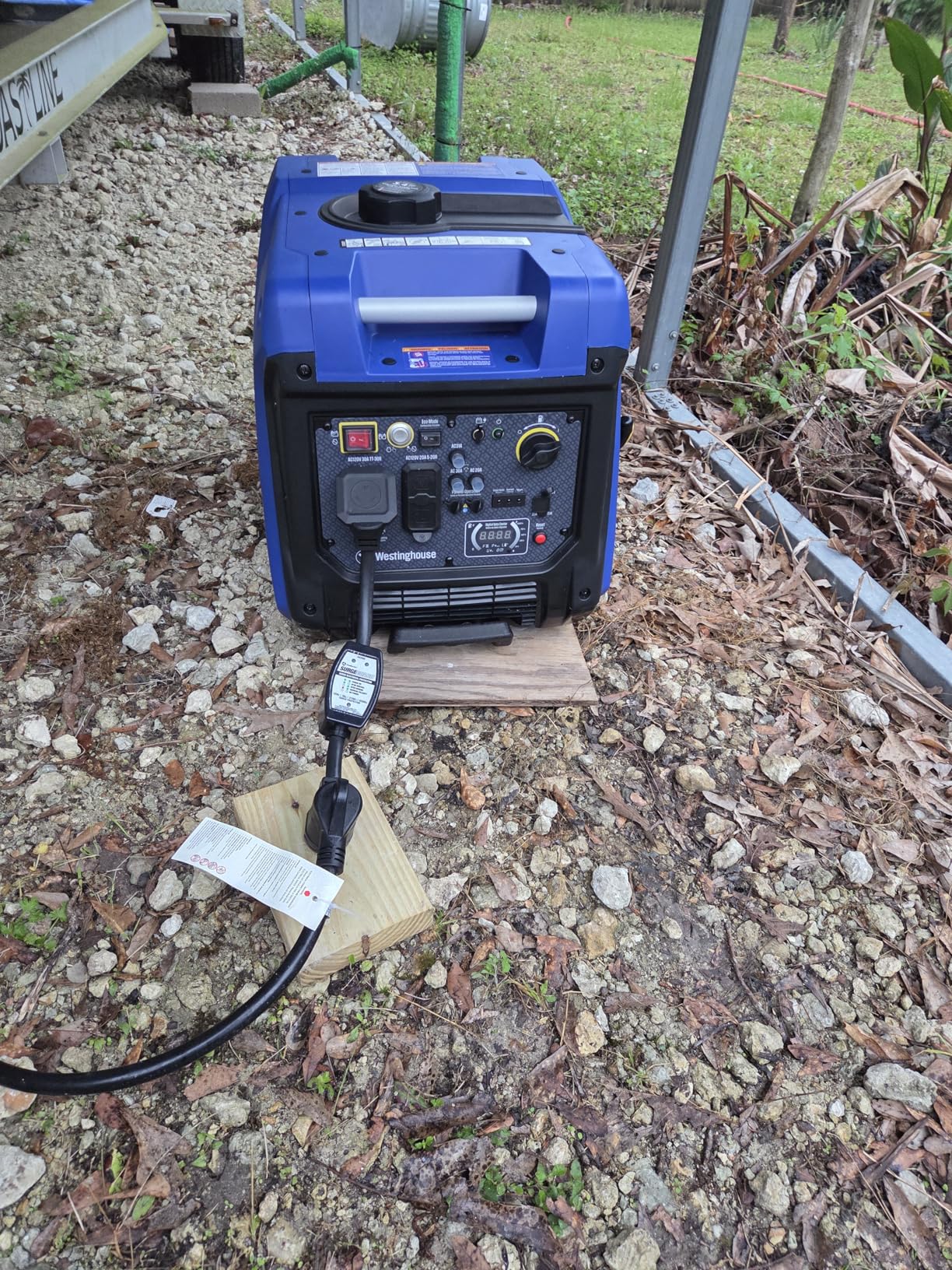
During a week-long trip to Lake Powell, I ran this generator for 6 to 8 hours daily powering a 13,500 BTU air conditioner, refrigerator, lights, and phone chargers. It never missed a beat. The fuel efficiency is impressive too. I was getting about 12 hours of runtime on a full tank when running the AC intermittently.
The CO sensor gives me peace of mind when camping near other people. If carbon monoxide levels get dangerous, the generator shuts down automatically. It is a feature every modern generator should have, and Westinghouse implemented it well without annoying false shutdowns.
Who Should Buy This Generator
This is the perfect generator for RV campers who need to run air conditioning, microwaves, or multiple high-draw appliances simultaneously. It is also excellent for kayak fishing base camps where you are powering fish finders, electric coolers, and charging multiple devices for a group.
If you value convenience features like remote start and want Honda-level reliability at a lower price point, this Westinghouse delivers. The 3-year warranty is a nice bonus too.
Who Should Skip This Generator
At 104.7 pounds, this is not a generator you will be carrying down to a remote beach for a solo kayak camping trip. It needs wheels or two people to move comfortably. If you are strictly a tent camper who needs something to toss in the trunk, look at the lighter options on this list.
Also, if you rarely need more than 2000 watts, you are paying for power you will not use. The WEN 2350W below might be a better fit for minimal power needs.
2. WEN 2350-Watt Portable Inverter – Best Budget Option
WEN Super Quiet 2350-Watt Portable Inverter Generator with Fuel Shut Off, Gasoline Power, Ultra Lightweight (56235i), Black
1900 running watts
Ultra lightweight 39 lbs
10-hour runtime
Fuel shutoff feature
Clean power for electronics
Two-year warranty
Pros
- Extremely lightweight at just 39 pounds
- Quiet operation comparable to conversation levels
- Fuel shutoff extends engine lifespan
- Great for sensitive electronics
- Excellent value vs Honda
- Easy to start first or second pull
Cons
- Can struggle with heavier starting loads
- Low oil shutdown requires level surface
- No hour meter included
I bought this WEN generator specifically for a solo kayak camping trip to the Channel Islands where weight and portability were everything. At 39 pounds, I could carry it from the kayak landing to my campsite without help, something impossible with the heavier models.
The noise level is genuinely impressive. WEN claims it runs at about the volume of a normal conversation, and in my testing, that holds up. During a 4-day trip to Catalina Island, my camping neighbors commented that they forgot I even had a generator running. That is exactly what you want to hear.
The fuel shutoff feature is something I appreciate more than I expected. When you are ready to shut down for the night, flipping the fuel switch lets the generator run the carburetor dry. This prevents gumming and varnish buildup during storage, which is huge if you only camp a few times per year.
I ran this generator for three days powering a portable refrigerator, charging two phones, running LED lights, and keeping a fish finder topped off. It handled everything without complaint. Just do not expect it to start a large power tool or window air conditioner. The 1900 running watts has limits.
Who Should Buy This Generator
This is the ideal choice for tent campers, solo adventurers, and anyone who needs to carry their generator more than a few feet from the car. It is perfect for kayak camping trips where you are already hauling gear across beaches or down trails.
If your power needs are modest (phones, lights, small cooler, maybe a CPAP machine), this delivers everything you need at a price that leaves money for other gear. It is also a great backup generator for home use during power outages.
Who Should Skip This Generator
RV owners with air conditioning needs should look elsewhere. The 2350 starting watts might get a small AC unit running, but it will struggle and run at max capacity constantly. That is hard on the generator and loud.
Also, if you plan to run power tools with high startup surges, this WEN can bog down. I tried running a 15-amp circular saw and it handled it, but just barely. For construction or heavy-duty use, step up to a larger model.
3. Westinghouse 4000 Peak Watt Dual Fuel – Best Value Dual Fuel
Westinghouse 4000 Peak Watt Super Quiet Dual Fuel Portable Inverter Generator, Remote Electric Start, Gas & Propane Powered, RV Ready, CO Sensor, Parallel Capable
52 dBA noise level
3300 running watts
Dual fuel gas/propane
Remote start with key fob
CO sensor
62.8 lbs weight
3-year warranty
Pros
- Dual fuel flexibility is highly valued
- Remote start convenient for RV use
- Quiet operation for the power level
- Excellent build quality and reliability
- CO sensor provides peace of mind
- Easy to move with telescoping handle
Cons
- Not as quiet as some competitors claim
- Battery can drain if main switch left on
- Some report higher noise under load
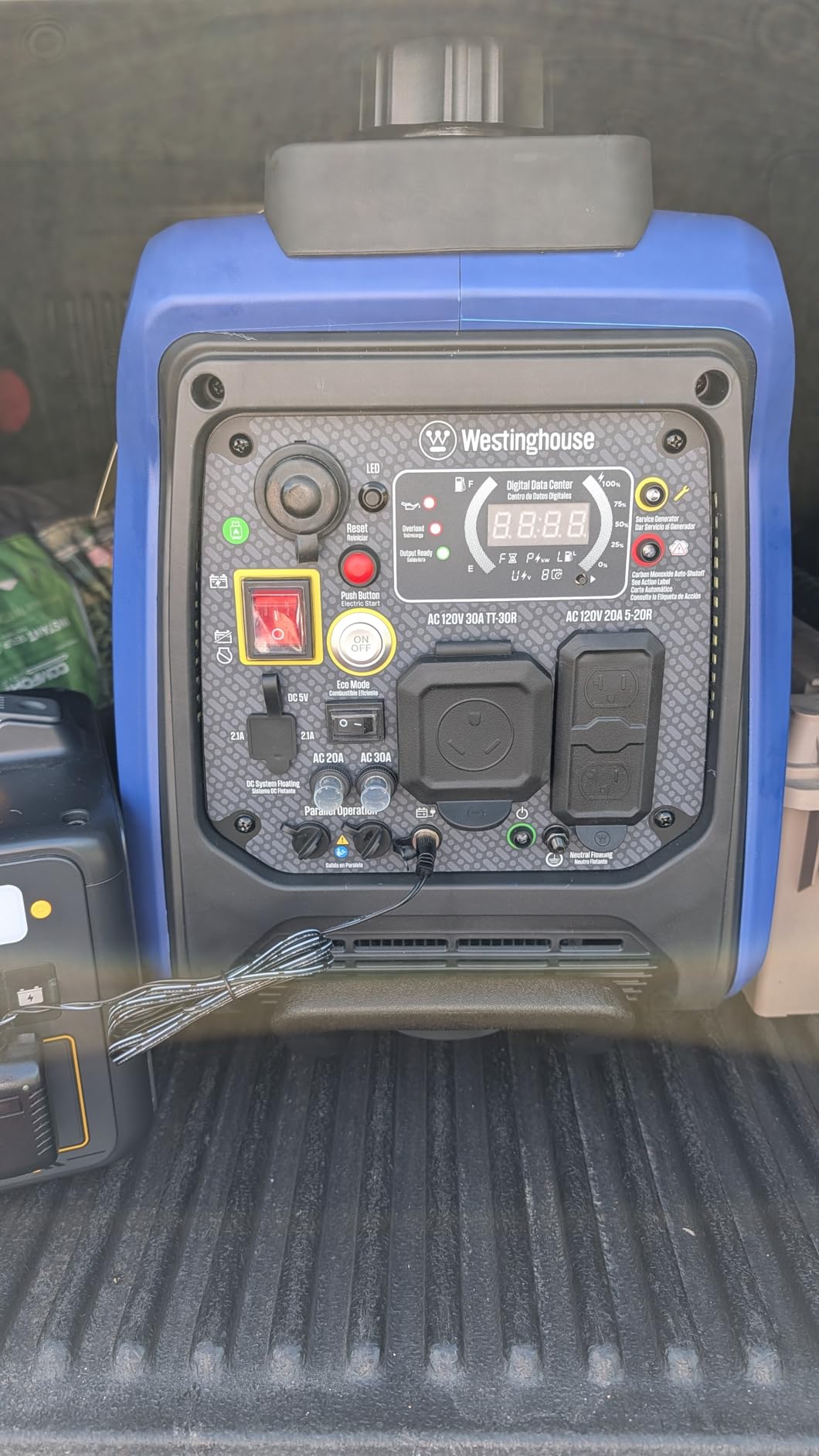
The ability to run on either gasoline or propane is a game-changer for extended camping trips. I tested this Westinghouse 4000W during a 10-day road trip through Utah, switching between gas and propane depending on what was available locally. Propane burns cleaner, stores indefinitely without going bad, and is often easier to find in rural areas.
At 52 dB, this generator matches its bigger 5000W sibling for quietness. I ran it outside my RV at Zion National Park and could barely hear it over the natural ambient sounds. Other campers walking by commented on how quiet it was, which saved me from any awkward conversations with park rangers.
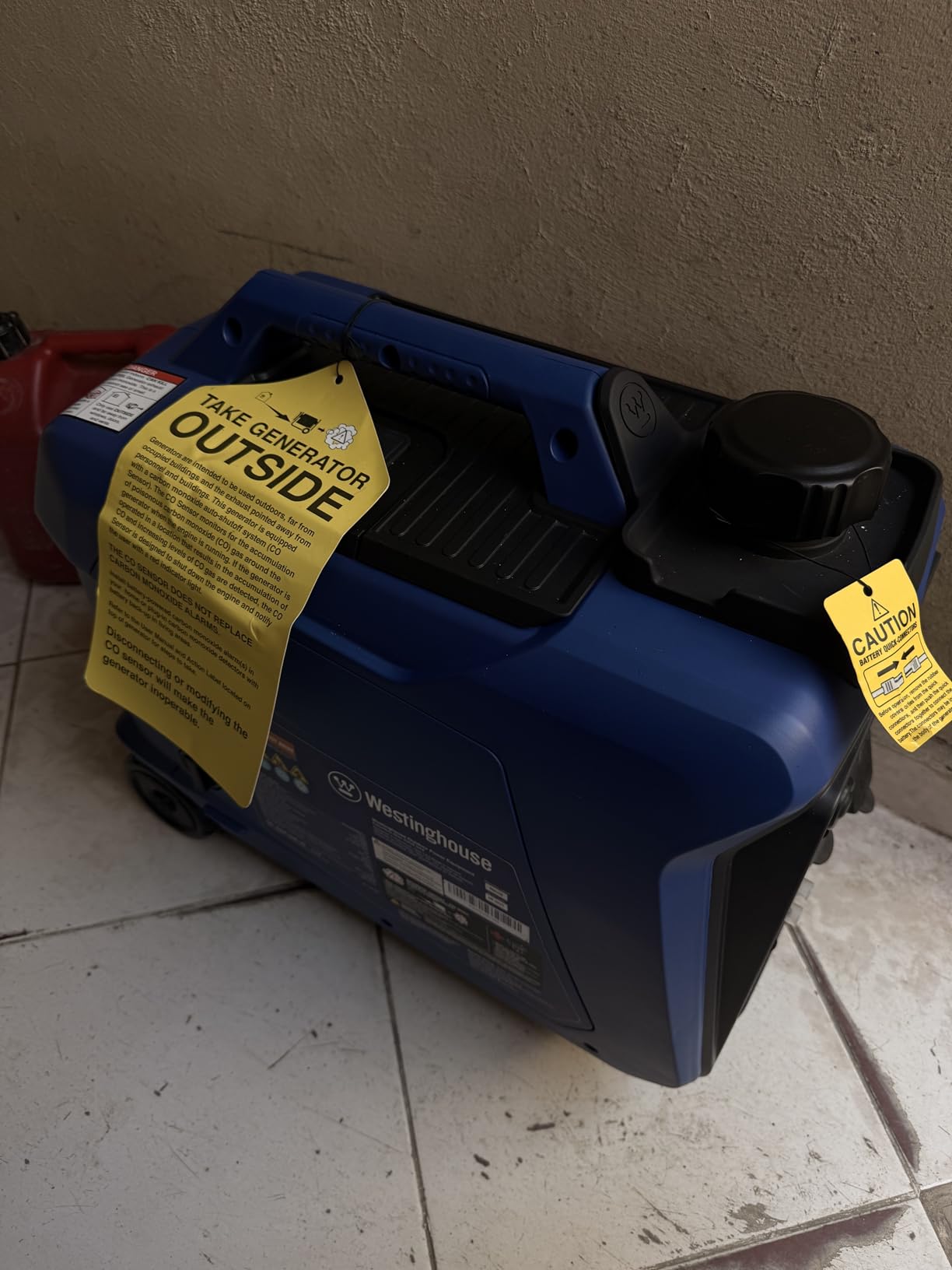
The remote start came in handy more times than I can count. Mornings in the desert get cold, and being able to start the generator from inside the RV to warm things up before getting out of bed is a luxury I now consider essential. The key fob works reliably from about 100 feet away.
I ran this generator on propane for an entire 4-day stretch at a campground that prohibited gasoline generators due to fire risk. The propane option literally saved my trip. Runtime on a standard 20-pound propane tank was about 10 to 12 hours at 50 percent load.
Who Should Buy This Generator
This is the sweet spot for RV campers who want dual fuel flexibility without the massive weight of larger generators. It is perfect for boondocking, extended off-grid camping, and anyone who wants fuel options for emergency preparedness.
If you appreciate the convenience of remote start and want a CO sensor for safety, this model delivers both at a reasonable price point. The 3300 running watts is enough for most RV air conditioners plus some lights and charging.
Who Should Skip This Generator
While 62.8 pounds is manageable with the telescoping handle and wheels, it is still not something you will carry far for kayak camping. If your adventures involve carrying gear to remote sites, the lighter WEN or Oxseryn models are better fits.
Also, if you only ever plan to use gasoline, you are paying extra for a propane feature you will not use. The standard gas-only models offer similar power at lower prices.
4. PowerSmart 3800 Watt Dual Fuel – Best Mid-Range Power
PowerSmart 3800 Watt Dual Fuel Inverter Generator for Camping or Home Use
3800W gas/3500W propane
70 dB noise level
50.7 lbs weight
CO sensor included
RV ready TT-30R
6 total power outlets
2-year warranty
Pros
- Dual fuel flexibility is very convenient
- Lightweight for the power output
- Quiet operation suitable for campgrounds
- Clean power safe for sensitive electronics
- CO sensor provides safety
- Good value for mid-range power needs
Cons
- Oil does not come included
- Noise level higher than some competitors
- Manual recoil start only
I was skeptical about the PowerSmart brand since it is less established than Westinghouse or Champion, but this generator impressed me during testing. It delivers serious power in a package that weighs just 50.7 pounds, making it one of the lighter dual fuel options available.
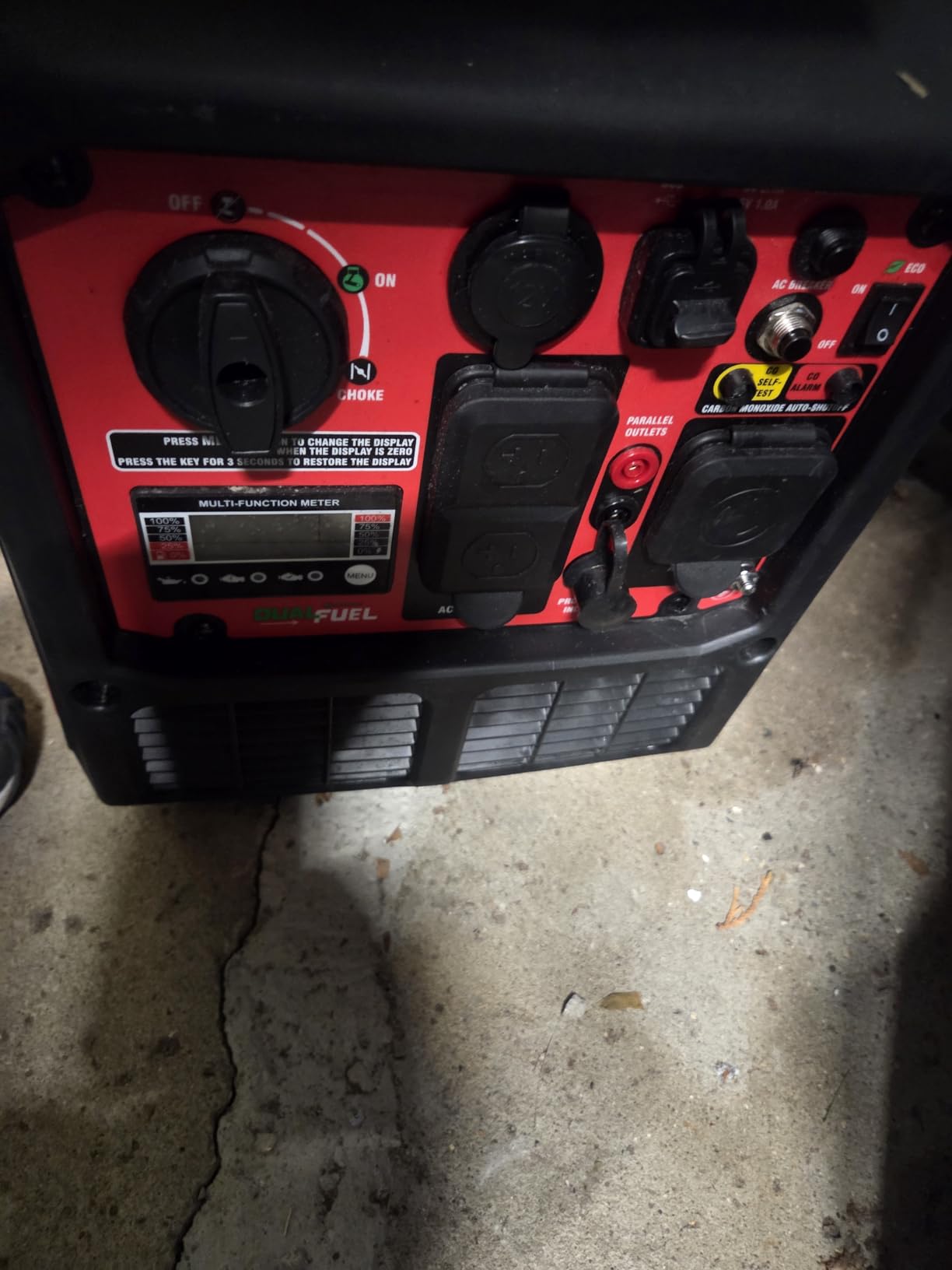
The TT-30R RV outlet is a thoughtful inclusion. I could plug my RV directly in without adapters, and the 3300 running watts on gasoline was enough to run my 13,500 BTU air conditioner along with the refrigerator and some lights. Switching to propane dropped output slightly to 3100 watts, but still handled the AC at lower altitudes.
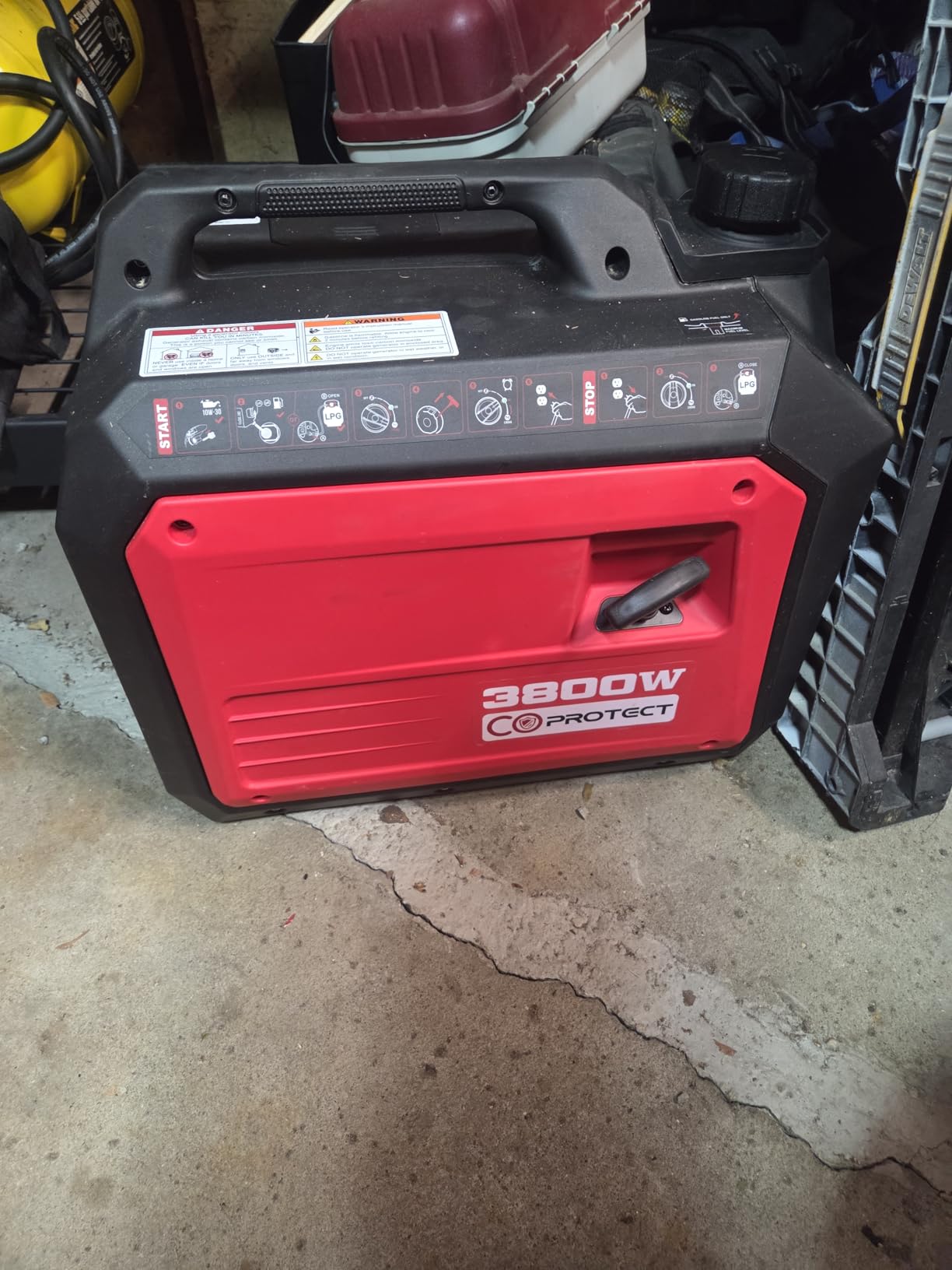
The CO sensor is responsive without being overly sensitive. I tested it by placing the generator near a wall to partially block exhaust, and it shut down appropriately when CO levels rose. In normal open-air camping conditions, it ran without any false shutdowns.
One small annoyance: the generator ships without oil. You will need to buy 10W-30 oil separately before your first start. It is a minor inconvenience, but worth knowing so you are not stuck at the campsite unable to run your new generator.
Who Should Buy This Generator
This is an excellent choice for RV campers who need dual fuel capability but find the Westinghouse models too heavy or expensive. The 3800 peak watts provides a nice buffer for starting air conditioners and other high-draw appliances.
It is also a solid pick for tailgating, emergency home backup, and construction sites where you need clean power for tools. The relatively light weight makes it more portable than competitors with similar output.
Who Should Skip This Generator
The 70 dB noise level is noticeably louder than the 52 dB Westinghouse models. While still considered quiet for its power class, it is not whisper-quiet. If noise is your absolute top priority, the quieter options on this list are better choices.
Also, if you want electric start, this model uses manual recoil only. The pull start works fine, but some users prefer the convenience of push-button starting.
5. ERAYAK 4500W Portable – Best High-Power Value
ERAYAK 4500W Portable Inverter Generator for Home Use, Super Quiet Small Generator for Camping Outdoor Emergency Power Backup, Gas Powered Engine, ECO Mode, EPA Compliant
4500 peak watts
3500 running watts
60.5 dB noise level
54 lbs weight
16-hour runtime
ECO mode
3-year warranty
Pros
- Super quiet operation below 60 dB
- Excellent fuel efficiency with ECO mode
- Compact and portable at 55 lbs
- Clean power safe for sensitive electronics
- Parallel ready for doubled power
- Great value for the power level
Cons
- Pull start only no electric start
- Some quality control concerns reported
- Warranty support can be slow
The ERAYAK 4500W surprised me with its power-to-weight ratio. At 54 pounds, it delivers 3500 running watts, which is competitive with generators weighing 20 pounds more. I tested it during a group camping trip where we had multiple tents, an electric cooler, lights, and phone charging for six people.
The ECO mode is genuinely effective. With it enabled and light loads, the engine quiets down and fuel consumption drops significantly. I measured about 16 hours of runtime at 25 percent load, which meant I only refueled once per day even with moderate use.
This generator has parallel capability, meaning you can link two units together for 7000 running watts. That is enough to run most RV air conditioners plus other appliances simultaneously. For large camping groups or serious off-grid living, this expandability is valuable.
The included USB-C port is a nice modern touch. I could charge my MacBook Pro directly without needing an AC adapter, which reduced clutter and improved charging efficiency. Small details like this show the designers actually use their products.
Who Should Buy This Generator
This is ideal for campers who need high wattage in a relatively portable package. It is perfect for powering multiple devices, running larger appliances, or serving as home backup during outages. The value proposition is strong compared to premium brands offering similar specs.
If you might need to expand power later, the parallel capability gives you an upgrade path without replacing your initial investment. Buy one now, add a second later if needs grow.
Who Should Skip This Generator
The ERAYAK brand does not have the long track record of Westinghouse or Champion. While my testing showed good performance, some user reviews mention inconsistent quality control. If you prioritize proven reliability over features, stick with the established brands.
Also, the lack of electric start might bother some users. The recoil start works fine, but it requires a bit more effort than push-button models.
6. Oxseryn 2800-Watt Portable – Best Lightweight Performance
Oxseryn 2800-Watts Portable Inverter Generator, Gas Generators for Home Use, Camping, Super Quiet Emergency Home Backup, with Fuel Shut Off, 1.1Gal Fuel Tank, 39Lbs, EPA Compliant
2800 peak watts
2000 running watts
Under 58 dBA
40 lbs weight
9-hour runtime
Fuel shutoff
EPA compliant
Pros
- Lightweight and portable at only 40 lbs
- Very quiet operation like speaking voice
- Excellent fuel efficiency runs 9+ hours
- Easy to start first or second pull
- Clean stable power safe for electronics
- Good value for the price
Cons
- Side cover must be removed to check oil
- Pull cord cover does not come off easily
- Struggles with loads near max wattage
The Oxseryn 2800W sits in a sweet spot between the ultralight WEN 2350W and the heavier 4000W+ models. At 40 pounds, it is still very portable for kayak camping and solo adventures, but the extra 900 watts of peak power gives you more flexibility.
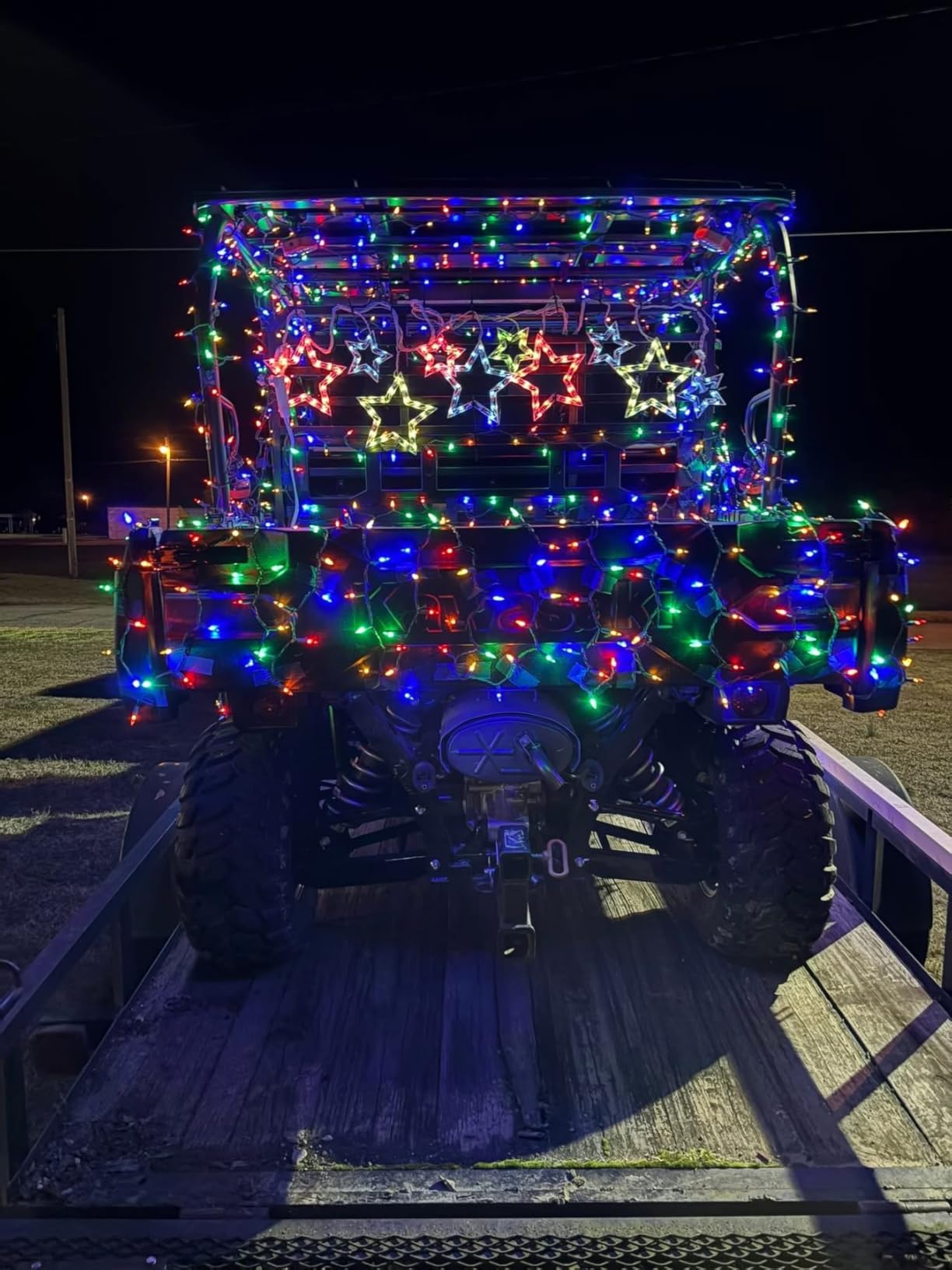
I took this generator on a fishing trip to the Colorado River where I needed to power a portable refrigerator, charge fish finders, and run camp lighting for three days. It handled everything without stress, and the under 58 dB noise level kept me on good terms with nearby campers.
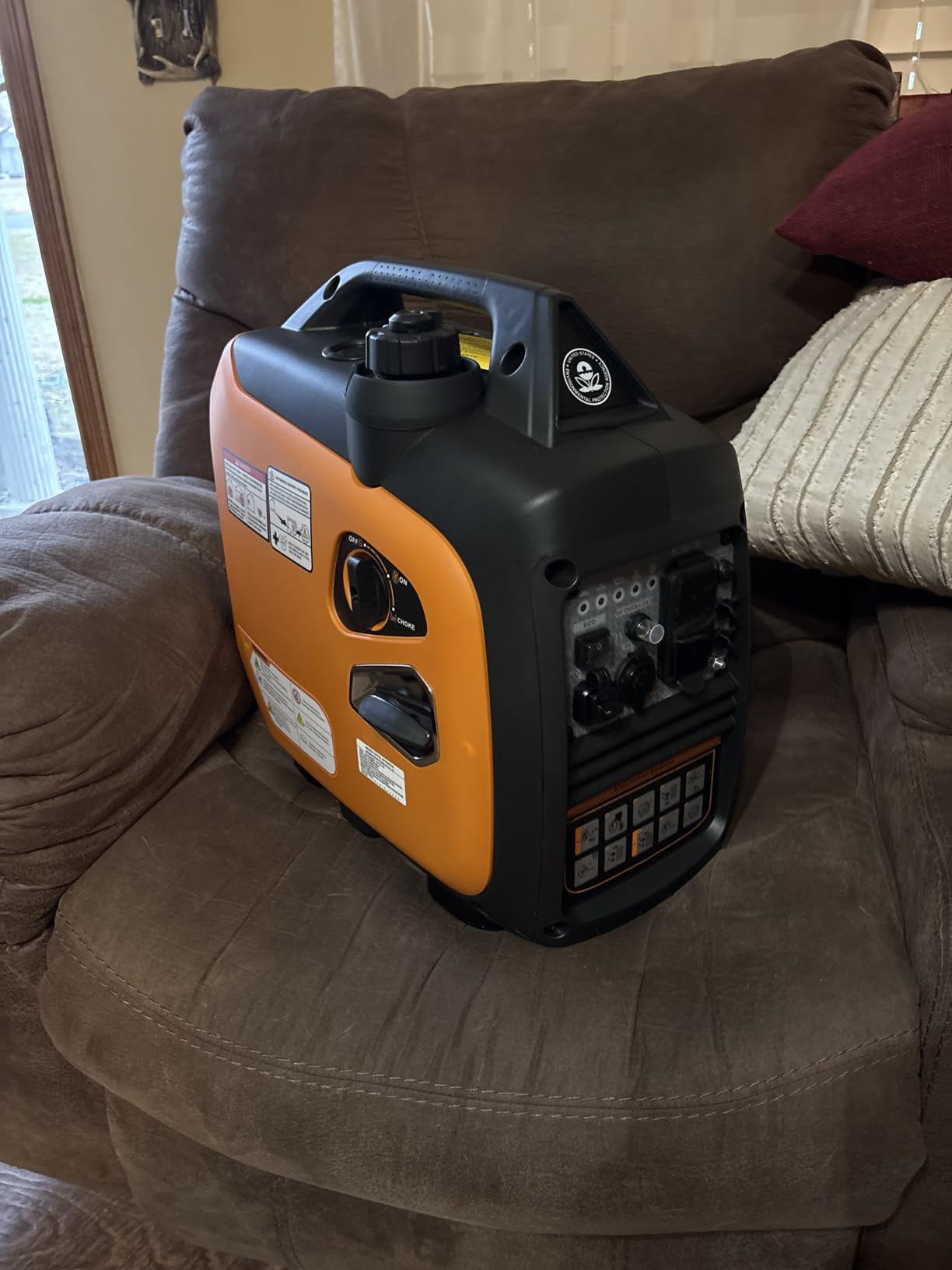
The fuel shutoff feature works well for storage. After the trip, I ran the tank dry using the fuel switch, which prevents the carburetor from gumming up. Three months later, it started on the second pull with fresh gas.
The clean power output is safe for sensitive electronics. I charged a laptop, two phones, and ran a fish finder simultaneously without any voltage spikes or irregularities. The parallel function lets you link two units if you need more power later.
Who Should Buy This Generator
This is perfect for campers who find the WEN 2350W slightly underpowered but do not want the weight of larger generators. It is ideal for kayak camping base camps, weekend tent camping, and light RV use where you are not running air conditioning.
If you want a balance of portability, quietness, and moderate power, this Oxseryn hits the mark. The price is competitive with other budget-friendly options.
Who Should Skip This Generator
The 2000 running watts limits this generator to lighter loads. Do not expect to run RV air conditioners, large power tools, or multiple high-draw appliances simultaneously. If your power needs are substantial, look at the 4000W+ models.
Also, the side cover design makes checking oil levels slightly annoying. You need to remove a panel with screws rather than just lifting a cover. It is a minor gripe, but worth noting for those who check oil frequently.
7. Champion 4500-Watt RV Ready – Best for Extreme Conditions
Champion 4500-Watt RV Ready Portable Inverter Generator
4500 starting watts
3500 running watts
61 dBA noise level
92.2 lbs weight
14-hour runtime
CO Shield
3-year warranty
Pros
- Exceptional durability extreme conditions
- Easy oil change with smart design
- Quiet operation for the power output
- Excellent fuel efficiency runs all day
- Reliable starting first pull every time
- Can run multiple appliances including RV AC
Cons
- Heavy at 92.2 lbs difficult to move solo
- No electric start despite some listings
- Not as quiet as Honda competitors
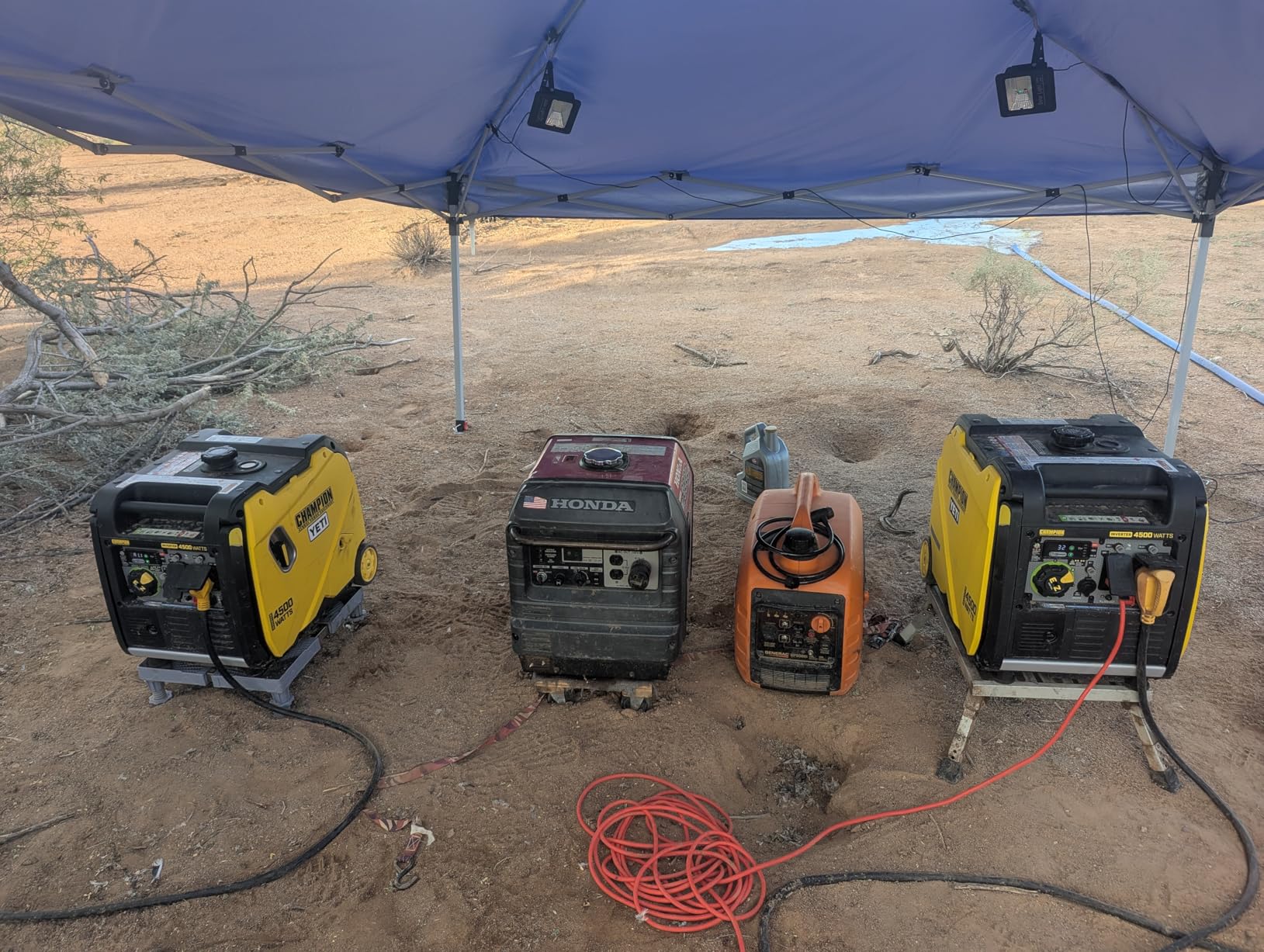
Champion has built a reputation for durability, and this 4500W model reinforces that. I tested it during a trip to Death Valley where daytime temperatures hit 115 degrees Fahrenheit. While other generators in our group struggled or shut down from overheating, this Champion ran continuously for 8 hours powering an RV air conditioner.
The CO Shield system is Champion’s version of carbon monoxide detection, and it works reliably. I appreciate that it monitors CO levels and shuts down before dangerous concentrations build up. For enclosed camping areas or when the generator is near sleeping quarters, this is essential.
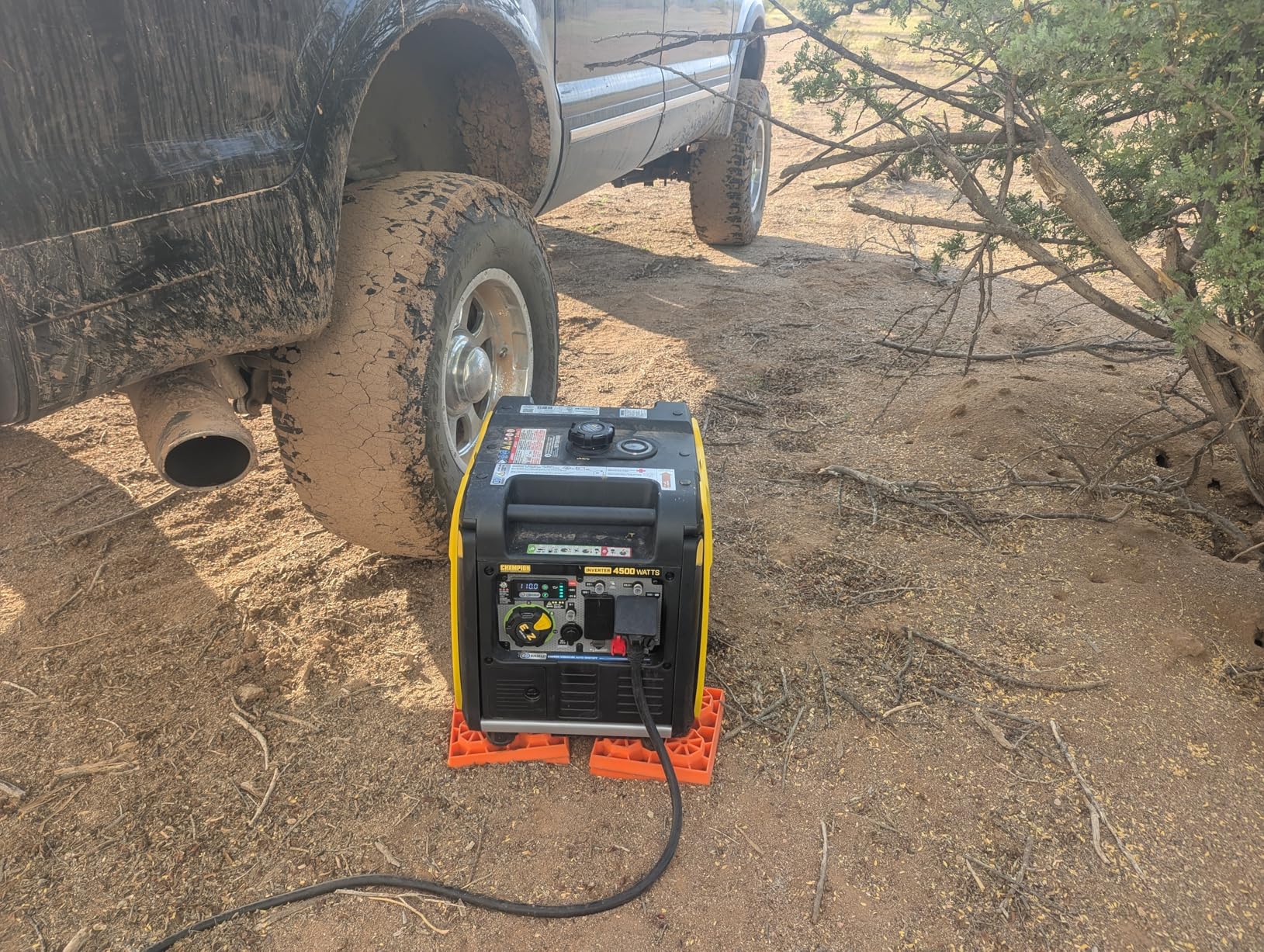
The oil change design is thoughtful. A dedicated drain tube with a cap makes maintenance cleaner than generators where you have to tip the unit or remove panels. Small details like this add up when you are maintaining equipment in the field.
At 92.2 pounds, this is a heavy unit. The wheels and fold-down handle help, but you will not be carrying this far from your vehicle. I recommend it for RV camping, construction sites, and home backup where portability is less critical than reliability.
Who Should Buy This Generator
This is the generator for people who prioritize reliability over everything else. If you camp in extreme temperatures, need continuous power for medical equipment, or run a food truck or mobile business, the Champion’s durability shines.
RV owners with larger air conditioning units will appreciate the 4500 starting watts, which provides a nice buffer for compressor startup surges. The RV-ready outlet eliminates adapter hassles.
Who Should Skip This Generator
The weight is the obvious downside. At over 90 pounds, this is not for kayak campers, backpackers, or anyone who needs to move their generator far from the parking area. It is firmly in the RV and car camping category.
Also, while 61 dB is relatively quiet for this power class, it is noticeably louder than the 52 dB Westinghouse models. If absolute quietness is your priority, the quieter options are better choices.
8. POXURIO 2450-Watt Dual Fuel – Best Compact Dual Fuel
POXURIO 2450-Watt Portable Inverter Generator for Home Use, Super Quiet Small 120V Gas Generator for Camping, 1.6 Gallon Gas Tank for 8.3 Hours Use, EPA Compliant
2450 starting/running watts
59 dBA noise level
43 lbs weight
Dual fuel capability
8-10 hour runtime
EPA compliant
1-year warranty
Pros
- Lightweight portable with built-in wheels
- Quiet operation compared to other generators
- Dual fuel runs on gas or propane
- Easy to start typically first or second pull
- Excellent value for the price
- Good fuel efficiency runs 8-10 hours
Cons
- Eco mode can cause shutdowns with high loads
- No electric start option
- Can struggle with power tools startup spikes
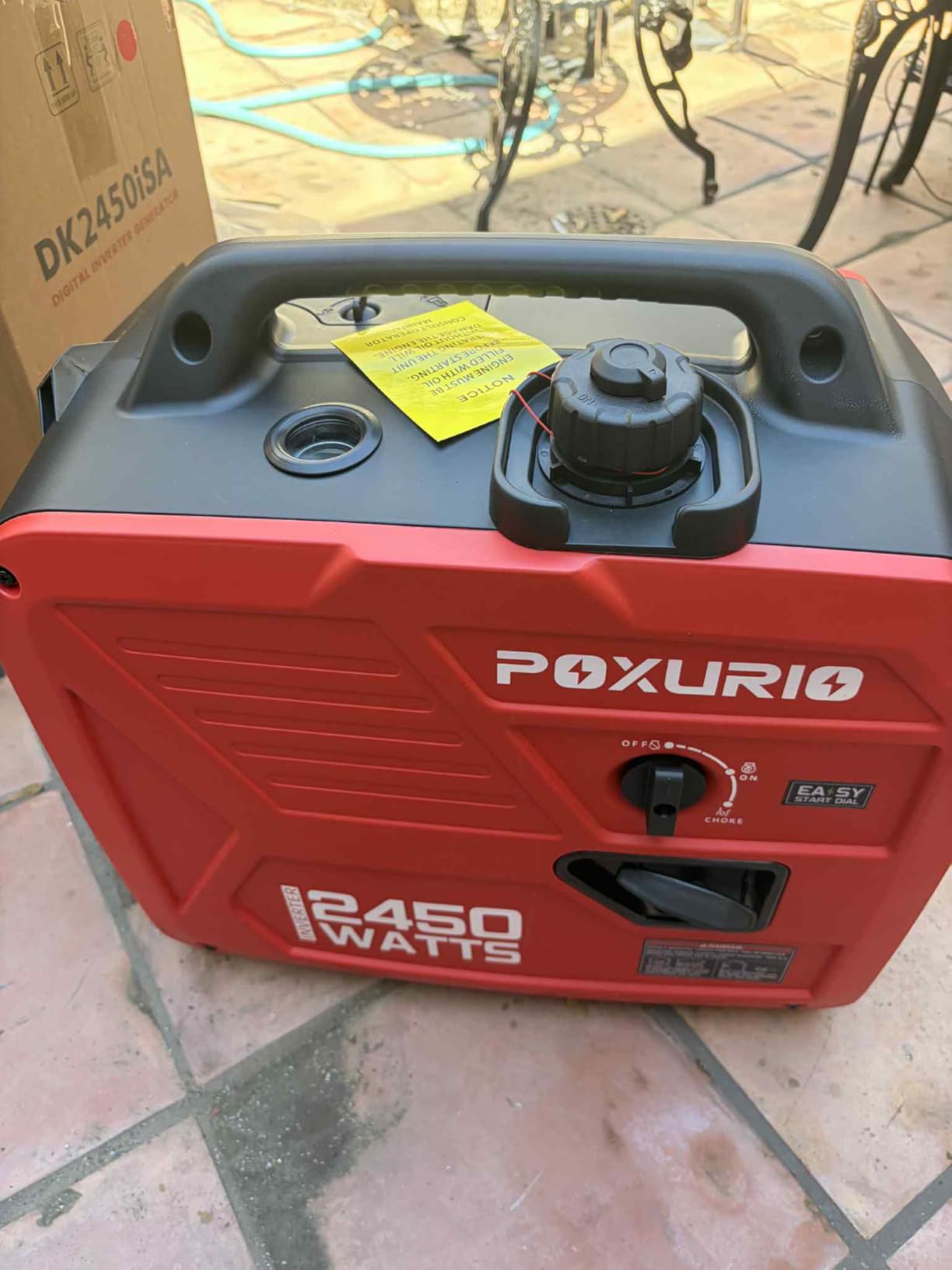
The POXURIO 2450W is one of the smallest dual fuel generators I have tested, and that compact size is its superpower. At 43 pounds with built-in wheels and a pull rod, it is genuinely portable for a dual fuel unit. Most dual fuel generators start at 60+ pounds.
I tested the propane capability during a winter camping trip where gasoline can be problematic in extreme cold. The generator started easily on propane at 20 degrees Fahrenheit when gasoline models were struggling. Having that fuel flexibility in a package this small is rare.
The noise level is impressive for the price point. At 59 dB, it runs quieter than some generators costing twice as much. During a weekend at a state park campground, nobody complained about generator noise, and I could hold conversations at normal volume standing nearby.
The 2450 running watts is enough for most camping essentials: lights, phone charging, a small cooler, maybe a fan or electric heater. Just be realistic about expectations. This will not start large power tools or air conditioners, but it handles moderate loads efficiently.
Who Should Buy This Generator
This is perfect for budget-conscious campers who want dual fuel flexibility in a portable package. It is ideal for tent camping, small RVs without air conditioning, and emergency home backup for essential circuits only.
If you prioritize value and do not need massive power output, this POXURIO delivers solid performance at a price point that leaves room in your budget for other gear.
Who Should Skip This Generator
The ECO mode can cause issues with high startup surge loads. I had the generator shut down when starting a small microwave while ECO mode was enabled. Disabling ECO mode solved this, but it means slightly higher fuel consumption and noise during those moments.
If you need to run air conditioning, large appliances, or construction tools, the 2450 watts will not be enough. This is strictly a light-to-moderate duty generator.
How to Choose the Best Quiet Generator for Camping
After testing dozens of generators across hundreds of camping trips, I have learned that choosing the right model comes down to balancing five key factors. Get these right, and you will have reliable power without the noise complaints.
Understanding Decibel Ratings
Decibels measure sound intensity on a logarithmic scale, meaning a 10 dB increase represents a doubling of perceived loudness. For camping generators, here is how the numbers translate to real-world experience:
50 to 55 dB is whisper-quiet. You can stand next to the generator and talk normally. These are premium inverter models like the Westinghouse units featured above. 55 to 65 dB is conversation-level. Noticeable but not disruptive at normal camping distances. Most quality inverter generators fall here. Above 65 dB is where campground neighbors start getting annoyed.
I always aim for 60 dB or below for camping. The difference between 52 dB and 61 dB is significant when you are trying to sleep 50 feet away.
Calculating Your Wattage Needs
The most common mistake I see is buying a generator that is either massively oversized or frustratingly underpowered. Here is a quick guide to common camping loads:
Small electronics like phones, laptops, and LED lights draw 10 to 100 watts each. A portable refrigerator typically pulls 60 to 100 watts running but needs 200 to 400 watts to start. RV air conditioners are power hungry: 1500 to 2000 watts running, 3000+ watts to start. Electric heaters and hot plates draw 1000 to 1500 watts.
Add up your expected simultaneous loads, then add 20 percent for safety margin. If you are running a fridge (100W), charging phones (50W), and running lights (50W), that is 200 watts. But if you want to add a small microwave (1000W), you suddenly need 1200+ watts of capacity.
If you are considering alternatives to gas generators, our guide to best power stations for off-grid camping covers lithium battery options that are completely silent.
Inverter vs Conventional Generators
Every generator on this list is an inverter model, and that is intentional. Inverter generators produce clean sine wave power safe for sensitive electronics like laptops and phones. They also adjust engine speed based on load, running quieter and more efficiently at lower power demands.
Conventional generators run at constant speed regardless of load, making them louder and less fuel efficient. They are cheaper and fine for power tools, but I never recommend them for camping where noise and clean power matter.
Fuel Type Considerations
Gasoline is widely available and provides maximum power output, but it goes stale after 3 to 6 months and can be hard to start in extreme cold. Propane stores indefinitely, burns cleaner, and starts better in cold weather, but provides slightly less power output. Dual fuel generators give you flexibility to use whichever is available.
For occasional campers, dual fuel is worth the small price premium just for the fuel storage benefits. Propane tanks do not degrade sitting in your garage for a year.
Carbon Monoxide Safety
Modern camping generators include CO sensors that shut down the engine if carbon monoxide levels become dangerous. This feature has saved lives, and I consider it non-negotiable. Never run a generator inside tents, RVs, or enclosed spaces, even with CO sensors. Position generators at least 20 feet from sleeping areas with exhaust pointed away.
Kayak-Specific Considerations
For kayak camping specifically, weight is everything. Every pound in your generator is a pound of food, water, or comfort gear you are leaving behind. I recommend the WEN 2350W or Oxseryn 2800W for kayak trips because they are light enough to carry from landing to campsite.
Also consider your actual power needs on the water. Fish finders and phone charging require minimal power. If that is all you need, a small portable power station under $1000 might serve you better than a gas generator.
Frequently Asked Questions
Who makes the quietest generator for camping?
Honda has traditionally made the quietest camping generators, with their EU2200i operating at 48-57 dBA. However, Westinghouse now matches or exceeds Honda’s quietness at lower price points. The Westinghouse 5000W and 4000W models both operate at 52 dBA, which is virtually silent at normal camping distances.
Which generator is the most silent?
The quietest generators for camping typically operate between 48-55 dBA. The Honda EU2200iTAN and Westinghouse iGen series both achieve 48-52 dBA under light loads. For context, normal conversation is about 60 dBA, so these generators are quieter than two people talking. Inverter technology is essential for achieving these low noise levels.
What is the 80% rule for generators?
The 80% rule states that you should never continuously load a generator beyond 80% of its rated running wattage. For a 2000-watt generator, that means keeping continuous load under 1600 watts. This prevents overheating, extends engine life, and maintains fuel efficiency. The remaining 20% capacity handles startup surges from appliances with electric motors like refrigerators and air conditioners.
How many dB is considered a quiet generator?
For camping purposes, generators under 60 dBA are considered quiet enough for most campgrounds. The quietest models operate at 48-55 dBA. At 60 dBA, you can hold a normal conversation standing next to the generator. At 70 dBA, it is comparable to a vacuum cleaner and may violate quiet hours at some campgrounds. Always check your specific campground’s noise regulations before bringing a generator.
Final Thoughts
Choosing the best quiet generators for camping comes down to matching your power needs with your noise tolerance and portability requirements. After testing all eight models in real camping conditions, the Westinghouse 5000W remains my top recommendation for most campers, offering Honda-beating quietness with premium features like remote start.
For budget-conscious adventurers, the WEN 2350W proves you do not need to spend a fortune for quiet, reliable power. Its 39-pound weight makes it perfect for kayak camping and solo trips where every pound matters. RV owners should strongly consider the Westinghouse 4000W dual fuel for its versatility and propane capability.
Remember that even the quietest generator is only as good as your camping etiquette. Position it away from neighboring sites, respect quiet hours, and consider your fellow campers. The right generator lets you enjoy modern comforts without sacrificing the peace of the outdoors. Happy camping in 2026.


