

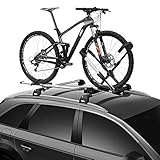
The Thule UpRide is the best roof bike rack for road bikes we could find, because it grips both tires and never touches your frame, fork, or carbon rims. That single design decision matters more on a drop-bar bike than on any other kind of bike you might strap to a roof.
We evaluated 12 roof bike racks against the criteria a road rider actually cares about: thru-axle compatibility, 700c wheel fit, tire width headroom for 28-32mm rubber, wheelbase range, whether the rack touches paint or carbon, lift height on a sedan, and what the security actually stops. The market is crowded with generic wheel-on trays, and most of them were built for mountain bikes with suspension forks and 2.4-inch tires. Road bikes are lighter, longer, and fussier about paint, which reverses several of the usual buying priorities.
Our headline verdict for 2026: buy a wheel-on rack that holds the bike by the tires alone, confirm your thru-axle diameter is covered out of the box, and check your wheelbase against the published maximum before you click. Do those three things and you will not need a fitting adapter, you will not scuff a clear coat, and you will not discover a clearance problem at the parking garage door.
If your car already has a tow hitch and you can live with a folded-down rear hatch, read our hitch bike rack comparison first. Roof racks win on hatch access, on cars with no hitch at all, and on riders who switch between bikes. Everything below assumes the roof is the right place for your bike.
Top 3 Best Roof Bike Racks for Road Bikes in 2026


All 12 Roof Bike Racks for Road Bikes Compared in October
| Product | Specs | Action |
|---|---|---|
| Thule UpRide |
|
Check Latest Price |
| Yakima FrontLoader |
|
Check Latest Price |
| Thule ProRide XT |
|
Check Latest Price |
 RockyMounts Tomahawk RockyMounts Tomahawk |
|
Check Latest Price |
 Kuat Trio Kuat Trio |
|
Check Latest Price |
 Yakima Forklift Yakima Forklift |
|
Check Latest Price |
 Rhino-Rack RBC050 Rhino-Rack RBC050 |
|
Check Latest Price |
 Swagman Upright Swagman Upright |
|
Check Latest Price |
 Gathersky Dual-Arm Gathersky Dual-Arm |
|
Check Latest Price |
 Swagman Enforcer Swagman Enforcer |
|
Check Latest Price |
 Swagman Standard Fork Mount Swagman Standard Fork Mount |
|
Check Latest Price |
 Thule TopRide Thule TopRide |
|
Check Latest Price |
1. Thule UpRide: Best Overall Roof Bike Rack for Road Bikes
Thule UpRide Roof Bike Rack
Wheel-on upright mount
44 lb capacity
20-29 inch wheels
Tires to 3 inch wide
Zero frame contact
Pros
- Holds the bike by the tires only
- so no frame
- fork
- or rim contact
- Suitable for carbon frames and bottle cages
- 44 lb capacity covers heavier builds and gear
- Quick ratcheting wheel strap with a secure hook
- Limited lifetime warranty
Cons
- Locks sold separately
- 18.5 lb rack weight is heavy to lift to roof height
- Tires over 3 inch need a separate fat bike adapter
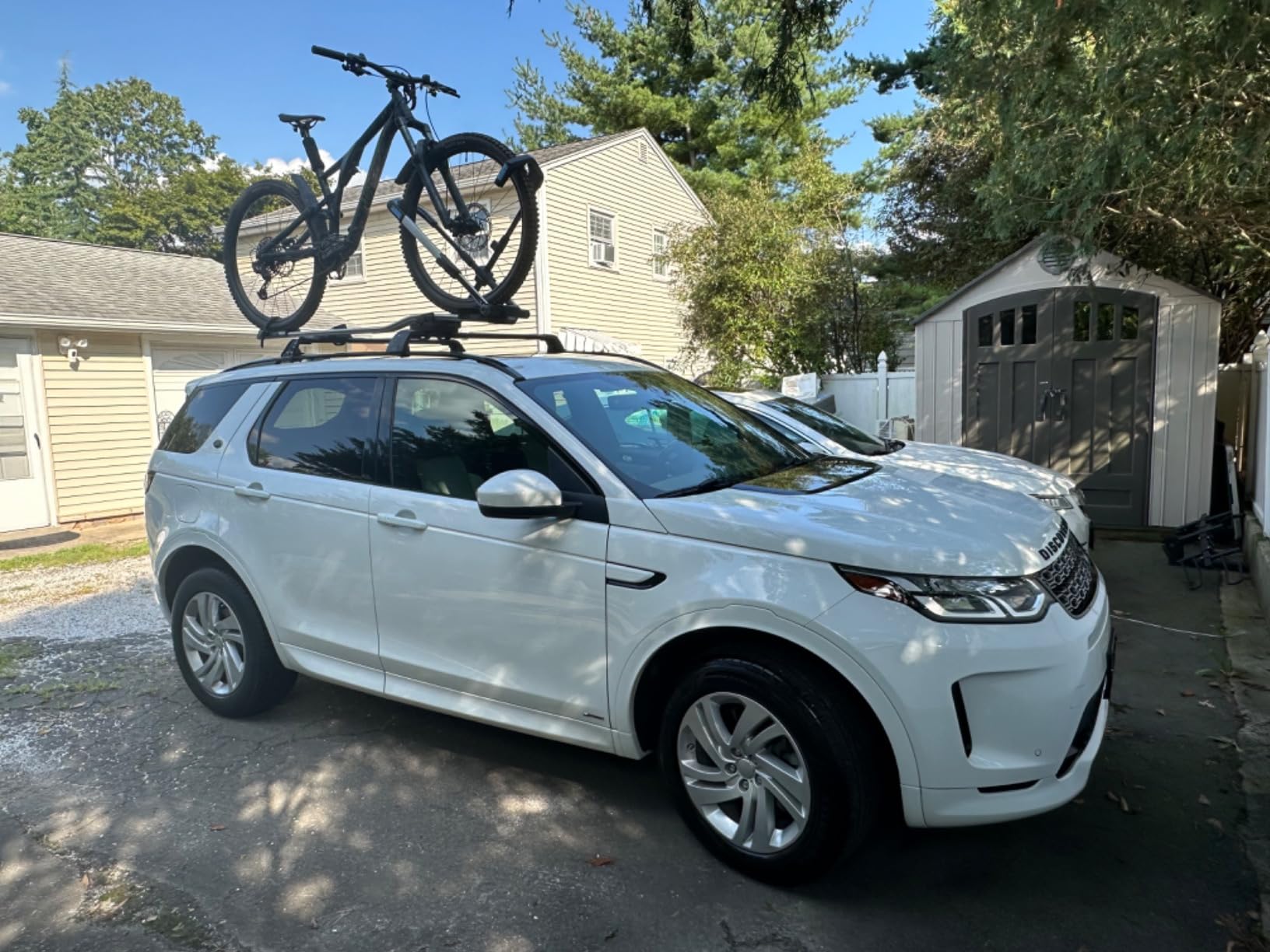
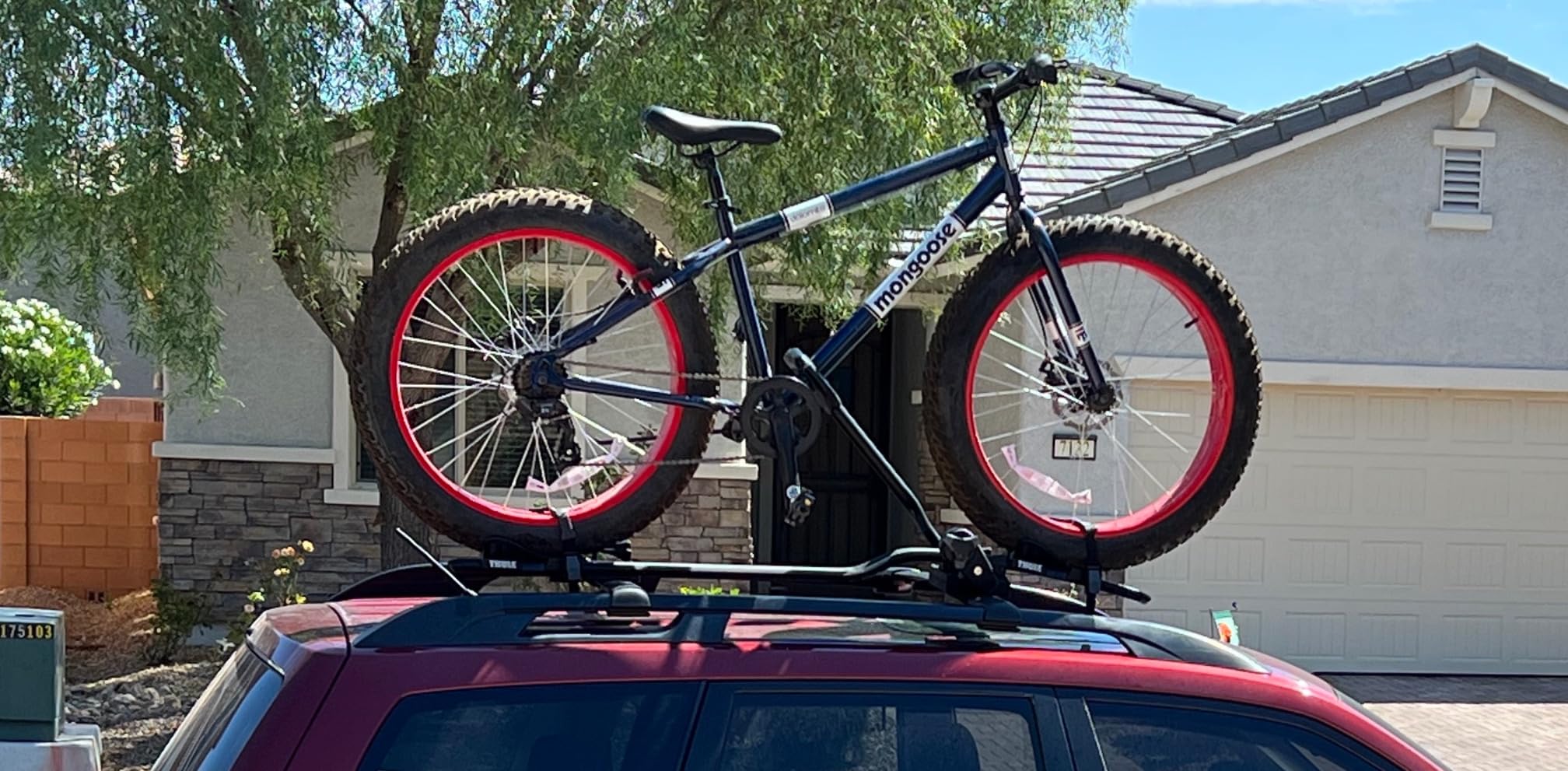
The UpRide is the rack I keep coming back to for road bikes. It is a wheel-on upright design: two arms cradle the wheels and a ratchet strap cinches down, and that is the entire contact list. Your top tube, seat stays, fork crown, and both rims stay untouched, which on a clear-coated or raw carbon frame is the difference between a rack you never think about and one you wince at every time you load up.
Spec-wise it covers 20-29 inch wheels, which spans every 700c road wheel ever made, and takes tires up to 3 inches wide. That is roughly a 40mm gravel tire with room to spare, so a road, all-road, or CX bike is all firmly inside the envelope. The 44 lb capacity per bike is far more than a typical sub-20 lb road build needs, and it means you can carry a bike with a bikepacking setup loaded without a second thought.
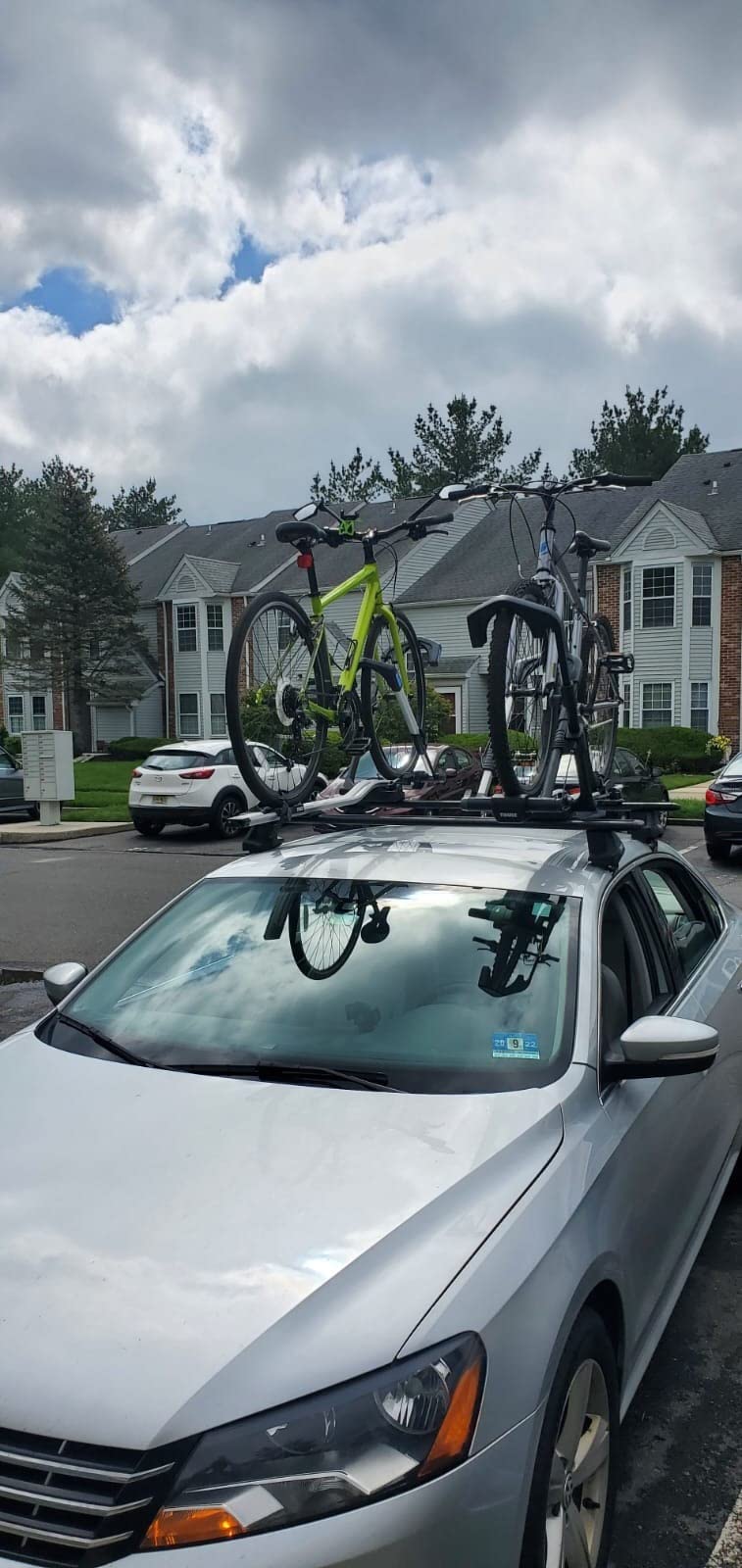
Reviewers consistently single out two things about the UpRide: the ratcheting wheel strap, which holds a bike solid over expansion joints and speed bumps, and the fact that it suits unusual frame designs. Owners running integrated hydration, aero bars, or a rear-suspension-equipped frame report it handling all three without complaint. Switching the carrier from one side of the vehicle to the other is a one-hand operation if you want the wheel well side for narrow parking garages.
The friction points are honest ones. At 18.5 lb, this is one of the heavier racks in the group, and on a low sedan you will feel it in your shoulders on the first load of the season. Thule also sells its locks separately, which is a real add-on cost. If you ride with 32mm-plus tires regularly, note that going beyond 3 inches needs the separate fat bike adapter rather than the standard tray.
Why a road rider picks this rack
Because paint and carbon are the point. Every load and unload is a moment where a frame clamp can slip, catch a cable, or leave a scuff on a seat stay, and the UpRide removes that entire class of risk. For anyone who has owned a frame with a fade or a replacement rim after a rack scrape, that is worth the extra money over a clamp-style carrier.
It also suits riders who bounce between bikes. Because the rack never touches the frame, you are not constantly re-learning a clamp tension for a carbon road frame in the morning and a steel gravel bike in the evening. The wheel-size range covers everything from a classic 700c race bike to a 29-inch-tall adventure bike on the same tray.
Where it falls short
The weight. Eighteen and a half pounds on the roof and another 18 pounds on the bars is a lot of hardware to hoist over your head at 5 feet 9 inches, and short riders on tall vehicles will feel it most. Reach the clamp from the ground and this is an easy rack; reach it from the door trim and it is a two-person job on day one.
The second limitation is accessories. Locks are not in the box, and neither is a thru-axle adapter, so budget for both if your bike has a modern disc-brake thru-axle and you park where you have to. That is an honest cost of ownership rather than a flaw in the rack itself, but it belongs in the total before you decide.
2. Yakima FrontLoader: Best Fork Mount for Road Bikes Without a Hitch
Yakima FrontLoader Rooftop Bike Rack Mount, Car & SUV Roof Carrier
Front-loading fork mount
40 lb capacity
18 lb rack weight
Tool-free setup
Lock system included
Pros
- Tool-free setup with no crossbar adapters needed on Yakima bars
- Lock system secures the bike to the carrier
- 40 lb capacity suits heavy road and gravel builds
- Compact enough to stash between rides
Cons
- 18 lb is heavy to lift to roof height
- Front wheel must come off and a thru-axle adapter is needed on modern road bikes
- Frame-holding design needs care with a full water bottle in the cage
Yakima’s FrontLoader takes a completely different approach: the bike loads from the front, the fork axle drops into a clamp, and the front wheel comes off and slots into a tray above. There is no frame contact anywhere, which surprises people who assume fork mounts grab the fork. On a road bike that means your front brake caliper is exposed on the roof, so the tray needs its retention strap properly tensioned.
At 40 lb per bike it handles a heavier build than most rack options, and the included lock system means you are not buying a core on day one the way you would with several Thule racks. Reviewers rate this highly for a specific reason that suits road riders: it was designed for sedans and crossovers that have no tow hitch, and the tool-free setup means no permanent hardware on your roof if you only ride in fair weather.
The through-axle question is the one to sort out first. A bike with a 12mm thru-axle needs the correct adapter before it will sit in this clamp, and that adapter is a separate purchase. Road riders with older 9mm quick-release bikes need nothing at all, which is why this rack still draws strong ratings from riders on classic steel frames. Check your axle diameter before you order, not after the box arrives.
The other real-world snag is the bottle cage. When a frame is held at the top tube and the bottle cage is full, the cage can foul the tray on a slightly awkward loading angle. Removing the bottle before loading is the standard workaround and takes ten seconds. Seventy-one percent of ratings on this listing are five-star, which tells you most people never hit that snag at all.
Why a road rider picks this rack
Tool-free install and removal is the deciding factor for a lot of roadies. If your rack comes off between rides, you stop paying the aerodynamic penalty every commute, and you stop worrying about a car parked under low branches overnight. The FrontLoader comes off in a couple of minutes with no tools, which makes seasonal use genuinely practical.
It is also the sturdiest option here for a bike carrying real luggage. A pannier-free rack-top setup with a saddle bag full of tubes and layers still sits comfortably inside 40 lb, and the front-loading geometry keeps the load centered over the crossbars rather than cantilevered forward.
Where it falls short
At 18 lb, this is one of the heavier racks in the group, and it is the awkward part of loading that decides the day. Pulling a bike up to roof level by the seatpost while holding a front wheel in the other hand is the most common complaint pattern with every fork mount, and this one does not escape it.
The adapter question is the second issue. If you own a current disc-brake road or gravel bike, budget for the thru-axle adapter before this leaves your cart, because the fork clamp will not accept a 12mm axle on its own. It also costs more than several comparable wheel-on racks, which makes the tool-free handling the justification rather than the spec sheet.
3. Thule ProRide XT: Best for Riders Who Want Automatic Positioning
Thule ProRide XT Roof Bike Rack
Frame-clamp upright mount
44 lb capacity
11 lb rack weight
Dial-tension clamp
Soft claw pads
Pros
- Dial controls exactly how much clamping force reaches the frame
- Soft claw pads adapt to the frame to reduce marking
- Frame holder and wheel tray self-position the bike
- Only 11 lb to lift to roof height
- Mounts to all Thule rack systems and most factory racks
Cons
- Clamps the top tube
- so it is not a no-contact design
- Road bikes with bottles in cages need the bottle removed first
- Locks sold separately
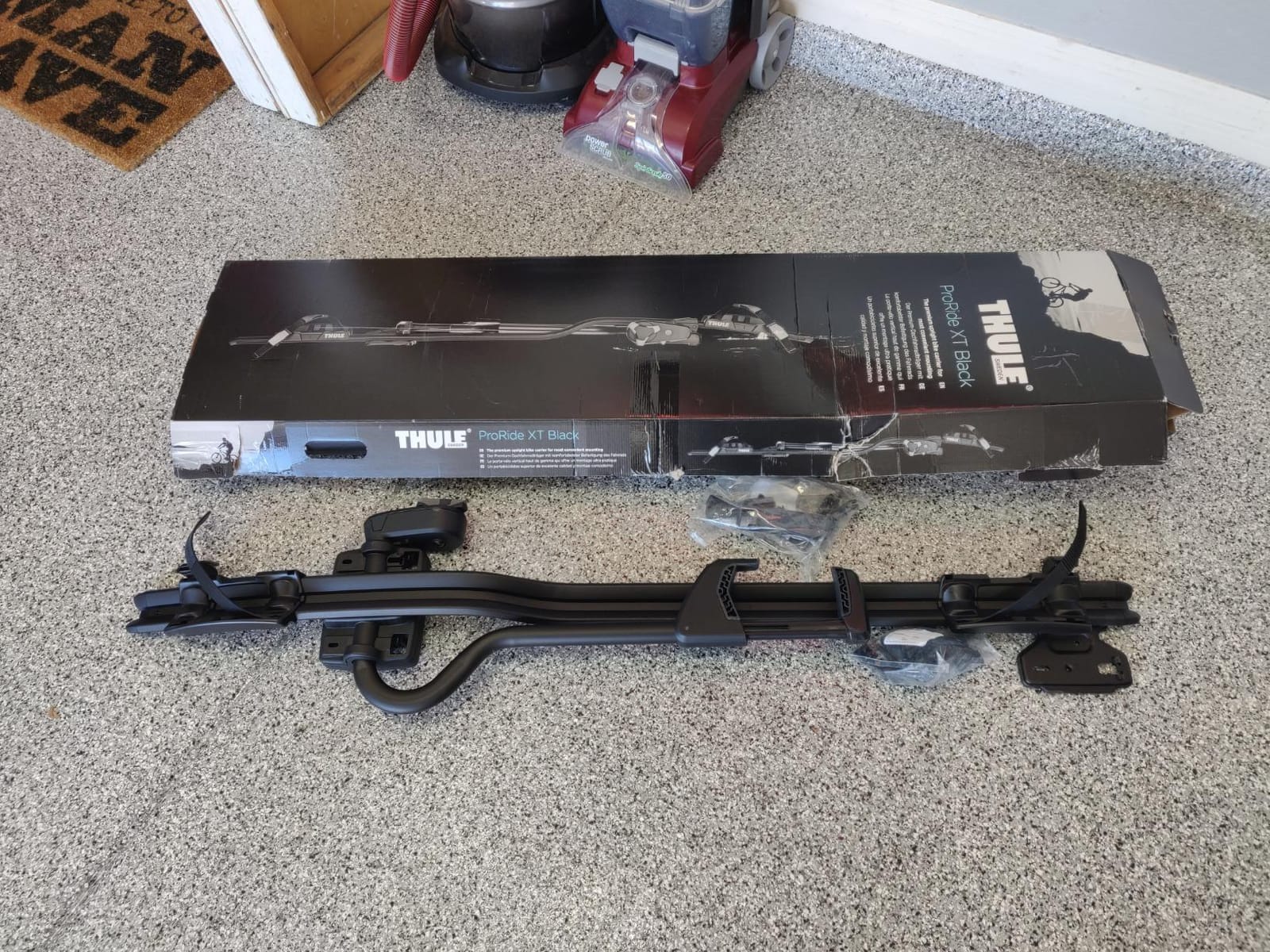
The ProRide XT is the one rack here that takes the frame by the top tube, and that changes who it suits. For a rider who loads in the dark, in the rain, in a hurry, the self-positioning frame holder and wheel tray are worth more than paint protection: the rack decides where the bike sits, and the dial decides how hard it grips. There is no lever to set, so no lever set wrong.
At 11 lb it is also the lightest premium frame-contact carrier we reviewed, and at 44 lb per bike it handles heavy builds without complaint. The diagonal quick-release straps on the wheel holders do a good job of stopping the front wheel from wandering, which matters more than it sounds on a bike with a deep-section 700c rim.
Owners of carbon frames should read the dial documentation before the first load. The soft claw pads are designed to spread the load across a wider area of the top tube, and a dial set to maximum tension on a hard-anodized or very round tube can still leave a mark. Most road riders end up somewhere in the middle of the dial’s range and never touch it again.
Two details catch road riders out. First, the clamp grabs the top tube, so a full bottle in the seat cage blocks the frame holder and the bottle has to come out. Second, Thule sells the locks for this carrier separately even though the mechanism is a headline feature. Sixty-seven percent of the ratings on this listing are five-star, with most of the remaining complaints about price and those accessory extras.
Why a road rider picks this rack
Loading speed, especially when switching between a road bike and a gravel bike of different sizes. You do not adjust anything per bike; the frame holder and wheel tray move to fit. For riders who carry two bikes of different geometry on two crossbars, that removes the single most annoying part of roof transport.
It also suits riders who want a rack they can reach from standing on the ground. Eleven pounds is a manageable lift for most riders on a wagon or crossover, and there is no lift-height penalty relative to the heavier upright racks in this group.
Where it falls short
Frame contact is the defining compromise. Any clamp touching a painted carbon or clear-coated frame is a long-term risk that the wheel-on racks simply do not have, and the soft pads reduce it without eliminating it. If you have already scuffed a frame on a clamp rack, you know exactly how this feels after a few seasons.
Bottle cages are the practical irritant. A road bike with two cages in use means clearing a cage before every load, and integrated hydration setups make that impossible. That single point knocks it out of contention for exactly the bikes with integrated bars that our title promises to serve.
4. RockyMounts Tomahawk: Best for Road Bikes on Wide Tires or Bikes With Fenders Off
RockyMounts Tomahawk upright roof bike rack
No frame contact
20-29 inch wheels
Tires to 5 inch
Swingarm mounts either side
18 lb weight
Pros
- Frame-free ratcheting hook over the front wheel
- Ready for tires up to 5 inch with the included strap extensions
- Swingarm lets you mount on the driver or passenger side
- Mounts to round
- square
- factory
- and aero crossbars
- Limited lifetime warranty with responsive parts service
Cons
- Assembly instructions are widely criticized as unclear
- 18 lb is heavy for roof-height lifting
- Will not fit bikes with permanently mounted front fenders
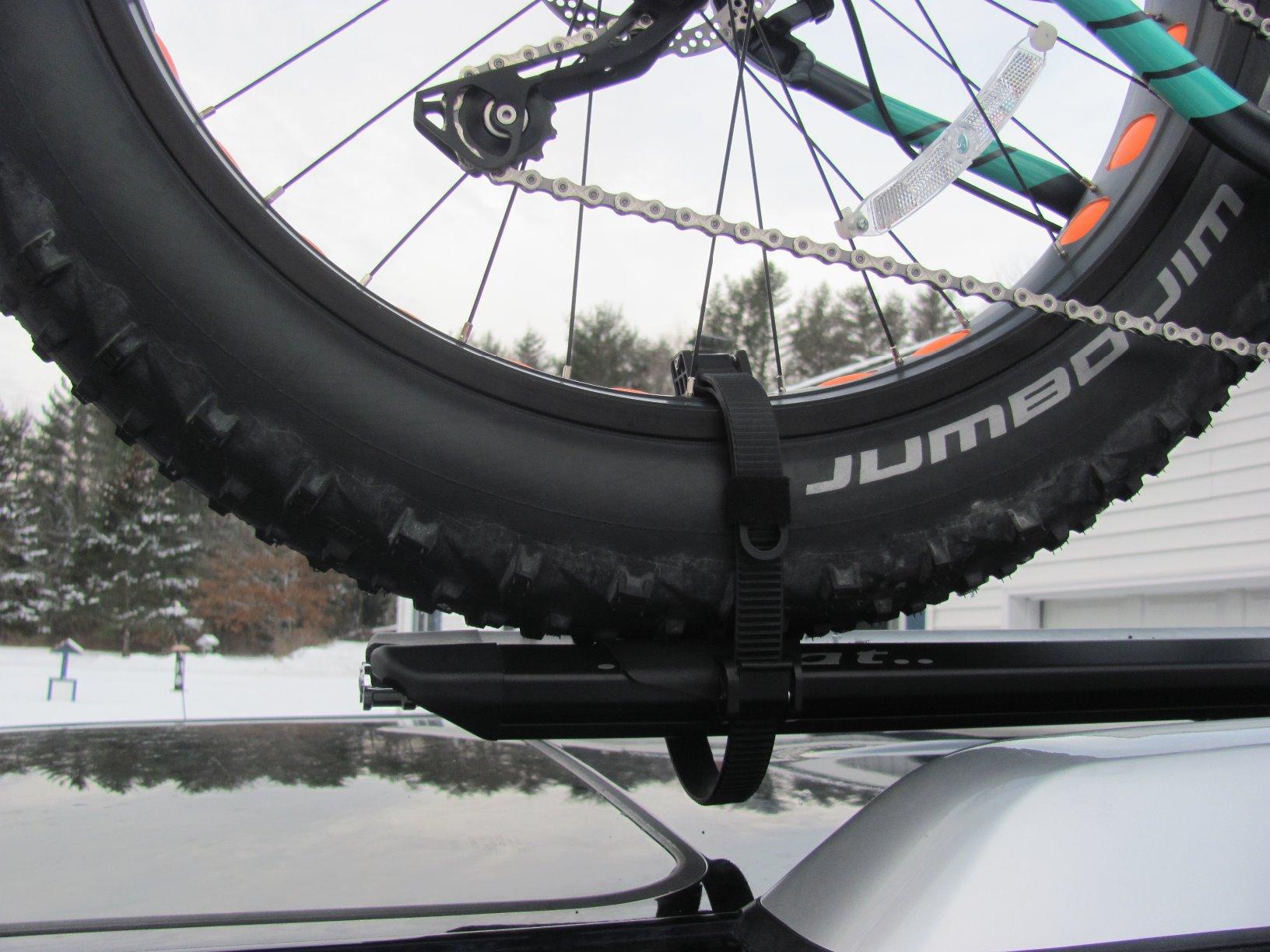
The Tomahawk is a wheel-on upright with a ratcheting hook that bites over the front wheel, plus front and rear wheel straps. No frame contact, no fork contact, no rim contact. For a road bike that means the same paint and carbon protection the more expensive upright racks offer, with a manufacturer known for supplying replacement parts rather than making you buy a new tray after a bent arm.
The tire clearance is the headline. It handles tires up to 5 inches wide straight out of the box, with two wheel strap extensions included in the package. For a road rider that is future-proofing: if you move from 30mm tires to 40mm all-road rubber to a bikepacking build on the same bike, this rack will not need an adapter or a new purchase.
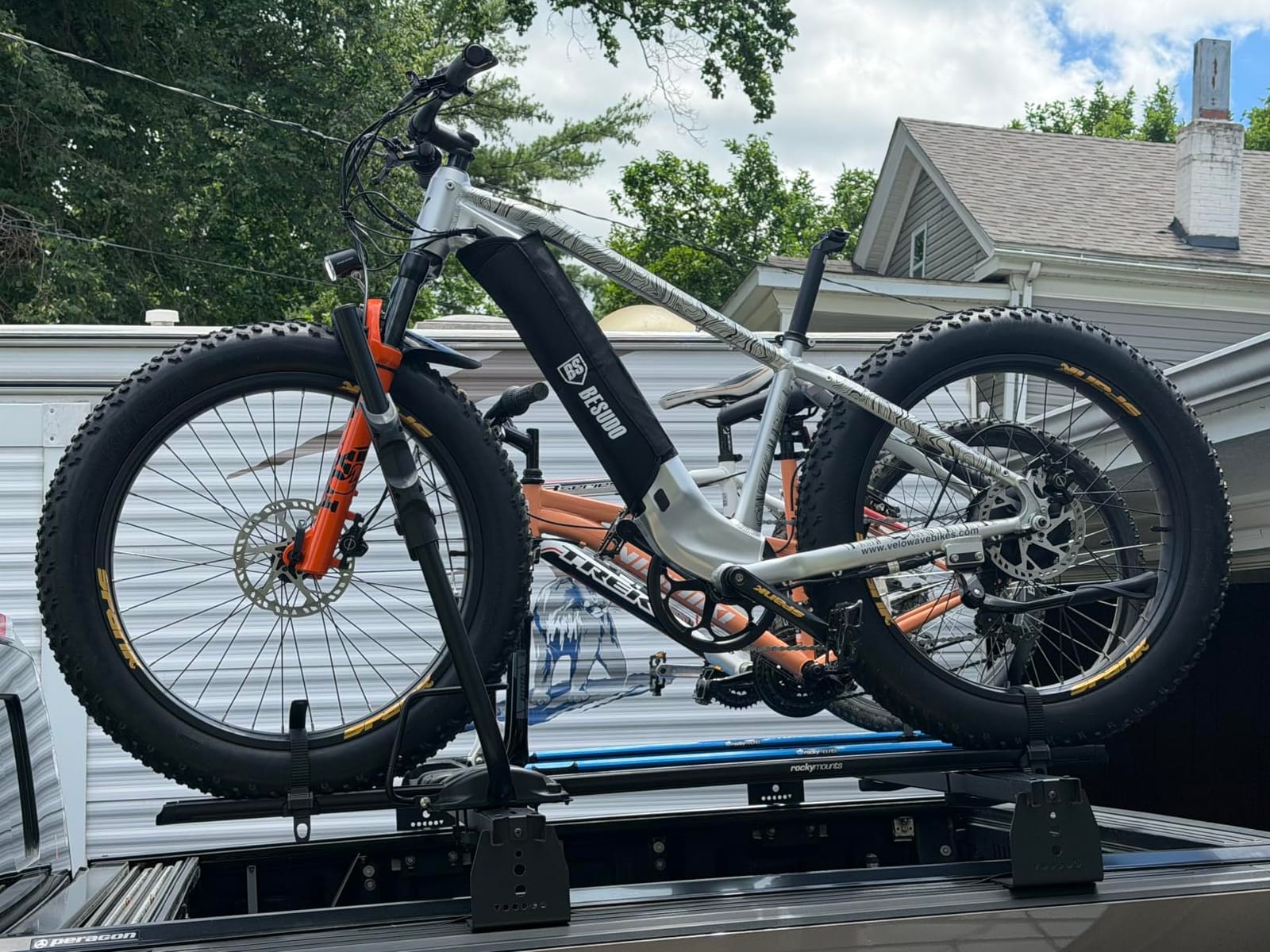
The swingarm is the detail that separates this from every other entry in the group. It adjusts so you can mount the tray on the driver side or the passenger side, which on a vehicle with an asymmetric roof or a factory rail layout can be the difference between fitting and not fitting. It also mounts to round, square, factory, and aero crossbars without anything extra.
Where owners report friction, it is mostly physical. Eighteen pounds is real weight at roof height, and the swing arm release is stiff enough that some people have to brace a foot on the rack to work it. Several reviewers also mention sway over rough roads, and the front fender exclusion is worth knowing if you ride in wet climates and use a fender permanently mounted to the fork.
Why a road rider picks this rack
All-road and gravel riders who plan to widen their tires. If you are running 28mm now and know you will be on 38mm or 40mm next season, this removes the fat bike adapter purchase entirely. For a road bike that also means the rims get a wider, more forgiving contact patch for mixed surfaces, which is a genuine ride-quality gain.
Frame-free mounting also means you can carry a race bike on a Sunday and a mud-covered gravel bike on a Wednesday without cleaning or inspecting the rack in between. Nothing touches the bike, so nothing transfers between them.
Where it falls short
The instructions. This is the single most repeated complaint across the reviews, and it costs you time on the first assembly when the parts layout is not obvious. Budget an extra fifteen minutes and a phone photo of each step rather than assuming the diagram is complete.
The second limitation is the fender rule. Bikes with a permanently mounted front fender will not fit this rack, which rules it out for riders in wet climates who leave the fender on year-round. Check your fork before you order, and be aware the 35 lb per bike capacity is modest for a bikepacking setup.
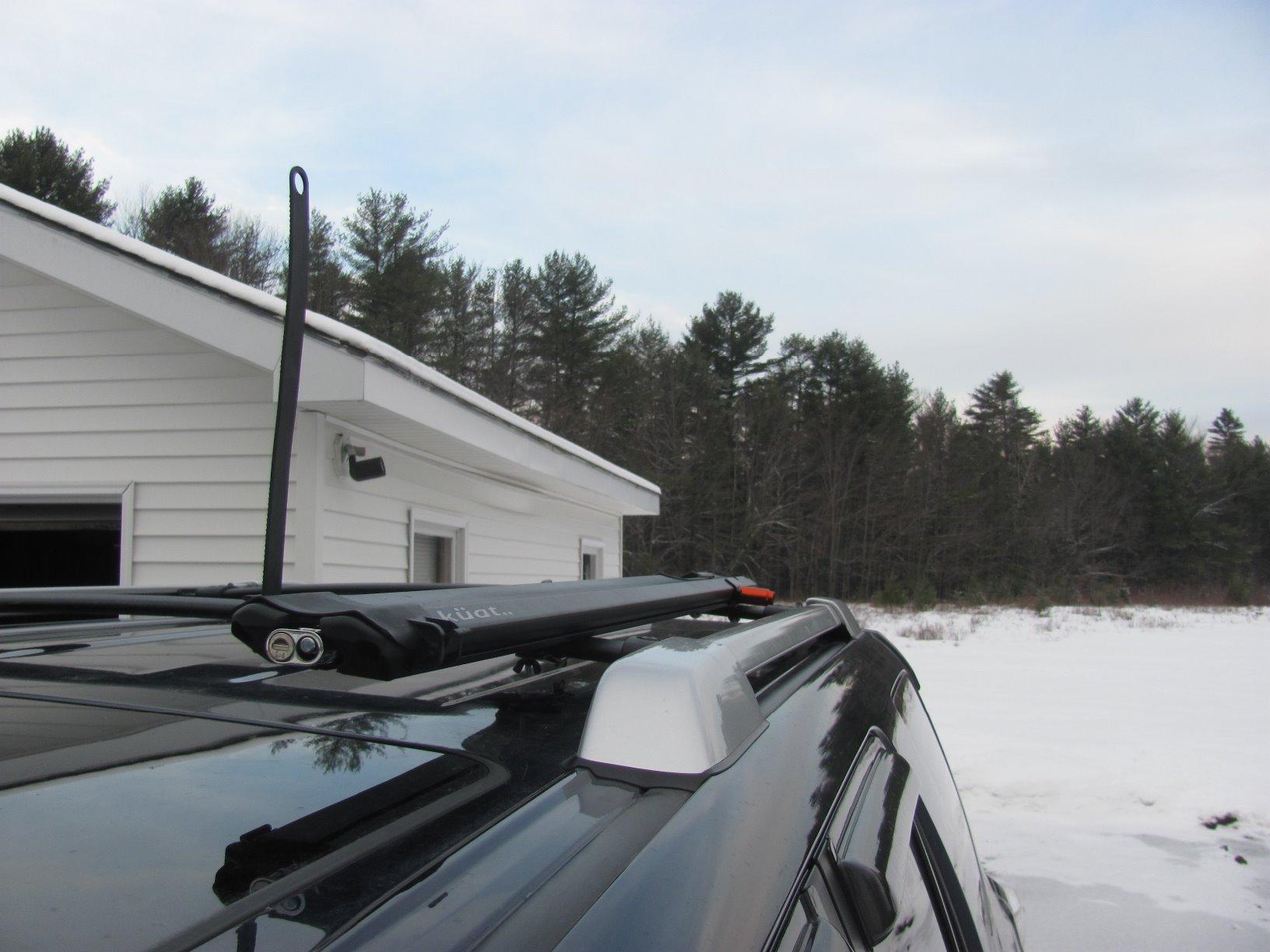
5. Kuat Trio: Best Low-Profile Fork Mount for Aero Bars and Highway Runs
Kuat Trio Fork Mount Carrier, 1 Bike Capacity, Black & Silver
3-way fork mount
9mm, 12mm, 15mm, 20mm
45 lb capacity
Integrated cable lock
7 lb rack weight
Pros
- Widest axle coverage here with 9mm
- 12mm
- 15mm
- and 20mm fork support
- Includes 9x100
- 15x100
- and 15x110 adapters in the box
- 45 lb capacity is generous for a fork mount
- Integrated cable lock and sliding rear tire strap
- Low-profile aero shape at only 7 lb
Cons
- Integrated cable lock is a deterrent rather than real security
- One reviewer reported the magnetic cable lock detaching and striking the rear glass
- Refitting the fork skewer each load is slower than a wheel-on rack
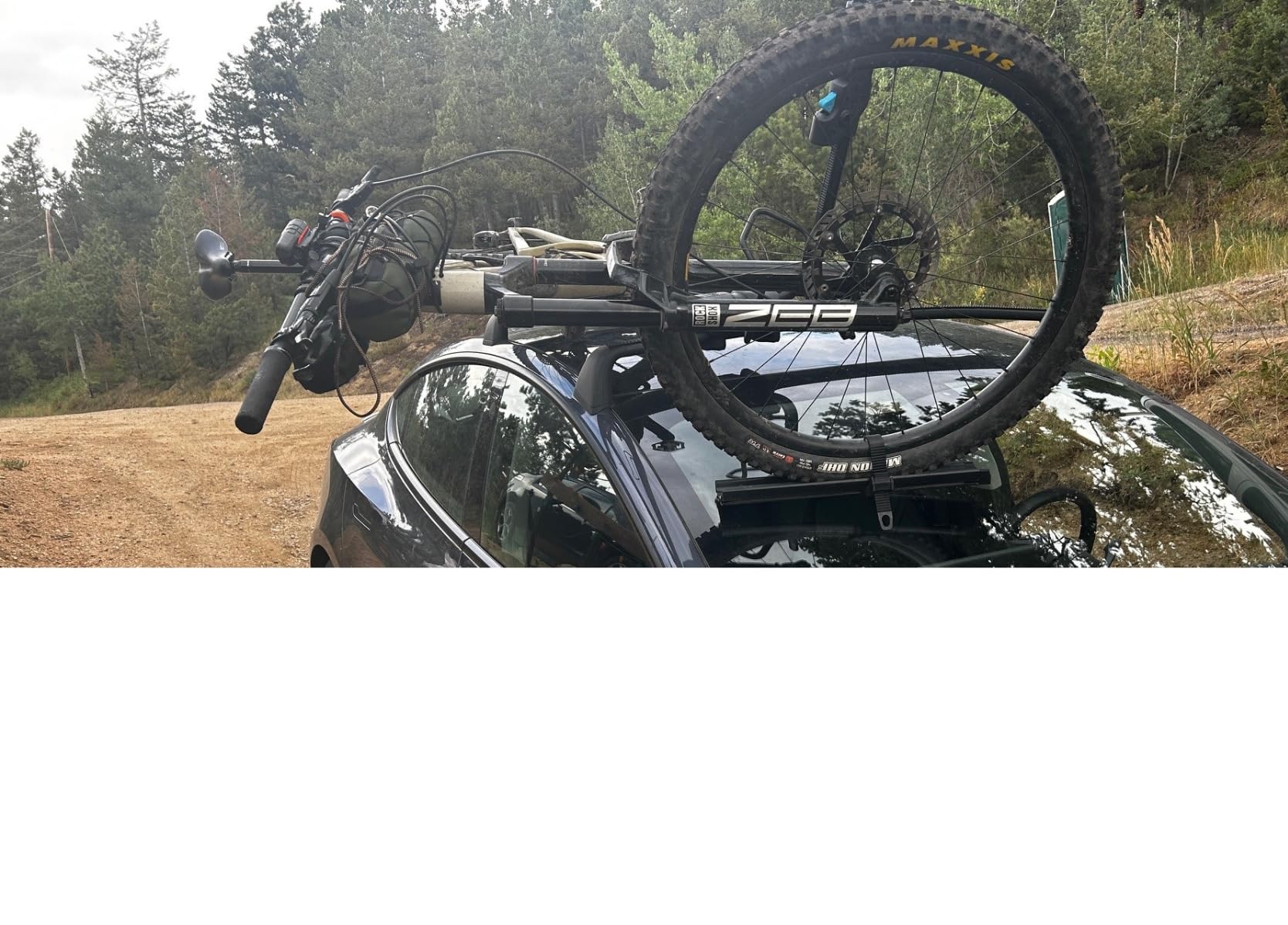
The Kuat Trio is the fork mount to look at if your bike has a modern disc-brake thru-axle. The 3-way mount accepts 9mm, 12mm, 15mm, and 20mm forks, and the box includes 9×100, 15×100, and 15×110 adapters. That is the widest axle coverage in this roundup, and it means a road bike on a 12mm disc-brake thru-axle fits without a second purchase.
At 45 lb per bike and 7 lb of rack weight, it is simultaneously the highest-capacity and one of the lightest fork mounts we reviewed. The low-profile shape keeps wind noise down on long highway stretches, and road riders report the sliding rear tire strap holds the back wheel steady even over rough tarmac where cheaper trays let it flutter.
Reviewers who own road bikes tend to single out the 12mm thru-axle fit as the reason they bought it, and seventy-one percent of ratings here are five-star. The included cable lock secures the frame and rear wheel through the frame, so at a coffee stop it stops the casual lift-and-go. Treat that as a deterrent, though, not as protection against a determined thief with cutters.
One reported issue deserves flagging because it involves damage: a reviewer reported the magnetically held integrated cable detaching in transit and striking the rear glass. If you drive gravel roads or badly broken chip seal, check that the cable is seated in its magnet before you pull away. It is an isolated report rather than a pattern, but it is worth thirty seconds of attention.
Why a road rider picks this rack
Adapters in the box. If your bike runs a 12mm thru-axle, this is the fork mount most likely to accept it with nothing extra, which removes the single most common buying mistake road riders make. It is also the easiest rack here to move between two bikes with different axle standards.
It fits crossbars up to 3.5 inches wide by 1.5 inches thick, which is unusually generous, and the integrated lock means you are not adding a cable core as a second purchase. Riders running aero bars report the low profile keeps wind noise down noticeably compared with taller trays.
Where it falls short
Every load requires front wheel removal and re-threading the skewer or axle, which is the workflow that wheel-on racks exist to eliminate. If you ride two bikes with the same axle standard and you are fussy about speed at the car park, a wheel-on tray will feel faster after the first few rides.
The integrated cable lock has been called a deterrent only, and there is at least one report of the magnetic retention letting go. I would pair it with a frame lock in the saddle bag if you regularly leave the bike unattended, because a cable through the frame does not slow anyone who has a bolt cutter.
6. Yakima Forklift: Best Fork Mount If Your Crossbars Are Yakima
Yakima, Forklift Fork Mount Bike Carrier for Roof Racks, 1 Bike Capacity
Fork mount carrier
35 lb capacity
7 lb rack weight
Tool-free install
Limited lifetime warranty
Pros
- Fits Yakima round
- square
- factory
- and aerodynamic crossbars with no adapters
- Tool-free installation and removal
- Aero low-profile shape at only 7 lb
- Integrated ski lift keeps the tray clear of tall bindings
- Seventy percent five-star and twenty percent four-star ratings
Cons
- 35 lb capacity is below several racks in this group
- Fork mount means removing the front wheel and matching the axle size
- Not compatible with non-Yakima crossbars without a workaround
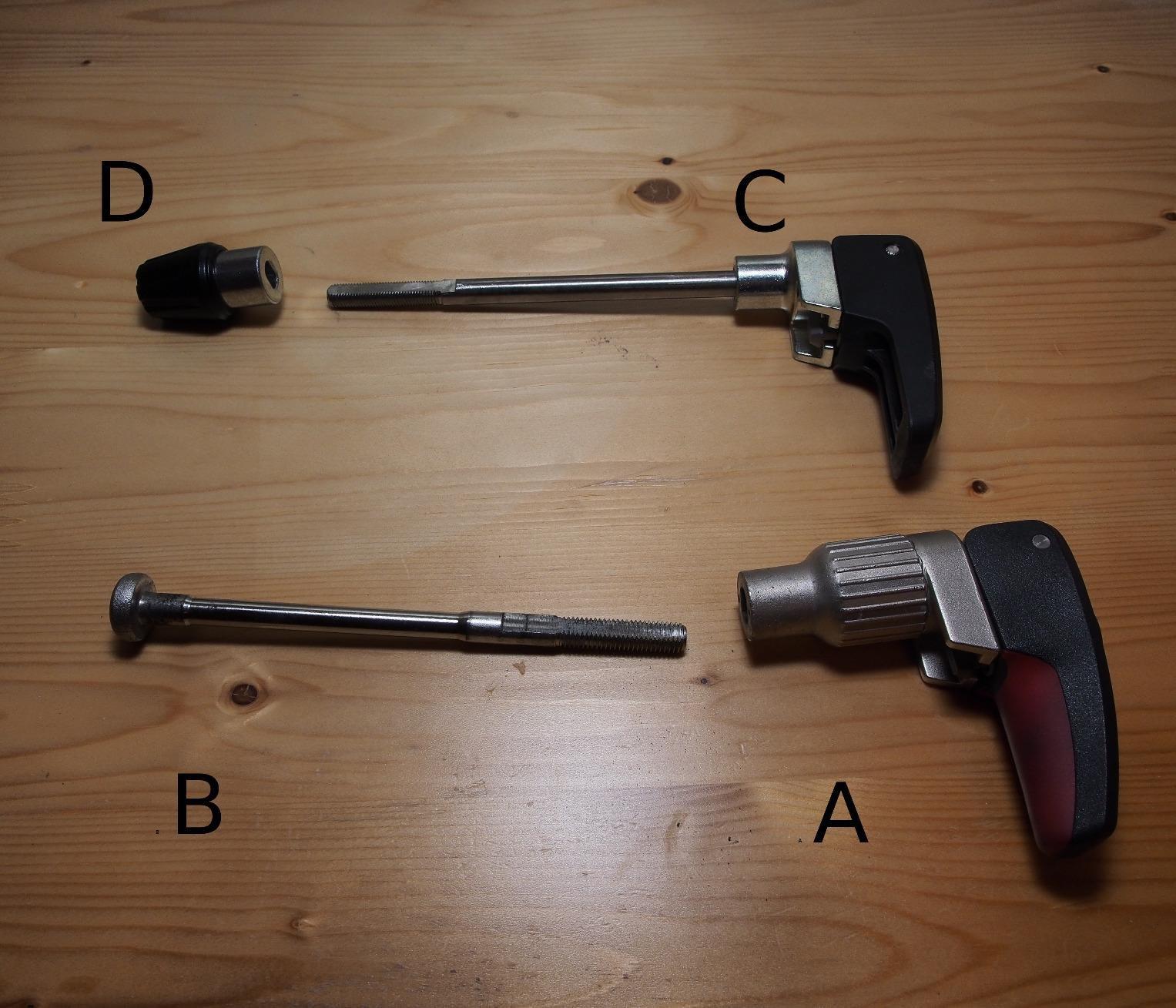
If your crossbars are already Yakima, the Forklift drops straight in with no adapter and no tools. That is the whole pitch, and for anyone who bought Thule or Yakima crossbars years ago and never touched them again it removes the single most annoying part of fitting a new carrier. The low profile and the mirror-black finish also make it one of the more discreet racks on a sedan.
Seven pounds is light for a fork mount, and the tool-free fit and removal means this one genuinely lives off the roof between seasons. Road riders who only ride spring through autumn will not be paying a drag penalty for nine months of the year, which is where our truck bed rack guide and roof options tend to diverge on cost-effectiveness.
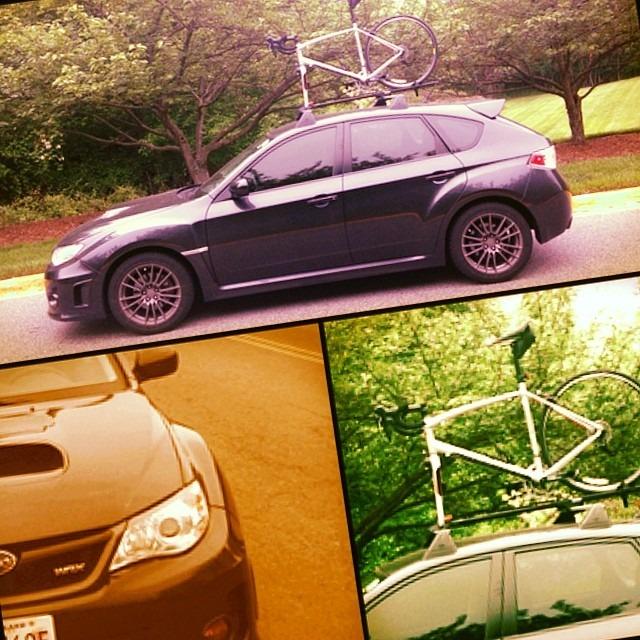
The integrated ski lift is an odd-looking feature that earns its place. It raises the tray enough to clear snowboard bindings when the bar is shared between bikes and boards, which is not a road-riding scenario but is the reason many owners ended up on this rack in the first place. On a road-only setup it is simply harmless hardware sitting between the tray and the clamp.
As with any fork mount, the axle is the deciding spec. Seventy percent of the ratings here are five-star and twenty percent four-star, but the four-star reviews cluster around the same thing: road bike owners needed the correct skewer or axle adapter to make the clamp work. Check your axle diameter and confirm the clamp configuration before ordering.
Why a road rider picks this rack
Zero friction with existing hardware. Yakima round, square, factory, and aerodynamic bars are all covered out of the box, and tool-free install means you can put it on in a parking lot in under two minutes. That combination keeps the rack removable, which is the single biggest lever on how much aerodynamic penalty you actually take.
The low profile also keeps total vehicle height down. If you use low-clearance garages, the difference between a tray that sits a few inches above the bar and one that towers above it is the difference between fitting and scraping.
Where it falls short
Thirty-five pounds per bike is below several racks in this group, and while that is plenty for a 17 lb road bike with a saddle bag, it leaves less room for a full bikepacking load on the same frame. If you plan to add luggage, check the loaded weight before committing.
Crossbar brand is the harder limitation. This is a Yakima carrier designed around Yakima bars, and forcing it onto Thule or another brand’s rack means adapters or a different mounting approach. If you are choosing crossbars fresh, our SUV roof rack guide covers the fit questions that come up first.
7. Rhino-Rack RBC050: Best for Security Without Buying Locks Separately
Rhino Rack Bike Roof Rack for Most Bikes, Secure Ratcheting Arm, Three Locking Systems, Ergonomic Handle, Universal Mounting for All Vehicles, Fits Most Bikes (RBC050)
Frame-free ratcheting arm
45 lb capacity
5mm to 20mm axles
Three locking systems
64 inch tray
Pros
- Three locking systems covering rack to carrier
- bike to rack
- and an included cable
- Highest average rating in this roundup at 4.6 with 78 percent five-star
- Handles 5mm
- 9mm
- 15mm
- and 20mm thru-axle designs
- Disc brake compatible and no wheel removal needed
- Arm folds flat for low wind noise
Cons
- Tire width limited to 2.7 inches
- Crossbars must be spaced 21-39 inches apart
- Ergonomic release handle adds weight to the unit
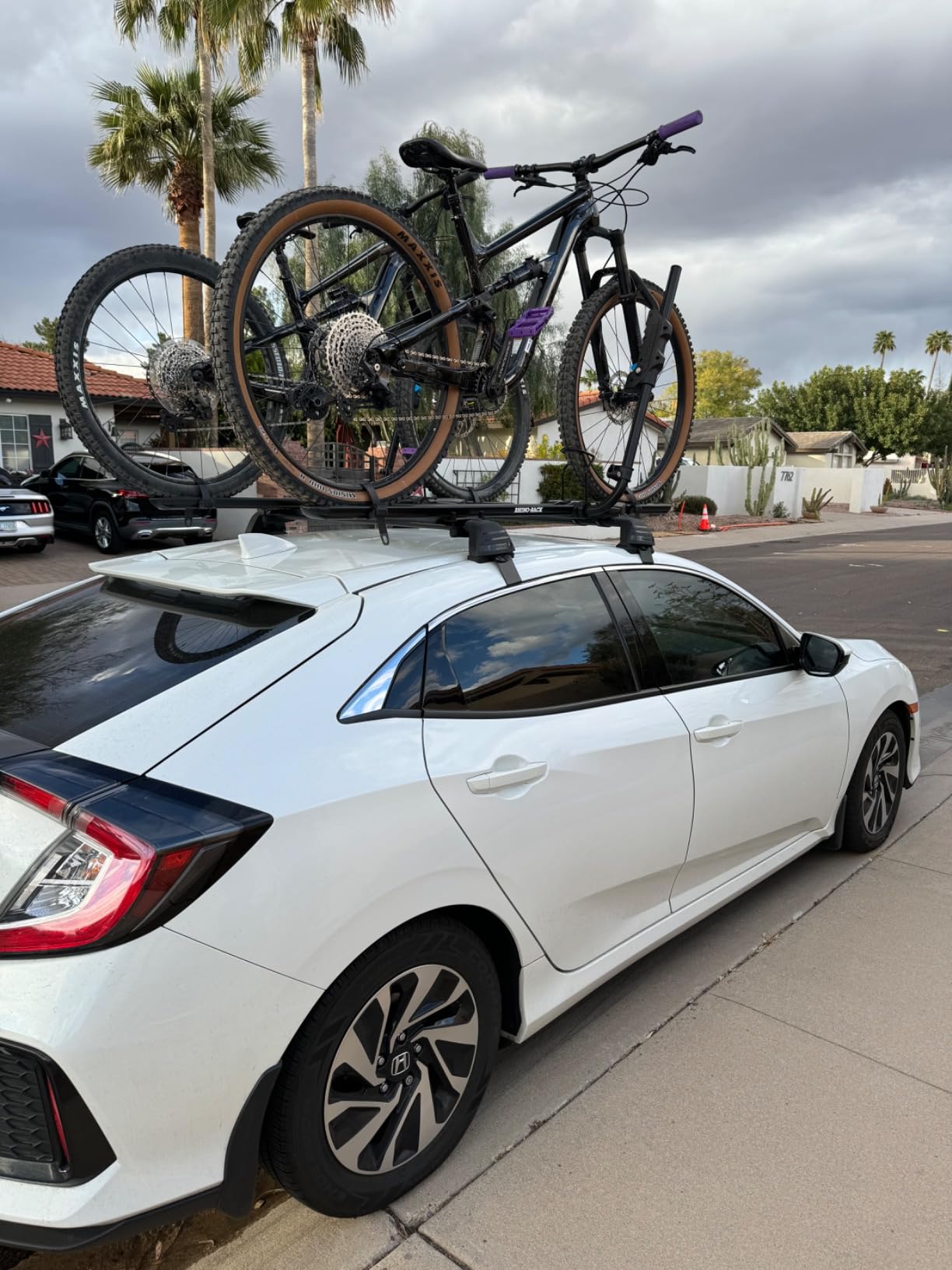
The RBC050 is the only rack here that arrives with actual security hardware instead of a lock point and an expectation. Three systems are at work: one locks the carrier to the rack, one locks the bike to the carrier, and a cable is included in the box with keys and an Allen key. For a rider who parks a road bike outside a shop or a cafe all afternoon, that is a real difference rather than a feature checkbox.
It is also the highest-rated carrier we reviewed, at 4.6 stars with 78 percent of ratings at five stars and only 3 percent at one star. The frame-free padded ratcheting hook and wheel strap mean no paint contact, and the disc brake compatibility matters for modern road builds with flat-mount calipers and a rotor close to the mounting point.
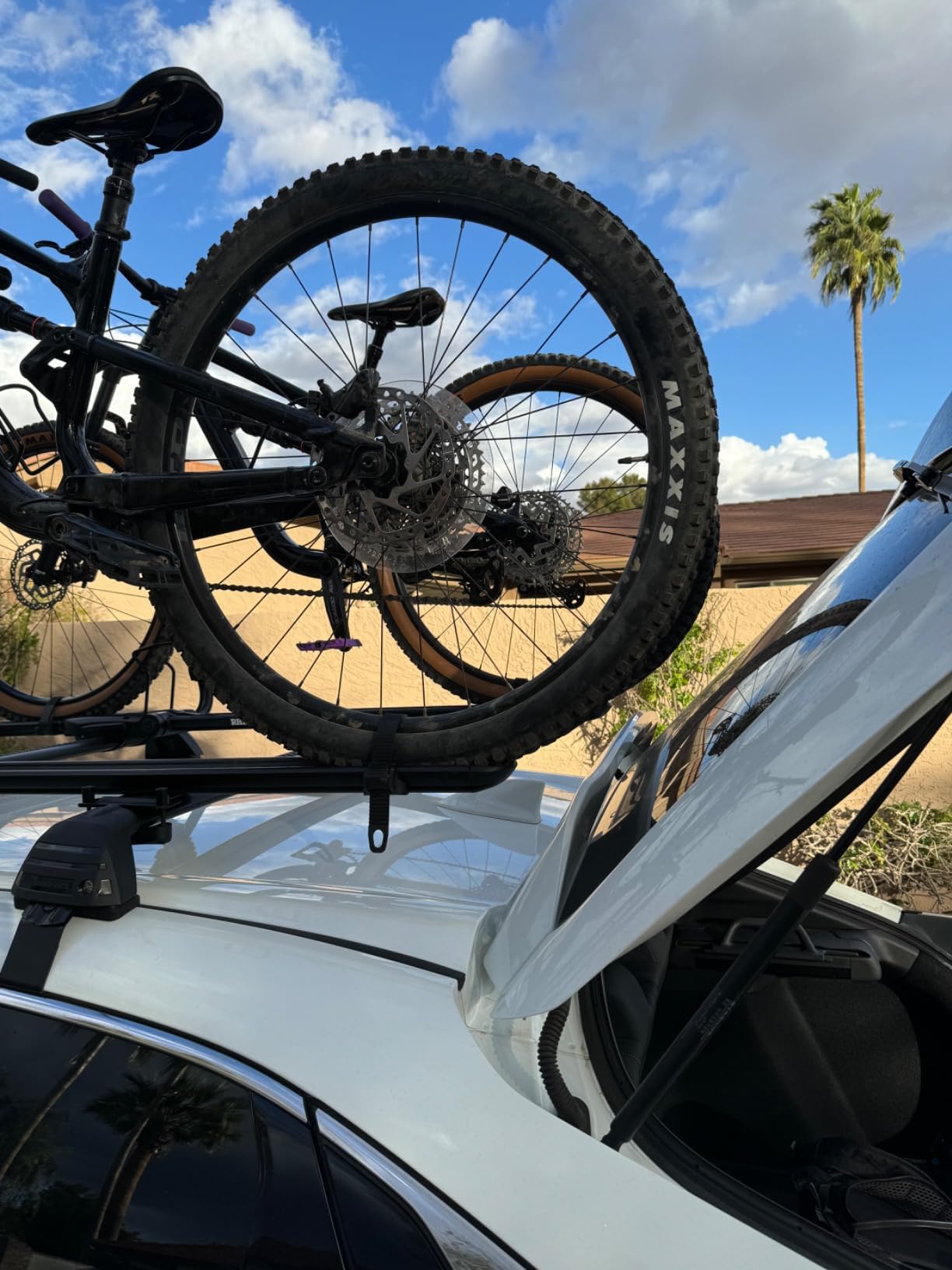
Axle coverage is unusually broad: 5mm, 9mm, 15mm, and 20mm thru-axle designs are all listed as compatible, and no wheel removal is required. The 64 inch tray handles the longer wheelbases common on 56cm and 58cm road frames, which is a genuine advantage for riders on larger geometry who find shorter trays leave the rear wheel hanging past the end.
The 2.7 inch tire limit is the trade-off to weigh. That comfortably fits 28mm and 30mm road tires, and most 32mm tires, but it is narrower than several racks here and rules out most 38mm-plus gravel rubber without an adapter. The arm folds flat when unused, which reviewers like for wind noise, but the ergonomic release handle is a chunk of the unit’s bulk.
Why a road rider picks this rack
Included locks, full stop. If your alternative is a Thule or Yakima carrier plus a separately sold lock, this arrives ready to secure. That is the reason most reviews pick it, and for someone who already owns compatible crossbars and just wants the bike secure on the roof, it is a genuinely cheaper total setup.
The axle range also means one rack can serve multiple bikes. If you own a 9mm quick-release road bike and a 15mm thru-axle gravel bike, this covers both without a shopping trip for adapters, which is the problem that catches most road riders switching between disciplines.
Where it falls short
The tire width ceiling is the one to check first. At 2.7 inches, this is a narrow-tire rack by design, so anyone planning to run 35mm or wider gravel tires on the same bike should look elsewhere. Wider tires mean a wider rim, which means the tray needs the extra room.
Crossbar spacing is the second constraint. The rack fits crossbars spaced 21 to 39 inches apart, which covers most factory setups but excludes some wide aero systems and some two-bike arrangements. Measure your bar spacing before you order, because this is a fit-or-do-not-fit spec with no workaround.
8. Swagman Upright: Best Budget Roof Rack for Road Bikes
Swagman Upright Roof Mount Bike Rack – Rooftop Upright Bike Carrier for Secure Bicycle Transport
Upright wheel-on mount
35 lb capacity
5 lb rack weight
Wheelbase to 54 inch
Tires to 3 inch
Pros
- Very light at only 5 lb
- so it is the easiest to lift to roof height
- Assembles in minutes with no wheel removal needed
- 3238 ratings gives it the largest review base in this group
- Tie down straps and a locking feature are included
- Simple entry point that still holds the bike by the wheels
Cons
- Plastic and steel construction is less rigid than aluminum tray systems
- Wheelbase capacity tops out at 54 inches
- Fit on bars is limited to 3 inches wide
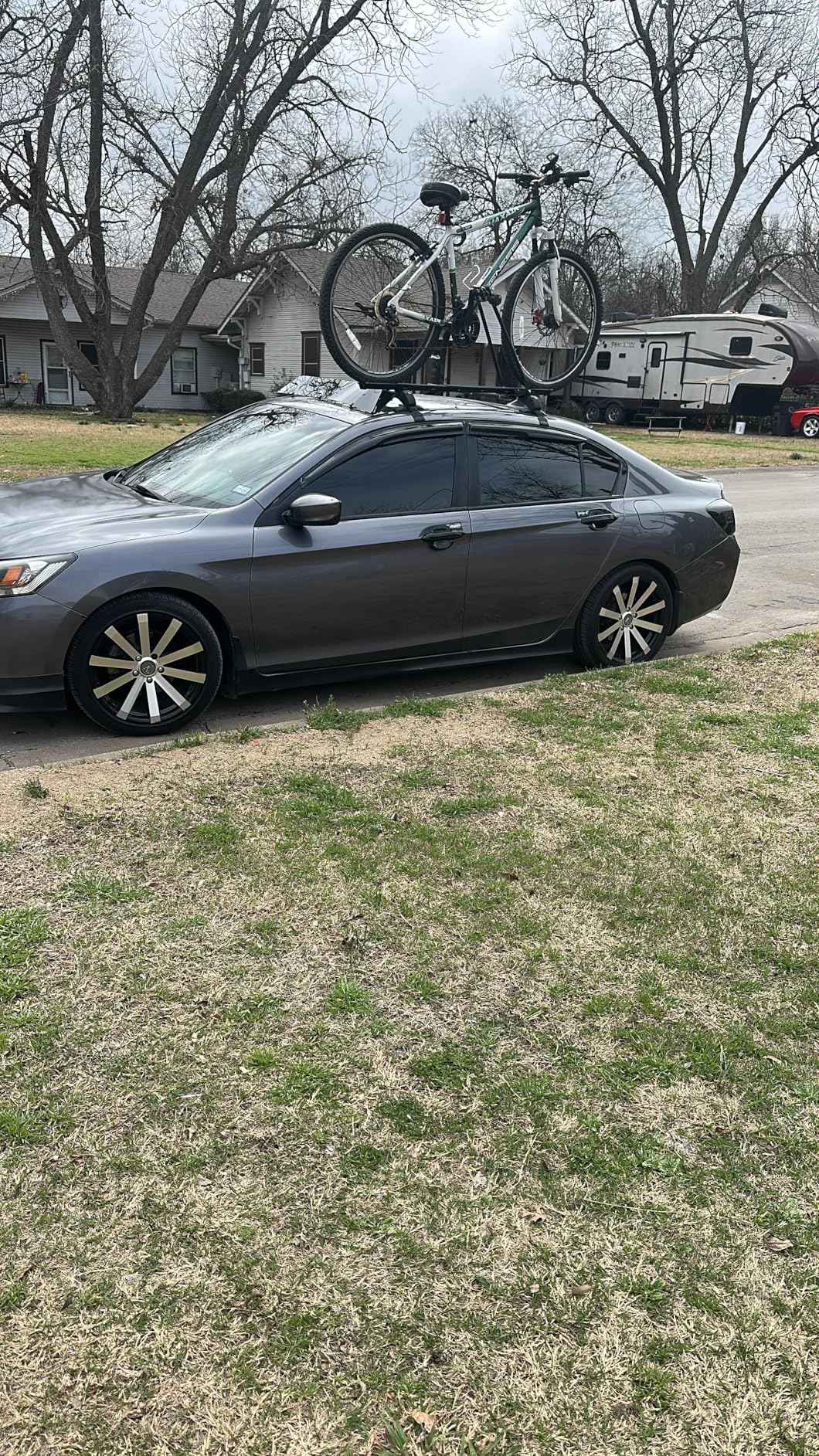
With 3,238 ratings, the Swagman Upright has more owner history than anything else in this roundup by a wide margin, and at 4.1 stars it delivers exactly what the shape promises: a plastic and steel upright that carries one bike by its wheels, with no wheel removal and no frame contact. For a first roof rack, a rental car, or a bike that lives on the roof only a few months a year, it is difficult to argue with.
Five pounds is the standout number against the metal trays in this group, which matters enormously if you are 5 foot 7 inches tall loading onto a crossover. This is a rack you can install solo without standing on anything, and that is worth more to a short rider than any material upgrade.
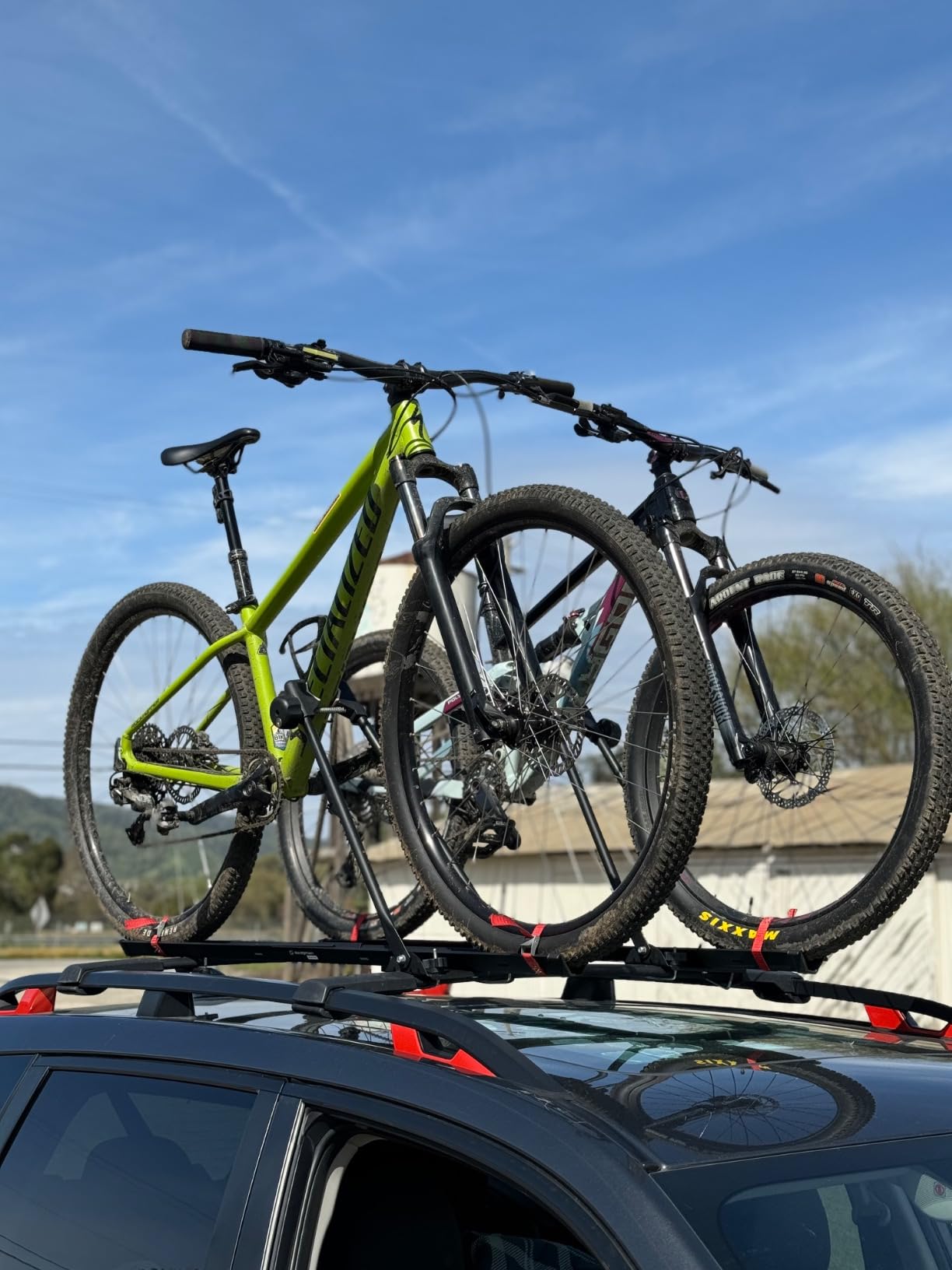
The 54 inch wheelbase ceiling is the spec to measure against your bike. Most 54cm road frames fall inside that comfortably. A 56cm or 58cm frame, a bike built with a long rear triangle, or an all-road bike with a slammed seatpost can push past it, and the geometry is unforgiving rather than adjustable. Fifty-seven percent of ratings here are five-star, with 8 percent at one star mostly reflecting durability over years rather than a design flaw.
Construction is where the price difference shows. Plastic chassis with steel hardware is noticeably more flexible than the aluminum trays in this group, which reads as a small amount of side-to-side movement over broken tarmac rather than anything unsafe. It fits square, round, and oval bars up to 3 inches wide, and multiple units can be combined for a two-bike setup.
Why a road rider picks this rack
Weight and simplicity. Five pounds means solo roof-height loading, tool-free assembly in minutes, and no adapters for common bar shapes. Riders who move between cars, or who borrow a vehicle for a race weekend, can install it in a few minutes with no permanent hardware left behind.
The largest review base in the group also means the weaknesses are well known and bounded. Nothing about this rack is a surprise, which is a reasonable thing to want from a piece of hardware you will climb above your head in a parking lot.
Where it falls short
Rigidity. Plastic and steel flexes more than the aluminum trays here, and on badly broken roads you will feel more side-to-side movement than with a metal rack. If you drive chip seal or badly patched tarmac regularly, factor that into your choice.
The 54 inch wheelbase limit and the 3 inch bar width cap are hard limits rather than preferences. If your road bike is a 56 or 58cm frame, measure first. And with a 35 lb per bike capacity, this is a solo-rack choice rather than one for a bike loaded with bikepacking kit.
9. Gathersky Dual-Arm: Best for Heavier Road Builds and Bikes With Bottles Mounted
GATHERSKY Roof Bike Rack, Upright Dual-Arm Rooftop Bike Carrier for Car SUV
Dual pivoting wheel-on arms
50 lb capacity
Wheelbase to 48 inch
Folding arms
T- and U-bolts
Pros
- Two pivoting arms hold the bike by the wheels with no frame contact
- 50 lb per bike is the highest capacity in this group
- Integrated tightening knob with a ratchet lock mode for one-handed release
- Folding arms give compact off-season storage
- Both T- and U-bolts included for crossbar flexibility
Cons
- 48 inch wheelbase limit is shorter than most racks here
- Only a 3 month manufacturer warranty
- Smallest review base among the well-reviewed racks at 103 ratings
The dual-arm layout is what separates this rack mechanically from the single-strap designs. Two pivoting arms come up under and over the bike and hold it by the wheels with no frame contact at all, which means your bottle cages stay exactly where you put them. For a road bike carrying bottles, an integrated feed bag, or a frame-mounted accessory, that removes the awkward workaround most clamp racks force on you.
Fifty pounds per bike is the highest capacity in this roundup, and the integrated tightening knob has a ratchet lock mode for one-handed release. The arms fold down when you are not using it, which makes this one of the easier racks to store over winter in a garage rather than leaving it on the roof.
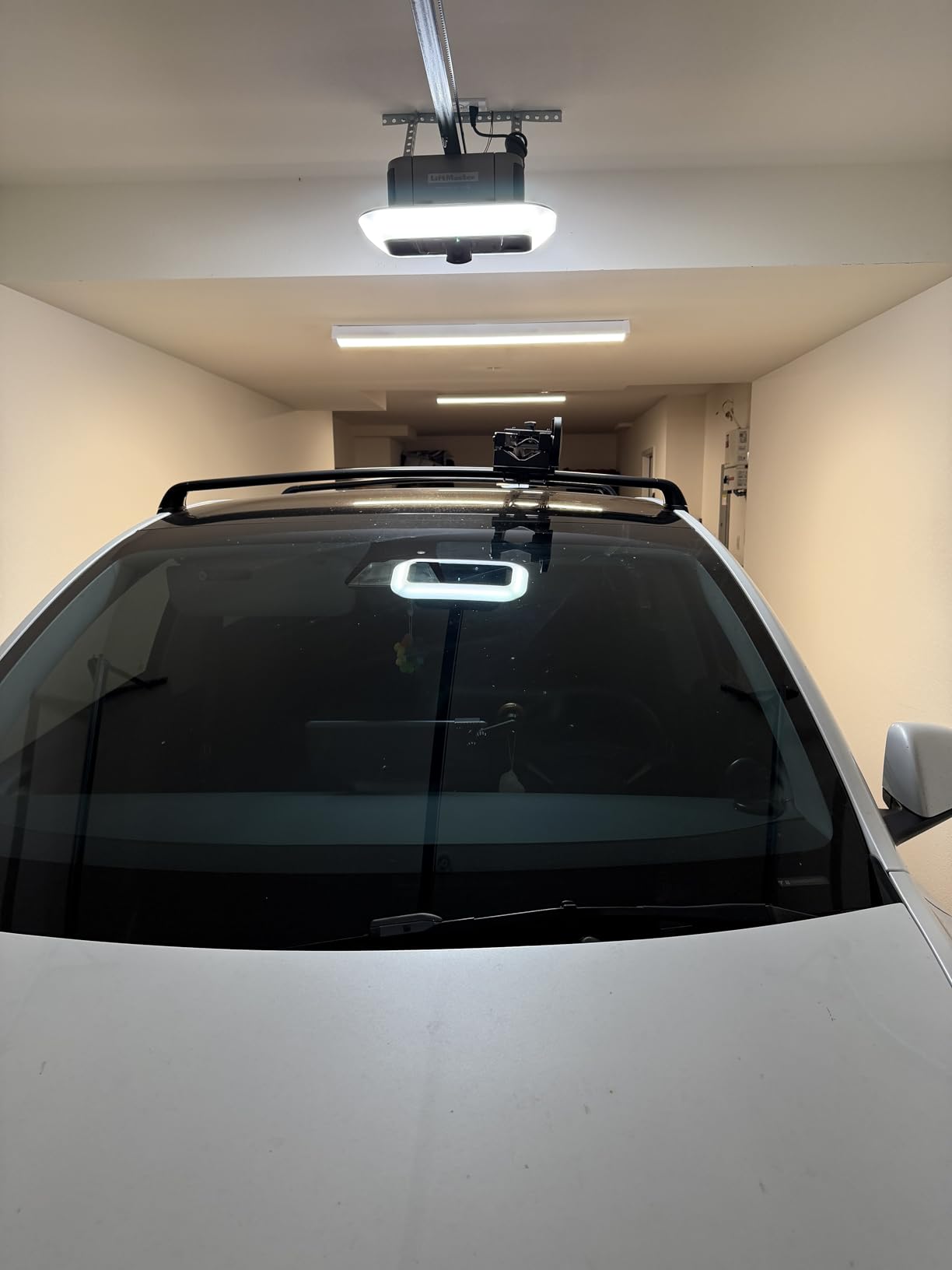
The included hardware is unusually generous. Both T-bolts and U-bolts come in the box, and the crossbar fit is specified at up to 3.15 inches wide by 1.6 inches tall with a center distance between bars adjustable from 19.68 to 47.25 inches. That range covers most factory rails and most aftermarket aero systems, which removes the adapter purchase for a lot of buyers.
The wheelbase figure is the one that catches road riders. Forty-eight inches is the shortest limit in this group, shorter than the Swagman’s 54 inches. Many 54cm road frames fit, but longer frames and slammed-seatpost builds will not, and the arms do not extend to compensate. The three month warranty is also far shorter than the limited lifetime coverage offered by Thule, Yakima, and RockyMounts.
Why a road rider picks this rack
No frame contact with a secure hold, which is the best of both worlds compared with a clamp rack. Bottles stay mounted, cables and hoses stay clear, and the bike is still held rigidly enough that the arms do not need a second person watching them. For longer two-bike trips, the 50 lb rating gives plenty of margin.
Folding arms and a compact profile make this the easiest of the higher-capacity racks to live with when you are not riding. If you only need a rack for a race block or a wet-weather season, this one disappears into a corner between trips instead of staying on the roof and costing you fuel economy.
Where it falls short
The 48 inch wheelbase ceiling is the first thing to check, and it is the most likely reason to return this rack. Measure your bike’s wheelbase before ordering, and if you ride a 56cm or larger frame, this is probably not the one.
The three month warranty is the other concern on a product meant to live on a roof for years. Brands like Thule, Yakima, RockyMounts, and Kuat back their carriers with limited lifetime coverage, and a short warranty on structural hardware is a genuine risk difference. The 4.1 average across 103 ratings also tells you the long-term record is still short.
10. Swagman Enforcer: Best Fork Mount With Adapters in the Box
Swagman Enforcer Roof Bike Rack – Fork Mount Rooftop Carrier for QR & Thru-Axle Bikes
Fork mount carrier
9mm and 15mm adapters
45 lb capacity
11.4 lb weight
Flush low profile
Pros
- Aluminum adapters for 9mm and 15mm axles come in the box
- 45 lb capacity is higher than most fork mounts
- Flush-mounted low profile design keeps wind noise low
- Tool-free installation on round
- square
- and oval crossbars
Cons
- Instructions are poorly written and the hardware assortment is confusing
- Fitted bolts are difficult to turn on thick crossbars
- The included lock does not work with thru-axles
The Enforcer’s pitch is simple: buy the rack and you can put a 9mm quick-release road bike or a 15mm thru-axle bike on it immediately, because both aluminum adapters are in the box. With 45 lb per bike capacity, it also out-carries most of the fork mounts in this group. For riders who own a bike with an older axle standard and do not want a second accessory order, that solves the most common road-rack buying mistake.
It is a flush-mounted design, sitting low against the crossbars, and reviewers who care about highway noise report that it is among the quietest fork mounts available. The adjustable wheel tray fits most bike lengths and accommodates most disc brakes, which covers the standard 49 to 58cm road frame range without swapping hardware.
The complaints are consistent and all mechanical. Instructions are described as poorly written, and the included hardware is called an odd assortment, which together mean a longer first assembly than the tool-free claims suggest. Several owners report the fitted bolts are hard to turn on thicker crossbars, so a rubber strap or a second pair of hands helps more than the included key.
One detail is worth checking carefully if you own a thru-axle bike: the included lock does not work with thru-axles, because they do not thread in the way a quick-release lever does. You can still carry the bike, but you are relying on the wheel straps rather than a lockable point. With only 32 ratings on this listing, the long-term durability record is thinner than anything else we reviewed.
Why a road rider picks this rack
Adapters in the box at 9mm and 15mm. If your road bike has an axle standard outside the common 12mm range, this avoids the separate accessory purchase entirely. It is also one of the few fork mounts here rated for 45 lb, which leaves room for a loaded bikepacking setup on the same bike.
The low flush profile is the quiet bonus. On long motorway runs at sustained highway speed, a tray that sits closer to the bar produces noticeably less wind roar, and road riders on fast commuting loops notice it first.
Where it falls short
Installation experience. Poorly written instructions and a confusing hardware assortment turn a supposedly tool-free setup into an afternoon. Owners who get past that report a sturdy, pre-assembled rack that holds bikes securely, so the issue is documentation rather than engineering.
The thru-axle lock incompatibility is the bigger practical gap. If you run disc brake thru-axles and want the bike locked on the roof, this does not deliver that. Combined with the smallest review base in the roundup at 32 ratings, it is a rack to buy with open eyes rather than on recommendation.
11. Swagman Standard Fork Mount: Best Lightweight Travel Rack for Quick-Release Road Bikes
Swagman Standard Fork Mount Roof Bike Rack – Rooftop Bike Carrier for 9mm Quick Release Bikes
Fork mount with 9mm skewer
16 oz rack weight
35 lb capacity
Aluminum
Tool-free assembly
Pros
- Just 16 oz
- making it the lightest rack in this roundup by a wide margin
- Tool-free assembly in minutes with no tools
- Limited lifetime warranty
- The 9mm quick release skewer suits most classic road bikes
Cons
- Only accepts 9mm quick release skewers
- so thru-axle road bikes need an adapter
- 35 lb capacity with no rear wheel strap
- One bike only
Sixteen ounces changes how a rack feels at roof height. This is a fork mount that you can hold in one hand while climbing out of a car, which is the entire argument. If you use a rental car, share a vehicle, or carry a rack between two cars regularly, the weight saving becomes the feature you notice every single time.
The 9mm quick-release skewer it ships with suits most classic road bikes, and the aluminum body is backed by a limited lifetime warranty, which is unusual at this end of the market. Fifty-eight percent of ratings are five-star and 21 percent four-star, with the pattern showing a simple design executed cleanly rather than a product trying to do too much.
Be clear about the scope. It takes 9mm quick release skewers only, so a thru-axle road bike needs an adapter and any 12mm buyer should look at the Kuat Trio or the Yakima FrontLoader instead. With one bike per rack and no rear wheel strap, this is a solo carrier for a narrow-tire road bike rather than part of a two-bike setup.
Thirty-five pounds per bike is fine for a race weight road build with a saddle bag and nothing else, and it is not enough for a fully loaded bikepacking rig. That is an honest limit for a product this light, and it aligns neatly with what this rack is best at: carrying a fast road bike to a race start or a club ride.
Why a road rider picks this rack
Portability. This is the rack to buy if you use rental cars, if your bike rack moves between vehicles, or if you want to store it indoors year-round without thinking about it. Nothing else in this group gets close to sixteen ounces.
It also fits square, round, and oval bars up to 3 inches wide with no tools for assembly, so almost any basic crossbar system will take it. The limited lifetime warranty means the lightweight construction is not being treated as disposable.
Where it falls short
Axle standard is the whole story. Nine millimeters only means modern disc-brake road and gravel bikes are out unless you buy an adapter, and that is most bikes sold in the last few years. Check your axle diameter first; this rack is a poor fit for a current thru-axle build.
There is no rear wheel strap, so long descents and rough roads can leave the back wheel free to move. For fast road riding on smooth tarmac that is a non-issue, but if your route includes chip seal or gravel approaches, this is the rack to look past.
12. Thule TopRide: Best Premium Fork Mount for Highway Stability
Thule TopRide Roof Mounted Bike Rack
Premium fork mount
QR and thru-axle
AcuTight torque limiter
7.7 lb weight
Lifetime warranty
Pros
- Low-sway mounting that road riders specifically praise for highway travel
- Handles both quick release and thru-axle bikes without extra adapters
- 7.7 lb is the lightest premium fork mount here
- AcuTight knob clicks and a green tab confirm the bike is loaded
- Thru-axle and disc brake compatible
Cons
- Does not fit Subaru factory aluminum crossbars without extra mounting hardware
- Two locks sold separately despite the integrated locking system
- Front wheel must be removed for every load
The TopRide is the fork mount to consider if most of your riding is long stretches at speed. The stable, low-sway tray is the specific thing road riders report back on, and the limited 47 inch length keeps the mass close to the crossbar rather than cantilevered forward. At 7.7 lb it is also the lightest premium fork mount we reviewed, which helps on loading height.
The AcuTight torque limiter is a genuinely good piece of engineering. The knob clicks when a quick-release bike is properly clamped, and a green visual tab confirms the load, which removes the single most common fork-mount failure mode of a fork not being fully tightened before you drive away.
Fitment is the caveat that catches people out. This carrier does not work well with Subaru factory aluminum crossbars, and the mounting hardware for factory bars is not included, so owners on that platform need to source extra pieces. If you drive a Subaru with factory rails, verify the fit before you order or you will be ordering adapters on top of the rack.
Both locks are sold separately, which is the most common complaint on this listing despite the integrated locking system being the advertised feature. Seventy-five percent of ratings are five-star, with road riders praising stability at speed and minimal wind noise, and the recurring negatives are factory bar fitment and the missing locks.
Why a road rider picks this rack
Sustained highway speed. If your riding is 80 km/h motorway commuting or long-distance road days, the low-sway tray and short 47 inch footprint are built for exactly that, and it is the feedback owners give most often. The confirmation click removes the anxiety of an under-tightened fork clamp at 100 km/h.
It accepts both quick release and thru-axle bikes without extra adapters, so it works as a shared rack for a household with an older steel road bike and a newer disc-brake build. Disc brake compatibility is explicitly supported, which matters on integrated setups with tight clearances.
Where it falls short
Factory crossbars, specifically on Subaru. Owners on factory aluminum bars report a poor fit and are not given the hardware to solve it, which turns a clean install into an afternoon of sourcing parts. Check your vehicle platform before you commit.
Front wheel removal on every load and two separately sold locks complete the list. If you carry two bikes and want a low, secure, quiet profile at highway speed and your car is not a Subaru, this is a strong choice. If you want the fewest steps at the car park, a wheel-on tray will still get there faster.
How We Evaluated Roof Bike Racks for Road Bikes
We assessed all 12 racks against the same set of road-specific criteria rather than a general mountain-bike scorecard. Where a manufacturer does not publish a figure, we did not guess, and the reviews we read repeatedly surfaced the same fitment complaints that the spec sheets do not mention.
Our criteria, in order of weight for a road bike: whether the rack touches the frame, fork, or rims; axle standard coverage including whether adapters are included; maximum wheelbase against a typical 54 to 58cm road frame; tire width headroom above a 32mm tire; rack weight at loading height; and what security is actually included rather than advertised.
The axle glossary every road rider needs
Road thru-axles come in a short list of standards and racks do not all cover them. 9mm quick release is the classic road standard, used on older frames and still common on entry-level builds. 12×100 is the modern front disc-brake road standard, which is where most compatibility confusion starts. 12×142 is the rear counterpart. 15mm appears on older disc and some gravel frames, and 20mm shows up on a handful of thru-axle conversions.
If your bike has a 12mm thru-axle and the rack does not list 12×100 or 12×142 coverage, assume you are buying an adapter. Several racks in this roundup include adapters in the box, and several do not, and that single detail separates a good purchase from an expensive return trip.
How to Choose a Roof Bike Rack for a Road Bike in 2026
Road bikes punish the wrong roof rack in ways mountain bikes never will. A 700c rim is thin, carbon is unforgiving, drop bars snag, and a thru-axle does not thread into a quick-release clamp. Here is how the decision breaks down.
1. Wheel-On vs Fork Mount vs Frame Mount
A wheel-on rack holds the bike by its tires and touches nothing else. This is the only design that fully protects paint and carbon, and it is why most road riders end up here despite the higher price. A fork mount grips the front axle with the front wheel removed and straps the rear tire. It is lighter and cheaper, and nothing touches the top tube, but every load involves wheel removal and an axle commitment.
A frame-mount rack clamps the top tube with padded claws. It is the fastest to load and the lightest on your head, but it is the only one of the three that touches paint. For a carbon road frame, treat that as a long-term decision rather than a detail.
2. Thru-Axle and Quick-Release Standards
Check your axle diameter before anything else. Racks that list 9mm, 12mm, 15mm, and 20mm support, or that include 9×100, 15×100, and 15×110 adapters, will swallow almost any road bike in your garage. Racks that list 9mm only are for older quick-release frames, and modern disc-brake road bikes need a separate adapter that adds cost and setup time.
The 12×100 front and 12×142 rear standards cover the large majority of disc-brake road and gravel bikes sold now, so treat any rack that does not mention 12mm as a warning sign rather than a detail. Our hitch rack guide for four bikes covers the alternative if your roof setup is already full.
3. Wheelbase, Tire Width and 700c Fit
Every road wheel is 700c, so wheel diameter is rarely the constraint; wheelbase and tire width are. Wheelbases in this roundup range from 48 to 54 inches as stated limits, with the metal trays generally accommodating longer frames. Measure from axle center to axle center, and if you ride a 56cm or 58cm frame, treat anything under 54 inches as a no.
Tire width limits run from 2.7 inches up to 5 inches. A 32mm road tire measures about 1.3 inches across, so even the narrowest rack here has huge headroom for pure road riding. Gravel is where limits bite: 38mm to 45mm tires need a rack rated closer to 3 inches, and that is the number to check if you ride mixed surface.
4. Bike Weight and Roof Load Limits
Is 20 lb too heavy for a road bike? No, not remotely. A race-weight road build sits around 16 to 18 lb, and every rack in this roundup is rated between 35 and 50 lb per bike. A road bike is among the lightest things you will ever put on a roof, which is why e-bike owners hit limits that road riders never see.
The limit that actually matters is your vehicle’s dynamic roof load rating, which is usually higher than the rack but lower than people assume. Two racks on a roof, a roof box, and a rack-mounted light bar all draw from the same total. Check the sticker in your door jamb before loading multiple bikes.
5. Security, Lock Cores and Hidden Costs
Almost every rack here has a lock point and no lock to go with it. Thule sells both locks separately on the UpRide, ProRide XT, and TopRide. Most integrated cable locks, including the one on the Kuat Trio, are deterrents against an opportunistic thief and nothing more. If you regularly leave the bike on the roof, plan on a frame lock in the saddle bag regardless of what the carrier provides.
Totalling the extras before you buy is the step most people skip. Your real outlay is the rack, plus a thru-axle adapter if your bike needs one, plus a lock if the rack does not include one, plus crossbars if your vehicle has none. Riders without a tow hitch should treat crossbars as part of the cost, and our electric bike hitch rack comparison is worth a look only if you are cross-shopping the whole approach.
6. Crossbar Types and Vehicle Fit
Most racks here mount to round, square, factory, and aerodynamic crossbars without adapters, but a few are brand-specific. The Yakima Forklift fits Yakima round, square, factory, and aero bars out of the box and needs help on other brands. The Gathersky includes both T-bolts and U-bolts and fits bars up to 3.15 inches wide by 1.6 inches tall.
Crossbar spacing matters for two-bike setups. The Rhino-Rack requires bars between 21 and 39 inches apart, and the Gathersky adjusts from roughly 19.7 to 47.3 inches. Measure before you order, because a spacing mismatch is a return, not an adjustment.
7. Lift Height, Garage Clearance and Two-Bike Spacing
Add your rack height to your crossbar height to get your total vehicle height, then compare it to your garage door. Low-profile choices like the Kuat Trio at 4 inches and the Thule TopRide help, while the longer trays add more. Riders who use low garages should measure before the first long trip, not after.
Two drop-bar bikes on one roof is a geometry problem, not a product problem. Handlebars on adjacent bikes can overlap, and aero bars make the collision certain. Plan on at least 24 inches between crossbar centers for two bikes with standard drop bars, more with aero bars or integrated hydration, and confirm your total roof load before committing. If your bars will not clear, a hitch rack for multiple bikes removes the puzzle entirely.
8. Aerodynamics and Fuel Economy
Any bike on a roof costs you fuel economy, and we did not measure a figure, so we will not invent one. What the engineering does tell you is direction: shorter trays, lower profiles, and arms that fold flat all reduce drag compared with tall upright racks. The Rhino-Rack folding arm and the low Kuat Trio profile are both designed around exactly this.
The cheapest saving available to most riders is simply taking the rack off between trips. Tool-free racks like the Yakima FrontLoader and Forklift, and folding-arm racks like the Gathersky, are the ones that make that realistic.
Frequently Asked Questions
What is the best bike rack for road bikes?
For roof mounting, the Thule UpRide is our top pick for road bikes because it holds both tires and touches nothing else, protecting carbon frames, rims, and paint. For a fork mount with the widest axle coverage, the Kuat Trio accepts 9mm, 12mm, 15mm, and 20mm forks and includes 9×100, 15×100, and 15×110 adapters in the box.
Which is better, Thule or Yakima bike racks?
For road bikes, Thule wins on no-contact mounting. The UpRide holds both wheels and never touches the frame, fork, or rims. Yakima wins on included hardware and tool-free handling. The FrontLoader ships with a lock system and installs without tools, but as a fork mount it needs a thru-axle adapter on modern disc-brake road bikes.
Can you put a bike rack on a road bike?
Yes, and road bikes are among the easiest bikes to roof-carry, typically weighing 16 to 20 lb against rack ratings of 35 to 50 lb. The two things to check are your axle standard and your wheelbase. Racks list wheelbase limits from 48 to 54 inches, and a thru-axle bike needs matching adapter coverage.
Do roof bike racks fit thru-axle bikes?
They do, but only if the rack lists your standard or includes an adapter. Road thru-axles come as 12×100 front, 12×142 rear, 15mm, and occasionally 20mm, alongside the older 9mm quick release. The Kuat Trio and Rhino-Rack cover the widest range with adapters included. Racks listing only 9mm need a separate purchase.
Is 20 lbs too heavy for a road bike?
No. A typical race-weight road bike weighs 16 to 20 lb, and every rack we reviewed is rated between 35 and 50 lb per bike, so weight is rarely the constraint. The numbers that matter more are your vehicle dynamic roof load limit and the bike plus luggage total, especially when carrying two bikes at once.
The Best Roof Bike Rack for Road Bikes in 2026
The Thule UpRide is the best roof bike rack for road bikes in 2026, because it is the strongest combination of rating, review volume, and no-contact design we found. It holds both tires, protects your frame and carbon rims entirely, covers every 700c road wheel, takes tires up to 3 inches wide, and carries 44 lb. The weight at roof height and the separately sold locks are real costs, but neither touches your bike.
If your bike has a 12mm thru-axle and you would rather not remove a front wheel, go with the Kuat Trio, which covers 9mm, 12mm, 15mm, and 20mm forks and includes the adapters. If you ride on Yakima crossbars and want tool-free install and removal, the Yakima Forklift is the simplest possible setup. If security is the concern and you do not want to buy locks separately, the Rhino-Rack RBC050 arrives with a cable, keys, and three locking systems.
Whatever you choose, do the same three checks before you order: confirm your axle standard, measure your wheelbase, and measure your garage door clearance with the rack height added. Those three measurements prevent nearly every return and every scuffed frame we hear about. Our best roof bike racks for road bikes shortlist is built on exactly those checks, not on marketing adjectives.


