

A rooftop cargo box is a lockable hard shell that clamps to your crossbars and adds 10 to 22 cubic feet of sealed storage above the cabin. For overlanding it is the single most useful upgrade you can make, because it keeps recovery gear, water, firewood, and road dust out of the cab while your bed stays clear for sleeping. The best rooftop cargo boxes for overland trips balance capacity, weight, crossbar fitment, and a lid you can actually open when you are parked on dirt.
We worked through the specs, warranty terms, mounting hardware, and owner review patterns behind twelve of the most widely used boxes in this category, from premium Thule and Yakima units to off-brand ABS shells and the black, boxy INNO designs that the overlanding crowd asks for by name. The winners below are not simply the most expensive or the highest rated in isolation. They are the ones that survive a washboard road, fit a real rack, and stay openable on a two-week trip.
One thing the community is consistent about, and worth saying early: rack first, box second. Overlanders on Reddit almost always settle the rack platform before they settle the carrier, because a box that will not clamp to your bars is a very expensive firewood holder. We have linked our general rooftop cargo box guide for the basics, and this guide goes deeper on the overland specifics that most roundups skip.
Last updated for 2026. All capacities, load ratings, weights, and dimensions quoted below come from the manufacturer data published for each box, and all owner feedback reflects aggregated review patterns for that specific product.
How We Picked and Compared These Boxes
We looked at four things in order, and the order matters. First came crossbar fitment, because a box that cannot physically mount is not a candidate. Then capacity against realistic trip load, then the weight of the box itself, because every pound of shell eats into the roof load budget you have left for a rooftop tent.
Next we examined opening style. A dual-side box lets you load from whichever side of the vehicle you are standing on, which matters enormously on a narrow forest road or a crowded campground loop. A rear-opening box is better in traffic but often means climbing a step ladder at the back of a dusty SUV. Finally we looked at hardware: U-bolt jaw design, latch construction, lock security, and warranty length, since the overlanding community consistently reports that mounting hardware survives rough roads better than shells do.
We also flagged a durability pattern that shows up again and again in owner reviews. Washboard roads loosen U-bolt torque after the first few hundred miles of break-in, not because the box failed but because the hardware settled. Every box in this guide can be re-torqued. We tell you which ones make that easy.
Why You Can Trust This Guide
This is an independent guide. We are not paid by any of the brands listed, and no brand paid for placement or for an award label. We do earn a commission when you buy through the links on this page, which never changes the ranking, the wording, or the cons we list.
Awards follow one rule: the strongest combination of rating, review volume, warranty length, and mounting confidence across the specs we could verify. Where a box has a well-documented flaw, we say so plainly rather than burying it. If a product is not right for your vehicle or your trip, we will tell you to skip it.
Top 3 Picks for Best Rooftop Cargo Boxes for Overland Trips in October
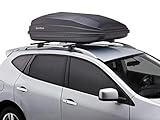
SportRack Vista XL
- 18 cu ft of internal volume
- 100 lb load rating
- Tool-free rear-opening mount
- 25 year warranty
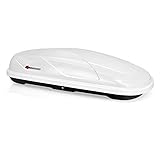
Goplus 14 cu ft Dual Side
- 14 cu ft capacity
- 165 lb load rating
- Dual side opening
- ABS and PC shell

JEGS 10 cu ft Weatherproof
- 10 cu ft capacity
- 110 lb load rating
- Dual side opening
- Tool-free assembly
The Vista XL wins this list because 18 cubic feet with a 25 year warranty and a 4.4 average across more than two thousand owner reviews is hard to argue with. The Goplus earns its slot for raw load rating. The JEGS is the sensible starting point if you are building a first overland setup and want to keep the budget for a rack instead.
All 12 Best Rooftop Cargo Boxes for Overland Trips in 2026
| Product | Specs | Action |
|---|---|---|
| SportRack Vista XL Rear Opening Cargo Box |
|
Check Latest Price |
| Goplus 14 Cubic Feet Hard Shell Dual Side Opening |
|
Check Latest Price |
| JEGS 10 cu ft Rooftop Cargo Carrier |
|
Check Latest Price |
 Thule Motion 3 Rooftop Box Thule Motion 3 Rooftop Box |
|
Check Latest Price |
 INNO BRA240BK Ridge Cargo Box INNO BRA240BK Ridge Cargo Box |
|
Check Latest Price |
 D SOLUTIONS Hard Shell Roof Cargo Carrier D SOLUTIONS Hard Shell Roof Cargo Carrier |
|
Check Latest Price |
 VISRACK 14 Cubic Feet Dual Side Opening VISRACK 14 Cubic Feet Dual Side Opening |
|
Check Latest Price |
 INNO Wedge 660 Black Roof Box INNO Wedge 660 Black Roof Box |
|
Check Latest Price |
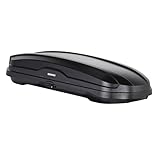 Yakima SkyBox NX XXL Rooftop Carrier Yakima SkyBox NX XXL Rooftop Carrier |
|
Check Latest Price |
 Thule Force 3 L Rooftop Box Thule Force 3 L Rooftop Box |
|
Check Latest Price |
 Thule Pulse 2 L Dual Side Opening Thule Pulse 2 L Dual Side Opening |
|
Check Latest Price |
 QUAWIP 13 Cubic Feet Hard Shell Box QUAWIP 13 Cubic Feet Hard Shell Box |
|
Check Latest Price |
1. SportRack Vista XL: 18 cu ft of the most proven overland capacity
SportRack Vista XL Rear Opening Cargo Box,Black
18 cu ft 510 L
100 lb load rating
Rear opening
25 year warranty
Pros
- 18 cu ft of internal volume for long trips
- Tool-free mounting one person can handle
- Quiet and stable at highway speed
- Keeps gear dry through heavy rain and snow
- Black finish suits a rugged build
Cons
- Rear-only opening makes the front of the box awkward to reach
- Key can stay in the cylinder when opening
- Some vehicles need modified U-bolt knobs
- Added height can exceed garage clearance
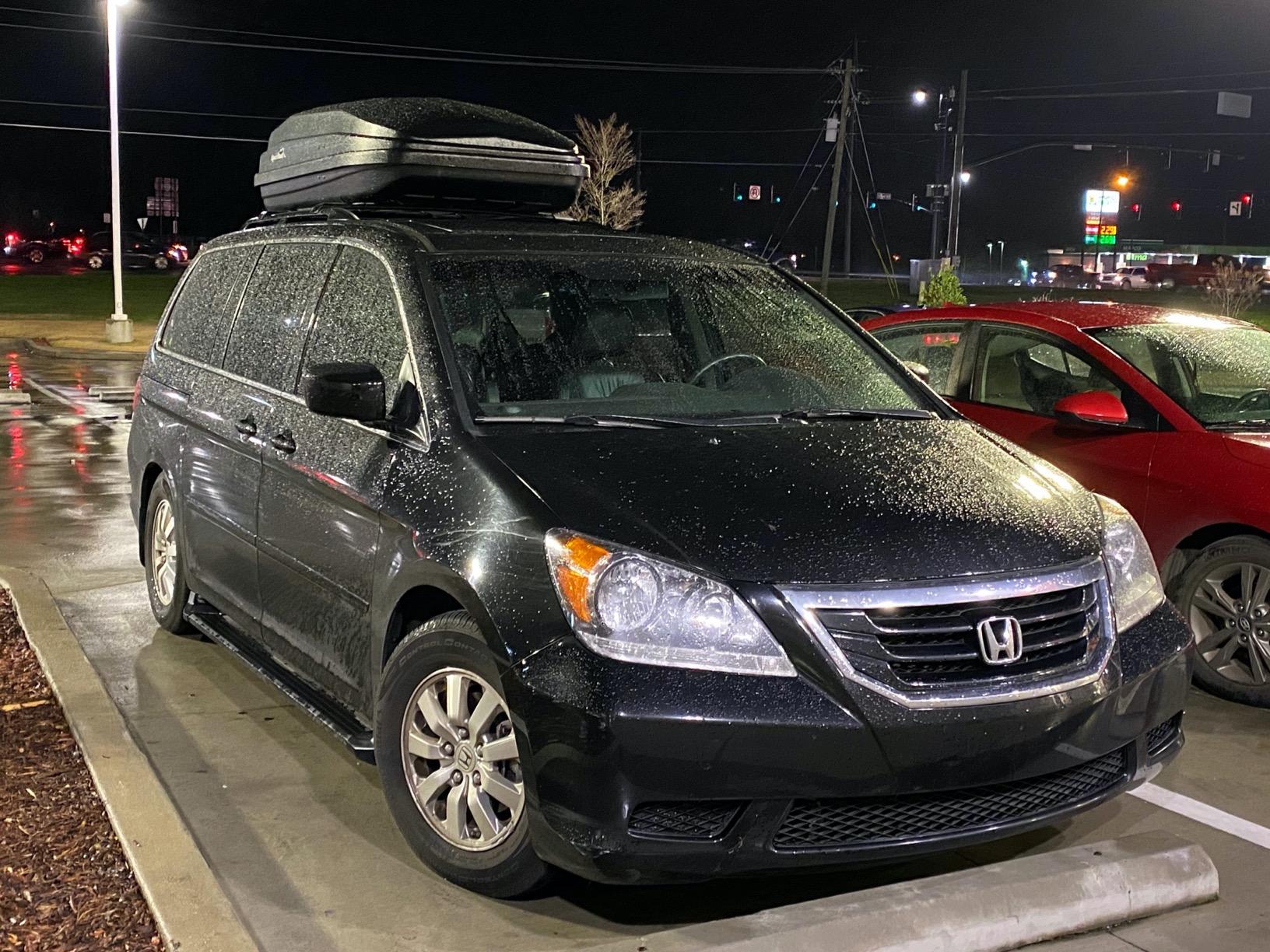
Eighteen cubic feet is the volume that decides it. Owners load it with suitcases, camp chairs, a golf bag, and full sets of clothing for several people without anything having to stay behind, and the internal volume of 510 litres is the biggest reason this box shows up on so many overland builds.
Mounting is genuinely tool-free. One person can set it on the bars and secure it in minutes, which matters when you are changing vehicles at a trailhead or swapping the box between two cars in a household. Owners also report that it runs quiet and stays planted at highway speeds in most conditions, and that contents came out dry after heavy rain and snow.
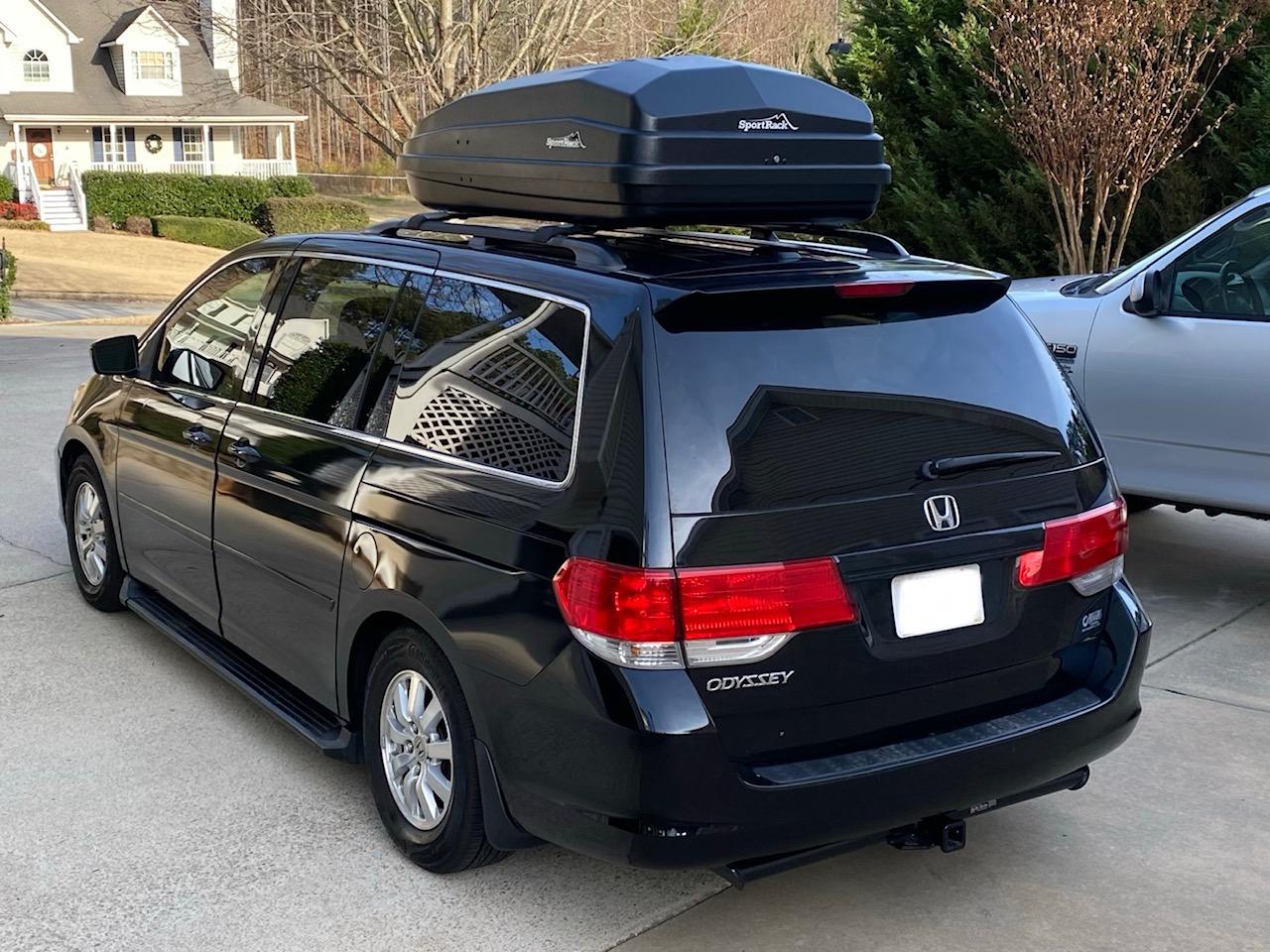
Physically it is a 62.5 by 39 by 19 inch box, which is tall enough to worry about on a low garage. That 19 inch height is the number to measure before you buy, because the Vista XL adds noticeably more roof height than a wedge-profile box does. If you are storing it in a residential garage with a seven-foot door, measure your stock roof height and add the box height before you commit.
The mounting fit is the one place we would flag caution. SportRack rates it for crossbar spacing between 23 5/8 and 29 3/4 inches, and some vehicles need extra drilled holes or modified U-bolt knobs to sit properly. That is a known friction point reported by owners, and it is exactly the fitment failure that overlanders complain about most often on forums. Check your bar spread against those numbers before ordering.
What you gain by going big on volume
The practical benefit is that you stop rationing. On a two-week trip, the box absorbs everything that would otherwise eat your sleeping platform: the recovery board, the water, the firewood, the wet gear, the extra insulation. Owners consistently describe the freed-up interior space as the real payoff rather than the storage volume itself.
The 100 pound load rating is honest for this category and more than enough for normal recovery gear and luggage. A twenty-five year manufacturer warranty is far longer than the coverage most boxes in this group carry, which is a meaningful signal for a shell that will live on a roof through many seasons of sun, dust, and washboard vibration.
Where the Vista XL will frustrate you
The rear-only opening is the main annoyance. Reaching the front third of the interior often means a step ladder at the back of the vehicle, and on a solo trip at a crowded campground that is a genuine inconvenience. Owners also report the key can be awkward, with the tendency to stay in the cylinder when opening.
Some reviewers describe the lid and hinge assembly as feeling thinner than premium boxes, and support arms can be pushed hard when the box is loaded to the top. If you routinely load past the side walls rather than below them, spend the extra money on a dual-side unit instead.
2. Goplus 14 cu ft: 165 lb of payload with dual side access
Goplus Rooftop Cargo Carrier Hard Shell, 14 Cubic Feet Waterproof Car Roof Cargo Carrier w/Dual Side Opening, Security Key, 165LBS Capacity, for 17” to 22.8” Wide Crossbar Rack, Vehicle Cargo Box
14 cu ft
165 lb load rating
Dual side opening
ABS and PC shell
Pros
- 165 lb load rating leads this group
- Dual side access on a narrow 30 inch width
- Metal lid stiffeners firm up the base
- Tool-free quick-connect anchors fit many bar styles
Cons
- Needs crossbars 17 to 22.8 inches wide
- Both sides cannot be opened at the same time
- Key releases only after the lid is closed and locked
- 4.1 average rating reflects latch and finish complaints
The headline number here is 165 pounds, which sits at the top of the load ratings in this roundup. That is the reason to look at this one if you are running a heavy recovery load, a wet-weather gear pile, or a family of four on a long loop. The 14 cubic foot interior is also more than enough for bulky luggage and camp gear without taking up your entire roof length.
Dual side opening is a real overland advantage. You can load from the passenger side on a narrow two-track, then unload from the same side at camp without crawling over gear or walking around the vehicle in the dark. The quick-connect anchors are tool-free and the manufacturer rates them for round, square, factory, and most aerodynamic bars, which widens the fitment field considerably.
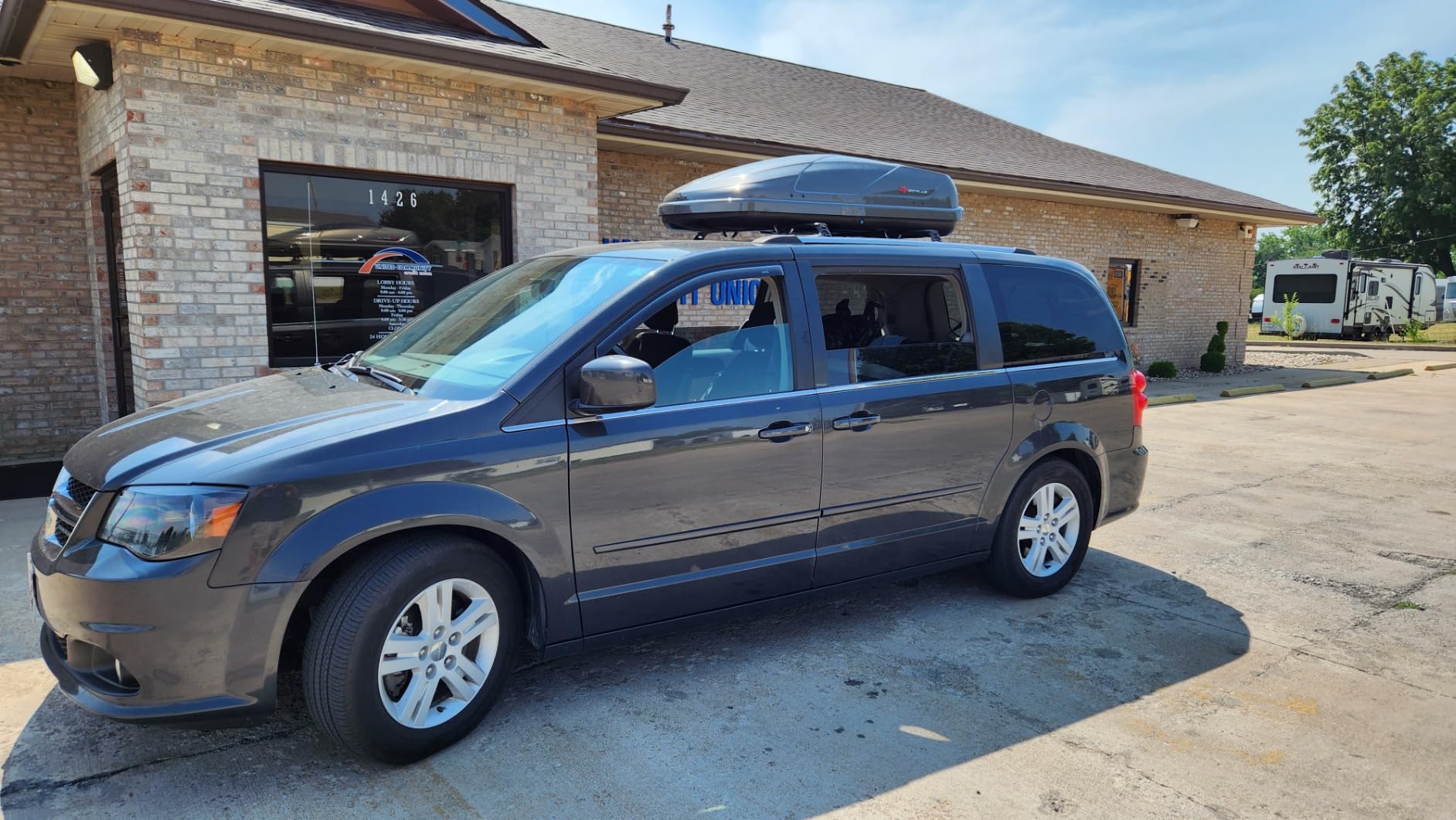
Construction is ABS and polycarbonate with metal lid stiffeners along the base, which is what pushes the load rating up. The stated width and thickness window for the bars is specific: 17 to 22.8 inches wide, bar width under 3.1 inches, and bar thickness under 1.0 inch. If your rack falls outside that window, this box simply will not work, and no amount of persuasion will change that.
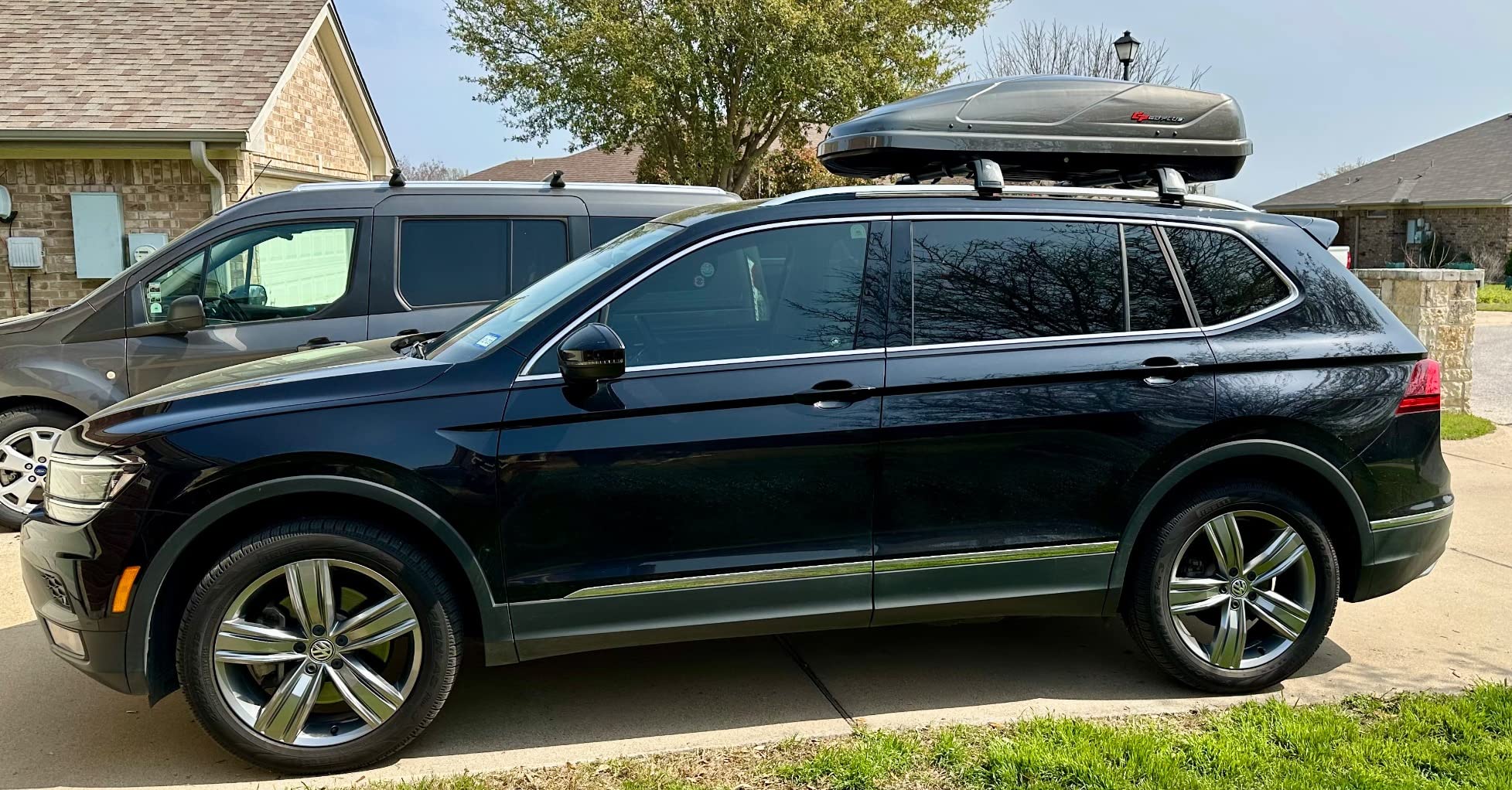
At 62.5 by 30 by 15 inches it is a narrower, lower box than the Vista XL, so it sits better on a mid-size SUV roof and adds less height. That 15 inch height is worth noting for garage clearance, and it is one reason this box appeals to people running low clearances on a trail-accessible route.
Where the extra load rating earns its keep
Load rating matters when you are concentrating weight. A stack of water containers, a traction board set, and camping equipment in one corner will press harder on a shell than the same gear spread evenly. Reviewers who run heavy, dense loads report the 165 lb figure giving them room that most boxes in this price range do not.
The metal lid stiffeners are the part to appreciate on rough roads. They keep the base from flexing as much under a concentrated load, and a stiffer base translates to a quieter box on washboard sections where a thinner shell would drum and rattle.
Where the Goplus falls short
The 4.1 average across 548 reviews is the lowest in this group, and the distribution shows why: an 8 percent one-star share driven mainly by latch and finish complaints. That is not disqualifying, but it is a signal that the moving parts are not as refined as they could be.
Owners also report two specific quirks. You cannot open both sides at the same time, which limits how you stage gear when loading in a hurry. And the key can only be removed once the lid is fully closed and locked, so the first few minutes of every departure take a moment longer than you would like.
3. JEGS 10 cu ft: the sensible first overland box
10 cu. ft. Rooftop Cargo Carrier, Weatherproof Lockable, 110 lb. Capacity
10 cu ft
110 lb capacity
Dual side opening
24.5 lb box weight
Pros
- Compact 10 cu ft footprint fits tight roofs
- Proven weatherproofing through snow and flooding
- Tool-free assembly with all hardware included
- Light enough for one person to handle
Cons
- Wire bracket grips aero bars poorly
- Latch needs firm pressure to engage
- Base can bow under concentrated heavy loads
- Only a 30-day warranty
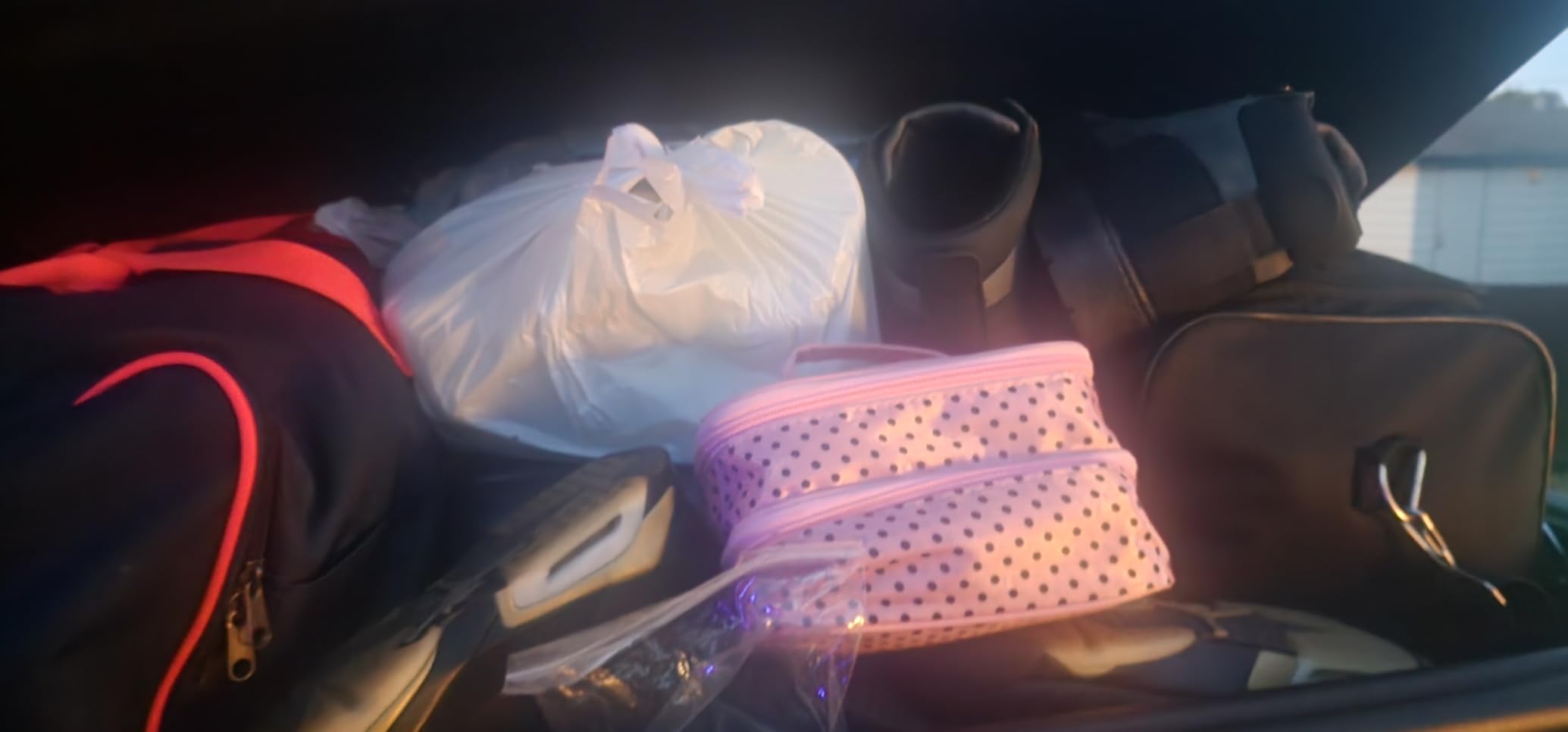
Ten cubic feet sounds modest next to an 18 or 22 cu ft box, and that is exactly why this one is worth considering. It fits on a smaller vehicle or a short roof without dominating the profile, which makes it the natural choice for a first overland build where you want to spend the rest of the budget on the rack. Owners report it comfortably holding three suitcases plus a large bag.
Weatherproofing is the quietly excellent part. Reviewers describe this box going through ice, snow, thunderstorms, and flash flooding with contents staying dry over long trips, and the dual side locking system with a weather-tight seal gets credit for that. The dual side opening means the same convenient loading from either side that made the Goplus appealing.
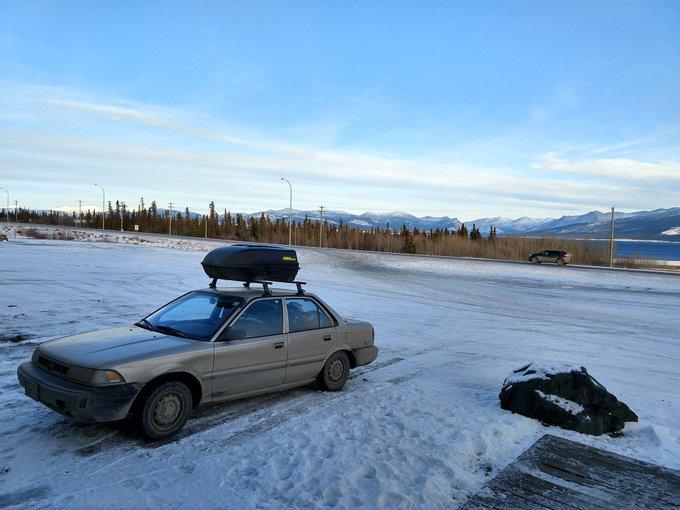
It is also genuinely portable. At 24.5 pounds it is light enough for one person to lift onto the bars, and the tool-free assembly includes all the mounting hardware and simple instructions, so you are not at a hardware store the night before a trip. For households that move one box between two vehicles, that weight is a real advantage.
The dimensions are 46.5 by 30.5 by 17.5 inches, so it is a short box with a moderate height. Measure your garage clearance against that 17.5 inch figure rather than assuming, because height is where surprises happen.
What the smaller footprint buys you
Less roof length used means more clearance for a roof-mounted tent, a light bar, or a solar panel mount, and it keeps the center of gravity of the roof build closer to the middle of the vehicle. If you are combining a rooftop tent with a box, the compact footprint here is one of the friendlier configurations in this roundup.
It is also light enough at 24.5 pounds to remove and stow between trips without a second pair of hands. If your overlanding is seasonal rather than full-time, being able to lift it off the bars in a few minutes changes how often you are willing to use it.
Where the JEGS will annoy you
The hinged-wire mounting bracket is the real problem. Owners report it does not hold well on rounded or aerodynamic crossbars, which is precisely the style many factory roof rails use. If your bars are aero-profile, this is a poor match and you should shortlist a different unit.
Second, the latch and locks are described as feeling flimsy, with some owners adding a strap for extra security, and the base can bow under concentrated heavy loads such as several tool boxes in one spot. Warranties run from a 30-day return window on the budget units up to a limited lifetime warranty on the Thule boxes, and both INNO boxes carry a lifetime warranty of their own.
4. Thule Motion 3: the aerodynamic premium benchmark
Thule Motion 3 XL
Wing shaped nose
8 lb weight
PowerClick mount
SlideLock latch
Limited lifetime warranty
Pros
- Forward leaning nose cuts drag and wind noise
- PowerClick mount clicks when properly torqued
- SlideLock confirms the lid is fully closed
- Light enough for solo install and removal
Cons
- Usable volume is less than the listed capacity
- Manufacturer limits speed to 80 mph
- Long sizes can crowd the rear hatch on big SUVs
- Light shell flexes during open and close
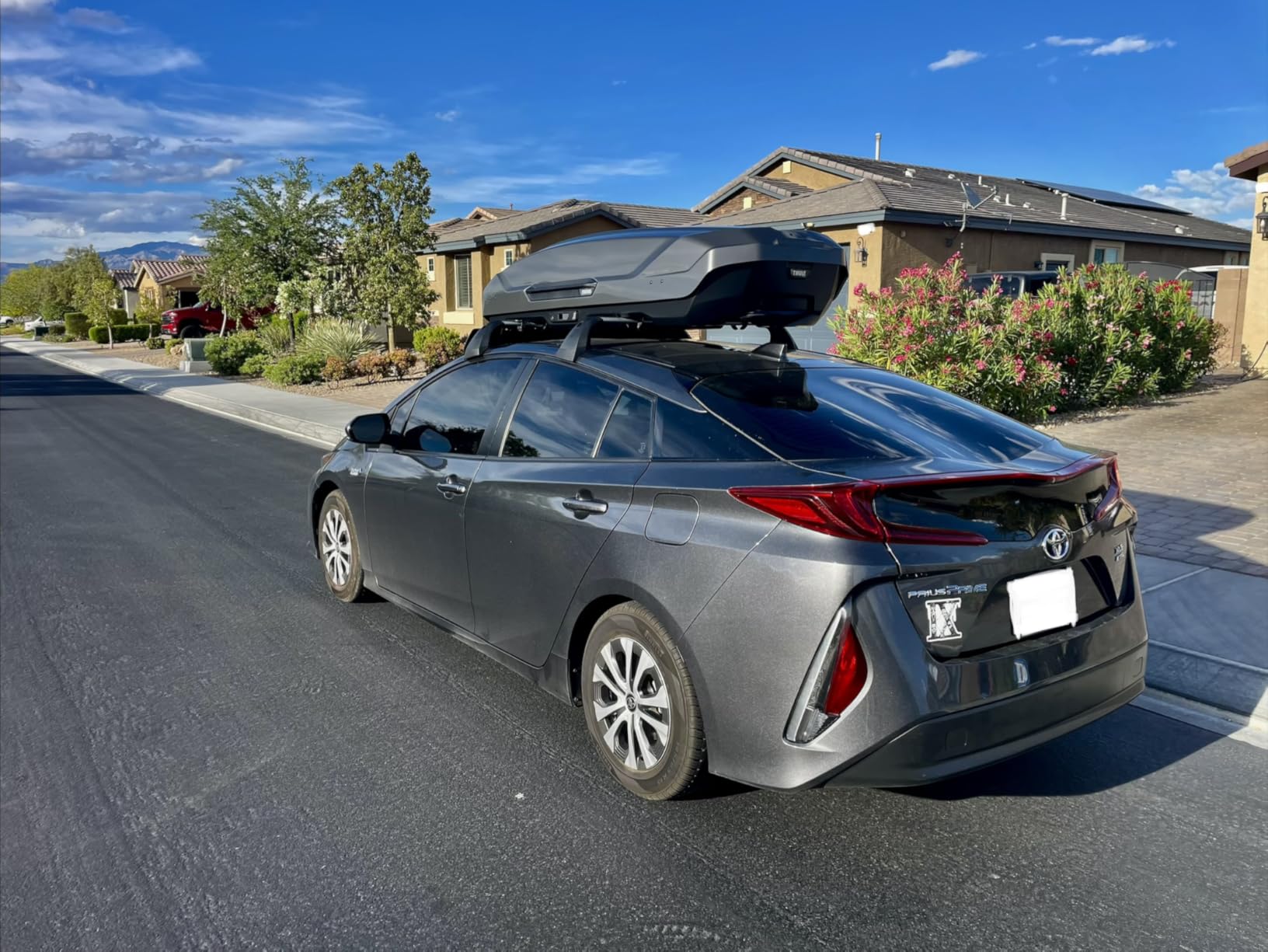
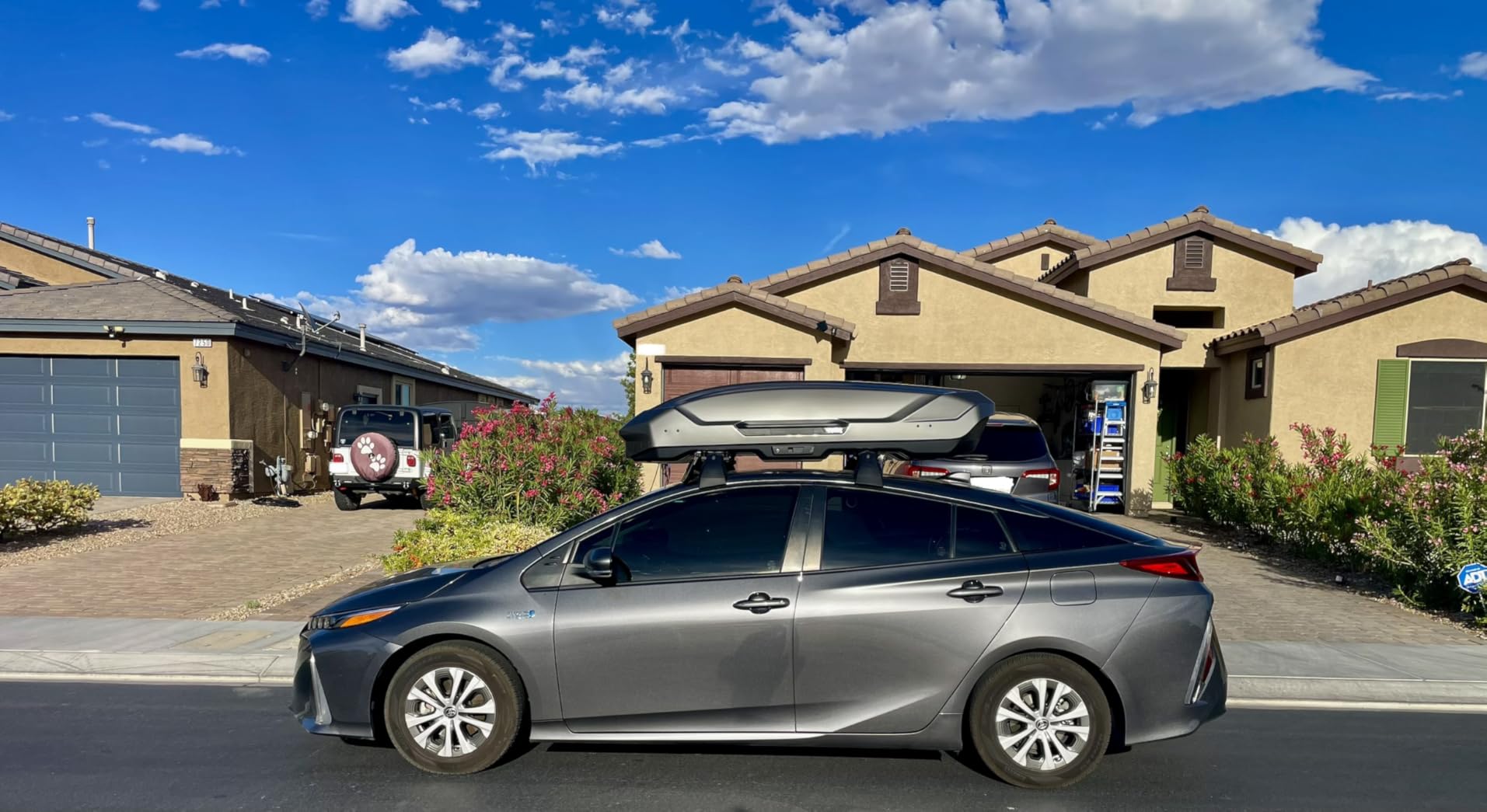
The wing-shaped profile with a forward-leaning nose is a genuine aerodynamic design rather than a styling exercise, and owners describe the box as near-silent at speed. If your route involves a lot of highway kilometres between trailheads, that quiet running is worth paying for on its own.
The mounting hardware is the other reason this box is popular with careful owners. The PowerClick quick-mount system has an integrated torque indicator that clicks when the box is properly mounted, so you have a physical confirmation that your U-bolts are torqued rather than just snug. That single feature addresses the number one complaint on every overland forum, which is boxes working loose after break-in.
SlideLock is a genuinely smart latch design. It separates the locking and opening functions, automatically locks the lid in place, and physically indicates when the box is closed securely, so you cannot drive off with a half-shut lid thinking it is fine. Owners consistently single this out as the feature that makes them trust the box unattended at a trailhead.
At 8 pounds, this is among the lightest boxes here, which means one person can install or remove it. That matters if you are 60 years old, camping solo, or moving between vehicles. It is also 81 by 38 by 18 inches, so check that 18 inch height against your garage before you order the longer sizes.
Where the build quality and warranty pay off
Its limited lifetime warranty is one of the strongest long-term signals in this roundup, and it is backed by the Thule name, which overlanders recognise as a default answer when asked which roof box brand is considered the best. If you keep vehicles for a long time, a warranty that follows you across vehicles is worth real money.
The 79 percent five-star share in the reviews reflects consistent reports of premium build quality and excellent weather sealing. For a vehicle that will live outside in sun and dust for years, that consistency of finish is what keeps a box looking presentable rather than chalky and scuffed.
Where the Motion 3 falls short
Capacity is the surprise. Owners report that the listed usable interior volume is noticeably less than the stated capacity and requires creative packing, which is a recurring theme across premium aero boxes. Measure the largest item you plan to carry before you commit to a long size.
Two more real limitations. The manufacturer limits the box to 80 mph or less, which is a real constraint on the open road. And on some long SUVs the box only clears the hatch if mounted on the forward crossbar positions, so test the geometry on your vehicle before you finalise the install.
5. INNO Ridge 8 cu ft: the box for small vehicles and hybrids
INNO BRA240BK Ridge Cargo Box – 8 Cubic FT (Gloss Black)
8 cu ft
20 lb weight
11.4 inch profile
Safety key lock
Lifetime warranty
Pros
- Fits small cars and hybrids with tight roof space
- Light at 20 lb so one person can lift it
- Key cannot be removed until the box is locked
- Made in Japan with a lifetime warranty
Cons
- Single passenger-side opening only
- One set of mounting holes can need extra drilling
- Wind noise becomes noticeable above roughly 60 mph
- Plastic locking knobs feel basic
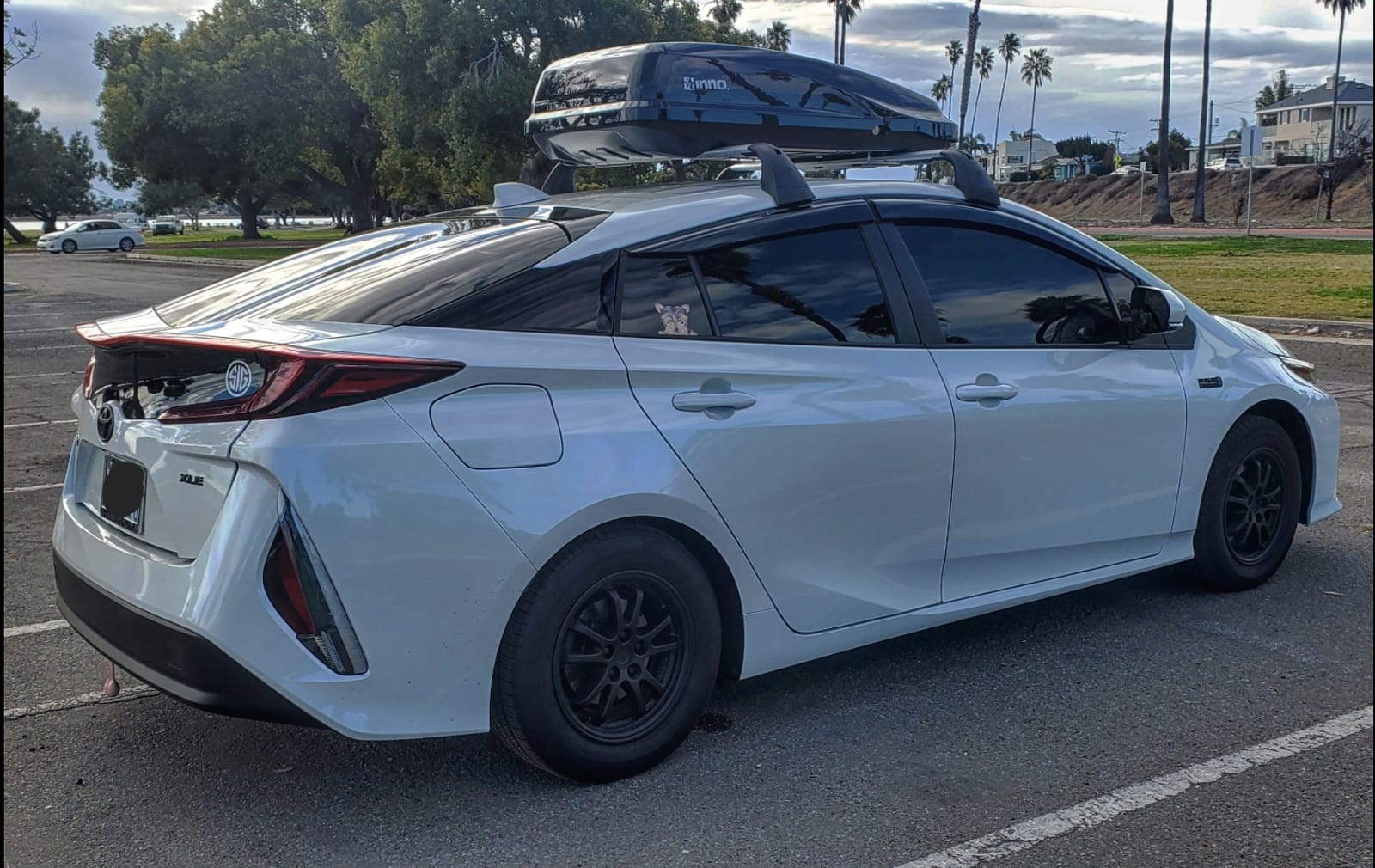
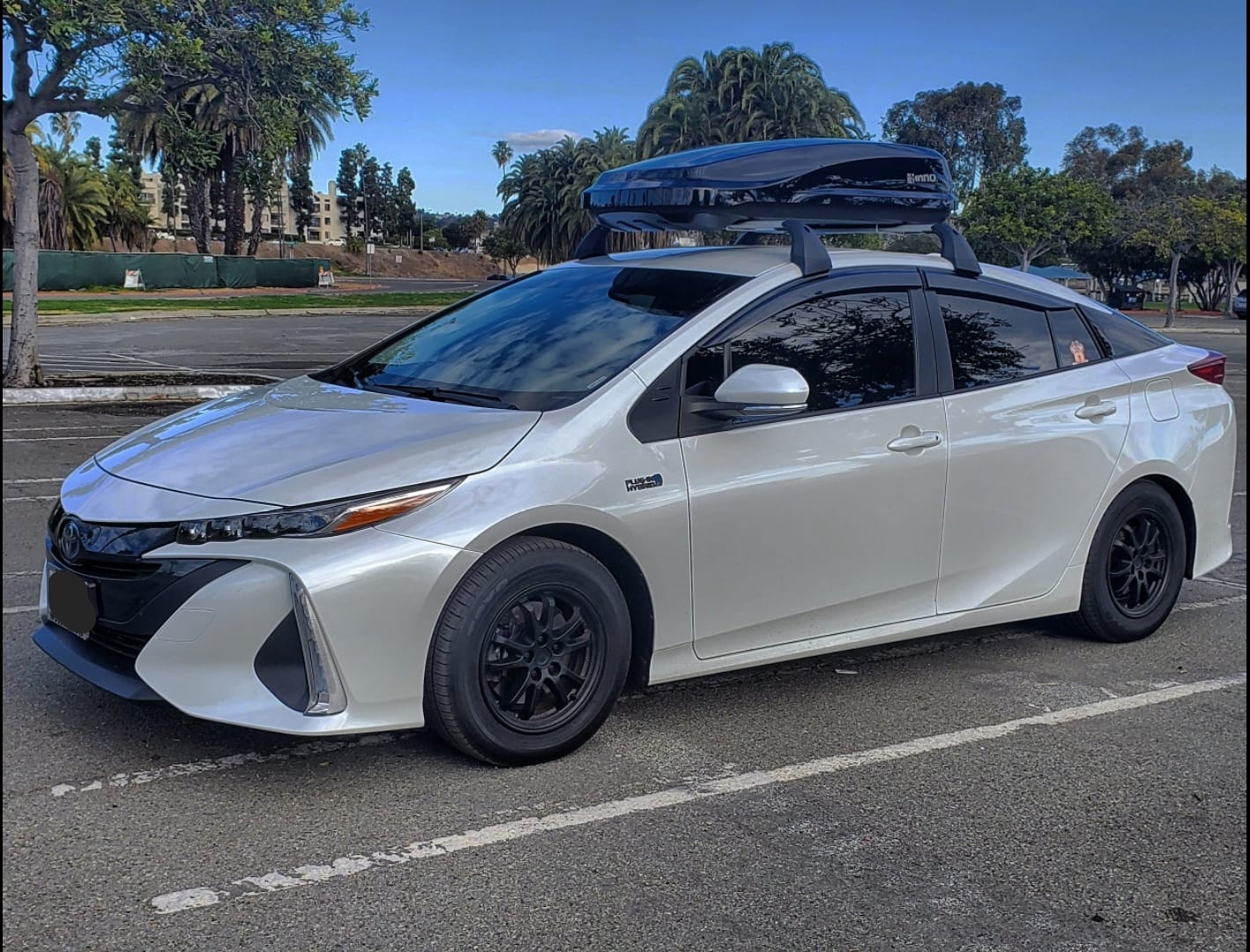
Eight cubic feet does not sound like much until you realise it is a lot on a small car. This box is 50.4 by 23.6 by 11.4 inches, which is short, narrow, and low enough to fit vehicles with limited rack space that a full-size box simply cannot go on. For a commuter wagon, a compact crossover, or a hybrid running short overland routes, that footprint is the entire argument.
Build quality is the differentiator here. Owners consistently place it above off-brand boxes and describe it as sitting between the value and premium tiers, and it is designed and made in Japan. At 20 pounds it is light enough for one person to install, remove, and store between trips without a second pair of hands.
The lock is better thought through than most. The safety key system means the key can only be removed once the box is locked, so you cannot leave the key in the ignition and in the box at the same time. Owners also report that the supplied hole plugs and rubber strip keep gear dry through significant rain, which is a detail you will appreciate on a multi-day trip.
It carries a lifetime warranty, matching the Thule units, and the mounting kit includes four U-bolt sets and an installation manual. Universal fit covers aero, square, round, and most factory racks, which is a wider window than several competitors manage.
Why a small box can be the smarter overland choice
Roof load math is the reason. Every pound of box is a pound taken from the budget you have left for a rooftop tent, a recovery board, or fuel, and 20 pounds is a very small bite. If your trips are two to four days rather than three weeks, a smaller box is usually the honest answer rather than a compromise.
Low height is the other quiet benefit. At 11.4 inches it is among the shortest boxes in this roundup, which protects garage clearance and helps in a parking deck. If you are chasing clearance, this is one to measure against before you choose anything larger.
Where the INNO Ridge is wrong for you
The single passenger-side opening is the dealbreaker for some overlanders. It is not ambidextrous, so on a narrow two-track you will always be loading from one side, and the other side of the interior becomes hard to reach once gear is stacked in.
Because there is only one set of mounting holes, smaller vehicles may need extra holes drilled, and drilling is not something you want to do to a car you care about. Wind noise also becomes noticeable above roughly 60 mph, and the plastic locking knobs feel basic next to Thule or Yakima hardware.
6. D SOLUTIONS 11 cu ft: budget capacity in a stealth black shell
D SOLUTIONS Hard Shell Roof Top Cargo Carrier Waterproof Travel Luggage Box
11 cu ft
110 lb support arm
Textured black ABS
53 x 34 x 15 inches
Pros
- 11 cu ft at an accessible price tier
- Textured black finish hides dirt and scuffs
- Tool-free install on any vehicle with crossbars
- Owners report dry gear through monsoon rain
Cons
- Only one side opens for loading
- Instructions are vague and confusing
- At 50.3 lb it needs two people to mount
- Locks fail in a minority of units
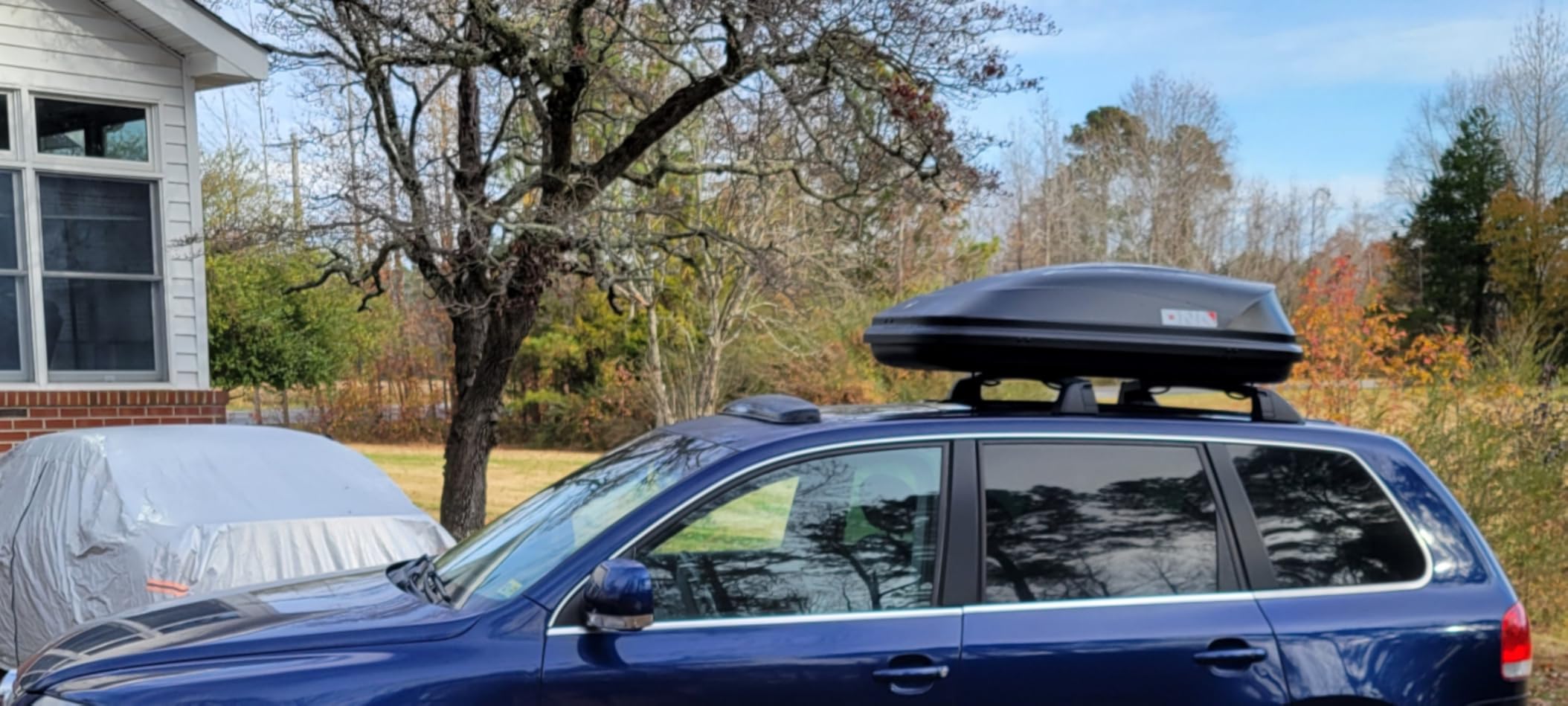
The textured black finish is the first thing overlanders notice about this one, and it is not cosmetic. A textured surface does not show the layer of road dust, bug splatter, and UV chalking that makes gloss white boxes look tired after one season, and for a build aesthetic that leans rugged and black, it fits far better than a sleek white premium unit.
Capacity is 11 cubic feet in a 53 by 34 by 15 inch footprint, which makes it a compact shape that suits mid-size vehicles. The support arm is rated to 110 pounds, and the box stays quiet and stable at highway speed with some owners reporting no noticeable fuel economy penalty at all.
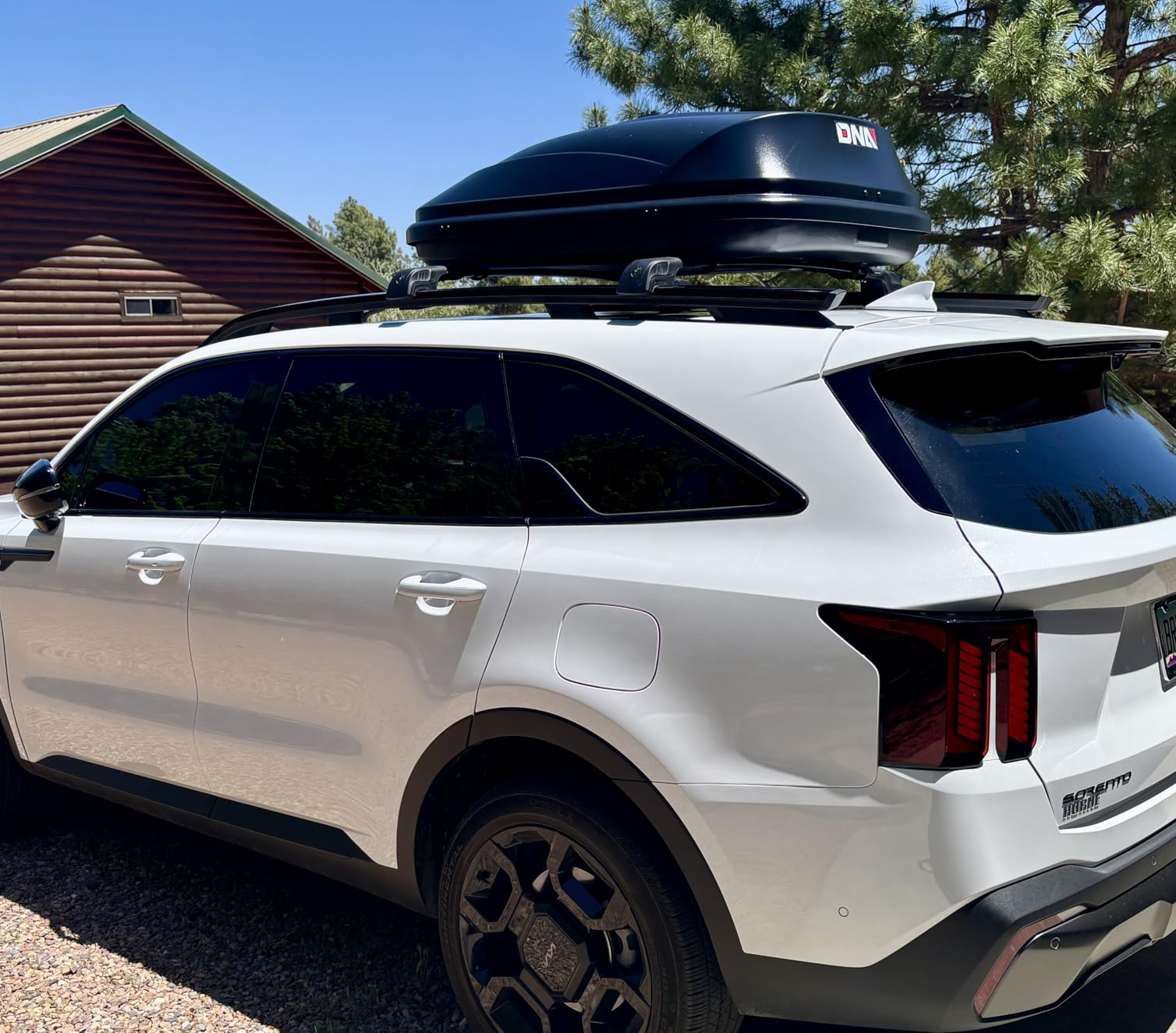
Weather performance is where this box earns its place. Multiple owners report contents staying dry through monsoons and heavy rain, and the manufacturer rates the ABS plastic shell for use across rainy, dirty, and freezing conditions, which covers the three climates most overlanders drive through in a year.
Installation is tool-free on any vehicle with crossbars, and the package includes a pair of keys plus four ABS mounting brackets and hardware. The non-slip bottom is a small touch that matters more than it sounds when you are loading gear onto a slope at a campground.
What the textured finish and the 15 inch height solve
At 15 inches tall this is one of the shorter boxes here, which helps if you have a residential garage or a parking structure. Shorter also means less frontal area in crosswinds on exposed desert routes, and less of the buffeting you get with a tall box on a high-roof vehicle.
For appearance, matte texture is the closest thing to the rugged expedition look that the community asks for. One overlander described not loving the look of streamlined premium boxes and wanting something rugged instead, and that is exactly the sentiment this finish answers.
Where the D SOLUTIONS box falls down
Only one side opens, which makes loading awkward on a narrow road or when you are working alone. The instructions are described as poor, with buyers having to work out the assembly themselves, so budget extra time on first install.
Then there is weight. At 50.3 pounds this is one of the heaviest boxes we covered, and a two-person install is often needed. That is a genuine problem for solo overlanders and for anyone lifting gear into the roof on a rough campsite. Locks also fail or refuse to lock in a minority of units, which drives the 11 percent one-star share.
7. VISRACK 14 cu ft: dual-side access with built-in tie-downs
VISRACK Roof Cargo Box, Dual-Side Opening Design, 14 Cubic Feet Capacity
14 cu ft
150 lb capacity
Dual side opening
30.2 lb weight
Pros
- 4.6 average from 71 owner reviews
- Dual side access with a lid support arm
- Interior ratchet straps hold gear in place
- Low profile shape runs quiet with little rattle
Cons
- Picture-only instruction sheet is unclear
- Mounting holes span 17.32 to 38.58 inches
- Only a 30-day warranty
- Replacement keys ship from the manufacturer
At 4.6 out of 5 across 71 owner reviews, with 80 percent five-star ratings, this scores very well on owner satisfaction. It holds 14 cubic feet with a 150 pound capacity, and the interior ratchet straps are the feature that most directly changes how a trip goes, because gear that slides around inside a box on a washboard road is both annoying and a real source of damage to your own equipment.
Dual side opening with a support arm means you can load from either side of the vehicle and the lid stays where you put it while you work. The lid opens wide on the passenger side, and at 62.52 by 32.48 by 13.19 inches the whole box is low profile, which helps with wind noise, rattle, and garage clearance at the same time.
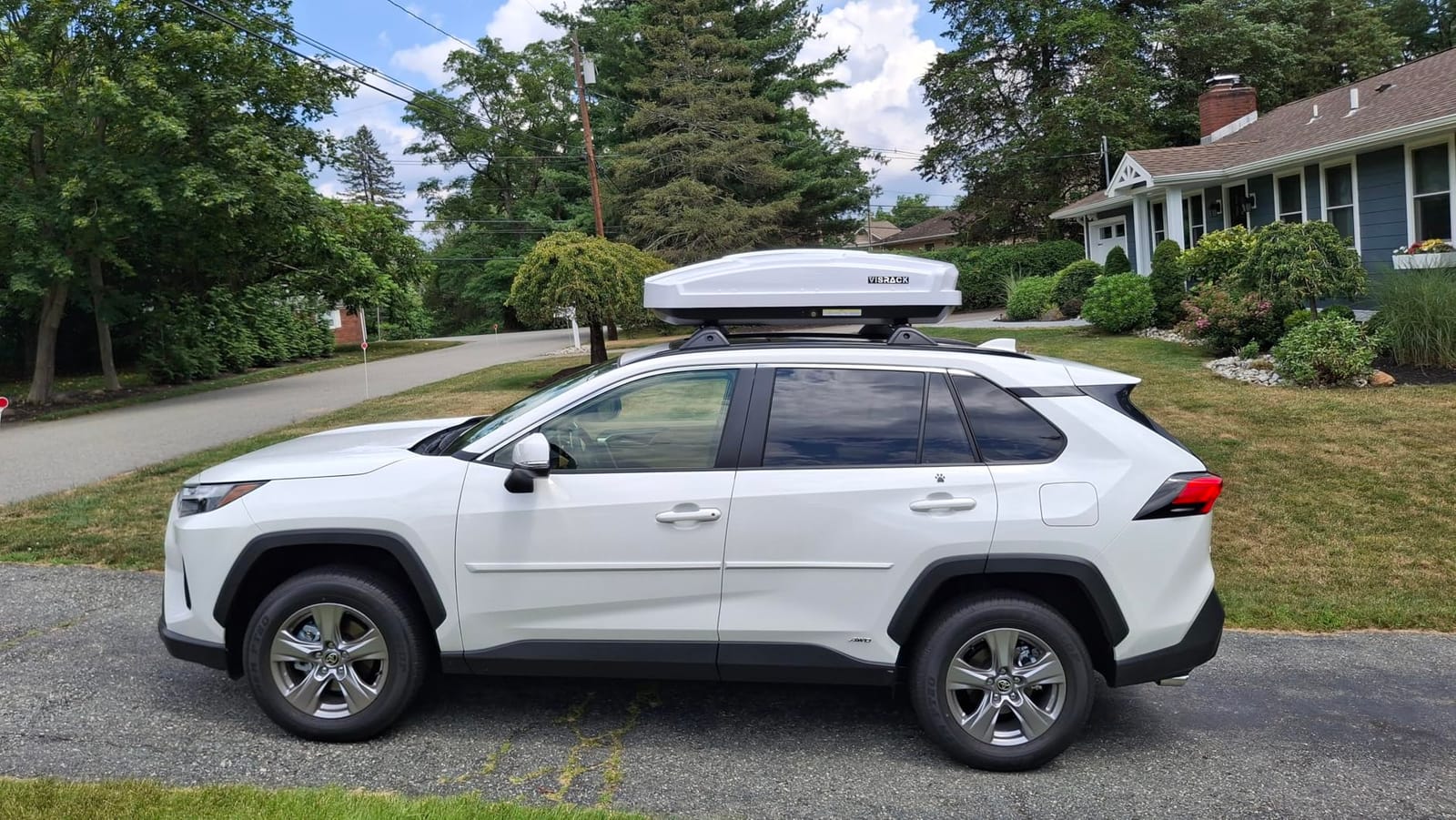
At 30.2 pounds it is light enough for a solo install and removal, and the shell is ABS and composite rated for 150 pounds with a central lock where the key only releases once the box is fully closed. That is a small detail that removes a whole category of worry about leaving a trailhead with an unsecured box.
Fitment is the thing to verify carefully. The mounting hole distance runs from 17.32 to 38.58 inches, which is a very wide window, but you still need to confirm the position along the box matches your bar spread. Owners also warn that some sizes run smaller than buyers expect, so measure your bars and your largest item before you commit.
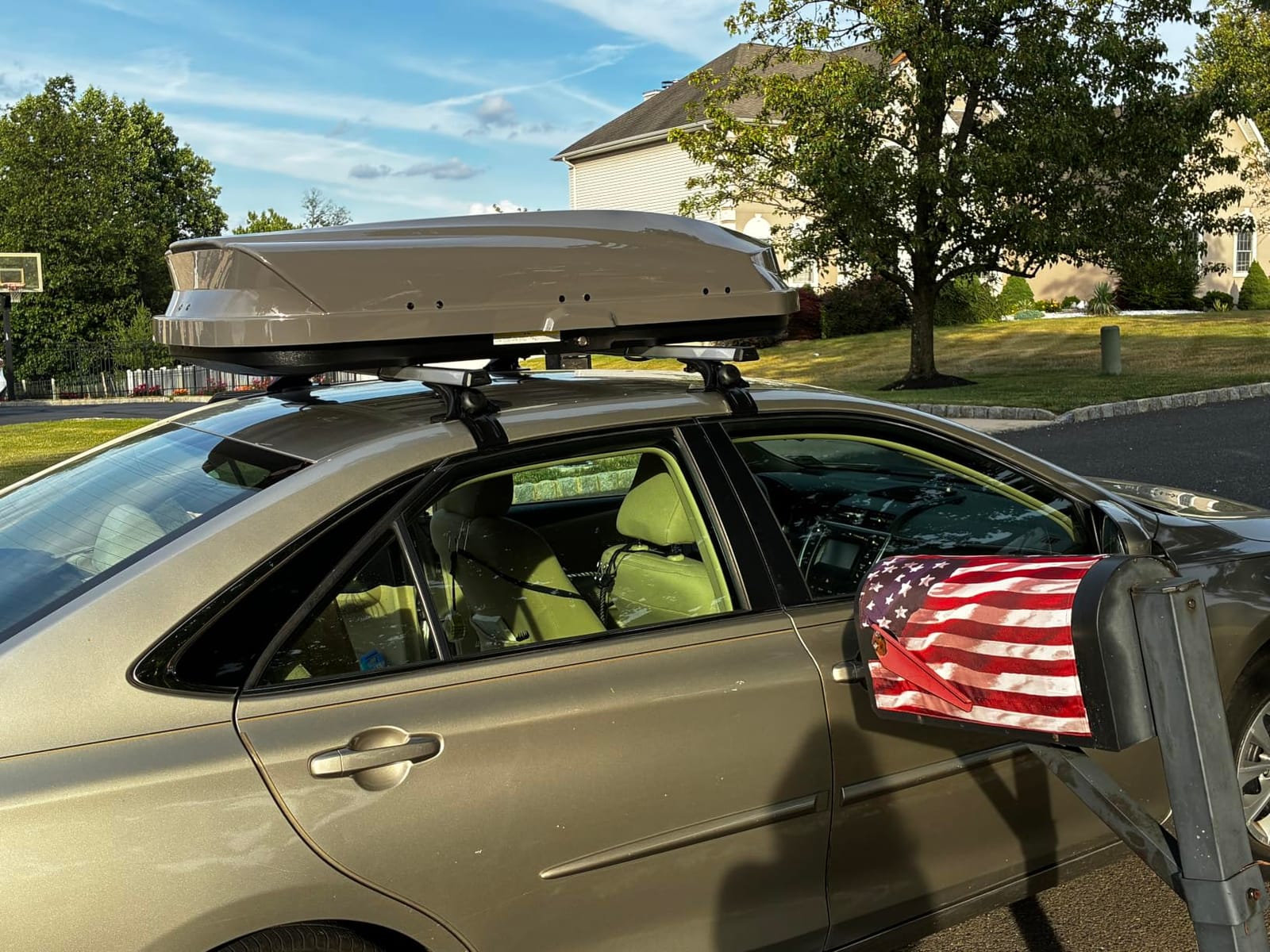
Why the interior straps matter more than they sound
Over a multi-week trip, gear inside a box that can move is a repeated small irritation. Items find the front wall, they rattle over washboard sections, and hard gear ends up abrading soft gear. Ratchet straps fixed inside the box are a simple fix that most premium boxes charge extra for as an accessory.
Pair that with the low profile and you get a box that is quiet at speed. Owners specifically report very little wind noise or rattle, and on a long highway transit day that is the difference between arriving rested and arriving tired.
Where the VISRACK is a gamble
The warranty is 30 days, which covers far less than a season of desert heat. Replacement keys ship from the manufacturer and can take around two weeks, so losing a key on day two of a trip is a real risk to plan around.
The picture-only instruction sheet is also unclear, and buyers report install and removal taking longer than with a Thule. If you like a more refined ownership experience and a lifetime warranty, you are trading polish for a stronger feature set here.
8. INNO Wedge 660: 11 cu ft at 11 inches tall
INNO Wedge 660 Black 11 cu ft, Roof Rack, Roof Box, Cargo Box, Hard Shell, Low Profile, Dual‑Side Opening with Locks, Made in Japan, Compatible with Aero & Square Bars, Tool Free Install
11 cu ft
11 inch profile
Dual side opening
42 lb weight
Lifetime warranty
Pros
- Low profile clears low garages and decks
- Diffuser design keeps wind noise minimal
- Holds 6 to 8 pairs of skis or 4 snowboards
- SPM injection gives up to 50 percent more strength
Cons
- 80 inch length conflicts with roof antennas
- Front tip adds about an inch of height
- 42 lb usually means a two-person lift
- Light units can arrive with black scuff marks
This box carries a 4.7 average across 71 owner reviews, with 80 percent five-star ratings, and the reason is straightforward: it does one thing exceptionally well. At 11 inches tall it is the profile to buy if your route includes low-clearance garages, covered parking, tall garages at national parks, or a parking deck you use regularly.
The diffuser and aerodynamic design keep wind noise minimal and the fuel impact low, which owners notice immediately on a long highway run. Dual side opening means loading from either side, and the capacity of 11 cubic feet translates to six to eight pairs of skis or four snowboards along with poles, so it doubles as winter expedition storage.
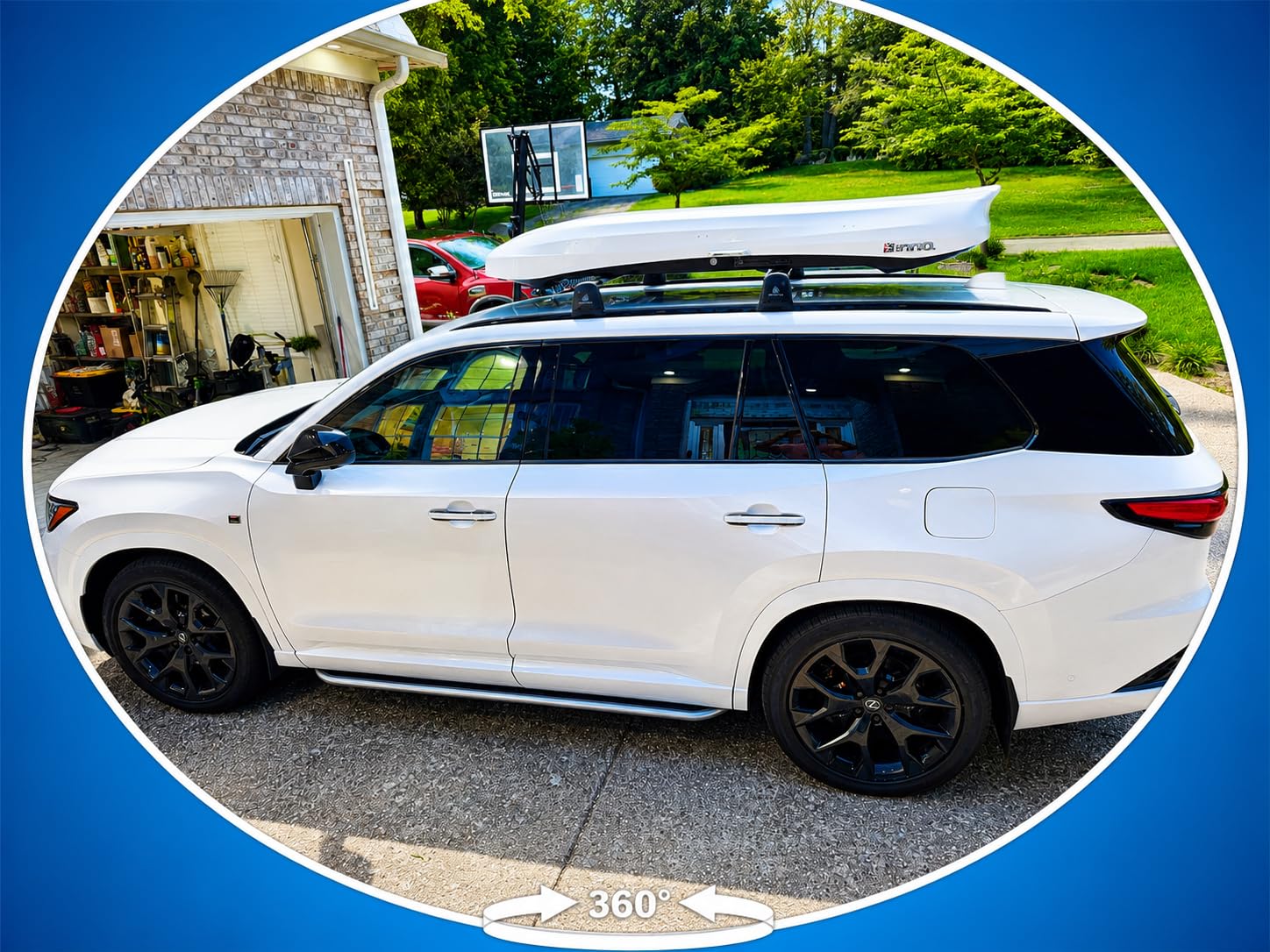
Build method is worth understanding here. The three-layer sheet construction and SPM injection process give uniform thickness throughout, and the manufacturer claims up to 50 percent greater strength than conventional vacuum forming. That is a meaningful claim for a box that spends its life absorbing rock strikes from a roof rack on a washboard road.
The Memory Mount system is tool-free and slides into position quickly, and it is universal to aero bars, square bars, and many factory crossbars. The safety key lock keeps the key captive while the box is open, which removes the most common way people lock themselves out.
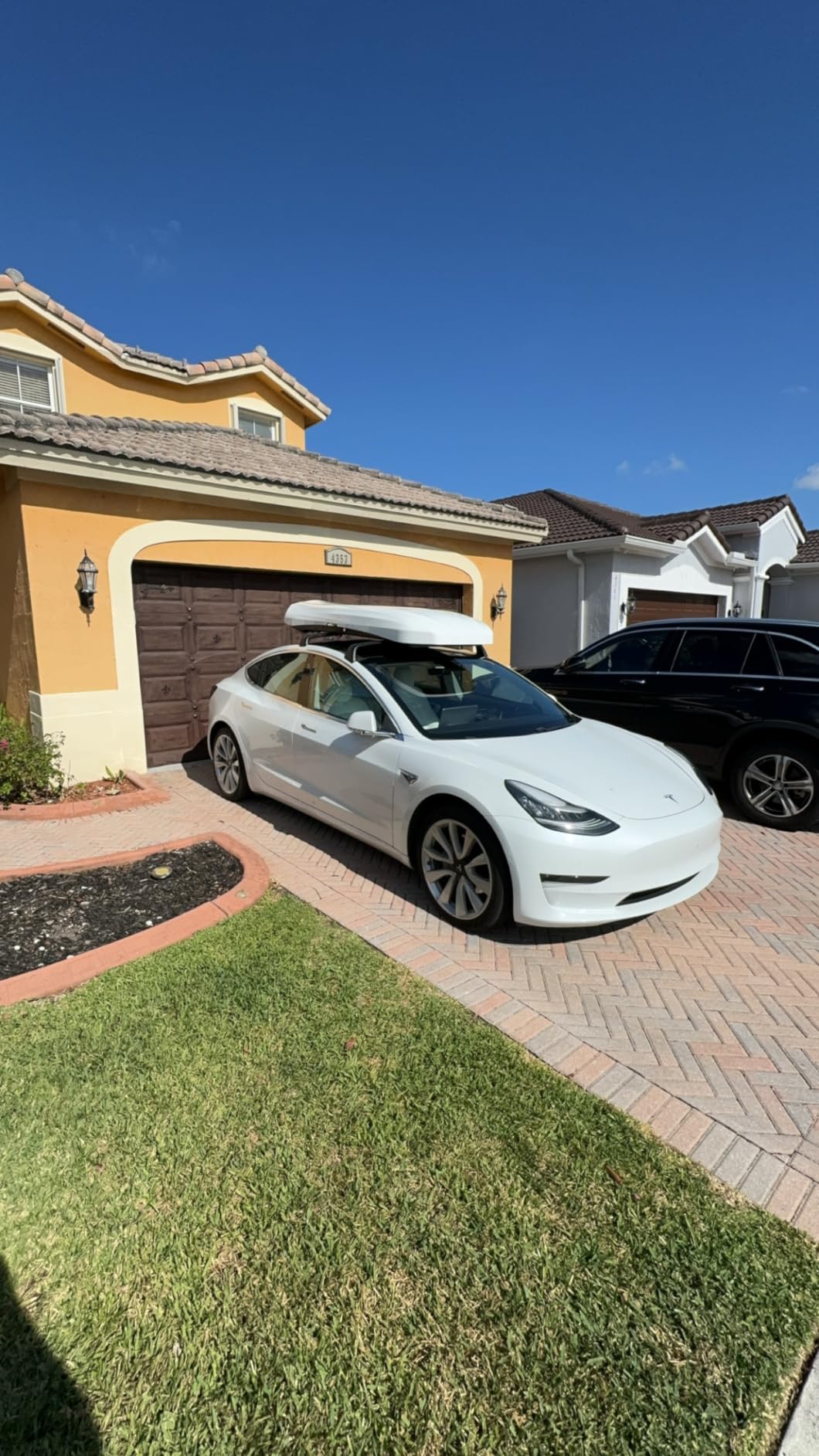
When low profile matters more than volume
Height is the one dimension you cannot change later. If your trip includes a run through a mountain town with a 6 foot 8 inch garage, a tall box is a trip-ending problem, while a low box is a non-event. Owners with this box report it clearing low ceilings without drama, and that is worth more than another two cubic feet.
The wedge shape also helps at speed. A lower box presents less frontal area, and less frontal area means less of the whistling that owners of tall boxes complain about on open desert and prairie highways.
Where the Wedge 660 becomes a problem
Length is the trade-off. At 80 inches long it can conflict with roof-mounted antennas, and it needs correct forward crossbar placement or you can get lift at highway speeds. If your vehicle has a shark fin or a factory antenna, measure the position carefully before fitting.
The upward tip at the front adds about an inch of height, which slightly undercuts the low-profile advantage in the tightest clearances. At 42 pounds it usually needs two people to mount, and light-coloured units can arrive with black scuff marks that do not wipe off.
9. Yakima SkyBox NX XXL: 22 cu ft for family loads
Yakima SkyBox NX XXL Rooftop Cargo Carrier Hard Shell Box, SKS Lock
22 cu ft
Dual opening
SKS push button locks
Flattened floor
Pros
- 22 cu ft holds gear for up to five campers
- Dual opening for access from either side
- Integrated SKS push button locks hold firmly
- Unobstructed flattened floor maximises usable space
Cons
- Listed as not water resistant
- May not clear the rear hatch on newer compact SUVs
- Lid feels thin when the box is full
- Two people and a step ladder needed to lift it
Twenty-two cubic feet is the largest volume we covered, and it is the box to look at if you are travelling with a family or a group rather than a partner. Owners describe fitting gear for up to five campers, or skis up to 215 cm, and the unobstructed flattened floor means very little of that capacity is lost to a moulded well in the base.
Hardware quality is the reason Yakima shows up repeatedly in owner recommendations. The integrated SKS push button locks hold very securely, and the hinges and mounting hardware are described as clearly stronger than off-brand boxes, with replacement parts available, which is a long-term ownership argument rather than a first-impression one.
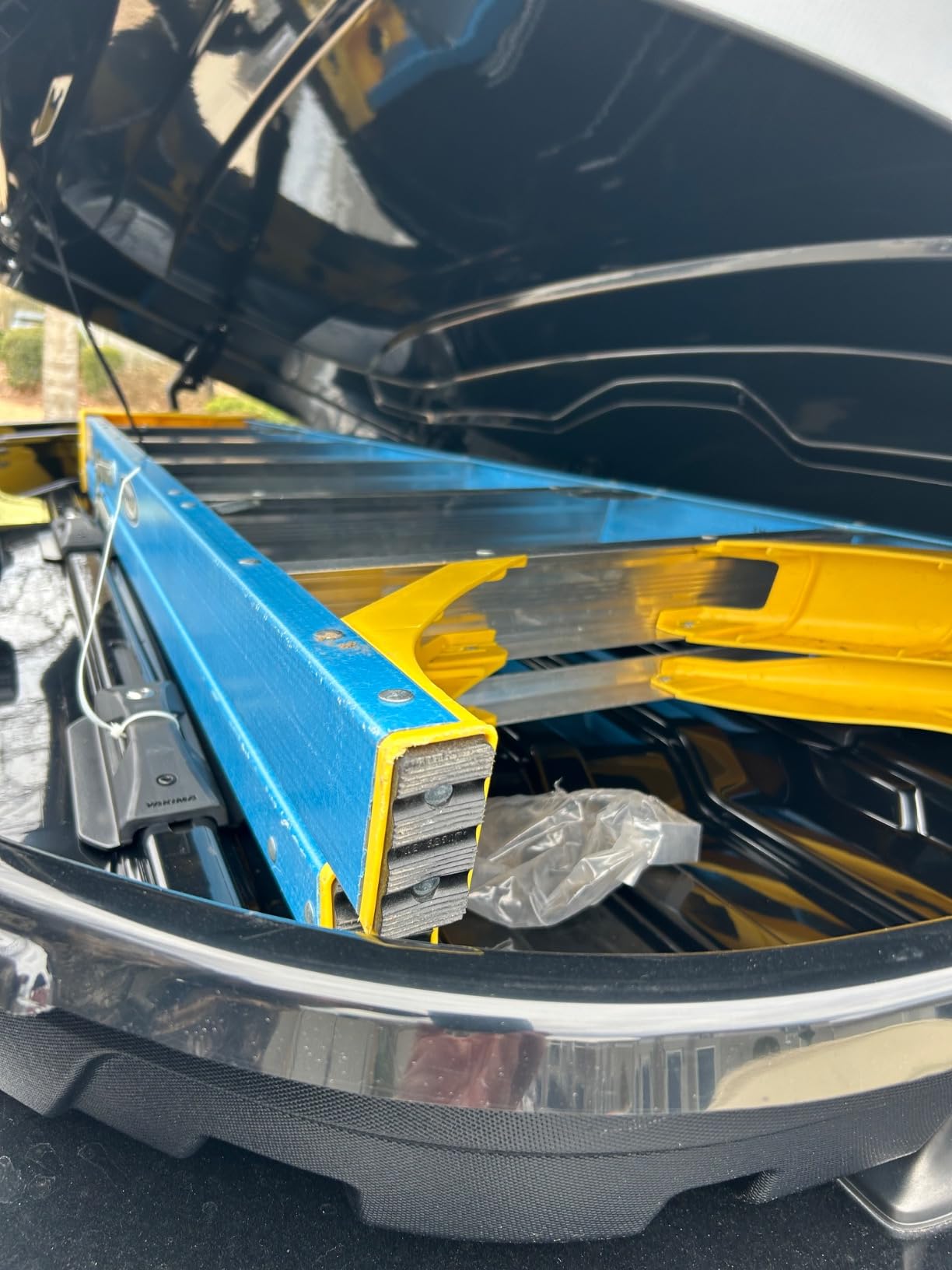
The box also sits low on cross rails and runs surprisingly quietly, with owners reporting no noticeable wind noise. For a large-capacity unit, that is a good outcome, and it means you are not trading your ears for your cubic feet.
Size is measured in two directions. Length will be the issue on shorter vehicles, and height will be the issue in low garages, so measure both. If you are pairing this with a rooftop tent, a box this size usually needs its own set of forward bars, which pushes into the roof load budget discussed below.
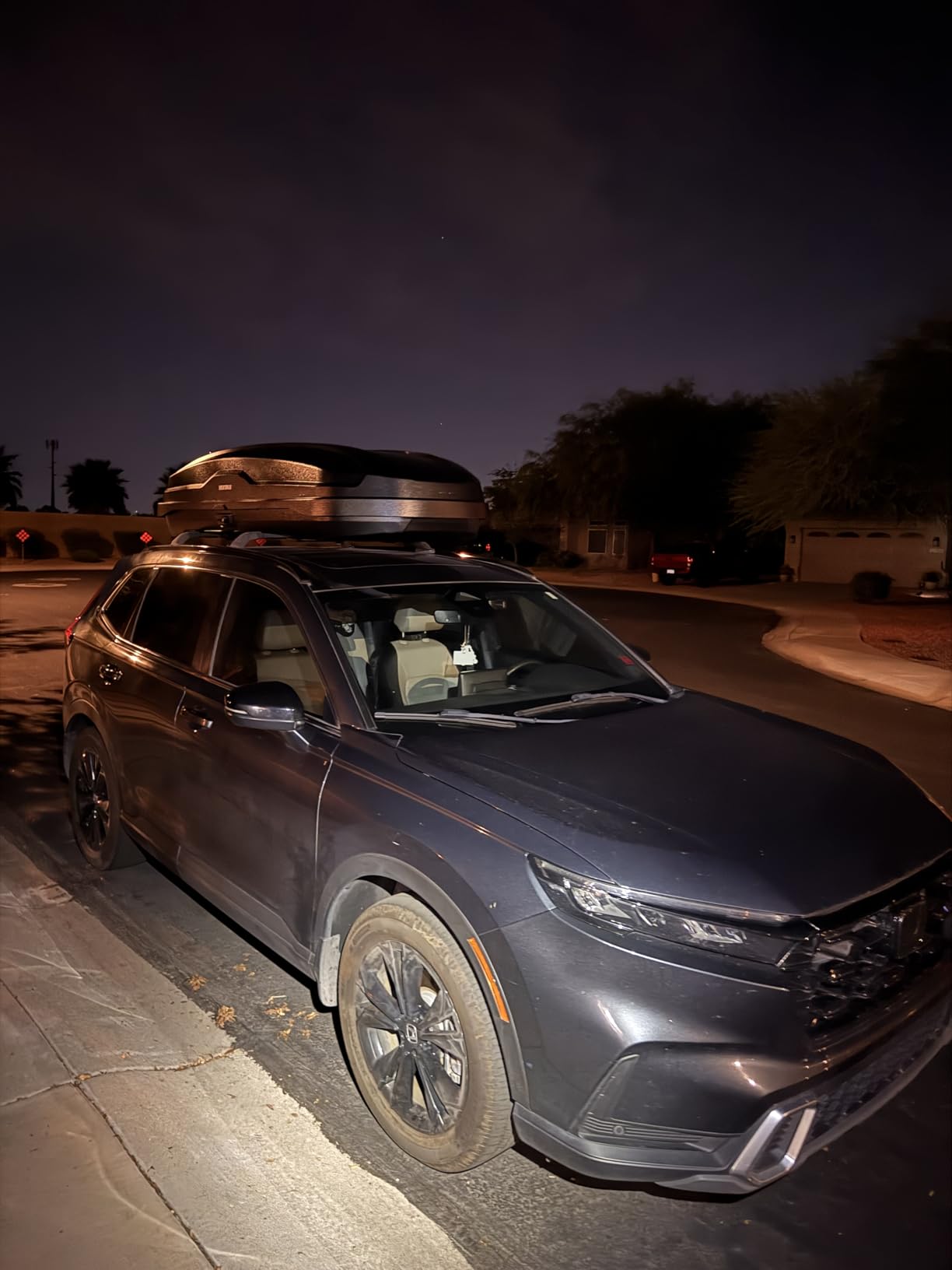
When 22 cu ft changes the trip
The capacity of a group loadout is not linear. One person on a two-week trip can live with 10 cubic feet. Two people on two weeks generate close to double. A family of four with gear for everyone pushes past 20 cubic feet quickly, and that is the point where a single smaller box starts to cost you either the tent or the recovery gear.
Pre-cut floor panels and tie-downs also work better in a box with a wide, flat base. When you are packing for five people, the organisation problem is as real as the volume problem, and a flat floor gives you somewhere to build dividers.
Where the SkyBox NX XXL will not work
Water resistance is the one to read carefully. The manufacturer lists this box as not water resistant, which means contents need protecting in heavy rain or when you are driving through a monsoon. That is a genuine limitation if your route includes coastal spray or seasonal storms, and it is the first thing to check if you camp in wet climates.
Fitment is the other. Owners report the XXL size may not clear the rear hatch on newer compact SUVs such as recent-generation CR-V models. The lid can also feel thin and be tricky to latch when the box is full, and lifting it onto a large SUV needs two people plus a step ladder.
10. Thule Force 3 L: the box that looks like expedition equipment
Thule Force 3 L US
453.59 L capacity
8 lb weight
SlideLock system
Black finish
Pros
- Rugged squared styling suits expedition builds
- SlideLock separates locking from opening functions
- Click confirmation on the mount system
- Tested in the Thule Test Center
Cons
- Premium price tier
- Light build flexes slightly when opened
- 80 inch length needs correct bar placement
There is a style of overland build where a swoopy white premium box looks wrong on the vehicle, and the Force 3 L is the answer. It is a squared, black, 80 inch long box that reads as equipment rather than luggage, and it sits naturally on a truck or a rugged SUV without looking out of place next to a light bar or a recovery mount.
Capacity is 453.59 litres, which is a usable 16 cubic feet of practical space, and the dual side opening means you can load from either side. The SlideLock system with separate locking and opening functions automatically locks the lid in place and gives you visible confirmation that it is closed, which is the same thoughtful design that makes the Motion 3 popular.
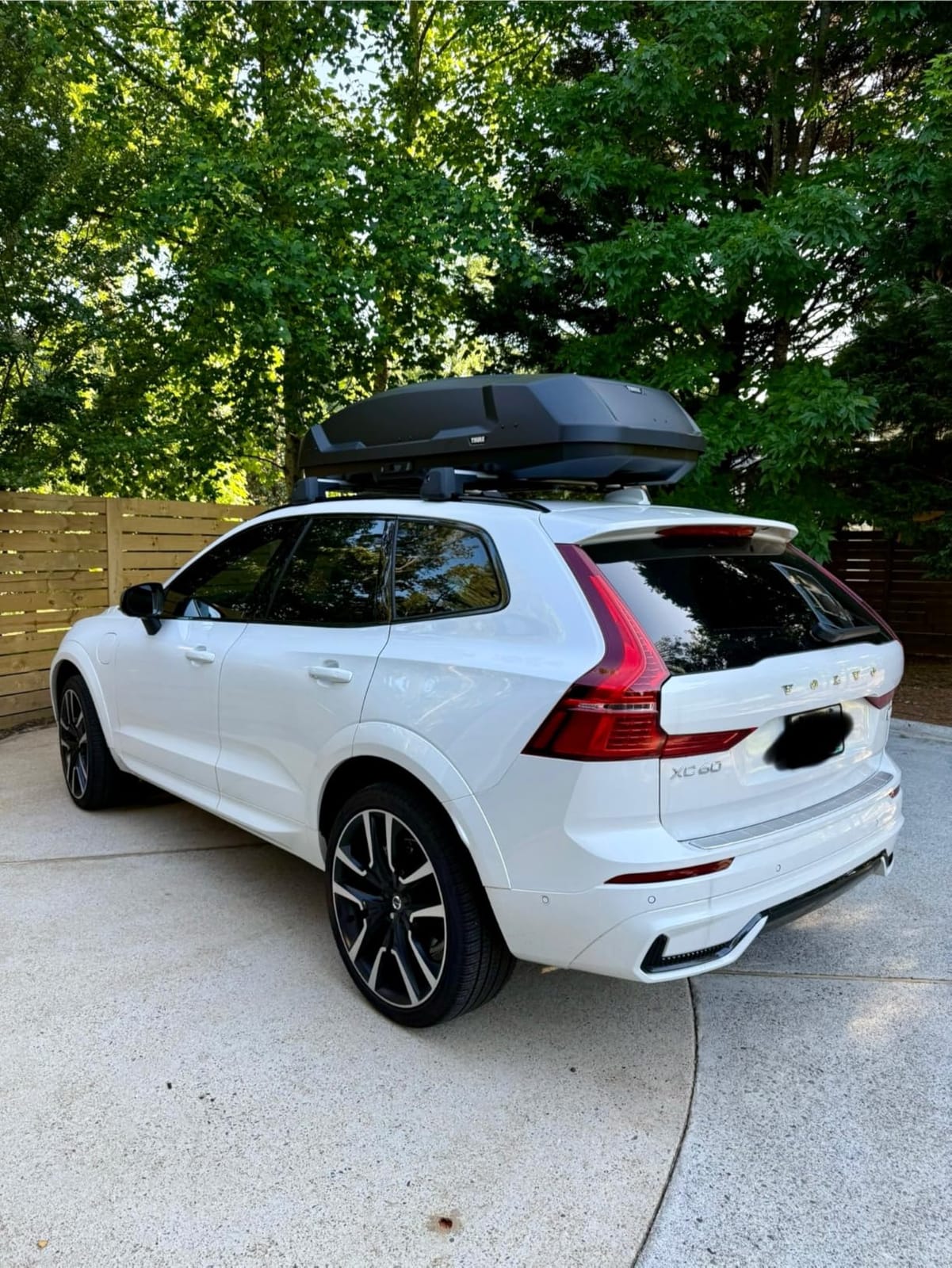
Mounting is quick and intuitive with a click confirmation when the box is safely attached. Owners rate it highly for secure mounting, dual access, and build durability, and Thule states the box is extensively tested for road safety and durability in the Thule Test Center, which is a different kind of evidence from a listing claim.
At 8 pounds a single person can lift it onto the bars. The limited lifetime warranty is the strongest long-term coverage available in this group and the main reason to pay the premium tier for this specific unit.
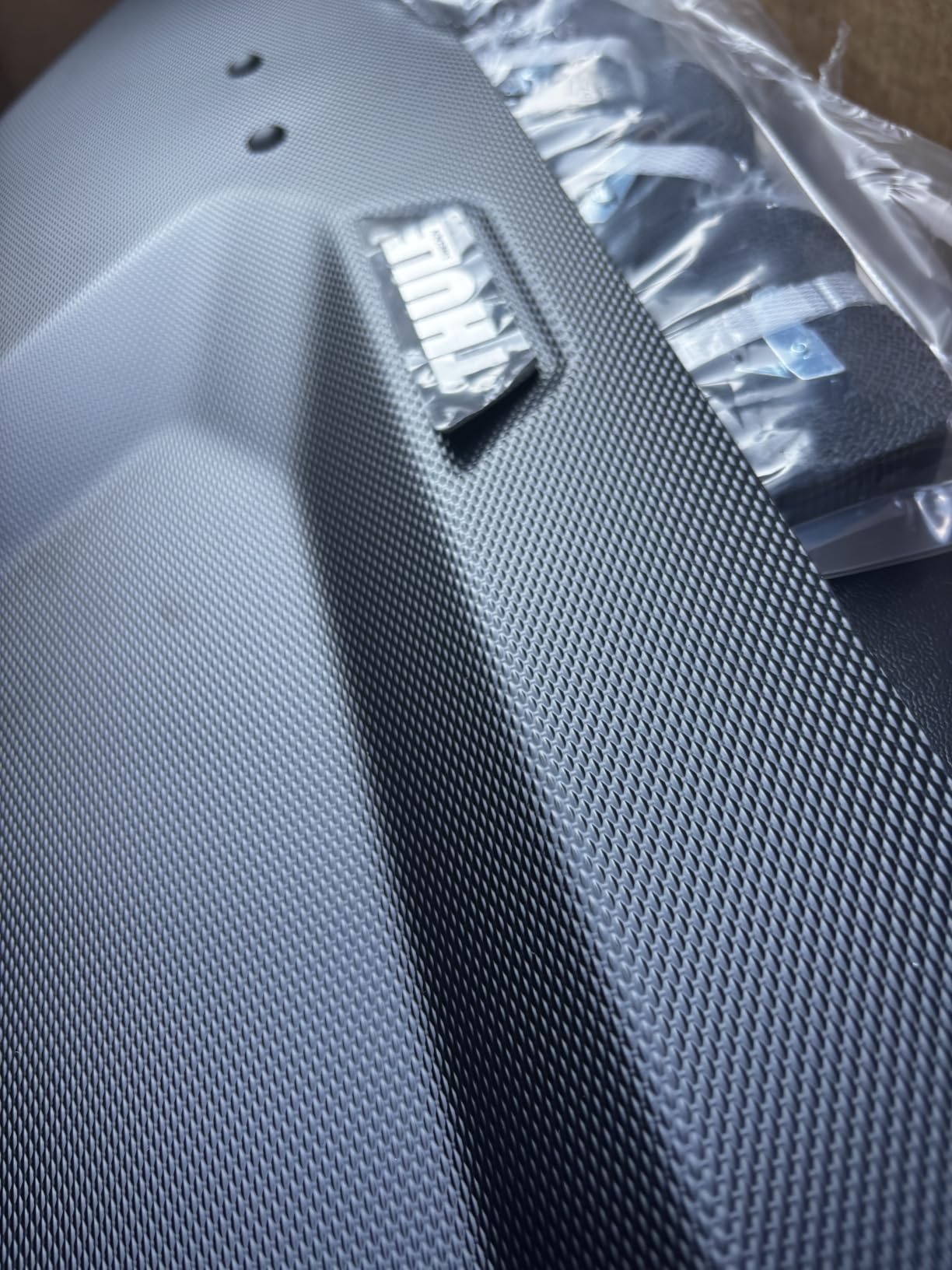
When the look and the latch are the deciding factors
Overlanding builds are visible, and plenty of owners care how the finished vehicle looks at a trailhead. A squared black box is the shape that reads correctly on a blacked-out truck, and the Force 3 L is one of the few premium boxes here that does not have a swooping nose.
The SlideLock confirmation is worth calling out separately because it is the difference between a box you close and a box you verify you closed. On a trip where you leave gear unattended at a viewpoint or a trailhead, that verification matters.
Where the Force 3 L is the wrong buy
It sits in the premium price tier, and if your budget is better spent on a rack or a rooftop tent, that is a hard trade to justify. It is also a lightly built shell, so at 8 pounds it flexes slightly during opening and closing, which some owners read as thin rather than light.
The 80 inch length needs correct crossbar placement to avoid interfering with anything on the roof. Check the antenna position and the hatch clearance before ordering, and if you want a lower profile, the Motion 3 or the INNO Wedge 660 are the shapes to compare against.
11. Thule Pulse 2 L: 16 cu ft that keeps your trunk open
Thule Pulse 2 L Roof Mounted Box, 16 Cubic Ft, Dual-Side Opening
450 L 16 cu ft
75 kg load capacity
ASA-ABS shell
Forward mount position
Pros
- Forward position keeps full trunk access
- Dual side opening for loading from either side
- ASA-ABS shell resists sun and scratches
- Tool-free mount with torque indicator click
Cons
- Manufacturer lists it as not water resistant
- Premium price tier
- Published weight is not listed
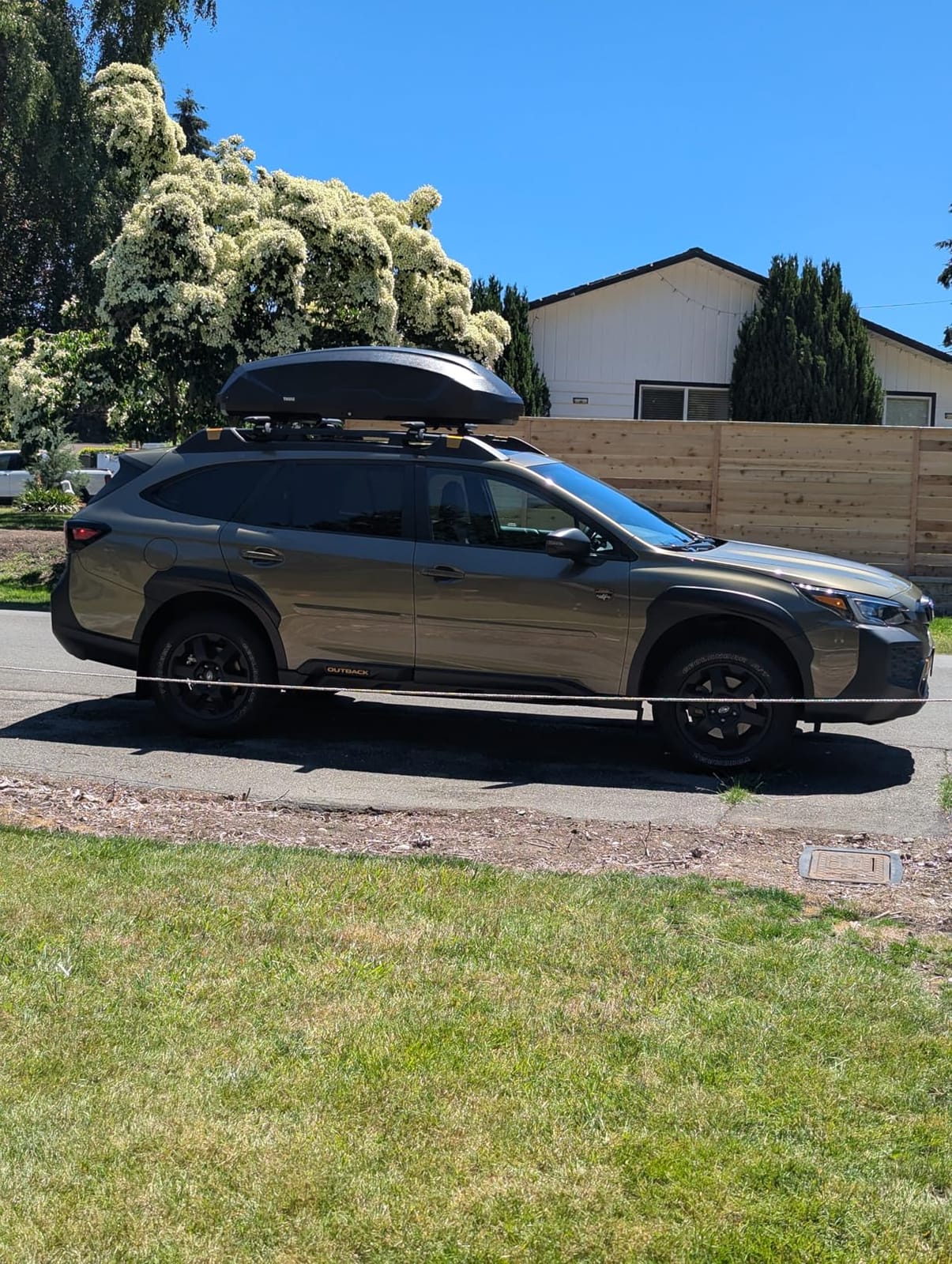
This is the box to consider if losing hatch access on your vehicle is the thing you cannot compromise on. Mounted forward, it gives full trunk access with minimal contact risk, which is a practical advantage every single day of a trip. When you want the ten minutes of extra boot space at a trailhead without leaning a ladder on your rear bumper, that positioning is the reason to pick this unit.
Capacity is 450 litres, about 16 cubic feet, with a 75 kg load capacity, and owners use it for luggage, gear, skis, and snowboards. The tool-free mounting system has a torque indicator that clicks when the box is safely attached, and it also confirms lid closure, so you get the same two-stage verification that owners praise on the Thule Motion 3.
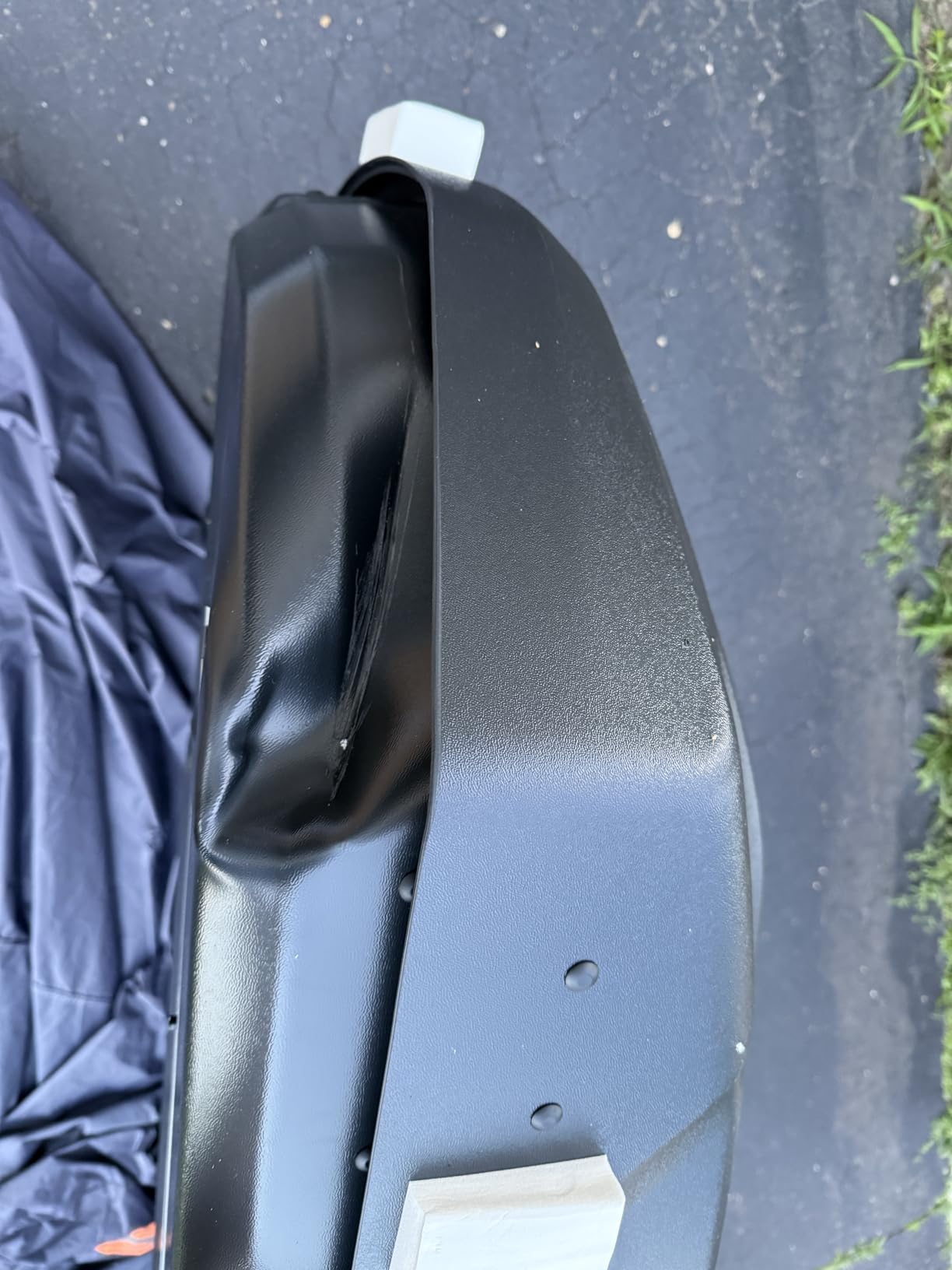
Material is ASA-ABS, chosen for its resistance to sun, scratches, and weather, which is a sensible specification for a box living on a roof through long summers. Owners describe it as a simple, durable design built for commuting, day trips, and weekend escapes, with a streamlined shape that suits a wide variety of modern vehicles.
Published dimensions are 81 by 17 by 37 inches, and the box comes with a limited lifetime warranty. Measure your own garage clearance against the manufacturer’s dimensional drawing before it arrives, because the published figures are not arranged in a consistent order across brands.
When trunk access matters more than weather sealing
On an overland trip you will reach into the cargo area dozens of times a day, and a box that swings over the hatch turns each of those into a chore. The forward mounting position removes that friction entirely, and owners call out full trunk access as a headline benefit.
Dual side opening means the box itself is not the bottleneck for loading, so you are not trading hatch access for a restricted box. That combination is unusual at this capacity and is the reason this unit earns a place despite a smaller review base.
Where the Pulse 2 L falls short
Water resistance is the important one. The manufacturer lists this box as not water resistant, so if your itinerary includes coastal driving, desert dust storms, or multi-day rain with gear in the box, you need liners or a separate dry bag strategy. The ASA-ABS shell resists weather, but resisting weather and being waterproof are not the same claim.
It is also in the premium price tier, and at 42 owner reviews the volume of independent feedback is thinner than most boxes here. That is not a defect, but it does mean you are relying more on manufacturer specification than on a large body of long-term owner reports.
12. QUAWIP 13 cu ft: a compact dual-side box on a budget
QUAWIP Rooftop Cargo Box,Roof Cargo Carrier Hard Shell 13 Cubic Feet
13 cu ft
130 lb capacity
Dual side opening
Waterproof ABS and PC
Pros
- Waterproof shell keeps contents dry in heavy rain
- Dual side opening with a support arm
- Key only releases when every point is locked
- Owners report it holds steady above 80 mph
Cons
- 30-day warranty only
- Interior runs smaller than 13 cu ft suggests
- Limited independent review history
- Mounting hardware is basic
This is the box to watch if you want dual side opening without paying for a premium badge, and the waterproof rating is genuinely useful rather than decorative. Multiple owners confirm the box stayed dry through heavy rain, which puts it ahead of several premium units in this roundup that are explicitly not water resistant.
At 55.91 by 29.5 by 14.96 inches with 13 cubic feet and a 130 pound capacity, it is a compact and useful shape for mid-size vehicles. The passenger side opens 13 inches wide and is held by a support arm, and the security keys can only be removed when every locking point is secured, so you cannot leave a key behind at a campground.
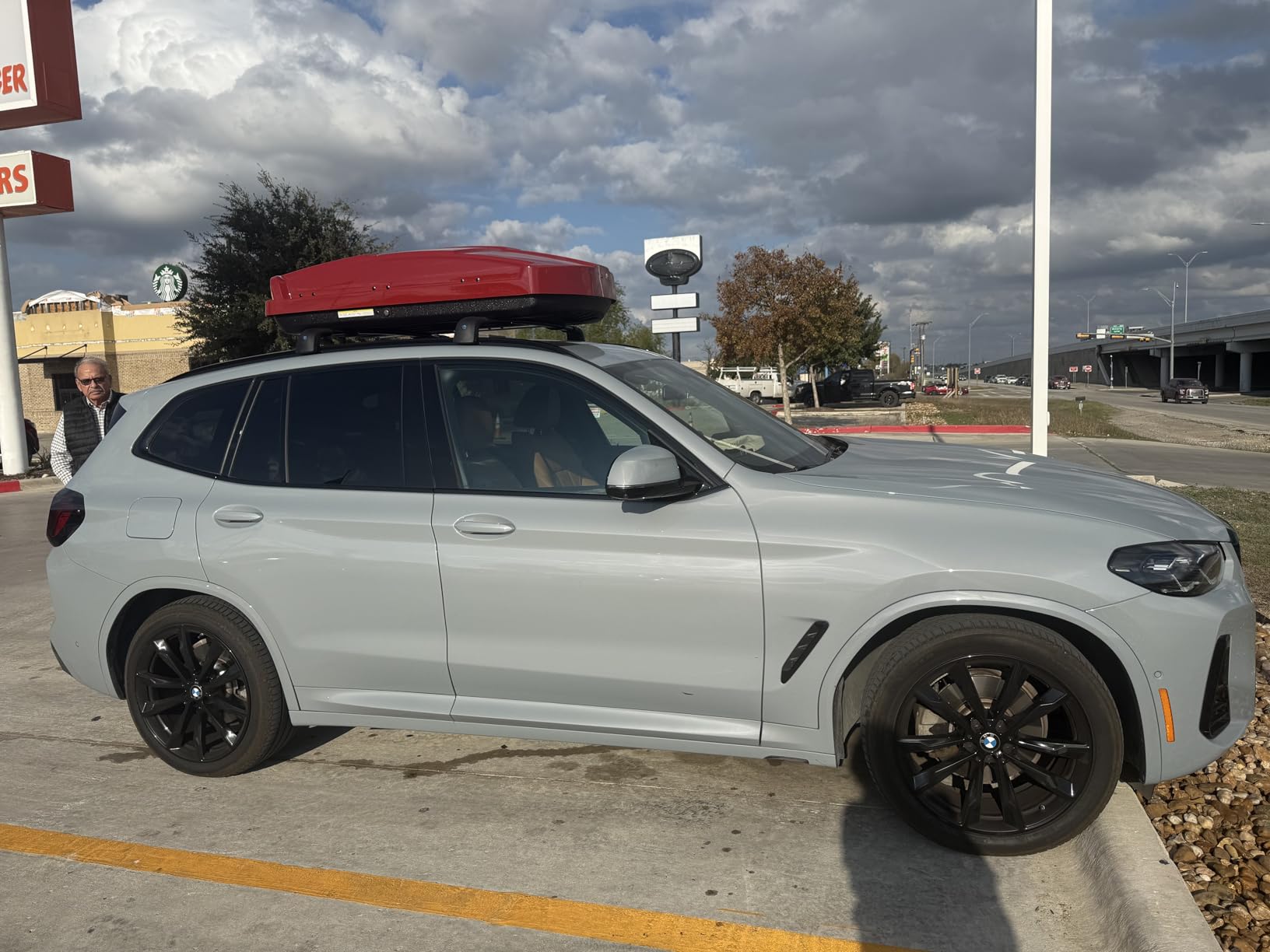
Owners report it installs without tools and stays stable at highway speeds above 80 mph, and it is compatible with round, square, and most aerodynamic bars. Those are the practical claims you actually care about, and the review feedback backs them up rather than contradicting them.
Material is ABS and PC, which is a good combination of rigidity and impact resistance for outdoor conditions. The shell is impact resistant rather than flexible, which is what you want when the box is sitting above a road surface throwing stones.
When a waterproof compact dual-side box makes sense
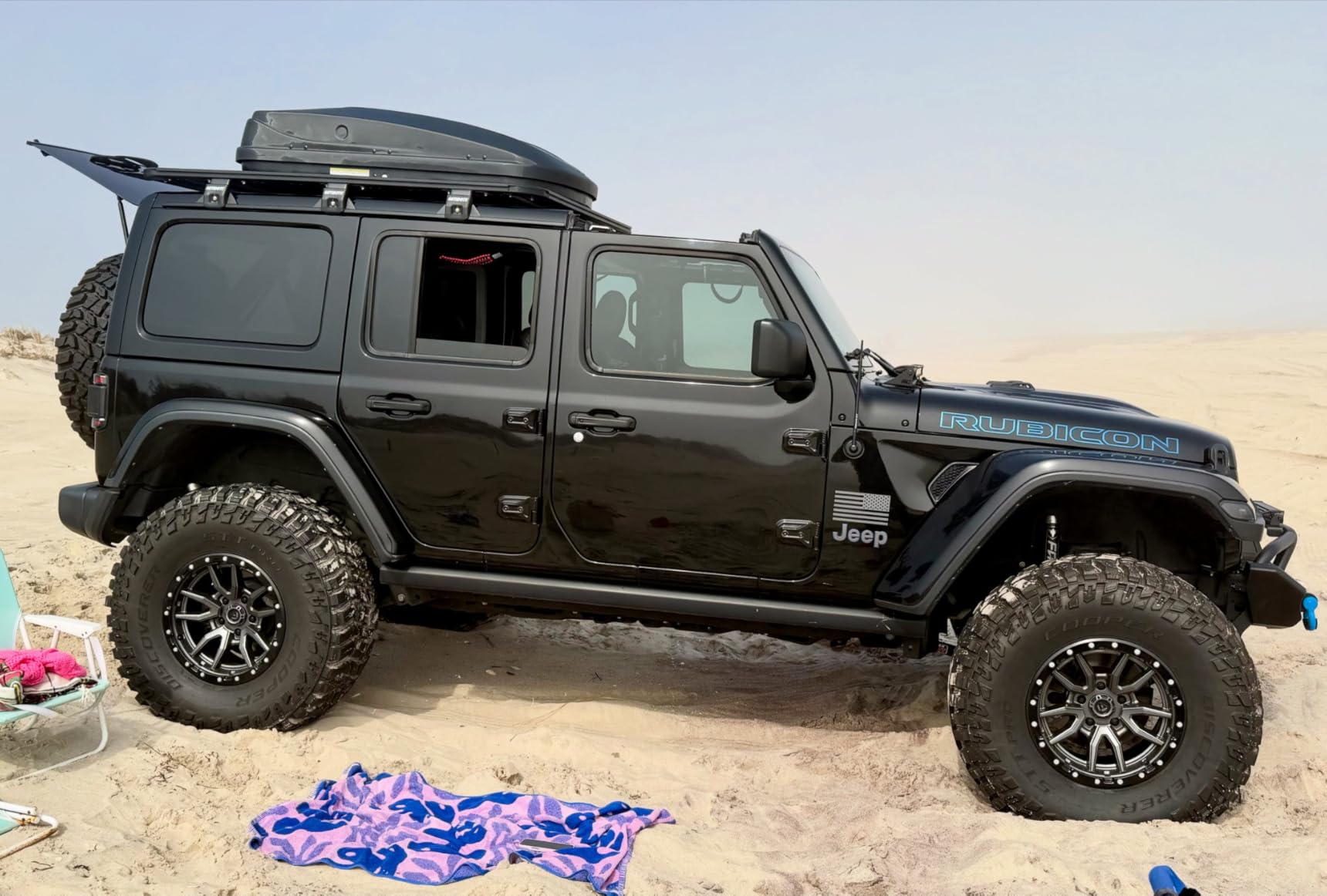
Waterproof rating is the real differentiator here. If you camp in wet climates, drive coastal routes, or store recovery gear that would be ruined by moisture, a box that is explicitly waterproof at this level is worth more than several extra cubic feet in a water-resistant shell.
Compact dual side opening is the second draw. It is an unusual combination at a budget tier, and it means you can load from either side of the vehicle, hold the lid open with the support arm, and get on with the job instead of rearranging gear to reach one corner.
Where the QUAWIP falls short
The warranty is 30 days, and with only 25 owner reviews there is a thin body of long-term data compared with the established names. If you keep vehicles and gear for a long time, that combination of thin evidence and short coverage is a real risk over multiple seasons.
Several customers also report the interior running smaller than the 13 cubic feet suggests, which is the most common surprise in this category. Load capacity is 130 pounds, lower than the Goplus and VISRACK units, and the mounting hardware is described as basic. Measure your largest item before ordering.
How to Choose a Rooftop Cargo Box for Overlanding
Pick the rack before the box
The overlanding community reaches this conclusion over and over, and it is correct. Your rack determines your bar width, your bar spread, and your dynamic load ceiling, and the box can only work within whatever the rack allows. Choose the rack, confirm its published load rating, then choose a box that clamps to it.
That ordering also protects your roof. A heavy front-mounted box on a composite or carbon roof panel is a genuine concern that comes up repeatedly in owner discussions, and it is much easier to avoid than to fix. If your vehicle has a structural steel roof, the math is straightforward. If it does not, the rack decision becomes a safety decision rather than a convenience one.
For broader background on rack platforms and how they compare, our rooftop cargo box guide walks through the mounting basics, and our drawer system guide covers the other half of the storage problem for overland trucks.
Roof load math: box plus rack plus tent
Here is the arithmetic almost nobody does before buying, and it is the single most useful thing in this guide. Your vehicle has a dynamic roof load rating, which is a real number in pounds, and it applies to everything on the roof at the same time. Static and dynamic ratings are not the same thing, and marketing copy tends to quote the flattering one.
Add these four numbers together: the weight of the box, the weight of the rack system, the weight of the rooftop tent if you run one, and the weight of the gear you plan to put in and on everything. The result must sit under your vehicle’s published dynamic rating with margin to spare, because washboard roads multiply the effective load.
Using the boxes in this roundup as an example, an 8 pound Thule shell plus a rooftop tent plus a rack is already a meaningful fraction of a typical dynamic rating before you add a single bag of firewood. This is why we rate the 8 pound Thule Motion 3 and the 20 pound INNO Ridge as strong choices for tent builds: every pound you save on the shell is a pound available for the tent and the recovery gear. A 50 pound box is a very different conversation.
Re-torque the U-bolts after the first few hundred miles. Owners consistently report hardware settling after break-in, and a box that has worked loose on a washboard section is a genuine safety problem, not an annoyance.
Capacity math for a two to four person trip
Rule of thumb from our own packing work: allow roughly 8 to 10 cubic feet per person per week of travel, then add 20 percent for awkward shapes. That gives you a realistic target rather than a marketing number. A couple on a two-week trip lands around 20 cubic feet of usable volume, and a family of four on the same trip is closer to 35, which is where the Yakima SkyBox NX XXL starts to make sense and where a single box stops being enough.
Practical adjustment: if your gear is mostly soft, you can pack tighter than the nominal volume suggests. If it includes rigid cases, a recovery board, or firewood, the usable volume is meaningfully lower than the stated figure. Several owners of the Thule Motion 3 report needing creative packing precisely because of this gap between listed and usable space.
Galley weight is the other planning step. A full water supply, a stove, a food box, and fuel are heavy, and that weight belongs in your roof load budget if they travel up there. Many overlanders move the heaviest items low in the vehicle and reserve the box for light, bulky, weather-sensitive gear, which is a better split for handling and for your roof rating at the same time.
Bar width and bar spread decide fitment
Bar width is the thickness of the bar itself, and bar spread or bar spacing is the distance between the two bars along the length of the roof. Confusing the two is the number one cause of a box that will not mount, and the complaint appears in forum threads constantly.
Work through three numbers before you buy. Your bar width must sit inside the box’s jaw window, your bar spread must sit inside the box’s minimum-to-maximum mounting range, and the bar shape must be one the clamp grips. Aero-profile bars are the hardest: several owners report mounting brackets that work beautifully on square bars and slip on aero bars, and the JEGS box has this specific documented weakness.
Published windows in this roundup include 23 5/8 to 29 3/4 inches for the SportRack Vista XL, 17 to 22.8 inches wide bars for the Goplus, and a mounting hole range of 17.32 to 38.58 inches for the VISRACK. Take a tape measure to the vehicle before you order, and photograph the bar shape so you can confirm clamp compatibility.
Hard shell, soft bag, basket, or swing-away carrier
Not everyone needs a box. A hard shell wins on weather sealing, theft resistance, and aerodynamic noise, and it is the right answer for anything that must stay dry. A soft rooftop bag is cheaper, lighter, and fits where a rigid box will not, but it needs a cargo net in wind and offers no lock security.
A roof basket is the middle ground for overlanders who want open access to a jerry can, firewood, or a wet bag of gear without opening anything. It is cheaper per cubic foot than any box here and completely exposed to weather, but nothing gets crushed and you can reach in from any side. A swing-away hitch carrier keeps heavy weight off the roof entirely, which is the correct answer when your dynamic roof rating is tight or your vehicle has a composite panel.
One overlander described the decision as rack first, then box, and the same logic extends here. If your load is dense, weight it low. If it is bulky, light, and needs to stay dry, it belongs in a shell. Our roof cargo bag guide covers the soft side in detail if that is your direction.
Wind noise, fuel economy, and added height
Wind noise is the most immediately noticeable cost of a box. Tall boxes with blunt noses generate the most of it, and owners of the INNO Ridge specifically report noise becoming noticeable above roughly 60 mph, while the wedge profile and diffuser on the INNO Wedge 660 are credited with keeping it minimal. Owners of the Yakima SkyBox NX also report surprisingly little noise for a 22 cubic foot box.
Fuel economy penalty follows the same pattern and is roughly proportional to frontal area. Low wedge shapes cost you the least. If your route is mostly highway between trailheads, this matters. If you are on slow back roads, it barely registers, and capacity should win.
Added height is the constraint that causes returns and headaches. The shortest boxes in this roundup are the INNO Wedge 660 at 11 inches and the INNO Ridge at 11.4 inches. The SportRack Vista XL at 19 inches is one of the tallest, and it is the one most likely to surprise you in a residential garage. Add your box height to your stock roof height, then measure your garage door with the tape extended to that figure before you order.
Anti-theft and lock quality
A latch is not a lock, and this is where the overland community gets most disappointed. A real lock has a key cylinder you cannot operate with a bent wire, and the best designs hold the key captive inside the box while it is unlocked so you cannot lose it. The INNO Ridge, the VISRACK, and the Goplus all use this captive-key approach and owners consistently rate them highly for it.
For theft resistance on an unattended vehicle, an integrated lock beats a padlock hasp because there is nothing exposed to pick. The Yakima SkyBox NX with integrated SKS push button locks is the strongest hardware in this group, and owners with replacement parts available from the manufacturer report it is serviceable years later.
A third layer most buyers ignore is locking the box to the rack itself. Several units include hardware for this, and running a cable from the box through the rack to a locked bar adds real anti-theft value for the cost of one cable.
Finish, looks, and the expedition aesthetic
Overlanders overwhelmingly prefer rugged, boxy, black-finish boxes and explicitly reject streamlined shapes on looks alone. One owner put it plainly, saying they do not love the look of streamlined boxes and want something rugged instead. The D SOLUTIONS textured black shell, the Thule Force 3 L, the Goplus in black, and the INNO boxes in gloss black are the picks that answer that preference.
Practical reasons reinforce the aesthetic ones. A textured matte surface hides dust and UV chalking that a gloss white finish shows immediately. A squared box reads as expedition equipment next to a light bar or a recovery mount, while a swoopy profile reads as a road trip accessory. Neither is wrong, but you should pick the one that matches the vehicle you are proud of.
For the vehicle-specific side of this, our SUV rooftop cargo box guide covers fitment on larger vehicles, and the sedan guide covers the low-clearance and small-vehicle end of the market.
Measure before you buy checklist
Before you order any box, work through this list. Measure your garage clearance with the tape extended by the box height you are considering. Measure your crossbar spread and confirm it sits inside the box minimum and maximum. Measure your bar width and confirm it fits the clamp jaw. Check for roof antennas, shark fins, and factory rails that occupy the mounting positions. Note your vehicle dynamic roof load rating and add box, rack, tent, and gear.
Then check three quieter things. Confirm the opening side works with where you will actually park, confirm the warranty length covers the number of seasons you plan to own the vehicle, and confirm the water resistance rating matches your climate. Owners who skip that last check end up with damp recovery boards after a coastal trip, and no amount of good packing fixes it.
Frequently Asked Questions
What is the best roof rack for overlanding?
Choose the rack before the box, because your rack sets the bar width, bar spread, and dynamic load ceiling that every box must work within. For a rooftop tent plus cargo box build, prioritise a rack with a published dynamic load rating high enough to cover the tent, the box, and your gear combined, and confirm your vehicle roof is structural steel rather than composite before loading the front heavily. Truck-bed, mid-mount, and low-profile racks all work, but the fitment math changes completely depending on your vehicle.
What is the best rooftop cargo box for camping?
For most camping setups the best balance of capacity, fitment confidence, and owner history is the SportRack Vista XL, with 18 cubic feet, a 100 pound load rating, tool-free mounting, and a 25 year warranty. If you need to load from either side on narrow roads, the Goplus 14 cu ft dual side box or the VISRACK 14 cu ft are stronger choices, and if garage clearance is tight, the INNO Wedge 660 at 11 inches tall is the profile that works.
Which brand of roof boxes is considered the best?
Thule and Yakima are the two most consistently recommended brands for build quality, hardware, and warranty coverage, with Thule offering limited lifetime warranties and serviceable replacement parts. INNO is the strongest alternative when you want a rugged black or low-profile shape with a lifetime warranty at a lower tier. Brand alone is not the deciding factor though: the box that fits your bars, matches your clearance, and stays within your roof load budget is the right answer regardless of the badge.
Which cargo box is better, Thule or Yakima?
Thule generally wins on aerodynamic profiling, quieter highway running, and the PowerClick torque indicator that clicks when a box is properly mounted. Yakima wins on capacity options, serviceable hardware with replacement parts available, and the integrated SKS locks on the SkyBox NX. Both use dual side opening on their larger units and both carry limited lifetime warranties. Overlanders who drive long highway distances tend toward Thule, while those who need maximum volume or replacement parts later tend toward Yakima.
What are the best containers for overlanding?
A hard shell box is best when gear must stay dry and secure, a roof basket is best for dense, frequently accessed items like water and firewood that do not need weather protection, a soft rooftop bag is best for cheap, light, flexible capacity where a rigid shell will not fit, and a swing-away hitch carrier is best when your dynamic roof rating is tight or your roof panel is composite. Most overland builds end up using two of these at once, with a basket for weight and a box for weather-sensitive gear.
How much weight can a rooftop cargo box hold?
Load ratings in this roundup range from 75 kg on the Thule Pulse 2 L up to 165 lb on the Goplus, with most units falling between 100 and 150 lb. That rating is the box only. The number that actually matters is your vehicle’s dynamic roof load rating, which must cover the box, the rack, the rooftop tent, and every bag of gear at the same time, and that total is where overland builds most often exceed their limit without realising it.
Do rooftop cargo boxes fit factory crossbars?
Most universal-fit boxes are designed to work with square, round, and aerodynamic bars plus many factory racks, but the fitment depends on three numbers. Your bar spread must fall inside the box minimum-to-maximum mounting range, your bar width must sit inside the clamp jaw window, and the bar shape must be one the bracket grips. Aero-profile bars are the most common failure, and several owners report mounting brackets that work on square bars and slip on aero bars.
The Bottom Line for Overland Roof Storage in 2026
Start with the SportRack Vista XL. Eighteen cubic feet, a 25 year warranty, tool-free mounting, and the largest body of owner reviews in this roundup make it the safest single-box decision for a multi-week overland trip, provided you can live with a rear-only opening and can clear 19 inches of added height.
If loading access matters more than volume, switch to a dual side unit. The Goplus leads on load rating at 165 lb, and the VISRACK leads on rating and internal tie-downs. If garage clearance is the binding constraint, the INNO Wedge 660 at 11 inches tall is the shape to buy. If you are pairing the box with a rooftop tent, count the pounds before you spend, and choose a lighter shell such as the 8 pound Thule Motion 3 or the 20 pound INNO Ridge so the tent still fits under your dynamic roof rating.
Whichever one you choose, measure the bars, measure the garage, re-torque the hardware after break-in, and keep the heavy items low. Those three habits solve more overland roof problems than any brand does. Our broader rooftop cargo box roundup is worth a look if you want the same testing applied outside the overland context.


