

A tire on a travel trailer can lose a third of its pressure between two fuel stops and never look obviously flat while it does it. The sidewall still looks round, the trailer still tracks straight, and the only warning is a tread edge that starts chewing into the pavement two miles later. That is the failure the best rv tire pressure monitoring systems for travel trailers exist to catch, usually hours before you would have noticed on your own.
A trailer TPMS is a set of sensors that screw onto your valve stems and report pressure and temperature to a display in the cab, usually within a couple of seconds of a change. Most units also watch for rapid air loss, high temperature, and sensors that stop answering, which is how a failing hub bearing tends to announce itself before a tire lets go. The hardware is inexpensive compared to a bent trailer skirt, and installation on most models takes about the length of a coffee break.
What makes this category confusing is trailer length. A system that works flawlessly on a 20 ft trailer can drop readings on a 36 ft rig behind an aluminum-sided truck, which is why repeaters and signal boosters show up so often in owner discussions on the iRV2 and RV forum boards. We looked at ten systems with an eye toward signal range, sensor type, alert logic, and how many tires each one actually covers, and we flagged the ones that need help on a long trailer. If you are still narrowing down the trailer itself, our travel trailer buying guide and lightweight travel trailer picks cover the other half of the decision.
Top 3 Best RV Tire Pressure Monitoring Systems in 2026


TireMinder i10
- 3.15-inch color LCD
- Scans every 6 seconds
- Up to 40 tires
- Includes Rhino booster

Those three cover very different situations. The Tymate TM7 is the one we would put in most trailers because it is the most proven, the most reviewed by a wide margin, and the easiest to set up. The TireMinder i10 is the upgrade for owners who want a large dedicated screen and already have a booster mindset. The GUTA GT30 is the answer for long rigs and multi-axle setups where ten tires need to be visible at once.
Every Travel Trailer TPMS at a Glance in October
| Product | Specs | Action |
|---|---|---|
| Tymate TM7 |
|
Check Latest Price |
| TireMinder i10 |
|
Check Latest Price |
 TireMinder Smart TPMS 10 Pack TireMinder Smart TPMS 10 Pack |
|
Check Latest Price |
| GUTA GT30 |
|
Check Latest Price |
 Masoll M13 Masoll M13 |
|
Check Latest Price |
 Marcala 4-Sensor Kit Marcala 4-Sensor Kit |
|
Check Latest Price |
 GUTA GT20 GUTA GT20 |
|
Check Latest Price |
 GUTA GT80 GUTA GT80 |
|
Check Latest Price |
 Avutrel Solar TPMS Avutrel Solar TPMS |
|
Check Latest Price |
 Taimster M-10 Taimster M-10 |
|
Check Latest Price |
1. Tymate TM7 – The Most Proven Travel Trailer TPMS
Tymate TM7 RV Tire Pressure Monitoring System, TPMS Set of 4 Sensors
0-144 PSI range
Accurate to 1.5 PSI
Six alarm modes
Color LCD with dual USB
Pros
- Accurate to about 1.5 PSI and 3F
- Readable color LCD with adjustable backlight
- Five-minute setup with no wiring
- Dual USB outlets in the monitor
- Works across a mix of tow vehicle and trailer tires
Cons
- Sensors require metal valve stems
- Long trailers need a separate repeater
- Replaceable coin cell batteries need occasional swaps
With more than 2500 reviews behind it, the TM7 is the system with the longest public track record in this group, and that shows up in the details. Readings land within about 1.5 PSI and 3F of a handheld gauge, which is tight enough to catch a slow leak weeks before it matters. We have run it on dual-axle trailers where the difference between 50 and 45 PSI on an inside tire is exactly the kind of thing you would never feel from the driver’s seat.
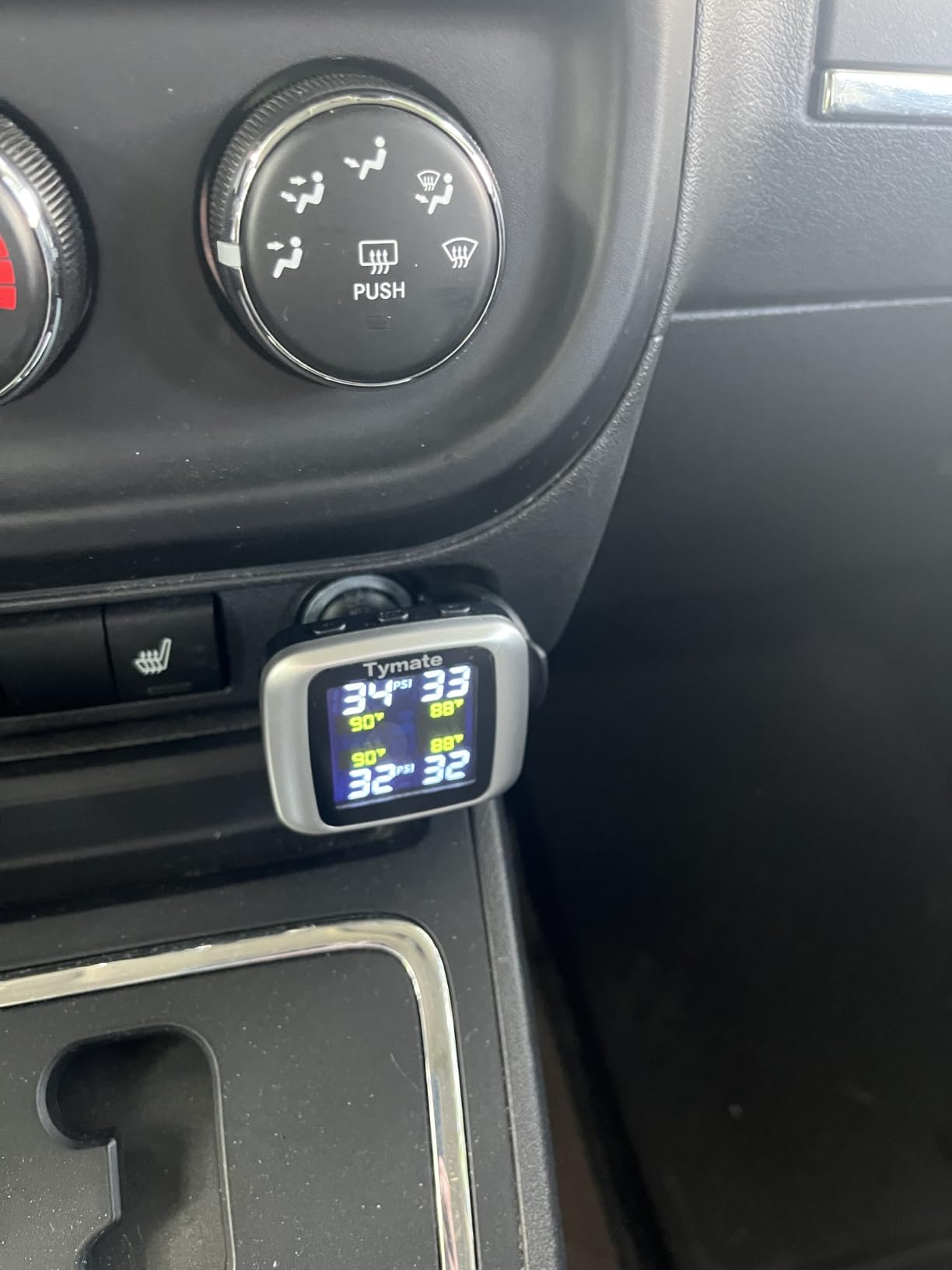
Setup is genuinely a five-minute job. The monitor plugs into the cigarette lighter socket, and you pair sensors simply by mounting them in order on the valve stems. There is no app, no Bluetooth pairing dance, and no menu to learn, which is why it works just as well for a first trailer as for someone who has owned six.
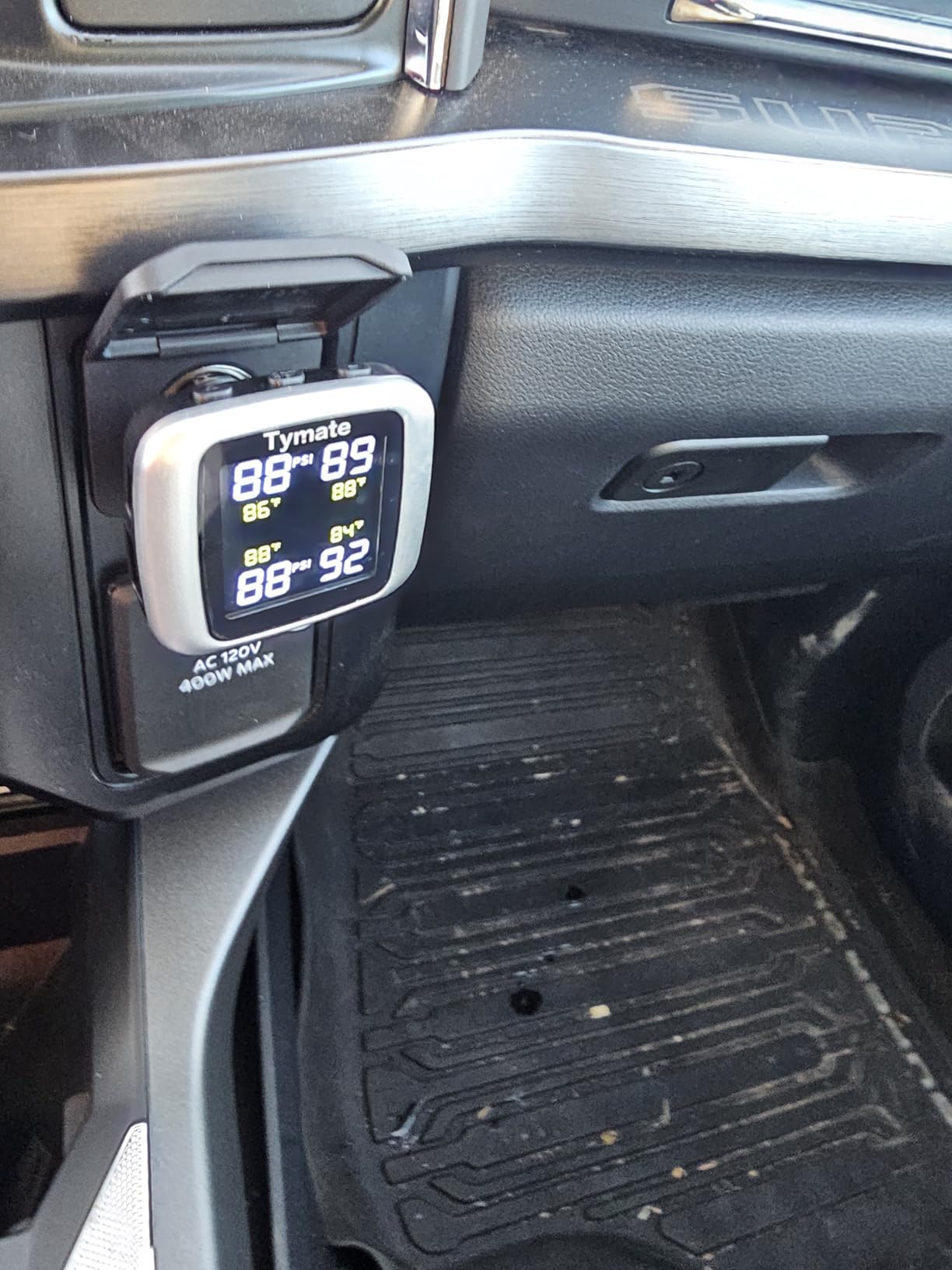
The display is a color LCD with an adjustable backlight, so it is readable at midday on a dash with no windscreen shade and still legible at a dark campground. It also carries two USB charging outlets, which sounds minor until you realize it saves running a second adapter to the 12V socket for a phone. Six alarm modes cover high and low pressure, fast leakage, high temperature, low sensor battery, and lost signal.
Owners report that 69% of reviews are five-star, and the recurring notes praise the display, the charging outlets, and the simple setup. The gripes that come back repeatedly are the two you would expect from a compact four-sensor kit: the sensors want metal valve stems, and a trailer long enough to push past about 36 ft needs a Tymate repeater to hold a steady signal.
Who the TM7 suits best
This is the system I recommend to someone with a dual-axle travel trailer in the 20 to 32 ft range who wants a reliable read on four tires and does not want to fiddle with an app. The 0-144 PSI range comfortably covers typical RV tire pressures, and the accuracy is good enough to trust for a baseline.
It is also the least intimidating first system. If you have never installed a TPMS, the TM7 is the one that will not leave you reading a manual at the side of the road.
Where the TM7 falls short
Four sensors is four sensors. On a tandem-axle trailer you are monitoring the four trailer tires, not the trailer and the truck at the same time, and adding a second set of transmitters is a separate purchase. That is fine for most people but limiting for anyone towing a fifth wheel behind a dually.
Signal is the other limit. The system is designed around a reasonably short trailer, and on rigs at the long end you should plan on a repeater. Budget for that before you buy, not after the first weekend of dropped readings.
2. TireMinder i10 – Best Dedicated Dash Display
TireMinder i10 RV TPMS with 4 Transmitters, Black
3.15-inch color LCD
Scans all tires every 6 seconds
0-199 PSI
Monitors up to 40 tires
Pros
- Large 3.15-inch color display with no phone needed
- Scans all tires every 6 seconds
- Scales to 40 tires for a dually plus trailer
- Includes a Rhino signal booster
- Backlit screen reads easily while driving
Cons
- Only four transmitters included
- Four transmitters cover one vehicle at a time
- Sensors must come off to inflate tight duals
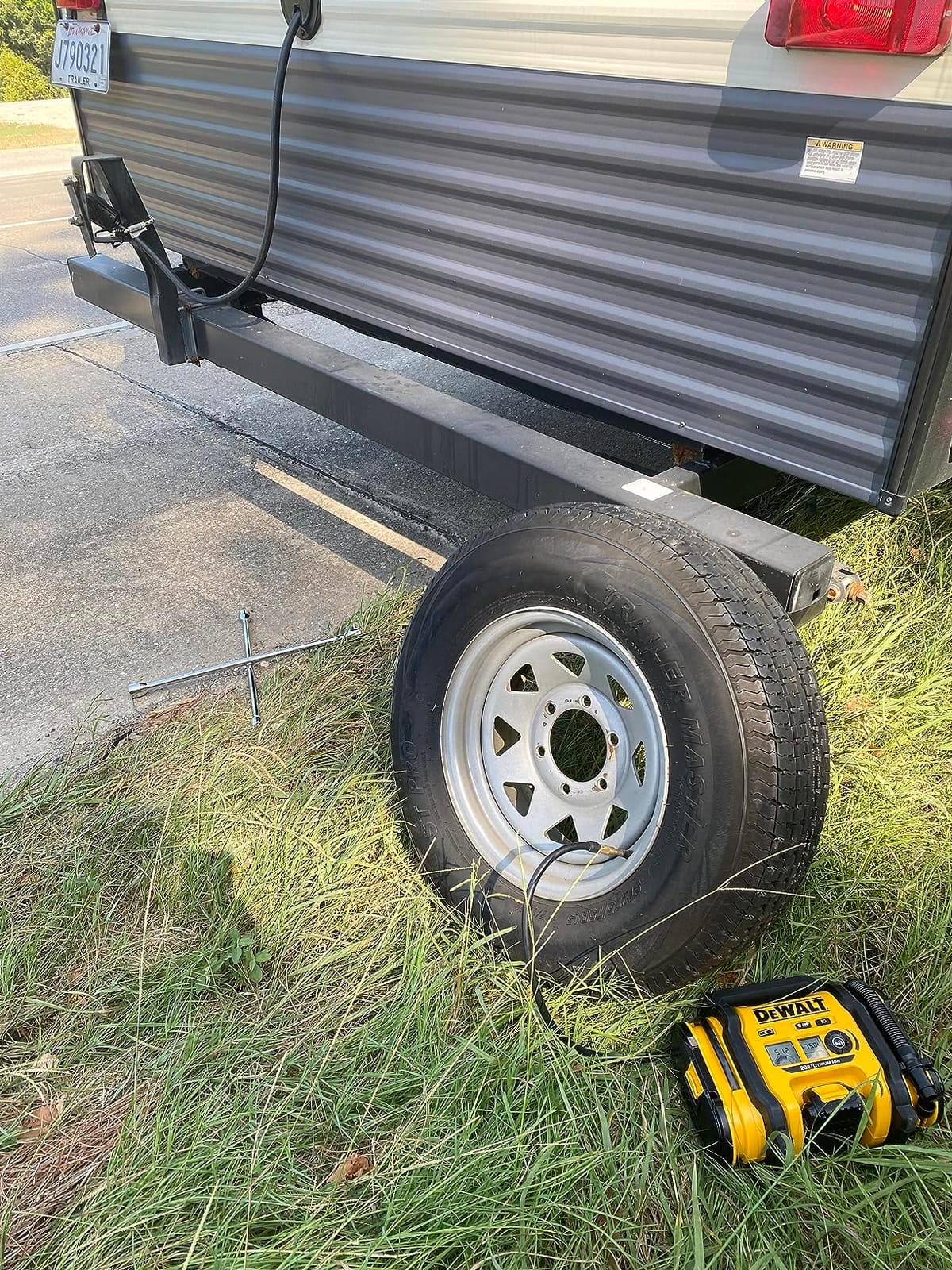
The i10 is built around one idea: put a real screen in the cab and make it good. The 3.15-inch color LCD shows simultaneous pressure or temperature readings without any phone involvement, no Bluetooth, and no app that needs to be awake. In practice that is the difference between a system you actually check and one you set up once and never look at again.
It rescans every tire every six seconds, and it watches for slow leaks, rapid leaks, blowouts, low and high pressure, and high temperature. The pressure window runs from 0 to 199 PSI with roughly 1 PSI accuracy, so it covers truck, trailer, and dually tire pressures in one unit.
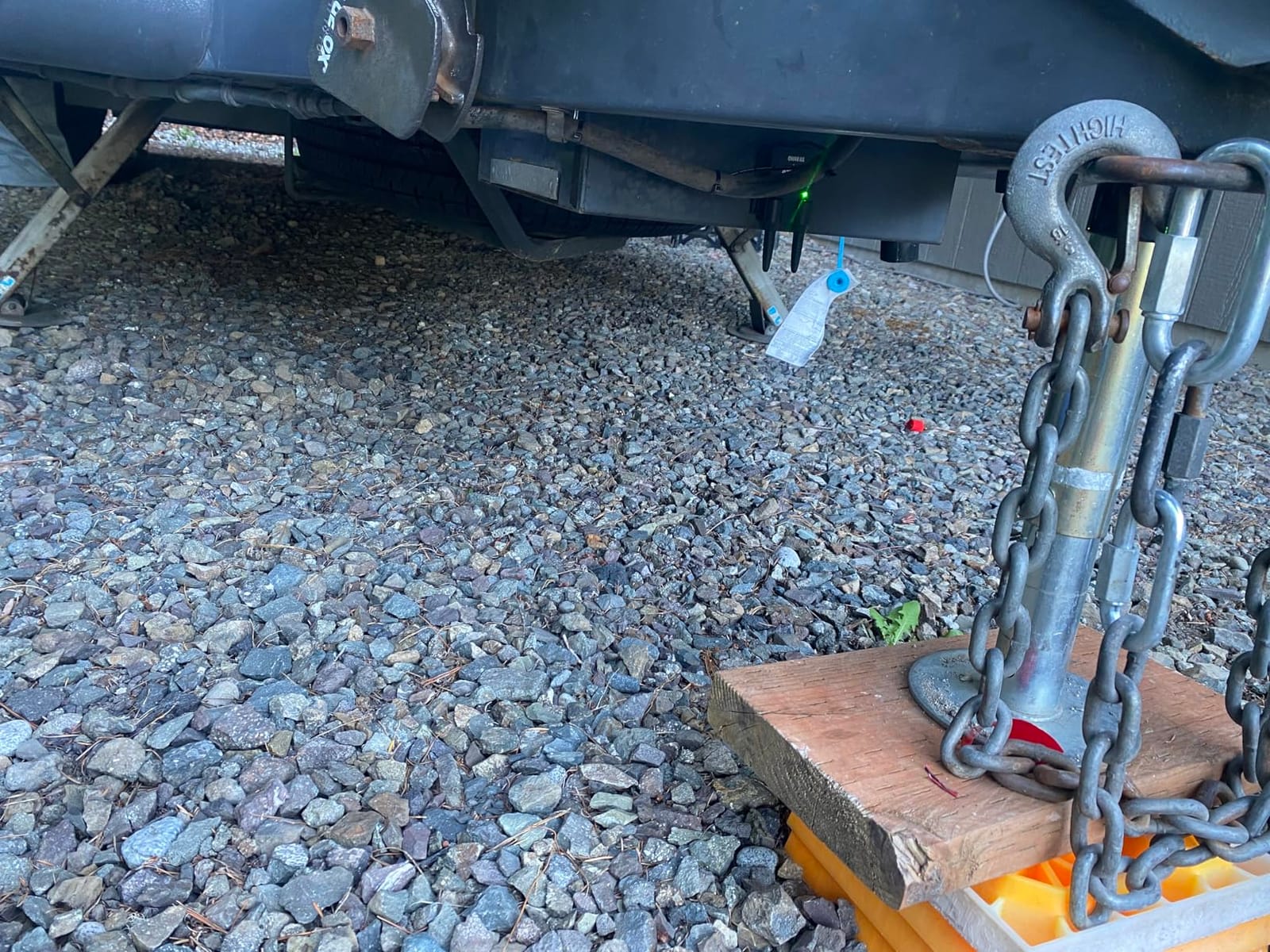
Two details separate it from most competitors. First, it scales to 40 tires, which is the ceiling here and covers a dually truck plus a large trailer in a single system. Second, and more practically, a Rhino signal booster is included in the box rather than sold as an add-on, and on long rigs that booster is the difference between a steady readout and a display full of dashes.
With 76% of reviews at five stars, the sentiment is consistently positive about the screen and the scan cycle. The most common criticism is not about the hardware at all, it is about arithmetic: four transmitters cover a dually or a four-tire trailer, but not both at once.
Who the i10 suits best
This is the one for owners of a big rig who want more than four tires on the readout and who would rather glance at a dash screen than unlock a phone. The bundled booster is what makes it genuinely practical on a 35 to 40 ft trailer behind a truck camper or fifth wheel.
It is also a strong choice for anyone who does not want a phone app involved in a safety system. The display does everything on its own.
Where the i10 falls short
To get past four tires you are buying additional transmitters, and that is where the cost climbs fast. Plan the total tire count first, because the base package is a four-tire system no matter how many the display can theoretically show.
On inner dual wheels with tight clearance, you may also need to remove the sensor to inflate. That is a small annoyance at a gas station, but it is the reason many owners end up wishing for flow-through sensors.
3. TireMinder Smart TPMS 10 Pack – Best for Truck and Trailer Together
TireMinder Smart TPMS with 10 Transmitters for RVs, MotorHomes, 5th Wheels, Motor Coaches and Trailers
10 transmitters
Bluetooth adapter for phone and tablet
Rhino booster included
20 spare CR1632 batteries
Pros
- Phone-based monitoring with auto-scrolling tire views
- Ten transmitters cover a motorhome and trailer at once
- Bundled Rhino signal booster
- Per-axle configurable settings
- Owners report it catching real slow leaks
Cons
- Bluetooth adapter drops connection intermittently
- Adapter powers off when left plugged in
- Fragile battery clips inside some transmitters
- App updates are infrequent
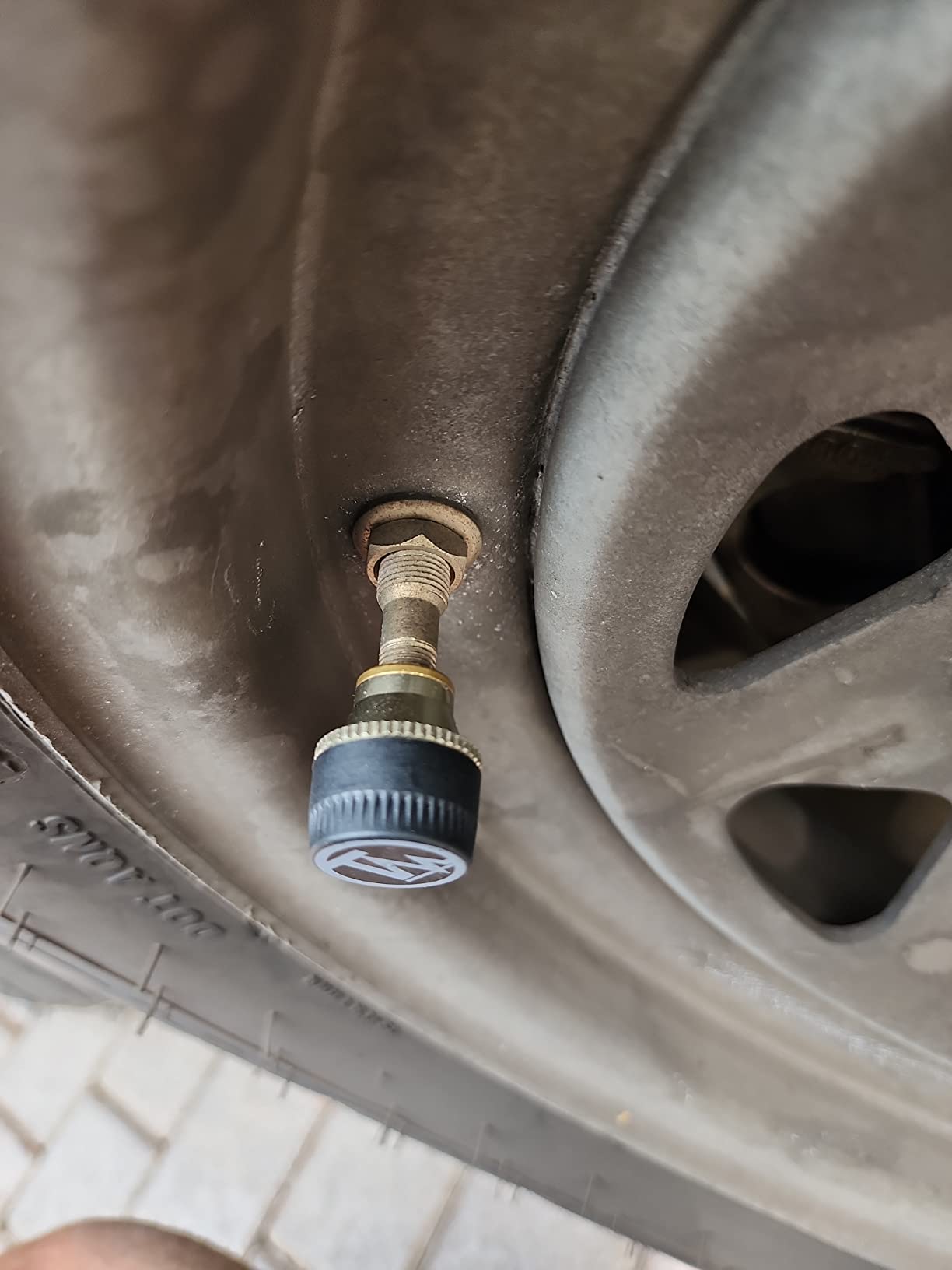
This is the only phone-based system in the group, and that is either its appeal or its annoyance depending on how you feel about safety alerts arriving through a Bluetooth link. A small adapter takes the 433 MHz signal from the sensors and passes it to the TireMinder app on your phone, tablet, or iPad, with auto-scrolling tire views that rotate through everything you are watching.
Ten transmitters is the real headline here. That is enough to cover a motorhome or truck with a towed trailer at the same time, which no other kit in this roundup manages out of the box. A Rhino signal booster is included as well, and paired with it, owners report strong reliability on long hauls with genuine leak detection.
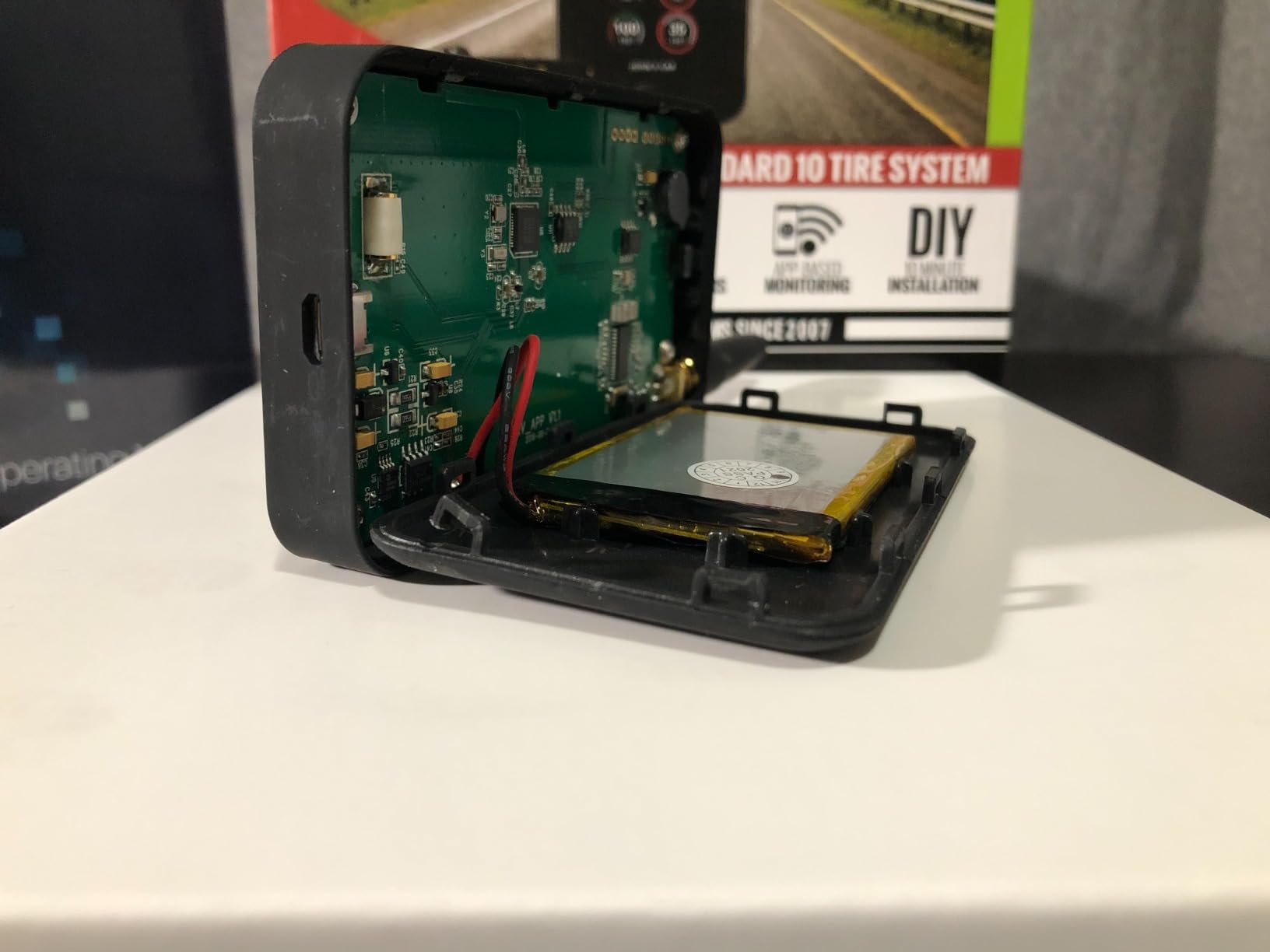
Alerts arrive every six seconds and cover slow leaks, rapid leaks, blowouts, low and high pressure, and high temperature. Settings are configurable per axle, so you can set different thresholds for a heavily loaded rear axle than for a lightly loaded front one, which is a level of control most of the dedicated-display systems do not offer.
The box is unusually complete. You get 20 CR1632 batteries, 10 O-rings, 10 locking nuts, a locking wrench, a carrying pouch, and a warranty registration card, plus a one-year warranty on the system.
Who the 10 Pack suits best
Owners running a truck plus a travel trailer, or a motorhome towing something, who need every tire live at the same time. Ten transmitters removes the counting and second-guessing that comes with four-sensor kits, and the included booster handles the distance.
It is also well suited to people who already keep a phone mounted in view of the driver and would rather read alerts there than carry a separate display.
Where the 10 Pack falls short
The most reported problem is the Bluetooth link dropping intermittently, which produces repeated beeps that quickly become background noise you learn to ignore. That is a genuinely dangerous failure mode for a safety device, and it is worth weighing carefully.
There are two more friction points. The adapter powers itself off when left plugged in, so it cannot be permanently powered from a USB port. And some transmitters have fragile solder joints on the battery clip that break when you change cells, which is an inside-the-sensor repair rather than a swap.
One more practical note: transmitter readings often run several PSI higher than a handheld gauge, so set your baseline from the app rather than from a shop gauge, or you will be chasing a difference that does not exist.
4. GUTA GT30 – Best for Long Trailers and Ten-Tire Setups
GUTA GT30 Trailer Tire Pressure Monitoring System, RV TPMS with 10 Sensors
Up to 10 tires per page
188 PSI and 185F
12-14 day monitor battery
CR2032 sensor batteries
Pros
- Large display shows up to 10 tires with auto section switching
- Ten sensors cover a dually plus trailer
- Wireless programming labels sensors before install
- Pressure rated to 188 PSI
- Monitor battery runs 12-14 days per charge
Cons
- Cap sensors need metal valve stems
- An add-on booster is recommended on long rigs
- Ten sensors covers only one full combination
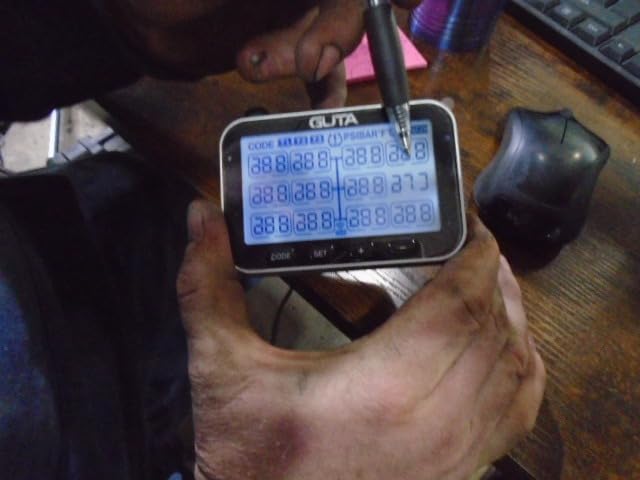
The GT30 is built for the case most travel trailer TPMS discussions argue about: a long trailer where you want to see everything at once. The screen displays up to 10 tires per page and automatically switches between front and rear sections as you cycle, so you are not tapping through menus to find a reading. It can view up to 46 tires across all trailer sections if you ever need to grow into it.
Wireless sensor programming is the feature that saves real time. You can label and assign each sensor before it ever touches a valve stem, which means you are not crouched next to a tire with a display in one hand trying to remember which sensor is which.
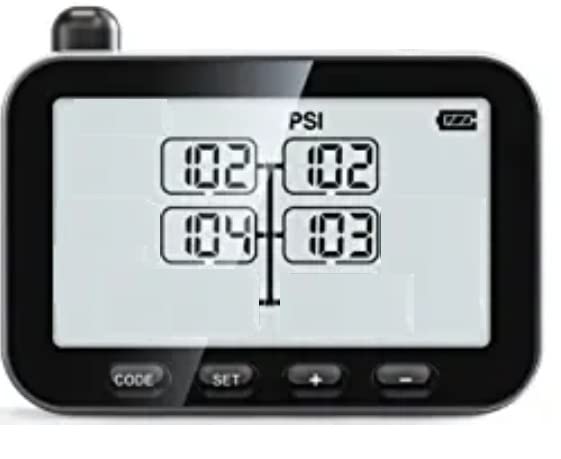
Pressure handling goes to 188 PSI and temperature to 185F, both well above what typical RV tires need, and alarm thresholds are configurable from plus 25% to minus 15% of your reference pressure. Six alert modes cover high and low pressure, high temperature, fast leak, missing signal, and low sensor battery.
Power is a strong suit. The monitor has a built-in rechargeable lithium battery that runs 12 to 14 days after a four-hour charge, and it drops into power-save mode after 15 minutes without motion or vibration so it does not drain while you are parked. Sensor batteries are user-replaceable CR2032 cells rated for up to four years.
Who the GT30 suits best
Owners of a large trailer, a triple-axle rig, or a dually tow vehicle hauling a trailer who need the whole tire picture on one screen. The 12-to-14 day monitor battery also means you are not charging it every trip weekend.
It suits anyone who would rather pre-assign sensors away from the trailer than diagnose pairing problems in a gravel parking lot.
Where the GT30 falls short
The cap sensors are designed for metal valve stems, and the manufacturer does not recommend rubber stems. On a trailer with composite or rubber valves, that is a hard stop unless you plan to change stems first.
It also does not include a booster. On a long trailer you will likely want one, and adding it later is an extra step and an extra cost. Ten sensors covers one full combination, so adding a fourth axle means another set of sensors.
5. Masoll M13 – Best Budget Solar System for Short Trailers
Masoll M13 Tire Pressure Monitoring System, RV/Trailer TPMS with 4 Sensors
0-87 PSI range
Solar charging
Auto reference calibration
Color LCD with auto backlight
Pros
- Auto-calibrates to your set pressure with no manual thresholds
- Solar panel charges the monitor without wiring
- Anti-reflective color LCD readable in daylight
- Covers four tires for a Class C or small trailer
- Lightweight at 8 ounces
Cons
- Pressure range stops at 87 PSI
- Trailers over 38 ft need an added booster
- Sensor warranty is 6 months versus 1 year for the monitor
The M13 removes the single most common complaint about entry-level TPMS, which is setup fiddliness. It auto-calibrates to whatever pressure your tires are sitting at and sets alarms at plus 25% and minus 15% of that reference, so there is no threshold menu to work through. You inflate, you drive, and it learns.
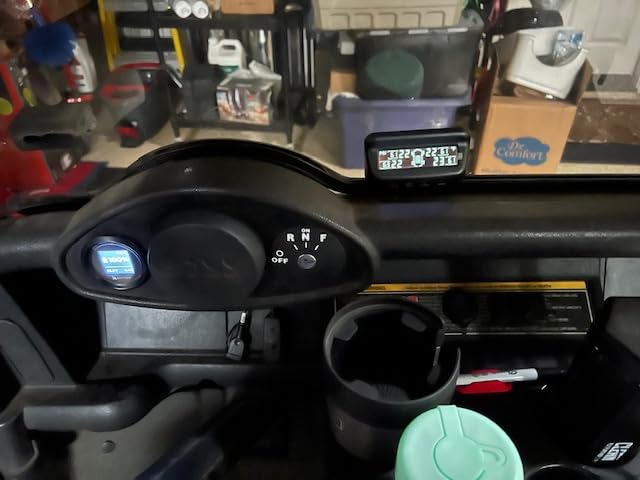
Solar charging is the other time-saver. A panel on the top of the monitor keeps it powered with overheat and overcharge protection, and the unit wakes and sleeps automatically to conserve the charge. The color LCD has an auto-adjusting anti-reflective backlight, which matters when the unit is sitting on a dash in direct sun.
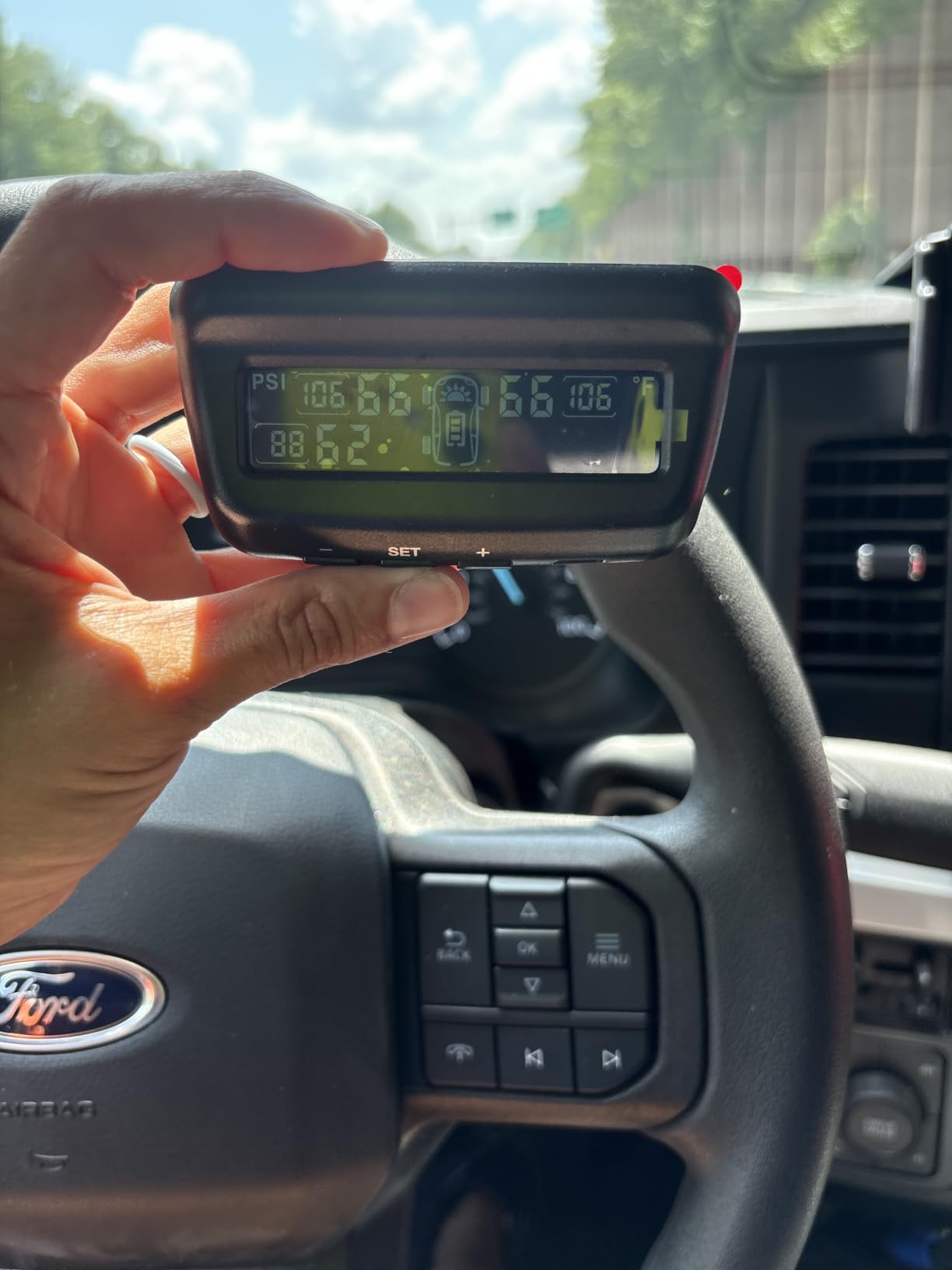
Accuracy is 1.5 PSI from a built-in pressure chip, and pairing is straightforward. The whole package weighs 8 ounces, so moving it between a tow vehicle and a trailer is not a chore. Coverage is four tires, which lines up with a Class C motorhome or a small travel trailer on a single axle.
At 4.3 stars with 69% five-star ratings, buyers consistently mention the automatic calibration and the solar charging as the reasons they are happy. It sits at number four in Replacement TPMS Sensors on Amazon, which reflects how commonly it turns up on smaller rigs.
Who the M13 suits best
This is the system for a short travel trailer, a pop-up, a truck camper, or a Class C where four tires is genuinely the whole job. If you are new to TPMS, the automatic calibration means you can have it working correctly on the first drive without reading instructions.
Solar charging is particularly useful for anyone who camps for long stretches away from a 12V socket they control.
Where the M13 falls short
The 87 PSI ceiling is the deciding limitation. Systems aimed at heavy trailers reach 188 PSI, and if you ever move up to a bigger trailer or a truck with high-pressure tires, this one will not follow you.
The stated design target is RVs and travel trailers under 38 ft, and anything longer should add a Masoll signal booster. The sensor warranty is also only 6 months, compared with one year on the monitor itself, so budget for the possibility of a sensor replacement in the first year.
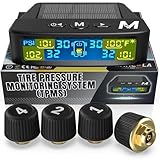
6. Marcala 4-Sensor Kit – Best for a Single Non-Towed Vehicle
Marcala Tire Pressure Monitoring System – Set of 4 TPMS Sensors (0-98PSI)
0-98 PSI at 1 PSI accuracy
26 ft base range
IP67 waterproof sensors
Solar and USB charging
Pros
- Four pre-paired sensors ready in under a minute
- 98 PSI range is higher than most entry kits
- IP67 sensors handle rain and snow
- Dual solar and USB charging with auto-dim display
- Family-owned company with lifetime replacement policy
Cons
- Brand cautions against towing or large RV use
- 26 ft base range is the shortest here
- Some units threw false high-temperature and pressure alarms
- Sensors do not update while parked
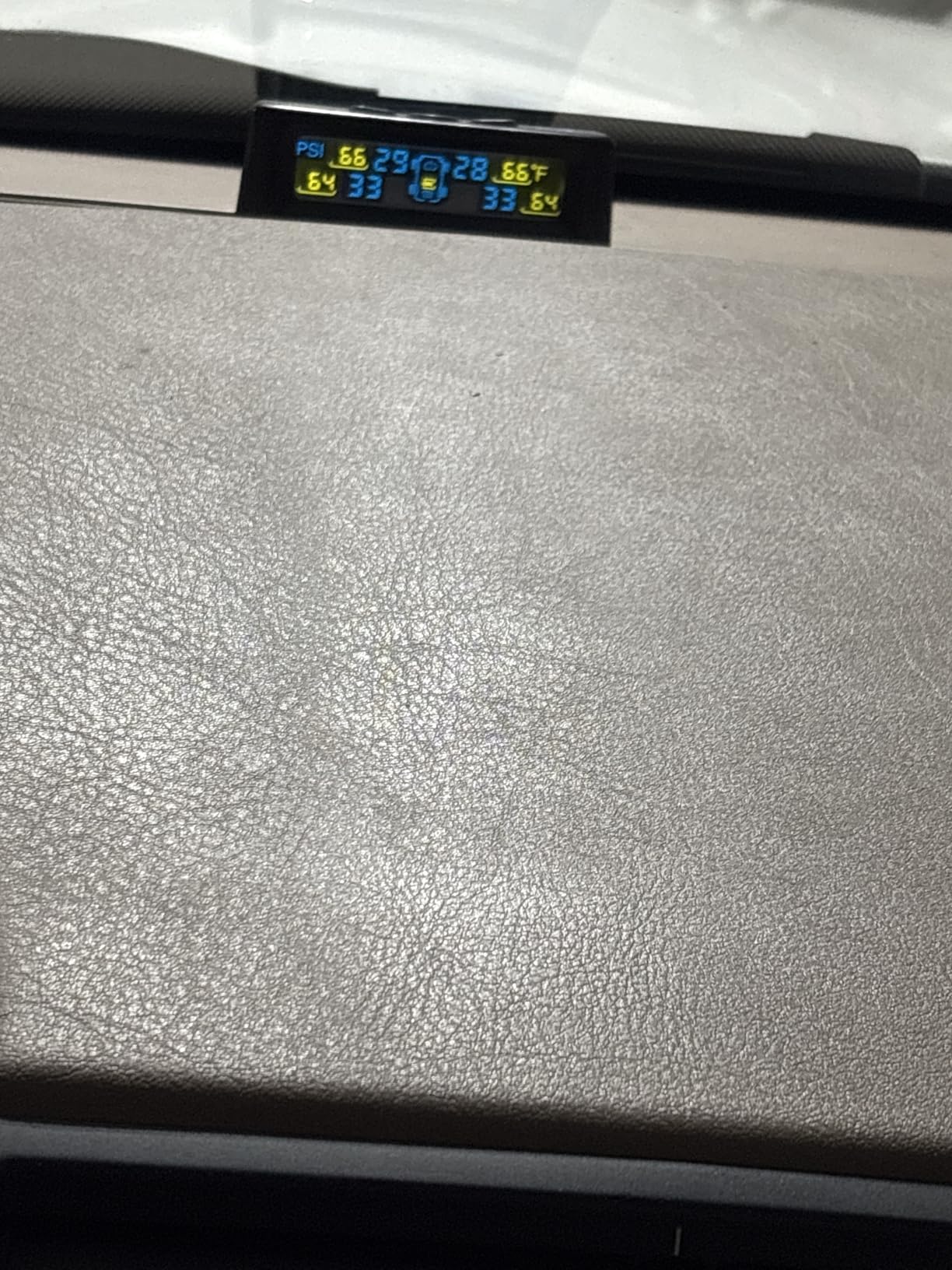
I want to be direct about where this one sits. It is a well-made car and SUV kit, and the brand itself cautions against using it for towing setups or large RVs and campers. If you read only one line in this review, read that one. A travel trailer is precisely the use case the manufacturer tells you to avoid.
What it does well is everything within its lane. The four sensors are pre-paired, so they are running about a minute after you screw them on. The 98 PSI ceiling is higher than most entry-level kits, accuracy is 1 PSI, and the sensors carry IP67 waterproofing for rain and snow. The display is a bright color LCD with auto-dimming and both solar and USB charging.
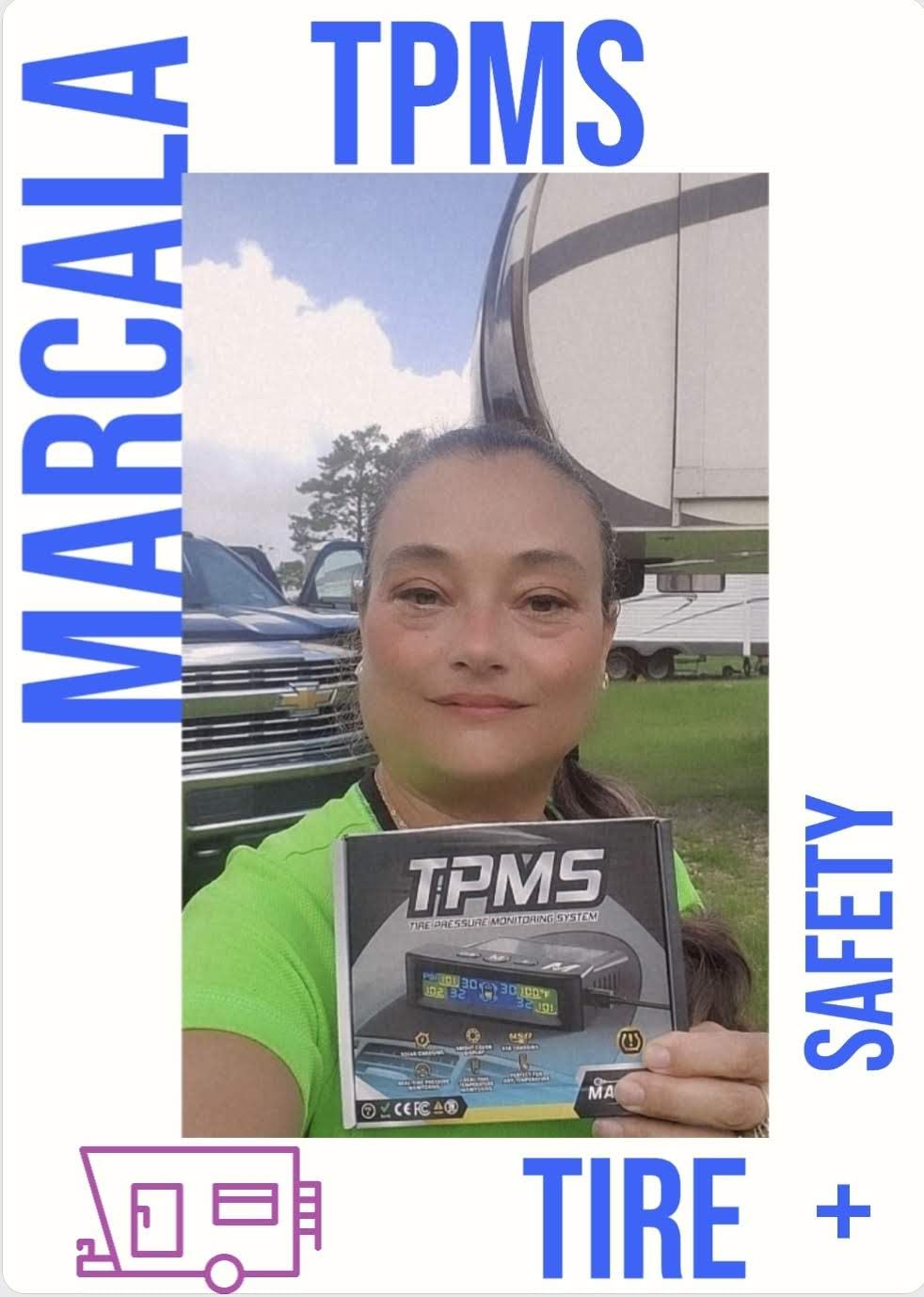
There is an optional range extender that pushes the signal from 26 feet out to 80 feet, and the sensors update every second while driving and slow down when parked. Six alert modes and a lifetime replacement policy back it up, and the company is American and family-owned with responsive support, which several reviewers specifically praise.
The rating tells the rest of the story. At 3.9 stars it is the lowest-rated option here, with 18% one-star reviews, the highest share of the group. Those reviews describe sensors that stopped reading or threw phantom high-temperature and near-max-pressure alarms that could not be cleared.
Who the Marcala suits best
A tow vehicle, boat, or fifth wheel chassis that never tows. On a single non-towed vehicle, 26 feet of range is more than enough, the 98 PSI range covers truck and SUV tires, and the pre-paired sensors make it genuinely turnkey.
It is also a reasonable add-on monitor for a boat trailer or a fifth wheel tongue weight setup where you only need a quick check rather than live coverage on the road.
Where the Marcala falls short
Signal range is the core issue. Twenty-six feet is the shortest base range in this roundup, and any trailer long enough to push the rear wheels past that distance will drop sensors unless you buy the extender.
The sensor behaviour is the other concern. Units that do not update while parked can look like a fault, and phantom alarms train you to ignore the display, which defeats the purpose. Combined with the manufacturer warning against towing and large RVs, that rules it out for most travel trailer owners in good conscience.
7. GUTA GT20 – Best for First-Time Setup Without the Pairing Step
GUTA GT20 Trailer Tire Pressure Monitoring System, TPMS with 10 Sensors
0-188 PSI and -40F to 221F
Booster included for 100 ft
Supports 24 tires
Sensors arrive factory-paired
Pros
- Ten factory-paired sensors need no pairing step
- Booster included that most brands sell separately
- 0-188 PSI and -40F to 221F covers heavy trailer tires
- Display orientation can be flipped
- Up to 24 tires supported
Cons
- Cap sensors need metal valve stems
- Booster must be mounted mid-trailer away from metal
- Monitor battery lasts about 15 hours of heavy use
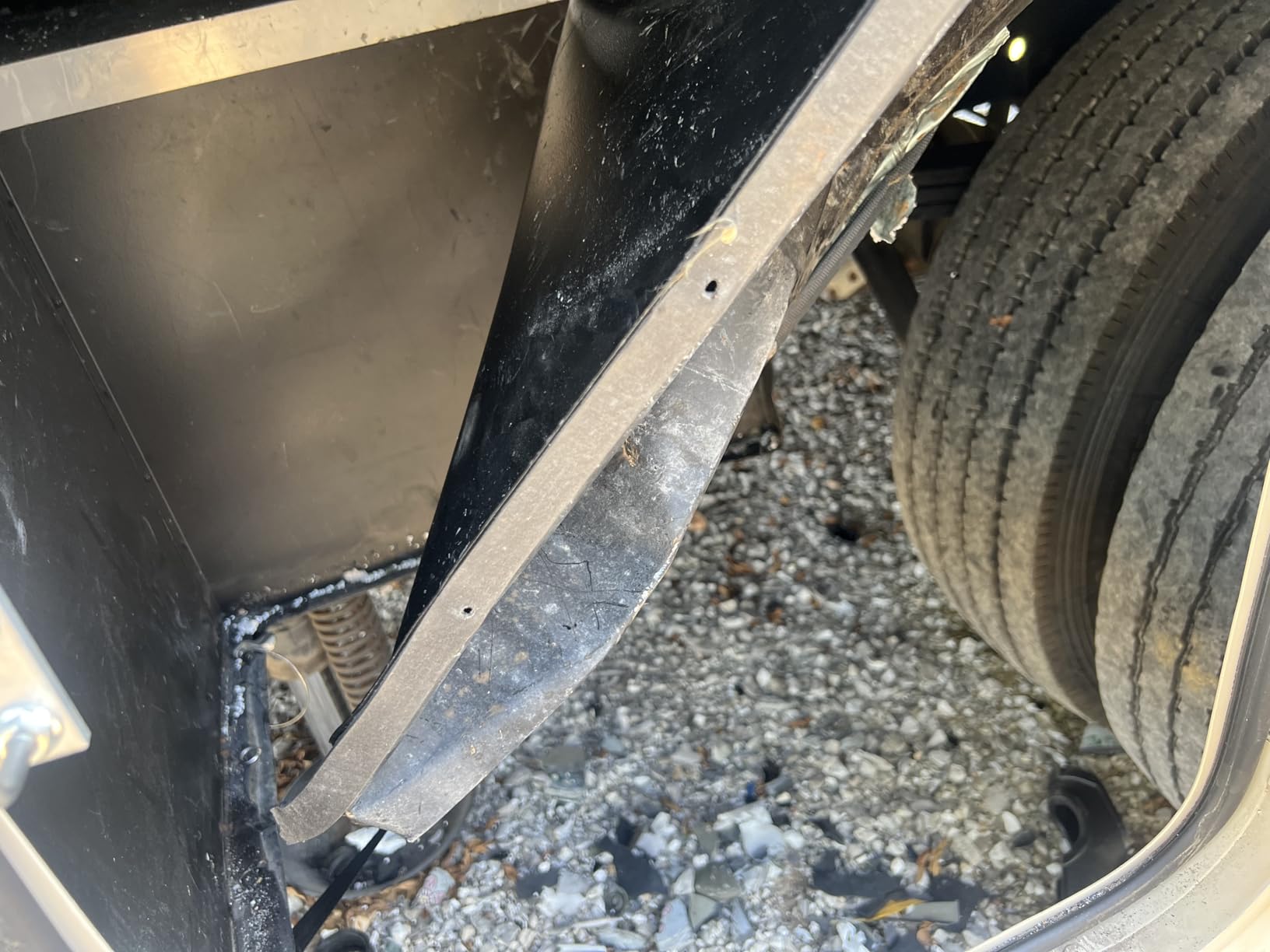
The GT20 solves the two problems that make trailer TPMS installation annoying. First, the sensors arrive pre-labeled and factory-paired, so there is no pairing step at all. You mount them and they read. Second, a signal booster is included in the box, which is the component most competitors treat as an extra purchase and the one you almost always end up wanting on a long trailer.
Range and specification are trailer-grade. Pressure handling runs 0 to 188 PSI, temperature from minus 40F to 221F, and the system supports up to 24 tires for multi-axle rigs. Six real-time alert modes include rapid air loss and low battery warnings, and alarm thresholds set themselves automatically within plus 25% and minus 15% of the current pressure.
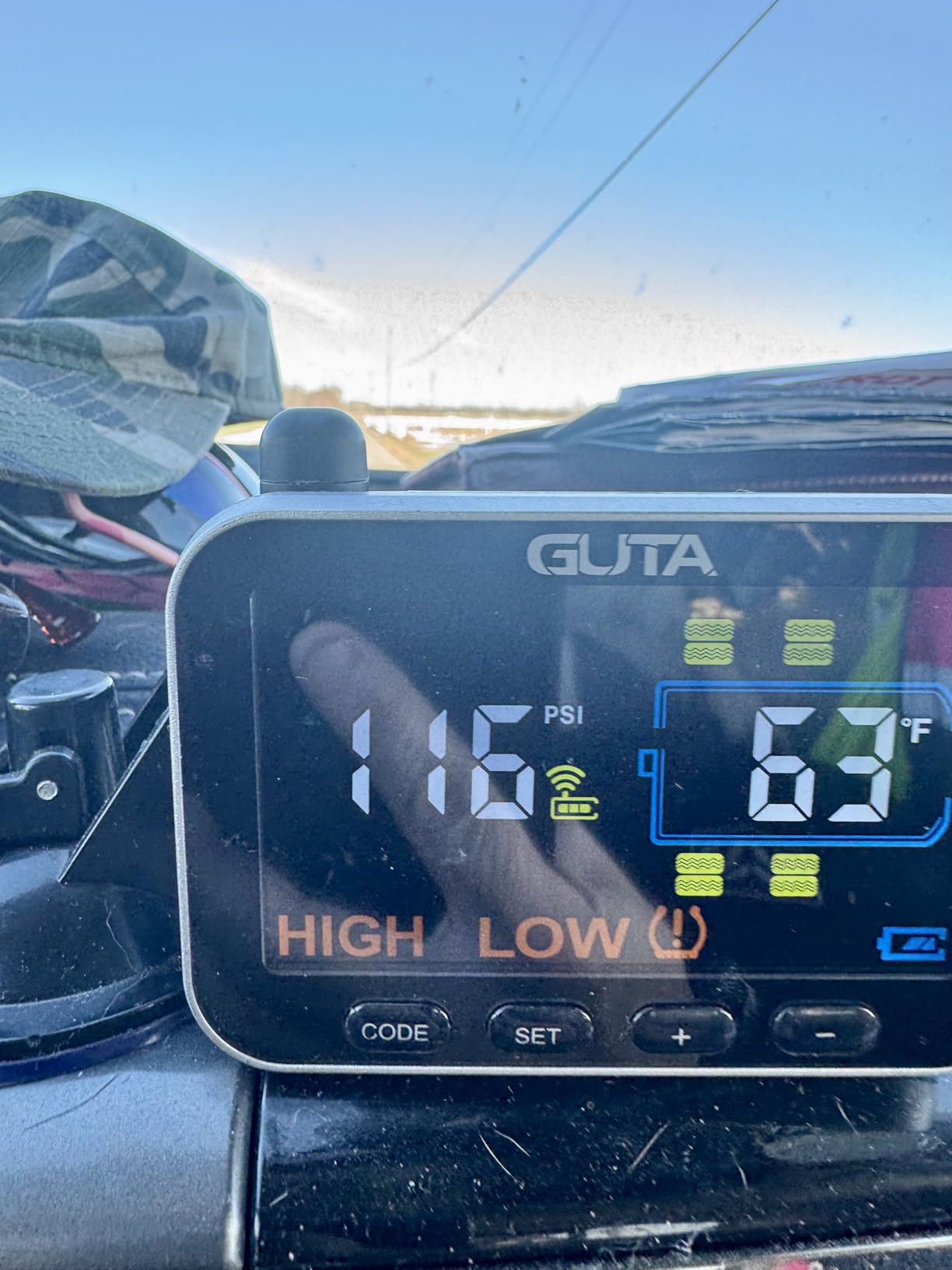
The display is a large color LCD with adjustable backlight and a flip option for orientation, which is a small thing that matters when you are mounting it in a left-hand-drive cab. The included booster reaches up to 100 feet, which covers most travel trailers comfortably.
At 4.2 stars with 70% five-star ratings, the differentiator owners name most is that pairing simply does not exist as a step. The trade-offs are mostly placement guidance and battery life.
Who the GT20 suits best
First-time TPMS owners, and anyone who dreads setup more than the price of the hardware. Removing the pairing step removes the most common reason people give up on a system in the driveway.
It also suits owners of a long trailer who would otherwise be ordering a booster separately anyway. The 100-foot booster reach and 24-tire ceiling make it a solid middle ground between a four-sensor kit and a full fleet system.
Where the GT20 falls short
Same metal valve stem requirement as the other GUTA cap-sensor systems. If your trailer runs rubber stems, the cap sensors are not the right hardware.
Monitor battery life is the practical limit. The built-in rechargeable lithium battery lasts about 15 hours under heavy use, so a multi-day trip means charging it overnight, unlike the GT30, which runs for over a week on a charge. The booster also needs to be mounted near the middle of the trailer and away from large metal panels, which takes a little planning.
8. GUTA GT80 – Best Flow-Through Sensors and Touchscreen
GUTA GT80 RV Tire Pressure Monitoring System, 10 Flow-Thru Sensors TPMS
Flow-through sensors
Vertical full-color touchscreen
Booster to 164 ft
22 tires on one page
Pros
- Flow-through sensors let you inflate without removing anything
- Upright color touchscreen with touch and sound feedback
- Sensors factory-paired and pre-labeled for tool-free install
- Booster extends range to 164 feet
- Automatic trailer detection when you hitch back up
Cons
- Rough roads can briefly drop inner rear tire readings
- Flow-through design needs metal valve stems
- Display sleeps after 10 minutes of no vibration
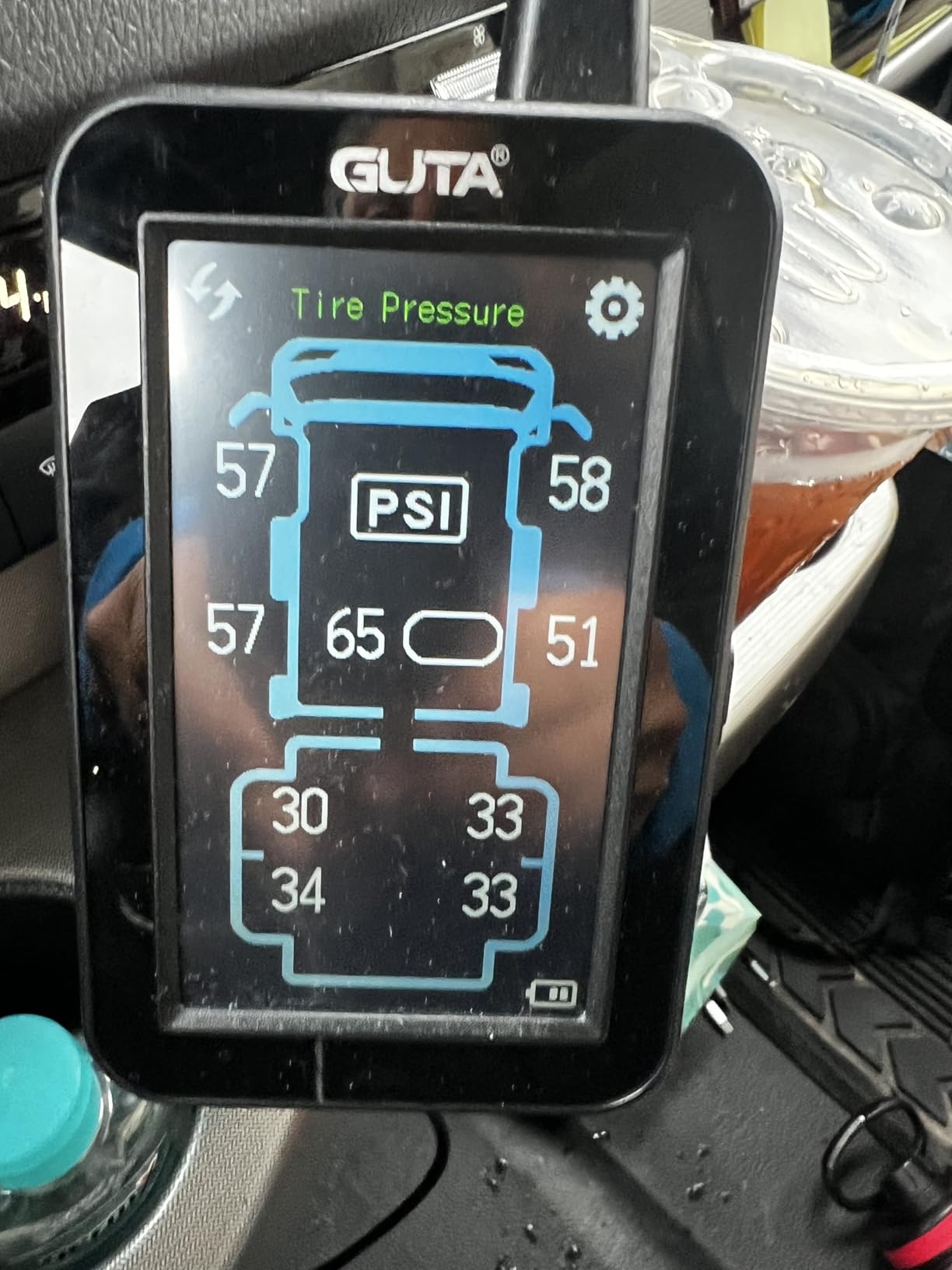
Flow-through sensors are the feature owners ask for most often once they have used a cap sensor, and the GT80 is the clearest version of it in this roundup. The sensor mounts like a cap but leaves the valve passage open, so you can top off a tire at a gas station without pulling anything off. On inner dual wheels with tight clearance, that alone changes daily usability.
The display is a large vertical full-color touchscreen with touch and sound feedback, mounted upright rather than sideways. That orientation sounds cosmetic until you try reading a landscape-oriented screen clipped to a console. It shows up to 22 tires on one page across 6 alarm modes.
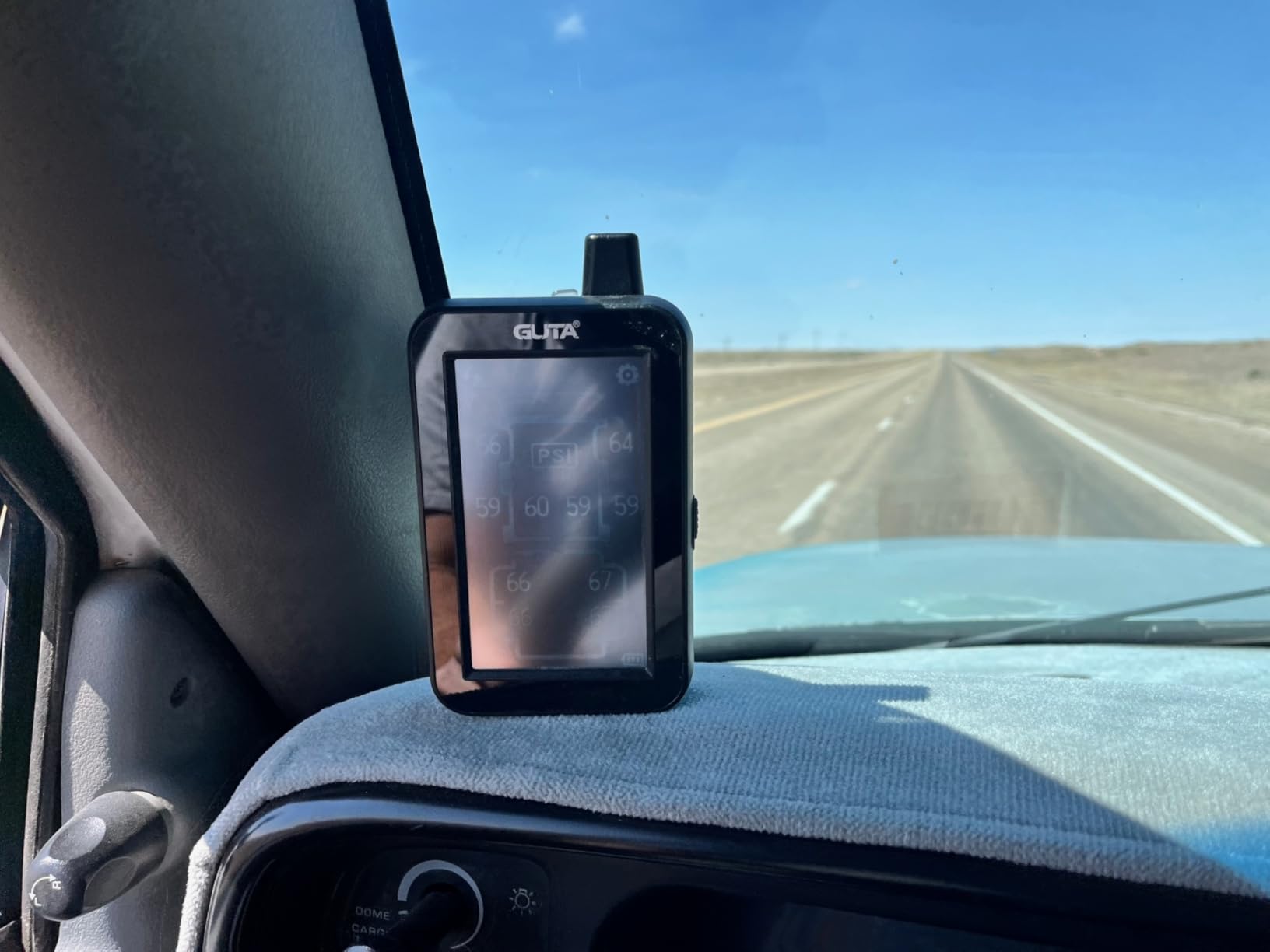
Range is the standout. The included booster extends connectivity to 164 feet, which the manufacturer positions for a 40 ft RV towing a 28 ft trailer. It also supports switching between 5 vehicle types with wireless pairing, monitors user-replaceable CR2032 sensor batteries, and drops into power-save after 10 minutes of no motion before waking on vibration.
Two details we liked that rarely get mentioned. Sensors wake on vibration, so a spare tire sitting in a storage compartment can still report. And there is a well-documented 29-page manual, a quick-start guide, and QR code access, plus firmware updates published through the GUTA website.
Who the GT80 suits best
Long rigs. A 164-foot boosted range covers essentially any trailer-plus-tow-vehicle combination without a second booster, and automatic trailer detection means the trailer sensors reappear on screen the moment you hitch back up.
It is equally the right pick for owners of inner duals who are tired of removing a sensor every time they add air, and for anyone who prefers a touch interface over a button-driven display.
Where the GT80 falls short
Flow-through sensors require metal valve stems to work as designed. On a trailer with rubber stems, this becomes a stem replacement project before you can install anything.
There is one recurring wrinkle in the reviews: rough roads and expansion joints can temporarily drop the inner rear tire readings, and they come back once vibration resumes. The display also sleeps after 10 minutes of no vibration and needs a tap, which can look like a fault at a rest stop.
It is also the newest and least field-tested system in the group, at 118 reviews. The 4.5-star rating is the highest here, but a thinner review pool means less long-term data on sensor longevity than the older kits have.
9. Avutrel Solar TPMS – Best Single-Vehicle Solar Kit
Avutrel Tire Pressure Monitoring System,TPMS with Solar Charging&USB Charging,5Alarm Modes, Real Time Monitoring Pressure and Temperature, Auto& Color Display Screens,Suitable for 4 Wheeled Vehicles
5 alarm modes
Solar and USB charging
Auto brightness color display
4 external sensors
Pros
- Entry-level cost for basic monitoring
- Dual solar and USB charging keeps it powered
- Screen brightness adjusts for daylight and night
- Five alarm modes including slow and fast leaks
- Sensors resist snow and water
- About a three-minute install
Cons
- Only four sensors so a trailer plus dually is not covered
- No signal booster or repeater included
- No documented PSI and BAR unit switching
This is a straightforward four-sensor kit and it does the simple version of the job well. Five alarm modes cover rapid leakage, slow leakage, high and low pressure, and high temperature, with real-time pressure and temperature shown while you drive. The screen brightness adjusts automatically so readings stay visible in direct sun and at night without touching a setting.
Charging is handled by a built-in solar panel plus USB, the sensors are external with low power consumption and are described as resistant to snow and water, and installation takes about three minutes if you are comfortable with a valve stem.
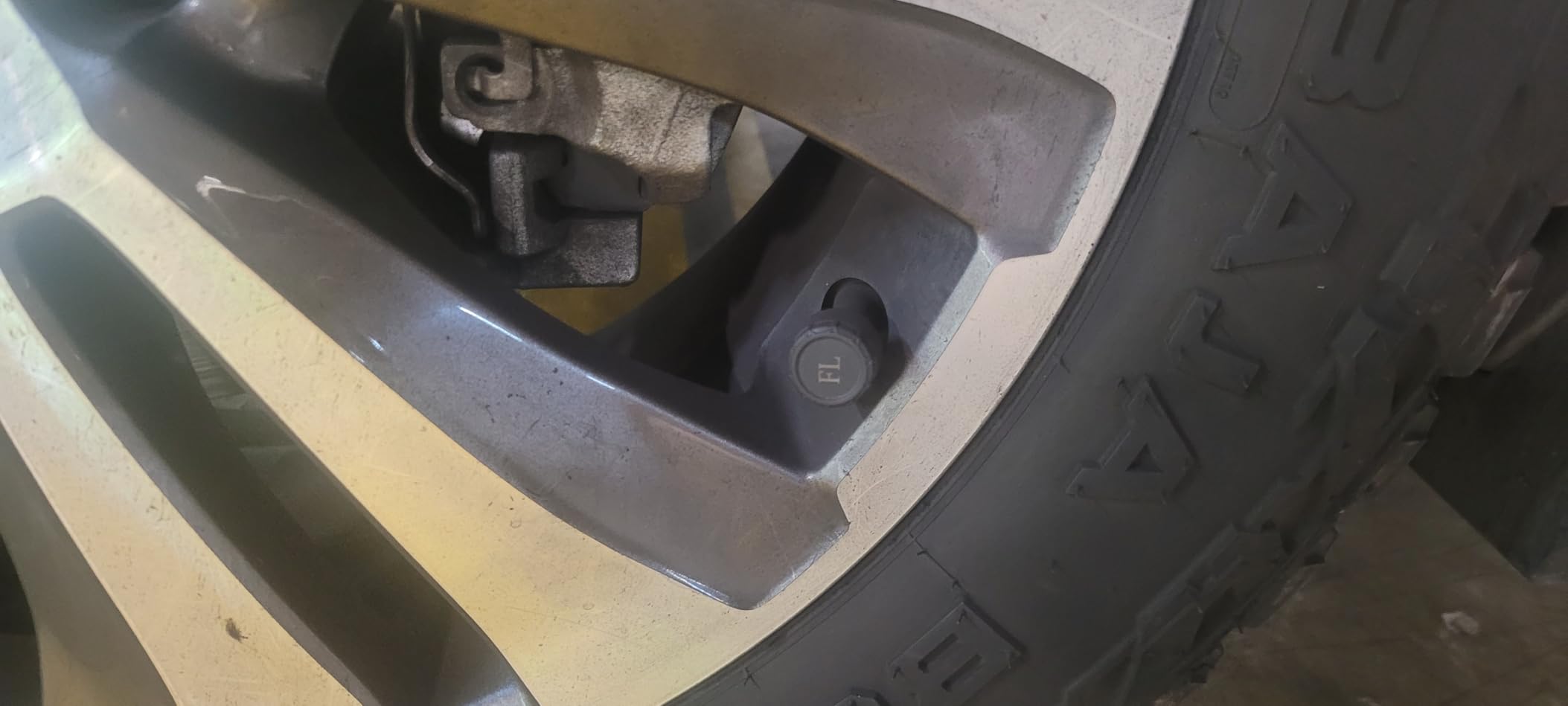
At 4.2 stars with 67% five-star ratings, it holds a 4.2 average comfortably. It is a sensible pick for a single vehicle, a small trailer, or a boat, and for anyone who wants temperature and pressure visibility without committing to a full trailer-oriented system.
The limitation is scale rather than quality. Four sensors is the entire package, and there is no booster or repeater of any kind.
Who the Avutrel suits best
Anyone checking one vehicle with four tires, and anyone who wants a display that stays charged without a cigarette lighter socket. It is a reasonable companion system for a boat, a runabout, or a single-axle utility trailer.
If you tow, treat it as a secondary check rather than your primary trailer monitor, and pair it with a separate gauge habit.
Where the Avutrel falls short
You cannot cover a travel trailer and a dually tow vehicle with four sensors, and the shortfall is not close. There is also no signal booster, so on anything beyond a short trailer the rear sensors will be unreliable.
The feature documentation does not mention switching between PSI and BAR units, which is a small gap if you cross borders. Overall it is a solid single-vehicle monitor being asked to consider a towing job it was not sized for.
10. Taimster M-10 – Best for Large Tire Layouts with Per-Axle Alarms
Taimster Trailer Tire Pressure Monitoring System 10 Sensors,0-188PSI RV TPMS with 4.5″ Large Solar Monitor 6 Alerts, Signal Booster for Truck/Camper/Motor Homes,Long Sensing Distance
4.5-inch display
0-188 PSI with under 1 PSI error
IP67 sensors
15 days per charge
Pros
- Bundled signal booster improves reliability on longer trailers
- 4.5-inch display shows every monitored tire at once
- Accuracy under 1 PSI across a 0-188 PSI range
- IP67 sensors with anti-theft locking nuts
- Solar and Type-C charging gives about 15 days per charge
Cons
- Screen brightness is a recurring complaint
- Some sensors stopped reading after a few months
- Extra sensors and the repeater are not sold on Amazon
- No manual included in some units
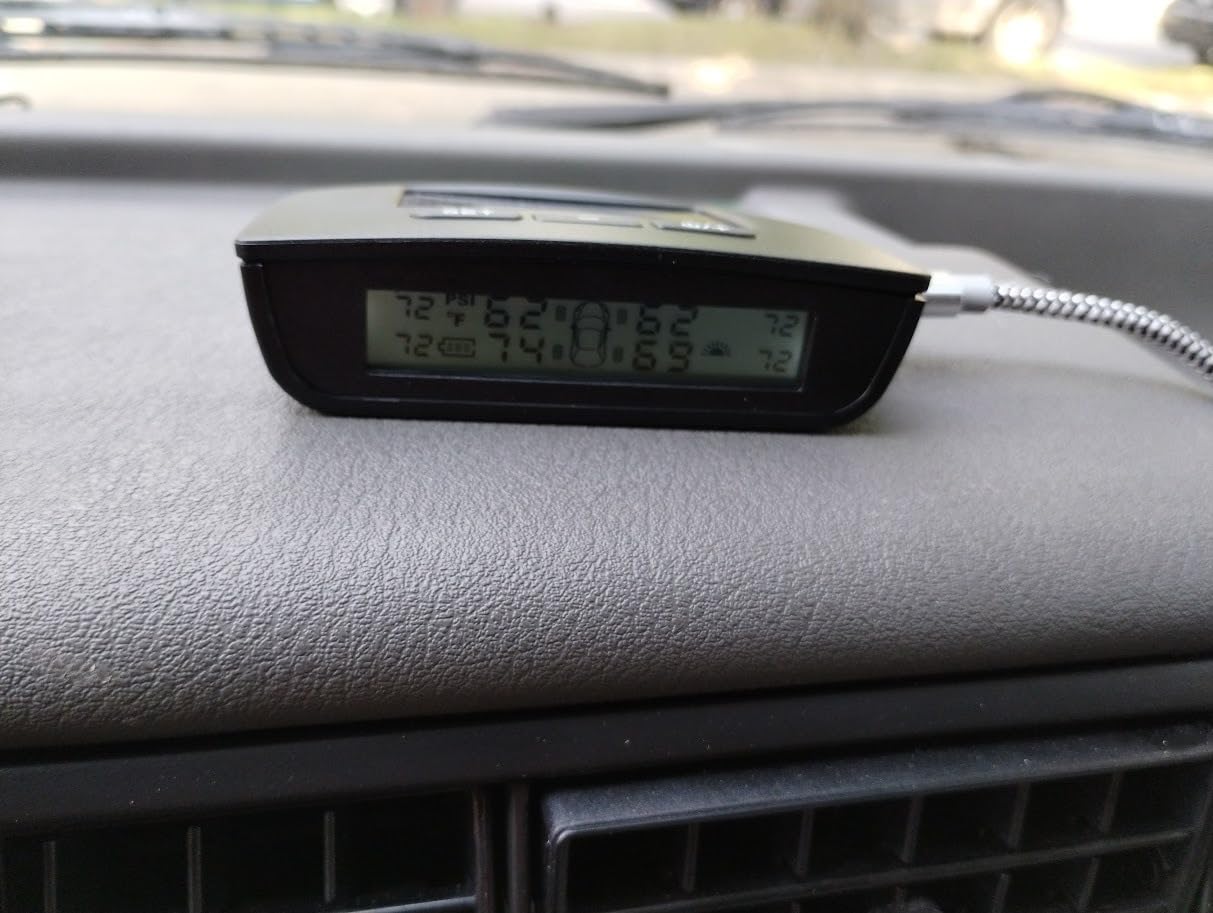
The M-10 is the most tire-capable layout option here in practice. The 4.5-inch display shows pressure and temperature for 4 to 14 tires at once against a physical layout that mirrors your actual trailer, and the sensor range runs 0 to 188 PSI with error under 1 PSI, the tightest accuracy figure in this roundup.
A signal booster or repeater is included, which is the component that makes the difference on longer trailers. Sensors are IP67 waterproof and dustproof and come with anti-theft locking nuts, so they hold up in winter road salt and resist being pocketed at a campground. Dual solar and Type-C charging gives roughly three to four hours of charging for about 15 days of use.
The per-axle alarm control is genuinely useful. You can draw a custom tire layout map and set independent high and low pressure values for each axle, so a heavily loaded rear axle is not judged against the same threshold as a lightly loaded one. Operating range is minus 4F to 185F, and the unit auto-sleeps after five minutes parked and wakes on vibration.
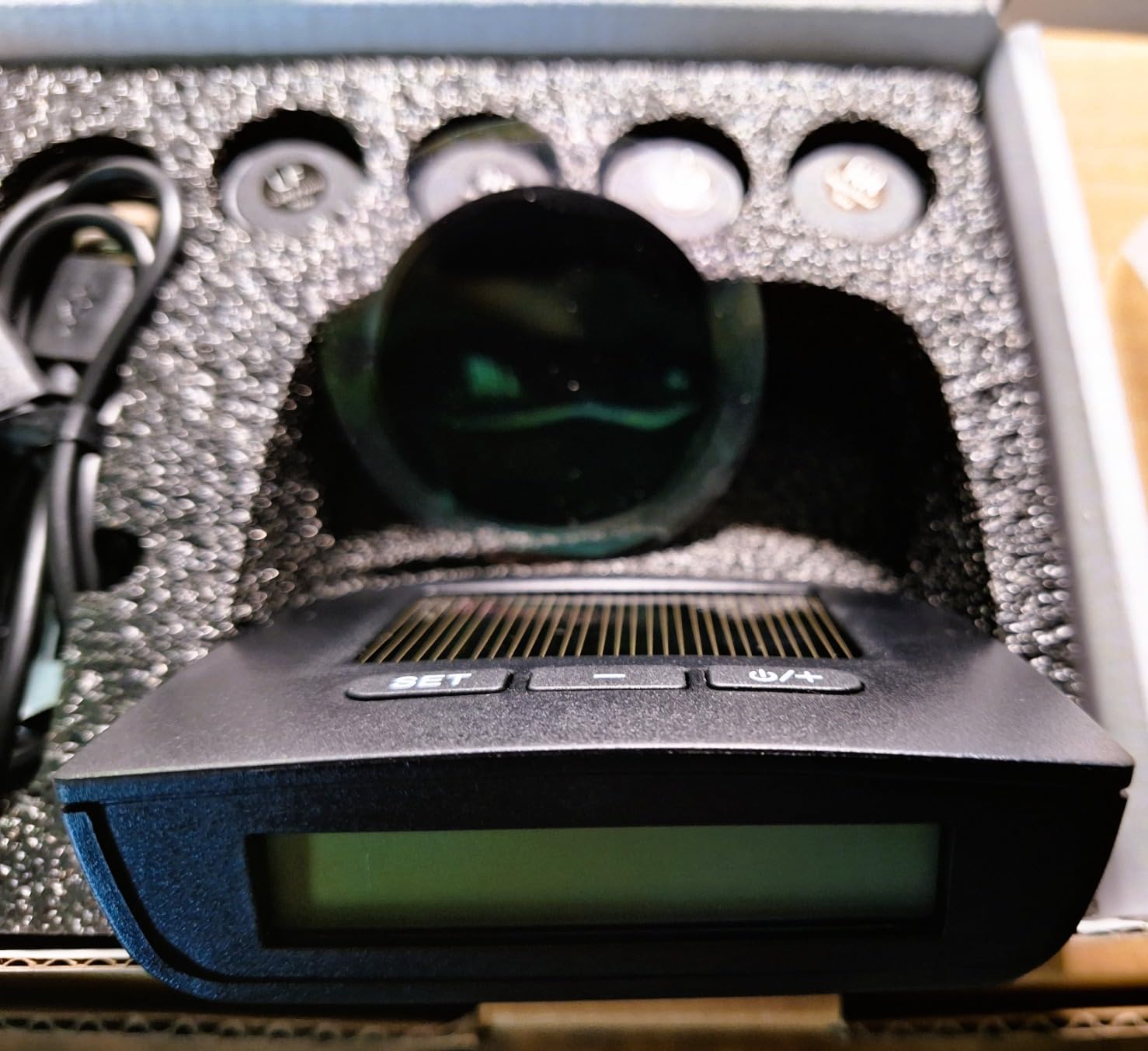
At 4.2 stars, the rating spread is unusual: 58% five-star and 22% four-star with no one-star complaints at all. People who like it like it a lot, and the pattern in the reviews is a big all-at-once display, strong accuracy, and a booster that actually works.
Manufacturer support also comes up well, with replacement sensors sent out when units failed.
Who the M-10 suits best
Triple-axle trailers, tag-along combinations, and anyone running ten or more monitored tires who wants them on one screen with per-axle thresholds. Six alert modes and a customizable layout map make it a good fit for unusual tire arrangements.
The included booster and IP67 sensors also make it a strong cold-climate choice, where corrosion and road salt are the bigger threat.
Where the M-10 falls short
Screen brightness is the most consistent complaint in the reviews, particularly in direct daylight, which is exactly the condition you need it in most. The locking nuts also mean a little more work at every inflation stop.
Availability is the other practical problem. The included repeater and the additional sensor sets are not readily sold on Amazon, so growing past the shipped sensor count is more involved than with the GUTA systems. Some owners also report sensors that stopped reading after a few months, and one system arrived without a manual, which makes threshold setup genuinely frustrating.
How to Choose an RV TPMS for Your Travel Trailer
Signal range and when a repeater is not optional
Sensor range is the number one complaint in owner discussions, and it is the number one thing to check before you buy. Radio signals weaken as they pass through aluminum siding, floor insulation, and multiple layers of structure between the display and the rear-most tires. That is why a system that performs well on a 20 ft trailer can flicker on a 36 ft rig parked behind a truck.
Our read of the specs and the reviews: treat 26 feet as car-only territory, look for a bundled booster if your trailer is over 30 ft, and treat 100 feet or more as the comfortable zone for a full-size travel trailer. If you can get a booster in the box, take it, because adding one later means another purchase and a mounting job on the trailer frame. Mount it near the middle of the trailer and keep it away from large metal panels.
Flow-through sensors versus external cap sensors
This is the decision every buyer faces eventually. An external cap sensor screws onto the outside of the valve stem and covers the valve, which means you remove it to check or add air. A flow-through sensor mounts the same way but leaves the valve passage open, so you can inflate without touching anything.
For inner dual wheels on a travel trailer, the physical clearance is often tight enough that removing a sensor is genuinely annoying. That pushes people toward flow-through, which is why the GT80 is the most requested setup in our lineup. The trade-off is that flow-through designs need metal valve stems to seal properly, so check your valves before choosing one.
Temperature alerts and bearing failure
A tire that is losing pressure gets hot, and a tire that is getting hot for another reason often gets dangerously hot. Temperature monitoring is what turns a TPMS from a convenience into a safety tool: many systems run a high-temperature alarm alongside the pressure alarms, and a reading climbing on a tire that is not losing air is a warning worth pulling over for.
Look for a system that displays temperature in the same view as pressure, and one with a temperature alarm mode. A sustained climb on a single tire with stable pressure is the pattern most associated with a developing bearing or brake problem, and catching it early is the difference between a repair and a roadside failure.
Pressure range and the numbers RV tires actually use
Pressure ranges in this category vary more than any other spec, and the difference matters if you ever upgrade your trailer. Entry-level kits top out around 87 to 98 PSI, which is fine for a tow vehicle or a light single-axle trailer. Systems aimed at heavy trailers reach 188 PSI and are built for truck and dually tires.
Recommended tire pressures for travel trailers come from the tire sidewall and the vehicle placard rather than from any single number, and they change with load, so set your baseline from the loaded condition. Check cold pressure before a trip rather than immediately after driving, since hot readings run high and can mask a real loss.
Power: solar, USB, cigarette lighter or internal battery
There are three common power approaches and they suit different owners. A cigarette lighter plug never runs out but ties up a 12V socket. Solar plus USB is cable-free and keeps the unit self-sufficient, though a cloudy multi-day stretch is worth thinking about. A built-in rechargeable monitor battery is the most flexible and the most variable, ranging from about 15 hours on the GUTA GT20 under heavy use to 12 to 14 days on the GT30.
Sensor batteries are separate from all of this. Most are replaceable coin cells, rated anywhere from one year to four years, and a system where you have to destroy the sensor to change the cell is worth avoiding. Replace them at the start of each season rather than waiting for a low battery warning on a mountain pass.
Alarm logic and how easy it is to set thresholds
All ten systems here run between five and six alarm modes, covering high and low pressure, fast leakage, high temperature, low sensor battery, and lost signal. What differs is how you set them. Automatic reference calibration, which the Masoll M13 and both GUTA trailer systems use, sets thresholds at plus 25% and minus 15% of your current pressure and removes the setup entirely. Manual threshold entry gives you control but takes time on your first drive.
Per-axle thresholds are the premium feature here. If your rear axle runs 20 PSI higher than your steer axle under load, a single threshold either cries wolf all trip or misses the tire you actually needed to know about.
Expandability across tow vehicle and trailer
Count your tires before you choose, because this is the most common reason people end up buying a second set of sensors. A tandem-axle trailer is four tires. Add a dually tow vehicle and you are at eight. A tag-along or triple-axle combination can push past ten, and only a few systems in this roundup handle that out of the box.
Also check whether the display is looking at one vehicle or several. Some systems can view more tires than they have transmitters for, which is a good sign they will grow with you. Others monitor one configuration at a time and need a reset to swap between trailer and truck.
Winter storage and sensor battery maintenance
Few people cover this, and it is where systems quietly fail a year later. Before storage, remove the sensors from the valve stems, wipe the threads, and store the coin cells outside the transmitters so a slow leak does not take out a sensor over a winter. Keep the monitor off any 12V source so the vehicle battery is not slowly drained by a plugged-in display.
Through the season, check the valve stems for corrosion from road salt, particularly on metal stems in a saltwater or salted-road climate. A seized valve stem turns a five-minute sensor swap into a much longer job. If a system supports firmware updates, run them before a long trip rather than during one.
Setting a correct pressure baseline
Whatever system you buy, set your baseline in one sitting. Inflate all monitored tires to the placard pressure while cold, read the values your system displays, and use those as the reference. If the numbers differ from a handheld gauge by a few PSI consistently, trust your system for trend watching and use the gauge for the fill.
Then check them cold again after a week of storage and before every trip. A tire that loses 3 PSI sitting still is telling you about a slow leak or a seating problem, and catching that in your driveway is a far better outcome than finding out at highway speed.
Once you have the trailer dialed in, the small accessories around it start to matter more. Our guides to RV leveling blocks for travel trailers and RV water pressure regulators cover the two setup tasks owners tend to do first at a new site.
Frequently Asked Questions
What is the best tire pressure monitoring system for travel trailers?
The Tymate TM7 is the best overall pick for most travel trailers. It is accurate to about 1.5 PSI, has a readable color LCD with dual USB charging, sets up in five minutes, and has the largest review base of any system in our roundup. For a long trailer over 30 ft, the GUTA GT30 or GT80 with an included signal booster is a better match.
Who makes the best tire pressure monitoring system?
Three brands dominate owner discussion: TireMinder, Tymate, and GUTA. TireMinder leads on capacity, with systems that monitor up to 40 tires and bundle a signal booster. Tymate leads on simplicity and proven reliability. GUTA leads on trailer-specific hardware, including booster bundling and the only flow-through sensor option we reviewed.
What PSI range do I need for a travel trailer TPMS?
Most travel trailer tires run in the 50 to 80 PSI range, so a system rated to 87 or 98 PSI will cover a standard trailer fine. If you tow a dually truck with the trailer, or plan to move up to a heavier rig, choose a system rated to 188 PSI so it covers both vehicles in one unit.
Do I need a signal booster for my travel trailer?
If your trailer is longer than about 30 ft, yes. Radio signals weaken through aluminum siding and floor structure, and owners most often report dropped readings on long rigs. A system that bundles a booster, such as the TireMinder i10, GUTA GT20, GUTA GT80, or Taimster M-10, saves you a second purchase. Mount the booster near the middle of the trailer and away from large metal panels.
How long do TPMS sensor batteries last?
It depends on the system. Replaceable CR2032 cells in the GUTA trailer systems are rated for up to four years, while the Tymate TM7 uses replaceable CR1632 coin cells that need occasional swapping. Replace batteries at the start of each season rather than waiting for a low battery warning, and remove cells during winter storage so a slow leak cannot ruin a sensor.
Our Final Pick for Travel Trailer TPMS in 2026
After working through ten systems, the Tymate TM7 remains the best rv tire pressure monitoring system for travel trailers for most owners. It is the most proven option by a wide margin, accurate to about 1.5 PSI, readable in daylight, and installable before you finish your coffee. Pair it with a Tymate repeater if your trailer runs long, and you have covered the most common failure mode trailer owners complain about.
For a different set of priorities: the TireMinder i10 for a large dedicated display and a bundled booster, the TireMinder 10 Pack for running a truck and trailer together, the GUTA GT80 for flow-through sensors on inner duals, and the GUTA GT30 for ten-tire visibility with a two-week battery. Whatever you pick, set your baseline cold, check it before every trip, and treat a rising temperature on a stable-pressure tire as a reason to pull over.

