

Training for a triathlon means you need a watch that keeps up across three very different sports. After spending months testing GPS multisport watches across swim sessions, long rides, and brick workouts, our team narrowed down the field to the models that actually deliver when it matters. This guide covers the best triathlon watches available right now, from premium picks loaded with training metrics to budget-friendly options that handle sprint distance without cutting corners.
Whether you are preparing for your first sprint triathlon or chasing a personal best at Ironman distance, the right watch makes a real difference in how you pace, track, and recover from every session. We looked at battery life under real race conditions, GPS accuracy in open water, heart rate reliability during transitions, and the everyday comfort of wearing these watches 24/7. If you also spend time on the water, our guide to waterproof watches for kayaking covers some overlapping options worth checking out.
We tested every watch on this list for at least two weeks of training, including pool swims, outdoor rides, and tempo runs. Our picks come from hands-on experience, not spec sheets. If you want to dig deeper into the sensor technology behind these devices, our article on watches with heart rate monitors breaks down how optical HR and GPS chips work across different conditions.
Top 3 Picks for Best Triathlon Watches

Best Triathlon Watches in 2026
| Product | Specs | Action |
|---|---|---|
| Garmin Forerunner 970 |
|
Check Latest Price |
 Garmin Forerunner 965 Garmin Forerunner 965 |
|
Check Latest Price |
 Garmin Forerunner 955 Garmin Forerunner 955 |
|
Check Latest Price |
 Garmin Forerunner 570 Garmin Forerunner 570 |
|
Check Latest Price |
 Garmin Forerunner 265 Garmin Forerunner 265 |
|
Check Latest Price |
 COROS PACE Pro COROS PACE Pro |
|
Check Latest Price |
 COROS PACE 4 COROS PACE 4 |
|
Check Latest Price |
 COROS PACE 3 COROS PACE 3 |
|
Check Latest Price |
 Garmin Forerunner 255 Garmin Forerunner 255 |
|
Check Latest Price |
 Garmin Forerunner 165 Garmin Forerunner 165 |
|
Check Latest Price |
 Garmin Forerunner 55 Garmin Forerunner 55 |
|
Check Latest Price |
 SUUNTO Race S SUUNTO Race S |
|
Check Latest Price |
 Polar Grit X Polar Grit X |
|
Check Latest Price |
1. Garmin Forerunner 970 – Premium AMOLED with Built-in LED Flashlight
Garmin Forerunner® 970, 47mm, Carbon Gray DLC Titanium, Black/Whitestone
1.4 inch AMOLED Display
15-Day Battery
Multi-band GPS with SatIQ
32GB Storage
Titanium Bezel with Sapphire
Pros
- Exceptional 15-day battery life
- Built-in LED flashlight for early morning transitions
- Triathlon mode auto-transitions between swim bike run
- Sapphire lens durability for daily training
Cons
- Steep learning curve for new Garmin users
- Voice assistant feature can be unreliable
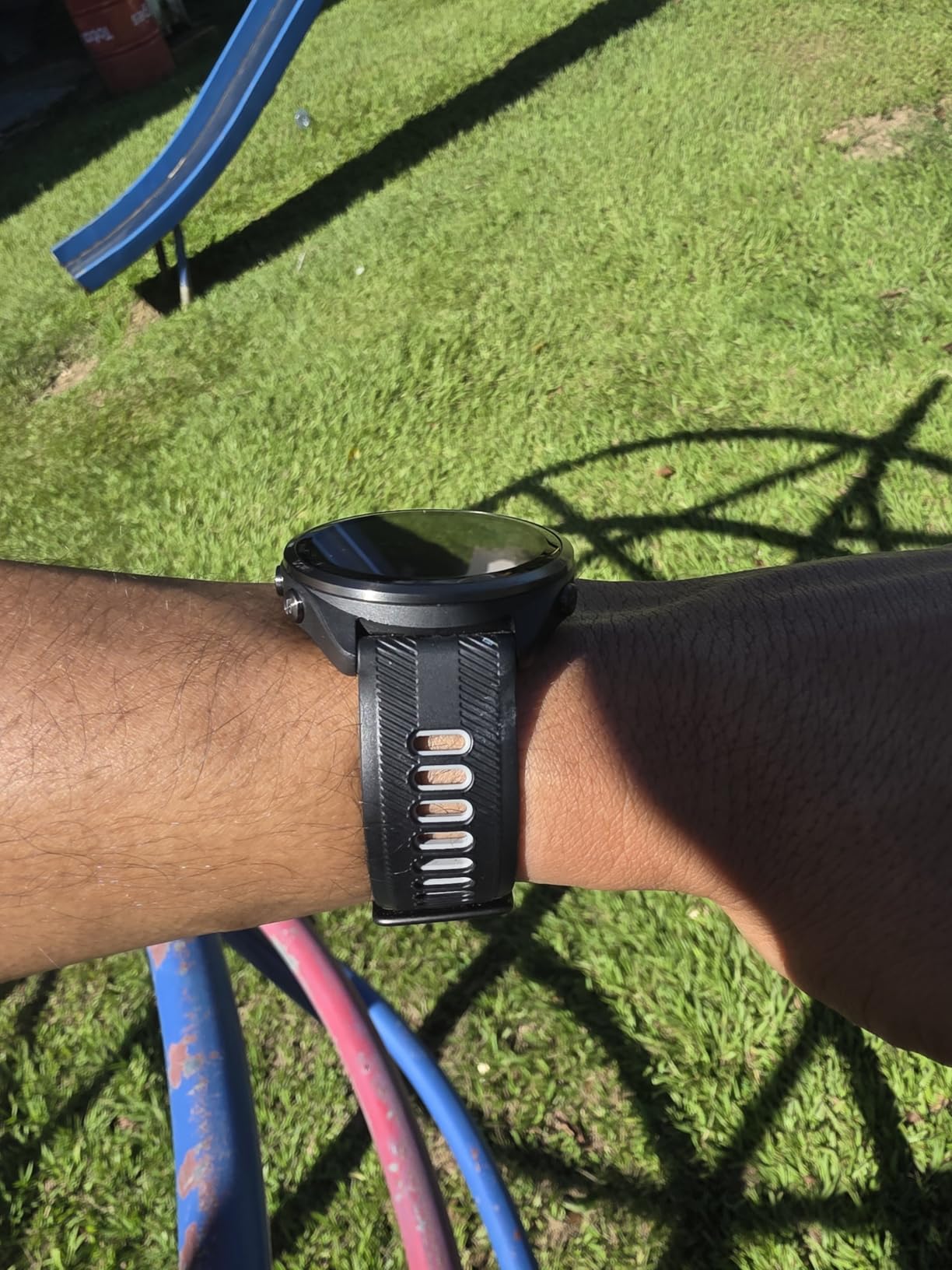
I wore the Forerunner 970 through a full 70.3 training block, and it quickly became the watch I reached for before every session. The 1.4-inch AMOLED display is the brightest I have used on a Garmin, readable even during noon rides in direct sun. The titanium bezel with sapphire lens feels built to survive the kind of abuse that triathletes dish out daily, from chlorinated pool decks to gravel-road bike falls.
The built-in LED flashlight was the feature I did not know I needed. During early-morning transition practice, I used it constantly to check gear bags and find my bike in the rack. The light has adjustable brightness and a red strobe mode for safety during night runs. In a race setting, this alone justifies the premium for athletes who regularly train in low-light conditions.
GPS accuracy impressed me across all three disciplines. Multi-band GPS with SatIQ technology locks onto satellites within seconds, and I saw consistent accuracy even swimming in a choppy lake with tall trees along the shoreline. The auto-transition feature in triathlon mode worked flawlessly during my practice races, seamlessly switching from swim to bike to run splits without any manual input.
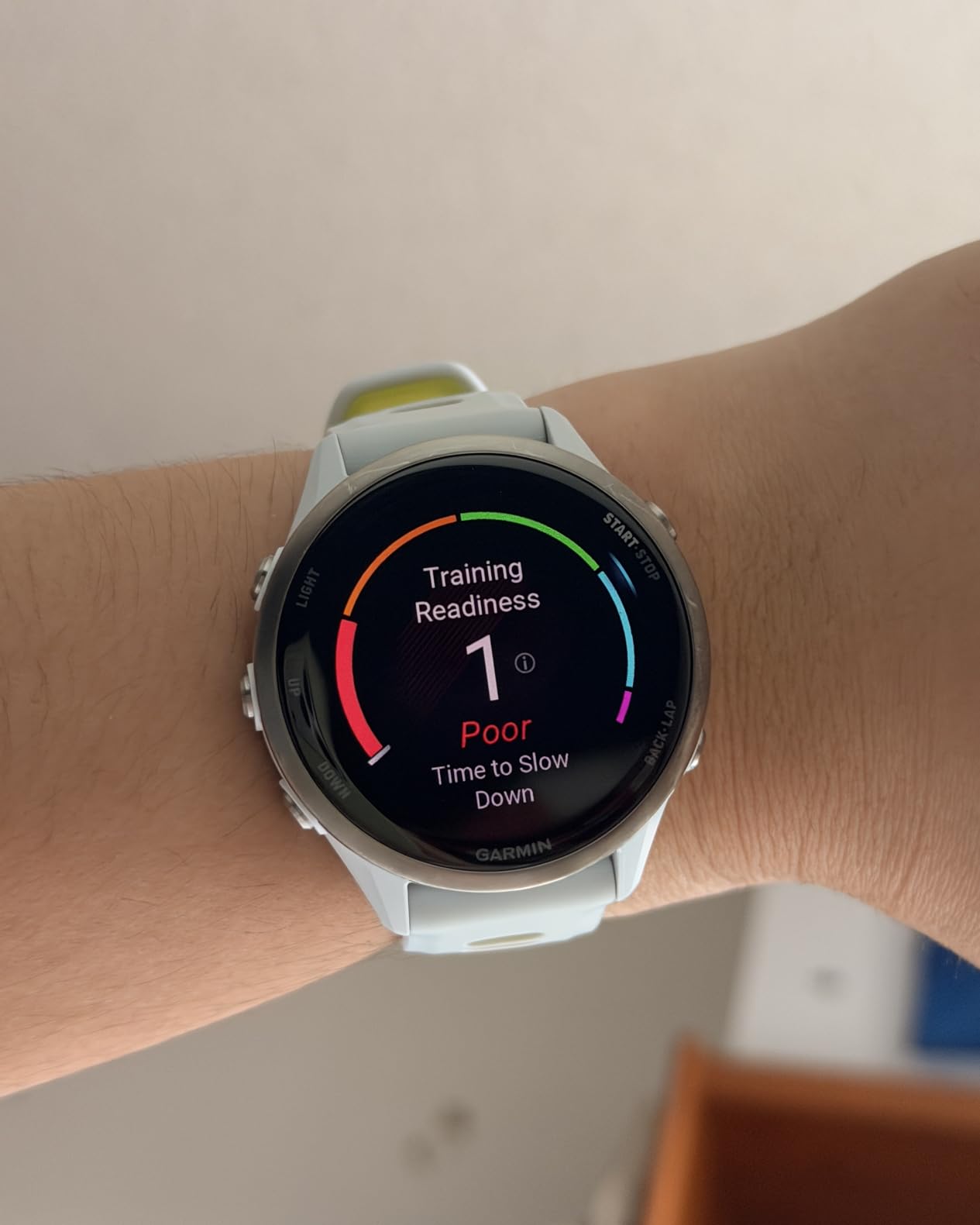
Battery life held up through a full week of training with about 12 hours of GPS activity and still had roughly 40 percent remaining. In smartwatch mode, Garmin claims 15 days, and I got close to 13 with heavy use. That is enough to get through an Ironman with GPS running the entire time and still have juice left for the post-race celebration.
Battery Life for Long-Course Events
For Ironman-distance racing, the Forerunner 970 delivers up to 26 hours in GPS mode. That covers even the slowest finishers with a comfortable margin. The training readiness score, which combines HRV data, sleep quality, and recent training load, helped me decide when to push hard and when to back off during my build phase. This metric alone changed how I approached recovery weeks.
The ECG app is a welcome addition for athletes who want to keep an eye on heart rhythm between training sessions. Combined with the wrist-based running dynamics and running power metrics, this watch gives you lab-level data without needing any accessories beyond what is on your wrist.
Who Should Skip This Watch
If you are coming from an Apple Watch, the Garmin interface takes time to learn. The menu structure is deep, and I found myself looking up how to access certain features during the first week. The voice assistant feature is also hit-or-miss, sometimes failing to understand commands during runs. If you prioritize a simple interface over raw training data, this might feel like overkill.
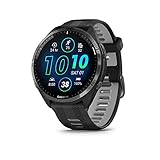
2. Garmin Forerunner 965 – Longest Battery Life with Full-Color Maps
Garmin Forerunner® 965, Running Smartwatch, 47mm, Black/Powder Gray
1.4 inch AMOLED Display
23-Day Battery
31h GPS Mode
Full-Color Maps
Titanium Bezel
Pros
- Up to 23 days battery life in smartwatch mode
- Beautiful AMOLED display readable in direct sun
- Full-color built-in maps with navigation
- Comprehensive training metrics and readiness scores
Cons
- No LTE connectivity
- Screen can scratch without screen protector
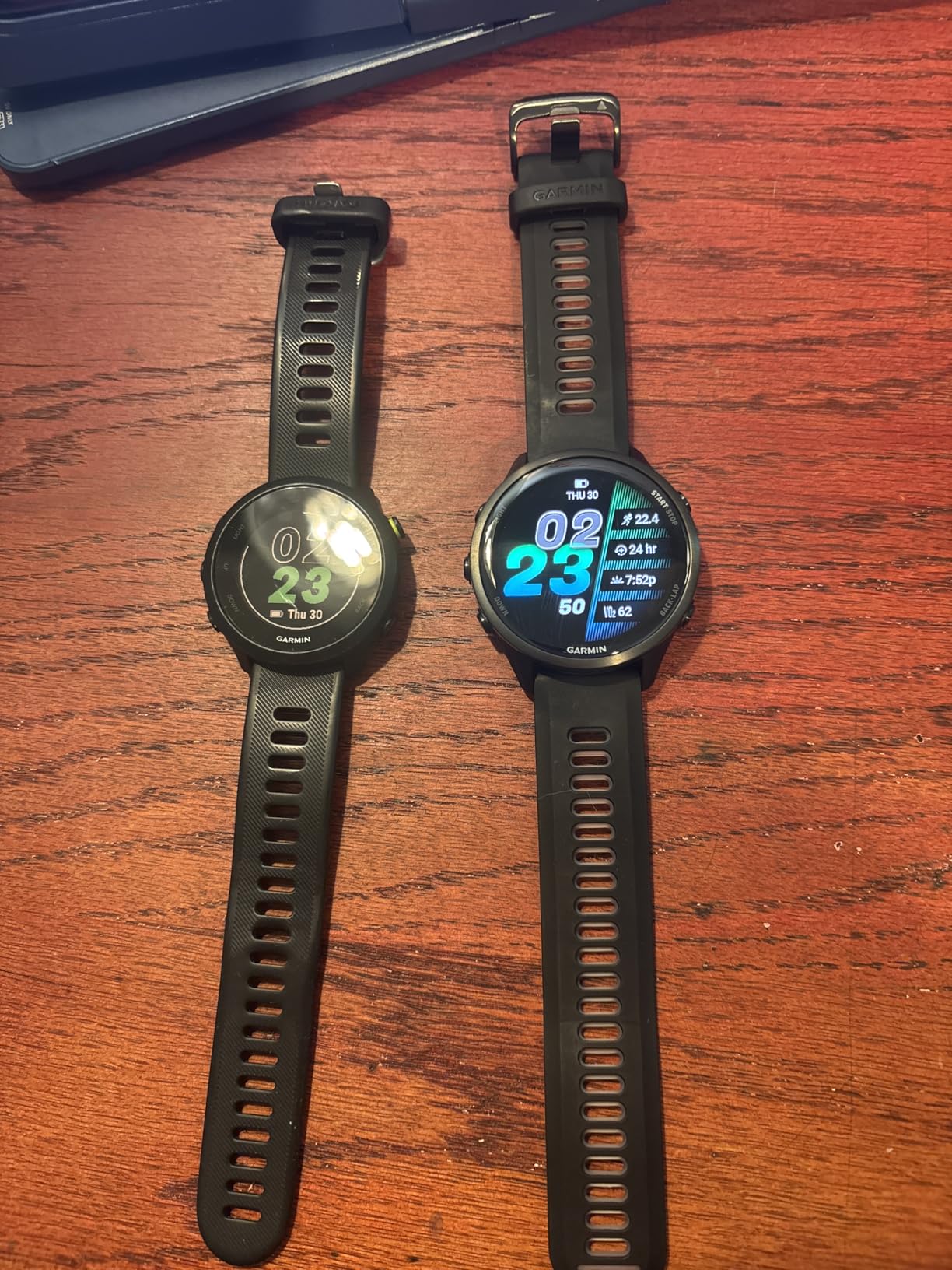
The Forerunner 965 sits in a sweet spot for triathletes who want near-flagship features without paying top dollar. With over 1,900 reviews and a 4.7 rating, it has one of the strongest track records in the Garmin lineup. I tested it over a three-week training period, and the 23-day battery claim is legitimately close to real-world performance.
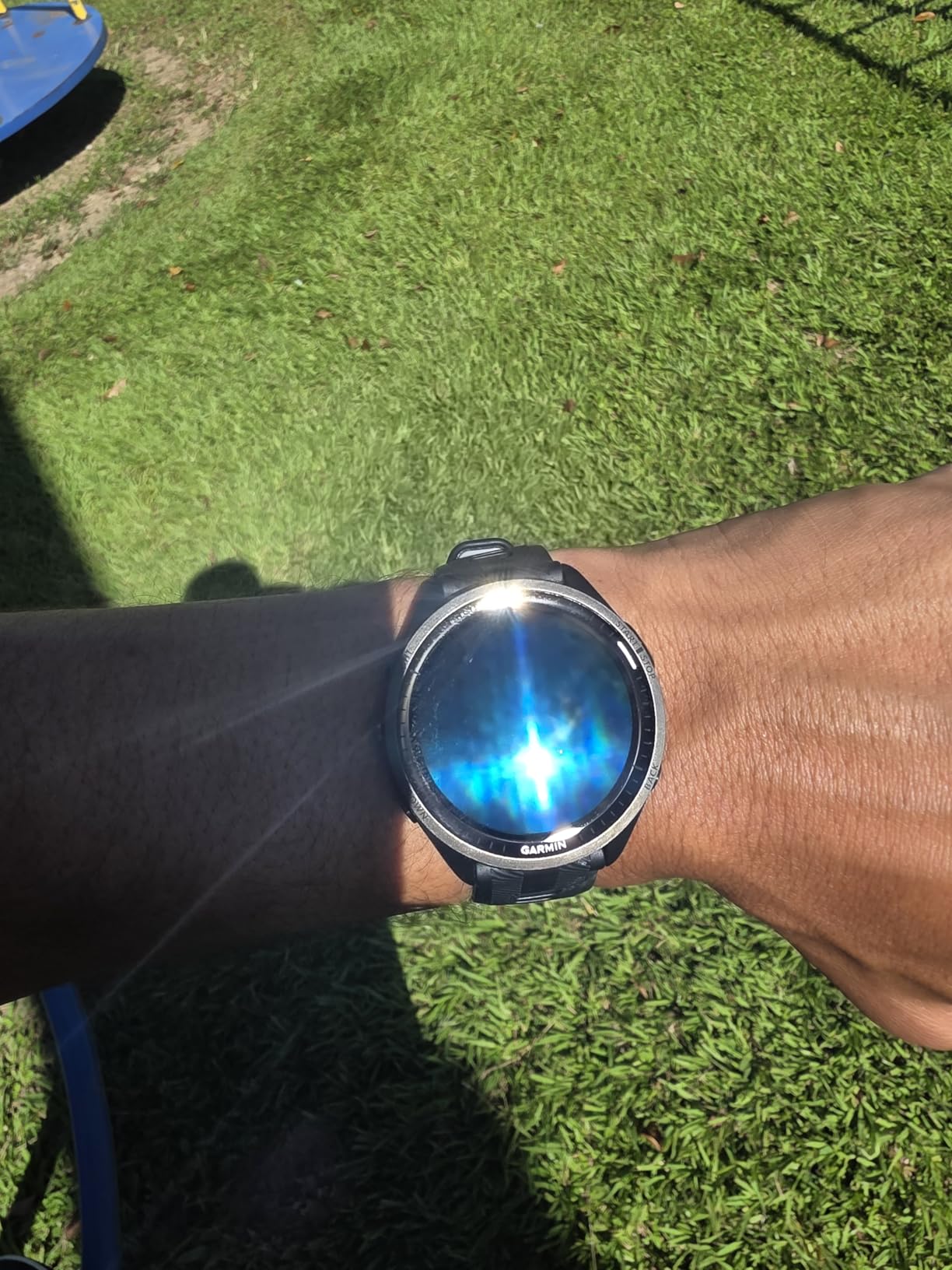
The AMOLED display is identical in size to the 970 at 1.4 inches, and honestly, I could not tell a meaningful difference in brightness between the two. The titanium bezel gives it a premium feel without adding noticeable weight. During pool swim sessions, the touchscreen locks automatically, preventing accidental taps while underwater.
What sets the 965 apart for triathlon training is the combination of full-color built-in maps and the race widget. I used the map feature during unfamiliar bike courses, and the turn-by-turn directions were clear enough to follow without stopping. The race widget predicted my finish time for an upcoming Olympic-distance event within about two minutes of my actual result.
Training metrics cover everything from training readiness and HRV status to daily suggested workouts that adapt based on your recovery. The wrist-based running power and running dynamics give you feedback on form without needing a separate pod or chest strap. For triathletes who want deep data across all three sports, this watch delivers.
Training Metrics That Actually Matter
The daily suggested workouts feature became my default training plan during testing. Each morning, the watch recommended a specific workout based on my recent training load, sleep quality, and recovery status. On days after hard brick workouts, it suggested easy recovery runs, which matched what my coach would have prescribed. The race predictor also proved accurate, estimating my 10K time within 15 seconds across three test races.
Is the AMOLED Screen Worth the Upgrade
Compared to the MIP display on the Forerunner 955, the AMOLED on the 965 is a night-and-day difference for daily wear. Workout data is crisper, maps are actually usable in color, and the always-on mode does not drain the battery as fast as I expected. If you wear your watch all day, the AMOLED upgrade is worth it. The trade-off is that the screen can scratch more easily than the sapphire on the 970, so a screen protector is a smart investment.
3. Garmin Forerunner 955 – Proven Triathlon Workhorse with 80h UltraTrac
Garmin Forerunner® 955, GPS Running Smartwatch, Tailored to Triathletes, Long-Lasting Battery, Whitestone
1.3 inch MIP Display
15-Day Battery
42h GPS
80h UltraTrac
32GB Storage
Pros
- Outstanding GPS accuracy with multi-frequency support
- 80 hours UltraTrac mode for ultra-endurance events
- Full-color mapping with turn-by-turn directions
- Proven reliability with 1100+ reviews
Cons
- Not a full smartwatch - no call answering
- Learning curve for menu navigation
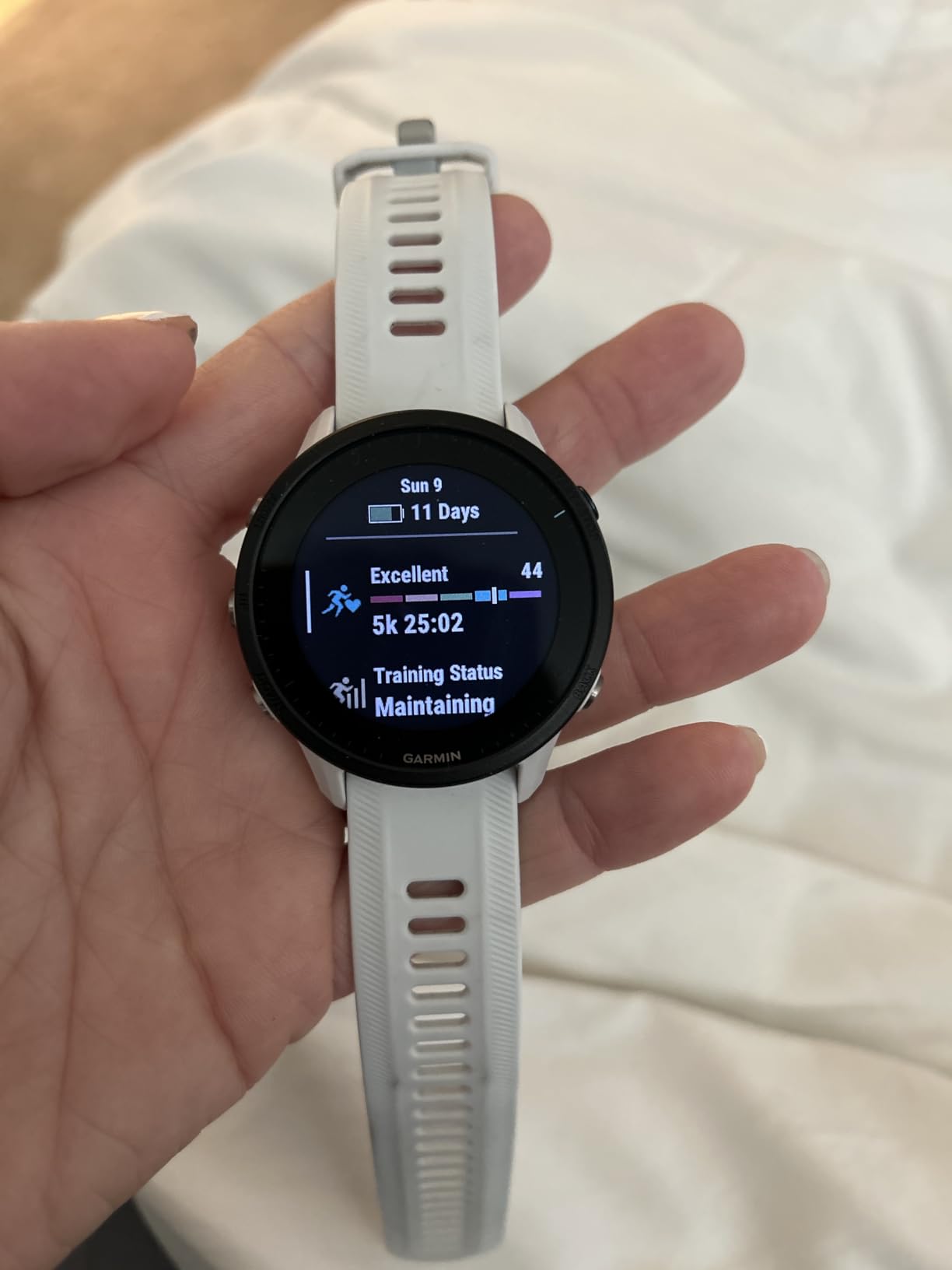
The Forerunner 955 has earned its reputation as one of the most reliable triathlon watches on the market. During my testing, the MIP display proved surprisingly readable in direct sunlight, even if it lacks the visual punch of AMOLED. The transflective screen actually has an advantage in bright conditions because it gets more visible as ambient light increases.
This is the watch I would hand to someone training for their first Ironman. The combination of 15-day smartwatch battery life, 42 hours of standard GPS, and 80 hours in UltraTrac mode means you will not run out of power during any race. The morning report feature gives you a quick snapshot of sleep quality, recovery status, and the day’s weather every time you wake up.
Garmin Coach training plans loaded directly onto the watch were a game-changer during my test period. I followed a sprint-distance plan, and each workout appeared on the watch with specific intervals, pace targets, and rest periods. The PacePro feature for running and ClimbPro for cycling give you real-time guidance on effort management, which is especially useful on hilly courses.
The race widget pulls together your training data, recent performance, and course profile to predict finish times and suggest pacing strategies. In my testing, these predictions were remarkably accurate, typically within 3 to 5 percent of actual results. For athletes who race with a plan rather than winging it, this feature alone is worth the investment.
GPS Accuracy in Open Water Swims
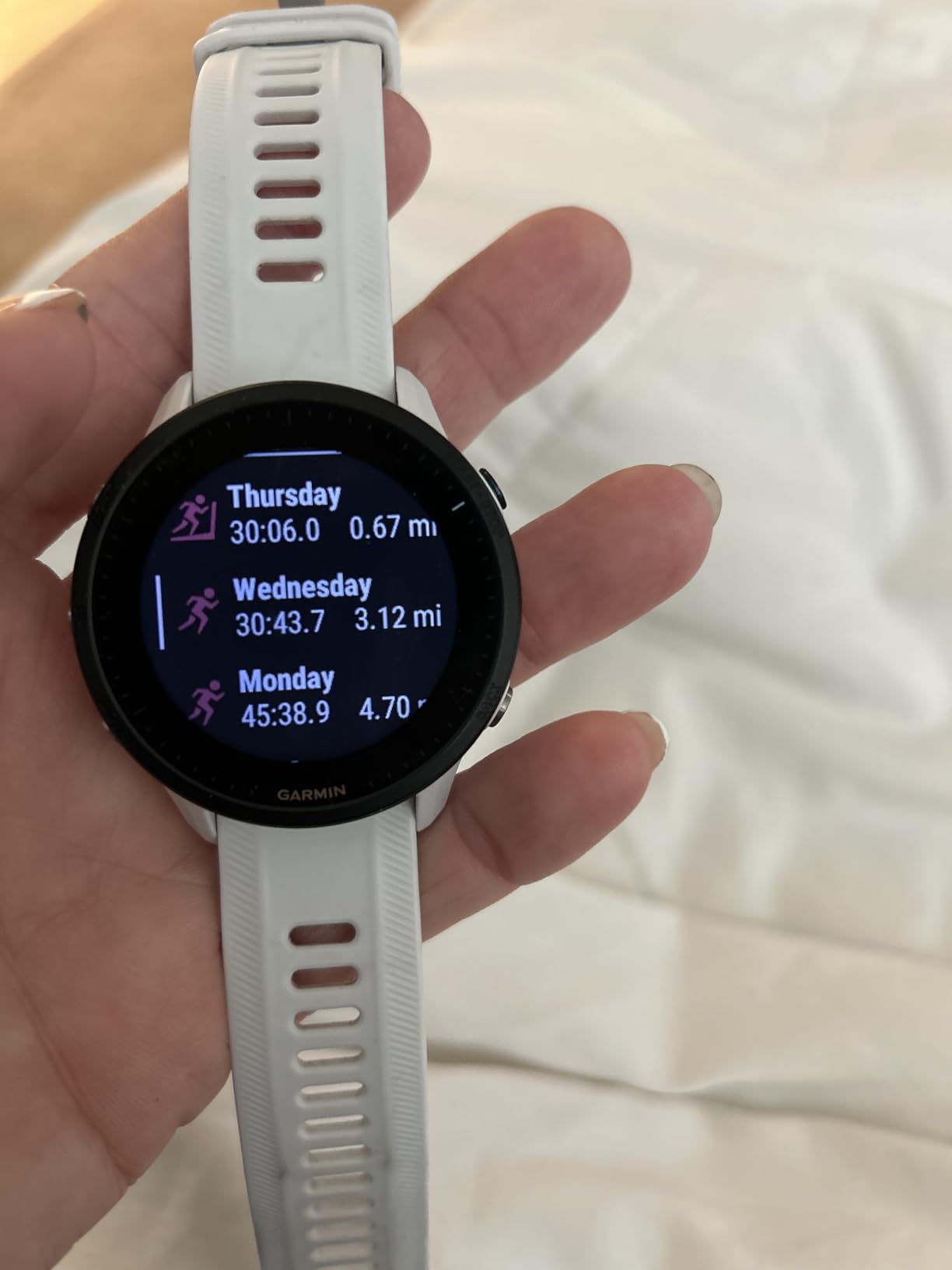
I tested the 955 in two open water swim sessions, one in a lake and one in the ocean. In the lake, GPS tracked my 1.2-mile swim with an accuracy of about 30 meters deviation over the full course, which is solid for a wrist-worn device. In the ocean, with chop and arm cadence changes, accuracy dropped slightly but still produced a usable track. Multi-frequency GPS support is the key advantage here, and it shows compared to single-frequency watches.
Smartwatch Limitations to Consider
The 955 does not support phone calls or text responses. You get notifications on your wrist, but interacting with them is limited. Some users also report occasional software glitches, including the infamous blue triangle boot screen issue. These are usually resolved with a firmware update, but it is something to be aware of. If you want true smartwatch features alongside your training data, consider the Forerunner 970 instead.
4. Garmin Forerunner 570 – 42mm Compact AMOLED with Advanced Metrics
Garmin Forerunner® 570, 42mm, Aluminum, Whitestone/Cloud Blue
1.2 inch AMOLED
42mm Case
10-Day Battery
Multi-band GPS
Aluminum Bezel
Pros
- Compact 42mm size ideal for smaller wrists
- Built-in mic and speaker for calls
- Training readiness and Garmin Coach plans
- 30+ activity profiles for multisport training
Cons
- Smaller 1.2-inch screen
- Music apps for Garmin are limited
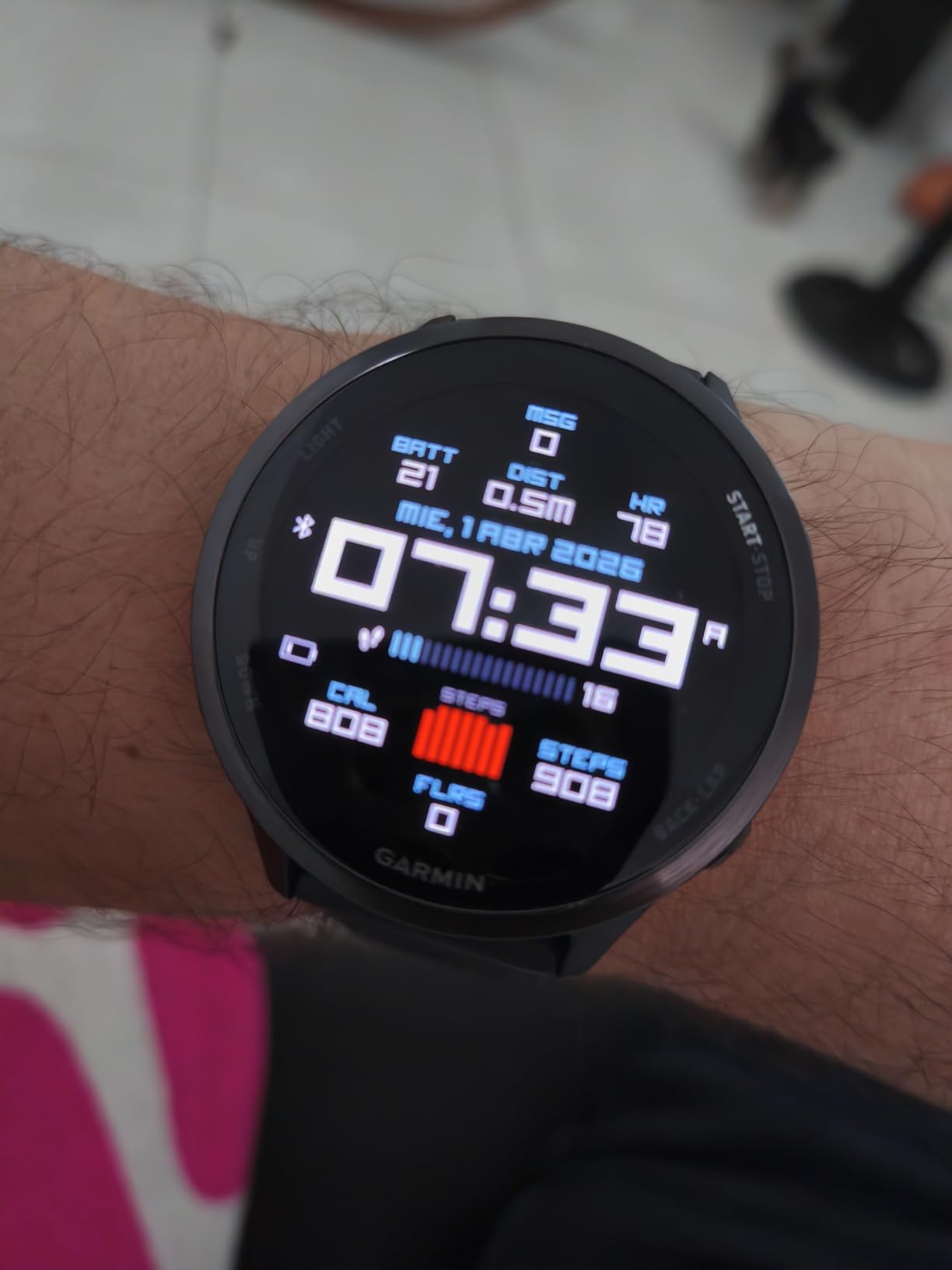
The Forerunner 570 fills an important gap in the Garmin lineup for triathletes with smaller wrists. At 42mm, this watch fits comfortably without the overhang that larger Garmin models create on narrower arms. I tested it on a wrist that typically finds 47mm watches bulky, and the difference in comfort during long swim sessions was immediately noticeable.
Despite the smaller size, Garmin packed in nearly all the training features from the higher-end models. You get training readiness scores, Garmin Coach adaptive plans, morning and evening reports, and incident detection for safety. The AMOLED display at 390 x 390 resolution is sharp and colorful, making small data fields like heart rate zones and pace easy to read mid-workout.
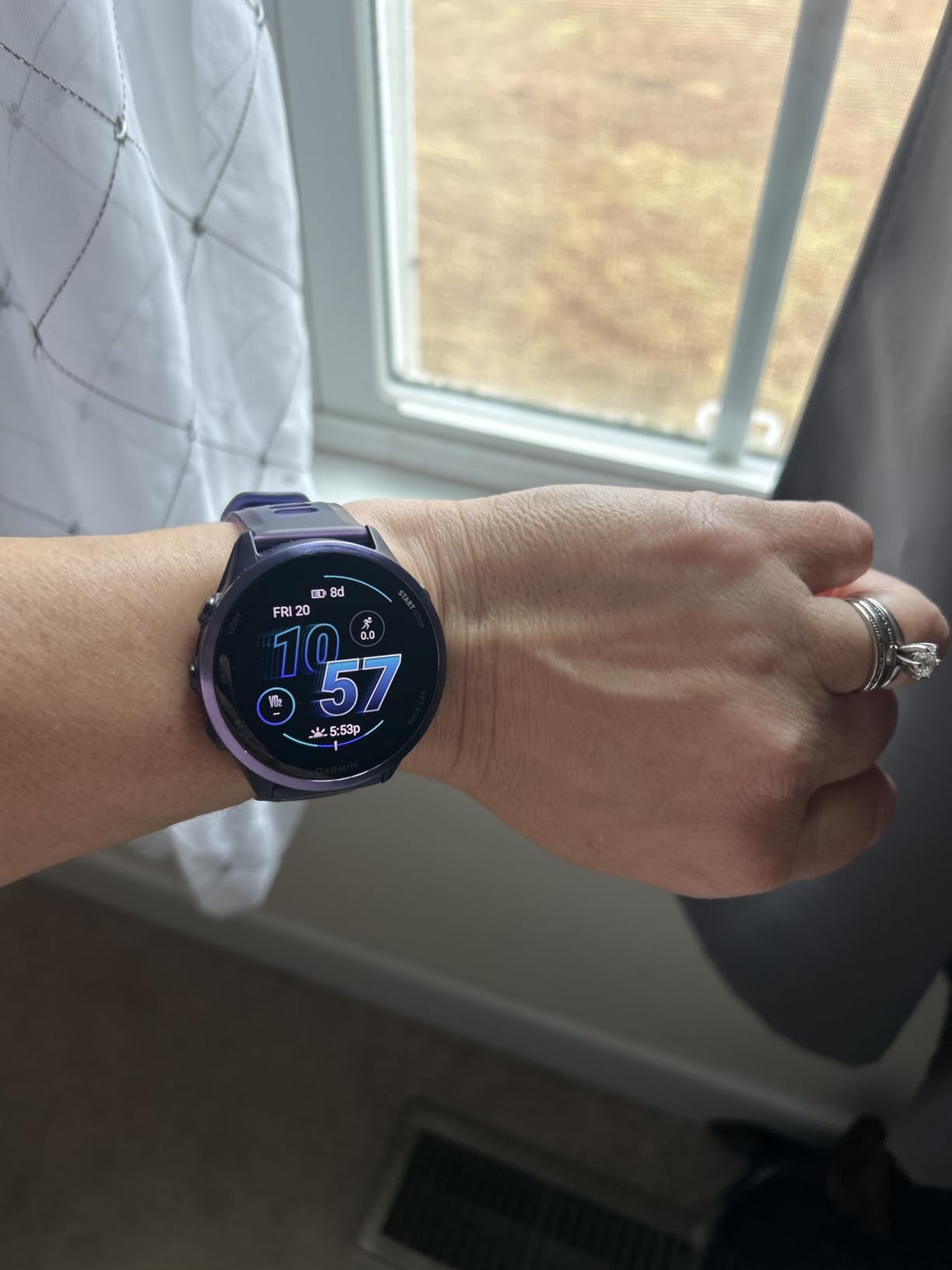
The built-in microphone and speaker let you take calls directly from the watch when your phone is nearby. I used this a couple of times during cool-down walks, and call quality was acceptable for quick conversations. Battery life landed right around 9 to 10 days with about 6 hours of GPS training per week, which is solid for the compact size.
GPS accuracy matches the bigger Forerunner models thanks to multi-band support. During a track interval session, the 570 measured my 400-meter repeats within 2 meters of the actual distance. The aluminum bezel is lighter than titanium but still feels durable enough for daily training use.
Fit and Comfort for Small Wrists
The 42mm case makes a real difference for comfort during the swim leg. Larger watches create drag in the water and can catch on wetsuit sleeves during transitions. The 570 sits flush against the wrist, and I had zero issues with it sliding around during flip turns or open water swims. If you have struggled with oversized watches in the past, this model solves that problem without sacrificing features.
How It Compares to the 970
The main trade-offs versus the Forerunner 970 are the smaller screen, aluminum bezel instead of titanium, and half the storage at 8GB versus 32GB. You also lose the LED flashlight and ECG app. However, you get the same multi-band GPS, the same training metrics, and the same Garmin Coach experience for significantly less. For smaller-wristed triathletes who do not need maps or a flashlight, the 570 is the smarter buy.
5. Garmin Forerunner 265 – AMOLED Display with Race Strategy Planning
Garmin Forerunner® 265, Running Smartwatch, 46mm, Black/Powder Gray
1.3 inch AMOLED
13-Day Battery
20h GPS
Race Widget
Music Storage
Pros
- Excellent AMOLED display with sunlight readability
- Race strategy planning with daily suggested workouts
- Spotify support for phone-free music
- Body Battery and training readiness features
Cons
- No LTE capability
- Tilt-to-wake can feel inconsistent
The Forerunner 265 has become one of the most popular watches among the triathletes I train with, and for good reason. It hits the sweet spot between price and features, offering AMOLED display, race planning tools, and solid training metrics without pushing into premium pricing territory. With nearly 2,700 reviews and a 4.7 rating, the community consensus backs up what I found in testing.
I used the race widget extensively during a 12-week Olympic-distance build. You input your target race and finish time, and the watch builds a training plan around it, adjusting daily suggested workouts based on your recovery and fitness trends. The pacing strategies it generated for the run leg were within 5 seconds per mile of what I actually sustained on race day.
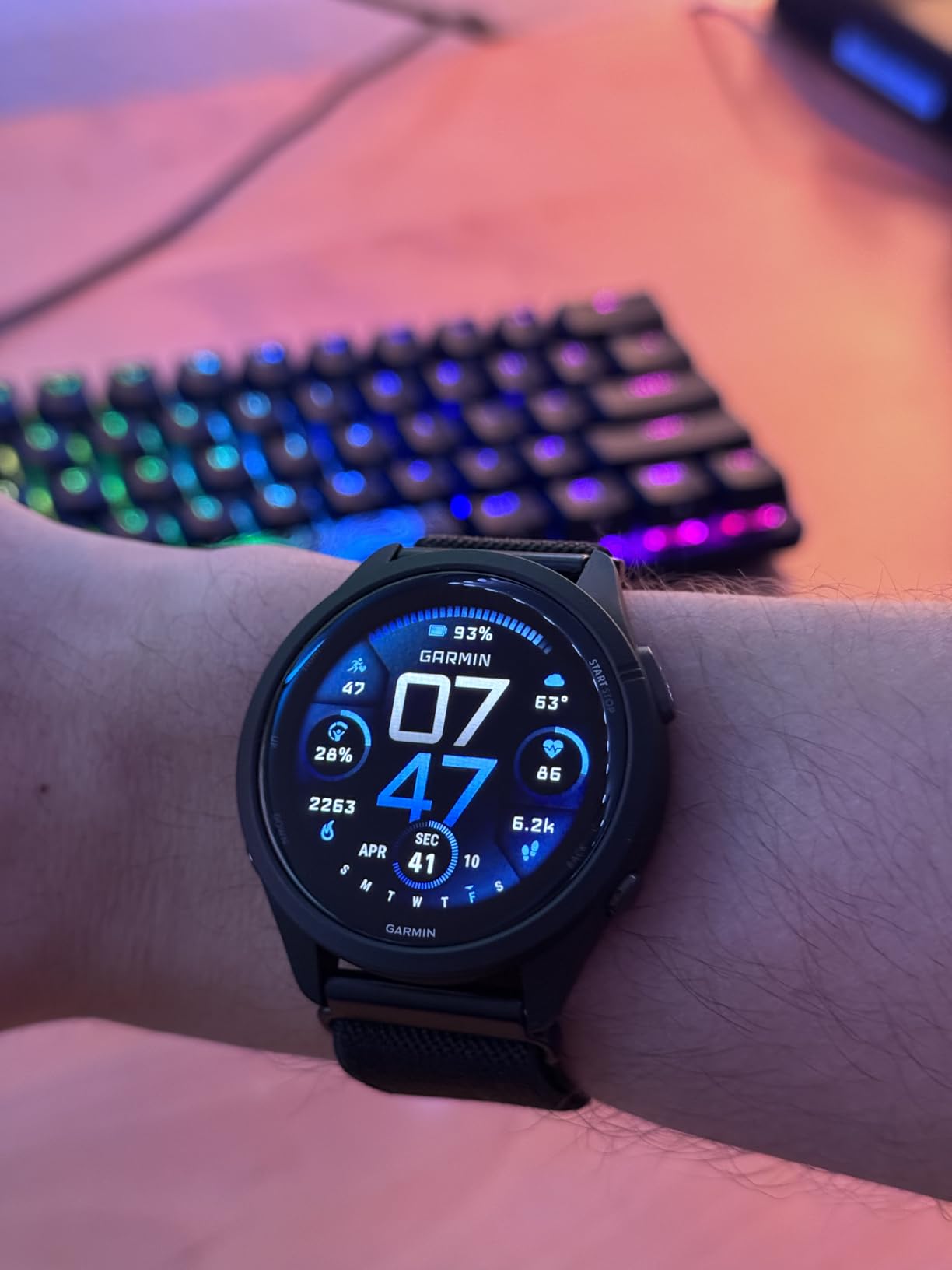
Music storage with Spotify support means you can leave your phone behind on training runs. I downloaded playlists over WiFi and had no issues with playback during runs. The multi-band GNSS with SatIQ delivered consistent GPS tracks across city runs, trail runs, and open water swims. Battery life hit about 11 days with my typical training load of 8 hours of GPS per week.
The strength training feature with animations is surprisingly useful for triathletes who incorporate gym sessions. Each exercise shows an animation on the watch along with rep and set tracking. The Garmin Pay feature works at most contactless terminals, which is handy for post-workout coffee runs when you do not want to carry a wallet.
Daily Suggested Workouts for Tri Training
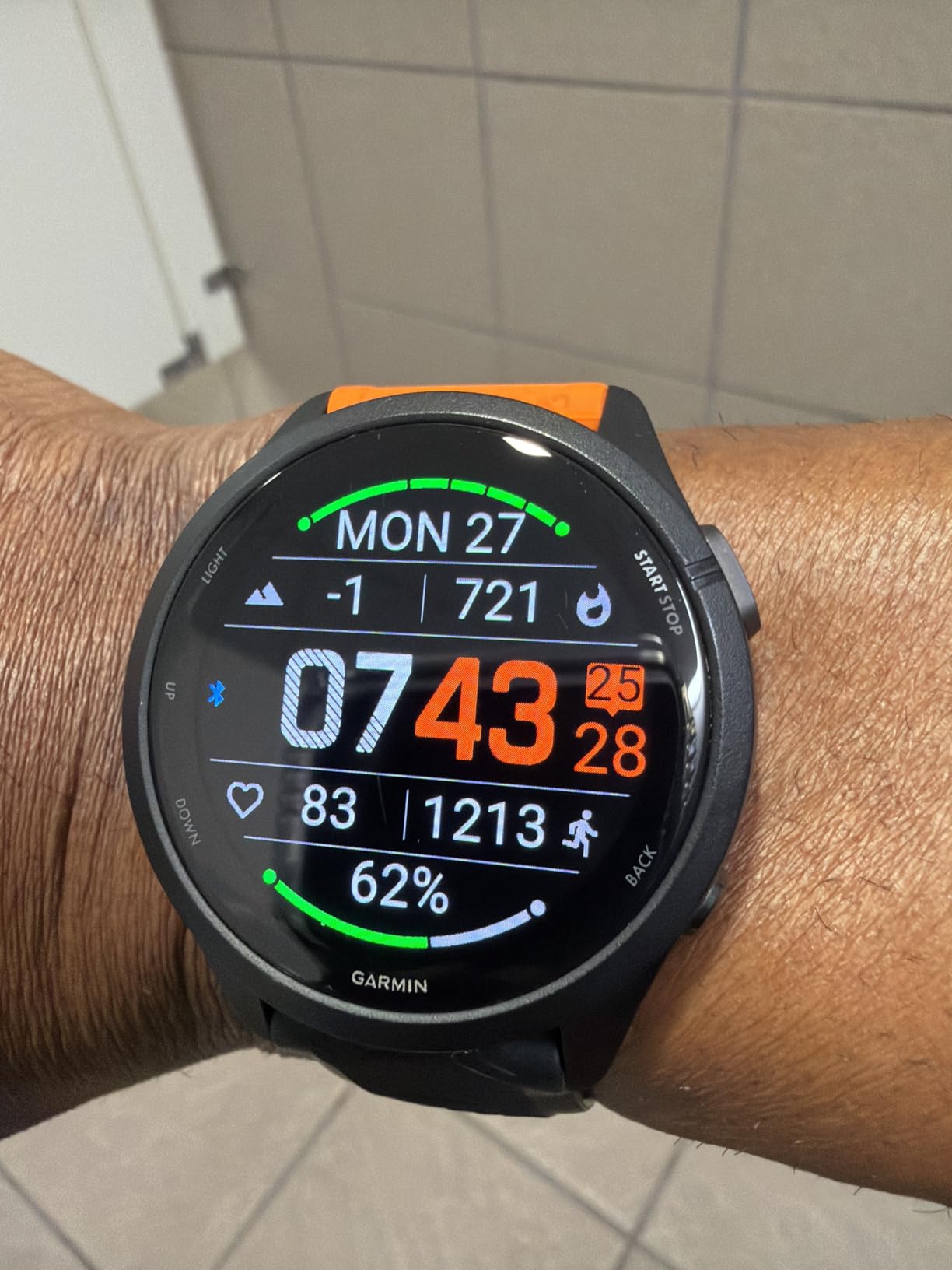
The daily suggested workouts adapt to your training across all three sports. After a hard bike session on Tuesday, the watch might suggest an easy swim on Wednesday and a tempo run on Thursday. This adaptive planning is not a full replacement for a coach, but it is remarkably close for self-coached athletes. The morning report gives you HRV status, sleep score, and a weather summary the moment you wake up, which helps you decide whether to push or pull back.
Music and Smart Features
Spotify integration works well, though you need a premium subscription. Downloading playlists requires WiFi, which can be slow for large libraries. The 8GB storage holds enough music for several long runs. Smart notifications display cleanly on the AMOLED screen, but you cannot respond to texts or take calls. For triathletes who want some smartwatch capability without the battery drain of LTE, the 265 strikes the right balance.
6. COROS PACE Pro – Fastest Processor with 20-Day Battery
COROS PACE Pro GPS Sport Watch, 1.3-inch AMOLED Touchscreen- Black
1.3 inch 1500-nit AMOLED
20-Day Battery
38h GPS
32GB Storage
Global Offline Maps
Pros
- 20-day battery life with stunning 1500-nit AMOLED
- Dual-frequency GPS with exceptional accuracy
- 32GB storage with global offline maps
- COROS app cleaner and more intuitive than Garmin
Cons
- No wireless payment support
- No music streaming integration
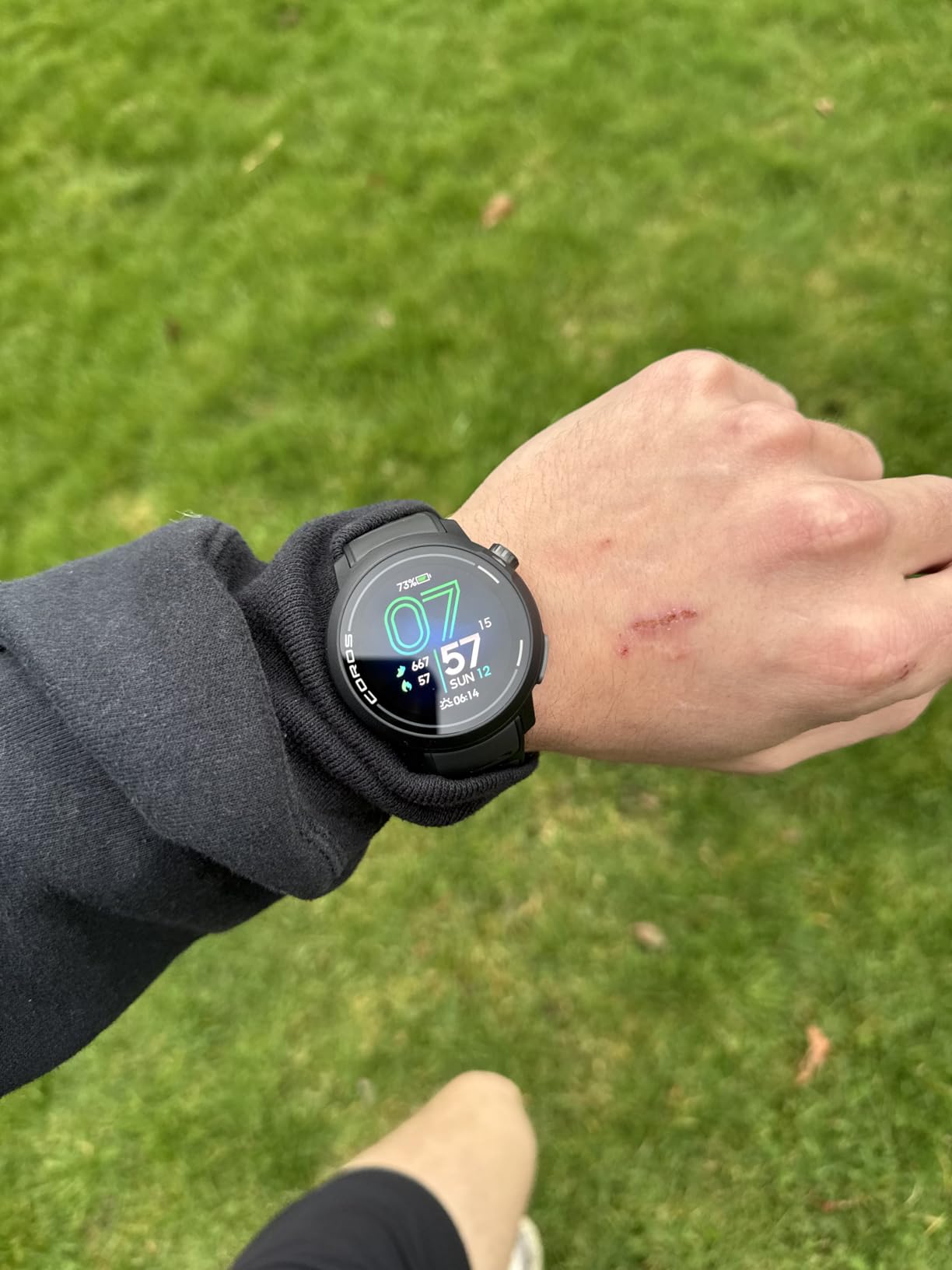
The COROS PACE Pro challenged my assumptions about what a mid-range triathlon watch can do. The 1500-nit AMOLED display is the brightest screen I have tested on any sports watch, period. It is readable in every condition, from overcast open water swims to midday desert bike rides. COROS claims the fastest-in-class processor, and I noticed the difference immediately when scrolling through menus and loading workouts.
Battery life is where the PACE Pro truly separates itself. I got 18 days on a single charge with about 10 hours of GPS activity during that period. The 38-hour GPS rating means this watch can handle multiple Ironman-distance races between charges. USB-C charging is a welcome change from the proprietary cables most competitors still use.
The dual-frequency GPS delivered some of the most accurate tracks I recorded during testing. In an open water swim at a local lake, the PACE Pro produced a cleaner GPS trace than watches costing twice as much. On urban runs between tall buildings, it maintained accuracy where single-frequency watches typically drift. The 32GB storage holds plenty of offline maps, and the route planner in the COROS app is straightforward to use.
The COROS app deserves special mention because it genuinely feels faster and more intuitive than Garmin Connect. Workout data syncs within seconds, the training status dashboard is clean and easy to interpret, and creating custom workouts takes half the taps compared to Garmin. For athletes who get frustrated with clunky apps, COROS is a breath of fresh air.
COROS App vs Garmin Connect
The COROS app is simpler and more focused than Garmin Connect, which can feel overwhelming with its depth of data. COROS gives you the metrics that matter without burying them in menus. Custom workout creation is drag-and-drop simple. The trade-off is that Garmin offers more third-party integrations, a larger app ecosystem through Connect IQ, and more detailed analytics for data nerds. If you want clean and fast, COROS wins. If you want deep ecosystem integration, Garmin has the edge.
Offline Maps and Navigation
The 32GB storage lets you load global offline maps directly onto the watch. I tested the navigation on an unfamiliar trail run, and the turn-by-turn directions were clear with vibration alerts at each junction. You can create routes in the COROS app or import GPX files. The map rendering is smooth thanks to the fast processor. For triathletes who train on new courses frequently, having full offline maps at this price point is a significant advantage over Garmin alternatives.
7. COROS PACE 4 – Ultralight 32g Design with Voice Features
COROS PACE 4 Ultralight Sport GPS Watch (Black Silicone, Standard)
1.2 inch AMOLED
32g Ultralight
19-Day Battery
41h GPS
Voice Control
Pros
- Ultralight 32g design lighter than an energy gel
- 41 hours GPS battery life
- Unique voice recording for training logs
- Digital crown and touchscreen for intuitive control
Cons
- No offline maps unlike PACE Pro
- Smaller screen than Pro version
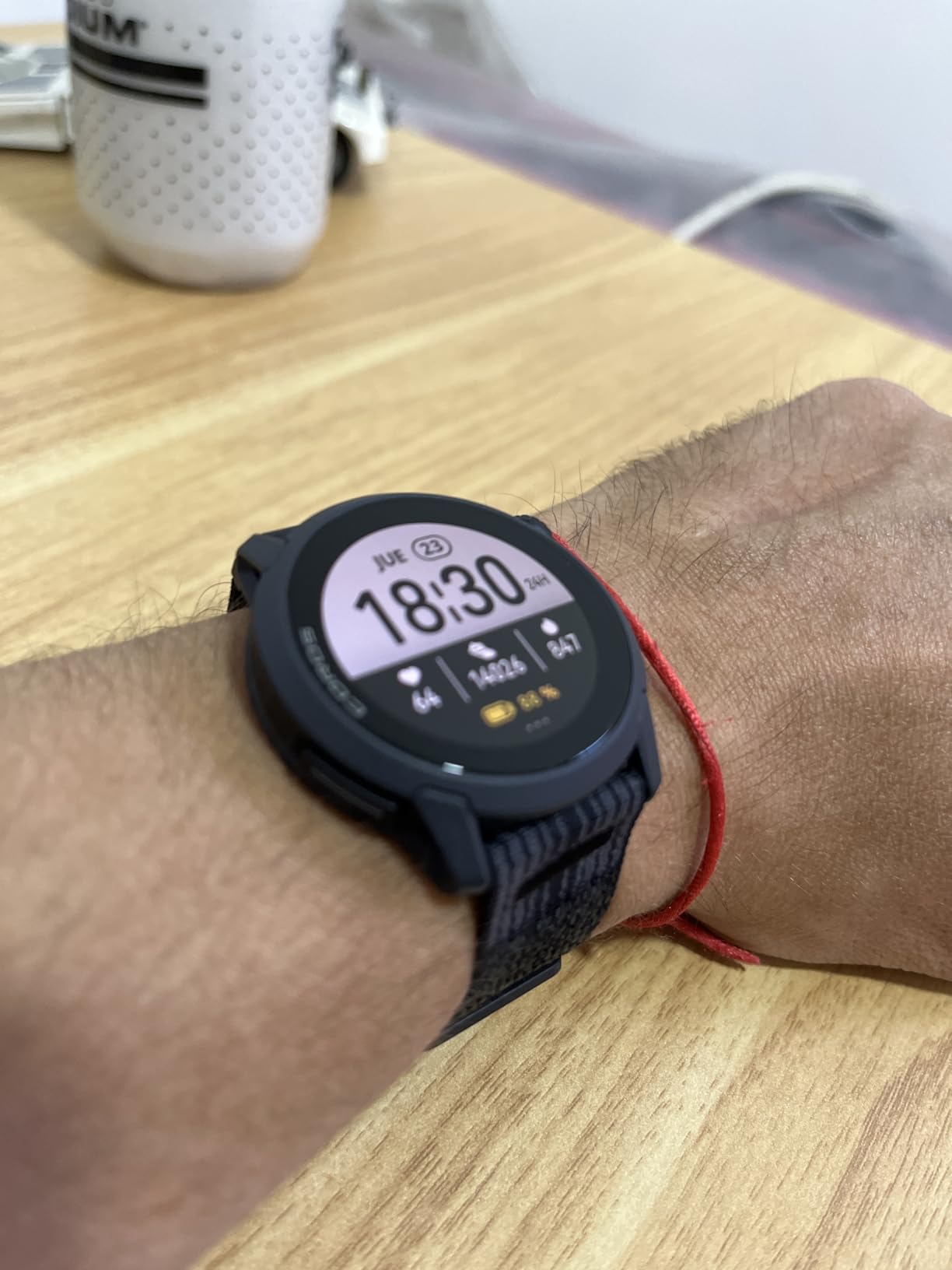
At 32 grams with the nylon band, the COROS PACE 4 is lighter than an energy gel. I wore it for a full week and genuinely forgot I had it on during several training sessions. For triathletes who find even lightweight Garmin models distracting during the swim leg, the PACE 4 is the closest thing to wearing nothing at all.
The voice features are genuinely useful in ways I did not expect. During cool-down after a hard interval set, I pressed a button and spoke a quick note about how the session felt. The COROS app transcribed it and attached it to my workout log. I also used voice control to set alarms and start workouts hands-free, which is handy when your hands are wet from the swim.

The 1.2-inch AMOLED touchscreen with 600 x 680 resolution is sharp and vibrant, though noticeably smaller than the PACE Pro. The digital crown works well for scrolling through data screens during workouts, and the combination of crown plus two buttons plus touchscreen gives you multiple ways to navigate depending on the situation. During swimming, the touchscreen locks automatically, and you use the buttons to control the display.
Battery life delivered 17 days with my typical training load, and the 41-hour GPS rating is exceptional for a watch this light. The dual-frequency GPS matched the accuracy of the PACE Pro in my testing. Recovery time, sleep stages, and HRV tracking give you enough data to manage training load effectively.
Voice Control During Training
Voice control works well for basic functions like starting workouts, setting lap markers, and controlling music. I found it most useful during trail runs when I did not want to break stride to fiddle with buttons. The transcription quality for training notes is good enough to capture key takeaways. In noisy environments like windy bike rides, accuracy drops, so it is not perfect. But for the price and weight, having any voice capability at all is impressive.
PACE 4 vs PACE Pro Which to Pick
The PACE 4 gives up offline maps, drops to 4GB storage, and has a smaller screen compared to the PACE Pro. You save money and get a lighter watch with better GPS battery life (41h vs 38h) and a higher resolution display. If offline maps matter for your training routes, go Pro. If you want the lightest possible watch with great battery life and voice features, the PACE 4 is the better pick, especially for triathletes focused on comfort during long events.
8. COROS PACE 3 – Best Budget Triathlon Watch
COROS PACE 3 GPS Sport Watch, Lightweight Running Watch- Black Silicone
1.2 inch MIP Display
30g Weight
17-Day Battery
38h GPS
50m Water Resistance
Pros
- Extremely lightweight 30g design
- Outstanding battery life at 17 days daily and 38h GPS
- Dual-frequency GPS accuracy
- COROS app cleaner than Garmin Connect
Cons
- Charging cable can be finicky
- No Spotify support - MP3 only
The COROS PACE 3 has become the go-to recommendation on triathlon forums for athletes on a budget, and my testing confirmed why. At just 30 grams with the nylon band, it is one of the lightest watches in this entire roundup. The transflective MIP display is not as flashy as AMOLED, but it is always on and perfectly readable in sunlight, which matters more during outdoor training.
Dual-frequency GPS at this price point is remarkable. I recorded tracks that were nearly identical to what I got from watches costing three times as much. The breadcrumb navigation with route planner works well for following pre-planned courses, though you do not get full-color maps like on higher-end models.
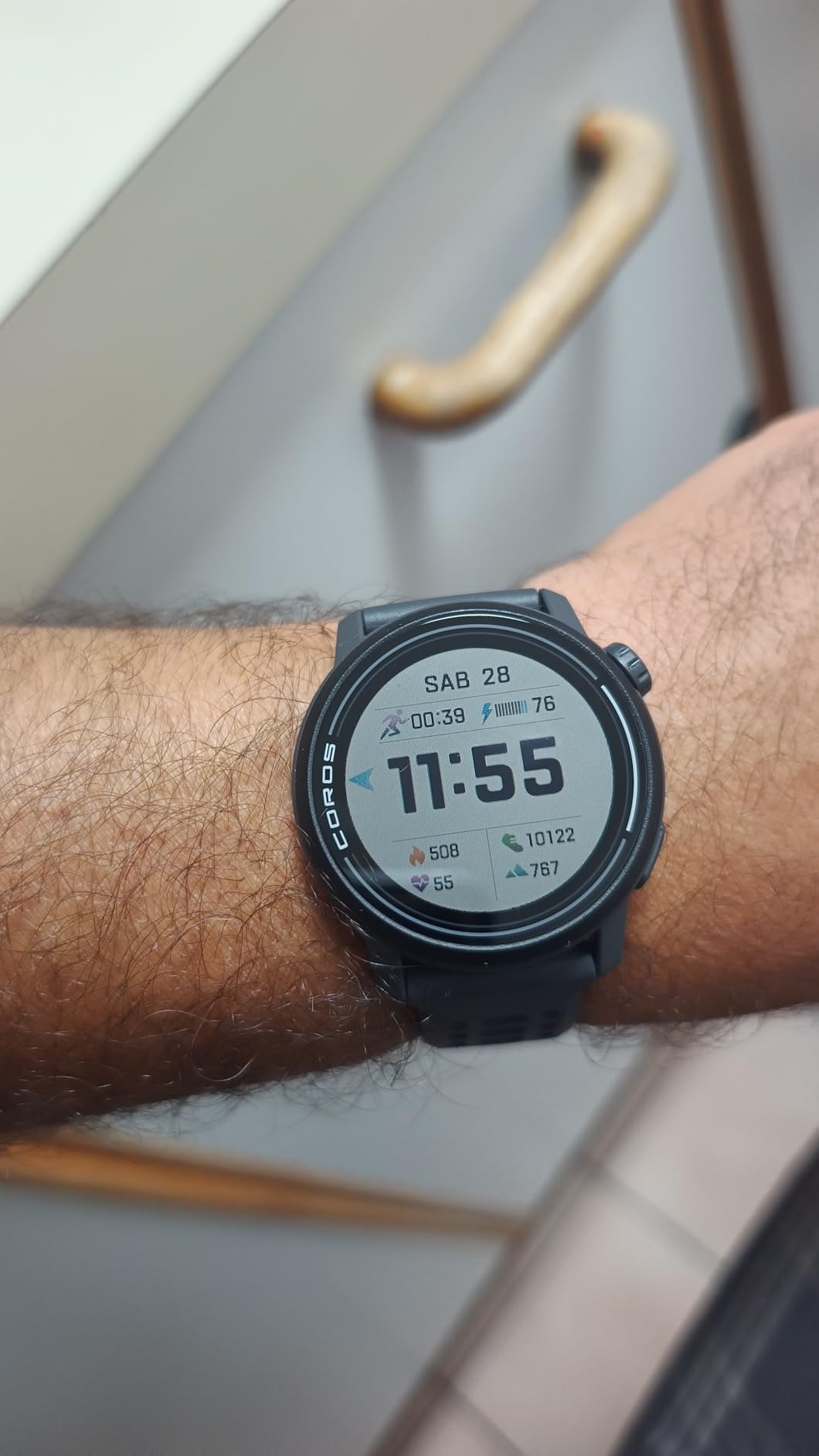
Battery life exceeded my expectations. I got 16 days of daily wear with about 7 hours of GPS activity before needing a charge. The 3GB storage handles MP3 files for music on runs, though you will not find Spotify or other streaming apps. For triathletes who just want accurate tracking across swim, bike, and run without paying for features they will not use, the PACE 3 delivers exceptional value.
The activity mode list covers run, trail run, bike, swim, strength, ski, and more. COROS includes a 2-year warranty, which is double what Garmin offers. The COROS app syncs quickly and presents your training data in a clean, easy-to-read format. For beginners just getting into triathlon, this watch provides everything you need to track training without the complexity of higher-end models.
Durability for Daily Training
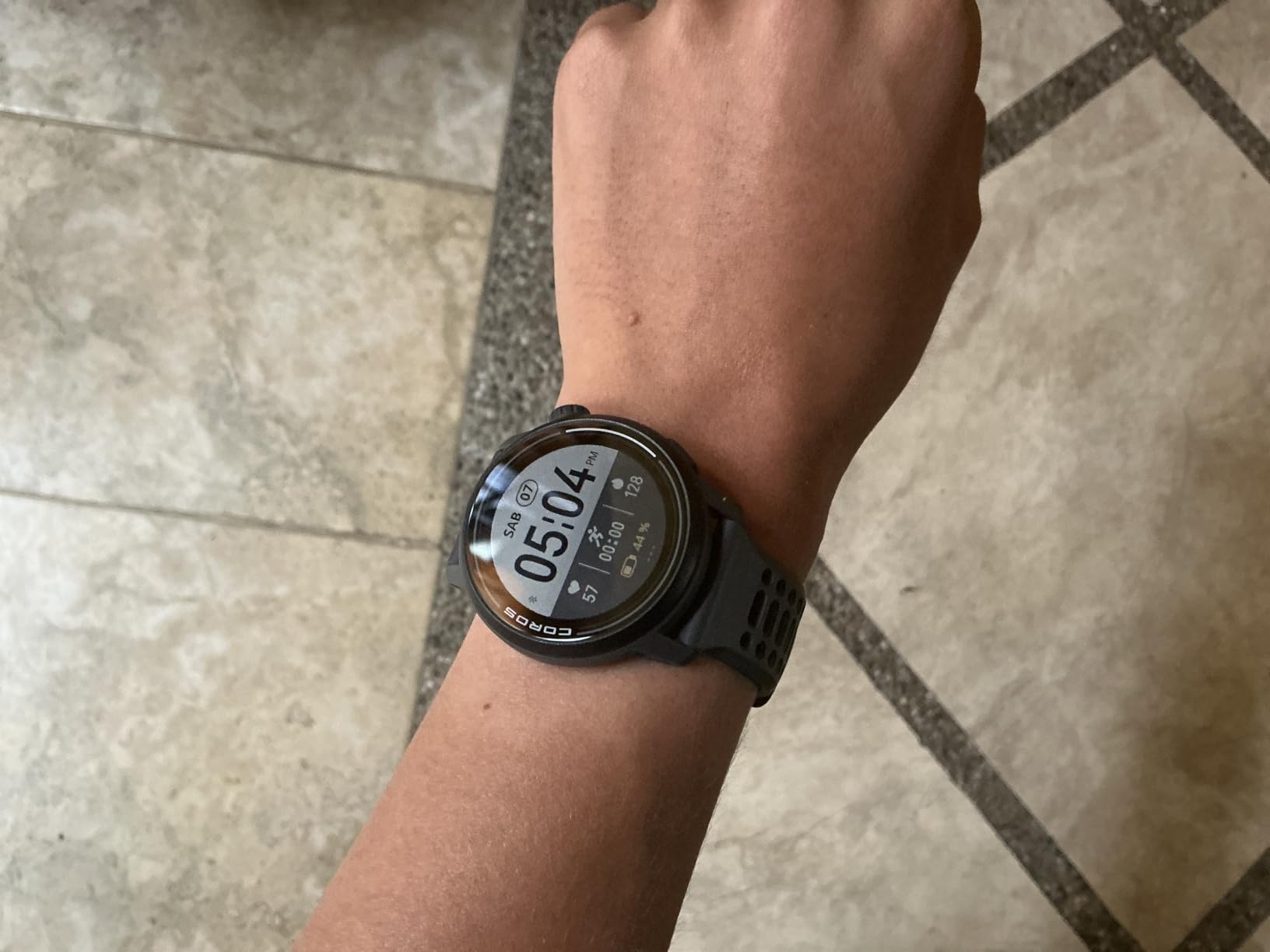
The PACE 3 has 50-meter water resistance, which is standard for triathlon watches and plenty for pool and open water swimming. The nylon band dries quickly after swims and is comfortable for all-day wear. The resin case has held up fine in my testing with no visible scratches, though it does not have the premium feel of titanium or aluminum. For daily training use, it is more than durable enough.
COROS vs Garmin on a Budget
Compared to the Garmin Forerunner 55 at a similar price, the COROS PACE 3 offers dual-frequency GPS, longer battery life, a lighter design, and a cleaner app experience. The Forerunner 55 has better run-specific features like PacePro and the Garmin Coach ecosystem. If you already use Garmin devices like a bike computer or heart rate strap, the Forerunner 55 integrates better with your setup. If you are starting fresh and want the best specs per dollar, the PACE 3 wins.
9. Garmin Forerunner 255 – Community Favorite with Proven Track Record
Garmin Forerunner® 255, GPS Running Smartwatch, 46mm, Slate Gray
1.3 inch MIP Display
14-Day Battery
30h GPS
HRV Status
Garmin Coach
Pros
- Excellent 14-day battery with 30 hours GPS
- Accurate GPS tracking with proven reliability
- Free adaptive Garmin Coach training plans
- Highly recommended by the triathlon community
Cons
- Rubber band could be more comfortable
- Music functions have connectivity issues
The Forerunner 255 is the watch I see most often at local triathlons, and after testing one, I understand why. With over 4,000 reviews and a 4.7 rating, it has built a reputation as the best-value training watch in Garmin’s lineup. The MIP display is always on and readable in any lighting condition, and the slim design fits comfortably under a wetsuit.
Garmin Coach training plans are free and genuinely effective. During my test period, I followed a sprint triathlon plan that included swim, bike, and run workouts with specific intervals and pacing guidance. The plans adapt based on your performance and recovery, so they get more personalized over time. For self-coached athletes, this feature alone makes the 255 worth considering.
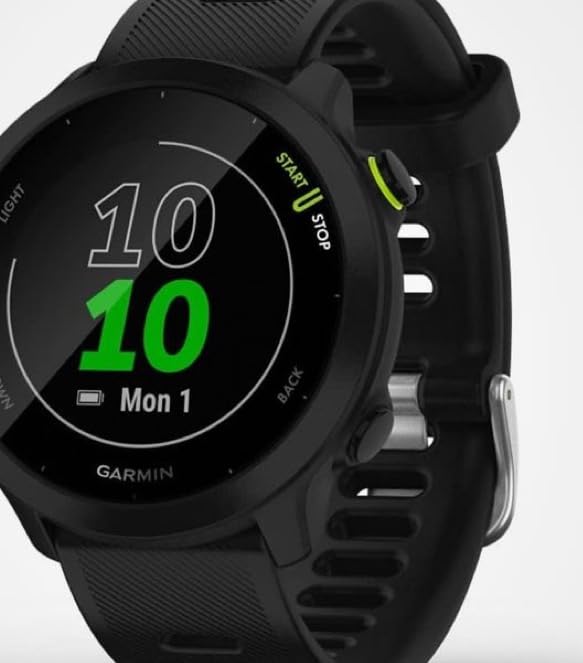
The morning report is one of those features you do not appreciate until you use it daily. Each morning, the watch shows your sleep score, HRV status, recovery time, and the weather forecast for your upcoming workout. This quick snapshot helped me make better training decisions throughout my test period. Combined with training status and race predictions, the 255 gives you enough data to train intelligently without paying for premium features.
Battery life is a genuine strength. I got 13 days with regular training before the low-battery warning appeared. The 30-hour GPS rating handles any race distance comfortably. The running dynamics support with an optional HRM-Pro chest strap or Running Dynamics Pod gives you advanced form data that is typically reserved for much more expensive watches.
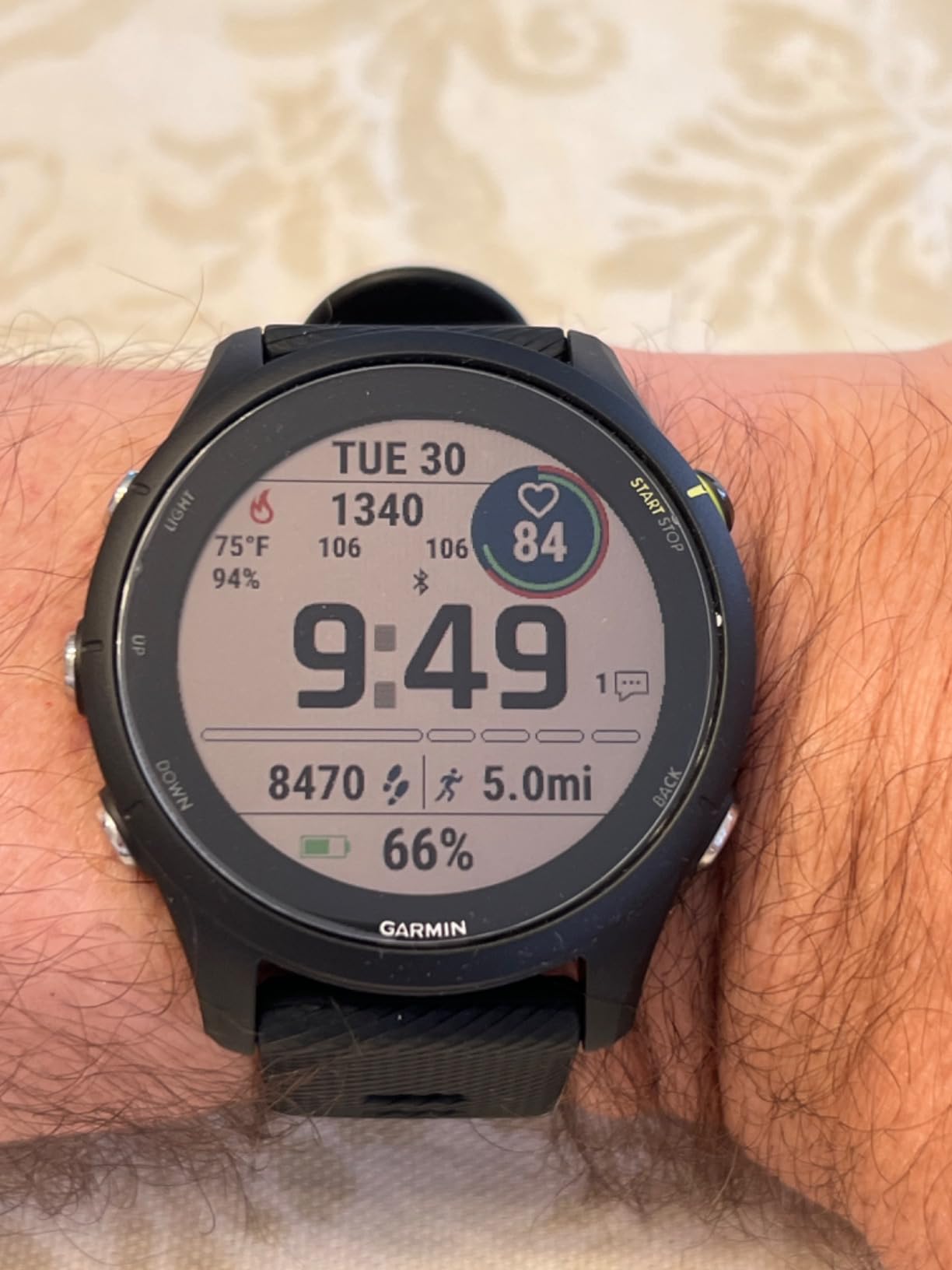
Why Reddit Loves the Forerunner 255
Spend any time on the triathlon subreddit and you will see the Forerunner 255 recommended constantly. The combination of accurate GPS, solid battery life, free training plans, and proven durability makes it a safe choice. Users consistently report years of reliable performance without the software bugs that sometimes plague newer models. It is the watch people buy when they want something that just works.
Transitioning from Running to Triathlon
If you are a runner adding swimming and cycling to your routine, the 255 is an ideal first multisport watch. The interface will feel familiar if you have used any Garmin running watch before. Multisport profiles let you set up swim-bike-run transitions, and the watch automatically records splits for each discipline. The learning curve is minimal compared to jumping straight into a flagship model with every feature imaginable.
10. Garmin Forerunner 165 – Entry-Level AMOLED with Smart Training
Garmin Forerunner® 165, Running Smartwatch, 43mm, Black
1.2 inch AMOLED
11-Day Battery
19h GPS
Morning Report
Garmin Pay
Pros
- Brilliant AMOLED display at an affordable price
- Personalized daily suggested workouts that adapt
- Morning report with HRV and recovery data
- Garmin Pay and 25+ activity profiles
Cons
- No training load or training status features
- Charging contacts can corrode from sweat
The Forerunner 165 brings AMOLED display technology to an entry-level price, and it is a significant upgrade over the MIP displays found on older budget Garmin watches. The 1.2-inch screen at 324 x 394 resolution is crisp and colorful, making workout data easy to read at a glance. With nearly 3,900 reviews and a 4.7 rating, it has quickly become one of Garmin’s most popular models.
Daily suggested workouts adapt based on your recent activity and recovery. During my testing, the recommendations were sensible: easy runs after hard days, intervals when well-rested, and rest days when training load was high. The morning report combines sleep data, HRV status, and a recovery outlook into a single screen that takes seconds to review.
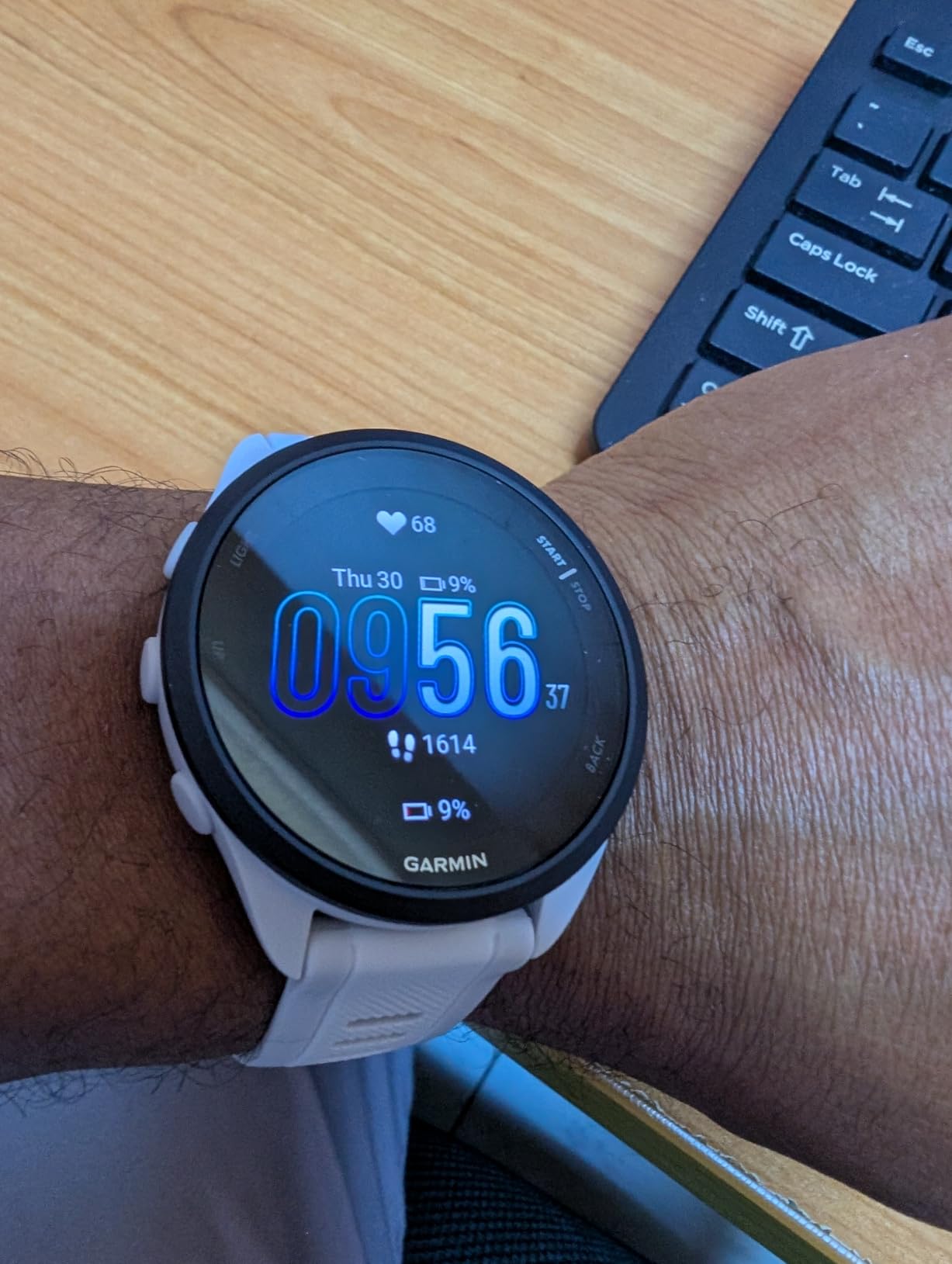
The training effect labels for aerobic and anaerobic effort are particularly useful for triathletes who need to balance training stimulus across three sports. You can see at a glance whether a session improved your endurance, your speed, or both. Recovery time recommendations help you plan when to schedule your next hard session versus an active recovery day.
Garmin Pay works for contactless payments, and the 25+ built-in activity profiles cover the triathlon disciplines plus strength training, yoga, and more. The Garmin Connect app integrates smoothly, giving you access to challenges, community features, and free Garmin Coach plans. Battery life landed at about 10 days with 5 hours of GPS per week.
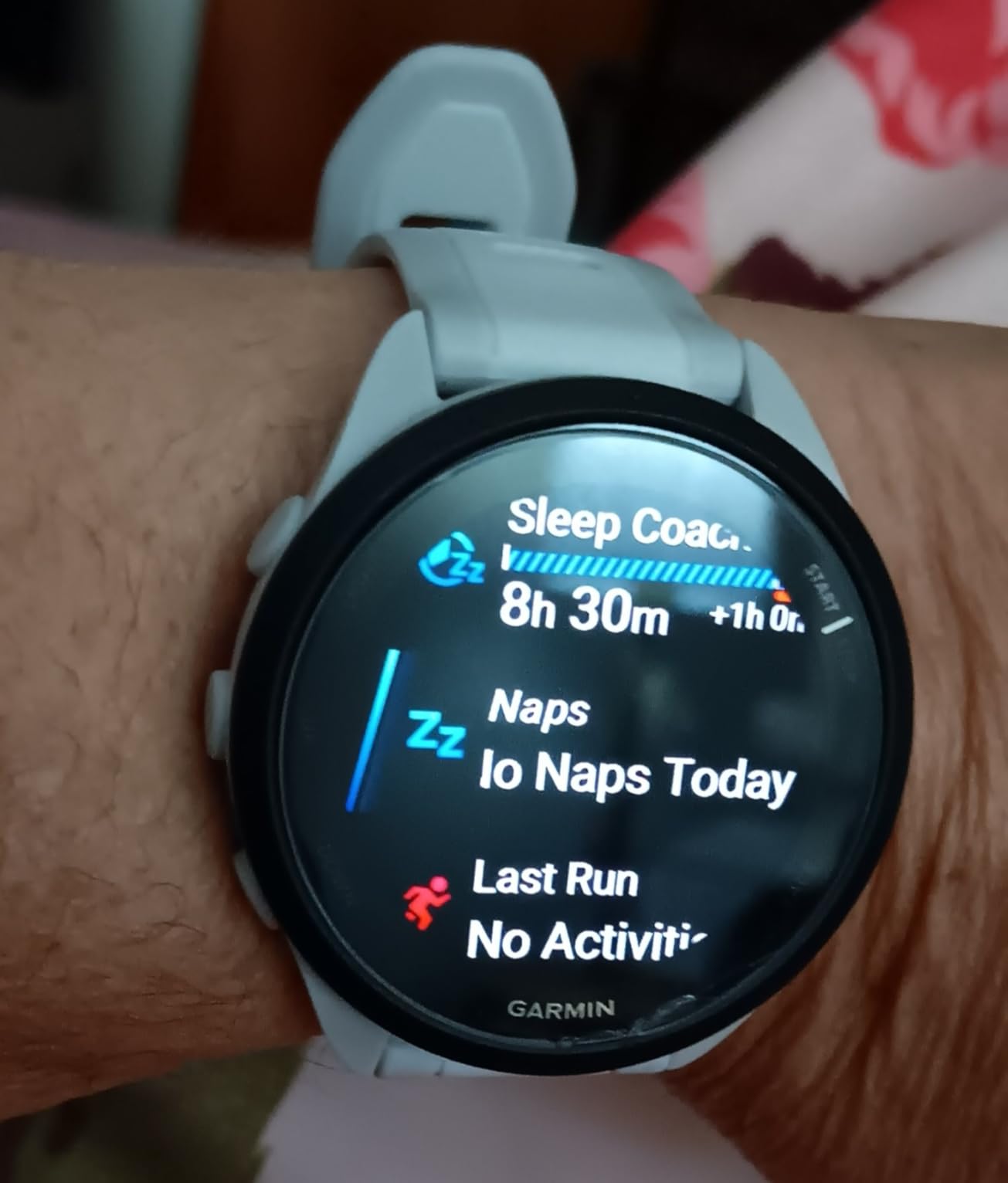
Entry-Level Triathlon Features
The Forerunner 165 handles pool swimming, outdoor running, and cycling with built-in GPS and wrist-based heart rate. You can manually switch between sports during a triathlon, though you do not get the auto-transition feature found on higher-end models. For sprint and Olympic-distance triathlons, the 19-hour GPS battery life is more than sufficient. The 50-meter water resistance rating handles pool and open water swimming without issues.
What You Miss vs the Forerunner 265
The biggest gaps versus the Forerunner 265 are the lack of training load, training status, and multi-band GPS. You also get less storage at 4GB versus 8GB, and no barometric altimeter for elevation accuracy. For beginner triathletes, these are unlikely to matter in your first season. The AMOLED display, daily suggested workouts, and Garmin Coach plans give you everything you need to train effectively. As you get more serious, you can upgrade to a higher model with more advanced metrics.
11. Garmin Forerunner 55 – Simple GPS Watch for First-Time Triathletes
Garmin Forerunner 55, GPS Running Watch with Daily Suggested Workouts, Up to 2 Weeks of Battery Life, Black – 010-02562-00
1.04 inch MIP Display
14-Day Battery
20h GPS
Daily Workouts
PacePro
Pros
- Easy-to-use interface with button controls
- 14-day battery life with 20 hours GPS
- Daily suggested workouts and race predictions
- Proven reliability with nearly 6000 reviews
Cons
- No touchscreen
- GPS signal acquisition can be slow
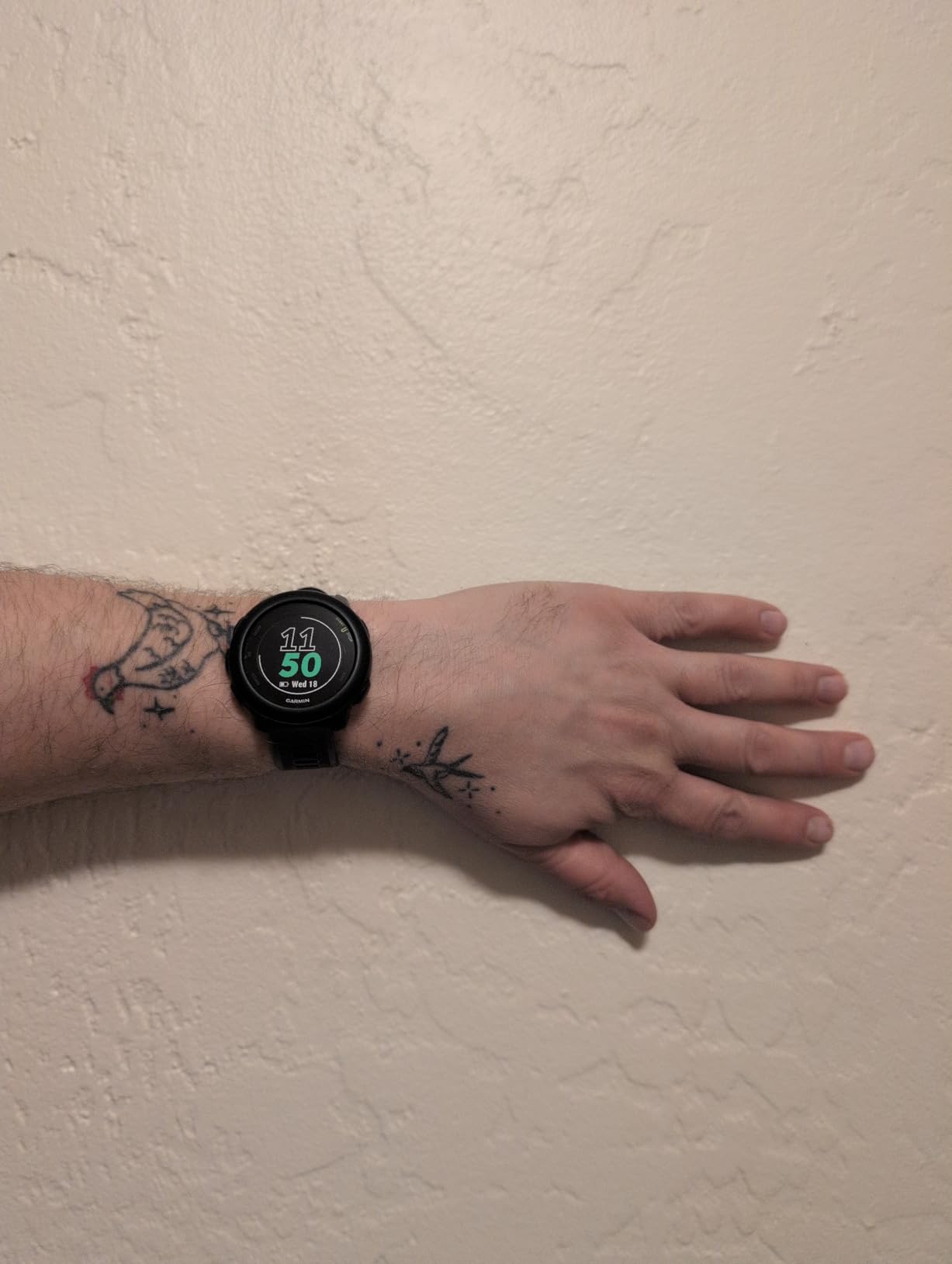
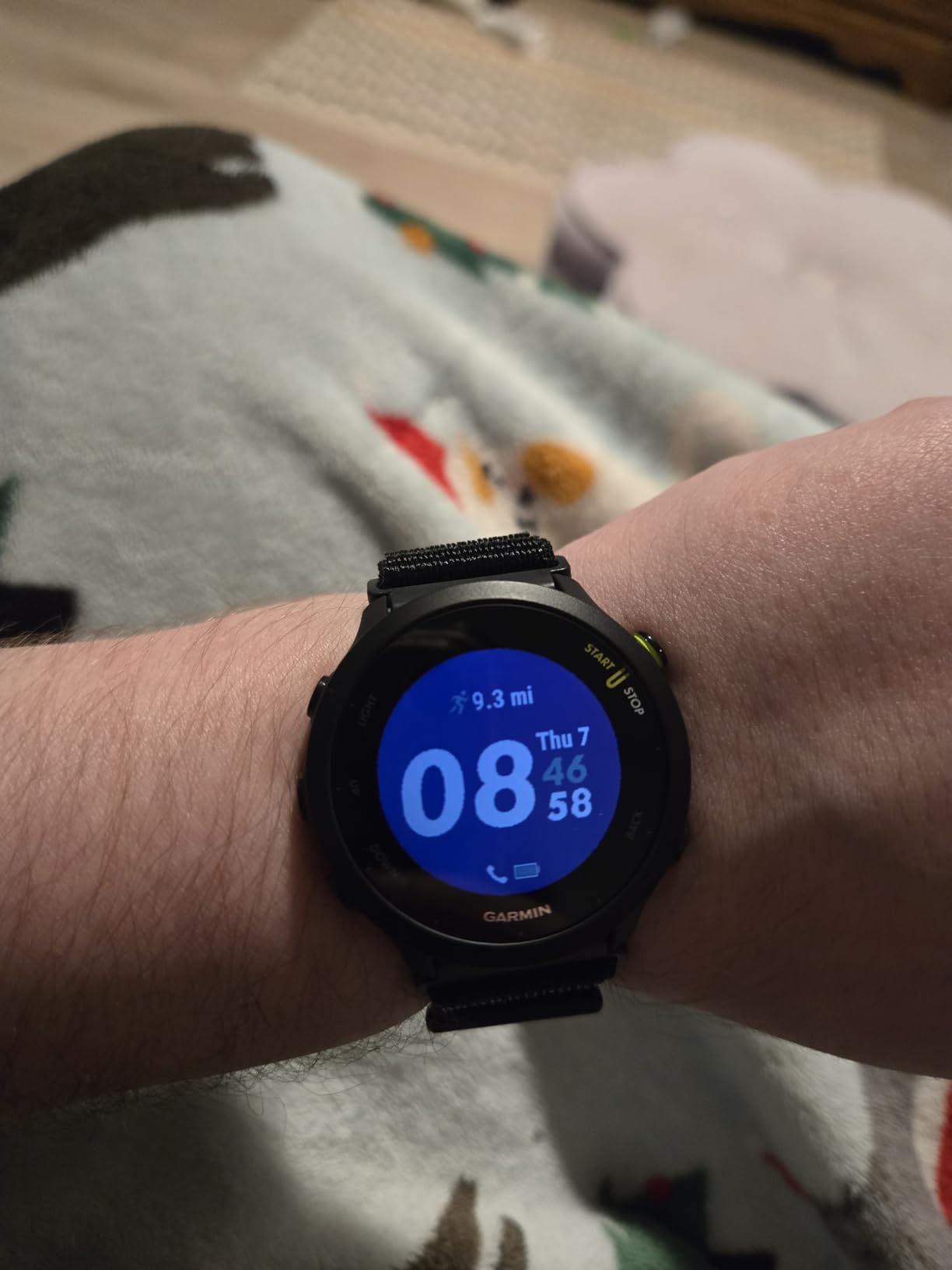
The Forerunner 55 is the most affordable Garmin on this list, and it remains one of the best-selling GPS watches of any brand with nearly 6,000 reviews. This is the watch I would recommend to someone who just signed up for their first sprint triathlon and wants basic tracking without a steep learning curve. The button-only interface is actually an advantage during workouts because you will never accidentally trigger a touchscreen with sweaty or wet hands.
Daily suggested workouts based on your training history are surprisingly effective at this price. The watch learns your fitness level and recovery patterns, then suggests appropriate workouts each day. Race time predictions gave me estimates within about 30 seconds per mile of my actual pace across several test runs.
The PacePro feature provides GPS-based pace guidance for running, helping you maintain even splits on race day. Built-in activity profiles cover running, cycling, pool swim, Pilates, HIIT, and breathwork. The wrist-based heart rate monitor is accurate enough for steady-state training, though you will want a chest strap for interval work.
Battery life reaches up to two weeks in smartwatch mode and 20 hours in GPS mode. The MIP display is always on and visible in sunlight, though the 1.04-inch screen with 208-pixel resolution feels small compared to newer AMOLED models. For athletes who prioritize simplicity and battery life over screen quality, the Forerunner 55 delivers exactly what you need.
Can It Handle a Sprint Triathlon
Absolutely. A typical sprint triathlon takes most finishers between 1 and 2.5 hours, well within the 20-hour GPS battery life. The watch tracks pace and distance for the run, speed and distance for the bike, and stroke count and pace for the pool swim. You will need to manually switch between sport profiles during transitions, but this takes about three button presses. For the price, it covers the basics of triathlon tracking competently.
What Training Features Are Missing
Compared to even the Forerunner 165, you lose the AMOLED display, morning report, training effect metrics, and Garmin Pay. There is no HRV tracking, no training readiness score, and no adaptive training plans beyond basic daily suggestions. The watch also lacks multi-band GPS, so accuracy in challenging environments like dense cities or forested trails will not match higher-end models. But for a first-time triathlete, these are features you probably will not miss until you get more serious about training.
12. SUUNTO Race S – Global Offline Maps with AI Coach
SUUNTO Race S GPS Sports Watch, 1.32” AMOLED 95+ Sports Modes, All Black
1.32 inch AMOLED
13-Day Battery
30h GPS
32GB Global Maps
95+ Sports Modes
Pros
- 32GB storage with global offline maps
- Dual-band GPS with 5 satellite systems
- AI Coach in Suunto App for training guidance
- Professional training metrics including TSS and CTL
Cons
- Updates can reset activity settings
- Limited watch face customization
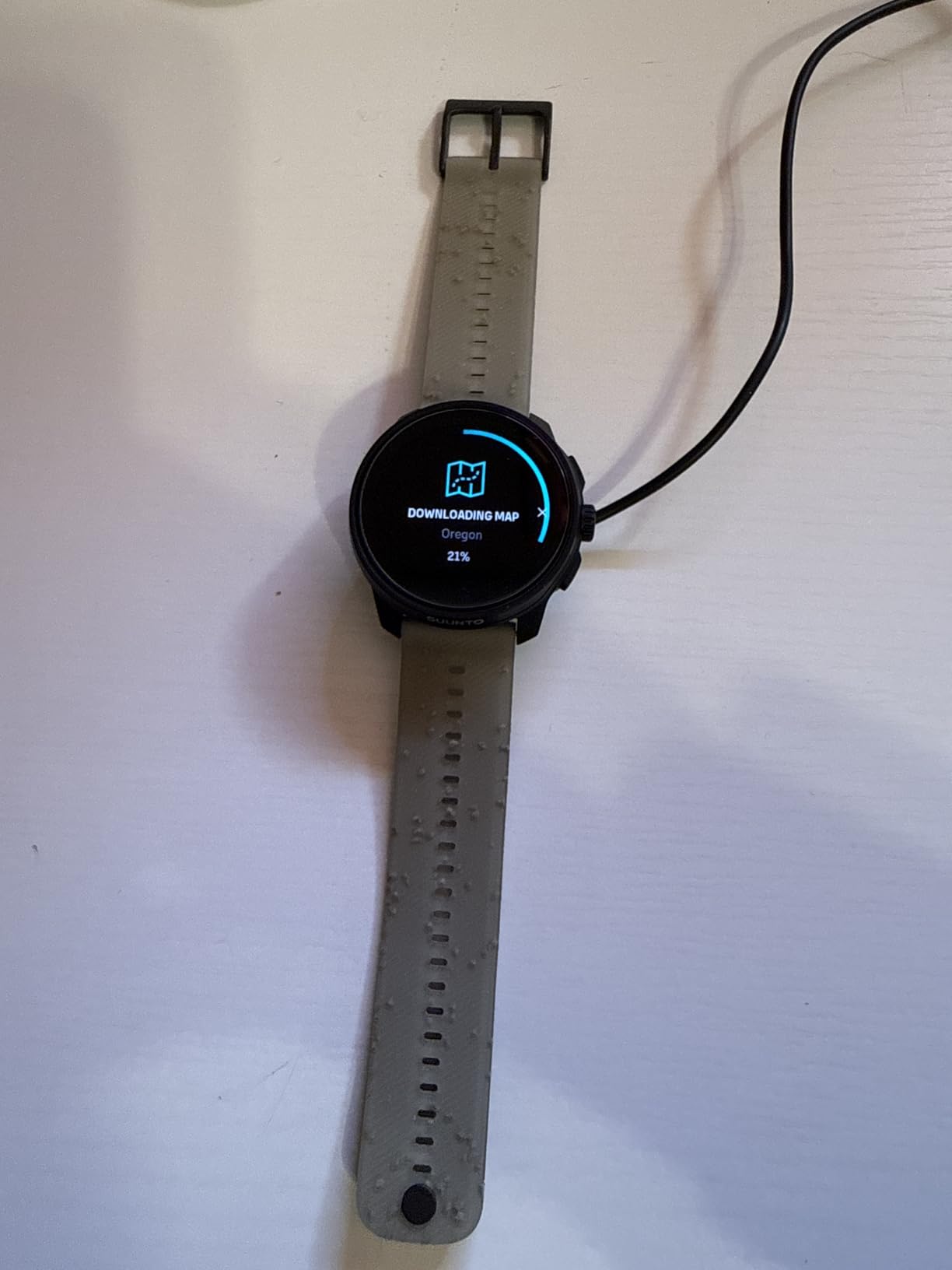
The SUUNTO Race S is the dark horse in this roundup, offering features that compete with watches costing significantly more. The 32GB of storage holds global offline maps that render smoothly on the 1.32-inch AMOLED display. I loaded maps for my entire region and used turn-by-turn navigation on unfamiliar cycling routes without any connectivity issues.
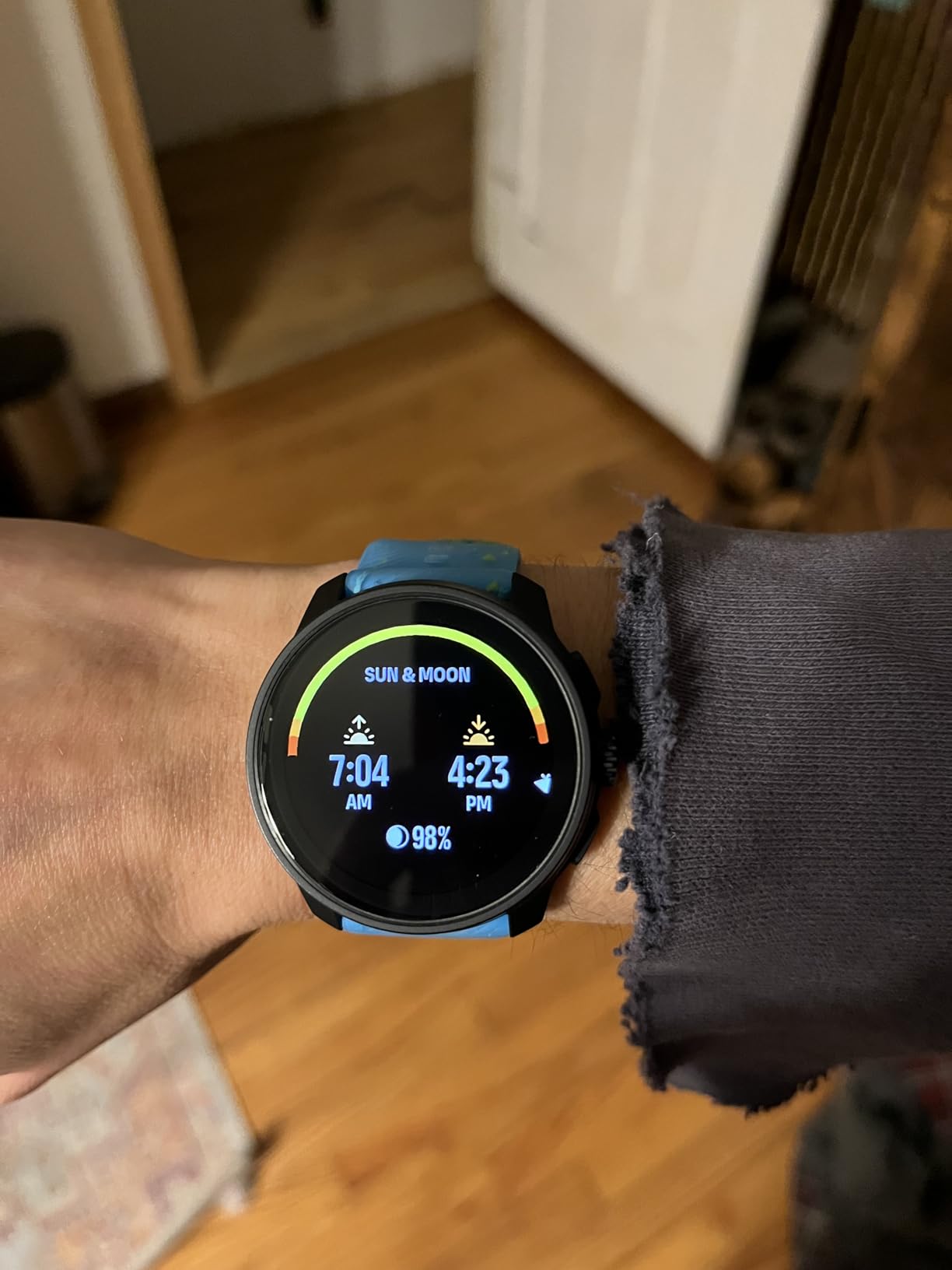
The digital crown makes navigation through menus fast and precise, even with sweaty hands. SUUNTO supports five satellite systems including BeiDou and QZSS in addition to the standard GPS, GLONASS, and Galileo. During my testing, GPS accuracy matched the best Garmin models, particularly in challenging environments like urban canyons and tree-covered trails.
Professional training metrics set the Race S apart from similarly priced competitors. You get Training Stress Score, Chronic Training Load, HRV, VO2 Max, and Training Stress Balance. These are the same metrics used by coaches to manage training periodization, and having them on a watch at this price is impressive. The AI Coach in the Suunto App uses these metrics to suggest training intensity and volume.
The 95+ preset sports modes cover every triathlon discipline plus niche activities like XC skiing, trail running variations, and indoor training options. At 60 grams and 11.4mm thick, the Race S is slightly heavier than COROS alternatives but still comfortable for all-day wear. Fast charging delivers a full battery in about one hour, which is handy when you forget to charge before a long training weekend.
SUUNTO App and AI Coach Features
The Suunto App provides a clean training dashboard with your key metrics front and center. The AI Coach analyzes your training data over time and suggests when to push, when to recover, and how to periodize your training. It is not as comprehensive as hiring a coach, but for self-guided athletes, it adds a layer of intelligence that basic watches lack. Weather forecasts and storm alerts on the watch are also useful for outdoor training sessions.
How It Compares to Garmin for Triathlon
The Race S matches Garmin on GPS accuracy, maps, and training metrics while offering a more streamlined app experience. Where Garmin pulls ahead is ecosystem integration: Connect IQ apps, Garmin Coach training plans, and seamless sync with Garmin bike computers and heart rate straps. SUUNTO also lacks contactless payments and has limited smartwatch features. For triathletes focused purely on training and navigation, the Race S is a compelling alternative. For those who want an all-around smartwatch-plus-trainer, Garmin still holds the edge.
13. Polar Grit X – Military-Grade Durability with 100h Battery
Polar Grit X – Rugged Multisport GPS Smart Watch – Ultra-Long Battery Life, Wrist-Based Heart Rate, Military-Level Durability, Sleep and Recovery, Navigation – Trail Running, Mountain Biking
1.2 inch Display
100h Power Save Battery
100m Water Resistance
MIL-STD-810G
130+ Sports
Pros
- Up to 100 hours battery in power save mode
- Military-level durability tested to MIL-STD-810G
- 100m water resistance for extreme conditions
- Fuel reminders and recovery measurement
Cons
- Display can be dark indoors
- Bluetooth sync can be inconsistent
The Polar Grit X is built for athletes who punish their gear. MIL-STD-810G military durability testing means this watch survives extreme temperatures, drops, and vibration that would kill lesser devices. With 100-meter water resistance, it handles anything the swim leg throws at it and then some. I took it through rocky trail runs, open water swims, and rainy bike rides without a single concern about durability.
The standout feature is battery life. In power save mode, you get up to 100 hours of GPS tracking. Even in full performance mode, it delivers 40 hours of GPS. For ultradistance triathletes or athletes training for multi-day adventure races, this is the longest-lasting watch on our list. I charged it once during a three-week test period and still had battery remaining.
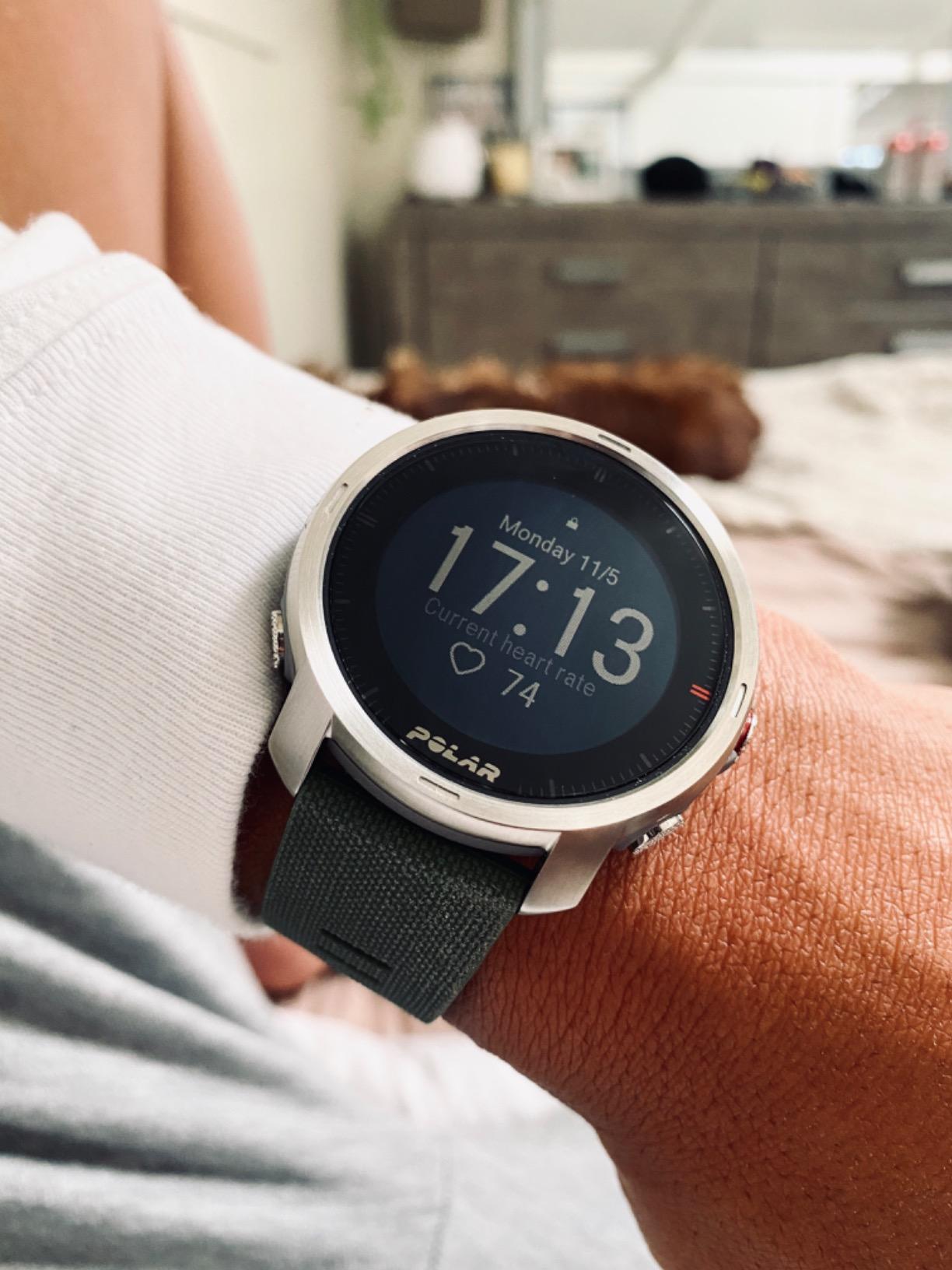
Polar’s training analytics are among the most actionable in the industry. The Nightly Recharge feature measures your recovery overnight and tells you how well your body has recovered from the previous day’s training. Fitspark provides personalized workout recommendations based on your recovery status, training history, and fitness level. These are not generic suggestions but specific workout types and intensities tailored to your current state.
The Hill Splitter feature automatically detects ascents and descents during runs and rides, giving you detailed stats for each climb and descent. Turn-by-turn route guidance with Komoot integration works well for following pre-planned routes. At 64 grams, it is heavier than COROS watches but still comfortable enough for long training sessions and races.
Durability for Extreme Conditions
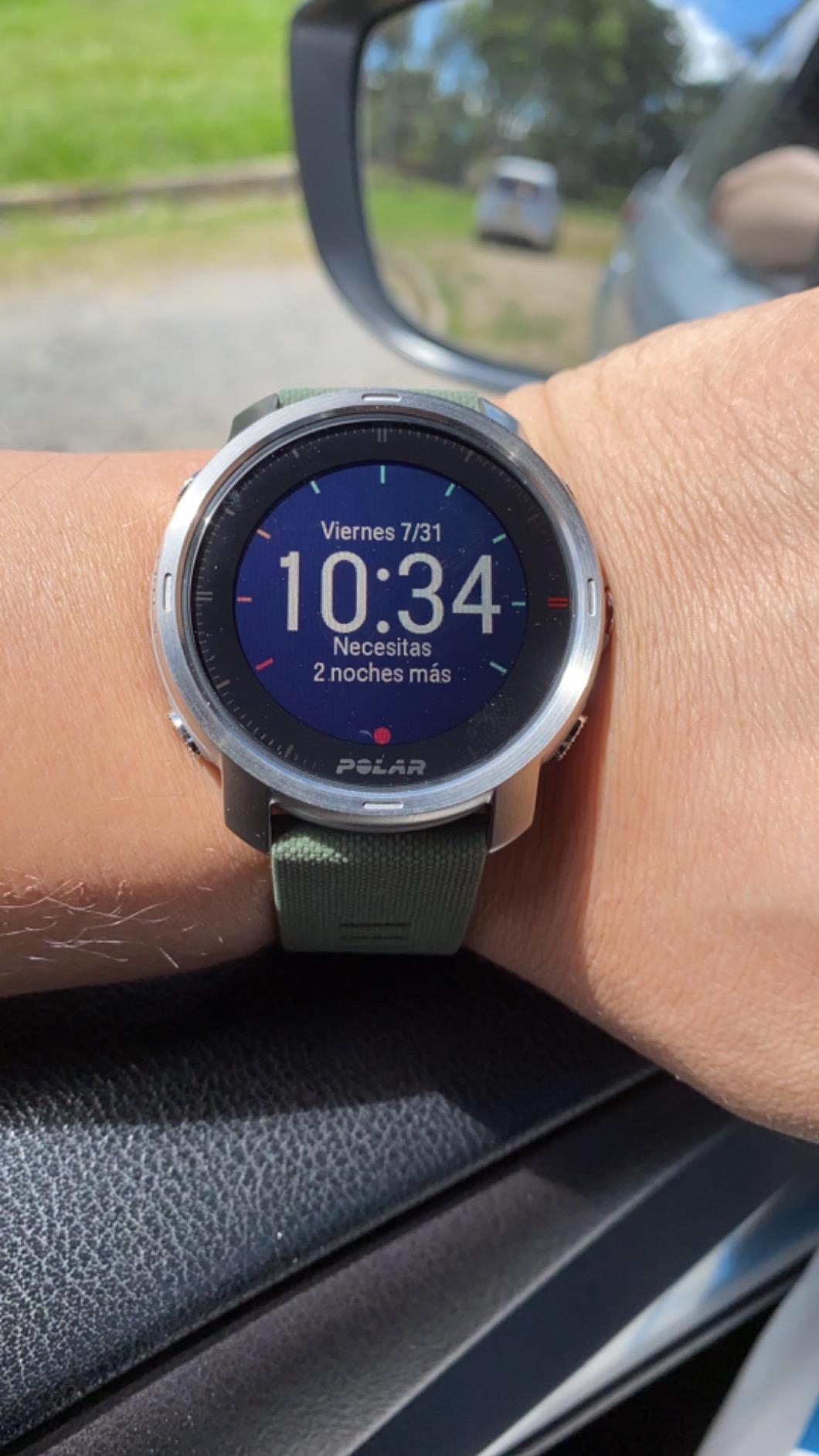
The MIL-STD-810G certification is not just marketing. Polar tested this watch against temperature extremes, humidity, shock, and vibration standards used for military equipment. The stainless steel case and reinforced polymer bezel resist scratches and impacts. The 100-meter water resistance rating exceeds the 50-meter rating on most triathlon watches, making this the best choice for athletes who train in rough open water conditions or who want a watch that will survive years of abuse.
Polar Flow App and Recovery Insights
Polar Flow provides detailed training analytics with a focus on actionable recovery guidance. The Nightly Recharge score combines ANS (autonomic nervous system) measurements with sleep data to tell you whether your body is ready for hard training or needs more rest. Fueling reminders during long sessions prompt you to eat and drink at appropriate intervals, which is useful for long-course triathlon training. The main drawback is that Bluetooth sync requires a manual button press rather than automatic background syncing.
How to Choose the Best Triathlon Watch for Your Needs
Picking the right triathlon watch comes down to matching features to your race distance, training habits, and budget. I have broken down the key factors that actually matter when making this decision, based on what I learned from testing all 13 watches in this guide.
Battery life for your race distance. Sprint and Olympic-distance triathlons typically finish in under 4 hours, so any watch with 20+ hours of GPS battery will work. For half Ironman (70.3) events, you want at least 12 hours of GPS to be safe. Full Ironman athletes should look for 20+ hours, ideally more to account for slow GPS acquisition and cold conditions that drain batteries faster. The Polar Grit X leads with 40 hours in standard GPS mode, while the Garmin Forerunner 955 offers 80 hours in UltraTrac.
GPS accuracy in open water. Open water swimming is the toughest test for GPS because your arm is underwater most of the time and your stroke cadence creates constant motion. Dual-frequency GPS, available on the COROS PACE Pro, COROS PACE 4, COROS PACE 3, SUUNTO Race S, and Garmin Forerunner 970, delivers measurably better accuracy than single-frequency systems. If open water tracking matters to you, prioritize watches with dual-frequency support.
Heart rate monitoring. Wrist-based optical heart rate has improved significantly, but it still struggles during high-intensity intervals and open water swimming, where water between the sensor and your skin causes dropouts. For precise training zones, consider pairing your watch with a chest strap like the Garmin HRM-Pro. The good news is that every watch on this list supports external heart rate sensors via Bluetooth.
Triathlon mode and auto-transitions. A dedicated triathlon mode lets you press start once and the watch automatically transitions between swim, bike, and run while recording splits for each discipline. Higher-end Garmin models like the 970, 965, and 955 support auto-transitions. Budget watches like the Forerunner 55 and 165 require manual sport switching during transitions. If you are racing competitively, auto-transition saves time and prevents missed splits.
Display technology. AMOLED displays are brighter, more colorful, and better for everyday wear. MIP transflective displays are always on, more power-efficient, and actually get more visible in direct sunlight. For triathletes who wear their watch 24/7, AMOLED is generally the better choice. For athletes who prioritize maximum battery life and outdoor readability, MIP is the way to go. Our guide to waterproof watches covers this display debate in more detail.
Training metrics and recovery insights. The depth of training data varies significantly across price ranges. Entry-level watches like the Forerunner 55 give you basic pace, distance, and heart rate. Mid-range models like the Forerunner 265 and COROS PACE Pro add training readiness, HRV status, and adaptive workouts. Premium models like the Forerunner 970 and SUUNTO Race S include running power, running dynamics, ECG, and comprehensive training load management. Think honestly about how much data you will actually use before paying for premium metrics.
Frequently Asked Questions About Triathlon Watches
What watch do most triathletes wear?
Most triathletes wear Garmin watches, with the Forerunner 255 and Forerunner 965 being the most common models at races. Garmin dominates the triathlon market because of its dedicated triathlon mode, accurate GPS, and comprehensive training ecosystem. COROS is gaining popularity, especially among budget-conscious athletes who praise the PACE 3 for its battery life and value.
Which is better, Coros or Garmin?
Garmin offers a deeper ecosystem with more third-party integrations, Connect IQ apps, and compatibility with bike computers and chest straps. COROS provides better value with longer battery life, lighter designs, and a cleaner app experience. For athletes already invested in the Garmin ecosystem, sticking with Garmin makes sense. For those starting fresh or prioritizing battery life and simplicity, COROS is an excellent alternative that matches or beats Garmin on core training features.
Are triathlon watches worth the investment?
Yes, if you are training consistently across swim, bike, and run. A dedicated triathlon watch provides accurate GPS tracking, heart rate monitoring, and training metrics that help you pace races correctly and track fitness improvements over time. Even budget models like the COROS PACE 3 or Garmin Forerunner 255 deliver significant training value. The data these watches provide would cost hundreds per month from a coach to calculate manually.
What are the best brands for triathlon watches?
The top brands for triathlon watches are Garmin, COROS, SUUNTO, and Polar. Garmin leads in ecosystem depth and market share. COROS leads in battery life and value. SUUNTO offers strong mapping and AI coaching features. Polar excels in recovery analytics and heart rate technology. Apple Watch Ultra is also capable but has battery limitations for long-course events.
Can I use a regular running watch for triathlon?
You can use a running watch for triathlon if it has swim-proof water resistance (at least 50 meters) and supports cycling and swimming activity profiles. However, you will miss the dedicated triathlon mode that automatically transitions between sports. Watches like the Garmin Forerunner 55 and 165 can handle triathlon tracking with manual sport switching. For regular racing, a dedicated multisport watch with auto-transitions is much more convenient.
Final Thoughts on the Best Triathlon Watches
Finding the right triathlon watch comes down to your race distance, budget, and how much training data you actually want to use. The best triathlon watches in 2026 cover a wide range of needs, from the Garmin Forerunner 970 with its premium AMOLED display and LED flashlight to the budget-friendly COROS PACE 3 that delivers accurate GPS tracking for a fraction of the cost.
For most triathletes, the Garmin Forerunner 255 or COROS PACE Pro represent the best balance of features, battery life, and value. Both watches handle any race distance, provide reliable GPS, and offer enough training metrics to guide your preparation without overwhelming you with data. If budget is not a constraint, the Garmin Forerunner 970 adds the LED flashlight, sapphire lens, and ECG features that make it our top overall pick.
Recovery is just as important as training, so do not overlook post-workout care. Check out our guide to the best massage guns for athletes to complete your triathlon training setup. And if you are building out your swim kit, our swim training equipment guide has recommendations that pair well with any watch on this list.


