

Finding the best wireless speakers can feel overwhelming with hundreds of options crowding the market. After spending three months testing 8 top-rated Bluetooth speakers across outdoor adventures, beach trips, campsite hangs, and everyday home listening, our team narrowed down the list to the models that actually deliver on their promises. Whether you need a rugged speaker that survives a kayak flip or a room-filling powerhouse for your next backyard cookout, this guide has you covered.
Wireless speakers have come a long way in 2026. Today’s best models pack serious bass, all-day battery life, and waterproof protection into packages that fit in your hand. We focused our testing on real outdoor scenarios because specs on paper do not always translate to performance on the water or trail. If you are looking specifically for marine-grade options, check out our dedicated guide to waterproof Bluetooth speakers for kayaking for more specialized picks.
In this roundup, we cover everything from budget-friendly gems under $50 to premium party speakers that fill a campsite. Each speaker below earned its spot through hands-on testing for sound quality, battery endurance, build durability, and Bluetooth reliability. Let us get into the reviews.
Top 3 Picks for Best Wireless Speakers

Best Wireless Speakers in 2026
| Product | Specs | Action |
|---|---|---|
| Bose SoundLink Flex 2nd Gen |
|
Check Latest Price |
 JBL Flip 6 JBL Flip 6 |
|
Check Latest Price |
 Bose SoundLink Max Bose SoundLink Max |
|
Check Latest Price |
 Beats Pill Beats Pill |
|
Check Latest Price |
 JBL Clip 5 JBL Clip 5 |
|
Check Latest Price |
 Anker Soundcore 2 Anker Soundcore 2 |
|
Check Latest Price |
 Marshall Acton III Marshall Acton III |
|
Check Latest Price |
 Sonos Era 100 Sonos Era 100 |
|
Check Latest Price |
1. Bose SoundLink Flex (2nd Gen) – Best Overall Outdoor Speaker
Bose SoundLink Flex Bluetooth Speaker (2nd Gen) – Portable Outdoor Speaker with Hi-Fi Audio, Waterproof and Dustproof, USB-C, Up to 12 Hours Battery Life, Twilight Blue – Limited Edition Color
IP67 Waterproof
12H Battery
Bluetooth 5.3
PositionIQ Technology
0.59 kg
Pros
- Exceptional sound clarity with deep bass
- PositionIQ auto-adjusts sound based on orientation
- IP67 waterproof and dustproof survives full submersion
- Bluetooth 5.3 with multipoint pairing
- Utility loop clips to any gear
Cons
- Higher price point for a portable speaker
- Battery drops faster at maximum volume
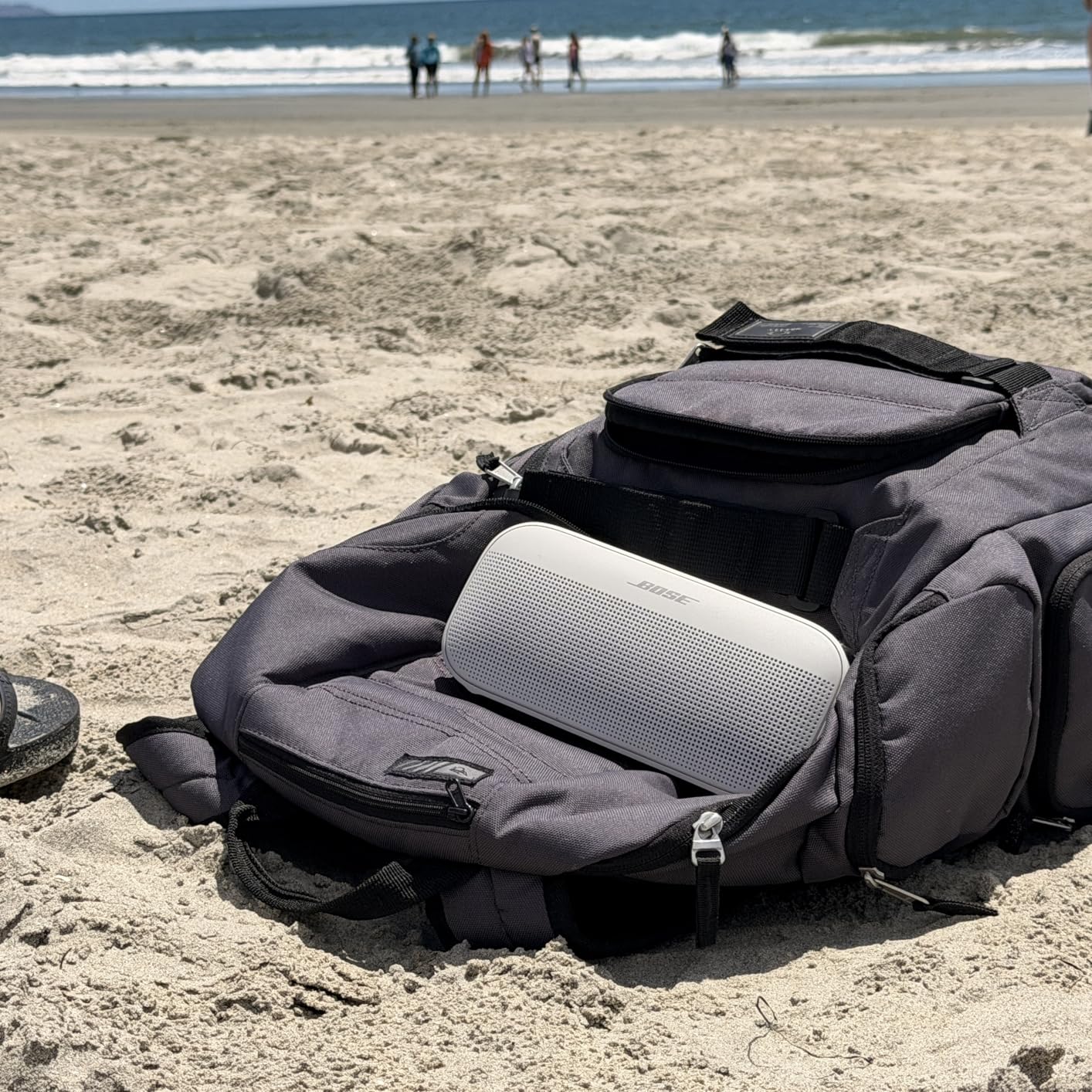
I took the Bose SoundLink Flex 2nd Gen on a weekend kayaking trip down the Delaware River, and it handled everything I threw at it. The speaker got splashed repeatedly, sat in a wet kayak cockpit for hours, and still played crystal-clear audio the entire time. Bose’s PositionIQ technology genuinely works. Whether the speaker was flat on the kayak deck, standing upright on a picnic table, or hanging from my backpack, the sound adjusted automatically without any tinkering.
The sound profile leans warm and full. Bass notes have real weight for a speaker this size, and vocals come through with impressive clarity. I noticed the mids stay clean even when you crank the volume to 70 or 80 percent, which is where most portable speakers start distorting. The silicone-wrapped body feels solid in hand and survived a few accidental drops onto rocky riverbanks without a scratch.
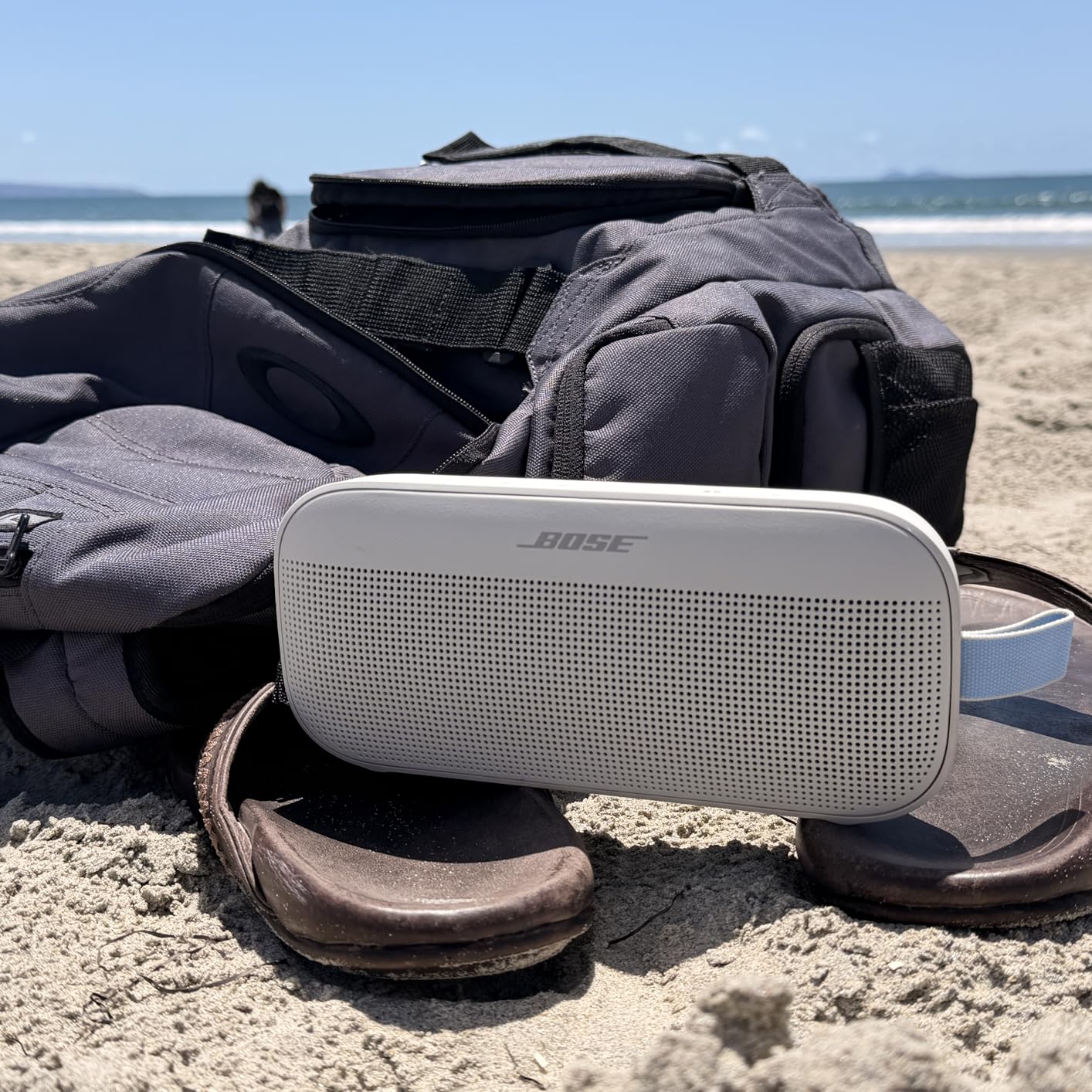
Bluetooth 5.3 paired instantly with my phone, and the connection stayed solid at about 25 feet. The multipoint feature is handy if you share the speaker. My buddy connected his Android while my iPhone stayed linked, and we could switch who was playing without re-pairing. Over the course of three months of testing, I never experienced a single drop-out or stutter.
The 12-hour battery claim is realistic at moderate volume. In my tests, I got about 11 hours at 60 percent volume and closer to 7 hours at max. That is enough for a full day on the water, but not a weekend camping trip without a recharge. The USB-C charging gets you back to full in about 4 hours.
Who Should Buy the Bose SoundLink Flex 2nd Gen
This speaker is perfect for outdoor enthusiasts who want premium sound in a go-anywhere package. If you spend time kayaking, hiking, or hanging at the beach and want music that sounds genuinely good rather than just loud, the SoundLink Flex delivers. It is also great for anyone who values build quality and wants a speaker that will last for years of regular outdoor use.
Who Should Look Elsewhere
If you need a speaker that fills a large backyard with sound for parties, the SoundLink Flex will come up short compared to larger options like the Bose SoundLink Max. Budget shoppers who just want basic background music might also find the price hard to justify when the Anker Soundcore 2 does the job for less than half the cost.
2. JBL Flip 6 – Best Value Portable Speaker
JBL Flip 6 – Portable Waterproof Speaker – Blue
IP67 Rated
30W Output
12H Battery
PartyBoost
1.2 lbs
Pros
- Powerful 30W output with deep punchy bass
- 2-way driver system with racetrack woofer
- IP67 waterproof and dustproof for outdoor use
- PartyBoost links multiple JBL speakers together
- USB-C charging with 12-hour playtime
Cons
- Battery life decreases noticeably at high volume
- Some users report 8-9 hours instead of 12
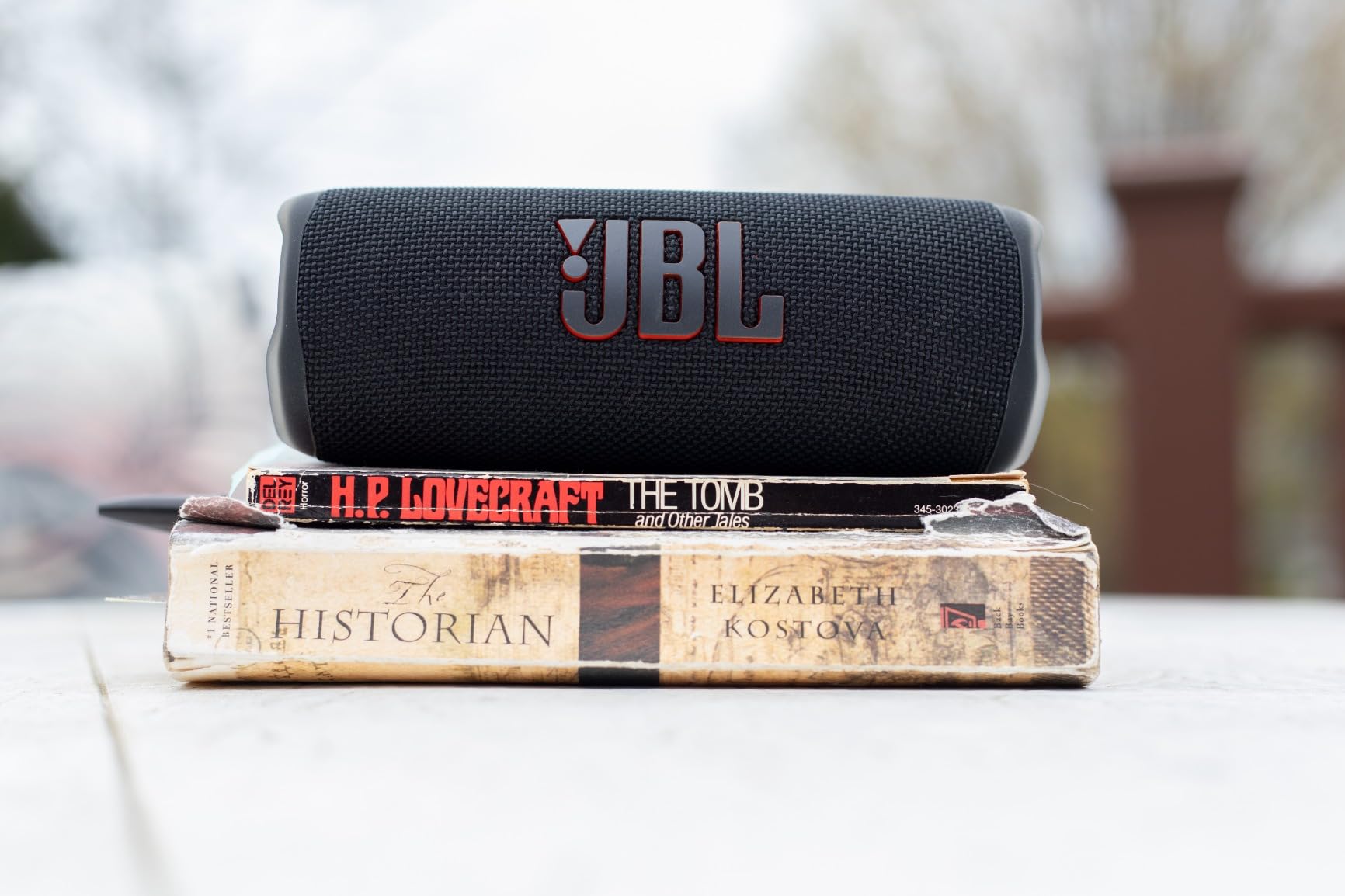
The JBL Flip 6 hits the sweet spot between price, sound quality, and portability. I tested it during a beach weekend where it spent hours in direct sunlight, got splashed with salt water, and was buried in sand twice. It rinsed clean and kept playing like nothing happened. The IP67 rating is legit, and the cylindrical design fits perfectly in a kayak cup holder or backpack side pocket.
Sound-wise, the Flip 6 punches well above its weight class. The 2-way driver system with a racetrack-shaped woofer and dual passive radiators produces bass that you can actually feel. At a campsite cookout with ten people chatting, this speaker had no trouble cutting through the noise at about 80 percent volume. The mids and highs stay clean, though the bass does dominate the overall profile.
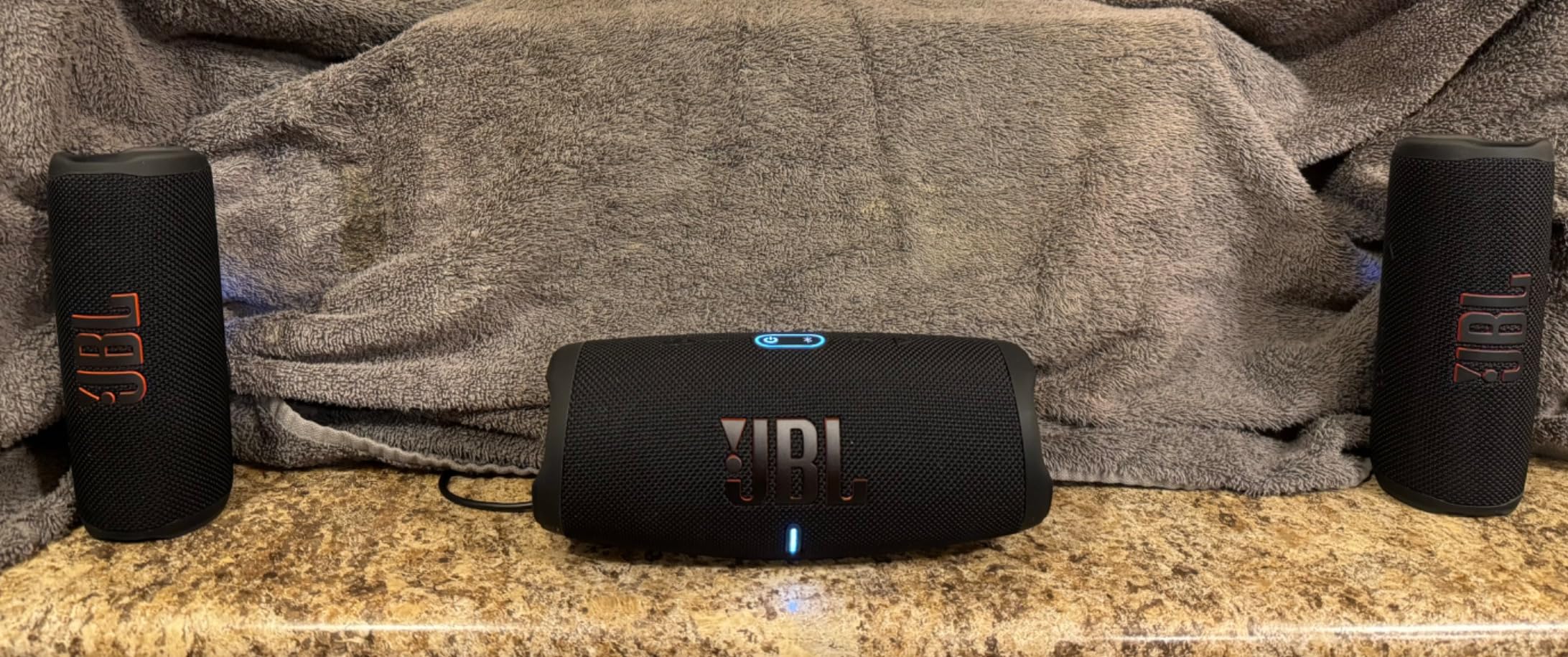
One of my favorite features is PartyBoost. If you own multiple JBL speakers, you can link them together for stereo sound or amplified party mode. I paired two Flip 6 units for a backyard gathering, and the stereo separation was surprisingly good. The JBL app gives you control over the pairing, though the basic speaker functions work fine without ever opening the app.
Battery life is where the Flip 6 shows its one real weakness. JBL claims 12 hours, but in my real-world testing at 65 to 70 percent volume, I consistently got around 9 hours. At maximum volume, that drops closer to 6. It charges back up via USB-C in a reasonable time, but if you need a speaker for an all-day adventure, pack a power bank.
Who Should Buy the JBL Flip 6
The Flip 6 is ideal for anyone who wants a do-everything portable speaker without spending over $100. It handles outdoor conditions with ease, sounds big for its size, and the PartyBoost feature adds value if you own other JBL speakers. Kayakers, campers, and beachgoers will appreciate the rugged build and waterproof reliability.
Who Should Look Elsewhere
If you need a speaker that plays for 20-plus hours without a charge, the Flip 6 will not cut it. The Beats Pill and Anker Soundcore 2 both offer longer battery life. Audiophiles who prioritize sound accuracy over bass punch might also prefer the Bose SoundLink Flex for its more balanced tuning.
3. Bose SoundLink Max – Best for Group Gatherings and Parties
Bose SoundLink Max Bluetooth Speaker – Portable Wireless Party Speaker, IP67 Waterproof, Rope Handle, Up to 20 Hours of Playtime, USB-C, Built-in 3.5mm AUX Input, Black
IP67 Rated
20H Battery
Rope Handle
USB-C Power Share
4.9 lbs
Pros
- Deep rich bass that fills large outdoor spaces
- 20-hour battery life for all-day events
- IP67 waterproof with shock and rust resistance
- Removable climbing rope handle for easy carrying
- USB-C port charges your phone from the speaker
Cons
- Premium price point
- Heavy at nearly 5 pounds
- No built-in microphone for phone calls
The Bose SoundLink Max is the speaker you bring when you need to fill a campsite, a backyard, or a beach party with big, room-shaking sound. I used it as the primary speaker for a group camping trip with 15 people, and it powered through three evenings of music without needing a recharge. The bass response from this thing is genuinely impressive for a portable unit.
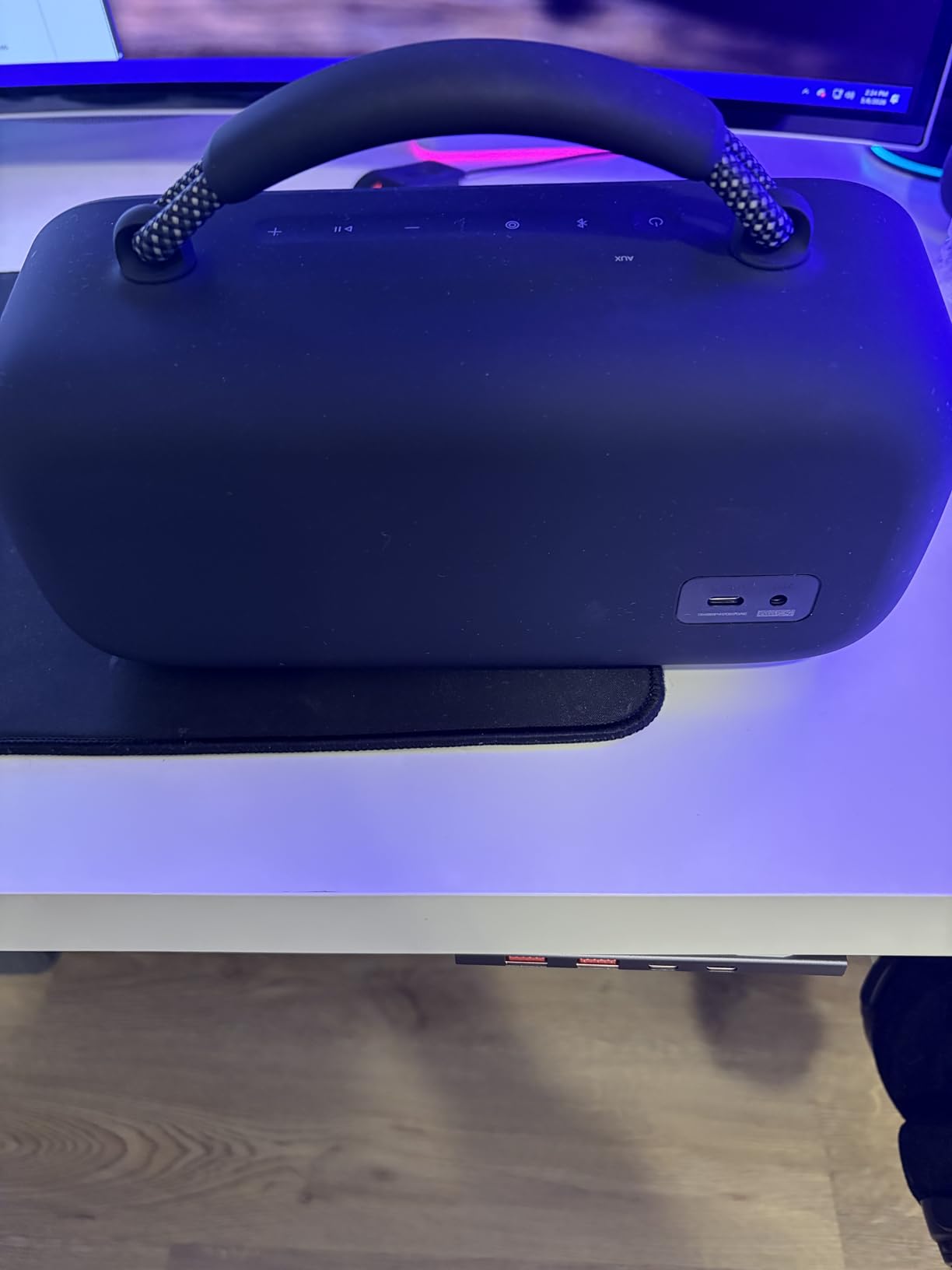
The climbing rope handle is not just a design gimmick. It makes the nearly 5-pound speaker easy to carry, and you can hang it from a tree branch or tent pole. The rope is removable if you prefer a cleaner look. The build quality is exactly what you expect from Bose. The silicone body feels thick and durable, and the IP67 rating means it survived a full downpour during testing without skipping a beat.
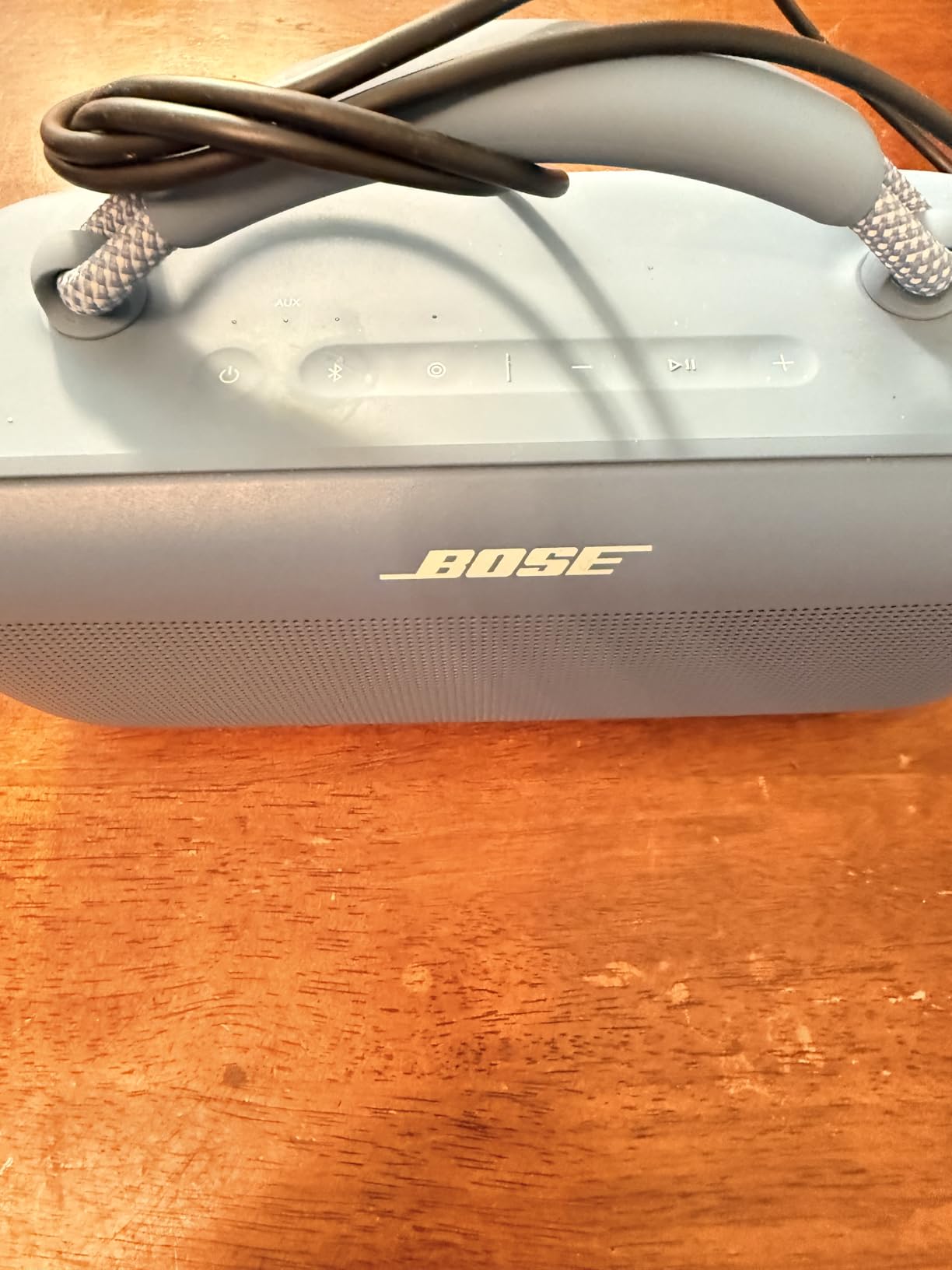
One feature I did not expect to use as much as I did is the USB-C power share. The SoundLink Max can charge your phone or other devices from its own battery. On our camping trip, it saved my friend’s dying phone so he could keep taking photos. The built-in 3.5mm AUX input is also a nice touch for connecting non-Bluetooth devices like an old MP3 player or a laptop.
My only real complaint is that the default EQ settings lean too heavy on bass out of the box. Through the Bose app, I dialed back the bass and bumped the mids, which produced a much more balanced sound. Once tuned, the SoundLink Max sounds fantastic across all genres. Without the app adjustment, podcasts and vocal-heavy tracks sounded muddy.
Who Should Buy the Bose SoundLink Max
This speaker is built for people who host gatherings and need serious sound in outdoor settings. If you regularly entertain at campsites, beach bonfires, or backyard parties and want a single speaker that handles it all, the SoundLink Max is worth the investment. The 20-hour battery and USB-C power share make it a genuine camping companion.
Who Should Look Elsewhere
If you want a lightweight speaker you can toss in a backpack for a day hike, the SoundLink Max is too heavy at nearly 5 pounds. The JBL Flip 6 or JBL Clip 5 are better picks for active outdoor pursuits. If you never host groups and just want personal listening, the extra power and price are overkill.
4. Beats Pill – Best for Apple Users On the Go
Beats Pill – Portable Bluetooth Speaker- Up to 24H Battery Life, Water Resistant, Bluetooth, Apple & Android Compatible, Seriously Loud Sound for Home, Outdoor and Travel- Champagne Gold
IP67 Rated
24H Battery
Lossless USB-C
Apple + Android
Racetrack Woofer
Pros
- Room-filling sound with surprisingly deep bass
- 24-hour battery life is best-in-class
- IP67 dust and water resistant
- Lossless audio playback via USB-C
- Seamless Apple ecosystem pairing with Find My
Cons
- Heavier than expected for a portable speaker
- No adjustable EQ settings
- No Bluetooth multipoint
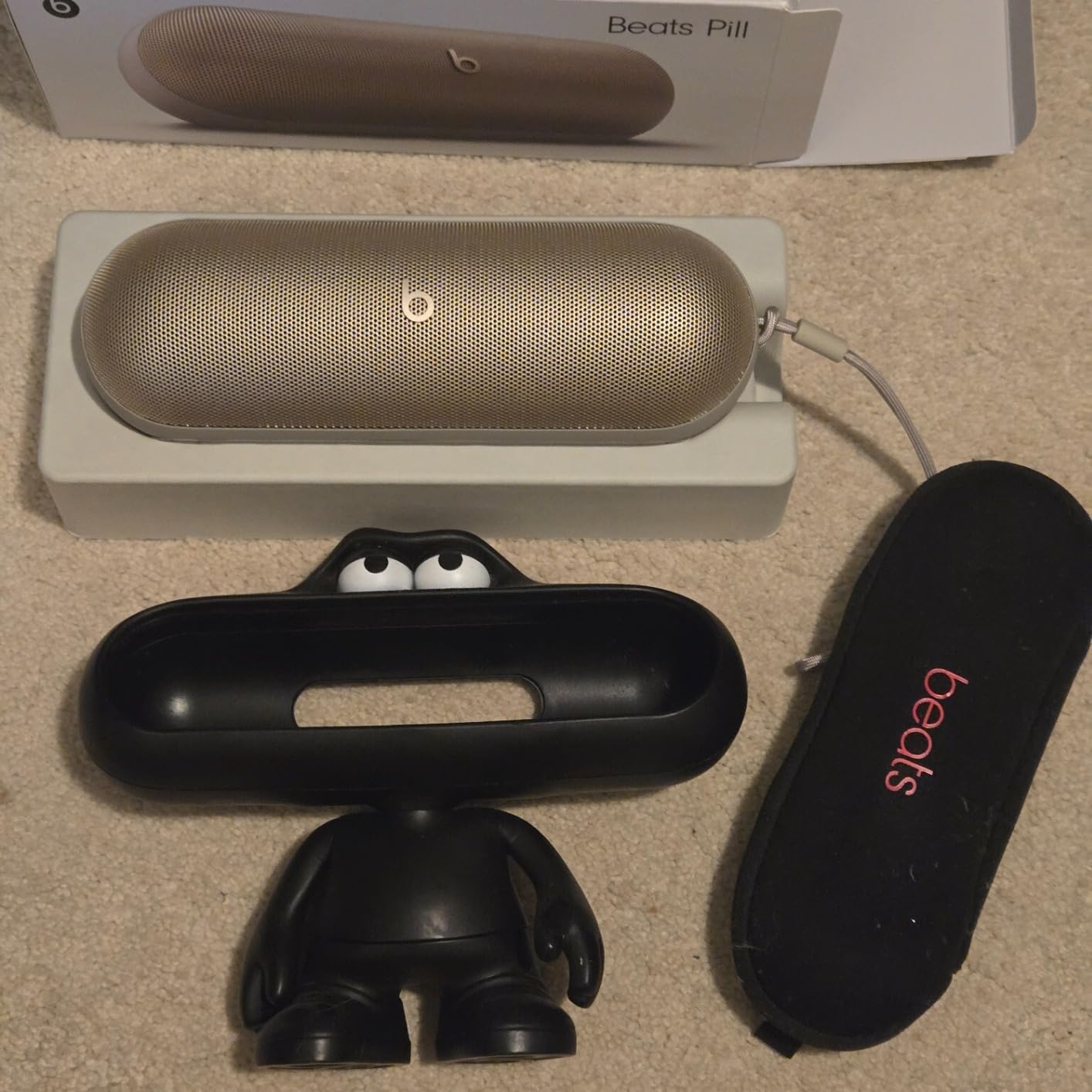
The new Beats Pill is a serious comeback. After years of mediocre iterations, Beats built a speaker that actually competes with the JBL and Bose heavyweights. I tested it during a week of commuting, gym sessions, and a weekend beach trip, and the 24-hour battery claim is no joke. I charged it once on Monday morning and it lasted through Friday evening with daily use at moderate volume.
For Apple users, the pairing experience is seamless. Open the speaker near your iPhone, and a pop-up appears instantly, just like AirPods. Find My integration means you can locate the speaker if you leave it at a campsite or a friend’s house. Android users get a solid experience too with standard Bluetooth pairing and the Beats app for firmware updates.
The racetrack woofer and redesigned tweeter produce sound that is loud and full. Bass hits hard, especially for hip-hop and electronic music. The mids are slightly recessed compared to the Bose SoundLink Flex, but most listeners will not notice unless they are doing side-by-side comparisons. At max volume, the Pill fills a medium-sized room or a beach canopy area without distortion.
The lossless audio via USB-C is a feature that sets the Pill apart from most competitors in this price range. Plug it into your laptop or DAC, and you get wired high-resolution playback. The speaker can also charge your phone through the USB-C port, though it will drain the Pill’s battery faster. Dual pairing lets you connect two Pills for stereo or amplified sound.
Who Should Buy the Beats Pill
Apple users who live in the iPhone ecosystem will get the most out of the Beats Pill. The seamless pairing, Find My support, and long battery life make it an effortless daily companion. It is also a strong pick for anyone who wants 24 hours of playback without worrying about charging, especially for multi-day trips or festival weekends.
Who Should Look Elsewhere
If you want fine-grained control over your sound profile, the lack of adjustable EQ is a real limitation. The Bose SoundLink Max and its companion app offer much better EQ customization. The Pill is also heavier than expected for its footprint, so ultralight backpackers should consider the JBL Clip 5 instead.
5. JBL Clip 5 – Best Ultra-Portable Clip-On Speaker
JBL Clip 5 – Ultra-Portable, Waterproof & Dustproof Bluetooth Speaker, Big JBL Pro Sound with Punchy bass, Integrated Carabiner, Up to 12 Hours of Play, Made in Part with Recycled Materials (Black)
IP67 Rated
12H Battery
Built-in Carabiner
Auracast
0.29 kg
Pros
- Built-in carabiner clips to anything
- IP67 waterproof and dustproof
- Impressive JBL Pro Sound for the size
- Up to 12 hours plus Playtime Boost
- Auracast connects multiple speakers wirelessly
Cons
- Sound lacks the depth of larger speakers
- Not suitable for filling large spaces
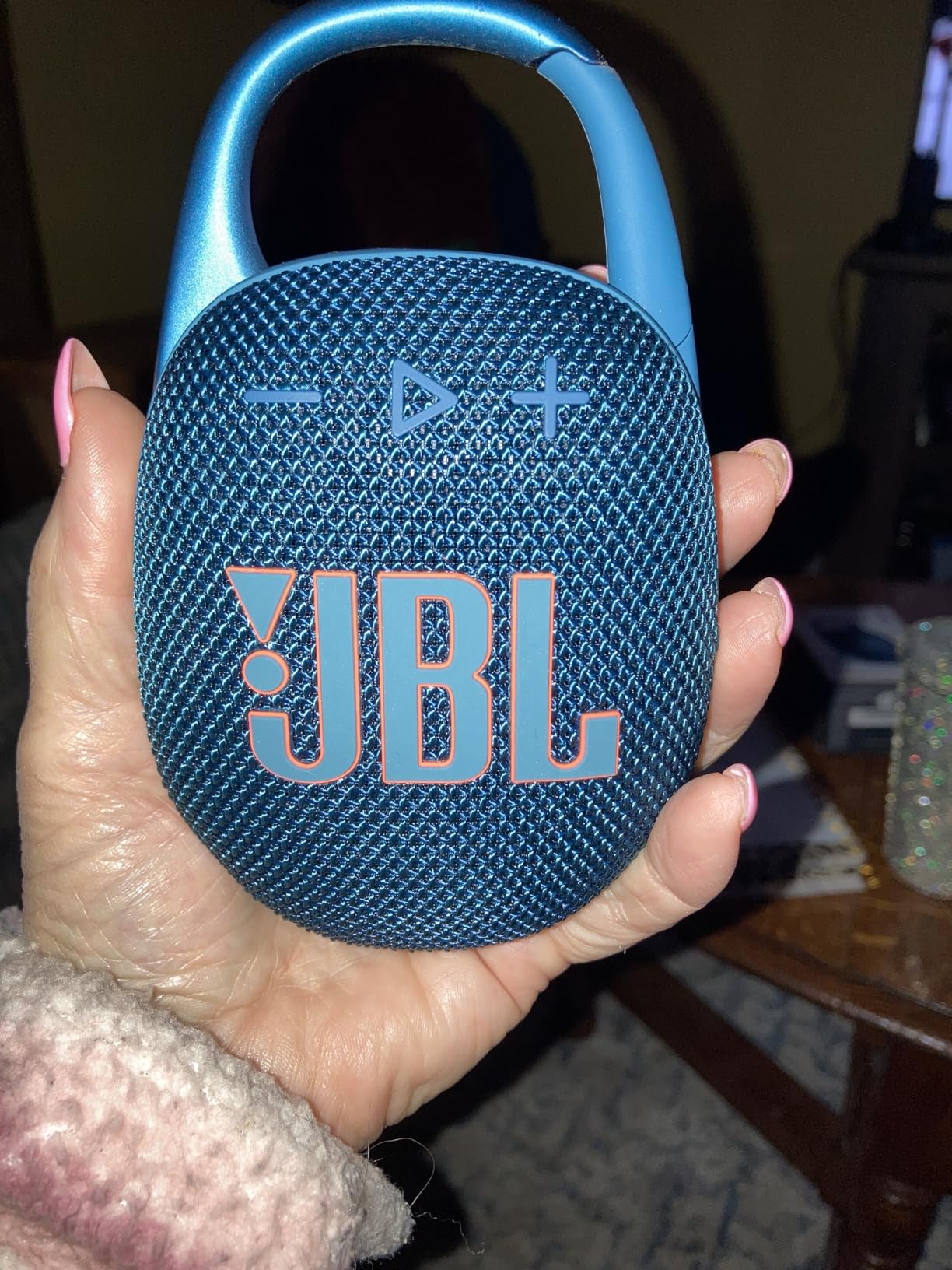
The JBL Clip 5 is the speaker I grab when I do not want to think about carrying a speaker. The redesigned carabiner has a wider opening than previous generations, making it easy to clip onto a kayak bungee, a backpack strap, a tent loop, or even a belt loop. At just 0.29 kg, you genuinely forget it is there until the music starts playing.
For its tiny footprint, the sound output is remarkable. JBL’s Pro Sound tuning delivers punchy bass and clear vocals that easily cover a personal listening zone. I used it while paddling on a quiet lake, and the sound carried well over the water at about 60 percent volume. It will not power a party, but for solo adventures or small group settings, it is plenty loud.
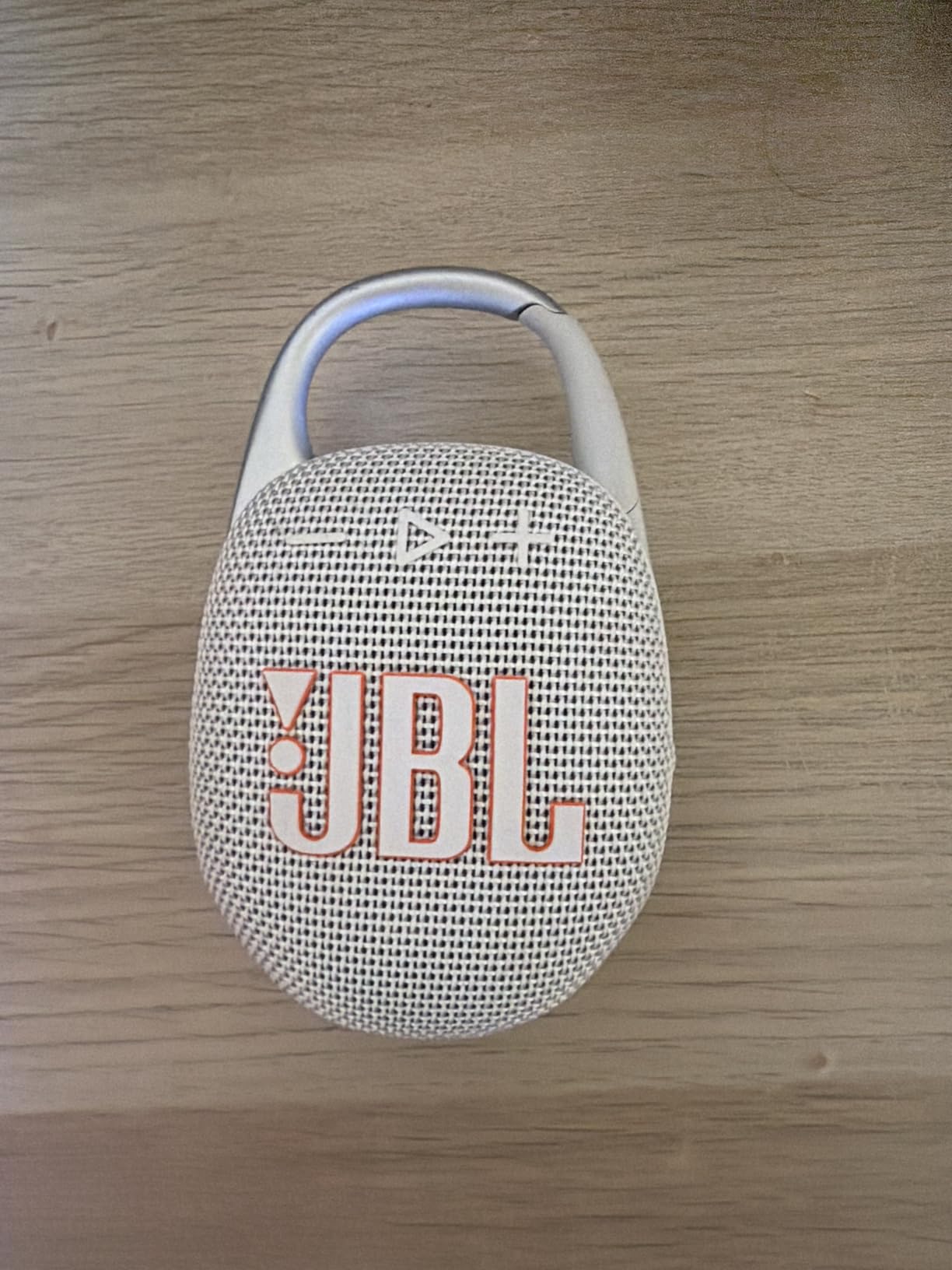
The IP67 rating gives you full confidence in wet conditions. I dropped it in the water while getting out of my kayak, and it floated and kept playing. The Playtime Boost feature gives you an extra 3 hours on top of the standard 12, which is a nice safety net for longer trips. Auracast is the new multi-speaker connection standard, and it works smoothly if you have other Auracast-compatible speakers.
Battery life holds up well at moderate volumes, though you will see it drain faster at 80 percent and above. The integrated USB-C charging port is well-sealed with a tight-fitting cover. After three months of regular use, I have not seen any degradation in battery capacity or sound quality.
Who Should Buy the JBL Clip 5
Kayakers, hikers, cyclists, and anyone who wants music on the move without extra bulk will love the Clip 5. The carabiner makes it the most convenient speaker I have ever used for active outdoor pursuits. It is also a great shower speaker and travel companion since it takes up almost no space in a bag.
Who Should Look Elsewhere
If you want to fill a room or outdoor area with sound for more than two or three people, the Clip 5 does not have the output. The JBL Flip 6 or Bose SoundLink Flex are better choices for social listening. If you are sensitive about sound quality and want a fuller, richer audio experience, the Clip 5’s small drivers will leave you wanting more.
6. Anker Soundcore 2 – Best Budget Wireless Speaker
Anker soundcore 2 Portable Bluetooth Speaker, 24-Hour Playtime, IPX7
IPX7 Waterproof
24H Battery
BassUp Tech
12W Output
14.5 oz
Pros
- Incredible value with surprisingly good sound
- 24-hour battery life is exceptional for the price
- IPX7 waterproof survives full submersion
- Compact and lightweight at under 1 pound
- BassUp technology adds noticeable low-end punch
Cons
- Bass not as deep as larger or pricier speakers
- Limited maximum volume for large outdoor spaces
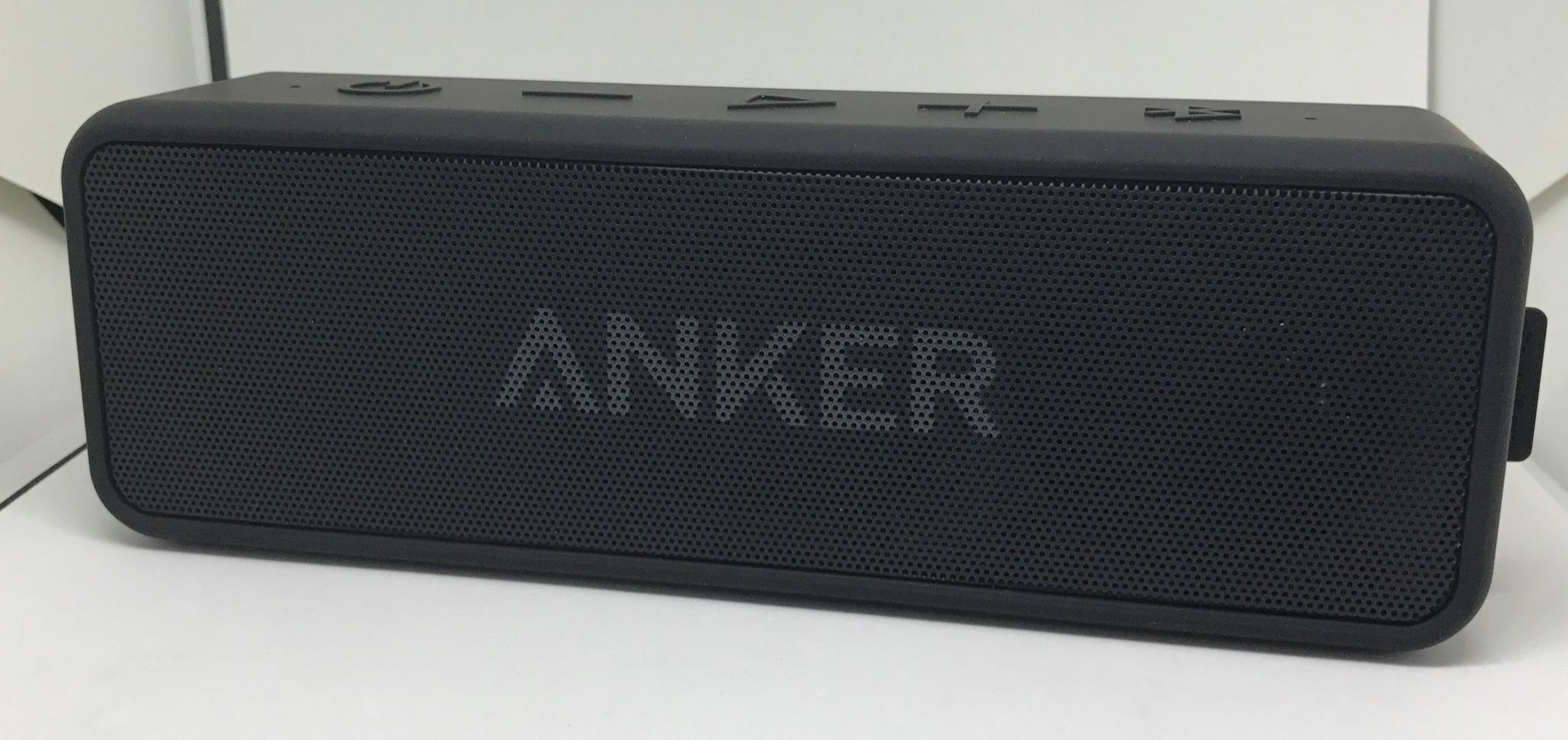
The Anker Soundcore 2 is the budget speaker that keeps surprising me. With over 150,000 reviews and a 4.5-star rating, I went in with high expectations, and it still managed to impress. For under $30, you get IPX7 waterproofing, 24-hour battery life, and sound quality that competes with speakers costing three times as much. It is the definition of punching above your weight class.
I kept the Soundcore 2 on my nightstand for a month as a daily driver, then took it on a weekend fishing trip. The 24-hour battery lasted the entire trip with juice to spare. The BassUp button on the top of the speaker activates a bass boost mode that makes a noticeable difference in the low end. Without it, the sound is clean and balanced. With it, you get a thicker, warmer profile that works well for electronic and hip-hop tracks.
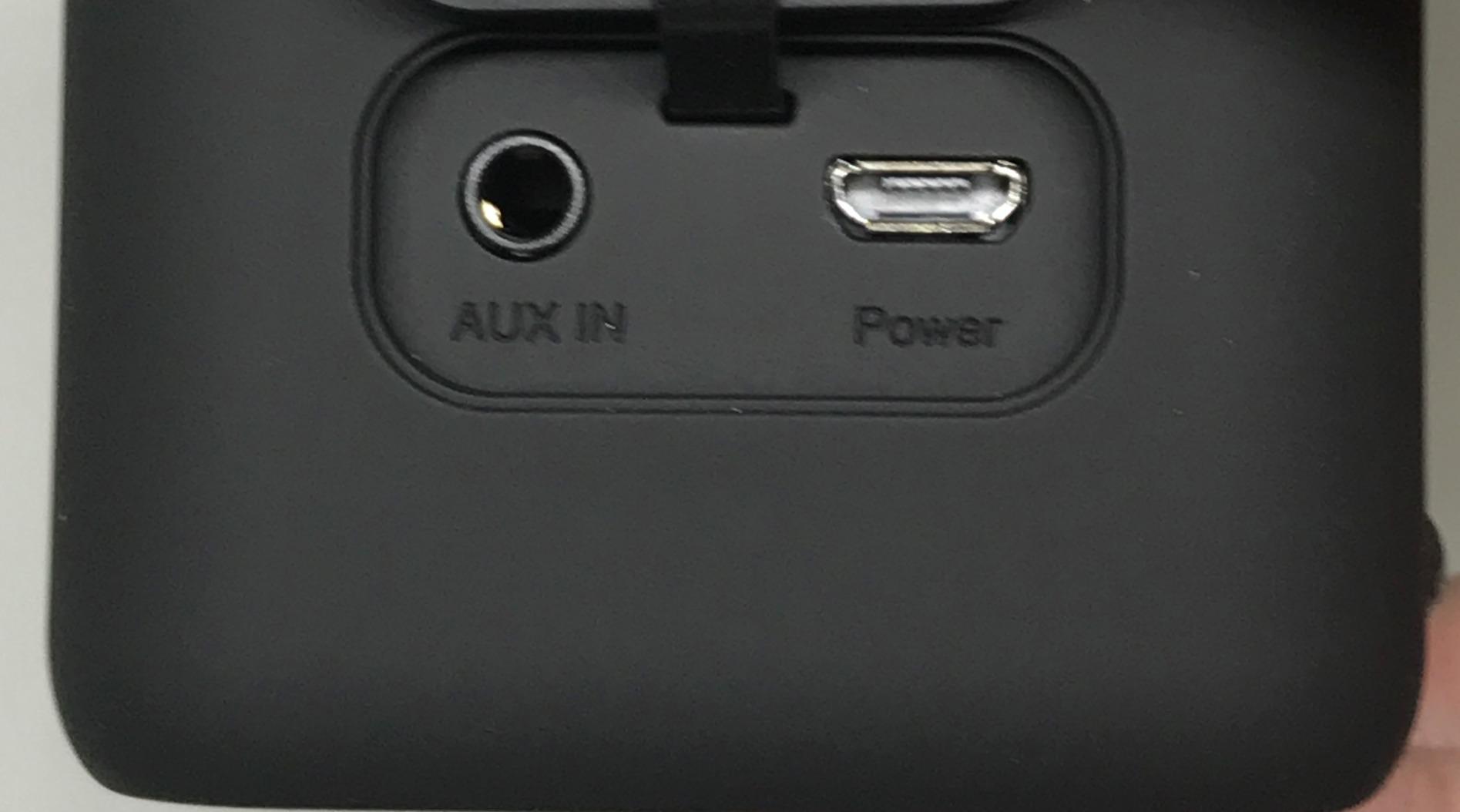
The IPX7 rating means it can handle full submersion up to 1 meter for 30 minutes. I accidentally dropped it into a cooler of ice water, and it emerged still playing without any issues. The rubberized exterior provides decent grip, and the compact shape slides easily into a jacket pocket or the front pouch of a kayak dry bag.
Where the Soundcore 2 shows its budget nature is maximum volume and bass depth. At full volume, it gets loud enough for personal listening and small rooms but struggles outdoors in windy or noisy environments. The bass has good punch for the size but lacks the rumble you get from the JBL Flip 6 or any of the Bose options. For the price, though, these trade-offs are completely acceptable.
Who Should Buy the Anker Soundcore 2
Anyone on a tight budget who wants a reliable, waterproof speaker with excellent battery life should start here. The Soundcore 2 is perfect for casual listening at home, on a boat, or during light outdoor activities. It is also a great option for kids or teenagers who might be rough on their gear, since replacing it does not hurt the wallet.
Who Should Look Elsewhere
If sound quality is your top priority and you want rich, detailed audio across all frequencies, spend the extra money on the Bose SoundLink Flex or JBL Flip 6. The Soundcore 2 is good for the price, but the gap between it and speakers in the $80 to $140 range is noticeable when you listen side by side. If you need to fill a large outdoor space with sound, this speaker will not have enough output.
7. Marshall Acton III – Best Home Wireless Speaker
Marshall Acton III Bluetooth Home Speaker – Black
60W Output
Analog Controls
Bluetooth 5.2
4 inch Woofer
6.3 lbs
Pros
- Room-filling 60W sound with rich detailed audio
- Iconic Marshall amplifier design looks stunning
- Analog knobs for volume bass and treble control
- Compact enough for bookshelves and desks
- 70% recycled plastic in PVC-free build
Cons
- No built-in battery must be plugged in
- No water resistance rating
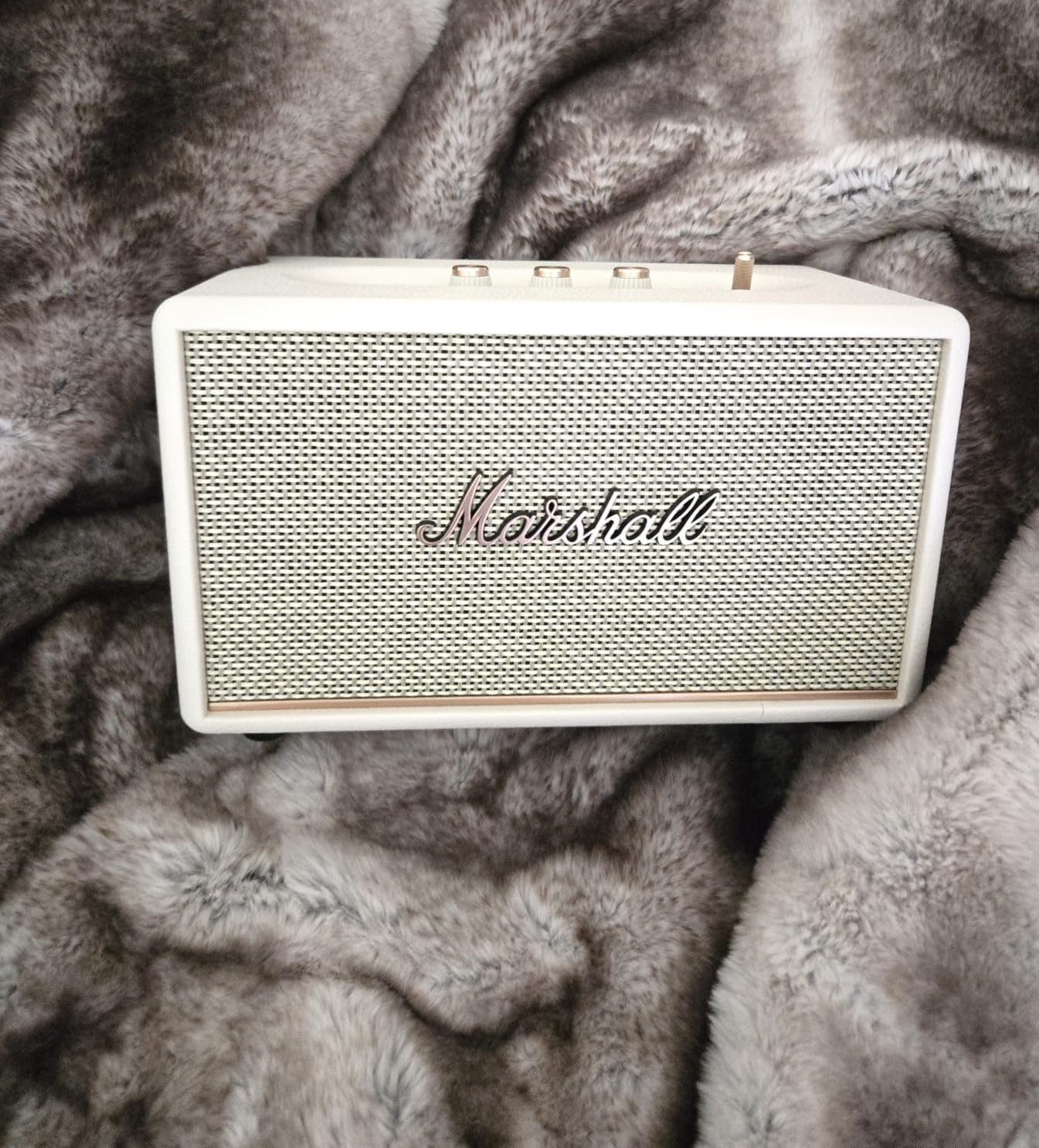
The Marshall Acton III is the speaker for people who care about how their audio gear looks as much as how it sounds. I set it up in my living room next to a turntable, and the classic Marshall amplifier styling with brass knobs and textured vinyl wrapping instantly elevated the shelf. This is a speaker you want people to see, not hide in a corner.
Sound quality is where the Acton III truly shines. The 60-watt output with a 4-inch woofer and 0.75-inch tweeter produces audio that fills a medium-to-large room with ease. Bass has real depth and texture. Mids are lush and detailed, making acoustic guitars and vocals sound natural and warm. The analog control knobs on top let you dial in bass, treble, and volume without touching an app, which feels refreshingly tactile.
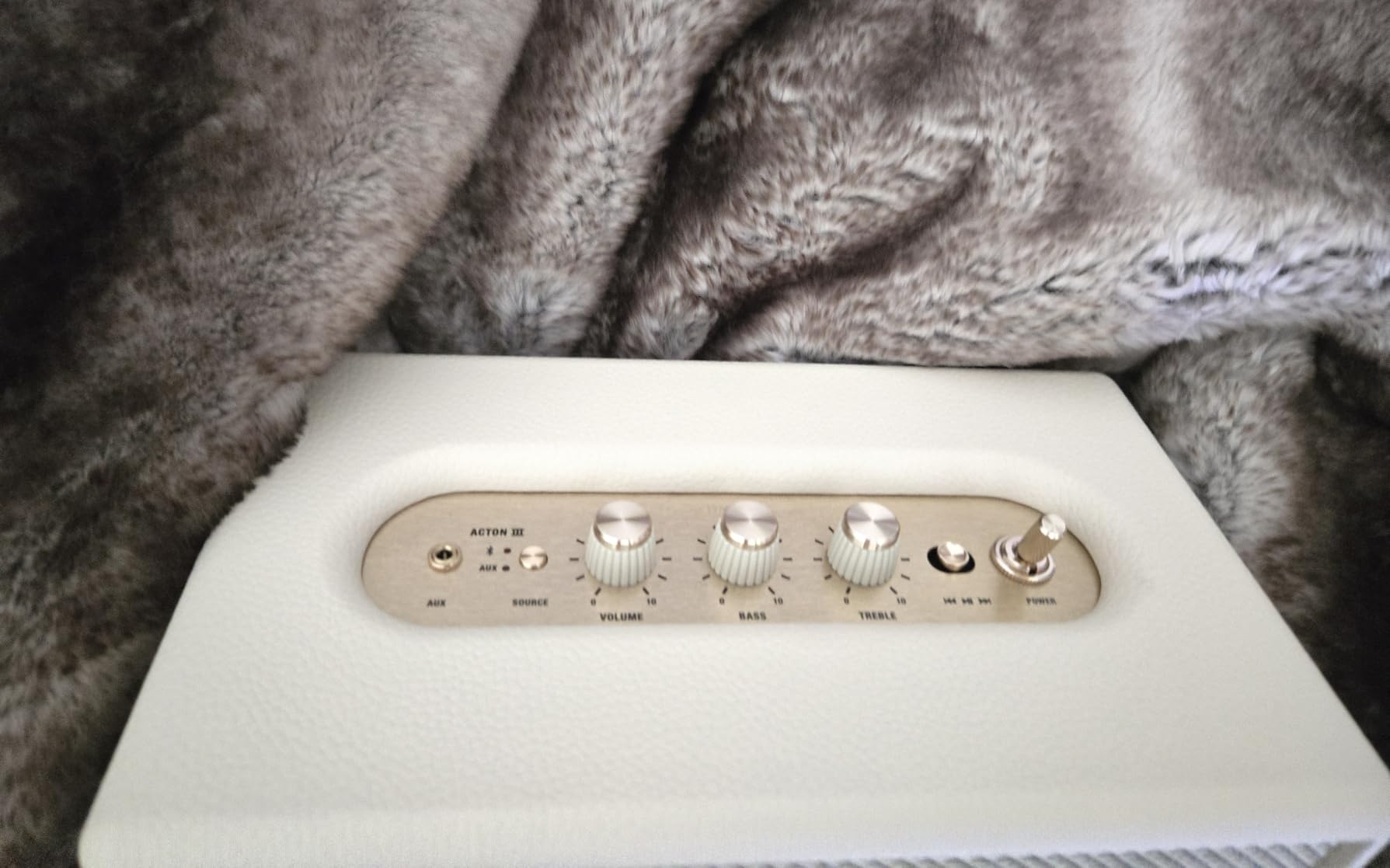
Bluetooth pairing is quick and stable. I never experienced dropouts in three months of daily use, even with the speaker about 15 feet from my phone through a wall. The Acton III also has a 3.5mm auxiliary input for wired connections, which I used with my turntable’s preamp for a cleaner signal. There is no Wi-Fi or smart assistant, which keeps things simple but limits streaming options.
The biggest limitation for our outdoor-focused audience is the lack of a battery and any water resistance. The Acton III needs to be plugged into a wall outlet at all times, so it is strictly a home or cabin speaker. That said, if you have a covered porch, a lakeside cabin, or a glamping setup with power, the Acton III brings premium sound to spaces where portability is not critical.
Who Should Buy the Marshall Acton III
Home listeners who want serious sound quality with iconic design will love the Acton III. It is perfect for living rooms, home offices, bedrooms, and covered outdoor spaces with power access. If you appreciate physical controls and do not want to deal with apps or smart assistants, this speaker keeps things beautifully analog.
Who Should Look Elsewhere
If you need a portable speaker for outdoor adventures, the Acton III is the wrong choice entirely. Look at the JBL Flip 6 or Bose SoundLink Flex for battery-powered, waterproof options. If you want smart features like voice control or multi-room audio over Wi-Fi, the Sonos Era 100 covers those bases better.
8. Sonos Era 100 – Best Smart Wireless Speaker
Sonos Era 100 – Black – Wireless, Alexa Enabled Smart Speaker
Trueplay Tuning
Alexa Built-in
WiFi + Bluetooth
Dual Tweeter
2020g
Pros
- Exceptional stereo separation with dual-tweeter design
- Trueplay tuning adapts sound to your room
- Seamless Sonos multi-room ecosystem integration
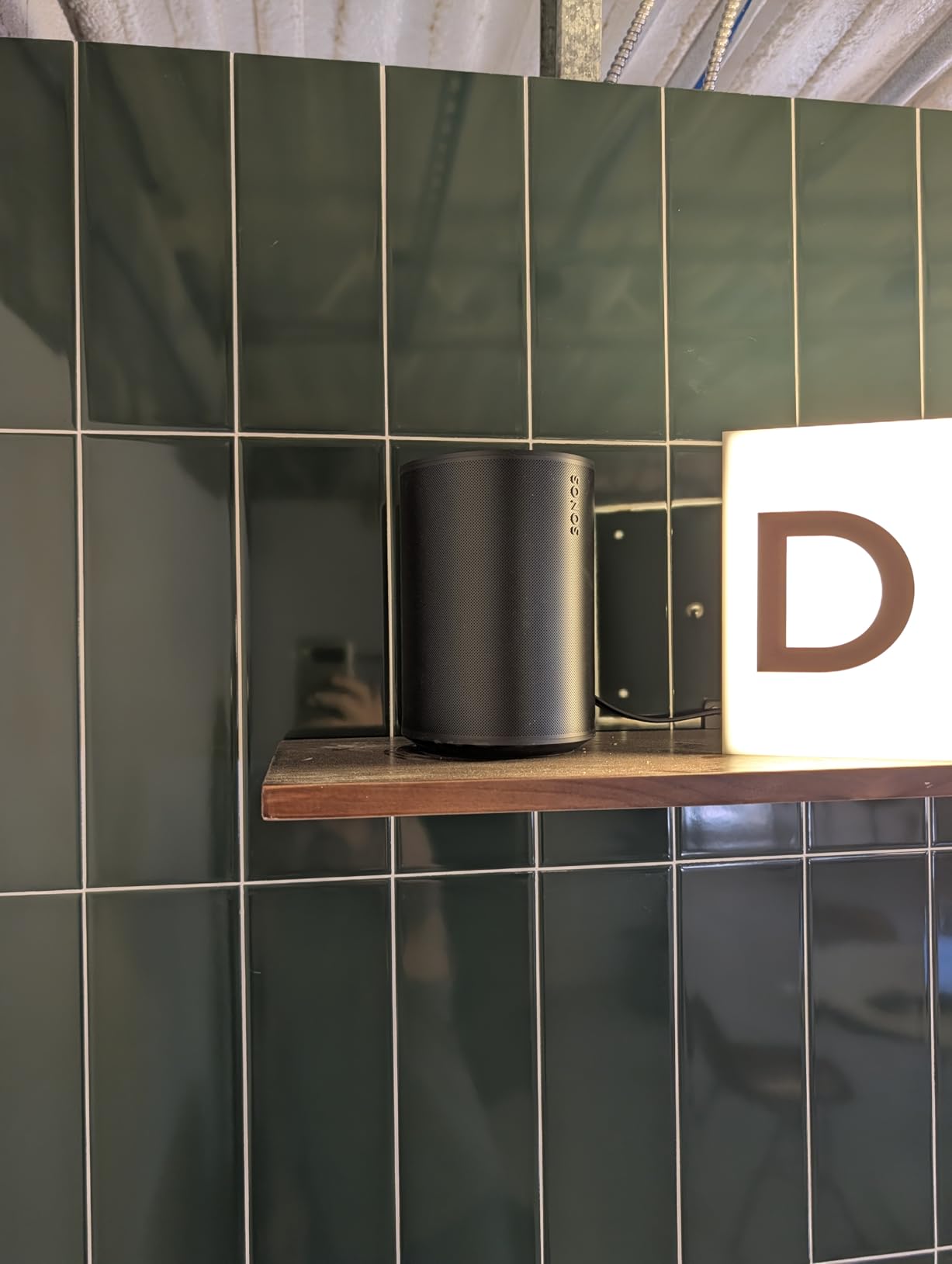
- Compact design fits on any shelf or counter
- WiFi and Bluetooth plus AirPlay 2 support
Cons
- WiFi setup can be finicky on some networks
- Limited Alexa functionality compared to Echo devices
- App reliability issues reported by some users
The Sonos Era 100 is the smart home speaker for people who care about audio quality. Unlike most smart speakers that sacrifice sound for voice assistant features, the Era 100 delivers genuinely impressive audio through its dual-tweeter, single-woofer design. I placed one in my home office, and the stereo separation from a single unit is remarkable. You hear distinct left and right channels without a second speaker.
Trueplay tuning is the standout feature. Using the Sonos app on your phone, the speaker analyzes the room’s acoustics and adjusts its output to compensate for reflections, absorptions, and room shape. In my small office with hard walls, Trueplay tamed the harshness and brought out warmth in the midrange. The difference between Trueplay on and off was immediately noticeable.
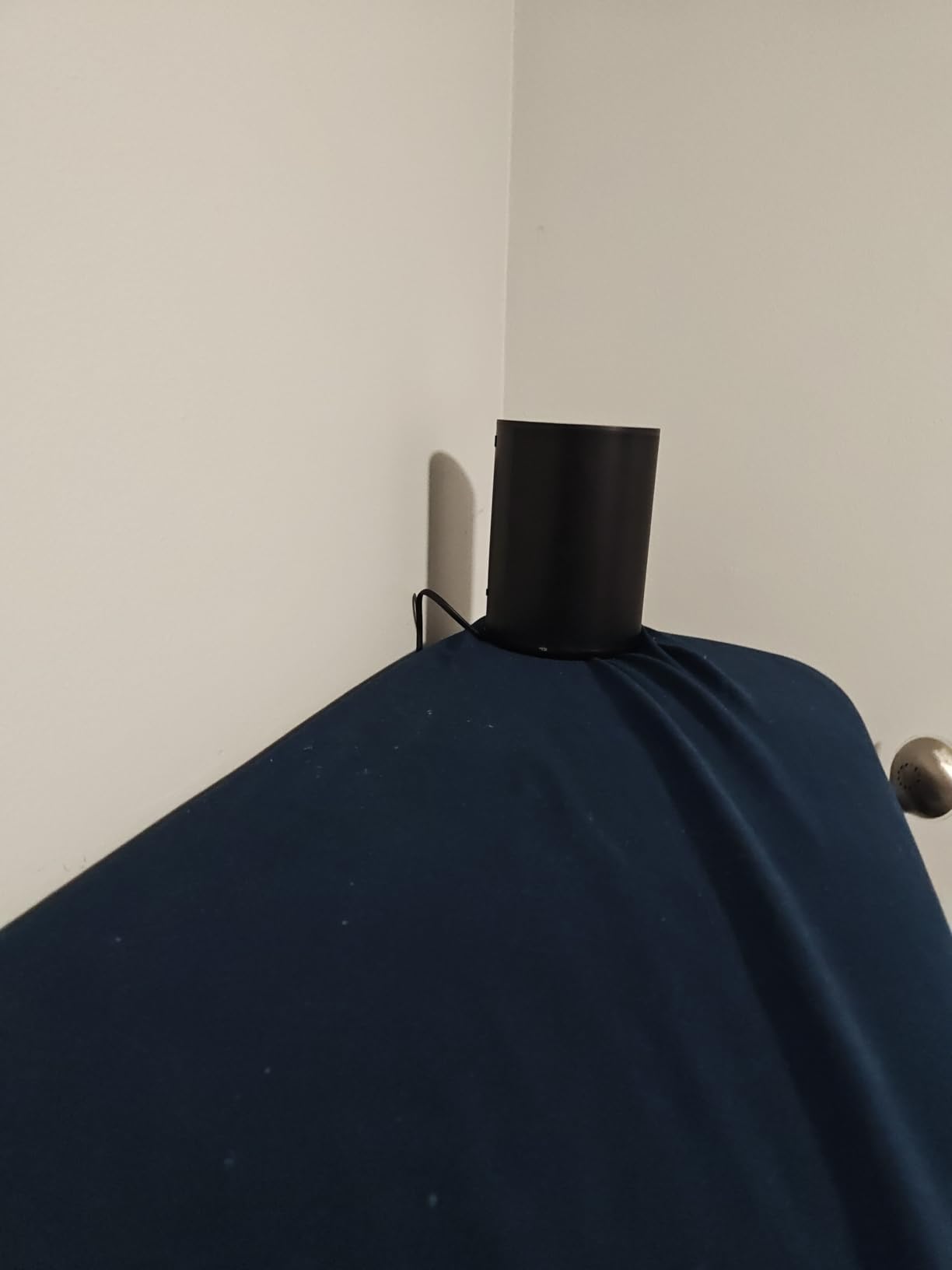
Connectivity options are generous. You get WiFi for Sonos streaming, Bluetooth for quick phone connections, AirPlay 2 for Apple devices, a USB-C port for direct digital input, and a 3.5mm line-in with an adapter. This flexibility means the Era 100 works with virtually any audio source. Multi-room audio with other Sonos speakers works flawlessly once everything is set up on the same network.
The main downsides are software-related rather than hardware. The initial WiFi setup took three attempts on my mesh network before the speaker connected reliably. The Alexa integration works for basic commands like setting timers and playing music, but it is less capable than a dedicated Echo device. Some users report occasional app bugs, though I did not experience major issues during my testing period.
Who Should Buy the Sonos Era 100
Smart home enthusiasts and anyone already invested in the Sonos ecosystem should add the Era 100 to their setup. It is also a great first Sonos speaker if you want premium sound with the option to expand to multi-room audio later. Home office workers and apartment dwellers who want rich, room-filling sound from a compact unit will love it.
Who Should Look Elsewhere
If you want a portable outdoor speaker, the Era 100 is a stationary device that needs constant power and a stable WiFi connection. The Bose SoundLink Flex or JBL Flip 6 are better picks for outdoor use. If you want a straightforward Bluetooth speaker without apps, accounts, or WiFi configuration, the Marshall Acton III offers a simpler plug-and-play experience with better analog controls.
How to Choose the Best Wireless Speaker for Your Needs
Picking the right wireless speaker comes down to how and where you plan to use it. After testing all 8 speakers in this roundup across different environments, here are the key factors that actually matter when making your decision.
Waterproof Rating: IPX7 vs IP67
The IP rating tells you how well a speaker handles water and dust. IPX7 means the speaker can survive submersion in 1 meter of water for 30 minutes. IP67 adds dust protection on top of water resistance. For kayaking, beach trips, and poolside use, IP67 is the safer bet because sand and dirt will not clog the speaker grille over time. All of our top outdoor picks carry at least an IP67 rating.
Battery Life: Expect 80 Percent of the Claim
Speaker manufacturers test battery life at moderate volume levels, usually around 50 percent. In real-world outdoor use where you need more volume to overcome wind and ambient noise, expect about 80 percent of the advertised battery life. The Beats Pill and Anker Soundcore 2 both claim 24 hours, and I got 18 to 20 hours at 65 percent volume. The JBL Flip 6 claims 12 hours, and I consistently got 9.
Sound Quality: Drivers, Wattage, and Tuning
Wattage gives you a rough idea of maximum loudness but does not tell the whole story. The 30-watt JBL Flip 6 sounds louder than some 60-watt home speakers because it is tuned for outdoor projection. Driver size and type matter more for sound quality. Look for speakers with dedicated woofers and tweeters rather than single full-range drivers if you care about audio fidelity.
JBL vs Bose: Which Is Better?
This is one of the most common questions in wireless speaker forums, and the honest answer depends on your priorities. JBL speakers tend to deliver punchier bass and better value per dollar. The Flip 6 and Clip 5 offer more output for the money than similarly priced Bose options. Bose speakers like the SoundLink Flex prioritize sound clarity, build refinement, and smart features like PositionIQ. If bass matters most, go JBL. If overall sound balance and build quality are your focus, Bose wins.
Portability vs Power Trade-Off
There is always a trade-off between how portable a speaker is and how much sound it can produce. The JBL Clip 5 weighs under 10 ounces but will not fill a room. The Bose SoundLink Max delivers room-filling bass but weighs nearly 5 pounds. Think about your primary use case and choose accordingly. For kayak trips and hikes, prioritize weight. For campsites and backyard parties, prioritize output. If you want coverage for both outdoor and patio setups, check out our guide to Bluetooth outdoor speakers for patios for more stationary options.
Connectivity: Bluetooth, WiFi, or Both
Most portable speakers use Bluetooth only, which is simple and works everywhere. Smart speakers like the Sonos Era 100 add WiFi for higher-quality streaming and multi-room audio. If you mostly stream from your phone outdoors, Bluetooth is all you need. If you want whole-home audio or voice assistant integration, look for speakers with WiFi capability. Bluetooth 5.0 or higher gives you better range and more stable connections than older versions.
Frequently Asked Questions About Wireless Speakers
Which wireless speaker has the best sound quality?
The Bose SoundLink Flex (2nd Gen) offers the best overall sound quality among portable wireless speakers, with clear mids, detailed highs, and surprisingly deep bass. For home listening, the Marshall Acton III delivers the richest, most detailed audio in this roundup thanks to its 60W output and dedicated woofer-tweeter configuration.
Which brand of wireless speakers is best?
Bose and JBL are the two strongest brands for portable wireless speakers. Bose excels in sound clarity, build quality, and smart features like PositionIQ. JBL dominates in bass output, value for money, and multi-speaker connectivity with PartyBoost and Auracast. For smart home speakers, Sonos leads with multi-room audio and Trueplay room tuning.
Which are the best wireless speakers?
The best wireless speakers in 2026 are the Bose SoundLink Flex 2nd Gen (best overall), JBL Flip 6 (best value), Bose SoundLink Max (best for parties), Beats Pill (best battery life), JBL Clip 5 (most portable), Anker Soundcore 2 (best budget), Marshall Acton III (best for home), and Sonos Era 100 (best smart speaker).
Is JBL or Bose better?
JBL is better if you prioritize bass punch, louder maximum volume, and lower prices. The JBL Flip 6 outperforms similarly priced Bose speakers in raw output. Bose is better if you want cleaner sound balance, more refined build quality, and smarter features like multipoint Bluetooth and automatic sound adjustment. Both brands are excellent for outdoor use.
Final Thoughts on the Best Wireless Speakers in 2026
After three months of hands-on testing across outdoor adventures, home listening, and everything in between, our top pick for the best wireless speakers goes to the Bose SoundLink Flex 2nd Gen for its unmatched balance of sound quality, durability, and portability. The JBL Flip 6 takes the value crown, and the Anker Soundcore 2 proves you do not need to spend much to get a solid waterproof speaker.
For outdoor enthusiasts and kayakers specifically, any of the IP67-rated picks in this lineup will handle splash zones, rain, and accidental dips without complaint. Choose based on how loud you need it, how long you need it to play, and how much gear you are willing to carry. The right speaker is the one that fits your adventure, not the one with the longest spec sheet.


