

Most people looking for the best cedar sauna kits for basements start with the wrong question. They ask which cabin is the nicest, when the question that actually decides the outcome is whether their basement can take the heat and the moisture at all. Below-grade rooms are the best indoor home for a sauna because a concrete slab shrugs off water and cool ground air means a short warm-up. They are also the least forgiving place to get vapor barrier or venting wrong.
I want to be straight with you about what I found when I compared every cedar room kit with usable customer feedback: the market on this side of the search is dominated by plug-in infrared cabins built in red cedar, not by framed wet-steam panel kits with a kW-rated stone heater. Six of the seven units below fall into that first camp, and I have labelled each one as what it is rather than dressing it up. One is a true traditional steam room, and for anyone chasing löyly that is the honest pick.
So here is the short answer before the detail. The SALUSHEAT 2-person red cedar cabin is the one I would put in an unfinished basement: it runs on a standard 120V plug, heats to full temperature in about 50 minutes, and has the largest body of owner feedback in the group at 133 reviews. The KUNSANA corner design is the clever answer when floor space is the constraint, since its 47-inch footprint fits a corner that a rectangular room will not. If you want real wet steam, the ZONEMEL with a 6 kW Harvia stone heater is the only genuine traditional kit here, and it changes the electrical plan for your basement. Skip all three if your ceiling is under seven feet of clear height.
I spent weeks reading owner reviews across all seven units and cross-checking each spec against the basement constraints that actually decide a fit: ceiling height, circuit type, vent path and floor space. Every number in this guide comes from the manufacturer spec sheet or from what buyers report in their reviews, not from my own measurements.
If you are still deciding whether a home sauna is the right project at all, our broader guide to the best home sauna kits covers outdoor barrels and infrared tents too, which this basement-focused list deliberately leaves out.
Top 3 Best Cedar Sauna Kits for Basements in October

SALUSHEAT Red Cedar 2-Person Sauna
- 120V plug-in at 1750W
- Heats to 149F in about 50 minutes
- Solid red cedar with heated tile floor
- 133 owner reviews at 4.8 stars

KUNSANA Corner Infrared Cedar Sauna
- 47-inch corner footprint saves floor space
- 8 panels at 0-1 mG EMF
- 120V standard plug
- 2-3 person capacity
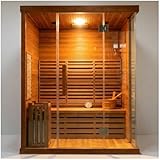
ZONEMEL 3-Person Cedar Steam Sauna
- 6 kW Harvia stone heater
- 220V supply and Wi-Fi app control
- Bucket ladle and stones included
- True wet steam up to 195F
All Seven Cedar Sauna Kits Compared Side by Side in 2026
Every unit below is a self-contained cedar room you assemble indoors. The two columns that decide most basement fits are the power source and the exterior height, so read those first.
| Product | Specs | Action |
|---|---|---|
| SALUSHEAT Red Cedar 2-Person Sauna |
|
Check Latest Price |
| KUNSANA Corner Infrared Cedar Sauna |
|
Check Latest Price |
| ZONEMEL 3-Person Cedar Steam Sauna |
|
Check Latest Price |
 Blue Wave Hudson Bay 3-Person Cedar Corner Sauna Blue Wave Hudson Bay 3-Person Cedar Corner Sauna |
|
Check Latest Price |
 MEISSALIVVE Full Spectrum Red Cedar Sauna MEISSALIVVE Full Spectrum Red Cedar Sauna |
|
Check Latest Price |
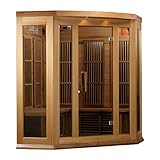 MAXXUS 3-Person Canadian Red Cedar Corner Sauna MAXXUS 3-Person Canadian Red Cedar Corner Sauna |
|
Check Latest Price |
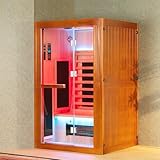 WOODBRIDGE 2-Person Japanese Cedar Sauna WOODBRIDGE 2-Person Japanese Cedar Sauna |
|
Check Latest Price |
One caution on that table: the 240V and 20 amp entries are not simply harder than the 120V plug-ins. In a finished basement with finished walls, routing a new circuit can mean opening a wall, so plan that before the kit arrives.
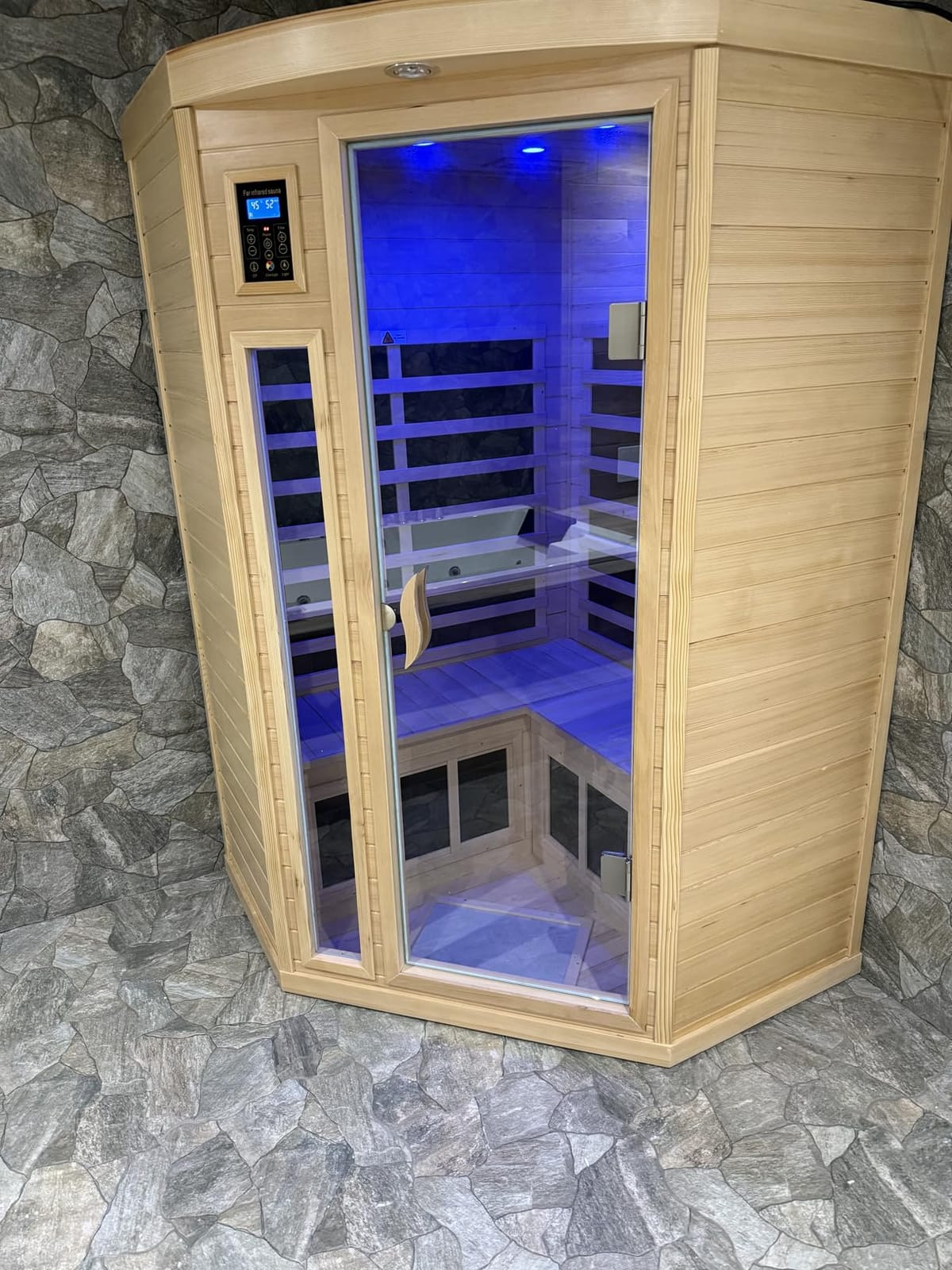
1. SALUSHEAT Red Cedar 2-Person Sauna – Best Overall Plug-In Cedar Cabin
Red Cedar Sauna, 2 Person Ultra Low EMF Sauna with Front Door Heating Plate
1750W on a standard 120V 15A outlet
47.2 W x 39.4 D x 75.6 H inches
Heats 77F to 149F
Solid red cedar, 283 lbs
Pros
- Plugs into a standard basement wall outlet with no new circuit
- Reaches full 149F in roughly 50 minutes
- Solid red cedar with a natural aroma and a tiled heated floor
- Heater on the glass door plus calf and foot zones spreads heat evenly
- Bluetooth audio and chromotherapy lighting included
Cons
- Supplied door weather stripping does not seal well
- Ceiling access panels rattle during music playback
- Bench arrives without securing hardware so you need extra screws
- No Wi-Fi or app control on this model
The reason this one leads my list has less to do with the cabin itself and more to do with 133 owner reviews at 4.8 stars. In a category where most listings have single-digit feedback, that is a real sample size, and the complaints in it are consistent and fixable rather than structural.
Buyers report about 130F in roughly 30 minutes and full 149F in around 50. The heating layout is the part I like most: elements on the front glass door, the side walls, and dedicated lower calf and foot zones, which is why owners describe the sweat as heavy and even rather than concentrated on the back.
Controls sit both inside and outside, so you can start it from the doorway and leave the light on afterward. The tiled heated floor is a genuinely good basement decision, because it wipes clean instead of absorbing sweat the way an unsealed duckboard does.
Its spec sheet says it seats up to 400 lbs and the room measures 47.2 inches wide by 39.4 deep, and reviewers say 6ft users can stand and lie down inside. A few note that the 2-person-plus sizing runs tight for a genuine third person, which matches the footprint.
What to check before it goes in your basement
Confirm you have a 120V 15A outlet within reach of the 10 foot cord, since the cord is not much longer than a standard basement wall run. The 75.6 inch exterior height needs at least that much clear space, plus a few inches to slide it into position.
Set it on a level surface and on top of a finished floor, not bare concrete, if you want to protect the slab from the moisture cycle. Our notes on basement floor coatings that handle moisture are relevant if the slab is your only finished surface.
Where owners report problems
The recurring list is short and specific: the supplied door weather stripping does not seal tightly and several people replaced it, and the ceiling panel access doors rattle when the Bluetooth audio is playing at volume.
Two fit-and-finish items worth planning around: the bench ships without hardware to secure it, so buy a few screws before assembly, and the heated wood slats behind the bench can get hot enough to touch bare skin. There is also no Wi-Fi on this model, so preheating means walking over to the panel.
2. KUNSANA 2-3 Person Corner Far Infrared Cedar Sauna – Best Corner Footprint
KUNSANA 2-3 Person Corner Far Infrared Sauna for Home, 1760W Ultra-Low EMF(0-1mG) Indoor Red Cedar Wood Sauna Room with 8 Heating Panels, Dual Control Panel, Bluetooth Speaker & Chromotherapy Lights
1760W on a 120V standard US plug
47.3 x 47.3 x 75.6 inches corner
8 far infrared panels at 0-1 mG
1-year structure, 2-year electronics warranty
Pros
- Corner footprint fits where a rectangular room cannot
- Pre-cut parts with pre-drilled holes fit together snugly
- Reaches roughly 130F in 15-20 minutes
- Full glass front and doors keep the corner room from feeling cramped
- 2-3 adults with a 300 kg build limit
Cons
- Side panels have some play and one glass door can sit uneven
- Thin bench slats need a separate cushion and backrest
- No towel hooks phone shelf or cup holder included
- Heating panels get hot enough to burn bare skin
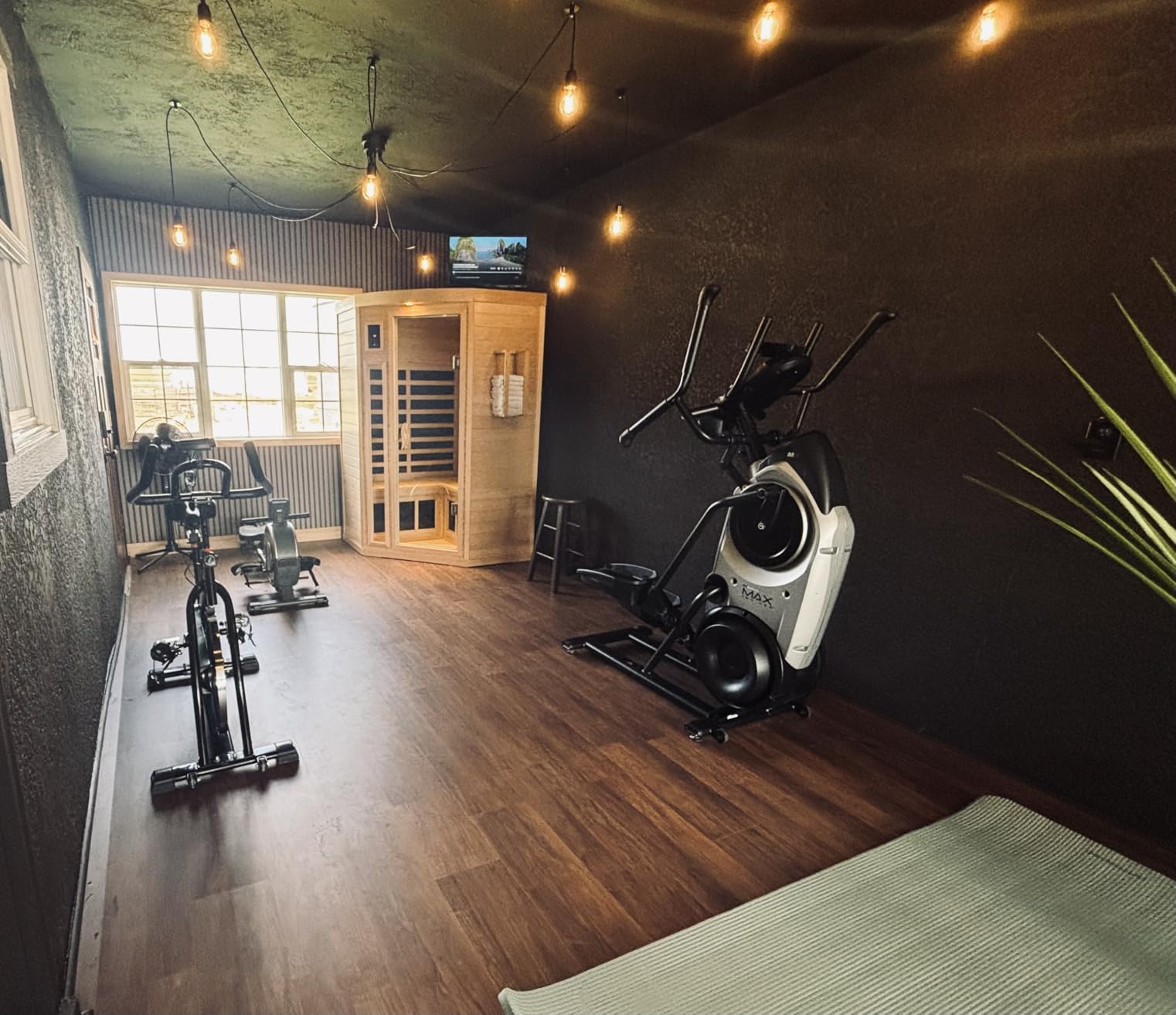
Basements are full of wasted corners, and this is the only unit in the group built as a five-sided corner cabin with two full glass faces. If your usable footprint is a corner rather than a wall run, this solves a problem the rectangular models cannot.
Owners consistently single out the assembly quality: parts arrive pre-cut with pre-drilled holes and go together snugly with no wobble once built. Warm-up is fast for an infrared cabin at roughly 130F in 15 to 20 minutes, and the speakers get called out even by people who are picky about audio.
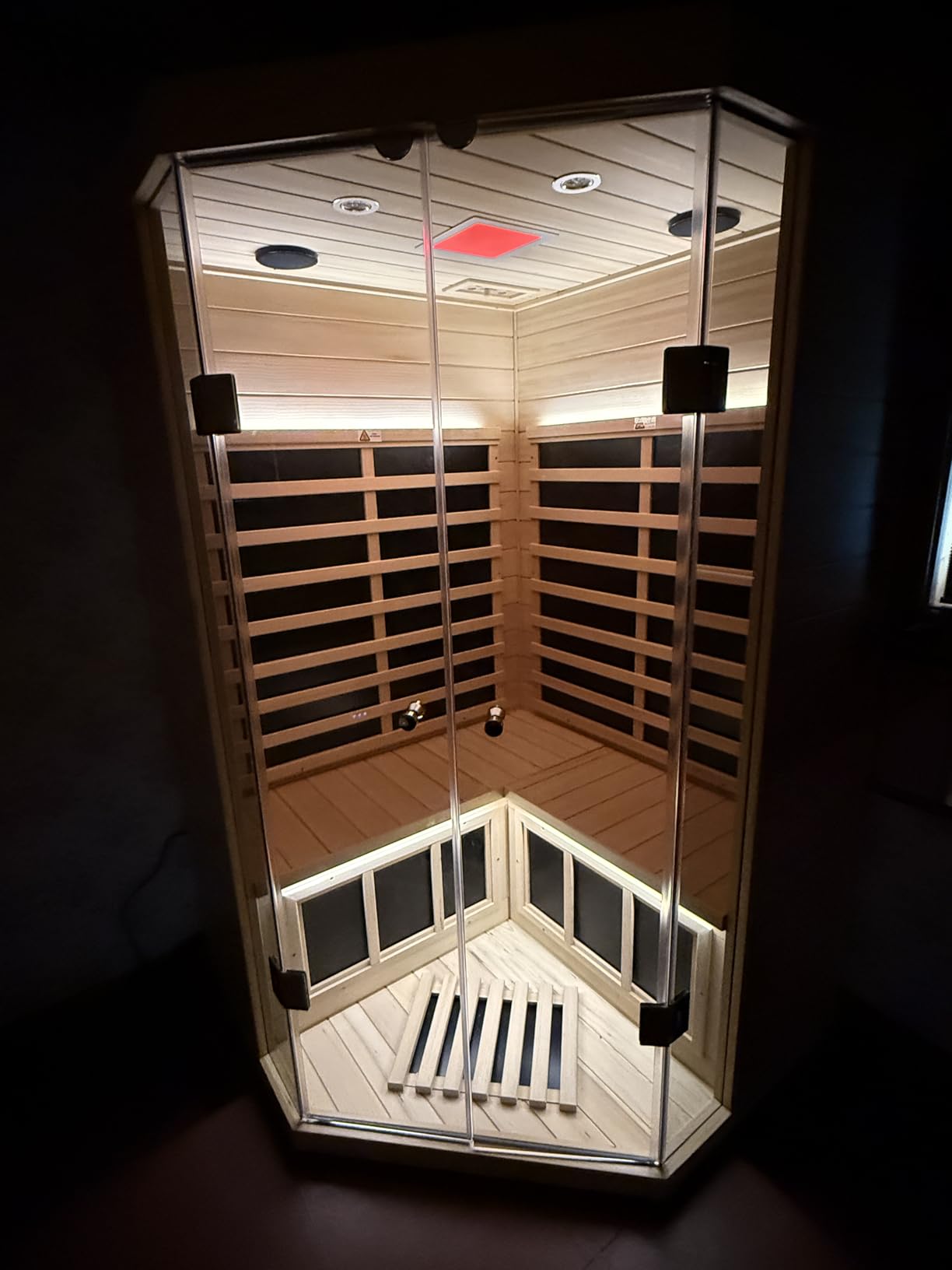
The tongue-and-groove solid red cedar construction is the real selling point for a basement, where the room will sit against a foundation wall and hold humidity in winter. At 47.3 inches square, it is also one of the smaller footprints in the group, which helps when you need to walk around it.
Two adults side by side fits comfortably according to multiple owners. The build is rated for up to 300 kg, and the warranty splits into one year on the wood structure and two years on the electronics, which is a fair split for this category.
Basement fit and ceiling clearance
The 75.6 inch height puts it at the same clearance threshold as the SALUSHEAT, so it still needs a seven foot ceiling or better. The corner layout means you are not losing a walkway along two walls, which is the practical win in a finished basement room.
It carries a standard US plug, so unlike the MEISSALIVVE you can position the outlet wherever the corner allows rather than routing the room to the circuit. Plan on needing at least 24 inches of clearance behind the panels for assembly and disassembly access.
What buyers wish the kit included
The most common complaint is what is not in the box: no towel hooks, no phone shelf, no cup holder. Bench slats are thin enough that owners recommend adding a cushion and a backrest, which also solves the second complaint.
Several reviewers note the floor and head-level panels get hot enough to burn bare skin, so hang a towel in front of any surface you will lean against. Temperatures also tend to run a few degrees under the set point, and the instructions skip the step of fitting the wall-panel screws before installing the bench.
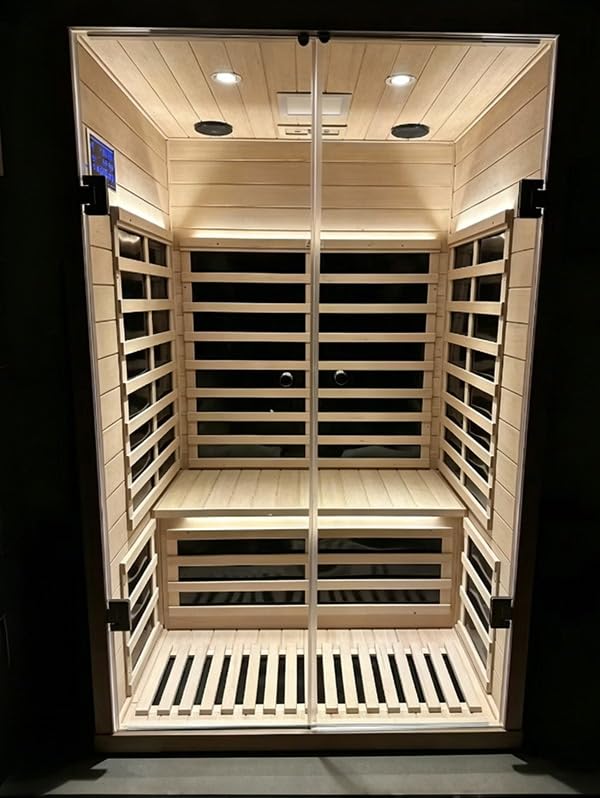
3. ZONEMEL 3-Person Traditional Red Cedar Sauna – Best Real Steam Option
ZONEMEL 3 Person Wooden Steam Sauna Room, Traditional Red Cedar Luxurious Indoor Sona House with 6 KW Harvia Heater, Wi-Fi Controller, Bluetooth Speaker, Wooden Bucket, Scoop, Reading Light, 220V
6 kW Harvia stone-loaded heater on 220V
71 x 47 x 75 inch interior
Canadian red cedar with tempered glass
Wi-Fi app control for remote preheating
Pros
- The only genuine wet steam room here with real stones and bucket ladle
- A 6 kW Harvia heater reaches traditional temperatures up to 195F
- Wi-Fi app control lets you preheat from another room
- Complete accessory set included at no extra cost
- 71 x 47 inch interior seats two or three people
Cons
- Only 4 customer reviews so long-term durability is unproven
- 220V supply and heavier install than a plug-in infrared cabin
- A stone heater is a bigger maintenance commitment in a basement
- Larger footprint than the 2-person and corner models here
This is the unit I would point at if someone tells you they want a sauna and actually mean a sauna. Everything else in this roundup is an infrared cabin that heats your body with panels; this one throws water on stones, which is what löyly means.
The heater is a 6 kW Harvia stone-loaded unit, mounted low so it distributes heat evenly, running on 220V. The listed temperature range goes from 32F to 195F, and the whole room is Canadian red cedar with heat-resistant tempered glass.
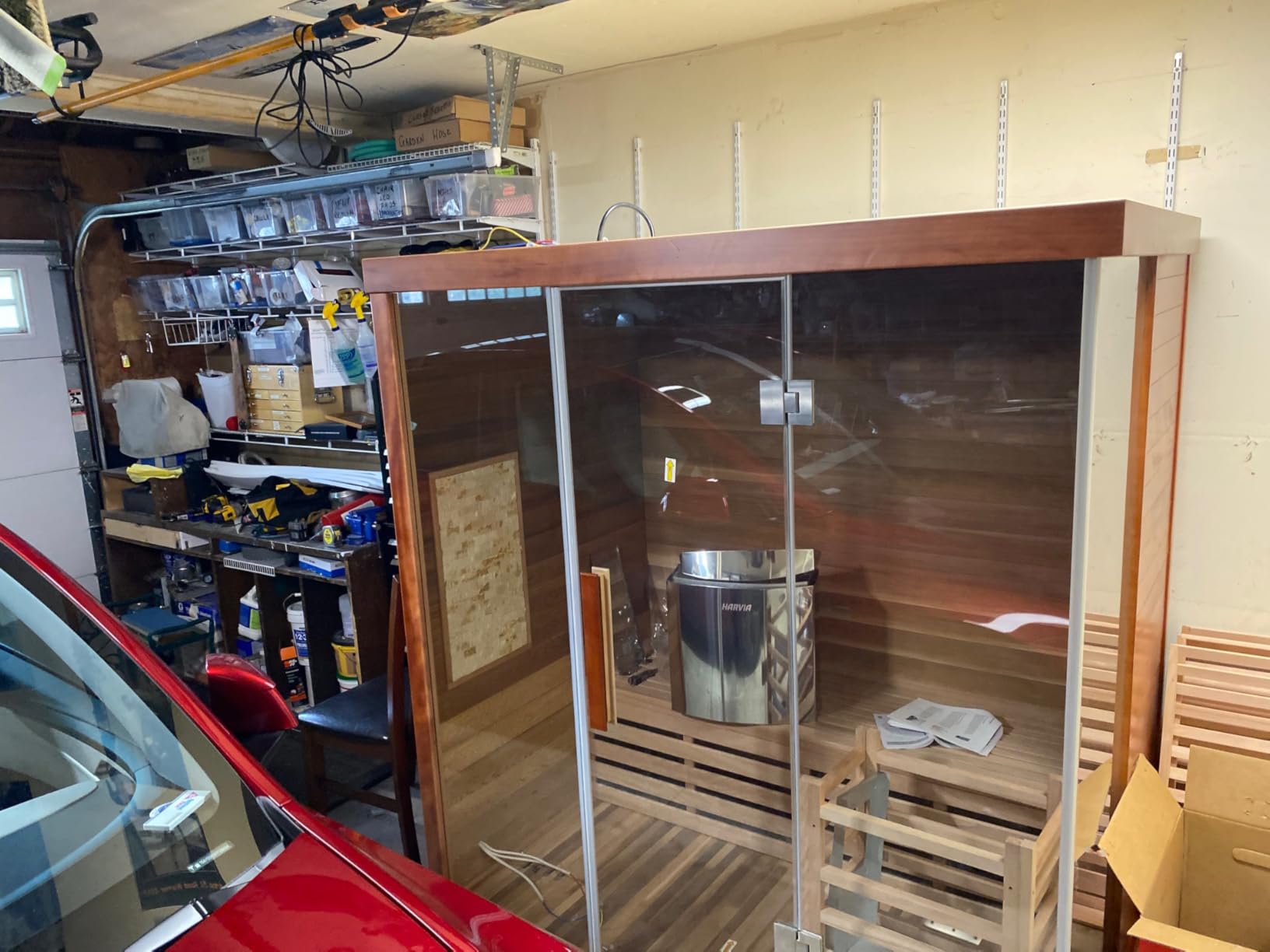
What makes it unusual in this group is the Wi-Fi smart control panel with a mobile app, so you can start the heat while you are still downstairs. Several infrared cabins here can only be started from a panel outside the door, and remote preheat genuinely changes how you use a sauna on a weekday evening.
The accessory package is unusually complete: Harvia heater, volcanic stones, wooden bucket and scoop, a reading lamp and a 7-color starry-sky roof lamp with app control, plus a curved backrest shaped to the arch of your back and stereo surround sound.
What a real steam sauna changes in a basement
Everything about the electrical and moisture plan shifts. A 6 kW stone heater on 220V needs a properly sized circuit handled by a licensed electrician, not a plug-in outlet, and a room that throws water onto stones needs a genuine vent path and a floor drain rather than a sealed box.
The 71 by 47 inch interior is comfortable for two or three, but it is a rectangular room, so you need a full wall run rather than a corner. It is also the largest single purchase decision here, because you are committing to the traditional route rather than a low-moisture panel route.
Where the evidence runs out
There are only four customer reviews, all of them five star, which tells you almost nothing about how this holds up over five years. The spec sheet is the strongest part of this product; treat the reviews as a very small sample.
Be honest about the maintenance side too. A stone heater in a basement needs regular use or it goes unused, and a traditional room that is not vented properly will make your basement pay for it. If you want the experience but not the infrastructure, our sauna blanket picks cover the low-commitment end.
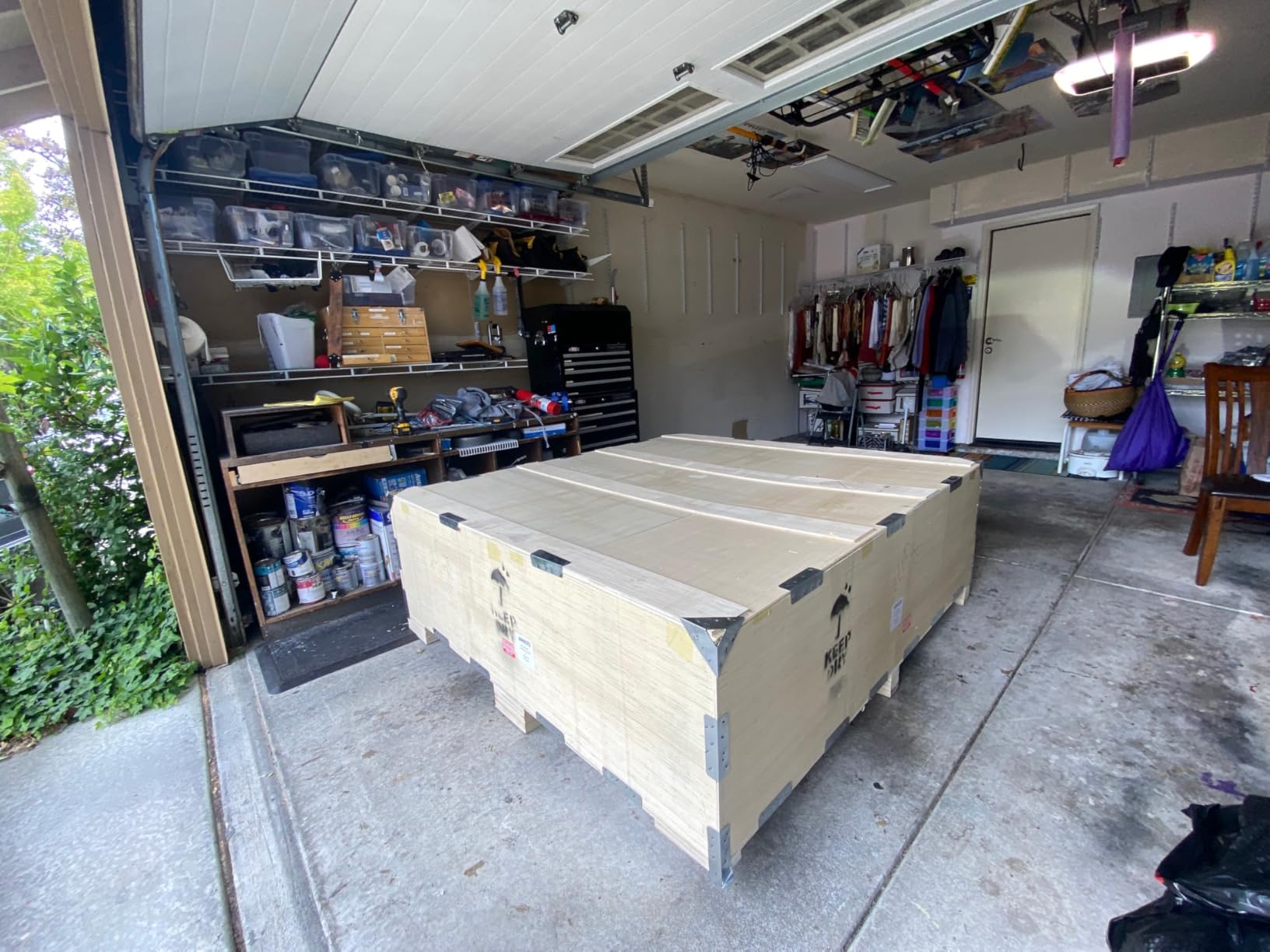
4. Blue Wave Hudson Bay 3-Person Cedar Corner Sauna – Best for a Larger Basement Corner
Hudson Bay 3-Person Cedar Corner Infrared Sauna with 7 Carbon Heaters
20 amp outlet required
53 x 53 x 75 inches
7 low-EMF carbon heaters
Canadian cedar with thick walls
Pros
- Corner footprint suits a basement gym or spare corner
- Well labeled wiring makes first-time assembly straightforward
- Owners reach roughly 135-140F in 30-35 minutes
- Backrests towel hooks and magazine rack are included
- 7-year manufacturer warranty
Cons
- Needs a 20 amp outlet so it is not a simple plug-in
- Warm-up is slow so start it 20-30 minutes ahead
- Freight damage on arrival has been reported
- Interior reading lights sit awkwardly for reading
At 53 inches square, this is a larger corner cabin than the KUNSANA, and it is the pick for a basement with a genuine corner to give up rather than a tight alcove. The seven low-EMF carbon heaters are spread around the room, which several owners credit for even heat.
The reason I keep coming back to it is the label quality. Owners who had never built a sauna report the wiring and screw holes are clearly marked, so the build goes together with minimal guesswork, and one long-term user runs it three to four times a week and reaches about 135 to 140F in 30 to 35 minutes.
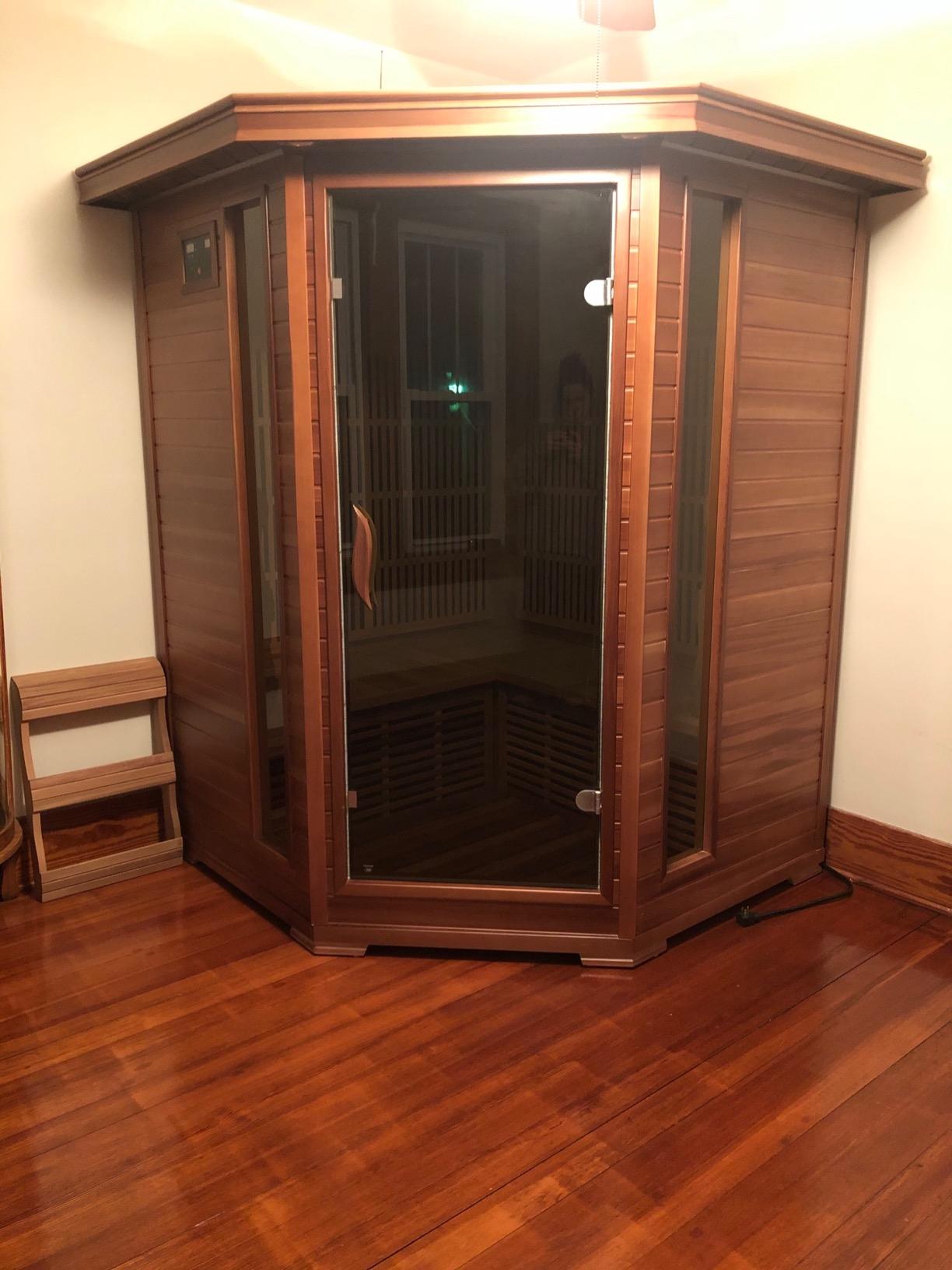
Accessories are where it outshines cheaper cabins: backrests, towel hooks and a magazine rack come in the box rather than as an add-on. The full-spectrum chromotherapy lighting and the built-in sound system with wireless connectivity are both easy to run from inside.
Comfortably seats two adults despite the three-person label, and the included backrests solve the hot-panel problem that owners complain about on the smaller units. At 359 pounds, you will want a second person for assembly.
Electrical and room requirements
This one specifies a 20 amp outlet rather than a 15 amp one, so it is closer to a small appliance than a lamp. In an unfinished basement that is trivial. In a finished room where the outlet is on a shared circuit, plan for an electrician.
The 75 inch height and 53 inch square footprint mean you need clear floor space on both walls of the corner. Check the corner is square before you start, because the cabin assumes it, and use glides to level it if the slab is uneven.
Arrival and setup risks
Freight handling is the main complaint. One reviewer received the unit heavily damaged in transit and found assembly frustrating as a result, and others note pieces can arrive knocked loose, so check every panel before you start.
Warm-up is the second issue: at 30 to 35 minutes, this is not a five-minute sauna. Plan to start it 20 to 30 minutes ahead. The interior reading lights are also positioned awkwardly for actual reading, which matters more than it sounds in a small corner room.
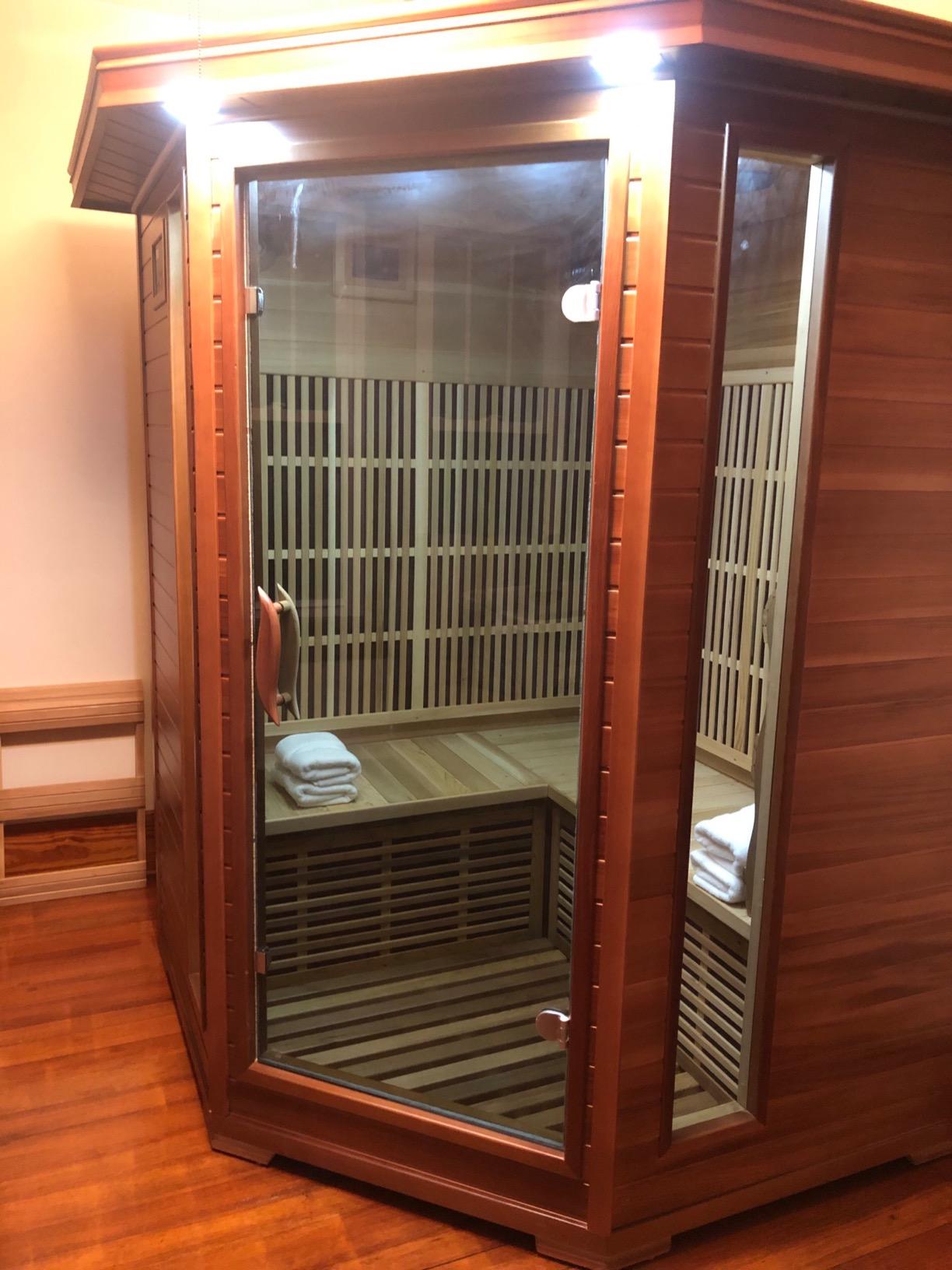
5. MEISSALIVVE Full Spectrum Red Cedar Sauna – Longest Warranty in the Group
MEISSALIVVE Full Spectrum Infrared Sauna,2-3 Person Home Sauna,Red Cedar Indoor Sauna with Resonance Speaker, Panoramic Tempered Glass Door
240V at 15A
59 x 41.3 x 74.8 inches
Near mid and far infrared heating
7-year warranty
Pros
- Full spectrum near mid and far infrared heats faster than plain far infrared
- 7-year warranty is the longest offered in this category
- Modular snap-together panels make assembly straightforward
- Panoramic tempered glass door with a built-in phone or tablet holder
- Bluetooth resonance speaker included
Cons
- Listing copy is inconsistent about whether the wood is cedar or hemlock
- Needs a 240V 15A supply so it is more involved than a plug-in cabin
- Only 55 reviews so long-term durability feedback is limited
The 7-year warranty is the standout number here, and for a piece of equipment that lives in a damp basement it is worth more than another chromotherapy mode. Most infrared cabins in this category offer one year on structure and two on electronics.
Full spectrum means heating tubes plus mica carbon plates generating near, mid and far infrared, which owners say warms up faster and more evenly than a plain far infrared cabin. Walls are described as thick and insulated for heat retention, and the panels snap together modularly.
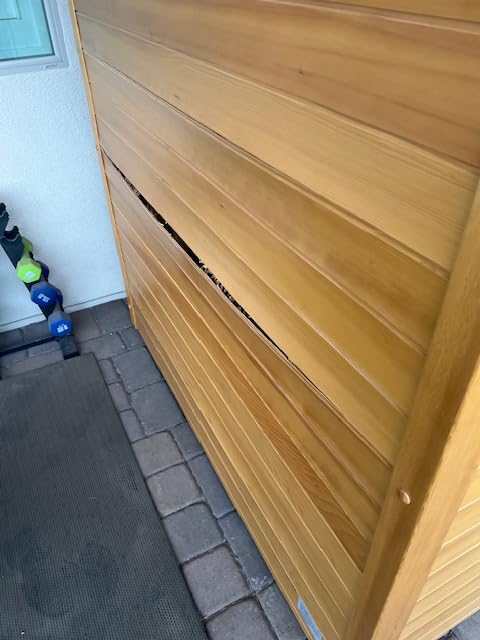
The panoramic heat-resistant tempered glass door has an integrated handle that doubles as a phone or tablet holder, which is a small touch that matters more in a 59 by 41 inch room than it would in a large one. The interior is roomy enough for a 2-3 person configuration.
If you want heat that climbs quickly but do not want a stone heater or 195F steam, this sits in the middle of the two routes. It is the compromise pick, and the warranty makes that compromise feel less risky.
The material question to resolve first
The listing copy is inconsistent. The title and variant name call it red cedar while the feature bullets describe Canadian hemlock, and you should confirm which material you are actually getting before you order. Hemlock is a perfectly good sauna wood, but it is not what you came here for.
Because it runs on 240V at 15A, it belongs in the same electrical conversation as the ZONEMEL, though it draws far less power than a 6 kW heater. In a finished basement this is an electrician job, not a plug job.
What the reviews do and do not tell you
At 55 reviews, the feedback is moderate and generally positive on heat, glass and assembly. What it does not tell you is how the cabin looks after a decade of basement humidity, and that is exactly what the warranty is there to cover.
The exterior height is 74.8 inches, which is the lowest of the larger cabins in this group and still needs a near-seven-foot ceiling. Treat the room as a semi-permanent installation rather than something to shuffle around.
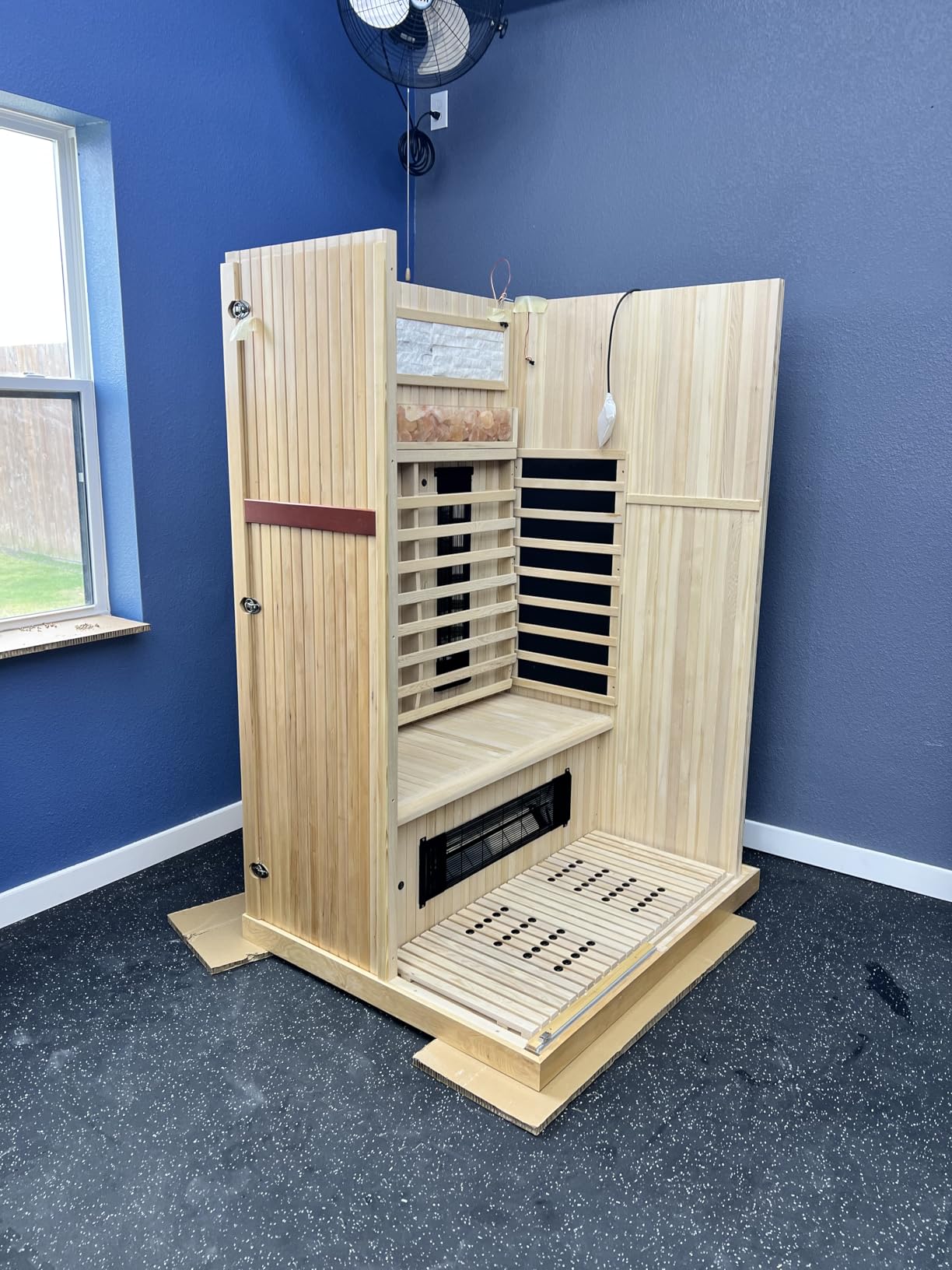
6. MAXXUS 3-Person Low EMF Canadian Red Cedar Corner Sauna – Best Joinery
Maxxus 3 Per Low EMF FAR Infrared Carbon Corner Canadian Red Cedar Sauna
9 low-EMF far infrared carbon panels
57 x 57 x 75 inches
1.13 inch inner frame with 6mm planks
Reaches beyond 140F
Pros
- Owners report tight seamless joinery with no warped or bowed parts
- Heats to about 150F in 15-20 minutes and holds temperature
- One owner reports it still looks and smells excellent after three years
- Responsive warranty service replaced a controller and bench surface
- Reforested Canadian red cedar throughout
Cons
- Largest footprint in the group at 57 x 57 inches
- Two or more people are required for assembly
- No Wi-Fi or wireless remote to start preheating
- Third seat is tight when three people sit upright
This is the one in the group where owners talk about the woodwork. Multiple reviews describe tight, seamless joinery with no warped or bowed parts, and the construction spec backs that up: a 1.13 inch inner frame with 6mm interior and exterior planks.
Nine low-EMF far infrared carbon panels do the heating, three on each rear wall, two under the bench and one on the floor board, and owners report reaching about 150F in 15 to 20 minutes and holding it there.
The single most useful review in the file is from an owner more than three years into ownership who says it still looks and smells excellent. In a basement, that long-horizon report matters more than any spec line.
Size and assembly reality
At 57 by 57 inches, this is the largest footprint in the roundup, so it only works if you have a real corner to give up. Two or more people are required for assembly, and the panel count and weight make that non-negotiable.
A three-person capacity here means sitting upright and fitting closely, and owners confirm the third seat is tight. If three adults will genuinely use it regularly, budget the floor space before you buy.
What owners flag about daily use
There is no Wi-Fi or wireless remote, so preheating means walking to the panel, which is a real inconvenience at 15 to 20 minutes of warm-up when you want to start it from upstairs.
The listing describes the audio unit as a CD player and it is not one, which is a small example of loose copy on this product page, so verify accessories against what is actually in the box. Forklift damage in transit has also been reported even with good packaging.
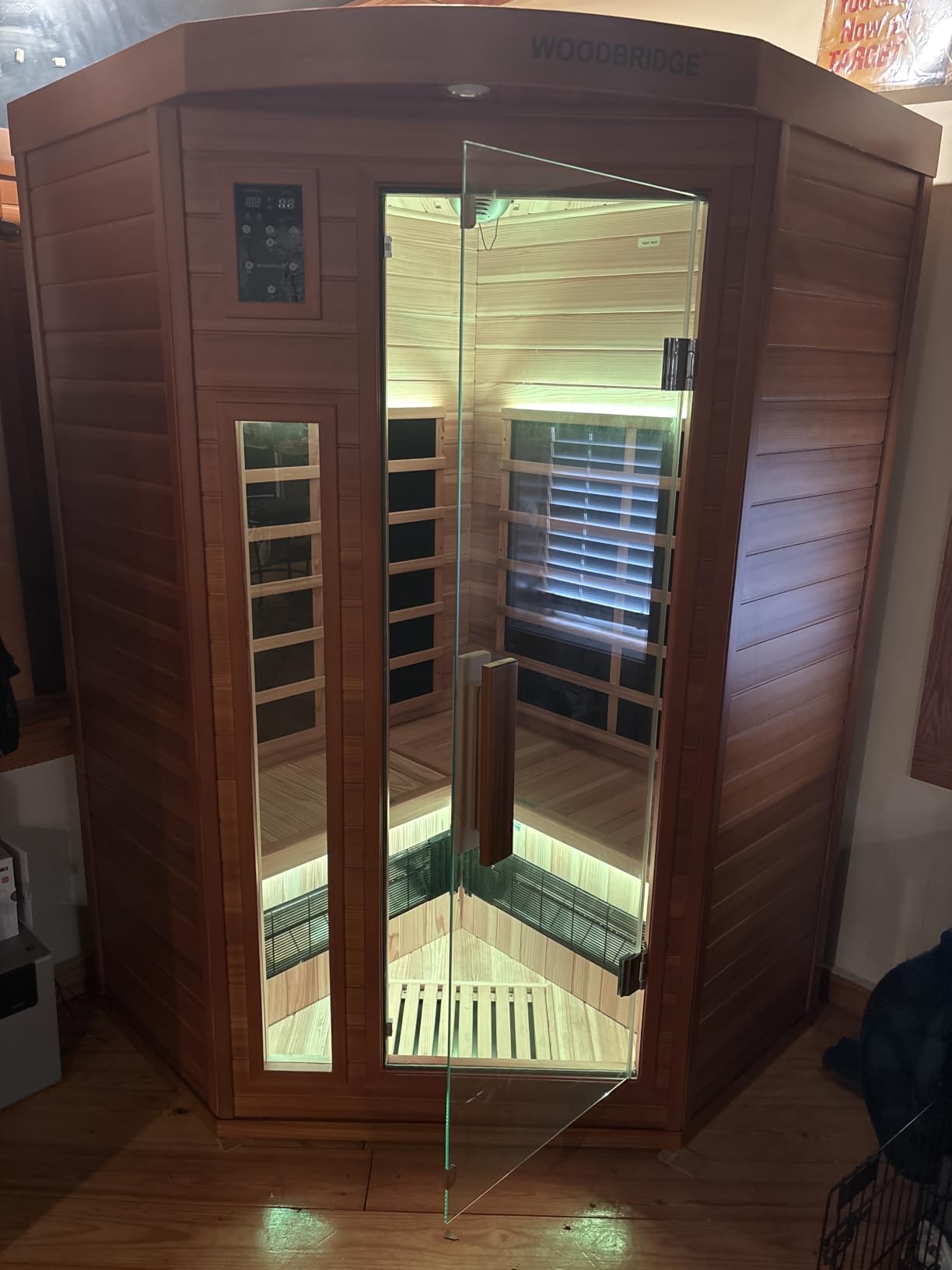
7. WOODBRIDGE 2-Person Japanese Cedar Sauna – Best Feature Set per Dollar
Woodbridge Infrared Home Sauna Room 2 Person Japanese Cedar Indoor Sauna with 7 Carbon Heaters, Red Light Therapy, Bluetooth Speaker, Intelligent Control Panel, Tempered Glass & Top Vent
120V on a 20A dedicated circuit
47 x 43 x 74 inches and 310 lbs
7 carbon infrared heaters to 149F
1-year warranty plus 1 on registration
Pros
- Modular design assembles in about 30-45 minutes with clear directions
- Feature set includes red light therapy two speakers and an oxygen bar
- Heats quickly for a 2-person cabin and sweats well in 30-40 minutes
- Corner-friendly footprint looks good in a finished room
- Japanese cedar gives a strong pleasant aroma
Cons
- Temperature gauge reads roughly 10F off and is not calibrated
- Heater under the bench can burn calves without a towel in front
- Advertised backrests were missing from at least one unit
- Narrow benches make the 2-person rating tight
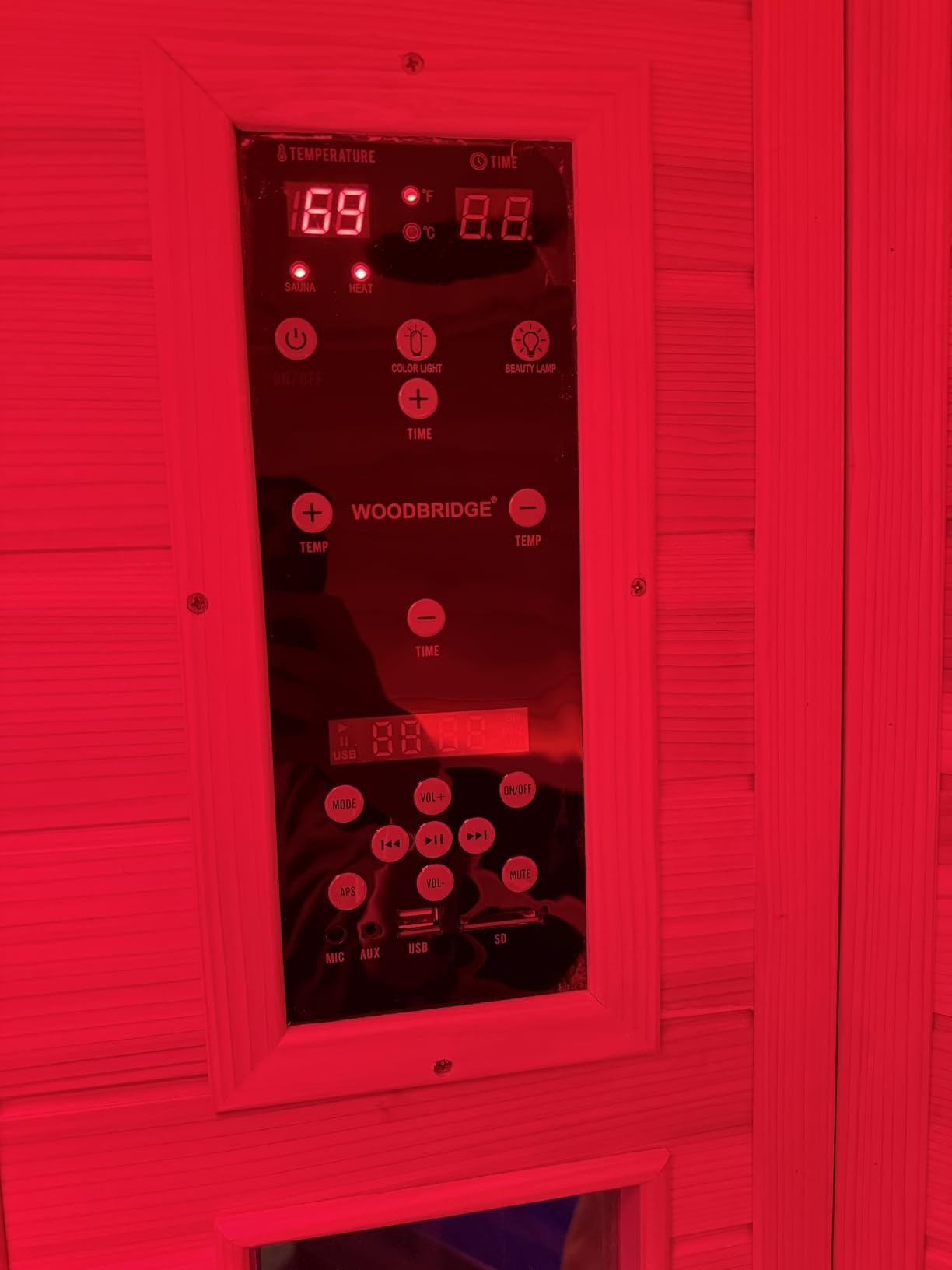
Judged purely on what you get per dollar, this is the hardest cabin in the group to argue with. Red light therapy at 700 to 1400 nm, two speakers, an ion oxygen bar, a dual-function door handle that is a towel rack on the inside, a cup holder, a reading light and a 7-color light strip.
It also assembles fast. Owners put the modular build at roughly 30 to 45 minutes with clear directions, and at 47 by 43 inches it is one of the smaller footprints here, which suits a finished basement corner or wellness room.
Seven carbon infrared heaters take it up to 149F, and owners report a solid sweat in 30 to 40 minute sessions. The Japanese cedar is a different scent profile from Western red cedar, and it is a strong one.
Two things to fix on day one
The temperature gauge reads roughly 10F off the actual temperature and the manufacturer declines to calibrate it. Learn to read the gauge with that offset in mind, or add a separate thermometer, because setting 180 and hitting 170 is how people think their sauna is broken.
More seriously, the heater under the bench can burn the backs of your calves unless you hang a towel in front of the seat. Nearly every owner mentions this, so treat the towel as part of the install rather than an accessory.
Quality control and fit
At least one delivered unit was missing the advertised backrests, and one unit failed to heat entirely after paid assembly, which meant paying for a teardown to return it. That is a small sample of 13 reviews, but it is the reason the warranty is the shortest here.
The warranty is one year limited, extendable by a year on registration. The electrical spec calls for 120V on a 20A dedicated circuit, which is more than the KUNSANA needs, and the exterior height of 74 inches means ceiling clearance is tight, so measure before you commit.
Basement Prep Checklist: Six Steps Before You Buy
Every basement sauna failure we read about happened at the prep stage, not the assembly stage. Run these six checks before you order anything, because each one can disqualify a kit that looks perfect in a listing.
Confirm the basement is actually dry. Run a dehumidifier for a week and watch it. If it pulls significant water out of the air every day, your basement has a water problem and no sauna will fix it. Fix drainage, grading or sump capacity first, or the sauna will simply feed the mold it is standing in.
Find a real vent path to the outdoors. Decide where intake and exhaust go before the room exists. Standard practice is an intake low near the heater and an exhaust high on the opposite wall, both ducted outside. A vent that recirculates into the basement is not ventilation.
Check your electrical panel has spare slots and amperage. A 6 kW heater or any 240V circuit needs real capacity. Know your panel’s rating before you choose a heater, not after, because a panel upgrade changes the project from a weekend into a renovation.
Measure clear ceiling height, not finished ceiling. Seven feet is the absolute floor for a sauna room. On the upper bench you want closer to seven foot six for headroom, and anything under seven rules out the larger kits in this roundup entirely.
Plan where water goes. A floor drain in the sauna, or a nearby drain within easy reach, is worth adding even on the infrared cabins. Splashing water in a basement with no drain means a wet floor with nowhere to go.
Call your building department. Ask about permit requirements for an electrical load of this size and about fire separation for an interior room. Most jurisdictions need at least the electrical permit, and finding out after assembly is expensive.
Owners on sauna forums consistently describe the vent placement and vapor barrier as the two things that separated a sauna that survived five years from one that did not. Reading those discussions is more useful than any product page, and our steam sauna tent guide covers the zero-infrastructure end of the market if your basement fails these checks.
Buying Guide: Cedar Species, Heat Type, and the 240V Question
This section covers what actually varies between kits, so you can decode the spec language on any listing you land on later.
What a kit actually is
A self-contained cedar sauna kit is a pre-cut package of tongue-and-groove panels, benches, a heater, a door and ventilation parts that you assemble into a room inside an existing basement, rather than framing and insulating one from scratch. Every product in this roundup is that format, which is why none of them require you to frame walls or pour a slab.
Cedar species and grade
Western red cedar is the standard for a reason: it is dimensionally stable, resists rot in humid conditions and smells like a sauna. Hemlock is a close second and is what many manufacturers use for walls when they want a lower-cost interior, but it is a different wood and worth asking about explicitly, as we flagged on the MEISSALIVVE listing.
Knotty grade cedar is cheaper and perfectly fine structurally; clear grade looks better and costs more. Both are legitimate choices, and the difference is mostly visual. If you are weighing cedar options for other projects, our cedar raised bed guide explains how the grades compare on durability.
Panel thickness and wall build-up
Look for the frame thickness rather than just the plank thickness. In this roundup the MAXXUS declares a 1.13 inch inner frame with 6mm planks, which is a heavier build than the slimmer corner cabins. Thicker walls hold heat better and mean less outside heat bleeding into your basement.
Under 2 inches of total wall thickness is thin, and you will feel the difference in how fast the room cools after your session. Panel thickness matters more for comfort than for durability.
Infrared panels versus a stone heater
These are different products, not different versions of the same thing. An infrared cabin heats you directly with panels, needs only a standard outlet in most cases, produces no steam and needs less venting. A stone heater heats the air and the stones, throws löyly with water, needs a real circuit and ducted venting, and gives you the traditional experience.
For a basement specifically, infrared is the lower-risk route because it does not dump humidity into a room with joists above it. Traditional is the better experience if your basement is dry and you can vent properly. Choose based on your vent path and your circuit, not on which one sounds more luxurious.
Heater sizing and the 200 rule
The common sizing rule in North American practice is roughly 1 kW of heater per 1.3 cubic metres of room volume for a traditional sauna. The 200 rule is a related piece of folk sizing wisdom: raise a bench in steps and space the levels so the bather’s head is about six inches below the lowest point of the bench above, which many guides round to a roughly 200 mm offset per level.
Worked example for a real basement: a 6 by 8 foot room with a 7 foot clear ceiling is about 11 cubic metres, which puts you near a 8.5 kW heater. That is a very different electrical conversation from a 1750W infrared cabin, and it is exactly why the ZONEMEL at 6 kW only suits a smaller room or a long heat-up.
Ventilation and moisture control
This is the single most important section for a basement. A sauna with no exhaust path to the outside will push warm humid air into the basement, where it meets cold joists and framing and condenses into the rot and mold you cannot see.
The non-negotiable parts are a continuous vapor barrier sealed into the wall build-up, an intake vent low near the heater, an exhaust vent high on the opposite wall, and both ducted to the outdoors. Skipping the vapor barrier is the mistake that shows up in owner forums as regret a few years later.
Electrical: what each route demands
The 120V plug-in route needs a standard wall outlet within cord reach of the cabin, which makes the SALUSHEAT, KUNSANA and WOODBRIDGE installs a single afternoon. The 20A route needs a dedicated 120V circuit. The 240V route needs an electrician.
On a 100 amp panel with few spare slots, adding a 30 to 60 amp 240V circuit may mean a panel upgrade. Find out before you buy the heater, not after, because that single fact can change which kit makes sense for your basement.
Custom-cut kits and awkward footprints
Standard kit sizes assume square rooms and straight walls. If your basement corner is L-shaped or you have a short wall or a sloped ceiling, a standard kit will not fit and you are into custom work. Several owners describe building around a non-standard storage room above the basement stairs, which required custom dimensions from the start.
Assembly time and skill level
These kits are closer to flat-pack furniture than to finish carpentry. Owners report 30 to 45 minutes for the modular infrared cabins and considerably longer for the heavier corner and steam models, which need two or more people. The tool list is basic: a drill, a level and a tape measure.
The realistic timeline for a full traditional sauna room, including venting and electrical, is weeks to months rather than a weekend, which is the honest version of the build-in-a-weekend claim you will read online.
What a kit does not include
Checklists vary, but the usual omissions are the electrical circuit and any panel upgrade, ducted vent components, a floor drain, lighting beyond a basic fixture, and sometimes even the towel hooks and bench cushions. Read the contents list line by line, because several products in this roundup ship without backrests or bench hardware.
Frequently Asked Questions
What type of sauna is best for a basement?
A plug-in infrared cabin in red cedar is the lowest-risk choice for most basements because it needs only a standard outlet and adds far less humidity than a wet steam room. A traditional stone-heater sauna gives you löyly and real steam, but it needs a properly sized circuit, ducted venting to the outdoors and a floor drain. Choose based on your vent path and panel capacity, not on which room feels more luxurious.
Do I need to vent a basement sauna outside?
Yes. A sauna must exhaust humid air to the outdoors, not into your basement. Standard practice is an intake vent low near the heater and an exhaust vent high on the opposite wall, with both ducted outside. Venting into the basement pushes warm humid air into cold joists and framing, where it condenses into rot and mold you will not notice until it is serious.
What ceiling height do I need for a basement sauna?
Seven feet of clear ceiling is the absolute minimum for a sauna room. On the upper bench you want closer to seven foot six for headroom, and traditional steam saunas with stone heaters generally need more still. Anything under seven feet rules out the larger kits in this roundup, so measure your clear height before you choose a model.
Will a sauna cause mold in my basement?
A correctly installed sauna will not. Mold risk comes from poor installation, not from saunas themselves. The requirements are a continuous vapor barrier sealed into the walls, ducted intake and exhaust vents running to the outdoors, a floor drain, and a basement that is already dry. If your basement pulls water out of the air every day, fix that drainage problem before installing any sauna.
Is it cheaper to build or buy a sauna?
Buying a kit is usually cheaper once you count tools, permits and electrician time, though the gap narrows on larger custom builds. A kit arrives pre-cut with the moisture-critical layers already handled. Building from scratch saves on material markup but adds labor, and real owner timelines run weeks to months for a full room including venting and electrical.
What is the 200 rule for saunas?
The 200 rule is a bench and headroom sizing guideline, meaning the bather’s head should sit roughly six inches, about 150 to 200 mm, below the lowest point of the bench above them. It keeps the hottest air at head and chest level. It is separate from heater sizing, which follows the common rule of about 1 kW of heater per 1.3 cubic metres of room volume.
Bottom Line: Which Kit Fits Your Basement
If you want the shortest path to a working cedar sauna in 2026, pick the SALUSHEAT Red Cedar 2-Person cabin. It plugs into a standard outlet, has the deepest owner feedback in this group at 133 reviews, and its only real complaints are a door seal and some loose screws.
Choose the KUNSANA corner design when floor space is the binding constraint, the MAXXUS when you want the best joinery and can spare a 57 inch corner, and the MEISSALIVVE when the seven-year warranty matters more to you than needing a 120V plug.
Choose the ZONEMEL only if you genuinely want wet steam and your basement can support a 220V circuit, ducted venting and a floor drain. Whatever you pick, run the six-point prep checklist before ordering, and measure your clear ceiling height first.


