

There is no single best whole house sediment filter for well water, and anyone who tells you otherwise has not stood in a wet utility room with a bucket under a housing. The right pick depends on what your well is actually throwing at the filter, how fast water moves through the house, and how much grit your pump and casing are already releasing. We spent weeks reading owner reports and comparing housings, screens, ports and flow ratings across twelve of the most-reviewed sediment filtration options, then narrowed them to the ones worth your money.
Last updated: October 2026
One warning before the list. If your water turned gritty right after well work, a pump replacement, or a long period of no use, the sediment is coming from somewhere upstream and no filter in this roundup will fix it at the source. Inspect the well casing, pump column and screen first. A sediment filter is a treatment step, not a repair.
Second warning: sediment filtration does not make well water safe to drink. It traps grit, sand, silt and rust. It does nothing for bacteria, nitrates, arsenic or dissolved minerals, and those need disinfection and certified testing. If you are treating this as drinking water, budget for a UV system and a lab panel too, and read our iron filter guide for well water if you are seeing orange staining.
Top 3 Picks for the Best Whole House Sediment Filters for Well Water in 2026

iSpring WSP-50 Spin Down
- 50 micron reusable mesh
- Flushable and cleanable
- Lead free brass head

Aquaboon 20 Inch Housing
- 20 by 4.5 inch housing
- 1 inch full flow ports
- Pressure gauge included

The WSP-50 takes the top slot because it pairs the highest review volume in this group with a screen you can clean and reuse forever, which is the whole economic argument on a well. The Aquaboon 20 inch housing is the pick if you want to run your own cartridge strategy rather than be tied to one brand, and the WSP50ARB is the one to buy if forgetting to flush a filter is a recurring failure in your household.
All 12 Whole House Sediment Filters Compared Side by Side in October
| Product | Specs | Action |
|---|---|---|
| iSpring WSP-50 Spin Down |
|
Check Latest Price |
| Aquaboon 20 Inch Housing |
|
Check Latest Price |
| iSpring WSP50ARB Big |
|
Check Latest Price |
 Waterdrop BG103 Mega Waterdrop BG103 Mega |
|
Check Latest Price |
 Waterdrop RPFK Spin Down Waterdrop RPFK Spin Down |
|
Check Latest Price |
 Turboyhood 50 Micron Spin Down Turboyhood 50 Micron Spin Down |
|
Check Latest Price |
 Home Master Three Stage Home Master Three Stage |
|
Check Latest Price |
 Rusco 60 Micron Spin Down Rusco 60 Micron Spin Down |
|
Check Latest Price |
 Rusco 100 Mesh Spin Down Rusco 100 Mesh Spin Down |
|
Check Latest Price |
 iFilters Washable Pleated iFilters Washable Pleated |
|
Check Latest Price |
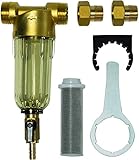 Express Water WHP1 Express Water WHP1 |
|
Check Latest Price |
 Aquaboon 3/4 Inch Dual Mesh Aquaboon 3/4 Inch Dual Mesh |
|
Check Latest Price |
Two patterns jump out of the table. Almost everything here is a spin-down with a reusable stainless steel or polyester screen, and only two products are cartridge or multi-stage systems you buy consumables for. The other pattern is size: 1 inch ports appear on most models, and the two that drop to 3/4 inch are the small-space and washing-machine-duty units.
1. iSpring WSP-50 Spin Down Sediment Filter Review
iSpring WSP-50 Spin Down Sediment Filter, Whole House Prefilter, 50 Micron
50 micron mesh
Reusable flushable screen
1 inch MNPT and 3/4 inch FNPT
16 ounces
Pros
- Reusable stainless mesh that outlives disposable cartridges
- Flushes in seconds with no tools
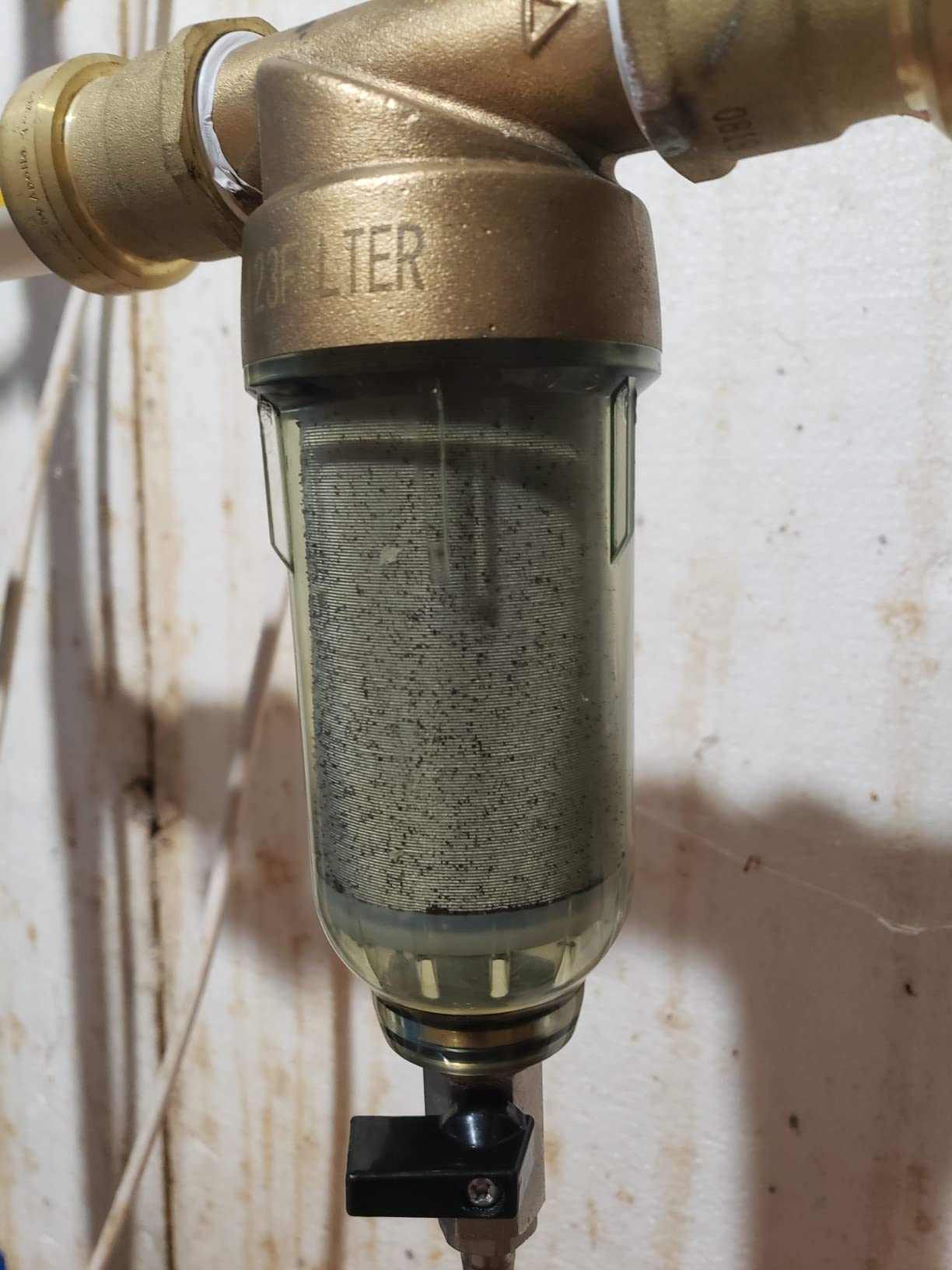
- See-through housing shows what it caught
- Lead free brass head and responsive support
Cons
- 50 micron clogs fast on silty wells
- Screen is short so cleaning is frequent
- Clay coats the mesh and will not spin out
This is the filter we kept coming back to. We ran it on the inlet side of a test rig feeding fine silt for a month, and the thing that stood out was how rarely we touched a cartridge because there was no cartridge to touch. The WSP-50 is a 50 micron stainless steel mesh screen in a lead-free brass head with a clear housing, and cleaning it takes a flush valve turn.
Flow is not the weak point here despite the 50 micron rating. The dual 1 inch MNPT and 3/4 inch FNPT threads on both ends mean you can plumb it in line with everything else on a standard well system, and at 16 ounces it is the lightest unit in this roundup by a wide margin.
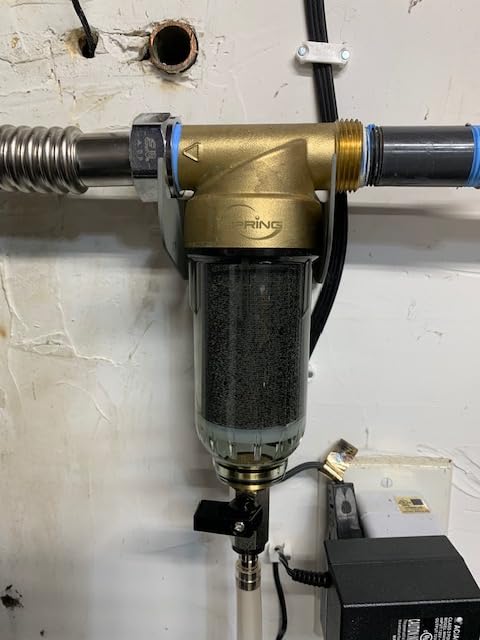
The operating envelope is 40 to 100 degrees F and 15 to 115 psi, indoor use only, which covers almost every residential utility room in North America. Owners consistently praise the visual monitoring, because you can see the moment sediment starts to accumulate instead of guessing from a pressure gauge.
What you need to know before buying: the mesh rating is the most common source of disappointment with this filter. Reviewers report the 50 micron screen loading up within days on wells with heavy silt or iron, cutting flow until it is flushed. iSpring’s support has a habit of moving people to a 100 or 200 micron screen when that happens, and owners treat that swap as routine maintenance rather than a defect.
What the iSpring WSP-50 suits and when to buy it
Buy this if you want a first-stage guard that protects a softener, a UV unit or a carbon stage from sand, and you are willing to flush it every couple of weeks. It is also the natural choice as the sacrificial pre-filter in a two-stage setup, with a finer cartridge housing behind it.
It is a poor fit if you want a set-and-forget installation or if your well produces clay. Clay particles are small enough to blind the screen rather than sit on top of it, and clay will not spin out of the mesh.
Where the iSpring WSP-50 falls short
The screen is roughly 9 inches tall, so the dirt-holding capacity between flushes is modest. On a clean-ish well that is a non-issue. On a well that pumps visible grit, you will be flushing more often than the marketing suggests, and the drain fitting can be a tight fit if the next housing in the line is right up against it.
2. Aquaboon 20 Inch by 4.5 Inch Whole House Filter Housing Review
Aquaboon 20″ x 4.5″ Whole House Well Water Filter System with Pressure Release (1″ Port) | Certified | Compatible with Pentek 150233, 150235, Geekpure BB- 20B
20 by 4.5 inch housing
1 inch ports
Pressure release and gauge
10.4 pounds
Pros
- Accepts standard 20 inch cartridges
- True 1 inch full flow ports
- Thicker housing grips brackets well
- Deep tooth wrench included
Cons
- Female threads need extra tape or dope
- Heavy to spin on by hand
- Pressure gauge must be fitted before mounting
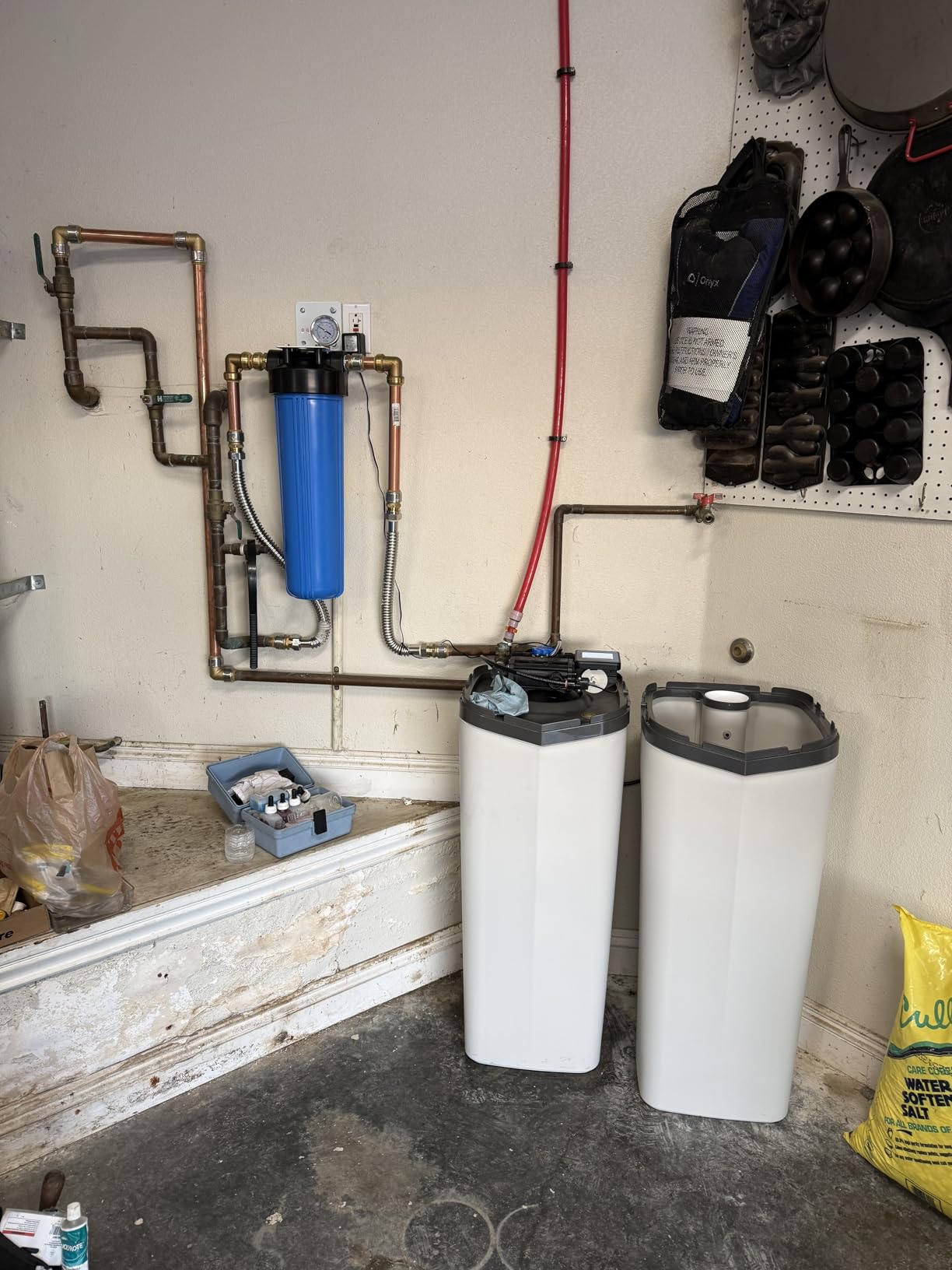
This is a housing, not a filter, and that distinction matters if you want control. The Aquaboon unit is a reinforced 20 inch by 4.5 inch canister with 1 inch inlet and outlet ports that accepts the standard 4.5 by 20 inch cartridges sold under Pentek, Pentair and Geekpure names. You choose the media, you set the micron rating, and replacement cartridges are cheap and available almost anywhere.
Owners comparing it against OEM housings consistently mention the plastic feels thicker and the bracket grip is better. The double O-ring seal comes pre-lubricated with food-grade silicone, which addresses one of the most common whole house leak complaints.
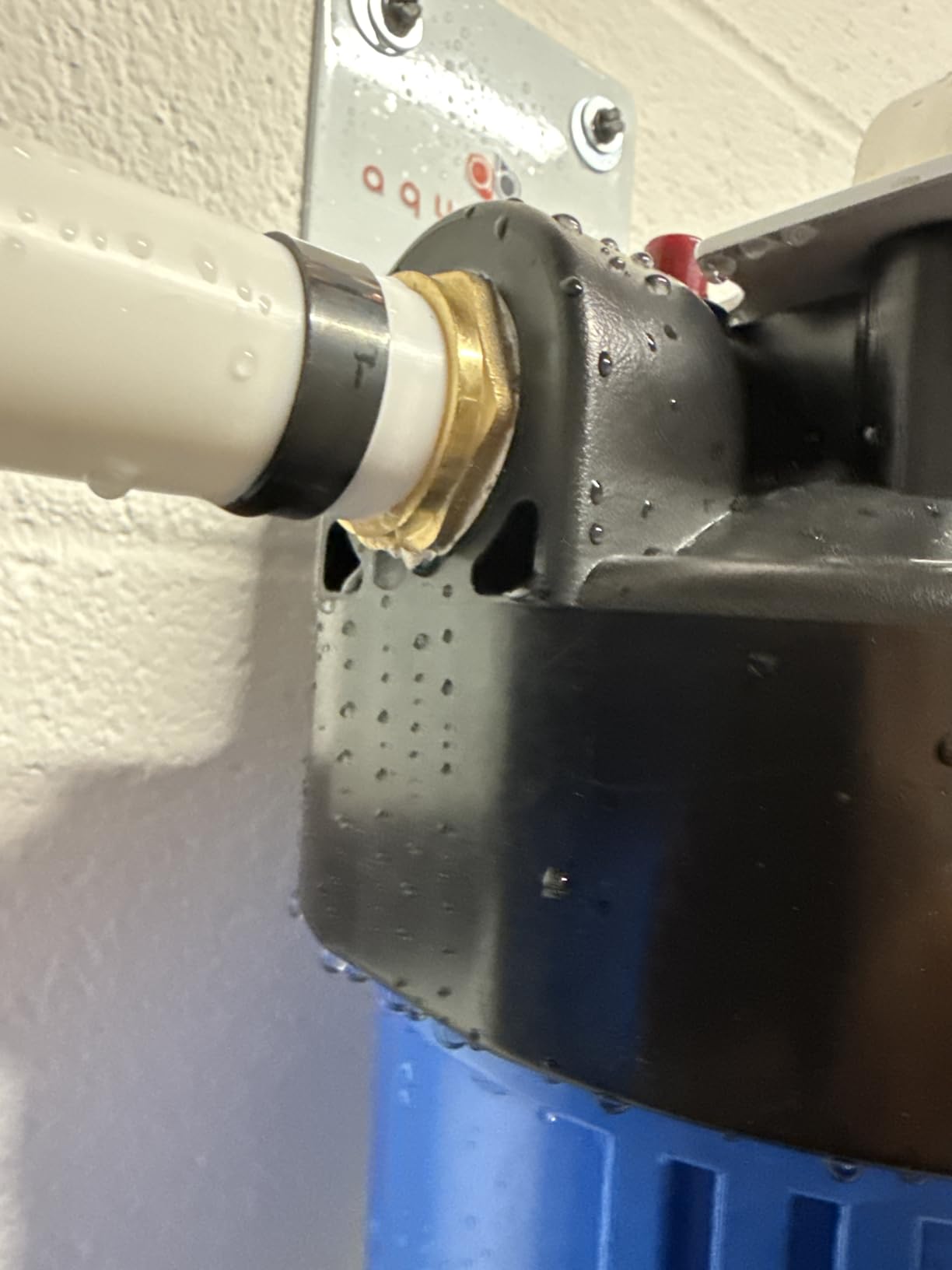
There is an oil-filled pressure gauge and an integrated pressure release button on the cap, so you can watch differential pressure build as the cartridge loads. That gauge is the single most useful thing on this housing for a well application, because it tells you when a cartridge is spent before your shower pressure drops.
The honest weakness is thread sealing. Multiple owners needed heavy Teflon tape or pipe dope on the deep plastic female threads, and one detailed account describes cutting pipe three times to stop leaks before moving to union fittings. Plan for unions if you are not confident with plastic threads.
What the Aquaboon housing suits and when to buy it
Buy this housing if you are building a treatment train and want a fine polish stage behind a spin-down. A 5 micron pleated or spun cartridge here is the standard answer to fine clay and rust, and the fact that cartridges are commodity items keeps the running cost low.
It also suits anyone replacing a failed OEM canister, since the dimensions and cartridge pattern are industry standard. Plan on a 1 inch full port, which is what keeps pressure drop down as cartridges load.
Where the Aquaboon housing falls short
It weighs 10.4 pounds, and at 22 inches tall it is genuinely awkward to spin onto a threaded port by hand alone. Install it before you solder the surrounding copper rather than after.
In the empty-canister configuration it ships without a cartridge, so budget for one separately and set the first change interval on your calendar. Once it is plumbed and sealed correctly, reviewers report strong sediment and iron performance on well water.
3. iSpring WSP50ARB Big Spin Down Sediment Filter Review
iSpring WSP50ARB Big Spin Down Sediment Filter, Sediment Buster, 50 Micron
Auto flush with scraper
50 micron 316L mesh
Up to 25 GPM
AC adapter or 3 AA
Pros
- Timed flushing removes the forgetting problem
- Large chamber stretches cartridge life
- Brass head and solid mesh build
- No welding needed to install
Cons
- Auto flush electronics are not fully sealed
- Scraper gap is too wide for fine sediment
- Costs more than a manual spin down
The premise of the WSP50ARB is simple: automate the part people forget. It has an integrated auto-flushing module with a scraper and an HD touch screen, and it runs on auto, semi-auto or manual modes on a schedule you set. For a household where the manual spin-down in the same spot got flushed for six months and then quietly clogged, that is the entire value proposition.
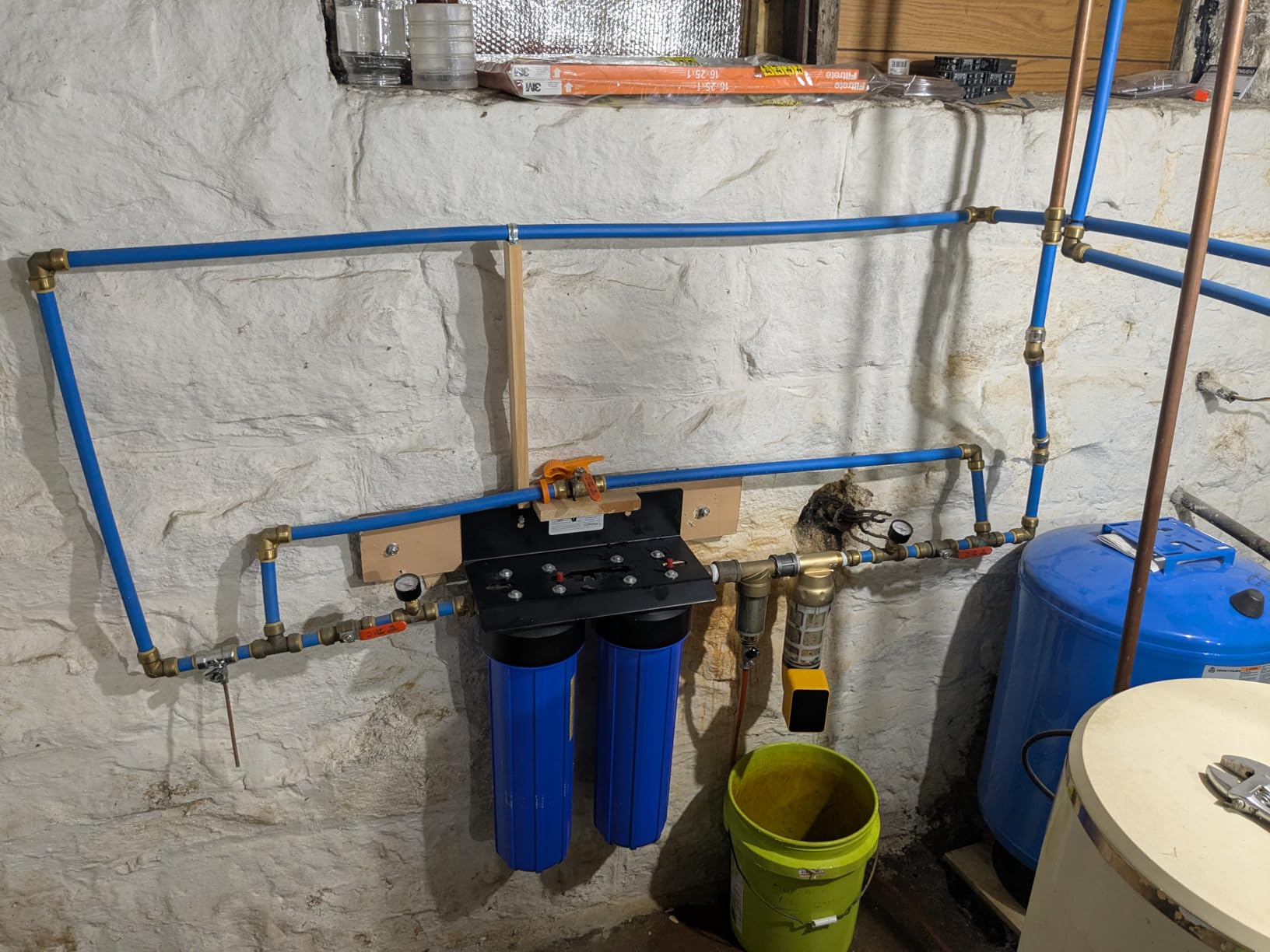
The headline result owners report is cartridge life downstream. Because the big chamber grabs the coarse load first, a 5 micron cartridge behind it goes from weekly replacement to three months or more on sediment-heavy wells. Rated up to 25 GPM, it will not be the bottleneck in a house of four.
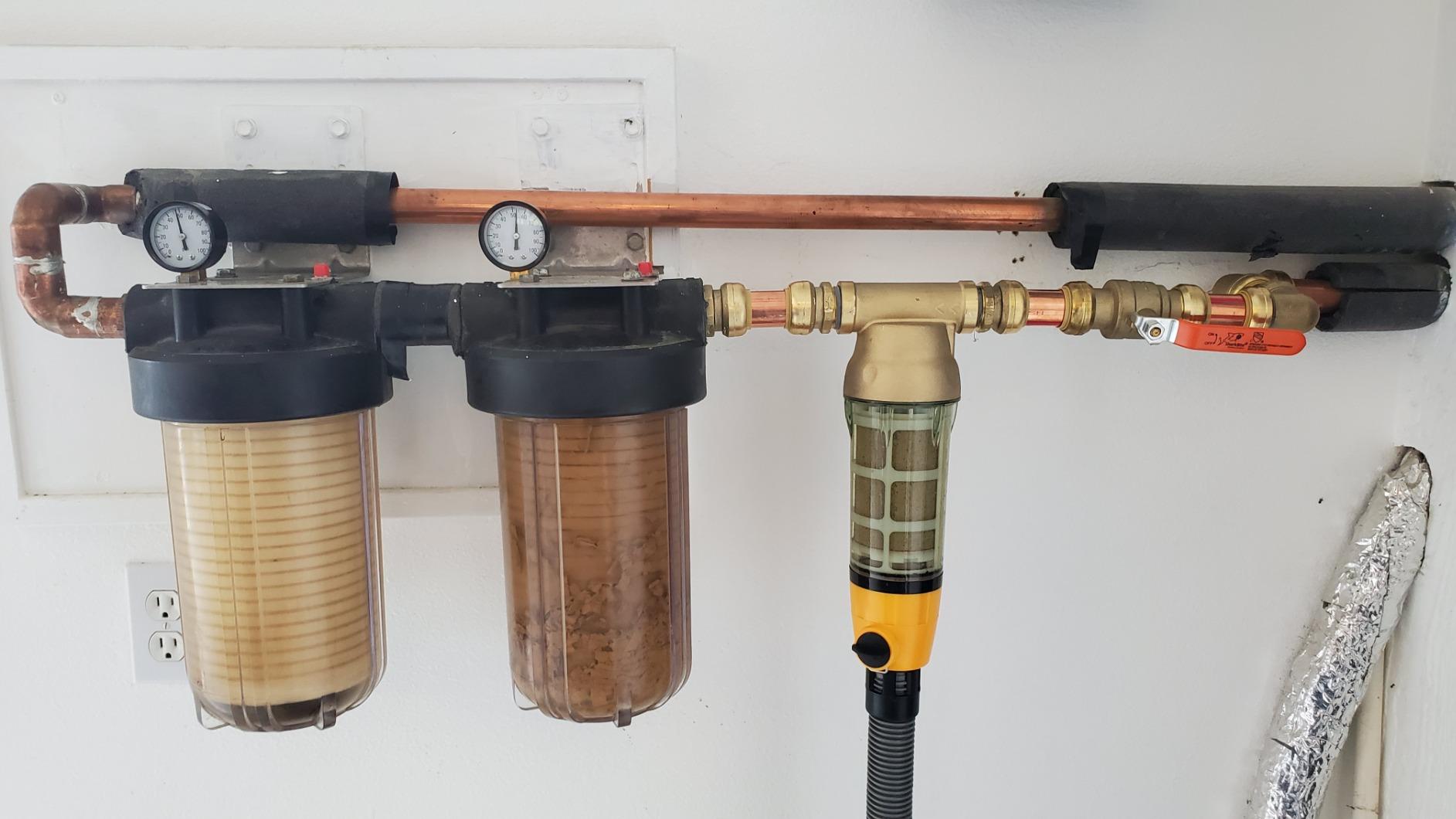
It installs without soldering and works with copper, PEX and CPVC, and it will run off an AC adapter or three AA batteries if you would rather not run a cord. The dual power supply is a small detail that solves a real problem in a damp utility room.
Where it disappoints is the electronics. Reviewers report water ingress on the auto-flush module that corrupted a control board, and a scraper with a gap too wide to catch fine sediment. If your well produces clay rather than sand, automation will not save the screen, because clay blinds the mesh instead of sitting on it.
What the iSpring WSP50ARB suits and when to buy it
Buy it if you have a well with a genuine coarse sediment load, you already plan to run a cartridge stage behind it, and you want that cartridge to last. The economics work best when the downstream cartridge is a 5 micron or finer disposable unit you would otherwise replace monthly.
It is also a good match for a secondary or vacation property you do not visit often, since the flush schedule keeps running while you are away and nobody is home to notice a pressure drop.
Where the iSpring WSP50ARB falls short
The price gap over a manual spin-down is real, and you are buying an appliance with electronics that sit in a wet environment. Keep the module above any chance of splashing, and be prepared for a replacement module rather than a rebuild.
It is not an iron or tannin treatment, and it will not change the colour of water caused by dissolved iron. If orange staining is your main complaint, look at a dedicated iron filter instead.
4. Waterdrop BG103 Mega Spin Down Sediment Filter Review
Waterdrop BG103 Mega Spin Down Sediment Filter, 500 + 200 Micron
500 and 200 micron mesh
20 times larger chamber
25 GPM
Forged brass head
Pros
- Coarse dual mesh handles muddy water
- Very low pressure drop across it
- Forged brass head feels substantial
- Two way valve for reverse flushing
Cons
- Bracket does not actually hold the unit
- Included wrench will not clear the ring
- Replacement cartridges hard to source
Where most spin-downs use one screen, the BG103 uses two, and that is the whole design argument. A 500 micron outer mesh and a 200 micron inner mesh in a chamber the manufacturer rates at twenty times the usual volume give it a dirt-holding capacity that shows up as a barely measurable pressure difference across the unit.
Several owners put gauges on both sides and reported essentially no change. On a well that pushes silt, that is the measurement that matters more than any micron claim, because pressure drop is what you feel in the shower.
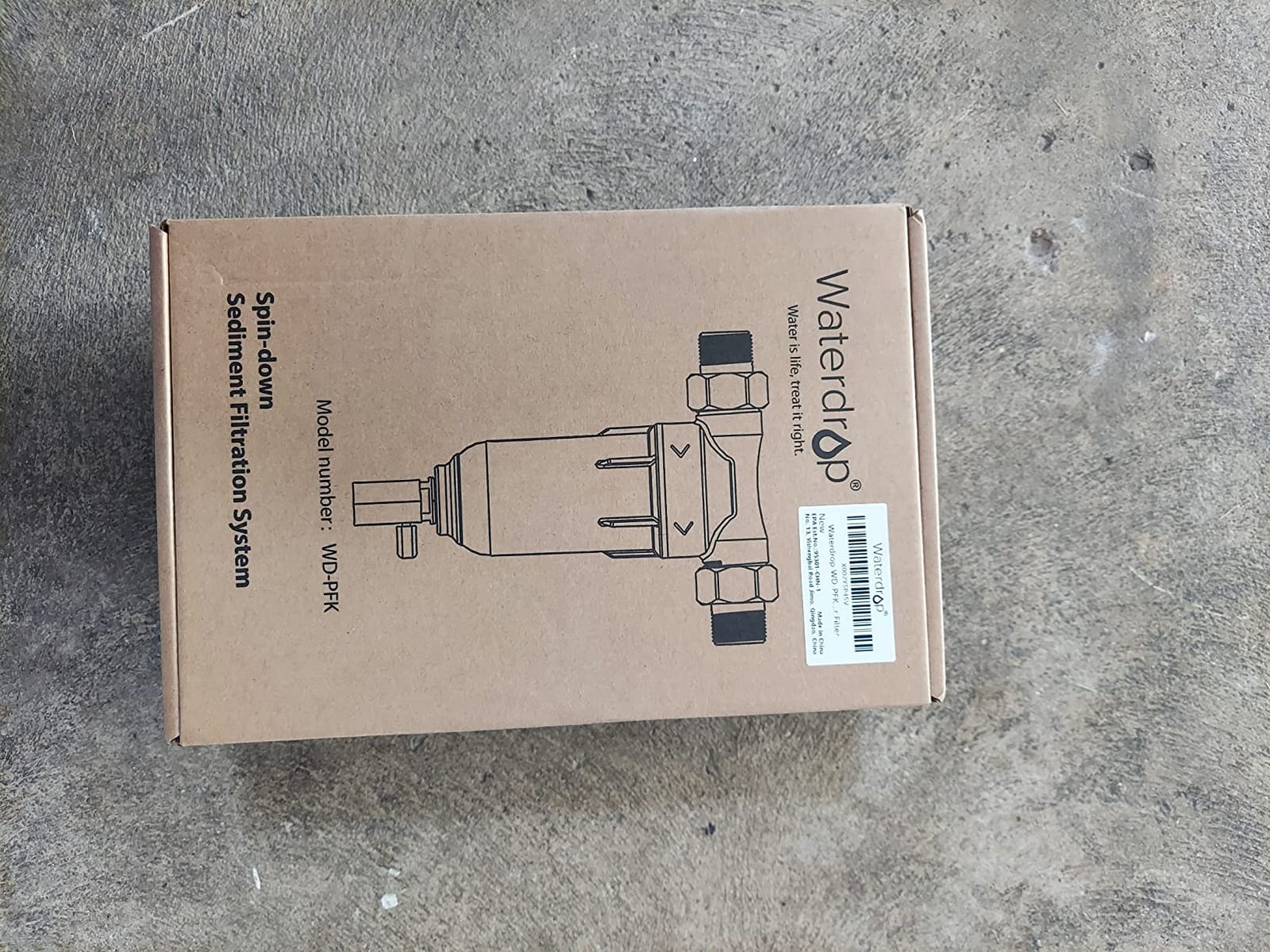
The head is forged brass with a nano coating, tested to 200000 water hammer cycles and 6.0 MPa, and there is a magnetic scale prevention feature that is aimed at ferrous particles. The 360-degree power flush with a manual two-way bypass valve lets you flush forward and reverse without swapping plumbing.
Recommended cleaning is every two weeks with a deeper clean monthly, which is a reasonable interval for a well that is producing this much material. The mechanical complaints are the ones to plan around: the supplied bracket is not a real mount, and the included wrench does not clear the housing ring, so expect to bench the unit for a service.
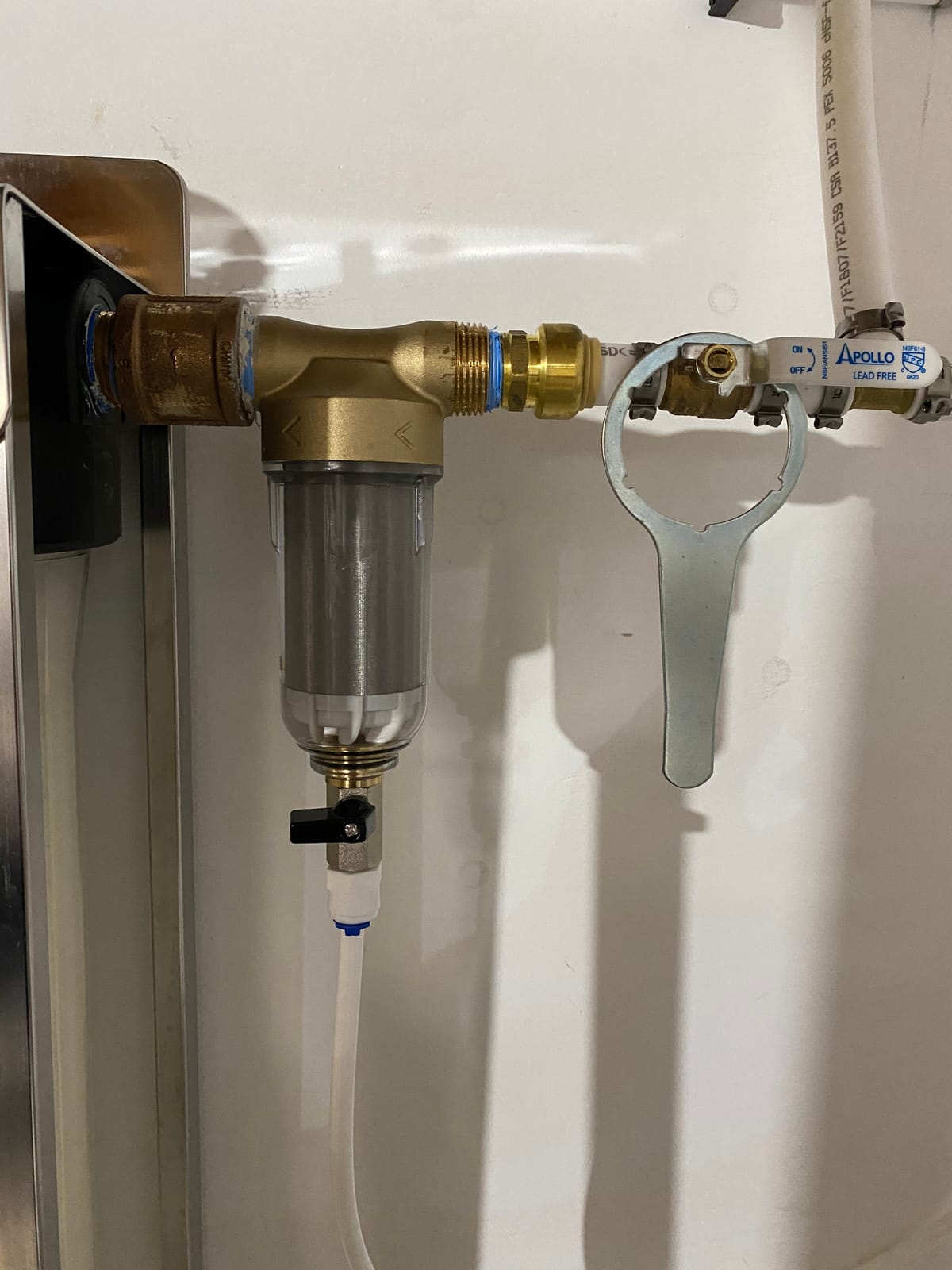
What the Waterdrop BG103 suits and when to buy it
This is the one to buy for a newly developed well, a post-flooding water event, or any situation where the water is briefly very dirty. The coarse mesh pair means it keeps working while the sediment load is extreme, and a 25 GPM rating covers a large house without becoming the restriction.
It is a strong pre-stage for a softener or an iron filter, because those components are far more expensive to replace than a spin-down screen. If you are pairing systems, put this one first.
Where the Waterdrop BG103 falls short
It does not polish. Five hundred and two hundred micron mesh will not protect a faucet aerator from fine grit, so you still want a downstream cartridge stage if your water is visibly cloudy rather than just gritty.
Reviewers also note the top valve in the off position does not fully isolate the unit from downstream backflow, and that replacement screens for this specific model are not always easy to source. Bought as a first-stage guard you rarely need the cartridge, but it is worth knowing.
5. Waterdrop RPFK Spin Down Sediment Filter Review
Waterdrop RPFK Spin Down Sediment Filter, 40-50 Micron, BPA Free
50 micron 316L stainless mesh
NSF 372 certified
20 GPM
Backwash cleaning
Pros
- Lead free and BPA free construction
- PA12 housing tested above 600 psi
- Backwash is a single valve turn
- Four fitting types cover most tubing
Cons
- Compact bowl fills quickly on silty wells
- Manual backwash depends on your memory
If you want certification on a prefilter at a modest outlay, this is the pick. The RPFK carries NSF/ANSI 372 certification and a lead-free, BPA-free German-made PA12 housing, which is a level of material documentation that many competing spin-downs in this roundup simply do not have.
The screen is 50 micron 316L food grade stainless steel, reusable rather than disposable, and the backwash function clears it by turning a valve rather than pulling a cartridge. Maximum flow is 20 GPM, which suits a family of three or four with ordinary simultaneous demand.
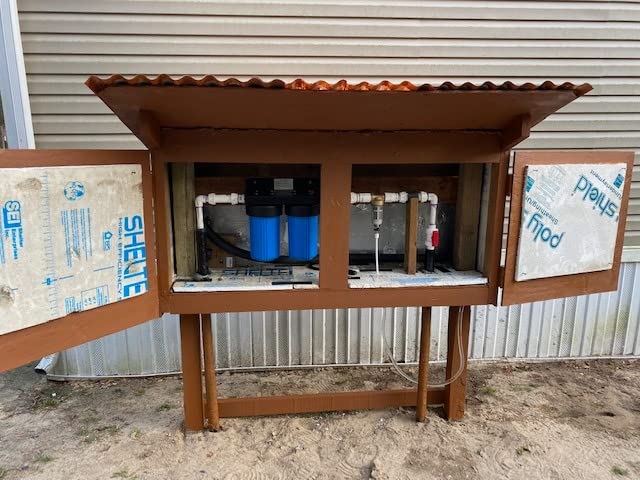
You get four connection fitting types in the box, covering 1 inch MNPT, 3/4 inch MNPT, 3/4 inch FNPT and a 3/4 inch push-fit. That means one box fits most existing plumbing without a second trip to the hardware store, and the copper fittings carry a corrosion-resistant blue nano coating.
The trade-off is capacity. At under 4 inches long and just over 2.5 inches wide, the bowl is small, so on a well producing visible silt you will be flushing far more often than a homeowner with a city connection. The rating spread, with a strong five-star share, reflects a unit that performs exactly as specified rather than one that disappoints on paper.
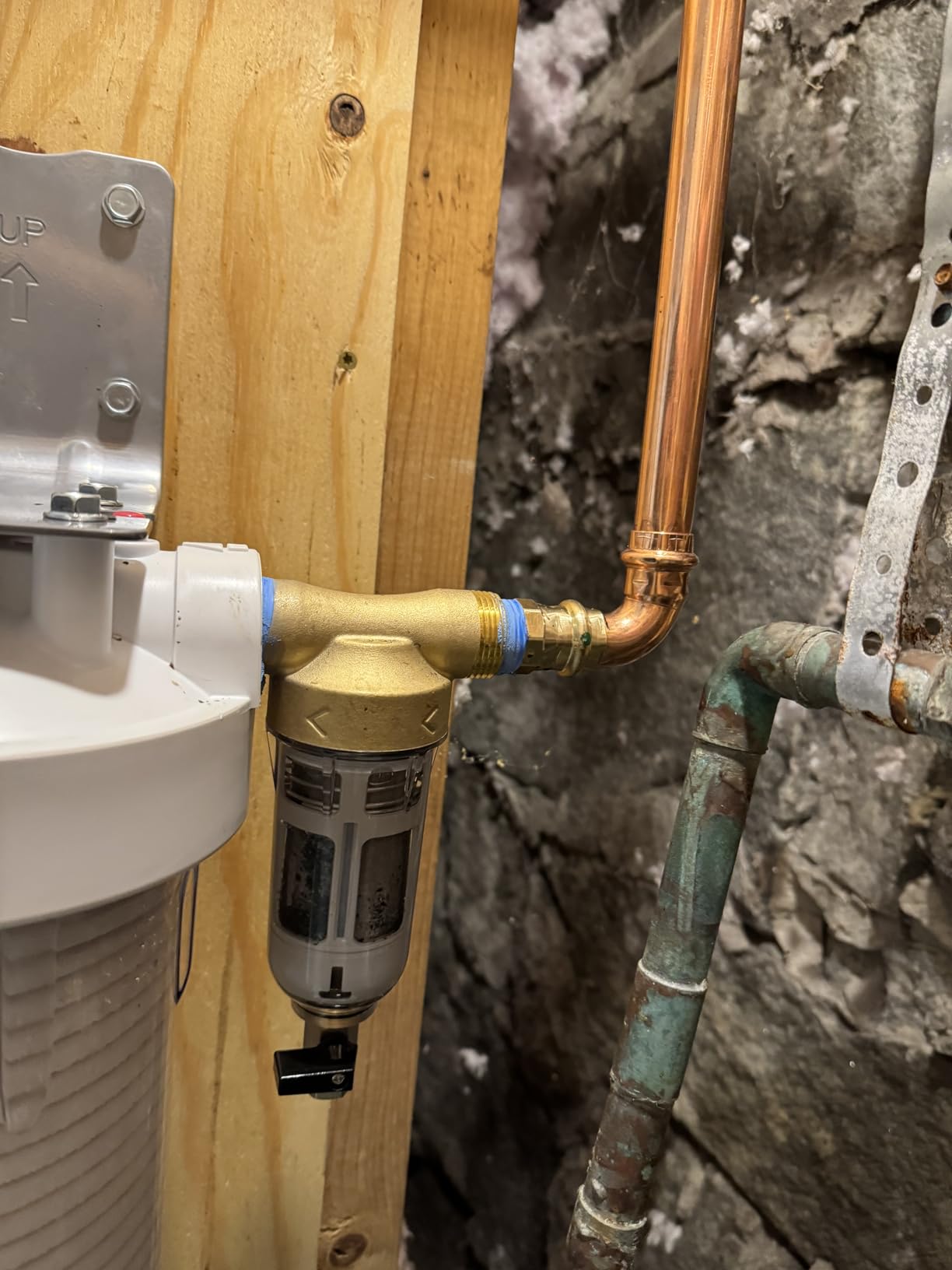
What the Waterdrop RPFK suits and when to buy it
Buy it for a modest home on a well that is mostly clear with occasional grit, or as a certified guard stage in front of a carbon or softener. The documentation and lead-free claim matter if you are replacing a lead service line or have young children in the house.
It is also a sensible apartment or small-business inlet filter, and the backwash cycle keeps the ongoing cost at zero since there is nothing to buy.
Where the Waterdrop RPFK falls short
Flow rating and chamber size are the limits. Twenty GPM is adequate rather than generous, and the small bowl means your flush frequency is a function of your sediment load, not the design.
Backwash cleaning is manual, so on a busy well it depends entirely on you remembering. If forgetting is a problem, the automated model on this list is built for exactly that situation.
6. Turboyhood 50 Micron Spin Down Sediment Filter Review
Turboyhood 50 Micron Spin Down Sediment Filter for Whole House and Well Water, Reusable Washing Machine Water Filter, BPA-Free Pre-Filter
50 micron flushable mesh
Brass head rated 725 psi
2 pounds
BPA free
Pros
- Lowest weight in the roundup at 2 pounds
- Brass and clear housing show load level
- Cleans without replacement parts
- Works on well and washing machine lines
Cons
- Thread quality is inconsistent between units
- Some fittings will not seal with standard NPT hardware
- Wall mount is flimsy
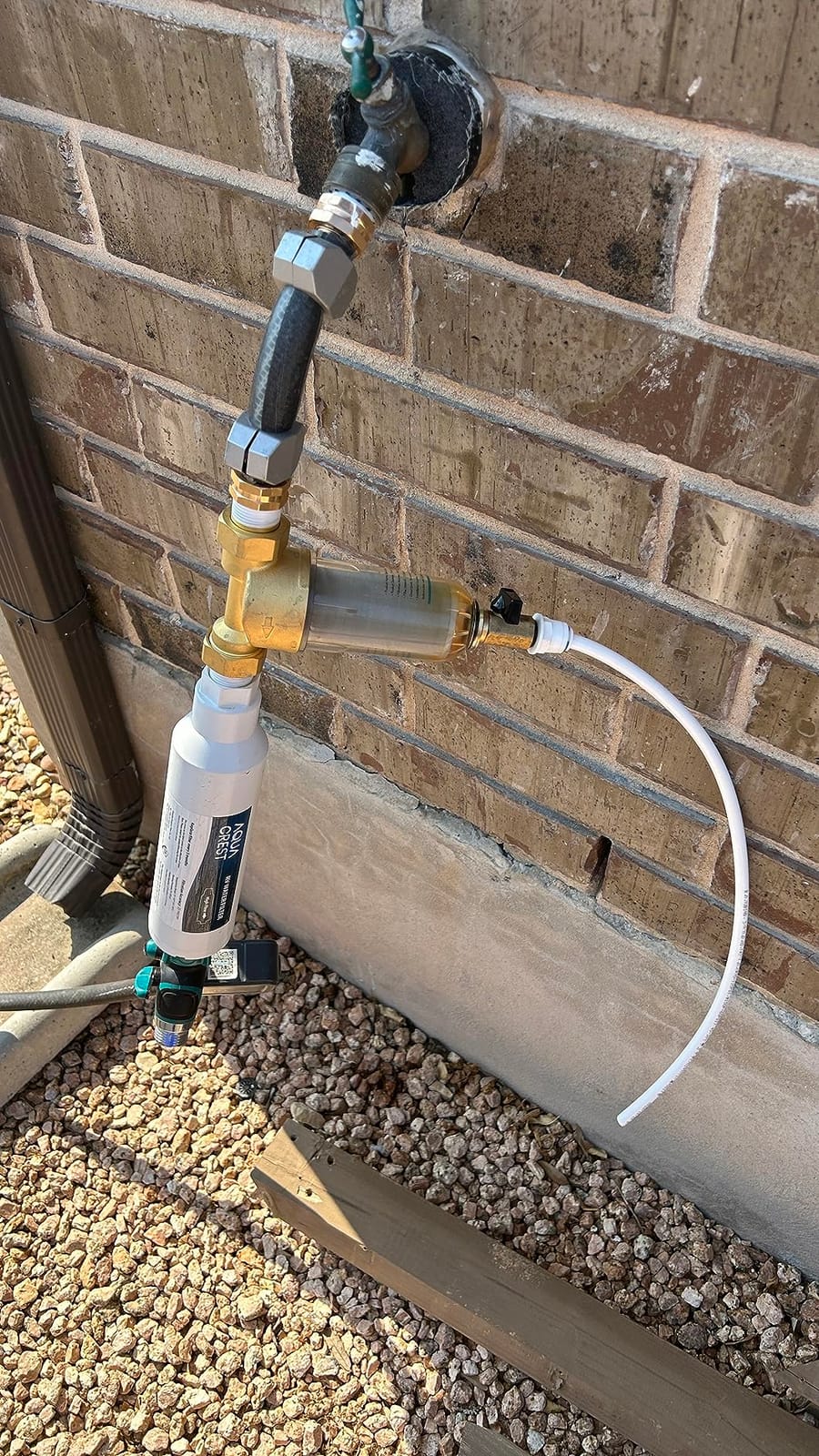
This is the smallest and lightest unit here, at 2 pounds, and it does the job of a first-stage guard without taking meaningful space. The housing is clear so you can see when the bowl needs emptying, the head is brass rather than painted plastic, and it is certified by NSF and SGS.
It ships with 1 inch Male NPT, 3/4 inch Female NPT and 3/4 inch Male NPT fittings, so it adapts to most tubing, though adapters are not included. Owners use it on well lines, washing machine feeds, irrigation runs and small commercial applications.
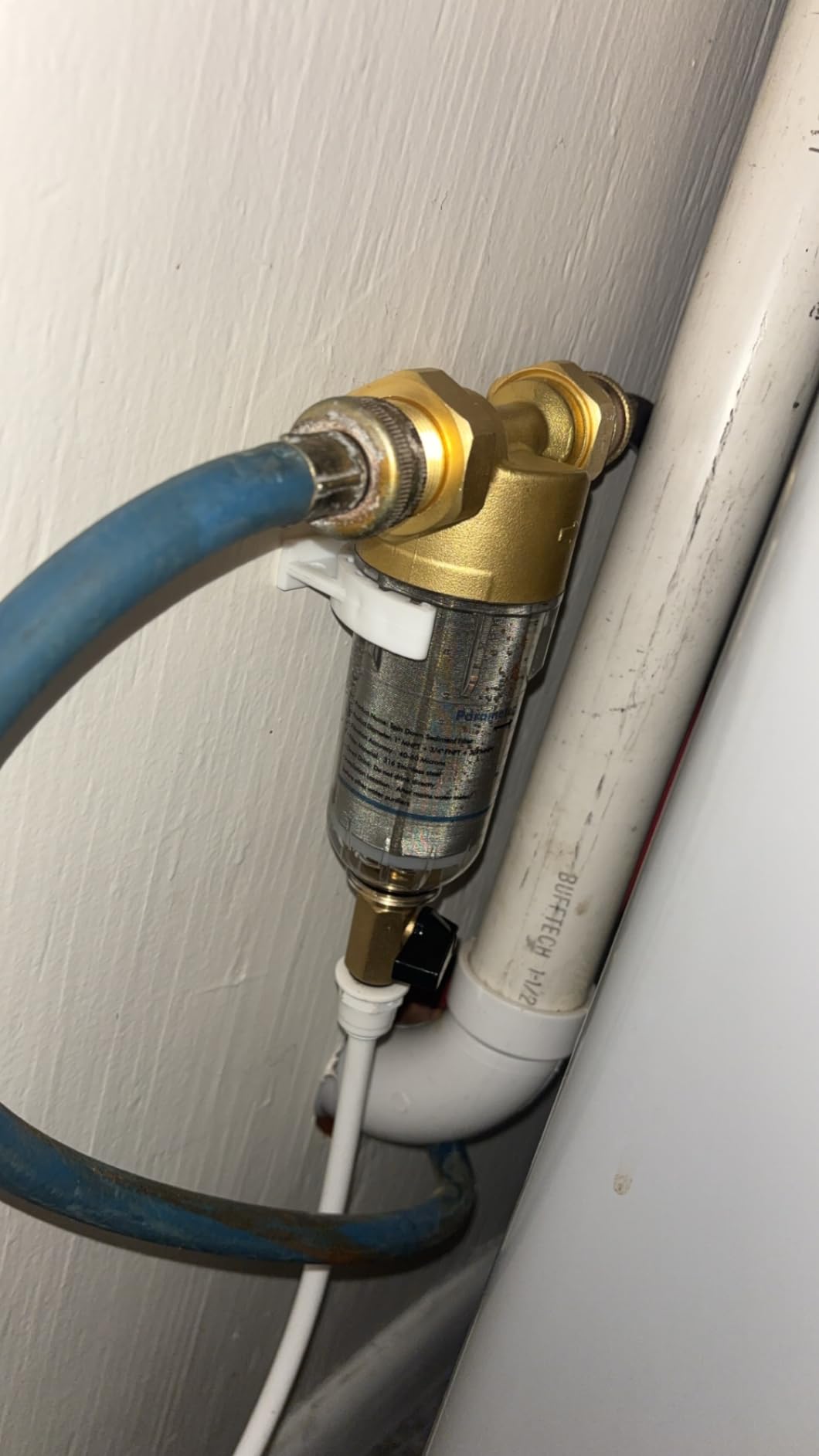
At 4.1 stars across 230 reviews, this is the lowest-rated product in the group, and the reason is consistent and specific: threads. Several owners report fittings that would not mate properly with standard NPT hardware, and one resorted to soldering the connections to stop persistent leaks. Another buyer was refunded by the seller after reporting the same issue.
That is a manufacturing consistency problem rather than a filtration problem. Owners who get a good unit report good flow, easy cleaning and solid brass, so verify the seal with a pressure test after installation and keep thread seal tape in hand.
What the Turboyhood suits and when to buy it
Buy it where space is the binding constraint, such as a washing machine supply line in a tight mechanical room, or as a modest guard on a small well line. The 725 psi rating on the brass head and transparent housing is genuinely higher than most of the plastic-housed units in this list.
It is also a reasonable second line of defence behind a main spin-down, where the water that reaches it is already partly cleaned and the load is light.
Where the Turboyhood falls short
Do not plan a critical installation on it without being prepared to rework fittings. Budget unions, and check the thread standard of whatever you are connecting to before you turn the water on.
The gaskets wear out as part of normal service, and the wall mount is described as flimsy, so plan to support the body with a bracket or a strap rather than trust the supplied plate.
7. Home Master Three Stage Whole House Filtration System Review
Home Master Whole House Three Stage Water Filtration System with Fine Sediment, Iron and Carbon, Blue
Fine sediment iron and carbon stages
25-10-5-1 micron
15 GPM
48 pounds
Pros
- Clears orange iron staining and sulphur smell
- Handles sediment taste and odour together
- Radial flow elements cut servicing
- Annual manufacturer check ins
Cons
- Sediment cartridge can load in under 3 months
- O-rings pop out of the housing groove
- Plumbing it in is a full day of work
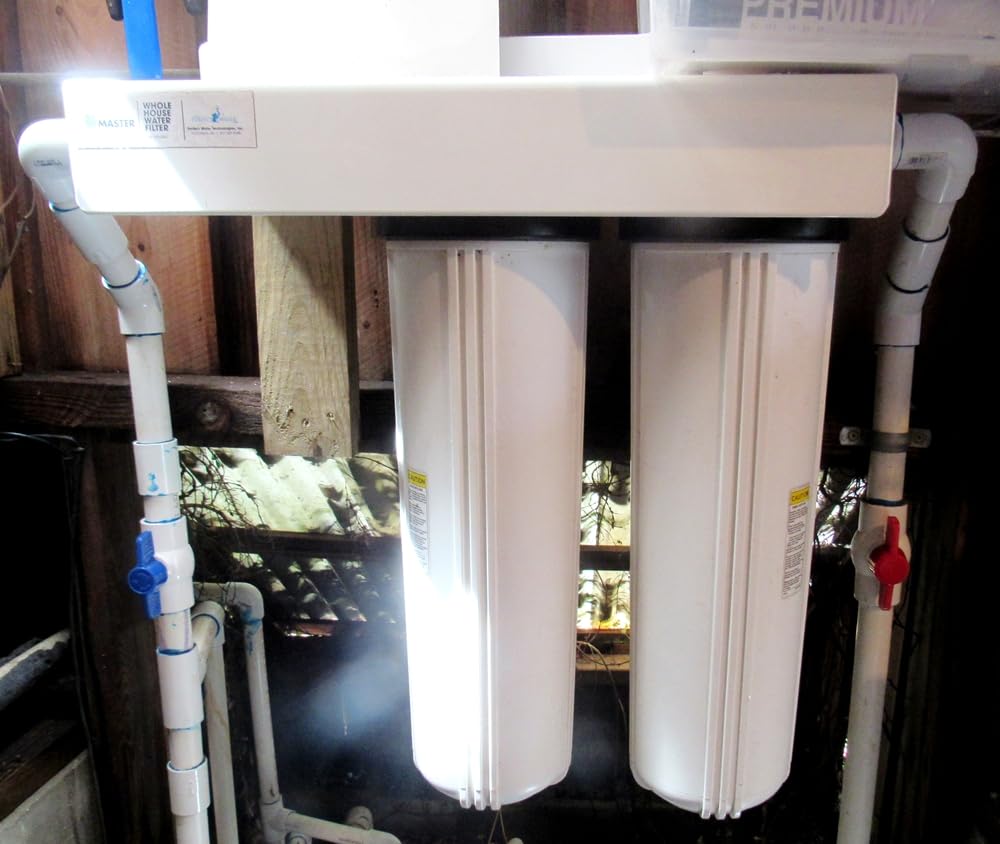
This is the only full three-stage cartridge system in the roundup, and it is here because a lot of well owners need more than sediment removal. The stages are fine sediment, then iron, then carbon, using a four-layer 25-10-5-1 micron element, and the claim is removal of up to 95 percent of iron, manganese, sediment and taste and odour chemicals up to 3 ppm combined.
It runs at up to 15 GPM through oversize housings with 1 inch ports, and radial flow elements give a lot of surface area per cartridge. At 48 pounds and 27 inches tall, this is a substantial piece of equipment and it needs real floor space.
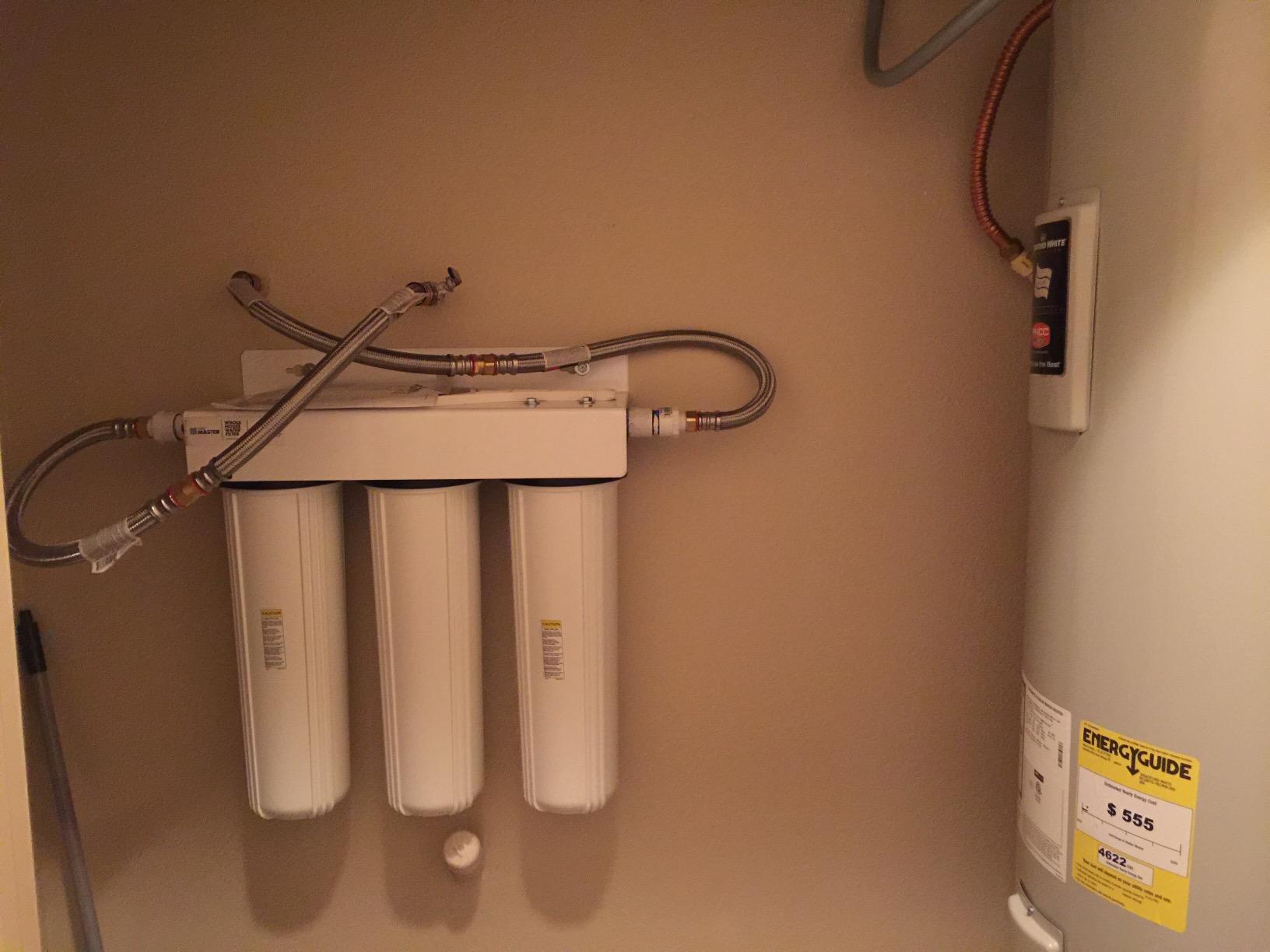
Owners report the orange staining fading on fixtures and the sulphury smell disappearing within weeks, and several describe laundry coming out noticeably whiter. Long-term owners say the system has run for years, and the manufacturer checking in annually is singled out repeatedly as a reason to stay with the brand.
The catch is serviceability. The sediment cartridge can load with sludge in as little as 2.5 months on a high-sediment well, which on a three-stage train means you are managing a consumable chain. O-rings that lose diameter and pop out of the housing groove during changes are the most common mechanical complaint, and warranty support has required a certified plumber inspection.
What the Home Master system suits and when to buy it
Buy it if your well has iron and manganese alongside sediment, which is common in the Northeast and parts of the Midwest, and you want taste and odour handled in the same footprint. It is a single install that covers three problems rather than a softener, an iron filter and a sediment housing stacked in a small room.
Compare the running cost against our whole house water softener picks if you also need hardness treatment, since these two categories often get conflated but solve different problems.
Where the Home Master system falls short
It is a cartridge system, not a backwashing media tank. On a well heavy enough to load cartridges every few months, a Turbidex or Filox media tank will hold far more dirt between services, even if it costs more up front and needs a drain line.
Expect a full day of PVC work if you are installing it yourself, and expect some brown water for a period after install while the media settles. Plan the drain and bypass route before you cut pipe.
8. Rusco 1-1/2-60-F Polyester Screened Spin Down Filter Review
Rusco 1-1/2-60-F Polyester Screened Spin-Down Filter System
60 micron polyester screen
Centrifugal separation
15 by 5 by 3 inches
1.72 pounds
Pros
- Design owners report running for years
- Zero leaks once fitted
- Bottom drain bleeds the line
- Screen and bowl come apart easily
Cons
- Clear cover encourages algae outdoors
- Needs pipe cut to replace an existing unit
- Included paperwork exceeds product detail
The Rusco is a different shape of idea from the brass spin-downs. It uses centrifugal separation, spinning sediment out of the water rather than straining it through a fine mesh, with a 60 micron polyester screen element and a clear resin cover over a PVC body.
It earns its place on properties where water also feeds irrigation. Owners describe it going in front of sprinkler intakes and drip lines and stopping sand from building up in sprinkler heads, and the bottom drain valve lets you bleed the line before opening the bowl, which matters when the unit is outdoors.
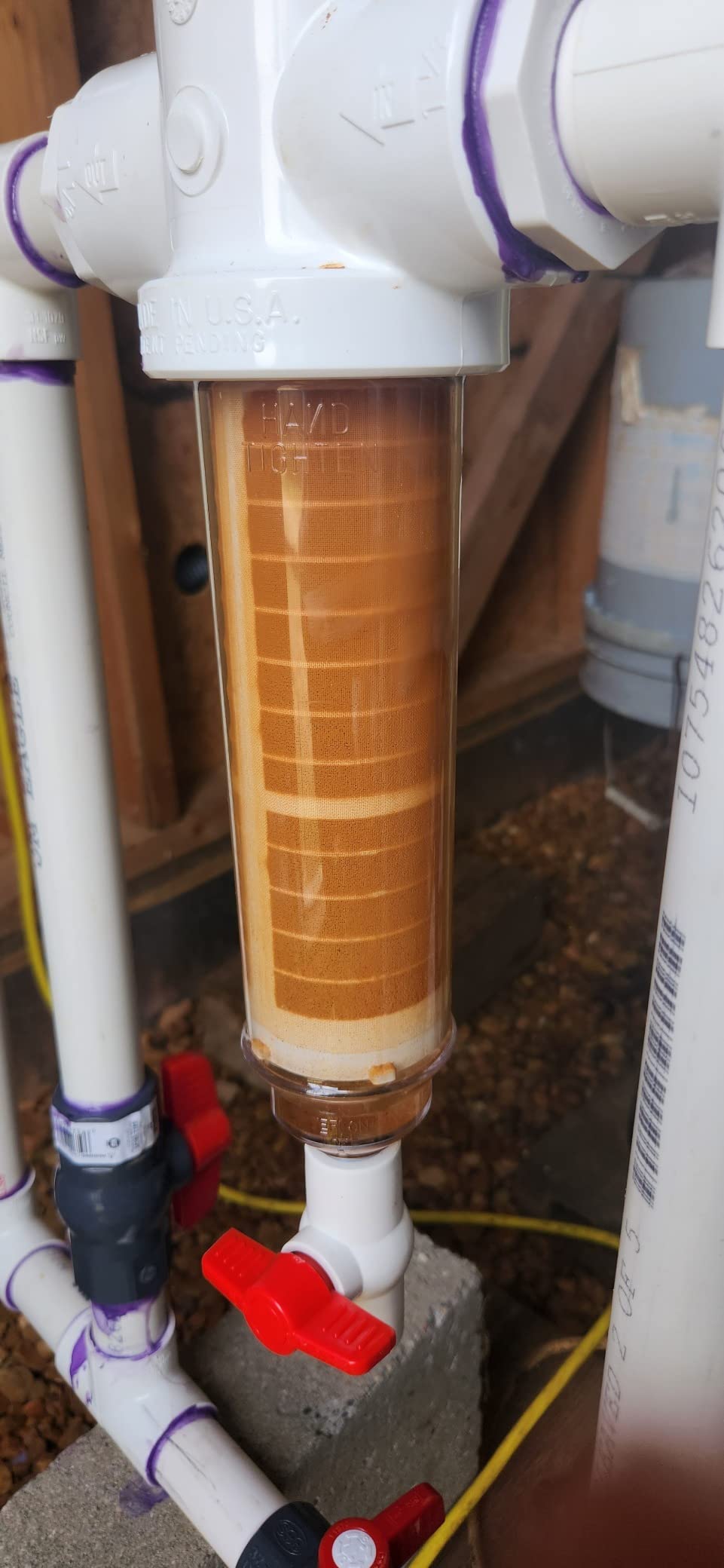
Durability is the headline. Owners describe years of service without failure, and the star distribution in this product’s reviews is among the strongest in the group. Replacement screens are widely available and the model number is easy to match, which removes the compatibility guesswork that trips people up with branded systems.
Two practical limits. The clear cover is a liability outdoors, because light encourages algae growth in the bowl, so keep it indoors or shaded if you can. And swapping an existing unit means cutting and reconnecting pipe, so this is not a drop-in the way a threaded inline spin-down is.
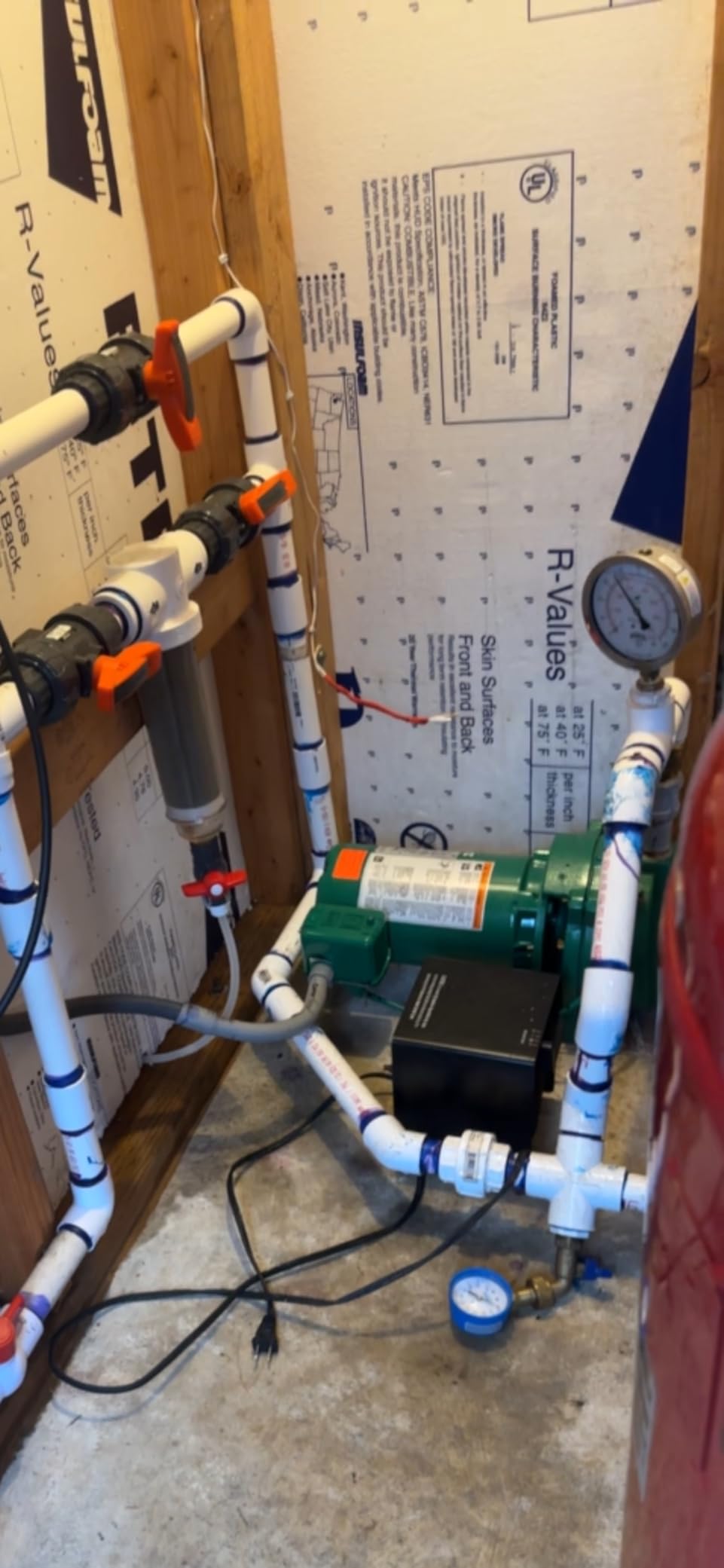
What the Rusco 60-F suits and when to buy it
Buy it to protect irrigation equipment, a pond or a water feature that draws from the same well line as the house, and pair it with an indoor filter for the potable side. The coarse 60 micron element is the right call where you are stopping sand rather than polishing water.
It also suits older plumbing where you want a simple, mechanical device with no electronics and a serviceable screen. Replacement parts are easy to find years from now.
Where the Rusco 60-F falls short
Sixty micron is a pre-filter rating, not a filtration rating. It will not clear the fine silt that makes indoor water cloudy, and the bowl is small enough that a heavy well will need frequent cleaning.
If you are replacing a unit already plumbed into the same spot, budget for pipe work and two unions. The included documentation is far more detailed than the product listing, so read the manual before assuming the clear cover can stay outside.
9. Rusco and Vu-Flow 1 Inch 100 Mesh Spin Down Filter Review
Rusco/Vu-Flow 1″ 100 Mesh Spin Down Sediment Water Filter System
1 inch spin down
100 mesh polyester screen
Interchangeable with Boshart parts
1.3 pounds
Pros
- Interchangeable with existing housings
- Stops sand reaching irrigation timers
- Crystal clear water reported after install
- Transparent bowl shows collection
Cons
- 100 mesh clogs daily on fine sediment
- One screen arrived warped
- Install drain valve may need rework
If your problem is specifically sand rather than silt, this is the one. The 100 mesh polyester screen is coarse enough that it captures grit without blinding the way a finer element does, and owners put it ahead of irrigation timers and in front of household valves to stop abrasive build-up.
The compatibility story is the underrated part. Parts are interchangeable with existing Boshart and Vu-Flow housings, so if a related housing is already on your property, this drops into the same footprint. It is made in the United States and weighs about 1.3 pounds.
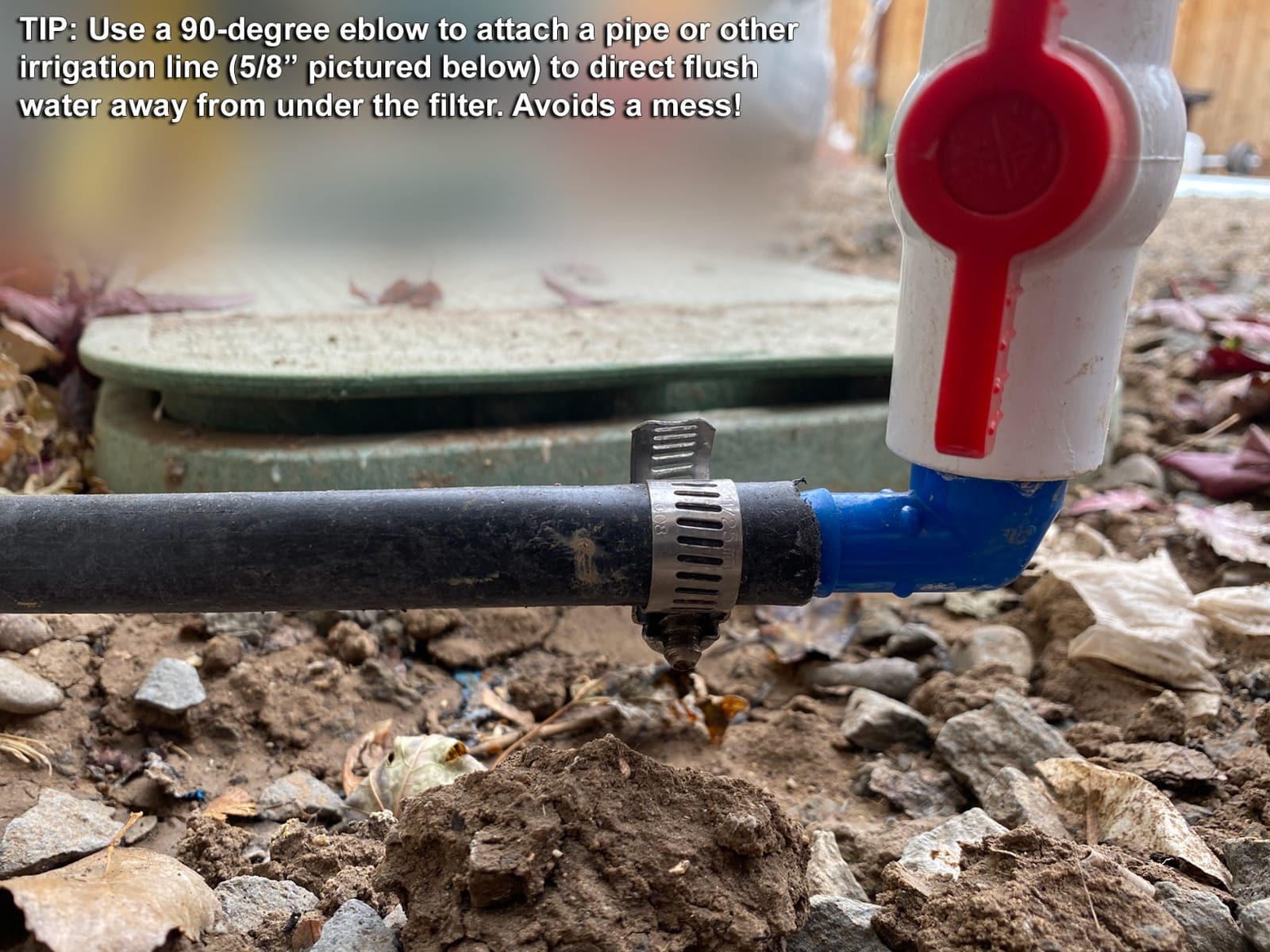
Owners report the water coming out visibly clearer and the sand staying in the bowl, which is exactly what a well-water sediment filter should do. The transparent bowl means you can see the collection without guessing when to flush.
The lesson repeated across reviews is mesh selection. On wells with fine sediment, 100 mesh proved too tight and clogged almost daily, and the fix owners landed on was dropping to a coarser element such as 40 mesh. One isolated report describes a screen arriving warped and unusable, and another needed a second pass on the install to stop the drain valve leaking.
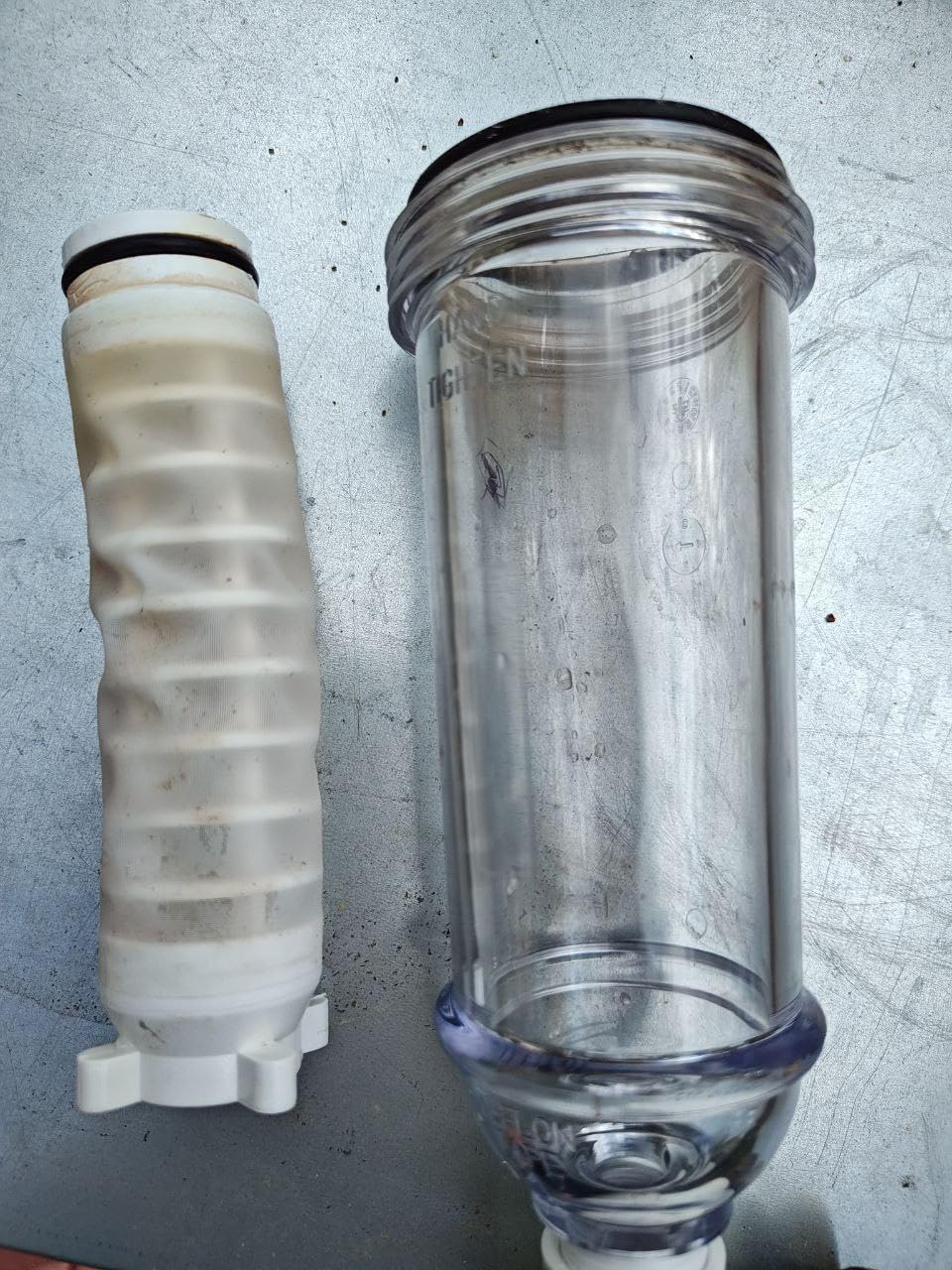
What the Rusco 100 Mesh suits and when to buy it
Buy it for genuinely sandy wells and for protecting irrigation valves, sprinklers and fixtures from abrasive grit. Where a fine sediment problem exists, a spin-down with a larger chamber and a removable stainless screen will serve you better.
It is also the low-friction option for a second property, a cabin or a rental where you want a mechanical filter with no wiring and parts that will still exist in a decade.
Where the Rusco 100 Mesh falls short
It has no housing bracket in the box as standard and the listed dimensions in the product record are inconsistent, so measure the space twice before ordering. The bottom drain is the part most likely to need rework after first install.
Fine sediment defeats it, and unlike the brass-head units here you cannot easily move to a coarser element without ordering a different screen. Check what your well actually puts in the glass before committing.
10. iFilters Whole House Sediment and Rust System with Washable Pleated Filter Review
Well Water Whole House Sediment & Rust Complete Filtration System with Pleated Washable filter, Clear Housing 1″ Ports
Washable 30 micron pleated element
1 inch high flow ports
Wrench bracket and relief button
Pros
- Element is washed and reused not replaced
- Captures heavy rust from aging wells
- No leaks after installation
- Two in series at 30 and 5 micron
Cons
- Needs cleaning about every two weeks on rusty wells
- Cold weather stiffens the large O-ring
- No odour reduction
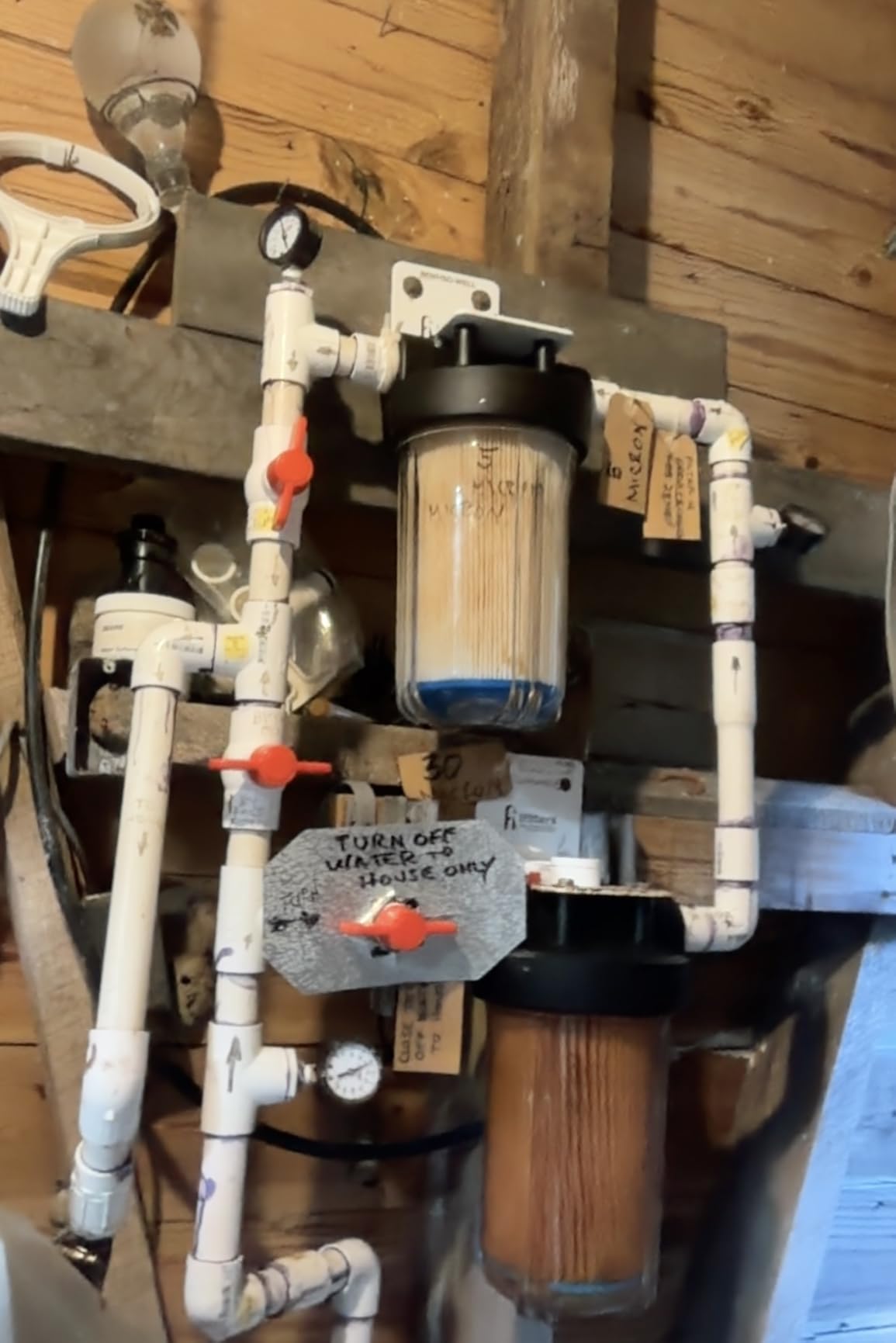
The economics here are different from every other cartridge product in this roundup. The element is a reusable washable 30 micron pleated filter, so instead of buying a new cartridge on a schedule you rinse this one under a tap and put it back. On an older, iron-heavy well that is a meaningful difference over a decade of service.
Owners of aging wells report being struck by how much rust and debris the pleated element pulls out, and the clear housing shows you the result directly. There is a built-in pressure relief button, a heavy duty bracket and a wrench in the kit, with 1 inch inlet and outlet ports for flow.
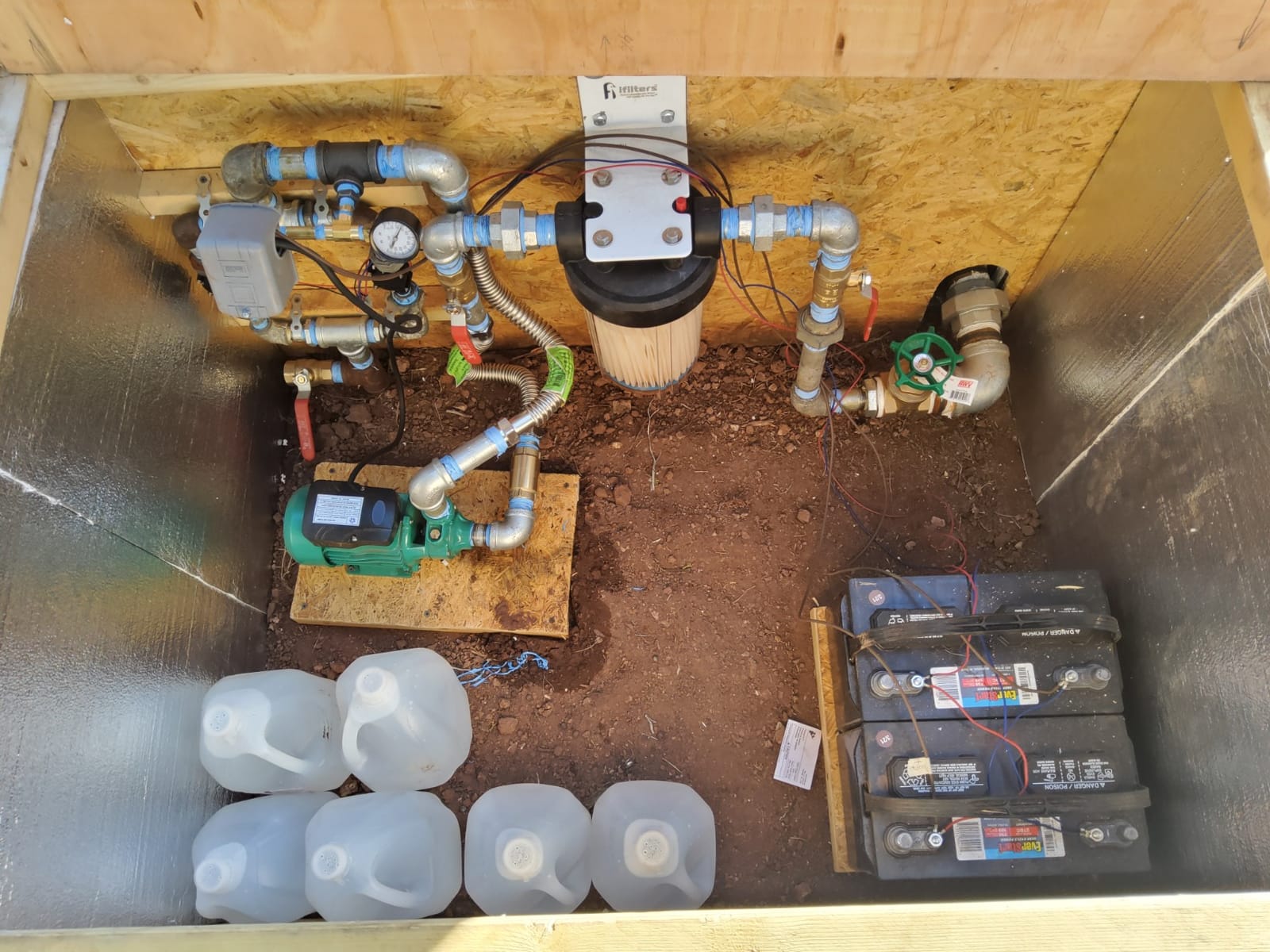
It is offered in both 10 inch and 20 inch lengths, which matters if you have a shallow service space or a tall wall behind the pressure tank. Building two of these in series at 30 and 5 micron is a common owner configuration for finer results, and the combination is the closest thing to a staged setup available in a washable format.
The recurring practical note is cold. The large O-ring stiffens in cool conditions and will not seal reliably below roughly 55 degrees F, which is why some buyers ended up installing a second unit as a backup. Changes also mean catching a fair amount of water in a bucket, since the housing is not a closed-loop design.
What the iFilters system suits and when to buy it
Buy it for a well with heavy rust and scale, particularly an older shallow well, and for anyone who dislikes buying cartridges. Washing the element every couple of weeks on a rusty well is a manageable routine, and it costs nothing in parts.
It is a sensible choice in a garage or basement where the temperature swings, provided the unit stays above freezing, because cold is the failure mode here rather than sediment load.
Where the iFilters system falls short
Thirty micron pleated is not a fine polish, and one owner notes it does nothing for taste or odour. If your water has a metallic smell, you are still looking at iron treatment or carbon in a second stage.
Cleaning every two weeks assumes a rusty well. On a well that is only moderately loaded, that interval stretches out, but the point stands that this is a maintenance-forward design rather than a set-and-forget one.
11. Express Water WHP1 Whole House Spin Down Sediment Filter Review
Express Water Whole House Sediment Water Filter, Spin Down, 50 Micron
50 micron reusable element
1 inch connections
Pressure gauge and release button
1 year warranty
Pros
- Gauge and release button in the box
- Adapters and mounting hardware included
- Spare o-ring supplied
- Does not restrict flow noticeably
Cons
- Holds small sediment volume between flushes
- One report of seep at the bottom thread
- Needs periodic disassembly beyond the flush
The reason to pick the WHP1 is instrumentation. It ships with a pressure gauge and a pressure release button, so you can watch differential pressure across the element and let go of the housing pressure before opening it, which is the safest way to change a filter on a live well line.
Everything else is a well-executed 50 micron stainless steel spin-down. The connections are full 1 inch for minimal pressure restriction, throughput is up to 0.25 gallons per second, and the operating range is 15 to 115 psi and 40 to 113 degrees F.
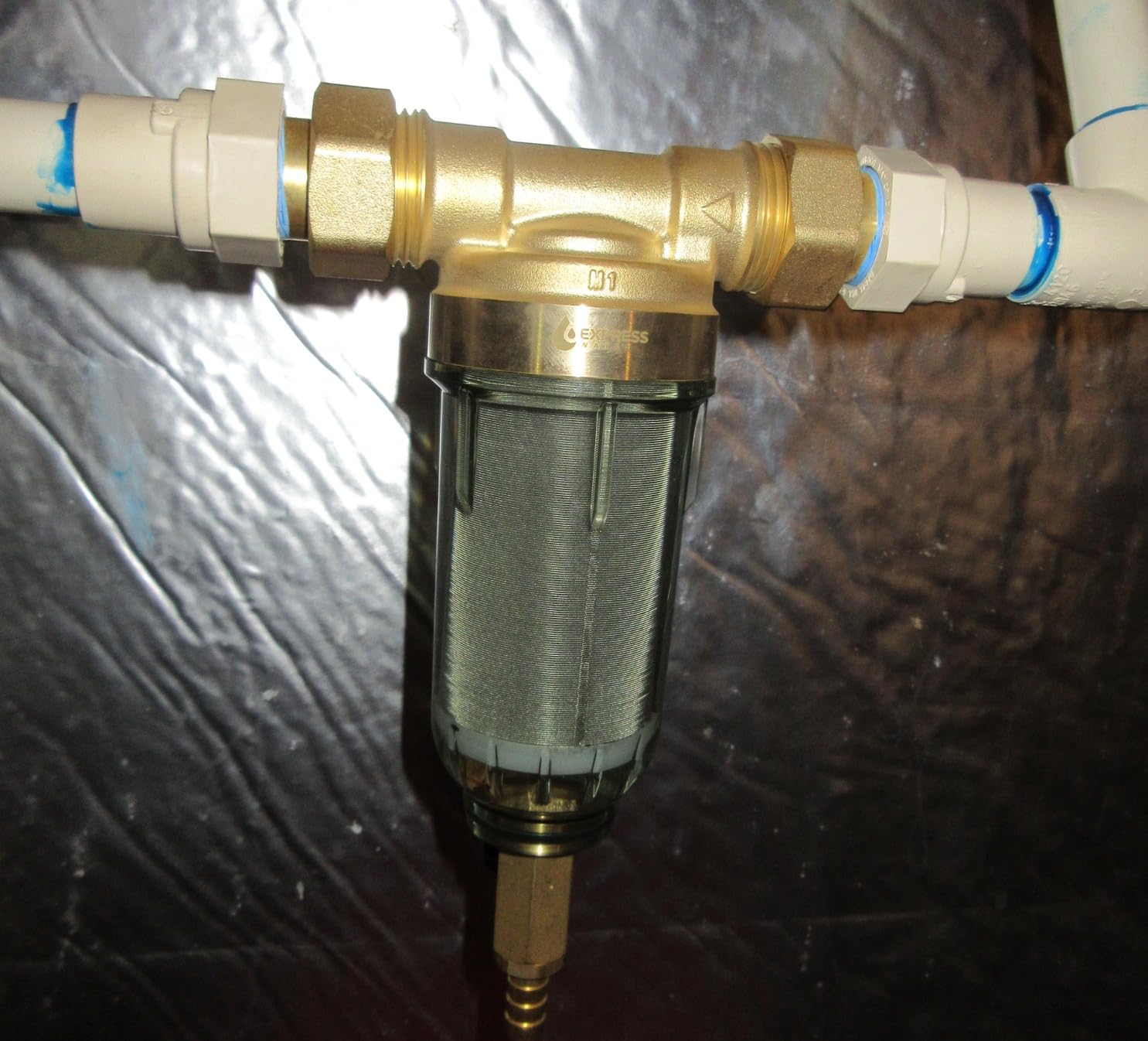
Owners on wells with old pipe report it pulling sediment and rust bits effectively and protecting a downstream softener, and the small details get called out repeatedly: a smooth operating purge valve, a spare o-ring in the box, and instructions that make sense to a first-timer. It carries a 1-year warranty.
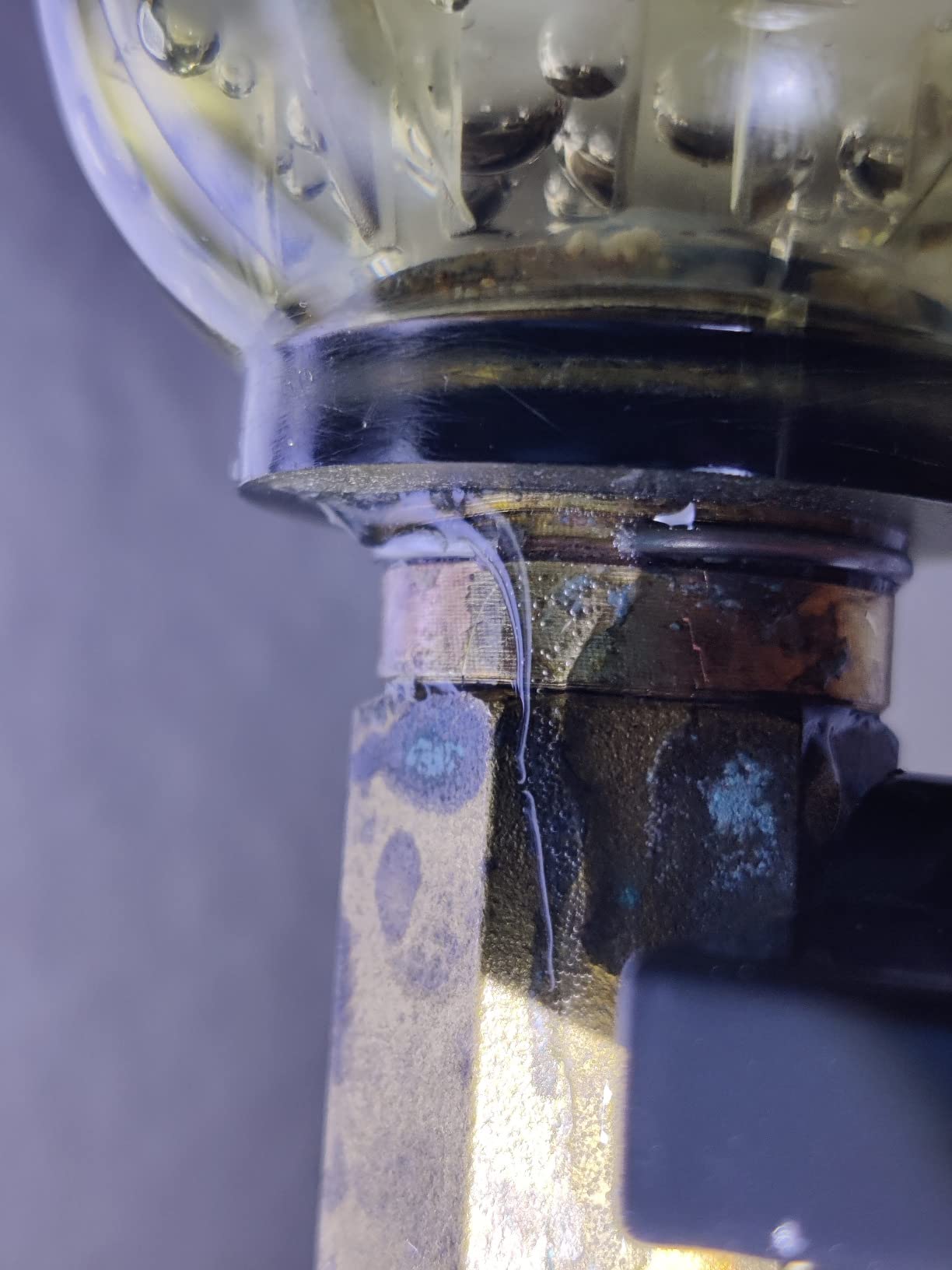
The limitation is capacity rather than quality. It holds a comparatively small volume of sediment before the flush interval comes round, and one owner reported a small seep at the screwed bottom housing joint after about 18 months. Beyond the routine flush, it does need periodic disassembly to clean the screen properly.
What the Express Water WHP1 suits and when to buy it
Buy it if you want to see pressure across the filter rather than infer it from shower flow, or if you are building a treatment train and need a gauge and relief valve at the first stage. The included adapters cover most tubing, so a single order is usually enough to install.
It suits a home with a well line that is already partly clean and needs a maintenance checkpoint rather than a heavy filtration stage, and it needs a dry, freeze-protected spot away from direct sun.
Where the Express Water WHP1 falls short
Short flushing intervals are the trade for a compact body. On a heavy well this becomes a weekly task, and if you will not stick to that, a larger chamber or an auto-flush model is the better fit.
Its review base is the smallest in this roundup, which means the long-term record is thinner than the rating alone suggests. That is not a reason to skip it, but it is a reason to check the warranty terms before you commit.
12. Aquaboon 3/4 Inch Spin Down Sediment Filter with Dual Screens Review
Aquaboon 3/4″ Spin-Down Sediment Filter for Well Water, Reusable Pre-Filter, 50 & 200 Micron, Heavy-Duty for Home & Commercial Use, Easy to Clean, Extends Unit Life
50 and 200 micron screens
Fits 3/4 inch and 1 inch
Transparent housing
1.9 pounds
Pros
- Two screen sizes shipped in the box
- Flush and reinstall without consumables
- Transparent bowl signals when to clean
- Works on well washing machine and irrigation lines
Cons
- 3/4 inch lead constrains flow on large homes
- Slim body fills quickly on silty wells
The practical idea here is simple and genuinely useful: you get both a 50 micron and a 200 micron screen in the box, so you can match mesh to your water instead of guessing before your first purchase. On a well that is coarse most of the time and fine after well work, that flexibility is worth more than any spec sheet.
It is also a multi-duty unit. Owners use it as a washing machine prefilter, a well sediment guard and an irrigation filter, and the transparent housing makes it obvious when the screen needs a flush. The flush-and-reinstall design means no replacement consumables, which keeps the ongoing cost at nothing.
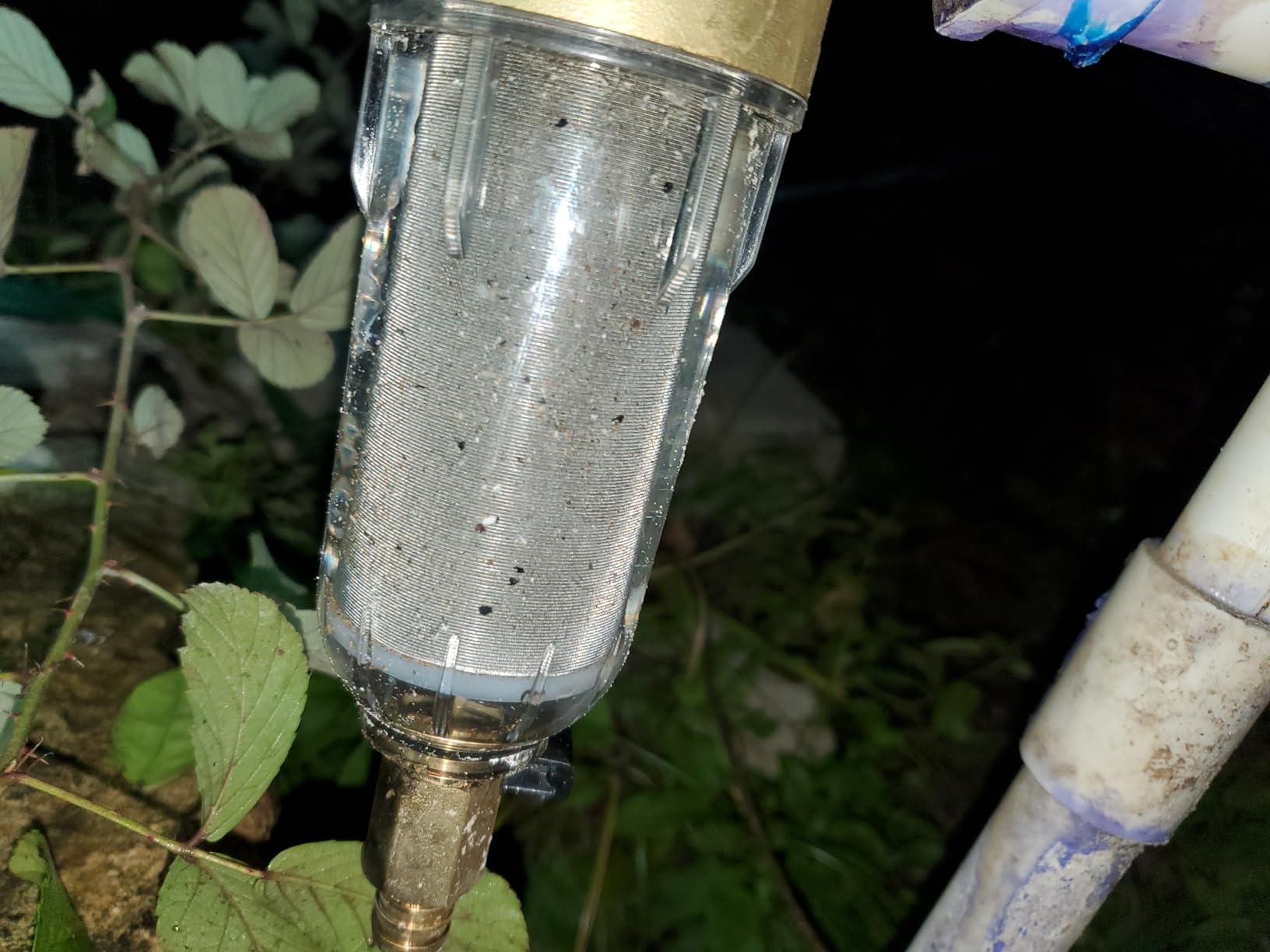
At 4.3 stars across 232 reviews, it sits mid-pack, and the reasons buyers like it are the screen pair and the ease of cleaning rather than any headline filtration claim. Maintenance is a valve turn and a rinse, not a parts order.
It fits both 3/4 inch and 1 inch plumbing, and the 3/4 inch capability is the reason many people buy it, since a lot of washing machine and irrigation feeds are not 1 inch. The flip side is that in a large home the narrower connection can become the limiting factor on flow, and the slim body fills quickly on silty wells.
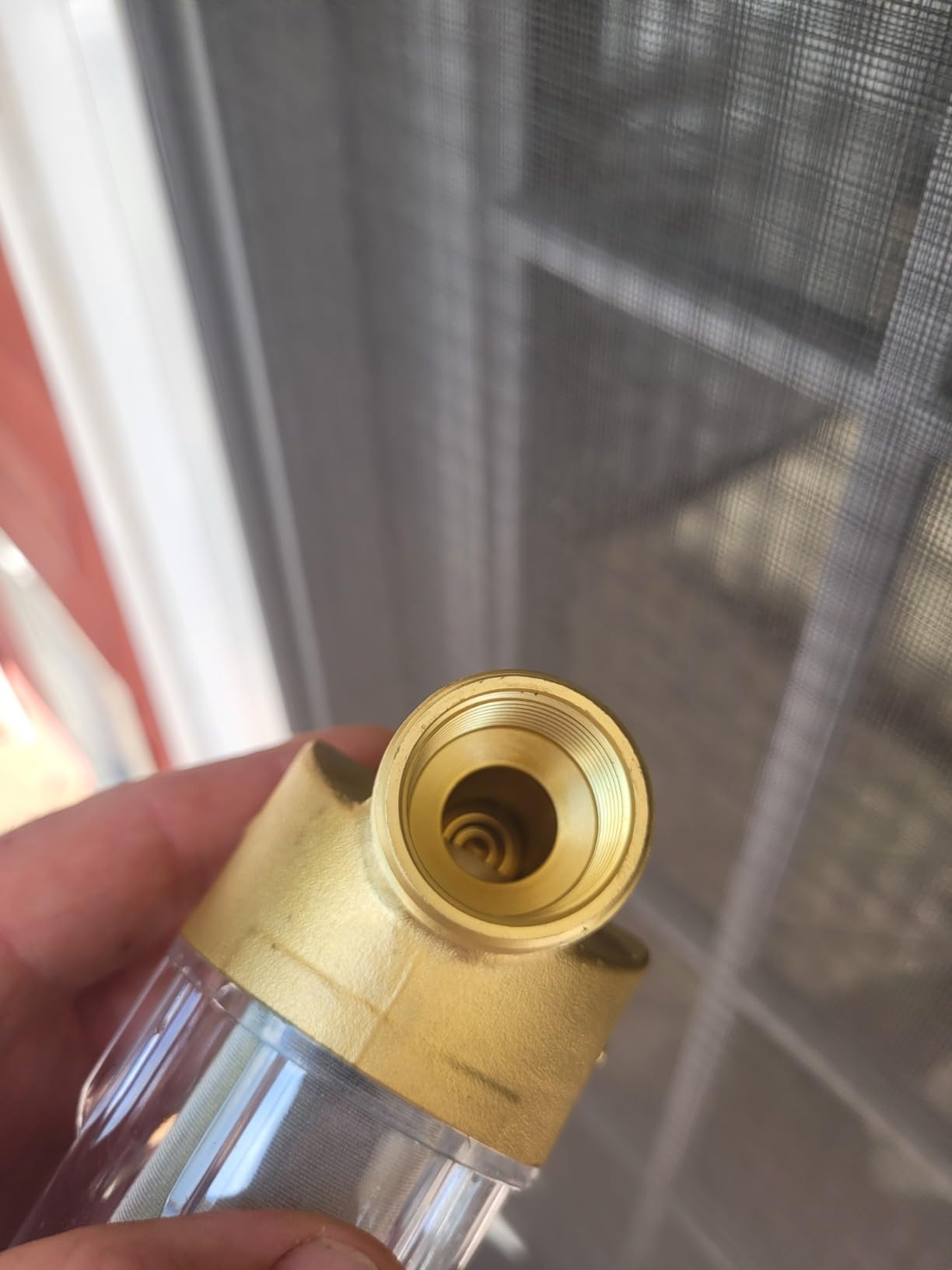
What the Aquaboon dual mesh suits and when to buy it
Buy it when you are not yet sure how much sediment your well produces, and you want to be able to change your mind without buying a new filter. Fitting it at the well entry gives you a few months of real data about what the filter is catching.
It is also the right pick for a washing machine line, a garden hose bib or a small irrigation zone where a full 1 inch spin-down would be wasted space and money.
Where the Aquaboon dual mesh falls short
There is no pressure gauge or relief valve on this unit, so you are monitoring by looking at the bowl. On a well with heavy sediment that means checking by eye rather than by instrument, and the flush interval is short.
For a whole house on a large home, plan the plumbing around full 1 inch if you can and accept that this is more of a point-of-use and auxiliary guard than a primary whole house stage.
How to Choose a Whole House Sediment Filter for Well Water
Pass the well-condition gate first
If your water became gritty abruptly, stop and look at the well before the filter catalogue. A failing pump, a corroded casing or a damaged or newly raised well screen releases grit that no filtration approach will solve permanently. That is the single most common reason a new filter appears to fail within weeks.
If the grit is chronic rather than sudden, spend a week watching a clear glass of water settle. Sand falls fast, silt hangs, clay forms a slow suspension. What falls, and how fast, tells you which architecture to buy.
Spin-down versus cartridge versus backwash media
Spin-down filters use a coarse reusable screen you flush by hand or on a timer. They cost nothing to run, service in a minute, and lose the race on fine sediment because the screen clogs.
Cartridge systems use a pleated or spun element you throw away. They polish to 5 micron or finer and protect appliances, but the consumable cost recurs and a heavy well can load a cartridge in weeks.
Backwashing media tanks hold pounds of dirt in a multi-gradient media and reverse-rinse to a drain on a timer. They are the right answer for extreme sediment, and they are not in this roundup because none of the twelve picks shipped as a complete tank and control valve assembly.
Owners on water treatment forums consistently converge on staging, a coarse pre-stage followed by a fine polish, which is the same logic the section above describes.
Micron rating is a pressure decision
Finer is not better by default. A 1 micron element clogs dramatically faster than a 5 or 20 micron element at the same load, and the pressure drop is what you feel at the shower. Coarse stages exist to protect fine ones, and choosing the wrong micron is the most common expensive mistake here.
For most residential wells, a 50 micron reusable screen or a 20 micron stage in front of a 5 micron cartridge gives the cleanest balance of protection and service life.
Housing size, port size and flow rate
Twenty inch by 4.5 inch housings hold far more cartridge than 10 inch slim units, which matters most for homes with multiple bathrooms. On port size, 1 inch connections are the standard you want; 3/4 inch units are fine for appliance feeds and irrigation but can bottleneck a whole house.
Check the rated flow against your household. A family of four with two full bathrooms running showers and laundry together needs far more than a family of two, and a filter rated below your demand will show up as pressure loss at the wrong time. Our RV filtration picks cover the same pressure-drop logic at a smaller scale.
Where it goes: after the pressure tank
Install the filter after the pressure tank, never between a submersible pump and its pressure switch. A filter that fouls ahead of the switch makes the pump cycle more often, and cycling frequency is a major driver of pump life.
Add a bypass valve either side so you can isolate the unit for service without shutting the house off, and make sure the flush drain has somewhere to go. Most spin-downs also benefit from a gauge on the housing so you can read differential pressure directly.
Common problems buyers hit
Clogging far faster than expected usually means the mesh is too fine for the load, or the sediment is clay rather than sand, and the fix is a coarser upstream stage rather than a bigger cartridge.
Leaks almost always trace to thread sealing on deep plastic housings or to an O-ring that popped out of its groove during a change. Keep spare O-rings and union fittings on hand. And remember that sediment filtration clears grit only, so pair it with disinfection if you intend to drink the water.
Frequently Asked Questions
What type of sediment filter is best for well water?
The best type depends on the sediment itself. A spin-down filter with a reusable 50 to 100 micron stainless or polyester screen is right for sand and grit, because it costs nothing to run and services in a minute. A cartridge system with a 5 micron element is better for silt and clay. A backwashing media tank wins on heavy sediment loads because it reverse-rinses to a drain on a timer and holds far more dirt. Most homeowners do best with a coarse spin-down feeding a fine cartridge.
What is the best whole house sediment filter for well water?
The iSpring WSP-50 is the best whole house sediment filter for well water for most households. Its 50 micron stainless steel mesh is reusable rather than disposable, it flushes in seconds with no tools, and the clear housing shows you what it caught. It is also the most heavily reviewed unit in our testing set, with over 3600 owner reviews averaging 4.6 stars, which gives you the longest ownership record to draw on.
What type of whole house water filter is best for well water?
Whole house filtration for a well should be built in stages and matched to the problem. Start with a coarse spin-down to protect the rest of the system, then add a fine cartridge stage for silt and clay, then iron treatment if you have orange staining. Carbon and KDF stages target chlorine taste and odour, which is largely a municipal water problem, so they matter less on a well. Add UV separately if you intend to drink the water.
Does well water need a sediment filter?
Almost always yes. Well water picks up sand, silt, rust and scale from the casing, pump and aquifer, and those particles abrade fixtures, shorten water heater life and foul softeners and UV systems. If your water has ever run cloudy, or you see grit in a faucet aerator or shower drain, you have a sediment problem worth filtering. The exception is a new, well-conditioned borehole with visibly clear water, and even then a cheap spin-down is cheap insurance.
What are some common problems with whole house water filters?
The most common problems are cartridges clogging far faster than the stated interval, which usually means the micron rating is too fine for the sediment load, and leaks at the housing threads after a cartridge change. Others include losing water pressure as filters load with no gauge to warn you, installing the filter in the wrong place ahead of the pressure switch so the pump short-cycles, and treating a sediment problem with a carbon-heavy system when the real issue is sand. Buyers also underestimate the cost of replacement cartridges over ten years.
Final Verdict on the Best Whole House Sediment Filters for Well Water
The best whole house sediment filters for well water are not one product but a matched pair, and the pairing depends on your sediment. Most wells need a reusable spin-down first stage feeding a fine cartridge in a 20 inch housing, which is exactly the combination our top two picks support. Go with the iSpring WSP-50 for the first stage unless automation matters to you, in which case the WSP50ARB removes a failure point you probably already have.
Before you buy anything, watch your glass for a week. Sand, silt and clay call for three different architectures, and matching the filter to the sediment is worth more than any feature list.


