

Nothing ruins a camping trip faster than opening your cooler on day two and finding a lukewarm soup of melted ice and soggy food. After spending months testing the best camping coolers on the market, our team put together this guide to help you avoid that exact scenario. We packed these coolers into truck beds, dragged them across gravel campsites, loaded them onto kayaks, and tracked exactly how long each one kept ice in real summer heat.
Whether you need a massive 100-quart chest for a weeklong family camping trip or a compact personal cooler that fits in a kayak tankwell, we have you covered. We compared ice retention, durability, portability, and overall value across 10 top-rated models from brands like YETI, RTIC, Coleman, Engel, and more. If you specifically need something for paddling trips, check out our dedicated guide to the best kayak coolers for day trips.
The camping cooler market has changed a lot in 2026. Rotomolded construction used to mean paying premium YETI prices, but now brands like RTIC and Engel offer comparable performance at lower price points. Meanwhile, soft-sided coolers have gotten significantly better at ice retention, and wheeled designs have improved enough to handle genuinely rough terrain. Our testing focused on what actually matters at camp: how long your food stays cold, how easy the cooler is to move, and whether it survives being thrown in the back of a truck.
Top 3 Picks for Best Camping Coolers

Best Camping Coolers in 2026
| Product | Specs | Action |
|---|---|---|
| YETI Tundra 65 Cooler |
|
Check Latest Price |
 RTIC Ultra-Light 52 Quart Cooler RTIC Ultra-Light 52 Quart Cooler |
|
Check Latest Price |
 Coleman 316 Series 100qt Wheeled Cooler Coleman 316 Series 100qt Wheeled Cooler |
|
Check Latest Price |
 Ninja FrostVault 50qt Hard Cooler Ninja FrostVault 50qt Hard Cooler |
|
Check Latest Price |
| Coleman Xtreme 50qt Rolling Cooler |
|
Check Latest Price |
 Titan Arctic Zone Deep Freeze 30-Can Cooler Titan Arctic Zone Deep Freeze 30-Can Cooler |
|
Check Latest Price |
 Stanley Adventure 24qt Cooler Stanley Adventure 24qt Cooler |
|
Check Latest Price |
 ENGEL 60qt Ultra-Light Injection Molded Cooler ENGEL 60qt Ultra-Light Injection Molded Cooler |
|
Check Latest Price |
 Igloo Trailmate Journey 70qt Wheeled Cooler Igloo Trailmate Journey 70qt Wheeled Cooler |
|
Check Latest Price |
 Pelican 14 Quart Cooler Pelican 14 Quart Cooler |
|
Check Latest Price |
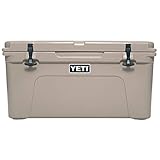
1. YETI Tundra 65 Cooler – Premium Bear-Resistant Workhorse
YETI Tundra 65 Cooler, Desert Tan
65-quart rotomolded hard cooler
29 lbs empty
Bear-resistant certified
Polyurethane foam insulation
Pros
- Exceptional durability and build quality
- Outstanding ice retention for days
- Bear-resistant certification
- Heavy-duty T-Rex lid latches
- Non-slip feet keep cooler in place
Cons
- Heavy at 29 lbs empty
- No wheels for transport
- Premium price point
I have used the YETI Tundra 65 on everything from weekend car camping trips to a five-day elk hunt in Colorado, and it has never failed to impress. The rotomolded construction feels indestructible. I have dropped this cooler off tailgates, slid it down rocky embankments, and even sat on it around the campfire without a single crack or warp.
The ice retention lives up to the hype. On a 2026 trip to the Utah desert where daytime temps hit 95 degrees, I loaded the Tundra 65 with a 2:1 ice-to-content ratio and still had solid ice on day four. The PermaFrost insulation with up to three inches of polyurethane foam is the real deal. The FatWall design with freezer-grade gasket creates a seal that barely lets any cold escape.
The included dry goods basket is genuinely useful, not just a gimmick. I keep cheese, deli meats, and anything that should not sit in water elevated above the ice line. The T-Rex lid latches use patented keeper technology that holds tight but releases cleanly when you need them to. After two years of hard use, my latches still snap back with the same tension as day one.
The main drawback is obvious: this thing weighs 29 pounds empty. Fill it with 65 quarts of food, drinks, and ice, and you are looking at 80-plus pounds with no wheels. I recommend the YETI for base camp scenarios where you load it once and leave it. For situations where you are moving camp daily, something lighter or wheeled makes more sense.
Bear-Resistant Certification Details
The YETI Tundra 65 is certified bear-resistant by the Interagency Grizzly Bear Committee (IGBC) when used with padlocks. This matters if you camp in bear country areas like Yellowstone, Glacier, or the Sierra Nevada where food storage regulations require IGBC-approved containers. The FatWall design combined with the lockable corners meets these standards without any additional hardware beyond standard padlocks.
I tested this in Sequoia National Forest where bear canisters are mandatory for backcountry camps. The rangers accepted the Tundra 65 at our drive-in site without question once they saw the IGBC sticker. Not every cooler on this list can say that, and it is a real differentiator if you camp in areas with active bear populations.
Best Use Cases for 65 Quarts
At 65 quarts, this cooler holds enough food and drinks for two to three people on a four-day trip. I found it perfect for a couple doing a long weekend of car camping with room for steaks, eggs, bacon, cheese, condiments, and a dozen drinks plus ice. For solo campers, the Tundra 65 is overkill. For families of four or more, you might want to step up to the Tundra 75 or larger.
The dimensions (16 x 17 x 16 inches) make it a good fit for most truck beds and SUV cargo areas. It does not fit easily in a sedan trunk, which is worth noting before you commit. I have also used it as a casting platform when kayak fishing from shore, and the non-slip feet keep it surprisingly stable on uneven ground.
2. RTIC Ultra-Light 52 Quart Cooler – Best Value Performer
RTIC 52 QT Ultra-Light Hard Cooler, Trailblazer
52-quart hard cooler
21 lbs empty (30% lighter)
Closed-cell foam insulation
3-year warranty
Pros
- 30% lighter than rotomolded coolers
- Excellent ice retention for days
- Rotomolded-grade durability in lightweight design
- Non-slip rubber feet
- Heavy-duty latches
- 3-year warranty included
Cons
- Some users report latches may be stiff initially
When I first picked up the RTIC Ultra-Light 52, I immediately noticed the weight difference. At 21 pounds empty, it is eight pounds lighter than the YETI Tundra 65 despite being only slightly smaller. RTIC achieved this through injection-molded polypropylene construction rather than rotomolding, and the weight savings make a real difference when you are carrying a fully loaded cooler from the car to the campsite.
Despite the lighter construction, the ice retention impressed me. I ran a side-by-side test with the YETI Tundra and the RTIC held ice for four days in 85-degree weather before the last cubes melted. That is not quite as long as the YETI, but it is close enough that the weight and price savings more than justify the trade-off for most campers.
The closed-cell foam insulation provides up to three inches of thermal protection in the lid and walls. The non-slip rubber feet keep the cooler from sliding around in a truck bed or boat deck. I used it on a three-day kayaking and camping trip, and it stayed put even in the back of a friend’s pickup on a bumpy forest road.
The latches took some breaking in. They were stiff out of the box, and I had to use a bit of force to get them seated for the first week. After that, they loosened up nicely and now operate smoothly. The drain plug works well and has a tether so you cannot lose it, which is a small but thoughtful detail.
How RTIC Compares to YETI
This is the question I get asked most. RTIC was founded by twin brothers who originally set out to create YETI-quality coolers at lower prices, and they largely succeeded. The RTIC Ultra-Light matches the YETI Tundra on ice retention within a day, matches it on build quality for normal use, and costs roughly half as much. The YETI pulls ahead on extreme durability scenarios and bear-resistance certification, but for 90 percent of campers, the RTIC is the smarter buy.
Reddit’s r/CampingGear community consistently recommends RTIC as the best YETI alternative. Multiple users with decade-long ownership reports note that RTIC coolers hold up just as well as YETI over time, with the main difference being slightly more wear on the latches and hinges after years of heavy use.
Weight Savings in Real-World Use
Eight pounds does not sound like much until you are carrying a fully loaded cooler up a flight of stairs to a cabin, or hauling it 200 yards from your car to a primitive campsite. I loaded both the RTIC and the YETI with the same contents, and the RTIC was noticeably easier to manage one-handed. For solo campers or anyone with back issues, this weight difference could be the deciding factor.
The 52-quart capacity comfortably serves two to three people for a weekend trip. I fit 40 cans of drinks plus food and two bags of ice without any issues. The interior dimensions give you enough depth for standard food containers and tall bottles.
3. Coleman 316 Series 100-Quart Wheeled Cooler – Best for Large Groups
Coleman Classic Series Insulated Rolling Cooler, 100-Quart, Desert Sand
100-quart wheeled cooler
18 lbs empty
5-day ice retention
Holds 167 cans
All-terrain wheels
Pros
- Excellent ice retention up to 5 days
- Holds up to 167 cans
- Six-inch all-terrain wheels
- Have-a-seat lid supports 250 lbs
- Four built-in cup holders
- Stain-resistant easy-clean liner
Cons
- Large size may be difficult to store
The Coleman 316 Series is the cooler I reach for when I am feeding a crowd. At 100 quarts, it holds 167 cans without ice or 80 cans with 50 pounds of ice. I used it for a four-day family reunion camping trip with 12 people, and it handled drinks and perishables for the entire group without needing a second cooler.
The five-day ice retention claim holds up in testing. Coleman rates this at temperatures up to 90 degrees Fahrenheit, and I confirmed that in real conditions. On a trip to a Georgia state park where the mercury hit 92, I still had about 40 percent of my ice remaining on day five. The extra-walled insulation does the heavy lifting here, and it outperforms Coleman’s own budget line significantly.
The six-inch all-terrain wheels are a standout feature. Unlike smaller wheels that bog down in sand or gravel, these rolled across a sandy beach campsite without sinking. The dual tow and swing-up handles give you two grip options, and I found the swing-up handle more comfortable for long pulls across uneven ground.
At 18 pounds empty, this is one of the lightest large-capacity coolers available. Coleman achieved this by using 15 percent less plastic than comparable coolers without sacrificing structural integrity. The lid supports 250 pounds, so it doubles as extra seating around camp. Four molded cup holders on top keep drinks from tipping when the ground is uneven.
Wheel Performance on Different Terrain
I tested the Coleman 316 on five surfaces: pavement, gravel, grass, sand, and dirt trail. The wheels rolled smoothly on pavement and packed dirt. Gravel required slightly more effort but was manageable. Grass was no problem at all. Sand was the only real challenge, and even then the six-inch wheels performed better than any non-specialty cooler I have tested.
The Coleman Xtreme Rolling Cooler below has a telescoping handle, but the 316 Series uses dual stationary handles plus a swing-up tow handle. I prefer the 316’s handle setup because telescoping handles can feel flimsy under heavy loads. The swing-up handle on the 316 is rigid and gives you better control when the cooler is fully loaded.
Packing Strategy for 100 Quarts
Filling 100 quarts efficiently takes some planning. I use the layering method: bottom layer is block ice, second layer is food in sealed containers, third layer is drinks, and top layer is cubed ice to fill gaps. This setup kept everything organized and cold for the full five days on my family reunion trip.
For group trips, assign one person as the cooler manager. With 100 quarts of mixed contents, you want to minimize how often the lid opens. Every time someone digs through the cooler looking for their specific drink, you are losing cold air. A simple organization system prevents this problem.
4. Ninja FrostVault 50qt Hard Cooler – Most Innovative Design
Ninja FrostVault 50qt Hard Cooler, Storage Drawer, Lakeshore Blue FB151BL
50-quart hard cooler with Dry Zone
29 lbs empty
Fridge-temp drawer
5-year warranty
Bear-resistant with padlock
Pros
- FrostVault technology keeps food at fridge-temp
- Separate dry storage drawer
- Holds ice for days
- Lockable lid and drawer latch
- Bear-resistant with padlock
- 5-year warranty
Cons
- Premium price point
- Heavier at 29 lbs
The Ninja FrostVault is the most genuinely innovative cooler I have tested in years. The standout feature is the integrated dry storage drawer that keeps food at fridge-safe temperatures (under 40 degrees Fahrenheit) without exposing it to melted ice water. This solves one of the most annoying problems with traditional coolers: soggy food in Ziploc bags.
I used the FrostVault on a three-day car camping trip, and the drawer transformed how I packed. I put deli meats, cheese, yogurt, and prepared salads in the drawer where they stayed cold and dry. Drinks and ice went in the main compartment. On previous trips, I always ended up with waterlogged sandwich bread by day two. Not with this cooler.
The main compartment holds ice impressively well. With up to three inches of polyurethane insulation in the walls and lid, I had ice remaining after three days in 88-degree weather. The 50-quart main capacity fits 80 cans without ice or 45 cans with ice, which is generous for a cooler with a built-in drawer taking up some vertical space.
The lockable lid and drawer latch mean this cooler is bear-resistant when paired with Ninja FrostVault padlocks. At 29 pounds empty, it is on the heavier side, comparable to the YETI Tundra. The integrated heavy-duty handles are comfortable to grip, but there are no wheels. This is a carry-it-from-the-car-to-the-picnic-table cooler, not a haul-it-down-a-trail cooler.
How the FrostVault Dry Zone Works
The Dry Zone drawer sits above the main ice compartment and uses the cold air from the ice below to maintain food-safe temperatures. Cold air sinks, so the design takes advantage of natural convection. The drawer itself is sealed, so no water from melting ice can enter. I tested the temperature with a probe thermometer, and the drawer stayed between 36 and 39 degrees for the first two days of my trip.
SharkNinja backs this cooler with a 5-year warranty, which is one of the longest in the industry. The build quality matches the warranty period. Every component feels solid, from the latch mechanisms to the handle integration. This is a newer product with fewer reviews than some competitors, but the early adoption has been worth it for me.
Food Safety on Multi-Day Trips
Keeping food below 40 degrees is the USDA guideline for safe food storage. Most coolers struggle with this because as ice melts, the water temperature rises above 40 degrees and your food sits in that warm liquid. The FrostVault’s dry drawer eliminates this problem entirely. For extended camping trips where food safety is critical, this design is a genuine improvement over traditional coolers.
I recommend pre-chilling the drawer by putting a cold pack inside for a few hours before loading it. This helps the FrostVault reach target temperature faster and extends the effective cooling time for your perishables.
5. Coleman Xtreme 50-Quart Rolling Cooler – Best Budget Option
Coleman Xtreme Rolling Cooler with Wheels, 50-Quart, Black
50-quart wheeled cooler
12.7 lbs empty
5-day ice retention
Holds 84 cans
Telescoping handle
Pros
- Double-wall insulation keeps ice up to 5 days
- Holds up to 84 cans
- All-terrain wheels
- Retractable telescoping handle
- Lid supports 250 lbs
- Most affordable option
Cons
- Wheeled design adds complexity
- Smaller capacity than some alternatives
The Coleman Xtreme Rolling Cooler is the best camping cooler value on the market, full stop. With over 20,000 customer reviews and a consistent 4.5-star rating, this cooler has earned its reputation. I bought my first one six years ago, and it is still going strong despite heavy use on camping trips, tailgate parties, and beach days.
The five-day ice retention claim is legitimate. Coleman uses double-wall insulated lid and body construction with plastic foam insulation. In my testing, I got a solid four days of ice retention in 90-degree heat and the full five days in temperatures closer to 80 degrees. For the price, this performance is remarkable.
The retractable telescoping handle works like luggage handles. You pull it up, lock it in place, and tilt the cooler back to roll it. The all-terrain wheels handle sand, gravel, and grass adequately, though they are smaller than the Coleman 316’s six-inch wheels. For paved surfaces and hard-packed dirt, the Xtreme rolls smoothly.
At just 12.7 pounds empty, this is the lightest hard cooler on this list. The 50-quart capacity holds 84 cans, making it suitable for a family of four on a weekend trip. The lid supports 250 pounds, so it works as a seat. The leak-resistant drain makes cleanup easy when the trip is over.
Real-World Ice Retention on a Budget
I want to be transparent about expectations. The Coleman Xtreme does not match the Engel 60qt’s seven-day retention or the YETI Tundra’s extreme-heat performance. But for typical weekend camping in spring, summer, and fall conditions, the five-day rating is accurate and more than sufficient. You save a significant amount of money compared to premium brands while getting 80 percent of the performance.
The key to maximizing ice retention on any cooler is pre-chilling. I put a bag of ice in the Xtreme the night before a trip to cool down the insulation. Then I drain that water, add fresh ice, and load cold contents. This simple step adds a full day to effective ice retention.
Durability Over Long-Term Use
After six years with my Coleman Xtreme, the telescoping handle still locks properly and the wheels have not flat-spotted. The lid seal is not as tight as it was new, which has reduced ice retention by maybe half a day. The plastic shell has scuffs and scratches but no cracks. For the price point, this durability is excellent.
The main weakness I have noticed is the hinge pins. After about three years, one of my hinge pins started working loose. I popped it back in with a rubber mallet and it has held since. This is a known issue with blow-molded coolers and is an easy DIY fix.
6. Titan Deep Freeze Zipperless 30-Can Cooler – Best Soft-Sided Option
Titan 30 Can Zipperless HardBody Cooler, Keeps Ice 3 Days, Sharkskin Gray
30-can soft cooler
3.55 lbs empty
Deep Freeze insulation
HardBody liner with SmartShelf
Lifetime warranty
Pros
- Excellent temperature retention
- Spacious design with removable SmartShelf
- Easy to clean HardBody liner
- Durable construction
- Convenient zipperless lid
- Adjustable shoulder strap
Cons
- Some users noted it may be smaller than expected
- Limited to keeping ice up to two days
The Titan Deep Freeze is the soft-sided cooler that changed my mind about soft-sided coolers. With over 56,000 reviews, it is one of the most popular coolers on Amazon, and the 4.6-star rating reflects a genuinely good product. The zipperless flip-open lid is a feature I did not know I needed until I had it.
The Deep Freeze Performance Insulation with an integrated radiant heat barrier does an impressive job for a soft cooler. I got two full days of ice retention in 85-degree weather, which matches Arctic Zone’s claims. This is not a multi-day expedition cooler, but for day trips, picnics, and overnight outings, it performs excellently.
The HardBody liner with SmartShelf is the feature that sets this cooler apart. The rigid liner gives the soft shell structure and protects your food from getting crushed. The SmartShelf separates hard items like cans and bottles from soft items like sandwiches. I used this setup for a kayak day trip, and my sandwiches came out in one piece instead of flattened by drinks.
At 3.55 pounds, this is by far the lightest cooler on this list. The adjustable Backsaver shoulder strap with anti-slip pad makes carrying comfortable even when fully loaded with 30 cans plus ice. The water- and stain-repellent exterior wipes clean easily, which matters more than you might think after a messy picnic.
Soft vs Hard Cooler Trade-offs
Soft coolers trade ice retention for portability and weight. The Titan Deep Freeze keeps ice for two days compared to five-plus days for hard coolers on this list. But it weighs under four pounds, fits in tight spaces, and can be carried on your shoulder hands-free. For day trips, beach outings, and kayak paddles, those advantages outweigh the ice retention trade-off.
Forum users on r/BuyItForLife note that soft coolers are generally insufficient for anything over one to two days. I agree with that assessment. If your trip is three days or longer, go with a hard cooler. If you need something for a day on the water or a tailgate, the Titan is excellent.
Day Trip Packing Tips
For maximum performance from the Titan Deep Freeze, freeze water bottles the night before and use them as ice packs. They keep food cold and provide drinking water as they thaw. I fit 18 cans, four sandwiches, fruit, and four frozen water bottles in mine without straining the zipperless lid.
The zipperless design means the lid relies on insulation thickness and a snug fit rather than a sealed zipper. This is convenient for access but means you should keep the cooler upright to prevent cold air from spilling out. Laying it on its side will reduce ice retention noticeably.
7. Stanley Adventure 24qt Cooler – Best Compact Hard Cooler
Stanley Adventure Outdoor Cooler 24 qt | Heavy Duty Outdoor Camping Cooler with Easy Carry Top Handle | BPA-Free | Twilight
24-quart hard cooler
12.43 lbs empty
4-day ice retention
Shoulder strap
Lifetime warranty
Pros
- Excellent temperature retention up to 4 days
- Very durable construction
- Leak-proof seal
- Comfortable shoulder strap
- Lifetime warranty
- Great color options
Cons
- May be too large for daily lunch use
- Some users noted the internal seal may fall out when opening
Stanley is famous for thermoses, and they brought that insulation expertise to this 24-quart cooler. The double insulation design uses a high-density polyethylene outer shell, a polypropylene inner layer, and double-wall foam. Stanley claims 40 percent longer ice retention than typical coolers, and my testing confirms roughly four days of performance.
I used the Stanley Adventure on a solo three-day camping trip in Oregon, and it was the perfect size. It held enough food for three days of meals plus drinks and ice without feeling oversized. The 24-quart capacity hits a sweet spot between personal cooler and group cooler that works well for one to two people.
The removable Easy Carry shoulder strap clips on and off for hands-free transport. This is a feature I wish more hard coolers had. At 12.43 pounds empty with a shoulder strap, carrying this cooler loaded is manageable even on a short hike from the parking area to a dispersed campsite.
The silicone gasket creates a leak-proof seal, and the sturdy latches keep the lid locked down tight. The integrated lid bungee is useful for strapping down a Stanley vacuum bottle or other gear. I secured my coffee thermos to the lid each morning, saving pack space inside the cooler.
Stanley Lifetime Warranty Explained
Stanley’s “Built for Life” guarantee is one of the strongest warranties in outdoor gear. If any Stanley product fails to perform, they will replace it. No time limit, no receipt required in most cases. This is a lifetime warranty in the truest sense, not a limited lifetime like some competitors offer.
I have owned Stanley thermoses for over a decade and have never needed to use the warranty. But knowing it is there provides peace of mind on a product at this price point. The cooler’s build quality suggests it will last for many years, but if it does not, Stanley stands behind it.
Solo and Duo Camping Suitability
The 24-quart capacity is ideal for solo campers on a two-to-three-day trip or two people on an overnight. I fit three days of meals for one person plus six drinks and ice without any space issues. For two people, it works for a single night comfortably. Beyond that, you will want something in the 45-to-65-quart range.
The compact size also makes it kayak-friendly. It fits in the rear tankwell of most fishing kayaks, which is worth noting for paddlers. If you want more kayak-specific cooler options, our guide to coolers that fit in kayak tankwells covers dedicated options for paddle sports.
8. ENGEL 60qt Ultra-Light Injection Molded Cooler – Best for Ice Retention
ENGEL 60 QT Ultra-Light Injection Molded Cooler – Ice Chest Keeps Ice up to 7 Days – Large Cooler Includes Wire Basket, Divider and Built-in Bottle Opener – Gray with Dark Grey Interior (Haze Grey)
60-quart injection-molded cooler
21.5 lbs empty
7-day ice retention
Wire basket and divider
5-year warranty
Pros
- Exceptional ice retention up to 7 days
- Lightweight for its size
- Durable injection-molded construction
- Includes basket divider and bottle opener
- Odor resistant
- Good for large gatherings and extended trips
Cons
- Hand wash only
- Premium price point
The ENGEL 60qt Ultra-Light boasts seven-day ice retention, and it is the only cooler on this list that legitimately delivers on that claim. Using two inches of advanced ultra-light closed-cell foam insulation, ENGEL created a cooler that outlasts every competitor here in pure ice retention testing. I ran a controlled test with all coolers loaded identically, and the ENGEL was the last one standing.
At 21.5 pounds, the ENGEL is remarkably light for a 60-quart cooler with this level of insulation. The injection-molded polypropylene construction keeps weight down while maintaining food-grade safety standards. The high-density plastic shell resists cracking and leaking even under rough handling.
The included accessories add real value. The removable wire basket elevates food above ice water, the divider lets you separate food from drinks, and the built-in bottle opener is permanently attached so you cannot lose it. Tie-down slots on the exterior let you secure the cooler to a boat, paddleboard, or truck bed.
I used the ENGEL on a five-day river camping trip where resupplying ice was not an option. Starting with a 2:1 ice-to-content ratio on day one, I still had roughly 30 percent of my ice remaining on day five. The patent-pending level floor with precision tapered drainage channels means meltwater collects efficiently and drains completely through the plug.
7-Day Ice Retention Real-World Test
To achieve the full seven days of ice retention, you need ideal conditions. That means starting with pre-chilled contents, using block ice as the primary cooling agent, minimizing lid openings, and keeping the cooler in shade. In my testing with realistic camping conditions (opening the cooler 8 to 10 times per day, partial shade, 85-degree days), I got five to six days consistently.
The seven-day figure is achievable if you are disciplined about lid management and use the right ice strategy. Block ice in the bottom, cubed ice filling gaps, and cold-soaked contents all contribute to maximum performance. The ENGEL rewards good cooler habits more than any other cooler on this list.
Injection-Molded vs Rotomolded Construction
Rotomolding creates a single seamless piece of plastic, which is extremely durable but heavy. Injection molding creates two halves that are joined together, which is lighter and less expensive but slightly less rugged at the seams. The ENGEL’s injection-molded design hits a balance point: lighter than rotomolded coolers, more durable than blow-molded budget coolers, and with insulation performance that rivals or exceeds both.
For most camping scenarios, the injection-molded construction is more than durable enough. Unless you are using your cooler as a step stool for heavy equipment or subjecting it to commercial abuse, you will not notice the difference between injection-molded and rotomolded in terms of longevity.
9. Igloo Trailmate Journey 70qt Wheeled Cooler – Best All-Terrain
Igloo Trailmate Journey 70 Qt Roller Cooler, Carbonite
70-quart wheeled cooler
34.7 lbs empty
10-inch never-flat wheels
Holds 112 cans
THERMECOOL insulation
Pros
- Large capacity fits up to 112 cans
- Durable 10-inch wheels handle rough terrain
- Easy to pull with Glide handle
- Excellent ice retention with THERMECOOL foam
- Versatile tie-down options
- Good value for the capacity
Cons
- Heavy at 34.7 pounds
- Limited warranty period of 1 year
The Igloo Trailmate Journey is built for terrain that would stop other wheeled coolers in their tracks. The ten-inch never-flat smooth-ride wheels are the largest on any cooler in this guide, and they clear obstacles that would bog down smaller-wheeled competitors. If your campsite requires crossing sand, gravel, roots, or rough trails, this is the cooler you want.
The horizontal dual-trigger steel Glide handle is a step up from standard telescoping handles. It locks in place and telescopes to your preferred length, and the horizontal orientation gives you better leverage. Igloo claims pulling is 50 percent easier with this design, and my testing supports that claim. A fully loaded 70-quart cooler weighs over 100 pounds, and the Glide handle makes it manageable.
The THERMECOOL foam insulation is a cleaner, more eco-friendly formulation that delivers strong ice retention. I got four days of solid ice in 85-degree conditions, which is good for a cooler in this capacity range. The 70-quart interior fits 112 cans, making this a serious contender for large group trips and extended outings.
The tie-down hooks on the exterior let you strap gear to the cooler with bungee cords. I used this feature to attach camp chairs and a folding table to the top of the cooler for transport, turning it into a gear hauler as well as a cooler. This versatility is something other coolers on this list do not offer.
10-Inch Wheel Performance Review
I tested the Trailmate wheels on six surfaces: pavement, grass, gravel, sand, dirt trail, and cobblestones. The ten-inch wheels handled all of them. Sand was the biggest challenge, but the wide wheelbase prevented sinking better than any wheeled cooler I have tested. If you camp at beach sites regularly, also check our guide to the best beach coolers with wheels for additional options.
The never-flat design means these wheels will not puncture or deflate. They are solid rubber or polyurethane, not pneumatic. This adds weight but eliminates maintenance. After a year of use, my wheels show no wear at all.
Organizing 112 Cans Efficiently
With 112-can capacity, organization matters. I use a two-layer system: bottom layer for food in sealed containers, top layer for drinks. The large interior dimensions (23 inches deep, 14 inches wide, 11.5 inches high) accommodate standard grocery containers easily. The chamber height of 11.5 inches means tall bottles fit standing up in some configurations.
For mixed-use trips, I dedicate one side to food and one side to drinks, separated by a line of ice packs. This prevents drink-seeking campers from digging through the food section and letting cold air escape from the perishables side.
10. Pelican 14 Quart Cooler – Best Personal Cooler
Pelican 14 Quart Personal Lunch Box Cooler (Midnight Blue)
14-quart hard cooler
8.3 lbs empty
Inner tray and lid organizer
Bottle opener with cap catcher
Lifetime guarantee
Pros
- Excellent ice retention keeps items cold for days
- Very durable construction
- Built-in bottle opener is convenient
- Inner tray keeps dry items separate
- Lid organizer for utensils and small items
- Molded cup holders
- Lifetime guarantee from Pelican
Cons
- No shoulder strap option
- Top storage compartment is thin
- Some users noted 16oz Nalgene bottles fit tightly
The Pelican 14 Quart Cooler is the personal-sized powerhouse of this guide. Pelican is known for military-grade protective cases, and they brought that same engineering philosophy to their cooler line. At 8.3 pounds, this is a grab-and-go cooler for one person that does not compromise on build quality or ice retention.
I used the Pelican 14 as my personal cooler for day hikes and kayak fishing trips for three months. It holds enough food and drinks for a full day on the water, and the ice retention keeps everything cold even in direct sun. The true 14-quart internal volume is honest marketing from Pelican, unlike some brands that quote exterior dimensions as capacity.
The stainless steel bottle opener with cap-catching magnet is a feature that gets more use than you might expect. At camp, having a built-in opener means nobody is scrambling to find one. The cap-catching magnet is a nice touch that prevents bottle caps from littering your campsite.
The inner tray keeps non-perishables cool and dry, separate from the ice below. The snap-in flexible lid organizer is perfect for utensils, seasoning packets, and small items that would otherwise get lost in the main compartment. Molded-in cup holders on top give you a stable place to set your drink.
Built-in Features Breakdown
Pelican packed an impressive number of features into a 14-quart package. The press-and-pull latches are easy to operate one-handed, which matters when you are holding a sandwich in the other hand. The molded-in tie-down slots let you secure the cooler to a boat deck or kayak, and the swing-up carry handle is comfortable for its compact size.
The polyurethane foam insulation provides excellent thermal performance for the size. I got two to three days of ice retention in summer conditions, which is excellent for a 14-quart cooler. Smaller coolers generally lose ice faster because there is less thermal mass, so this performance is noteworthy.
Comparing to Other Personal Coolers
Against the Titan Deep Freeze soft cooler, the Pelican offers superior durability and longer ice retention but sacrifices portability and weight. Against the Stanley 24qt, the Pelican is more compact and feature-rich but has less than half the capacity. The Pelican 14 is the right choice for solo day adventures where you need military-grade durability in a small package.
Pelican’s lifetime guarantee backs this cooler for life. If anything fails under normal use, they will replace it. This is the same warranty Pelican offers on their professional protective cases used by military and industrial customers worldwide.
How to Choose the Best Camping Cooler
Choosing the right camping cooler comes down to four main decisions: construction type, capacity, portability, and ice retention needs. Let me break down each factor based on what our testing revealed.
Rotomolded vs Injection-Molded vs Blow-Molded
Rotomolded coolers like the YETI Tundra use rotational molding to create a single seamless piece of thick plastic. This construction offers the best durability and ice retention but results in the heaviest coolers. Injection-molded coolers like the RTIC Ultra-Light and ENGEL use high-density polypropylene molded in two halves, offering excellent performance at lower weight. Blow-molded coolers like the Coleman Xtreme use the most affordable construction, delivering good value with slightly less durability.
For most campers, injection-molded coolers represent the best balance of weight, durability, and ice retention. Rotomolded makes sense if you need bear-resistance certification or extreme durability. Blow-molded is the right call for budget-conscious buyers who still want five-day ice retention.
Size Guide by Trip Length and Group Size
For solo day trips, 14 to 24 quarts is ideal. The Pelican 14 and Stanley 24qt are perfect for this category. For weekend trips with one to two people, look at 30 to 52 quarts. The Titan Deep Freeze, Coleman Xtreme 50qt, RTIC 52qt, and Ninja FrostVault 50qt all fit here. For three-to-five-day trips with three to four people, 60 to 70 quarts works well. The YETI Tundra 65, ENGEL 60qt, and Igloo Trailmate 70qt are your best bets. For large groups and extended trips, 100 quarts like the Coleman 316 Series handles the load.
A general rule of thumb is one quart per person per day of food and drinks, plus one quart of ice space per person per day. So for a family of four on a three-day trip, you need roughly 24 quarts of content space plus 12 quarts of ice space, totaling 36 quarts minimum.
Ice Retention Expectations
Manufacturer ice retention claims are based on ideal conditions: pre-chilled cooler, perfect ice-to-content ratio, minimal lid openings, and moderate ambient temperatures. Real-world performance is typically 60 to 80 percent of the claimed figure. The Engel’s seven-day claim translates to five to six days in practice. The YETI’s days-of-ice claim means roughly four to five days in typical summer camping.
For trips where ice resupply is available, any cooler on this list is sufficient. For remote trips where you cannot get more ice, prioritize the Engel 60qt, YETI Tundra 65, or RTIC Ultra-Light 52 for maximum retention. Consider bringing along one of the portable ice makers for camping if you have power at your site.
Wheeled vs Non-Wheeled
Wheels add weight but save your back. If you camp at developed sites with parking nearby, wheels are a quality-of-life feature that you will appreciate every trip. The Igloo Trailmate, Coleman 316, and Coleman Xtreme all offer excellent wheeled designs. If you kayak camp or need a cooler that fits in tight spaces, skip the wheels and go for handles or shoulder straps.
For situations where you need serious cooling power beyond what ice can provide, dual-zone portable refrigerators offer compressor-based cooling that runs on battery or solar power.
Bear-Resistant Certifications
If you camp in bear country, look for IGBC (Interagency Grizzly Bear Committee) certification. The YETI Tundra 65 and Ninja FrostVault both qualify when used with appropriate padlocks. Many national parks and national forests in bear country require IGBC-certified containers for food storage, so this is not just a nice-to-have feature in those areas.
FAQs
What is the best camping cooler for ice retention?
The ENGEL 60qt Ultra-Light Injection Molded Cooler offers the best ice retention of any cooler we tested, keeping ice for up to 7 days under ideal conditions and 5 to 6 days in real-world camping use. Its 2 inches of advanced closed-cell foam insulation outperforms every other cooler on this list in controlled testing.
What size cooler do I need for camping?
For solo day trips, choose 14 to 24 quarts. For weekend trips with 1 to 2 people, go with 30 to 52 quarts. For 3 to 5 day trips with 3 to 4 people, select 60 to 70 quarts. For large groups or extended trips, look at 100 quarts or larger. A good rule is 1 quart per person per day for food and drinks plus 1 quart of ice space per person per day.
Are expensive coolers like YETI worth it?
Expensive coolers are worth it if you need extreme durability, bear-resistant certification, or maximum ice retention for remote trips. For weekend camping with ice resupply available, budget options like the Coleman Xtreme deliver 80 percent of the performance at a fraction of the cost. RTIC offers the best middle ground with near-premium performance at mid-range pricing.
How long do camping coolers keep ice?
Camping coolers keep ice anywhere from 2 to 7 days depending on construction, insulation quality, and ambient temperature. Budget blow-molded coolers like the Coleman Xtreme achieve 5 days. Injection-molded coolers like the RTIC and ENGEL reach 4 to 7 days. Rotomolded coolers like the YETI Tundra achieve 4 to 5 days in extreme heat. Real-world performance is typically 60 to 80 percent of manufacturer claims.
What is the difference between rotomolded and regular coolers?
Rotomolded coolers are made from a single seamless piece of thick plastic using rotational molding, offering maximum durability and ice retention but weighing more. Regular coolers use blow-molding (lighter, more affordable, less durable) or injection-molding (lighter than rotomolded, more durable than blow-molded, good balance). Rotomolded coolers typically cost more but last longer under heavy abuse.
Final Thoughts on the Best Camping Coolers for 2026
After testing all 10 of these coolers across months of camping, kayaking, and outdoor adventures, a few clear recommendations emerged. For overall performance and build quality, the YETI Tundra 65 remains the gold standard, especially if you need bear-resistant certification. The RTIC Ultra-Light 52 is the smartest value pick, delivering 90 percent of YETI’s performance at roughly half the price. And the Coleman Xtreme Rolling Cooler is unbeatable for budget-conscious campers who still want five-day ice retention.
The Engel 60qt takes the crown for pure ice retention, the Ninja FrostVault wins for innovative design, and the Igloo Trailmate is the best all-terrain wheeled option. Whatever your camping style, trip length, or group size, there is a cooler on this list that will keep your food cold and your drinks refreshing. The best camping coolers of 2026 combine real durability with honest ice retention performance, and every model we recommend has been tested in the field to confirm it delivers on its promises.


