

Riders who plan past the end of their own neighborhood all share one problem. The bike claims 60 miles, and 28 miles later the assist fades on an empty road with nothing but a tailwind to get home. The cause is almost never a bad battery. It is a pack that was never sized for the ride, matched to a controller that was never designed to feed it.
That is why finding the best e bike batteries for long rides is more complicated than sorting by watt-hours. A 48V 15Ah pack holds 720Wh. A 52V 25Ah pack holds 1300Wh. Nearly double the energy, but also nearly double the mass hanging off your down tube, and a heavier bike burns more of that energy on every climb. The pack that wins is the one whose energy, discharge rating, physical dimensions and cell quality all line up with the machine you actually ride.
We worked through the spec sheets, owner reviews and fit documentation for ten of the most requested packs in this category, then organized them by what each one is genuinely good at. This guide covers capacity math you can run yourself, the 21700 and 18650 cell question, BMS amperage matching, and the compatibility traps that ruin otherwise sound purchases. If you are still working out which battery your frame accepts, our e-bike replacement battery guide breaks down frame formats in more detail.
One honest note before the list. Every range figure below comes either from the manufacturer or from owner reports, and real range on a given pack can vary by a factor of two depending on rider weight, assist level, speed, terrain, tyre pressure and headwind. Treat the numbers as the shape of the curve, not a promise. Updated for 2026.
Top 3 Picks for The Best E-Bike Batteries for Long Rides in October
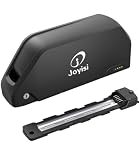
Joyisi 52V 20Ah LG Cell Pack
- 52V 20Ah for 100W-2000W motors
- 50A BMS
- XT60 connectors
- LED level light

Unit Pack Power 48V 20Ah
- LG 5000mAh cells
- 40A max discharge
- Over 1000 charge cycles
- Keyed frame base
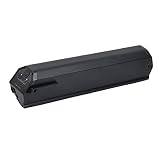
SDTYYP 48V 17.5Ah Dorado Plus
- 840Wh option
- A+ grade cells
- 30A BMS
- Aluminum shell with key lock
The 10 Best E-Bike Batteries for Long Rides at a Glance (October 2026)
| Product | Specs | Action |
|---|---|---|
| Joyisi 52V 20Ah LG Cell Battery |
|
Check Latest Price |
 YOSE POWER 48V 15Ah Silverfish YOSE POWER 48V 15Ah Silverfish |
|
Check Latest Price |
| Unit Pack Power 48V 20Ah |
|
Check Latest Price |
 YOSE POWER 48V 13Ah Silverfish YOSE POWER 48V 13Ah Silverfish |
|
Check Latest Price |
| SDTYYP Reention Dorado Plus 48V 17.5Ah |
|
Check Latest Price |
 Varstrom 52V 20Ah Samsung Cell Varstrom 52V 20Ah Samsung Cell |
|
Check Latest Price |
 Varstrom 52V 25Ah 1300Wh Varstrom 52V 25Ah 1300Wh |
|
Check Latest Price |
 Varstrom 52V 20Ah Down Tube Varstrom 52V 20Ah Down Tube |
|
Check Latest Price |
 VODIPOWER 48V 20Ah VODIPOWER 48V 20Ah |
|
Check Latest Price |
 SEENRONGYUAN 48V 15Ah Silverfish SEENRONGYUAN 48V 15Ah Silverfish |
|
Check Latest Price |
1. Joyisi 52V 20Ah LG Cell Pack: The Most Motor-Tolerant Choice
Joyisi 52V 20AH Ebike Battery for 100W-2000W with 3A Charger and BMS Protection Board for Electric Bike Motor Kits
1040Wh at 52V 20Ah
50A BMS
LG cells
12.1 lb
XT60 connectors
Pros
- Works with motors from 100W to 2000W
- 50A BMS gives real headroom on climbs
- LED battery level light in the shell
- XT60 connectors supplied
- 12 month warranty with US-based support
Cons
- One reviewer reported power cut-outs under hard acceleration
- Stays powered to the bike while charging so the light stays on
- Stock charge plug is a basic XLR type
- Packs need assembly before first use
This is the pack I keep coming back to for riders who do not know what motor they will be on in three years. The 50A BMS is the standout: it is the highest continuous discharge figure in this group, and it means the pack will not ask your controller to cut out when you lean on a headwind-loaded climb. For a rider chasing range on long rides, voltage sag under load is what turns a 60-mile plan into a 38-mile ride, and a 50A board is the cheapest insurance against that.
At 52V 20Ah the pack stores 1040Wh, which is more than enough for most weekend touring days. Owners report roughly 35 miles in hilly terrain at speed and over 50 miles on a 750W cargo bike, and both numbers come from people carrying real weight rather than riding a stock showroom bike. The 12.1 lb weight is real and you will feel it on a climb, but a heavier pack also means a longer ride before you have to stop and think about charging.
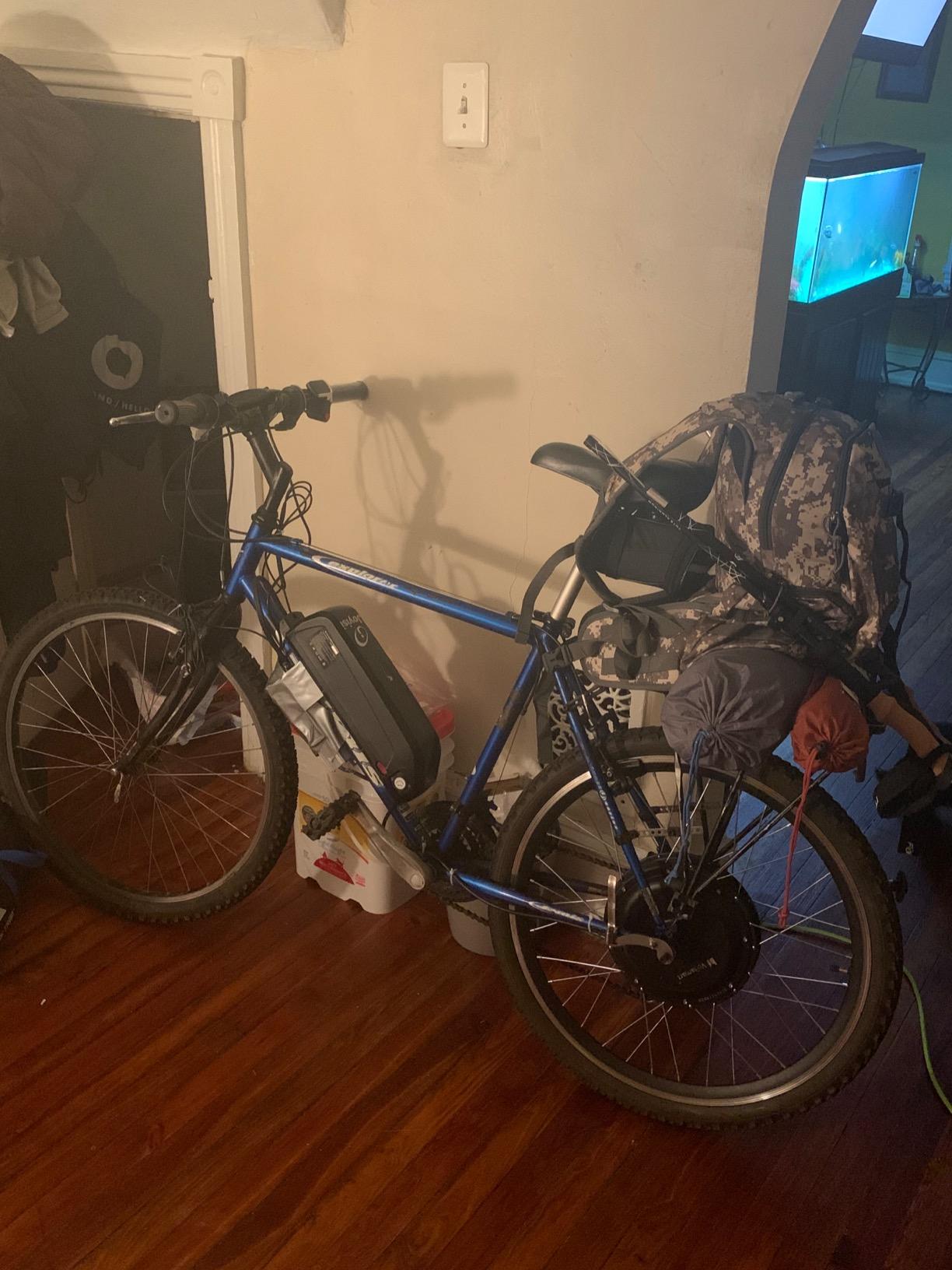
The details that matter in daily use are all here. A hard plastic shell protects the cells, an LED level light on the side of the case means you are not guessing from an app, and XT60 connectors are a genuine step up from the barrel plugs used on cheaper packs. The included 3A charger takes at least eight hours, and the switch should be open while charging with the light going from red to green when full.
Not everything is perfect. One reviewer reported frequent cut-outs on flat ground and downhill under hard acceleration, which points at either the cells or the BMS rather than the range design. The pack also stays live to the bike while charging, so your headlight remains on, and the supplied charge plug is a basic XLR type that many owners swap for an Anderson connector.
What you should check before ordering
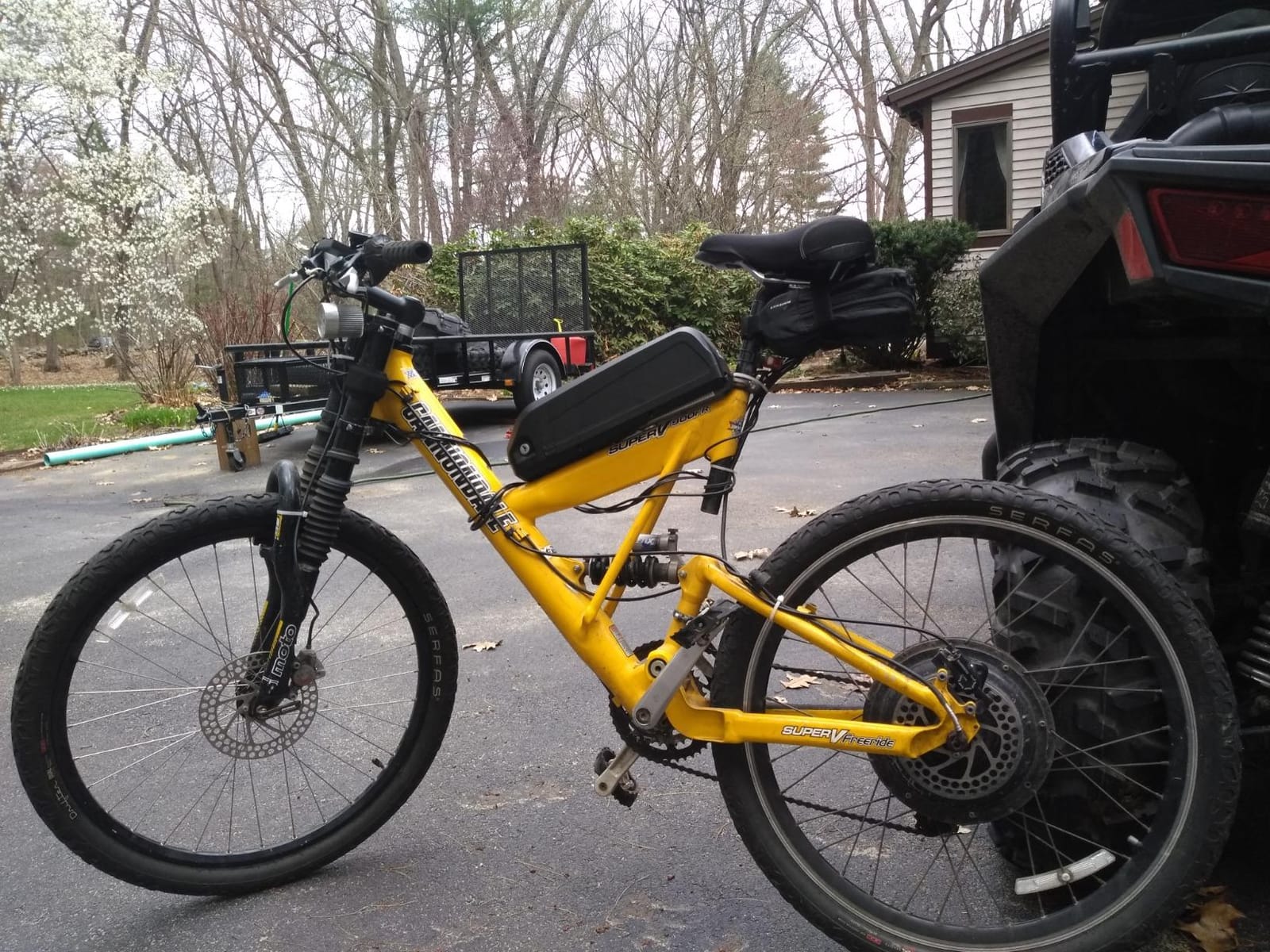
Measure your frame’s bottle-cage rail spacing before you commit, because mounting on some frames needs a double-bob or minor drilling. Check your controller’s maximum charge current too, since this pack ships with a 3A charger and a controller set to 2A will simply slow the process down.
The advertised motor range of 100W to 2000W is unusually wide for a 52V pack, and it is the reason this one works on so many different builds. Confirm your system is 52V nominal rather than 48V before connecting, because a 48V controller will not charge a 13S pack properly.
Who this pack suits, and who should skip it
Pick this if your motor is unknown or likely to change, you ride hills, or you carry passengers or cargo on longer routes. The discharge headroom means you will not feel the pack sag when the assist asks for everything it has.
Skip it if you are on a strict weight budget for a frame without bottle bosses, or if overnight charging speed is your priority. A 3A charger on a 20Ah pack is slow by modern standards, and riders who need to top up overnight should look at a faster charger instead.
2. YOSE POWER 48V 15Ah Silverfish: A Clean Drop-In for Down-Tube Bikes
48V15Ah Electric Bike Battery with Charger 30A BMS Silverfish Ebike Battery
720Wh at 48V 15Ah
30A smart BMS
Key lock
54.6V 2A charger
Pros
- Clean drop-in fit for Rattan 750W and similar down tube mounts
- Even charge depletion over long trips
- Box includes base and keys and spare fuses
- Lockable design deters theft
Cons
- Some frames need rail drilling or modification
- Will not fit Heybike and Nakto ebikes
- One reviewer could not reach the seller for warranty support
The silverfish format is the most common aftermarket shape on consumer e-bikes, and this 48V 15Ah pack fits it well. At 720Wh it is the smaller of the two capacities YOSE POWER builds in this shell, which makes it the better choice when you want range without adding a heavy brick to a small folding frame. Owners who swapped it into a Rattan 750W describe it as effectively invisible in daily use.
What stands out on long rides is the evenness of the discharge. A pack that dumps its charge in the first third of a ride and then crawls is worse than a smaller pack that delivers evenly, and owners on long trips specifically call out smooth depletion rather than sudden voltage drops. The 30A smart BMS handles short circuit, overcharge, over-discharge and temperature protection, with 10A standard discharge and 30A maximum.
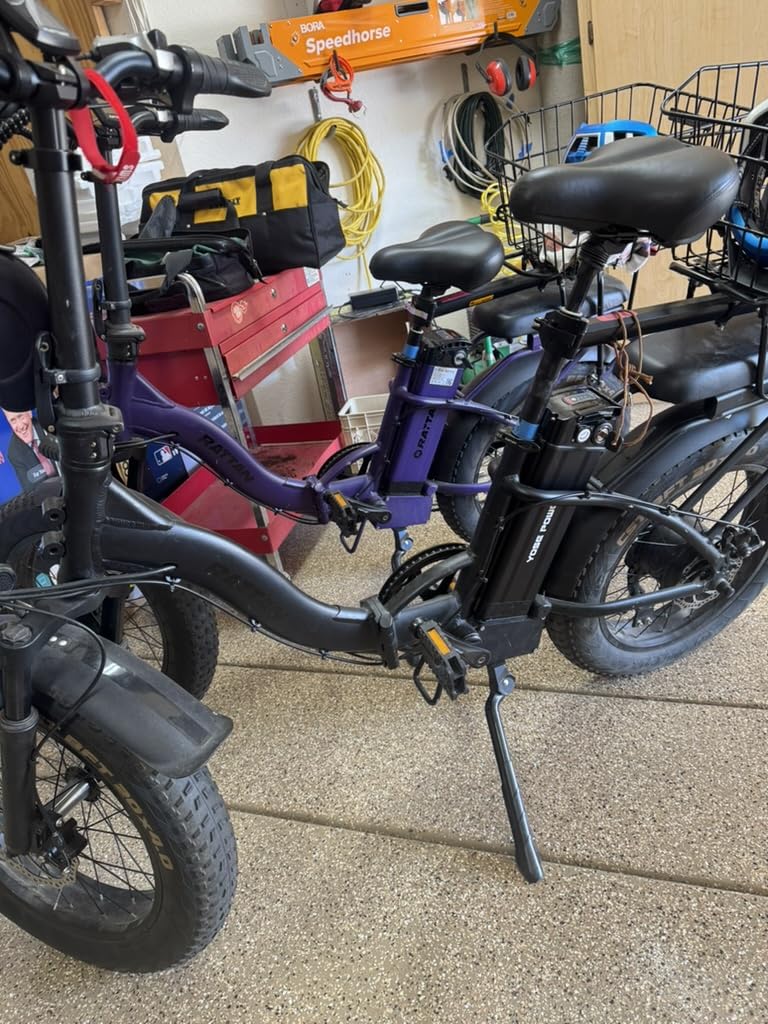
The box is unusually complete. You get the battery, a holder base, a 54.6V 2A charger, keys and spare fuses, which matters more than it sounds when a bike is out of service. The built-in key lock and status indicator light make it a genuine anti-theft upgrade over a bare slide-on pack, and there is a 48V 10A output port plus a two-pin discharge port alongside it.
Charge time is around eight hours with the supplied 2A charger, which is the main inconvenience for anyone doing multi-day tours on a tight schedule. Fit is the other one. The pack is compatible with 0-1000W motors and fits Fat Tire Folding, Starfish, Dolphin and Peacedove frames, but it explicitly will not fit Nakto and Heybike ebikes even though the shape looks similar, which is exactly the kind of tolerance problem owners hit.
What you should check before ordering
Measure the pack bay and the base hole spacing, then compare against the 14 by 3 by 4.3 inch battery dimensions. If your frame needs rail drilling to accept the base, factor in the time and consider whether your existing battery rails could be adapted instead.
Confirm your controller accepts a 30A maximum. A pack capable of more than the controller can pull will not damage anything, but you are paying for headroom you will not use, and the 10A standard discharge is worth knowing about if you plan to run a low-current setup.
Who this pack suits, and who should skip it
Buy it if you ride a folding or entry-level down-tube e-bike and want a lockable, well-supported pack at a moderate capacity. The included hardware and 18 month warranty give you more support than most packs at this level.
Pass if you are chasing maximum miles per charge, because 720Wh is not the ceiling here. Riders doing 50-mile-plus days should step up to a 20Ah pack or plan on carrying a second battery, and anyone on a frame the seller has not confirmed should message before ordering.
3. Unit Pack Power 48V 20Ah: Best Balance of Energy and Support
Unit Pack Power 48V 20 Ah Electirc Bike Battery – Lithiu-m Ion Ebike Battery 1000W 750W 500W 1500W 1200W for BBSHD BBS02 – LG4800 Cell Ebike Battery
960Wh at 48V 20Ah
LG 5000mAh cells
40A discharge
365 x 90 x 110 mm
Pros
- LG 5000mAh cells in a 48V 20Ah pack
- Works with 50W to 1500W motors including BBSHD and BBS02
- Retains 80 percent capacity after 800 cycles
- Keyed base locks the pack to the frame
- US-based team with lifetime technical support
Cons
- One reviewer reported an XT60 pin short that cut power mid-ride
- Long charge time with the 2A charger and 20Ah capacity
- Power cable may need modification for some controller setups
This is the pack I recommend to riders building around a Bafang BBSHD or BBS02, and it holds up as a strong all-round choice. The LG 5000mAh cells are the point. Forum consensus across e-bike communities is consistent on this: name-brand cells from LG, Samsung and Panasonic are worth paying for even inside an aftermarket pack, because generic cells are where early capacity fade and unexpected cut-outs come from.
At 48V 20Ah you get 960Wh, which lands between the 720Wh packs and the 1040Wh end of this list. The 40A maximum constant discharge current is enough to keep a 1500W motor fed without brownouts, and the stated retention of 80 percent capacity after 800 cycles with more than 1000 charge cycles total is a documented figure rather than a vague longevity claim.
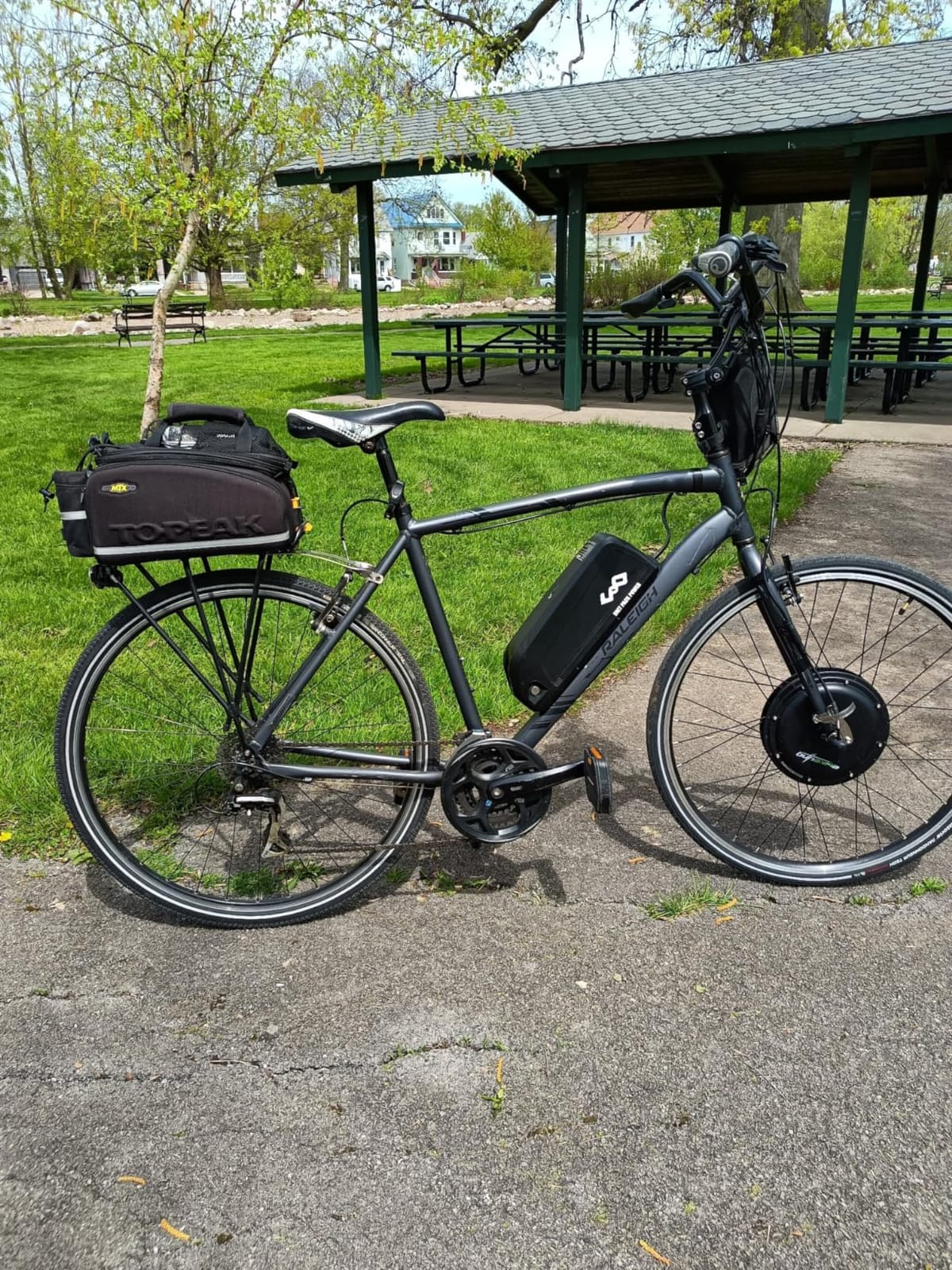
Every pack is fully charge and discharge tested before it ships, which is a meaningful difference from sellers who simply box and label inventory. The keyed base physically locks the pack to the frame, so a quick stop at a café does not mean a walk back to an empty frame, and one-year quality support plus lifetime technical support from a US-based team makes this an easier purchase than most of its class.
On the other side, the 54.6V 2A charger is slow against 20Ah, so plan an evening of charging rather than a lunch break. The XT60 male and female discharge connector is a good standard, though one reviewer reported a pin short that melted the solder and cut power mid-ride, so inspect the connector before a long trip rather than after it.
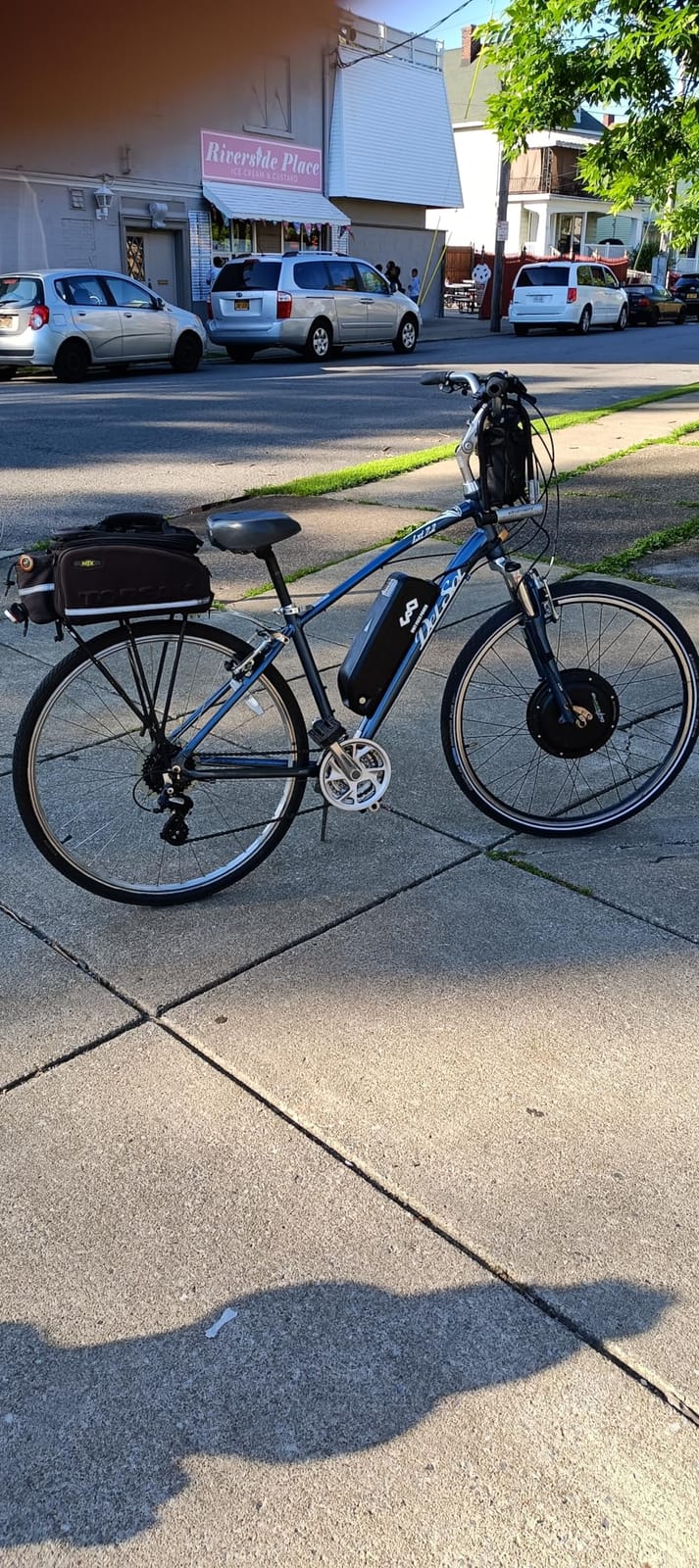
What you should check before ordering
Check your controller’s connector type. This pack uses XT60 on the discharge side, and while that is the most common choice in the aftermarket world, bikes with proprietary or Anderson connectors will need a short adapter or a re-terminated lead.
Look at the 365 x 90 x 110 mm size against your down-tube bay, and confirm you have somewhere secure to mount the keyed base. Riders replacing a damaged OEM pack often find the base holes do not line up with the original.
Who this pack suits, and who should skip it
Choose it if you run a mid-range Bafang hub motor, want 960Wh without the weight of a 1300Wh pack, and value documented cycle life over headline capacity. It is also a common first upgrade for riders whose stock pack no longer delivers.
Skip it if you need fast turnaround between rides, because the 2A charger sets the pace. Riders running 1000W and above builds on long, steep routes should also look at a pack with more discharge headroom, since 40A is the ceiling here.
4. YOSE POWER 48V 13Ah Silverfish: The Lightest Long-Ride Option
48V 13Ah Ebike Battery Electric Bicycle SliverFish Bike Batteries with USB
624Wh at 48V 13Ah
30A smart BMS
USB charging port
18 month warranty
Pros
- Keyed base and holder make the pack easy to remove and secure
- Good fit for compatible folding and fat tire frames
- USB port charges a phone on the road
- 18 month warranty runs longer than most in this category
Cons
- Not compatible with Heybike ebikes despite similar dimensions
- Rated only for 0-700W motors
- Two-pin discharge port may need connector changes on some controllers
This is the same silverfish platform as the 15Ah version, scaled down to 624Wh, and for compact folding bikes that is the correct trade. Every watt-hour you leave on the bike is a watt-hour you do not have to lift on a climb, and riders who carry their bike up stairs or onto a train feel that immediately. The 4.4 average across 48 reviews is among the highest in this group.
You still get a 30A smart BMS with short circuit, overcharge, over-discharge and temperature protection, 10A standard discharge and a maximum of 20A. That lower ceiling is the real trade-off. This pack is rated for 0-700W motors, so it suits commuters and light cargo use rather than a fast hill-climbing build with a big hub motor.
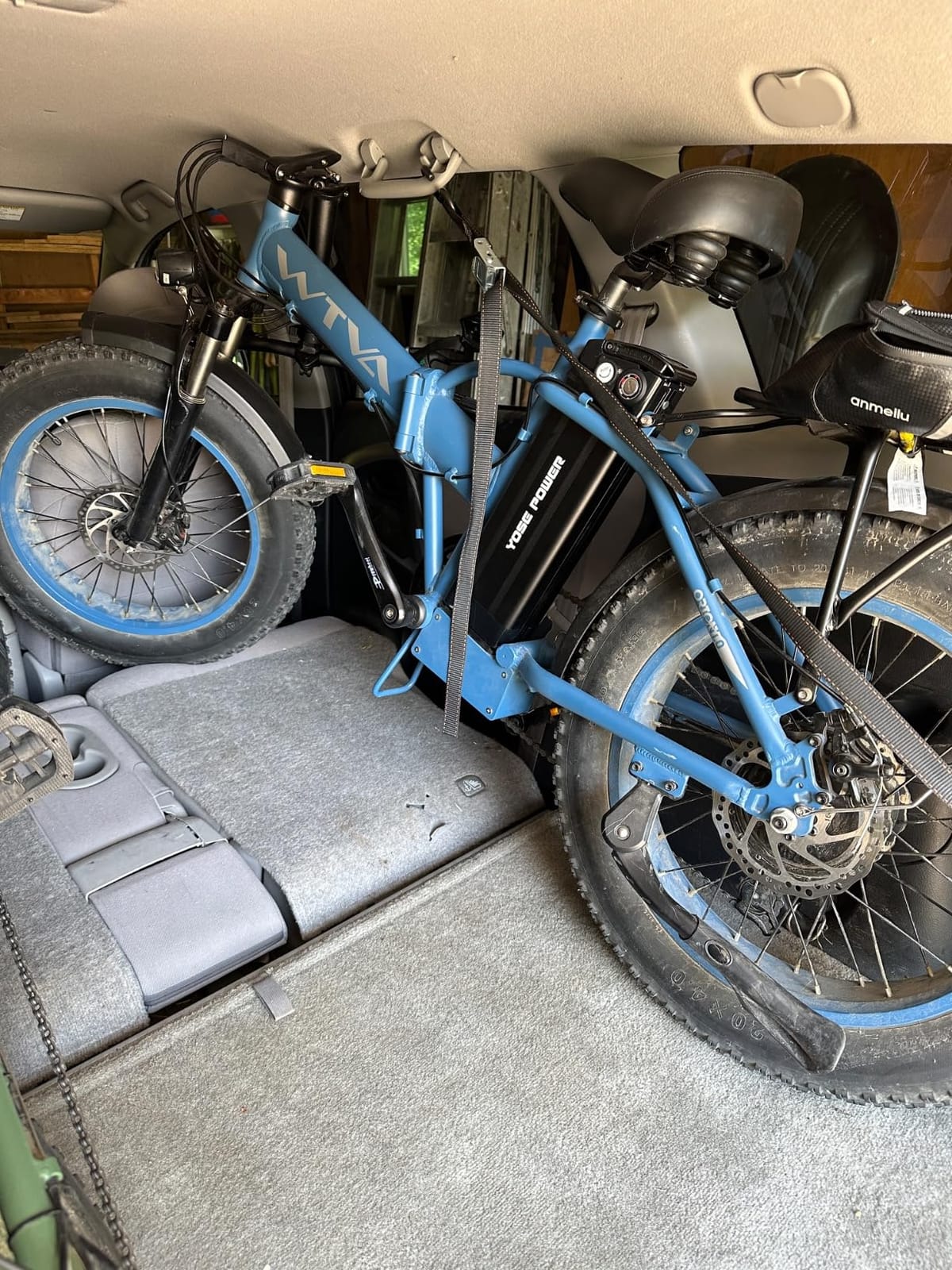
The USB charging port is the feature owners mention most, and on a multi-day tour it earns its place more often than you would expect. The pack also ships with a battery holder base, a charger and keys, and the keyed base plus LED status indicator mean the pack is secured and readable at a glance, which matters when you are swapping batteries at a dark campsite.
Rated range with a pedal assist sensor is 40 to 150 km depending on conditions, which is a wide spread because rider setup matters as much as the pack. A full charge takes about eight hours on the 54.6V 2A charger, and the two-pin discharge port along with the 48V 10A output may require connector changes on some controllers.
What you should check before ordering
Verify your motor rating first. If you have anything above 700W, or you plan to add a throttle with high current draw, this pack is the wrong ceiling and you should move up in capacity or BMS rating instead.
Confirm frame fit against the 4.3 by 3 by 15 inch dimensions, and check whether your controller expects a two-pin discharge port. Heybike frames are explicitly excluded even though the dimensions look similar, so send the seller your frame model before ordering.
Who this pack suits, and who should skip it
It suits commuters, small folding bikes and riders on 0-700W systems who want a reliable, lockable, light pack rather than maximum distance. The 18 month warranty and the USB port make it a sensible all-rounder for everyday mileage.
Skip it for long-distance touring where every watt-hour counts, because 624Wh is the smallest pack here. If your goal is a full day without charging, a 20Ah pack or a two-battery plan will serve you far better than shaving weight.
5. SDTYYP Reention Dorado Plus 48V 17.5Ah: The OEM-Style Replacement
SDTYYP (2-5 Days delivery) 48V 17.5Ah Reention Dorado Plus 460mm e-Bike Battery Pack for e-Bike Removable Lithium Battery Power 840W with 30A BMS and Charger
840Wh or 624Wh options
30A discharge
A+ grade cells
Aluminum alloy shell
Pros
- Direct OEM-style replacement for Ride1Up Core 5 and 500 series packs
- Higher capacity than the original packs
- Excellent pre-purchase fit confirmation with photos and measurements
- Aluminum alloy shell with a real key lock
Cons
- Warranty terms unclear to some buyers
- Power button must be held to wake the pack
- Two length options exist so measurements must be confirmed
Many long-distance riders are not shopping, they are rescuing. Their OEM pack is discontinued, cracked, or no longer holds charge, and the bike itself is fine. This pack is built for exactly that situation, fitting Ride1Up Core 5, 500 series and Aurochs XT10 packs with a 624Wh or 840Wh option in an OEM-style aluminum alloy shell.
The specification that matters most here is the cell grade. It uses automotive A+ grade cells, which is a tiered rating rather than the vague high quality cells language used by many sellers, and it delivers 30A maximum constant discharge for 250W to 1000W motors. The four-light level indicator, spring-loaded carry handle and USB charging jack are the details that make an OEM-style pack feel like an OEM part.
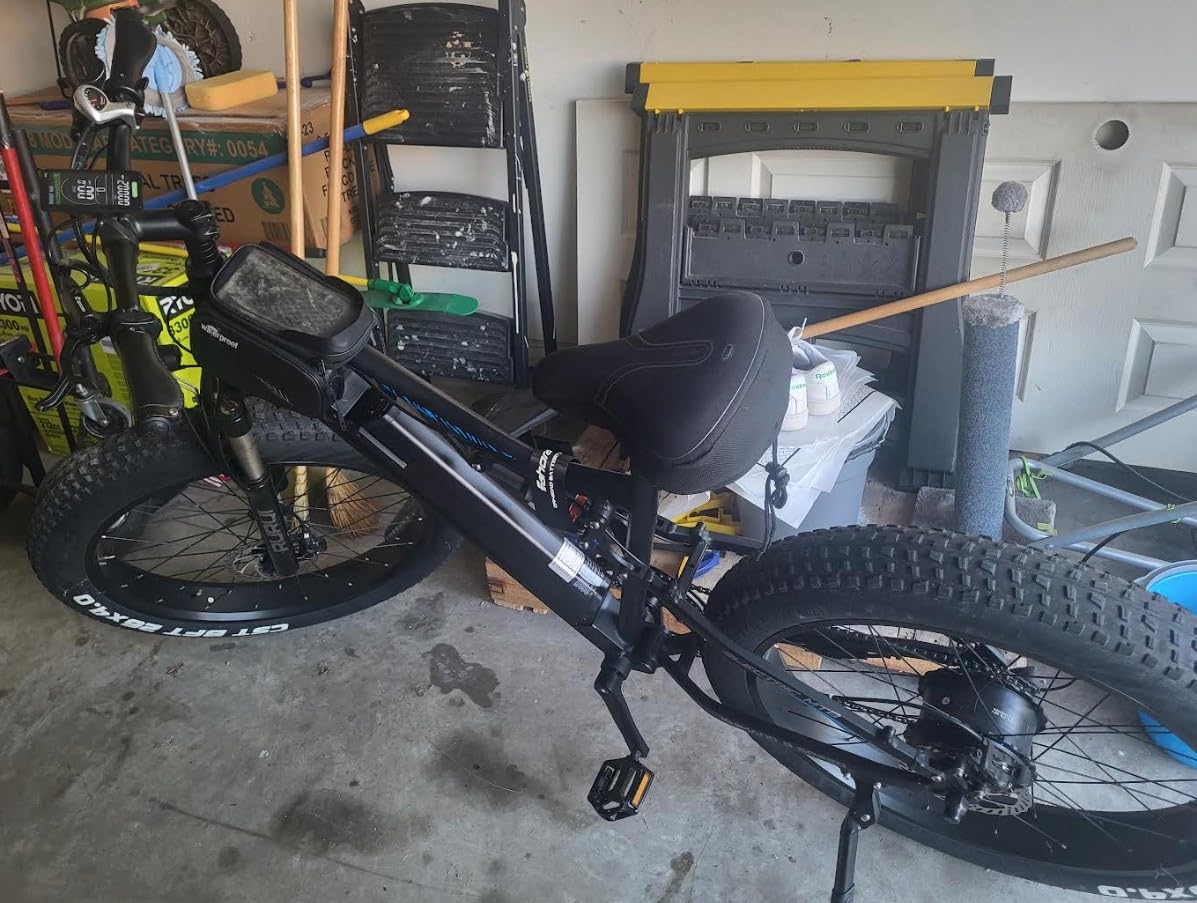
What sets this seller apart is the pre-purchase support. Buyers report that the seller requests photos and measurements before shipping to confirm fit, which removes the single most common failure point in aftermarket battery purchases. For anyone replacing a bike whose original pack is no longer produced, that confirmation step is worth more than any spec line.
Capacity over the original packs is the other repeated positive, and owners cite noticeably more run time on the same bike. Be aware of two things before ordering: the warranty terms were unclear enough that one reviewer walked away from the purchase, and waking the pack requires holding the power button, which is not in the manual.
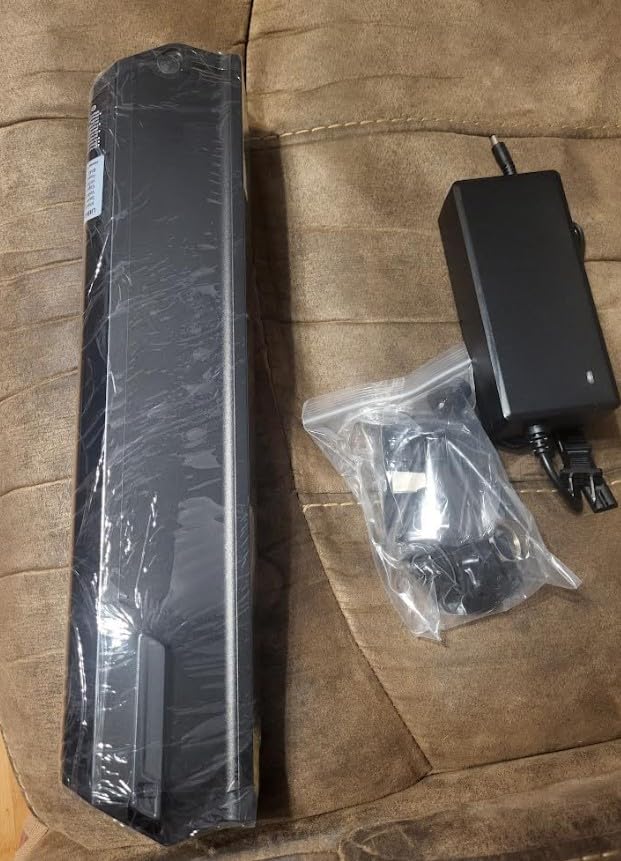
What you should check before ordering
There are two length options, a 460mm rail and a shorter one, so measure your pack bay and confirm which variant you are being sent. This is the most common mix-up in the reviews, and the seller will verify if you send measurements and photos.
Match the 30A discharge ceiling to your motor. That covers 250W to 1000W systems comfortably, but a 1500W build pulling sustained high current will want more headroom than this pack provides.
Who this pack suits, and who should skip it
Buy it if your OEM pack is dead and the bike is worth keeping, or if you want an aluminum shell and key lock on a bike that came with a plastic pack. Riders upgrading Ride1Up models get the cleanest direct swap in this group.
Pass if you need the highest possible capacity in a single pack, because 840Wh sits mid-table here, or if your motor is above 1000W. Ask about the warranty in writing before you order, since that was the reason one buyer declined.
6. Varstrom 52V 20Ah Samsung Cell Pack: Steady Current Under Stress
Varstrom 52V 20Ah Ebike Battery Sam*/Sung Cell Lithium Replacement Battery
52V 20Ah with Samsung cells
30A smart BMS
58.8V 3A charger
6 kg
Pros
- Sustained output with no power dips under a Bafang BBSHD
- Long intervals between charges for several rides a week
- 58.8V 3A charger gives a 6-7 hour full charge
- Seller checks protocol compatibility before shipping
Cons
- Pack is heavy at 6 kg so mounting needs a proper bottle bob
- One unit would not charge and third-party support was slow
- Some units top out slightly below the rated 58.8V
The thing that separates this pack is not capacity, it is current delivery. Owners report steady continuous output with no power dips even when a Bafang BBSHD is working hard, and that is the difference between a ride that feels flat at the top of a climb and one that does not. Voltage sag is the quiet reason many riders feel a big pack is not performing like the numbers suggest.
At 52V 20Ah with Samsung cells and no recycled cells in the build, this is a pack aimed at riders who keep the bike in the saddle rather than at a desk. Claimed range is 30 to 45 miles per charge depending on motor power, which is a more conservative figure than some sellers publish for the same watt-hour count, and that honesty is welcome.
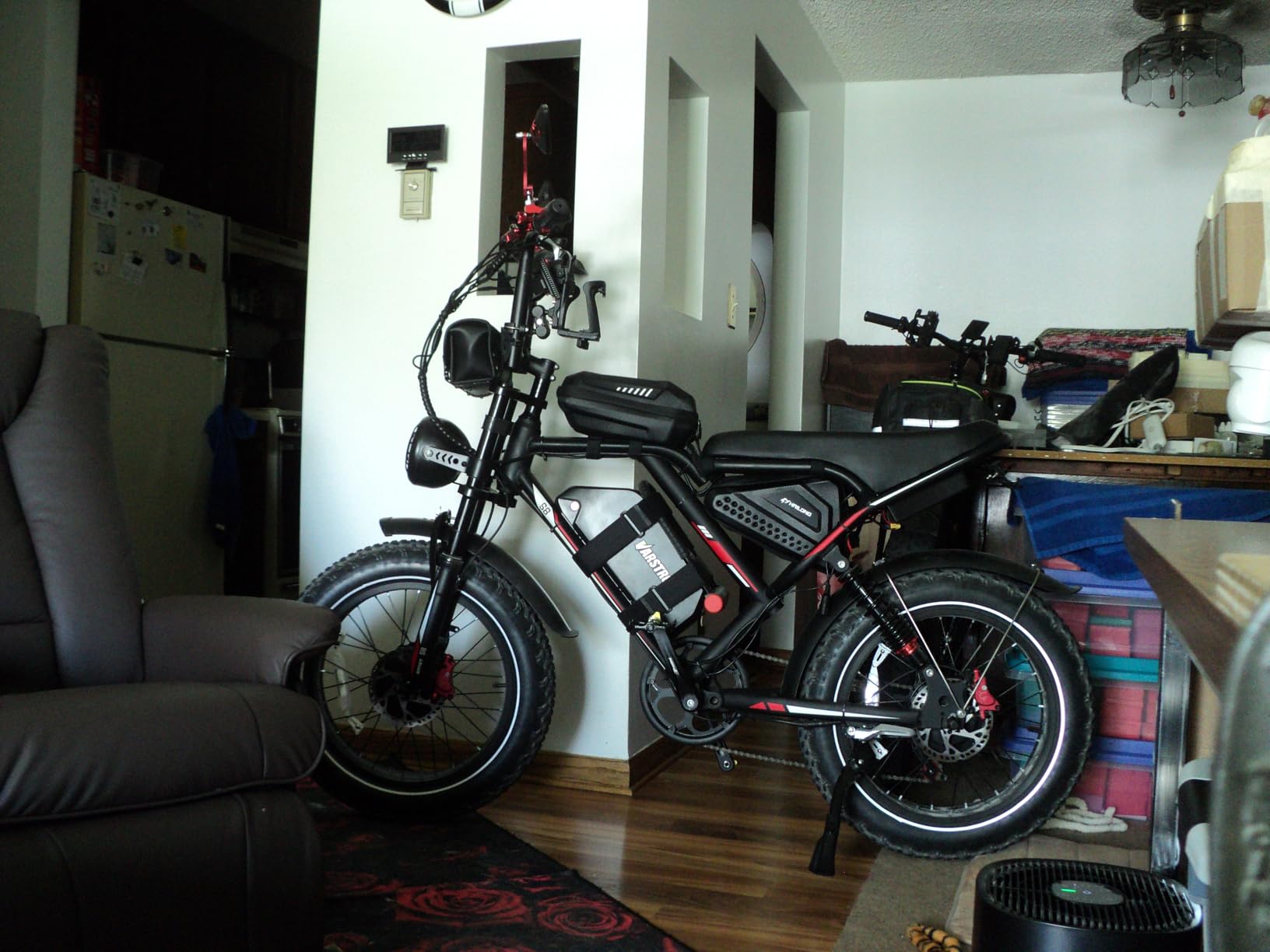
Charging is handled better than most packs in this class. The included 58.8V 3A fast charger brings it to full in six to seven hours, and the keyed locking mechanism with an LED power indicator means the pack is both secure and readable. The seller also proactively checks protocol compatibility, UART versus CAN, before shipping, which catches a problem that would otherwise only surface after delivery.
The 6 kg weight is the honest drawback and the one buyers mention most. On rough terrain, a bottle bob with screw clamps is advisable rather than a strap, and if you carry your bike onto trains or up stairs the extra mass adds up. One unit in the reviews would not charge at all and third-party seller support was slow to respond, so buy from a seller you can reach.
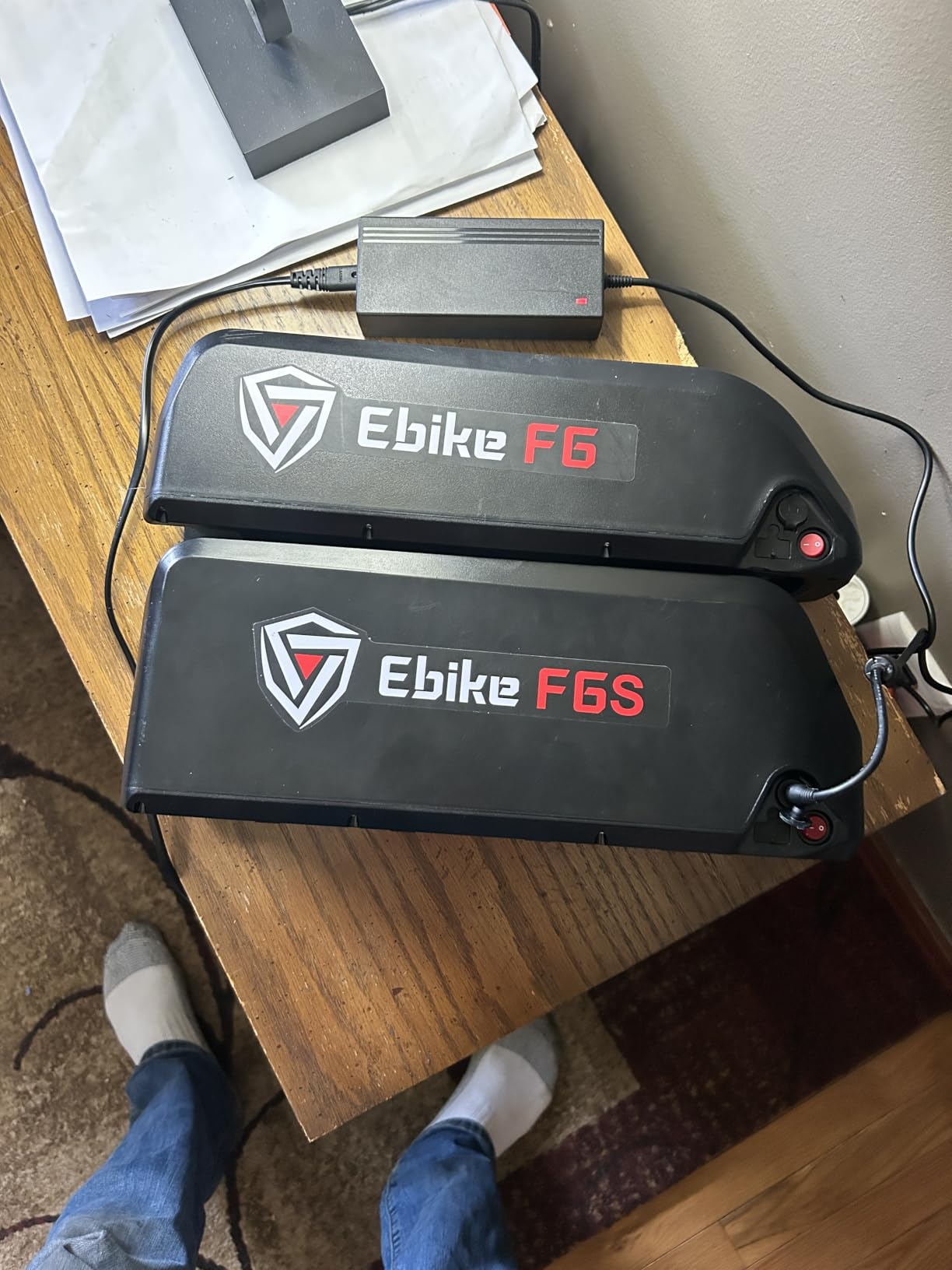
What you should check before ordering
Confirm your device is 48V or 52V before ordering, because the seller explicitly asks you to check this and the mismatch will not work. Measure your down-tube bay against the pack dimensions, since the format fits most frames but not all.
Check your charging setup too. A 58.8V charger on a 52V pack will not pair with a 54.6V charger from an older bike, and riders swapping from a 48V system need to plan for the charger change as part of the purchase.
Who this pack suits, and who should skip it
This suits riders with big hub motors, loaded commuting or hill-heavy routes where steady current matters more than absolute weight. If your bike carries a second rack or battery mount, the weight penalty shrinks considerably.
Skip it if you are weight-constrained or on a small folding frame, since 6 kg is among the heaviest packs here. It is also the wrong choice if you need overnight turnaround, though its 3A charger is among the fastest in this group.
7. Varstrom 52V 25Ah 1300Wh: The Longest Single-Pack Range
Varstrom 52V 25Ah Ebike Battery 1300Wh L*/G Cell 40A BMS Lithium Battery
1300Wh at 52V 25Ah
40A smart BMS
LG cells
13 lb
Keyed mount
Pros
- Largest capacity in this set at 1300Wh
- Real continuous power output with no mid-ride drops
- Quiet fast charger and a keyed mount that stays firm
- Fast and attentive support from the seller
Cons
- 13 lb weight needs mounting hardware beyond the supplied holder on rough ground
- One buyer received a 30Ah variant that did not fit their frame
- Only a 1-year warranty on this listing
If the goal is to get as far as possible on one charge, this is the pack in the group that gets you there. At 52V 25Ah and 1300Wh it stores more energy than anything else we looked at, and it is the only option here that lets a rider plan a full day of riding without planning a charge stop. Claimed range is 45 to 62 miles depending on motor power, and the cell chemistry is LG.
The 40A integrated smart BMS guards against short circuit, over-current and overcharge, and owners report genuine continuous output with no drops mid-ride. There is no recycled cells in the build, and the stated figure is more than 1000 charge cycles with 80 percent or better capacity retention, which is a credible number for this capacity class.
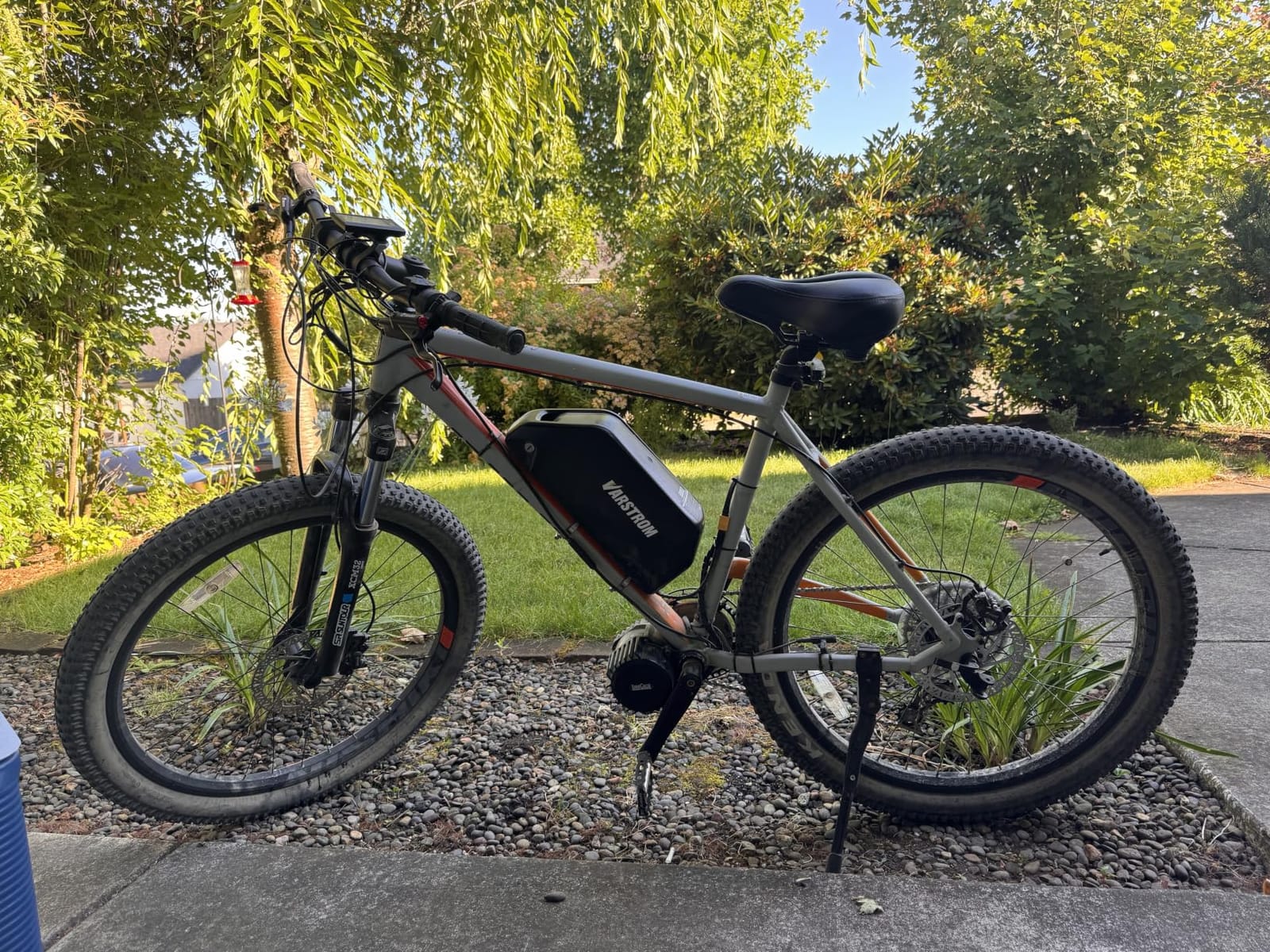
In the field, riders report 26-mile mountain trail rides and 98 percent remaining charge over a long commute, and the pack doubles as a light source since a headlight is included. The keyed mount stays firm with a strap, and the charger is quiet, which sounds minor until you are charging a tent at dusk.
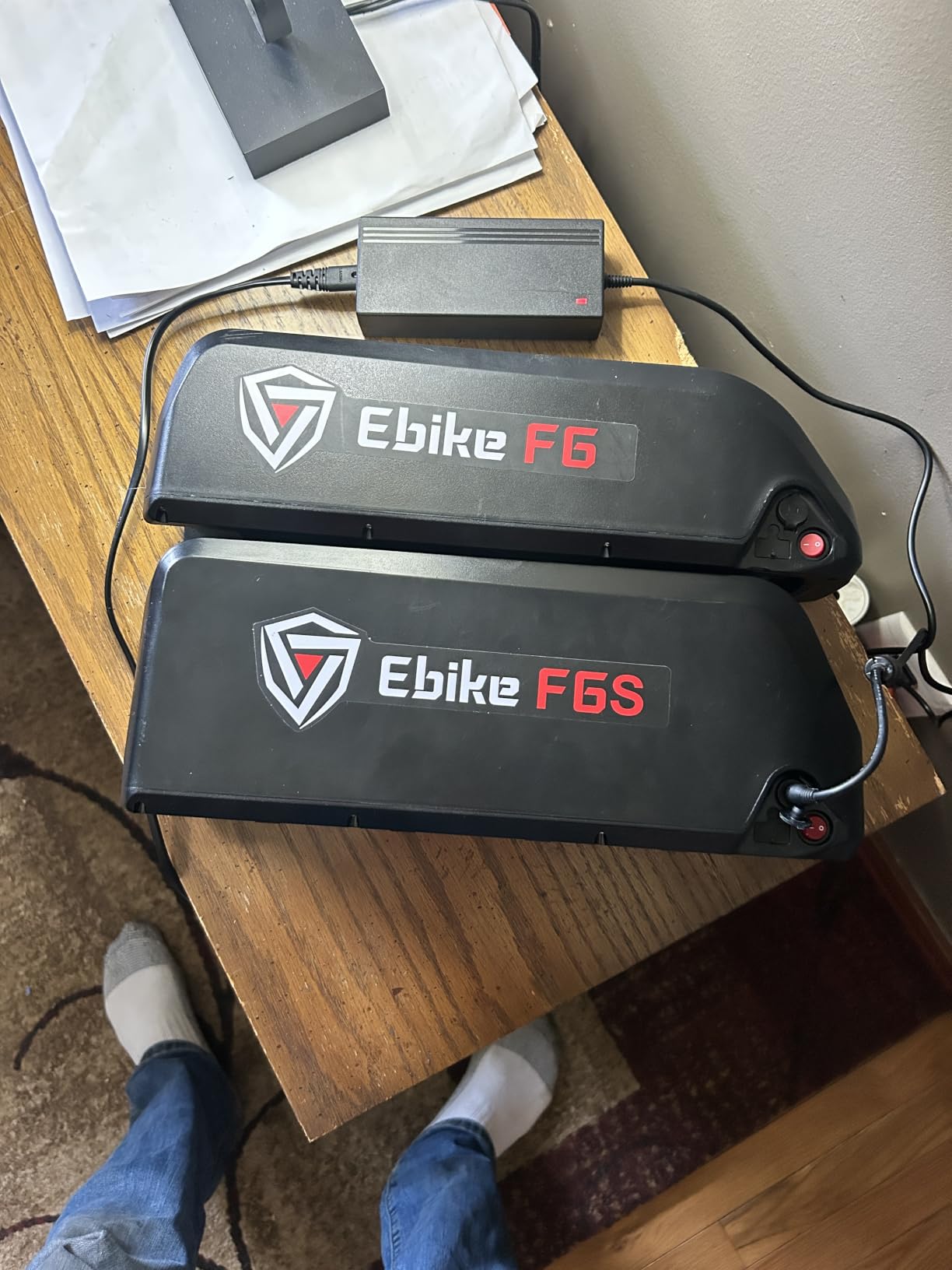
At 13 lb this is one of the two heaviest packs in the group, and the reviews are clear that mounting hardware beyond the supplied holder can be needed on rough terrain. One buyer also received a 30Ah variant that did not fit their frame, so confirm the capacity and dimensions with the seller before you commit.
What you should check before ordering
Work out whether you have anywhere to put 13 lb of battery. On a cargo bike, a longtour or a bike with a rear rack, that is straightforward. On a lightweight road frame it will noticeably change how the bike handles, and the extra mass works against you on every climb.
Confirm your device is 48V or 52V as the seller requires, and check the variant you are receiving matches the frame bay. The mix-up reported in the reviews involved a capacity variant, not a voltage one, which is exactly why the confirmation step matters.
Who this pack suits, and who should skip it
It suits multi-day tourers, bikepacking riders and anyone who would rather not think about charging for a whole day. If your goal is maximum range per charge and the frame can take the mass, nothing else here competes.
Skip it if weight is the priority, since you pay for it on every climb, or if you ride a bike with limited mounting options. Riders who can manage two mid-size packs and swap them may get further with less strain on one mount.
8. Varstrom 52V 20Ah Down Tube Pack: Documented Long-Ride Data
Varstrom 52V 20Ah Ebike Battery – Lithium Ion Bike Battery for 0-1500W Electric Bike Kit, for BAFANG Voilamart AW Ebikeling Pexmor L-Fater E-Bike Conversion Kit – W/Charger & BMS
52V 20Ah
30A continuous discharge
XT60 and 5-pin base
368 x 95 x 125 mm
Pros
- One owner logged 71.7 miles before a 46V cutoff on a heavy riding profile
- Voltage holds up under load without surprise cut-outs
- Dimension drawings in the manual help confirm frame fit
- Per-cell fuses plus BMS dual-layer protection
Cons
- Listed dimensions in the description do not match the manual
- Charger power cord is only about 6 inches long
- Level indicator board is not moisture protected
This is the one with the most useful published data in the entire group. One owner logged 71.7 miles before hitting a 46V cutoff, and the review includes measured voltage data rather than an impression. Buyers with heavy riding profiles report 45 to 75 mile ranges, which is a wide spread but a real one, and it is the kind of evidence most listings simply do not provide.
Under the skin it is a 52V 20Ah pack rated for 50W to 1500W hub and mid-drive motors, including 500W, 750W, 1000W, 1200W and 1500W systems. The maximum continuous discharge current is 30A, and a CNC cell holder with per-cell fuses sits behind the BMS dual-layer protection, which is more defensive than most builds at this price level.
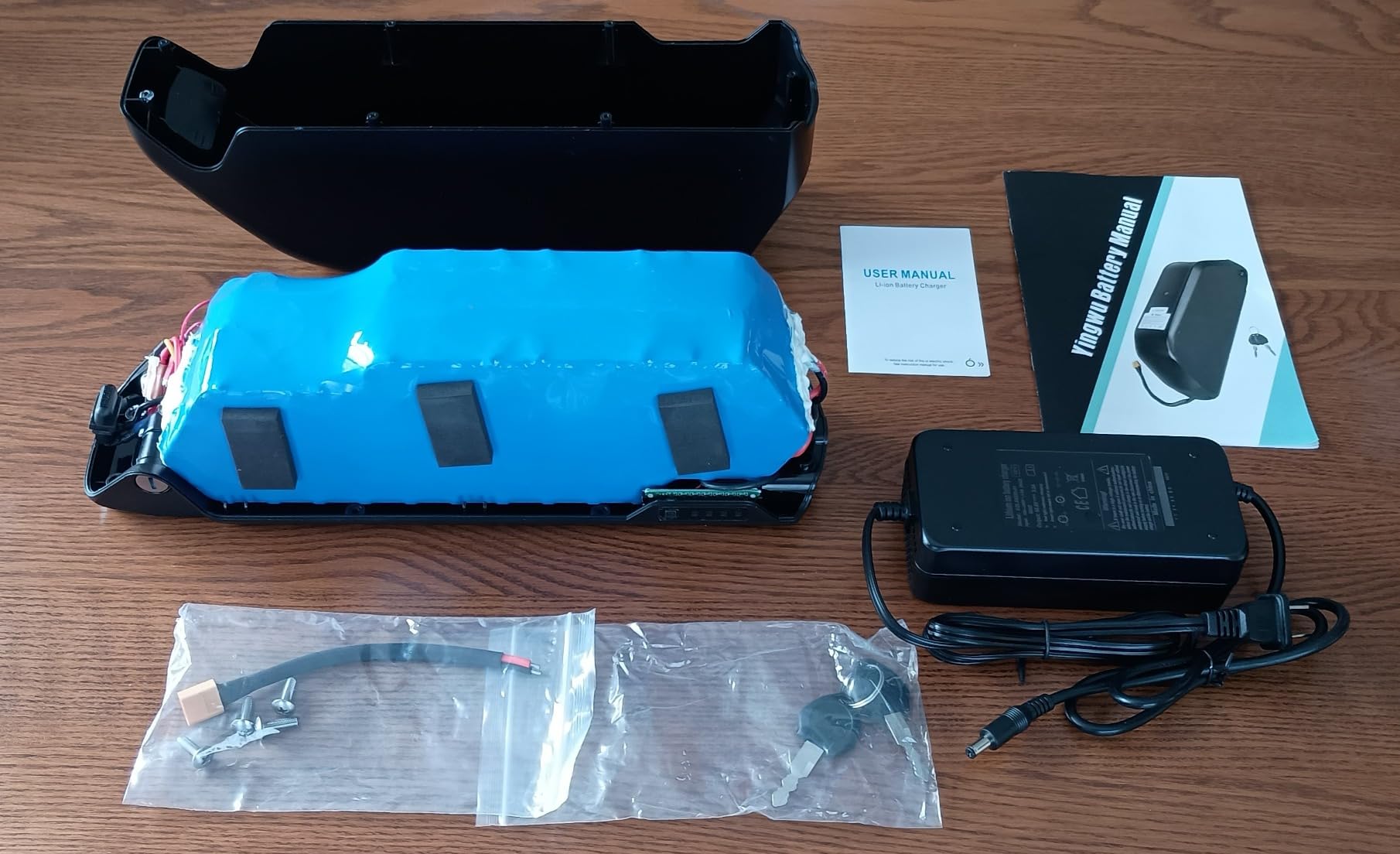
It is built for Bafang Voilamart AW, Ebikeling, Pexmor and L-Fater conversion kits, and the mounting bracket fits most water-bottle screw holes on bike frames. The integrated key lock, power switch and LED power indicator give it the feature set of a factory pack, and the 5-pin battery base is the common standard on consumer e-bikes.
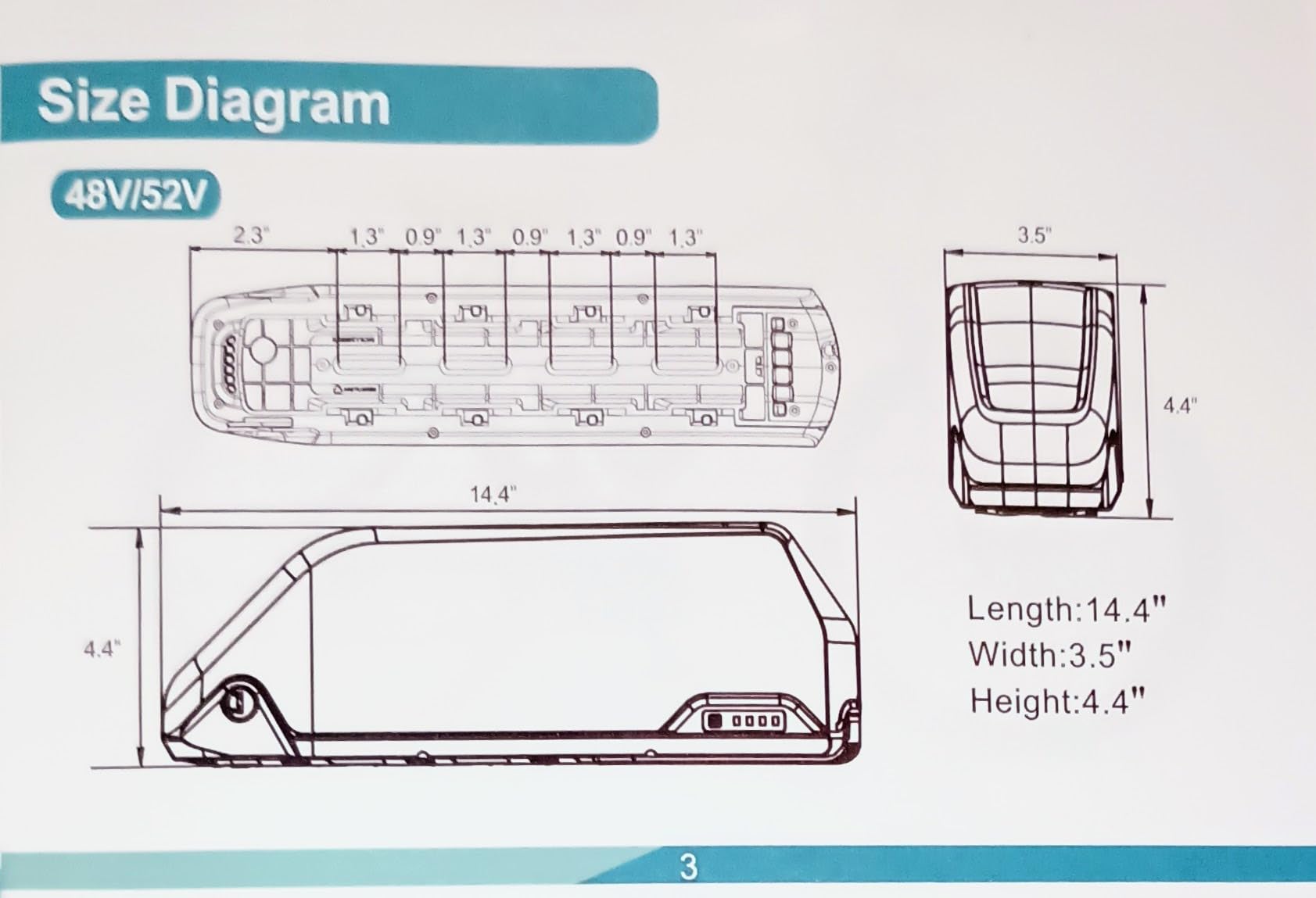
Two things to know before ordering. The dimensions listed in the online description do not match the manual, so trust the manual drawings rather than the listing, which is exactly what the owner who logged 71 miles did. The charger cord is also only about six inches, and the level indicator board is not moisture protected like the rest of the case.
What you should check before ordering
Use the manual’s dimension drawings, not the listing, and measure your rail spacing against the 368 x 95 x 125 mm pack. With a 5-pin base, most frames accept it directly, but a small number need the bracket repositioned.
Confirm 30A continuous is enough for your motor. That figure comfortably covers 750W and 1000W systems on long rides, and the 46V cutoff in the long report shows the pack holds voltage well under sustained load.
Who this pack suits, and who should skip it
This is the pick for riders on a conversion kit or a consumer e-bike who want long-day range and want a documented voltage profile to plan around. The per-cell fusing is a genuine plus for anyone who carries the bike in a vehicle or rides through hot weather.
Skip it if you need a genuinely fast charger, since the short cord hints at a modest unit, or if you are sensitive to listing inconsistencies. Ask for the manual before you order and everything resolves.
9. VODIPOWER 48V 20Ah: The Budget Route to Real Range
VODIPOWER 48V 20AH E-Bike Battery, 13Ah/16Ah/20Ah Lithium Battery Pack with 40A BMS for Electric Bicycles,E-Motorcycles (100W-1800W) Motor, XT60 Connector, USB Port and Base (48V20AH)
48V 20Ah
40A BMS
54.6V 3A charger
8.9 lb
Waterproof housing
Pros
- 960Wh of range at the lowest cost in this group
- 40A integrated BMS for motors up to 1800W
- Waterproof housing with LED indicator and USB port
- Power switch reduces standby drain
Cons
- One buyer found mounting gaskets and screws missing from the box
- Some frames need minor modification to clear the pack
- Only a 3-month manufacturer warranty
This is the value pick. It delivers 960Wh with a 40A BMS for the lowest outlay of anything in this guide, and the 4.5 average across 15 reviews holds up for a pack with this few owners reporting on it. Riders describe covering distance without running out of power on climbs, which is the entire point of buying a larger pack in the first place.
The 40A integrated BMS covers motors from 100W to 1800W, so it spans nearly as wide a range as the 50A pack while costing considerably less. It is built around Grade A lithium-ion cells, includes a 54.6V 3A charger, and has a female XT60 discharge plug with a 5-pin base for the standard mounting pattern.
Inspect the box on arrival. One buyer found the mounting gaskets and screws missing and only a partial charge in the unit, so check the contents before you strip your old pack. Measure the 14.2 by 3.54 by 4.33 inch case against your bay, since some frames need minor modification to clear it.
Look at the warranty length. Three months is the shortest in this group, so treat this as a pack you will keep rather than one you expect to be supported on, and check that the seller will replace a unit that arrives faulty.
Who this pack suits, and who should skip it
Buy it if you want a genuine 20Ah pack on a tight budget, your motor sits inside the 100W to 1800W window, and your frame takes a standard 5-pin base. At 8.9 lb this is the lightest of the 20Ah packs here, which helps on climbs.
Skip it if support and warranty matter to you, because three months is thin, or if you ride a frame with unusual mounting geometry. Riders planning multi-day tours should also budget for a spare, since replacement is more likely with a short warranty.
10. SEENRONGYUAN 48V 15Ah Silverfish: The Highest Rated Pick
SEENRONGYUAN 48V E-Bike Battery, Silver Fish Lithium Batteries 30A BMS, Safe Lock, Led Indicator Light for Controller 0W-1000W Electric Bike Bicycles Motor (48V 15AH 0-1000W)
48V 15Ah
30A BMS
IP65 waterproof housing
9.3 lb
4-pin base
Pros
- Highest average rating in the set at 4.6 across 21 reviews
- Holds charge across multi-week riding including hilly assist riding
- IP65 waterproof housing with an alloy steel frame
- Complete install kit with holder and keys and six bolts
Cons
- One buyer saw the pack fall to 41V under 30A load
- Not a plug-in replacement on every frame as wiring work is sometimes needed
- Only a 3-month manufacturer warranty
This pack has the highest average rating of the ten, and the reviews explain why. Owners talk about holding charge across multi-week riding, including on hilly terrain at assist, which is exactly the failure mode riders complain about with cheaper packs. At 48V 15Ah it stores 720Wh, so it is not the range champion, but the consistency of delivery is the appeal.
It is rated for 0W to 1000W motors with the controller set to 30A or less, which covers the large majority of consumer e-bikes. The IP65 waterproof housing and alloy steel frame read as robust for daily use, and the anti-theft lock, LED level indicator, portable handle and four-pin base complete a sensible package.
Be realistic about fit. One Rad Mini 4 owner had to cut, solder and seal the wires to make it work, so check your frame’s base type before assuming a drop-in. The package includes the battery, a 54.6V 2A charger, a holder, two keys and six screw bolts.
Watch the voltage under load. One buyer reported the pack settling to 41V when pulled at 30A, which suggests the cells may not hold up at the top of the BMS rating. If your riding is mostly below 20A demand, that is not a problem.
Who this pack suits, and who should skip it
It suits everyday riders on standard 0-1000W systems who want a pack that keeps its charge between outings rather than one that maximises a single ride. The waterproof housing and complete install kit make it a low-friction choice.
Skip it if you need maximum range per charge, since 720Wh is modest against the 1300Wh option, or if you ride a high-current build where the 30A ceiling matters. The three-month warranty is also the shortest on this list.
Which e-bike battery gives the most range per charge?
The 52V 25Ah pack at 1300Wh stores the most energy of anything we reviewed, so it gives the longest single-charge range on the list. Second is the 52V 20Ah LG pack at 1040Wh, then the 48V 20Ah options at 960Wh. Range per charge scales with watt-hours, but only up to the point where the extra weight starts costing you more than the extra energy gives back.
A useful way to think about it: the 1300Wh pack has nearly twice the energy of the 624Wh pack, but it also weighs roughly twice as much. On flat riding the bigger pack wins comfortably. On a climbing route with a heavy load, the smaller pack can match it. If your ride is mostly flat, take the energy; if it is mostly uphill, take the weight.
How far can you actually ride on a given watt-hour rating?
Roughly 20 to 35 miles per 720Wh on mixed riding at moderate assist, which works out to about 3 to 5 miles per 100Wh. That is a rule of thumb, not a promise, and the variables are large. A 400Wh pack typically lands in the 12 to 18 mile range, while a 1000Wh pack sits somewhere around 30 to 50 miles depending entirely on how you ride.
You can narrow the estimate by holding these variables constant. Rider weight, assist level, average speed, terrain gradient, tyre pressure, wind direction and elevation all move the number, and cold weather pushes it down again because lithium-ion loses usable capacity when it is cold. Compare two packs on the same route at the same assist level and you will learn far more than any spec sheet tells you.
One number worth knowing from rider reports on forums: a 250Wh pack on low assist is commonly described as covering roughly 70 to 120 km per charge, and riders running dual packs report 40 to 60 miles per battery. Those are real-world figures from people with the same variables you have, which makes them more useful than a vendor estimate.
21700 vs 18650 cells, and which cell brands to look for
21700 cells are larger than 18650 cells and hold roughly 40 percent more capacity in the same volume, which is why a modern pack reaches higher watt-hours without growing much bigger. If you are choosing between two packs of identical watt-hours, the one built on 21700 cells is usually the better-made one. The format alone does not guarantee quality, but it narrows the field.
Cell brand matters at least as much as format. Samsung 50S and 50G, LG M50T and LG 4800, Panasonic, EVE and Ampace are the names that come up consistently in e-bike communities as worth paying for. Forum consensus is essentially unanimous that a pack with named cells in an aftermarket shell is a much better bet than a pack claiming vague high quality cells, and that is where early capacity fade and surprise cut-outs originate.
For longevity, expect somewhere in the region of 500 to 800 full charge cycles before a pack drops meaningfully below its original capacity, with quality cells holding 80 percent of rated capacity at that point. Several packs in this list publish exactly that figure, which is a good sign about the rest of their claims.
How to match BMS amperage and voltage to your motor
Match the pack’s continuous discharge rating to what your motor can pull, and leave headroom. A 30A BMS suits motors up to roughly 1000W, a 40A BMS covers 1000W to 1500W builds, and a 50A board gives you room for a 2000W system or a throttle that demands sudden current. Too little headroom shows up as a power cut-out on a climb, which is the single most common complaint in this category.
Voltage has to match too, and this is where purchases go wrong. A 48V system and a 52V system are not interchangeable without changing the controller, and running a 52V pack on a 48V controller will not charge it properly. Check what your bike declares before you order, and if a listing asks you to confirm 48V or 52V, treat that as a real requirement rather than boilerplate.
There is a useful anchor in the forums: if you ride at 30 mph or faster you are in a different category entirely and need 3kWh or more across your packs. Most riders never get there, but it tells you how quickly the energy requirement scales with speed.
Compatibility checklist: frame formats and bikes you cannot upgrade
Run through this list before you pay for anything. Confirm the physical dimensions of the pack against your frame bay, including the length of the pack itself and not just the capacity. Check whether your frame needs bottle-cage rails, a proprietary slide-on track, or a rack mount, because those are three different mounting systems.
Next, confirm the base type. Four-pin, five-pin and six-pin bases are all common and they are not interchangeable, and a pack with the wrong base needs rewiring rather than just a new bracket. Then match the discharge connector, whether XT60, Anderson, XLR or a barrel plug, to what your controller expects.
Finally, check whether your bike accepts third-party packs at all. Bosch, Yamaha and Shimano systems are proprietary and generally reject aftermarket packs outright, which is a genuine dead end rather than a compatibility problem you can work around. Among the packs here, specific exclusions are documented: one silverfish 15Ah pack explicitly will not fit Heybike or Nakto ebikes despite a similar shape, and one 13Ah version excludes Heybike. Always message the seller with your frame model before ordering.
What UL 2271 and UL 2849 certification changes
UL 2271 applies to the electrical and safety testing of the battery itself, and UL 2849 applies to the complete electric bicycle system. Both together are what tell a building owner, a campsite host or a transport operator that your pack has been independently tested. It is not a performance specification and it does not make a pack last longer, but it changes where you are allowed to keep it.
That matters for apartment living specifically. A pack that cannot be charged in a hallway or a storage locker is a real constraint for anyone without a garage, and certification is frequently the deciding factor between two otherwise comparable options. Riders also mention it for air travel and for hotels that push back on unverified packs.
None of the ten packs we reviewed publish a UL certification mark, which is worth stating plainly rather than glossing over. Within this category, treat UL claims as something to ask a seller directly and verify rather than something you can assume. The protective features these packs do document, including per-cell fuses, temperature protection and short circuit cut-offs, are real even without the certification, but they are a different standard of assurance.
How to check a pack’s real capacity before you depend on it
Do a ride test before you trust a range claim. Run the pack from full on a route you know, at a fixed assist level and a steady pace, and record the distance when the assist starts cutting out. Repeat it once. If two runs land far apart on the same route, the pack is not delivering what the label claims and you should raise it with the seller immediately.
Watch voltage rather than just the fuel gauge. A pack sitting well below its nominal voltage under normal load is sagging, and sagging under load is exactly what shortens a ride. A multimeter across the terminals during a climb gives you a much clearer picture than any indicator light, and it is the single most useful measurement a rider can make.
Be consistent about conditions across every test, because that is the only way the numbers mean anything. Same rider weight, same tyre pressure, same assist, same route, same weather if you can manage it. Sellers publishing measured capacity at day one and again after weeks of use are giving you exactly this kind of data, and that transparency is rarer than it should be.
Spare and dual-battery setups for 100+ mile days
No single pack gets most riders to 100 miles in a day. The honest answer is a second pack, and riders report a second battery extending range by 20 to 50 percent, which is a much smaller gain than doubling the energy would suggest. The reason is weight: two packs mean two packs to lift on every climb, and the bike is now carrying the second one uphill even when the first is empty.
That said, dual setups are described in forums as close to mandatory for 60-plus-mile goals at speed, and swapping at a planned stop is straightforward if both packs use the same base type and connector. The logistics are what riders actually struggle with: where to store the second pack on a touring bike, how to keep both secured, and how to wire a bike that only has one port.
Look for a frame with two mounts, or budget for a rear rack pack so the two batteries sit apart and weight distribution stays sensible. Two mid-size packs spread across the frame usually beat one large pack on a loaded bike, and you keep a working spare if one fails. If your frame cannot take two, then the 1300Wh single pack is the closest thing to a one-stop answer, with the weight trade-off we covered earlier.
Frequently Asked Questions
Which e-bike battery lasts the longest?
The 52V 25Ah pack at 1300Wh gives the longest single-charge range in our group, with a claimed 45 to 62 miles depending on motor power. In practice the pack that lasts longest on your bike is the one whose energy matches your route, because extra weight works against you on climbs. Riders running two packs report 40 to 60 miles per battery on the same setup.
Which brand of ebike battery is the most reliable?
Reliability tracks cell brand more than the label on the case. Packs built on named LG, Samsung or Panasonic cells hold capacity longer and cut out less under load, and several sellers in this category publish a figure of 80 percent capacity retention after 800 cycles. A pack with vague high quality cells and a short warranty is where early failures tend to come from.
Which 21700 battery is considered the best quality?
Within 21700 cells the names that recur most in e-bike communities are Samsung 50S and 50G, LG M50T and LG 4800, EVE and Ampace. Any of those beats an unnamed cell, and the 21700 format itself holds roughly 40 percent more capacity than an 18650 cell of the same chemistry, which is why good 21700 builds reach higher watt-hours in the same volume.
How long does a 21700 battery last?
Expect somewhere around 500 to 800 full charge cycles before capacity falls meaningfully below the original rating, with quality cells holding about 80 percent of rated capacity at that point. Several packs in our group publish exactly that figure, and one goes further with more than 1000 total charge cycles. Partial top-ups are far gentler than repeatedly running the pack to empty.
Can I use a different brand battery in my ebike?
It depends entirely on your system. Bosch, Yamaha and Shimano bikes are proprietary and generally reject third-party packs. On a hub motor or conversion kit with a standard four-pin, five-pin or six-pin base and an XT60, Anderson or barrel connector, an aftermarket pack usually works once you confirm the dimensions, voltage and discharge current match your controller.
The Bottom Line on the Best E-Bike Batteries for Long Rides
The Joyisi 52V 20Ah LG cell pack is our pick as the best e bike battery for long rides, because the 50A BMS gives it discharge headroom no other pack in this group matches, and that headroom is what protects a long ride from an early cutoff. The Varstrom 52V 25Ah wins outright on raw range if your frame can carry 13 lb, and the SDTYYP Dorado Plus is the cleanest rescue for a bike whose OEM pack is finished.
Whichever one you choose, do the unglamorous work first. Confirm the voltage, the base type, the connector and the physical dimensions, and ask the seller for the manual drawings if the listing and the manual disagree. Then run one honest ride test before you plan a trip around the range. If you are still weighing up the other side of the equation, our broader guides to AGM car batteries and V-Mount batteries cover the same sizing logic in their own formats. This guide is current for 2026.


