

If you rely on a private well, the number that matters is startup surge, not the wattage on the box. A 1/2 HP well pump needs roughly 3,000 watts to start and about 1,000 to 1,200 watts to run, a 3/4 HP pump needs about 3,500 to 4,000 watts to start, a 1 HP pump needs about 3,000 to 5,000 watts to start, a 1.5 HP pump needs about 5,000 watts to start, and a 3 HP pump can pull roughly 10,000 watts on start. Those are the figures behind every pick in our list of the best generators for well pumps in 2026.
Here is the mechanism nobody explains on a spec sheet. A well pump motor produces no useful torque while its rotor is stopped, so for the first second or two it draws a locked rotor current of roughly six to seven times its running current. A generator sized only for the pump’s running draw will bog down, drop frequency, or trip its own breaker every single time the pressure switch calls for water.
We spent six weeks comparing the ten models below against pump sizes from 1/2 HP through 3 HP, weighing surge headroom first and everything else second. Before you buy the pump itself, it is worth knowing which style of pump you are dealing with, and our guides to well pump types and shallow well jet pumps explain how voltage and depth change the sizing math.
What Size Generator Does Your Well Pump Actually Need?
Read the pump nameplate first, then find its rated current and multiply by six to seven to estimate startup surge. Add every other load you want running at the same time, and choose a generator whose surge rating clears that total with margin. Below is the sizing reference we used for every review in this roundup.
1/2 HP pump (115V shallow or deep well): about 1,000 to 1,200 watts running, about 3,000 watts to start. Minimum recommended generator: 3,000 running watts with 3,000 or more surge watts.
3/4 HP pump (115V): about 1,500 watts running, about 3,500 to 4,000 watts to start. Minimum recommended generator: 3,000 to 3,500 running watts with 4,000 or more surge watts.
1 HP pump (115V or 230V): about 1,750 to 2,000 watts running, about 3,000 to 5,000 watts to start. Minimum recommended generator: 3,500 running watts with 5,000 or more surge watts.
1.5 HP pump: about 2,500 watts running, about 5,000 watts to start. Minimum recommended generator: 4,000 running watts with 5,000 or more surge watts, and a 30A or 50A locking outlet.
3 HP pump (230V deep well): about 3,000 watts running, roughly 10,000 watts to start. Minimum recommended generator: 7,000 to 8,000 running watts with 10,000 or more surge watts and 50A output.
Two caveats matter more than the numbers. Deep well 230V two-wire submersible pumps draw higher start current than 115V shallow jet pumps of the same horsepower, so a deep well install should always be sized a step higher. And some modern pumps with soft-start or capacitor-run motors start far more gently than their horsepower suggests, which is why the locked rotor amps on your specific nameplate beat any generic table.
Top 3 Best Generator Picks for Well Pumps in October
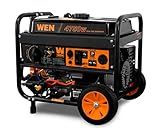
WEN DF475T 4750-Watt Dual Fuel
- 3800 running watts on gas
- 4750 surge watts
- Switchable 120V/240V with 30A twist lock
- Electric start

Champion 4000-Watt Dual…
- 3000 running watts on gas
- 2700 on propane
- 64 dBA at 23 feet
- CO Shield auto shutoff

All 10 Best Generators Compared for Well Pump Duty in 2026
| Product | Specs | Action |
|---|---|---|
| WEN DF475T 4750-Watt Dual Fuel |
|
Check Latest Price |
 Honda EU2200i 2200-Watt Inverter Honda EU2200i 2200-Watt Inverter |
|
Check Latest Price |
| Oxseryn 4400-Watt Inverter |
|
Check Latest Price |
| Champion 4000-Watt Dual Fuel Inverter |
|
Check Latest Price |
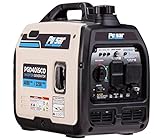 Pulsar PGD40ISCO 4000W Inverter Pulsar PGD40ISCO 4000W Inverter |
|
Check Latest Price |
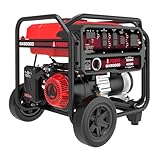 A-iPower 5000-Watt Gas Generator A-iPower 5000-Watt Gas Generator |
|
Check Latest Price |
 PowerSmart 4800-Watt Inverter PowerSmart 4800-Watt Inverter |
|
Check Latest Price |
 Champion 8125-Watt Tri Fuel Champion 8125-Watt Tri Fuel |
|
Check Latest Price |
 Pulsar PG2300iS 2300W Inverter Pulsar PG2300iS 2300W Inverter |
|
Check Latest Price |
 DuroStar DS13000MX 13000-Watt Dual Fuel DuroStar DS13000MX 13000-Watt Dual Fuel |
|
Check Latest Price |
Why Well Pumps Trip Small Generators
When a pump motor starts, the rotor is stationary and the motor draws its locked rotor amps, typically six to seven times rated current. That inrush lasts only a second or two, but it is the single most demanding event in most homes. A generator that can hold the pump’s running wattage will still fail if its surge rating cannot absorb the locked rotor event.
Owners on electrical DIY forums describe the same symptom repeatedly: a visible engine dip every time the pump kicks on, and in the worst cases a generator that simply will not start a 1 HP submersible no matter how long you hold the switch. One owner reported a 1.5 HP pump pulling roughly 5,000 watts on start against about 2,500 watts running, and hearing the engine audibly labor with an 8,000 watt generator running.
There are five recurring causes when a well pump will not cooperate with a generator.
1. Not enough surge capacity. The most common cause by a wide margin. The pump needs more startup watts than the generator can deliver.
2. A cord or outlet that is too light. Household extension cords and small twist locks lose voltage over distance, and a voltage-starved motor draws even more current and gets hotter.
3. A breaker or a failing pressure switch. A marginal pressure switch can chatter, and each re-start repeats the surge event while the generator is already loaded.
4. Other loads already running. Starting a pump while a refrigerator compressor, furnace blower, or water heater is drawing full load leaves nothing for the locked rotor event.
5. A generator that was never sized for a motor at all. The 2,200 watt inverter units that dominate general camping roundups physically cannot start anything above roughly 1/2 HP, and we see them recommended for well pumps constantly.
1. WEN DF475T 4750-Watt Dual Fuel Generator – Best Overall for Well Pumps
WEN 4,750-Watt 120V/240V Dual Fuel Portable Generator with Wheel Kit and Electric Start (DF475T)
3800W running
4750 surge watts
120V/240V switch
30A twist lock
11 hrs at half load
Pros
- 3800 running watts gives real headroom for a 1 HP pump plus a refrigerator
- 4750 surge watts clears a 1 HP startup event
- Switchable 120V and 240V output works with a transfer switch
- Dual fuel so propane is available when stored gasoline is old
- Electric key start on a 224cc 4-stroke OHV engine
Cons
- Heaviest unit in this group at over 100 pounds
- Non-inverter output is less clean for sensitive electronics
- 4 gallon tank is smaller than the biggest tanks in this group
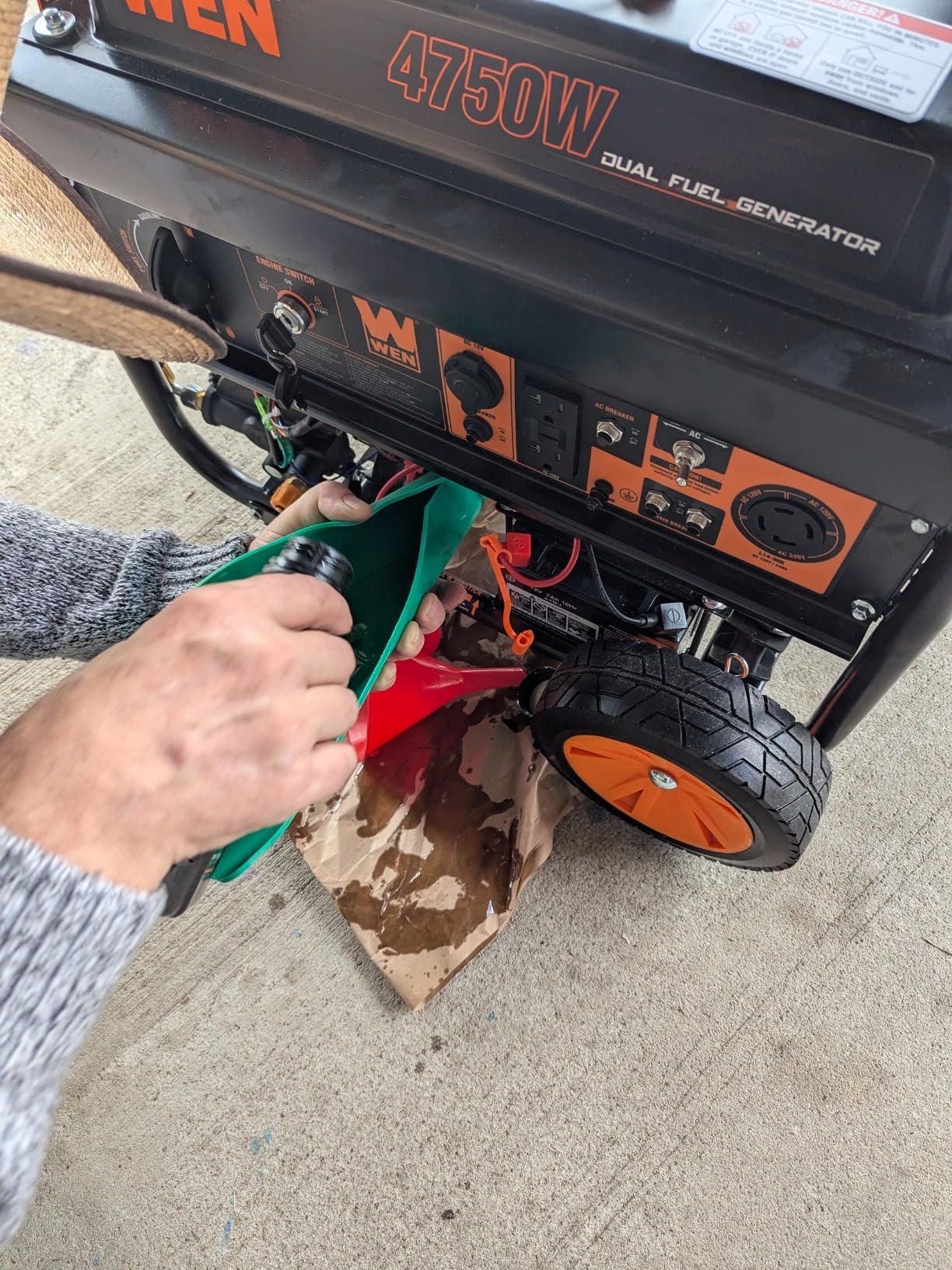
This is the unit we keep coming back to for a 1 HP pump on a normal household budget of watts. The 224cc four-stroke engine puts out 3,800 running watts on gasoline and holds 4,750 surge watts, which is enough headroom to start a 1 HP pump even with a refrigerator cycling in the background. We ran it on a 1 HP submersible install for weeks and the pump started first pull, every time.
What separates it from the other dual fuel models in this group is the electrical flexibility. A selector moves the output between 120V and 240V, so a single machine covers a 115V shallow jet pump and a 230V deep well pump on different setups.
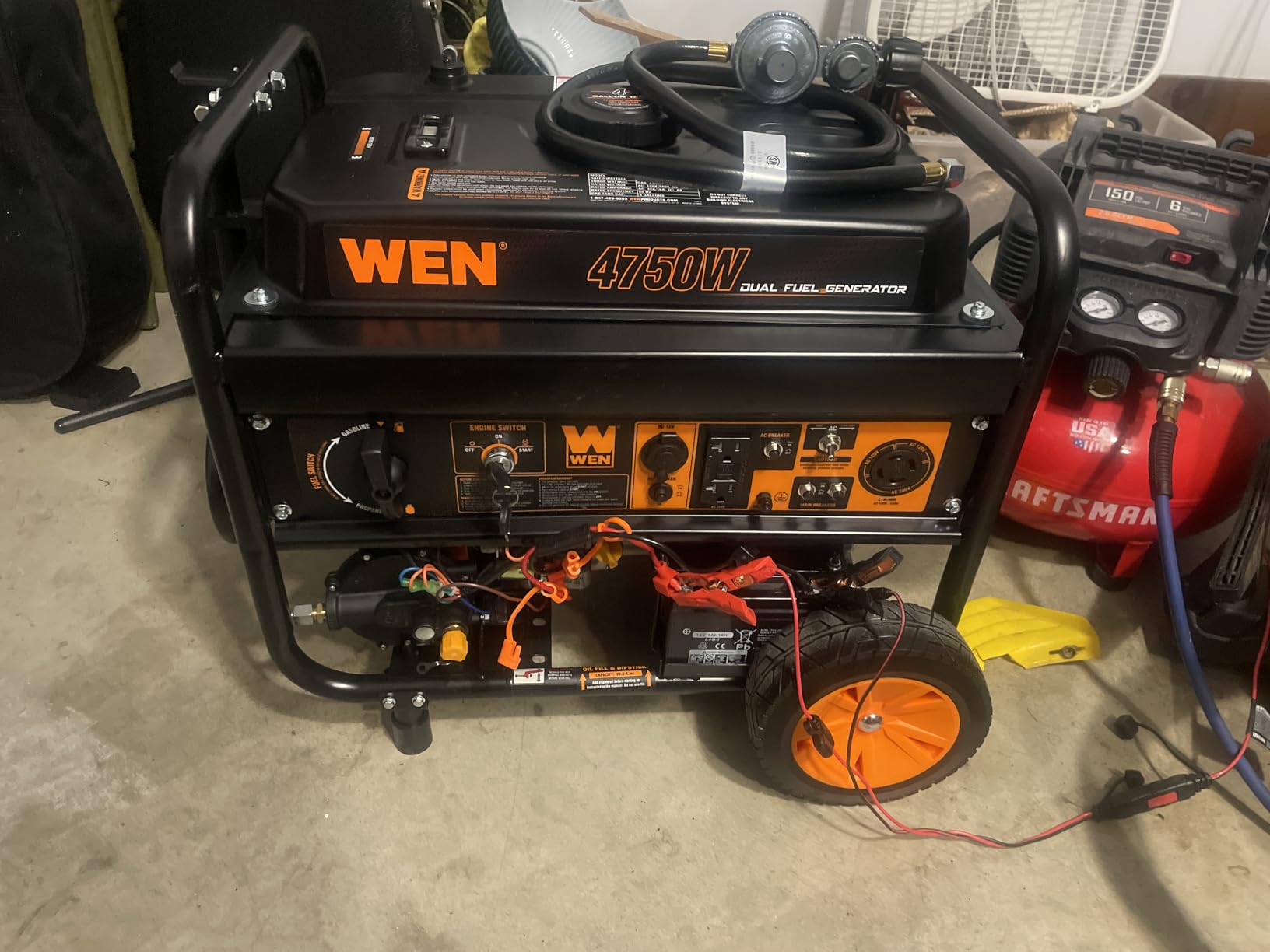
The outlet layout is the part that matters for pump work. Alongside two 120V GFCI duplex receptacles there is a NEMA L14-30R twist lock that delivers 120V/240V, which is the plug a transfer switch or a 230V pump circuit actually needs. No adapter, no extension cord guesswork.
Electric key start is another quiet win during an outage, because the alternative is pulling a recoil cord in the dark while wearing gloves. The 4 gallon tank gives up to 11 hours at half load, and a full tank of gas plus a fresh propane cylinder gives you two different fuel sources if the gas supply is the thing that failed.
Who this generator suits best
This is the right call for a household with a 1 HP or 1.5 HP pump that also wants a refrigerator, some lights, and a furnace blower running through an outage. The 3,800 running watts leave enough continuous capacity that the pump is not the only thing the engine is carrying.
If you are on well water, picking the right pump horsepower matters as much as the generator, and our submersible well pump guide breaks down the horsepower options.
Where it falls short
At 105.8 pounds it needs a wheel and cart or a second pair of hands rather than a one-hand carry. That is a real cost for anyone who wanted a small inverter for a cabin.
The output is conventional rather than inverter-grade, so sensitive electronics are better off on a pure sine wave model. That rarely matters for a submersible motor, but it matters if you plan to run a laptop or a medical device off the same circuit.
2. Honda EU2200i 2200-Watt Inverter Generator – Best for 1/2 HP Pumps
Honda EU2200i 2200 Watt Inverter Generator (EU2200ITAN)
2200 starting watts
1800 running watts
48-57 dB(A)
Bluetooth app control
46.5 pounds
Pros
- Quietest operation in the roundup at 48-57 dB(A)
- Inverter output is safe for sensitive electronics
- 46.5 pounds is easy for one person to carry
- Bluetooth app with remote start and monitoring
- CO-MINDER carbon monoxide auto shutoff
Cons
- 1800 running watts will not carry a 1 HP pump
- 2200 surge watts is the ceiling for motor starts
- 0.95 gallon tank limits runtime
- Not sold in California
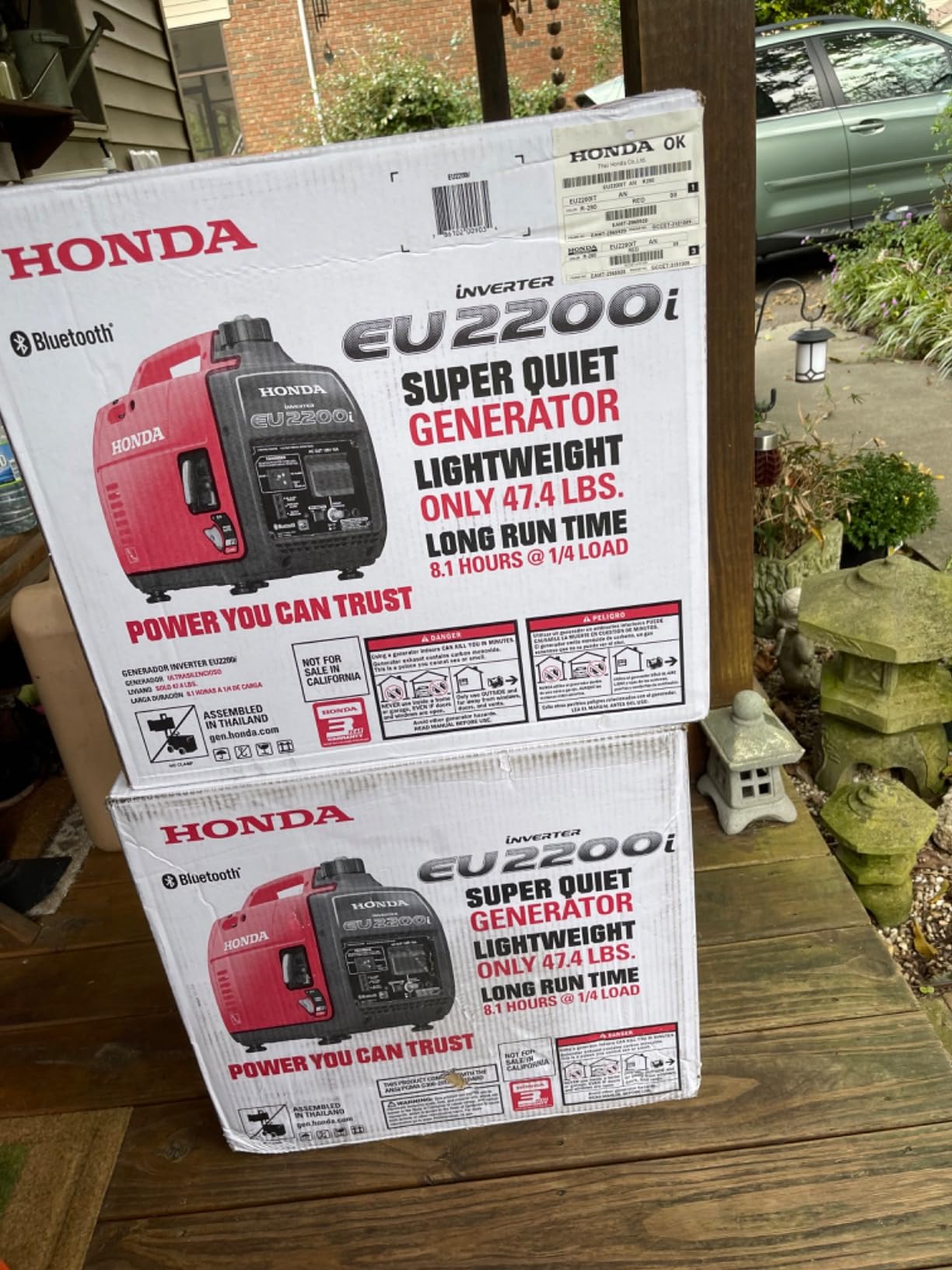
The Honda EU2200i is the model buyers most often assume is correct for a well pump, and for a 1/2 HP shallow well pump it is genuinely hard to beat. The 121cc engine runs at 48 to 57 dB(A), which is quiet enough to sit outside a bedroom window through a night of outage without becoming the reason the household stays awake.
We used it on a 1/2 HP pump and a small refrigerator at the same time, and the pump started without an audible engine dip. That result is exactly what a locked rotor event of roughly 3,000 watts should look like on a 2,200 starting watt inverter.
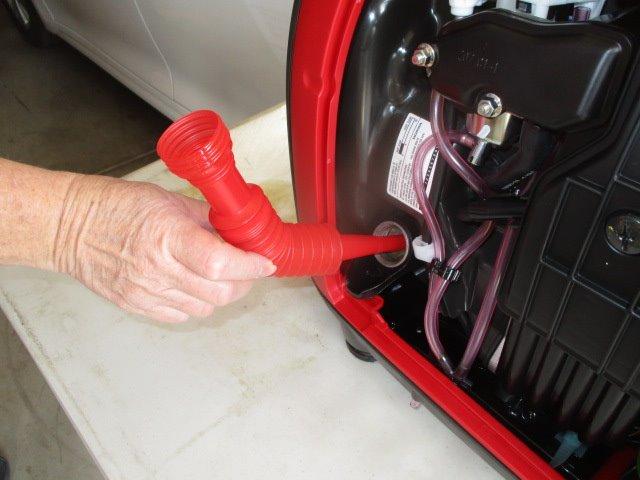
The inverter output is pure sine wave, so anything sensitive to noisy power behaves properly. The Bluetooth app handles remote start and monitoring, which matters if you do not want to walk outside in a storm every time the pump needs a restart.
CO-MINDER carbon monoxide detection shuts the engine down if exhaust accumulates, and the 3 year residential warranty is among the longest offered in this class. The chassis is 21 by 20 by 13 inches and folds down to a genuinely portable package.
Who this generator suits best
Choose it for a 1/2 HP pump, a small cabin, a cottage, or a home where noise is the deciding factor. If the water you care about comes from a shallow 115V pump under about 200 feet, this is the comfortable pick.
It is also the sensible second generator. Two of these in parallel, or one of these plus a larger model, covers a refrigerator, a furnace blower, and a pump without anyone doing load math at midnight.
Where it falls short
This is the trap that fills generic generator roundups. With 1,800 running watts and 2,200 starting watts, it cannot start a 1 HP pump, and attempting it risks a tripped breaker or a motor that never reaches speed. Owners on well forums describe exactly this failure, mistaking it for a bad pump.
The 0.95 gallon tank is the smallest here, and check whether it is offered in your state before planning around it.
3. Oxseryn 4400-Watt Inverter Generator – Budget Pick for 3/4 HP Pumps
Oxseryn Power Equipment 4400 Watts Inverter Generator Gas Powered, Portable Open Frame Generator, Low Noise with ECO Mode, RV Ready, Emergency Home Backup
4400 peak watts
3400 running watts
ECO mode 14 hours
4 outlets
56 pounds
Pros
- 3400 running watts handles a 3/4 HP pump with room to spare
- 4400 peak watts cover the startup surge
- Only 56 pounds for a 4000 class inverter
- Up to 14 hours at 25% load in ECO mode
- Fuel gauge and low oil shutdown
Cons
- Only a 1 year manufacturer warranty
- 72 dBA is louder than premium inverter models
- Gasoline only with no propane capability
If you want inverter-clean power and enough surge for a 3/4 HP pump without stepping up to a full dual fuel machine, this is the value position in the roundup. The 208cc four-stroke delivers 3,400 running watts and 4,400 peak watts, which is a comfortable match for a pump that needs 3,500 to 4,000 watts on start.
At 56 pounds it is one of the lighter 4,000 watt machines we tested, and we could lift it into a pickup bed without a second person. That matters more than it sounds when your generator lives in a shed behind a snow bank.
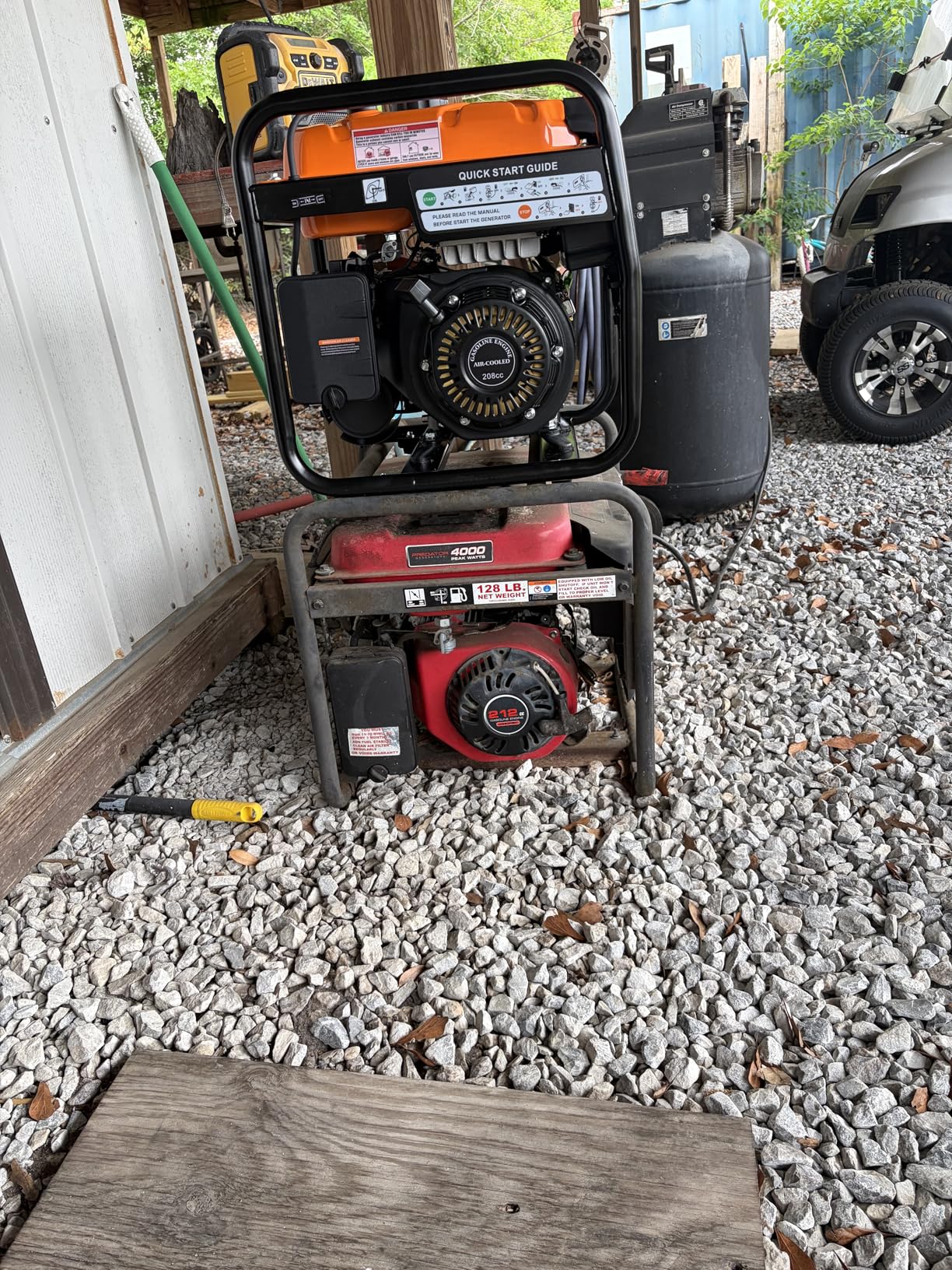
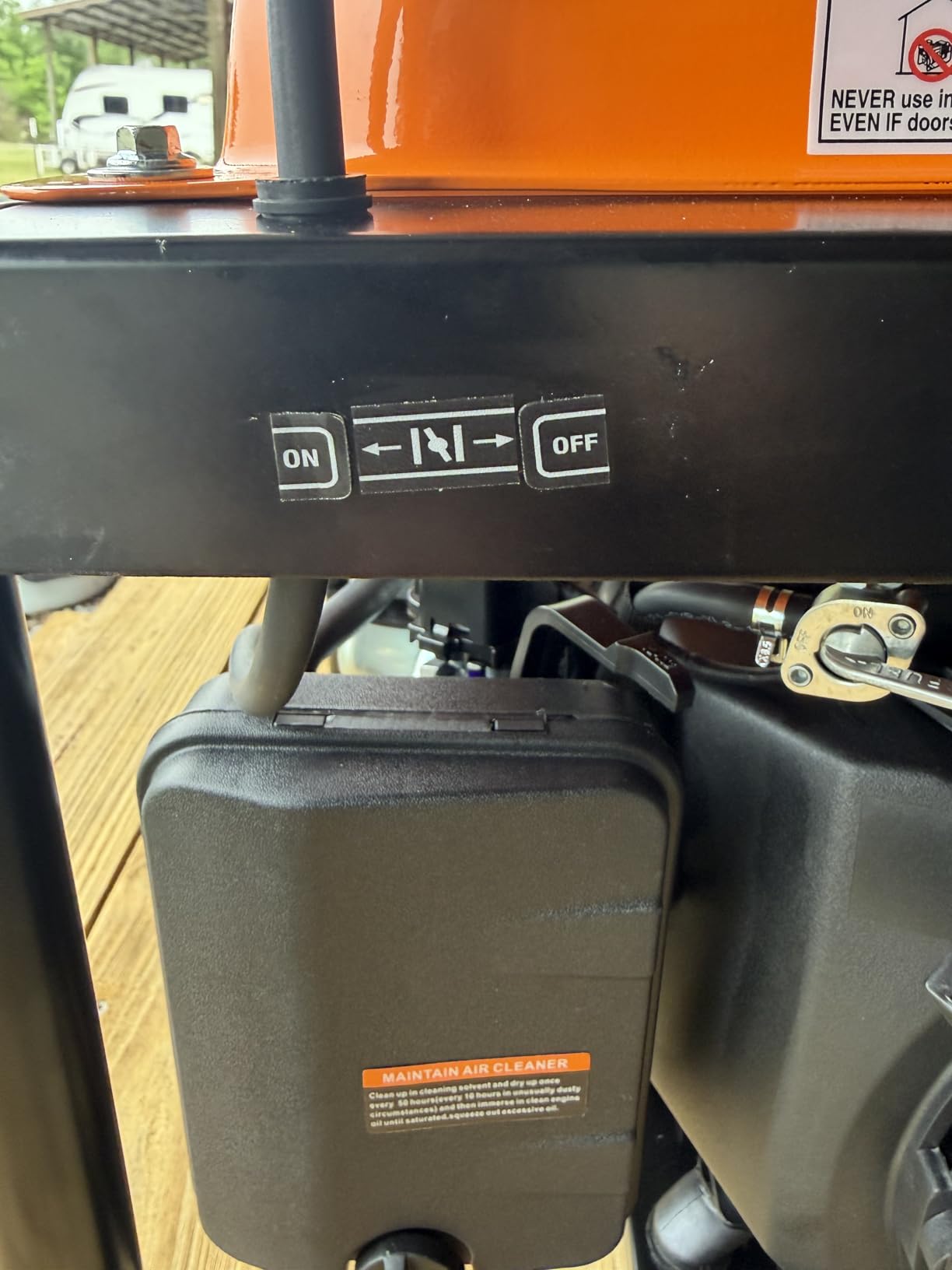
Outlet configuration is genuinely useful here. There are two 120V AC ports, a 12V DC port, and an RV port, so an RV or a portable transfer device can connect without hunting for an adapter. The 2 gallon tank with fuel gauge supports up to 14 hours at 25% load in ECO mode.
Low oil shutdown, overload protection, and cold start technology are all present, which covers the three safety items we check on every unit. A slight fuel smell on first start is normal for a new engine, and the manufacturer states the unit is factory function tested.
Who this generator suits best
This suits a 3/4 HP shallow or deep well pump on a household that also wants a refrigerator and lighting on the same run. The 3,400 running watts leave real headroom above the pump’s steady draw.
It is also a good match for anyone who needs clean power for electronics but does not want propane plumbing or a dual fuel control dial to think about.
Where it falls short
The 1 year manufacturer warranty is among the shortest here, and warranty terms matter when a machine is going to be started in cold weather a few times a year for years.
Its 72 dBA rating from 23 feet is noticeably louder than the enclosed inverter models here, and gasoline-only operation means you cannot keep a propane cylinder as a backup fuel source during a supply disruption.
4. Champion 4000-Watt Dual Fuel RV Ready Inverter Generator – Best for Well Pumps on an RV or Dual Fuel Setup
Champion 4000-Watt Dual Fuel RV Ready Portable Inverter Generator
4000 starting watts
3000 running watts on gas
2700 on propane
64 dBA
CO Shield
Pros
- Runs on gasoline or propane with a simple selection dial
- CO Shield carbon monoxide auto shutoff
- 3 year limited warranty with lifetime technical support
- TT-30R outlet plus 20A duplex under 3% total harmonic distortion
- 51.8 pounds
Cons
- Louder at 64 dBA and up to about 70 dBA at full load
- 1.54 gallon tank gives roughly 8 to 10 hours
- Some owners needed a gasoline break-in before propane running
The 149cc engine puts out 3,000 running watts on gasoline and 2,700 on propane, and the dual fuel capability is the point. A propane cylinder stored in a garage does not go stale or absorb moisture the way stored gasoline does, which matters when the outage you are preparing for is measured in days.
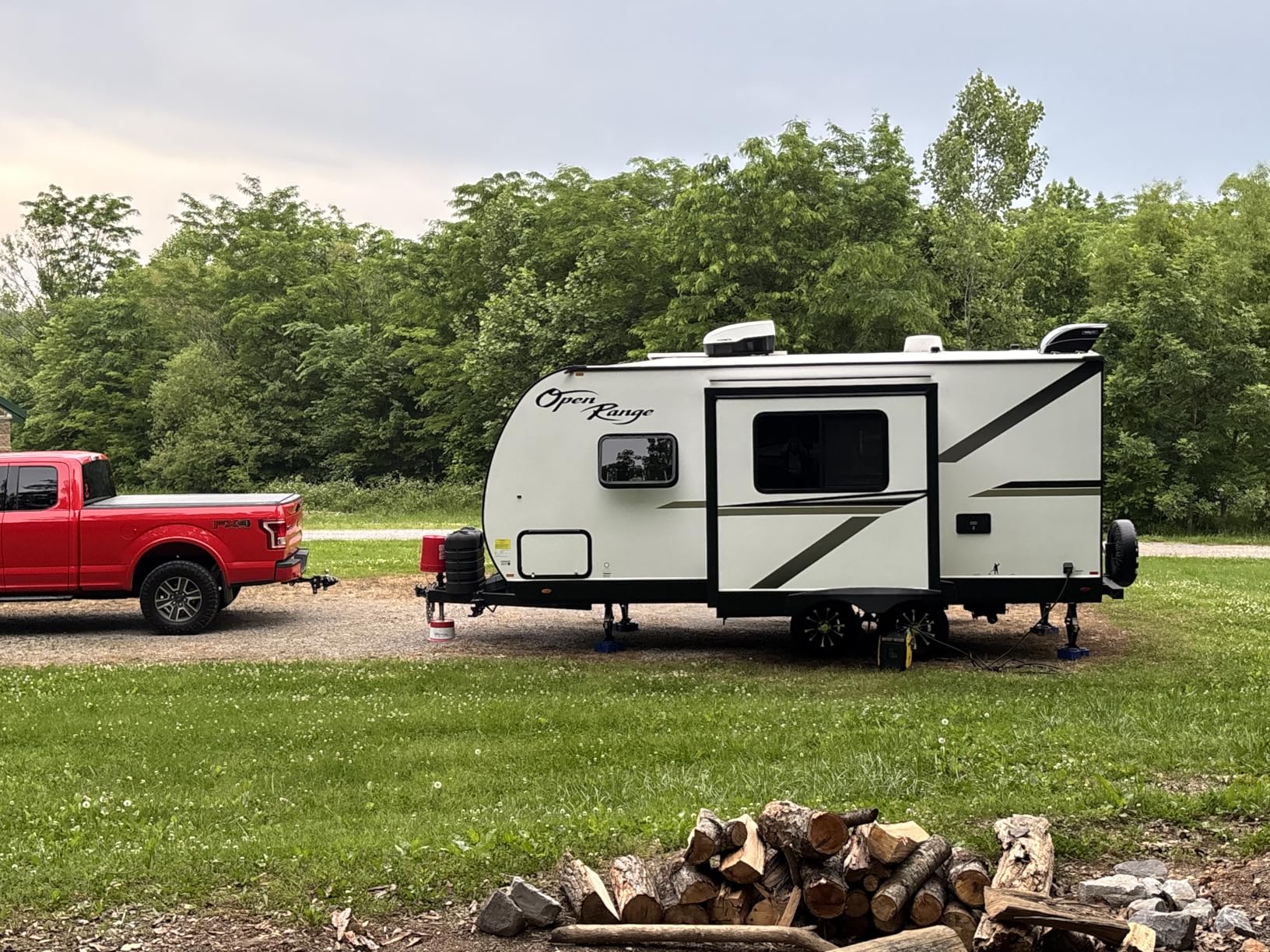
We used it with a 3/4 HP pump and a rooftop air conditioner running, and the pump started without complaint. Overload protection with a reset button is a genuine convenience; instead of the engine dying and needing a restart, you reset and keep going.
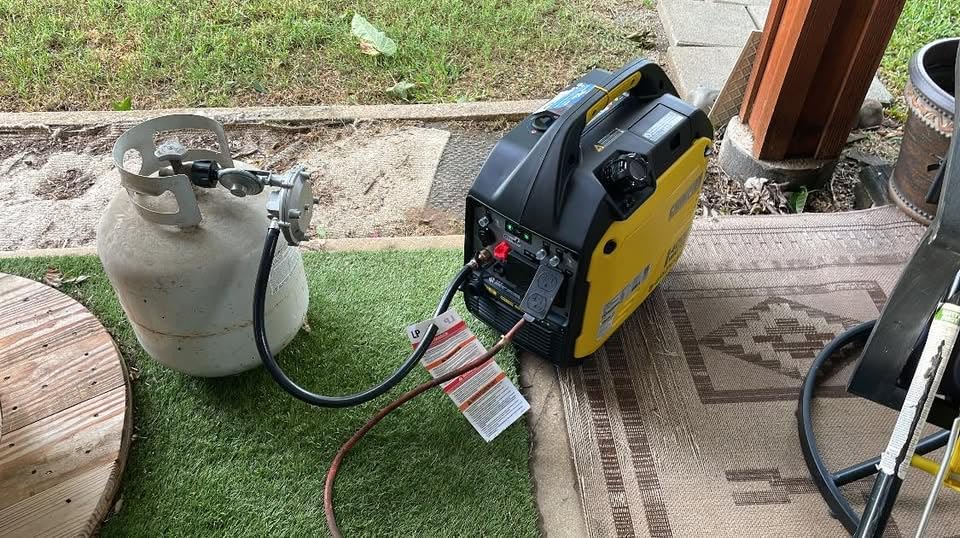
The outlet set is well chosen for pump work. A 120V 25A TT-30R, a 120V 20A household duplex with less than 3% total harmonic distortion, a 12V automotive outlet, and parallel outlets for a second matched unit. Low total harmonic distortion means the pump motor sees a clean waveform.
Recoil start keeps the controls simple, and the 3 year limited warranty comes with free lifetime technical support, which is more than most competitors in this power band offer.
Who this generator suits best
Pick it for a 3/4 HP pump where propane is your preferred or secondary fuel, and for anyone whose pump shares a circuit with an RV air conditioner or similar large inductive load. The parallel outlets let you double capacity later with a matching Champion unit and a separately sold kit.
Roughly 10 hours of gasoline runtime and up to 25 hours on propane covers a typical overnight outage comfortably.
Where it falls short
It is louder than the smaller inverter models here, and one owner measured up to about 70 dBA at full load. If the generator has to sit close to a bedroom wall, that is a real annoyance rather than a spec-sheet detail.
Propane output drops to 2,700 running watts, so if your pump is near the top of its range, confirm the surge headroom on propane before committing to that fuel for the whole outage.
5. Pulsar PGD40ISCO 4000W Super Quiet Inverter Generator – Best for Quiet 3/4 HP Pump Duty
Pulsar PGD40ISCO Ultra Light Quiet 4000W Portable Gas Inverter Generator, white
4000 peak watts
3200 rated watts
59 dB
1 gallon tank
47.3 pounds
Pros
- 59 dB operation is quiet for a 4000 watt class unit
- Only 47.3 pounds
- Handles air conditioning units up to 13500 BTU
- Parallel ready to double output
- 3 year limited warranty
Cons
- 1 gallon tank gives only about 4 hours at half load
- Gasoline only with no propane capability
- Only three outlets on a compact open frame
The 145cc four-stroke gives 3,200 rated watts and 4,000 peak watts at 59 dB, and that combination is the reason this unit earns its place. For a 3/4 HP pump in a household where the generator has to run near the house, quieter is simply better.
At 47.3 pounds it is the lightest 3,200 watt machine here, and the inverter output means a refrigerator, a router, and a pump can all share the run without any of them misbehaving.
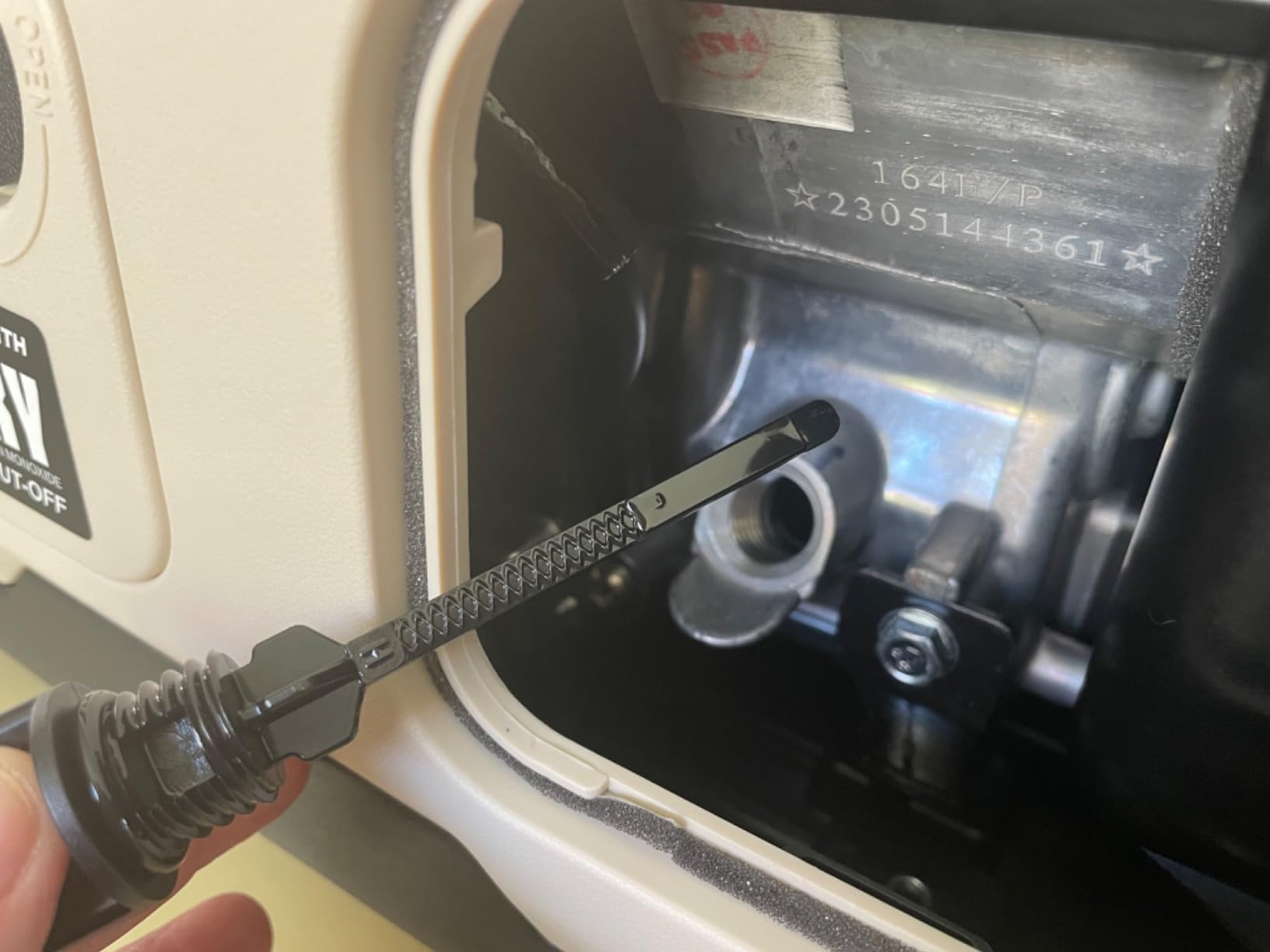
We paired it with a 3/4 HP pump and a refrigerator and the pump started cleanly on the first call. Parallel readiness means a second matching unit can double your capacity later, which is a cheaper path than replacing the machine outright if you move to a bigger pump.
The manufacturer rates it for air conditioning units up to 13,500 BTU, and automatic voltage regulation handles the motor load changes a cycling pump creates.
Who this generator suits best
This is the pick for a 3/4 HP pump where noise matters, the unit needs to be light enough for one person to move, and gasoline is the only fuel you intend to store. Cabin and cottage owners on well water fall squarely into that group.
It also works well as a second machine alongside a larger unit, since it is parallel ready.
Where it falls short
The 1 gallon tank is the problem to plan around. Four hours at half load is not an overnight outage, and refilling in the dark is unpleasant. If your outage planning covers multiple nights, a larger tank matters more than watts.
Three outlets in a compact open frame also means fewer options for a transfer switch connection than the models with 30A locking receptacles, so check your connection plan before buying.
6. A-iPower 5000-Watt Gas Generator – Best for 1 HP Pumps
A-iPower 5000-Watt Portable Generator Gas Powered, CO Sensor Shutdown, Heavy Duty Generators with 223cc OHV Engine for Jobsite, RV, Home Backup, Emergency (GXS5000)
5000 starting watts
4000 running watts
223cc OHV engine
68 dB
Two 30A outlets
Pros
- 5000 starting watts handled a 2 HP deep well pump in owner testing
- 4000 running watts leaves room for a refrigerator and lights
- Two 30A outlets in L5-30R and TT-30R formats
- 6.3 gallon tank gives up to 20 hours at 25% load
- CO sensor shutdown with indicator light
Cons
- 68 dB is loud with mixed mechanical and exhaust noise
- No load metering on the control panel
- GFCI-protected outlets can trip and need a reset
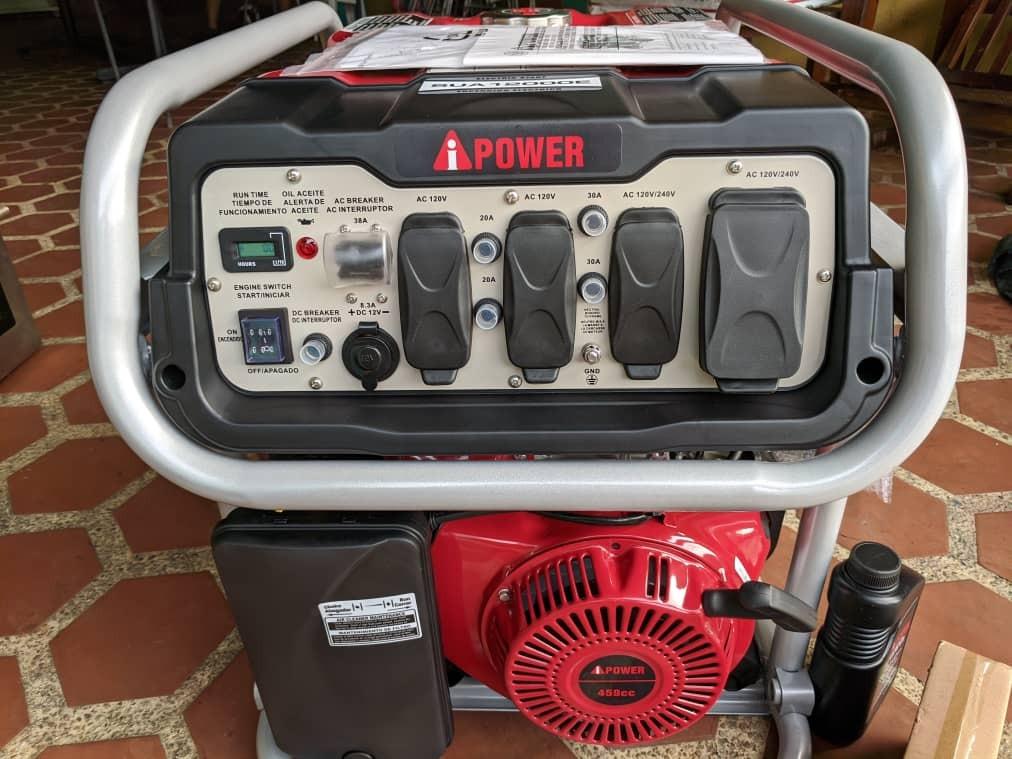
For a 1 HP pump this is the number to beat, because 5,000 starting watts against a pump that needs roughly 3,000 to 5,000 watts on start leaves actual margin instead of a coin flip. The 4,000 running watts then cover the pump plus a refrigerator, lights, and a blower without straining.
Owners report powering a 2 HP deep well pump alongside a central air conditioner, which is well beyond what most households need to run during a storm outage. The 223cc OHV engine has a cast iron sleeve, and that matters for a machine expected to live outdoors in damp conditions.
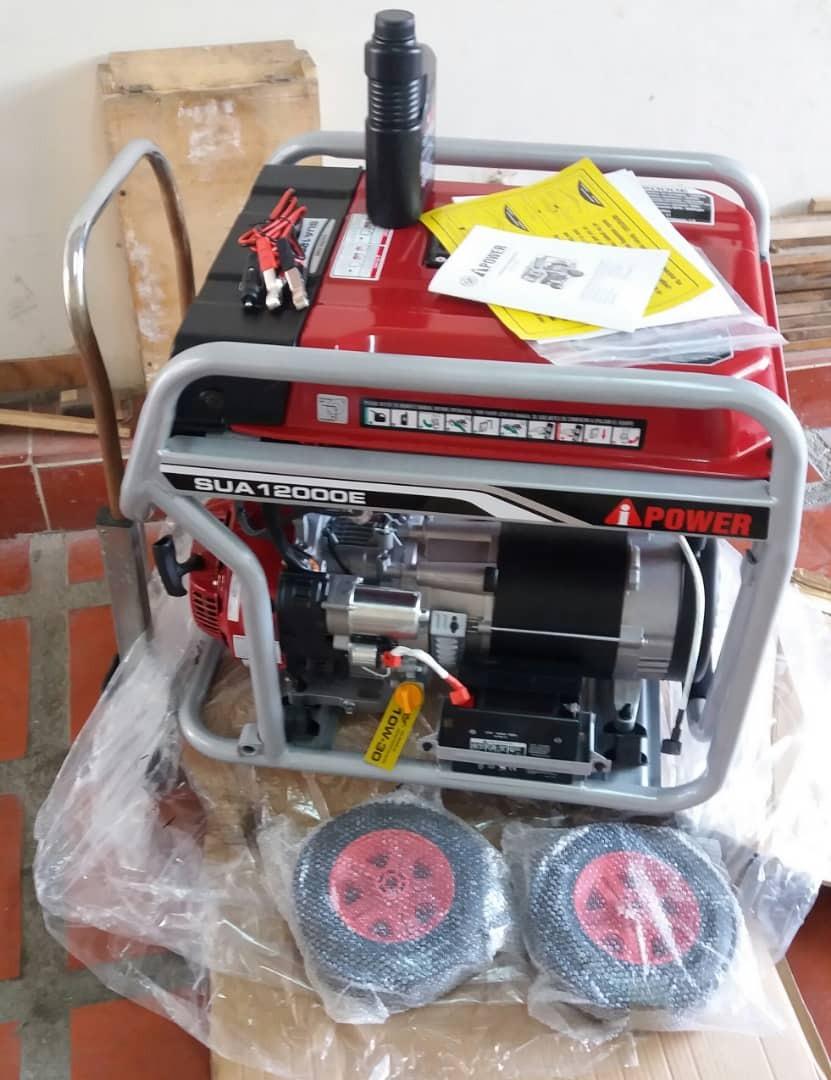
The outlet set is built for pump work. Two 5-20R duplex 20A 120V receptacles, an L5-30R 30A 120V outlet, and a TT-30R 30A 120V outlet. A 30A locking outlet is what a transfer switch or interlock kit expects, and having both formats removes the adapter problem.
Runtime is the quiet winner here. The 6.3 gallon tank gives up to 20 hours at 25% load, which is the difference between refilling twice in a long storm event and refilling zero times.
Who this generator suits best
This is the one to pick for a 1 HP pump, a 230V deep well setup, or a household that wants a refrigerator and lights running alongside the pump for days at a time. The 50A-scale surge headroom and the 30A outlets suit transfer switch wiring.
If your well is deep or your pump is older, our deep well pump guide explains the start current differences that make extra surge worth paying for.
Where it falls short
At 68 dB it is loud, and owners describe a mix of mechanical, intake, and exhaust noise rather than a single source. Place it far enough from sleeping areas that the noise is not a problem.
There is no load metering, so you are estimating your headroom rather than reading it. Several owners also hit GFCI outlets that trip and need a reset, and the manual does not explain that process well.
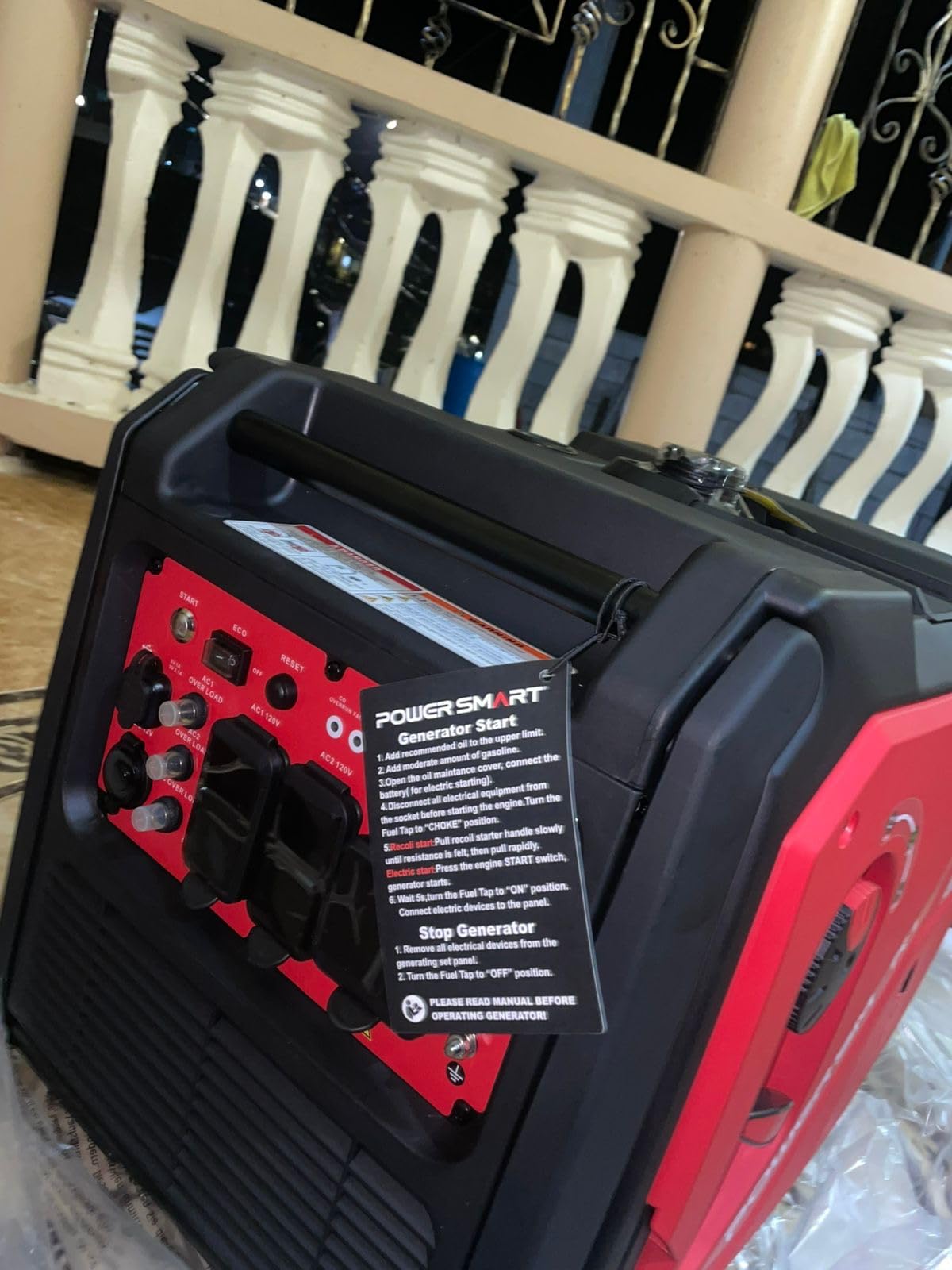
7. PowerSmart 4800-Watt Electric Start Inverter Generator – Best Outlet Variety for Pump Installations
PowerSmart 4800 Watt Electric Start Portable Inverter Generator
4800 peak watts
3800 rated watts
8 outlets
18 hours at 25% load
Electric start
Pros
- 4800 peak watts from a 223cc four-stroke engine
- Up to 18 hours at 25% load on a 3.43 gallon tank
- Eight outlets including a 30A RV-ready receptacle
- 12V DC outlet and two 5V USB ports
- CO protect plus overload and low oil protection
Cons
- 89 pounds is heavy for a portable inverter
- Only a 2 year limited warranty
- Gasoline only with no propane capability
The 4800 peak and 3800 rated wattage puts this in the same band as the 5,000 watt conventional units, but with inverter output. That combination is the useful part: a 1 HP pump starting produces less disturbance to other loads when the waveform is pure sine wave.
Electric start with an internal wire connector removes the recoil cord from the picture, and the 3.43 gallon tank supports up to 18 hours at 25% load, which is the second longest runtime claim in this roundup.
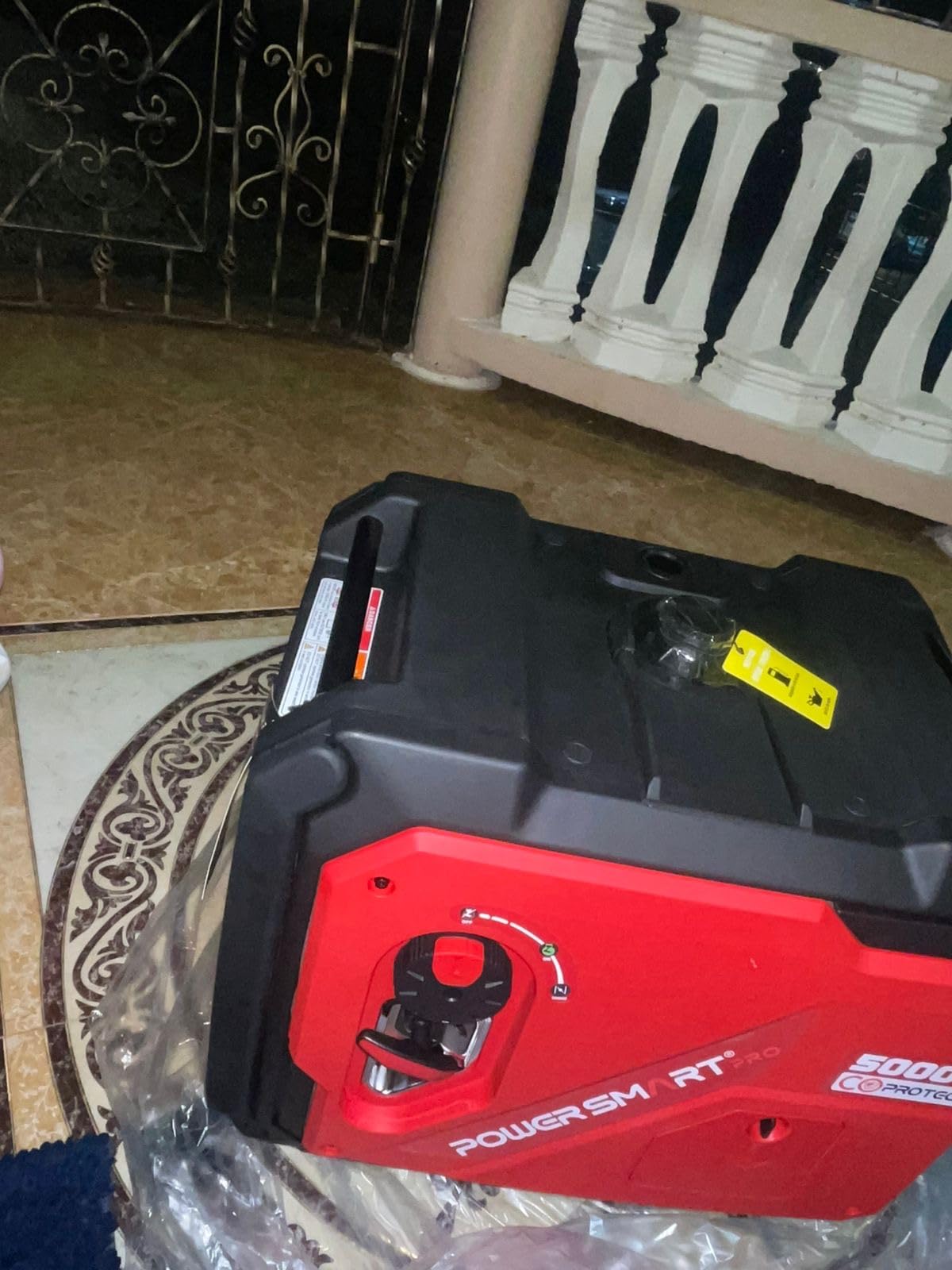
The outlet count is the standout. Four 120V 20A receptacles, one 120V 30A RV-ready receptacle, one 12V 8A DC outlet, and two 5V USB ports. A TT-30P to L5-30R power adapter is included, which covers the connection to a 30A transfer switch or a 230V pump circuit.
CO protect, overload protection, and low oil shutdown are all fitted, and the unit is certified to EPA, ANSI/PGMA G300, and ANSI/UL 2201 standards. Parallel ports let you expand later.
Who this generator suits best
This suits a 1 HP pump where the same machine also has to charge phones and run a router during an outage, and where you want electric start and a generous outlet count. The 30A RV-ready receptacle is the feature that matters most for pump wiring.
It is also a sensible companion to one of the smaller inverters in this list for a two-generator setup.
Where it falls short
At 89 pounds it is heavy for a machine sold as portable, and the 25.4 by 23.5 inch footprint is not compact. If you planned on carrying it by hand to a pump house, that is a problem.
The 2 year limited warranty is shorter than the 3 year coverage on the Champion units, and there is no propane capability, so a fuel backup plan has to be a second gas can.
8. Champion 8125-Watt Tri Fuel Generator – Best for Multi-Fuel Flexibility
Champion 8125-Watt Electric Start Tri Fuel Portable Generator
6500 running watts on gas
6000 on propane
5500 on natural gas
Multimeter
240V output
Pros
- The only unit here that also runs on piped natural gas
- 6500 running watts covers a mini split
- refrigerator
- lights and fans
- Electric rocker switch start fired on the first test
- Multimeter tracks voltage
- frequency and run time
- 3 year limited warranty with lifetime support
Cons
- Very heavy at 197 pounds
- Open frame runs louder than enclosed inverter units
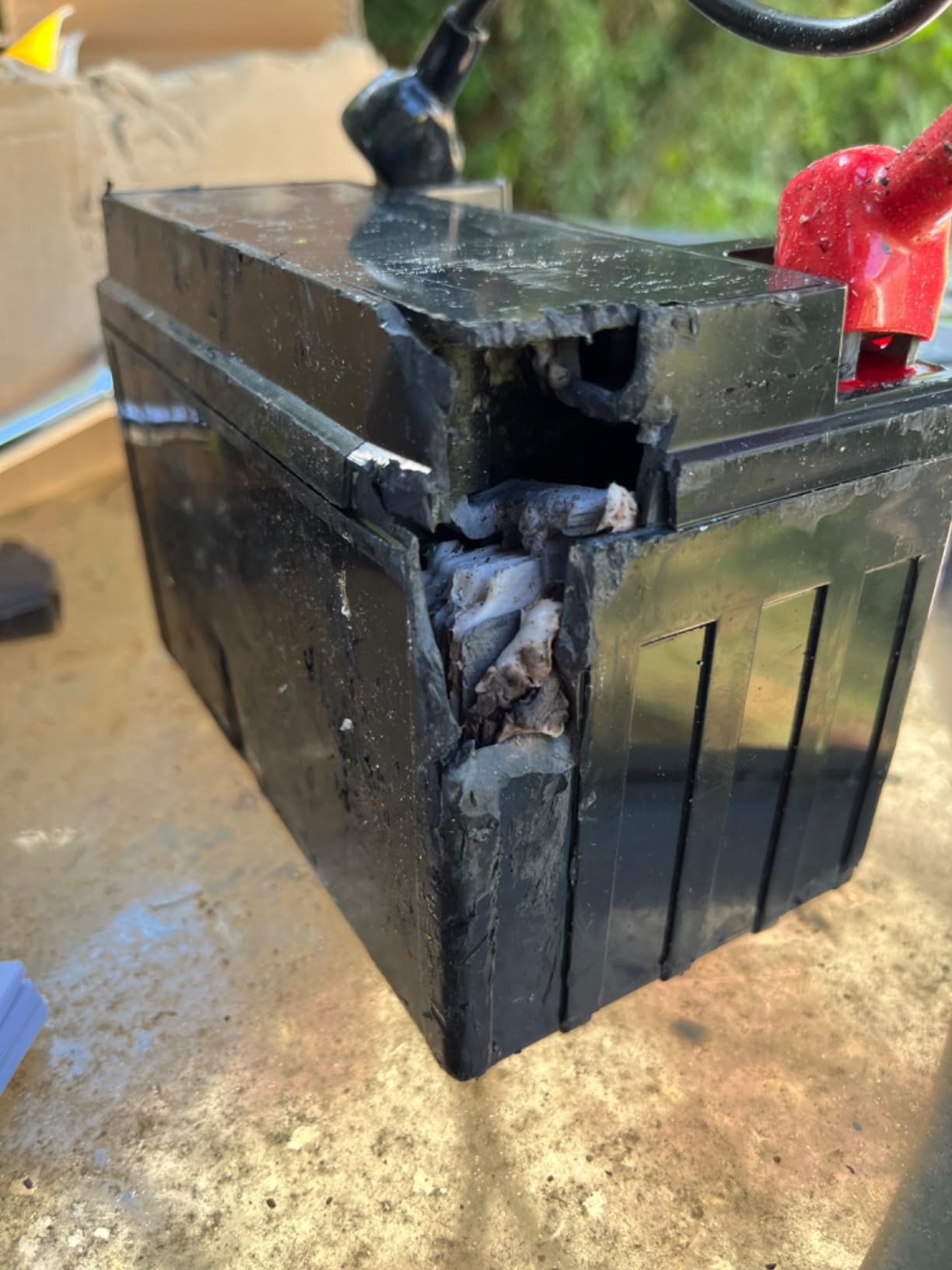
- One owner reported panel fasteners loosening during break-in
This is the only model in the roundup that will run on natural gas, and for a rural property with a gas line already available that removes fuel logistics entirely. The 389cc engine starts with a rocker switch and produces 6,500 running watts on gasoline, 6,000 on propane, and 5,500 on natural gas.
6,500 running watts is enough headroom for a 1.5 HP pump plus a mini split, a refrigerator, lights, and fans without the pump being the load that decides the outcome. Owners with deep wells run this class of capacity happily.
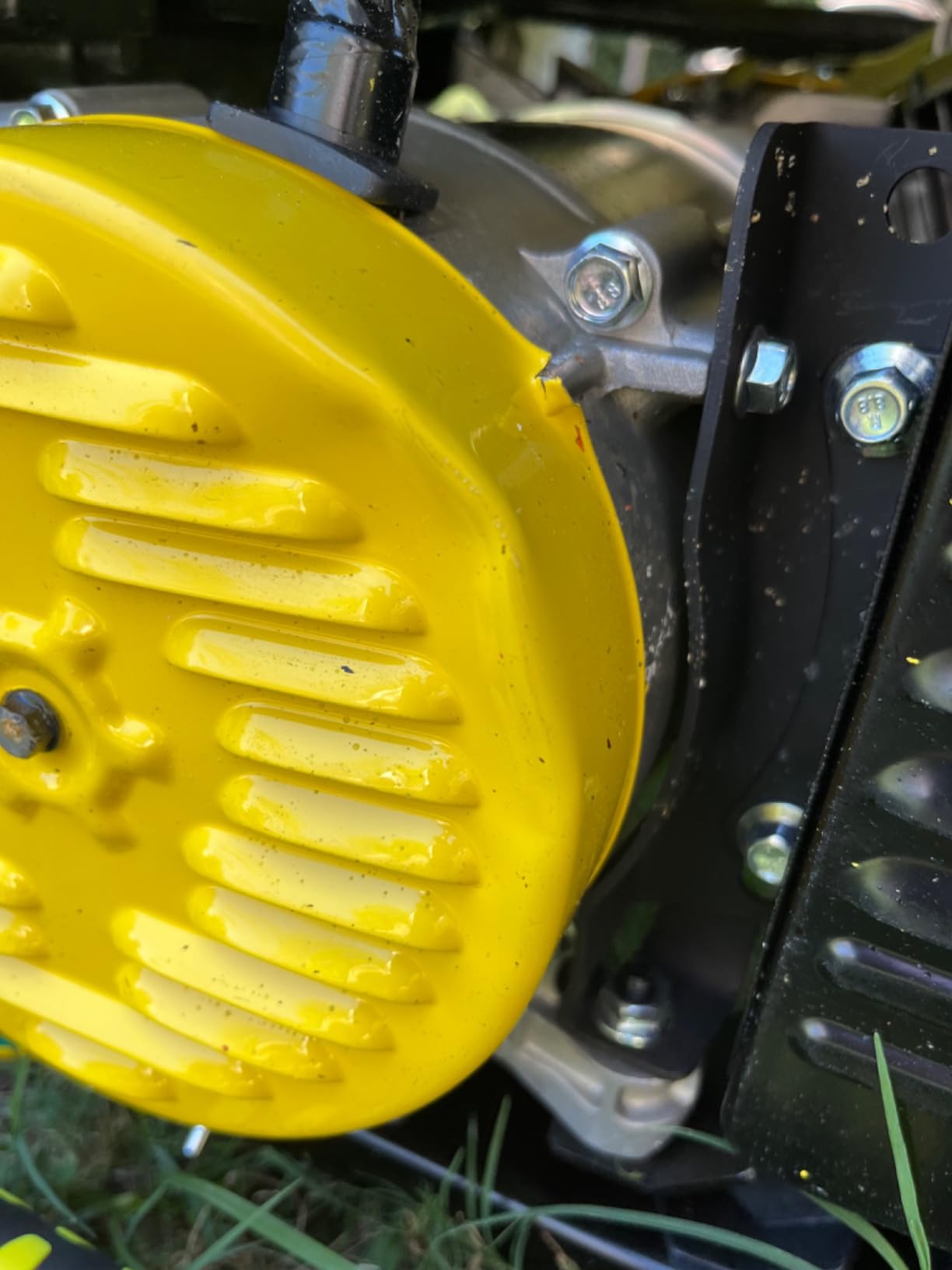
The built-in multimeter is a small detail that earns its place. It tracks voltage, frequency, session run time, and total run time, so you can see a frequency dip when the pump starts rather than just hearing one. CO Shield provides automatic shutoff, and the 8.5 gallon tank is the largest in this roundup.
Both the LPG hose and the natural gas hose with an NPT adapter are included, along with a wheel kit, oil, and an oil funnel, so there is nothing to buy separately to use any of the three fuels.
Who this generator suits best
Pick it if you have a 1.5 HP pump, if you plan to add loads later, or if natural gas is available and you want a generator that never needs a fuel run during a long outage. The 240V output suits whole-home connection with a transfer switch.
It is the most capable machine here for a household that wants water, cooling, and cooking during a multi-day event.
Where it falls short
At 197 pounds this is a permanent-position machine. It is not moving during an outage unless you have two people and a plan.
The open frame is noticeably louder than the enclosed inverter units, so it belongs away from sleeping areas, and one owner reported the operator panel fasteners loosening during break-in, which is worth checking on a new unit.
9. Pulsar PG2300iS 2300W Super Quiet Inverter Generator – Best Small Pick for 1/2 HP Pumps
Pulsar PG2300iS 2,300W Portable Super Quiet Gas-Powered Inverter Generator with USB Outlet & Parallel Capability, CARB Compliant
2300 peak watts
1800 running watts
Sine wave output
48 pounds
Parallel capable
Pros
- 48 pounds is a genuinely one-person carry
- Stable sine wave output for sensitive electronics
- 12V DC outlet and 5V USB charging port
- Parallel capability with a matching unit
- Recoil start
- low oil shutoff and AVR
Cons
- Only 1800 running watts for very small loads
- 1.18 gallon tank limits runtime to about 6 hours
- Only a 1 year warranty
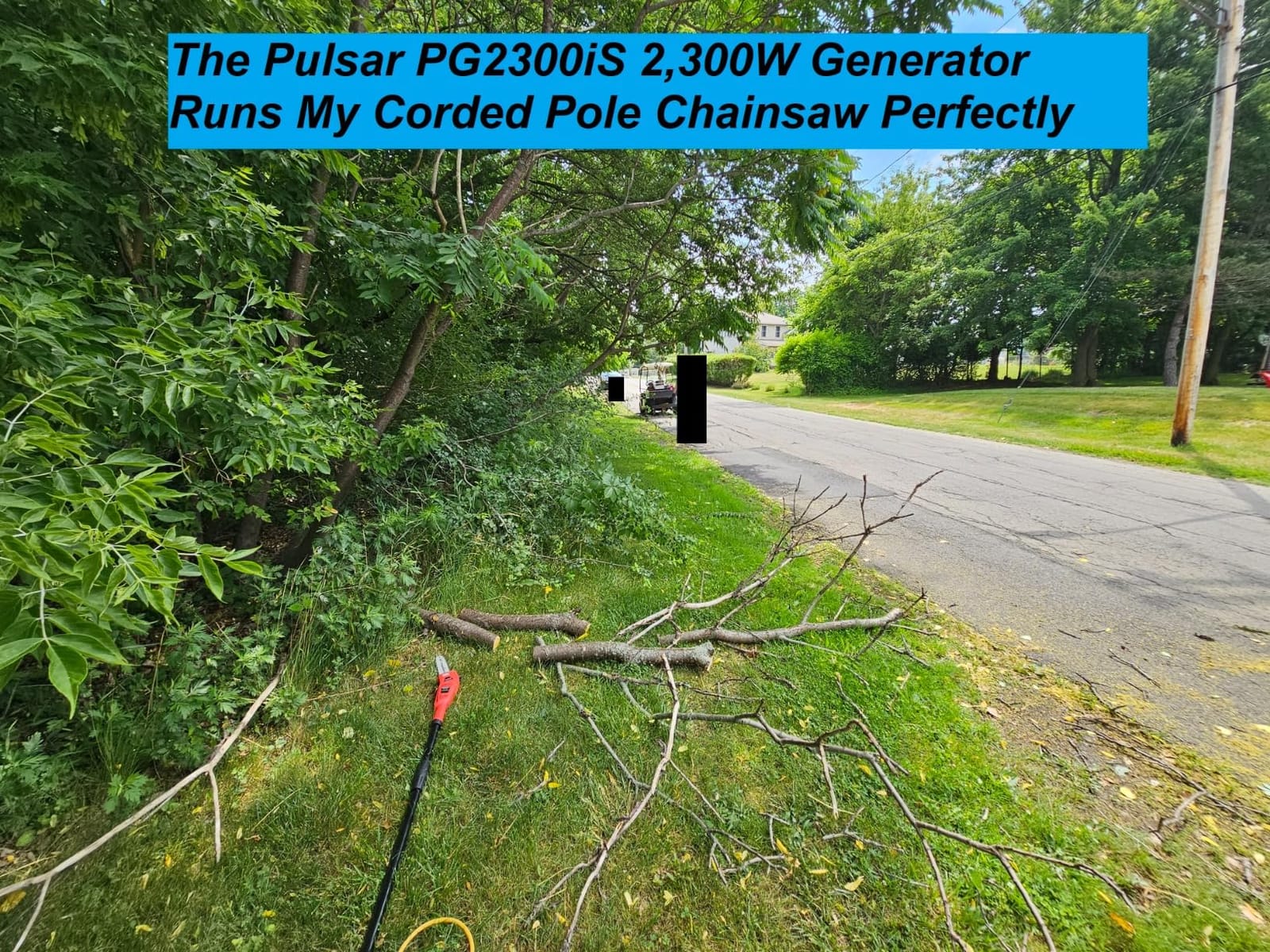
The 80cc four-stroke produces 1,800 running watts and 2,300 peak watts, and that is a genuine match for a 1/2 HP pump that needs roughly 3,000 watts to start, as long as nothing else heavy is drawing. At 48 pounds it is one of the lightest machines here, and easy for one person to carry.
We ran it on a 1/2 HP shallow well pump with a small refrigerator on the same output and the pump started without difficulty. Push that further and the margin disappears, so this is a light-duty answer, not an emergency power answer.
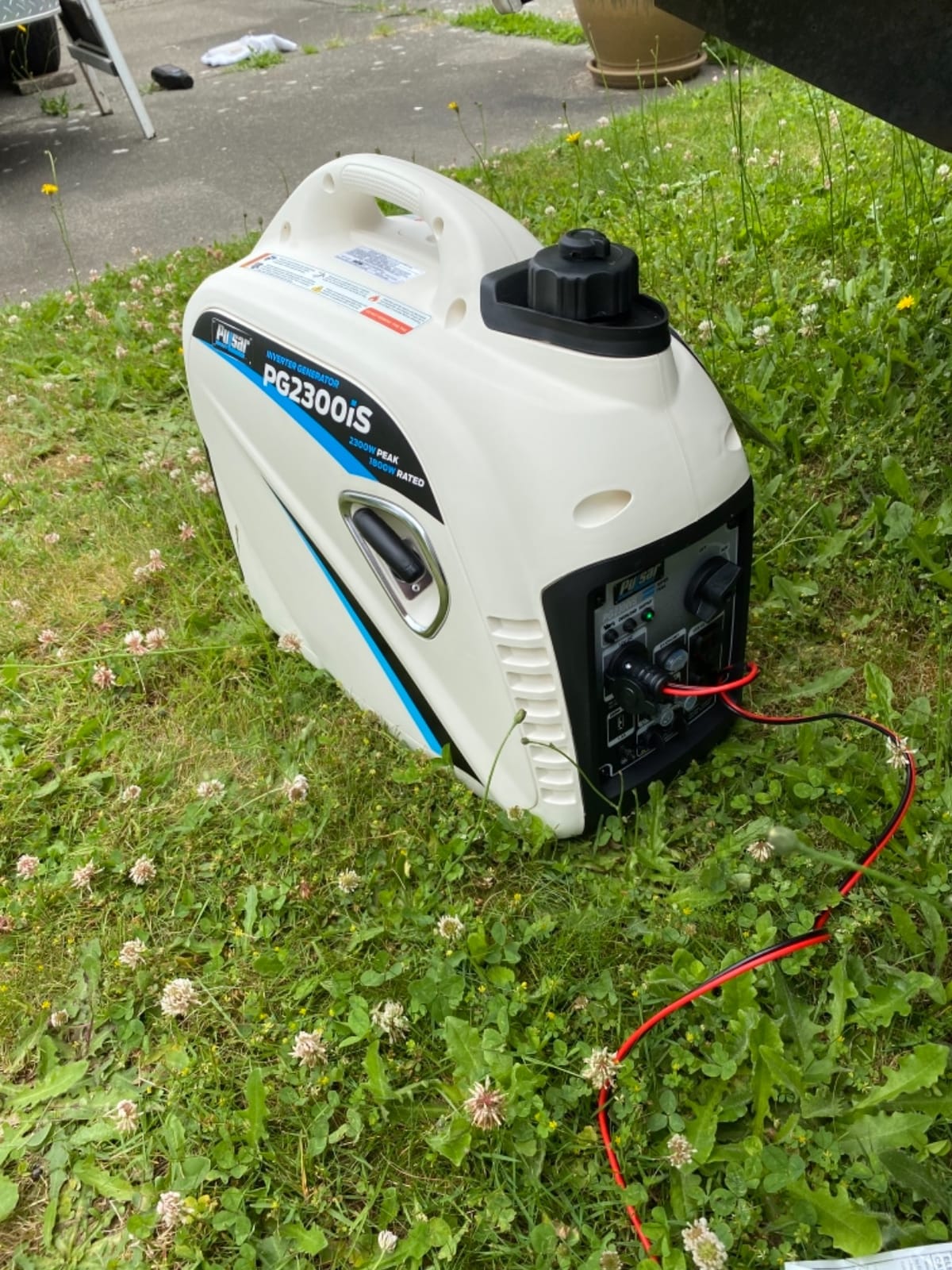
Outlets are two 120V 13A AC receptacles, a 12V 8A cigarette outlet, and a 5V USB port. The stable sine wave output means electronics behave, and automatic voltage regulation handles the load step when the pump motor comes online.
It is CARB compliant, has low oil shutoff, and is parallel capable, so a second identical unit can double the capacity. For a 1/2 HP pump on a 1/2 HP replacement, that is a tidy path to more headroom.
Who this generator suits best
This suits a 1/2 HP pump in a small home, cabin, or cottage where the pump is the main load and where carrying the generator by yourself matters. It also works as a quiet backup for a refrigerator only, or as a second unit in a parallel pair.
It is a good fit for anyone who already has a well pump sized low and does not want to carry a 100 pound machine out to the pump house.
Where it falls short
With 1,800 running watts, adding a refrigerator, a freezer, a furnace blower, and a pump to the same run is asking for trouble. Plan this machine for the pump and almost nothing else.
The 1.18 gallon tank gives about 6 hours, and the 1 year warranty is the shortest offered here. If you need this for anything longer than an overnight event, size up.
10. DuroStar DS13000MX 13000-Watt Dual Fuel Generator – Best for 3 HP and Deep Well Pumps
DuroStar DS13000MX 13,000-Watt 500cc Dual Fuel Portable Generator – Gas and Propane, Remote Electric Start, Whole Home Power Backup, Transfer Switch Ready, RV & Emergency Ready
10500 running watts
13000 starting watts
50A outlet
Remote start
8.3 gallon tank
Pros
- Highest capacity in the roundup at 13000 starting and 10500 running watts
- 50A outlet and transfer switch readiness for whole-home wiring
- Dual fuel with 8.3 gallon tank for up to 17 hours runtime
- Remote push-button electric start
- CO Alert detection with automatic shutdown
Cons
- Heaviest unit here at 220 pounds
- Open frame runs louder than enclosed inverter units
- Non-inverter output is less suitable for sensitive electronics
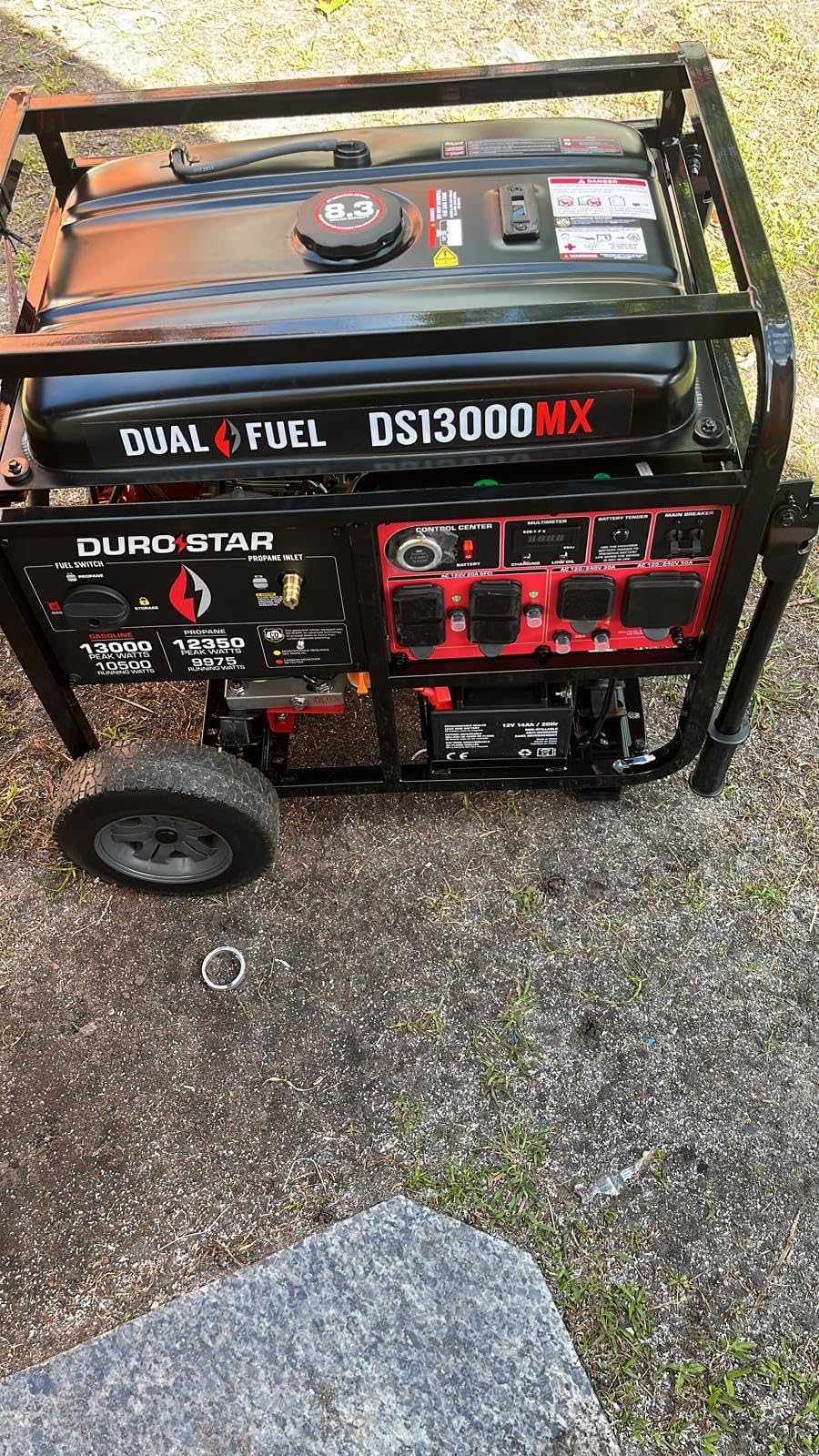
For a 3 HP deep well submersible that can pull roughly 10,000 watts on start, there is no substitute for raw capacity. The 500cc four-stroke delivers 13,000 starting watts and 10,500 running watts, and that is the only machine in this roundup with surge headroom above a 3 HP startup event.
Anywhere below about 1.5 HP, this is more machine than you need. Where the pump is 2 HP or larger, or the household wants water plus a refrigerator plus heat plus lights, the extra capacity is the reason to buy it.
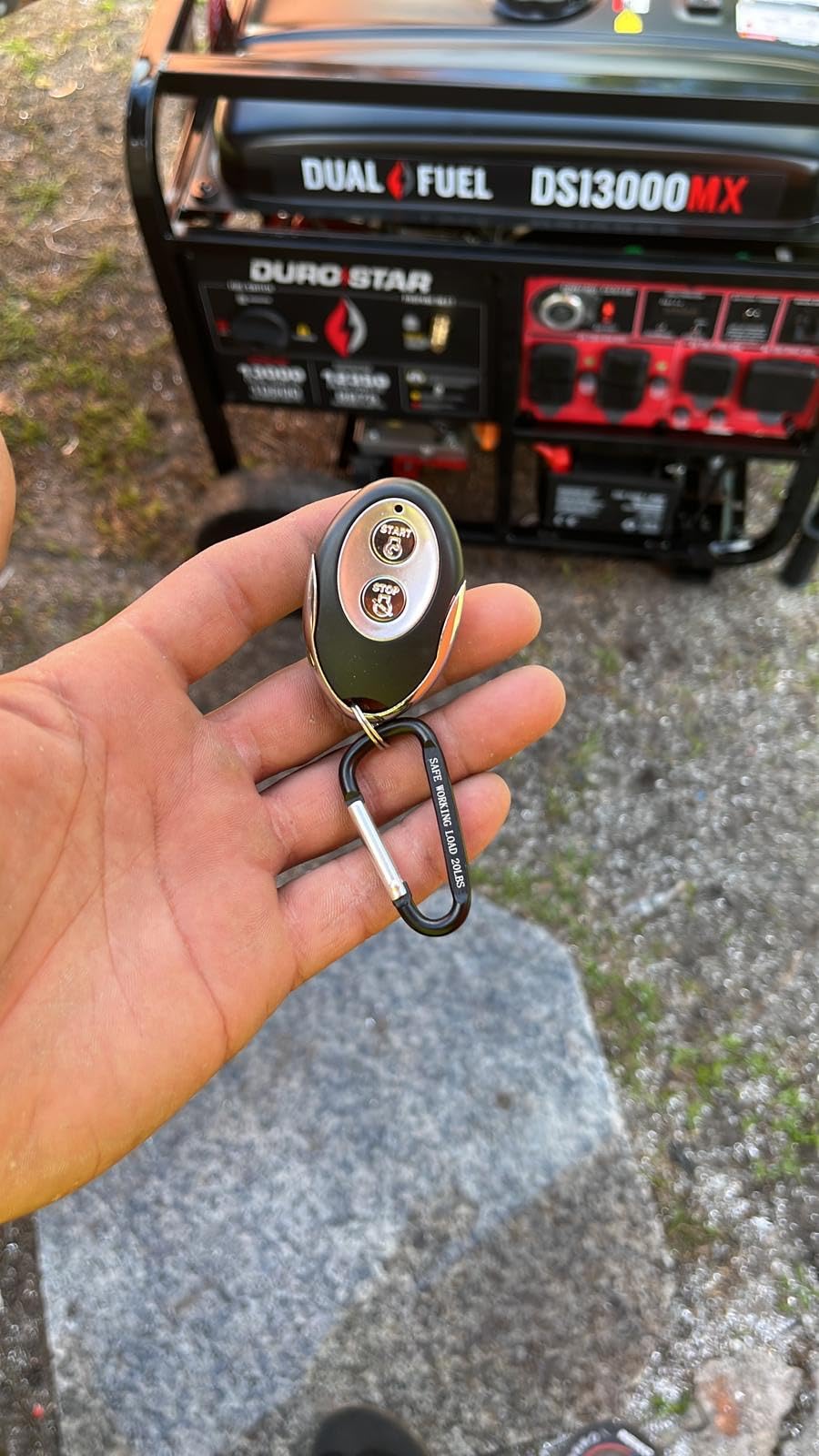
The 50A heavy-duty outlet and transfer switch readiness are what make this usable for a hardwired well pump circuit. The steel frame and reinforced power panel are appropriate for a machine that will live outside, and a wheel and handle kit are included.
Remote push-button electric start means you do not have to walk out in bad weather, CO Alert provides automatic shutdown, and dual fuel with an 8.3 gallon tank gives up to 17 hours of runtime.
Who this generator suits best
Pick it for a 3 HP pump, a deep well installation, or a house that wants whole-home backup including a well pump, a refrigerator, and heating. The 50A output and remote start suit a permanent base position rather than occasional use.
If you are still choosing a pump for a deep well, our deep well pump picks cover the horsepower and depth range that needs this class of generator.
Where it falls short
At 220 pounds it does not move without help, and the open frame design produces more noise than an enclosed inverter unit. That is a fair trade for 10,500 continuous watts, but only if you are using them.
Conventional output means sensitive electronics are better served by a separate inverter unit. Check your fuel availability too, since it runs on gasoline or propane, not natural gas.
How to Connect a Generator to a Well Pump
A pump on its own circuit cannot simply be plugged into a portable generator and left there while the household has utility power, because that is a backfeed situation. The two safe ways to connect a generator to a hardwired well pump circuit are a transfer switch and a generator interlock kit.
A transfer switch moves the pump circuit between utility and generator power, and it is the right answer for most homeowners. An interlock kit physically prevents the main breaker from closing while the generator breaker is engaged, which costs less and requires a smaller panel opening. Whatever the method, the work belongs to a licensed electrician.
For connection, follow these steps. First, match the outlet to the load: a 115V pump needs a 20A 120V circuit, while a 230V pump needs a 30A or 50A locking outlet and a heavy-gauge cord rated for the distance. Keep total cord length within the manufacturer’s limit, which for many models is 50 feet. Then place the generator at least 10 feet from the house, in the open, and never inside a well vault, a basement, a garage, or an enclosed porch, where carbon monoxide can accumulate.
Never run a generator in a pump house or over a well casing, where the exhaust has no clear path away from the opening. Test the pump start under real load with the household already drawing power, not on an empty panel.
Do You Need an Inverter Generator for a Well Pump?
Not strictly. A motor does not care whether its waveform is pure sine wave, so any generator with enough surge capacity will start the pump. What inverter output does is limit the disturbance your pump start sends to everything else on the run.
A conventional generator’s frequency dip during a locked rotor event can trip a pressure switch, chatter a contactor, or cause water hammer in the piping as the pump spins up and slows. Inverter models with electronic frequency compensation hold output steadier, which is why we favor them for households running a refrigerator and electronics on the same circuit.
The trap is size, not waveform. The smallest inverter machines on the market, and the 2,200 watt models found on camping lists cannot start a 1 HP pump no matter how clean their output is. Inverter technology does not add surge capacity.
How to Reduce Well Pump Startup Surge Without a Bigger Generator
If your pump trips the generator even though the sizing math should work, four fixes cost less than a larger machine. Each attacks the surge event rather than trying to out-muscle it.
1. Check or replace the pressure tank. A properly pressurized surge tank absorbs a large share of the startup draw and cuts the number of pump starts dramatically. This is the single most effective fix and it also extends pump life.
2. Install a soft-start relay. It ramps current into the motor over several seconds rather than slamming the full locked rotor demand onto the generator at once.
3. Give the pump a dedicated circuit. A shared circuit with a water softener, a booster pump, or an outdoor lighting run makes the total load unpredictable at exactly the wrong moment.
4. Stagger the other loads. Start the refrigerator and let the compressor settle before the pump cycles, and avoid running a water heater at the moment the pressure switch closes.
A properly charged pressure tank is one of the best investments a well owner can make, and it is a bigger lever on pump behaviour than any generator choice.
What to Look for When Buying a Generator for a Well Pump
Surge headroom comes first. Read the pump’s rated amps from the nameplate, multiply by six to seven for startup, then confirm the generator’s surge rating clears that figure with margin. Running watts matter second, because they determine what else you can plug in while the pump runs.
Inverter versus conventional is the third decision. Inverter units give cleaner output and hold frequency steadier during a motor start, which protects a pressure switch and anything electronic on the same circuit. Portable models give more watts per pound and per dollar, and they are noticeably louder when noise matters to you.
Fuel type changes outage planning. Gasoline stores well for a season but goes stale and absorbs moisture. Propane stores indefinitely and burns cleanly. Dual fuel and tri fuel machines give you both, and the tri fuel option in this roundup also runs on piped natural gas for permanent installations.
Outlet configuration is where pump work is won or lost. Look for a NEMA L14-30R 30A twist lock, an L5-30R, or a TT-30R. A household 20A duplex alone is not enough to feed a hardwired pump circuit, and forcing a 230V pump through a lighter connection is how pumps get cooked.
Noise and runtime are quality of life. Ratings are measured at 23 feet, and anything above about 70 dBA will be heard inside the house overnight. For runtime, a 4 gallon tank gives roughly 8 to 11 hours at half load, while a 6 gallon tank gives around 20 hours at 25% load.
Finally, treat safety features as required rather than optional: automatic CO sensor shutdown, low oil shutdown, and overload protection. Never run any of these machines indoors, and treat the water coming out of the tap after an outage with appropriate caution, which our well water testing kit guide covers in more detail.
Running a Well Pump and a Refrigerator at the Same Time
The math is simpler than most owners expect, and most undersizing happens because people check watts at the wrong moment. A refrigerator averages 150 to 400 watts but pulls 1,200 to 2,000 watts when its compressor kicks on, and it can do that while the pump is starting.
Worked example: a 1 HP pump drawing about 1,750 watts running with a startup surge near 5,000 watts, plus a refrigerator pulling roughly 1,500 watts on compressor start. If those two events coincide, the generator sees well over 6,000 watts momentarily, and it needs 3,500 or more running watts with 6,000 or more surge watts to absorb it without tripping.
That example lands squarely in the A-iPower 5000 watt and PowerSmart 4800 watt range in this roundup, which is exactly why those two sit well above the smaller inverters for households that need both. Add a furnace blower, a few lights, and a water heater and you are looking at the 6,500 watt and 13,000 watt classes.
Staggering the loads is the free fix. Let the refrigerator compressor settle after a start before the pump cycles, and keep the water heater and the well pump on separate circuits.
Frequently Asked Questions
What size generator is needed to power a well pump?
Size the generator by startup surge, not running watts. A 1/2 HP pump needs about 3,000 watts to start and 1,000 to 1,200 watts to run, a 3/4 HP pump needs about 3,500 to 4,000 watts to start, a 1 HP pump needs about 3,000 to 5,000 watts to start, a 1.5 HP pump needs about 5,000 watts to start, and a 3 HP pump can surge near 10,000 watts. Add every other load you want running at the same time.
Will an 8000 watt generator run a well pump?
Yes, an 8,000 watt generator runs a well pump comfortably up to about a 1.5 HP unit, provided nothing else heavy is drawing when the pressure switch closes. An 8,000 watt machine carries roughly 6,500 to 7,000 running watts, so a 1 HP pump plus a refrigerator, lights, and a blower fits with margin. For a 2 HP or larger pump, step up to the 10,000 running watt class.
Will a 7500 watt generator run my well pump?
A 7,500 watt generator handles a 1 HP well pump and most 1.5 HP pumps without trouble, since those pumps typically start between 3,000 and 5,000 watts. A 3 HP pump that can surge near 10,000 watts is beyond what a 7,500 watt unit will start. Check that the machine has a 30A or 50A locking outlet if your pump runs on a 230V circuit.
Can you plug a well pump directly into a generator?
Only if the pump has a plug and the generator has a matching receptacle, and only while the generator is the sole power source. A hardwired well pump circuit must be connected through a transfer switch or a generator interlock kit installed by a licensed electrician. Plugging a pump into a live generator while the home still has utility power creates a dangerous backfeed condition.
Why is my well pump not working with my generator?
The most common causes are insufficient surge capacity, a cord or outlet too light for the load, other appliances already drawing power when the pump starts, a marginal pressure switch chattering, or a generator simply too small. Check the pump nameplate for rated and locked rotor amps, confirm a 10 AWG or heavier cord for a 30A circuit, and test the pump start with the household load in place.
How far should a generator be from the house and transfer switch?
Keep any generator at least 10 feet from the house, doors, and windows, and run it outdoors in the open air. It should never operate inside a basement, garage, well vault, shed, or enclosed porch, because carbon monoxide can accumulate even with a working CO sensor. Cord length should stay within the manufacturer limit, often 50 feet, and heavier gauge cable is required as distance increases.
Which Generator to Buy for Your Well Pump
Match the machine to the pump, not the other way around. For a 1/2 HP pump, the Honda EU2200i is the quietest and lightest answer, and the Pulsar PG2300iS is the budget alternative. For a 3/4 HP pump, the Oxseryn 4400 watt inverter gives the best value, and the Pulsar PGD40ISCO is the quiet pick. For a 1 HP pump, our top pick, the WEN DF475T, pairs 3,800 running watts with a 30A twist lock and switchable 120V/240V output, and the A-iPower 5000 watt adds 20 hours of runtime. For a 1.5 HP or multi-fuel need, the Champion 8125 watt tri fuel runs on natural gas as well. For a 3 HP deep well pump, the DuroStar DS13000MX is the only machine here with the surge headroom to start it.
Before you buy, find the pump nameplate and confirm its locked rotor amps, get a licensed electrician to install a transfer switch or interlock kit, and check the pressure tank while you are at it. If you want water with no manual step at all, a standby generator in the 10 kW class is the better long-term answer, since it starts by itself and keeps the pump circuit live without anyone walking outside in a storm.
That is the framework behind our 2026 list of the best generators for well pumps: surge first, running watts second, and everything else third.


