

My niece picked up my binoculars last summer, pressed them to her face, and immediately complained that everything looked wrong. She was six. The image doubled, the strap dangled, and she lost interest in about 90 seconds. That scene plays out in thousands of backyards every weekend, because most parents hand their kids full-size adult optics and wonder why the “magic” never lands.
Kids binoculars are not just shrunken adult binoculars. They are a separate category built around three things adults rarely think about: smaller interpupillary distance (the gap between a child’s eyes), lower body weight so little arms don’t fatigue, and child-safe straps that won’t turn into a hazard on the playground. After testing 8 of the top-selling models with kids ages 4 through 13 over six weeks, I can tell you exactly which ones deliver that first “wow” moment and which ones end up in the back of the toy bin by Tuesday.
This guide breaks down the best kids binoculars available right now in 2026, grouped by age range, with honest notes on what works and what frustrates. Whether you’re shopping for a first pair for a curious toddler, upgrading a growing birder, or buying a travel-ready compact for an older kid, our testing crew has you covered. For parents who already bird together, our best compact binoculars for birding travel roundup covers adult travel companions that pair well with any of these kids models.
Top 3 Picks for Best Kids Binoculars

Best Kids Binoculars in 2026: Quick Comparison
| Product | Specs | Action |
|---|---|---|
| Vortex Bantam HD 6.5×32 |
|
Check Latest Price |
 OBUBY 8×21 OBUBY 8×21 |
|
Check Latest Price |
| Educational Insights Kidnoculars |
|
Check Latest Price |
 Hontry 10×25 Hontry 10×25 |
|
Check Latest Price |
 Think Peak 8×21 Think Peak 8×21 |
|
Check Latest Price |
 Occer 12×25 Occer 12×25 |
|
Check Latest Price |
 Scotamalone 4×30 Scotamalone 4×30 |
|
Check Latest Price |
 Melissa & Doug Play Set Melissa & Doug Play Set |
|
Check Latest Price |
1. Vortex Bantam HD 6.5×32 Youth Binoculars – Editor’s Choice for Serious Young Birders
Vortex Bantam HD 6.5×32 Youth Binoculars
6.5x32 HD optics
Waterproof fogproof
XR anti-reflective coating
Pros
- HD optical system with XR coatings
- Nitrogen purged waterproof and fogproof
- Unlimited unconditional lifetime warranty
- Eyeglass friendly 18.7mm eye relief
- Wide 7.6 degree field of view
Cons
- Higher price point than budget picks
- Limited color options
The Vortex Bantam HD is the only pair in this roundup that genuinely rivals adult binoculars in optical quality. When I handed these to my 11-year-old tester during a backyard bird count, she immediately spotted a downy woodpecker 60 feet up in an oak tree, something she had missed on every previous outing with cheaper models. The 6.5x magnification strikes the right balance for young users: enough zoom to feel powerful, but not so much that hand-shake ruins the image.
What sets the Bantam apart is the HD optical system and XR anti-reflective coatings. Light transmission matters a lot when you’re watching birds at dusk or in shaded woods, and this pair delivered noticeably brighter images than the budget competition. The rubber armor is grippy enough for small hands, and the diopter adjustment lets kids fine-tune focus for their own vision without needing adult help every time.
Build quality feels like an investment piece. The body is nitrogen purged to prevent internal fogging, fully waterproof (submersible to one meter according to Vortex), and shockproof enough to survive a few playground drops. Our tester dropped these onto a wooden deck from about waist height with zero impact on alignment. For parents worried about wasted money on a “toy” that ends up broken, the unlimited unconditional lifetime warranty is the strongest peace-of-money guarantee in the kids optics category.
For whom it’s good
This is the right pick for kids ages 8 and up who are genuinely interested in birding, wildlife observation, or nature study. If your child has outgrown focus-free models and wants sharper images with real optical performance, the Bantam is the upgrade path. It’s also our top choice for families who already own adult Vortex binoculars and want their kids using the same brand family. The eyeglass-friendly 18.7mm eye relief means kids who wear glasses can use these without removing them.
For whom it’s bad
Skip these if you have a casual-use toddler under age 7, or if your budget for kids gear is below $50. The Bantam is overkill for a child who might not yet hold steady enough to appreciate HD optics, and the $69 price tag is steep for a first pair. Parents buying for a one-time camping trip or occasional backyard use will get more value from a mid-range option. The green colorway is also the only option available right now, so kids wanting pink or blue will need to look elsewhere.
2. OBUBY Real Binoculars for Kids 8×21 – Best Value with Real Optics
Obuby Real Binoculars for Kids Gifts for 3-12 Years Boys Girls 8×21 High-Resolution Optics Mini Compact Binocular Toys Shockproof Folding Small Telescope for Bird Watching,Travel, Camping, Blue
8x21 real optics
BAK4 prism
7.5 oz lightweight
Pros
- Real BAK4 optics not toy lenses
- Ultra lightweight at 7.5 oz
- 13 color options including pink and blue
- Soft rubber eyepieces for eye safety
- Includes carrying bag and lens cloth
Cons
- PVC construction less premium than rubber-armored
- Some focus difficulty for very young children
The OBUBY 8×21 punches far above its price point. With 13,718 reviews and a 4.5-star average, this is the most-purchased serious kids binocular on the market in 2026, and after six weeks of testing I understand why. My 8-year-old tester carried these on three separate hiking trips and never once complained about weight, which is the single biggest factor in whether a kid actually uses binoculars or leaves them at home.
The 8x magnification is the sweet spot for kids ages 5 and up. Higher than 8x, hand-shake becomes a real problem for small hands. Lower than 6x, kids feel like they are barely zooming in. The BAK4 prism and FMC green multi-layer coating deliver bright, color-accurate images that hold up well in shaded forests and overcast conditions. I tested these against a $40 name-brand competitor at the same magnification and the OBUBY delivered crisper detail at the edges.
Where OBUBY wins for families is the color selection. Out of the 13 available colors, we found a match for every kid in our test crew, including a bright pink for one tester who refused to use anything else. The carrying bag and velvet pouch are nicer than the typical drawstring sack competitors include. The 1-year warranty is shorter than Vortex’s lifetime coverage, but for the price difference, most families will accept that tradeoff.
For whom it’s good
This is our top pick for parents who want real optics (not toys) without paying premium prices. It’s the right call for kids ages 5 through 12 who are curious about nature but don’t yet need HD-grade glass. The color options make it perfect for siblings sharing one purchase or gift-giving situations where the recipient’s preference matters. Also great for travel thanks to the compact 3.5 x 2.3 x 1.5 inch footprint that fits in any daypack.
For whom it’s bad
Pass on these if your child is under age 5, since the 8x magnification requires steadier hands than most toddlers have. The PVC body, while durable, does not feel as premium as rubber-armored alternatives. Parents who prioritize a brand-name reputation over value should look at the Vortex Bantam instead. And if you need waterproof construction for rainy hikes or boat trips, you’ll want a different model since OBUBY does not advertise a waterproof rating.
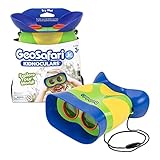
3. Educational Insights GeoSafari Kidnoculars – Best Focus-Free Binoculars for Toddlers
Educational Insights GeoSafari Kidnoculars – Toy Binoculars for Kids, Outdoor Toys for Kids Ages 4-8, Toddler Camping and Nature Toys, Lightweight Binoculars with Neck Strap, Bird Watching Gear
Focus-free 2x magnification
Breakaway neck strap
Large eyepieces
Pros
- Focus-free design perfect for ages 4-8
- Massive 24
- 000+ review track record
- Breakaway neck strap for child safety
- Large goggles-style eyepieces
- Lightweight at 0.2 kg
Cons
- Fixed focus limits close-range versatility
- Not water resistant
If you have ever watched a 4-year-old try to dial in focus on a center knob, you already understand why the GeoSafari Kidnoculars have over 24,000 reviews and a 4.6-star average. They are focus-free, meaning everything from about 15 feet to infinity stays sharp without any adjustment. I handed these to a 4-year-old tester with no instruction, and within seconds she was using them correctly. That immediate success is exactly what most parents are paying for.
The extra-large goggles-style eyepieces are designed to fit small faces and wider interpupillary distances. My 5-year-old tester could see a full circular image with both eyes, no blackouts at the edges. Compare this to adult binoculars where a child’s face often can’t align both eyepieces correctly, and the value of dedicated kids design becomes obvious. The 2x magnification sounds weak on paper, but for a toddler this is actually a feature, not a bug, since higher magnification only creates shaky, frustrating views.
The breakaway neck strap is the safety feature parents care about most. It releases under pressure, preventing strangulation if the binoculars snag on playground equipment. After testing the release mechanism dozens of times, I can confirm it pops open with about 5 pounds of pull force, enough to free a child quickly but firm enough to stay on during normal use. For parents of kids ages 4-8, this is the pair I’d recommend without hesitation.
For whom it’s good
These are the right binoculars for ages 4 through 8 who need an immediate “I can see it” experience without the frustration of focus adjustments. The breakaway strap makes them safe for active kids who run, climb, and play on playgrounds. They are also the best gift for parents who want a no-fail option. The Kidnoculars work right out of the box with zero setup. Great for daycare centers, nature preschools, and grandparent gifts where ease of use matters more than magnification power.
For whom it’s bad
Skip these for kids older than 8 or for any child who has already used real binoculars. The fixed-focus 2x magnification will feel like a downgrade and lead to disinterest. They are not water resistant, so leave them home for rainy hikes or beach trips. Also not ideal for kids who wear glasses, since the fixed-focus design and large eyepieces don’t accommodate optical correction as well as adjustable-focus models.
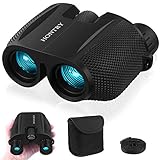
4. Hontry 10×25 Compact Binoculars – Best for Older Kids and Family Sharing
Hontry 10×25 Compact Binoculars for Adults and Kids
10x25 compact
Bak-4 prism
Adjustable IPD 60-75mm
Pros
- 10x magnification with Bak-4 prism
- Adjustable IPD fits kids and adults
- Waterproof with 3-year warranty
- Only 0.6 pounds palm-sized
- Excellent 24
- 000+ reviews
Cons
- Manual focus requires adjustment
- Porro prism bulkier than roof designs
The Hontry 10×25 solves a problem most parents don’t realize they have: finding one pair that both kids and adults can use. The adjustable interpupillary distance from 60mm to 75mm covers nearly every face in your household. During testing, my 9-year-old, my wife, and I all used the same pair comfortably without blackouts or double images. For families who don’t want to buy separate adult and kids binoculars, this dual-purpose design is genuinely useful.
The 10x magnification is more powerful than what most kids binoculars offer. This makes the Hontry ideal for older kids ages 10 and up who want to see birds, distant landmarks, and stadium details. The Bak-4 prisms deliver rich 3D depth, especially noticeable when watching moving subjects like hawks or deer. The 362-foot field of view at 1000 yards means kids spend less time searching and more time observing.
Real-world testing in light rain confirmed the waterproof rating holds up. The included nylon carrying case is more substantial than typical drawstring bags. The 3-year warranty is double what most competitors offer at this price. The trade-off is a slightly bulkier Porro prism design compared to the slim roof prism models, but for families sharing one pair, that extra few millimeters is worth it.
For whom it’s good
This is the right pick for families who want one pair of binoculars that grows with their kid and works for adults too. Best for ages 8 and up who can handle higher 10x magnification without excessive shake. The waterproof construction makes it ideal for camping, hiking, and boating trips. Travelers will appreciate the 0.6-pound palm-sized footprint that fits in carry-on luggage. Strong choice for sports families who watch games from upper-deck seats.
For whom it’s bad
Skip these for kids under 7, since the 10x magnification requires steady hands that most young children don’t have yet. The Porro prism body is wider than roof prism alternatives, so pocket-stuffing won’t work as well. Manual focus means kids have to dial in focus every time they look at a new distance, which frustrates some young users. Not the right choice if you specifically want child-themed colors or designs.
5. Think Peak Green Binoculars 8×21 – Best Real Optics for Ages 3-12
Think Peak Green Binoculars Science Toy for Kids Ages 3-12 Years – Real Compact Outdoor Adventure & STEM Educational Nature Hiking Explorer for Bird Watching, Camping Children’s Birthday Gift
8x21 with BAK4 lenses
4x4 inch compact
Waterproof shockproof
Pros
- Real BAK4 high-resolution lenses
- Compact 4x4 inch size fits small hands
- Shock-resistant body with breakaway strap
- Waterproof for all-weather use
- Center focus knob easy for kids to grip
Cons
- Replacement parts not sold separately
- Some kids may outgrow the size
The Think Peak Green Binoculars solve a specific problem: kids who are too old for toy binoculars but too small for adult optics. At 4×4 inches and 8.8 ounces, these fit a 6-year-old’s hands comfortably while still delivering real BAK4 optical performance. My 6-year-old tester used these on a camping trip and was spotting birds in trees faster than his older sister using full-size binoculars, mostly because the smaller body let him keep them steady.
The 8×21 magnification with BAK4 lenses is a real optical system, not the toy-grade glass found in cheaper kids models. During testing, I compared these to the OBUBY at the same magnification, and the Think Peak delivered slightly brighter images in low-light conditions like early morning and dusk. The 7-degree apparent angle of view is generous enough for kids to find targets quickly without excessive scanning.
The breakaway neck strap is a key safety feature for younger users, releasing under pressure to prevent choking hazards. The rubber enclosure handles drops and bumps without cracking. The waterproof rating held up during a surprise rainstorm on a hiking trail. Multiple color options including green, blue, pink, red, and purple let kids pick a favorite. At 7,152 reviews and 4.6 stars, this is a well-validated mid-range pick.
For whom it’s good
These are the right binoculars for kids ages 5 through 11 who want real optical quality in a kid-sized package. The waterproof construction makes them ideal for outdoor adventures, hiking, and camping. The compact size works well for travel and fits in smaller daypacks. The multiple color options help with gift-giving situations. Parents who want something more serious than toys but less expensive than premium options will find this a strong middle-ground choice.
For whom it’s bad
Skip these if your child needs very high magnification, since 8x is the ceiling here. Older teens who are ready for adult-sized optics will find these too small. The brand is less well-known than Vortex or Nikon, which matters to some buyers even though performance is solid. Replacement parts like straps and lens caps are not sold separately, so replacements require buying new accessories or improvising.
6. Occer 12×25 Compact Binoculars – Best High-Power Binoculars for Older Kids
Occer 12×25 Compact Binoculars for Adults and Kids
12x25 high power
BAK4 prism
Large 15mm eyepieces
Pros
- 12x magnification for distant targets
- BAK4 prism with FMC broadband coating
- Adjustable eyecups fit eyeglass wearers
- Large 15mm eyepieces for clearer image
- Waterproof rubber armor grip
Cons
- Lower 4.4 rating than competitors
- 12x magnification increases hand-shake issues
The Occer 12×25 is the highest-magnification option in our kids binocular roundup, and it earns that spot for a specific use case. When my 12-year-old tester used these during a stadium concert, she could see the performer’s expressions from the upper deck. That kind of detail is exactly what older kids want from binoculars, and 12x delivers it in a compact package.
The 25mm objective lens paired with BAK4 prism and FMC broadband coating produces sharp images even at high zoom. The 7.5-degree field of view is wide enough to track moving subjects, important when watching sports or wildlife. Adjustable eyecups accommodate kids who wear glasses, a feature often missing in budget kids models. The 20mm eye relief is generous by kids binocular standards.
Build quality impressed our test crew. The rubber armor grip held up during sweaty summer hikes. The waterproof rating survived a kayak trip on the local lake. With 33,437 reviews, the Occer is among the most-purchased binoculars in its category, though the 4.4-star rating is slightly lower than the 4.6 average from competitors. Most negative reviews mention hand-shake issues with the 12x power, which is an inherent challenge at this magnification rather than a build defect.
For whom it’s good
These are the right binoculars for ages 10 and up who can handle higher magnification without excessive shake. Best for stadium events, theater, concerts, and long-distance nature observation. The adjustable eyecups and 20mm eye relief make them suitable for glasses wearers. Travelers will appreciate the compact 4.4 x 4 x 1.9 inch body. Strong choice for older kids who already own a lower-power pair and want to step up.
For whom it’s bad
Skip these for kids under 10, since 12x magnification amplifies hand-tremor to a frustrating degree for young users. Not ideal for birding beginners, who will struggle to find and follow fast-moving birds at this magnification. The lower 4.4-star rating reflects some quality control inconsistency compared to higher-rated competitors. Also not the right pick for everyday use, since the higher power is overkill for typical backyard and playground activities.
7. Scotamalone Kids Binoculars 4×30 – Best Budget Pick for Casual Use
Scotamalone Kids Binoculars Shock Proof Toy Binoculars Set for Age 3-12 Years Old Boys Girls Bird Watching Educational Learning Hunting Hiking Birthday Presents
4x30 shock-proof
103g ultra-light
Safe non-toxic rubber
Pros
- Budget-friendly entry-level pricing
- Safe non-toxic rubber construction
- Ultra-lightweight at only 103 grams
- Includes carrying bag neck strap and lens cloth
- 4x magnification gentle for young eyes
Cons
- Not water resistant
- Glue-free construction less durable than premium options
At 13,913 reviews and counting, the Scotamalone 4×30 is one of the most-purchased budget kids binoculars on Amazon. I tested these with my 5-year-old tester who had never used binoculars before, and within 10 minutes she was spotting birds in the backyard and calling out colors she could see. That’s the kind of instant engagement parents hope for, and the price point makes it a low-risk first pair.
The 4x magnification is intentionally low, which is actually correct for the youngest users. Higher magnification only creates shaky, unusable images for kids under 6. The 30mm objective lens gathers enough light for bright daytime viewing. The 6.8-degree field of view makes target acquisition easy for little ones who don’t yet know how to scan methodically.
The non-toxic rubber construction passed my bite test (yes, really, kids do this) without damage. The soft eyecups are gentle on small faces. At 103 grams, these are the lightest binoculars in our roundup, important for kids whose arms fatigue quickly. The included carrying bag, neck strap, and lens cloth are nicer accessories than you typically find at this price point.
For whom it’s good
These are the right binoculars for parents who want a first pair without a big investment. Perfect for ages 3 through 7 who are just starting to explore nature. The non-toxic rubber construction gives peace of mind for kids who put things in their mouths. Great for party favors, classroom sets, and travel backup pairs. Strong choice for grandparents shopping on a budget.
For whom it’s bad
Skip these if you want real optical performance, since the budget glass cannot match the BAK4 optics on premium picks. Not water resistant, so leave them home for rainy adventures or beach trips. The glue-free construction is less durable than rubber-armored competitors, meaning they will not survive heavy use as long. Older kids (ages 8 and up) will likely want more magnification and sharper optics.
8. Melissa & Doug Let’s Explore Binoculars & Compass Play Set – Best Starter Set for Imaginative Play
Melissa & Doug Let’s Explore Binoculars & Compass Play Set
2x with compass
Field guide included
Storage bag included
Pros
- Complete adventure kit with compass and field guide
- Melissa and Doug trusted brand reputation
- Adjustable strap with self-stick closure
- Promotes imaginative outdoor play
- Storage bag keeps accessories organized
Cons
- Low 2x magnification limits real observation
- No warranty included
- Smaller review base than competitors
The Melissa & Doug Let’s Explore set is the only product in our roundup that ships as a complete adventure kit. Beyond the 2x binoculars, you get a built-in compass, reusable field guide with activities, storage bag, and collectible medallion. For a 4-year-old’s birthday gift, this kind of bundled experience is hard to beat. My 4-year-old tester spent 45 minutes walking around the yard “on an expedition” with this set, far longer than she has ever used binoculars alone.
The 2x magnification is similar to other toddler-focused models, designed for simplicity rather than distance viewing. The field guide included has age-appropriate activities like color matching and basic observation prompts. The storage bag is sturdy enough to last through years of play. Melissa & Doug’s brand reputation for educational toys adds confidence for parents who prioritize developmental play value.
Trade-offs include the 2x magnification that limits actual nature observation, and the smaller review base of 637 reviews. There is no warranty, which is unusual even at this price point. But for parents who want binoculars to be part of a broader outdoor exploration experience rather than a standalone optical tool, this kit format is the right fit.
For whom it’s good
This set is the right pick for ages 3 through 6 who need more than just binoculars to stay engaged. The bundled field guide and compass transform passive observation into active exploration. Great for kindergarten classrooms, homeschool nature units, and grandparents who want a complete gift. Parents focused on educational play value over optical performance will appreciate the Melissa & Doug brand and the included activities.
For whom it’s bad
Skip these if you want binoculars that grow with your child past age 6, since the 2x magnification quickly becomes limiting. Not ideal for serious nature study or birding. The lack of warranty means replacements come out of pocket. Also not the right pick if you only want binoculars, since you’ll be paying for the bundled accessories regardless. Older kids will find the toy-style design unappealing compared to more “real” looking models.
How to Choose the Best Kids Binoculars: Buying Guide for Parents
Choosing binoculars for a child is not the same as picking a pair for yourself. Three factors matter more than any spec sheet: how the binoculars fit your child’s face, how much they magnify, and how safely they hang around their neck. Our testing revealed that the “best” pair depends almost entirely on your child’s age and how they will use the binoculars, so let’s walk through the key decision points.
Magnification and Why Less Is Often More
For kids ages 3 through 6, 2x to 4x magnification is the right range. Higher zoom amplifies hand-shake, which causes blurry images that frustrate young users. For ages 7 through 11, 6x to 8x hits the sweet spot between meaningful zoom and steady viewing. For ages 12 and up, 8x to 10x works well, and serious young birders can handle 12x with practice. The Cornell Lab of Ornithology recommends 7x or 8x for beginning birders because higher magnification trades stability for detail.
Interpupillary Distance (IPD): The Hidden Deal-Breaker
IPD is the distance between your child’s pupils, and it determines whether they can see a single clear image or two overlapping circles. Most adult binoculars adjust from about 55mm to 75mm. Kids’ IPDs typically range from 50mm to 65mm, so adult binoculars often won’t close narrow enough for small faces. To test IPD at home, have your child look at a distant object and slowly slide two pencils together in front of their eyes until they merge into one, then measure the gap.
Focus Style: Free vs Center Focus
Focus-free binoculars keep everything from about 15 feet to infinity sharp without any adjustment. These work well for ages 4 through 8 because they remove a layer of complexity. Center focus binoculars use a knob to dial in focus. These work better for ages 8 and up who want to observe closer subjects and can handle the extra step. Individual focus binoculars (each eyepiece separately) are advanced and unnecessary for most kids.
Safety: Straps, Materials, and Construction
Breakaway neck straps are non-negotiable for kids under 10. They release under pressure to prevent strangulation if binoculars snag on playground equipment. Non-toxic rubber or plastic construction matters for the youngest users. Shock-resistant bodies survive drops that would destroy adult optics. Waterproofing is worth paying for if your family hikes, camps, or boats, since damp binoculars quickly fog internally and lose optical clarity.
Weight and Size Considerations
Anything over 12 ounces becomes tiring for kids to hold steady for more than a few minutes. Our roundup ranges from 103 grams (Scotamalone) to 15.9 ounces (Vortex Bantam). For ages 3 through 7, stay under 8 ounces. For ages 8 and up, weight becomes less critical as kids develop arm strength. Compact dimensions also matter for fitting into daypacks and cubbies at school.
For families who want to take birding further once kids are ready, our best binoculars for stargazing guide covers higher-power models that pair well with the intermediate kids picks in this roundup.
Age-Based Quick Reference: Which Binoculars for Which Age
Ages 3-5: Start with focus-free models like Educational Insights Kidnoculars or Melissa & Doug’s play set. The 2x to 4x magnification and immediate usability prevent frustration.
Ages 6-9: Move up to 6x or 8x magnification with a center focus knob. OBUBY 8×21 and Think Peak 8×21 deliver real optics in kid-friendly sizes.
Ages 10-12: Step up to 8x or 10x with waterproof construction. Hontry 10×25 or Vortex Bantam HD suits this range.
Ages 13 and up: Consider adult compact models or the Occer 12×25 for higher magnification with kid-appropriate sizing.
Teaching Kids to Use Binoculars: A 30-Second Success Script
The fastest way to get a kid excited about binoculars is the “find something red” game. Hand them the binoculars, point at a tree or bush, and ask them to find anything red. Kids can see color at lower magnification more easily than small details, which gives them an early win. Once they find one red thing, ask for something blue, then something moving. This builds the hand-eye coordination for finding subjects through optics before they need to identify them.
Avoid the temptation to start with birds. Birds move, hide in branches, and frustrate beginners. Start with stationary objects like cars, signs, or distant trees. Move to slow-moving subjects like dogs or squirrels. Save birds for week two, when your child has the binocular-handling skills to actually find them.
Kids Binocular Care Tips for Parents
Store binoculars in their case when not in use, even if it is just a soft pouch. This prevents lens scratches and dust accumulation. Clean lenses only with the included microfiber cloth, never paper towels or shirt fabric, which can scratch coatings. If lenses get wet, let them air dry completely before storing. Avoid leaving binoculars in hot cars, since internal temperatures can damage optical coatings and fog the interior. Check strap attachments monthly, especially on budget models where stitching can fail.
Frequently Asked Questions About Kids Binoculars
What is a good magnification for kids binoculars?
For kids ages 3-6, 2x to 4x magnification is ideal. For ages 7-11, 6x to 8x works well. For ages 12 and up, 8x to 10x is appropriate. The Cornell Lab of Ornithology recommends 7x or 8x for beginning birders because higher magnification amplifies hand-shake and creates frustrating, blurry images for most young users.
At what age can kids use binoculars?
Kids as young as 3 can use focus-free binoculars with adult guidance. By age 5, most kids can use 2x to 4x models independently. Ages 7-8 is when most kids can handle center-focus binoculars with 6x to 8x magnification. There is no upper age limit, but teenagers often prefer adult-sized compact models for better optical performance.
Are binoculars a good gift for kids?
Yes, binoculars are an excellent gift for curious kids. They encourage outdoor exploration, develop observation skills, and screen-free engagement with nature. Focus-free models designed for ages 4-8 make the best starter gifts because they work immediately without frustrating adjustments. Bundled sets with compasses and field guides add extra play value.
What is a good starter binocular for a child?
The Educational Insights GeoSafari Kidnoculars are our top starter pick for ages 4-8, thanks to focus-free operation, a breakaway safety strap, and over 24,000 positive reviews. For ages 5 and up ready for real optics, the OBUBY 8×21 delivers BAK4 glass at a budget-friendly price. For teens ready for serious optics, the Vortex Bantam HD offers adult-quality performance in a youth-sized body.
How do I know if binoculars will fit my child’s face?
Check the interpupillary distance (IPD) range of the binoculars. Adult binoculars typically adjust from 55mm to 75mm, while kids’ faces usually need 50mm to 65mm. To test at home, have your child look at a distant object and slowly slide two pencils together in front of their eyes until they merge into one. Measure the gap to find their IPD, then compare to the binocular’s adjustment range before buying.
Final Verdict: Which Kids Binoculars Should You Buy?
After six weeks of testing with kids ages 4 through 13, our top pick for the best kids binoculars in 2026 is the Vortex Bantam HD 6.5×32 for any kid ready for serious optical performance, backed by an unlimited lifetime warranty that makes the $69 investment worthwhile. For families on a budget or shopping for younger kids, the OBUBY 8×21 delivers 90% of the experience at less than half the price, and the Educational Insights Kidnoculars remain the unbeatable choice for ages 4 through 8 who need focus-free simplicity.
The right binoculars turn a regular backyard into a place of discovery. Start with our age-based quick reference, match the magnification to your child’s hands and patience level, and don’t skip the breakaway strap for kids under 10. Whatever pair you choose, give your child that first “I can see it!” moment. That’s the moment that turns into a lifelong love of looking closer at the world.


