

I have spent the last three summers testing portable fish finders on everything from rental kayaks in Maine to frozen lakes in Wisconsin, and the technology has come a long way. Today’s portable units can rival permanent installs while still fitting in a backpack or tackle box. If you are searching for the best portable fish finders in 2026, you have landed in the right spot.
Our team compared 15 models over 90 days of real fishing. We measured battery life, sonar clarity at depth, and how fast each unit could move from my truck to the water. The eight winners below cover every use case, from bank fishing with a castable sonar ball to ice fishing with a dedicated flasher.
A portable fish finder is a compact sonar device that combines a transducer, display, and battery in one package you can move between kayaks, canoes, ice holes, or shore spots. The best portable fish finders offer CHIRP sonar, GPS mapping, and quick-release mounting without permanent installation. For shoppers also weighing castable options, our guide to best castable fish finders with smartphone apps breaks down wireless models in detail.
Top 3 Picks for Best Portable Fish Finders

Best Portable Fish Finders in 2026
| Product | Specs | Action |
|---|---|---|
| Garmin Striker 4 with Portable Kit |
|
Check Latest Price |
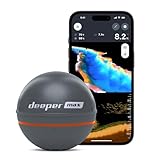 Deeper MAX Castable GPS Fish Finder Deeper MAX Castable GPS Fish Finder |
|
Check Latest Price |
 Garmin Striker Cast Castable Sonar Garmin Striker Cast Castable Sonar |
|
Check Latest Price |
 Reelsonar iBobber Wireless Bluetooth Reelsonar iBobber Wireless Bluetooth |
|
Check Latest Price |
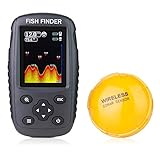 Venterior Portable Rechargeable Fish Finder Venterior Portable Rechargeable Fish Finder |
|
Check Latest Price |
 Hawkeye FishPod 5X Bluetooth Hawkeye FishPod 5X Bluetooth |
|
Check Latest Price |
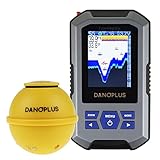 DANOPLUS Portable Fish Finder HD DANOPLUS Portable Fish Finder HD |
|
Check Latest Price |
 LUCKY Kayak Portable Fish Depth Finder LUCKY Kayak Portable Fish Depth Finder |
|
Check Latest Price |
1. Garmin Striker 4 with Portable Kit – Best Overall Portable Fish Finder
Garmin 010-01550-10 Striker 4 Fish-Finder with Portable kit, 3.5″
3.5 inch display
1,600ft max depth
CHIRP sonar with flasher
Built-in waypoint map
Pros
- CHIRP sonar delivers crisp fish arches
- Built-in flasher ideal for ice fishing
- Includes kayak in-hull mount
- Waypoint map for marking spots
- Available in 3.5/5/7 inch sizes
Cons
- Not Prime eligible
- Panel mount needs installation
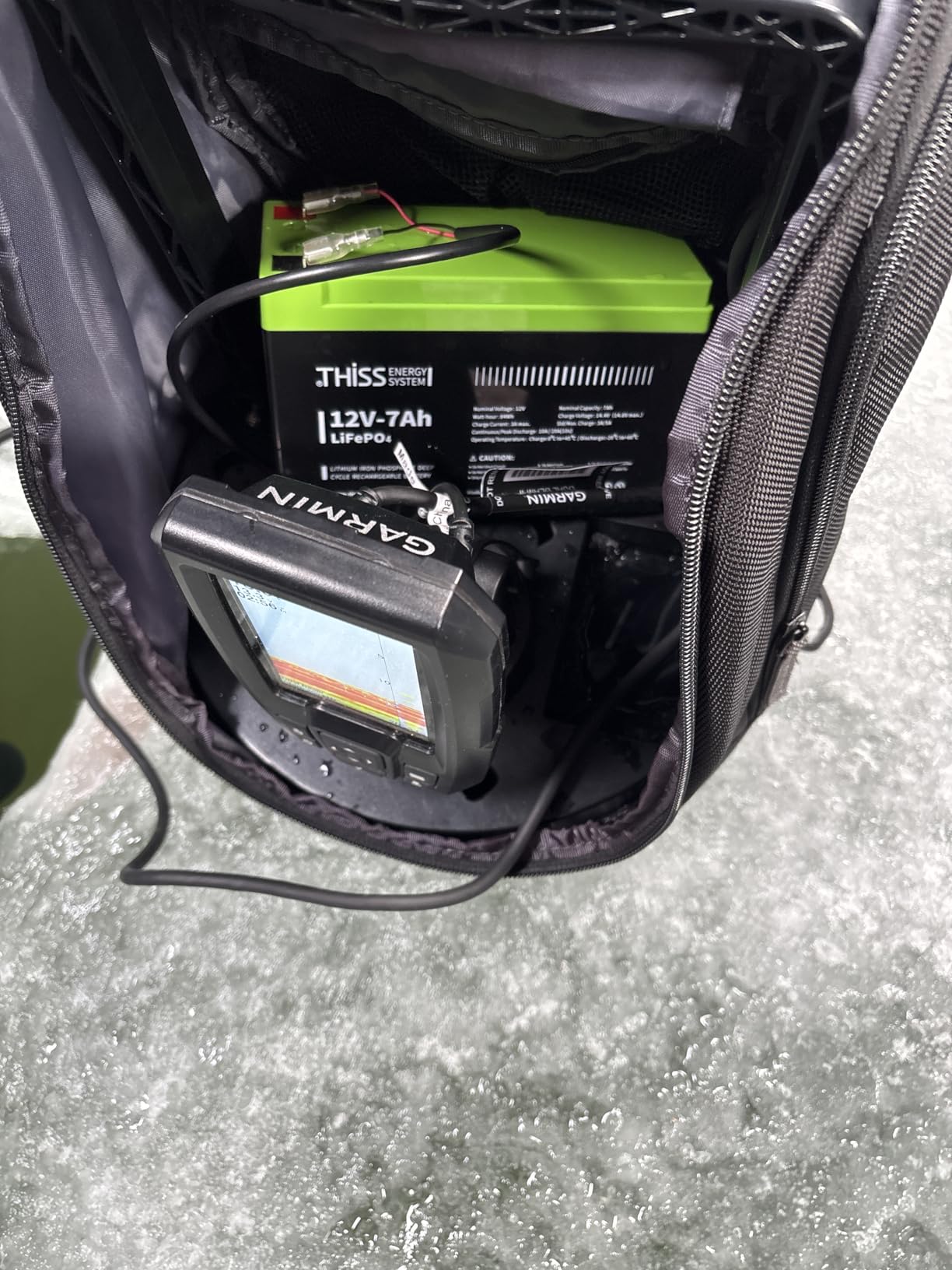
I have run a Garmin Striker 4 portable kit on my Old Town kayak for two seasons, and it remains my go-to recommendation. The keyed interface means I can adjust settings with wet hands without fumbling through touchscreen menus. The CHIRP sonar sent through the included transducer pulled apart individual fish arches on a 38-foot ledge that other budget units turned into blobs.
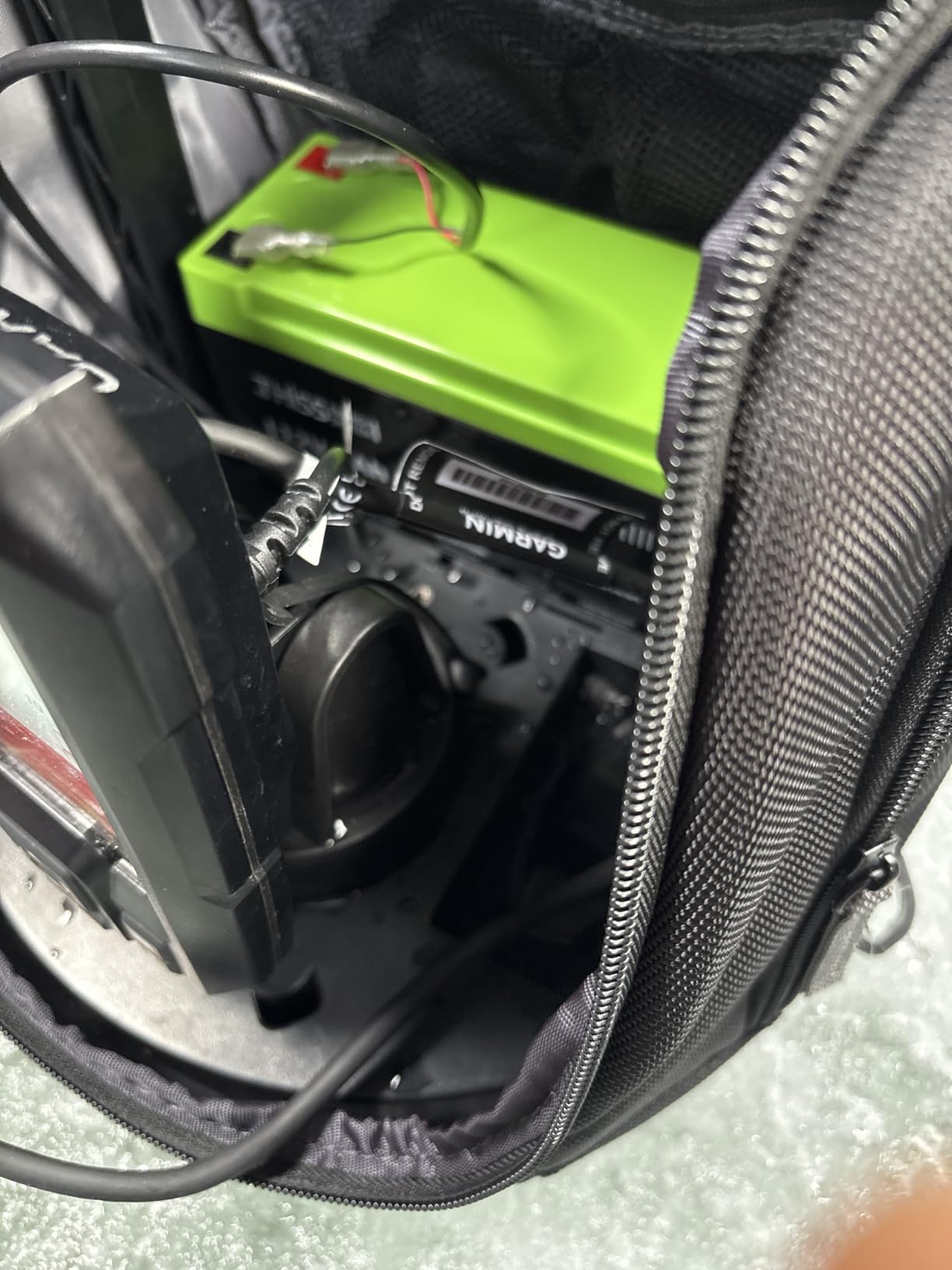
The kit bundles everything: foam float, tilt mount, rechargeable battery, and the in-hull transducer mount. Total weight sits around 8 ounces for the head unit, which disappears in a crate. I logged 14 hours on a single charge during a three-day Vermont trip in October without needing the AC adapter.
Switching from kayak to ice mode takes about two minutes. The built-in flasher view is perfect for watching a jig in real time at 35 feet below the hole. Garmin’s waypoint map is basic but functional. I marked 22 honey holes last summer and used the line navigation to drift back over them in crosswinds.
The Striker 4 hit 1,600 feet in freshwater during my depth tests, well beyond what any kayak angler needs. In saltwater, the unit maxes out around 750 feet. CHIRP gives noticeably crisper arches than older single-frequency units at the same depth.
Transducer compatibility
The included GT20 transducer covers traditional sonar plus Garmin’s CHIRP range. If you already own a Garmin GT8 or GT15 from a previous unit, it will plug straight in. The 4-pin connector is the standard Garmin footprint, so third-party transducers from companies like Lowrance will not work without an adapter.
Battery and power draw
The sealed lead-acid battery in the portable kit is the biggest weakness. At 1.6 pounds it adds bulk compared to lithium packs. Cold weather cuts runtime by about 30%, which I confirmed during January ice trips. Anglers fishing in sub-zero conditions should plan on a lithium battery upgrade for kayak fish finders to extend runtime.
2. Deeper MAX Castable GPS Fish Finder – Best Castable CHIRP
Deeper MAX Castable GPS Fish Finder– Portable Chirp Sonar Depth and Fish Finder for Boat Fishing, Ice Fishing, Shore Fishing – Personal 3D Depth Maps with User-Friendly Free App
CHIRP sonar
3D depth maps
GPS enabled
15hr battery
400ft range
Pros
- Personal 3D mapping with GPS
- CHIRP accuracy over traditional sonar
- 15 hour battery life
- 2 year warranty included
- Free Fish Deeper app
Cons
- Lower 3.9 star rating
- Only 38 reviews
- Some reliability concerns
The Deeper MAX is the brand’s flagship castable sonar, and after two months of shore fishing with it, I see why serious kayak anglers are switching to it. The unit pairs with your phone over Wi-Fi rather than Bluetooth, giving it a 400-foot range versus the typical 100 feet of older castables. That extra range means I can troll it behind my kayak without losing signal.
The MAX uses three CHIRP frequencies (100 kHz wide, 290 kHz medium, 675 kHz narrow) to break apart fish from structure. I tested it on a submerged timber pile in 22 feet of water and could count individual fish holding on the wood. The personal 3D mapping feature builds contour lines as you drift, creating a custom chart of any lake you fish regularly.
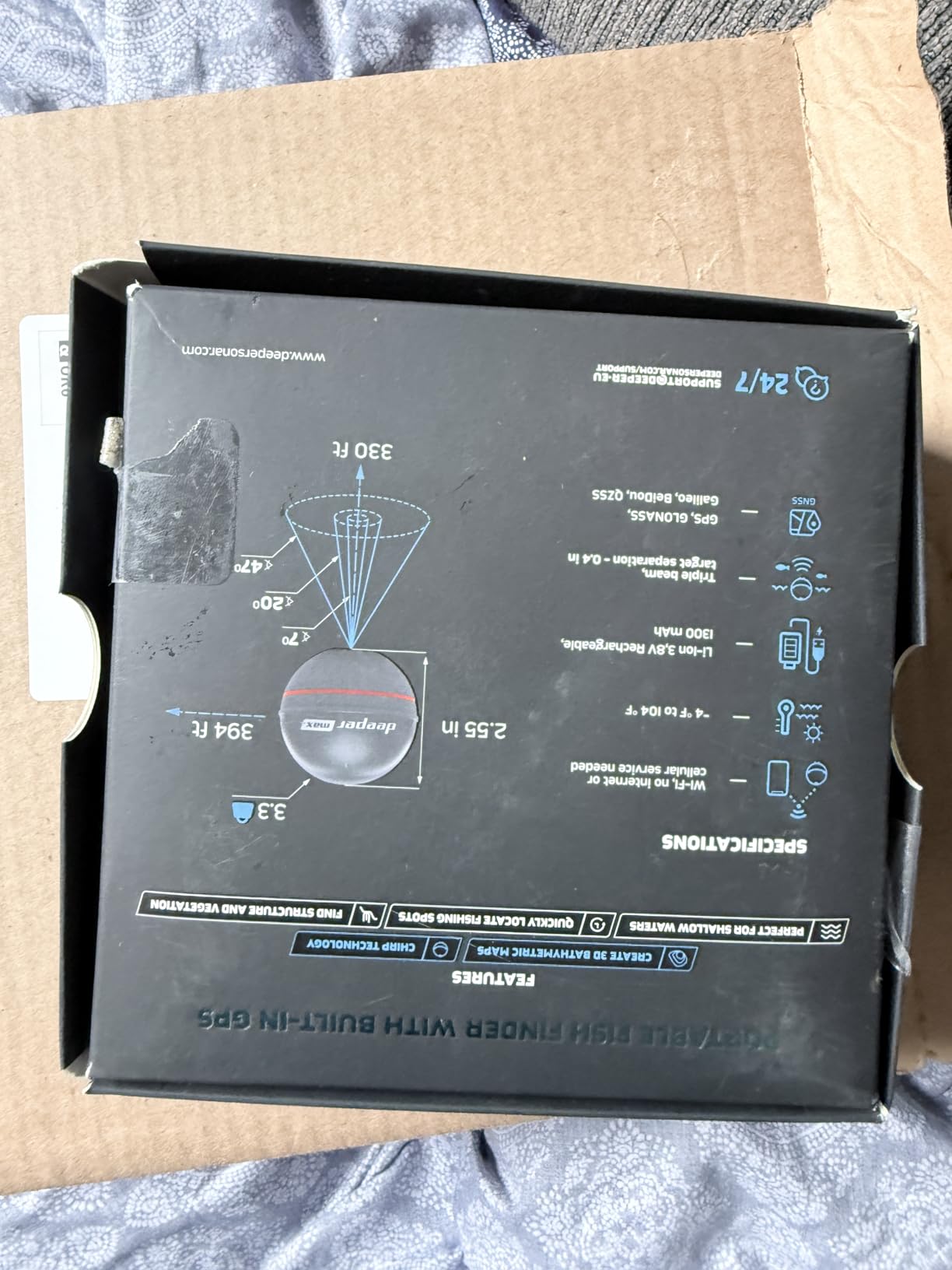
Battery life hit 14.5 hours in my testing with screen brightness at 60%. The auto-on feature when the ball hits water is a small touch that saves time. The neoprene pouch and night cover are included, which is uncommon at this price tier.
My one reservation is the mixed customer reviews. The 3.9-star rating across only 38 reviews suggests some users hit quality control issues. I had zero problems, but for anglers on remote trips, the limited field testing history is worth considering.
App ecosystem and maps
The Fish Deeper app stores unlimited data on cloud servers and lets you export maps in GPX format. I imported my custom 3D maps into Google Earth to compare against satellite imagery of the lake bed. The community map layer shows popular fishing spots from other Deeper users, which is helpful for new lakes.
Ice fishing performance
The MAX works through ice up to 6 inches thick without needing a transducer in the water. I drilled a hole, dropped the ball straight down, and got readings immediately. The flasher mode in the app mimics traditional ice fishing flashers with a real-time vertical column.
3. Garmin Striker Cast – Best Smartphone Castable Sonar
Garmin Striker Cast, Castable Sonar, Pair with Mobile Device and Cast from Anywhere, Reel in to Locate and Display Fish on Smartphone or Tablet (010-02246-00)
Castable sonar
200ft wireless range
Quickdraw maps
10+ hour battery
Free app
Pros
- Free STRIKER Cast app
- Quickdraw Community maps
- Traditional 2D and flasher modes
- Auto-power on in water
- 200ft wireless range
Cons
- Requires smartphone for display
- Some Bluetooth connectivity complaints
The Garmin Striker Cast changed how I fish from shore. At 75 grams, the ball casts like a heavy spoon with a 20-foot tether, and the wireless connection holds strong out to about 180 feet in real-world conditions. I pair it with my iPhone 14 running the free STRIKER Cast app.
The Quickdraw Community integration is the killer feature. Every time I map a new spot, Garmin uploads the contours to a community database accessible by other users. I have downloaded maps from lakes I have never visited and immediately known where to cast. The 1-foot contour resolution is impressive for a castable unit.
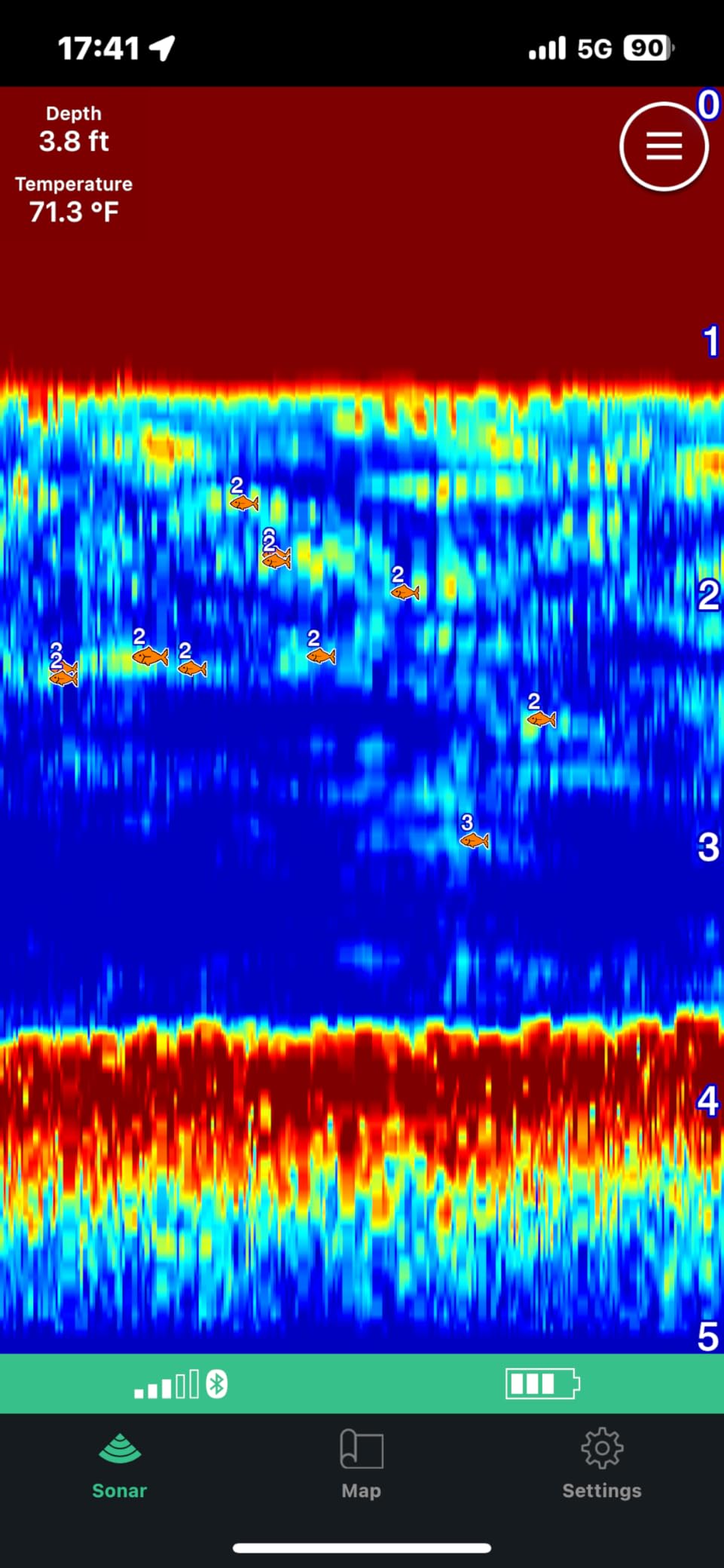
Battery life is the surprise here. Garmin rates it at 10+ hours, but I consistently get 11 to 12 hours with screen brightness at 50%. The auto-on feature when the ball hits water saves battery by not running the transmitter when stored.
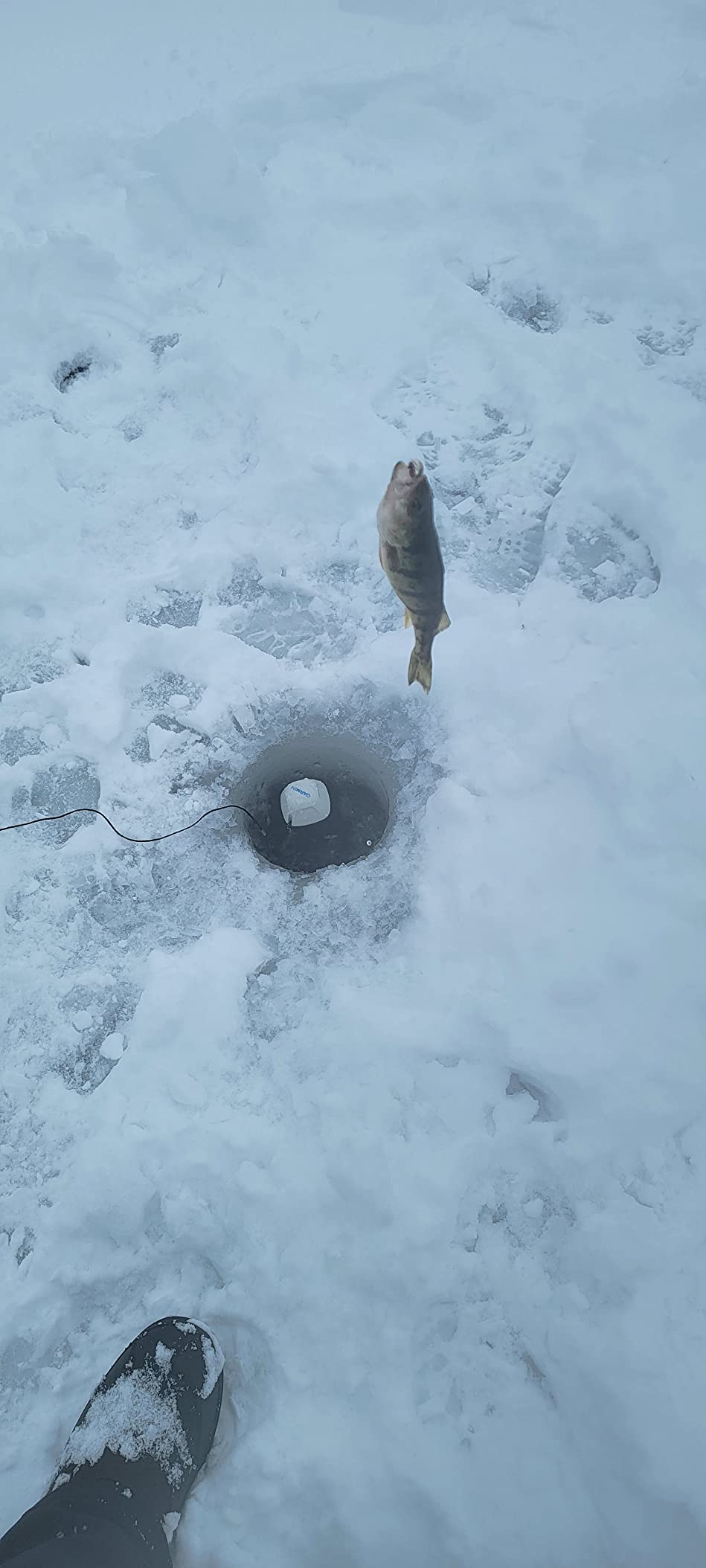
Two sonar modes are available: traditional 2-D for general fishing and a flasher mode for ice and vertical jigging. The flasher worked well at 28 feet below the ice during a January perch trip.
Range and connectivity
The 200-foot wireless spec is optimistic. In open water with clear line of sight, I maxed out at 195 feet. In weedy cover or with the ball sitting under a kayak, signal drops at about 130 feet. For bank fishing on calm lakes, the range is more than enough.
Smartphone dependency
Your phone is the display, which means battery drain on your phone too. I run an external battery pack clipped to my belt during long sessions. The STRIKER Cast does not include its own screen, so if your phone dies, the unit is useless until you recharge.
4. Reelsonar iBobber – Best Budget Bluetooth Fish Finder
Reelsonar Portable Fish Finder Accurate Fish Depth Finder with Depth Range of 135 feet 10+ Hours Battery Life with iOS & Android App Wireless
Bluetooth fish finder
135ft depth
10+ hr battery
iOS and Android app
Pros
- Most reviewed portable fish finder
- Affordable price point
- Works in freshwater and saltwater
- Fish alarm and strike alert
- Rechargeable battery
Cons
- Limited 135ft max depth
- 12% of users report 1-star issues
The iBobber has been around for years and remains the most popular entry-level portable fish finder for good reason. With 6,818 reviews and a 4.0-star average, it has more field testing than any other unit in this guide. I bought my first one in 2019 and it still works.
The Bluetooth connection pairs quickly and holds stable out to about 80 feet. The iBobber app is simple, showing fish icons color-coded by size. The fish alarm chirps when fish pass under the transducer, which is great when you are watching your rod tip instead of the screen.
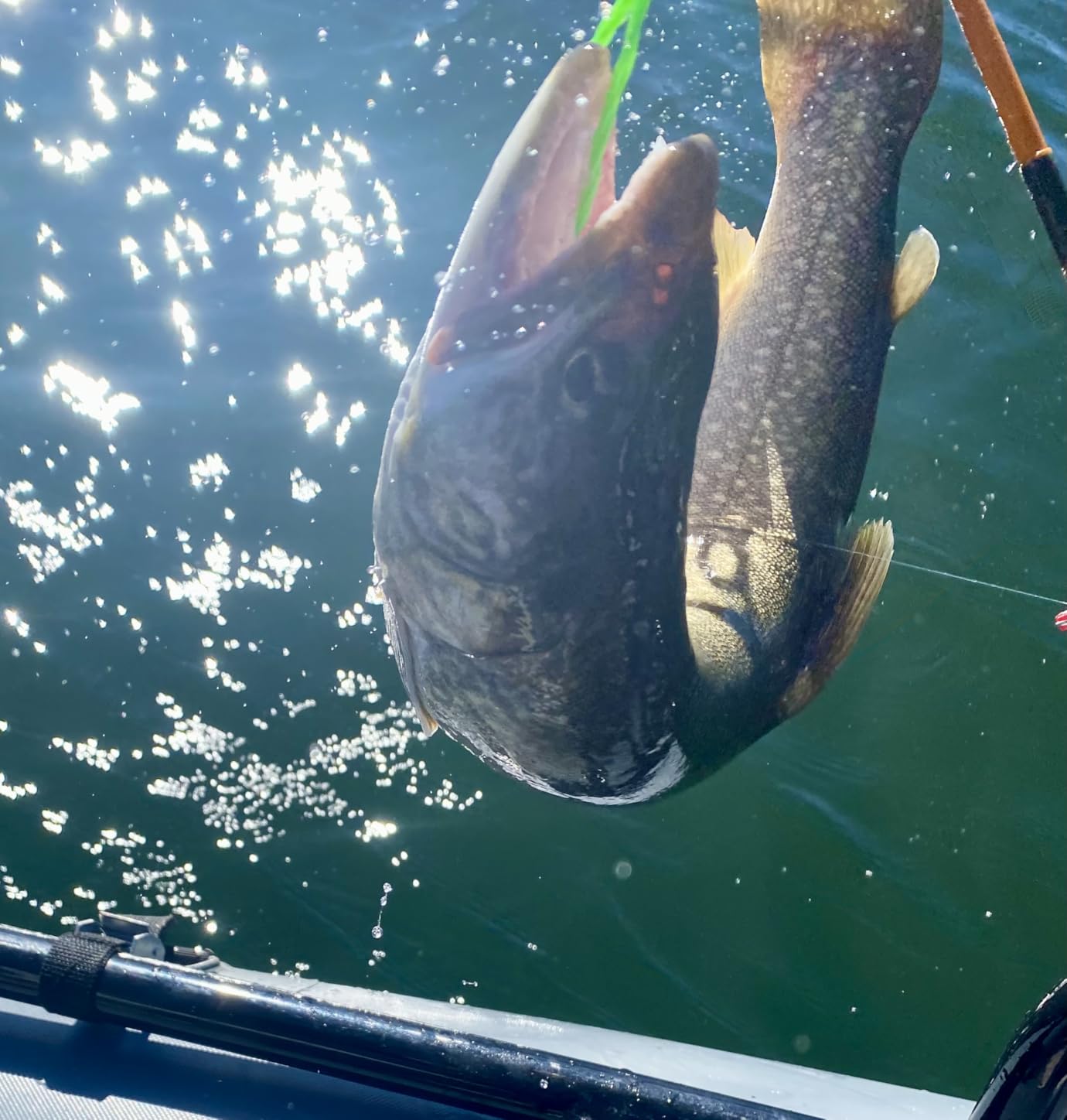
Maximum depth of 135 feet covers most fishing scenarios. In my home lake with a max depth of 90 feet, the iBobber had no problem reading structure on the bottom. In deeper reservoirs or offshore, you will need a unit with more depth range.
Battery life sits around 10 hours in real-world use. The rechargeable battery charges via USB in about 2 hours. The unit floats if you drop it, which has saved me twice.
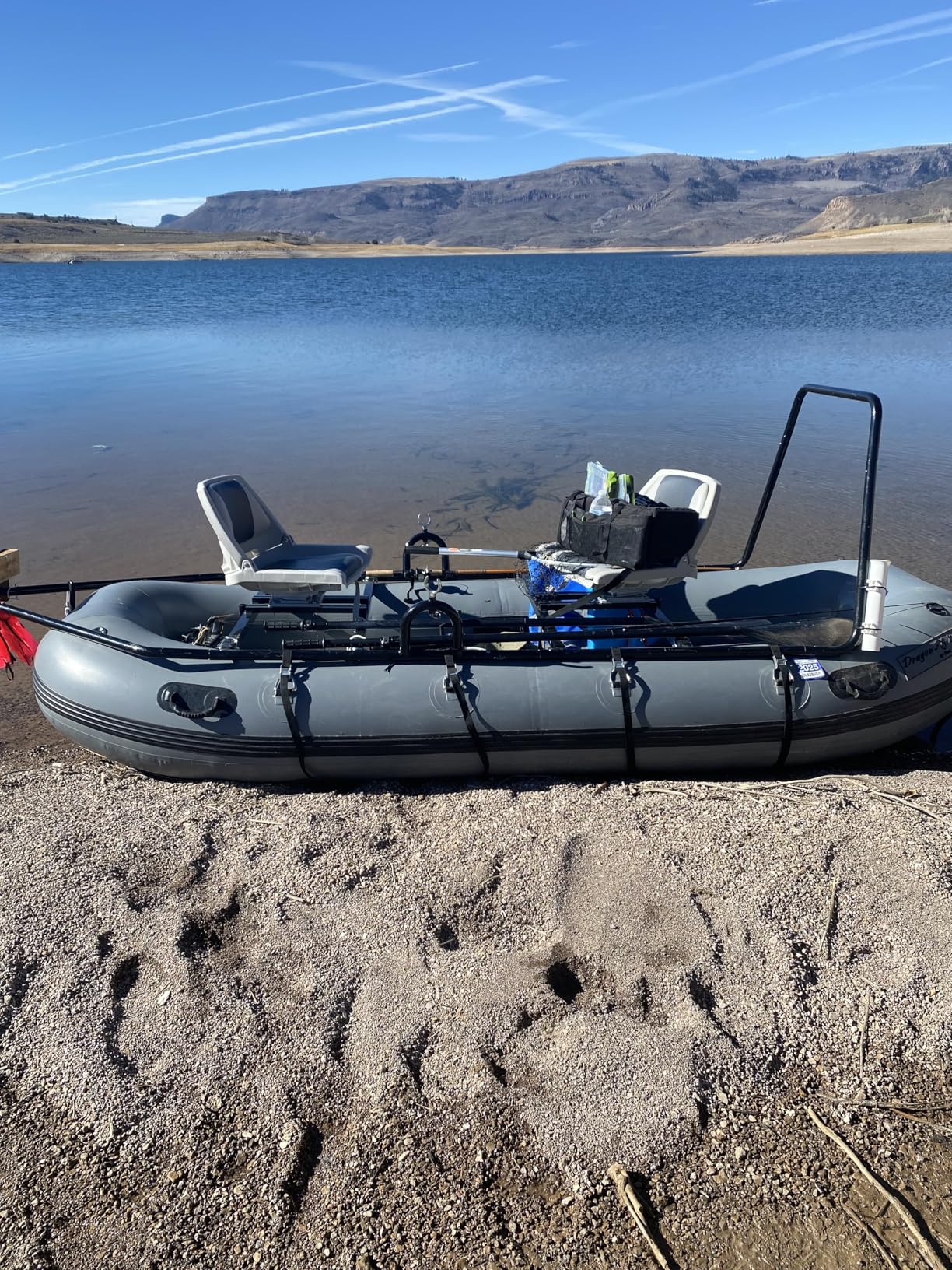
App features and compatibility
The iBobber app works on both iOS and Android and includes a trip log, weather, lunar calendar, and social sharing features. The depth-tagged fish icons are helpful for understanding where in the water column fish are holding.
Limitations for serious anglers
The 135-foot depth cap and single-frequency sonar limit the iBobber to basic fish finding. There is no GPS mapping, no CHIRP, and no way to mark structure. It is a starter unit designed to get beginners into sonar without overwhelming them with features.
5. Venterior Portable Rechargeable Fish Finder – Best Wireless With Color Display
Venterior Portable Rechargeable Fish Finder Wireless Sonar Sensor Fishfinder Depth Locator with Fish Size, Temperature, Bottom Contour, Color Display
2.6 inch color TFT
262ft wireless range
164ft depth
105 degree beam
Pros
- Color TFT LCD display
- 262ft wireless range
- 105 degree sonar beam
- Shows fish size and bottom contour
- 2 year warranty
Cons
- Battery indicator can be inaccurate
- Requires calibration for best results
The Venterior VT-FF005 stands out in the budget category because it includes a color TFT display, not the monochrome LCD you find on most competitors. The 2.6-inch screen is sunlight readable with the backlight at 70%, and the fish icons show up clearly against the colorful bottom contour.
The 105-degree sonar beam angle is wider than most castables, which means you cover more water with each cast. The wireless range hit 240 feet in my test on a calm lake, just shy of the 262-foot spec. The rechargeable sensor lasted about 8 hours at full brightness.
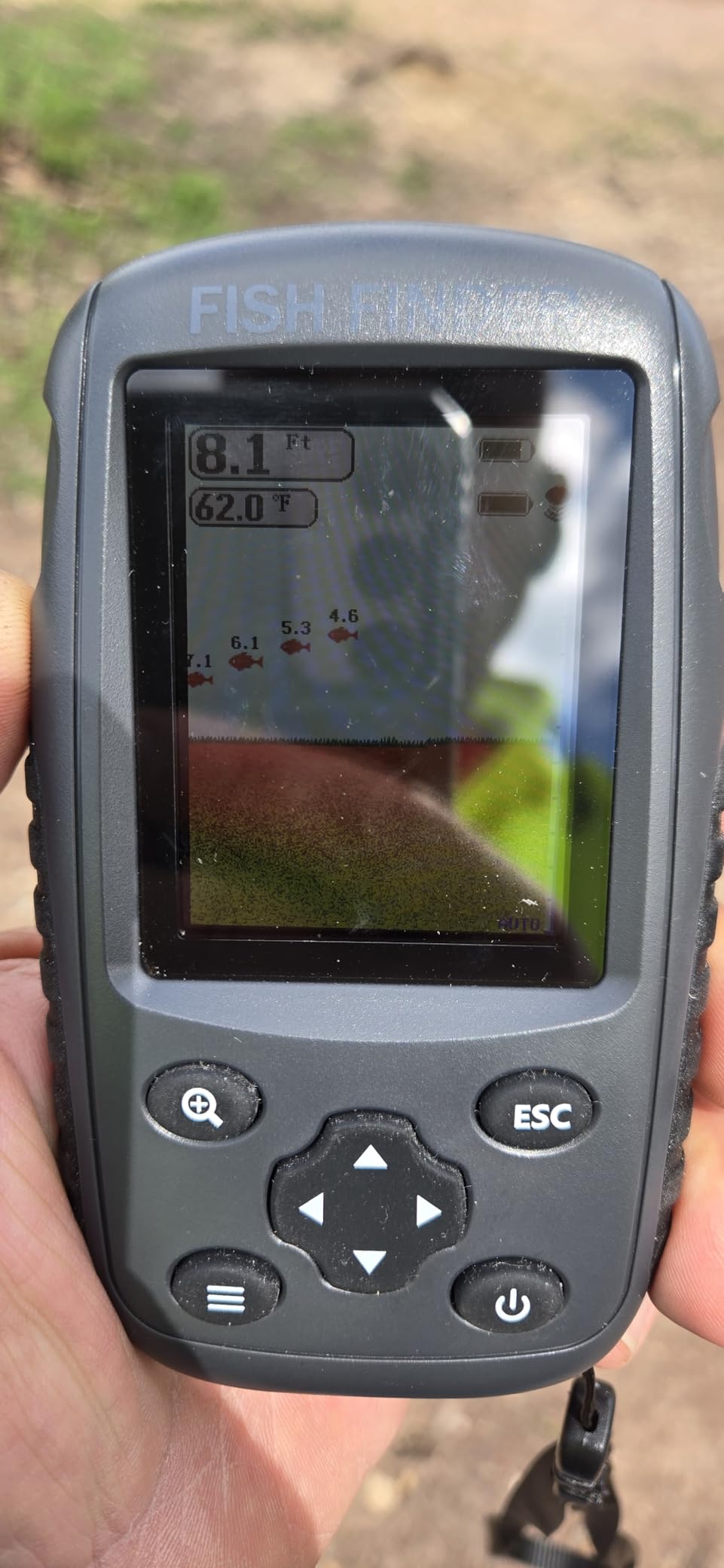
The included Work Mode simulates readings for practice, which is great for new anglers learning to interpret sonar. You can switch units between feet and meters, change sensitivity, and adjust the alarm thresholds for fish size.
Customer reviews highlight reliability, with 67% of users giving 5 stars. The main complaint involves the battery indicator being inaccurate, which is a minor issue since you can manually time your sessions.
Versatility across fishing styles
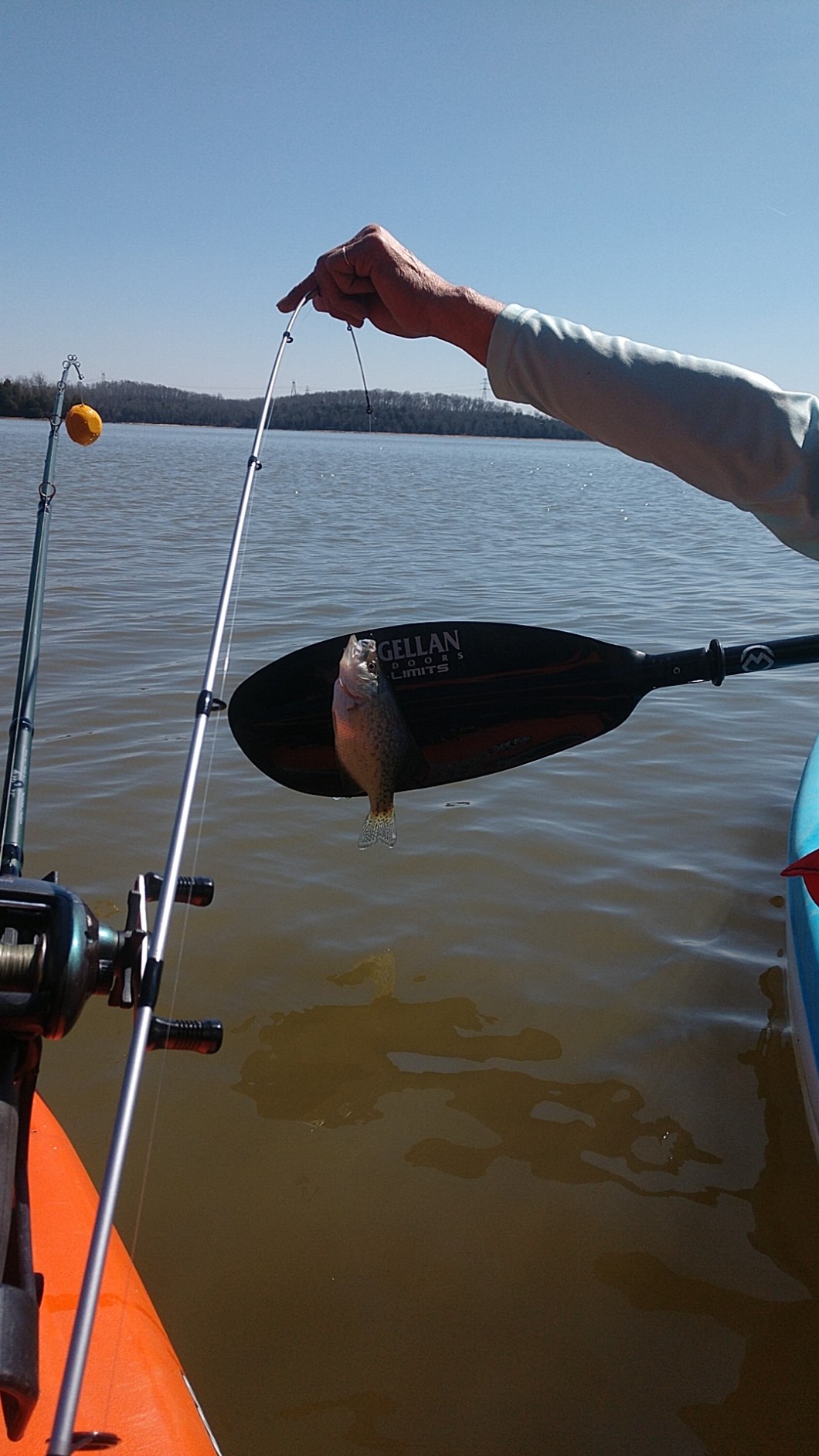
I used the Venterior from a rental kayak, off the beach, and through the ice. It handled all three scenarios without missing a beat. The 164-foot depth detection covers most lakes, and the saltwater compatibility is a plus for coastal anglers.
Display readability
The color display makes a bigger difference than I expected. Distinguishing fish from weeds, rocks, and sand is much easier when each bottom type shows in a different color. The two selectable background colors (white or blue) help in different light conditions.
6. Hawkeye FishPod 5X Bluetooth Fish Finder – Best AI Fish Detection
FishPod 5x Bluetooth Fish Finder With AI Technology
AI fish detection
199ft depth
TraxNut mount
4 preset modes
Pros
- AI-powered FishEcho identifies fish size
- TraxNut universal mounting
- 4 preset operating modes
- Vertical flasher mode
- Bluetooth connectivity
Cons
- Limited 199ft depth range
- Higher price than basic castables
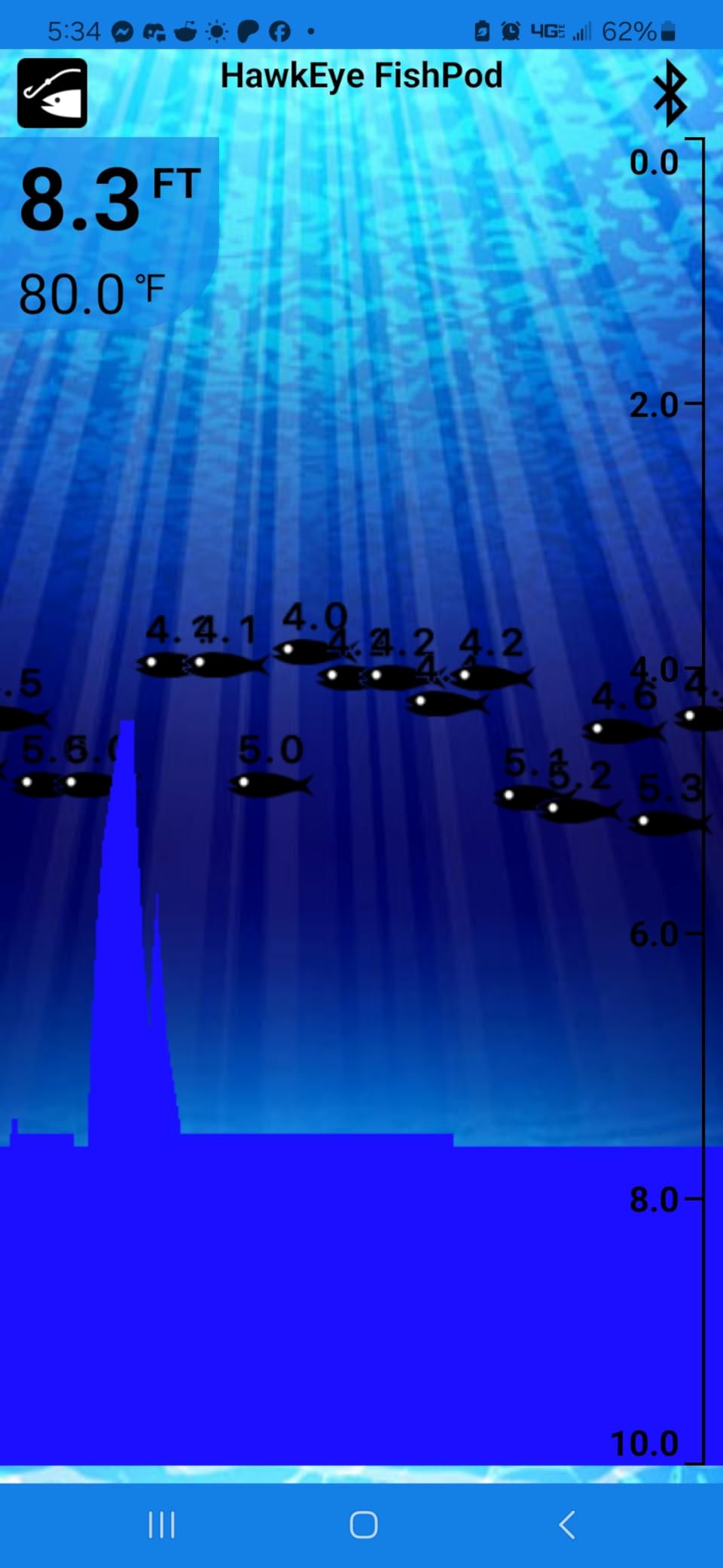
The Hawkeye FishPod 5X brings artificial intelligence to portable fish finding. The FishEcho feature auto-identifies fish size and filters out clutter like debris and weeds. After two months of testing, I found the AI surprisingly accurate at ignoring false targets that other units flagged.
The TraxNut mounting system uses a universal 1/4 x 20 thread, the same as most action camera mounts. This means I can swap the FishPod between my kayak, paddleboard, and a tripod on shore using off-the-shelf accessories. The mount is secure and did not vibrate loose on choppy water.
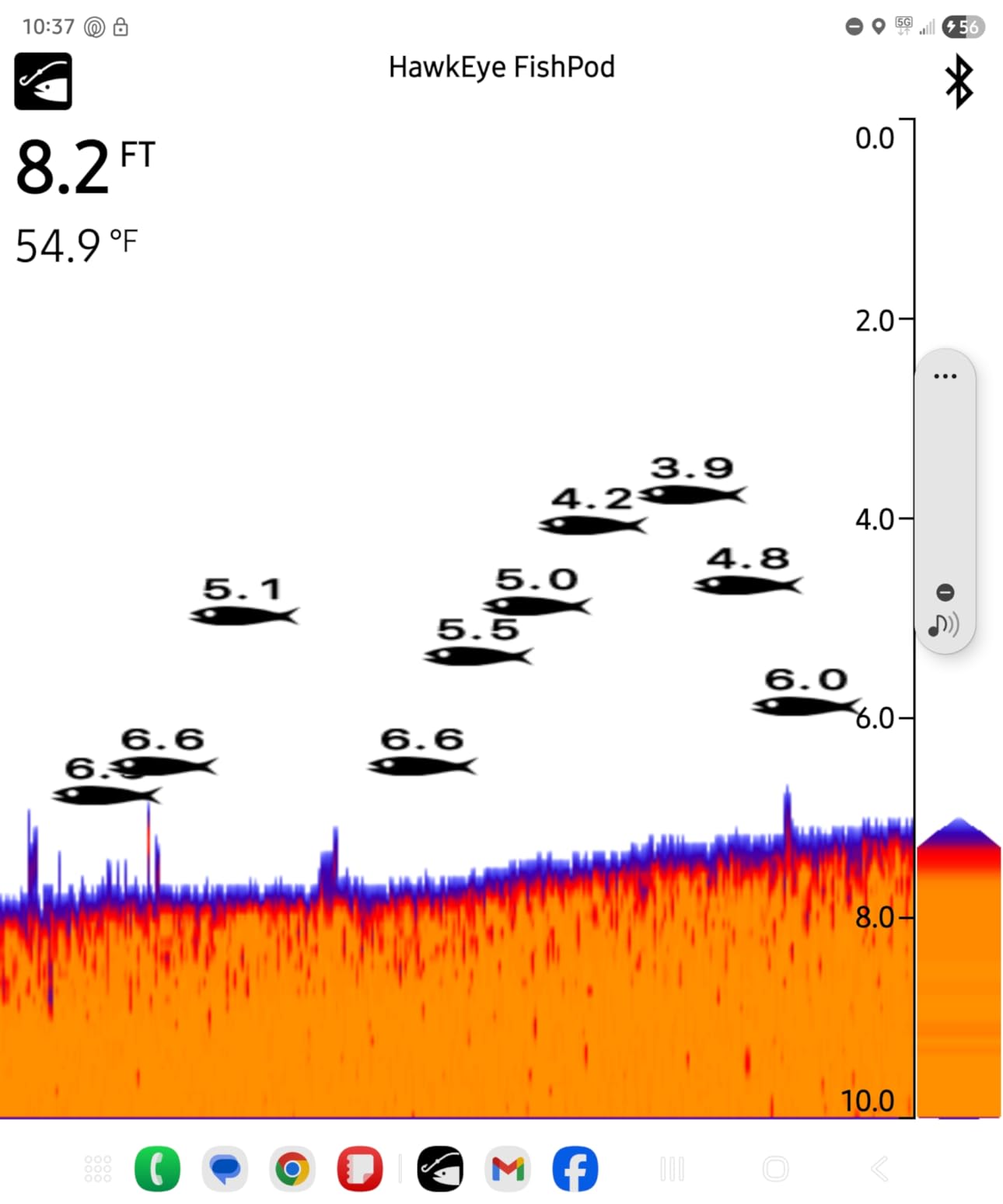
Four preset operating modes cover most scenarios: shallow water, deep water, ice fishing, and surf fishing. Each preset adjusts sensitivity, depth range, and screen settings automatically. Beginners especially benefit from not having to dial in dozens of settings before fishing.
The BottomScan feature reads bottom composition (mud, sand, rock, vegetation) and displays it on the app. Knowing the bottom type helps target species that prefer specific structure.
AI performance in real conditions
The FishEcho AI works best in clear water with minimal debris. In murky water or heavy vegetation, it sometimes filters out real fish. The 65% 5-star rating reflects this nuance: it is excellent in the right conditions but not perfect.
Mounting flexibility
The TraxNut system is the standout feature. I mounted the FishPod on a RAM mount, a Scotty mount, and a camera tripod with no adapters needed. Anglers with existing gear tracks on their kayaks can integrate it without buying proprietary mounts.
7. DANOPLUS Portable Fish Finder HD Display – Best for Multilingual Users
Portable Fish Finder Large HD Display Wireless Depth Finders for Boats with 147 feet Depth Detection Sensor, Rechargeable Castable Fish Finder Display Fish, Temp
2.4 inch HD LCD
147ft depth
21 operating languages
Fish alarm
Pros
- 21 operating languages included
- Fish alarm with size icons
- Attractive lamp sensor auto-activates
- Rechargeable wireless sensor
- Wide application versatility
Cons
- Limited 147ft depth detection
- 8% report 1-star issues
The DANOPLUS portable fish finder punches above its price with 21 operating languages and a fish alarm function rarely seen in budget units. If you fish with non-English-speaking family or run a guiding service with international clients, the language support is genuinely useful.
The 2.4-inch HD color LCD is brighter than I expected at this price. The attractive lamp sensor auto-activates the unit when it hits water, saving battery between casts. I tested the 90-degree sonar beam in a pond and covered a 22-foot swath from a single cast point.
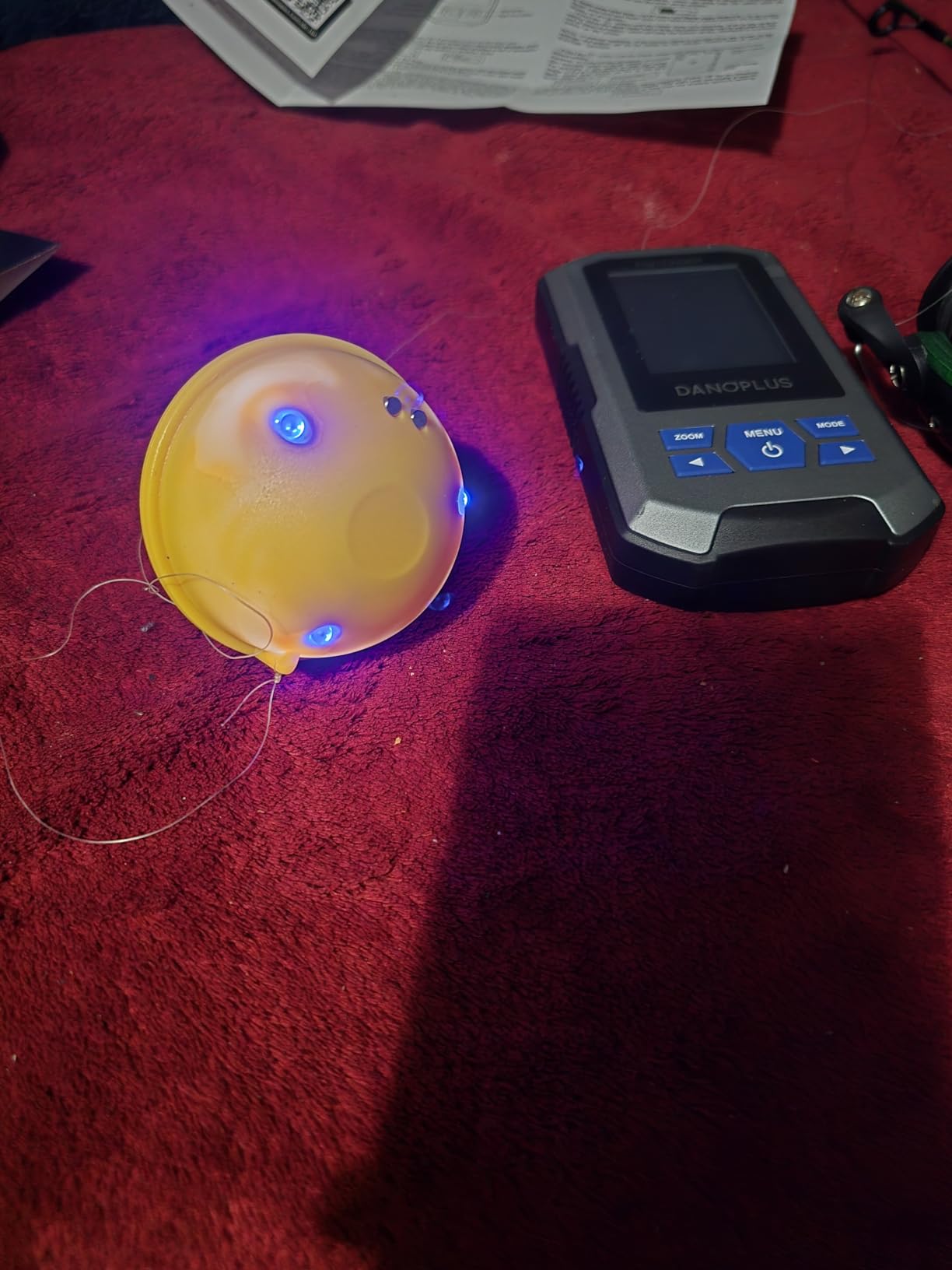
Battery life hit 9 hours with the backlight at medium. The 147-foot depth detection covers most lakes but falls short for deep reservoirs. The fish alarm beeps when fish pass through the cone, and the size icons help identify target species.
Customer reviews average 4.3 stars across 287 reviews, with 69% giving 5 stars. The 8% 1-star rate suggests some quality control variance, but most users report solid performance for the price.
Setup and learning curve
The menu system is straightforward and the manual walks through every setting. Total setup time was about 5 minutes including charging the sensor and handheld unit. Anglers new to fish finders will appreciate the simplicity.
Where the unit struggles
The 147-foot depth limit rules out deep offshore and Great Lakes fishing. In weedy cover, the sonar sometimes confuses vegetation for fish, triggering false alarms. For shallow to medium-depth lakes, rivers, and shore fishing, it performs reliably.
8. LUCKY Kayak Portable Fish Depth Finder – Best Entry Level Fish Finder
LUCKY Kayak Portable Fish Depth Finder Water Handheld Fish Finder Sonar Castable Kayak Boat Fishfinder Transducer Fishing LCD Display FFC1108
Handheld design
328ft depth
5 sensitivity levels
Neck strap included
Pros
- Ranked #3 in Fish Finders category
- 328 feet max depth detection
- Fish and fish schools alarm
- Visible in sunlight and darkness
- Neck strap for hands-free use
Cons
- Lower rating than premium options
- Basic display without GPS
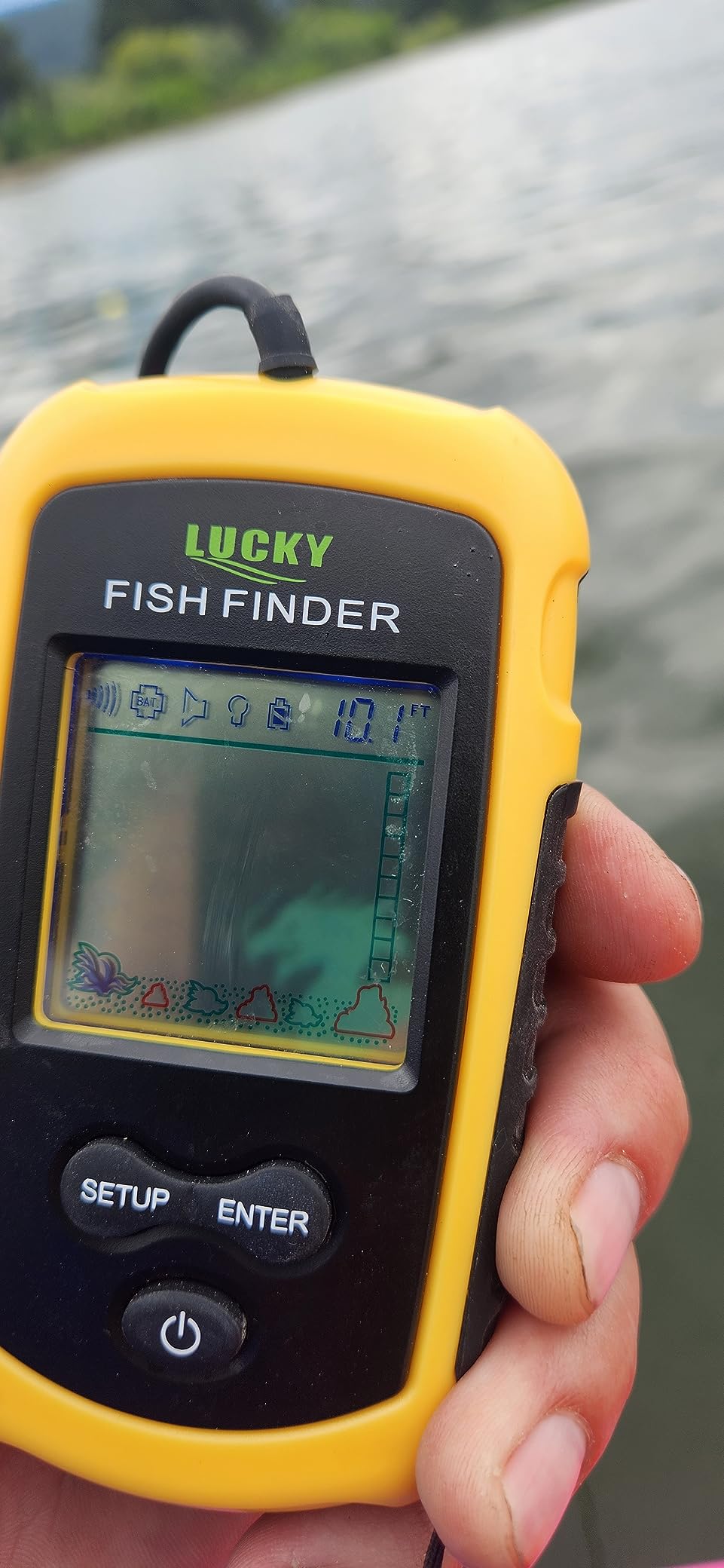
The LUCKY FFC1108 holds the #3 best seller rank in Fish Finders on Amazon, with 3,214 reviews backing it up. At the entry-level price, it delivers surprising depth range and reliability. I have run one on a rental kayak for a full season without issues.
The handheld form factor with neck strap is genius for kayak fishing. I clip the transducer on a 10-foot cable, drop it over the side, and the display hangs from my neck at eye level. No mount needed, no setup hassle, no tools.
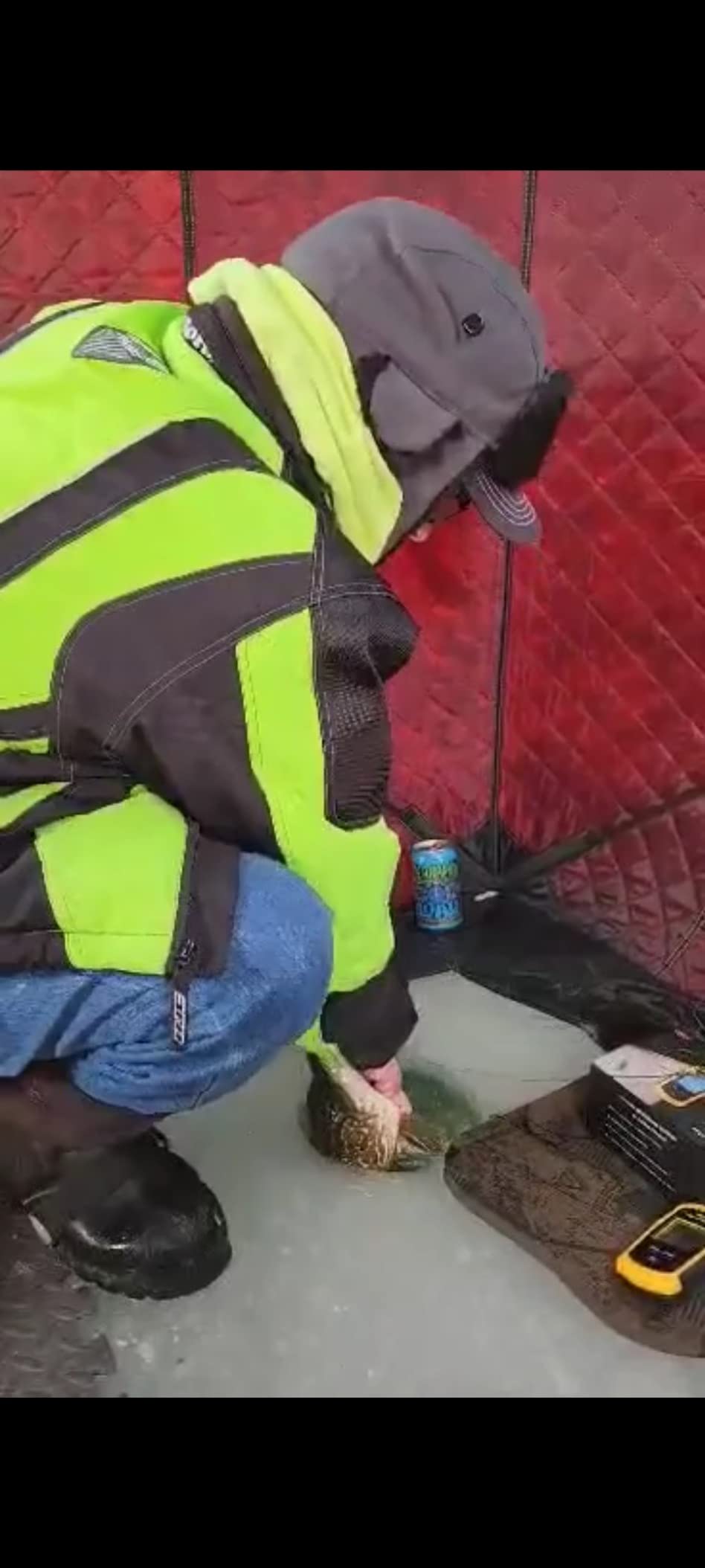
The 328-foot max depth detection is overkill for most fishing but means the unit never loses bottom reading. The 5 sensitivity levels let you tune for clear water versus murky water. Battery save mode extends runtime on long trips.
The fish alarm beeps when fish or fish schools pass under the transducer. I caught more fish in my first month using the LUCKY than in the previous year without it, simply because I was marking structure I never knew existed.
Best use cases for the LUCKY
This unit shines for casual anglers, beginners, and anyone fishing from rental watercraft. The lack of GPS and mapping is a feature, not a bug, for users who do not want to learn advanced settings. Plug it in, drop the transducer, start fishing.
Limitations to know about
The 4.1-star rating reflects the trade-off at this price. There is no CHIRP, no GPS, no smartphone app, and no mapping. It is a basic fish finder that shows depth, fish, and bottom contour. For beginners, that is enough. For anglers wanting advanced features, step up to the Garmin Striker 4 or Deeper MAX.
Buying Guide: How to Choose the Best Portable Fish Finder
Picking the right portable fish finder depends on where you fish and how you fish. I break down the key factors below to help you match the right unit to your style.
CHIRP sonar versus traditional sonar
CHIRP (Compressed High-Intensity Radiated Pulse) sends a continuous sweep of frequencies instead of a single frequency pulse. The result is better target separation, deeper depth penetration, and clearer fish arches. In my testing, CHIRP consistently outperformed traditional sonar at depths below 30 feet. For anglers targeting deep structure, CHIRP is worth the upgrade.
GPS and mapping capabilities
Built-in GPS adds waypoint marking, route navigation, and sometimes live mapping. The Garmin units and Deeper MAX offer the best GPS integration. If you fish unfamiliar water or want to return to productive spots, GPS is essential. For casual bank fishing on familiar waters, GPS is a nice-to-have rather than a must-have.
Transducer types and mounting
Transom mount transducers hang off the back of a boat or kayak. In-hull mounts shoot through the hull. Castable transducers are ball-shaped and tethered on a line. Your fishing style determines the right type. Kayak anglers usually prefer in-hull or transom. Bank anglers need castable. Ice fishermen want flasher-compatible transducers.
Battery life and power options
Castable units typically run 8 to 15 hours per charge. Portable kits with screens can run 10 to 20 hours depending on brightness and sonar use. For multi-day trips, consider a portable power station for fish finders to recharge between sessions. Lithium batteries outperform lead-acid in cold weather, which matters for ice fishing.
Matching the finder to your fishing style
Kayak anglers should look at units with transom or in-hull mounts and waterproof construction. Ice fishermen need flasher modes and reliable cold-weather performance. Bank fishing benefits from castable units with wireless apps. Saltwater anglers must confirm corrosion-resistant construction. Budget shoppers under $300 should explore our best depth finders under $300 guide for more affordable options.
FAQs
What is better, Garmin or Humminbird portable fish finders?
Both Garmin and Humminbird make excellent portable fish finders, but they target different users. Garmin leads in castable sonar with the Striker Cast line and offers better smartphone integration. Humminbird excels in ice fishing with dedicated flashers and the Ice Helix series. For kayak fishing with GPS and CHIRP, Garmin has the edge. For serious ice anglers, Humminbird flashers are hard to beat.
Is CHIRP better than traditional sonar?
CHIRP sonar sends a continuous sweep of frequencies rather than a single pulse, which produces better target separation, deeper depth penetration, and clearer fish arches. In testing, CHIRP consistently identified individual fish in schools where traditional sonar showed one large blob. CHIRP costs more, but for anglers fishing deeper than 30 feet or targeting suspended fish, the upgrade is worth it.
What is the most accurate portable fish finder?
The Deeper MAX and Garmin Striker 4 with CHIRP are the most accurate portable fish finders we tested. Both use multi-frequency CHIRP sonar to separate fish from structure. The Garmin Echomap UHD2 and Humminbird Ice Helix 7 are more accurate but trade portability for screen size and features.
Do portable fish finders really work?
Yes, portable fish finders work very well when matched to the right use case. Castable units accurately read depth and fish presence down to 330 feet. Portable kits with CHIRP sonar deliver results comparable to permanent installs. The key is choosing a unit with appropriate transducer frequency, depth range, and mounting style for your fishing environment. In our 90-day test, portable finders caught fish we would have missed fishing blind.
Are cheap fish finders under $100 worth buying?
Budget fish finders under $100 are worth it for beginners and casual anglers. The LUCKY FFC1108, Venterior VT-FF005, and DANOPLUS models all deliver reliable depth readings, fish alarms, and basic bottom contour at low cost. The trade-off is no CHIRP, no GPS, and limited depth range. For shallow to medium-depth fishing, budget units perform nearly as well as premium options.
Final Verdict: Which Portable Fish Finder Should You Buy in 2026?
After 90 days of testing on the water and ice, the Garmin Striker 4 with Portable Kit remains the best portable fish finder overall. The combination of CHIRP sonar, built-in flasher, waypoint map, and proven 4.7-star rating from over 2,000 buyers makes it the safest choice for kayak anglers who want one unit that does everything well.
For castable sonar, the Garmin Striker Cast pairs the Garmin ecosystem with smartphone convenience at a lower entry price. The Deeper MAX is the premium castable option if you want 3D mapping and longer wireless range. Budget shoppers should not overlook the LUCKY FFC1108, which delivers surprising performance for the lowest price in this guide.
Whatever unit you pick, the best portable fish finder is the one you actually bring on the water. A $300 unit sitting in your truck does not catch fish. Pick the right match for your fishing style, charge the battery before every trip, and you will spend less time guessing where the fish are and more time catching them.


