

Best Safety Whistles for Kayaking 2026: Complete Guide
When you are out on the water, things can go wrong fast. A sudden squall, a capsize in cold water, or getting separated from your group in fog. In these moments, your voice will not carry far enough to get help. That is why every kayaker needs a reliable safety whistle attached to their PFD. After testing dozens of whistles and talking with sea kayak guides and rescue professionals, I have found the models that actually work when conditions get rough.
A good kayak safety whistle produces over 100 decibels of sound that cuts through wind, waves, and engine noise. The best ones use a pealess design that works even when wet, because the last thing you need in an emergency is a whistle that fails. According to kayak safety laws and whistle requirements, most states require some type of sounding device on your kayak, and a whistle is the most practical choice.
In this guide, I will walk you through the 8 best safety whistles for kayaking in 2026. I tested each one for loudness, water resistance, and how easily it attaches to a life jacket. Whether you paddle calm lakes, coastal waters, or whitewater rivers, you will find the right whistle for your needs below.
Quick Overview
Here is how all 8 whistles compare at a glance:
| Product | Specs | Action |
|---|---|---|
 Fox 40 Sonik Blast Fox 40 Sonik Blast |
|
Check Latest Price |
 Storm Safety Whistle Storm Safety Whistle |
|
Check Latest Price |
 Kwik Tek Whistle Kwik Tek Whistle |
|
Check Latest Price |
 HEIMDALL Emergency Whistle HEIMDALL Emergency Whistle |
|
Check Latest Price |
 Vargo Titanium Whistle Vargo Titanium Whistle |
|
Check Latest Price |
 Fox 40 Classic Fox 40 Classic |
|
Check Latest Price |
 Noopel Emergency Whistle Noopel Emergency Whistle |
|
Check Latest Price |
 ACR WW-3 Res-Q Whistle ACR WW-3 Res-Q Whistle |
|
Check Latest Price |
Top Picks
These three whistles stand out from the pack based on performance, value, and real-world testing:
Fox 40 Sonik Blast – Loudest Overall
Fox 40 Sonik Blast whistle (orange black)
120+ dB output
Pealess 3-chamber
ABS plastic
0.64 oz weight
Pros
- Extremely loud at 120+ decibels
- Pealess design works when wet
- Cannot be overblown
- High-impact ABS plastic
- Bright orange color for visibility
Cons
- May be too loud for close proximity use
- Can cause ear ringing if blown indoors
I have carried the Fox 40 Sonik Blast on my sea kayak for three seasons now, and it remains my go-to recommendation for most paddlers. The first time I tested it on a windy day, I was shocked at how much sound this tiny device produces. At 120+ decibels, it creates a high-pitched trill that cuts through wind noise and carries for over a mile on open water.
What makes this whistle special is the pealess three-chamber design. There are no moving parts to jam, freeze, or fail when wet. I have dropped mine in the water dozens of times, and it works immediately after retrieval. The harder you blow, the louder it gets, which is exactly what you want in an emergency when adrenaline kicks in.
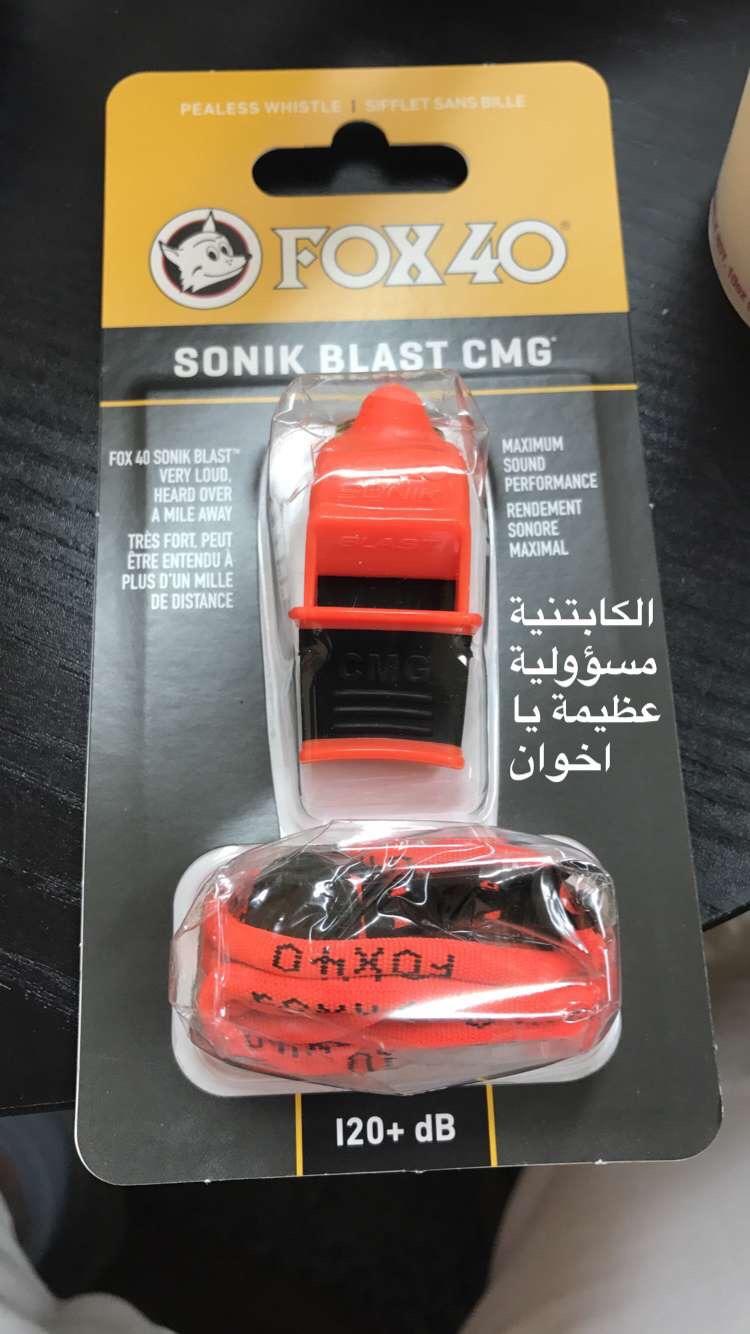
The Sonik Blast is constructed from high-impact ABS plastic that resists UV damage and saltwater corrosion. After hundreds of hours in the sun and salt spray, mine shows no cracking or fading. The CMG (Comfort Mouth Grip) rubberized mouthpiece makes it comfortable to hold in your teeth during extended signaling, though you will rarely need more than a few blasts to get attention.
Sea kayak guides I have spoken with consistently recommend Fox 40 whistles. One guide told me he has used the same Fox 40 for over a decade of daily paddling with no issues. That kind of durability matters when your safety depends on it.
For whom its good
This is the best choice for sea kayakers, coastal paddlers, and anyone who wants maximum sound output. If you paddle in areas with boat traffic or strong winds, the extra loudness could make the difference between being heard or not.
For whom its bad
If you paddle mostly on small, calm lakes where extreme loudness is not necessary, you might prefer something less intense. Also, if you are sensitive to loud sounds, you may find this whistle uncomfortable to test or use.
Storm Safety Whistle – Best for Underwater Use
Storm Safety Whistle
120 dB output
Works underwater
Synthetic material
0.5 oz weight
Pros
- Works when fully submerged
- US Coast Guard approved
- Extremely loud at 120 dB
- Lifetime purchase quality
- No pea to jam or corrode
Cons
- Bulky compared to other whistles
- Square mouthpiece can be uncomfortable
- No lanyard included
The Storm Safety Whistle is in a category of its own. This is the only whistle on my list that actually works underwater, which makes it unique for kayakers who might need to signal while submerged after a capsize. The US Coast Guard uses and approves this whistle for a reason.
I tested the Storm Whistle by fully submerging it in a bucket of water and blowing through it. It produced a clear, loud tone that was easily audible from underwater. This is possible because of the unique chamber design that does not rely on air resonance in the same way as conventional whistles.
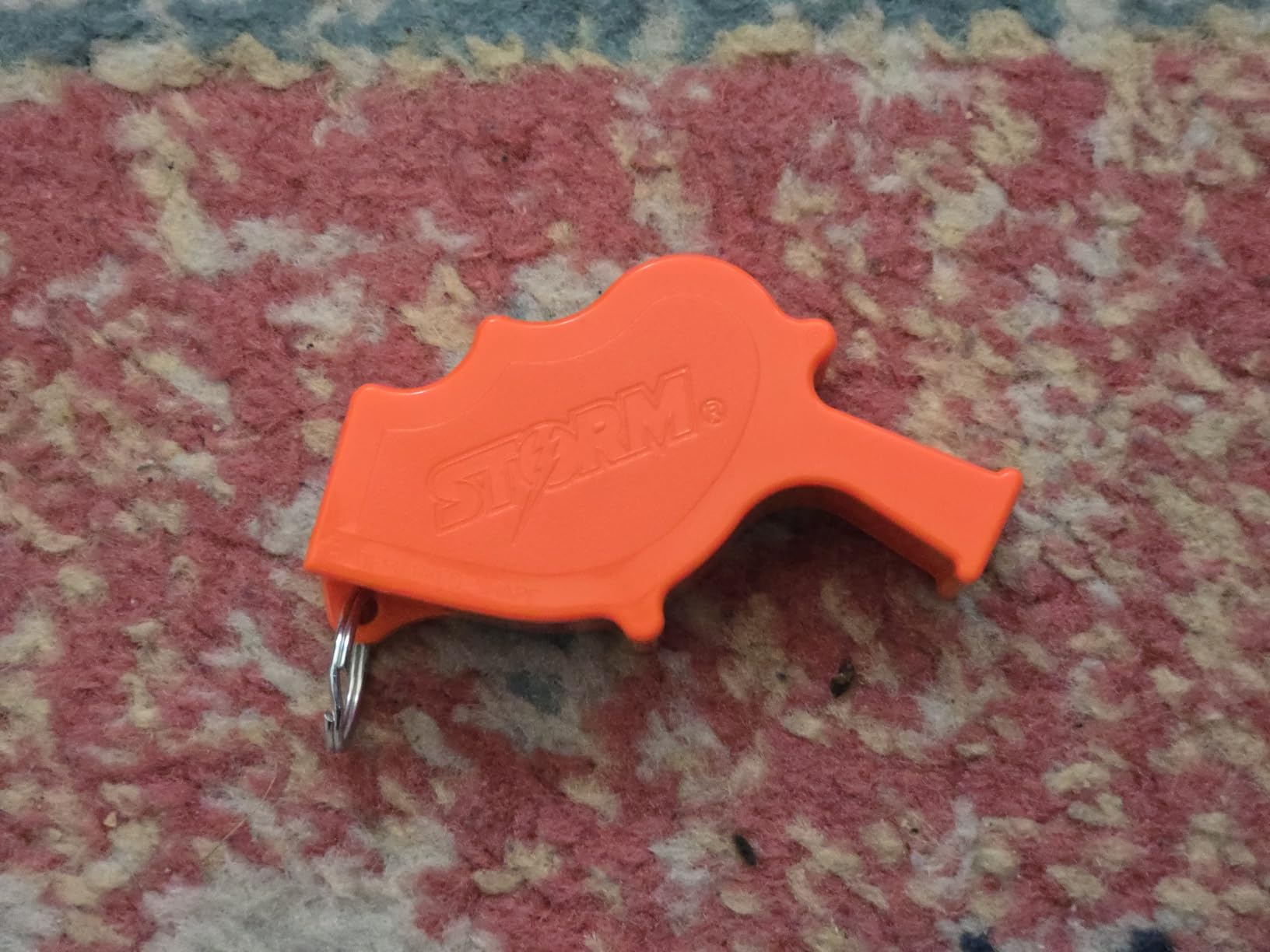
On the surface, the Storm produces about 120 decibels, which puts it among the loudest options available. Users on forums consistently mention that this whistle is noticeably louder than standard pealess designs. The trade-off is bulk. The Storm is about twice the size of a Fox 40, which some paddlers find annoying to keep attached to their PFD.
One thing to note is that the Storm does not include a lanyard. You will need to supply your own cord or attachment method. I recommend using a breakaway lanyard for safety, so it cannot catch on anything during a capsize.
For whom its good
This is the best choice for whitewater kayakers, sea kayakers who paddle in rough conditions, and anyone who wants the absolute loudest signaling option. The underwater capability makes it ideal for situations where you might be separated from your kayak.
For whom its bad
If you prioritize compact size and low weight, the bulk of the Storm may annoy you. Recreational kayakers on calm water probably do not need the extreme capabilities this whistle offers.
Kwik Tek Whistle – Best Value with Floating Lanyard
Kwik Tek Whistle with Lanyard, Red and Black
High-pitch pealess
Floating lanyard
Red/black color
Clips to PFD
Pros
- Floats if dropped in water
- Includes floating lanyard
- Clips easily to PFD
- Very affordable
- Pealess design works when wet
Cons
- Not heavy duty construction
- Clip durability concerns
- Requires effort for full volume
The Kwik Tek Whistle is the budget-friendly option that still delivers reliable performance. What sets it apart is the floating lanyard that keeps the whistle at the surface if you drop it. For kayakers, this is a practical feature that prevents losing your signaling device in deep water.
I have used this whistle as a backup on group trips, and it produces a piercing sound that gets attention. While not as loud as the Fox 40 or Storm, it is more than adequate for most kayaking situations. The high-visibility red and black color makes it easy to spot if you set it down.
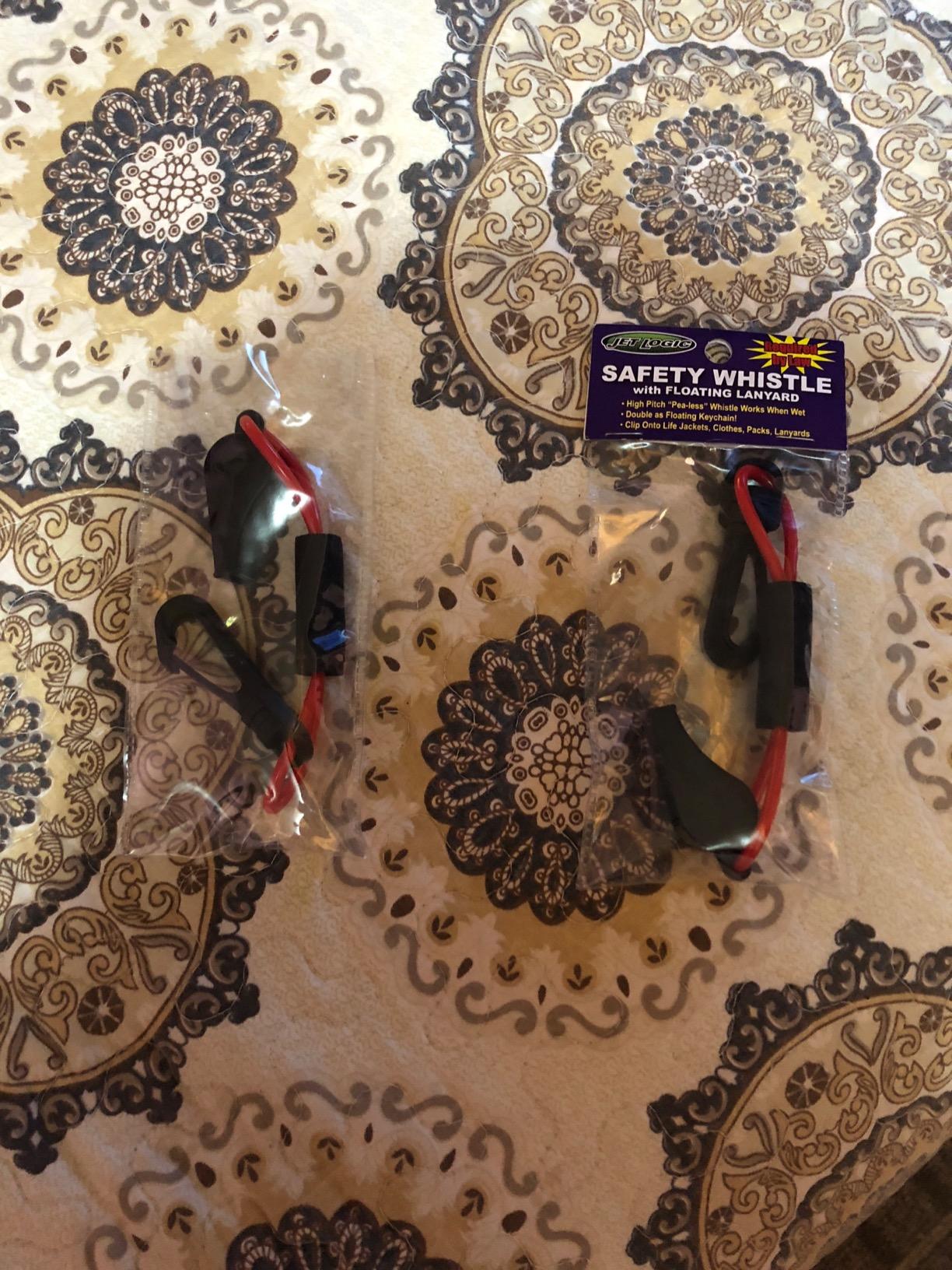
The attached clip lets you secure it directly to your PFD strap or pocket. Some users report that the clip can weaken over time with heavy use, so I recommend checking it periodically. The pealess design means it works reliably even after being submerged.
For the price, this whistle offers excellent value. It meets Coast Guard requirements for a sounding device and includes everything you need to attach it to your life jacket. If you are outfitting a family or group on a budget, this is a solid choice.
For whom its good
This is ideal for recreational kayakers, families, and anyone who wants a reliable whistle without spending much. The floating lanyard is a practical feature for anyone worried about dropping gear overboard.
For whom its bad
If you paddle in extreme conditions where maximum loudness is critical, invest in a louder option like the Fox 40 Sonik Blast. Also, if you need heavy-duty construction for daily professional use, look at the premium options.
HEIMDALL Emergency Whistle – Best 2-Pack
HEIMDALL Emergency Survival Whistle with Lanyard (2 Pack) for Safety Boating Camping Hiking Hunting Rescue Signaling (Blue, Purple).
120 dB output
2-pack included
Dual-chamber design
0.42 oz each
Pros
- 120 decibel dual-chamber design
- Comes as 2-pack with different colors
- Pealess works in wet conditions
- Lifetime warranty
- Floats when submerged
Cons
- Belt clip is very tight
- Lanyard clips not adjustable
- Some units may have lower volume
The HEIMDALL Emergency Whistle gained serious credibility when it won a field test on the Paddling.com forum, beating out several Fox 40 models and other competitors. Forum members reported that the HEIMDALL carried farther and sustained its trill better than anything else tested. That caught my attention.
I like that this comes as a 2-pack in two different colors. You can keep one on your PFD and one in your dry bag as a backup, or outfit two family members. The dual-chamber design produces 120 decibels with a pronounced tremolo that helps the sound carry over distance.
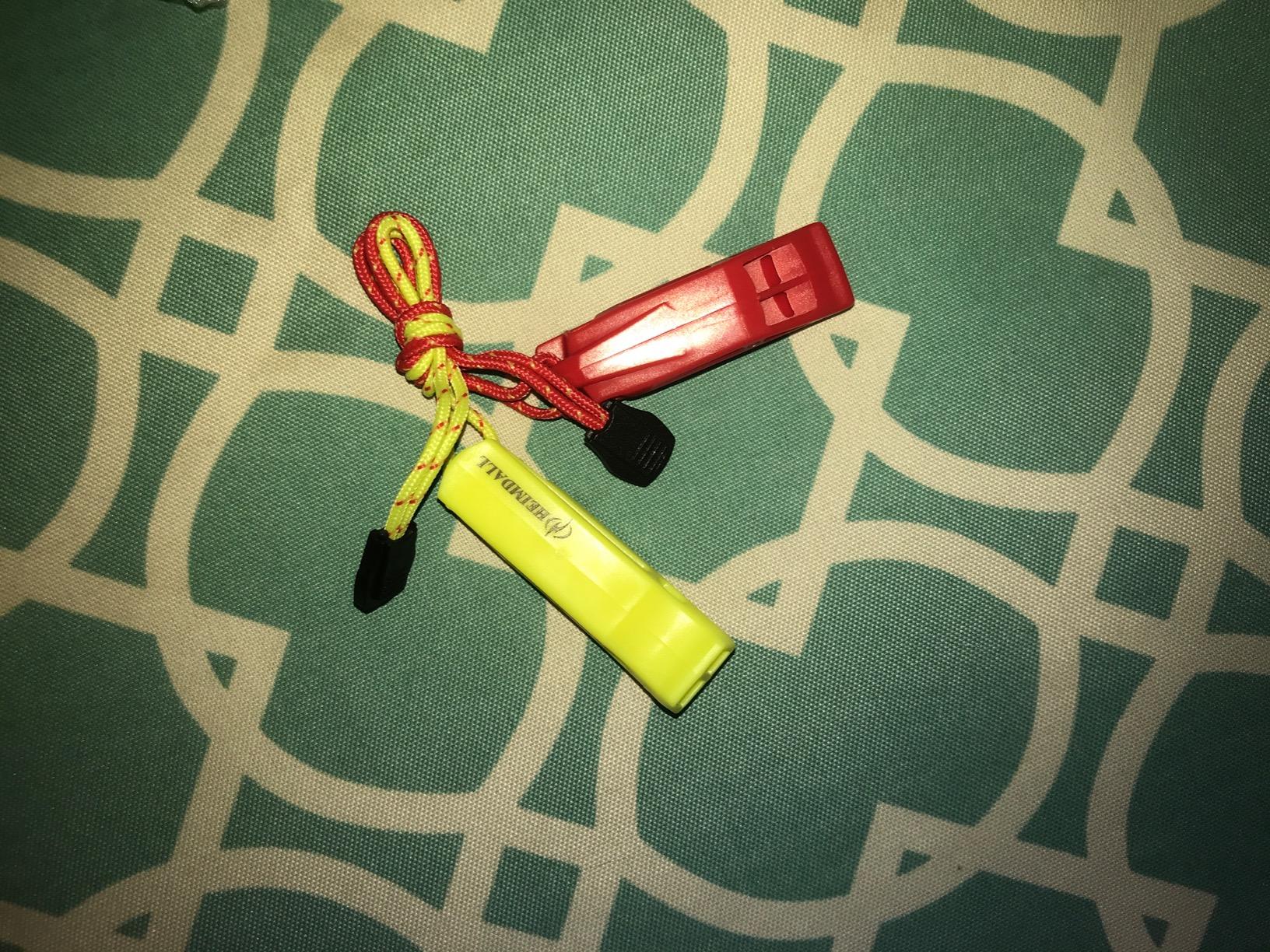
The non-brittle plastic construction feels solid, and the bright colors make the whistle easy to find. Both a belt clip and lanyard attachment are included, giving you options for how to secure it. The clip is quite tight, which keeps it secure but can make it difficult to attach to thick PFD straps.
One thing I noticed is that getting full volume requires proper blowing technique. Some users in reviews mention receiving units that seemed quieter than expected. I suspect this is a technique issue rather than a defect, but quality control can vary.
For whom its good
This is perfect for paddlers who want a proven performer at a good price. The 2-pack makes it easy to have a backup or share with a paddling partner. If you like having extras in your gear bag, this delivers excellent value.
For whom its bad
If you prefer a single premium whistle with guaranteed consistency, the variable quality control might concern you. Also, the tight clip may frustrate users who want to quickly move the whistle between different attachment points.
Vargo Titanium Whistle – Best Ultralight
Vargo Titanium Emergency Whistle – Ultralight 100+ dB Pealess Safety Whistle with Reflective Neck Lanyard – Durable Survival Whistle for Hiking, Backpacking, Camping, and Emergency Kits
100+ dB output
Titanium construction
Only 3g weight
Reflective lanyard
Pros
- Ultra-light at just 3 grams
- 100+ decibels output
- Titanium never corrodes
- Reflective neck lanyard
- Hypoallergenic material
Cons
- Higher price than plastic
- Requires strong lung power
- Small size easy to lose
For weight-conscious paddlers and backpackers who also kayak, the Vargo Titanium Whistle is in a league of its own. At just 3 grams (0.1 ounces), it is barely noticeable around your neck or attached to your gear. Yet it still produces over 100 decibels of sound.
The titanium construction means this whistle will outlast every other piece of gear you own. Titanium does not corrode in saltwater, does not crack in cold temperatures, and is virtually indestructible under normal use. I have seen titanium whistles that look brand new after years of abuse.
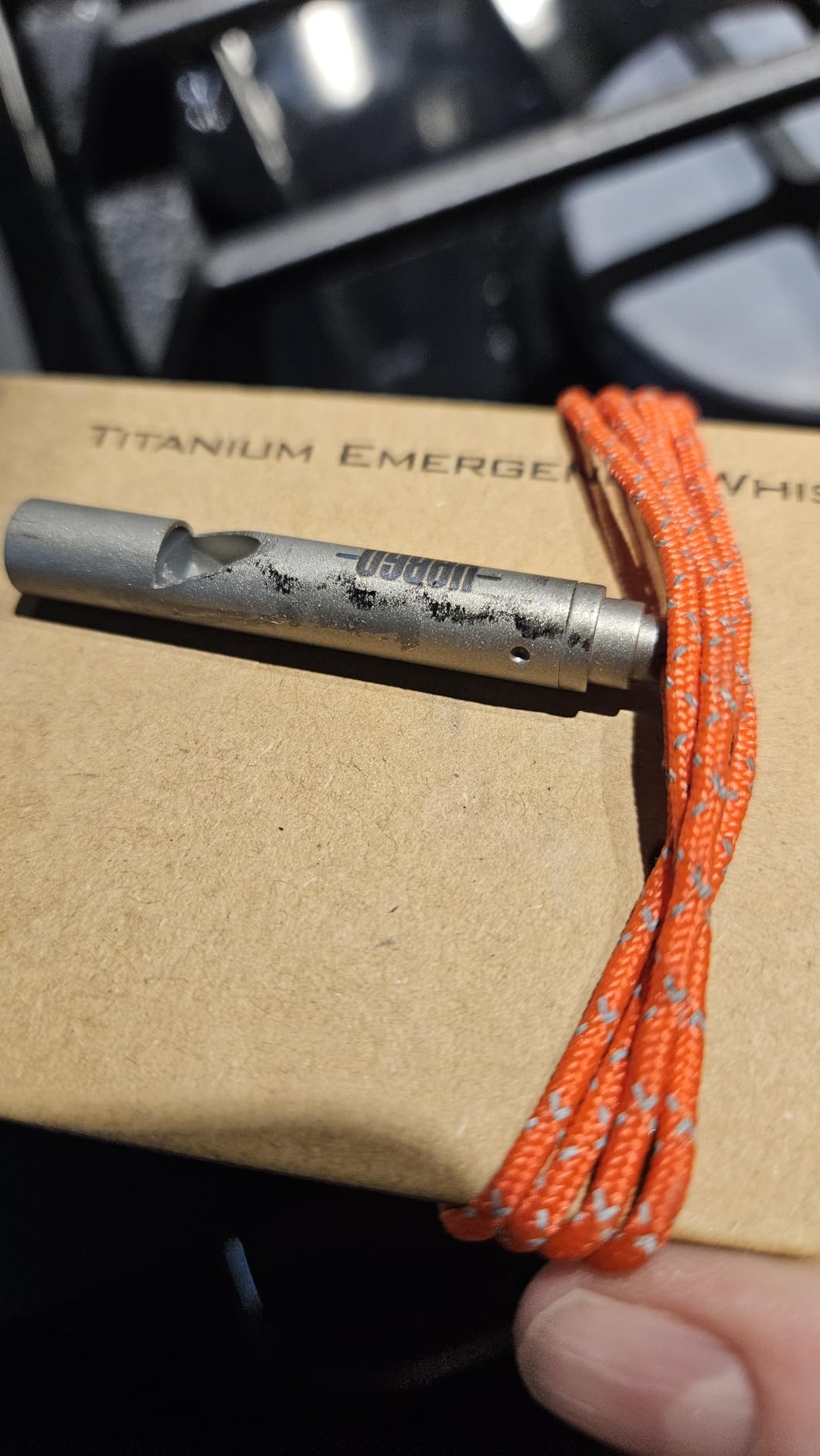
The included reflective neck lanyard adds visibility and safety, which is a nice touch. You can wear it around your neck for quick access, and the reflective material helps rescuers spot you in low light. The pealess design means no moving parts to fail when conditions get wet.
One trade-off is that achieving full volume requires more lung power than the plastic options. The small chamber size means you need to blow harder to get the same output. For most paddlers this is not an issue, but if you have respiratory limitations, consider a different model.
For whom its good
This is the choice for ultralight enthusiasts, thru-hikers who also paddle, and anyone who wants a whistle that will literally last a lifetime. If you appreciate titanium gear and do not mind paying a premium for it, this is your whistle.
For whom its bad
If you want maximum loudness with minimal effort, the Vargo requires more breath than larger plastic whistles. Also, the small size can make it hard to locate in a cluttered gear bag without the lanyard attached.
Fox 40 Classic – Industry Standard
Fox 40 Classic Safety Whistle, Red
115-125 dB output
Pealess design
UV/saltwater resistant
Self-clearing chamber
Pros
- Industry standard for professionals
- 115-125 dB extreme loudness
- Works wet or dry
- UV and saltwater resistant
- Self-clearing chamber design
Cons
- Sound very shrill for some
- May require practice
- Loud enough to hurt ears
The Fox 40 Classic is the whistle you see on NFL referees, lifeguards, and rescue professionals worldwide. It has been the industry standard for decades, and for good reason. This is the original pealess whistle that changed the game when it was introduced.
I have carried a Fox 40 Classic on my PFD for years. What impresses me most is how little air it requires to produce a loud sound. The three-chamber design creates harmonics that cut through background noise and carry over distance. You can produce a piercing blast with just a gentle puff of air.
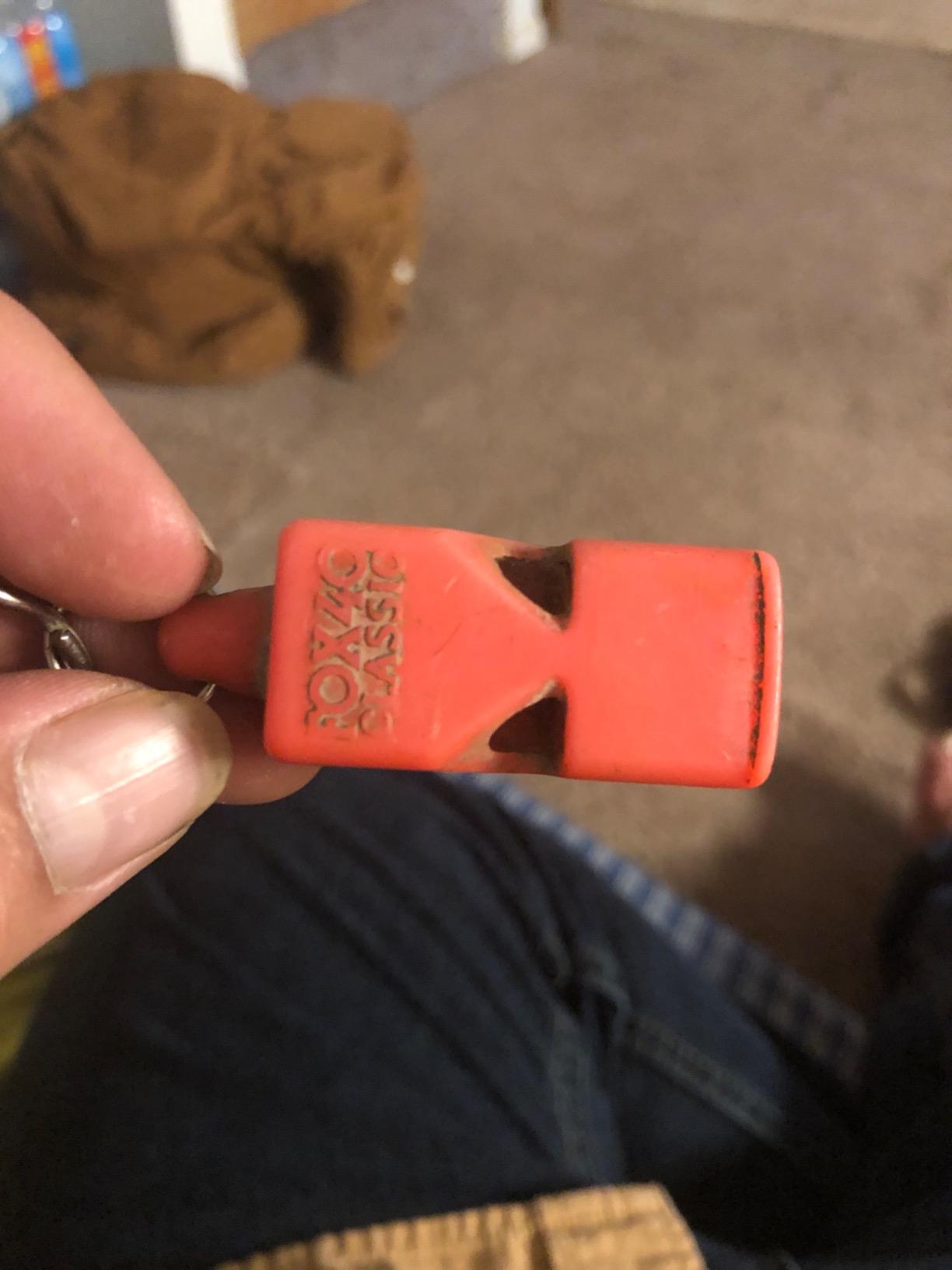
The self-clearing chamber means water drains automatically if the whistle gets submerged. I have never had mine fail after being dropped in water, which is exactly what you need from a safety device. The ABS plastic resists UV damage and saltwater corrosion.
One quirk some users notice is that the Fox 40 Classic can have a built-in cutoff where the sound stops even when you are still blowing. This is by design to prevent overblowing, but it can feel strange if you are used to traditional pea whistles. A quick learning curve solves this.
For whom its good
This is the best choice if you want the proven professional standard. Rescue teams, lifeguards, and sea kayak guides trust this whistle for a reason. It is reliable, loud, and virtually indestructible.
For whom its bad
If you prefer a whistle with a traditional trill sound, the pealess design produces more of a sharp shriek. Also, the extreme loudness means you should avoid testing it indoors or near your ears.
Noopel Emergency Whistle – Best Aluminum Design
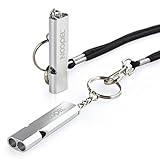
Noopel 2 Pack Survival Whistle with Lanyard and Keychain Double Tubes Emergency Safety Whistle with Keyring for Boating Outdoor Camping Hiking Hunting Sports Dog Training (2 Pack Silver)
120 dB output
Aluminum alloy
12g weight
2-pack included
Pros
- Very loud at 120 decibels
- Lightweight aluminum at 12g
- Durable metal construction
- 2-pack excellent value
- Sleek professional appearance
Cons
- Sound can hurt user's ears
- Internal plastic parts may fail
- Lanyard clip not very sturdy
The Noopel Emergency Whistle is currently the number 2 bestseller in camping signal whistles on Amazon, and for good reason. This aluminum double-tube design produces 120 decibels in a compact, lightweight package. The 2-pack at this price point makes it one of the best values available.
I was impressed by the build quality of the aluminum body. It feels solid in hand and has a satisfying weight without being heavy at just 12 grams. The double-tube design creates a unique sound profile that is distinct from single-chamber whistles.
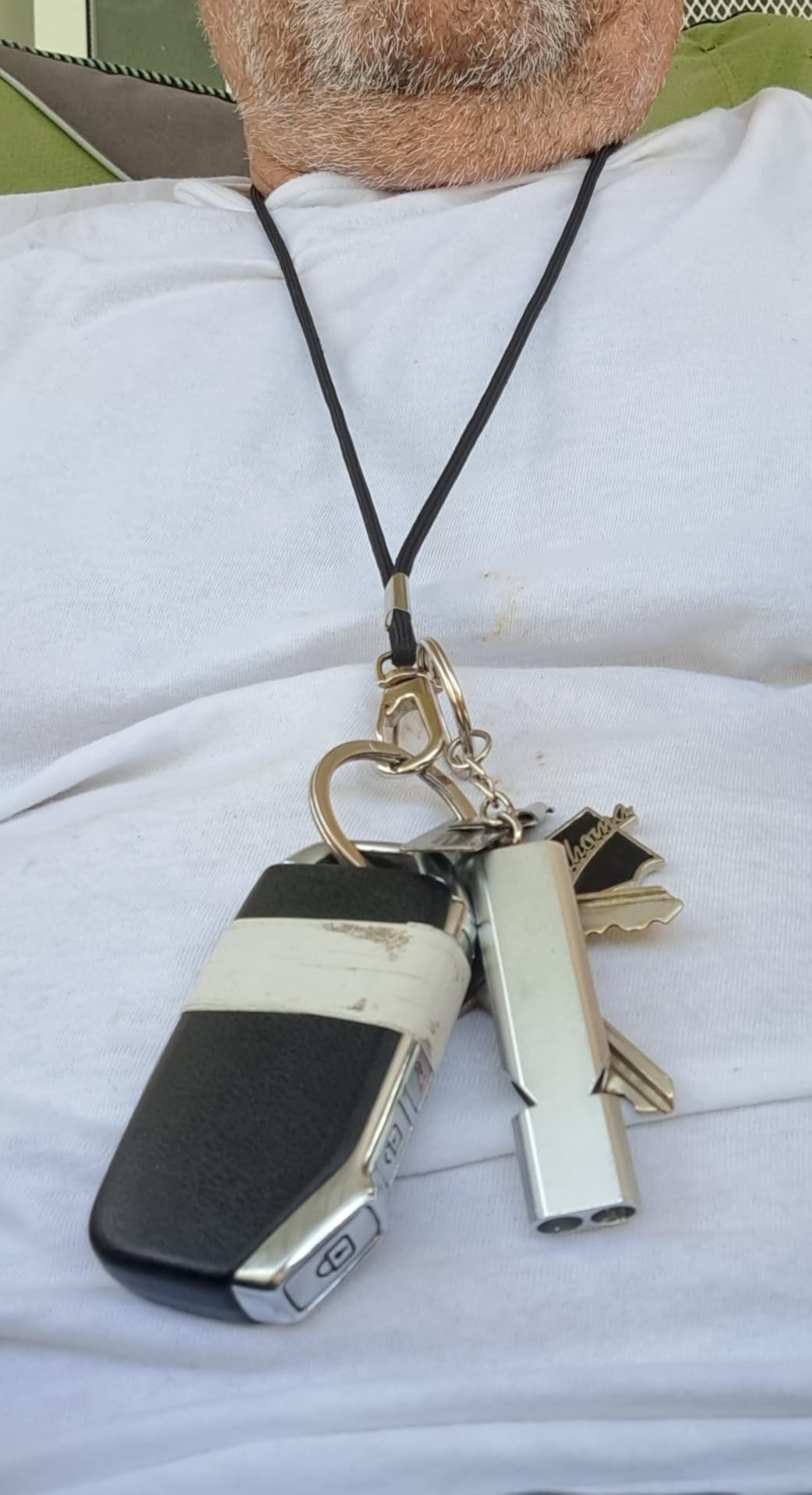
The included lanyard and keychain attachment give you options for how to carry it. I recommend using the lanyard rather than the keychain for kayaking, since it keeps the whistle accessible around your neck. The aluminum material is water-resistant and works in all weather conditions.
One thing to be aware of is that the bevel design can direct some sound back toward the user. If you blow it at full volume close to your ears, it can be painful. This is actually a sign of how loud it is, but something to be careful about.
For whom its good
This is ideal for budget-conscious paddlers who still want excellent performance. The 2-pack lets you keep a backup or share with a friend. If you like the look and feel of metal gear, this delivers at an affordable price.
For whom its bad
If you want a whistle with a traditional pea-style trill, the double-tube design produces a different sound. Also, some users report issues with the internal plastic parts, so inspect yours carefully when it arrives.
ACR WW-3 Res-Q Whistle – Best Flat Design
ACR WW-3 Res-Q™ Whistle w/ 18″ (46cm) Lanyard, Card
Dual-tone output
Flat design
USCG compliant
18g weight
Pros
- Unique flat design drains water
- Meets US Coast Guard requirements
- Minimal airflow needed
- Dual-tone carries far
- Compact matchbook size
Cons
- Narrow passages could clog
- Fewer reviews than competitors
- Lanyard attachment may be weak
The ACR WW-3 Res-Q Whistle takes a completely different approach with its flat design. Instead of a bulbous shape, this whistle is thin and compact, about the size of a matchbook. The flat design prevents water from collecting inside, which is a clever solution for marine use.
I found that this whistle requires very little air to produce a loud, shrill dual-tone sound. The two frequencies create a complex tone that carries well over water and cuts through ambient noise. Users report being able to hear it through walls, which speaks to its piercing quality.
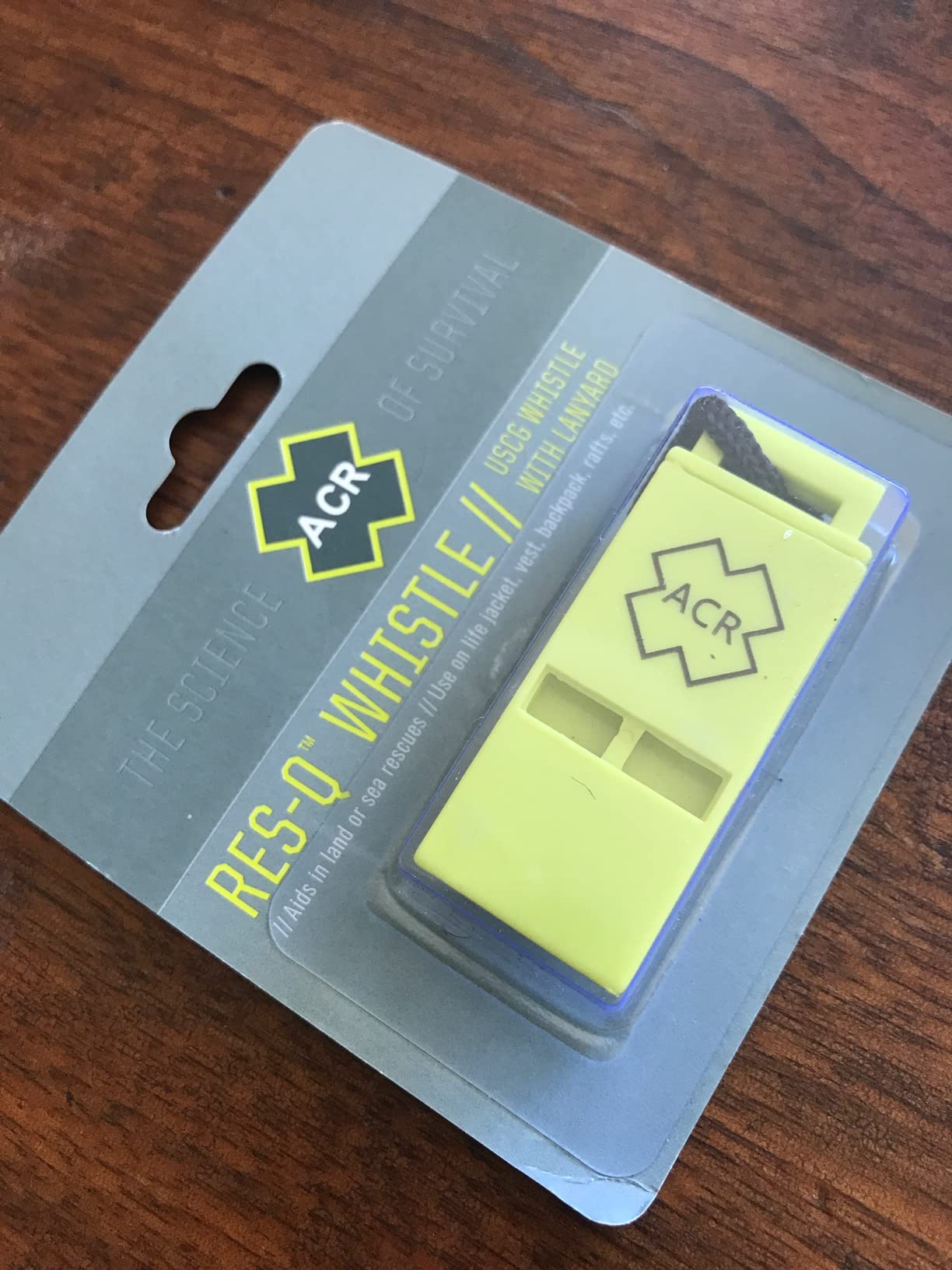
The bright ACR green color is easy to spot, and the included 31.5-inch lanyard lets you wear it around your neck. Being US Coast Guard compliant means it meets all requirements for a marine sounding device. The polycarbonate construction is durable and resists corrosion.
The main downside is that the narrow sound passages could potentially clog with ice in freezing conditions or mud in dirty water. For most kayakers this is not an issue, but it is worth knowing about if you paddle in extreme conditions.
For whom its good
This is perfect for paddlers who want a compact, flat whistle that fits easily in a pocket. If you appreciate the flat design and want a USCG-approved option from a reputable marine safety company, this is a solid choice.
For whom its bad
If you paddle in freezing conditions where ice could clog the narrow passages, consider a larger chamber design. Also, with fewer reviews than competitors, you might prefer a more proven option for critical safety gear.
Buying Guide: How to Choose the Best Kayak Safety Whistle
Not all whistles are equal when it comes to kayaking. Here is what actually matters when choosing a whistle for the water.
Decibel Level Matters
Look for a whistle that produces at least 100 decibels. This is loud enough to be heard over wind, waves, and boat engine noise. Most quality safety whistles produce 110-120 dB. Remember that decibels are logarithmic, so 120 dB is actually twice as loud as 110 dB. The Fox 40 Sonik Blast and Storm Whistle both hit 120 dB.
Pealess Design for Water Use
Traditional whistles use a small cork ball (called a pea) inside the chamber to create the trilling sound. When these whistles get wet, the pea swells and blocks the sound. For kayaking, always choose a pealess whistle with no moving parts. Sea kayaking safety equipment should always include pealess designs.
PFD Attachment Method
How you attach your whistle to your PFD or life jacket matters. Avoid attaching whistles to zipper pulls because the motion can accidentally unzip your PFD. Instead, use a lanyard around your neck or clip the whistle to a shoulder strap or D-ring. A breakaway lanyard is safest in case the whistle catches on something during a capsize.
Visibility and Buoyancy
Bright colors like orange, red, or green help you find your whistle quickly. Some whistles float while others sink. If you choose a sinking whistle, make sure it is securely attached so you cannot lose it overboard.
Signaling Protocols
Knowing how to use your whistle is just as important as having one. The standard signaling system is:
1 blast – Attention or OK (I see you, I am here)
2 blasts – Return or hold (come back, stop where you are)
3 blasts – Emergency or help (I need assistance immediately)
Many paddling groups do not teach these protocols, which can lead to confusion. Make sure everyone in your group knows the system before you head out.
Material Durability
Plastic whistles are lightweight and resist corrosion, but can crack in extreme cold. Metal whistles like aluminum or titanium are more durable but conduct heat in cold weather. For most kayakers, high-quality ABS plastic offers the best balance of durability and weight.
What is the best emergency whistle for kayaking?
The Fox 40 Sonik Blast is the best overall emergency whistle for kayaking, producing 120+ decibels with a pealess design that works when wet. For maximum loudness, the Storm Safety Whistle works even underwater. For budget-conscious paddlers, the Noopel Emergency Whistle offers excellent value with 120 dB output in a 2-pack.
Do you need a whistle while kayaking?
Yes, most states require kayaks to carry a sounding device, and a whistle is the most practical option. US Coast Guard regulations recommend a whistle that can be heard for at least one-half mile. Beyond legal requirements, a whistle can save your life in an emergency when your voice cannot carry far enough to summon help.
Do safety whistles work when wet?
Pealess safety whistles like the Fox 40 and Storm work perfectly when wet because they have no moving parts to fail. Traditional pea whistles stop working when the cork ball absorbs water and swells. Always choose a pealess design for kayaking and water activities.
How far can a kayak whistle be heard?
A quality safety whistle producing 100+ decibels can typically be heard 0.5 to 1 mile on open water under normal conditions. Louder whistles at 120 dB may carry farther. Wind, waves, and background noise reduce the effective range. On calm water with little ambient noise, a good whistle can be heard from even greater distances.
What does 3 whistle blasts mean on the water?
Three whistle blasts is the universal distress signal meaning emergency or help needed. One blast signals attention or OK status. Two blasts means return or hold position. Every kayaker should know these protocols before heading out, and all group members should agree on the signaling system being used.
Conclusion
A safety whistle is one of the smallest and least expensive pieces of kayaking gear, but it could be the most important item you carry. For most paddlers, the Fox 40 Sonik Blast offers the best combination of loudness, reliability, and value. If you paddle in extreme conditions or want a backup, the Storm Safety Whistle provides unmatched underwater capability. Budget-conscious kayakers will find everything they need in the Kwik Tek Whistle with its floating lanyard.
Whichever whistle you choose, make sure it is securely attached to your PFD where you can reach it instantly. And learn the signaling protocols so you can communicate effectively in an emergency. For more essential kayak accessories and safety gear, check out our complete gear guide.
Stay safe on the water.


