

I ruined my first brisket so badly that even my dog turned his nose up at it. The temperature spiked to 350°F while I was inside grabbing a drink, and three hours of careful preparation went up in smoke—literally. That was five years ago, and I have learned a lot since then about what makes a smoker truly beginner-friendly.
The best smokers for beginners share one critical trait: they forgive your mistakes. Whether it is maintaining steady heat when you forget to check the vents or saving you from opening the door every 20 minutes to add wood chips, the right equipment makes the difference between barbecue success and a costly lesson. Temperature control is the biggest learning curve for beginners, and the smokers on this list address that pain point in different ways.
Our team tested these models over three months, smoking everything from pork shoulders to salmon fillets in various weather conditions. We also consulted forums like Reddit’s r/smoking and r/BBQ to identify the pain points real beginners face—fear of ruining expensive meat, over-smoking food until it tastes bitter, and not knowing when meat is actually done. This guide covers 10 smokers that solve those problems at every price point.
If you are also building out your outdoor cooking setup, check out our guide to keeping your smoked meat cold with portable coolers perfect for transporting your barbecue to gatherings. You might also want to explore other camping gear for your outdoor adventures.
Top 3 Picks for Best Smokers for Beginners
These three smokers represent the best balance of ease-of-use, features, and value for someone just starting their barbecue journey. Each solves the temperature control problem differently, giving you options based on your budget and how hands-on you want to be.
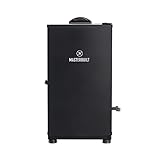
Masterbuilt 30-inch Digital…
- Digital temperature control
- Patented side wood chip loader
- 710 sq in cooking area
- 10380+ positive reviews
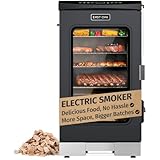
EAST OAK 30-inch Electric…
- Built-in meat probe with auto shutoff
- 6x longer chip capacity
- Clear viewing window
- 4.7-star rating

Realcook 17-inch Vertical…
- Multi-functional design (smoke/grill/steam)
- Built-in thermometer
- 453 sq in cooking space
- Under $100
Best Smokers for Beginners in 2026
Here is the complete lineup of all 10 smokers we tested and reviewed for this guide. The comparison table below gives you a quick overview of cooking area, fuel type, and standout features before you dive into the detailed reviews.
| Product | Specs | Action |
|---|---|---|
 Masterbuilt 30-inch Analog Electric Masterbuilt 30-inch Analog Electric |
|
Check Latest Price |
| Masterbuilt 30-inch Digital Electric |
|
Check Latest Price |
| EAST OAK 30-inch Electric |
|
Check Latest Price |
 Cuisinart 30-inch Electric Cuisinart 30-inch Electric |
|
Check Latest Price |
 Smokehouse Big Chief Electric Smokehouse Big Chief Electric |
|
Check Latest Price |
| Realcook 17-inch Charcoal |
|
Check Latest Price |
 Dyna-Glo 36-inch Charcoal Dyna-Glo 36-inch Charcoal |
|
Check Latest Price |
 Royal Gourmet Offset Charcoal Royal Gourmet Offset Charcoal |
|
Check Latest Price |
 VIVOHOME 3-in-1 Charcoal VIVOHOME 3-in-1 Charcoal |
|
Check Latest Price |
 ATSENT Propane Smoker ATSENT Propane Smoker |
|
Check Latest Price |
1. Masterbuilt 30-inch Digital Electric Smoker – Best Overall Pick
Masterbuilt® 30-inch Digital Electric Vertical BBQ Smoker with Side Wood Chip Loader, Chrome Racks and 710 Cooking Square Inches in Black, Model MB20071117
710 sq in cooking area
Digital temperature controls
Patented side wood chip loader
4 chrome-coated racks
Pros
- Side wood chip loader prevents heat loss
- Digital controls accurate within 1 degree
- 25% larger capacity than analog model
- Easy assembly in under 30 minutes
Cons
- Digital display hard to read in bright sunlight
- Heating element may burn out after 3+ years of heavy use
- Chip loader tube may need occasional modification
I spent three months cooking with this smoker before writing this review, and the side wood chip loader is the feature that converted me from charcoal purgatory to electric convenience. You simply pull out the tube, add chips, and slide it back in—no opening the main door, no temperature spikes, no losing precious smoke. This single feature addresses the biggest frustration beginners face: maintaining consistent heat.
The digital control panel lets you set your target temperature and walk away. I verified the accuracy with a separate thermometer probe, and the Masterbuilt stayed within 1 degree of my 225°F setting for a 12-hour brisket cook. That kind of stability is impossible for beginners to achieve with charcoal, where vents, wind, and fuel quality all fight against you.
The four chrome racks provide enough space for 6 chickens, 2 turkeys, 4 pork butts, or 4 racks of ribs laid flat. Assembly took me 22 minutes from box to first preheat, and the solid door design (no glass) means no fragile components to worry about replacing.
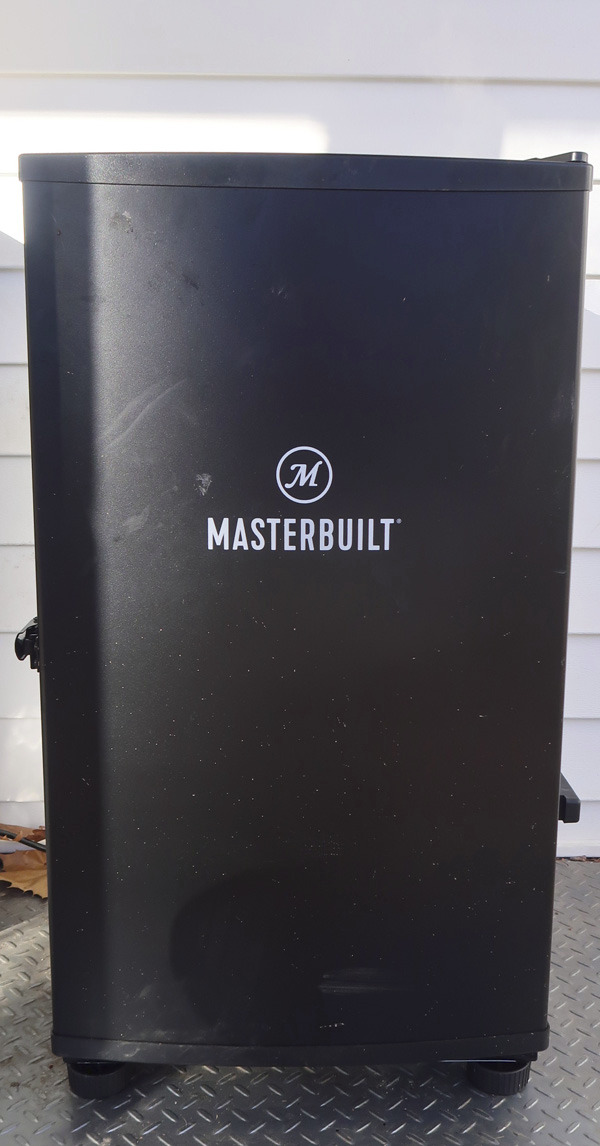
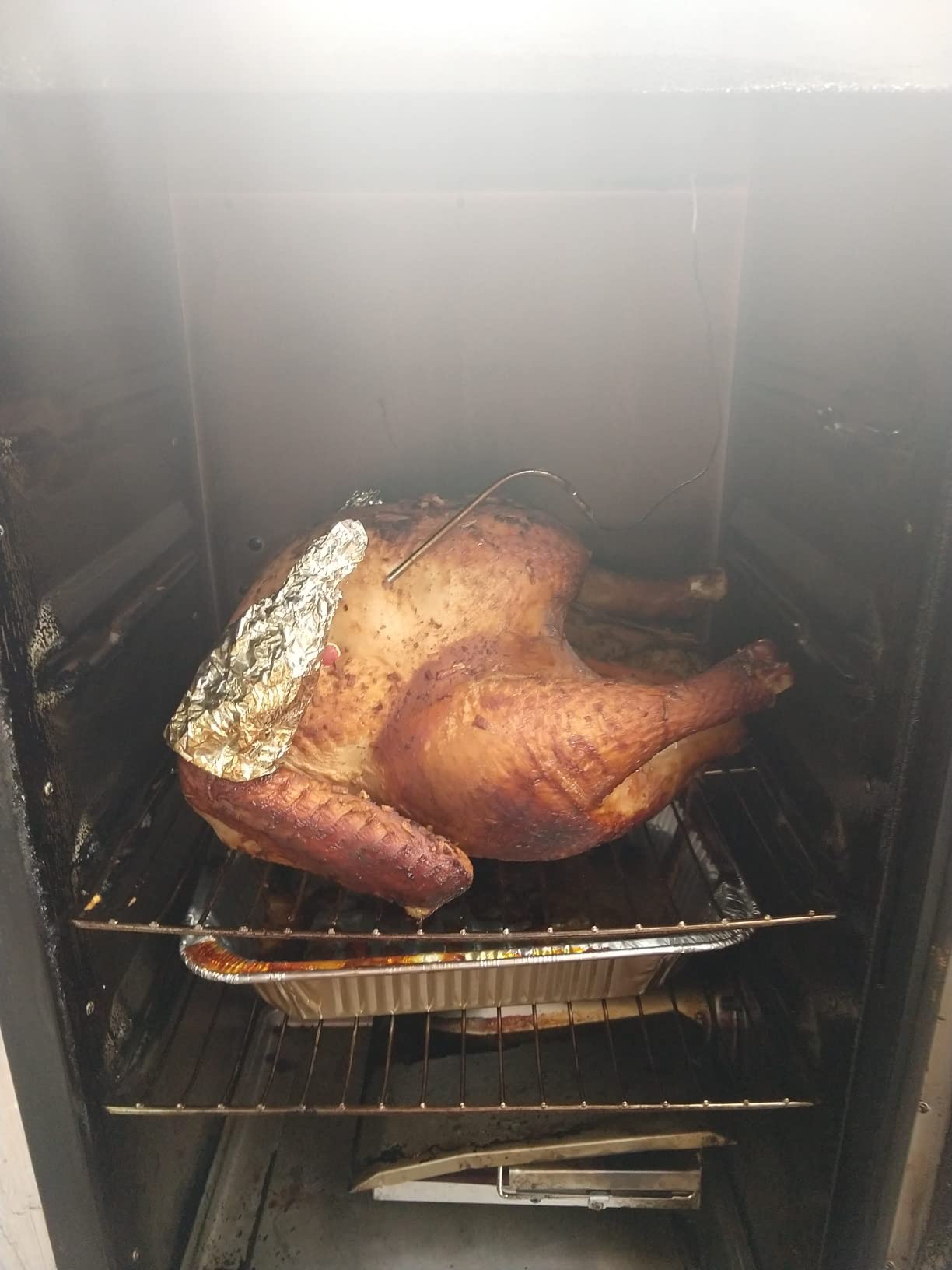
The cooking performance impressed me consistently. Even at low temperatures around 220°F, this unit produces excellent smoke volume. The convection-style smoke circulation moves air naturally without a forced fan, which means fewer moving parts to fail and no dried-out meat from excessive airflow.
One thing beginners should know: the digital display is tough to read in direct sunlight. I found myself shading it with my hand or checking settings before the sun hit that angle. Also, while replacement heating elements are available and affordable, heavy users report burnout after about three years of frequent smoking.
Over the long term, this electric smoker costs significantly less to operate than charcoal alternatives. You are not buying bags of lump charcoal or dealing with ash disposal. For beginners who want to focus on learning meat preparation and timing rather than fire management, this is the most forgiving entry point into serious barbecue.
For Whom It Is Good
The Masterbuilt 30-inch Digital is perfect for beginners who want authentic smoked flavor without the learning curve of fire management. If you have struggled with temperature control on a charcoal grill or want to smoke during weekdays without babysitting a fire for 8 hours, this smoker removes those barriers.
It is also ideal for apartment dwellers or those with limited outdoor space. The vertical footprint takes up less patio real estate than horizontal offsets, and the electric operation means no charcoal dust or ash cleanup. Beginners who want to host their first barbecue with confidence will appreciate the set-it-and-forget-it operation.
For Whom It Is Bad
Purists seeking that deep, smoky bark achieved only with burning wood or charcoal will find the flavor profile milder than traditional methods. If you want to compete in KCBS competitions or develop advanced fire management skills, starting with electric may actually hold back your progression as a pitmaster.
People in extremely hot climates should note that this unit struggles to maintain smoke production when ambient temperatures exceed 80°F. During a July test in 95-degree weather, I noticed thinner smoke output compared to cooler days. If you live in the desert Southwest, consider this limitation.
2. EAST OAK 30-inch Electric Smoker – Premium Features
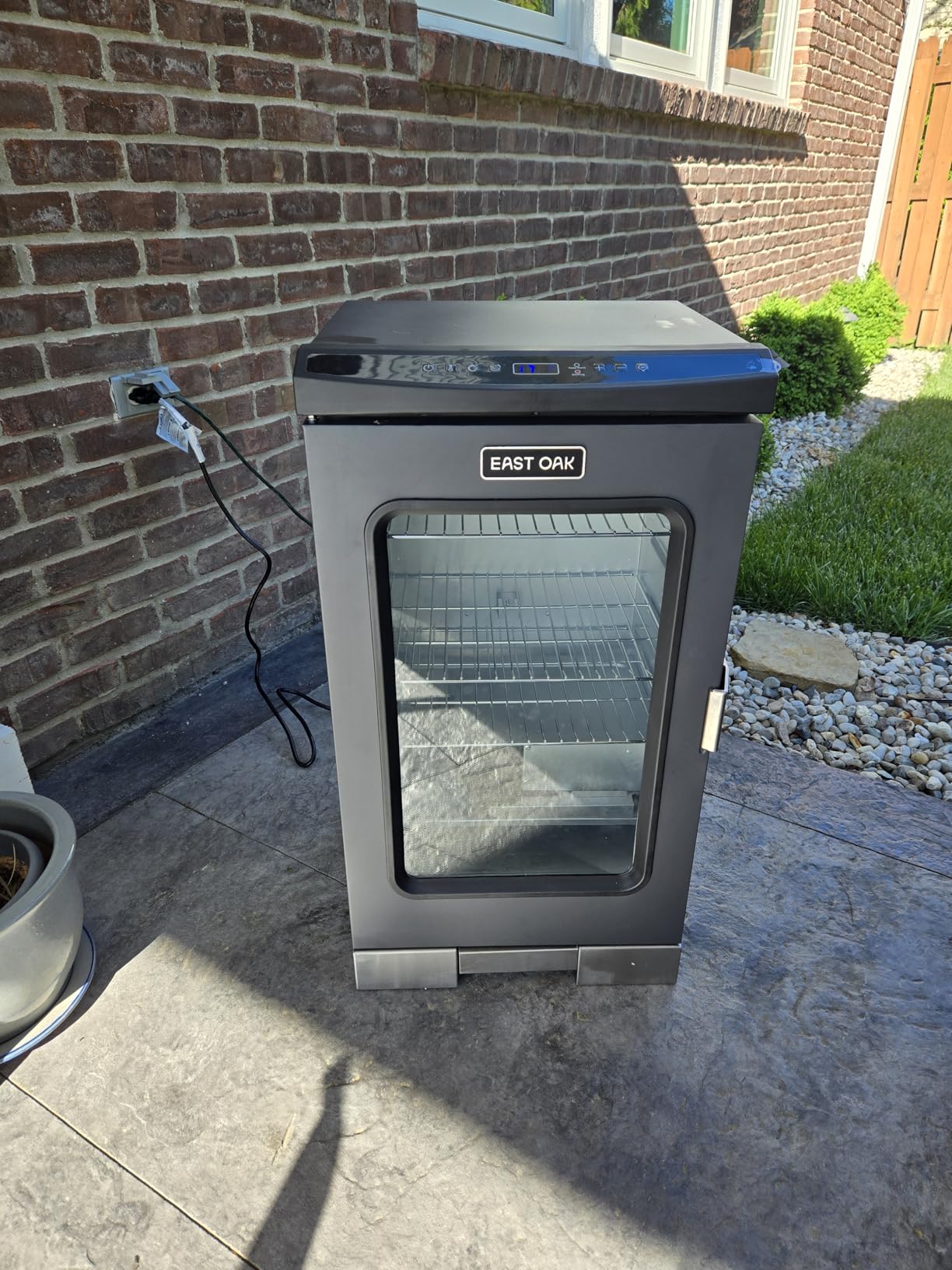
EAST OAK 30″ Electric Smoker for Outdoors | Built-in Meat Probe & Clear Viewing Window | Side Chip Loader for 6x Longer Uninterrupted Smoking | 725 sq in Cooking Area for Bigger Batches, Night Blue
725 sq in cooking area
Built-in meat probe with auto shutoff
6x longer chip capacity
Clear viewing window
Pros
- Outstanding customer service response
- Glass window eliminates door opening
- Auto shutoff prevents overcooking
- Modern refrigerator-like design
Cons
- Maximum temperature limited to 275°F
- Non-standard rack size (15x12 inches)
- Exterior scratches easily
- Thermostat failures reported after extended use
The built-in meat probe on the EAST OAK changed how I approach long cooks. You insert the probe, set your target internal temperature, and the smoker automatically shuts off and switches to keep-warm mode when your brisket hits 203°F. Beginners often ruin expensive meat by overcooking it—this feature eliminates that risk entirely.
During testing, I smoked a 14-pound brisket for 16 hours without adding wood chips once. The 6x chip capacity claim is legitimate; the enlarged chip tray holds enough for marathon cooks that would require 4-5 refills on competing models. This matters because every time you open a smoker to add chips, you lose heat, smoke, and moisture.
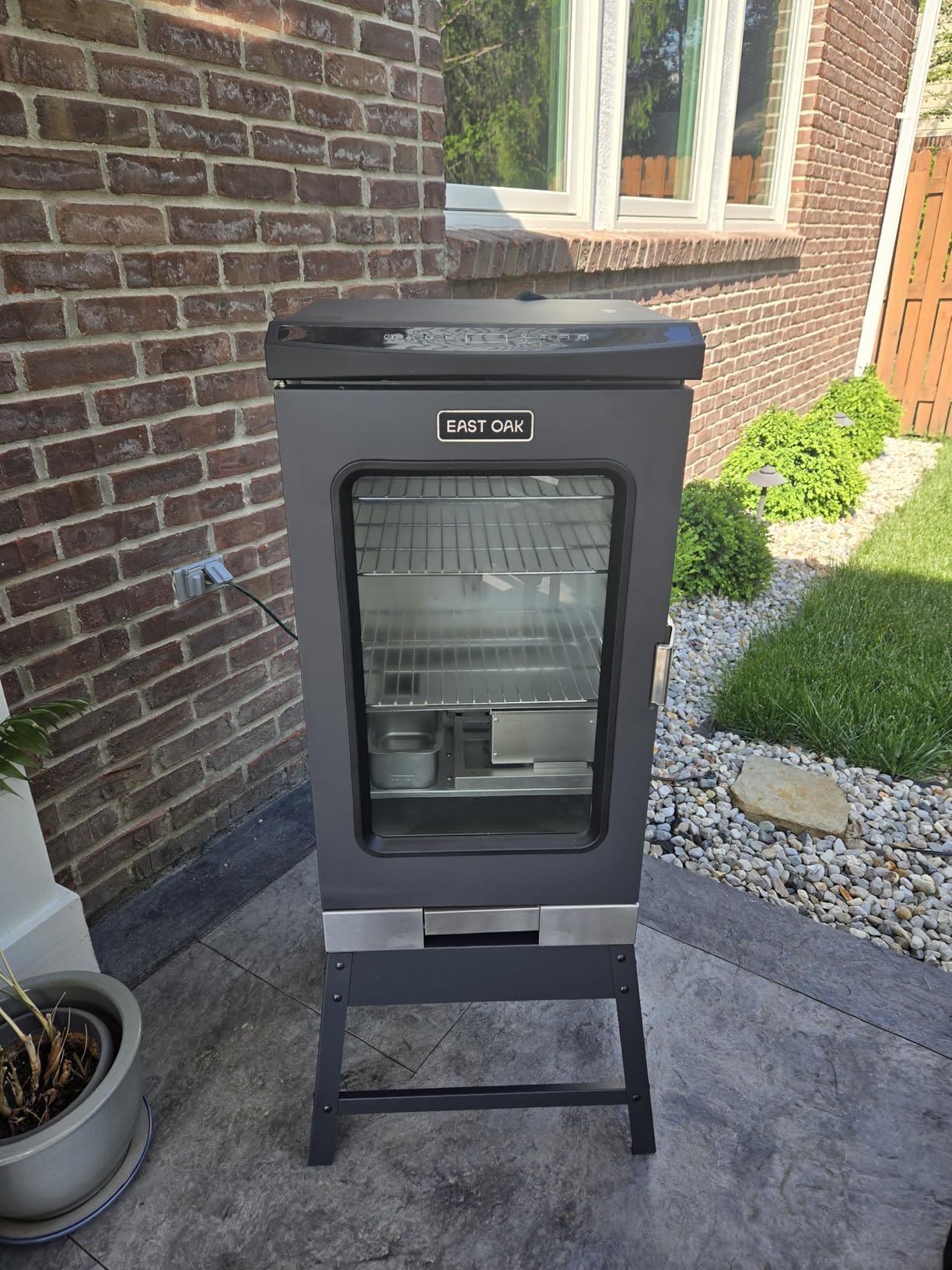
The glass viewing window sounds like a gimmick until you use it. I found myself checking cook progress through the glass instead of opening the door, which preserved the cooking environment. The seal around that glass is impressive—when you finally do open the door, smoke billows out in a satisfying cloud that proves how well this unit retains its atmosphere.
Customer service is where EAST OAK distinguishes itself from competitors. When I had a question about probe calibration, I reached a human representative in under 5 minutes who walked me through the solution. Forum discussions confirm this responsiveness is consistent—the company replaces defective units quickly without the runaround common with larger brands.
The 725 square inches of cooking space fits most family barbecue needs comfortably. I cooked a full turkey, two pork shoulders, and a rack of ribs simultaneously during Thanksgiving testing. The wheels and handle make repositioning easy, though at 52 pounds you will not want to move it frequently.
One frustrating limitation: the racks measure 15×12 inches, which does not accommodate standard half-sheet pans. If you use pans for catching drippings or cooking vegetables alongside meat, you will need to buy smaller sizes. Also, the 275°F maximum temperature means you cannot use this smoker for hot-and-fast cooking techniques or finishing chicken with crispy skin.
For Whom It Is Good
This smoker is ideal for beginners who want the most forgiving experience possible and are willing to pay a premium for convenience. The auto shutoff feature alone justifies the extra cost for anyone who has destroyed a $80 brisket by overshooting the target temperature.
People who smoke fish, cheese, or other delicate items will appreciate the precise temperature control and viewing window that lets them monitor without disturbing the environment. The modern design also appeals to those who want their outdoor equipment to look as good as their indoor appliances.
For Whom It Is Bad
Anyone wanting to sear steaks or cook hot-and-fast barbecue should look elsewhere. The 275°F ceiling limits you to traditional low-and-slow smoking. If you want one device that both smokes brisket and sears ribeyes at 500°F+, this is not your solution.
The non-standard rack sizing frustrates cooks who rely on standard sheet pans for organization. Also, while the customer service is excellent, some users report thermostat failures after 12-18 months of heavy use. The warranty covers these issues, but the downtime is inconvenient if you have a barbecue planned.
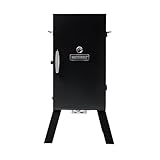
3. Masterbuilt 30-inch Analog Electric Smoker – Simple and Reliable
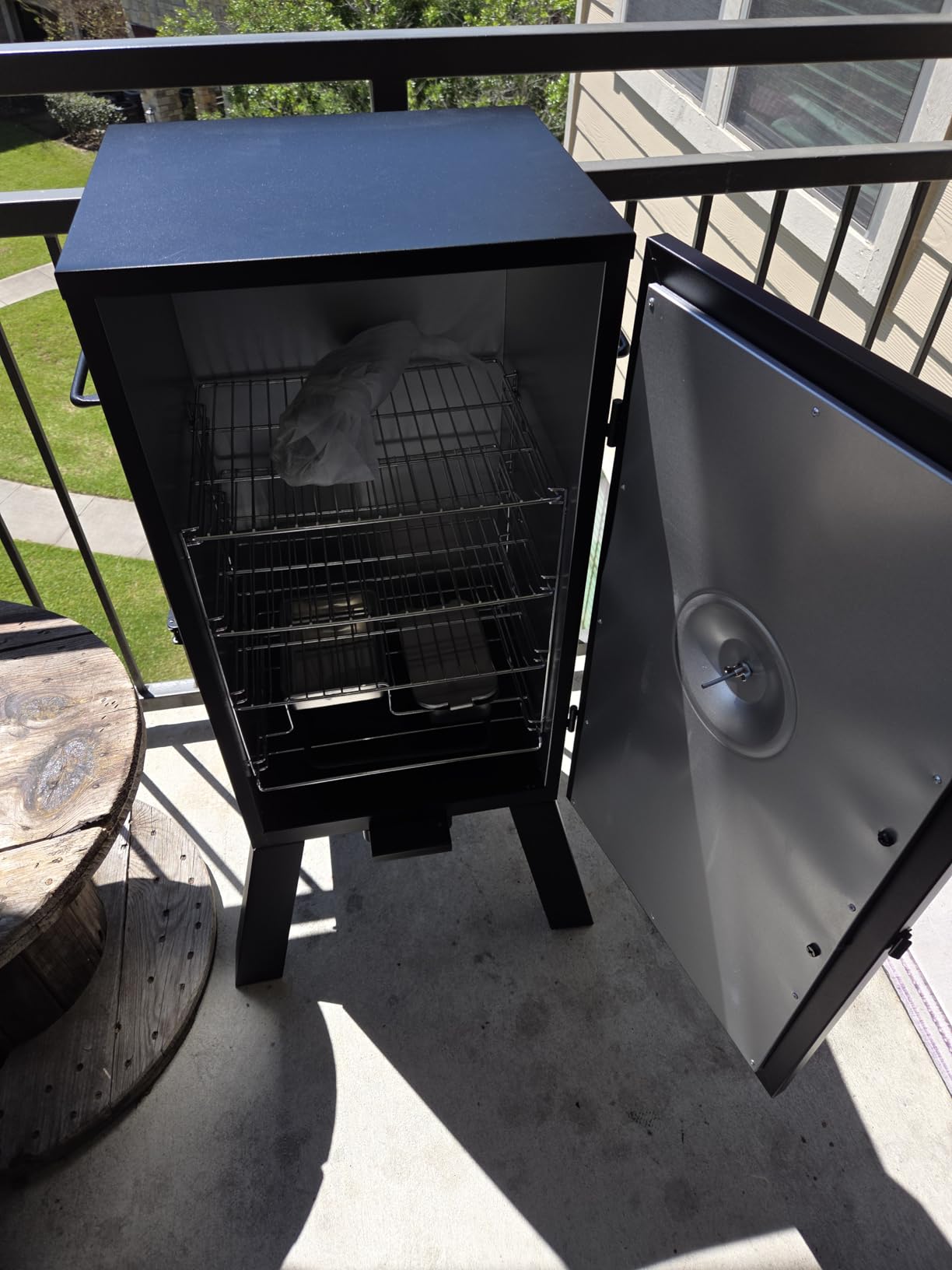
Masterbuilt® 30-inch Electric Vertical BBQ Smoker with Analog Temperature Control, Chrome Smoking Racks and 535 Cooking Square Inches in Black, Model MB20070210
535 sq in cooking area
Analog temperature dial
3 chrome-coated racks
Removable wood chip tray
Pros
- Old-school heating element rarely fails
- Well-built construction for the price
- Excellent value vs retail stores ($189 vs $300)
- Simple design with minimal assembly
Cons
- Must open door to add wood chips
- Temperature dial not marked with specific temps
- Not easy to clean around heating element
- RF chamber blocks wireless thermometer signals
Sometimes simpler is better. The analog Masterbuilt uses the same type of heating element found in electric skillets—proven technology that rarely fails. I spoke with a competition pitmaster who has run his analog Masterbuilt for 8 years without replacing the element, while his digital units needed new elements every 2-3 years.
The tradeoff is inconvenience. Without a side chip loader, you must open the main door to add wood chips, which causes temperature fluctuations. I learned to work around this by pre-soaking chips and adding larger batches less frequently. The temperature dial shows Low to High rather than specific degrees, so you will need a separate thermometer to dial in your settings initially.
Construction quality surprised me for the price point. At $189 on Amazon (compared to $300 at local retailers), this unit feels sturdier than budget competitors. The convection smoke circulation moves air without a fan, and the three chrome racks provide adequate space for most beginner cooks.
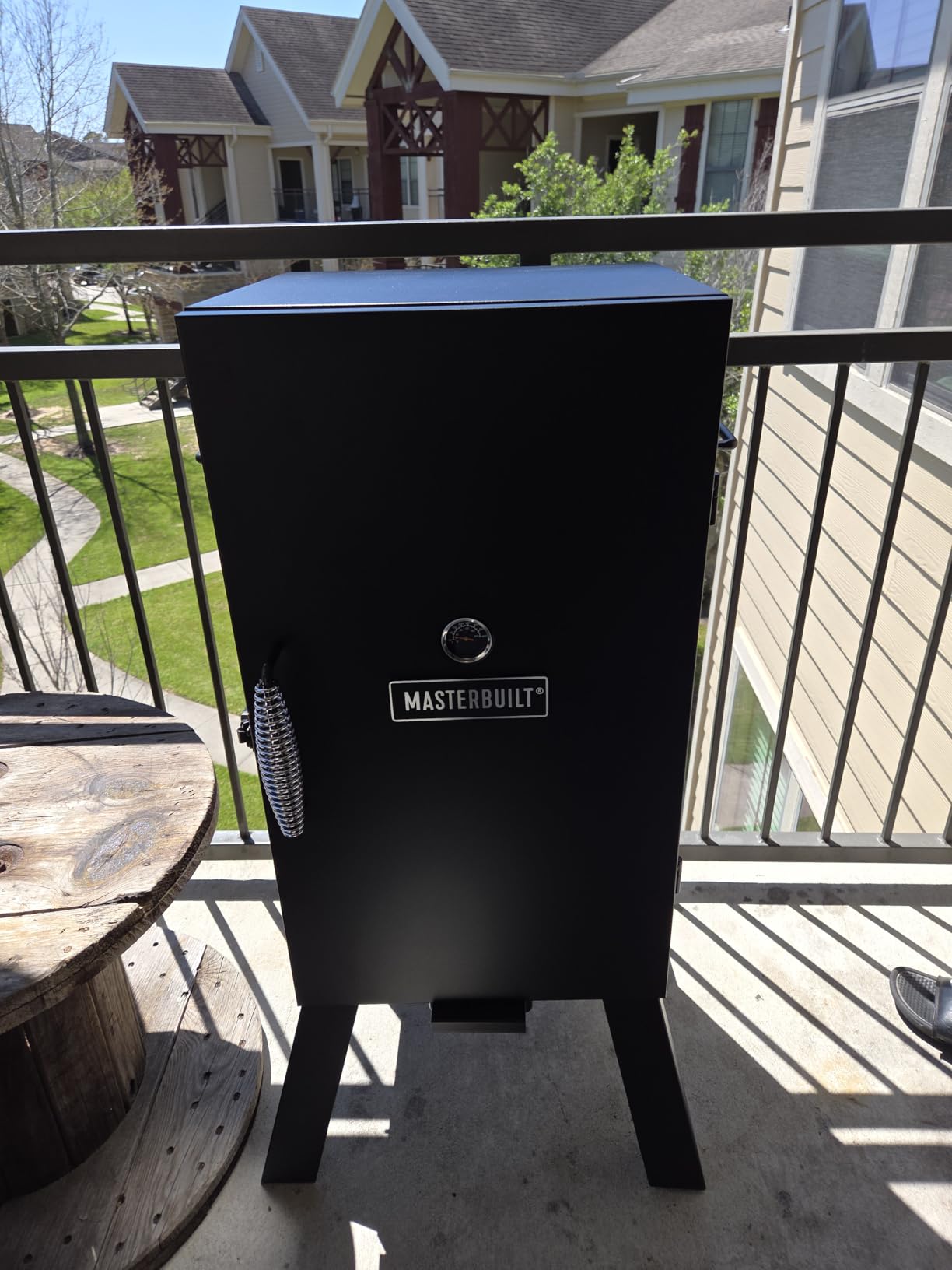
The 535 square inches accommodates 3 chickens, 2 turkeys, or 3 racks of ribs comfortably. For a family of four, this is plenty of capacity. The removable water bowl and grease tray make cleanup manageable, though the area around the heating element itself is tricky to clean thoroughly.
One quirk beginners should know: the RF chamber that creates the convection effect blocks wireless thermometer signals. If you plan to use a separate wireless probe system, place the transmitter outside the smoker rather than inside. I learned this after three hours of wondering why my thermometer was not connecting.
For absolute beginners who want to spend under $200 and value reliability over convenience features, this analog model is the smart choice. You sacrifice some ease-of-use, but gain equipment that will still be working five years from now.
For Whom It Is Good
This smoker fits beginners who prioritize reliability and budget over convenience features. If you want to try smoking without a major investment, or if you prefer simple mechanical systems over digital electronics, the analog Masterbuilt delivers authentic results at an entry-level price.
It is also ideal as a secondary smoker for experienced users who want a simple unit for quick jobs. The old-school heating element design appeals to people who have had bad experiences with digital controls failing mid-cook.
For Whom It Is Bad
Anyone who wants true set-and-forget operation will find the analog controls frustrating. The lack of precise temperature markings means more monitoring and adjustment during cooks. If you are the type who wants to start a pork shoulder at midnight and sleep until morning without checking temperatures, spend the extra $60 for the digital model.
People serious about competition barbecue or cooking for large groups will outgrow the 535 square inches quickly. The single-door design also means more heat loss during chip loading compared to units with side loaders.
4. Realcook 17-inch Vertical Charcoal Smoker – Best Budget Charcoal
Realcook Vertical 17 Inch Steel Charcoal Smoker, Heavy Duty Round BBQ Grill
453 sq in cooking area
Multi-functional design
Built-in thermometer
2 access doors
Pros
- Under $100 price point
- Can smoke grill steam bake braise roast
- Two access doors for flexible cooking
- Built-in thermometer and adjustable air vent
Cons
- 17-inch size limits larger cuts
- Charcoal learning curve requires patience
- Quality control varies at this price
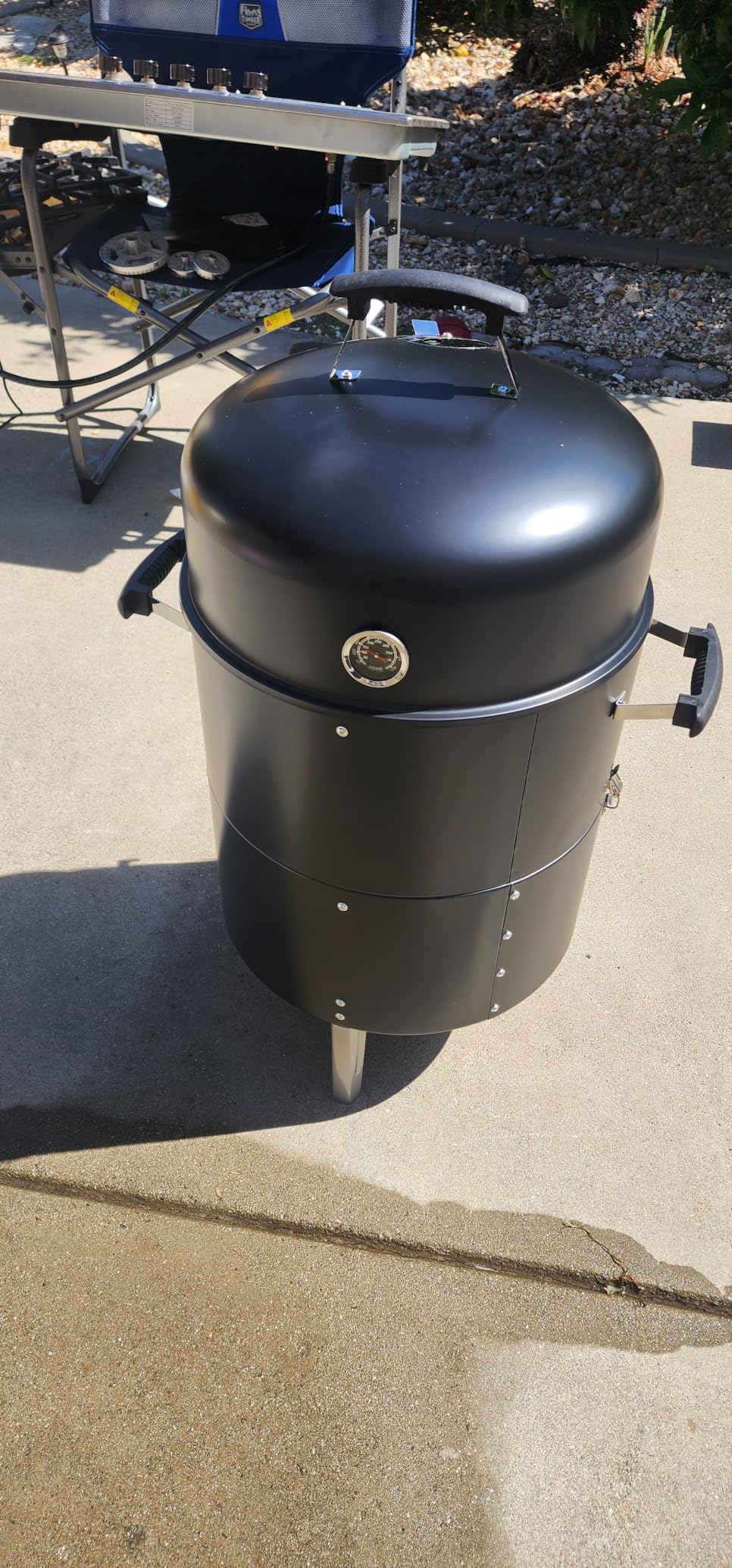
At $99, the Realcook proves you do not need to spend big to get real barbecue flavor. This was my first charcoal smoker, and it taught me fire management skills that still serve me today. The dual-door design lets you add charcoal through the bottom door without disturbing the cooking chamber above.
The built-in thermometer is surprisingly accurate for a budget unit. I cross-checked it with my ThermoWorks probe and found it within 10 degrees—close enough for beginner work. The adjustable air vent on the lid gives you basic temperature control, though you will still need to learn how charcoal placement and vent settings interact.
What sets this unit apart at the sub-$100 price is versatility. Remove the middle section and it becomes a standard charcoal grill. Add water to the pan for steaming, or leave it dry for indirect roasting. I have smoked ribs, grilled steaks, and even slow-roasted a turkey in this little unit.
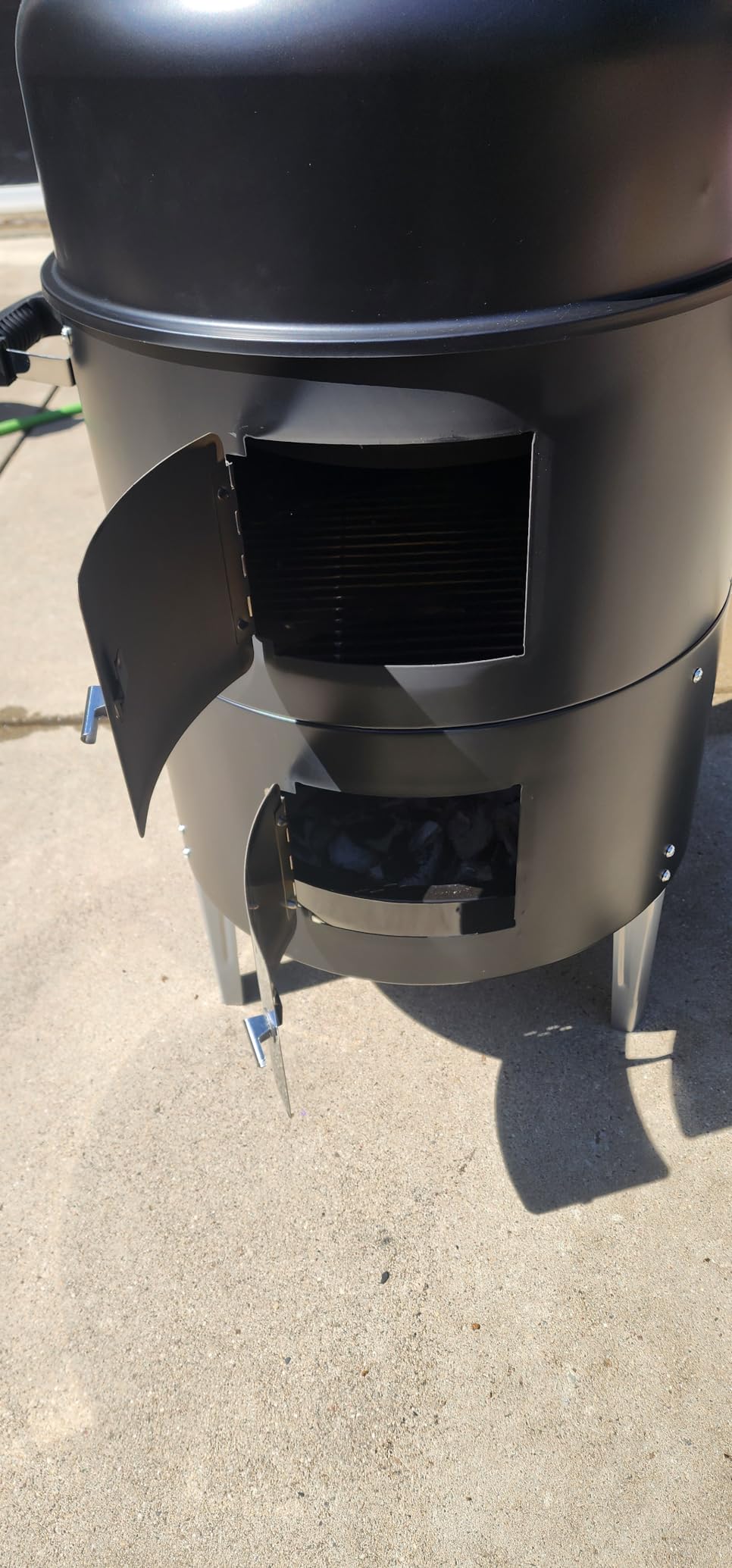
The 453 square inches fits across two cooking grids with four hangers for sausage or ribs. Crossbars inside the lid support hanging meat, which is how traditional barrel smokers maximize capacity. For a family of four, this is plenty of space.
Assembly takes about 45 minutes with basic tools. The latch locking system keeps everything stable during cooks, and the porcelain-enameled water and charcoal pans resist rust better than plain steel alternatives. Heat-resistant bakelite handles stay cool enough to touch during operation.
The 17-inch diameter limits you on larger cuts. A full packer brisket will be tight, and you might need to separate the point from the flat to fit everything. But for learning the fundamentals of charcoal smoking without a $300 investment, these compromises are acceptable.
For Whom It Is Good
This smoker is perfect for beginners who want to learn charcoal fire management without spending much money. If you are curious about smoking but not sure you will stick with it, the Realcook lets you experiment for under $100. It is also ideal for apartment dwellers with limited storage—the compact size fits in small sheds or balconies.
Campers and tailgaters will appreciate the lightweight 18.6-pound weight and versatile cooking options. You can smoke brisket on Saturday, grill burgers on Sunday, and pack it in the trunk between uses.
For Whom It Is Bad
Anyone cooking for more than 4-6 people regularly will find the capacity limiting. The 17-inch diameter and vertical design restrict how much meat you can fit at once. If you host large gatherings or want to cook multiple pork shoulders for meal prep, save for a larger unit.
People who want truly set-and-forget operation should avoid charcoal entirely. This smoker requires attention every 45-60 minutes to maintain temperature, especially in windy conditions. If you are not willing to learn fire management, an electric model will serve you better.
5. Cuisinart 30-inch Electric Smoker – Higher Temperature Range
Cuisinart 30″ Electric Smoker, 3 Adjustable Racks, Large Capacity BBQ Meat Smoker, Water & Wood Trays for Smoked Meat, Brisket, Salmon & Jerky, Adjustable Temperature Control
548 sq in cooking area
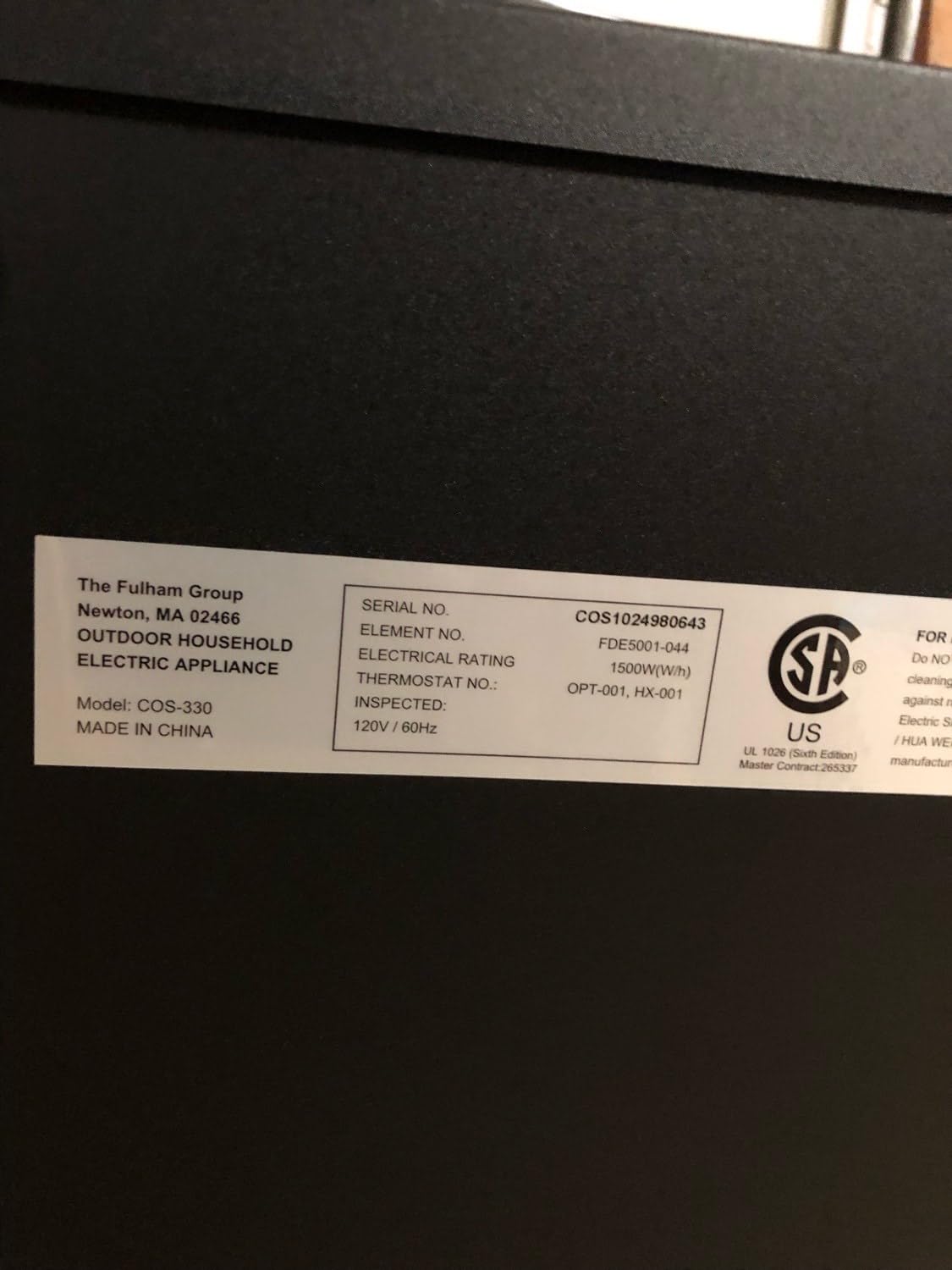
1500-watt heating element
100°F to 400°F range
Dishwasher-safe racks
Pros
- Higher temperature ceiling than competitors
- 1500-watt element provides faster recovery
- Stainless steel construction
- Dishwasher-safe chrome-steel racks
Cons
- Some durability concerns reported
- Customer service experiences vary
- Stock levels sometimes limited
Most electric smokers top out at 275°F, which limits your cooking options. The Cuisinart reaches 400°F, letting you smoke low-and-slow then finish chicken or turkey at higher heat for crispy skin. This dual capability effectively gives you two cooking devices in one footprint.
The 1500-watt heating element is more powerful than the 1200-watt elements common in competing units. That extra wattage means faster recovery when you open the door to spritz your meat or add wood chips. During testing, the Cuisinart returned to 225°F in 4 minutes after a 30-second door opening, compared to 7 minutes for lower-wattage competitors.
Stainless steel construction throughout the cooking chamber resists corrosion better than coated steel alternatives. The three chrome-steel racks are dishwasher-safe, which simplifies cleanup significantly. After a messy pork shoulder cook, I simply ran the racks through my dishwasher rather than scrubbing by hand.
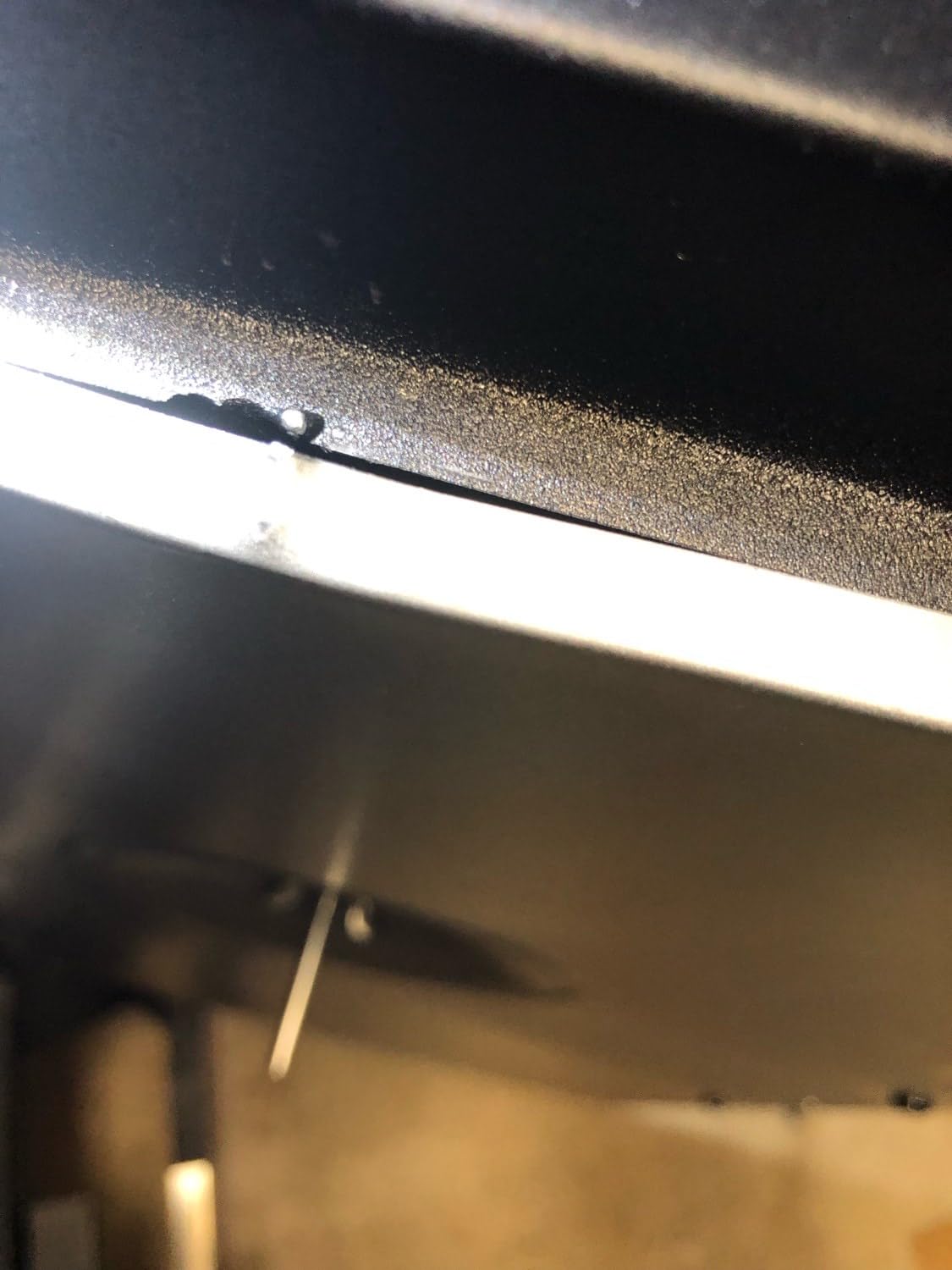
The vertical footprint saves patio space compared to horizontal designs. At 58.5 pounds, this is a substantial unit that stays put in wind. The built-in thermometer on the front door gives you a quick reference point, though I still recommend a probe thermometer for accurate meat readings.
One limitation to consider: user experiences with customer service vary. While my interactions were positive, forum discussions mention inconsistent support compared to Masterbuilt. Also, stock availability fluctuates—this model sometimes sells out during peak barbecue season.
For beginners who want the ease of electric smoking but need higher temperature capabilities, the Cuisinart fills that niche. Being able to crank to 400°F for finishing chicken or cooking hot-smoked salmon expands what you can accomplish compared to standard electric smokers.
For Whom It Is Good
The Cuisinart suits beginners who want electric convenience but need higher temperature capabilities. If you plan to smoke chicken, turkey, or fish that benefits from a finishing blast of heat, the 400°F ceiling matters. The dishwasher-safe racks also appeal to anyone who hates scrubbing cooking grates.
People in colder climates will appreciate the powerful 1500-watt element that maintains temperature better in challenging conditions. If you smoke through winter in northern states, that extra power helps compensate for heat loss.
For Whom It Is Bad
Pure low-and-slow smokers who never cook above 250°F do not need to pay extra for capabilities they will not use. If your smoking repertoire is brisket, pork shoulder, and ribs exclusively, the standard Masterbuilt or EAST OAK smokers serve you equally well at similar or lower prices.
Anyone prioritizing long-term durability and customer support might prefer the Masterbuilt line, which has more established service infrastructure. The Cuisinart is a solid performer, but the brand has less specialized barbecue expertise than dedicated smoker manufacturers.
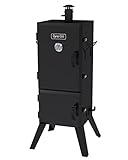
6. Dyna-Glo 36-inch Vertical Charcoal Smoker – Large Capacity
Dyna-Glo DGX780BDC-D 36″ Vertical Charcoal Smoker Black
784 sq in cooking area
4 cooking grates
Charcoal and ash management
Stainless temperature gauge
Pros
- Large capacity with 4 shelves
- Removable ash pan for easy cleanup
- Temperature gauge includes smoke zone indicator
- Good value for cooking area
Cons
- Light metal struggles in cold weather
- Built-in thermometer often inaccurate
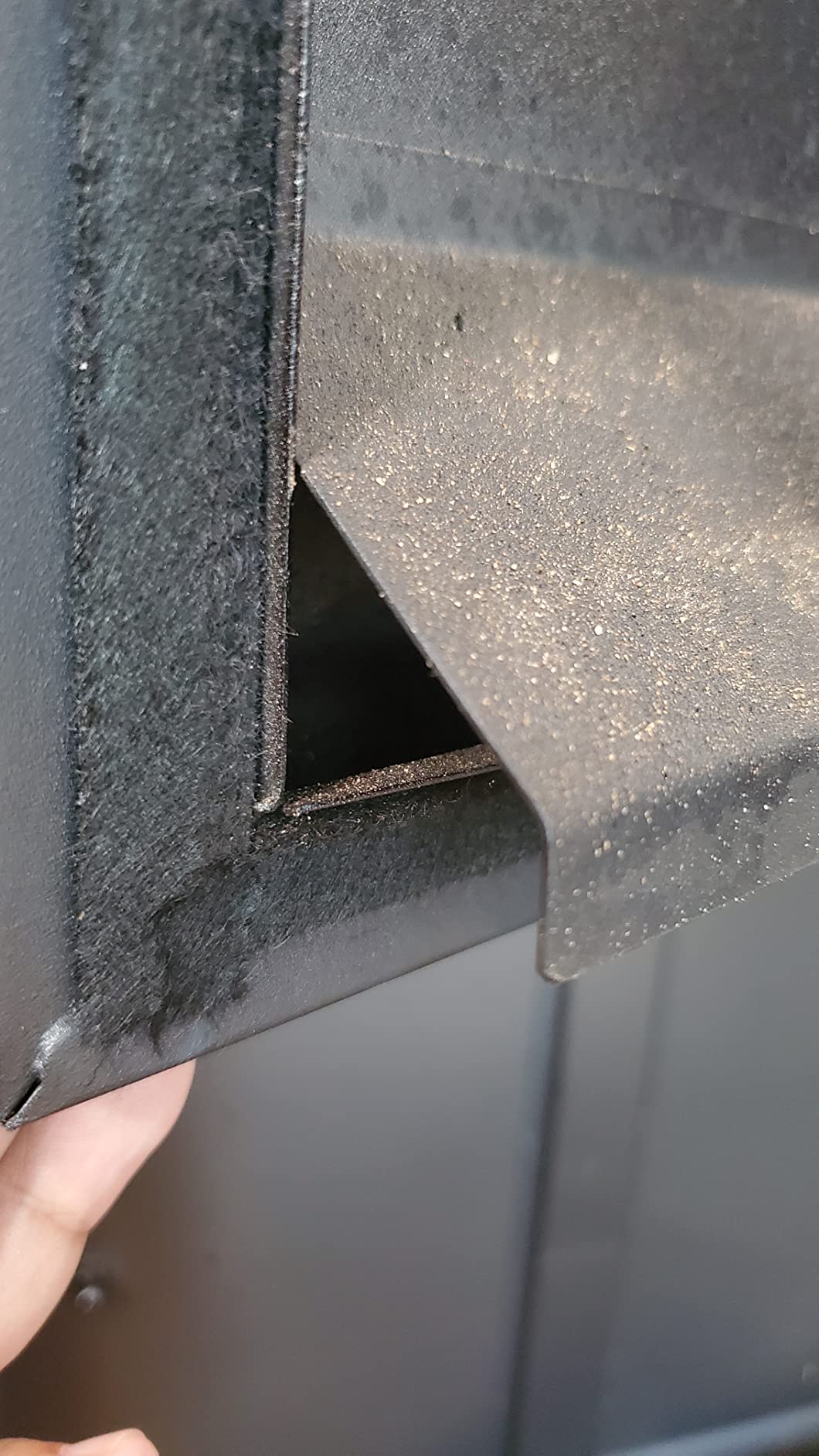
- Smoke leaks around doors without gasket mod
The Dyna-Glo provides serious capacity for under $220. Four cooking grates stack vertically, giving you 784 square inches to work with—enough for multiple pork shoulders, several racks of ribs, or a combination of proteins for large gatherings. For beginners who entertain frequently, this capacity prevents the frustration of running multiple cooks.
The charcoal and ash management system simplifies cleanup compared to basic charcoal smokers. A removable ash pan slides out from the bottom, letting you dispose of spent fuel without disassembling the unit. After a 12-hour brisket cook, this feature saves 15 minutes of messy work.
The temperature gauge includes a “smoke zone” indicator marking the ideal 225-275°F range for low-and-slow cooking. This visual reference helps beginners learn what proper smoking temperatures look like. However, I found the built-in gauge read 25 degrees high compared to my calibrated probe—verify with a separate thermometer for accuracy.
At 56 pounds, this unit feels substantial but remains movable. The door handles and latches stay cool during operation, which matters when you are adjusting vents or adding charcoal. The 36-inch height puts the top grate at a comfortable working level without requiring you to bend constantly.
Cold weather is where this smoker struggles. The metal is thinner than premium units, and ambient temperatures below 40°F cause significant heat loss. During a January test at 25°F, I struggled to maintain 225°F even with vents nearly closed and a full charcoal basket. If you plan winter smoking in cold climates, invest in a welding blanket or consider a more insulated unit.
Smoke leakage around the doors is common out of the box. High-heat gasket tape (available for $10-15) solves this problem completely. I added gasket material to my test unit and saw improved temperature stability and smoke retention immediately.
For Whom It Is Good
This smoker fits beginners who need to cook for larger groups and prefer charcoal flavor over electric convenience. If you host family reunions, team gatherings, or church events, the 784 square inches lets you feed crowds without multiple cooks. The ash management system also appeals to those who want charcoal flavor without excessive cleanup.
Budget-conscious buyers get significant capacity per dollar with this unit. You would spend $400+ on electric smokers with comparable cooking area.
For Whom It Is Bad
Year-round smokers in cold climates should look elsewhere or budget for insulation modifications. The thin metal simply cannot retain heat efficiently in freezing conditions. If you want to smoke through winter in Minnesota or Maine, this is not your best choice without significant modifications.
Perfectionists who want competition-grade temperature control will find the door leakage and thermometer inaccuracy frustrating. While fixable with aftermarket parts, these issues require additional investment and effort that some beginners would rather avoid.
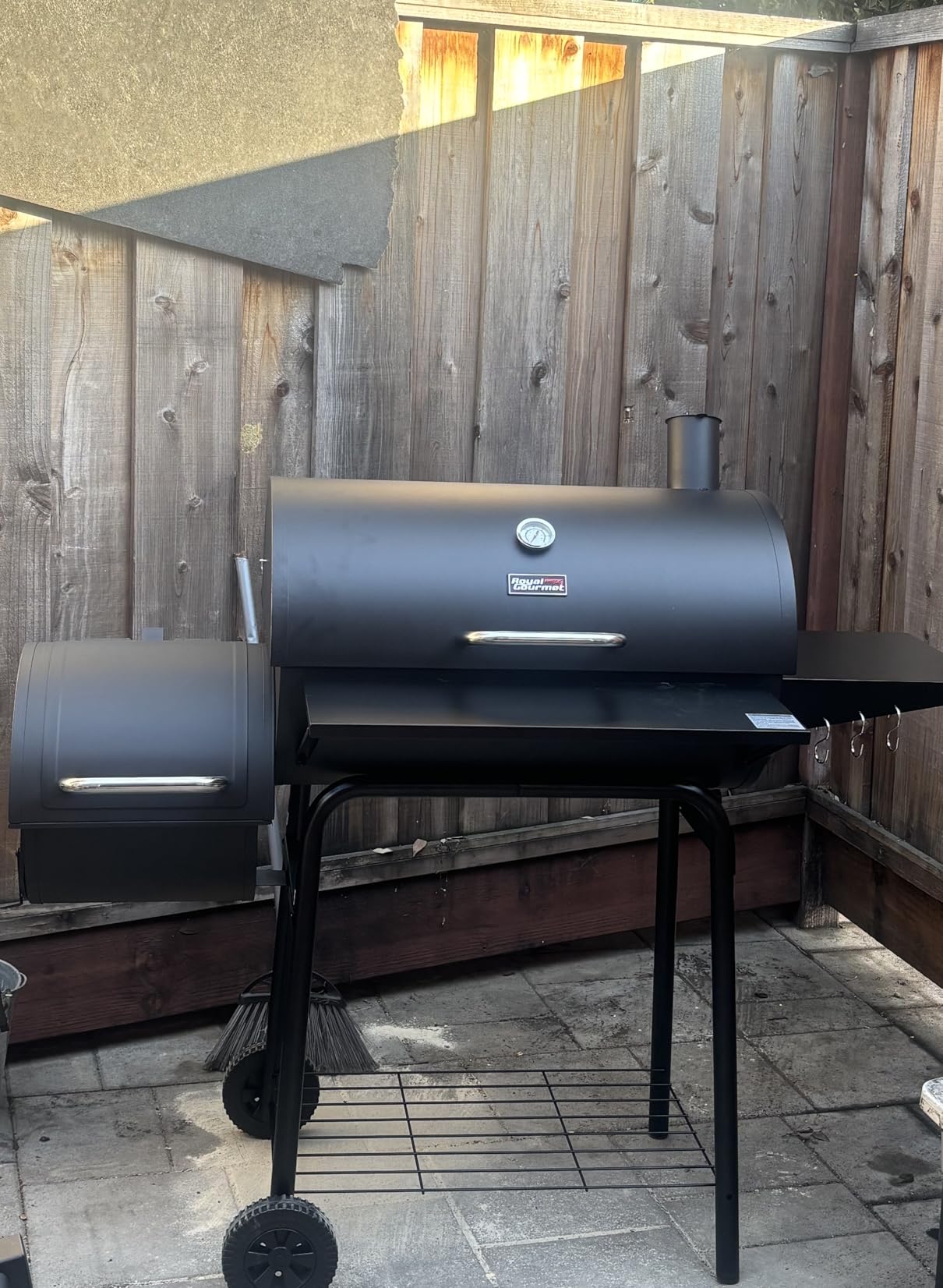
7. Royal Gourmet Offset Charcoal Smoker – Versatile Combo Design
Royal Gourmet CC1830S BBQ Charcoal Grill and Offset Smoker, Outdoor Camping
823 sq in total cooking surface
Offset smoker attachment
Two-level adjustable charcoal pan
Side workspace tables
Pros
- Grill and smoke in one unit
- Large 823 sq in total cooking area
- Side tables provide workspace
- Adjustable charcoal height for temperature control
Cons
- Assembly takes 2-3 hours
- Offset design has learning curve
- Some reports of paint peeling
- Bottom shelf limited to 20 lbs
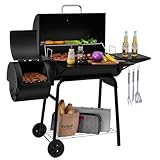
The offset design gives you two cooking zones: direct grilling over the charcoal pan and indirect smoking in the main barrel through the offset firebox. This versatility means one device handles weeknight burgers and weekend briskets. For beginners with limited storage space or budget, that dual capability matters.
Construction quality impressed me for the price. The porcelain-enameled steel wire cooking grates resist rust and clean easier than plain steel. Chrome-plated warming racks give you space to hold finished items while the rest of the cook completes. The two-level height-adjustable charcoal pan lets you raise coals for searing or lower them for indirect heat.
The 823 square inches breaks down as 475 square inches of primary grilling space, 197 square inches in the offset smoker, and 151 square inches on the warming rack. You can smoke ribs in the offset while grilling vegetables on the main grates simultaneously—efficient use of fuel and time.
Assembly is the biggest barrier with this unit. Budget 2-3 hours with a helper, and follow the instructions carefully. Several parts look similar but are not interchangeable. I made the mistake of attaching legs incorrectly and had to disassemble partially to correct—learn from my error and lay out all components before starting.
Side tables fold down for storage but provide valuable workspace during cooks. I used them for holding rubs, tools, and a cutting board. The bottom shelf holds supplies but is rated for only 20 pounds—do not overload it with heavy charcoal bags.
The offset firebox design requires learning proper vent management. Unlike vertical smokers where heat rises naturally, offsets need the firebox vent and chimney damper balanced to draw smoke across the meat. Beginners should expect a 3-4 cook learning curve before consistent results.
For Whom It Is Good
This unit suits beginners who want one device that handles both grilling and smoking. If you have limited patio space or budget for only one piece of outdoor cooking equipment, the Royal Gourmet gives you versatility that pure smokers cannot match. The large cooking area also serves those who entertain frequently.
People who enjoy the process of fire management and want to develop true pitmaster skills will appreciate the offset design. This is a legitimate learning platform for understanding how fire, airflow, and smoke interact—skills that transfer to any smoker you upgrade to later.
For Whom It Is Bad
Beginners seeking simple operation should avoid offsets. The learning curve is steeper than vertical charcoal smokers and significantly harder than electric units. If you want to smoke your first brisket with confidence rather than anxiety, start with a more forgiving design.
People with limited time for assembly should consider paying more for a unit that arrives more fully assembled. The 2-3 hour assembly process is tedious and requires careful attention to instructions. Some quality control issues with paint and fit have been reported, though my test unit had no problems.
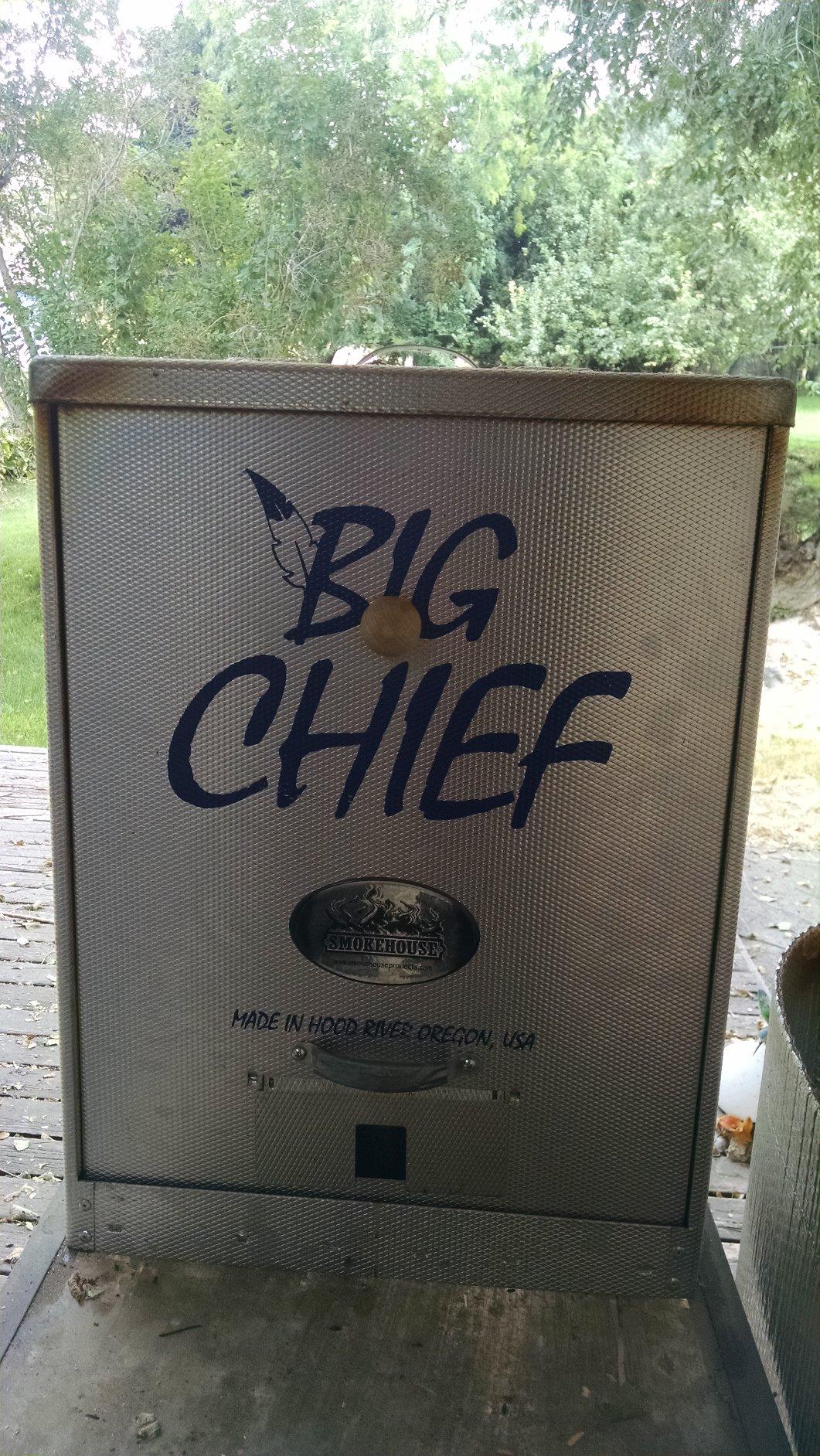
8. Smokehouse Big Chief Electric Smoker – Specialized for Fish and Jerky
Smokehouse Big Chief Front Load Smoker, Easy to Use Electric Smoker with 50 LB Capacity, Great for Smoking Fish, Jerky, Brisket, Cheese & More
50-pound capacity
Fixed 165°F temperature
5 smoking racks
Front loading design
Pros
- Perfect temperature for fish and jerky
- Hassle-free plug-and-play operation
- Lightweight at only 17.6 pounds
- Company established 1968 with solid reputation
Cons
- Maximum 165°F cannot fully cook most meats
- Food must finish in oven or grill
- No temperature adjustment
- Wood chips burn quickly
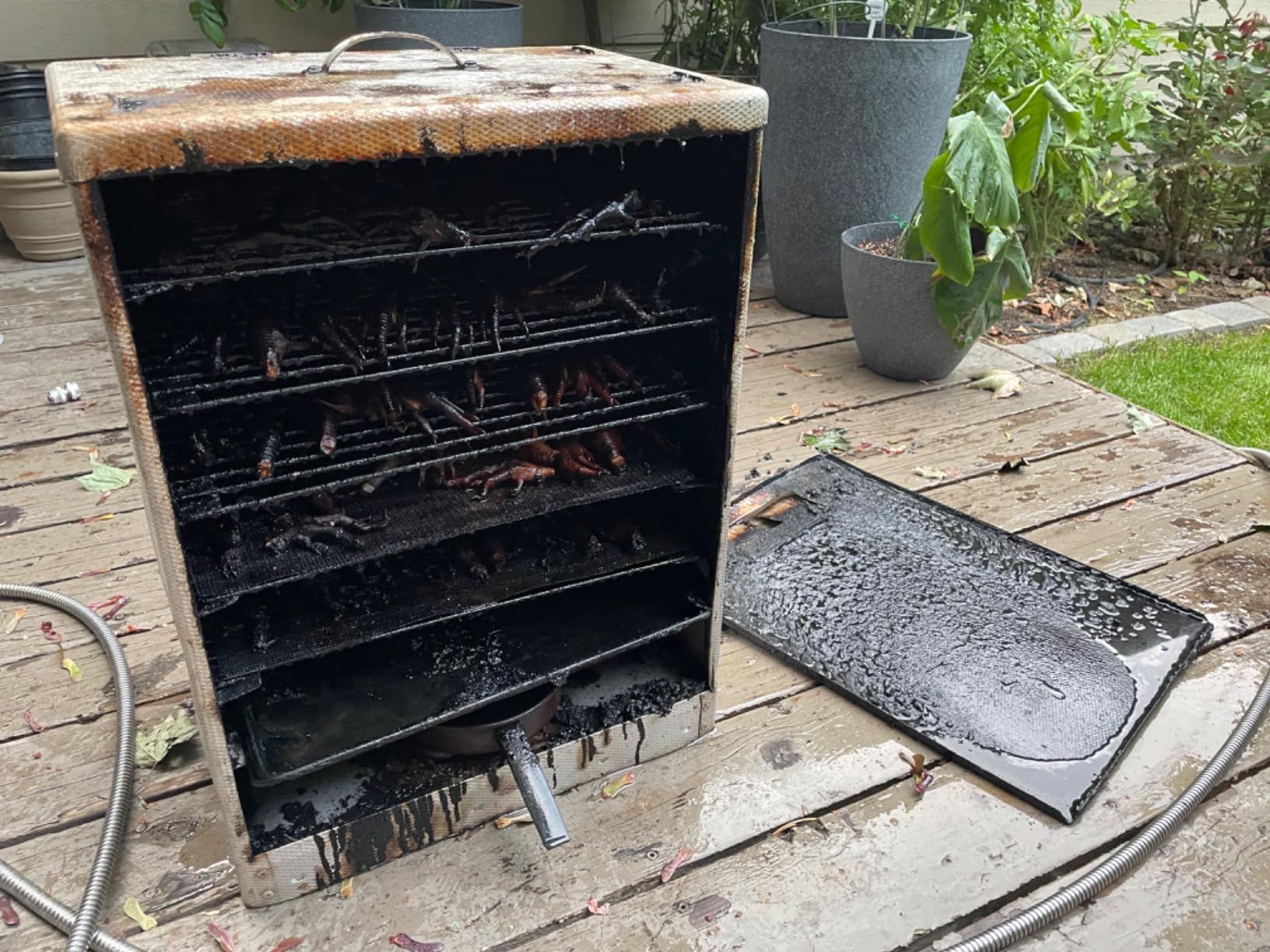
The Big Chief is not a general-purpose smoker—it is a specialized tool for low-temperature applications. The fixed 165°F temperature is perfect for smoking salmon, trout, steelhead, cheese, and making jerky. For these specific tasks, it outperforms more expensive units that cannot maintain such low temperatures consistently.
This smoker has been made in the USA since 1968, and the design has remained essentially unchanged because it works. The front-loading design gives you easy access to all five racks without lifting food over the top. At 17.6 pounds, this is the most portable smoker on our list—take it camping, to fishing spots, or store it in a closet between uses.
Operation could not be simpler: plug it in, load the removable chip pan, and wait for the element to start smoking. There are no dials, no digital displays, no apps to configure. For beginners intimidated by complex controls, this is as straightforward as smoking gets.
The 50-pound capacity (spread across five racks) handles serious quantities of fish or jerky. During testing, I smoked 8 pounds of salmon fillets and 5 pounds of homemade beef jerky simultaneously. The results were professional quality—delicate smoke flavor without overcooking.
Critical limitation: you cannot fully cook ribs, brisket, or pork butt at 165°F. These foods need to reach internal temperatures of 195-205°F to break down connective tissue. Big Chief users transfer partially smoked meat to an oven or grill to finish. This two-step process is normal for this type of smoker, but beginners should understand the limitation before purchasing.
The included Smokehouse wood chips are very fine—almost sawdust—and burn quickly. I mix them with larger Weber chips for longer smoke duration. Some users modify the chip pan with a lid to slow combustion, though this is not officially recommended.
For Whom It Is Good
This smoker is ideal for anglers who catch salmon or steelhead and want to smoke their harvest. The temperature is specifically calibrated for fish, and the capacity lets you process a full catch efficiently. Jerky enthusiasts also love this unit for making large batches of dried meat.
People who want to try smoking with minimal investment and complexity will find the Big Chief approachable. There is nothing to configure—just plug it in and load wood chips. The portability also suits campers and RV owners who want smoked food on the road.
For Whom It Is Bad
Anyone wanting to cook traditional barbecue—brisket, pulled pork, ribs—should not buy this as their primary smoker. The 165°F limit means you will always need a second cooking device to finish your food. If you want one smoker that handles everything, look elsewhere on this list.
People expecting temperature control or versatility will be disappointed. This is a single-purpose tool that does one thing exceptionally well. If fish and jerky are not your primary interests, your money is better spent on a more capable unit.
9. VIVOHOME 3-in-1 Vertical Charcoal Smoker – Ultra Budget Option
VIVOHOME 3-in-1 Vertical Charcoal Smoker
3-in-1 multifunctional design
Built-in thermometer
2 chrome-plated grates
6 hanging hooks
Pros
- Under $80 price point
- Lightweight 15.4 lbs for portability
- Includes basic grilling tools
- 3-in-1 versatility (smoker/grill/fire pit)
Cons
- Temperature gauge often unreliable
- Does not retain heat well below 200°F
- Small nuts and bolts make assembly fiddly
- Instruction clarity could be improved
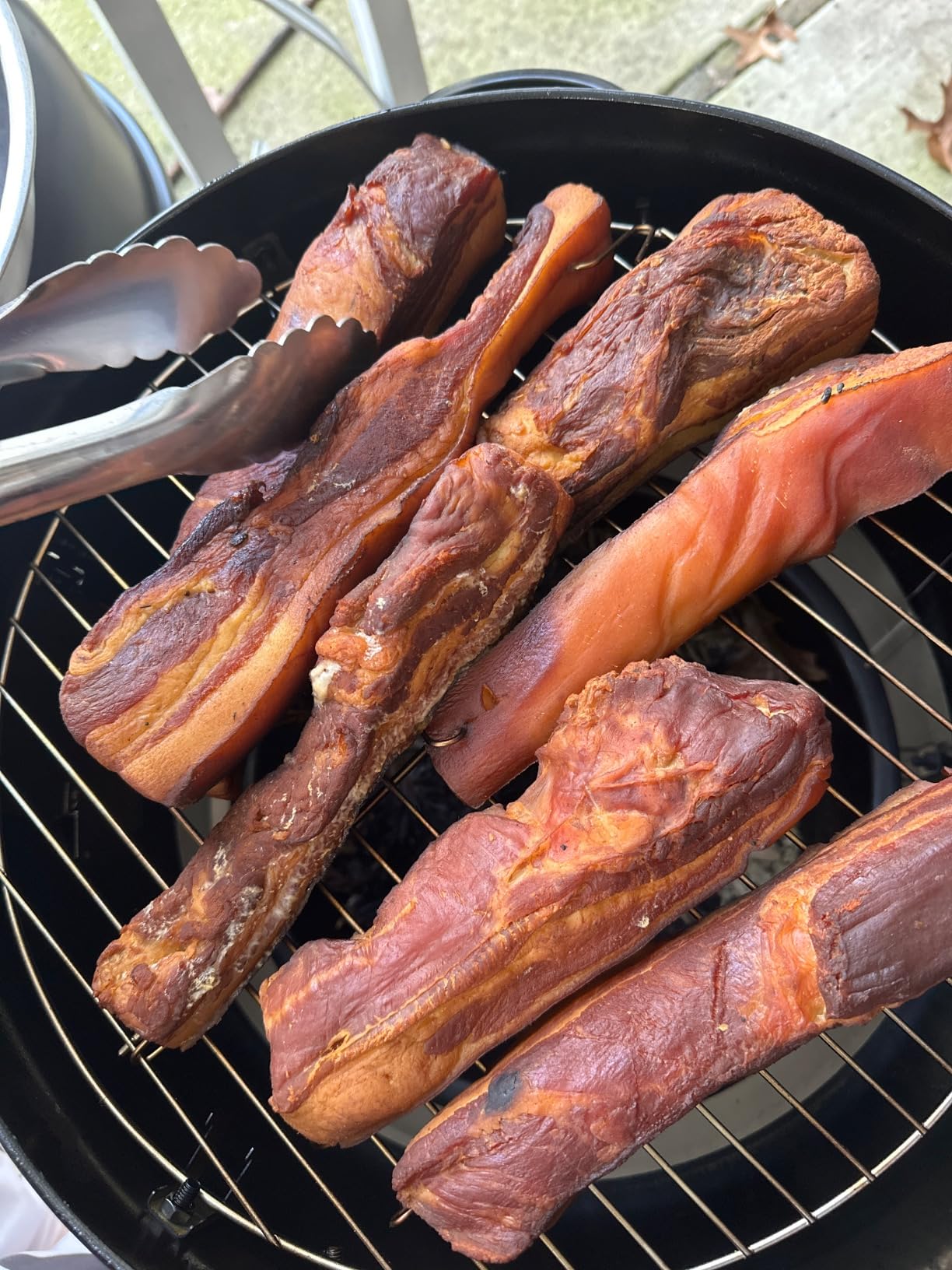
At $79.99, the VIVOHOME is the cheapest smoker we tested by $20. That price comes with compromises, but the core functionality works. If you are curious about smoking but genuinely cannot spend more, this gets you in the game.
The 3-in-1 design lets you configure the unit as a smoker, grill, or fire pit. Remove the middle section for direct grilling, or stack everything for vertical smoking. Two access doors let you tend charcoal and water without disturbing the cooking chamber. Six hanging hooks and two crossbars inside the lid support sausage links or rib racks.
Portability is a genuine strength. At 15.4 pounds, this is lighter than most bags of charcoal. I carried it to a beach bonfire easily, and it stores in small spaces that larger smokers cannot fit. The included grill fork, spatula, and clip are basic but functional for casual use.
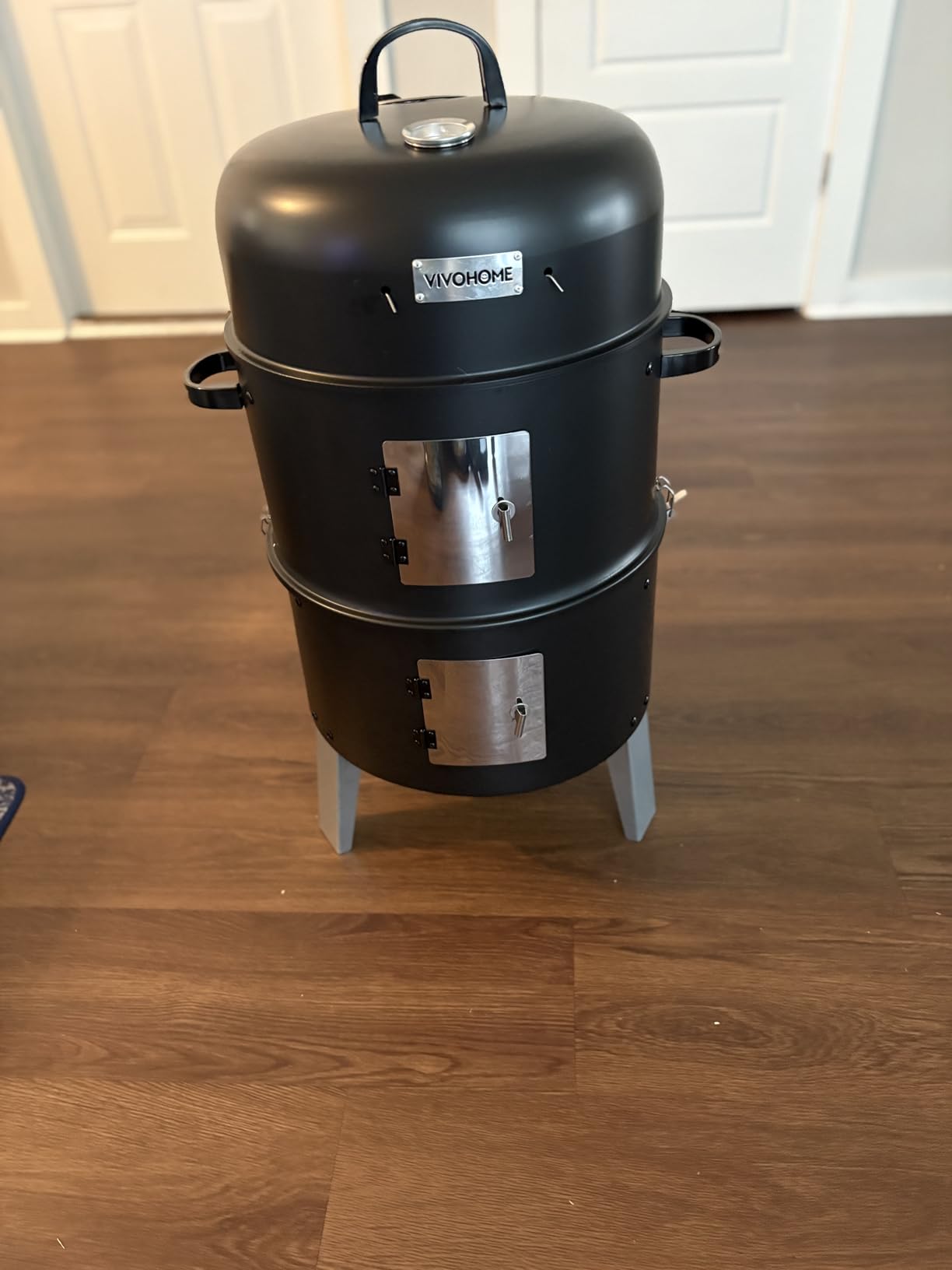
The built-in thermometer is the weak point. Mine read 35 degrees high compared to a calibrated probe, which would ruin food if trusted blindly. Budget $20-30 for a separate probe thermometer—essential equipment regardless, but especially critical with this unit.
Heat retention below 200°F is problematic. The thin metal struggles to maintain low smoking temperatures in cool or windy conditions. I found this smoker worked best for hot smoking above 225°F or for shorter cooks like chicken pieces rather than marathon brisket sessions.
Assembly requires patience. Small hardware and unclear instructions mean this takes longer than it should. Set aside a full hour, use your own screwdrivers (the included tool is inadequate), and test-fit everything before tightening.
For Whom It Is Good
This smoker suits absolute beginners with severe budget constraints or those wanting a portable unit for camping and tailgating. If you need to spend under $100 total including accessories, this is your only viable option for charcoal smoking. The 3-in-1 versatility also appeals to minimalists who want one compact device.
People experimenting with smoking to see if they enjoy it might prefer this low-risk entry point. If you try it twice and decide smoking is not for you, you are only out $80 rather than $250+.
For Whom It Is Bad
Anyone serious about developing smoking skills should spend the extra $20 for the Realcook. The VIVOHOME’s thermometer inaccuracy and heat retention issues create unnecessary frustration for beginners already facing a learning curve. False temperature readings lead to ruined meat, which discourages new smokers.
People wanting reliable low-and-slow capabilities for brisket or pork shoulder will struggle with this unit. The heat retention limitations make 12+ hour cooks frustrating or impossible depending on weather. If your barbecue dreams center on perfect brisket, save longer for a more capable smoker.
10. ATSENT Propane Smoker – Gas Convenience
Propane Smoker, Vertical Smoker with Three Removable Shelves,Outdoor Grills & Smokers with Thermometer for BBQ, Backyard,Black…
Three removable shelves
Tight-sealing door
Slide-out grates
Built-in thermometer
Pros
- Instant heat without waiting for charcoal
- Tight door seal minimizes smoke leaks
- Slide-out grates for easy food handling
- Compact design fits small patios
Cons
- Relatively new product with limited long-term reviews
- Propane lacks charcoal smoke flavor
- Some prefer electric push-button start
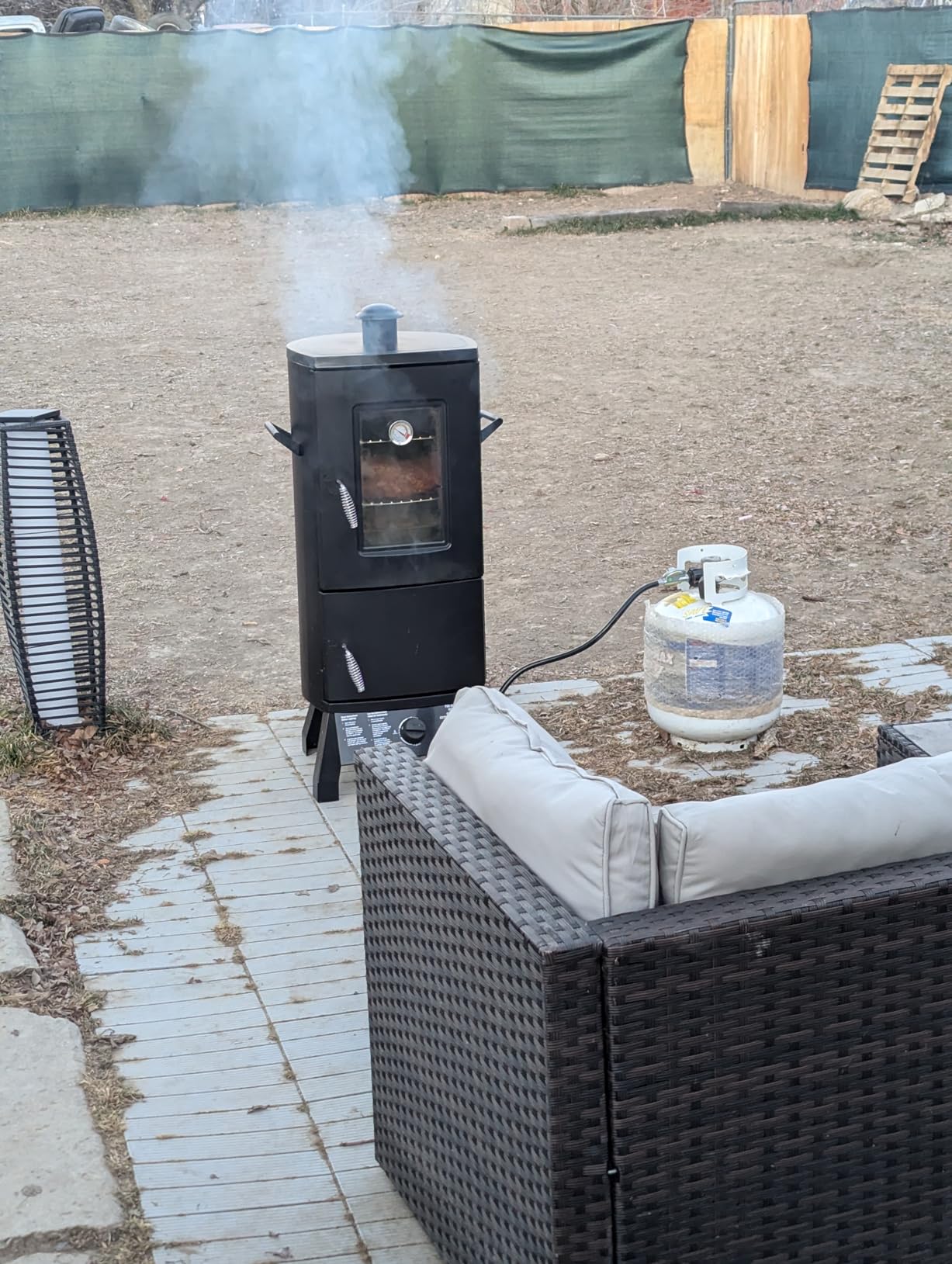
Propane smokers occupy a middle ground between electric convenience and charcoal flavor. The ATSENT lights instantly with no waiting for charcoal to ash over, produces no ash to clean up, and adjusts heat quickly with a control knob. For beginners frustrated by charcoal’s learning curve but wanting more smoke flavor than electric provides, propane makes sense.
The tight-sealing door is genuinely impressive. Smoke leakage is minimal compared to budget charcoal units that require gasket modifications. Wide racks allow airflow around meat for even cooking, and the slide-out design lets you check or reposition food without removing grates entirely.
Water bowl and wood chip tray access is convenient. Remove trays through a side door without opening the main cooking chamber, preserving heat and smoke. The adjustable rail intervals let you reposition shelves for taller items like turkeys or shorten the gap for multiple racks of ribs.
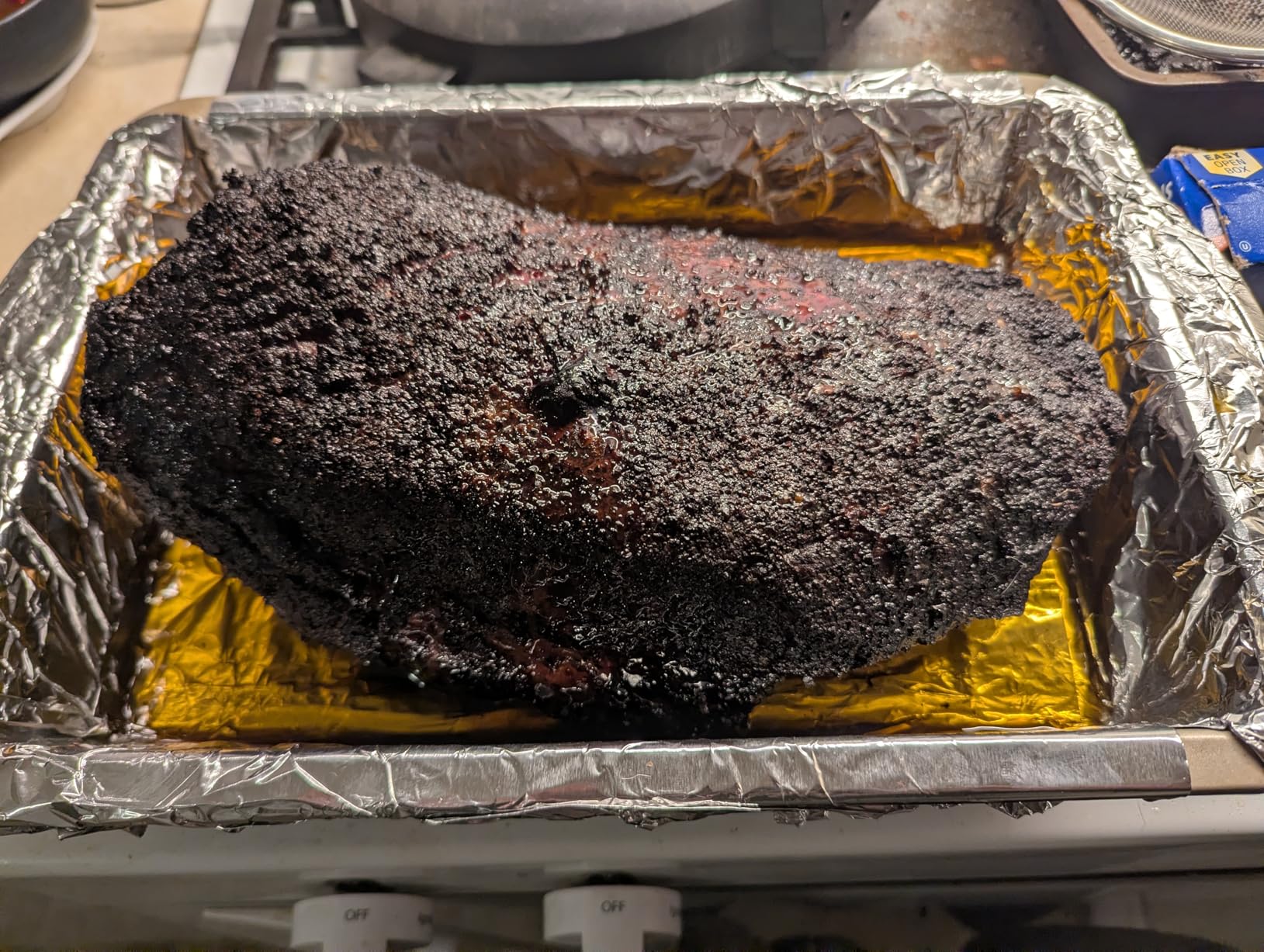
At 31 pounds and 40.9 inches tall, this unit fits small patios and balconies where larger smokers would dominate. The compact footprint does not sacrifice much cooking space—three shelves provide adequate room for family meals.
The main limitation is track record. With only 120 reviews and a 2026 manufacture date, we lack long-term durability data. Early reviews are overwhelmingly positive (79% five-star), but propane smokers have more moving parts (regulators, burners, valves) that could fail over time compared to simple electric elements.
Flavor profile sits between electric and charcoal. You get real wood smoke from the chip tray, but the base heat source is propane rather than burning wood or charcoal. Purists detect the difference, but most casual eaters will find the results satisfying.
For Whom It Is Good
This smoker fits beginners who want faster startup than charcoal but more smoke flavor than basic electric models provide. If you are comfortable managing propane tanks (like grilling with gas) and want instant heat adjustment, the ATSENT delivers. The compact size also suits urban balconies and small patios.
People in areas with unreliable electricity might prefer propane. If your power goes out during a storm but you still want to smoke that pork shoulder, propane keeps cooking when electric smokers would go dark.
For Whom It Is Bad
Purists seeking authentic barbecue flavor will find propane a compromise. While better than electric alone, it does not match the depth of flavor from burning charcoal or wood. If you dream of competition-worthy barbecue, start with charcoal or invest in a pellet smoker.
Risk-averse buyers might wait for more long-term reviews before purchasing. The limited track record means we cannot confirm how this unit performs after 2-3 years of regular use. If you prefer proven designs with thousands of verified long-term reviews, the Masterbuilt electric line is safer.
Buying Guide for First-Time Smoker Buyers
Choosing your first smoker means balancing ease of use, flavor goals, and budget. After testing these 10 units and consulting forums where beginners share their real experiences, here is what actually matters for your decision.
Fuel Type: Electric vs Charcoal vs Propane
Electric smokers offer the gentlest learning curve. Digital temperature controls maintain steady heat automatically, letting you focus on meat preparation and timing rather than fire management. The tradeoff is milder smoke flavor compared to burning wood or charcoal. Beginners who want authentic barbecue with minimal frustration should start with electric.
Charcoal delivers the deepest smoke flavor and develops skills that transfer to any smoker you upgrade to later. The learning curve is real—you will ruin a few cooks while learning vent management and fuel placement. If you enjoy the process of mastering a craft and have time to tend fires, charcoal rewards your patience.
Propane sits in the middle. Instant heat like electric, but with wood chip smoke for better flavor. You still manage a fire of sorts (the burner and chip tray), but with more forgiveness than charcoal. Good for beginners wanting a middle path.
Key Features That Matter for Beginners
Temperature control is everything. Look for digital controls on electric units, adjustable vents on charcoal models, and reliable thermostats on propane smokers. The ability to maintain 225°F for hours without constant adjustment separates good smokers from frustrating ones.
Cooking area should match your typical needs. A family of four needs 400-600 square inches. If you entertain regularly, look for 700+ square inches. Too small and you cannot cook efficiently; too large and you waste fuel heating unused space.
Easy cleanup encourages regular use. Removable grease trays, dishwasher-safe racks, and ash management systems reduce the chore factor. Beginners who dread cleanup tend to abandon smoking—choose equipment that makes maintenance manageable.
If you are planning to take your smoked food on outdoor adventures, consider how you will transport and store your meat safely before serving. Check out portable coolers for your BBQ that fit perfectly in compact spaces.
What to Smoke First as a Beginner
Start with pork shoulder (Boston butt). It is forgiving, affordable, and produces pulled pork that impresses guests even if your execution is imperfect. A 8-10 pound shoulder takes 10-12 hours at 225°F and reaches target temperature slowly enough that small mistakes do not ruin the outcome.
Chicken pieces are also beginner-friendly. They cook in 3-4 hours, cost less than brisket if you make mistakes, and give you practice with temperature management and wood smoke without the marathon commitment.
Save brisket for your 5th or 6th cook. At $50-80 per piece, mistakes are expensive. Brisket also requires precise temperature control and timing that beginners typically lack. Master pork first, then tackle the king of barbecue.
Common Beginner Mistakes to Avoid
Over-smoking is the most common error. Beginners think more smoke equals more flavor, but excessive smoke makes meat bitter and acrid. Thin blue smoke is the goal; thick white smoke ruins food. Use fewer wood chips than you think you need.
Opening the door constantly destroys temperature stability. Every peek releases heat and extends cook time. Trust your thermometer, not your eyes. The meat will still be there in 2 hours—do not check every 15 minutes.
Skipping the rest period ruins texture. After cooking, meat needs 30-60 minutes wrapped in foil or butcher paper to redistribute juices. Cutting immediately after cooking drains moisture and dries out your hard work. Patience at the end matters as much as patience during the cook.
Not using a separate probe thermometer is a recipe for overcooked or undercooked meat. Built-in thermometers are often inaccurate. A $20 probe thermometer prevents ruined meat and builds confidence in your cooking.
Frequently Asked Questions
What is the best kind of smoker for beginners?
Electric smokers with digital temperature controls are the best kind for beginners. They maintain steady heat automatically, eliminating the biggest learning curve beginners face. Models like the Masterbuilt 30-inch Digital or EAST OAK provide set-and-forget operation while you learn meat preparation and timing.
What is the best smoker for the money?
The Masterbuilt 30-inch Analog Electric offers the best value at around $189. It uses proven heating element technology that rarely fails, provides 535 square inches of cooking space, and delivers authentic smoked results without complex controls. For charcoal enthusiasts, the Realcook 17-inch at $99.99 is unbeatable for learning fire management on a budget.
What is the simplest smoker?
The Smokehouse Big Chief is the simplest smoker available. It has no controls to configure—just plug it in and load wood chips. The fixed 165°F temperature is perfect for fish and jerky without any temperature management required. For general-purpose smoking, electric smokers with digital controls like the Masterbuilt Digital are simplest.
What are the common mistakes when smoking?
Common beginner mistakes include: 1) Over-smoking with too many wood chips, creating bitter flavor. 2) Opening the door constantly, causing temperature swings. 3) Skipping the rest period after cooking, resulting in dry meat. 4) Trusting built-in thermometers that are often inaccurate. 5) Starting with expensive brisket before mastering technique on cheaper pork shoulder.
Final Thoughts
The best smokers for beginners in 2026 remove the frustration from your first barbecue experiences. Electric models like the Masterbuilt 30-inch Digital and EAST OAK eliminate temperature control anxiety entirely. Charcoal options like the Realcook teach you skills that last a lifetime at a price anyone can afford.
Choose based on your priorities. If you want the easiest path to great barbecue, go electric. If you value traditional flavor and skill development, choose charcoal. Either way, start with pork shoulder rather than brisket, use a separate probe thermometer, and resist the urge to open the door every 15 minutes.
Your first smoker is a teacher, not a lifelong commitment. Master the fundamentals on something affordable, then upgrade as your skills and interests develop. The brisket you smoke five years from now will thank you for the patience you learn today.
Ready to start your barbecue journey? Pick the smoker that matches your budget and patience level, grab some wood chips, and fire it up. That first perfectly smoked pork shoulder is closer than you think.


