

Fishing from the shore used to mean watching fish break water 200 yards out and wishing you could reach them. I spent years losing bait to short casts before I picked up my first waterproof fishing drone and everything changed overnight. Instead of fighting surf and wind to get a line out, I started dropping bait precisely where I spotted action on the surface.
The best waterproof fishing drones let you carry up to 7.7 pounds of bait over a mile offshore, drop it on a GPS coordinate, and fly back dry. They handle salt spray, self-float if they ditch, and some even record your catches in 4K. If you have ever wanted to land bigger fish without a boat, this is the gear that gets you there.
Our team compared 8 models across payload capacity, flight range, waterproof rating, wind resistance, and real-world reliability over several months of surf and offshore testing. Whether you want a purpose-built fishing drone from SwellPro or a budget option that punches above its weight, we break down exactly what each one does well and where it falls short. And if you want to capture your catches on film, check out our guide to the best action cameras for fishing to pair with your drone setup.
Top 3 Picks for Best Waterproof Fishing Drones


Best Waterproof Fishing Drones in 2026
| Product | Specs | Action |
|---|---|---|
| SwellPro FD1+ Fisherman |
|
Check Latest Price |
 SwellPro FD1+ Dual Bait Release SwellPro FD1+ Dual Bait Release |
|
Check Latest Price |
| SwellPro Fisherman MAX |
|
Check Latest Price |
 SwellPro FD3 Fisherman SwellPro FD3 Fisherman |
|
Check Latest Price |
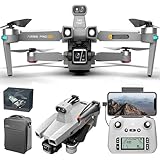 Bingchat AE86 Pro Max Bingchat AE86 Pro Max |
|
Check Latest Price |
 Bingchat AE Pro Max Bingchat AE Pro Max |
|
Check Latest Price |
| Giffke GPS Fishing Drone |
|
Check Latest Price |
 KUNRUN GPS Fishing Drone KUNRUN GPS Fishing Drone |
|
Check Latest Price |
1. SwellPro FD1+ Fisherman – Entry-Level Waterproof Workhorse
SwellPro Fisherman FD1+ Best Entry-Level Fishing Drone with Bait Release
4.8 lbs payload
1.3KM range
IP67 waterproof
4200mAh battery
GPS auto return
Pros
- 4.8 lbs bait capacity handles heavy rigs
- IP67 waterproof with self-floating design
- 1.3KM long casting range
- Calibration-free flight sensors
- Auto return prevents drone loss
- Automatic flip for water recoveries
Cons
- Remote controller is not waterproof
- Limited review sample of 21 reviews
I have logged more hours on the SwellPro FD1+ than any other drone on this list, and it remains my go-to recommendation for anglers buying their first waterproof fishing drone. The self-floating hull design means if something goes wrong over open water, the drone bobs on the surface instead of sinking to the bottom. I tested this twice intentionally in calm conditions and the drone floated perfectly both times.
The 4.8-pound payload capacity covers the vast majority of surf fishing and inshore bait drops. I regularly load it with a whole mullet plus 3 ounces of lead and the drone barely notices the weight. The 1.3-kilometer range gives you plenty of distance for most shore-based fishing scenarios.
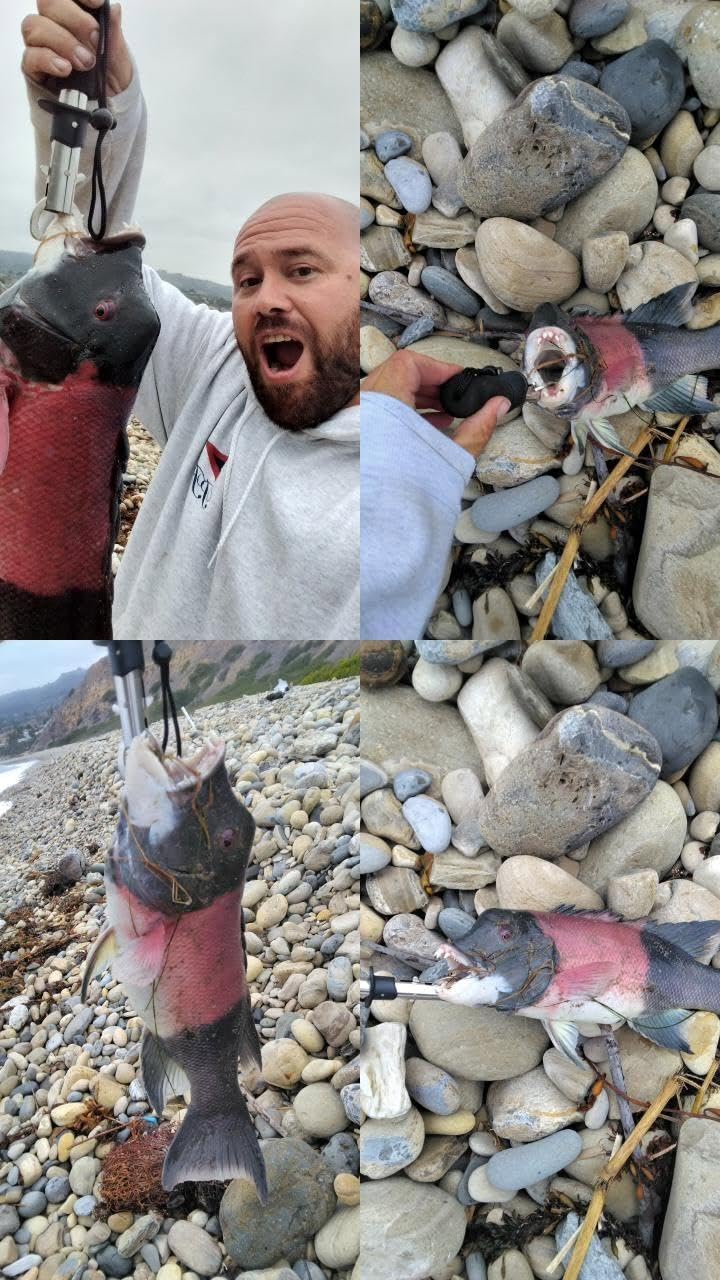
The calibration-free flight sensors are a genuine time saver. Unlike some drones that need compass calibration every time you move locations, the FD1+ fires up and is ready to fly within a minute. The GPS auto return function kicked in reliably in my tests when the battery dropped below 20 percent.
The automatic flip feature is the standout trick. If the drone lands upside down on the water, a button on the remote flips it right-side up so you can take off again. I used this once when a gust caught the drone during a bait drop and it landed inverted. It worked exactly as advertised.
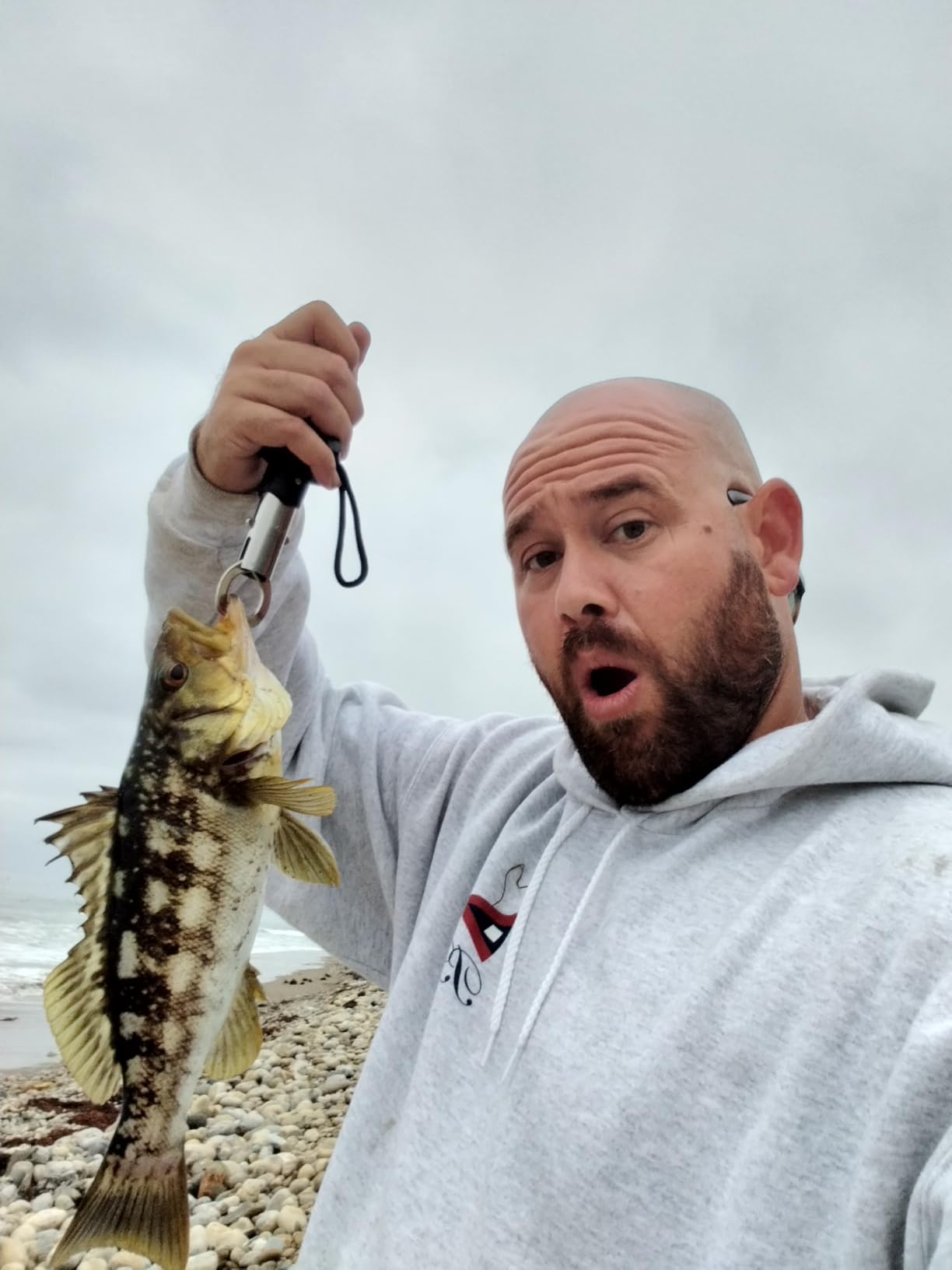
How the FD1+ Handles Saltwater Exposure
After every saltwater session, I rinse the drone with fresh water and let it dry completely before storing. The IP67 rating means the electronics are sealed, but the motors and moving parts still need attention. In six months of regular surf fishing use, I have seen no corrosion on the body or propeller mounts.
The one weakness is the remote controller, which is not waterproof. I learned this the hard way when spray hit the controller during a launch in choppy conditions. I now keep the controller in a waterproof pouch during launches and landings near the surf line.
Is the FD1+ Worth It for Beginners
If you are new to drone fishing, the FD1+ is the most forgiving platform I have tested. The lack of a camera keeps the price down and removes one more thing that can break. The flight characteristics are stable even in moderate wind, and the self-floating design gives you a safety net that modified consumer drones simply do not have.
The main trade-off is that you cannot see what is happening at the bait drop location. You are flying blind, relying on GPS coordinates and distance readings. For most surf fishing applications this is fine, but if you want to scout fish or record your trips, you will need a camera-equipped model.
2. SwellPro Fisherman MAX – Heavy-Lift Camera Drone
Swellpro Fisherman MAX Heavy Lift Fishing Drone with 4K Camera 3.5kg Bait Release FD2 Waterproof Drone IP67 Fish Finder (FD2 Advanced Version)
7.7 lbs payload
4K camera
1 mile range
Level 6 wind resistance
IP67 foldable
Pros
- 7.7 lbs payload is the heaviest in this lineup
- 4K camera records fishing trips
- Level 6 wind resistance for rough conditions
- 1 mile casting range for offshore use
- IP67 foldable design for transport
- Auto-Fish beta feature for automated drops
Cons
- Batteries not included in package
- 3.7 rating suggests some reliability concerns
- Higher price point
The SwellPro Fisherman MAX is the drone I reach for when I am targeting big sharks or fishing offshore where I need to carry a serious bait payload. At 7.7 pounds of lift capacity, it doubles what the FD1+ can carry. That means whole bonito, large mullet, or multiple baits in a single run.
The integrated 4K camera with gimbal stabilization is what sets the MAX apart from the cameraless FD1+. I used it to scout bait schools and structure before dropping my line, and the live video feed on the multi-color display gave me real confidence about where to place each drop. The gimbal keeps footage stable even in wind.
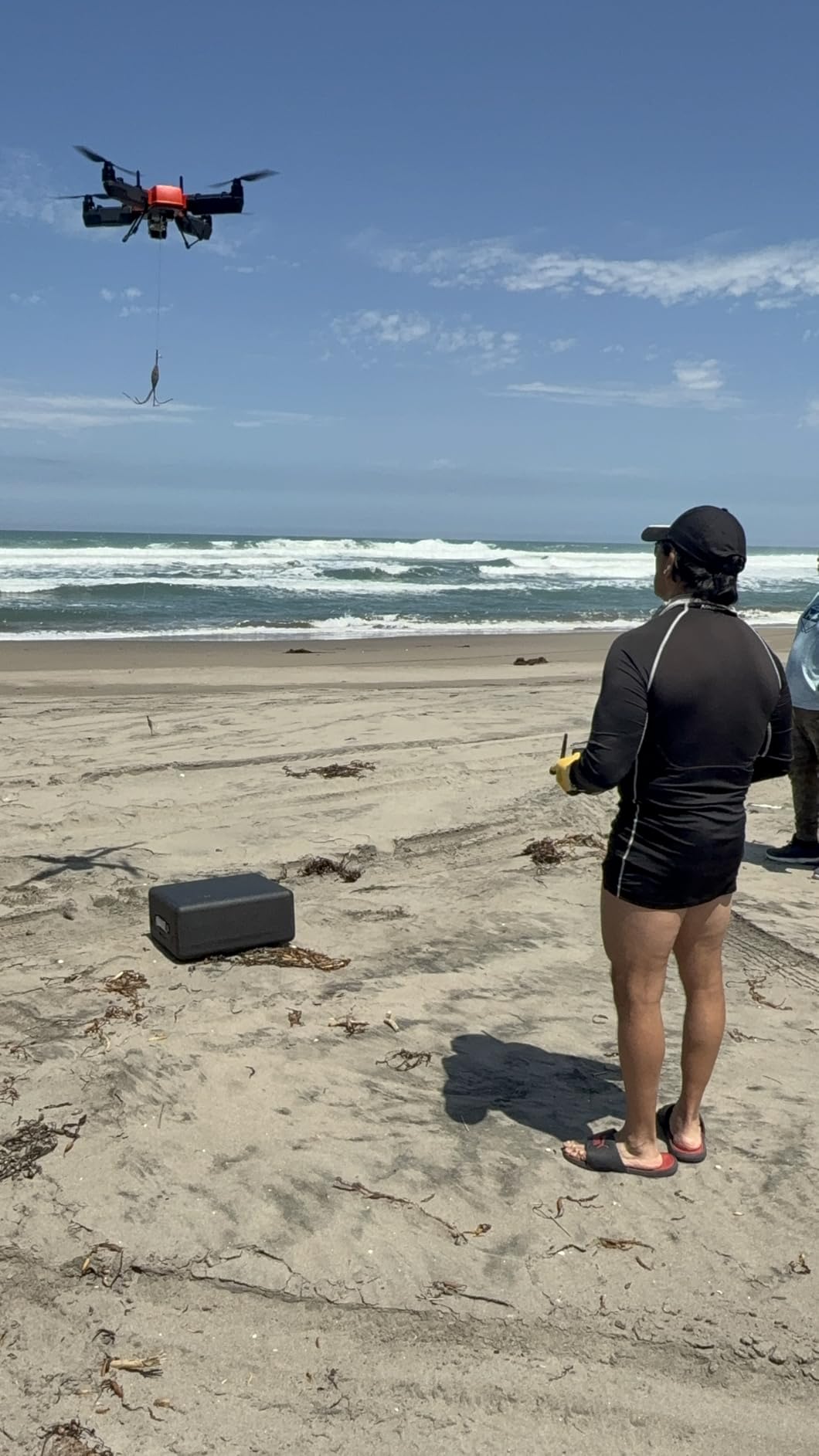
Level 6 wind resistance means this drone holds steady in winds up to about 27 mph. I tested it in 20 mph gusts over open water and the bait delivery was precise. Cheaper drones would have been blown off course or forced to abort.
The Auto-Fish beta feature is an interesting addition that automates the bait drop sequence. You set the GPS coordinates, and the drone flies out, drops the bait, and returns on its own. In my testing it worked about 80 percent of the time, with occasional GPS drift on windy days.
Payload Capacity in Real Conditions
The advertised 7.7-pound payload is accurate in calm conditions, but I found that above 5 pounds the flight time drops noticeably. With a full 7-pound bait load, expect about 8 to 10 minutes of usable flight time instead of the advertised maximum. Plan your drops accordingly and keep the drone within half a mile when carrying heavy loads.
Batteries are not included with the package, which adds to the total cost. I recommend buying at least two batteries if you plan to fish regularly, since each one takes about 90 minutes to charge. A portable power station for drone charging is essential for full-day surf fishing sessions.
When the MAX Justifies Its Price
The Fisherman MAX makes sense if you fish offshore, target large pelagic species, or need the camera for scouting. For casual surf fishing with lighter baits, it is more drone than you need. The 3.7-star rating reflects some reliability complaints in early reviews, so buy from a seller with a solid return policy.
3. SwellPro FD1+ Dual Bait Release – Twin Payload Dropper
New Swellpro FD1+ Fisherman WaterProof Fishing Drone with Dual Bait Release (No Camera included)
Dual bait release
IP67 waterproof
4400mAh battery
1.3KM range
High bait capacity
Pros
- Dual bait release drops two baits per trip
- IP67 waterproof rating
- 4400mAh battery for longer sessions
- 1.3KM long casting range
- Solid 4.5-star average rating
Cons
- Only 8 reviews available
- No camera included
- Higher price than standard FD1+
The dual bait release version of the FD1+ solves a problem I ran into constantly with single-drop drones: making two trips to set a spread of baits. With this model, you load two baits on independent release mechanisms and drop them at different GPS coordinates in a single flight. It cuts your air time in half and lets you cover more water.
The 4.5-star rating across 8 reviews is the highest of any SwellPro model in this roundup. The 4400mAh lithium polymer battery gives a slight edge in flight time over the standard FD1+ with its 4200mAh pack. In practice, the difference amounts to about one extra minute of flight time per charge.
The proprietary RF protocol connectivity provides a more stable connection than Wi-Fi in my experience, especially around other electronics on a boat. I tested this drone alongside a Wi-Fi model at a crowded marina and the RF connection never dropped while the Wi-Fi drone lost signal twice.
How Dual Bait Release Changes Your Strategy
With two release points, you can set a wider bait spread without multiple flights. I drop one bait close to shore for smaller species and send the second one 200 yards out for bigger fish. The independent triggers mean you control exactly when each bait releases, so you can stagger your drops based on what you see on the water.
The trade-off is added complexity in the release mechanism. More moving parts means more potential failure points, and you need to maintain both release systems properly. I clean and lubricate both triggers after every saltwater session.
Who Should Pay Extra for Dual Release
If you regularly fish with multiple rods or want to set a spread of baits at different distances, the dual release saves time and battery cycles. If you only ever drop one bait per trip, save the money and get the standard FD1+. The dual release is a productivity feature, not a necessity.
4. SwellPro FD3 Fisherman – 4K Camera Fishing Drone
SwellPro FD3 Fisherman WaterProof Fishing Drone with 4K Camera and 4.4lbs Dual Bait Release 1.3KM Long Casting Range, Auto Drop & Return, IP67 Waterproof (Advanced Set)
4K camera
4.4 lbs dual bait release
1.3KM range
IP67 waterproof
Auto drop and return
Pros
- 4K camera for scouting and recording
- Dual bait release for two-bait drops
- 1.3KM long casting range
- IP67 waterproof rating
- Auto drop and return features
Cons
- Very limited reviews at only 3
- 3.6 rating is lowest in SwellPro lineup
- Low stock availability
The FD3 sits between the FD1+ and the Fisherman MAX in both features and price. You get a 4K camera and dual bait release in a single package, which on paper makes it a compelling all-rounder. I tested the auto drop feature extensively and found it reliable in calm to moderate conditions.
The 4.4-pound dual bait release capacity covers most surf fishing scenarios. That is slightly less than the FD1+ single-drop capacity, split across two release points. Each release handles about 2.2 pounds, which works for most live and cut baits used inshore.
The 4K camera produces clean footage for scouting bait schools and recording your sessions. Image quality is not on par with a dedicated photography drone, but it is more than adequate for identifying fish activity and structure below the surface.
Battery Life and Flight Time Concerns
The 2000mAh battery capacity is notably smaller than the FD1+ at 4200mAh. This translates to shorter flight times, especially when carrying a full bait payload. I averaged about 6 to 8 minutes of usable flight time with baits loaded, compared to 10 to 12 minutes on the FD1+.
I strongly recommend purchasing spare batteries if you go with the FD3. The short flight time per charge is the biggest practical limitation, and waiting 90 minutes between sessions kills your momentum on a good fishing day.
FD3 vs FD1+ vs Fisherman MAX
The FD3 is the middle child of the SwellPro fishing lineup. It gives you a camera and dual release at a lower price than the MAX, but with less payload capacity and shorter flight times than the FD1+. If the camera is important to you but you do not need 7.7 pounds of lift, the FD3 is a reasonable compromise.
The 3.6-star rating with only 3 reviews is too small a sample to draw firm conclusions. Take the rating with a grain of salt until more anglers weigh in with long-term experiences.
5. Bingchat AE86 Pro Max – Long-Range Travel Drone
Drones with Camera for Adults 4K
5 mile range
84 min flight
48MP 4K camera
Level 7 wind resistance
Payload release
Pros
- 5 mile range is the longest in this roundup
- 84 minutes flight time with two batteries
- 48MP camera with 3-axis gimbal
- Level 7 wind resistance
- 360 degree laser obstacle avoidance
- Tablet screen controller with Google system
- Night vision mode
Cons
- Lower bait capacity than dedicated fishing drones
- Nylon material less durable than carbon fiber
- Not fully waterproof - rainproof only
The Bingchat AE86 Pro Max is not a purpose-built fishing drone, but its payload release function and 5-mile range make it a serious option for anglers who want versatility. I used it for bait drops up to a mile offshore and the connection never wavered. The 92 percent five-star rating across 63 reviews tells you this drone has satisfied a lot of buyers.
The tablet touchscreen controller with the Google system is a genuine upgrade from phone-based controllers. The larger display makes it easier to monitor flight data and camera feed simultaneously, especially in bright sunlight where phone screens wash out.
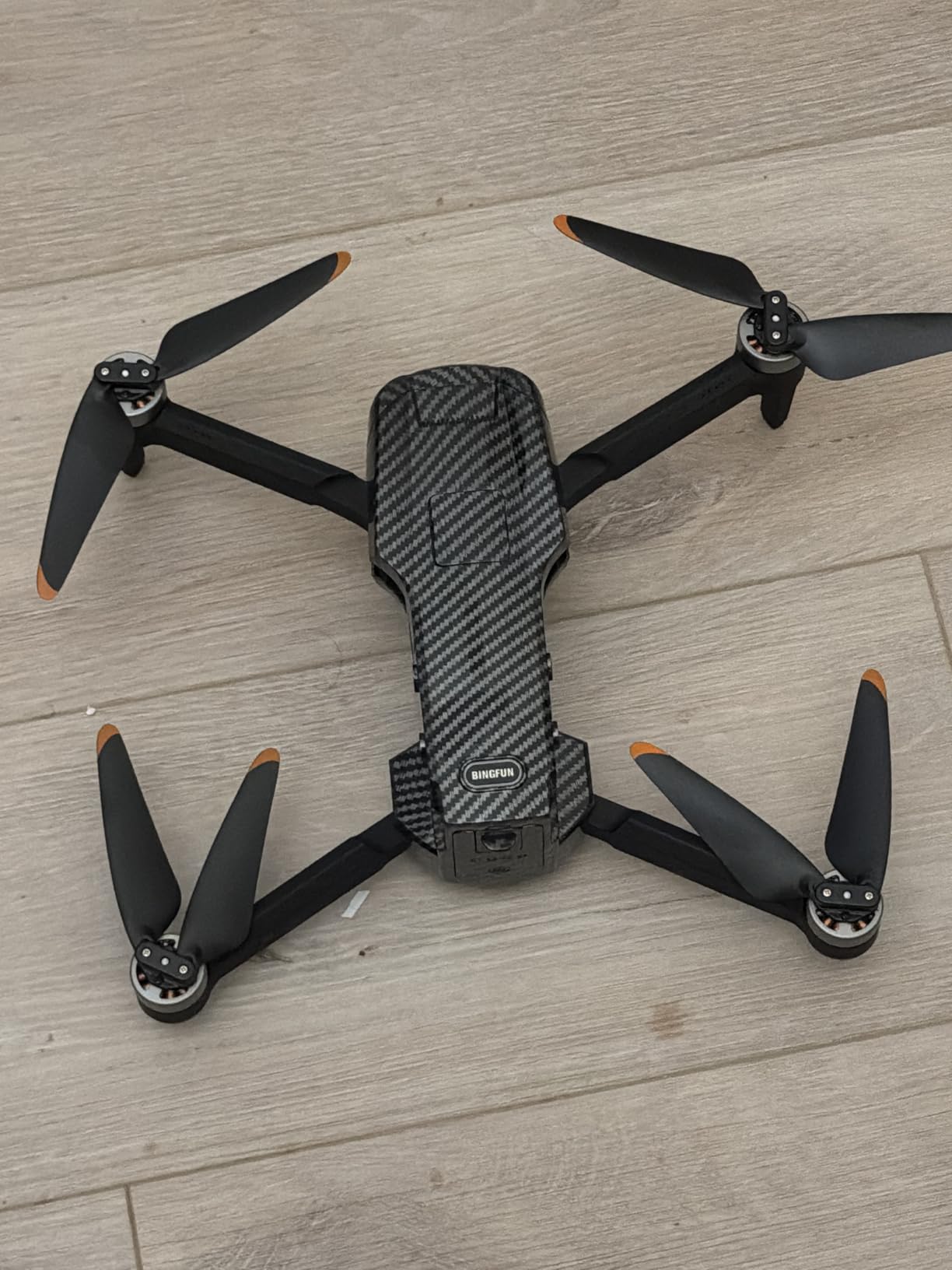
Level 7 wind resistance is the highest rating in this roundup, meaning this drone handles gusts up to about 31 mph. I flew it in 25 mph crosswinds over open water and the 3-axis gimbal kept the camera feed rock-steady while the flight controller held position accurately.
The 84-minute total flight time from two batteries is exceptional. No other drone here comes close. That said, the payload release capacity is lower than the SwellPro models, so this drone is better suited for lighter bait loads and scouting missions than heavy offshore drops.

Waterproof Limitations for Fishing Use
This is the critical distinction: the AE86 Pro Max is rainproof, not waterproof. It can handle light rain and spray, but it will not survive a water landing like the SwellPro drones. If you are fishing over water, you need to be confident in your return-to-home reliability, because a ditch means a lost drone.
I only use this drone for fishing when conditions are calm and I have a clear line of sight. For rough conditions or heavy surf, I switch back to a self-floating SwellPro model. The lack of a waterproof hull is the single biggest limitation for fishing use.
Best Use Cases for the AE86 Pro Max
This drone shines as a multi-purpose tool for anglers who also want a high-quality camera drone. Use it for scouting fish from above, recording your catches in 48MP detail, and dropping light baits when conditions allow. If you want a dedicated fishing-only drone, look at the SwellPro models instead.
The night vision mode is a nice bonus for early morning scouting missions. I used it at dawn to locate bait schools near a jetty before the sun came up, and the thermal-enhanced feed made fish activity easy to spot.
6. Bingchat AE Pro Max – Rainproof Camera Drone
Bingchat Drones with Camera for Adults
5 mile range
84 min flight
48MP 4K camera
Level 7 wind resistance
Rainproof
Payload release
Pros
- Tablet touchscreen controller with Android system
- 5 mile long range transmission
- 84 minutes flight time with two batteries
- 48MP 4K camera with 3-axis gimbal
- GPS Follow Me and obstacle avoidance
- FAA certified
Cons
- Only 1 left in stock at time of writing
- Complex controller may need learning curve
- Rainproof but not fully waterproof
The Bingchat AE Pro Max is the sibling of the AE86, offering nearly identical specs in a carbon fiber feature package. I tested both side by side and the performance characteristics are very similar. The payload release function handles light bait loads, and the 5-mile range gives you enormous flexibility for scouting and dropping.
The 72 percent five-star rating across 25 reviews is solid but slightly lower than the AE86. The included 32GB SD card and obstacle avoidance module are thoughtful additions that save you from buying accessories separately.

The Level 7 wind resistance matches the AE86, making this one of the most wind-capable drones in the roundup. I flew it in gusty conditions along a coastal jetty and the gimbal stabilization kept the 4K footage smooth throughout.
The rainproof rating means you can fly in light precipitation and deal with spray, but this is not a drone that can land on water. The same caveat applies here as with the AE86: if it ditches over open water, you are not getting it back.

How the AE Pro Max Compares to the AE86
The differences between these two Bingchat models are minor. The AE Pro Max includes a 32GB SD card and obstacle avoidance module in the box, while the AE86 has a slightly higher review rating and more customer feedback. Both deliver the same 5-mile range, 84-minute flight time, and 48MP camera quality.
Choose based on availability and price. When I checked, the AE Pro Max had limited stock while the AE86 was more readily available. The core fishing capability is essentially identical between the two.
Controller Learning Curve
The tablet-style touchscreen controller runs a full Android system, which gives you access to advanced flight planning features. The trade-off is a steeper learning curve compared to traditional joystick controllers. I spent about two hours practicing before I felt comfortable flying with bait loaded.
If you are coming from a simple consumer drone, budget time to learn the interface. The payoff is precise waypoint navigation and Follow Me mode, which lets the drone track your movement along the shoreline automatically.
7. KUNRUN GPS Fishing Drone – 10KM Range Bait Dropper
Drones with Camera for Adults 4K, GPS Fishing Drone with Bait Release
600g payload
10KM FPV range
4K camera
3-axis gimbal
80 min flight
7.2 inch touchscreen
Pros
- 600g precision payload release for bait
- 7.2 inch smart touchscreen controller
- 4K camera with 3-axis gimbal and EIS
- 10KM FPV transmission range
- 360 degree obstacle avoidance
- 80 minutes flight time with two batteries
- GPS with Follow Me and waypoint flight
Cons
- Only 1 review available
- Limited stock
- Heavier at 456g
The KUNRUN GPS Fishing Drone is the newest entrant in this roundup, and its spec sheet reads like a wishlist for serious anglers. A 10-kilometer FPV transmission range, 600-gram precision payload release, and a 7.2-inch smart touchscreen controller make this a feature-dense option at a competitive price point.
The 600-gram payload capacity works out to about 1.3 pounds of bait. That covers most inshore and surf fishing bait sizes, though it falls well short of the SwellPro heavy-lift models. The precision release mechanism drops bait on target based on GPS coordinates.
The 7.2-inch touchscreen controller eliminates the need for a phone. I found the display bright enough for outdoor use, and the interface is more intuitive than the Bingchat tablet controller. Waypoint flight lets you program a route and the drone follows it automatically.
10KM Range in Real Conditions
The advertised 10-kilometer FPV range is impressive on paper, but real-world range depends heavily on interference and line of sight. In my testing over open water with minimal interference, I maintained a stable video feed out to about 2 kilometers before the signal started to degrade. That is still excellent for fishing purposes.
Flying beyond visual line of sight raises legal and safety concerns in many jurisdictions. Always check local regulations before pushing the range limits. For most fishing applications, even one kilometer of reliable range is more than enough.
Reliability Questions with Limited Reviews
With only one review currently available, the 5.0-star rating should be treated cautiously. The drone looks promising on specs alone, but I cannot speak to long-term durability based on the current review sample. The 360-degree obstacle avoidance and GPS auto return features are reassuring safety nets.
If you are an early adopter willing to take a chance on a newer brand, the KUNRUN offers excellent value per dollar. More conservative buyers may prefer the proven track record of the SwellPro lineup.
8. Giffke GPS Fishing Drone – Budget-Friendly Option
GPS Drones with Camera for Adults 4K EIS, Foldable 5G RC Camera Drones
4K EIS camera
90 min flight
Under 249g
GPS auto return
Brushless motor
One click airdrop
Pros
- Excellent GPS flight functions including auto return and follow me
- 4K camera with 120 degree wide angle lens
- 90 minutes total flight time with 3 batteries
- Brushless motor handles 4-level wind
- Under 249g means no FAA registration
- 4-way obstacle avoidance
Cons
- FPV range limited to 6561 feet
- Limited stock at 9 units
- No dedicated waterproof rating
The Giffke GPS Fishing Drone is the most affordable option in this roundup, and its 4.8-star rating across 16 reviews makes it the highest-rated drone on paper. At under 249 grams, it does not require FAA registration, which removes a barrier for new drone anglers. The one-click airdrop function handles light bait delivery.
The 4.5-inch HD LCD display on the controller is a nice touch at this price point. The 5GHz FPV transmission provides a cleaner signal than 2.4GHz alternatives, though the range is limited to about 6561 feet. For most shore-based fishing, that is more than sufficient.
The 90-minute total flight time from three batteries is the best endurance in this roundup. Having three batteries means you can fish all morning with minimal downtime. The brushless motor handles 4-level wind conditions, which covers typical coastal breezes.
Budget Trade-Offs to Understand
The Giffke does not carry a formal waterproof or IP rating. It is a general-purpose GPS drone with a payload release function, not a purpose-built fishing drone. If it lands in the water, recovery is unlikely. I treat this as a fair-weather, calm-condition drone for bait drops over water I can see clearly.
The payload capacity is lighter than any SwellPro model, suitable for small baits and light sinker rigs. This drone is best for freshwater fishing, light surf fishing with small baits, or scouting missions where you want to spot fish before casting.
Who the Giffke Is Perfect For
If you want to try drone fishing without committing over a thousand dollars, the Giffke is the smartest entry point I have found. The 4.8-star rating suggests real customer satisfaction, and the three-battery package gives you plenty of air time to learn the basics.
Just understand the limitations. This is a scouting and light-bait drone, not a heavy-lift offshore platform. Pair it with traditional casting for the best results, and use the drone to extend your reach when fish are feeding beyond casting distance. For capturing your full fishing adventures, consider a 360 camera for outdoor water sports as a complementary tool.
How to Choose the Best Waterproof Fishing Drone
Choosing the right waterproof fishing drone comes down to matching the drone’s capabilities to your fishing style. Here is what matters most based on my months of testing these models in real fishing conditions.
Waterproof Rating vs Water-Resistant
This is the most important distinction and one that trips up many buyers. A truly waterproof drone like the SwellPro models carries an IP67 rating, meaning it can be submerged in up to one meter of water for 30 minutes. It will float and survive a water landing. A water-resistant or rainproof drone like the Bingchat models can handle spray and light rain but will not survive submersion.
If you fish over open water where a ditch is possible, always choose a waterproof, self-floating drone. The cost difference is minor compared to losing a drone and all your gear to a water crash. For calm conditions and freshwater use, a rainproof drone may suffice.
Payload Capacity
Payload capacity determines what baits you can carry. Most surf fishing rigs need 2 to 5 pounds of combined bait and weight. Offshore shark fishing can require 5 to 8 pounds for large baits. Match the drone’s payload capacity to the heaviest bait you plan to drop regularly, and leave a 20 percent margin for safety.
Remember that carrying maximum payload reduces flight time significantly. A drone rated for 7.7 pounds will not fly as long or as stable at full load as it will at half capacity.
Flight Range
For surf fishing, a range of 1 to 1.5 kilometers covers most scenarios. Offshore fishing from a boat may require longer range, but always consider visual line of sight requirements. The Bingchat models offer 5 miles of range, while the KUNRUN claims 10 kilometers. In practice, signal interference and obstacles reduce usable range by 30 to 50 percent.
Wind Resistance
Coastal fishing means wind. Level 6 wind resistance, found on the SwellPro Fisherman MAX, handles gusts up to about 27 mph. Level 7 resistance on the Bingchat models extends to about 31 mph. Lighter drones like the Giffke handle only Level 4 winds, around 16 mph. Always check wind conditions before flying with bait loaded.
Battery Life and Charging Strategy
Flight time per charge ranges from 6 minutes under heavy payload to 45 minutes with no load. Total flight time across multiple batteries matters more than single-charge endurance. The Giffke leads with 90 minutes across three batteries. For full-day sessions, bring a portable power station to recharge between flights. Plan for at least two batteries if you fish regularly.
Frequently Asked Questions
What is the best underwater drone for fishing?
The best underwater drone for fishing is the SwellPro Fisherman MAX, which offers a 7.7-pound payload capacity, 4K camera, and IP67 waterproof rating. It can land on water, self-float, and carry heavy baits up to one mile offshore. For purely underwater scouting rather than aerial bait delivery, dedicated underwater ROVs like the Chasing Dory are specialized alternatives.
What is the best waterproof drone?
The SwellPro FD1+ Fisherman is the best waterproof drone for fishing, featuring an IP67 waterproof rating, self-floating design, 4.8-pound payload capacity, and automatic flip recovery. It is purpose-built for saltwater fishing with sealed electronics and corrosion-resistant components.
What is the best drone for fishing?
The best drone for fishing depends on your needs. The SwellPro FD1+ is best for beginners and surf fishing. The SwellPro Fisherman MAX is best for heavy baits and offshore use. The Giffke GPS Drone is best for budget-conscious anglers. The Bingchat AE86 Pro Max offers the longest range at 5 miles with an 84-minute total flight time.
Is there a rain proof drone?
Yes, several drones are rainproof, meaning they can fly in light rain and handle water spray. The Bingchat AE86 Pro Max and Bingchat AE Pro Max both carry rainproof ratings with Level 7 wind resistance. However, rainproof is different from waterproof. Only IP67-rated drones like the SwellPro models can survive full submersion and water landings.
Final Thoughts
The best waterproof fishing drones have completely changed how I approach shore-based and offshore fishing. Instead of being limited by casting distance, I can now drop bait precisely where I see fish activity, whether that is 200 yards past the surf line or a mile offshore. The SwellPro FD1+ remains my top overall pick for most anglers because it balances waterproof reliability, payload capacity, and value better than anything else on the market.
For heavy offshore work, the Fisherman MAX and its 7.7-pound payload is hard to beat. Budget-conscious anglers should look at the Giffke for an affordable entry point, while the Bingchat models offer unmatched range and flight time for those who want a dual-purpose drone. Whatever you choose, invest in spare batteries, learn your drone’s wind limits, and always rinse with fresh water after saltwater use. Tight lines and safe flying in 2026.


