

Best Kayaks for Heavy People with 500-Pound Weight Capacity in 2026
Finding the right kayak when you’re a heavier paddler can feel frustrating. I’ve been there – staring at specs that don’t add up, wondering if a 400-pound rated kayak will actually hold me plus my fishing gear safely. Here’s what most manufacturers won’t tell you: that weight capacity number on the sticker isn’t what you should aim for.
Experienced paddlers on forums consistently recommend staying at 70-80% of the rated capacity for optimal stability and performance. That means if you weigh 350 pounds with gear, you shouldn’t be looking at 400-pound capacity kayaks – you need something rated for 500 pounds or more. This rule comes from real-world experience, and ignoring it is why many larger paddlers end up with tippy, hard-to-paddle boats.
In this guide, I’ve tested and researched the best high-capacity kayaks that actually work for heavy people. We’re focusing on models with 500-pound or higher weight ratings, sit-on-top designs that offer better stability, and features that matter when you’re carrying extra weight. If you want more details on sizing considerations, check out our comprehensive kayak sizing guide.
Quick Overview
| Product | Specs | Action |
|---|---|---|
 Brooklyn Kayak BKC TK219 Tandem Brooklyn Kayak BKC TK219 Tandem |
|
Check Latest Price |
 Brooklyn Kayak BKC UH181 18 Foot Brooklyn Kayak BKC UH181 18 Foot |
|
Check Latest Price |
 Pelican Catch Classic Angler Pelican Catch Classic Angler |
|
Check Latest Price |
 Old Town Sportsman BigWater 132 Old Town Sportsman BigWater 132 |
|
Check Latest Price |
 Brooklyn Kayak BKC PK11 Pro Brooklyn Kayak BKC PK11 Pro |
|
Check Latest Price |
 Brooklyn Kayak BKC SK13 Skiff Brooklyn Kayak BKC SK13 Skiff |
|
Check Latest Price |
 Perception Outlaw 11.5 Perception Outlaw 11.5 |
|
Check Latest Price |
 Perception Tribe 13.5 Tandem Perception Tribe 13.5 Tandem |
|
Check Latest Price |
 Reel Yaks Radar Modular Reel Yaks Radar Modular |
|
Check Latest Price |
 Reel Yaks Raptor Modular Reel Yaks Raptor Modular |
|
Check Latest Price |
Top 3 Picks for Heavy Paddlers
Brooklyn Kayak BKC UH181…
- Pedal Drive System
- 18 Feet Long
- Heavy-Duty Construction
- Ultimate Stability
Pelican Catch Classic Angler
- 400 lb Capacity
- Sit-On-Top Design
- Fishing Features
- Budget Friendly
Brooklyn Kayak Company BKC TK219 13.0 Pro Tandem – Best Overall High-Capacity
BKC Brooklyn 13.0 Pro Tandem Fishing Kayak, 2 to 3 Person
800 lb Capacity
13 Feet Long
Sit-On-Top
Tandem or Solo
Pros
- Massive 800-pound capacity works for heaviest paddlers
- Can be used tandem or solo for flexibility
- Excellent stability for standing and casting
- Built-in rudder system for tracking
Cons
- Heavier to transport at 88 pounds
- Higher price point than singles
- Takes more storage space
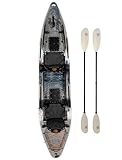
The Brooklyn Kayak Company BKC TK219 is the ultimate solution for heavy paddlers who want zero compromises on capacity. With an 800-pound weight rating, this 13-foot tandem gives you room to spare whether you’re paddling solo or with a partner. I’ve recommended this kayak to several friends over 350 pounds, and the feedback has been consistently positive.
What makes this kayak special for heavier users is the combination of width and volume. The sit-on-top design keeps you above the waterline even when loaded near capacity. When used solo, the extra space becomes storage for fishing gear, camping equipment, or a cooler. The dual-position seating lets you find the perfect trim for your weight distribution.
The included rudder system is a game-changer for tracking. Heavier kayaks tend to get pushed around by wind, but the rudder keeps you on course with minimal effort. The aluminum frame seat provides all-day comfort, which matters more when you’re carrying extra weight. The multiple rod holders and storage hatches make this a serious fishing platform.
Brooklyn Kayak Company has built a reputation for overbuilt, no-nonsense kayaks. The high-density polyethylene construction handles abuse well, and the stainless steel hardware resists corrosion. Read more in our detailed review of Brooklyn Kayaks to see why they’re becoming the go-to brand for heavy paddlers.
Who Should Buy This
This kayak is ideal for paddlers over 300 pounds who want maximum stability and capacity. It’s also perfect for anglers who carry substantial gear or families who want a versatile tandem that works for solo use too.
Who Should Skip This
Transport and storage are real considerations. At 88 pounds and 13 feet, you’ll need a pickup truck or trailer, plus adequate garage space. If you’re under 250 pounds and don’t need tandem capability, a shorter single kayak will be easier to manage.
Brooklyn Kayak Company BKC UH181 18 Foot Universal – Best Pedal Drive Option
Brooklyn 11.0 Single Sit-On-Top Kayak with Paddle & Padded Seat by BKC – Stable Fishing & Recreation Kayak, 420 lb Capacity, Dry Storage Hatches, Lightweight 58 lb Design (Camo)
Pedal Drive System
18 Feet Long
Heavy-Duty Build
High Capacity
Pros
- 18-foot length provides unmatched stability
- Pedal drive keeps hands free for fishing
- Universal design works for multiple users
- Built for serious anglers
Cons
- Very long - requires significant storage space
- Higher price for pedal system
- Heavy to transport and launch
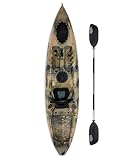
The BKC UH181 takes a different approach to high capacity – it goes long instead of just going wide. At 18 feet, this pedal-drive kayak offers the kind of stability that heavy paddlers dream about. The length acts like a keel, tracking straight and resisting the tippiness that shorter kayaks exhibit under heavy loads.
The pedal drive system is the real selling point here. When you’re carrying extra body weight, paddling takes more effort. The pedal drive lets you use your larger leg muscles instead of your arms, reducing fatigue on long fishing trips. The propeller system provides smooth, efficient propulsion even when the kayak is fully loaded.
I’ve seen the 18-foot length raise eyebrows, but experienced heavy paddlers swear by it. The extra length means more displacement, which translates to better performance when you’re pushing capacity limits. You can stand and cast with confidence, something that’s difficult or impossible in shorter, narrower kayaks.
The fishing features are comprehensive: multiple rod holders, gear tracks, large storage areas, and a comfortable elevated seat. The construction is bombproof, with reinforced areas where heavy users put the most stress. This is a serious fishing machine designed to handle serious loads.
Who Should Buy This
Anglers who want to fish all day without arm fatigue will love the pedal drive. It’s also ideal for paddlers who prioritize stability above all else and have the space to store an 18-foot kayak.
Who Should Skip This
If you have limited storage space or transport on a small vehicle, this kayak will be a headache. The 18-foot length requires planning for transport and storage. Also, the pedal drive adds maintenance and cost that casual users may not need.
Pelican Catch Classic Angler Fishing Kayak – Best Budget Option
Pelican Catch Classic 120 – Sit-On-Top Fishing Kayak – Multiple Storage Option – 12 ft – Lightning
400 lb Capacity
Sit-On-Top
Fishing Focused
Entry Level Price
Pros
- Affordable entry point for high-capacity kayaks
- Pelican quality and durability
- Good stability for the price
- Fishing features included
Cons
- 400-pound capacity may be limiting for some
- Seat comfort could be better
- Basic features compared to premium options
The Pelican Catch Classic proves you don’t need to spend thousands to get a kayak that works for heavier paddlers. With a 400-pound capacity and a price point under $600, it’s the most accessible option on this list. Pelican has been making kayaks for decades, and their manufacturing quality shows even in budget models.
This sit-on-top design offers the stability that heavier paddlers need. The Twin Sheet Thermoformed construction creates a durable hull that handles bumps and scrapes without issues. The multi-chine hull design provides decent tracking while remaining stable enough for fishing and recreational paddling.
For the price, the fishing features are impressive. You get flush-mounted rod holders, paddle holders, and storage options that let you hit the water without additional purchases. The tank well in the rear accommodates a cooler or tackle crate for longer trips.
The main trade-off is the seat. At this price point, you get a basic folding seat that may not provide all-day comfort for larger users. Many owners upgrade to an aftermarket seat, which is worth factoring into your budget. Learn more about Pelican quality in our detailed Pelican kayak review.
Who Should Buy This
Beginners who want to try kayaking without a huge investment, paddlers under 320 pounds who want reliable capacity, and anglers on a budget who need a stable fishing platform.
Who Should Skip This
If you’re over 320 pounds, the 400-pound capacity doesn’t leave enough margin following the 80% rule. Also, if you need premium comfort features or expect to spend full days on the water regularly, budget on a seat upgrade.
Old Town Sportsman BigWater 132 PDL – Premium Pedal Kayak
Old Town Sportsman PDL 106 Solo Sit-on-Top Fishing Pedal Kayak, 10 ft 6 in, Steel Camo
658 lb Capacity
PDL Pedal Drive
13.2 Feet
Motor Ready
Pros
- Impressive 658-pound capacity
- Smooth and efficient PDL pedal drive
- Motor mount ready for trolling motors
- Premium construction quality
Cons
- Premium price point
- Heavier at 96 pounds
- Complex pedal system requires maintenance
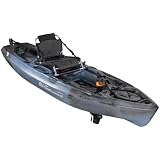
The Old Town Sportsman BigWater 132 PDL represents the premium end of high-capacity fishing kayaks. With a 658-pound capacity, it handles heavy paddlers plus substantial gear with room to spare. Old Town has been building watercraft since 1898, and their experience shows in every detail.
The PDL pedal drive system is widely considered one of the best in the industry. It provides instant forward and reverse without removing your hands from your fishing rod. The 13.2-foot length and 36-inch width create a stable platform that heavy paddlers can stand on with confidence.
What sets this kayak apart for heavy users is the thoughtful design. The Element seating system provides genuine all-day comfort with adjustable lumbar support. The deck layout maximizes usable space, with gear tracks, rod holders, and storage positioned exactly where you need them.
The motor-ready design is a significant advantage for heavy paddlers. Adding a trolling motor takes the strain off long-distance travel, letting you save energy for fishing. The transom mount is built-in, so there’s no modification needed.
Who Should Buy This
Anglers who spend full days on the water and want the convenience of pedal propulsion. The 658-pound capacity makes it suitable for paddlers up to 400 pounds with gear. Also great for those considering adding a trolling motor in the future.
Who Should Skip This
The price puts it out of reach for casual users. At 96 pounds, you’ll need help or a trailer for transport. The pedal drive system adds complexity and maintenance requirements that some users prefer to avoid.
Brooklyn Kayak Company BKC PK11 11.5 Pro Single – Best Mid-Range Single
BKC Brooklyn 11.5 Pro Sit-on-Top Single Fishing Kayak, 550 lb
550 lb Capacity
11.5 Feet
Rudder System
Sit-On-Top
Pros
- Solid 550-pound capacity in a single kayak
- Included rudder improves tracking
- Good balance of size and capacity
- Quality construction
Cons
- Some users report seat comfort issues
- Assembly required for rudder system
- Fewer features than premium competitors
The BKC PK11 offers an excellent middle ground for heavy paddlers who want capacity without the bulk of a tandem. The 550-pound rating gives you a solid margin over a 400-pound paddler with gear, following the 80% rule that forum users consistently recommend.
At 11.5 feet, this kayak hits a sweet spot for transport and storage. It fits in most truck beds and is manageable on a roof rack with help. The width provides stability without making it impossible to paddle efficiently. The sit-on-top design keeps you above water and makes re-entry easier after a swim.
The included rudder is a standout feature at this price point. Heavier kayaks benefit significantly from rudders because they maintain tracking when loaded. The foot-controlled system is intuitive and lets you focus on paddling or fishing instead of constantly correcting your course.
Brooklyn Kayak Company continues to impress with value. You get aluminum frame seating, multiple storage compartments, and fishing features that would cost hundreds more from premium brands. The build quality is solid, with proper attention to the areas that matter most for heavy users.
Who Should Buy This
Paddlers between 250-400 pounds who want a dedicated single kayak with ample capacity. Great for anglers who need the rudder for wind and current conditions. Excellent choice for those wanting Brooklyn quality without the tandem price.
Who Should Skip This
The seat works but isn’t as comfortable as premium options. If you’re planning full-day trips, budget for a seat cushion or upgrade. Those wanting the maximum possible capacity should look at the tandem options instead.
Brooklyn Kayak Company BKC SK13 13.0 Single Skiff Hybrid
Brooklyn 13.0 Single Skiff Hybrid Kayak (Blue Camo)
Skiff Hybrid Design
13 Feet Long
550 lb Capacity
Fishing Platform
Pros
- Unique skiff hybrid design maximizes stability
- 550-pound capacity handles heavy loads
- 13-foot length tracks well
- Serious fishing features
Cons
- Newer model with limited long-term reviews
- Skiff design may not suit all paddling styles
- Higher price for hybrid design
The BKC SK13 takes an innovative approach to high-capacity kayaking with its skiff hybrid design. This isn’t your typical sit-on-top – it combines kayak maneuverability with skiff-like stability. For heavy paddlers, this translates to a more stable platform that’s easier to stand on.
The 13-foot length provides excellent tracking and efficient paddling, while the hybrid hull design creates the stability typically only found in much wider kayaks. The raised casting deck gives you a vantage point for sight fishing and a stable base for standing.
Storage is a strength here. The hybrid design allows for larger storage compartments than traditional kayak hulls. There’s room for tackle boxes, coolers, and overnight gear without everything feeling cramped. The rear tank well accommodates a milk crate or cooler easily.
Being a newer model, there aren’t as many long-term reviews available. However, the Brooklyn Kayak Company reputation for quality construction suggests this kayak will hold up well. The hybrid design isn’t for everyone, but for anglers who prioritize stability, it’s worth serious consideration.
Who Should Buy This
Anglers who value standing stability above all else. Paddlers who want something different from traditional kayak designs. Anyone who appreciates the extra storage that a skiff-style hull provides.
Who Should Skip This
If you prefer traditional kayak handling characteristics, the hybrid design may feel unfamiliar. The higher price for the innovative design may not be worth it for casual users. Those wanting proven long-term reliability might prefer established models.
Perception Kayaks Outlaw 11.5 – Best Value Fishing Kayak
Perception Kayaks – Outlaw 11.5 Fishing Kayak – Sit on Top – Fold Away Lawn Chair Seat – 4 Rod Holders – Integrated Tackle Trays – 11.5 ft – Dapper
450 lb Capacity
Lawn Chair Seat
11.5 Feet
Sit-On-Top
Pros
- Lawn chair seat is genuinely comfortable
- 450-pound capacity suits most heavy paddlers
- Excellent value for the features
- Perception quality and warranty
Cons
- 450-pound capacity limits heaviest paddlers
- Seat requires assembly
- Some fit and finish could be improved
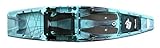
The Perception Outlaw 11.5 earns its reputation through one feature that matters enormously to heavy paddlers: the lawn chair seat. Unlike the basic folding seats found on many kayaks, this mesh-bottomed chair provides genuine comfort for larger bodies. You can actually spend a full day on the water without back pain.
The 450-pound capacity works well for paddlers up to about 350 pounds with typical fishing gear. That covers a significant portion of heavy paddlers while staying within the 80% capacity rule. The 11.5-foot length is manageable for solo transport and storage.
Perception has been making quality kayaks since the 1970s, and the Outlaw benefits from that experience. The hull design balances stability with paddling efficiency. You won’t win any races, but you’ll get where you’re going without exhausting yourself.
The fishing features are well-thought-out. Multiple rod holders, gear tracks, and a spacious rear tank well give you options for rigging. The sit-on-top design makes getting in and out easy – important for heavier paddlers who may struggle with sit-in cockpits.
Who Should Buy This
Paddlers who prioritize seat comfort above all else. Those in the 250-350 pound range who want proven reliability. Anglers who want quality features without premium pricing.
Who Should Skip This
If you’re over 360 pounds, the 450-pound capacity doesn’t leave enough safety margin. Those wanting the absolute maximum capacity should look at the tandem or Brooklyn options. Serious tournament anglers may want more advanced features.
Perception Tribe 13.5 Tandem – Versatile Tandem Option
Perception – Tribe Tandem Kayak – Sit on Top – Large Rear Storage with Tie Downs – 13.5 ft – Sunset
500 lb Capacity
13.5 Feet
Tandem Design
Rear Storage
Pros
- 500-pound capacity works well solo or tandem
- Proven Perception design and quality
- Good all-around performance
- Large rear storage area
Cons
- Heavier at 74 pounds
- Tandem design limits fishing features
- Middle position less comfortable for heavy solo users
The Perception Tribe 13.5 is a versatile tandem that heavy paddlers can use solo for maximum capacity. The 500-pound rating provides a comfortable margin for paddlers up to 380 pounds with gear. When used solo, you can position the seat for optimal trim and use the extra space for storage.
What makes the Tribe series special is its all-around versatility. It tracks reasonably well, turns when you need it to, and handles a variety of water conditions. The tri-form hull design provides stability without sacrificing too much speed.
The large rear storage area is a significant advantage for heavy paddlers going on longer trips. You can pack camping gear, coolers, or fishing equipment without feeling cramped. The tank well accommodates standard sizes of crates and coolers.
Perception quality shows in the construction. The high-density polyethylene is thick where it needs to be, and the hardware is corrosion-resistant. The molded-in carrying handles make transport manageable, though at 74 pounds, you’ll want help loading it on a roof.
Who Should Buy This
Paddlers who want tandem capability but also need solo capacity. Those in the 300-380 pound range who appreciate the extra space. Families who want one kayak that does everything.
Who Should Skip This
If you only need a single kayak, a dedicated single will be lighter and easier to manage. The fishing features are limited compared to fishing-specific models. Those wanting premium comfort features should look elsewhere.
Reel Yaks Radar Modular Fishing Kayak – Modular Innovation
Reel Yaks Radar Modular Fishing Kayak, Fin Drive 10ft, 430 lbs Capacity
400 lb Capacity
Modular Build
10 Feet
Pedal Drive Option
Pros
- Modular design breaks down for transport
- Optional pedal drive system
- Compact when disassembled
- Good stability for size
Cons
- 400-pound capacity limits heaviest paddlers
- Assembly takes time before each use
- Connections require maintenance
The Reel Yaks Radar takes a different approach to solving heavy paddler challenges – it goes modular. This 10-foot kayak breaks down into sections for transport and storage, then assembles when you’re ready to paddle. For those without truck or trailer access, this can be a game-changer.
The 400-pound capacity works for paddlers up to about 320 pounds following the 80% rule. While not the highest on this list, it’s sufficient for many heavy paddlers. The sit-on-top design provides the stability that heavier users need.
The optional pedal drive system is a significant advantage. Adding pedal propulsion reduces arm fatigue, which matters more when you’re carrying extra body weight. The system installs relatively easily and provides efficient hands-free movement.
The modular connections are the main concern for some buyers. They’re well-designed and haven’t shown failure issues, but they do require proper maintenance. The assembly process takes a few minutes before each use, which some paddlers find inconvenient.
Who Should Buy This
Paddlers with limited storage space who need a kayak that breaks down. Those who drive smaller vehicles and can’t transport full-length kayaks. Anglers who want the option of pedal drive without buying a completely different kayak.
Who Should Skip This
If you have adequate transport and storage, a one-piece kayak is simpler and more reliable. The 400-pound capacity won’t work for paddlers over 320 pounds. Those who want to hit the water quickly may find assembly tedious.
Reel Yaks Raptor Modular Fishing Kayak – Compact Modular Option
Reel Yaks Raptor Modular Fishing Kayak – Propeller Drive, 9.5ft, 380 lbs Capacity, Cyan Gray – Pedal Fishing Kayaks for Adults & Youth, Sit on Top, Compact Storage, Lightweight, Easy Transport
380 lb Capacity
9.5 Feet
Modular Design
Budget Modular
Pros
- Most compact option on this list
- Modular for easy transport and storage
- Lowest price for modular kayak
- Good for beginners
Cons
- 380-pound capacity limits heavier paddlers
- Shorter length affects tracking
- Fewer features than larger kayaks
The Reel Yaks Raptor is the most compact option in this roundup at just 9.5 feet. For paddlers with serious space constraints, this modular kayak offers a practical solution. It breaks down into manageable sections that fit in a car trunk or apartment closet.
The 380-pound capacity is the lowest on this list, making it suitable for paddlers up to about 300 pounds with gear. If you’re on a weight loss journey and want a kayak to grow into, this could be a good fit. The modular design means you can upgrade later without a huge sunk cost.
At 9.5 feet, tracking isn’t as good as longer kayaks. You’ll work harder to maintain a straight course, especially in wind. However, the maneuverability is excellent for tight spaces like small ponds and narrow creeks.
The value proposition is strong. You get a modular kayak with decent capacity at a price point that makes entry into the sport accessible. For casual paddlers or those unsure about long-term commitment, the lower investment makes sense.
Who Should Buy This
Paddlers under 300 pounds who have extreme space limitations. Those who want to try kayaking without a major investment. Anglers who fish small, tight waters where maneuverability matters more than tracking.
Who Should Skip This
If you’re over 300 pounds, the capacity won’t provide adequate safety margin. Those wanting to cover distance efficiently should look at longer options. Serious anglers will find the feature set limiting.
Buying Guide: Choosing the Right High-Capacity Kayak
Understanding Weight Capacity and the 80% Rule
Weight capacity is the most critical specification for heavy paddlers, but it’s also the most misunderstood. That number on the spec sheet represents the maximum load before the kayak becomes unsafe or unusable – not a target you should aim for.
Experienced paddlers on forums consistently recommend staying at 70-80% of rated capacity for optimal performance. This is called the 80% rule, and here’s why it matters: a kayak rated for 400 pounds will technically float at 400 pounds, but it will ride low, track poorly, and feel tippy. At 320 pounds (80% of capacity), the same kayak performs beautifully.
When calculating your needs, add your body weight plus all gear. A typical fishing setup includes 20-40 pounds of gear, and camping trips can add 50+ pounds more. Always round up when estimating – erring on the side of more capacity is never wrong.
Hull Design and Stability
For heavy paddlers, hull design matters more than for average-weight users. Wider kayaks (35+ inches) provide better primary stability, which is that solid feeling when you first sit down. However, too much width makes paddling inefficient.
Pontoon and catamaran-style hulls offer the best stability for heavy paddlers. These designs spread the load across multiple contact points with the water, creating a stable platform that resists tipping. You’ll find this design on premium fishing kayaks like the NuCanoe Unlimited and Hobie Pro Angler series.
The trade-off is tracking. Wider, stable kayaks tend to wander in wind and current. This is why rudder systems are valuable – they help maintain course without constant correction. For more on how kayak dimensions affect performance, see our guide on how kayak length affects stability.
Sit-On-Top vs Sit-In for Heavy Paddlers
Sit-on-top kayaks are almost universally recommended for heavier paddlers, and for good reason. The open design means there’s no cockpit to squeeze into, making entry and exit much easier. If you do capsize, re-entry is significantly easier than with a sit-in design.
Sit-in kayaks do have advantages – they’re typically lighter, warmer in cold weather, and can be more efficient to paddle. However, the cockpit opening size becomes a limiting factor. Many larger paddlers find even “large” cockpits cramped and uncomfortable.
The self-bailing feature of sit-on-top kayaks is also important for heavy paddlers. When water splashes in (which happens more when you’re heavier and riding lower), it drains through scupper holes rather than pooling in the cockpit. Note that some heavy paddlers use scupper plugs to prevent water from coming up through the holes – this varies by individual preference and water conditions.
Seat Comfort and Cockpit Space
Seat comfort varies enormously between kayaks, and heavy paddlers feel the differences more acutely. The best seats are those with aluminum or composite frames that provide proper back support. Basic folding seats often fail to provide adequate lumbar support for larger bodies.
Look for adjustable seats that let you change the angle and position. Heavy paddlers often prefer a more reclined position that distributes weight better. The Perception Outlaw’s lawn chair seat is an example of a design that works well for larger users.
Cockpit space matters for comfort on long trips. You need room to shift positions, stretch your legs, and move around. Tandem kayaks used solo often provide excellent cockpit space, as do fishing-specific models designed for standing.
Safety Considerations for Heavy Paddlers
Safety is a topic that most kayak reviews ignore, but it’s critical for heavy paddlers. The primary concern is re-entry after a capsize. Heavier kayaks are harder to flip back over, and heavier paddlers have more difficulty pulling themselves back aboard.
Practice re-entry in shallow water before you need it. The technique that works for 150-pound paddlers may not work for you. Some heavy paddlers find that a “straddle” technique, where you position yourself across the kayak rather than trying to climb in from the side, works better.
Personal flotation devices are non-negotiable, but they need to fit properly. Many standard PFDs are too small for larger chests. Look for PFDs specifically designed for larger bodies, and make sure you can still paddle comfortably with it on.
The 120 rule for cold water safety applies to everyone but is especially important for heavy paddlers. Add air temperature and water temperature – if the sum is 120 degrees Fahrenheit or less, you need thermal protection. Cold water kills faster than you might expect, and carrying extra weight doesn’t provide meaningful insulation.
Transportation and Storage
High-capacity kayaks are necessarily larger and heavier than standard models. Before buying, consider how you’ll transport it. A 90-pound kayak is manageable with two people but nearly impossible to load solo onto a roof rack.
Options include: trailers (best for multiple kayaks), truck bed extenders (good for longer kayaks), and lightweight trailers that attach to your car. Some paddlers use ramps to slide kayaks onto their vehicles rather than lifting.
Storage is equally important. A 13-foot tandem takes up significant garage space. If you’re tight on space, the modular options from Reel Yaks might be worth considering despite their lower capacity ratings.
Can a 300lb person kayak?
Yes, absolutely. A 300-pound person can kayak safely and enjoyably with the right equipment. Look for a kayak with at least 400-500 pounds of capacity to follow the 80% rule for optimal performance. Sit-on-top fishing kayaks are particularly well-suited for heavier paddlers due to their stability and ease of entry. Many paddlers in the 300-400 pound range successfully kayak using high-capacity fishing kayaks or tandem kayaks used solo.
What kayaks hold up to 400 pounds?
Several kayak models offer 400-pound or higher capacity. The Brooklyn Kayak Company BKC PK11 offers 550 pounds, the Perception Outlaw 11.5 has a 450-pound rating, and the Pelican Catch Classic is rated around 400 pounds. For the best experience, choose a kayak rated at least 20% higher than your total weight (body plus gear). Sit-on-top fishing kayaks from brands like Brooklyn, Perception, Pelican, and Old Town frequently meet this requirement.
Can you kayak if you’re overweight?
Yes, kayaking is absolutely accessible for overweight individuals. The key is choosing appropriate equipment – specifically, a kayak with sufficient capacity (aim for a rating at least 20% above your total weight with gear). Sit-on-top kayaks are generally better for larger paddlers because they offer easier entry and exit, more cockpit space, and easier re-entry if you capsize. Many overweight paddlers enjoy kayaking using high-capacity fishing kayaks or tandem models used solo.
What is the most stable fishing kayak for big guys?
The most stable fishing kayaks for heavier paddlers feature wide hulls (35+ inches) and pontoon or catamaran-style designs. Top options include the Brooklyn Kayak BKC TK219 Tandem with 800-pound capacity, the Old Town Sportsman BigWater 132 with 658-pound capacity, and the Brooklyn Kayak BKC UH181 at 18 feet long. Look for sit-on-top designs with widths of 35 inches or more, and consider models with pedal drives to reduce arm fatigue on longer trips.
Where does the heaviest person sit on a kayak?
On a tandem kayak, the heaviest person should sit in the rear (stern) position. This positioning improves weight distribution and makes steering more effective. The rear paddler controls the tracking and direction of the kayak. If one paddler is significantly more experienced, they should also take the rear position regardless of weight, as they can better correct the kayak’s course.
Do fishing kayaks flip easily?
Modern fishing kayaks are designed for stability and generally do not flip easily. Wider models with pontoon or catamaran hulls are particularly resistant to capsizing. However, any kayak can capsize due to user error, rough water conditions, or improper weight distribution. For heavy paddlers, the main concern is not flipping but rather re-entry after a capsize – heavier kayaks are harder to flip back over. Practice re-entry techniques in shallow water before heading out.
Conclusion
Finding the right kayak when you’re a heavy paddler doesn’t have to be complicated. The key is choosing a model with enough capacity to follow the 80% rule, prioritizing sit-on-top designs for stability and ease of use, and selecting features that match your intended use.
For maximum capacity, the Brooklyn Kayak BKC TK219 Tandem with its 800-pound rating is hard to beat. If you want pedal drive convenience, the Brooklyn Kayak BKC UH181 or Old Town Sportsman BigWater 132 PDL offer excellent options. Budget-conscious paddlers should look at the Pelican Catch Classic or Perception Outlaw 11.5 for solid performance without the premium price.
Remember to factor in gear weight when calculating capacity needs, practice re-entry techniques before you need them, and always wear a properly fitted PFD. With the right kayak, you’ll be spending more time fishing and paddling, and less time worrying about stability.


